
Spanish Grand Prix 2016: Winners and Losers from Barcelona Race
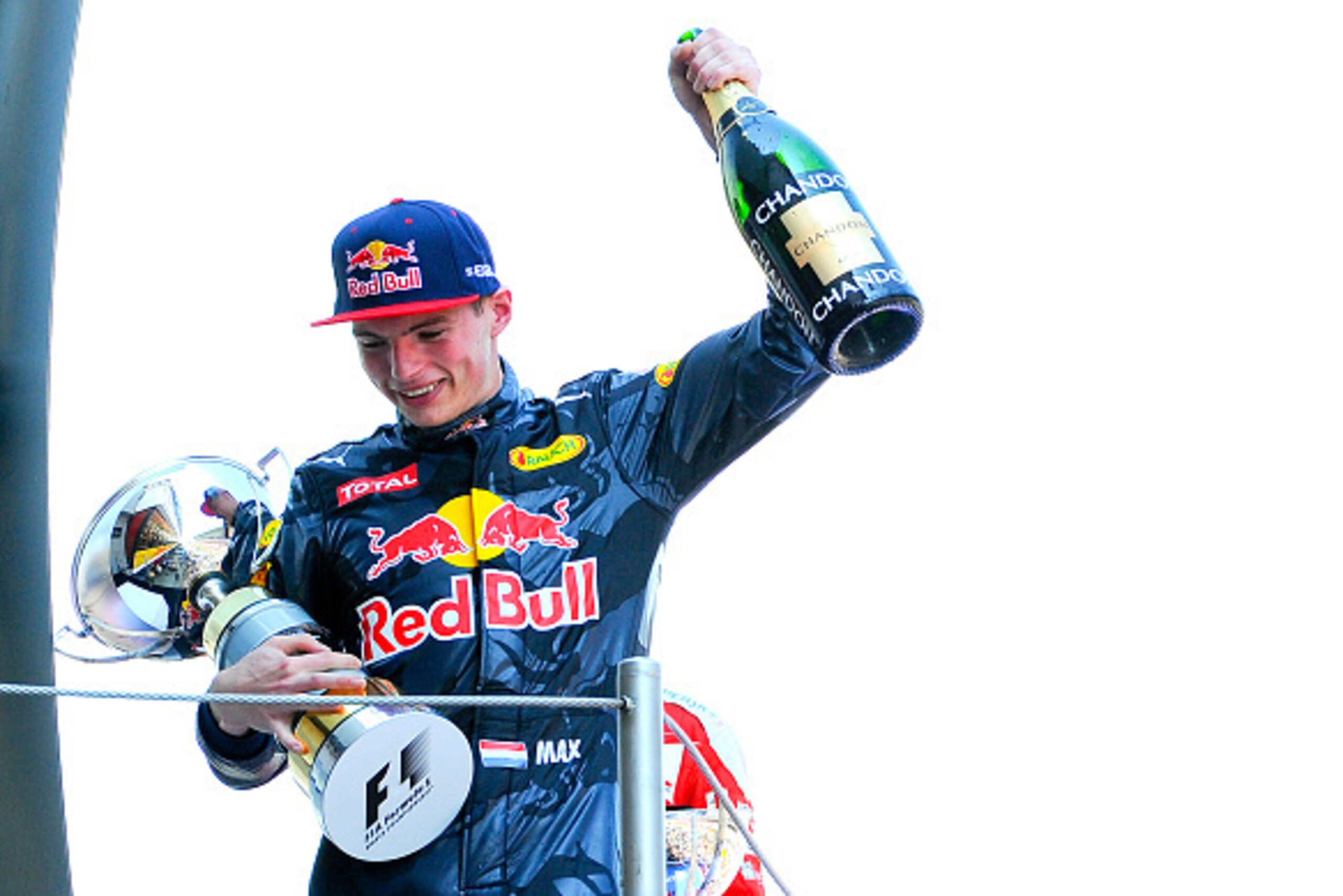
Max Verstappen claimed the first victory of his Formula One career in Sunday's Spanish Grand Prix at the Circuit de Barcelona-Catalunya.
After starting fourth on the grid, the 18-year-old drove with exceptional maturity on his Red Bull debut to withstand late pressure from Ferrari's Kimi Raikkonen and become the youngest winner in the history of the sport.
Verstappen's route to success was helped by the trials and tribulations of Lewis Hamilton and Nico Rosberg, who both retired on the first lap after making contact at Turn 4.
The incident left both championship protagonists red-faced, but the collision's fallout only enhanced the reputation of the Mercedes hierarchy—and team boss Toto Wolff in particular.
With a look at Daniel Ricciardo's frustrating race, Carlos Sainz Jr.'s statement of intent and more, here are the main winners and losers from Spain.
Winner: Max Verstappen
1 of 7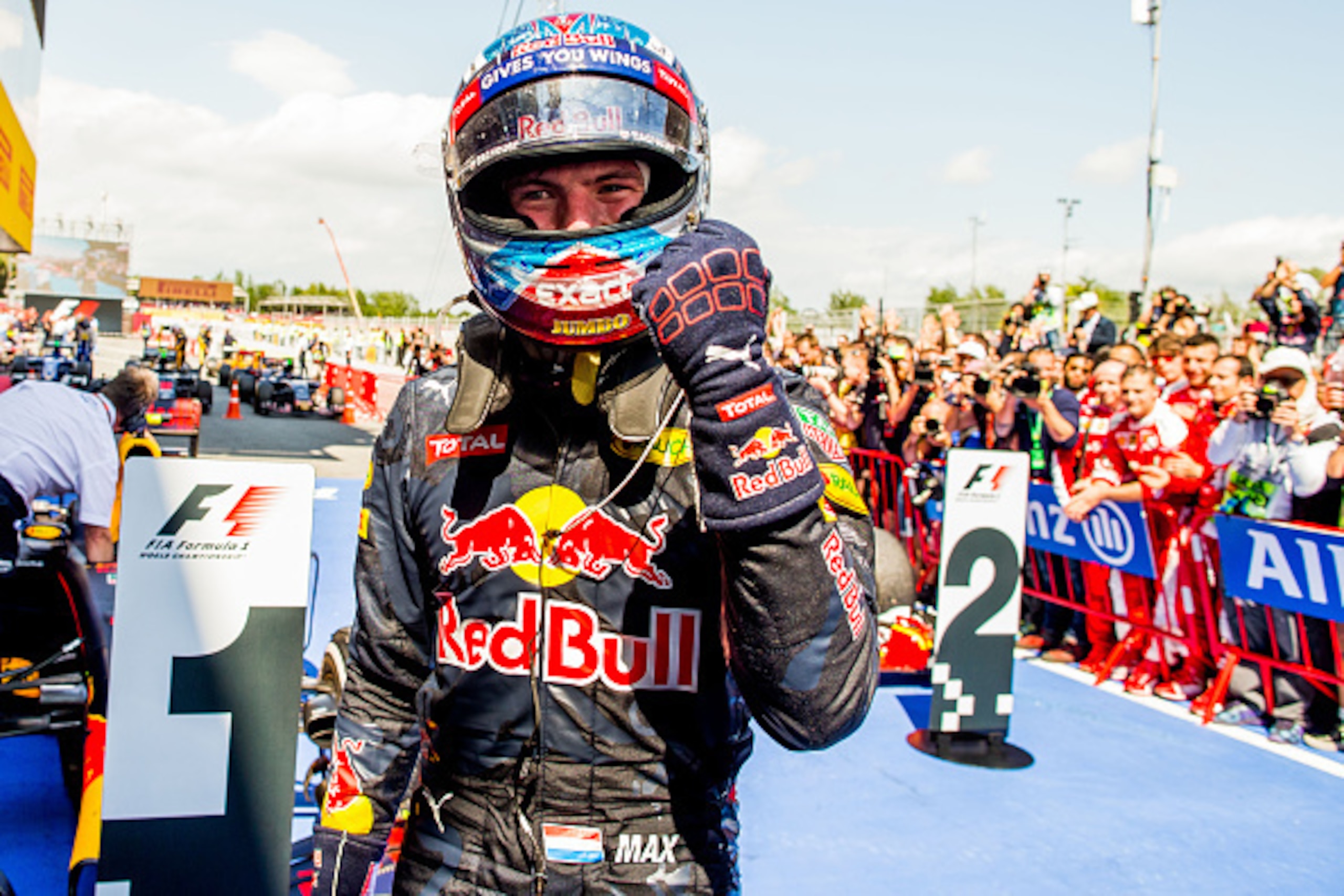
Dabbing his eyes with a tissue as he headed for the crowd gathering beneath the podium, Jos Verstappen's voice trembled as he told Sky Sports' television coverage of his son's "unbelievable" accomplishment.
Helmut Marko, the head of Red Bull's young-driver program, was among the first to offer his congratulations, and he was soon joined by the great and good of modern-day Formula One.
Sebastian Vettel and Kimi Raikkonen almost seemed honoured to join him for his very first podium appearance, and even Fernando Alonso paid a visit to parc ferme despite the disappointment of retiring from his home race.
In fact, almost every member of the paddock felt compelled to pay tribute to him, with everyone fully aware they had just witnessed one of the most remarkable moments in their sport's history.
Everyone except the boy wonder himself, who somehow made his achievement feel like the most natural thing in the world.
From the moment he arrived in Formula One little more than a year ago, the most impressive aspect about Max Verstappen was not so much his inherent pace and overtaking prowess, but his sheer self-confidence.
He was unconcerned about his lack of experience compared to his rivals, thought little of passing a competitor around the outside of Spa's fearsome Blanchimont corner and didn't hesitate when it came to refusing the instructions of his own team whenever he saw fit.
So, in the closing stages of the Spanish GP when he was being pursued by the Ferrari of Raikkonen—a man double his age—it was inevitable that Verstappen would absorb any pressure exerted on him.
He kept perfecting every braking point. He kept kissing every apex. He kept it neat and tidy on the exit of corners—particularly the final turn ahead of the long main straight—nursing his ageing Pirellis all the while.
And he became the youngest driver to win a race in the pinnacle of motorsport at the age of 18 years and 228 days, per the official F1 website.
It is, without doubt, the first of many, the start of something special.
Loser: The Mercedes Drivers
2 of 7
Nico Rosberg and Lewis Hamilton had barely come to a halt in the Turn 4 gravel trap when the high courts of cyberspace delivered their wide-ranging verdicts.
Had Lewis been too opportunistic for his own good on the approach to the long, winding right-hander? Was Nico—not for the first time in his career—guilty of fighting a battle he was already in the process of losing?
In the modern era, there is often a stampede to deem someone—anyone—responsible for every single on-track collision, to the point where the innocence and the meaning of a traditional "racing incident" is in danger of being lost in the blame game.
Although Hamilton and Rosberg were both criticised by different sections of social media, their collision (and the events leading up to it) was little more than a case of two drivers—one attacking too aggressively, the other defending too aggressively—conspiring to let their team down.
On Saturday evening, Hamilton told Mercedes' official website how pleased he was with himself to have claimed pole position in the three races his car had functioned properly in qualifying.
But he has now failed to convert pole position into a first-corner lead in each of those grands prix, having been outthought and outmuscled by his team-mate at Turn 1 in Spain after making slow starts in Australia and Bahrain.
Rosberg, meanwhile, deserved credit for his brave, well-executed pass around the outside of the driver widely regarded as the best on the grid in terms of wheel-to-wheel combat.
Yet the most intelligent driver in F1 was not quite so smart when he began the race with the "wrong" engine setting—as team boss Toto Wolff later explained to Motorsport.com's Valentin Khorounzhiy—leaving Rosberg down on power on the exit of Turn 3.
That gifted Hamilton the momentum he needed to try a move at Turn 4 before the two drivers—desperate to make up for their respective errors—met in the middle.
Case closed.
Winner: The Mercedes Management
3 of 7
When the Mercedes drivers last collided on-track with disastrous consequences, in the 2014 Belgian Grand Prix, the team's hierarchy only added fuel to the fire.
"It was an unacceptable risk," an outraged Toto Wolff told Sky Sports' Pete Gill and James Galloway, adding the result was "absolutely unacceptable" and the sight of Nico Rosberg and Lewis Hamilton making contact on Lap 2 of 44 was nothing short of "unbelievable."
The Silver Arrows' reaction to the incident at Les Combes seemed to illustrate the naivety of Wolff and Mercedes as they attempted to secure their first world championship.
But almost two years on, with two consecutive drivers' and constructors' titles to their name, they now handle such controversies with relative ease.
Now they know Hamilton and Rosberg, while their relationship will never be perfect, are both strong enough to recover from such disappointments, and now they know they have a car capable of winning every race—even if the occasional one slips through their fingers.
Although Mercedes non-executive chairman Niki Lauda clearly didn't receive the memo—the three-time world champion told Sky Sports' television coverage the incident was "unacceptable," blaming Hamilton for being "too aggressive"—Wolff's handling of the situation was a far cry from his emotional reaction at Spa 2014.
Per Motorsport.com's Jonathan Noble, he explained:
"I think it is a very difficult situation, a difficult situation to analyse.
There is definitely not a clear cut [verdict]—so I wouldn't want to blame any of them at this stage.
Niki has, from his driver’s perspective, an opinion. This is his instincts, and it’s fair enough that he has this.
But when you look at all the data, and have the discussions with the drivers, maybe it’s different. As I said, it’s a very difficult situation.
They are both pretty upset because they know about the effort. Of course, they have their perspective and we need to then talk with them again, look at the pictures, look at the data, and under any circumstances avoid this to happen in the future.
"
Mercedes' mature response even saw Hamilton and Rosberg prevented from speaking to the assembled media until the post-race stewards' investigation had concluded, as noted during Sky Sports' TV coverage of the race, by which point the emotion of the incident had cooled.
As Wolff, constantly growing in stature as one of the shrewdest leaders in the paddock, told Noble: "This is Spa all over again from the result, but as a team we have matured and grown together. We knew at a certain stage this could happen, and there we are."


Loser: Daniel Ricciardo
4 of 7
How will Verstappen's stunning start to his Red Bull career affect Daniel Ricciardo's standing within the team?
It is, of course, far too early to suggest Ricciardo may soon find himself becoming the Mark Webber to Verstappen's Sebastian Vettel—the popular Aussie being marginalised by a team smitten with his younger, more fashionable team-mate.
Yet the way his race evaporated before his very eyes was eerily Webber-esque with Ricciardo, arguably the standout performer of the opening five grands prix, the only one of Red Bull's three drivers yet to stand on a podium in 2016.
Ricciardo looked so tranquil as he led the race's opening phase, capitalising on Mercedes' mishaps just as he did throughout his breakthrough year in 2014, only for the Red Bull pit wall to spoil his afternoon by suddenly switching to a three-stop strategy.
Per Motorsport.com's Darshan Chokhani, Ricciardo later suggested Red Bull "threw away the win" with a decision that "didn't make sense" before questioning why Verstappen was given "the better strategy" despite running behind the No. 3 car on track.
If those comments were slightly reminiscent of life at Red Bull between 2009 and '13, the sight of the luckless Australian driver limping back to the pits with a second puncture in three races—having fought so heroically in his efforts to overtake Vettel for third in the closing laps—certainly was.
Such was his advantage over the cars behind that Ricciardo still managed to claim a fourth fourth-place finish in five races, albeit 43.9 seconds adrift of the race winner.
But after triumphing in a thrilling head-to-head fight in qualifying, the race offered an early hint that Ricciardo might be forced to battle Verstappen for supremacy both on and off the track for the remainder of 2016.
Winner: Carlos Sainz Jr.
5 of 7
Might Carlos Sainz Jr. feel that could have been him on the top step of the podium?
Since the pair made their F1 debuts in 2015, the widespread belief was that Sainz had been more than a match for Max Verstappen at Toro Rosso and could consider himself unfortunate to be denied a promotion when Red Bull came calling.
Watching his team-mate leave him behind had the potential to define his F1 career, yet he has shown no signs of heading in the same direction as Jean-Eric Vergne, who proved unable to recover from Daniel Ricciardo's ascent to Red Bull at the end of 2013.
Per Motorsport.com's Pablo Elizalde, Sainz insisted he saw "it more and more in a positive way" and remained convinced he would earn himself an opportunity as long as he continued to "do well" and convert his raw speed into consistent results.
And he made a flawless start to life after Max at his home race, producing a strong drive to sixth place.
Outqualifying new team-mate Daniil Kvyat—a prime example of what can happen when youngsters are given too much too soon—by 0.368 seconds was crucial in terms of proving he is the best of Red Bull's nearly men, with a strong start from eighth seeing him vault up to third when the safety car appeared.
With the Ferraris lurking behind, Sainz was never going to keep that position but refused to surrender to the red cars, defending robustly from Vettel and Raikkonen while allowing Ricciardo and Verstappen to build an early lead.
He was unfortunate to have Valtteri Bottas leapfrog him during the first round of pit stops, but his best-ever F1 result should provide Sainz with a welcome boost of confidence.
Loser: Ferrari
6 of 7
On the few occasions Mercedes ran into trouble in 2015, Ferrari were always there to take advantage.
From Sebastian Vettel's surprise victory in Malaysia to his fast start in Hungary, the Prancing Horse was always lurking dangerously in the background, waiting for—and occasionally forcing—a mistake.
With better decision-making and sharper reactions both in and out of the cockpit, Ferrari might have won on merit in Australia and Bahrain. But it wasn't until the Spanish GP, as Lewis Hamilton and Nico Rosberg walked back to the paddock, that the team were offered an open goal to register a win in 2016.
Even on a day victory was there for the taking, however, Ferrari were still second-best.
As chairman Sergio Marchionne told Sky Sports' James Galloway, the tyre-temperature window was responsible for the team's lack of performance in qualifying, when Kimi Raikkonen's fastest lap was more than a second slower than Hamilton's pole time.
But there was no excuse for their decision to switch Vettel to a three-stop strategy during the race in an attempt to cover Daniel Ricciardo, especially when you consider the German had spent only eight laps on the soft-compound tyres in his third stint.
That arguably cost Vettel a first win since September 2015 and offered yet more evidence that Ferrari rely more on their bravado than their brains under the stewardship of team principal Maurizio Arrivabene, who received the dreaded "vote of confidence" from Marchionne prior to the race, per Galloway.
On a more favourable two-stop strategy, Raikkonen emerged as the only threat to Max Verstappen in the latter stages, but—unlike Ricciardo, who tried everything to get past Vettel—it never felt as though the 2007 world champion put himself in a position to overtake the teenager.
If Ferrari do still plan to fight Mercedes for the 2016 title, this was an opportunity they couldn't afford to miss.
Winner: Williams
7 of 7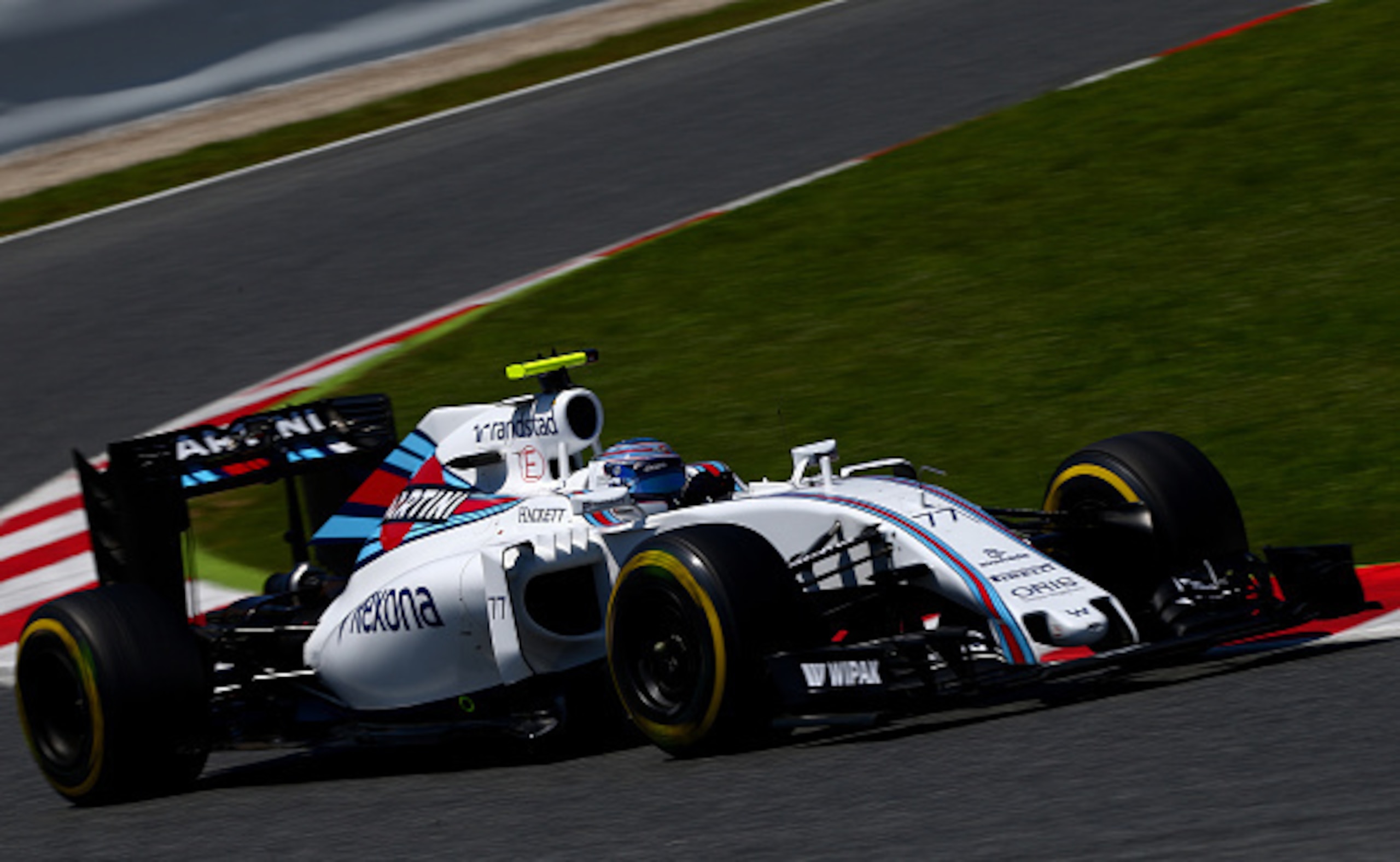
With Williams not fast enough to challenge the leaders, yet too strong to feel threatened by those behind, the Spanish GP played nicely into Valtteri Bottas' hands.
Favouring the solid over the spectacular and the boring over the bold, Bottas—having come around 0.2 seconds short of outqualifying Sebastian Vettel on Saturday—enjoyed a lonely race to fifth, with his hard work effectively completed after the very first stint.
As head of vehicle performance, Rob Smedley told the team's official website Williams delayed Bottas' first pit stop in an effort to overhaul the Toro Rosso of Carlos Sainz Jr., who stopped for medium-compound tyres on Lap 10.
Extending his own stint until Lap 12, Bottas benefited from an extra two laps on softs to re-emerge ahead of Sainz, setting himself up for a second consecutive top-five finish.
Strategy also played an integral role in Felipe Massa's recovery through the field, having suffered the embarrassment of qualifying a lowly 18th.
As reported by Autosport's Lawrence Barretto, Massa's elimination from the first segment of qualifying led to a disagreement between the Brazilian and chief technical officer Pat Symonds on Saturday.
Yet his recovery to eighth allowed the team to maintain their record of scoring points with both cars in every race thus far.
Having been widely criticised for a number of questionable strategic calls in recent years, the Spanish GP offered more evidence that Williams—who won the DHL Fastest Pit Stop Award for the fifth consecutive race, per the team's official Twitter account—is finally learning from those harsh lessons.
All timing and tyre data sourced from the official F1 website, Pirelli's official website and the FOM television feed.
.jpg?w=2560 "LA Premiere of \"Chad Powers\"")
.jpg?w=2560)

.jpg?w=2560 "Landing Spots for Trade Candidates 📍")