2016 NBA Draft Prospects: Breaking Down NBA Future of Purdue's A.J. Hammons
A.J. Hammons is a great example of how difficult it is to evaluate players and project where they will go in the NBA draft.
He checks almost all of the boxes when it comes to size and skill, but his effort level and focus are big question marks.
"If he was a high-motor guy, he'd probably go top-eight," an NBA scout told Bleacher Report, adding that Hammons would go ahead of Utah's Jakob Poeltl, who is expected to be the top center taken in the draft on June 23.
TOP NEWS

J-Dub Suffers Gruesome Injury
Mazzulla Weighs In on Brown-Tatum Drama

Blockbuster Trade Idea To Shake Up the East
| Age | 23 (Born Aug. 27, 1992) |
| Team | Purdue |
| Height | 7'0" |
| Weight | 250 |
Instead, Hammons is expected to likely go in the second round with a chance to sneak into the first.
There are red flags from a suspension and benching in college. He missed two exhibition games and the season opener as a sophomore after violating team rules. This past season, he was benched for the first two games and didn't move into the starting lineup until January 7.
But once allowed to play, there was progress on the floor, and he played himself into the draft with the best statistical season of his career.
"He doesn't always try hard, but when he tries hard, he's an NBA center," a second scout said. "He'll be as good as he wants to be. He's really strong. He moves really well for a player his size. He can score inside and out, rebound. He was splitting time, but on a per-minute basis, he was pretty good."
Relevant Stats
| 2015-16 | 24.6 | 15.0 | 8.2 | 2.5 | 59.2 | 70.9 |
Hammons had good numbers, considering he didn't get the minutes of most elite players. That's because Purdue had a pretty stacked frontcourt. Coach Matt Painter had to find time for 7'2" sophomore Isaac Haas, who would start for most teams and was ahead of Hammons on the depth chart until the middle of the season.
Extrapolate Hammons' numbers out per 40 minutes, and he averaged 24.3 points, 13.3 rebounds and 4.1 blocks, per Sports-Reference.com.
Strengths
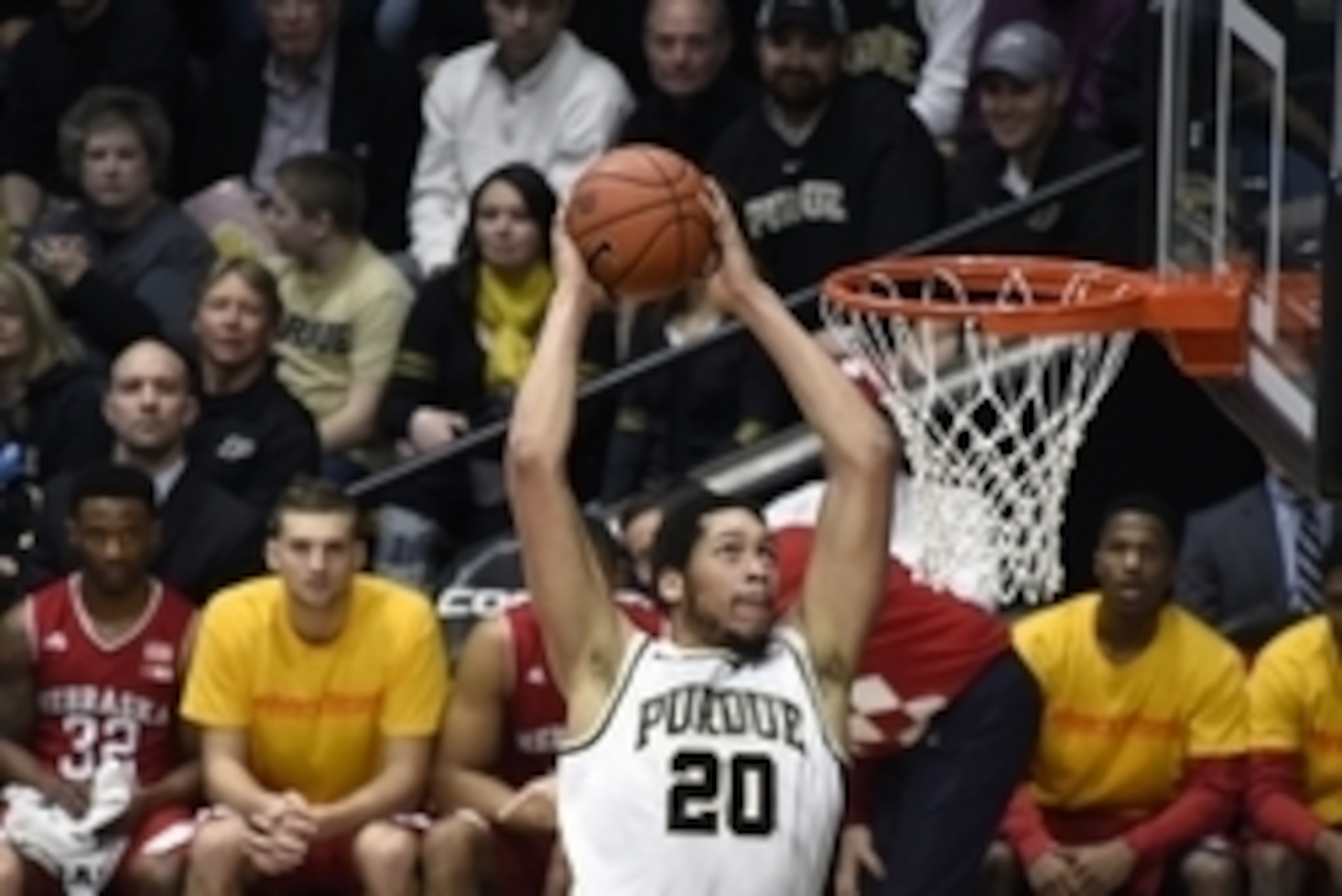
Hammons has all the tools on the offensive end to succeed in the modern NBA, yet he could be a throwback center as well.
He can play with his back to the basket and had one of the best jump hooks over his left shoulder in college basketball. He also does a good job of using his big body to seal defenders close to the hoop for easy buckets. He finished 87 percent of his shots at the rim, according to Hoop-Math.com. That's the top mark for any center in this draft class.
| 1. A.J. Hammons, Purdue | 87.0 |
| 2. Damian Jones, Vanderbilt | 75.0 |
| 3. Cheick Diallo, Kansas | 73.9 |
| 4. Chinanu Onuaku, Louisville | 73.6 |
| 5. Diamond Stone, Maryland | 73.5 |
Away from the basket, Hammons is effective as both a pick-and-roll and pick-and-pop big man. He's a good screener because he's thick with nimble feet and has a nice feel for when to slip to the basket. He's a good shooter with range out to the college three-point line, making six of 11 threes this past season.
On the defensive end, it's not easy to find big guys like Hammons during their first couple of years in the league—players who are good shot-blockers and guard their position effectively. Most of the top shot-blockers at this stage are springy but thin, and their greatest value is the ability to block shots as a secondary defender.
Hammons also provides that solid rim protection as a secondary defender, but unlike some of the younger centers in this class, he should be able to play right away, He's physically ready to bang with NBA centers.
Obviously, it also helps that he'll be 24 as a rookie and that his body is already fully developed. He uses his wide frame to carve out rebounding position, and his soft hands help him on the boards and catching passes while moving toward the basket.
Weaknesses
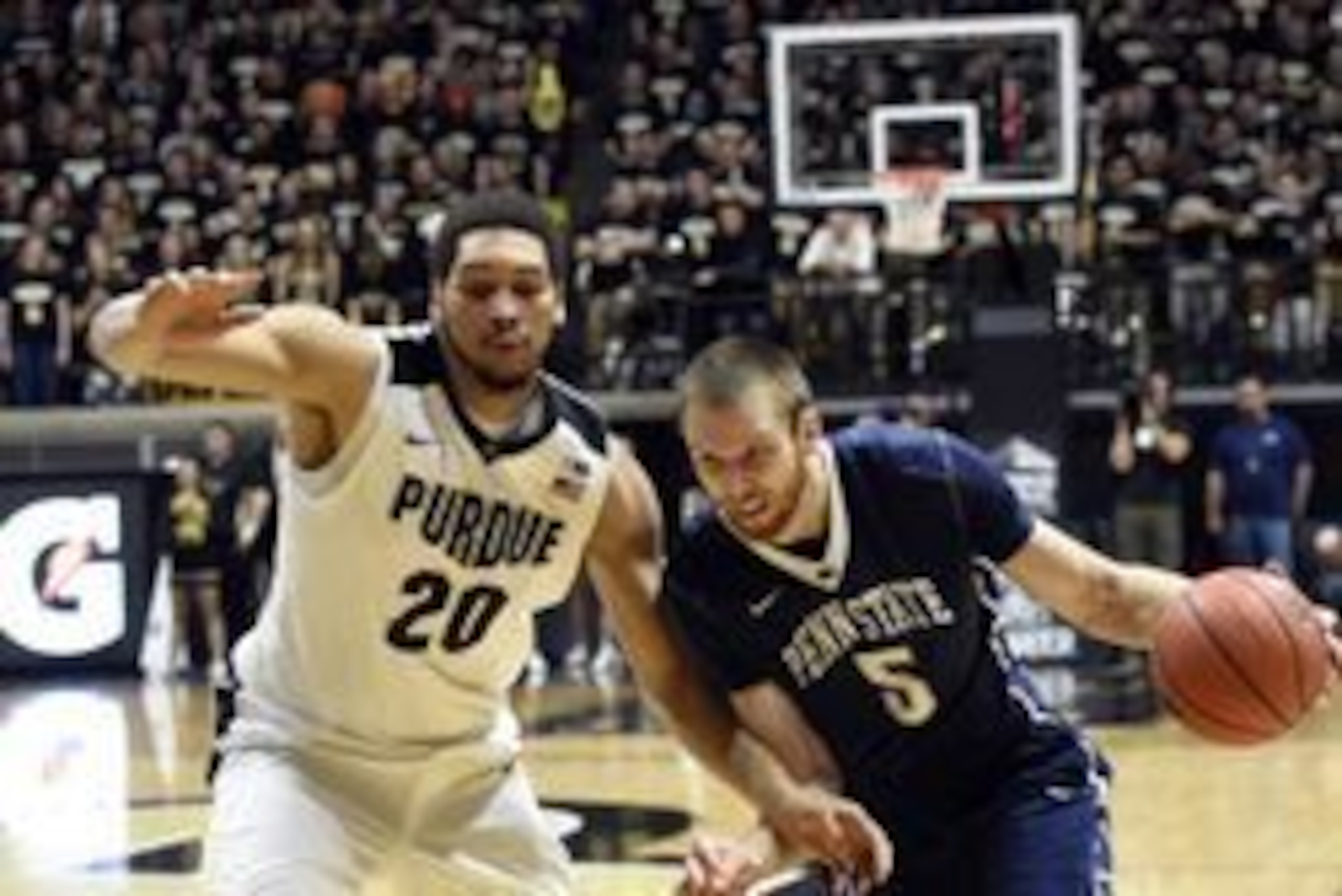
Effort is at the top of the list. Hammons doesn't always run the floor hard and will take plays off on both ends.
"He's known as a great kid, but there's some 'Does he love the game?' concerns," the first scout said.
Former Purdue star Robbie Hummel, who played two years in the NBA with the Minnesota Timberwolves, spent this past season as a mentor at Purdue while recovering from shoulder surgery. His quotes about Hammons to Nathan Baird of the Indianapolis Star show that he has some of the same questions that NBA scouts have:
"If you watch him on a day-to-day basis, there weren't days where he stood out as not trying, not anything like that. When you get to the NBA, not every guy in that league loves playing basketball. They're just really talented and they do it because they're good at it.
I'm not saying A.J. is one of those guys. But at the end of the day, the NBA wants guys who can produce or play. Whether he loves the game or not, I don't know because I'm not inside A.J.'s head. There's no doubt in my mind he's capable of playing.
"
Beyond effort, there are question marks with Hammons as a defender. He can hold his own in the paint but struggles defending out on the perimeter. The ideal center in today's game is comfortable guarding against the ball screen out on the floor, and Hammons isn't quick enough to be effective in those scenarios.
Offensively, the lack of focus shows up in some sloppy plays—according to KenPom.com, he had a turnover rate over 17 percent every year at Purdue, which is high for a big man. He also forces some questionable shots.
NBA Player Comparison
It's hard to find a current NBA comparison for Hammons that makes sense. Both NBA scouts couldn't come up with one, either. He shares some similarities with rookie Dakari Johnson as far as body type and the ability to score with his back to the basket, but he's a better shooter than Johnson and is already more developed.
The successful NBA centers who are thicker with good hands, a jumper and a back-to-the-basket game are Marc Gasol and DeMarcus Cousins, but it's not fair to any incoming rookie to throw those names around. Even if Hammons had an insane motor, he wouldn't have Gasol's or Cousins' ceiling.
The most realistic comparison could be a taller version of Golden State's Marreese Speights. Hammons has a similar body type and will also need to watch his weight, but Speights has survived in the league because of his skill and ability to get buckets off the bench.
Best-Case Scenario
The center position is arguably the weakest position group in the NBA, and Hammons has the goods to eventually develop into a high-end backup or a capable starter. As the scout said, a high-motor Hammons would be a top-eight draft pick. If he evolves into a player who plays with effort all the time, he'll likely outpace his expected production wherever he's drafted.
Worst-Case Scenario
There are plenty of examples of talented bigs who didn't make it because the desire just wasn't there.

The modern-day poster child is Patrick O'Bryant, who went ninth in the 2006 draft and lasted only four seasons in the league. O'Bryant was on record saying he tended not to play with much effort.
If Hammons goes during the second round and doesn't make the most of his first chance, he'll have to show himself in the D-League down the road to get another opportunity.
Prediction
Hammons played some of his best basketball when going up against big men in this draft class. He had 21 points, 10 rebounds and seven blocks against Vanderbilt and Damian Jones. He averaged 18.5 points in two games against Maryland's Diamond Stone. He put up 19 points, 13 rebounds and eight blocks in a win over Michigan State.
This gives hope that when he's in the NBA and challenged against talented players, he'll rise to the occasion.
The predraft process will be his first test. He has a chance to work his way into the first round with strong workouts or at least get ahead of some of the bigs he's up against. He has more redeemable qualities than other fringe first-round bigs like Vandy's Jones, UNLV's Stephen Zimmerman and Kansas freshman Cheick Diallo.
Zimmerman will probably go ahead of Hammons because of his upside and youth, but Hammons has a good chance to surpass both Jones and Diallo, though most mock drafts project both to be off the board before Hammons.
It's a safe bet that Hammons will have a better career than Jones and Diallo. He's superior to both right now, and it's easier to envision Hammons as a productive NBA center than those two projects.
C.J. Moore covers college basketball for Bleacher Report. You can follow him on Twitter, @CJMooreBR.



.jpg?w=2560 "Latest Peyton-Colts Rumors")
.jpg?w=2560 "Ugly Jets Scoring Stat 😳")

.jpg?w=2560 "Landing Spots for Trade Candidates 📍")