Keep It Simple: NBA Teams That Can't Afford to Overthink Their Offseason
Had the Golden State Warriors capped their historic season with just one more win and a title, we'd be sitting here counseling caution for virtually every contender and pseudo-contender.
Better to wait out the inevitable regression and hope for some luck rather than making the mistake of thinking any big offseason move would be enough to combat a 73-win champion. But that Warriors regression? It came ahead of schedule...in June. The Cleveland Cavaliers slew the Golden State monster.

TOP NEWS

Pic of LeBron's Helicopter Commute 🚁

Duren Calls Out 'False' Rumors

NBA Power Rankings Entering Preseason 🔢
So now, the league's power structure looks different heading into the offseason. Even if the Dubs are among the favorites, they don't occupy some unapproachable divine echelon of their own. Other contenders' moves could make a difference.
The Cavs, Oklahoma City Thunder and San Antonio Spurs should absolutely seek avenues of improvement. Other squads, though, should still exercise caution—particularly ones in danger of reaching for short-term wins at the expense of steadier progress. The same goes for near-contenders considering premature tear-downs.
For a few specific teams, bold moves aren't actually the best ones.
Minnesota Timberwolves
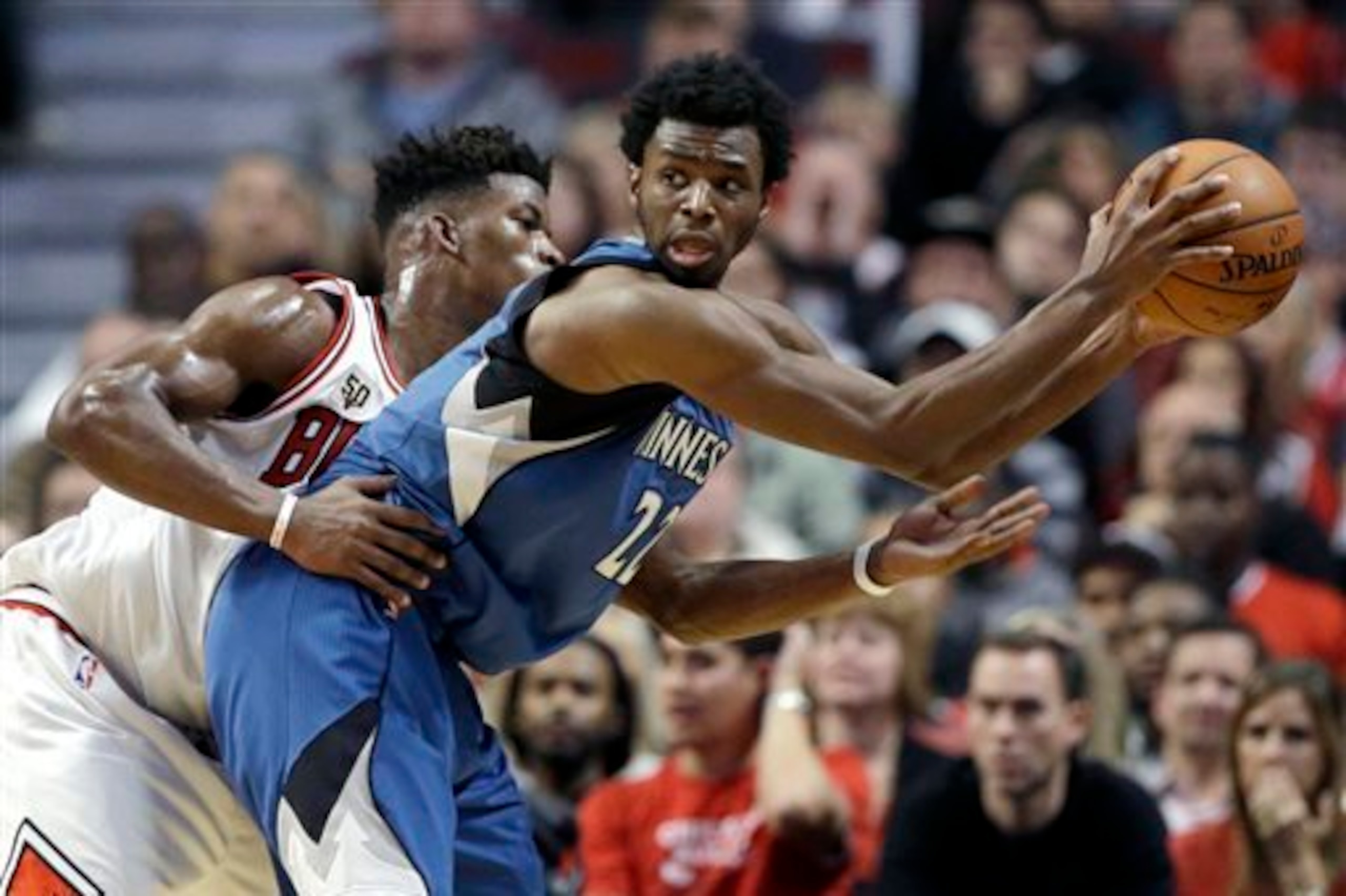
Tom Thibodeau's arrival meant the slow, patient construction of the Minnesota Timberwolves' roster would accelerate. Thibs is a hard-driving, win-now coach. His time with the Chicago Bulls was marked by minimal trust in rookies and heavy playing-time demands from his stars.
No surprise, then, that rumors about a shakeup arose during the NBA Finals.
ESPN.com's Chad Ford and Marc Stein reported Minnesota's interest in trading for Jimmy Butler—perhaps as part of a package sending the No. 5 overall pick to Chicago. Darren Wolfson of 5 Eyewitness News then reported Chicago would want Andrew Wiggins in a potential Butler deal.
You could make the argument that Butler and his already-inked max deal might constitute a bargain compared to the much larger salary Wiggins could command when he hits restricted free agency in 2018. Perhaps that would make trading for the veteran the shrewder long-term move. But that's a tough sell given Wiggins' uncertain ceiling.
He might wind up being better than Butler.
More broadly, the Timberwolves owe it to themselves to see what Thibodeau can do with the current roster (plus the No. 5 pick). Karl-Anthony Towns looks like a superstar-in-waiting—one who could easily rank among the league's top 10 players as soon as next season. Wiggins is a key part of the mix, and we've seen continuity and collective growth pay off for teams like the Warriors and Thunder.
So not only is there risk in losing Wiggins, but there's also the much larger gamble of trying to fast-track a rebuilding process that might get the real boost it needs just by having Thibodeau in charge. Minnesota's defense should improve dramatically without personnel changes, and it's silly to expect anything but improvement from a roster this young.
If Towns and Wiggins take even tiny steps forward, that progress, combined with what should be a defensive leap, could get the Timberwolves into postseason position. Butler or some other star-level player might do that, too. But the potential cost is too high.
Utah Jazz
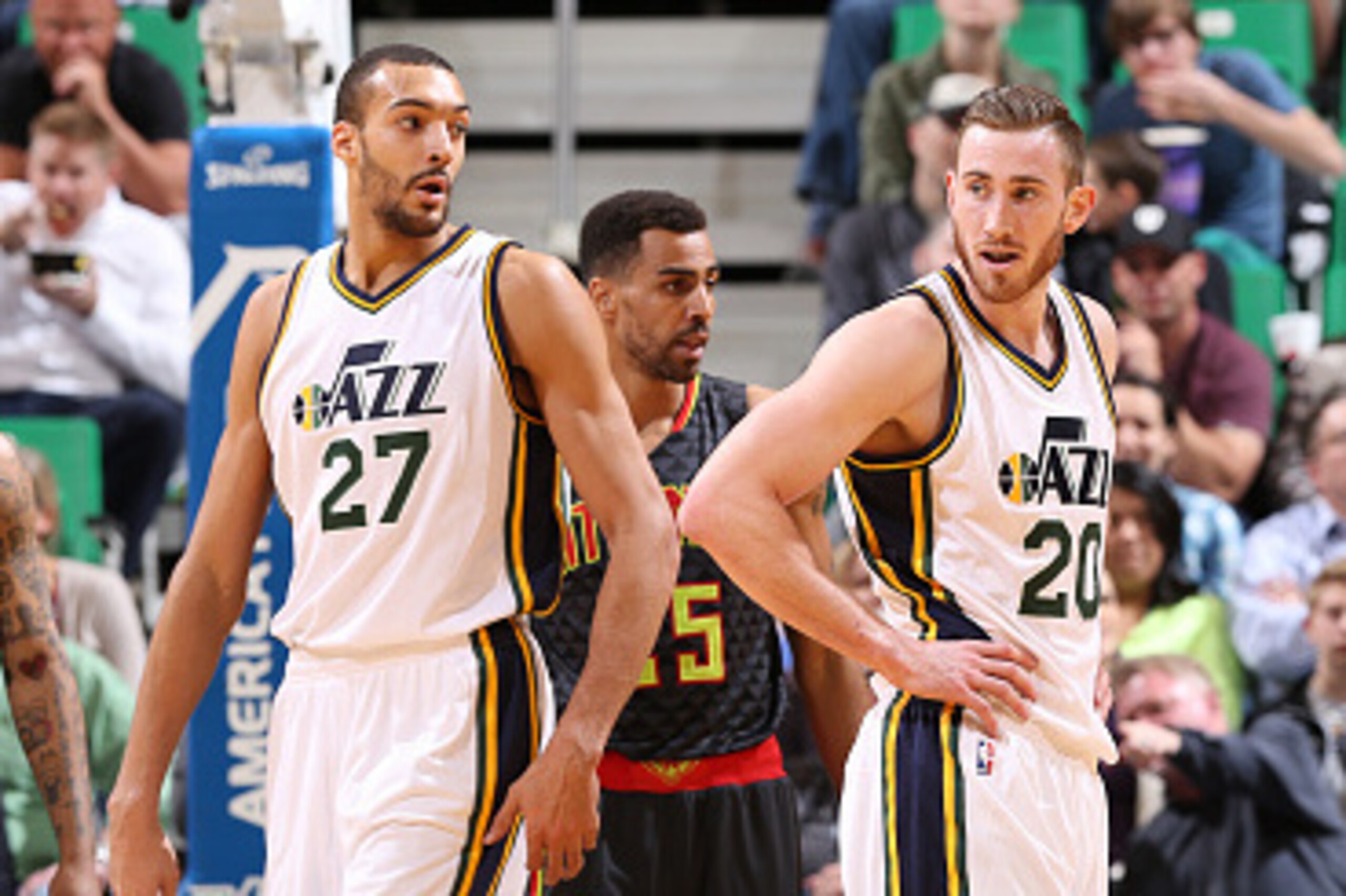
No more tinkering, Jazz. You're good.
The Jazz swapped this year's No. 12 pick as part of a three-team deal on Wednesday to bring in point guard George Hill from the Indiana Pacers. Adrian Wojnarowski of The Vertical had it first.
Hill is a terrific defender, capable of guarding either backcourt position. He's rarely spectacular on offense, but he's a low-mistake ball-handler who makes open shots. His three-point accuracy rate of 40.8 percent last year gives the Jazz great spacing off the ball whenever Gordon Hayward runs the offense.
Not only that, but Hill can play alongside returning point guard Dante Exum as a safety blanket—an ideal situation for the young Australian, per Jazz radio voice David Locke:
This was a perfect deal for Utah, and it should be the last one we see before next season starts. Because this Jazz team doesn't need another personnel tweak; it needs better luck.
Whenever the Jazz were healthy enough to put their best four players on the court together last year, they were phenomenal. Rudy Gobert, Derrick Favors, Hayward and Rodney Hood posted a net rating of plus-7.2 points per 100 possessions when they played with Raul Neto at the point. With Shelvin Mack running the show, that same unit bumped its net rating up to plus-9.4.
Unfortunately, those two five-man units appeared in just 29 and 22 games, respectively.
Imagine what that personnel package could do with a player like Hill. Or even Alec Burks who, yet again, missed a chunk of the season with injury. Or Exum.
Utah would have been a playoff participant last year with even moderate good fortune on the health front. With Exum returning, Burks theoretically healthier and now Hill slotting in as the versatile veteran point guard the team has needed for years, the Jazz are primed for more than a measly playoff berth.
If things go right, this roster should win 50 games.
Los Angeles Clippers

Wait, what?
The veteran-laden, injury-hit, early-playoff-exiting Los Angeles Clippers hardly belong in the company of young, promising clubs like the Wolves and Jazz, right?
L.A. may be more tempted than any team to make sweeping changes, like core-shaking trades involving Blake Griffin and Chris Paul. Moves like those were topics last summer, and as L.A.'s championship window continues to close, the subject will come up again.
Remember, Doc Rivers had this to say about his team in October, per Zach Lowe, then with Grantland: "We're right on the borderline. I have no problem saying that. I'm a believer that teams can get stale. After a while, you don't win. It just doesn't work. We're right at the edge. Oklahoma City is on the edge. Memphis, too. We just have to accept it."
Anyone who believes the Clips haven't been thinking about the shelf life of this group for a long time hasn't been paying attention.
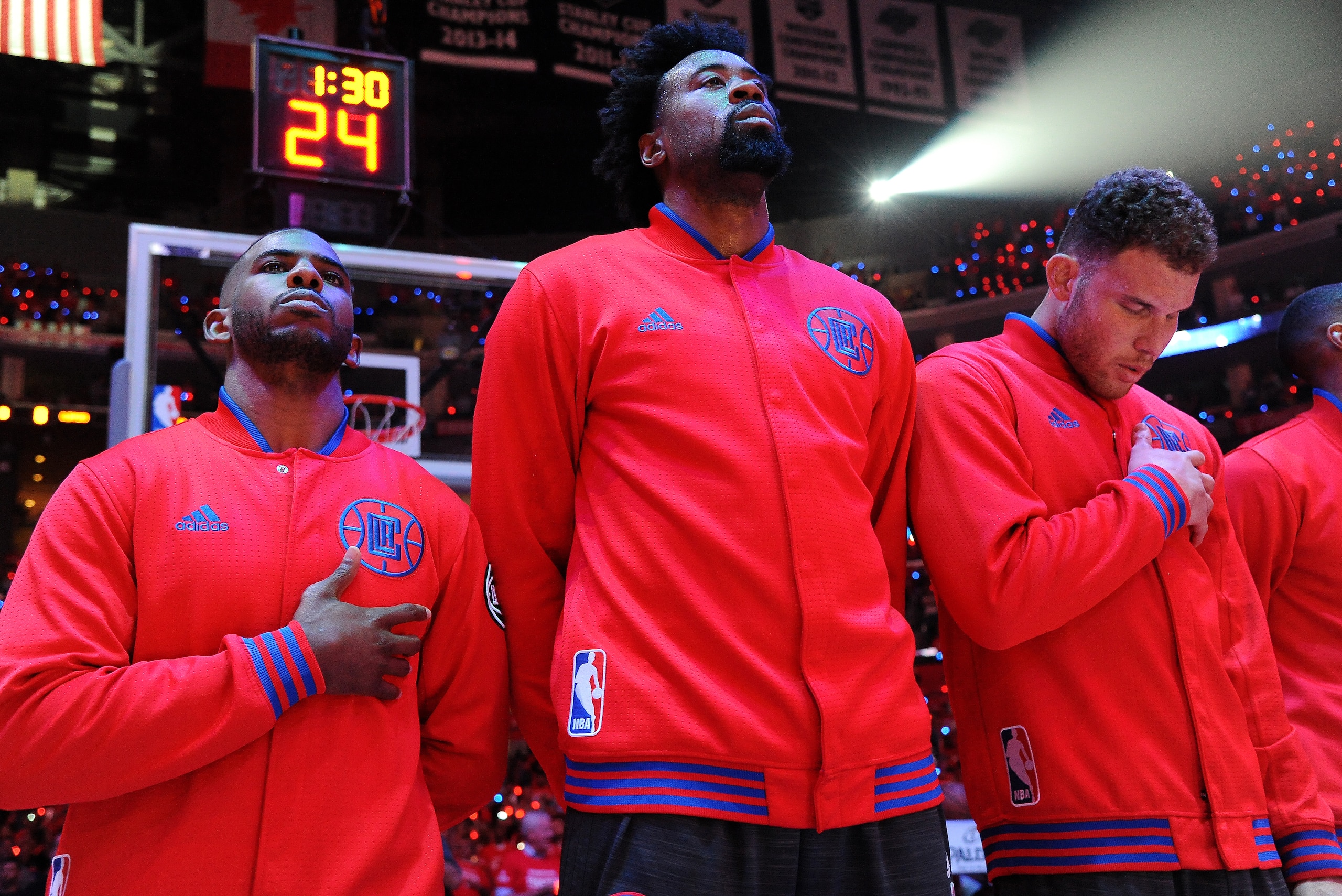
But here's the thing: The best arguments in favor of breaking up this team—Griffin's athletic decline and Paul's inevitable postseason injury—also cut the other way. Griffin's value has never been lower, and Paul's injury this time around was of the freak variety. He actually held up pretty well otherwise, especially with Griffin missing time.
If the Clippers bring back Jamal Crawford at a reasonable rate and use the space Jeff Green's expiring contract creates to find a low-cost backup big, it's not unreasonable to envision them in the conference finals. And once a team makes it that far, all it takes is a bad break from another contender to make things interesting.
Plus, with Doc Rivers' history of personnel moves, do you really want him trying to reshape a team when everyone knows he's dealing from a position of weakness?
Maybe none of that will be enticing enough to hold changes at bay, but the Clips should consider standing mostly pat this summer. They're a surefire playoff team, and, at the very least, running it back with this same group might give Griffin a chance to rehabilitate his trade value.
Win now. Rebuild later.
Stats are courtesy of NBA.com, unless noted otherwise. Follow @gt_hughes on Twitter and Facebook.

.jpg?w=2560 "NFL investigating 2 referees for separate viral exchanges")

.jpg?w=2560 "Report: Chiefs Contact Hill's Agent")
.jpg?w=2560 "OBJ Calls Out Giants After Release")
.jpg?w=2560 "Tyreek makes another cryptic post amid Chiefs rumors")

.jpg?w=2560 "Greenlaw Talks Payton Exchange")