New England Patriots: Full 2016 Draft Guide and Preview
In past years, the lack of a first-round pick might have been a huge blow in both the short term and the long term. Although the New England Patriots aren't happy about losing their first pick of the draft—precluding them from trading ahead of their current No. 29 spot—the damage is much more long-term than short-term.
As it stands, most of the Patriots' biggest needs are one or two deep down the depth chart in backup roles.
But what else can the Patriots do in the draft, outside of the first round? With 11 picks and at least a handful of needs, they can move up and down the board as they see fit or even trade ahead to the 2017 draft, where they "only" have seven picks.
But which picks do the Patriots hold? What are their biggest needs, and which players should they be moving up and down the board to target? Glad you asked. Click through this slideshow for a complete preview of the Patriots' 2016 draft, with a seven-round mock draft to cap it off at the end.
Draft Picks
1 of 5
Draft picks
- Round 2, pick No. 60 overall
- Round 2, pick No. 61 overall
- Round 3, pick No. 91 overall
- Round 3, pick No. 96 overall
- Round 6, pick No. 196 overall
- Round 6, pick No. 204 overall
- Round 6, pick No. 208 overall
- Round 6, pick No. 214 overall
- Round 6, pick No. 221 overall
- Round 7, pick No. 243 overall
- Round 7, pick No. 250 overall
What To Know
1. On average, the Patriots selected nine players per year since 2000 under head coach Bill Belichick. The Patriots hold 11 picks in the 2016 NFL draft but just seven in the 2017 draft.
2. According to Mike Reiss of ESPN, Belichick has made 54 draft-day trades in the 16 years since he's been the head coach of the Patriots. Compare that to just 24 draft-day trades in the 16 years prior to Belichick's arrival.
3. Each year since 2012, the Patriots have used their first draft pick on a defensive player. In 2012, it was defensive end Chandler Jones; 2013 brought the trade down into the second round and the selection of linebacker Jamie Collins; 2014 gave us the selection of defensive tackle Dominique Easley; in 2015, the Patriots' first-round choice was defensive tackle Malcom Brown. Two of those players (Jones and Easley) are no longer with the team.
Top Needs
2 of 5
These are the Patriots' five biggest needs.
1. Offensive Tackle
Nate Solder and Sebastian Vollmer make fine starting tackles, but the Patriots were without both at times last season. Vollmer will be a free agent following the 2016 season, and at that point, the Patriots will need to be ready with a new starting tackle. Right now, it's fair to wonder if the next starting tackle is on the roster.
When Marcus Cannon was in the lineup, the Patriots' pass protection struggled as a result. Cannon ranked 44th out of 59 offensive tackles in Pro Football Focus' pass-blocking efficiency metric (19 hurries, eight quarterback hits, four sacks allowed on 365 pass snaps).
2. Defensive Tackle/Defensive End
If the Patriots are indeed making the switch back to the 3-4 defensive front as their base defense of choice (however infrequently they may use it), they'll need linemen who are better fits for the job description of a two-gap scheme.
Right now, the Patriots have enough linemen to field a 3-4—between Malcom Brown, Terrance Knighton and Alan Branch. Other than that, the only lineman on the roster who arguably fits a 3-4 scheme is Joe Vellano.
With so little depth at such an important position, it's hard to imagine the Patriots coming out of this draft without at least one defensive lineman.
3. Running Back
Now that the Patriots have re-signed running back LeGarrette Blount, they at least have one first- and second-down option in the backfield. It's safe to assume they wouldn't have re-signed him without some confidence he would recover from the hip injury that landed him on injured reserve in 2015, but Blount isn't the only player recovering from an injury.
There's also Dion Lewis, the electric scatback who gave the Patriots offense an explosive threat out of the backfield in the first half of the season before succumbing to a torn ACL. Lewis has been injury-prone throughout his career.
There are effective backups such as James White, Brandon Bolden and Donald Brown; however, the Patriots could be in search of a player to compete with Blount for the top spot in the proverbial batting order.
4. Cornerback
Malcolm Butler and Logan Ryan did a fine job as starting cornerbacks in 2016—neither let up more than 60 percent completions on the season, according to Pro Football Focus. The team's bigger problem was in finding a third cornerback, though; the top five defensive backs were three safeties and two cornerbacks, which makes for an odd nickel defense.
Butler and Ryan are both set to hit the open market after the 2016 season, too, so the Patriots could be in the market for two more starting cornerbacks in 12 months' time. Of course, they can get ahead of the curve by drafting a cornerback in 2016.
5. Wide Receiver
Some might argue that the need for a wide receiver is mitigated by the Patriots' acquisitions of Chris Hogan and Nate Washington; but when has the number (or notoriety) of acquisitions at wide receiver ever meant anything? History is littered with Chad Ochocincos and Joey Galloways who were at or near the end of their career and never amounted to much with the Patriots.
That's not to say that Hogan and Washington won't pan out, but the Patriots shouldn't assume they have found the boundary receiver who will help carry the offense forward for the next three to five years.
That's especially true since the Aaron Dobson experiment appears to be nearing its end; the three-year veteran has caught 53 passes for 698 yards and four touchdowns in his injury-riddled career and enters the last year of his contract.
Top Targets
3 of 5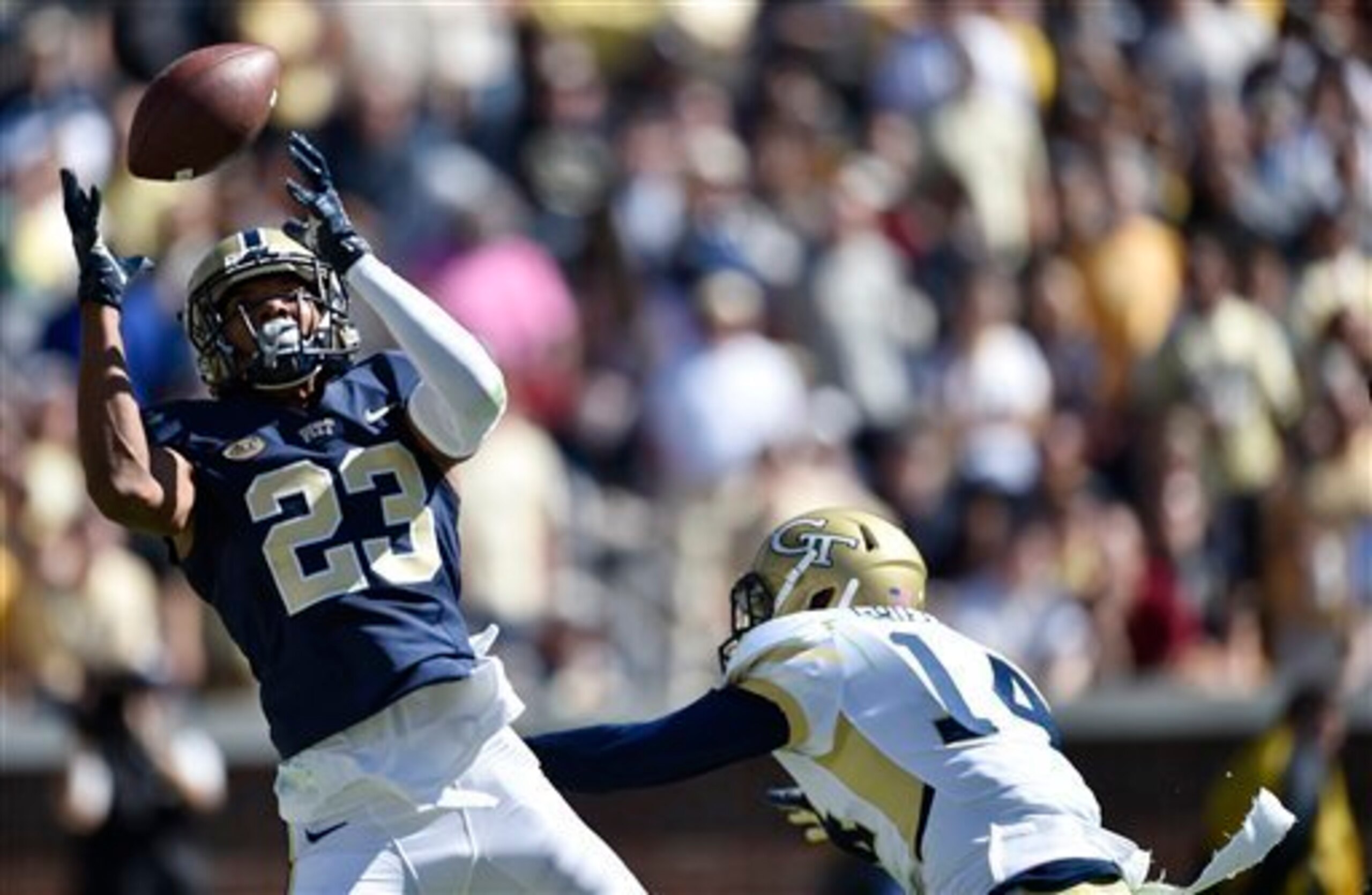
Here are a couple of the top players the Patriots should be targeting at each of their positions of need.
Offensive Tackle
1. Le'Raven Clark, Texas Tech: He has the typical build of a Patriots tackle, with the length (6'5", 316 pounds, 36 ⅛-inch arms) that matches both Solder and Vollmer. NFL.com's Lance Zierlein regards him for his elite foot quickness and football intelligence, two traits that pique the interest of offensive line coach Dante Scarnecchia.
2. Jason Spriggs, Indiana: Spriggs isn't quite as long as Clark, but at 6'6" and 301 pounds with 34 ⅛-inch arms, he might still be long enough to play left tackle in the NFL. He showed off his athleticism at the scouting combine, with top-five finishes in the 40-yard dash, bench press, broad jump and 20-yard shuttle. He might need a year to develop, which would make him perfect as a potential heir to Vollmer.
Defensive Tackle/Defensive End
1. Chris Jones, Mississippi State: Given Jones' scheme versatility as either a 4-3 defensive tackle or as any of the three line positions in a 3-4, the 6'6", 310-pound lineman might be a perfect fit for the Patriots defense. The Mississippi State product posted 95 total tackles, 17.5 tackles for loss, 8.5 sacks and 10 batted passes in three seasons.
2. Austin Johnson, Penn State: At 6'4" and 314 pounds, Johnson is a load on the defensive line and has the traits to be a classic gap-eating nose tackle in the mold of Vince Wilfork. Johnson was recruited by former Patriots offensive coordinator Bill O'Brien in 2013, so Belichick may be able to glean some insight on Johnson from his old friend.
Running Back
1. Kenneth Dixon, Louisiana Tech: Kenneth Dixon is Louisiana Tech's all-time leading rusher with 4,483 rushing yards and 72 career rushing touchdowns, but he also can double as a receiver out of the backfield, with 63 receptions for 849 yards and 13 touchdowns over the past two seasons. He has a compact frame at 5'10" and 215 pounds, which leaves him a little susceptible in pass protection.
2. Alex Collins, Arkansas: If the Patriots want a pure smashing running back, Alex Collins might be the best bet. The 5'10", 217-pound back plays with reckless abandon at times, and according to Zierlein, he is a "one-speed runner." He has great pad level to drive forward for extra yards but doesn't break many tackles, with just five broken tackles in his previous 475 rush attempts, per NFL.com.
Cornerback
1. Artie Burns, Miami: Looking for a prototype man cover cornerback in this year's draft class? Look no further than Artie Burns, whose 6'0", 193-pound frame and 33 ¼-inch arms all scream "press man." He will need some time to develop, and he'll need to tone down the penalties, according to Zierlein, but he has the raw talent and mentality to grow into a starting-caliber cornerback.
2. Cyrus Jones, Alabama: At 5'10" and 197 pounds, Alabama's Cyrus Jones isn't quite the perfect physical specimen for the cornerback position. What he lacks in size, he makes up with confidence and toughness. The Patriots will love his willingness and "aggressiveness" in run support, as described by CBS Sports' Dane Brugler.
Wide Receiver
1. Tyler Boyd, Pittsburgh: The Patriots don't care as much about size as they do about athletic ability at wide receiver, and Pittsburgh's Tyler Boyd has plenty of athleticism. The 6'1", 197-pound receiver is regarded by Zierlein as "ultra-competitive," which sounds like the first word one would use to describe Julian Edelman. He also draws comparison to San Diego Chargers wide receiver Keenan Allen, a successful boundary receiver the Patriots passed up in favor of Dobson.
2. Sterling Shepard, Oklahoma: Sterling Shepard burst onto the scene with a strong showing at the Senior Bowl, where CBS Sports' Dane Brugler and Rob Rang say Shepard's "short-area burst" allowed him to "create spacing and give his quarterback a clean target." Zierlein describes Shepard as "silky smooth with terrific route quickness." Sounds like a perfect description of a successful Patriots wide receiver.


The Latest Rumors
4 of 5
These are a few of the biggest rumors surrounding the Patriots headed into the draft.
Lack of First-Round Pick Won't Change Patriots' Philosophy
The Patriots were docked a first-round pick due to the findings of the Wells Report as it related to the team's involvement in Deflategate. In his predraft press conference on April 19, Patriots director of player personnel Nick Caserio indicated that the absence of their first-round pick will not change their overall thinking ahead of—and during—the draft.
"I don't think it really changes the overall philosophy," Caserio said. "You still go through the same process. The reality is that our process really hasn't changed this year relative to what we've done in previous years. We have the picks that we have and we go through a similar process. We grade the players and then we'll evaluate the players and then we'll look up there and see at the time that we pick, whenever that may be, what one player looks like relative to another."
The Patriots cannot trade up ahead of the 29th overall pick in the draft; if they do, whatever first-round pick is the highest of the two would be the one they lose.
Needs Will Not Dictate Patriots Selections
Every year, teams face a dichotomy of drafting for need or drafting the best player available. There are ways to do both at the same time, but it's a hard balance to strike. Caserio indicates that the team will take a similar approach to what they have done in the past, which is to not focus on filling a need but instead on drafting the best player at any given slot.
Caserio said at the press conference: "We've talked about this in years past, say [Nate] Solder, we drafted Solder. He came in and basically he played jumbo tight end and right tackle because we had Sebastian [Vollmer] and we had Matt Light. Just because we had Matt and Sebastian didn't necessarily take us out of drafting Nate. You try to make the decision that you feel is best for your team based on the players that you're looking at on the board."
So, when the draft is done, don't be surprised if there are one or more unchecked boxes on the Patriots' list of needs.
Patriots Showing Predraft Interest in Top Running Backs
According to Doug Kyed of NESN.com, citing multiple reports, the Patriots are looking at several of the draft's top running backs, including Utah's Devontae Booker and Louisiana Tech's Kenneth Dixon.
Booker was a workhorse at Utah, with 560 carries for 2,773 yards and 21 touchdowns. Dixon had an even heavier workload, with 802 carries for 4,483 yards and 72 rushing touchdowns.
Even with a depth chart at running back that consists of LeGarrette Blount, Dion Lewis, James White and Brandon Bolden, there's still room for another back to compete for the carries on first and second down.
The running back position is one of the top needs for the Patriots headed into the draft, as there appears to still be a need at the top of the depth chart.
7-Round Mock Draft
5 of 5
Here's another possibility of how the draft might look when the Patriots are finished making selections (hat tip to Fanspeak's On The Clock mock draft simulator).
Round 2, pick 60: DT Chris Jones, Mississippi State: With a blend of quickness and strength, Chris Jones would be a perfect fit for the Patriot's versatile 3-4/4-3 defensive scheme—provided he's still available. If he can improve his ball awareness and give more consistent effort, he might become the "sum of his parts," as described by CBS Sports' Dane Brugler.
Round 2, pick 61: CB Cyrus Jones, Alabama: Feisty and competitive but slightly undersized, Cyrus Jones is similar to the mold of Malcolm Butler and Logan Ryan. He is a willing run defender and has enough athleticism to compete in man coverage. He may need to fine-tune his zone-coverage awareness, according to Lance Zierlein of NFL.com, but he also has value on special teams as a returner (14 career kick returns, 327 yards; 12 punt returns, 143 yards).
Round 3, pick 91: RB Kenneth Dixon, Louisiana Tech: Belichick may not like his propensity for fumbles (14 in his career at Louisiana Tech), but Kenneth Dixon brings enough other skills to the game that if he can improve his ball security, he'll be a huge asset to the offense. The 5'10", 215-pound running back may also need to improve his pass protection if he wants to become a three-down back.
Round 3, pick 96: OT Willie Beavers, Western Michigan: At 6'4" and 324 pounds, Beavers is made to play on the offensive line, at just about any spot. According to Zierlein, Beavers has the feet to play left tackle, but he also has some power in his game and could be a fit on the right side of the line as well. He has long arms at 33 ½ inches, but he needs to learn to make better use of them. Scarnecchia can help with that.
Round 6, pick 196: FB Dan Vitale, Northwestern: Vitale's positional fit is unclear, but he may be best suited as an H-back who moves around the offense into favorable matchups. The 6'1", 239-pound tight end put up top-five finishes at the scouting combine in the bench press, vertical jump, 20-yard shuttle and 60-yard shuttle. With 135 receptions, 1,427 yards and 11 touchdowns, he has the production that will draw attention during the draft.
Round 6, pick 204: DE Lawrence Thomas, Michigan State: Lawrence Thomas isn't quite the ideal size for a 3-4 defensive lineman at 6'3" and 286 pounds, but he has the frame to add more bulk if the Patriots envision him in a two-gap scheme. He has a high football IQ, with experience at fullback and linebacker as well as the defensive line. Thomas hasn't been highly productive on the defensive line, but he has the tools to be of value in a rotation.
Round 6, pick 208: WR Chris Brown, Notre Dame: The "other" Notre Dame receiver (not named Will Fuller), Chris Brown improved on his numbers each year for the Fighting Irish (87 receptions, 1145 yards, five touchdowns final two years). He has the prototype boundary size, at 6'2" and 194 pounds, but the most important thing about him is what Zierlein describes as "crisp, quality routes."
Round 6, pick 214: OLB Steve Longa, Rutgers: What would a Patriots mock draft be without at least one Rutgers player? Steve Longa is what the Patriots like in a linebacker. He's a little undersized at 6'1" and 241 pounds, but he is competitive, has four-down ability (defense and special teams) and plays with good fundamentals (two broken tackles, seven missed tackles in 2015, per Zierlein).
Round 6, pick 221: TE David Morgan, Texas-San Antonio: Vitale fills a pass-catching tight end role; David Morgan fills a backup spot among the two-way (blocking and receiving) variety of tight end. At 6'4" and 262 pounds, he has the size to match up with NFL linebackers and hold his own as a blocker. He's not the quickest tight end, but he has enough overall athleticism with a top-five finish in the three-cone drill, bench press, 20-yard shuttle and 60-yard shuttle at the scouting combine.
Round 7, pick 243: S Jordan Lucas, Penn State: He's a physical run defender who might get beaten in coverage. Belichick won't have a hard time getting the inside scoop on Lucas; according to Rob Rang of CBS Sports, Lucas was the first commitment of the Bill O'Brien era. Rang adds that he loves football and has the right mentality for a back-of-the-roster defensive back who will need to play special teams.
Round 7, pick 250: DT Quinton Jefferson, Maryland: As the Patriots search for more depth on the defensive line, they might find the 6'4", 291-pound Quinton Jefferson to be a fit in a rotational role. According to Zierlein, Jefferson "flashes penetration ability and some pass-rushing talent, but he needs to be fitted to a one-gap, upfield defense." As a pure interior pass-rusher with moldable tools, Jefferson could be a fit.
Unless otherwise noted, all quotes obtained firsthand.

.jpg?w=2560 "LA Premiere of \"Chad Powers\"")