
The spot on the board where a prospect gets taken becomes irrelevant the day after the NBA draft. It's his destination that could determine the next five years of his career.
Team fit plays an enormous role in an NBA prospect's development. Some players are better off going to a roster that already has All-Stars and veterans to complement. Others need the touches and early playing time.
Is Kawhi Leonard this good today had the Indiana Pacers not traded him to the San Antonio Spurs? Would Anthony Bennett have flopped so badly had he been taken by a better team that gave him a more defined role?
TOP NEWS

J-Dub Suffers Gruesome Injury
Melo's Quote on Confidence 😎
Mazzulla Weighs In on Brown-Tatum Drama
I ranked the best destinations for the consensus top eligible prospects. These are limited to the lottery teams realistically taking them in that draft range and are the best destinations for the specific player—not necessarily the ideal targets for the corresponding team (although situations that will be mutually beneficial will be considered).
Ben Simmons (LSU, PF, Freshman)

3. Phoenix Suns
Simmons would be fun to watch with the Suns—they rank in the top five in pace, per ESPN. He's the most dangerous transition player in the class and could be one of the league's more potent open-floor weapons.
With Brandon Knight and Eric Bledsoe expected back, the roster still lacks balance. There isn't any logjam up front in Phoenix, where Simmons would have freedom and the chance to inject some much-needed life into the frontcourt.
2. Minnesota Timberwolves
The Wolves have an opening at power forward, and there's just something scary about the thought of an Andrew Wiggins-Ben Simmons-Karl-Anthony Towns front line.
I can't think of a more athletic trio of wings and bigs.
Simmons would get to start his career as a third option in Minnesota, which would allow him to focus on his strengths, particularly transition offense and passing.
The Wolves need shooting, so it's possible they favor Duke's Brandon Ingram. But if you're Simmons, it would be tough to complain about starting your career off under Tom Thibodeau in Minnesota.
1. Boston Celtics
If I'm picking an NBA coach to maximize Simmons' unique talent, Brad Stevens is my first call. He'll find a way to get the most out of the former Tiger's versatility, which highlights athleticism, playmaking, two-point scoring and rebounding.
Simmons wouldn't be asked to do nearly as much in Boston as he did at LSU, where he still managed to maintain efficiency (shot 56 percent) alongside erratic shooters and decision-makers.
Simmons would ultimately slide right into the starting power forward position, going to work with a disciplined group of veterans and top-notch coaching.
Brandon Ingram (Duke, SF, Freshman)
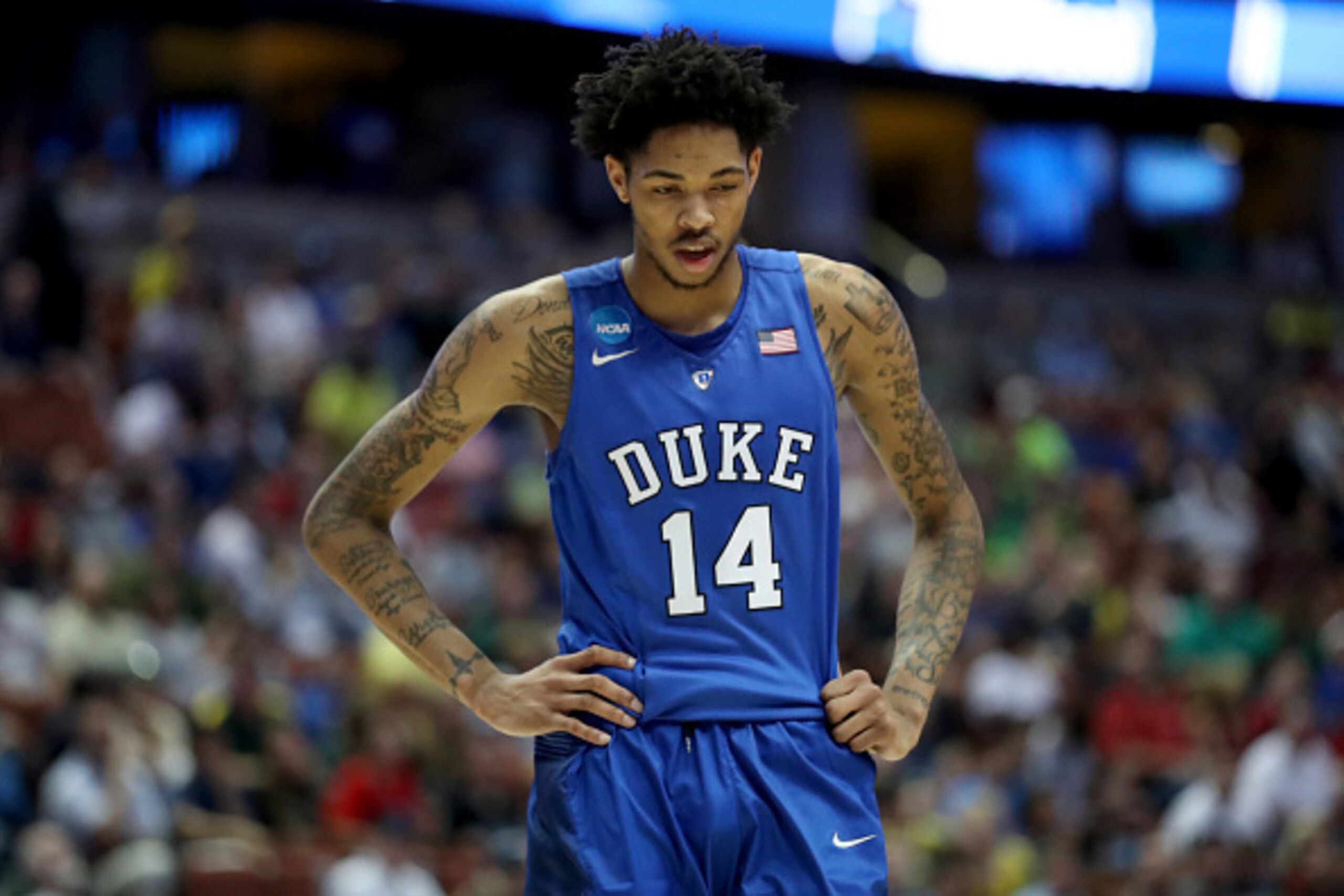
3. Los Angeles Lakers
The Lakers need a scoring wing who can shoot (last in NBA three-point percentage). Cue Ingram, who hit 41 percent of his threes at Duke and offers mismatch potential at the small forward position. He'd fit between Julius Randle and Jordan Clarkson, with the chance to start right away in L.A.
On the downside, the Lakers lack veterans and established talent, which Ingram would benefit from. He's not ready to start taking over but, long term, a D'Angelo Russell-Clarkson-Ingram-Randle group sure works on paper.
2. Boston Celtics
The thought of Ingram playing alongside Jae Crowder should be intriguing. So is the thought of Ingram at the 2, given his 6'9" size, ball-handling skills and jumper.
A 41 percent three-point sniper at Duke, Ingram would give the Celtics (No. 28 in NBA three-point percentage) shooting and a potential go-to option, something the roster doesn't currently have.
And the Celtics offer Ingram an ideal setting to develop, given Stevens' stainless reputation plus the team's success and bright future.
1. Minnesota Timberwolves
The Wolves could use shooting (No. 25 in NBA three-point percentage), and Ingram—who's still 18 years old and 190 pounds—needs some support.
As a third or fourth option to start, Ingram's initial pressure and workload wouldn't be too much. While he'd be forced to rely on one-on-one shot creation (a weakness) in a place like Philadelphia, he'd get to ease his way as a spot-up shooter and opportunistic driver in a lineup with Wiggins, Towns and Ricky Rubio.
Ingram and Wiggins ultimately seem interchangeable on the wing.
Having had experience playing off the ball at Duke, Ingram shouldn't have trouble fitting in anywhere. But with an opening on the wing in Minnesota and the fact the team could use an additional shot-maker, this is a relationship both parties can benefit from.
Buddy Hield (Oklahoma, SG, Senior)
3. Denver Nuggets
The Nuggets have a handful of promising, young pieces between their trio of bigs and Emmanuel Mudiay. Hield would have the chance to give Denver an upgrade and potential cornerstone at the 2-guard position.
Former Michigan State product Gary Harris currently occupies that spot and showed improvement this season, but Hield's ceiling is higher based on what we've seen from both youngsters.
Hield would fit nicely with a ball-handler like Mudiay. The point guard would do all the creating, giving the rookie-to-be an opportunity to do what he does best: score the basketball.
2. Boston Celtics
With a starting backcourt already in place, Boston isn't the best destination for Hield's statistics. But from a developmental standpoint, it's tough to argue against.
Given his ability to shoot and score without needing the dribble, Hield seems like an ideal complement to a ball-dominant point guard like Isaiah Thomas. The fact the Celtics ranked as one of the three worst three-point shooting teams in the league should make him a target.
1. Minnesota Timberwolves
The Wolves should already have the draft's top shooter highlighted on their board. Minnesota's three-point weakness is aforementioned, and Hield would have a chance to make a name for himself early as an outside scorer.
He projects more as a complementary shot-maker than a one-on-one guy, which is perfect for a lineup that already has two go-to options.
Dragan Bender (Croatia, PF, 1997)
3. New Orleans Pelicans
The idea of moving Anthony Davis to center and plugging Bender in at the 4 is appealing. Long term, the two seem like an intriguing pair, given the versatility they each offer at both ends of the floor.
And from the perspective of immediate integration, nothing will take the pressure off Bender like playing alongside one of the league's best bigs, (who happens to command significant attention).
With Bender capable of playing behind the arc, there could be favorable spacing in New Orleans.
2. Boston Celtics
Bender would benefit from joining a playoff team that allows him to take his time. He's still 18 years old and plays just 12.1 minutes per game overseas.
In Boston, he'd have a terrific player-development coach, a path to the starting power forward position and the time to settle in. Plus, the team could use another big to stretch the floor, which would give him an opportunity to establish his role early in that developmental process.
1. Minnesota Timberwolves
Bender next to Towns would create all sorts of space and flexibility. Both can shoot the three, which helps spread the floor and, given their size and foot speed, they could become near-interchangeable as a power forward-center duo.
Though expectations for the Wolves will be much greater in 2016-17, we're still talking about a team led by two kids under 22 years old. Bender won't have any pressure to produce early in Minnesota.
Three or four years from now, he could be ready to peak synchronously with the team.
Kris Dunn (Providence, PG, Junior)

3. Sacramento Kings
Rarely would I recommend Sacramento as a destination for development. But with Rajon Rondo entering free agency, the Kings could be one of only a few drafting in the top 10 that needs a point guard.
Assuming the Kings don't overpay to keep Rondo, whose 11.7 assists per contest helped the team win just 33 games, Dunn would take over right away. And he'd actually have some weapons around him, which would prevent him from trying to do too much.
2. Milwaukee Bucks
Dunn struggles with turnovers, but with Giannis Antetokounmpo doing more ball-handling and Jabari Parker emerging as a go-to scorer, his workload wouldn't be too heavy.
Dunn should be capable of quickly taking a key job in Milwaukee (Antetokounmpo can't run the point for 48 minutes). The Bucks would surely appreciate his on-ball pressure defense and setup ability.
1. New Orleans Pelicans
I'm a big believer in point guards needing the chance to play and make mistakes right away. The more reps early, the sooner they can plow through the trial-and-error process.
At the same time, you don't want rookie ball-handlers carrying too much of the load. In New Orleans, Dunn would have just enough freedom and support.
He'd start next year at the point in New Orleans. Jrue Holiday offers the versatility to play the 2 or sixth man. He'd act as a comfort blanket. And Dunn—a dynamite ball-screen playmaker—would have the NBA's top pick-and-roll target to work with.
Anthony Davis would likely see a few extra easy buckets per game with Dunn running the point. Together, we could be talking about one of the more exciting guard-big tandems.
Jamal Murray (Kentucky, SG, Freshman)
3. Denver Nuggets
The Nuggets need additional backcourt firepower, and though Gary Harris looks like a quality prospect, Murray's offensive upside is greater.
Considering Mudiay just shot 31.9 percent from three, Denver could use Murray's shooting (40.8 percent from three) and perimeter scoring. He'd have the chance to play right away, while Harris' and Will Barton's presence would help keep Murray's shot selection in check.
2. Minnesota Timberwolves
Zach LaVine turned into a dangerous combo guard prospect, but that doesn't mean Murray and the Wolves can't still mutually benefit from teaming up.
While LaVine offers athleticism, transition offense and some playmaking, Murray would give Minnesota much-needed shooting in the half court, whether it's between Rubio and Wiggins or off the bench as a spark.
Murray, who isn't the sharpest decision-maker, should also find it easier to remain efficient in a lineup with Wiggins and Towns, who'll absorb most of the touches and attention.
1. Boston Celtics
Murray's strengths revolve around shot-making—not shot-creating. In Boston, he can play to those strengths without having to work one-on-one.
He's at his best shooting off screens or spotting up, which is what he'd do early in a lineup that has Isaiah Thomas and Marcus Smart handling the ball.
I see Murray as more of a sixth man, anyway. And he'd have the chance to shine in that role with the Celtics, who could use a scoring spark off the bench. Plus, the Celtics have Smart and Avery Bradley to help hide or mask Murray's defensive limitations.
Jaylen Brown (California, SF, Freshman)
3. New Orleans Pelicans
New Orleans would be an interesting place for Brown to experiment playing some small-ball 4 next to Anthony Davis.
Brown lacks shooting range and a handle, but at 6'7", 225 pounds with length and showtime athleticism, he should be a tough matchup against slower-footed bigs. Either way, there is a huge opening at the 3 spot in New Orleans, where he'd receive the reps to improve his ball skills and isolation scoring.
2. Boston Celtics
The Celtics need shooting, but Brown may need the Celtics more—a playoff team that offers veteran support, reputable coaching and a potential opening at forward. They also rank No. 3 in pace, which suits Brown's burst.
We know he struggles to create, something he wouldn't have to think about as much in a lineup with Thomas and Marcus Smart. Stevens would put Brown in position to play to his strengths as a transition weapon and slasher.
A Jae Crowder-Brown duo at forward would pack strength, toughness and defensive versatility, though it might require more center minutes from Kelly Olynyk, who can stretch the floor.
1. Phoenix Suns
The Suns ultimately need a wing with a little more upside than P.J. Tucker. Brown would have an open path to the starting position without having to do too much ball-handling early on.
The Suns' No. 4-ranked pace should work for Brown as well; he's at his best in transition. Speed, power and explosiveness translated to 50 buckets at the rim this year within the first 10 seconds of the shot clock, according to Hoop-Math.com.
He struggles to create his own shot once the game slows down, but the Suns start two playmakers, and Brown could get cleaner looks and easier buckets.
Jakob Poeltl (Utah, C, Sophomore)
3. Boston Celtics
Boston is a bit unrealistic for Poeltl, as it would likely meaning trading down a few spots, considering the Celtics are projected to select in the top three (with the Brooklyn Nets' pick). But they may need another center with Jared Sullinger and Tyler Zeller entering free agency. And Poeltl's upside is higher than any of Boston's rotation bigs.
He'd give the Celtics a mobile 7-footer, plus the potential to protect the rim and switch in pick-and-roll coverage. But given the enormous strides he made offensively, he could also add post scoring and passing.
2. New Orleans Pelicans
Poeltl has the chance to be what Omer Asik never was for New Orleans. With better feet and hands, Poeltl will be the more effective offensive player around the rim, and potentially just as strong an interior defender.
The Pelicans are ultimately one of the few teams in the lottery who can upgrade at center in the 2016 draft. For Poeltl, the fastest track toward relevance would likely be next to Davis in New Orleans.
1. Milwaukee Bucks
Poeltl could eventually replace Greg Monroe, who landed in trade rumors during February, according to the Journal Times' Gery Woelfel, after the team's defense regressed with him anchoring it.
Poeltl is more mobile and versatile defensively, and despite lacking great length, he'd be surrounded by it in Milwaukee.
Based on his 17.2 points per game and development as a post scorer in 2015-16, Poeltl could eventually give the Bucks an option to feed around the key. As he told Bleacher Report's C.J. Moore back in December: "A lot of teams have played me straight up, and I've taken my chance with that. If I'm in a one-on-one situation, I should go to work because I am a pretty good post player, and that's a good shot for our team."
That, of course, was playing against collegiate defenses, but confidence and ability are two things that any NBA team should look to eventually utilize. Until his offensive game blooms, Poeltl would work nicely off Antetokounmpo, Parker and Khris Middleton as a pick-and-roll target, finisher and putback machine on the offensive glass.






.jpg?w=2560 "Latest Peyton-Colts Rumors")