

Ranking the Top 2016 NBA Draft Prospects at Every Position
For NBA general managers looking to fill a need, it helps to rearrange and rank the prospects by position. I did it for the top five point guards, shooting guards, small forwards, power forwards and centers eligible for the 2016 draft.
This year, teams looking for quality 4s, 3s and 2s could be in luck. Those positions clearly offer the most depth, as well as the most upside from top-ranked prospects. Teams searching for anchors or new floor generals may ultimately have to wait for free agency.
Though many of these prospects will end up logging minutes at multiple spots during their careers, I assigned them to the position they'll likely play most.
TOP NEWS

Pic of LeBron's Helicopter Commute 🚁

Duren Calls Out 'False' Rumors
Trade Idea to Give Warriors Alternative All-Star Upgrade 🏀
These rankings are based on NBA potential flashed and any feedback I've received from scouts.
Point Guards
5. Melo Trimble (Maryland, 6'3", Sophomore)
Trimble lacks size, length and bounce, which traditionally doesn't bode well for the NBA transition. We've seen a number of highly skilled, but below-the-rim point guards struggle early in the pros, from Trey Burke and Shane Larkin to Shabazz Napier.
Realistically, Trimble projects as a backup, though his ability to shoot off the dribble and create should hold NBA value. He's proved he can pull up from anywhere, while his breakdown quickness should naturally translate to playmaking.
Limited upside at both ends of the floor will keep Trimble from earning lottery consideration. But in the 20-40 range, a team looking for backcourt depth and reserve firepower could pull the trigger.
4. Gary Payton II (Oregon State, 6'3", Senior)

Payton offers unique versatility to the guard position, when you take into account his rebounding rate (7.7 per game), steals (2.6 per game) and improved floor game (5.2 assists per game).
He's not your typical point guard, but he's become better at making reads and passes as Oregon State's primary decision-maker.
At 23 years old, the fear with Payton is his jumper (30.4 percent from three) is already broken. Still, his defensive tools, playmaking and activity are worth coveting with a late first-round pick.
3. Demetrius Jackson (Notre Dame, 6'1", Junior)
Jackson has the explosive bounce to match the ball skills, which helps compensate for 6'1" size. But he's also a strong 198 pounds.
Though small, Jackson is physically built for the pros. And he's sharp, from his decision-making to his execution.
He turns the ball over just 2.3 times per 40 minutes, and he's shooting over 54 percent inside the arc for the second straight year. He's also shooting a career 39 percent from three and making 45.6 percent of his two-point jumpers this season, per Hoop-Math.com.
When the game slows down, Jackson has the tendency to do the same. He isn't a dazzling half-court playmaker.
However, super athleticism, shot-making and basketball IQ combine to form a safe, convincing package.
2. Wade Baldwin IV (Vanderbilt, 6'3", Sophomore)
Baldwin has managed to stand out for one of the country's most disappointing teams. At 6'3", 194 pounds with a gigantic 6'10" wingspan, you can't miss him under the NBA lens. He aces the eye test with exceptional physical tools and burst that translate to highlight dunks in transition and disruptive on-ball defense.
Baldwin is a sound passer with vision off penetration, screens and general movement. And he's shooting over 40 percent from three for the second straight year.
His playmaking ability may actually be masked in Vanderbilt's system, just like Russell Westbrook's was at UCLA. He still turns the ball over too much (18.8 percent turnover percentage) and struggles badly at the rim (49.1 percent). Baldwin could also stand to improve his mid-range scoring ability.
But there is hidden upside tied to Baldwin's size, length and athleticism, which are supported by impressive shooting and passing. He's a candidate to soar up boards during predraft workouts.
1. Kris Dunn (Providence, 6'4", Junior)
At 6'4", 205 pounds with a 6'9" wingspan, Kris Dunn's size, length and quickness were tailor-made for the point guard position. He'll fit right in physically and should immediately jump out as a defensive asset.
Dunn ranks top five in steals, again, thanks to blazing foot speed, long arms, active hands and anticipation.
But if he's ever going to be signing an All-Star-level contract, it will be due to his playmaking. Dunn is lightning in the open floor and dangerous on off-ball screens as a passer or scorer. He's an excellent shot-creator—both for teammates and himself within 18 feet.
Inefficiency could ultimately stand in his way of stardom, with shooting and decision-making representing Dunn's two biggest weaknesses. But of all the point guards expected to be eligible this upcoming June, none will be more prepared than Dunn, who also has plenty of room to improve.
Shooting Guards
5. Malik Beasley (Florida State, 6'5", Freshman)
Showtime explosiveness consistently results in easy buckets off drives and transition for Beasley. He averages 16 points, and though not a threatening one-on-one scorer, he finds ways to convert within the flow of Florida State's offense, whether it's by attacking open lanes, pulling up after one to two dribbles or spotting up off the ball.
Making 1.7 threes and 38.2 percent of his attempts, the combination of Beasley's shooting, athleticism, promising in-between game (pull-ups and floaters) and defensive foot speed looks like it should translate into a supporting NBA role.
4. Furkan Korkmaz (Turkey, 6'7", 1997)
Korkmaz has received solid experience and exposure in Euroleague with Anadolu Efes, who has 2014 lottery pick Dario Saric and last year's No. 31 pick Cedi Osman.
At 6'7", Korkmaz possesses notable size and bounce for a 2-guard, though it's his shooting stroke that drives the appeal to his potential. He's 28-of-61 (45.9 percent) from three and knocks them down off the catch or dribble.
He'll need to put on muscle, but at 18 years old, Kormaz appears to have an NBA future as a shot-maker and transition weapon.
3. Denzel Valentine (Michigan State, 6'5", Senior)
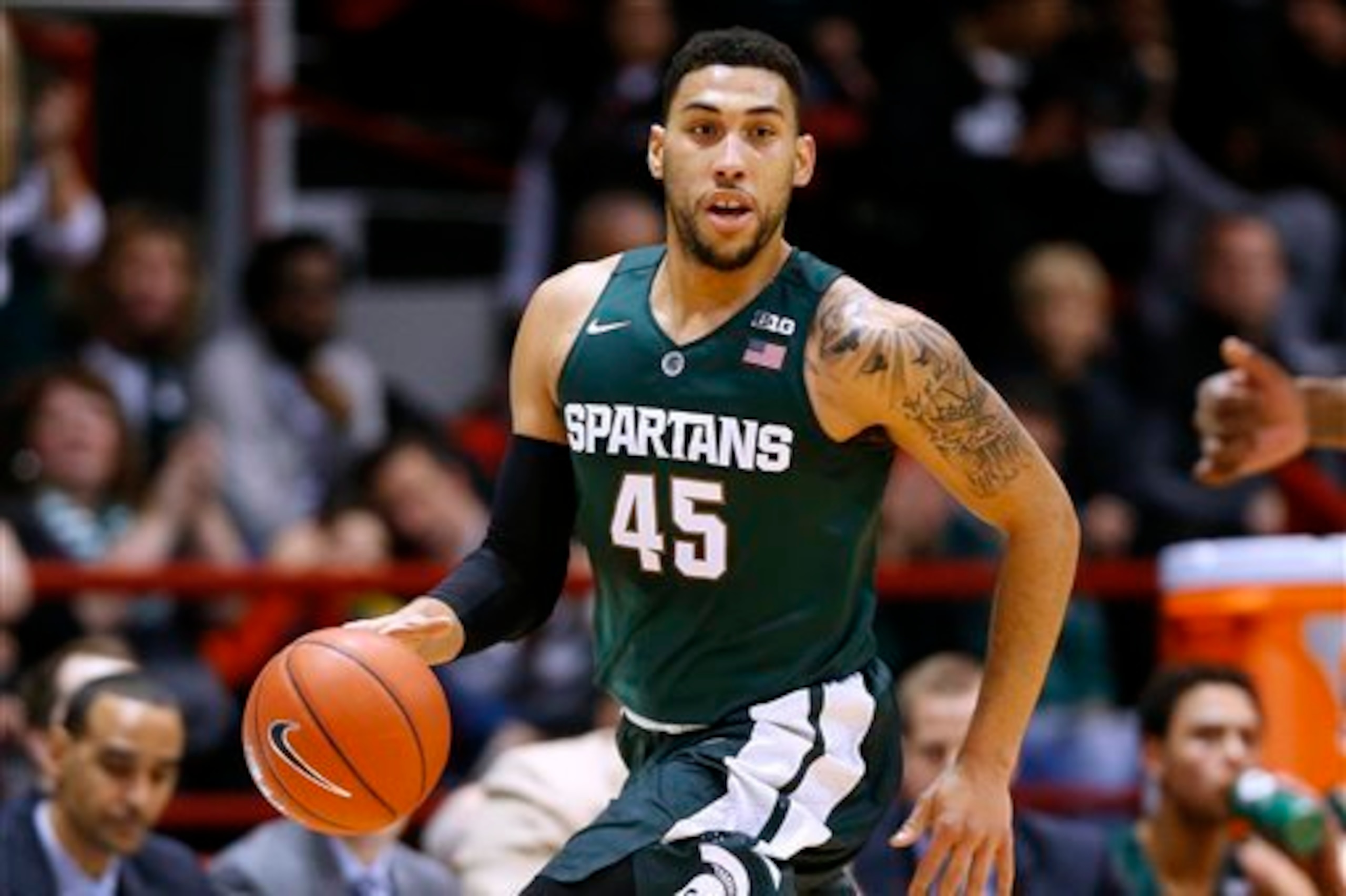
Valentine plays a lot of point guard for Michigan State. In the pros, he'll slide to the 2, where coaches can hide his lack of quickness. Valentine projects as a shooter, secondary ball-handler and passer in a supporting role.
He's making 45.1 percent of his threes and ranks second in the nation in assist percentage, per Sports-Reference.com.
Don't count on his 23.8 points per 40 minutes translating, but Valentine's size (6'5", 220 lbs), vision and proven jumper create NBA-friendly versatility.
“I think he’s [Draymond Green] paving the way for me a little bit as far as the NBA saying, ‘Maybe he can't shoot the best or is not the highest jumper or anything, but he's a winner and he's tough," Green told USA's Today's Nicole Auerbach, referencing form Michigan State standout Draymond Green.
2. Buddy Hield (Oklahoma, 6'4", Senior)

I wouldn't bank on Hield's 25.1 points per game carrying over to the pros. But his jumper looks as good as one can look, considering he's shooting 48.3 percent from deep and has now made over 90 threes in each of his last three seasons.
Hield's NBA value will ultimately lie within his spot-up accuracy and ability to knock down jumpers off screens and pull-ups. At 6'4", he's undersized for a 2-guard, but he compensates with long arms and the confidence to make contested shots.
Otherwise, he's improved his ball-handling, which has helped him capitalize on driving lanes and off-ball screens.
He reminds me of a bouncier J.J. Redick coming out of college. I'd imagine Hield's NBA role and impact will be similar as well.
1. Jamal Murray (Kentucky, 6'5", Freshman)
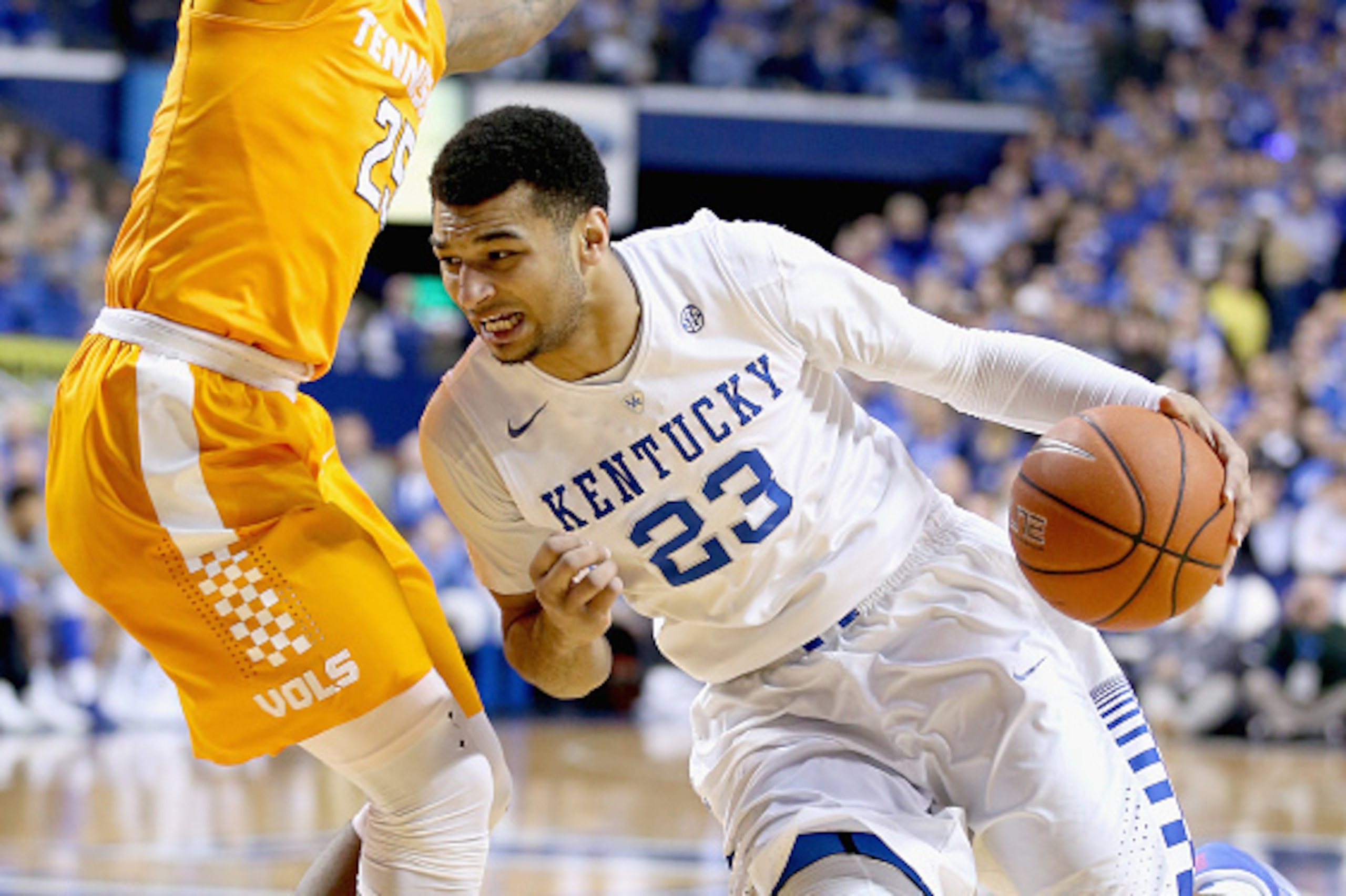
With more turnovers than assists on the year, Murray and his scoring attack are best suited at shooting guard. He's averaging 19.4 points and has now hit the 20-point mark in each of his seven February games.
Making three three-pointers a night and 40.3 percent of his attempts, he's a microwave around the perimeter. Murray has deep range and does a good job of freeing himself for open jump-shot opportunities off screens.
He's also a difficult shot-maker in the paint and can create off ball screens as a ball-handler in the half court.
Murray may have trouble defensively, and coaches will want to see a tighter shot selection, but there is no denying his ability to generate offense.
Small Forwards
5. Paul Zipser (Germany, 6'8", 1994)
He just turned 22 years old, but already there is a lot to like about Zipser from an NBA perspective. He does a little bit of everything with 6'8" size and fluid athleticism, which may even allow teams to use him as a small-ball 4.
In 30 games this year between the German league, Euroleague and Eurocup, he's shooting 41 percent from three with a true shooting percentage of 65.4, per RealGM.com. He's also averaging 3.1 assists per 40 minutes and can defend, which plays to his role-player potential.
4. Taurean Prince (Baylor, 6'7", Senior)
Prince's versatility and defensive potential are both intriguing from an NBA standpoint. He's been on-and-off from deep, but he undoubtedly has three-point range (39.5 percent last year, 100 made threes over last 61 games) and a strong drive-and-slash game. And he's already dished out 23 more assists than he did last year. Plus, at 220 pounds size, he's shown he can score around the key and defend opposing power forwards.
It wouldn't be surprising if an NBA team tried Prince out in a small-ball 4 role.
Though a senior, Prince doesn't turn 22 years old until late August. He looks like a good first-round bet and a potential riser during the predraft process.
3. Timothe Luwawu (France, 6'7", 1995)
Luwawu will be 21 years old at the start of the draft and coming off a breakout season in the Adriatic League, where he's the second-leading scorer. There is a good chance Luwawu will eventually transition to 2-guard, but for now, while his ball-handling remains a work-in-progress, projecting him as a small forward is the safer bet.
At 6'7" with long arms, he has strong two-way tools to match a jumper that looks much-improved. He's making 2.2 threes a game on 38.1 percent after shooting 28.7 percent a year ago in France.
Assuming it's not a fluke, his jumper, length and athleticism look awfully enticing. There could be sneaky upside here if he's able to sharpen his shot-creativity in the half court the way Paul George did out of Fresno State.
2. Jaylen Brown (California, 6'7", Freshman)

Brown is making a strong late-season push after finding his offensive rhythm. He always looked the part with 6'7", 220-pound size, a 7'0½" wingspan and explosive athleticism. But now he's playing it, having emerged as a go-to weapon California can lean on.
He's at his best attacking the basket, finishing above the rim or through contact below it. Brown takes 9.6 free throws per 40 minutes. He can handle the ball and change direction with crossovers, stutter-steps and inside-out dribbles, allowing him to hit driving lanes and work off ball screens.
He clearly needs the most work around the perimeter, shooting just 30.1 percent from three and 31.2 percent on pull-up jumpers, per Hoop-Math.com. But he's capable, and we haven't seen any red flags or glaring hitches that suggest his shot may be broken.
Between his textbook physical tools, bounce and developing scoring attack, Brown presents himself as a safe bet with upside. He offers both a high ceiling and high floor.
1. Brandon Ingram (Duke, 6'9", Freshman)
Brown is on the rise, but not even a monster March will knock Ingram down from atop the small forward rankings.
There is just too much upside tied to his 6'9" size, 7'3" wingspan and athleticism for the position. But he also has the production to show for the potential, averaging 17 points on 40.8 percent shooting from three.
Ingram has flashed the ability to score from all three levels, including three-point land, the mid-range, where he can separate into jumpers, and above the rim off drives and slashes.
He's shown he can create and score one-on-one or slide off the ball into a spot-up role.
The questions with Ingram mostly revolve around his 190-pound frame. But having just turned 18 years old in September, it's not a stock-threatening red flag.
Power Forwards
5. Deyonta Davis (Michigan State, 6'10", Freshman)
Davis doesn't play a major role in Michigan State's offense, but he's productive when given the chance and capitalizes on 60.5 percent of his field-goal attempts. At 6'10", 245 pounds with a 7'1½" wingspan and good bounce, he's been a reliable target around the hoop and an effective back-to-the-basket, over-the-shoulder scorer.
He's also pulling in 12.4 boards and blocking a terrific 4.3 shots per 40 minutes—numbers that highlight his activity in the paint.
Davis isn't the most fluid one-on-one player yet, but at just 19 years old, he doesn't have to be.
4. Ivan Rabb (California, 6'11", Freshman)

Rabb lacks offensive polish, but you can't teach his size, quickness, bounce and sticky hands. It's a blend that naturally translates to easy buckets and volume rebounding (62.4 percent from the floor, 12 rebounds per 40 minutes). He's even flashed some mid-range touch and post moves.
At 19 years old, he'll need a season in the D-league or he'll learning from the bench. But Rabb has Tristan Thompson-like potential as a finisher and cleanup man inside.
3. Henry Ellenson (Marquette, 6'10", Freshman)
Athletic and defensive limitations work against him, but Henry Ellenson's offensive polish and versatility could lead to top-five consideration.
At 6'10", he's showcased promising three-point range, mid-range shooting accuracy (43.3 percent on two-point jumpers) and back-to-the-basket scoring ability. And he can handle the ball, which makes him a threat to initiate the break or face up and attack in the half court.
Ellenson's biggest challenge will be defending quicker, bouncier bigs and finishing through length around the basket. He projects as a pick-and-pop stretch 4 who rebounds (10 per game) and occasionally works the post.
2. Dragan Bender (Croatia, 7'1", 1997)
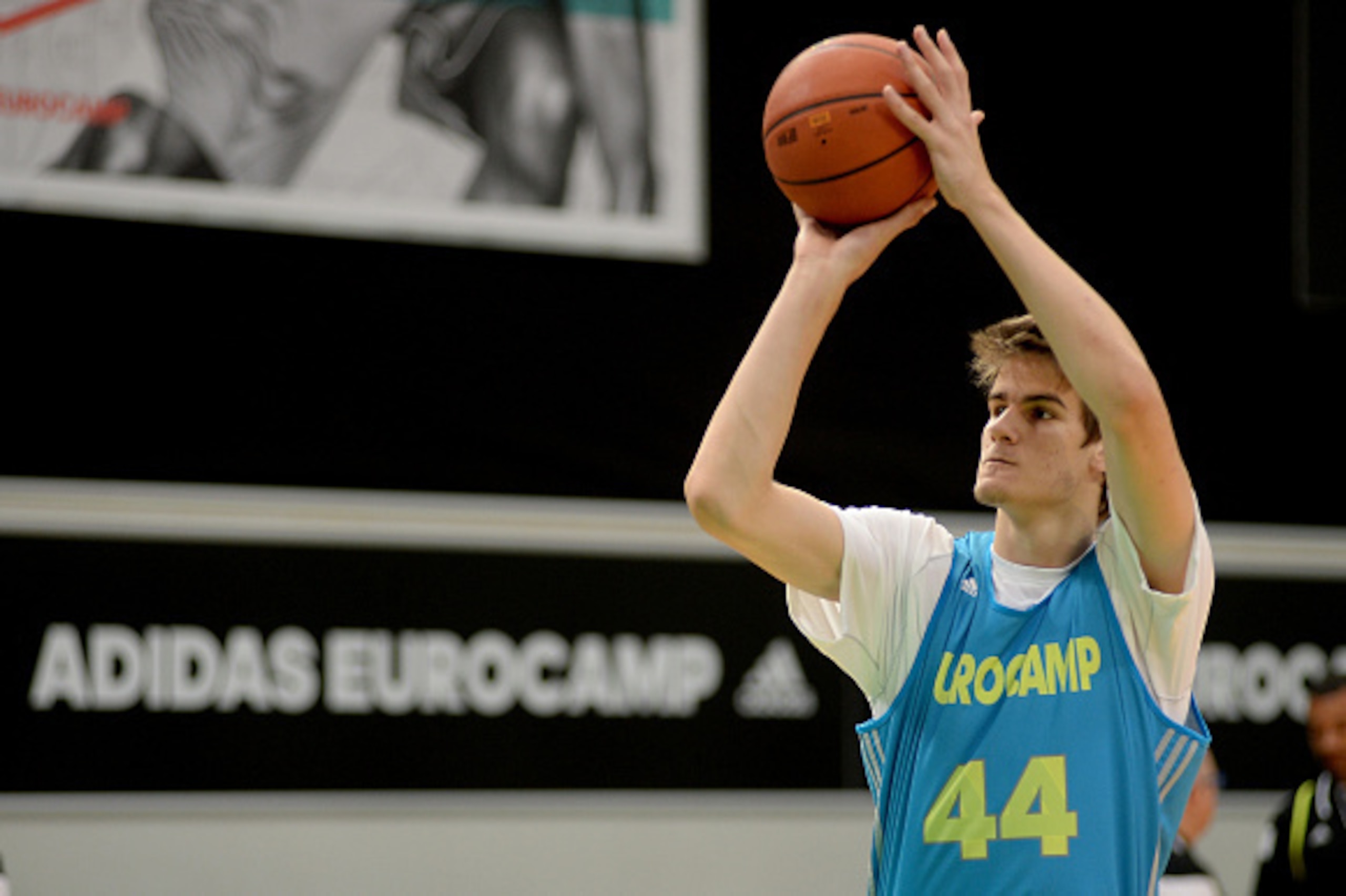
He doesn't play much for Maccabi Tel Aviv, but scouts have seen enough of Bender from his time in FIBA tournaments, Eurocamp and Basketball Without Borders. His 7'1" size, mobility and ball skills have stood out for years.
Bender brings center height to the power forward position, where he can stretch the floor as a shooter, having made 39.5 percent of his threes this season. He's also a fluid ball-handler capable of going coast to coast or attacking his man off the bounce in space.
Meanwhile, terrific passing instincts highlight a high basketball IQ. And he's flashed the quickness to switch onto smaller players and protect the rim from the weak side.
Bender isn't a big leaper like New York Knicks rookie Kristaps Porzingis, but he's sharper fundamentally at 18 years old. He'll be the top international player selected in June and could go as high as No. 3.
1. Ben Simmons (LSU, 6'10", Freshman)

Simmons' projected NBA position was somewhat unclear heading into his freshman season. Three months in at LSU, the power forward spot looks like the best one to milk his strengths and hide his weakness.
A 6'10", 239 pounds, he rebounds like a big, averaging 11.9 per game. And he's shown he can score and improvise in the post with unorthodox righty or lefty fallaways and scoops.
Opposing 4 men are going to have trouble containing Simmons in space, given his handle and quickness. With the ability to beat defenders off the dribble, as well as see the floor extremely well, his playmaking skills should translate. Simmons averages five assists now—a number I'd image will eventually carry right over to the pros.
Simmons' appeal ultimately stems from his ability to create high-percentage shots, whether it's by pushing the break before defenses can set, driving-and-kicking to teammates or catching the ball around the hoop, being that he's an excellent finisher with both hands.
Among his physical tools, athleticism, passing, basketball IQ and overall versatility, he's a sure thing, even if his jumper never develops. If it does, we could be looking at one of the most unique weapons in the game.
Centers
5. Damion Jones (Vanderbilt, 6'10", Junior)
Jones hasn't had the breakout year scouts were hoping for, but the glimpses of potential keep flashing, like at Florida Tuesday night, when he went for 27 points on 13 shots.
At 7'0", he's a powerful finisher at the basket, and though he still lacks polish, he can score with both hands around the key.
Jones is shooting below 60 percent from the line for the third straight year, but his rebounding (11.1 per 40 minutes), scoring (21.9 per 40 minutes) and field-goal percentage (59 percent) are all up.
“Rebounding—that’s about it,” Jones told the Tennessean's Adam Sparks of his recent focus. “I’ve been working to get better position and increasing my rebounding effort, especially offensive rebounds, to give us more of an edge.”
4. Jonathan Jeanne (France, 7'2", 1997)
It's worth noting Jeanne is just 18 years and has spent most of his time in France's youth league with Le Mans Sarthe Basket's development team. It's more likely he declares in 2017. Either way, he's still an exciting NBA center prospect, given his 7'2" size, 7'7" wingspan, mobility and ball skills.
Though clearly a project, he offers size, length and foot speed reminiscent of Rudy Gobert. Without too many can't-miss centers out there, it wouldn't be shocking to see a team chase Jeanne's upside with a late first-round pick.
3. Stephen Zimmerman Jr. (UNLV, 7'0", Freshman)

Zimmerman is out nursing a knee injury, but his upside and prior productivity should be enough to garner first-round interest this June.
At 7'0", he has center size, mobility and coordination. Though not notably strong, he's held his own around the basket, averaging a terrific 13.9 rebounds and 3.3 blocks per 40 minutes.
Offensively, he's flashed passing instincts, over-the-shoulder touch and shooting range out to the arc, which creates the perception he could develop into a stretch 4 or 5.
Zimmerman is more of a project, but in a weak draft, the potential reward is worth the risk in the mid-to-late first round.
2. Diamond Stone (Maryland, 7'0", Freshman)
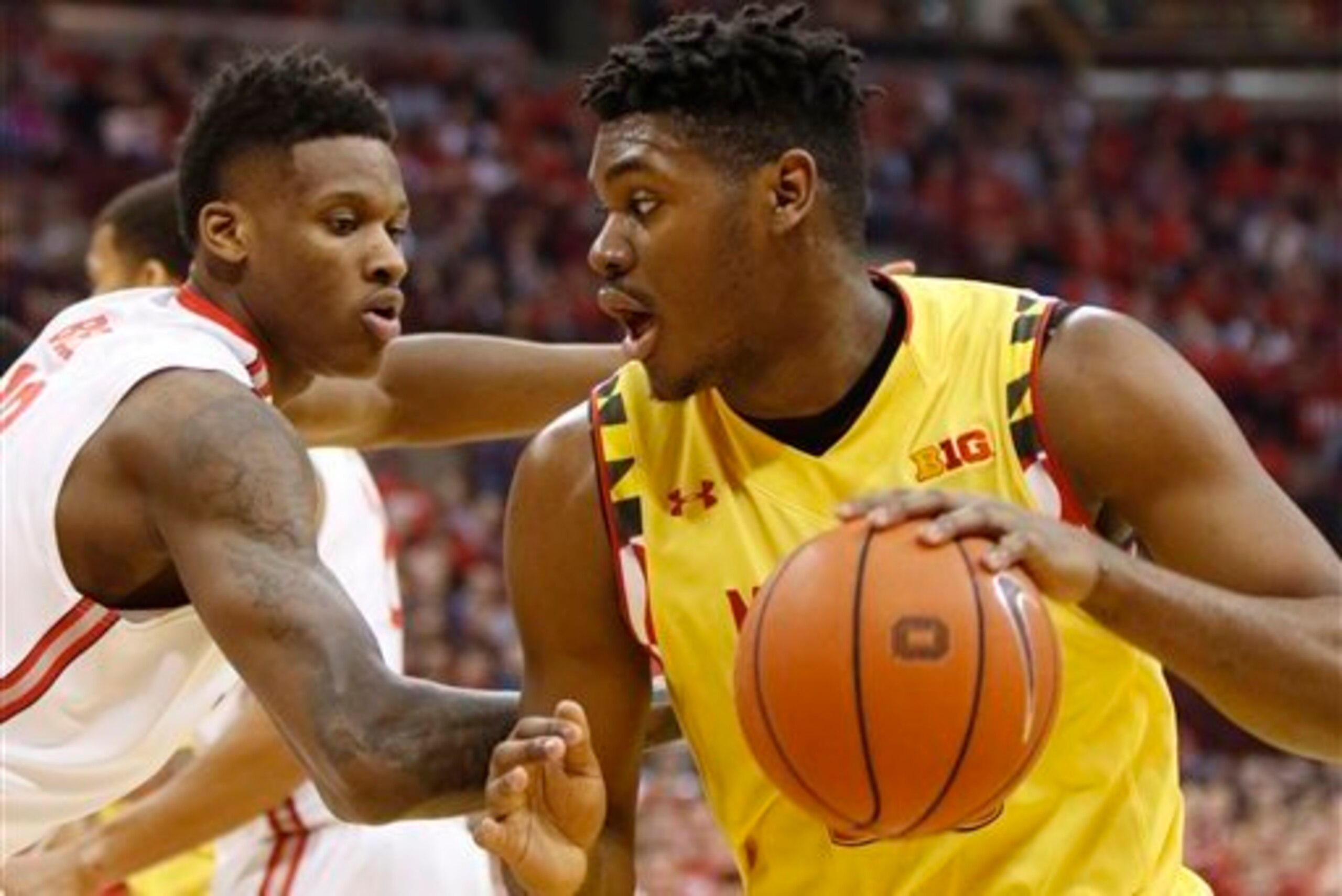
Stone is pleasantly consistent for a contender loaded with veterans. He's played to his strengths, which revolve around 7'0" size, a 255-pound frame and 7'3½" wingspan.
He does most of his work around the hoop, either as a finisher or back-to-the-basket scorer. Stone uses his massive body to carve out space and soft hands to convert at different angles. He's even flashed promising mid-range touch around the elbows and free-throw line (77.8 percent).
An interior big man without great bounce, shooting range, rebounding numbers (13.9 percent rebounding percentage) or defensive instincts, Stone's upside doesn't jump off the screen. But, fueled by power and finesse, he should be able to carve out a career as a physical offensive presence inside.
1. Jakob Poeltl (Utah, 7'0", Sophomore)
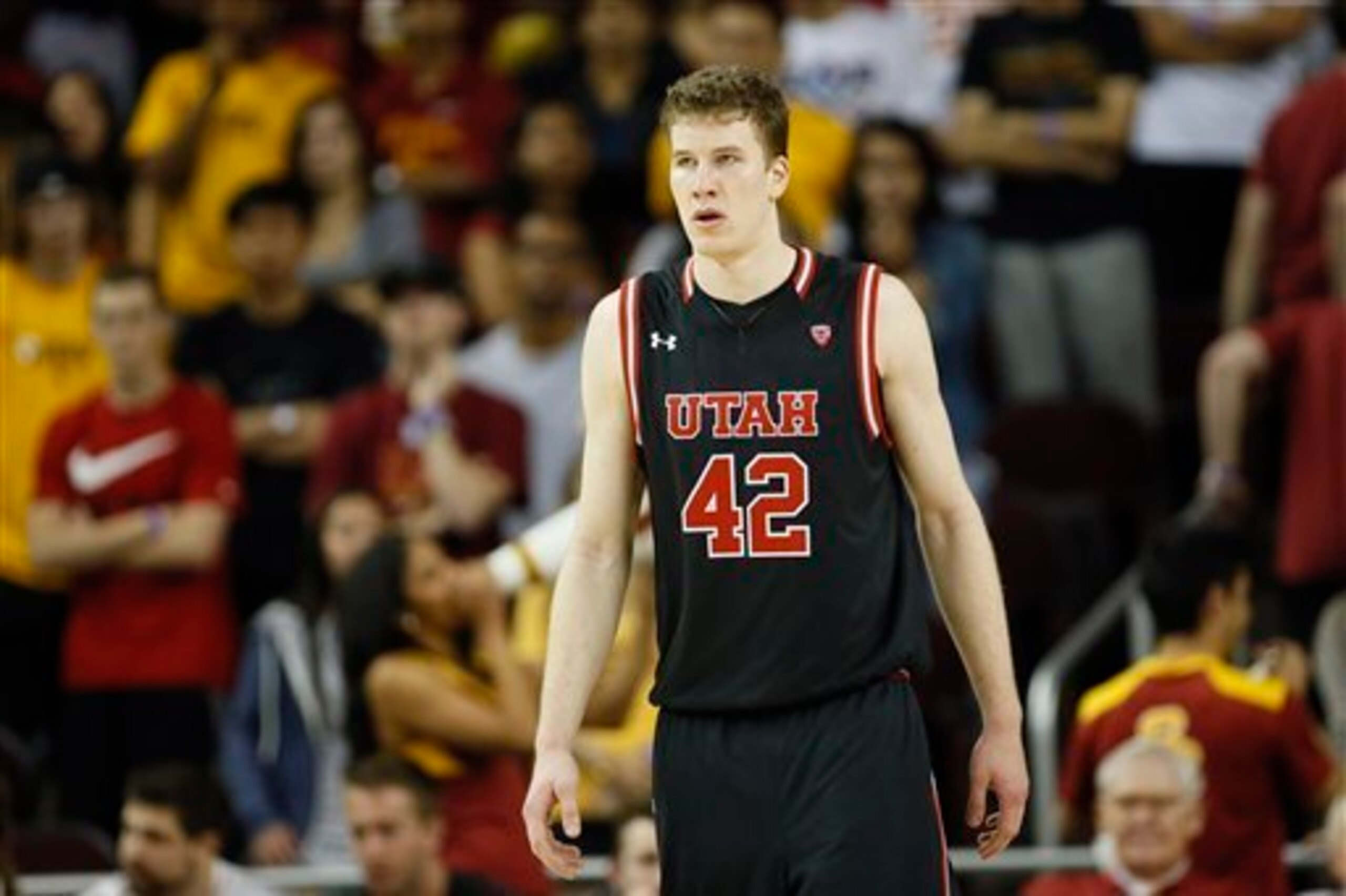
There shouldn't be much debate over the top center prospect. Jakob Poeltl, who entered the year as a player to watch, given his 7'0" size, mobility and freshman flashes, has taken his game to a new level in 2015-16.
Per 40 minutes, he's averaging 24.1 points, up from 15.7 a year ago. Poeltl improved his hands and post footwork dramatically, resulting in go-to touches and a lot more production.
He's shown he can score over either shoulder or at awkward angles under the hoop. And though he doesn't play much around the perimeter, he's capable of putting the ball on the deck and attacking in line drives.
Defensively, his value lies within his ability to switch in pick-and-roll coverage, protect the rim from the weak side and clean the glass. Though he isn't a big shot-blocker, his defensive versatility should earn praise.
With short arms for a center and no real sign of stretch potential, his upside isn't All-Star high. But Poeltl should eventually make his way to the top of an NBA depth chart.
All stats courtesy of Sports-Reference.com, Hoop-Math.com, DraftExpress.com.


.jpg?w=2560 "NFL investigating 2 referees for separate viral exchanges")

.jpg?w=2560 "OBJ Calls Out Giants 😳")


.jpg?w=2560 "Ward Nearly Walks Out of Presser 😳")
.jpg?w=2560 "Tyreek makes another cryptic post amid Chiefs rumors")