10 Greatest Threats to the Sports Status Quo
The sports world is constantly evolving. Changes to rules, personalities and trends tend to shake things up on a regular basis—some more than others.
The following 10 items pose the greatest threats to the status quo in sports. Baseball's collective bargaining agreement is set to expire in December, the pylon camera was a hit at the Super Bowl and the Golden State Warriors are shattering basketball norms.
Bear in mind that though "threat" may have a negative connotation, not all of these potential shake-ups would necessarily be bad. Some might actually be really fantastic.
Good, bad or depends on which person you ask, the following represent the next wave of major shifts in sports. Buckle up.
Influx of Cash into the NBA Salary Cap
1 of 10
Status Quo: Any semblance of parity in the NBA.
The 2016-17 NBA salary cap is expected to reach $90 million, $20 million more than 2015-16, according to Baxter Holmes of ESPN. Such a dramatic increase could well alter the player transaction landscape as we know it.
The influx of cash will come from a historic nine-year, $24 billion television deal. According to Louis Bien of SB Nation, the 2017-18 figure could reach $108 million, based on projections shared with NBA franchises.
This steep jump in budget means teams could potentially afford to field more all-star-type teams. Anyone hear those Kevin Durant to the Golden State Warriors rumors? They're just rumors of course, but the cap hike could enable an already-stacked team such as the Dubs to afford it.
According to Holmes, NBA Commissioner Adam Silver said:
"So if you ask me from a league standpoint, we would prefer that our All-Stars be distributed around the league rather than having so many All-Stars in one market. But we'll see what happens this summer. I mean, as I've said, there will be unintended consequences from all this additional cap room this summer. I just don't know what those consequences will be.
"
Changes in Youth Participation
2 of 10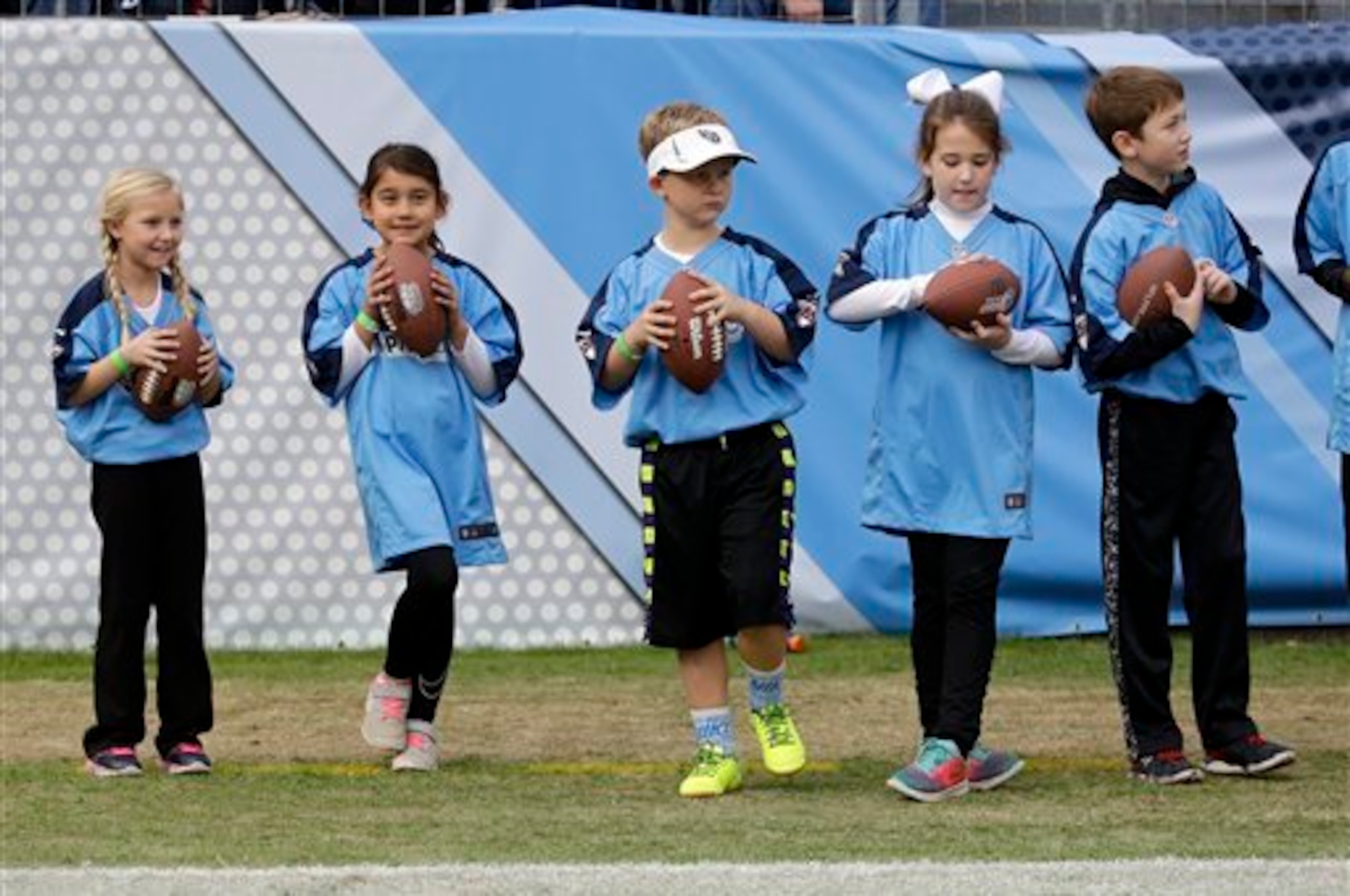
Status Quo: Kids playing sports at current rates.
As the youth-participation figures change in the United States of America, the culture of collegiate and professional sports could shift over time.
When the Wired staff asked Sports Illustrated senior writer Jon Wertheim about NFL players in 2066, he said: "No question the demographics are going to shift. I don't see size and body type reversing. But no question the pool of players will change."
In August, a study done by the Sports & Fitness Industry Association found youth participation in general was down, per Sports Business Daily (via SI Wire). According to the study, inactivity had been increasing for six years, hitting 20 percent in 2014—the notable exception was ice hockey, which has seen participants increase by 44 percent since making changes in 2009.
In September, Ken Belson of the New York Times wrote: "Despite the popularity of college and professional football, the number of male high school football players has fallen to about 1.08 million this year, a 2.4 percent decline from five years ago."
Whether participation goes up or down, there's no doubt trends are changing. Only time will tell what effect those changes will have at the professional level in the years to come.
Emergence of the Chinese Super League
3 of 10
Status Quo: Major League Soccer has been increasingly competitive in the international player market.
The Chinese Super League is giving MLS some new competition when it comes to signing coveted European footballers, and it's decidedly shaking up the football world order in the process.
During the January transfer window, Chinese clubs spent almost $150 million on new players, according to Motez Bishara of CNN. Players new to the CSL include Brazilian midfielder Ramires and Colombian midfielder Fredy Guarin. There are rumors the league could be a potential landing spot for Chelsea captain John Terry in the summer as well.
The CSL is even one-upping MLS by signing players still in their respective primes. MLS has traditionally been a late-career move for aging stars such as David Beckham and Thierry Henry, who both joined the league when they were 32.
John Duerden of the Guardian wrote: "China is set to become the biggest non-European league in the world in the not-too-distant future, overtaking the likes of MLS, Mexico and any other you may care to mention."


.jpg?w=2560 "Cardinals Giants Football")
Paul DePodesta to the NFL
4 of 10
Status Quo: Baseball as the stats king of sports.
Sports fans know Paul DePodesta as a baseball executive, former assistant to Oakland Athletics general manager Billy Beane and a key figure in baseball's sabermetrics movement. Movie fans loosely know him as the character Jonah Hill played in Moneyball.
After a long career in baseball, which included time with the Cleveland Indians, Los Angeles Dodgers and New York Mets (in addition to the A's), DePodesta made a transition to the NFL. In January, the Cleveland Browns hired him to become the team's chief strategy officer.
In a statement announcing a hire, executive vice president of football operations Sashi Brown said:
"His ability to create better processes and systems throughout organizations, his use of data as a tool to produce better outcomes, and his relentless focus on looking for innovative ways to create more success will be a strong asset as we look to be as comprehensive as possible in our decision making.
"
DePodesta, who played football at Harvard, represents one of the first major signs of an analytical movement poised to make waves in the NFL.
Golden State Warriors
5 of 10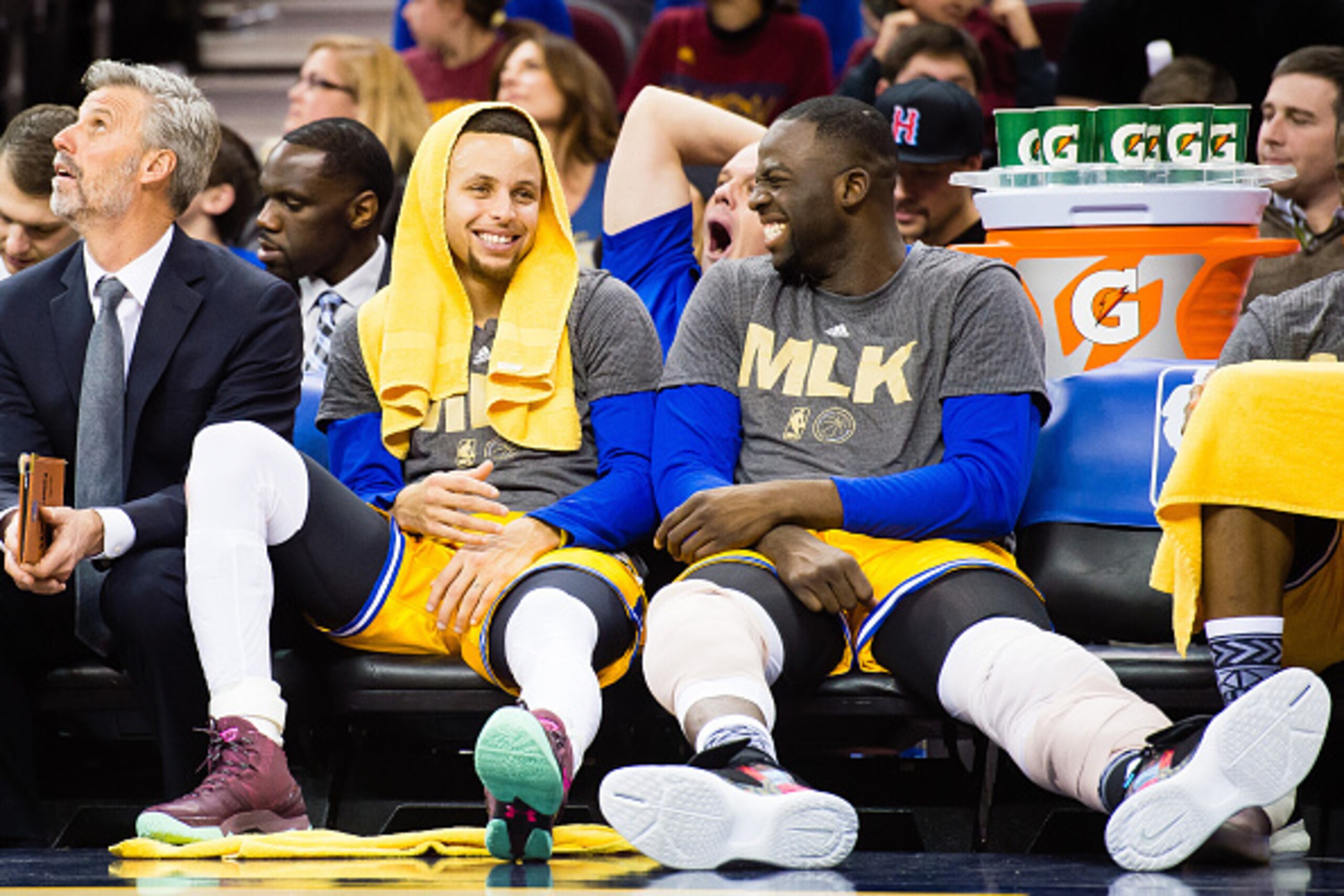
Status Quo: Jump-shooting teams can't win championships.
It's fair to say the Golden State Warriors are shaking up basketball. They are the jump-shooting team that won an NBA title in 2015 by going small ball. They are one of the most exciting teams to watch in years.
Some may not love the change. Former Dubs coach Mark Jackson suggested the focus on three-pointers is bad for basketball. Per James Herbert of CBS Sports, Jackson said of Stephen Curry: "To a degree, he's hurt the game. And what I mean by that is that I go into these high school gyms, I watch these kids and the first thing they do is they run to the 3-point line."
Others (people who love to watch electrifying basketball, perhaps?) love it. Jerry Brewer of the Washington Post wrote, "Unless you have an aversion to fun, unselfishness and skill, the Golden State Warriors epitomize the best of team sports."
For most, the Warriors represent a good kind of threat to the basketball status quo. Their unique strategies are part of natural sports evolution, and their "excellence wrapped in joy," as Brewer put it, has brought a level of sheer exhilaration to the game.
NFL Players Retiring Earlier
6 of 10
Status Quo: It's not uncommon for NFL athletes to play past the age of 30.
Former Seattle Seahawks running back Marshawn Lynch retired at age 29 early in February. Detroit Lions wide receiver Calvin Johnson announced his plans to retire at the age of 30.
Those two high-profile announcements came after a string of early retirements in 2015 alerted the NFL to a possible shift. Undrafted rookie wide receiver Adrian Coxson, the then-24-year-old linebacker Chris Borland and the then-25-year-old lineman Anthony Davis all hung it up at least in part to concerns over head injuries (though Davis plans to return, reported by CBSSports.com).
Andrew Brandt of the MMQB wrote:
"The idea of 'preemptive retirement' was unheard a couple of months ago. ... Going forward, with only more knowledge and more resources becoming available about football's long-term impact on players' health, it's hard to believe there won't be more of these preemptive (and largely asymptomatic) retirements.
"
According to Cork Gaines of Business Insider, 30-and-younger retirements are trending up in the NFL. While injury concerns appear to be involved, Gaines also pointed to higher player salaries as a possible factor.
Whatever the reason, if this trend continues, the personnel dynamics of the NFL will certainly change.
Baseball's Next CBA
7 of 10
Status Quo: No designated hitter in the National League; the 162-game schedule.
The MLB collective bargaining agreement is set to expire in December. As that date approaches, rumors swirl about possible changes.
MLB Commissioner Rob Manfred suggested in January there are no plans to bring the designated hitter to the National League, but he did admit the prospect is becoming more possible.
Per ESPN senior writer Jerry Crasnick, Manfred said: "I think our owners in general have demonstrated a willingness to change the game in ways that we think would be good for the fans, always respecting the history and traditions of the sport."
Could the DH be on the table for 2017? Maybe. According to ESPN news services, the MLB Players Association tends to support the DH "because it would more mean high-paying roster spots."
It looks like the 154-game schedule will definitely be on the table, however. Bob Nightengale of USA Today reported MLBPA executive director Tony Clark said: "I think that's why as we continue to move forward here, and guys continue to be asked to do more and more, it's something that we have to look at significantly."
Polarizing Cam Newton
8 of 10
Status Quo: The prototypical athlete role model.
Unique athletes have always threatened to shake up sports. Carolina Panthers quarterback Cam Newton spent the majority of 2015 dancing his way into the land of polarizing players.
Some said his celebratory antics made him a bad role model. Others felt his authentic personality made the game more fun. When the usually jovial QB walked out of his Super Bowl postgame presser, many criticized his behavior. Others urged leniency.
Newton isn't the first athlete to shake up the athlete-media relationship. Retired running back Marshawn Lynch was made famous not just for his impossible rushes but also his aversion to speaking with reporters.
Newton is a unique individual and football player, but as more stars like him emerge, touting a be-yourself mentality, the role-model paradigm will continue to shift. No longer is there a handbook written in stone about the right way to act, and even if there is, more people are starting to question it.
Declining Appeal for Prospective Olympic Cities
9 of 10
Status Quo: Hosting the Olympic Games would be an honor, universally speaking.
There was a time when it seemed most any major city would jump at the chance to host an Olympic Games. Boston showed something less than unbridled enthusiasm about putting on the 2024 Games, shedding light on a possible turning of the tide.
Brad Tuttle of Time reported the results of a survey conducted by Boston NPR station WBUR. Forty-three percent of locals surveyed said they were "not excited" about potentially hosting the Olympics, and 33 percent said they opposed the move altogether.
Tuttle also referenced the sky-high cost as a possible deterrent. He pointed out the estimated cost of the 2012 Summer Games was $4 billion but that London spent somewhere in the $15 to 20 billion range.
In 2014, Krakow, Poland withdrew from contention for the 2022 Winter Games when mayor Jacek Majchrowski said there was "low support for the idea among the residents," per Barry Petchesky of Deadspin.
As the upcoming Games in Rio de Janeiro continue to be marred by issues, one has to wonder whether hosting is losing its luster.
Technology
10 of 10
Status Quo: Training, broadcasting, medicine and instant replay as we know it.
Please forgive the extremely vague term on this one, but it's true isn't it? Technology is perhaps the greatest threat to the status quo in sports, in a variety of ways—good and bad, often depending upon the person you ask.
From medical advancements to virtual reality training tools and pylon cameras, innovation has a hand in all areas of sports. For Super Bowl 50, CBS used a new system to show 360-degree replays. ABC is now lighting up the three-point line during NBA broadcasts.
Technology influences the game as it happens, as well. Instant replay is constantly evolving in sports with varying reactions. Some find the MLB challenge rules to be overly time-consuming, while others cry for replay expansion into soccer.
Where would sports be without Tommy John surgery, the first-down line or even social media, for that matter? Advancing technology ensures no one in sports can ever get too comfortable.
.jpg?w=2560 "Hill Injury Update Football")
.jpg?w=2560 "Titans Giants Football")

.jpg?w=2560 "Tyreek makes another cryptic post amid Chiefs rumors")