

The NBA galaxy is anything but static.
Stars are constantly rising and falling, a phenomenon showcased early and often during the 2015-16 campaign.
Basketball astronomers have already identified several stars this season, with Kawhi Leonard, Draymond Green and Andre Drummond all shining bright in the game's ever-evolving skies. Based on what we've seen so far, a fresh batch of young ballers will soon do the same.
The league's 25-and-under class is brimming with potential studs. By pooling data culled from both box scores and the eye test, we've uncovered eight rising prospects powering into the new calendar year with stardom sitting right in front of them.
There are three key ingredients needed to make this list: on-court evidence of top-shelf talent, the right situation to foster such a steep climb and reasons to believe their best is still to come.
Giannis Antetokounmpo, SF, Milwaukee Bucks
1 of 8
2015-16 Notable Numbers: 14.9 PPG, 6.7 RPG, 2.7 APG, 1.1 BPG, 49.4 FG%, 15.7 PER
The Milwaukee Bucks might have failed to make their anticipated leap up the Eastern Conference standings, but Giannis Antetokounmpo has kept his wildly intriguing trajectory on course.
He's a consistent jump shot away from being truly terrifying. And that feels funny to say, since the players he defends may already attach that label to the lanky 21-year-old.
"Giannis is a good shot-blocker today, and he's going to be a great shot-blocker," Bucks general manager John Hammond said, per NBA.com's Ian Thomsen. "He can be an excellent defensive rebounder with his overall length and his ability to stay in front of people."
Antetokounmpo's incredible physical gifts make it clear his "Greek Freak" moniker is so much more than just a clever nickname.
Standing 6'11" with a 7'3" wingspan, his mix of size and athleticism fits today's game perfectly. He's long enough to bother a big but has the quickness to ward off speedy perimeter players.
Offensively, he's a nightmare cover when he has a full head of steam. There's no easy way to handle someone who can get from half court to the tin in a single dribble.
His jumper remains a work in progress. He's not the most aggressive shooter (1.5 threes per 36 minutes) or the most accurate one (49-of-181 on jump shots, 27.1 percent).
But if he adds that to his arsenal, his path to two-way stardom should be clear of any obstacles.
Will Barton, SG, Denver Nuggets
2 of 8
2015-16 Notable Numbers: 15.8 PPG, 6.2 RPG, 2.5 APG, 1.0 SPG, 38.6 3P%, 18.5 PER
Will Barton's two-plus-year tenure with the Portland Trail Blazers was notable for one reason: a lack of opportunity.
Trapped behind a veteran-laden, playoff-caliber perimeter collection, Barton struggled to find meaningful minutes during his time in the Pacific Northwest. He finally shed his leash at last season's trade deadline, moving to the Denver Nuggets and immediately pouncing on his long-awaited chance to perform.
The athletic, energetic shooting guard stuffed the box score over 28 contests in Denver to the point where he was rewarded with a three-year, $10.6 million contract at season's end.
The deal already looks like a heist for the Nuggets. Barton's high motor and versatility have helped the former second-rounder engineer one of this season's most entertaining breakouts. He's acing virtually every test put in front of him while elevating his production to previously unseen heights.
"He's posting career highs in every positive statistical category and career lows in turnover percentage and fouls per minute," Jesus Gomez wrote for Today's Fastbreak. "He's gone from bit player to rotation stalwart while skipping the growing pains that plague players who get their first shot at big minutes."
Barton already has nine 20-point outbursts under his belt this season—the same number as perennial All-Star LaMarcus Aldridge. Barton ranks fourth among guards with 6.2 rebounds per game and is proving to be a quantity-plus-quality marksman from deep (1.7 threes per game, 38.6 percent shooting).
Just 25 years old, he's only scratching the surface of what his talents can yield in a consistent, featured role.
Jordan Clarkson, SG, Los Angeles Lakers
3 of 8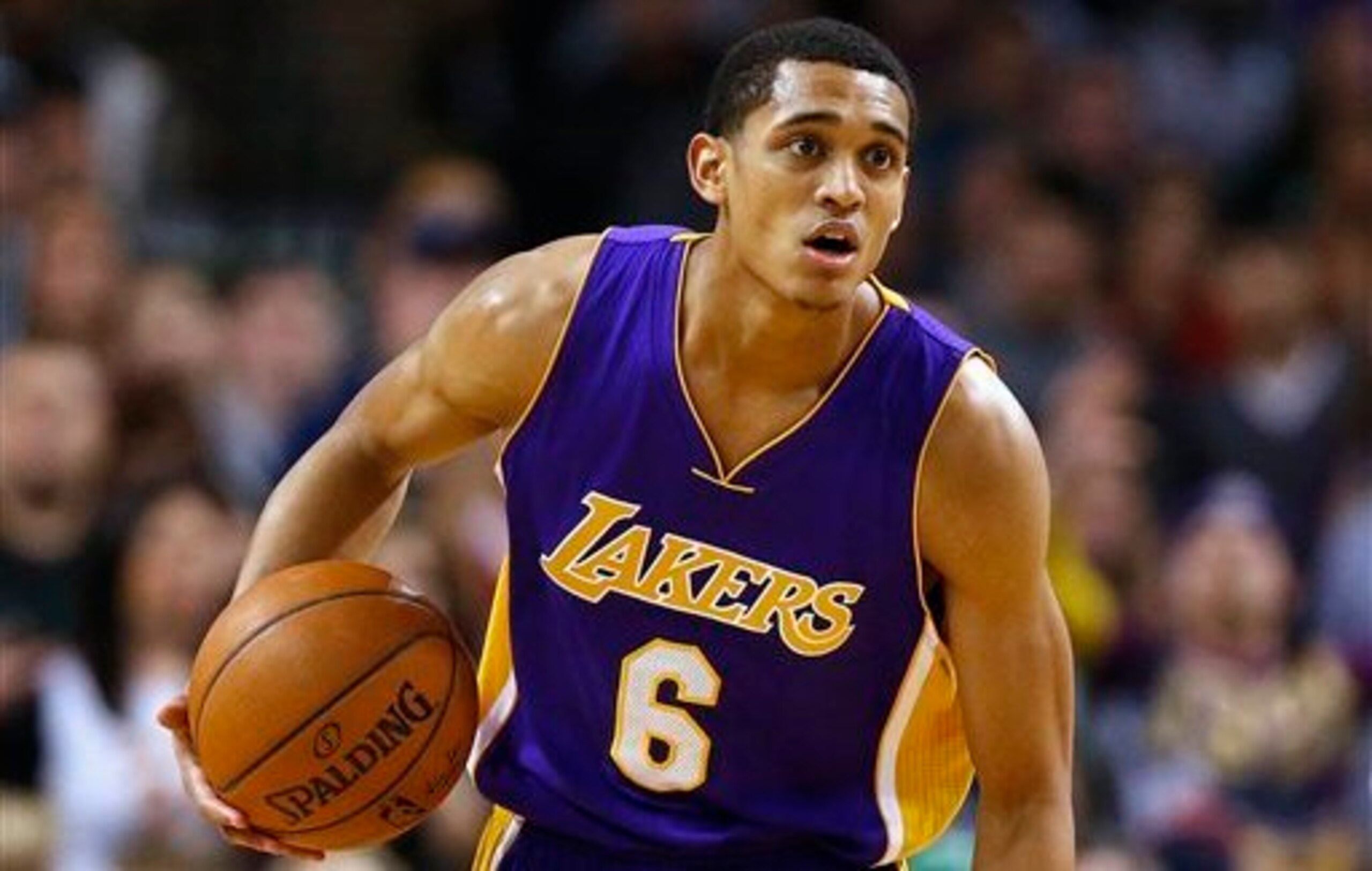
2015-16 Notable Numbers: 15.1 PPG, 3.8 RPG, 2.5 APG, 1.2 SPG, 44.5 FG%, 14.5 PER
Jordan Clarkson was the surprise of the Los Angeles Lakers' 2014-15 season as a rookie second-rounder who started the year outside the rotation and finished it in the starting lineup.
This season, he's left the eye-opening business behind. And that's not because he's slowed his roll, but rather because he's continued it at such a steady pace that his contributions are now expected.
"Jordan has got an ability to score and plays with bounce and a cocky side that you respect," Philadelphia 76ers coach Brett Brown said, per Bleacher Report's Michael Pina. "And he's always one of those people that has a chance to have a big game. And so I feel like the Lakers found something special in him. He for sure looks like a keeper."
Clarkson is lightning-quick off the bounce and athletic enough to finish over the top of bigger defenders. More importantly, he's regularly flashing a solid three-point stroke (33.9 percent, up from 31.4 last season), which makes him even harder to handle, since opponents must respect his outside shot.
His distributing is down from his rookie year, but the decline should've been expected. There are many more mouths to feed in L.A.'s current perimeter rotation, with a healthy Kobe Bryant, D'Angelo Russell and Lou Williams all factoring into the offensive equation.
But Clarkson continues demanding touches, because he's making the most of them. His 44.5 percent field-goal conversion rate is easily best among the Lakers' seven most active shooters.



Jae Crowder, SF, Boston Celtics
4 of 8
2015-16 Notable Numbers: 13.9 PPG, 5.2 RPG, 1.9 SPG, 1.8 APG, 44.2 FG%, 15.7 PER
A ton goes into Jae Crowder's overstuffed stat line—including deception.
It's not that he's less talented than the numbers suggest; in fact, he keeps giving evidence he's capable of more. Where this gets tricky is the way his production pegs him as a jack-of-all-trades.
Take that a step further, and one may think he's merely a complementary piece of the Boston Celtics' puzzle. In reality, he might be the most important player they have.
The numbers say he is. The Celtics are at their best when he plays (outscoring opponents by 5.5 points per 100 possessions; would be fifth overall) and their worst when he doesn't (minus-3.1 points per 100 possessions; would be 21st).
But Crowder's impact goes beyond numbers.
"He's just a big key for this team," Marcus Smart said, per Bleacher Report's Brian Robb. "He knows it, we know it and we appreciate everything he does."
That has to be a lot of appreciation, then. Crowder leads the Celtics in steals and ranks third in both points and rebounds. He routinely handles Boston's toughest defensive assignment and holds his matchups 2.0 percentage points below their normal field-goal average.
His two-way play has equated to a 3.62 real-plus minus, according to ESPN.com. That puts him fifth among all small forwards and 24th overall.
He doesn't exactly seem like a complementary contributor now, does he?
Rudy Gobert, C, Utah Jazz
5 of 8
2015-16 Notable Numbers: 9.1 PPG, 9.7 RPG, 2.6 BPG, 1.6 APG, 59.6 FG%, 17.5 PER
Third-year Utah Jazz center Rudy Gobert is intimidation personified.
His 7'1", 245-pound frame casts fear into opposing attackers, and that feeling is only intensified by his pterodactyl-like 7'8 ½" wingspan. He doesn't simply block shots; he devours them. And that says nothing of the countless ones altered—or simply deterred—by his interior presence.
"He's big for us—the little things that he does for us, the passing, the screening, defensively he makes guys second-guess," Gordon Hayward said, per Jody Genessy of the Deseret News.
That doubting is warranted.
When opponents do try to test the Stifle Tower, they rarely produce a passing grade. The Frenchman has held opponents to just 37 percent shooting at the rim—easily the best mark for all rotation bigs.
Had Gobert avoided an 18-game absence for a sprained MCL, the Jazz could be jostling for a top-five seed out West. They've gone 10-7 with him in the lineup (2-1 since his return) and performed 10.8 points better per 100 possessions when he's on the floor.
It's tough to tell how much offense he'll find over the course of his career, but he's already elite at the opposite end. Between his current strengths and future potential, he could become a fixture on the All-Defense teams and a yearly candidate for the Defensive Player of the Year award.
C.J. McCollum, SG, Portland Trail Blazers
6 of 8
2015-16 Notable Numbers: 20.9 PPG, 4.4 APG, 3.7 RPG, 1.2 SPG, 39.8 3P%, 18.2 PER
As Portland radically reshaped its roster this summer, C.J. McCollum surfaced as a logical Most Improved Player award threat.
The slippery scoring guard moved up the offensive pecking order and into a position of potentially massive volume. That part of his narrative has played out as scripted, with the former No. 10 pick posting personal bests across the board.
What may not have been anticipated, though, was a simultaneous surge in efficiency. Despite seeing the seismic shift in responsibilities, he's managed to do more with each individual touch. His shooting rates and assist percentage (22.3) have never been higher, while his turnover percentage (10.1) is lower than ever.
"A universal truth in the NBA is the way efficiency and volume will eventually develop an inverse relationship if both are pushed enough," wrote Basketball Insiders' Ben Dowsett, "McCollum has already crashed through the barriers many take years to push past (or never do)."
McCollum is sprinting toward the point where no offensive burden feels too great.
During the six games he's played without All-Star backcourt mate Damian Lillard, McCollum erupted for 26.0 points and 6.5 assists per night, while hitting 49.6 percent of his field goals and 40 percent from deep.
McCollum is only 24 years old, and this is his first season seeing more than 16 minutes a night (he's seeing more than double that). His ceiling has already risen several stories over these last three months, yet it still feels nowhere close to its ultimate destination.
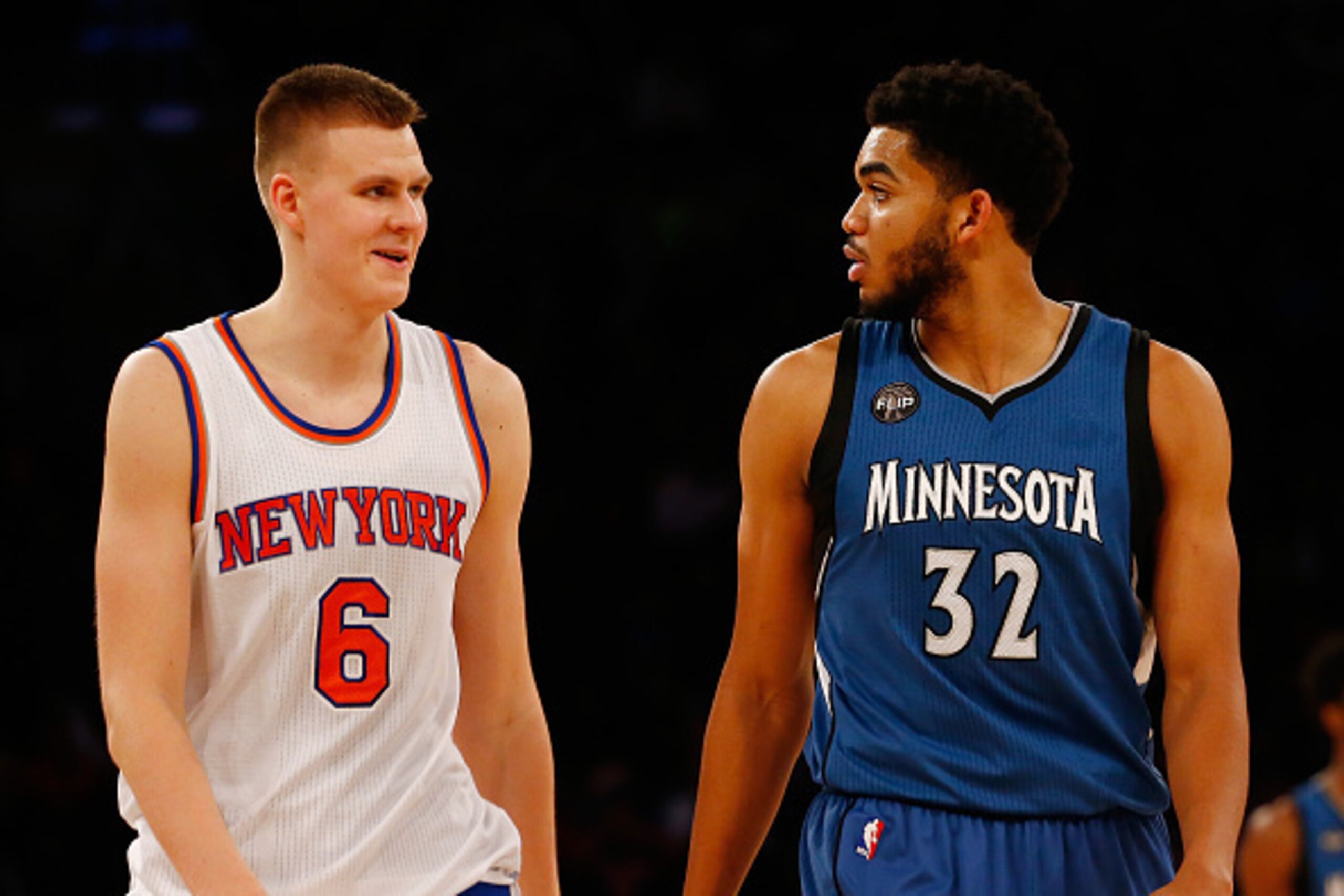
Kristaps Porzingis, PF, New York Knicks
7 of 8
2015-16 Notable Numbers: 13.6 PPG, 8.0 RPG, 2.0 BPG, 1.1 APG, 42.4 FG%, 18.2 PER
Kristaps Porzingis has impressed so much through the early portion of his rookie season that he's seemingly shed the label of "project player."
He hasn't. His shooting marks from the field and beyond the arc (33.6 percent) have ample room for growth.
"Although he converts his shots at just average rates from virtually every spot he shoots from, the fact that he can do that as a 20-year-old 7-foot-plusser is remarkable," Nate Silver and Kirk Goldsberry wrote for FiveThirtyEight. "While the league is full of bigs who can shoot the ball, it's rare for a rookie to enter the league as such a competent shooter."
Booed mercilessly by New York Knicks fans on draft night, Porzingis now stands as their biggest source of inspiration for a brighter tomorrow (and, more impressively, a better today).
As hard as it is to say about a player less than halfway through his rookie run, he looks like an unprecedented basketball specimen. How many 7'3" snipers has the sport actually seen? How many of those guys have a dunk reel better than the one he's already compiled?
Porzingis is so different, it's impossible to tell where his story goes from here. But stardom seems like more of an inevitability each time he takes the floor.
Karl-Anthony Towns, C, Minnesota Timberwolves
8 of 8
2015-16 Notable Numbers: 15.9 PPG, 9.2 RPG, 1.8 BPG, 1.2 APG, 53.3 FG%, 21.6 PER
Rare is the NBA rookie who joins the league without facing a steep learning curve to greatness. Top overall pick Karl-Anthony Towns appears to be among the fortunate few.
He double-dipped during his big-league debut, opening his freshman campaign with 14 points and 12 rebounds. He's since made such performances near-nightly occurrences, sitting 11th overall (and tops among freshmen) with 17 double-doubles.
And that's just one of many reasons the 20-year-old is the front-runner for Rookie of the Year honors.
He's dropped dimes through passing windows most 7-footers can't see. He's found shooting success from everywhere (59.7 percent inside eight feet, 50.8 from eight to 16 feet, 47.1 from 16 to 24 feet and 34.5 percent beyond 24 feet). He's dazzled defensively, trimming 1.8 percentage points off his opponents' field-goal percentages.
"Towns is already a big-time player in the NBA," wrote CBS Sports' Ananth Pandian. "Yes, what he's going to be in the future is downright scary, but right now, he's already terrific."
Towns has the offensive ability to play a much larger part in the Minnesota Timberwolves attack. Defensively, he has the strength (and smarts) to bang under the rim and the mobility to hold his own while switching out on a perimeter player.
If he isn't a star in the making, it's because he's already reached that level.
Unless otherwise noted, statistics used courtesy of Basketball-Reference.com and NBA.com and current through games played Jan. 10.

.jpg?w=2560 "Raiders Could Start Mendoza")

.jpg?w=2560 "Rodgers Iced Out on Plane 💎")
.jpg?w=2560 "Packers Safety Slams Refs 🤬")
.jpg?w=2560 "🚨 Week 8 AP Top 25 Poll")