There were many striking things about Ronaldo, the recently released film about Cristiano Ronaldo.
His discipline and drive, his determination to be the best, are astonishing, even a little frightening. His relationship with his agent Jorge Mendes is fascinating, as are the insights as to what it means to be that famous. But perhaps most telling was his obsession—and there is no other word—with the Ballon d’Or.
That’s why, when he won it last year—his third success and his second in a row—he unleashed a visceral “Siiii.” This mattered to him. He saw the award as something worth celebrating.
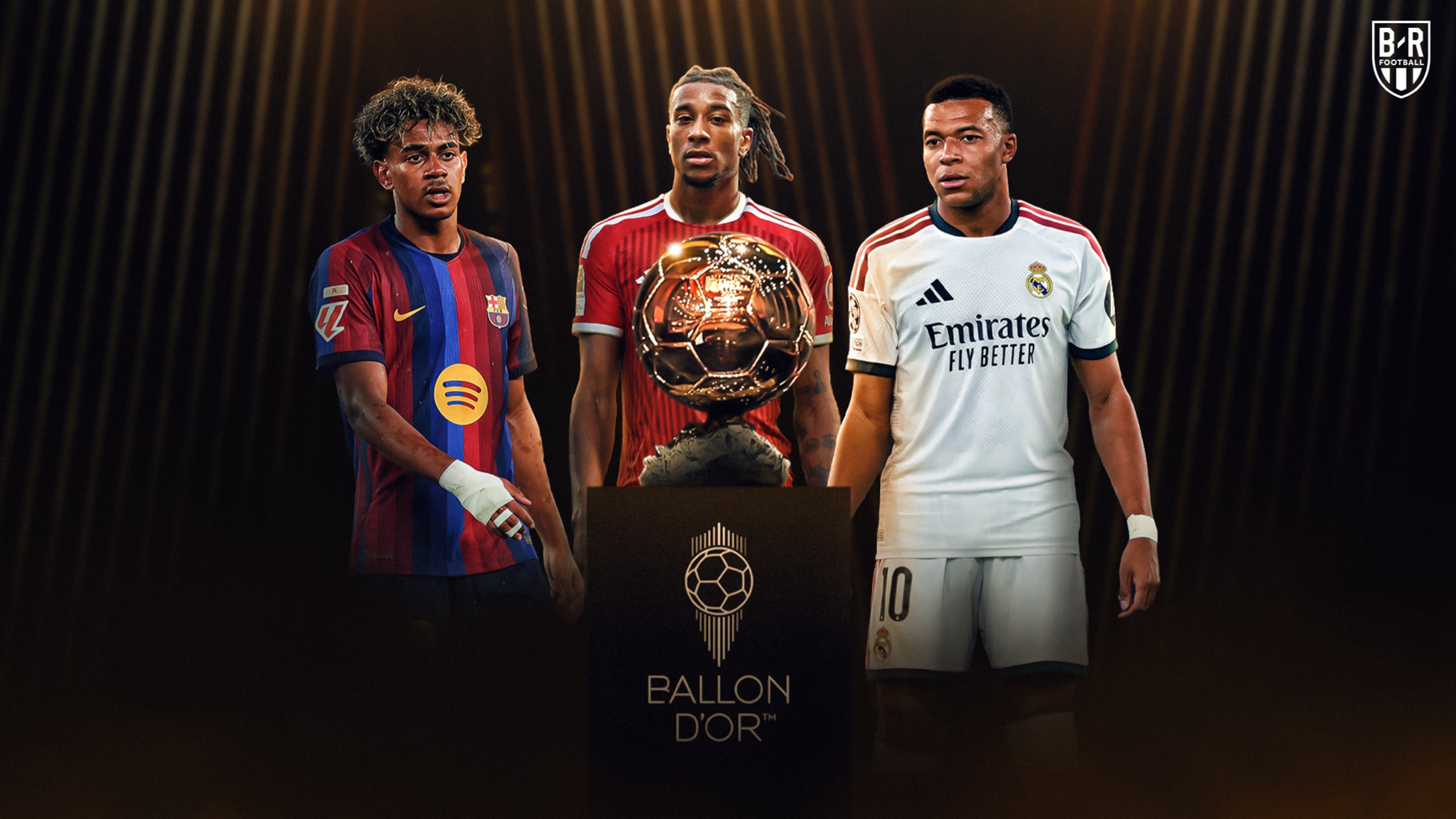

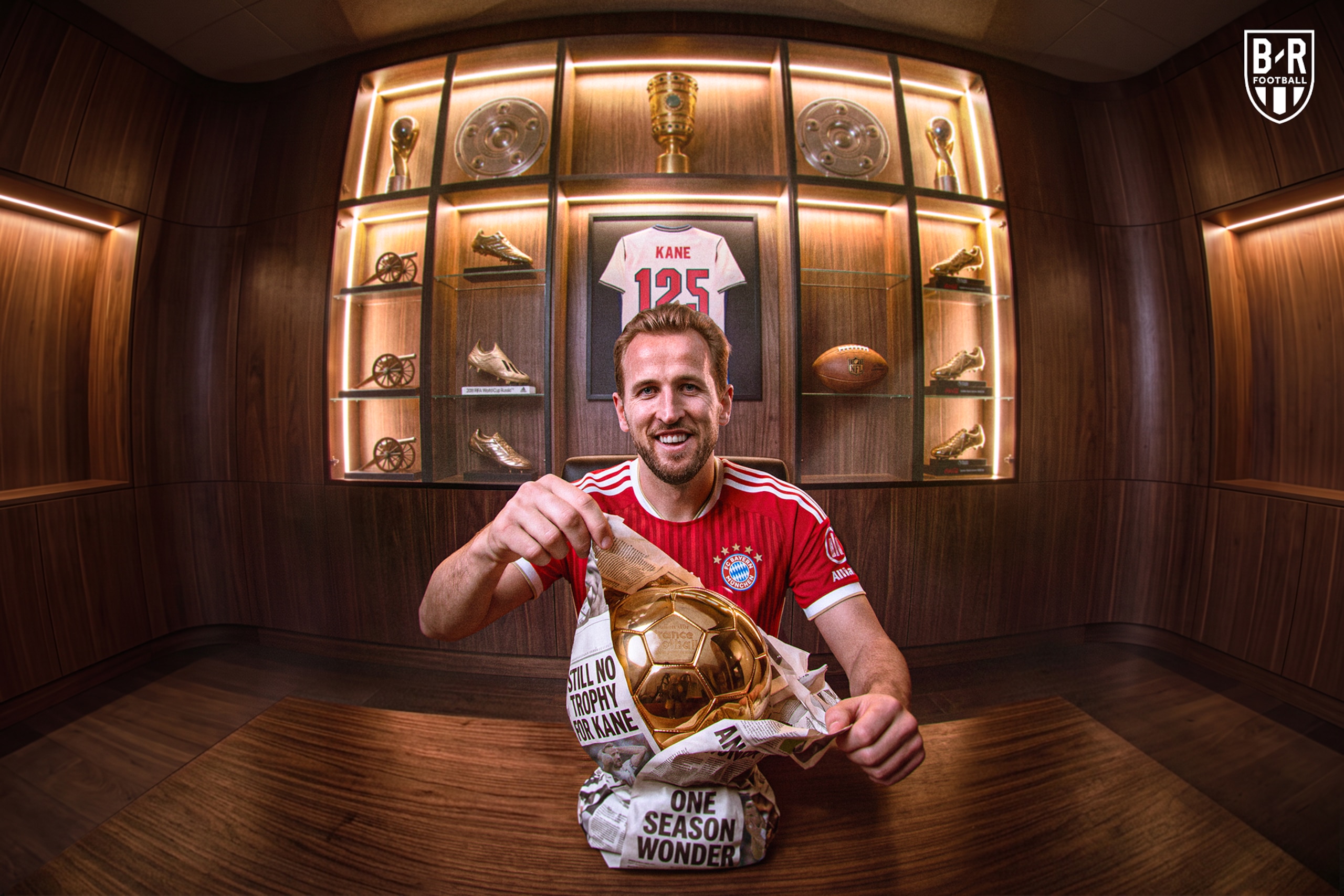
In fact, the impression he gives in the film is that his Ballon d’Or awards mean rather more to him than his two Champions League winners’ medals. That is rather sad, but it’s more than that: It’s also why the Ballon d’Or is not simply trivial, but insidious. Individual awards aren’t just pointless baubles; they’re detrimental to good football.
The full silliness of the award—and Ronaldo’s obsession with it—was demonstrated three years ago, the last time Lionel Messi won it. “Fair or unfair,” Ronaldo said, “the decision will be what it will.”
Jose Mourinho, then Ronaldo's manager at Real Madrid, was explicit in alleging conspiracy. “The Ballon d'Or has already been given,” he said, per Graeme Yorke of the Daily Mail. “When the heads of football speak and make the campaign, there is nothing you can do.”
What a bizarre, paranoiac world the Santiago Bernabeu must have been in those days, when the manager and the star player believed—or at least tried to make the rest of the world believe—there was a conspiracy to stop their man winning what really ought to be a gewgaw. Why would anybody bother?
Of course, the Ballon d’Or judging is imperfect, irrational, prone to favouring certain types of player and certain clubs: it’s voted for. It represents the opinions of national managers, national captains and journalists. It’s subjective, and that’s why nobody should place much store by it.
Happily, football already has an objective structure for determining who’s the best: the league table.
Or, for Ronaldo, perhaps not so happily. After all, since he went to Real Madrid in 2009, he’s won more Ballon d’Or titles than he has league ones. Perhaps that represents success. Perhaps when he grew up in Madeira, Ronaldo dreamed not of holding aloft a trophy in one of the world’s great stadiums and celebrating with his team-mates, but of yelling, alone, into a microphone on a stage in a conference hall in Zurich.
Still, it’s surely not too much of a stretch to wonder whether the obsession with the Ballon d’Or is related to the lack of league titles (and Real Madrid’s record of one league title, two Copa del Rey wins and a Champions League victory in the six years since Ronaldo’s arrival represents significant underperformance, however good Barcelona have been).
Perhaps the desire for individual awards has developed because Ronaldo has not been winning league titles. Or, perhaps, the lack of league titles is the result of the lust for individual glory. Perhaps both things are true and Ronaldo’s relationship with Real Madrid has become a vicious circle: The increasing want for the Ballon d’Or making league titles less likely in a way that only increases the focus on individual achievement.
And this is why the Ballon d’Or is so dangerous. Football is not an individual sport. Perhaps in the distant past, it was—like cricket—a team sport made up of 11 individual performances. Since the implementation of pressing by Viktor Maslov at Dynamo Kiev and Rinus Michels at Ajax, however, it has been a systematised game. It is played with a knowledge of its own workings and so has a second order of complexity.

In the heat and altitude of the Mexico World Cup in 1970, individuality thrived—and it may not be coincidence that the only World Cup since then that was won largely by the excellence of one man, Diego Maradona, also came in Mexico in 1986—but that was the last throw of the old style of football. Modern football is about energy and discipline, about shape and about the coalitions between players.
Creativity is still vital, but it must be creativity within a structure: For all their vast differences of approach, that is the lesson of Arrigo Sacchi, Johan Cruyff and Pep Guardiola, of Marcello Lippi, Alex Ferguson and Louis van Gaal, of Fabio Capello, Jupp Heynckes and Valeriy Lobanovskyi, of Marcelo Bielsa, Ottmar Hitzfeld and Carlos Bianchi. It is a lesson Florentino Perez, whose stewardship of Real Madrid must now be seen as a case study in how to spend money badly in football, will not learn. The Ballon d’Or encourages that sort of celebrity mentality.
There was a certain point to the Ballon d’Or when it was established in 1956. There was little football on television; few people saw much football from other cities in their own country, never mind abroad. The correspondents of France Football made their cases based on what they’d seen in the previous year: The award sought to spread knowledge and encourage discussion. FIFA set up its award in 1991 and the two were merged in 2010 to form the celebrity-fuelled nonsense we know today.
But whichever body runs the award, it cannot escape the central flaw that it is an individual award in a team sport. It is the garnish not the steak.
There are those who say Messi is only Messi because of Barcelona or that Barcelona are only Barcelona because of Messi. See Messi playing for Argentina and you see how much better he is in a club structure that suits him; see Barcelona without Messi and for all the recent form of Luis Suarez and Neymar, they’re clearly missing something. Each enhances the other.
As Sacchi said in my book Inverting the Pyramid, tactics should have a multiplicative effect and should make the team greater than the sum of its parts.
The Ballon d’Or is toxic because it denies that truth. A player should always be looking to do what is best for the team, but an individual award offers incentives for shooting when a pass may be a better option, doing something fancy that will get on highlights reels rather than doing something simpler and more effective. Individual awards encourage selfishness and they encourage showiness; they encourage bad football.
The paradox is that Ronaldo’s great rival for the Ballon d’Or, the man who is likely to win a record fifth title this year, is Messi, a team-focused minimalist whose genius lies in his capacity to perform the trick with the lowest possible tariff of difficulty to accomplish what he is seeking to achieve.