The Complete Guide to UFC 194: Aldo vs. McGregor
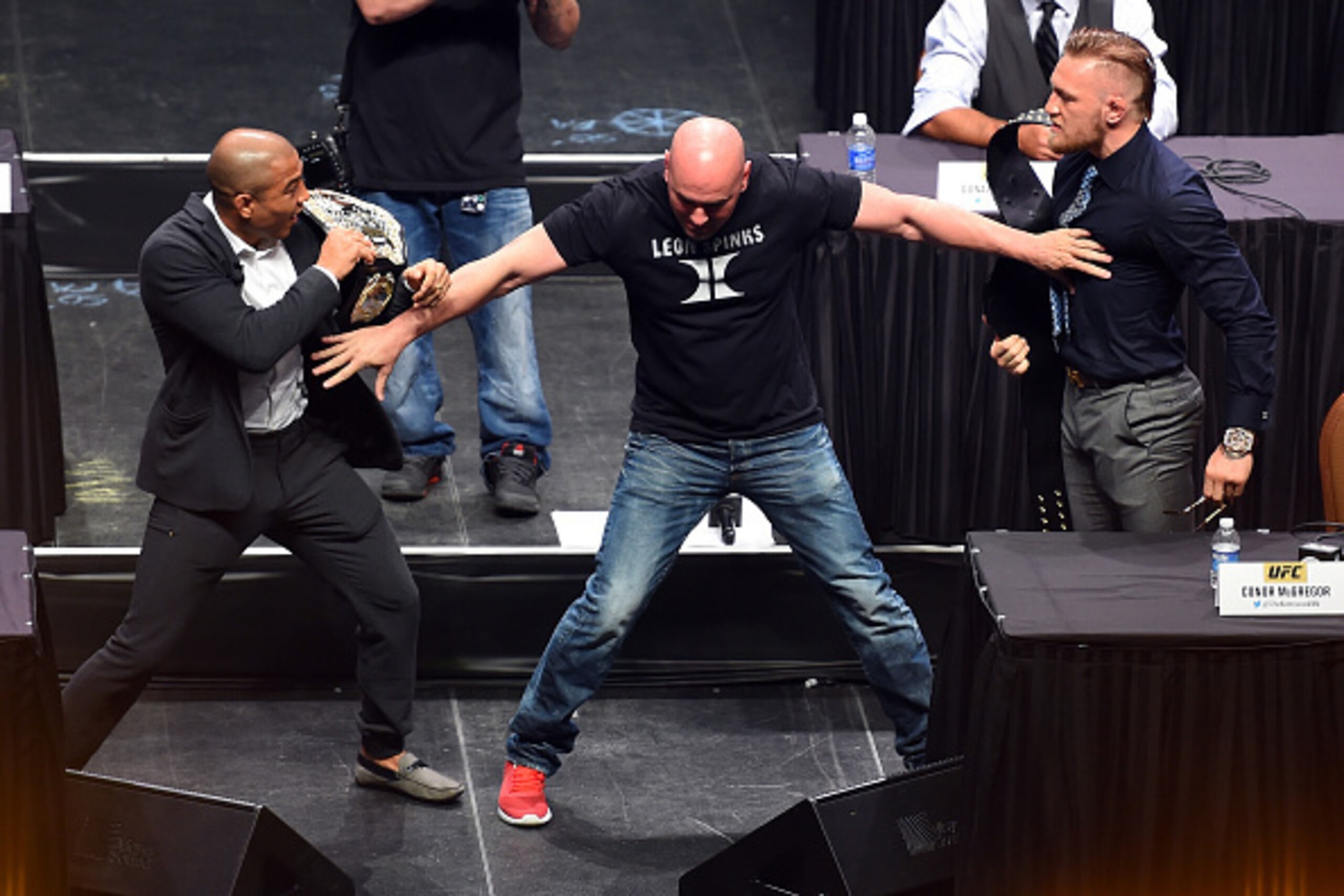
Saturday night plays host to the biggest event of the year, as Jose Aldo and Conor McGregor finally meet in the main event at UFC 194.
This has been a long time coming. McGregor rushed out of the cage to confront Aldo in the crowd after he beat Dennis Siver in Boston last January, and the two men needled each other constantly over the course of a worldwide media tour in March to hype their scheduled July meeting at UFC 189.
Everything fell apart three weeks before the bout when Aldo suffered a broken rib during a sparring session. Despite pressure from Dana White to stay in the fight, the longtime featherweight champion pulled out, which prompted the UFC to create an interim title and bring in Chad Mendes on short notice to fill in for the main event.
McGregor passed that test with flying colors, and with Aldo's rib healed, the two men will finally meet in the biggest featherweight title fight in MMA history. If McGregor wins, he will be the face of the entire sport, while Aldo can join the pantheon of Brazilian sporting greats by stifling the Irishman's considerable trash talk. Superstardom has always eluded Aldo, and a win here would give him the fame he so richly deserves.
The rest of the card is stacked with outstanding fights. In the co-main event, Luke Rockhold will challenge middleweight champion Chris Weidman in what might be the best fight ever at 185 pounds. Both are in their athletic primes and still improving, and they have seemingly been on a collision course for years as the best young middleweights in the game.
Olympic wrestling meets world-class Brazilian jiu-jitsu in the bout between Ronaldo "Jacare" Souza and Yoel Romero, which will likely determine the next challenger for the middleweight crown. This is the third time matchmaker Joe Silva has attempted to put this fight together, and with good reason: It should be a barnburner.
Jiu-jitsu aces Demian Maia and Gunnar Nelson will collide in an excellent welterweight bout, while the main card opens with a high-energy striking matchup between rising Hawaiian Max Holloway and hard-punching veteran Jeremy Stephens.
Even the preliminary card is outstanding. Urijah Faber takes on Frankie Saenz in the Fox Sports 1 main event, while touted welterweight up-and-comers Warlley Alves and Colby Covington meet in a wild matchup. The rest of the event is studded with action fights and elite prospects such as Kevin Lee and Magomed Mustafaev.
It's impossible to overstate how good this card is. There may never be another pay-per-view more worthy of the viewer's time and money in terms of both the action on offer and the deeper meaning of the fights.
Let's take a look at each individual matchup.
The Fight Pass Prelims
1 of 7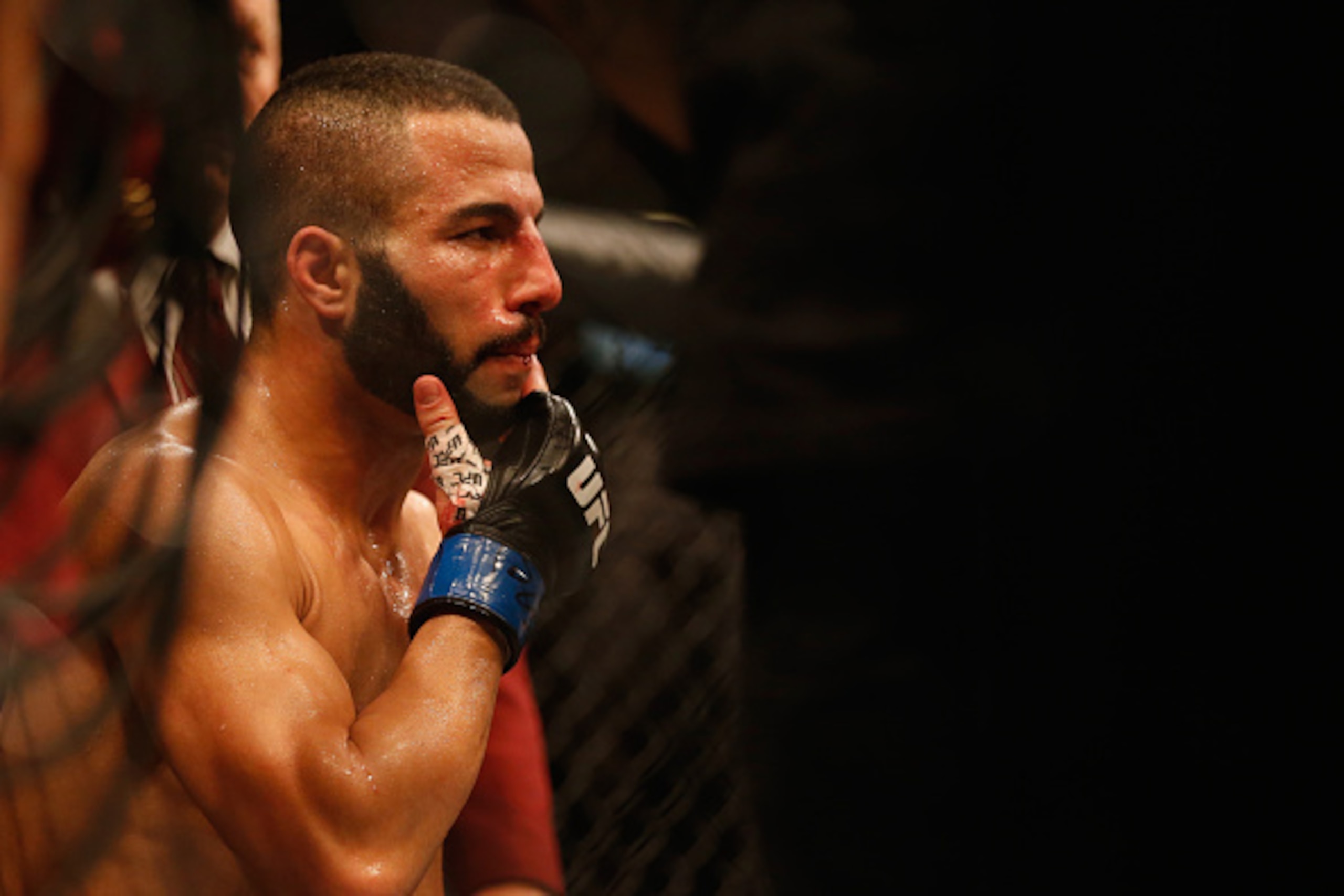
Welterweights
Court McGee (16-4; 5-3 UFC) vs. Marcio Alexandre (11-2; 0-2 UFC)
The Ultimate Fighter 11 winner McGee returns to action after a two-year layoff due to injury. He lost a competitive outing with Ryan LaFlare in December 2013 and hasn't fought since. Alexandre was the runner-up on TUF Brazil 3, where he lost to Warlley Alves by submission, and dropped a decision to Tim Means last December.
McGee's game revolves around pace and activity. He presses forward behind a consistent jab, combinations and kicks on the feet, and he is just as relentless with takedowns and top control. Alexandre is a slick striker with a base in karate. He's dangerous but doesn't throw much volume and doesn't defend takedowns particularly well.
While the layoff and injuries are a concern, this matchup is tailor-made for McGee to get back on track. He'll outwork Alexandre on the feet and on the mat and is durable enough to avoid getting finished. The pick is McGee by decision.
Lightweights
John Makdessi (13-4; 6-4 UFC) vs. Yancy Medeiros (11-3, 1 N/C; 2-3, 1 N/C UFC)
Canada's Makdessi returns to action after suffering a broken jaw in a loss to Donald Cerrone in May, in the aftermath of which he considered retirement. He draws Hawaii's Medeiros, who suffered a brutal knockout loss to Dustin Poirier in June. Neither fighter is on the cusp of a title shot, but this should be an exciting striking match.
Makdessi is a pure striker. While his background is in traditional martial arts, and he has the requisite arsenal of spinning, side and round kicks, most of his work revolves around a punishing jab and potent right hand. He's an excellent defensive wrestler, which allows him to keep the fight standing.
Medeiros also prefers to strike. He's long and rangy, and he fights like a more athletic version of the Diaz brothers. His jab is stiff and consistent, he hides a nice right hand behind it and mixes in spinning kicks with regularity. He packs real pop in his strikes and has a gift for finding submissions in transition as well.
This should be Makdessi's fight to lose. He's the much cleaner and more technical striker and can match Medeiros' pace, while his counter acumen makes him dangerous. The pick is Makdessi by knockout in the second round.
Magomed Mustafaev (12-1; 1-0 UFC) vs. Joe Proctor (11-3; 4-2 UFC)
Dagestan's Mustafaev burst onto the scene in 2014 with a win over UFC lightweight contender Khabib Nurmagomedov's younger brother and stopped Piotr Hallmann in his UFC debut last June. Now working out of Jackson-Winkeljohn, he draws Massachusetts' Proctor, a longtime training partner of Joe Lauzon. Proctor rebounded from a tough loss to Yancy Medeiros with a back-and-forth win over Justin Edwards.
Mustafaev is athletic and dynamic. He's a nasty striker with big power and a willingness to sit down and throw combinations, but he also mixes in unpredictable spinning kicks and flying knees. Wrestling and fighting in the clinch are also strengths, and he excels at slipping in elbows on the breaks. He aggressively hunts for submissions on the mat and has an active guard.
Proctor is all offense. He's a potent combination striker and does good work in the clinch; while he doesn't shoot for takedowns, he defends them well and has an aggressive submission game.
The American is dangerous and mean, but Mustafaev is a special kind of talent, with finishing ability everywhere and the technical chops to back up his aggressiveness. The pick is Mustafaev by submission in the first round.
The Fox Sports 1 Prelims
2 of 7
Strawweights
Tecia Torres (6-0; 2-0 UFC) vs. Jocelyn Jones-Lybarger (6-1; 0-0 UFC)
Resurrection Fighting Alliance champion Jones-Lybarger steps up on short notice to replace the injured Michelle Waterson. She gets a big opportunity to vault herself into the elite as she faces fifth-ranked Tecia Torres. The American Top Team product was a participant in The Ultimate Fighter 20 and has since won two in a row over Angela Magana and Angela Hill.
Torres is small for the division at 5'1", but she fights long by utilizing rangy kicks and quick-paced punching combinations. She's a good wrestler as well, with impeccable takedown defense and a nice selection of doubles. She offers little from top position, though, and has next to no finishing ability in general.
Jones-Lybarger is well-rounded and skilled but not terribly dangerous. Her crisp boxing game makes good use of her rangy frame—she's one of the taller fighters in the division at 5'7"—through a long jab and cross. Pace is a strong suit, and she's more than willing to hang in the pocket to throw combinations. She has a nice takedown game and defends fairly well.
The difference here should be Torres' speed and athleticism. Jones-Lybarger is the much bigger fighter, but Torres is quick and should be able to get in and out with combinations and takedowns. The pick is Torres by decision.
Lightweights
Leonardo Santos (14-3-1; 3-0-1 UFC) vs. Kevin Lee (11-1; 4-1 UFC)
"The Motown Phenom" Lee, a native of Detroit, has blossomed into one of the more promising prospects at 155 pounds. He draws The Ultimate Fighter: Brazil 2 winner Santos in a mild step up in competition.
Lee has run off four consecutive victories since dropping his debut to Al Iaquinta in February 2014, most recently submitting James Moontasri in July. Santos is also on a winning streak, scoring wins over Efrain Escudero and Tony Martin after drawing with Norman Parke.
The American is only 23, and he's improving substantially in every outing. His striking is still a bit rote, but he strings together good combinations and works at a quick pace. Wrestling is his strong suit, though, and he has an excellent arsenal of doubles and suplexes. He excels at getting to the back and finishing the rear-naked choke.
Santos is a world-class grappler. His striking is better than you might expect, with a solid arsenal of rangy kicks, but he's only a subpar wrestler. He's lethal on the mat, however, particularly from top position. His arm-triangle choke is one of the best in the sport.
This is Lee's fight to lose. He's the superior wrestler, which means that this should stay on the feet, and Lee will be able to outwork the Brazilian with volume and possibly even land a big shot for the finish. The pick is Lee by decision.
Welterweights
Colby Covington (8-0; 3-0 UFC) vs. Warlley Alves (9-0; 3-0 UFC)
Two of the most promising young welterweights in the UFC will clash as former Division I All-American wrestler Covington meets The Ultimate Fighter: Brazil 3 winner Alves in an outstanding scrap.
Alves got a gift decision against Alan Jouban last November but rebounded with a one-sided win over Nordine Taleb in August. Covington scraped out a win over Mike Pyle in May after blowing his first two UFC opponents out of the water in uncompetitive outings.
The winner will have staked his claim to being the next big thing in the stacked welterweight division and will in all likelihood get a top-15 opponent in his next outing.
Alves is an outstanding athlete in every way. He's a smooth striker with good timing and big power in his shots, though he could stand to throw a little more volume. Wrestling is likewise a strong suit; he's almost impossible to take down, and he has a nice array of trips in the clinch. His top game is heavy and extremely technical, and he excels at catching his signature arm-in guillotine in scrambles.
Like Alves, Covington is a serious physical specimen, though he is rawer in terms of his skills. His striking is effective and powerful but somewhat rudimentary, and it mostly serves as an effective distraction from his relentless takedown game. Covington is at his best when he chains together endless streams of takedowns against the fence and stifles his opponents from top position.
Alves is a much better striker, and he's dangerous in transition, where Covington has a bad habit of leaving his neck out as he shoots for takedowns. While Covington could easily grind this out, the pick is Alves by submission in the first round.
Bantamweights
Urijah Faber (32-8; 8-4 UFC) vs. Frankie Saenz (11-2; 3-0 UFC)
Faber returns to action against the rising Frankie Saenz in a solid bantamweight matchup. The former WEC featherweight champion is coming off a stint as a coach on The Ultimate Fighter 22 against Conor McGregor and is looking to bounce back after a clear decision loss to Frankie Edgar in May. Prior to that, Faber had won two in a row following his second loss to Renan Barao.
Saenz has been a feel-good story in the bantamweight division. The 35-year-old former Arizona State wrestler has won all three of his UFC bouts, taking decisions over Sirwan Kakai, Iuri Alcantara and Nolan Ticman.
Faber is a master in the art of the transition. He uses powerful single strikes to set up takedown attempts and moves seamlessly from wrestling into grappling with a nasty front headlock. Capitalizing on hurt opponents with his signature guillotine is his specialty, and he does intimidating work from top position.
Saenz is aggressive and does his best work when pressuring. Pace is his strong suit, and he excels at putting out a consistent volume of surprisingly technical punch-kick combinations. He's strong in the clinch and a technical wrestler to boot.
Saenz isn't a pushover by any means. If Faber has hit the wrong side of the aging curve, he could be in for a rough night, particularly given Saenz's tendency to push the pace. The more likely outcome, however, is Faber finding a way to get it done. The pick is Faber by submission in the second round.
Max Holloway vs. Jeremy Stephens
3 of 7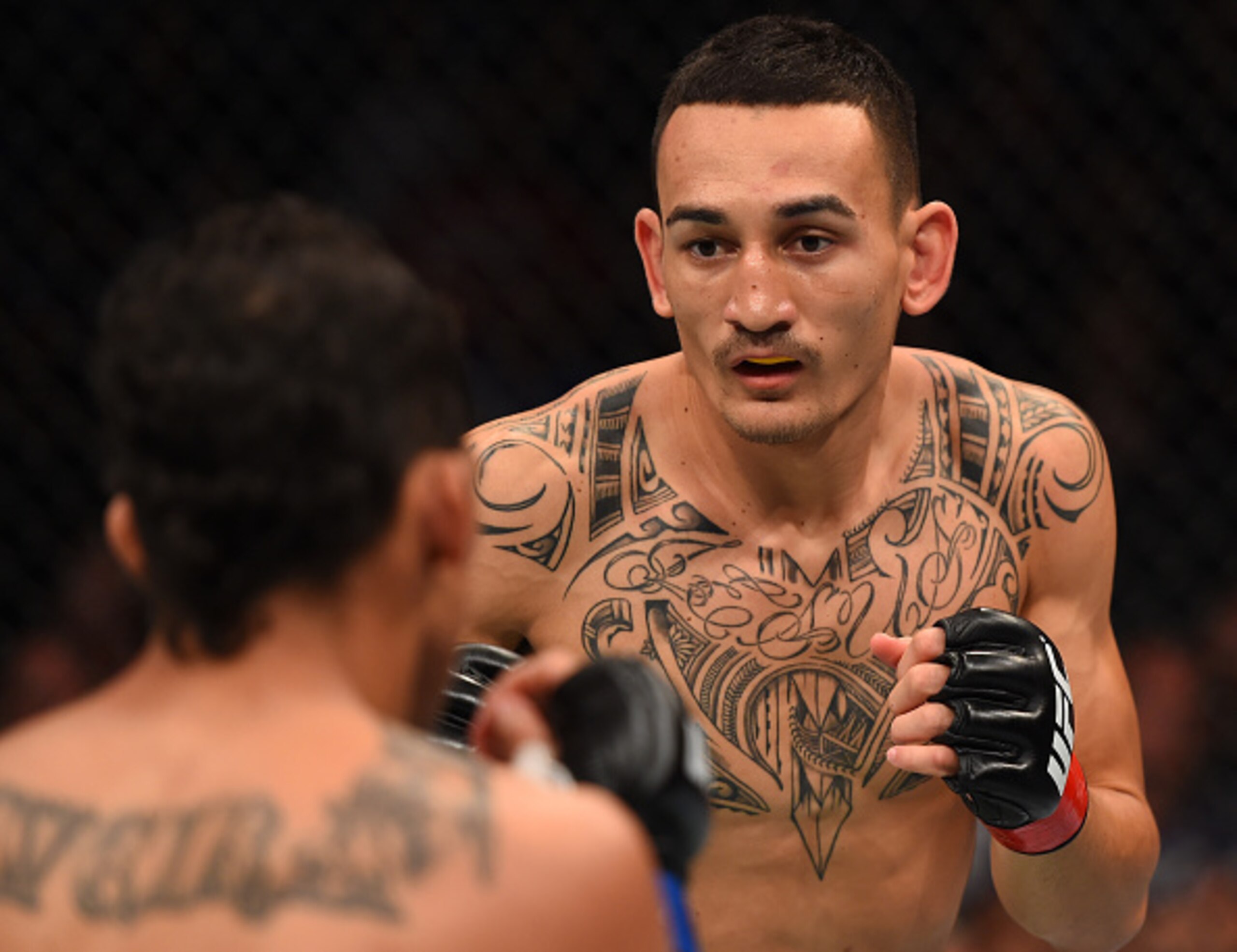
Featherweights
Max Holloway (14-3; 10-3 UFC) vs. Jeremy Stephens (24-11; 11-10 UFC)
Hawaii's Max Holloway has seen some ups and downs in his four-year UFC career, which he entered as a raw 20-year-old with only four fights under his belt, but he has developed into a truly elite fighter in the last two years. He hasn't lost since a tough matchup against interim champion Conor McGregor in August 2013, and in the aftermath of that loss, he has run off seven straight wins.
The Hawaiian beat up Cole Miller to win a gritty decision in February, and Holloway then brutalized the overmatched Cub Swanson on the feet before submitting him in the third round in April. Charles Oliveira suffered a bizarre esophagus injury in their fight in August, which set up Holloway for this matchup with the suddenly resurgent Jeremy Stephens.
"Lil' Heathen" has been a staple of the UFC for more than eight years, compiling 21 fights under its banner, most of them as a lightweight. He's been an intriguing addition to the featherweight division, with mixed results: He has sandwiched spectacular knockouts of Rony Jason and most recently Dennis Bermudez around a pair of decision losses to Oliveira and Swanson.
This should be a barnburner of a fight between two talented strikers with great finishing ability. For Stephens, a win would firmly place him among the division's elite. The stakes are higher for Holloway: If Frankie Edgar loses on Friday, Holloway is probably next in line for a title shot; if Edgar wins, the Hawaiian is still second in line and will have to win another fight to stake his claim.
Stephens is a puncher, plain and simple, and there isn't much flash to his game. His brutal power and speed make him exceptionally dangerous, however, and as he has aged, he has become quite crafty in applying it.
Crushing low kicks and the occasional jab allow Stephens to gauge the distance at range and draw out his opponent, as does an active feinting game. When he succeeds in eliciting a response, Stephens drops a brutal counter combination, with a preference for the left hook and right uppercut. He can work in the pocket, hit pull counters as he steps back and has a particular affinity for the check hook as he pivots out.
When he moves forward, the overhand right remains Stephens' most dangerous weapon, and he's gotten better at integrating high kicks into his repertoire as well. Output is a problem, though, and he can be outworked. He's been durable throughout his career, but he isn't a particularly skilled defensive fighter.
Stephens has always been a skilled defensive wrestler, and he's gotten even better since moving to 145 pounds. His sprawl is quick, and he defends well against the fence. Offensive wrestling has been a more consistent weapon for him at featherweight as well, and the occasional takedown complements his striking arsenal nicely. He's not much of a grappler but can control on top and land hard ground strikes.
Holloway is a diverse, talented and rapidly improving young striker. He constantly circles, cuts angles and switches stances at range while touching with his lead hand to gauge the distance, and then picks his spots to sit down on a punching combination or kick. Mixing up his shot selection to the legs, body and head makes it nearly impossible to time or predict what's coming next.
His rhythm is tricky and so too is his distance management. He might circle in southpaw, touch with an off-beat right jab, take a step back into orthodox as his opponent tries to fire back and then drop a three-punch combination that he punctuates with a hard kick to the body as his opponent retreats. He uses his height and length well, and he constantly sticks his opponent just on the end of his strikes.
The occasional spinning back-kick and flying knee adds variety, but his arsenal is mostly meat-and-potatoes boxing and round kicks. What makes him truly special is his pace. He never steps back further than he needs to, and his angular movement constantly keeps him no more than a step away from throwing at all times.
This puts tremendous physical and mental pressure on Holloway's opponent. Combined with his constant targeting of the legs and body, the Hawaiian wears down his opposition quickly, and he has enough pop that individual strikes demand respect. He's not easy to hit cleanly despite his pace and tendency to stay relatively close to his opponent, either, consistently moving his head and using his length to avoid shots.
It takes outstanding takedown defense to make a striking game like that work, and Holloway has it in spades. He effortlessly sprawls on doubles and has exceptional balance and head pressure against singles. The fence is his ally against chained attempts. It's nearly impossible to take him down, and if he's briefly placed on the mat, he rarely stays there for long.
The Hawaiian isn't much of an offensive wrestler, but he finds creative ways to get the fight to the ground. He likes to grab a guillotine from the front headlock and then sweep to end up on top, and he excels at grabbing position in transitions. His guillotine is quite dangerous, he passes well on top and he has good pop in his ground strikes.
Betting Odds
Holloway -550, Stephens +425
Prediction
This is Holloway's fight to lose. He's hard to hit cleanly, fights longer and, most importantly, works at a much faster pace than Stephens. Unless Stephens can place a perfect shot on Holloway's chin—and even if he can, the Hawaiian is quite durable—he's going to lose on volume.
The pick is Holloway by decision with the strong possibility of a late finish.
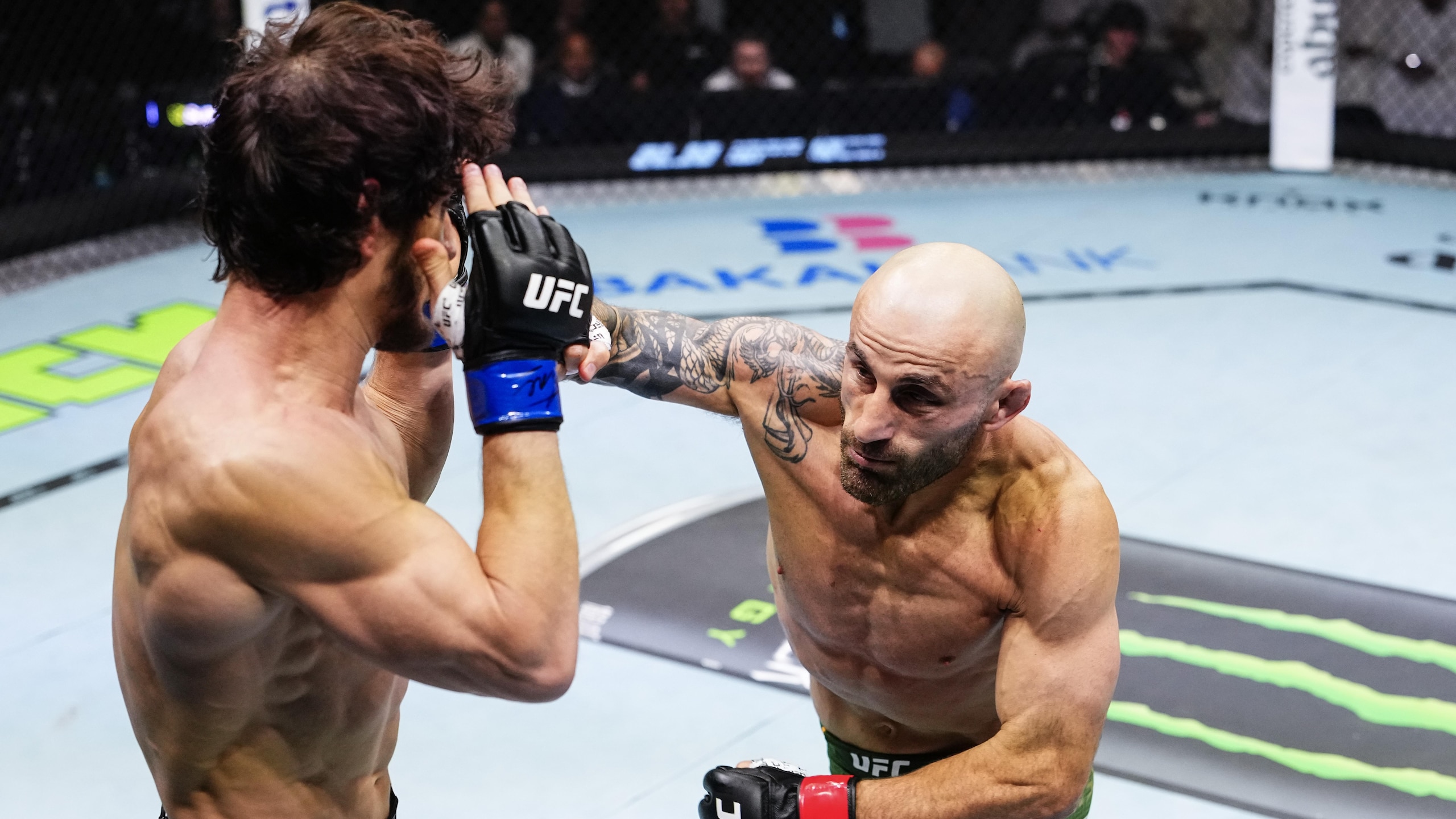
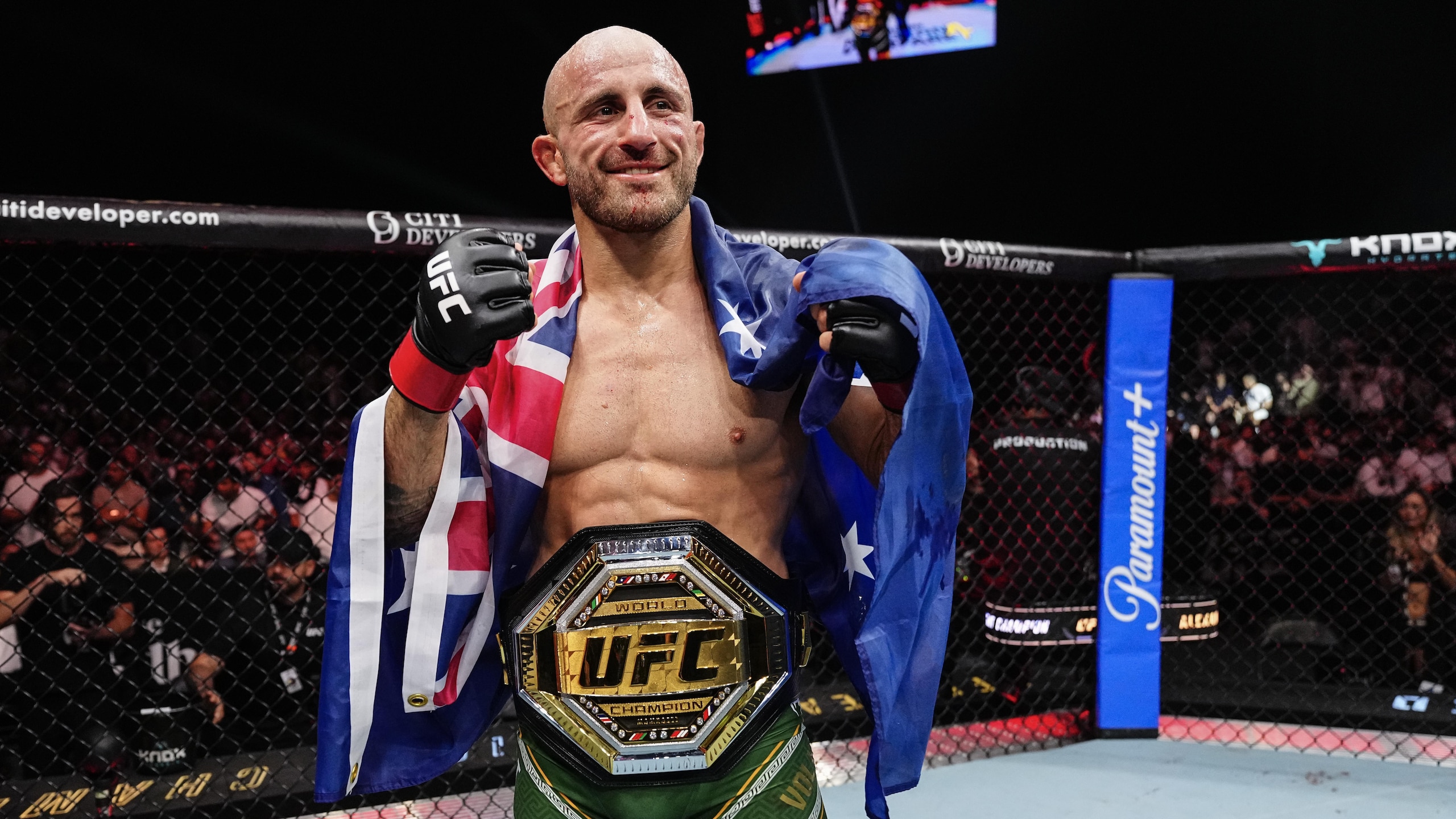
Demian Maia vs. Gunnar Nelson
4 of 7
Welterweights
Demian Maia (21-6; 15-6 UFC) vs. Gunnar Nelson (14-1-1; 5-1 UFC)
Two of the finest jiu-jitsu practitioners in the UFC clash as the venerable Maia meets Icelandic prodigy Nelson in an excellent matchup. Although he's now 38, Maia is still getting it done in the ultra-competitive welterweight division, most recently submitting the rising Neil Magny in August. Nelson rebounded from his first career loss against Rick Story by dropping Brandon Thatch and submitting him in July.
A win here would give Maia a four-fight winning streak and set him up for one last shot at a title run. For Nelson, a victory would erase the memory of his one-sided loss to Story and give him an elite opponent in his next outing.
Before he became a world-class grappler, Nelson was a karate prodigy, and it shows in his stand-up game. He bounces around at distance and then leaps in with a potent kick or a slick straight right. Counters are a specialty, and he packs real power in his shots.
The problem with Nelson's striking repertoire is output. He simply doesn't produce much offense at range and often goes 30 seconds or even more without throwing anything. Distance and angles form the entirety of his defensive skills, and he's hittable when he can't stay away from his opponent.
Although Nelson is small for the division, he's surprisingly strong in the clinch, with sharp knees and a slick inside trip. He's quick with his shot takedowns as well and has a nice, technical double, but he doesn't set them up particularly well or cover them with strikes.
Nelson is a wizard on the mat and everything you would expect from an ADCC competitor. His pressure from top position is incredible, he's a sharp ground striker and his passes are diverse, slick and smooth. He's exceptionally technical and patient, but once he reaches a dominant position, hard punches and a well-chosen submission attempt follow quickly.
Maia has stripped down his game as he has aged. The southpaw was once fairly willing to engage on the feet, and he's still surprisingly proficient there. He works behind a consistent, rangy jab as he moves forward and has some pop in his straight left.
His striking is more purposeful these days, however, and its purpose is to cover his pressure movement , disguise his takedown attempts and clinch entries. Once he gets his hands on his opponent, typically close to the fence, Maia is lethal. He's an excellent chain-wrestler and strings together attempt after attempt, all of which he's capable of finishing with clean technique, until his opponent ends up on the mat.
If he can't get his opponent down, Maia is content to work in the clinch, and he has an excellent go-behind that leads him to a mat return or directly to the back on the feet. He's also happy to get his opponent into a scramble, where his technique in transitions usually leads him to top position or onto the hips for a takedown.
It's impossible to overstate how good Maia is from top position. He rarely strikes, but he passes with effortless ease against even high-level opponents. He excels at baiting his opponent into defending one particular pass and then going the other direction. Getting to the back is his specialty, and his rear-naked choke is lethal.
The problem at this point in Maia's career is cardio. He's dangerous in the first round and solid in the second, but most opponents can wear him down by the third round.
Betting Odds
Maia -115, Nelson -105
Prediction
This fight favors the veteran. His biggest weakness is an opponent who will push the pace and wear him down, and Nelson's tendency to work at a glacially slow pace bodes well for Maia as the fight progresses. The Brazilian is also the superior wrestler and, at least early in the fight, should be able to get this to the ground.
He won't submit Nelson, and it probably won't be pretty to watch, but the pick is Maia by clear 29-28 decision.
Jacare Souza vs. Yoel Romero
5 of 7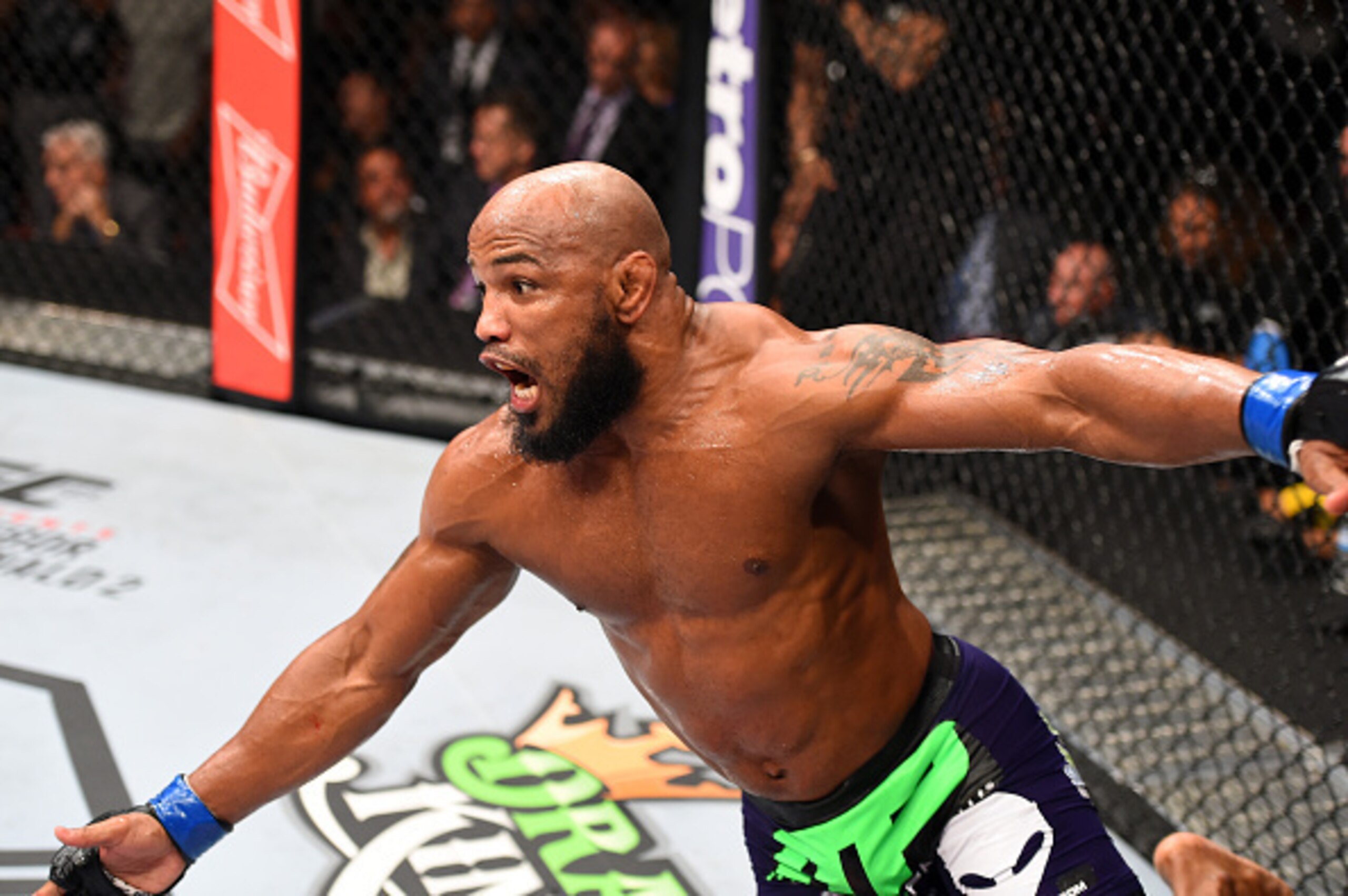
Middleweights
Jacare Souza (22-3, 1 N/C; 5-0 UFC) vs. Yoel Romero (10-1; 6-0 UFC)
The third time will hopefully be the charm as world jiu-jitsu champion Ronaldo "Jacare" Souza and Cuban freestyle wrestling silver medalist Yoel Romero finally face off inside the Octagon. The two fighters were originally scheduled to meet at UFC 184 in February, and then at April's UFC on Fox show. The first time, Souza was forced to withdraw, and on the second occasion Romero fell victim to injury.
Matchmaker Joe Silva was determined to put this fight together, and with good reason.
Neither fighter has lost in the UFC, and in fact both fighters' last loss came on the same card, a Strikeforce event in September 2011. Since then, Romero has won six in a row, and Souza eight. Both have finished all but one of their wins in that stretch.
The Brazilian's resume includes Francis Carmont, Chris Camozzi (twice), Yushin Okami and Gegard Mousasi. Romero capped his streak with knockout wins over Lyoto Machida and Tim Kennedy, the latter of which was controversial.
This will be an extraordinary top contender matchup, and the winner will emerge as a deserving challenger for either Luke Rockhold or Chris Weidman.
Explosiveness and relentless pressure define Souza's game. He steadily and calmly stalks his opponent through the space of the cage, working his way forward and cutting off angles to force him toward the fence. Once he has narrowed his opponent's range of motion with footwork, he explodes forward into a hard punching combination or takedown.
Unlike many aggressive fighters, Souza is patient and defensively sound. He constantly moves his head as he works his way forward and pulls his head off the center line to avoid counters. At his best, he moves his head, throws, moves his head again and then throws another shot. Each movement in that sequence brings him a step closer to his opponent.
The Brazilian packs huge power in his hands, particularly his right. He has a bad habit of forgetting about his left hook, however, and goes through stretches where all he throws is a right kick and an overhand. He is much more dangerous when he mixes things up to the head and body, uses the left hook and throws a spinning hook kick to catch opponents who try to circle away from his power side.
While he's dangerous on the feet, that stalking pressure mostly serves to cover Souza's takedowns and clinch entries. He uses the fence as a weapon as he grinds in the clinch, using his head to pin his opponent in place while he lands punches and knees. The inside trip is his go-to takedown, and he has a number of tricky setups for it.
He's less adept with shot takedowns but still proficient. His strength makes up for his sometimes-less-than-technical finishes, and as with his clinch work, he's adept at using the fence to his advantage.
Jacare's top game is legendary and probably the very best in the entire sport. Once he gets a hold of his opponent, there is no escape. Unlike many pedigreed grapplers, he melds vicious strikes with the rest of his game. His posture is impossible to break, which gives him huge power, and that serves to open up his effortless passes and deep arsenal of submissions.
Unusually in MMA, Souza loves side control, which speaks to how heavy his base is in top position. Hard knees to the body complement his favored arm triangles and kimuras from the top, but he can also hit guillotines and slick back-takes when his opponents scramble.
Romero is an elite athlete—one of the best to ever compete in the UFC. Everything he does in the cage speaks to his ridiculous speed and power. He also has more subtle athletic gifts, however, such as his spatial orientation and great sense of timing.
The former wrestler strikes like a much more experienced fighter. Finding the southpaw's dominant outside angle, with the lead foot outside the opponent's, comes easily to him. He understands rhythm in the way a grizzled veteran might, and does a beautiful job of changing speeds from slow to fast in the blink of an eye. He constantly shows feints and level changes, which set up both his takedowns and his strikes.
He fights long despite his lack of height, flicking out a constant series of front and round kicks and a disruptive oblique-kick to the thigh. This creates the space for him to leap into his favored punching attacks.
The meat of the southpaw's striking arsenal is his vicious straight left. He has a variety of setups for it, including stepping in with a low leg kick or stepping across to an outside angle. He also throws it as a slick counter. His right hook is potent and smooth, and he could stand to use it more often.
Although he can be hit, Romero is defensively sound. He operates at long range and consistently pulls his head off the centerline as he throws.
While he loves to strike, Romero is nasty elsewhere as well. The clinch is a strong suit; he throws brutal jumping knees from the double-collar tie and has a shockingly smooth series of outside trips to go along with a beautiful step-outside throw.
The rest of the Olympian's wrestling arsenal is as good as you would expect. He shoots an explosive blast double, but his specialty is the ankle pick, and he can do pretty much everything. While he occasionally struggled to defend takedowns earlier in his career, that deficiency has disappeared as he has devoted more training time to it.
Shooting takedowns on Romero in open space is a bad idea. His sprawl is impressive, and he excels at beating up his opponents from the front headlock and ride. From top position, he mostly looks to catch his breath, but he can create moments of insane violence when he chooses to do so, as he did against Lyoto Machida with a stream of short elbows.
Betting Odds
Souza -150, Romero +130
Prediction
The betting line undervalues Romero. Souza's best chance of winning this fight is in the clinch and on the ground, and it seems like a stretch to imagine that he will consistently find success in the tie-ups and completing takedowns against a wrestler of Romero's caliber.
On the feet, Souza is dangerous, but he has been much less impressive in fights where opponents didn't fear his clinch and takedown games. In a pure striking matchup, which this will more than likely be, it's hard not to side with Romero's unorthodox and potent arsenal.
The pick is Romero by knockout in the second round.
Chris Weidman vs. Luke Rockhold
6 of 7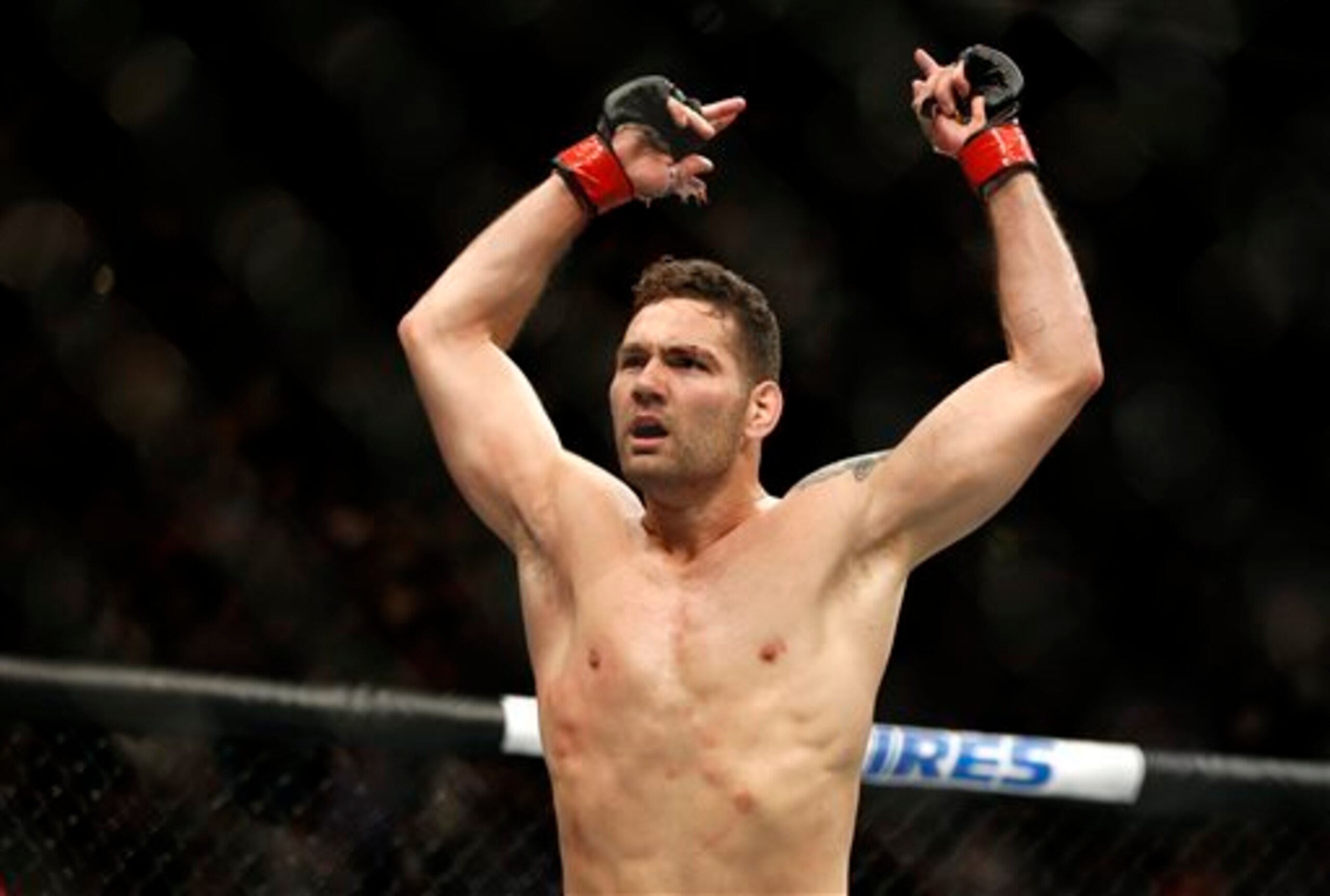
Middleweight Championship
Chris Weidman (13-0; 9-0 UFC) vs. Luke Rockhold (14-2; 4-1 UFC)
Middleweight champion Chris Weidman attempts to defend his title for the fourth time against former Strikeforce middleweight champion Luke Rockhold. Weidman knocked out Anderson Silva to win the belt in July 2013, and then beat him again to confirm his rule at the top. A gutsy decision win over Lyoto Machida and a brutal shellacking of Vitor Belfort cemented him as a dominant champion.
Rockhold came over from Strikeforce, after Zuffa's purchase of the organization, with a great deal of hype. He had defeated Jacare Souza in a massive upset to win the belt in September 2011, and then he defended it against Keith Jardine and Tim Kennedy.
A knockout loss to the rejuvenated Vitor Belfort in May 2013 set him back, but he has finished four straight wins since then. Costas Philippou fell to a vicious kick to the body, and then Rockhold showed off his submission prowess by turning Tim Boetsch into a human pretzel, choking out Michael Bisping with a guillotine and brutalizing former champion Lyoto Machida before finishing with a rear-naked choke.
This is a title fight of almost epic proportions. Both came to prominence in 2011 and have seemingly been on a collision course since then as the two most talented American middleweights in MMA history. Now in the primes of their careers, there is no way for this fight to be anything but an incredible matchup.
The champion is a pressure fighter by nature who does his best work moving forward in order to pin his opponent's back to the fence. A great jab that he's not afraid to use against southpaws keeps his opponents moving backward. His front kick serves the same purpose, and a consistent diet of round kicks serves to cut off his opponent’s lateral movement. His footwork is smooth and measured, and he rarely overcommits.
Weidman is rangy and deceptively quick, which makes it difficult for his opponents to gauge exactly where he is in space as he pressures them. He's also a hard puncher with good mechanics, and he excels at sneaking in the left hook as his opponents attempt to circle out. He caught Uriah Hall and Anderson Silva with that punch.
What makes Weidman's pressure all the more dangerous is his willingness to exchange. He's getting better in the pocket, and he combines toughness with subtle head movement and quick triggers on his counter combinations. On the downside, he's hittable as he throws, particularly his kicks, and often shells up when his opponents throw at him.
As good as he is on the feet, striking is likely the weakest part of Weidman's game. He's a vicious clinch fighter with a great double-collar tie and knees that he combines with a snapdown into the front headlock, where he excels at finding a series of chokes.
The All-American wrestler still shines through in his MMA game. He has a quick shot and likes to start with a snatch single and then transition into chains of singles, doubles and knee taps. His takedown defense hasn't been tested all that much, but nobody has yet succeeded in getting him to the mat.
Weidman is a monster from top position. His base is unshakeable and his posture is impeccable, which allows him to generate brutal power in his punches and elbows. He combines strikes with smooth passes and a great topside submission game. His front headlock series of d'Arces, anacondas and guillotines is great, and he will also hunt for kimuras and arm triangles.
Rockhold is an extraordinary athlete who combines great explosiveness with smooth, effortless movement and big power in an enormous frame. The southpaw mostly prefers to strike and relies heavily on his kicks to set his preferred long range. He constantly flicks out round, front and spinning kicks, and all of them pack serious power.
The American Kickboxing Academy product is a less imposing, but still dangerous, puncher. He rarely jabs, and his straight left comes in bursts, but his backstepping counter right hook is a lethal shot that he sets up with tricky feints and deceptive timing. Even opponents who know it's coming usually find themselves running into it at least once or twice.
Extended exchanges are rarely Rockhold's goal, but he's more than competent when he finds himself brawling in the pocket. His head movement has improved, and he makes great use of subtle angles and pivots to land his preferred shots.
Despite the success he's had with his right hook, Rockhold does his best work moving forward. His kicks force his opponents backward, the counter right hook makes it difficult to pressure him and eventually he runs them into the fence. He mostly throws the straight left moving forward as a way of bringing him into a tie-up.
As dangerous as he is at range, Rockhold is even better in the clinch. His height and long limbs give him ridiculous leverage, his knees pack vicious power and he can hit the occasional trip or throw.
Rockhold rarely shoots for takedowns, and when he does, they're usually singles or trips in the clinch. He's an exceptional defensive wrestler, however, both against the cage and in open space. Shooting on him in the middle of the cage is generally a serious mistake, since it allows him to transition into his lethal counter-grappling game.
As with Weidman, the front headlock is a real strength of Rockhold's game. When he sprawls, he immediately locks onto his opponent's head and then moves into a lethal choke or one of his many smooth back-takes. Using the guillotine to sweep and end up on top is a specialty. An immensely creative grappler, he uses inverted triangles and blends wrestling rides with more traditional jiu-jitsu positions to great effect.
Rockhold is exceptionally dangerous from top position. His base is heavy, he passes with the aplomb of a world-class grappler and he owns a wide array of submission options, from chokes to kimuras and everything in between. Vicious ground strikes serve to open up his submission arsenal.
Betting Odds
Weidman -135, Rockhold +115
Prediction
This is a razor-thin fight between two of the most talented and dangerous middleweights in the history of the sport. Both fighters do their best work moving forward, but Rockhold is probably a little better on the counter and with his kicks, while Weidman is more dangerous with his hands.
Rockhold's sterling takedown defense and slick grappling repertoire along with the champion's bulletproof defensive wrestling mean that this will transpire mostly on the feet. The clinch will be the key, and the challenger probably has a slight edge at that range.
While both fighters like to pressure, Weidman is the more defined pressure fighter, and Rockhold has often been content to play off his back foot and pick his spots to land kicks and the counter right hook. That's the most likely scenario here, with the champion working forward behind his jab and Rockhold circling, moving and sitting down to exchange.
In that scenario, Rockhold emerges as a slight favorite. He's a little better in exchanges, has more options on the feet and has the skills to implement his game plan.
The pick is Rockhold by decision.
Jose Aldo vs. Conor McGregor
7 of 7
Featherweight Championship
Jose Aldo (25-1; 7-0 UFC) vs. Conor McGregor (18-2; 6-0 UFC)
The biggest card of the year culminates in the biggest fight of the year, as the only featherweight champion in UFC history, Jose Aldo, takes on interim featherweight champion Conor McGregor.
This matchup has been 11 months in the making. When McGregor brutalized the overmatched Dennis Siver last January, he sprinted out of the cage and confronted the laughing Aldo in the crowd. A worldwide media tour followed in March, and everything was set for the two men to meet at UFC 189 in July. It would easily be the biggest fight in featherweight history.
Aldo broke his rib in a sparring session less than three weeks out. McGregor and Dana White went on SportsCenter to bury Aldo for pulling out of the fight, but Chad Mendes stepped up on short notice to fight McGregor for an interim title. The Irishman overcame a knee injury of his own to stop Mendes in the second round to claim the belt. That victory brought McGregor to 6-0 in the UFC, with five of those wins by knockout.
Aldo was awarded the UFC title before the dissolution of World Extreme Cagefighting, and he has successfully defended it seven times. He beat Chad Mendes in a five-round war last October, and prior to that defeated Ricardo Lamas, Chan Sung Jung and Frankie Edgar. None of those fights has been particularly close, but Aldo has yet to regain the brutalizing form he showed early in his WEC career.
With Ronda Rousey's loss last month, McGregor is the UFC's biggest potential draw, and a win here would make him the face of the company. For Aldo, a win over McGregor would finally bring him the recognition he deserves as one of the sport's all-time greats.
McGregor is a born-and-bred pressure fighter. Everything about the southpaw's game revolves around aggressive forward movement and pushing his opponent toward the cage.
He's huge for the division at 5'9" with a 74" reach and cuts an enormous amount of weight to get down to 145 pounds. That height and length aids him as he presses forward, and he uses it well, with an arsenal of straight punches and rangy kicks that keep his opponents moving backward and out of range to hit him back.
Power is the hallmark of McGregor's game. His straight left is his bread and butter, and it's a brutal shot that he throws early and often to the head and body, sometimes four or five times in a row without any setup aside from feints and off-beat timing. He occasionally flashes a right jab but mainly probes with his lead hand to find the range.
McGregor's consistent left high kick serves to keep his opponent's head pinned in place. Slip the left straight, and the opponent ducks right into the path of the kick; keep the head in place, and McGregor knows exactly where it is to land the straight left. He excels at exploiting those defensive movements.
The Irishman's use of spinning kicks, front kicks and oblique kicks to the thigh isn't arbitrary. Spinning kicks attack the space into which his opponents try to move as they attempt to escape his pressure and get away from his potent left hand, while front kicks and oblique kicks push them backward toward the fence.
Once his opponent's back hits the fence, McGregor goes to work with vicious head-body flurries that he places around, under and through the guard. This is what enables the Irishman's blistering pace, and when he finds his rhythm he'll sometimes throw 35 strikes in a minute. That's ridiculous volume.
Defense isn't McGregor's strongest suit. He's hittable as he throws and in the pocket; on the other hand, he moves his head fairly well, his length is an asset and he hits a nice backstepping straight left or uppercut as his opponents try to pressure him back.
The rest of the Irishman's game ranges between solid and excellent. He has a nice arsenal of doubles and knee-taps that he times nicely as reactive shots, and he can grind away in the clinch. On top, McGregor has outstanding posture and melds his brutal ground strikes with a nice passing game. Submissions aren't his game, though he can threaten occasionally.
McGregor has generally defended takedowns well. He has a good sprawl, strong head pressure and a limp-leg against the single and a nice double-overhooks throw that he uses to counter body-locks. Against the cage, he throws vicious elbows as his opponents try to take him down. When placed on the mat he keeps moving, hips out and immediately attempts to get back up.
He struggled against Chad Mendes, though his coach later claimed that was because a knee injury prevented him from doing any wrestling in the lead-up to the fight. Whether that's true or not, the larger concern was that he had so little to offer from his back in terms of scrambling back to his feet or threatening with submissions.
Aldo's game is predicated on defensive skill, efficiency and explosiveness in short bursts. There's nothing terribly flashy about what he does, but he's extraordinarily effective nonetheless.
The champion is a striker by preference. He likes to operate at a relatively slow pace, which allows him to utilize his elite defense and pick off his opponent's shots with counters one or two at a time.
Aldo's defense is layered. He moves his head constantly and combines that first line of defense with parries, checks of leg kicks, a tight guard and a slick control of distance through pivots and angles. Each defensive movement leads to a potential series of counters, and the second he avoids his opponent's shot, he comes back with two or three of his own.
The jab is the basis of Aldo's game at range. He throws it constantly with an unpredictable rhythm, and he uses it to set the distance, disrupt his opponent and catch his opponent unaware a half-beat after he finishes his own combinations.
When the champion lets go with his combinations, he's something truly special. He's exceptionally accurate and mixes up his shots to the head and body in sequence, with a preference for the straight right-left hook.
Aldo is best known for his devastating low kicks, and with good reason. He has two basic variations. In the first, he throws them from directly in front of his opponent without a setup, relying on his speed and lack of telegraphing to land the shot. In the second, he drives forward with punches—often a left hook to the body—and steps into a vicious kick. They're so fast that nobody has had success in checking or countering them.
Incredible takedown defense allows Aldo to keep the fight standing. Considering the quality of opposition he's faced over the years, he's likely the best in MMA history. The same angles and distance that he creates with his outstanding footwork and pivots serve to shut down most shots before they ever happen and make it difficult to get a clean entry onto his hips.
He shucks off most shots effortlessly in open, limp-legging and using head pressure before simply kicking out. Chained attempts against the fence have just as little success, and he excels shutting down trips and throws in the clinch as well. His instincts for the counter attack his opponent's level changes with uppercuts and stepping or flying knees just as well as they serve in the pocket.
Although it is criminally overlooked, Aldo is an exceptional offensive wrestler. He has great timing for his reactive shots, using his strikes to draw out counters before ducking under to grab swift doubles or his favored outside trip. His finishes are clean and technical.
From top position, Aldo is a monster. He passes effortlessly against even elite opposition and has outstanding posture, which allows him to generate tremendous force in his ground strikes. The jiu-jitsu black belt has great control and transitions smoothly, all the while dropping bombing shots and eating up time.
Cardio has been a consistent question for Aldo since he gassed against Mark Hominick in 2011. It hasn't been much of an issue since then, but his consistent control of the pace and tendency to match his opponent's output makes it difficult to say whether his gas tank is truly limited or whether he just fights down to their level.
Betting Odds
McGregor -115, Aldo -105
Prediction
There are two major fights within the fight: First, for control of where in the cage the fight takes place, and second, for control of the pace. McGregor would prefer to be moving forward, to have Aldo's back to the fence and to be working quickly. Aldo would rather be in the middle of the cage and to be working relatively slowly.
The best option for the champion would be to keep this in the pocket, where his footwork and greater craft will come into play. If he tries to stick and move at the end of the longer fighter's straight left, he's going to get picked apart and worn down with volume. If he stands his ground when McGregor pressures, however, he can drop combinations on the hittable McGregor.
The pocket is the range where Aldo can exploit McGregor's tendency to throw in single shots by moving his head and countering. It's also the best place for him to find clever setups—punches, feints and angles—to land the devastating low kicks that the Irishman will no doubt have prepared to check and counter. Standing his ground will also allow Aldo to shoot his beautiful reactive takedowns.
If this ends up as a pure striking matchup, it drastically favors the quicker-paced and more powerful Irishman, who's durable enough to take Aldo's best shot and keep coming. If the champion can work takedowns, however, he can effectively shorten the striking exchanges, get McGregor thinking before he throws and score points while keeping it even on the feet.
Aldo needs to swallow his pride and use his whole toolkit. He has done so before when faced with pure strikers, and there's every reason to think he'll do so here. Even if he can work takedowns, however, McGregor is dangerous enough to finish the fight at any time, despite Aldo's proven chin.
Given both fighters' durability, this is likely to go to a decision. Both fighters are intelligent and make outstanding adjustments, but over 25 minutes, Aldo's bag of tricks is just a bit deeper and more diverse, and that should be the difference.
The pick is Aldo by tight decision in the fight of the year.
Patrick Wyman is the Senior MMA Analyst for Bleacher Reporter and the co-host of the Heavy Hands Podcast, your source for the finer points of face-punching. He can be found on Twitter.
All betting odds via Odds Shark.


.jpg?w=2560 "Raiders Could Start Mendoza")
.jpg?w=2560 "Rodgers Iced Out on Plane 💎")

.jpg?w=2560 "🚨 Week 8 AP Top 25 Poll")

