

FIA's Alternate Formula 1 Engine Proposal Shows Lack of Foresight
In its latest knee-jerk reaction, Formula One's governing body, the FIA, is seeking to reintroduce non-hybrid engines to the sport in 2017.
Of course, it has not even been two years since F1 adopted ultra-efficient (but very expensive) V6 hybrid engines. Since the beginning of the 2014 season, several teams, including Caterham, Marussia and Lotus, have found themselves in dire financial straits. This financial crisis was spurred, at least in part, by the high costs of the new engines, which longtime F1 journalist Joe Saward pegged at $26 million to $40 million per season, depending on the engine manufacturer.
The FIA recently tried to introduce an engine cost cap, but it was vetoed by Ferrari, so its solution, apparently, is to move backwards and offer cheaper, non-hybrid engines as an alternative for teams.

.jpg?w=2560)

This is a stab in the back to Mercedes, Ferrari, Renault and Honda, who have each invested 10s (if not hundreds) of millions of dollars in developing the hybrid V6 engines with the expectation that they could sell them to the other teams to recover some of their costs.

It's kind of like back in 2010, when Virgin, Lotus and HRT joined the sport as new teams with the promise of a forthcoming budget cap, to help them compete against the big factory teams. The cap never arrived and Virgin (which became Marussia and now Manor) is the only team left, after being rescued from bankruptcy last year.
If revenues for the engine manufacturers decline precipitously, will their boards continue to see F1 as a good investment?
Mercedes executive director Toto Wolff said he understands the smaller teams' concerns over the cost of the current engines, per Sky Sports' James Galloway. However, he argued:
"On the other side it seems to be a bizarre cycle. You invent rules to attract manufacturers because that keeps the credibility of the championship up high and then once you've invented those rules, a couple of years later, you think they're just not good enough anymore and you invent another one.
And this is just not how a large corporation works.
"
And there are other problems with the FIA's proposal, such as ensuring the new engines are equivalent to the current hybrid ones. And which engine would they be equivalent to, for that matter? The Mercedes PU106B Hybrid, which has powered the Silver Arrows to 31 wins in 37 races since the start of the 2014 season? Or the Honda RA615H Hybrid, which has powered McLaren to its worst season in 35 years?

FIA president Jean Todt surely has that figured out already. Right?
At the Friday press conference in Brazil, even Sauber team principal Monisha Kaltenborn was hesitant to fully endorse the FIA's proposal—and her team is one of the ones that has struggled financially.
"Looking at this alternative, we are a bit skeptical about this because, looking at other series you see how difficult it is if you have two kinds of different engines in one series," she said. "It's not worked in the past. We’re seeing it now, currently, that there are a lot of issues attached to it."
Kaltenborn also raised another important consideration: The new hybrid engines were meant to place F1 at the forefront of automotive innovation, in response to the desire of the car manufacturers in the sport. The new proposal would abandon—or at least scale back—that innovation.
The Sauber boss continued, saying:
"Hybrid technology, you might like it personally or not—but that is the demand on the market today. So we have to also cater to these demands, particularly the engine suppliers, so I believe it's also not going to be very good for the image of Formula One—we've tried to move away from such technologies which are irrelevant for the businesses of manufacturers.
"
Nonetheless, everyone seems to agree that the costs need to come down. The small teams can't afford the new engines and the big teams can't allow all the small teams to disappear or one of them will end up at the back of the grid.
The solution, though, is not to introduce a second engine type.
"We already lose money on the engine side, substantial," Wolff said, according to ESPN F1's Nate Saunders. "The question is how much more do we lose if we continue to subsidise those engines to some of our partners."
Maybe the FIA's new engine proposal is intended more as a bluff, to force the engine builders to reduce the amounts they charge their customers. But if that is the case, there is a better solution.
If the FIA really wants to help, it should work with Bernie Ecclestone and Formula One Management (FOM), the sport's commercial rights holder (who siphon off a large percentage of F1's profits for their shareholders) to subsidise engine costs for the smaller teams, separate from their prize-money payouts.
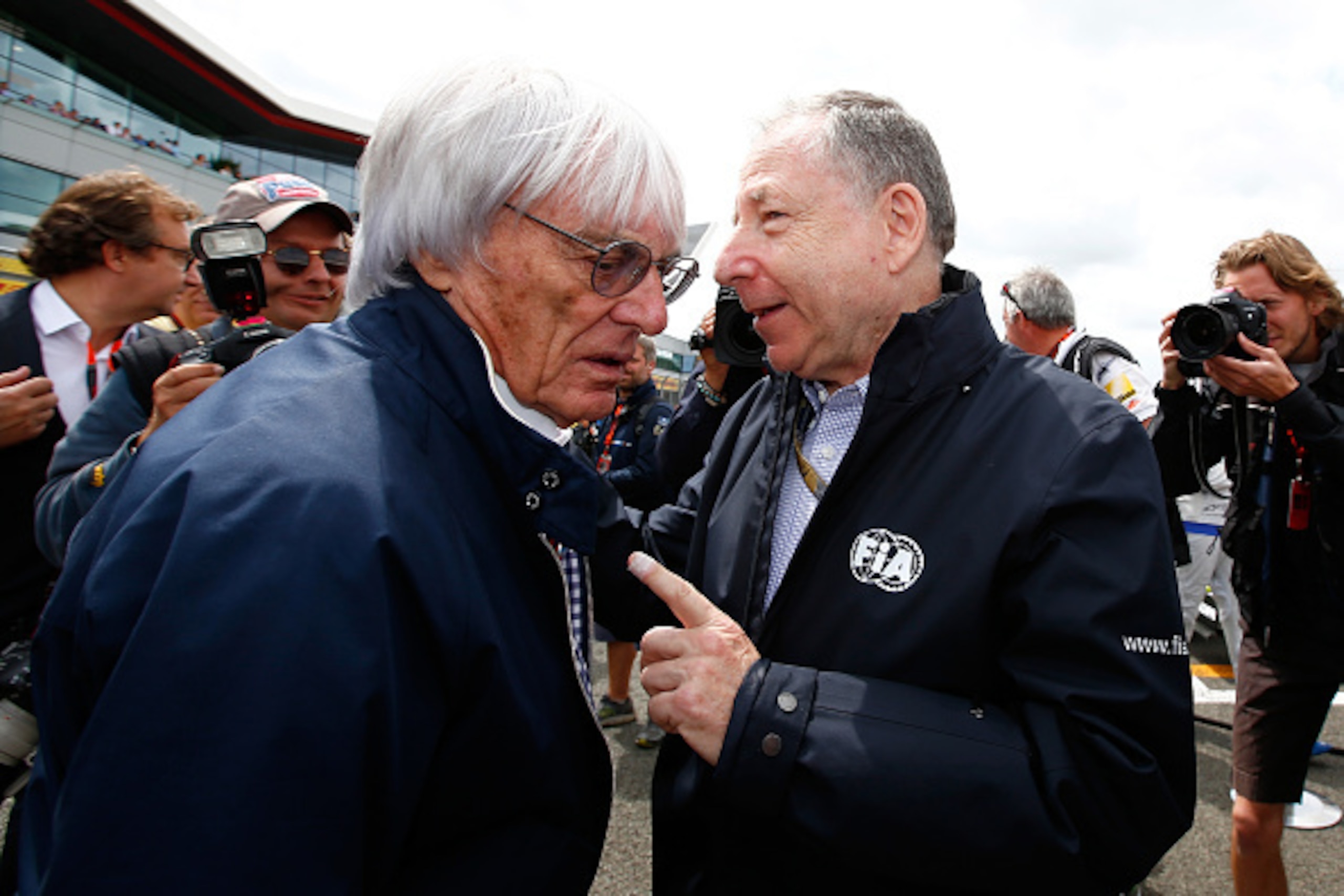
The money could go directly from FOM to the manufacturers, based on the number of teams they are supplying. That way, the engine manufacturers wouldn't lose more money and the customer teams could afford to continue competing.
According to the Telegraph's Christian Sylt, F1 took in $1.7 billion in revenue in 2013, with a profit of more than $500 million. The money is there.
Of course, this is extremely unlikely to happen. FOM seems intent on maximising its profits, no matter the cost to the sport, and the FIA has repeatedly ignored its responsibilities to govern F1.
Instead, we are likely in for months of bickering followed by a solution that leaves no one satisfied. At least it will give everyone something to complain about over the upcoming winter break.
Follow me on Twitter for updates when I publish new articles and for other (mostly) F1-related news and banter:
.jpg?w=2560 "Falcons Saints Football")
.jpg?w=2560 "Rams Eagles Football")
.jpg?w=2560 "Injury-stricken Seahawks signing veteran RB")


.jpg?w=2560 "2 NFL Officials Suspended")
