There were more than a handful of high-profile names to come out of the 2015 NBA draft class. Now, after a year of speculating where they'd wind up, it's time to predict how each will fare during their first year on the job.
When projecting the following rookie statistics, we took everything into account, from skill level and physical tools—which may reflect NBA readiness—to team fit and role. Some rookies are expected to jump right into starting gigs, which naturally improves their odds of putting up numbers in 2015-16.
We also looked at recent trends to get a feel for what players make the smoother, quicker transitions.
For efficiency categories, only players we expect to log at least 15 minutes per game were made eligible.
Blocks: Myles Turner (Indiana Pacers, PF/C)
1 of 7
Turner's Projected Block Average: 1.7
Known as a rim protector out of high school, Myles Turner's reputation held strong at Texas, where he blocked 4.7 shots per 40 minutes and registered a staggering 12.3 block percentage, according to Sports-Reference.com.
He then blocked 4.3 shots per game in the NBA Summer League and, most recently, averaged a ridiculous 2.5 swats in just 16.9 minutes during the preseason.
The numbers aren't fluky; Turner uses a monster 7'4" wingspan, phenomenal timing and anticipation.
Willie Cauley-Stein (Sacramento Kings) could challenge Turner, but with DeMarcus Cousins and Kosta Koufos expected to log minutes at the 5 in Sacramento and with Quincy Acy also likely in the mix, we'll give the edge to the rookie center in Indiana, where the Pacers frontcourt lacks both talent and depth (Ian Mahinmi, Jordan Hill).
Karl-Anthony Towns (Minnesota Timberwolves) will represent Turner's other competition. However, Towns, who blocked seven shots in seven preseason games, just isn't as naturally instinctive on defense.
As long as the minutes are there for Turner, expect the blocked shots to follow.
Steals: Stanley Johnson (Detroit Pistons, SF)
2 of 7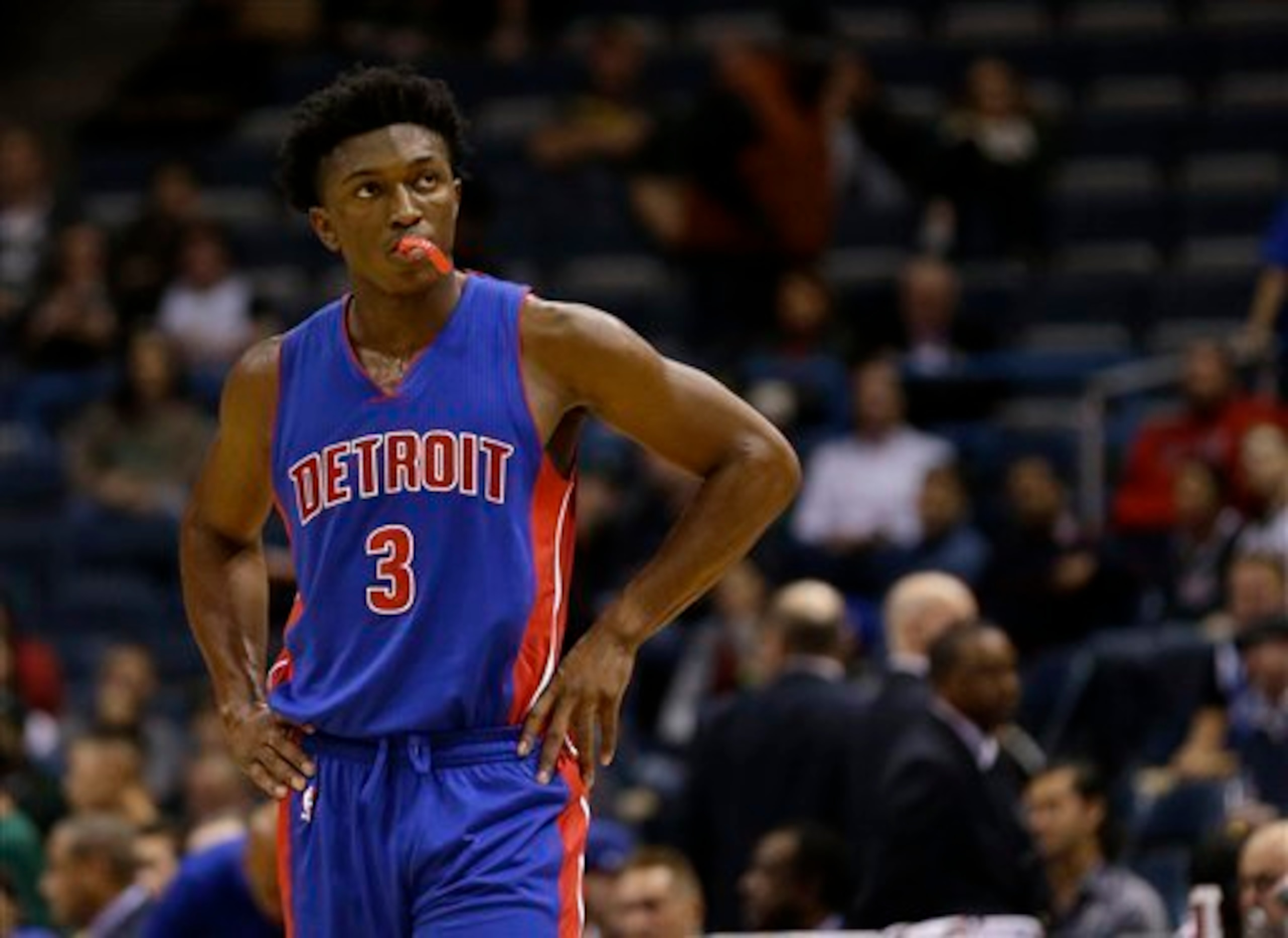
Johnson's Projected Steal Average: 1.4
Without many rookie guards or wings expected to take on significant roles, Stanley Johnson has the chance to emerge as the most productive thief from the 2015 class.
He racked up 2.1 steals per 40 minutes at Arizona and 1.8 per game in both the Summer League and preseason.
With tremendous strength (245 pounds), a 6'11½" wingspan and plenty of quickness, Johnson has the ideal physical tools for defending the perimeter and forcing turnovers. He's also shown a knack for jumping lanes and intercepting passes.
D'Angelo Russell (Los Angeles Lakers) just isn't quite as feisty, and though Emmanuel Mudiay (Denver Nuggets) has a case based on playing time, we'll take Johnson's better early steal rates, positive defensive outlook and projected 25- or 30-minute role.
Assists: Emmanuel Mudiay (Denver Nuggets, PG)
3 of 7
Mudiay's Projected Assist Average: 6.0
Emmanuel Mudiay shouldn't have much competition en route to leading all rookies in assists.
D'Angelo Russell will be splitting time and touches with Jordan Clarkson and Lou Williams in Los Angeles. First-round point guards Cameron Payne (Oklahoma City Thunder), Jerian Grant (New York Knicks), Terry Rozier (Boston Celtics) and Delon Wright (Toronto Raptors) project as reserves.
Mudiay could be looking at 30-plus minutes per game in a lead-guard role for the Denver Nuggets. And last year, only two teams played at a faster pace, according to ESPN, which means extra possessions and a tempo that suits Mudiay's quickness, athleticism and open-floor vision.
With the ability to break down defenses off the dribble, Mudiay should also rack up plenty of half-court assists off penetrations (drive-and-dishes) and pick-and-rolls.
He averaged 5.4 assists in the preseason, and though it's not an eye-opening number, that should be enough to win the statistical category among rookies.

.jpg?w=2560 "NBA Gambling Charges")
Three-Point Percentage: Devin Booker (Phoenix Suns, SG)
4 of 7
Booker's Projected Three-point Percentage: .385
Voted the top shooter in the class by his peers, Devin Booker's long-range accuracy and track record are tough to bet against.
He nailed 41.1 percent of his threes on 141 attempts as a freshman at Kentucky before sinking 12-of-30 (40 percent) in the Summer League and 6-of-14 (42.9 percent) during the preseason.
With consistent mechanics and terrific up-and-down balance, every one of Booker's jumpers looks the same. And at 6'6", he shouldn't have much trouble with his release.
Booker might not log huge minutes, but I predict he'll play enough to become eligible (minimum 15 minutes per game). "He's very advanced for his age," Suns head coach Jeff Hornacek said, per NBA.com. "We believe he can contribute for us."
Having ranked No. 20 in three-point percentage a year ago, the Suns ultimately have incentive to find time for Booker in 2015-16.
D'Angelo Russell may end up with the most makes, based on ability and opportunity. However, minimal elevation on his jumper and a shaky start from behind the NBA's arc (2-of-17 in the Summer League, 5-of-17 in the preseason) suggest consistency will take time to achieve.
I'll assume Frank Kaminsky (Charlotte Hornets) shoots in the 35-37 percent range and that Mario Hezonja's (Orlando Magic) streaky stroke weighs on his efficiency after 82 games.
Rebounds: Karl-Anthony Towns (Minnesota Timberwolves, PF/C)
5 of 7
Towns' Projected Rebounding Average: 8.2
Karl-Anthony Towns, who averaged 12.7 boards per 40 minutes at Kentucky, should be locked in as the 2015-16 rookie rebounding champ.
He pulled down 7.4 per game in only 23 minutes this preseason, and though Bobby Portis' (Chicago Bulls) rate was better, the former Arkansas standout won't get the same opportunity behind Pau Gasol, Joakim Noah, Nikola Mirotic and Taj Gibson in Chicago.
Jahlil Okafor (Philadelphia 76ers) may have a chance to rack up his fair share of double-doubles, but quite frankly, he's just not as big of a threat under the boards, where he doesn't get much lift.
With regular playing time, Towns' athleticism, length and motor should naturally translate to rebounds on both sides of the glass. He's active and aggressive around the basket, and at 250 pounds, he's already built to bang down low.
Field-Goal Percentage: Willie Cauley-Stein (Sacramento Kings, PF/C)
6 of 7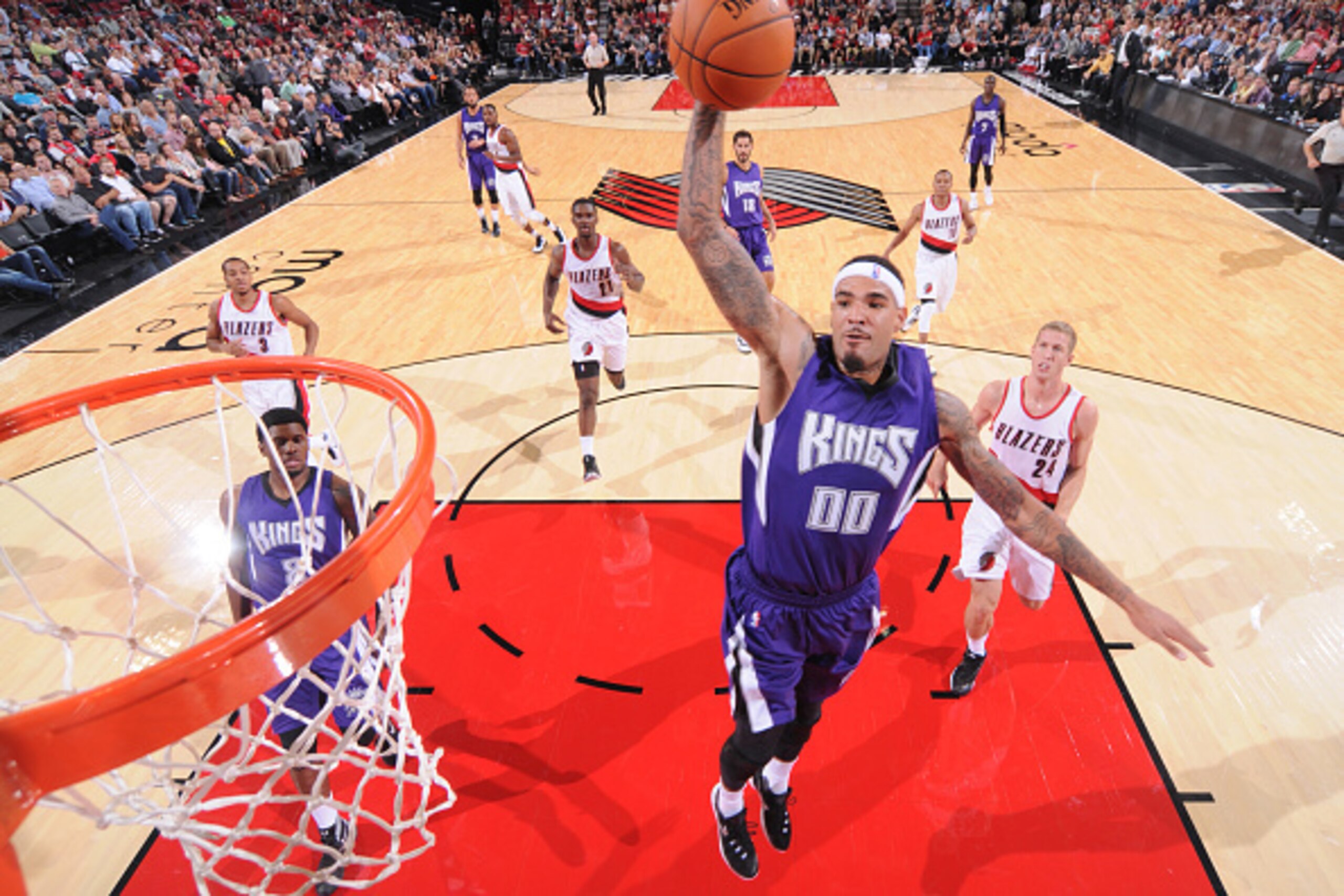
Cauley-Stein's Projected Field-Goal Percentage: .540
Willie Cauley-Stein might not win any awards for production, but given his projected shot selection, his field-goal percentage will be tough to beat.
Cauley-Stein's role in Sacramento will likely be exactly the same as it was at Kentucky, where he shot at least 57 percent from the floor in each of his three seasons.
During the preseason, 23 of his 26 shots came inside five feet. He mostly waits for easy-bucket opportunities off drive-and-dumps, lobs and transition plays, which he converts at high rates thanks to his 7'0" size, effortless athleticism and impressive coordination.
In Philadelphia, we'll likely see Jahlil Okafor's 66.4 percent college mark take a significant hit in the pros due to a lack of explosiveness down low and shooting touch outside.
Karl-Anthony Towns could pose a threat, but with a heavier workload as well as a tougher shot selection (post-ups and jumpers), maintaining a field-goal percentage above .500 will be more of a challenge.
I wouldn't bank on Cauley-Stein putting up many double-digit scoring games, but I also wouldn't bet on him missing too many shots.
Points: Emmanuel Mudiay (Denver Nuggets, PG)
7 of 7
Mudiay's Projected Scoring Average: 15.5
A recent trend has seen the NBA transition go smoother for guards and wings than bigs. Six of the past seven rookie scoring leaders include Andrew Wiggins, Michael Carter-Williams, Damian Lillard, Kyrie Irving, Tyreke Evans and O.J. Mayo.
Emmanuel Mudiay should keep the trend going in Denver, where he'll be locked into a full-time role with a green light to fire away.
He registered a giant 30.8 percent usage rate during the preseason, when he led all rookies in scoring with 15 points per game. A terrific athlete, Mudiay naturally converts open-floor opportunities into easy buckets at the rim. Though not consistent around the perimeter, he's still a threat to create and knock down jumpers or tough runners on the move.
Plus, at 6'5", 200 pounds, he'll enter the league physically on par or superior than most at his position.
Meanwhile, Jahlil Okafor, arguably Mudiay's biggest challenger, must adjust to more explosive 7-foot NBA centers after dominating much smaller and weaker ACC frontcourts.
Okafor will surely rack up points as the likely offensive focal point in Philadelphia, but I ultimately expect Mudiay's game to translate faster in a role where he'll dominate the ball for an uptempo team.

.jpg?w=2560 "Jonathan Taylor Landing Spots")
.jpg?w=2560 "NFL House in Paris Closes for Protests (AP)")