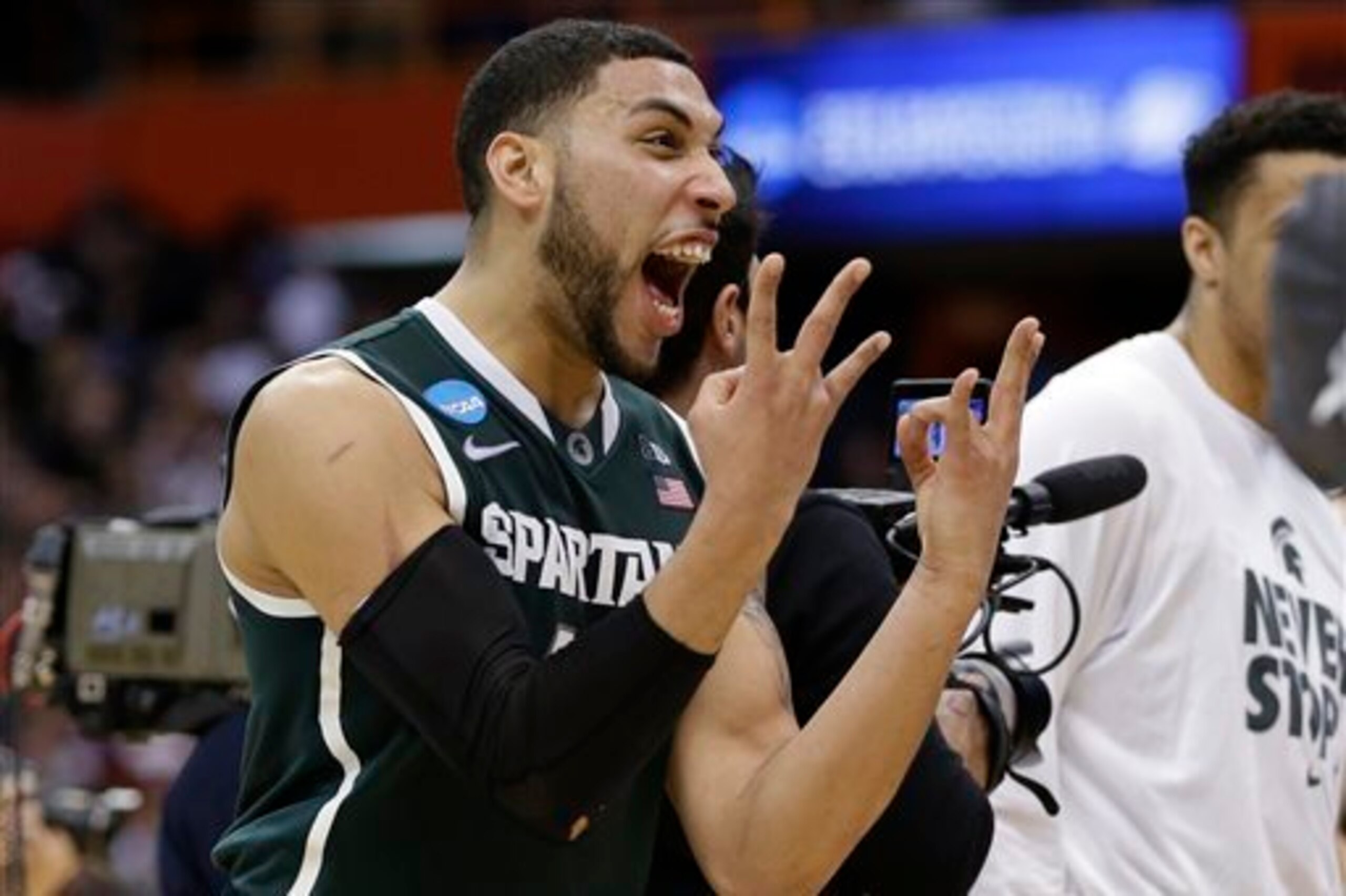

Ranking the Nation's Top 20 Small Forwards for 2015-16 NCAA Basketball Season
It's hard to find many prototypical small forwards in college basketball. There are a few guys who might even be a stretch to have on this list.
So, as in most years, the talent pool to choose from is smaller than any other position. From top to bottom, this is probably the weakest position group of the five. But it's not depleted, and you'll actually find some of the most underrated players in the country at small forward and a few high-ceiling guys who haven't produced yet.
The formula for who appears is a combination of opportunity, past success and the eye test. It's all subjective. All of the positional rankings are based off projections for this season, but this group more than any other had predicted success heavily weighted because of the presence of freshmen and a few breakout candidates.
Just missed the cut: Dwayne Bacon, Florida State; Michael Gbinije, Syracuse; Marc Loving, Ohio State; L.J. Peak, Georgetown; Jarrod Uthoff, Iowa
This is the third installment in B/R's positional-ranking series for the 2015-16 season. Here are the other positional rankings: the top 20 shooting guards, small forwards, power forwards and centers. And here is the series finale: the top 100 overall players in college basketball.
20. Jordan Loveridge, Utah
1 of 20
Class: Senior
2014-15 Stats: 10.0 PPG, 3.9 RPG, 1.0 APG
This season, Utah will look to get a combination of Jordan Loveridge as a sophomore and junior.
Last season, Loveridge improved drastically as a three-point shooter—from 30.6 percent to 43.5 percent—but he wasn't able to score nearly as much inside the arc, and his scoring averaged dipped 4.7 points per game. That's probably because midseason knee surgery slowed Loveridge down, making him more of a spot-up shooter type than he had been in the past.
The sophomore version of Loveridge was a threat outside, but he was more dangerous working out of the post or in the mid-range area of the floor. With an offseason to get his legs back, we should see more of that player this year but with the improved jumper added to his arsenal. The Utes lost do-everything point guard Delon Wright, so they'll need Loveridge to get back to scoring more.
19. Svi Mykhailiuk, Kansas
2 of 20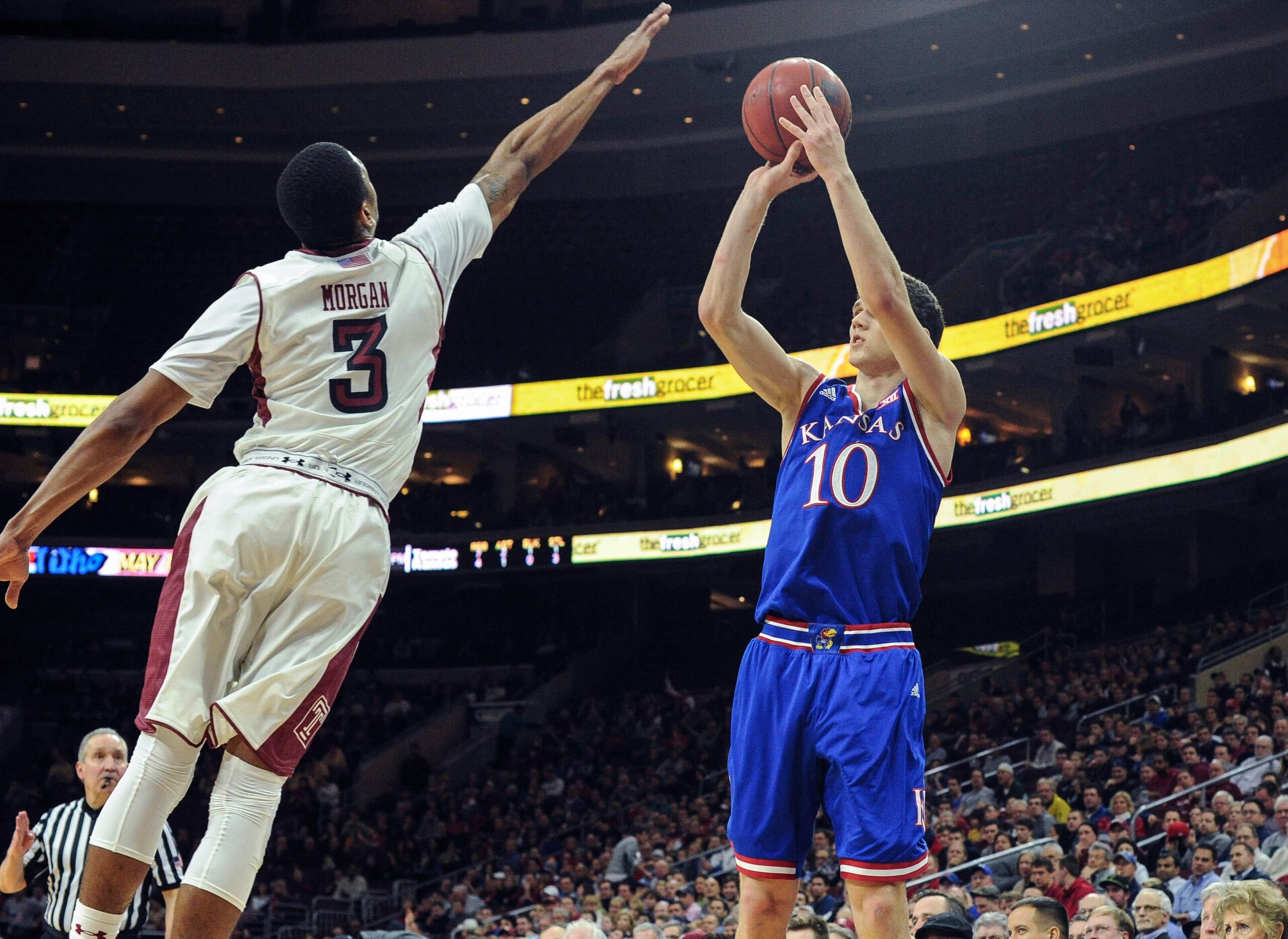
Class: Sophomore
2014-15 Stats: 2.8 PPG, 0.7 APG, 1.2 RPG
Svi Mykhailiuk is one of the biggest wild cards in college basketball. The Jayhawks have enough depth that he could walk away from the program tomorrow and it wouldn't be that big of a story or change the expectations at Kansas that much. This is a player who recorded 10 DNPs last year.
Yet Mykhailiuk was viewed as KU's best NBA prospect last season, and he has the ability to be a college star. What was holding him back a year ago was age—he was 17—and nerves. Mykhailiuk just couldn't seem to relax. Almost every shot was long, and he looked sped up.
You could see glimpses, however, of what makes Mykhailiuk so intriguing. He's a solid passer with a great feel for the game. He has a good-looking stroke. He's a good athlete for 6'8" who understands how to guard.
The fact that Kansas did so well this summer at the World University Games with two point guards on the floor and Wayne Selden at the 3 could make it hard for him to see starter minutes. But if he plays to his potential, head coach Bill Self will find ways to get Mykhailiuk on the floor, and the Jayhawks ceiling rises if he's an impact guy.
18. Malik Pope, San Diego State
3 of 20
Class: Sophomore
2014-15 Stats: 5.1 PPG, 2.7 RPG, 14.8 MPG
Malik Pope broke his leg in both his junior and senior years of high school, so it's not a shocker that San Diego State was slow to bring him along during his freshman season. Despite limited minutes (14.8 per game), Pope showed so much potential at 6'10" with guards skills and a jumper—he shot 40.8 percent from deep as a freshman—that he was considered a borderline first-round pick had he declared for the draft.
The Aztecs will be counting on that potential to turn into production this season. If he can stay healthy, he has a chance to be one of the best players in the Mountain West.

.jpg?w=2560)

17. Malcolm Hill, Illinois
4 of 20
Class: Junior
2014-15 Stats: 14.4 PPG, 4.8 RPG, 1.3 APG
Malcolm Hill is a matchup nightmare. Put him at the 3 and he can overpower his defender. Put him at the 4 and he can abuse his guy off the dribble and stretch the floor with his jumper.
Hill was one of the most improved players in the country last season, and a big part of that was getting stronger and making himself a hybrid forward. He was listed 20 pounds heavier as a sophomore than his freshman year.
With Rayvonte Rice graduating, Hill will be looked upon to be the Illini's primary scorer this year.
16. Steve Vasturia, Notre Dame
5 of 20
Class: Junior
2014-15 Stats: 10.1 PPG, 1.7 APG, 3.0 RPG, 1.1 SPG
Steve Vasturia was one of the most unappreciated players in the country last season.
Notre Dame's coaching staff raved about his defensive ability. He was clutch, taking and making some huge shots, including the game-winner to beat Duke in South Bend, Indiana. He averaged 17.0 points per game over Notre Dame's final three contests in the NCAA tournament. And he was stellar from the mid-range, knocking down 57.9 percent of his mid-range jumpers, according to Hoop-Math.com.
A three-and-D wing in most systems is valuable. In Notre Dame's system, it's gold. It also helps that Vasturia, at 6'5", can play shooting guard and a small-ball 4 for the Irish in addition to small forward. He's a big reason why the Irish might not fall off as much as you'd think after graduating Jerian Grant and Pat Connaughton.
15. Trevon Bluiett, Xavier
6 of 20
Class: Sophomore
2014-15 Stats: 11.0 PPG, 4.2 RPG, 1.9 APG
Xavier has made the NCAA tournament in nine of the last 10 seasons, and the program has had some stars who get overlooked until March. That's usually when the Musketeers are making a run and proving their talent is better than anyone thought. The attention that Matt Stainbrook received during last year's Sweet 16 run is a prime example.
That guy this year for the Musketeers will likely be leading returning scorer Trevon Bluiett. He had a great start to his freshman year—18 points per game over Xavier's first five contests—but he fizzled down the stretch. He scored just 14 points in Xavier's final four games.
Last year's team was very balanced with six players averaging at least 8.4 points per game, so it could win without a consistent Bluiett. The offense went through Stainbrook, but he was as much a passer as he was a scorer. That could change with Bluiett as the go-to guy. He is a natural scorer. Look for his usage rate to go up this season.
14. Tim Quarterman, LSU
7 of 20
Class: Junior
2014-15 Stats: 11.5 PPG, 4.0 APG, 5.2 RPG, 1.4 SPG
LSU will have one of the more unusual offenses in college basketball this season, because the two best players on the roster (Ben Simmons and Tim Quarterman) are both point forwards.
Quarterman gets overlooked because of the additions of Simmons and fellow freshman Antonio Blakeney, but he's on the radar of NBA scouts. It's rare for a 6'6" player to have the combination of athleticism and ability as a playmaker that he has.
Last season he led the Tigers in assists, and this summer on the team's trip to Australia he finished second to Simmons in both scoring (16.4 per game) and assists (4.6 per game).
13. Anthony Drmic, Boise State
8 of 20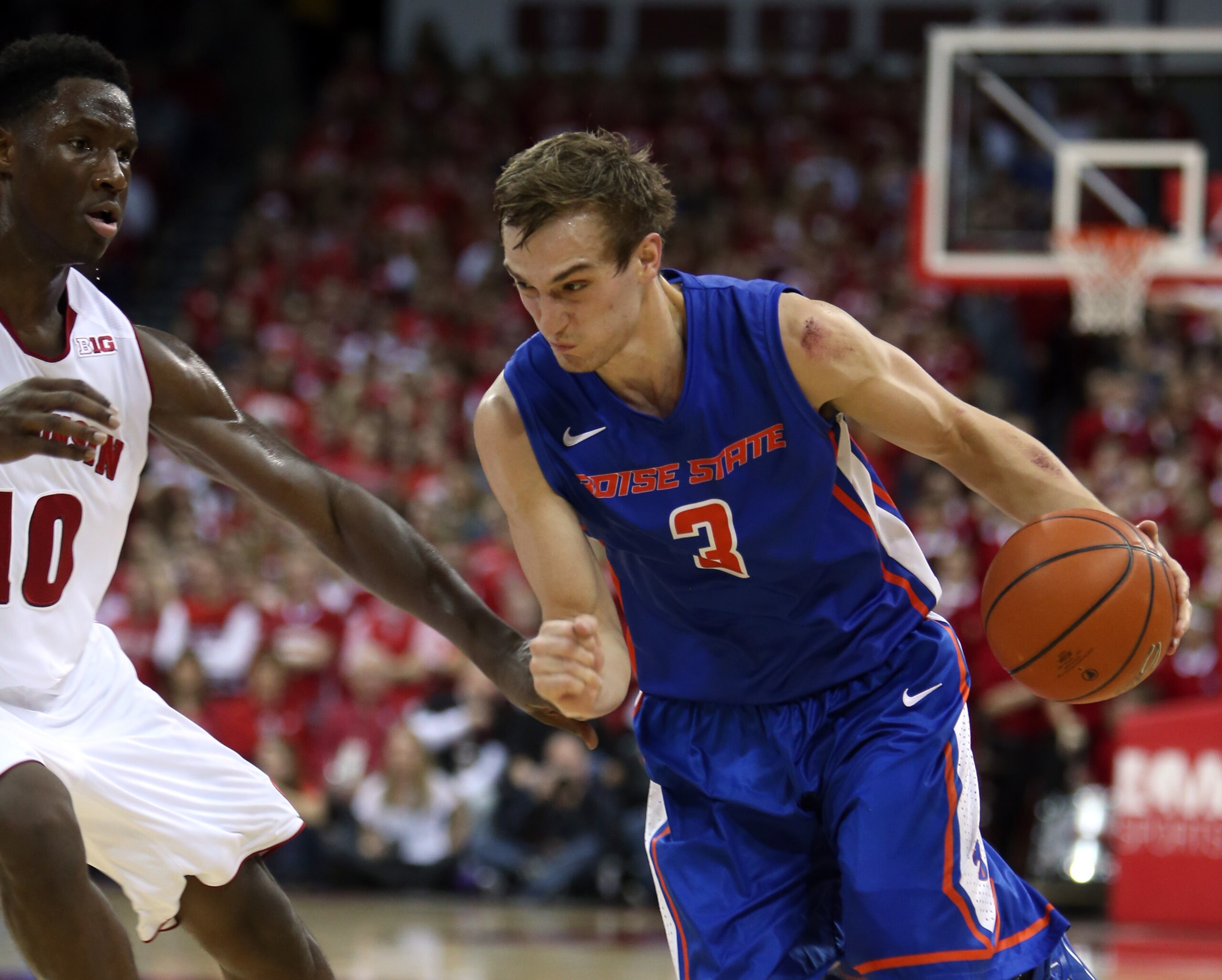
Class: Senior
2014-15 Stats (7 games): 15.0 PPG, 5.0 RPG, 1.6 APG
Derrick Marks and his 19.4 points per game are gone, but Boise State has the perfect guy to replace the scoring of a graduated star, the guy who was the star before Marks.
Yes, it was Anthony Drmic who was the Batman to Marks' Robin before last season. Drmic led the Broncos in scoring the duo's first three years in school, and the offense took a slight dip in efficiency last season without him.
Drmic played only seven games before getting season-ending ankle surgery as a senior last year, and the NCAA granted him a medical hardship. Now Drmic has a shot to co-star with sophomore James Webb III, a stretch 4 with NBA potential, to get the Broncos to their third NCAA tourney in four years. Drmic and Webb will be one of the best 3-4 combinations in college basketball.
12. Thomas Walkup, Stephen F. Austin
9 of 20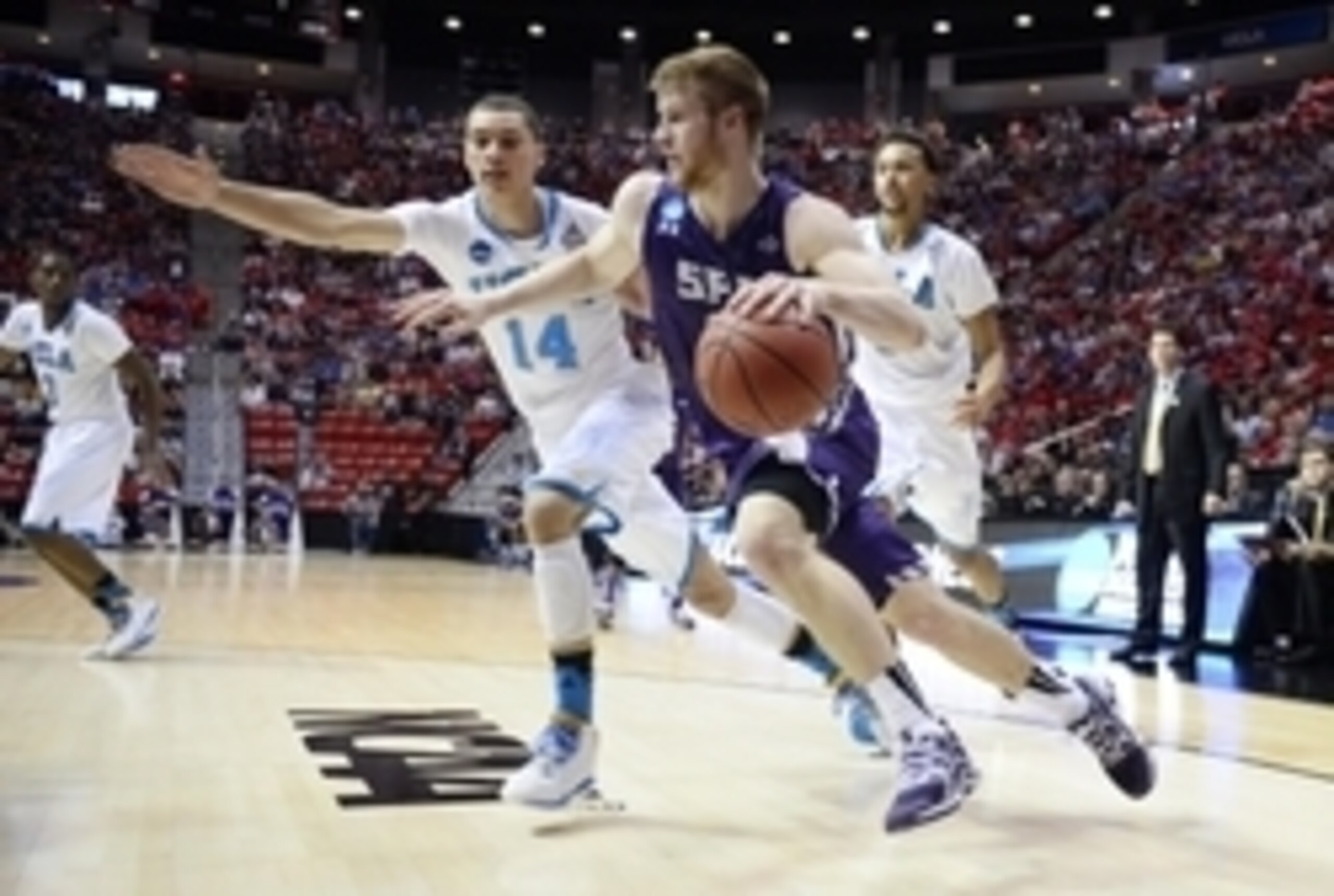
Class: Senior
2014-15 Stats: 15.6 PPG, 6.5 RPG, 3.7 APG, 1.2 SPG
Thomas Walkup is one of the best mid-major players at one of the best mid-major programs in the country. Last season, Walkup led Stephen F. Austin in scoring and rebounding, and he finished second on the team in assists.
The Lumberjacks have made back-to-back NCAA tournaments, will be heavy favorites to win the Southland Conference again and probably will continue to be the favorite as long as head coach Brad Underwood is around. He's finding players to fit his system and has lucked into a few guys, like Walkup, who could play at the major-conference level but slipped through the cracks.
Walkup, who was already around when the coach arrived, has been a terrific fit in Underwood's pinch-post offense as a driver, cutter and creator. He could play in just about any system, but he gets the most out of his ability in Underwood's offense because of his feel for of how to use the offense to get easy buckets.
11. Dillon Brooks, Oregon
10 of 20
Class: Sophomore
2014-15 Stats: 11.5 PPG, 4.9 RPG, 1.8 APG
Dillon Brooks is the most likely player on Oregon's roster to take over the go-to-guy role from Joseph Young, and that fits Brooks' game and personality. Brooks will have some competition in senior Elgin Cook and freshman Tyler Dorsey, but head coach Dana Altman would be smart to give Brooks the opportunity to be that guy.
Brooks likes being the alpha dog. He thrived in that role the last two summers playing for Canada. This past summer, he led the Canadians to a fifth-place finish at the FIBA Under-19 World Championship, finishing as the second-leading scorer in the tournament at 18.8 points per game.
In Brooks, the Ducks have a different type of scorer than Joseph was. Brooks is more of a slasher who does a good job getting to the free-throw line. If he can improve his three-point shot—33.7 percent as a freshman—he could become one of the toughest scorers to guard in the Pac-12.
10. Zak Irvin, Michigan
11 of 20
Class: Junior
2014-15 Stats: 14.3 PPG, 4.8 RPG, 1.5 APG, 1.0 SPG
Michigan's coaching staff has done a great job of finding athletic shooters with size who can play multiple positions, and Zak Irvin is yet another.
Irvin saw his role in the program evolve last season. As a freshman, he was mostly a spot-up shooter in head coach John Beilein's offense, and he was extremely efficient in that role. Irvin made 42.5 percent of his threes that season.
Last year, his usage and scoring numbers increased, but he shot only 35.5 percent from deep. It was difficult for him to be as efficient as he got fewer wide-open looks and had to work harder to get shots. Michigan has done a great job with its player development, and Irvin should take another leap this year. It will also help that he'll have less pressure on him with the return of Caris LeVert.
9. Jake Layman, Maryland
12 of 20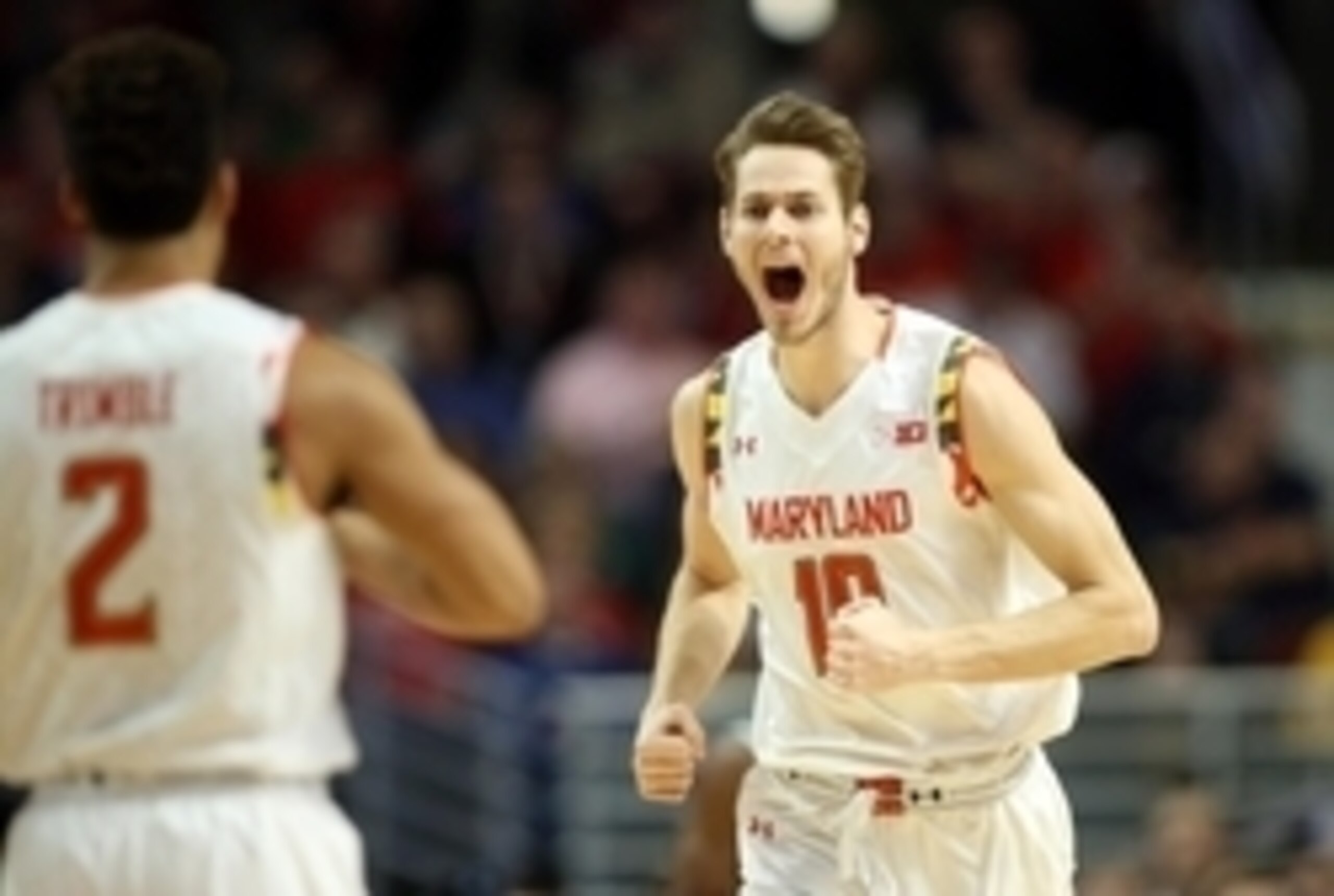
Class: Senior
2014-15 Stats: 12.5 PPG, 5.8 RPG, 1.4 APG
With the addition of Robert Carter Jr. from Georgia Tech, Jake Layman will move from the stretch 4 to small forward this season.
Layman has the all-around game to make the move. He was able to use his shooting and quickness to take advantage of getting checked by 4s last year, and he may have to change his approach and use his size to take advantage of 3s this year. Playing power forward allowed him to work on his back-to-the-basket game, and Layman has the tools to attack from just about any spot on the floor.
The Terps have more scoring punch this year, so his scoring numbers might not go up. But Layman's adaptability should help him successfully blend into his changing role.
8. DeAndre Bembry, St. Joseph's
13 of 20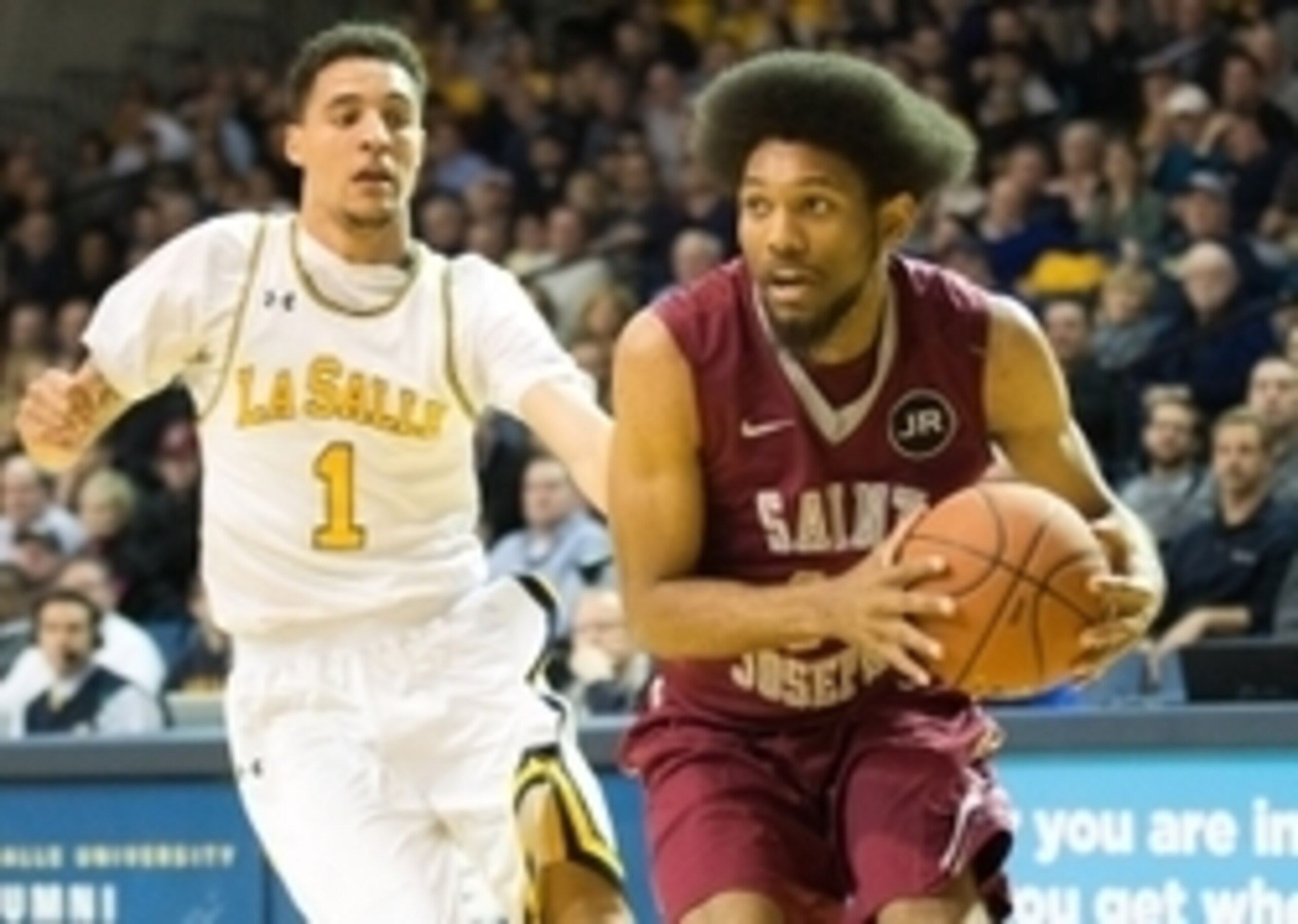
Class: Junior
2014-15 Stats: 17.7 PPG, 7.7 RPG, 3.6 APG, 1.9 SPG
The first player comparison listed under DeAndre Bembry's sophomore season on Ken Pomeroy's site is Paul George's sophomore season at Fresno State in 2010.
George played on a losing team that season and eventually turned into a star in the NBA. I'm not convinced Bembry will become Paul George, but he's an NBA talent who played on a bad team as a sophomore.
Bembry got an invite to the Nike Skills Academy this summer and was there mostly with good players from successful programs. He more than held his own. He's an athlete who can really defend and is a better a shooter than his 32.7 percent from beyond the arc last season would suggest. If college coaches held a draft, he'd be one of the first wings off the board.
7. Jaylen Brown, California
14 of 20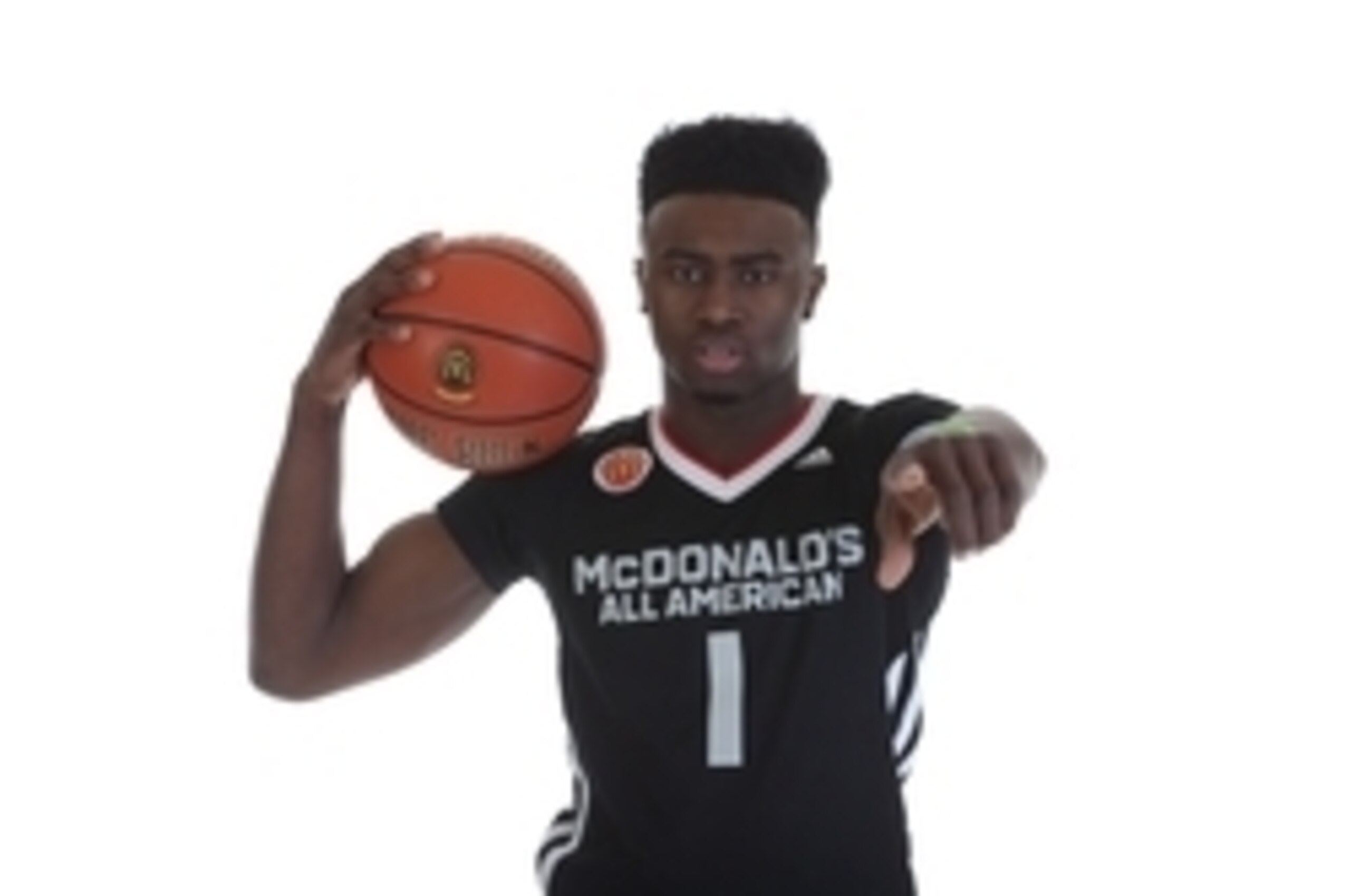
Class: Freshman
2014-15 Stats (High School): 28.0 PPG, 12.0 RPG
Jaylen Brown shares some similarities with Stanley Johnson. Both were physical freaks at the high school level with pro bodies and a reputation for playing hard. The one question Johnson had going into his freshman season was his jumper, and that's the same with Brown.
The surprising thing about Johnson as a freshman was he wasn't exactly a great finisher around the basket. He made just 52.7 percent of his shots at the rim, according to Hoop-Math.com. I'd expect better from Brown.
Johnson was able to lead an Arizona team with plenty of scorers in scoring, and Brown is walking into a similar situation. The program hasn't had the same kind of success as Arizona has, but Cal has talented pieces in Tyrone Wallace, Jabari Bird, Jordan Mathews and fellow incoming freshman Ivan Rabb. Brown could be the missing piece that turns Cal from a disappointment into a top-20 team.
6. Justin Jackson, North Carolina
15 of 20
Class: Sophomore
2014-15 Stats: 10.7 PPG, 3.7 RPG, 2.3 APG
Justin Jackson is really hard to guard because he has an in-between game that is rare in basketball today. The question is whether he can become a scoring threat from all three levels.
Jackson scored a majority of his buckets from the mid-range last season and knocked down an impressive 50 percent of his two-point jumpers, according to Hoop-Math.com. Jackson arrived at North Carolina with that reputation, as a great mid-range shooter, and the hope was that he would add some range to his jumper and give UNC someone besides Marcus Paige who was a threat from deep.
Jackson only made 28 threes all season, but he shot better from deep and seemed to gain confidence late in the year. In UNC's final 12 games, Jackson scored in double figures in 11 of them, averaged 13.4 points, made 17 threes and shot 44.7 percent from deep during that stretch. I also watched him shoot well (and comfortably) from deep this summer at the Nike Skills Academy. If you're picking a preseason breakout player of the year, he'd be a smart choice.
5. Taurean Prince, Baylor
16 of 20
Class: Senior
2014-15 Stats: 13.9 PPG, 5.6 RPG, 1.3 APG, 1.5 SPG
Taurean Prince was an easy choice last season for Bleacher Report's Sixth Man of the Year, and he was also in consideration for Most Improved Player. Prince played just 14.2 minutes per game as a sophomore and turned into the most dangerous scorer off the bench in college basketball as a junior, leading the Bears in scoring. Now what will he become as a senior?
Prince is the prototypical three-and-D wing with length (he's a long 6'7") that the NBA covets. There aren't many players on the college level like him, and that makes him a really tough cover in Baylor's offense. His length and quickness also makes him a perfect fit in Baylor's zone defense.
With more minutes available this season and a spot in the starting lineup, he has a great chance to climb draft boards. And we could see him go from Sixth Man of the Year to someone worthy of All-American attention.
4. Brandon Ingram, Duke
17 of 20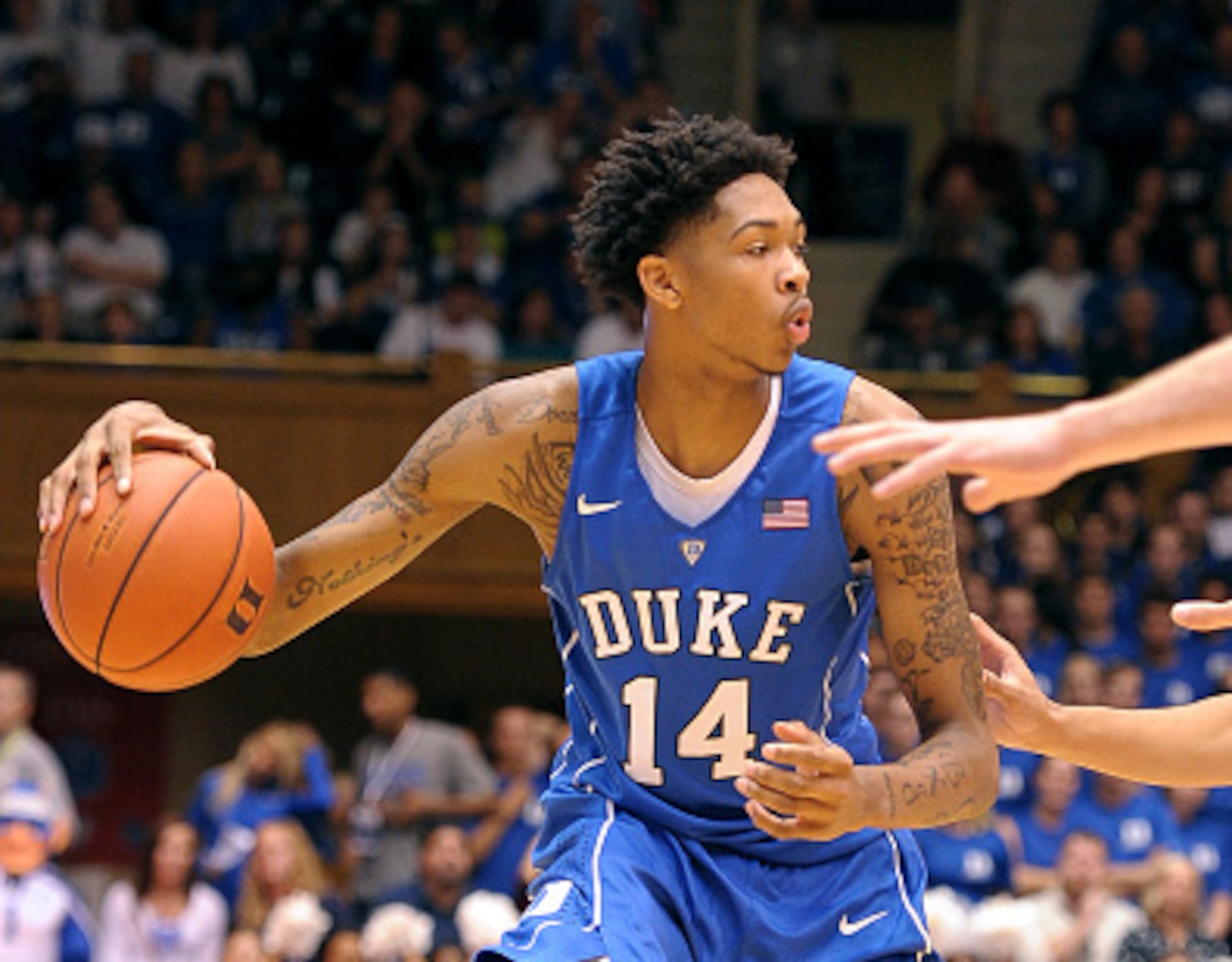
Class: Freshman
2014-15 Stats (High School): 24.3 PPG, 10.4 RPG, 3.6 APG, 3.0 BPG, 1.6 SPG
Head coach Mike Krzyzewski has brought in an uber-skilled, potential one-and-done freshman for the third straight season. Brandon Ingram, however, is not exactly in the mold of Jabari Parker and Justise Winslow.
Both Parker and Winslow eventually found that the best spot for them in Duke's offense was as a small-ball 4. Ingram could end up dabbling as a small-ball 4, but he doesn't have the strength or girth of Parker or Winslow, so he'll likely play mostly at the 3.
Ingram is just as skilled and has a chance to play more of a Parker-like role, especially with the Blue Devils needing scoring after losing Winslow, Jahlil Okafor, Tyus Jones and Quinn Cook. He will also likely have more ball-handling responsibility in Duke's offense than Winslow or Parker had. It will be yet another year that the Blue Devils have to reinvent themselves around a star freshman, but Krzyzewski is as good as it gets at molding his offense around his talent.
3. Roosevelt Jones, Butler
18 of 20
Class: Senior
2014-15 Stats: 12.7 PPG, 5.2 RPG, 3.7 APG
Head coach Chris Holtmann deserves some credit for getting Butler in the NCAA tournament last season, but it wasn't like Brandon Miller had deviated from the Butler Way the previous season.
The biggest difference between the Bulldogs that won 23 games and made the round of 32 in 2014-15 and the team that won just 14 games (and only four in the Big East) was one team had Roosevelt Jones and the other didn't—Jones missed the 2013-14 season because of a wrist injury.
The roster really didn't change much outside of Jones. He helped turn the defense from good (66th in adjusted defensive efficiency) to great (seventh in AdjD), per kenpom.com. He also helped Butler leading scorer Kellen Dunham turn into a better version of himself. Dunham has by far had his two most efficient season playing next to Jones. Jones is a unique weapon. His game is absent of a jumper, but he still finds ways to score, and his greatest value is elevating the games of everyone else around him.
2. Kyle Collinsworth, Brigham Young
19 of 20
Class: Senior
2014-15 Stats: 13.8 PPG, 8.7 RPG, 6.0 APG, 1.8 SPG
Kyle Collinsworth tied Shaquille O'Neal and Michael Anderson last year for the NCAA record for most triple-doubles (six). And Collinsworth broke the record for single-season triple-doubles with six. That's right, he did this all in one season. Less than eight months after tearing his ACL.
Collinsworth is college basketball's version of Magic Johnson, and the Showtime Cougars wouldn't be a bad nickname for BYU's attack.
Collinsworth and BYU are must-see TV. The Cougars play at a breakneck pace, and it's not just run-and-foolishly-gun. It's an organized uptempo approach that sees the Cougars take quality shots. It helps when you have a guy running the show who is 6'6" with terrific vision and passing ability. And he's your best rebounder as well.
It's going to be fun to see what Collinsworth will be able to do when he's not just coming off knee surgery. It's safe to say Shaq's record is history.
1. Denzel Valentine, Michigan State
20 of 20
Class: Senior
2014-15 Stats: 14.5 PPG, 4.3 APG, 6.3 RPG
Michigan State has had a good run of point guards—from Drew Neitzel to Kalin Lucas to Keith Appling to Travis Trice—but there could be a drop-off this season with Lourawls Nairn taking over. But if there was ever a good time for a transition year for that spot in the program, this would be it.
That's because the Spartans have Denzel Valentine, and Valentine as the primary ball-handler is a good thing for the Spartans. Valentine is best when he has the ball in his hands, and he has one of the highest basketball IQs in college basketball. He also embraces pressure situations—see his performance against Duke in the Final Four (22 points, five treys and 11 boards).
In fact, when you study Valentine's numbers last season on kenpom.com, his numbers against "tier A" competition (top-50 opponents) were better than his numbers overall. He doesn't have ideal size or athleticism and he's not an elite pro prospect, but he's a great college player.
C.J. Moore covers college basketball for Bleacher Report. You can follow him on Twitter @CJMooreBR.
All stats from the 2015 Pan-American Games and U-19 World Championship via USA Basketball. Unless otherwise noted, all high school statistics via each player's official university website.
.jpg?w=2560 "Falcons Saints Football")
.jpg?w=2560 "Rams Eagles Football")
.jpg?w=2560 "Injury-stricken Seahawks signing veteran RB")


.jpg?w=2560 "2 NFL Officials Suspended")
