Why Injuries Have Actually Helped Arsenal in Premier League Title Bid
For what seems like years now, injuries have been the scourge of Arsenal’s seasons. Every time they seemed set to mount a challenge for the Premier League title, their ambitions would be thwarted by the loss of key players for months on end. However, bizarrely it may be thanks to a number of injuries that Arsene Wenger has discovered a formula that could make Arsenal title contenders once again.
Let’s be clear: Arsenal are never happy to see players injured. The situation does appear to be under greater control at present, with the addition of Shad Forsythe to the backroom team as the head of athletic performance enhancement resulting in a marked improvement in the club’s injury record. However, even now Arsenal have found themselves without two prized England internationals, Jack Wilshere and Danny Welbeck, for months at a time.


Although Arsenal are coping relatively well without them, their absence is still a blow. Injuries are not in themselves a good thing, for either the individuals concerned or the team.
However, they are effective at pushing a manager to reassess his options. Arsene Wenger is a notoriously stubborn coach and can be quite inflexible when it comes to his preferred team lineup. Over the past 12 months, injuries have forced his hand. The loss of players to the treatment room has brought about changes all through the side, and the end result has been a stronger Arsenal XI.
Take the case of Hector Bellerin. In the summer of 2014, he was briefly the fourth-choice right-back at the club behind Mathieu Debuchy, Calum Chambers and Carl Jenkinson. It was the Frenchman who was identified as the successor to Bacary Sagna.
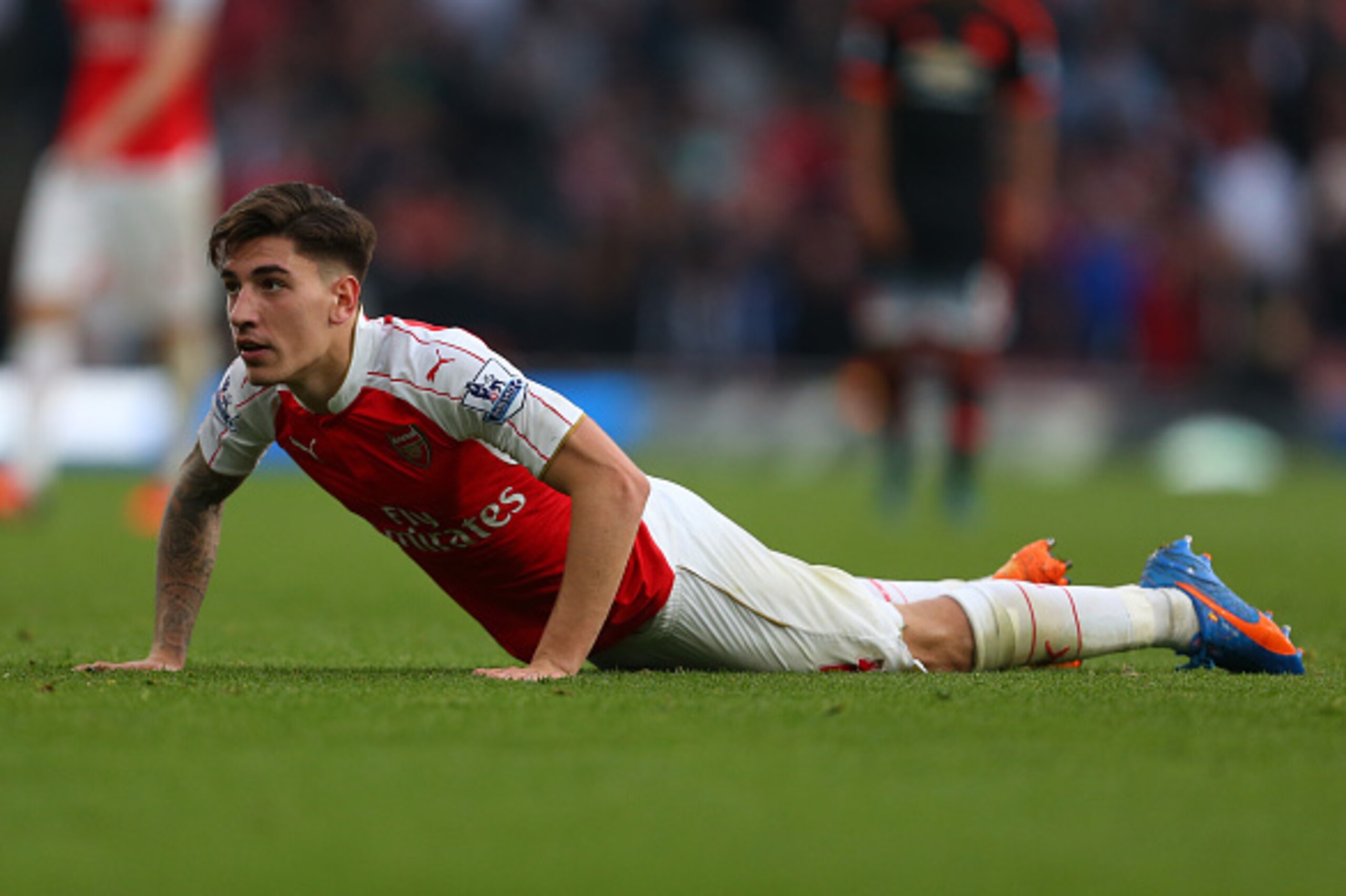
However, two serious injuries in his debut season with Arsenal, along with a spate of poor form from Chambers, afforded Bellerin an opportunity to stake his claim for a first-team place. He seized it in style, recovering from some early setbacks to settle incredibly quickly into senior football. He must now surely be classed as one of the most exciting attacking full-backs in European football.
Since returning to fitness, Debuchy has largely been forced to watch Bellerin racing up the touchline from the substitutes' bench.
It’s in central midfield that injuries have played the biggest part in reshaping the Arsenal team. At the outset of the 2014/15 season, Wenger was determined to set up his team in a 4-1-4-1 formation. In the middle of the park, captain Mikel Arteta anchored behind a pivoting pair of Aaron Ramsey and Jack Wilshere.
It was a clear attempt to crowbar Ramsey, Wilshere and Ozil into the same team, with playmaker Mesut Ozil being forced into a wide position. However, it did not work. Arsenal looked lost without the customary 4-2-3-1 system that had served the team relatively well in the previous season. Wenger needed to go back to the drawing board.
Perhaps fortunately, a reshuffle was forced upon him. In the course of the season, each of that midfield quartet—Ramsey, Wilshere, Arteta and Ozil—suffered a serious injury. While the loss of each of those players definitely reduced the options and quality available to Wenger, they also insisted that he engage in some lateral thinking.
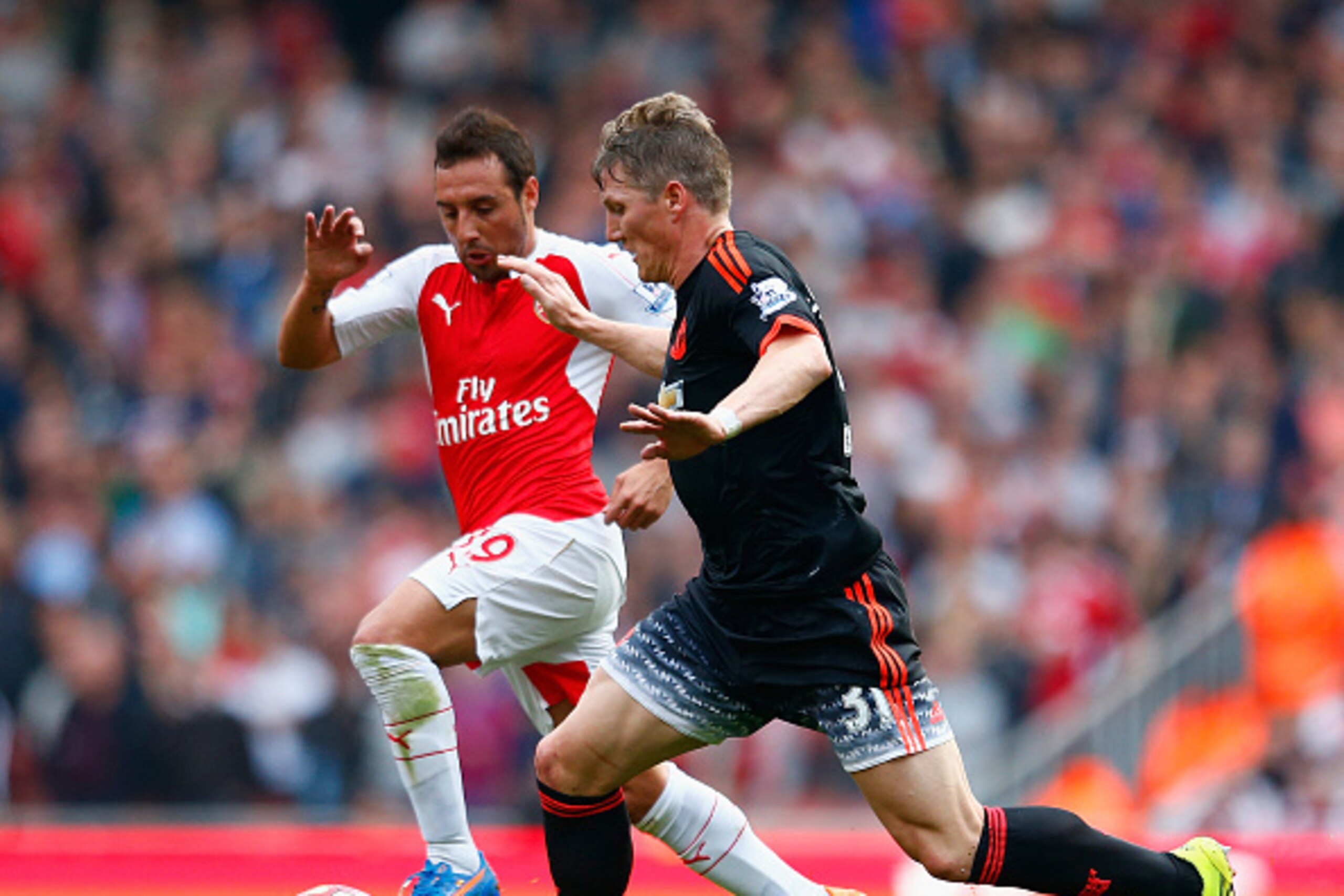
It was only when put in a corner that he stumbled upon the central-midfield partnership that was absolutely essential to Arsenal’s subsequent resurgence. Nobody, not even Wenger himself, could have foreseen the success of pairing Francis Coquelin and Santi Cazorla together.
For the majority of his Arsenal career, Cazorla had played from the wing. Wenger seemingly had doubts about his ability to hold his own physically in the centre of the park and had asked him to play as a playmaker on the left flank. At the start of 2014/15, he largely found himself as a substitute, sacrificed to get Wilshere and Ramsey alongside each other.
However, the absence of Arteta and Wilshere forced him to find a player who could instigate moves from deep. Cazorla had briefly shone as a central midfielder during his time with Malaga, and Wenger gambled that the diminutive Spaniard could replicate those sparkling displays in the Premier League.
The decision paid off in some style. Cazorla’s revised role gave him a new lease of life and led to some of the best performances of his Arsenal career to date. His quick feet and quicker brain enable him to spin away from the opposition in the most confined of space, and he’s adapted surprisingly well to the muscularity of the Premier League midfield.

He’s helped by the presence of Francis Coquelin. In the autumn of last year, Coquelin was loaned out to Charlton. It was regarded primarily as an opportunity for the Frenchman to put himself in the shop window before his contract expired at the end of that season. Twelve months later, his dramatic rise is one of the most remarkable individual stories of Wenger’s entire reign.
However, he would never have got his chance were it not for Arteta’s injury. The Spaniard is the club captain and as such was effectively an automatic pick. It was only when his calf problems became alarmingly persistent that Wenger sought to recall Coquelin. The feisty Frenchman’s effect on the team since has been nothing short of transformative.
For the first time since Mathieu Flamini’s breakout campaign of 2007/08, Arsenal have a midfield with the requisite bite to be considered serious contenders.
Even the attacking situation has arguably benefited from injuries creating opportunities for others. Were it not for Danny Welbeck’s cartilage problem, would Wenger have been so quick to deploy Theo Walcott as a central striker? Walcott’s speed and incisive running has breathed new life into the Arsenal attack, yet he would most likely have been third in the pecking order had Welbeck remained fit.
Of course, Wenger deserves some credit for these incremental changes to his XI. It was he who assembled this competitive squad in the first place and he who rewarded the players who took their chance with an extended run in the team. The players deserve enormous credit too. Youngsters have stepped up to the plate, while older heads have shown surprising adaptability to thrive in new positions.
The consequence is the most cohesive Arsenal team for several seasons. Wenger has often bemoaned Arsenal’s misfortune with injuries, but the reality is he probably would not have got to this point without them.
James McNicholas is Bleacher Report's lead Arsenal correspondent and is following the club from a London base throughout 2015/16. Follow him on Twitter here.
.jpg?w=2560 "Colts Football")
.jpg?w=2560 "NFL House in Paris Closes for Protests (AP)")

.jpg?w=2560 "Malik Beasley Negotiating Plea Deal (AP)")