Oakland Raiders Must Show More Creativity in All Three Phases of the Game
The Oakland Raiders’ growth phase requires some reflection to make minor tweaks and adjustments—just like any other evolutionary process.
The Raiders coaching staff should address all three phases of the game with three types of changes in mind: schematic, philosophical and personnel.
Here’s a rundown of each concept with an attachment to the corresponding unit.
TOP NEWS
.jpg?w=2560 "Titans Giants Football")
OBJ Calls Out Giants After Release
.jpg?w=2560 "Saints Lions Football")
Rap: Lions, LaPorta End Contract Talks

Live Live: Updates from every NFL game
Philosophical: Don’t Protect Leads, Extend Them
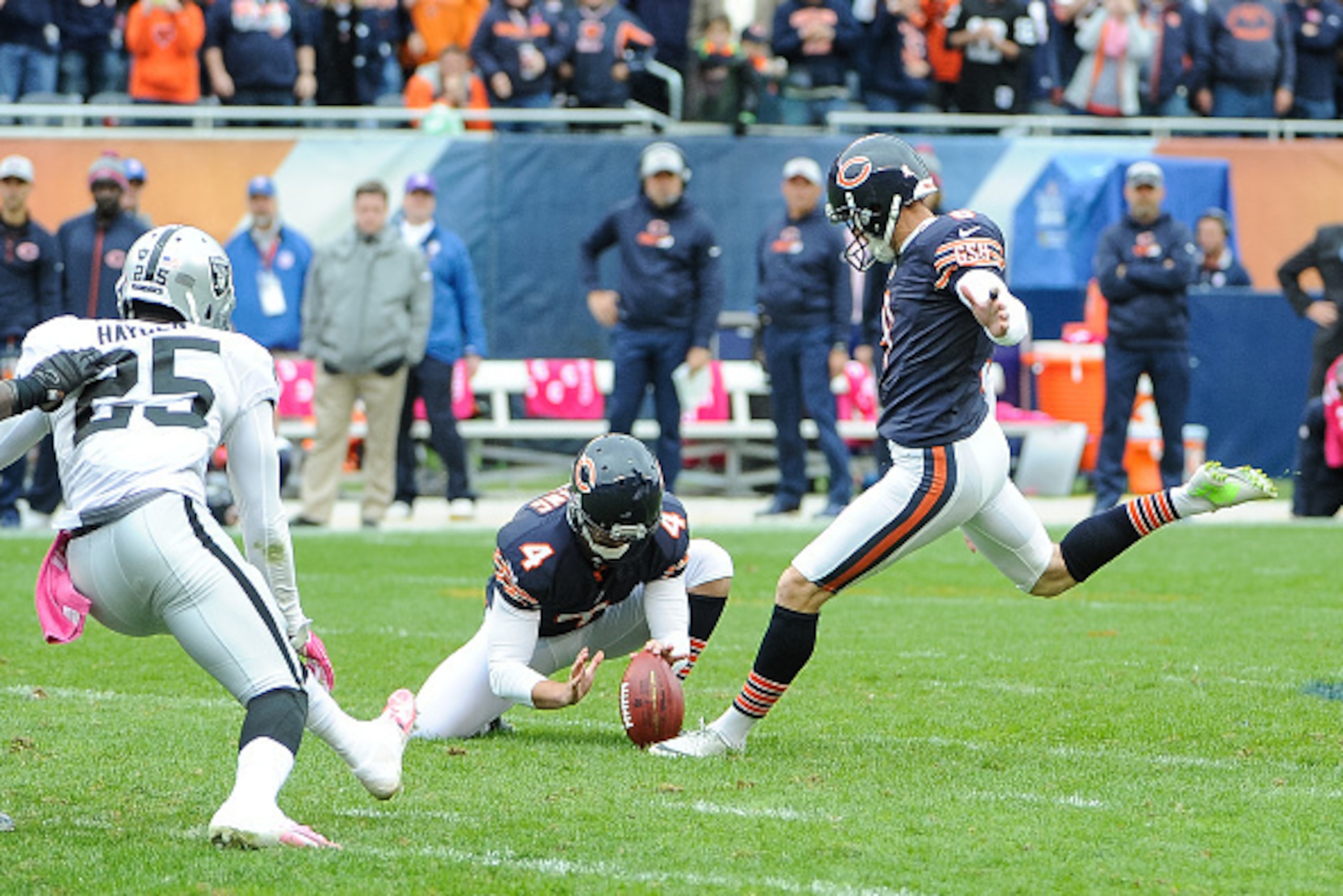
Oakland’s pass defense ranks 31st in the league and allows an average 310 yards per game. In translation, it’s tough to rely on the defense for a stop unless safety Charles Woodson pounces on an interception near the far sideline.
The odds aren’t in favor of Oakland when the opposing team has possession on the final drive as witnessed in Week 4 against the Chicago Bears.
Offensive coordinator Bill Musgrave should adopt an aggressive style of play-calling to put more points on the scoreboard. Some teams prefer kicking field goals and allowing the defense to seal the deal.
It’s important to jump-start the rushing attack to keep the defense honest, but critical situations in the fourth quarter should include at least one pass play when attempting to take over or extend a lead.
The inclusion of a pass play gives the Raiders’ solid 11th-ranked pass attack a chance to drain more time off the clock instead of three predictable run plays, similar to the decision Musgrave made against the Bears in Week 4.
Quarterback Derek Carr and the wide receivers have earned some trust in the last three weeks. Carr’s touchdown pass, shown above, courtesy the NFL, propelled the Raiders to victory against the Baltimore Ravens in Week 2.
The second-year quarterback posts a 62.6 pass-completion percentage. He also threw for 300-plus yards in two of the last three games and progressed with decision-making since throwing an interception in the fourth quarter against the Ravens.
One pass play seems risky in critical moments, but the Raiders have the talent to take a gamble with budding wide receiver Amari Cooper and veteran wideout Michael Crabtree on the outside.
Musgrave must coach to win games instead of coaching not to lose games. The philosophy shift suggests rolling the dice, but Oakland takes a bigger risk in relying on its defense to hold onto a slim lead.
Schematic: Man-to-Man Tight End Coverage
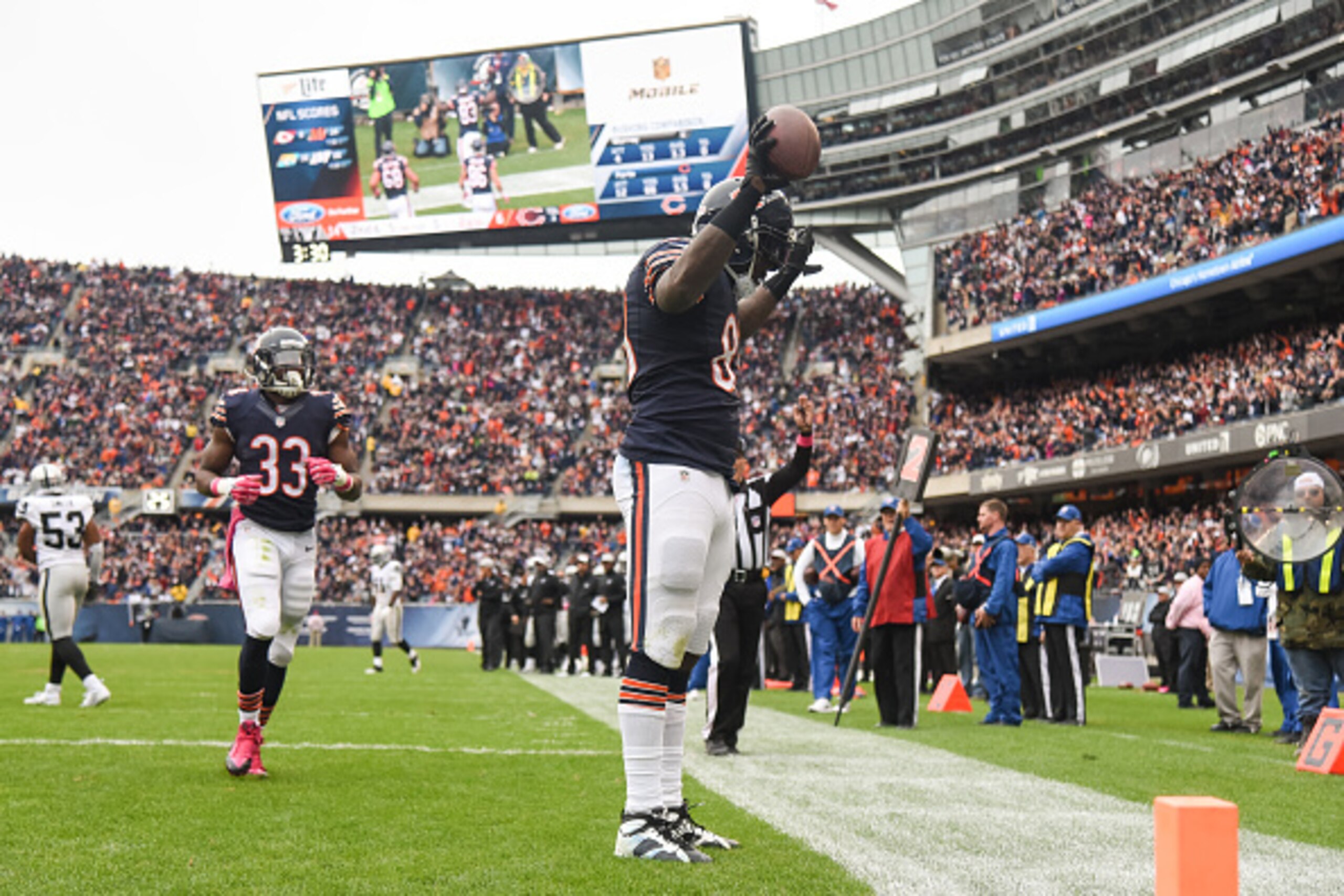
The Raiders defense revealed reason No. 4 as to why defensive coordinator Ken Norton Jr. should consider switching to single-man coverage on tight ends. Martellus Bennett became the fourth tight end to torch the Raiders intermediate pass coverage in Week 4.
Oakland’s linebacker-to-defensive back communication issues allowed Bennett's wide-open touchdown in the back of the end zone, as charted below:

Initially, inside linebacker Curtis Lofton takes the coverage assignment on Bennett, as Malcolm Smith covers the running back eligible as a receiver in the flat.
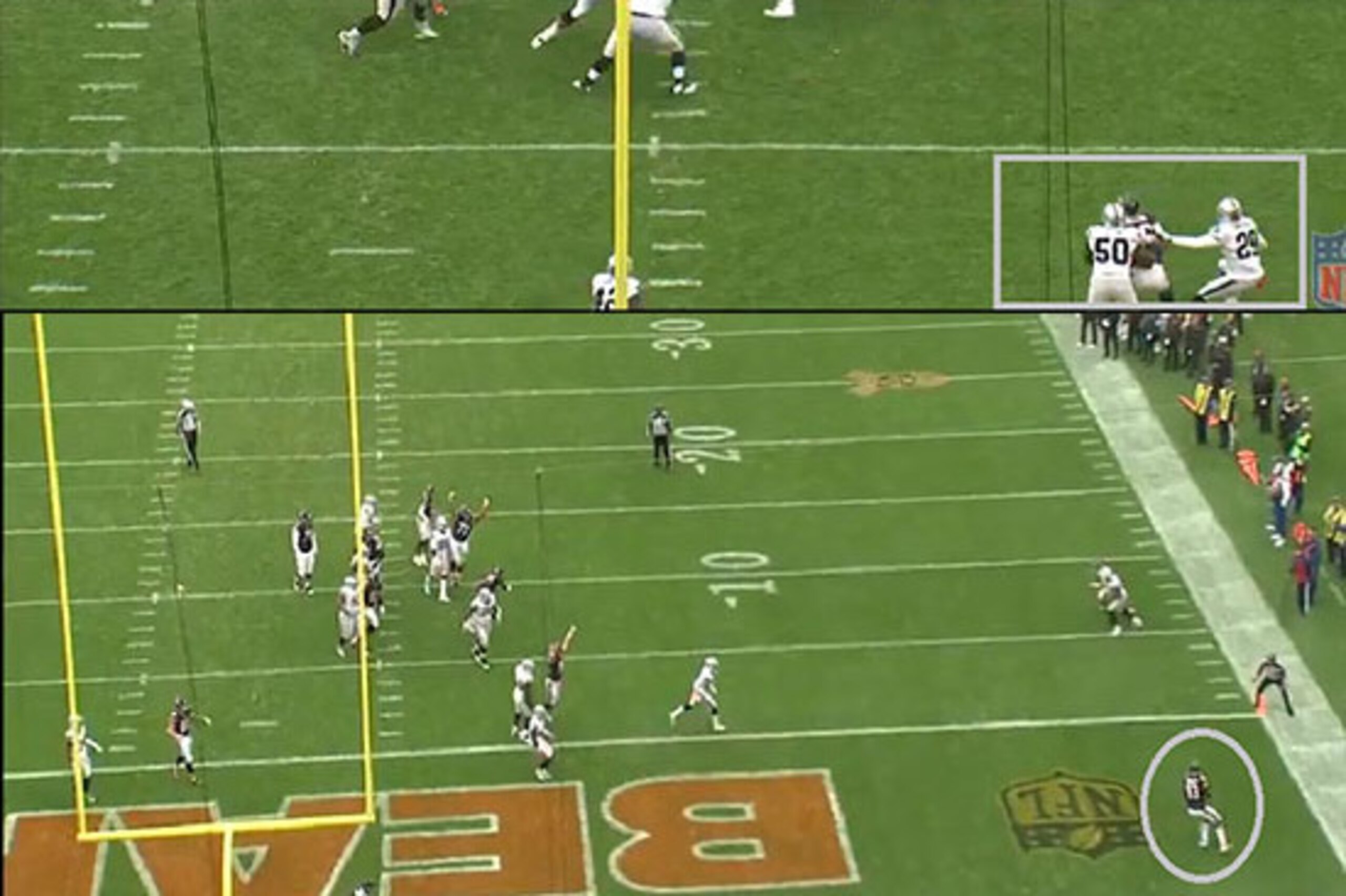
Somehow, both Lofton and cornerback David Amerson shadowed Bears tight end Zach Miller in front of the end zone, while Bennett slithered through the coverage for a touchdown.
Lofton should’ve followed Bennett throughout his route, or Amerson should’ve switched off Miller to pick up Bennett on the far left side of the end zone. Either way, the communication between the two failed miserably resulting in an easy score.
These types of communication issues have continuously cost the Raiders chunks of yardage and touchdowns for four weeks. Oakland's inside linebackers have allowed 35 completions out of 37 targets for 364 yards and two touchdowns in four games, per Pro Football Focus.
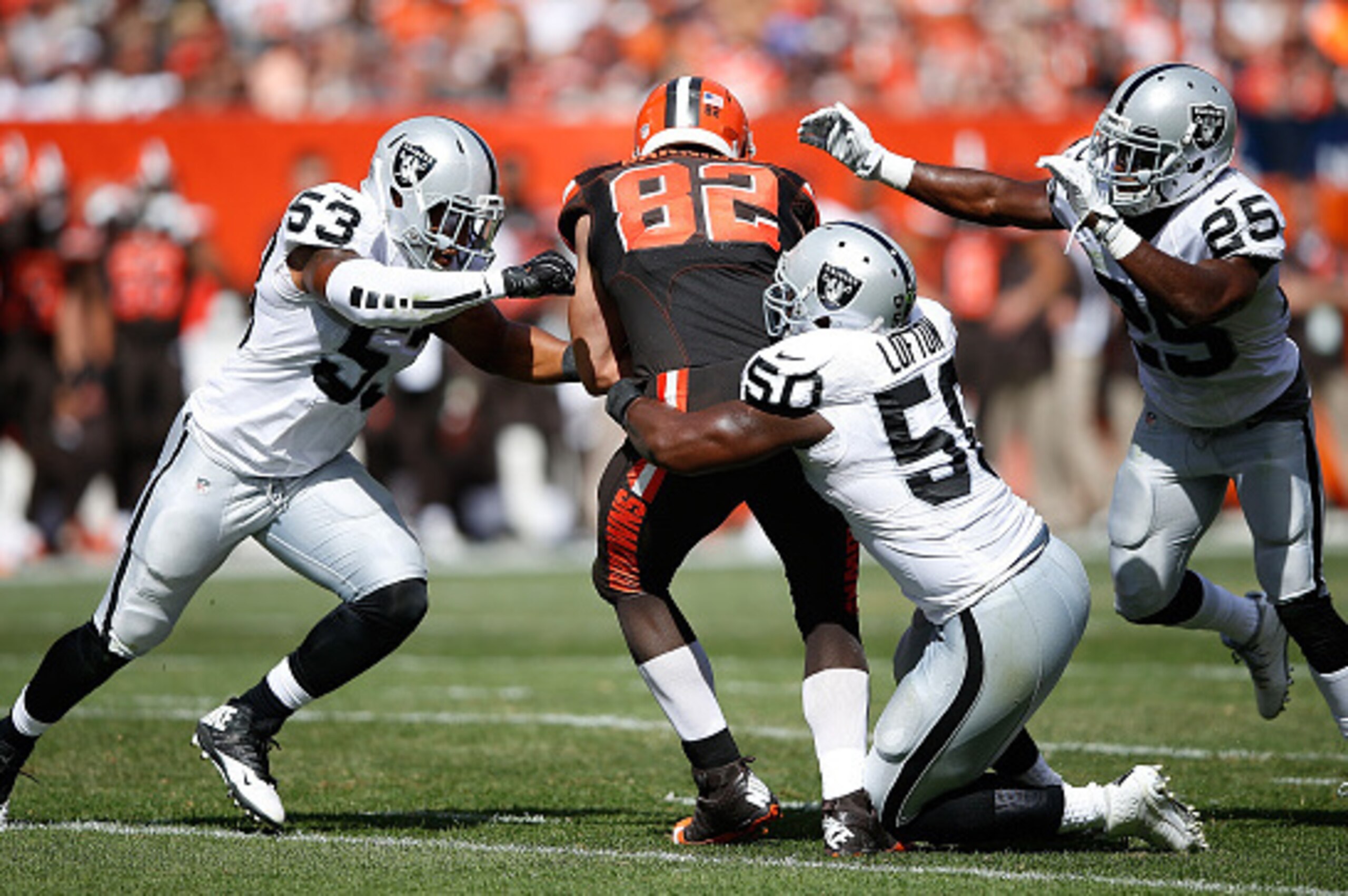
Oakland doesn’t have the personnel at linebacker to cover athletic tight ends or any tight end capable of making a routine catch. Man-to-man coverage, using a safety, could possibly solve the Raiders' tight end issues.
Woodson has missed seven tackles with an injured shoulder and poses a bigger threat in deep coverage. Norton can use either Taylor Mays (6'3", 225 lbs) or Larry Asante (6'0", 210 lbs) as a spy on the tight end.
Mays didn’t perform well in the zone scheme, but modifying the defensive scheme could help his performance. He’s not the only person struggling in Norton’s zone coverage on the back end when attempting to contain the tight end.
Oakland doesn’t have an array of options at safety. This schematic transition requires some experimentation—similar to T.J. Carrie's recent switch to strong safety.
Personnel: Re-Sign Devon Wylie as a Punt Returner

The personnel concept presents a straightforward approach to the Raiders' issues on special teams.
Head coach Jack Del Rio didn’t provide further clarification on the extent of Carrie’s chest injury. Let’s hope Del Rio learned his lesson about trotting key starters out to return punts.
Oakland should consider bringing punt returner Devon Wylie back into the fold. Wylie signed with the team to replace Trindon Holliday in the final preseason game as the primary punt returner.
The three-year special teams player didn’t get a lengthy audition for a roster spot, but the Raiders need his skill set at this juncture.
Without Carrie, Cooper would assume primary punt-return duties, which presents an unnecessary risk for the offense that must outscore defenses week to week.
The decision to sign Wylie places a specialist in position to flourish and prevents a potentially costly sacrifice to the defense or the offense.
Follow Maurice Moton on Twitter for news, updates and intriguing discussion about the Oakland Raiders.
All statistics are provided by Pro-Football-Reference.com and Pro Football Focus unless otherwise noted.
Week 4 statistics and play-by-play analysis provided by NFL.com.
.jpg?w=2560 "Vikings Buccaneers Football")