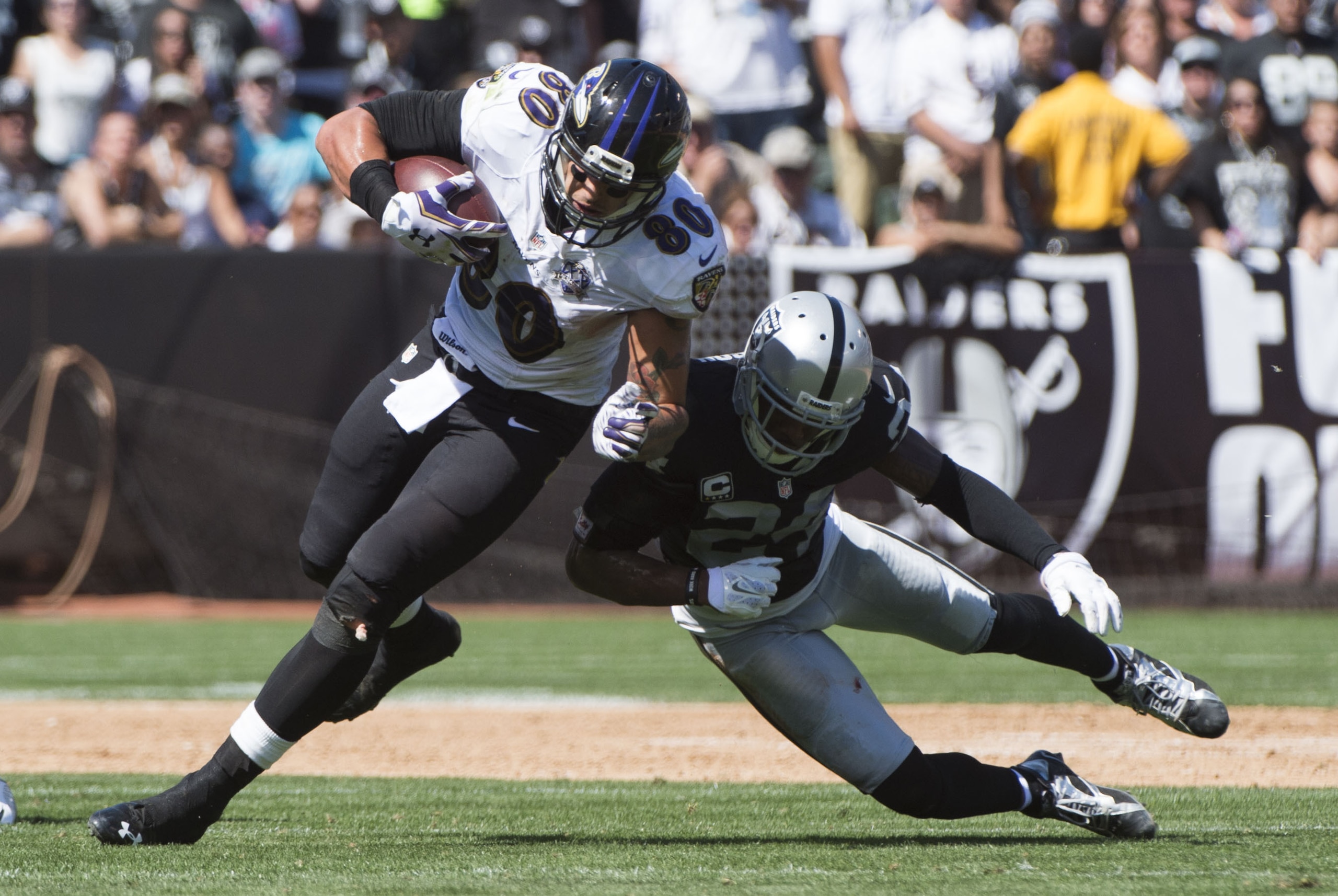

Oakland Raiders head coach Jack Del Rio jokingly said he needed to remove the opposing tight ends' cloaking device to provide better coverage. In actuality, the serious answer should focus on communication between his players.
Defensive coordinator Ken Norton Jr. gave props to the tight ends who’ve gashed the Raiders week after week, but it’s more of a problem for the Raiders than any other team in the league. Norton’s defense surrenders nearly 100 yards per game to tight ends:
| Team | Recs per game allowed | Yards per game allowed |
| Jacksonville Jaguars | 5.5 | 73.8 |
| New York Giants | 9.3 | 76.6 |
| New Orleans Saints | 7.1 | 78.7 |
| Oakland Raiders | 9.3 | 96.9 |
| League Average | 7.1 | 53.5 |
TOP NEWS
.jpg?w=2560 "Colts Football")
Jonathan Taylor Landing Spots
.jpg?w=2560 "NFL Paris Football")
NFL House in Paris Closes for Protests (AP)
.jpg?w=2560 "Seahawks Chiefs Football")
Trevon Diggs Cut by Seahawks
These statistics pose an alarming threat to a team that will attempt to defend tight ends Antonio Gates, Travis Kelce and Owen Daniels twice a year.
The coaching staff must address this problem directly during practice as it prepares for Chicago Bears tight end Martellus Bennett in Week 4. He’s the most prominent tight end in the first four games on the Raiders schedule and poses a serious matchup issue in the middle of the field.
Here's what average to subpar tight ends have accomplished against the Raiders defense:
| Player | Receptions | Receiving Yards | Touchdowns |
| Tyler Eifert | 9 | 104 | 2 |
| Crockett Gillmore | 5 | 88 | 2 |
| Gary Barnidge | 6 | 105 | 1 |
Now, it’s time to address the issue that leads to this problem and find a solution before Bennett embarrasses his opposition on Sunday.
Strengthening Communication
The Raiders must establish an open line of communication. The success of any relationship—in any type of setting whether it’s personal or on the football field—hinges upon how well the involved parties exchange information and ideas.
In each week, Oakland displayed a breakdown of communication between the linebacker and safety positions.
Communication Breakdown No. 1
In Week 1, Cincinnati Bengals tight end Tyler Eifert easily found the soft spot in the Raiders defense with simple pass routes. Quarterback Andy Dalton capitalized with quick accurate passes into the Raiders coverage dead zone.
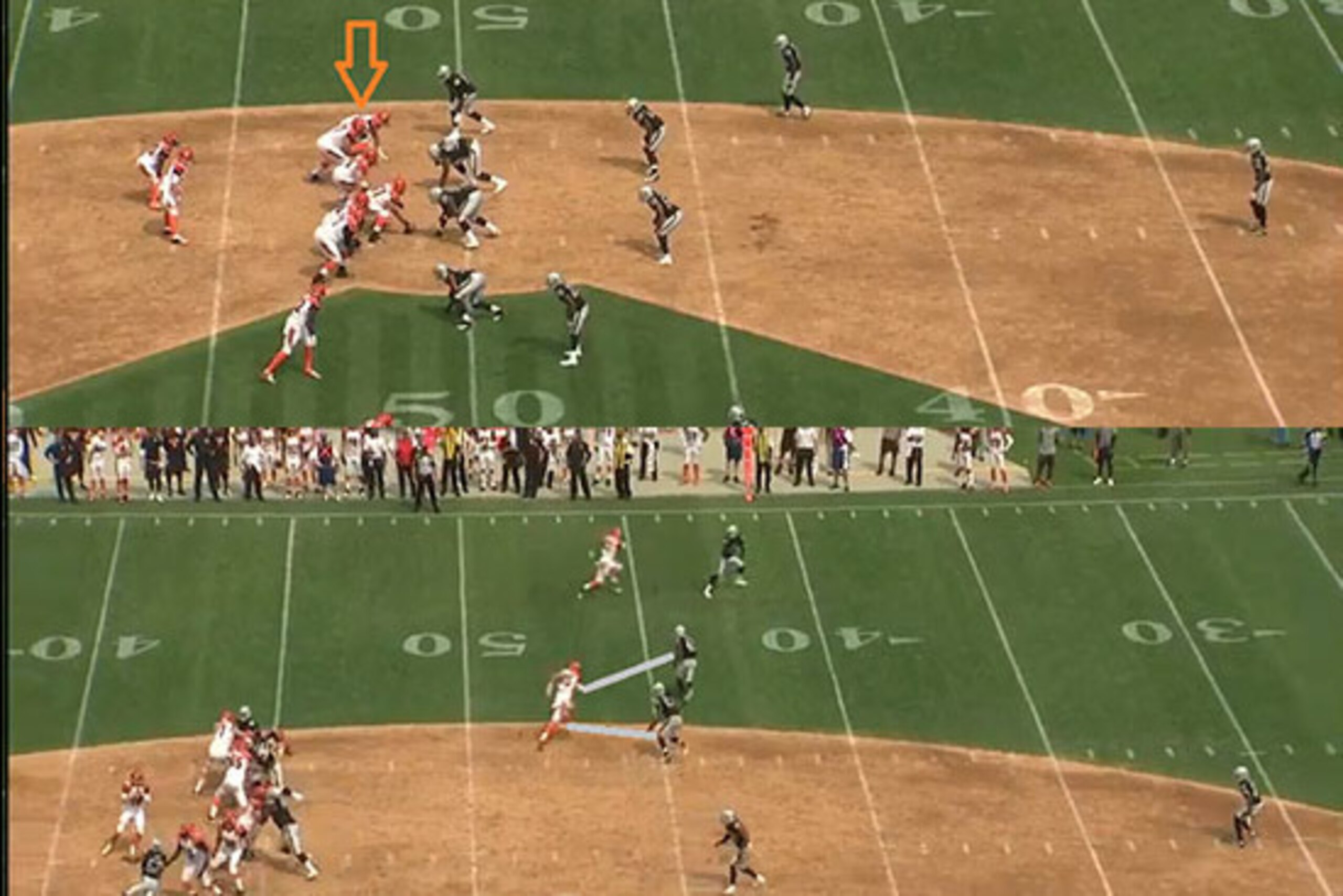
Eifert lines up at the top of the formation and takes a fairly deep route. He’s met by linebacker Ray-Ray Armstrong and safety Larry Asante. Both Armstrong and Asante have their eyes on the tight end with no eligible receivers behind him:
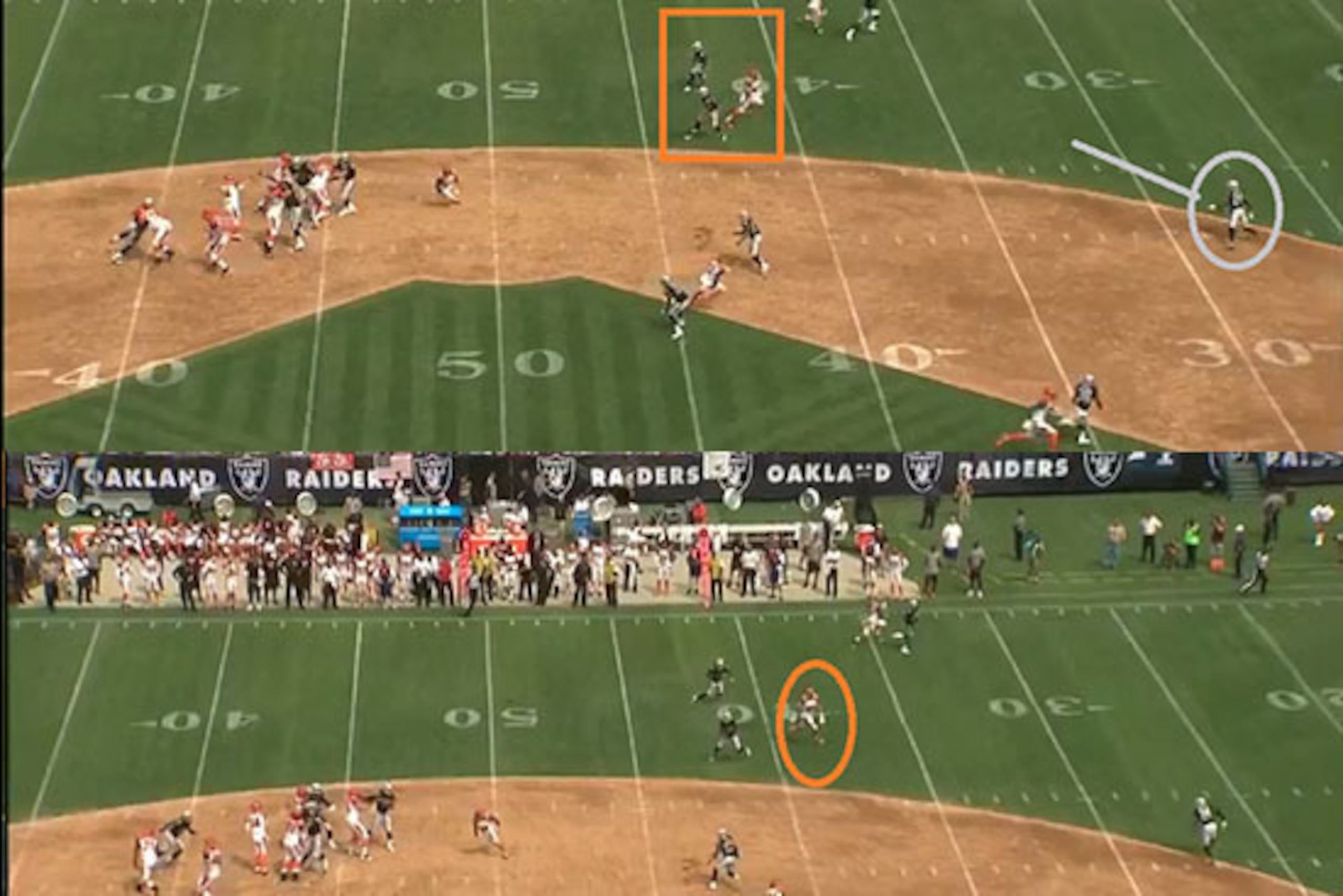
Both players allow Eifert to run by, expecting safety Charles Woodson to pick up the coverage, but he’s nearly 15 yards away from the action.
Woodson must cover a lot of ground to make a late tackle that results in a 31-yard gain for the Bengals.
Asante should have backpedaled a bit to cover the open space between Woodson and the middle of the field.
Both Asante and Armstrong froze, which allowed Eifert free space. It’s possible that they expected Woodson to position himself closer to midfield, but the veteran safety didn’t receive the memo.
Communication Breakdown No. 2

Baltimore Ravens tight end Crockett Gillmore starts at the bottom of the offensive formation and immediately runs by inside linebacker Curtis Lofton.
Lofton showed vulnerability with his hips wide open, positioning himself to play coverage from behind, which places Woodson in a precarious position to cover a lot of ground.
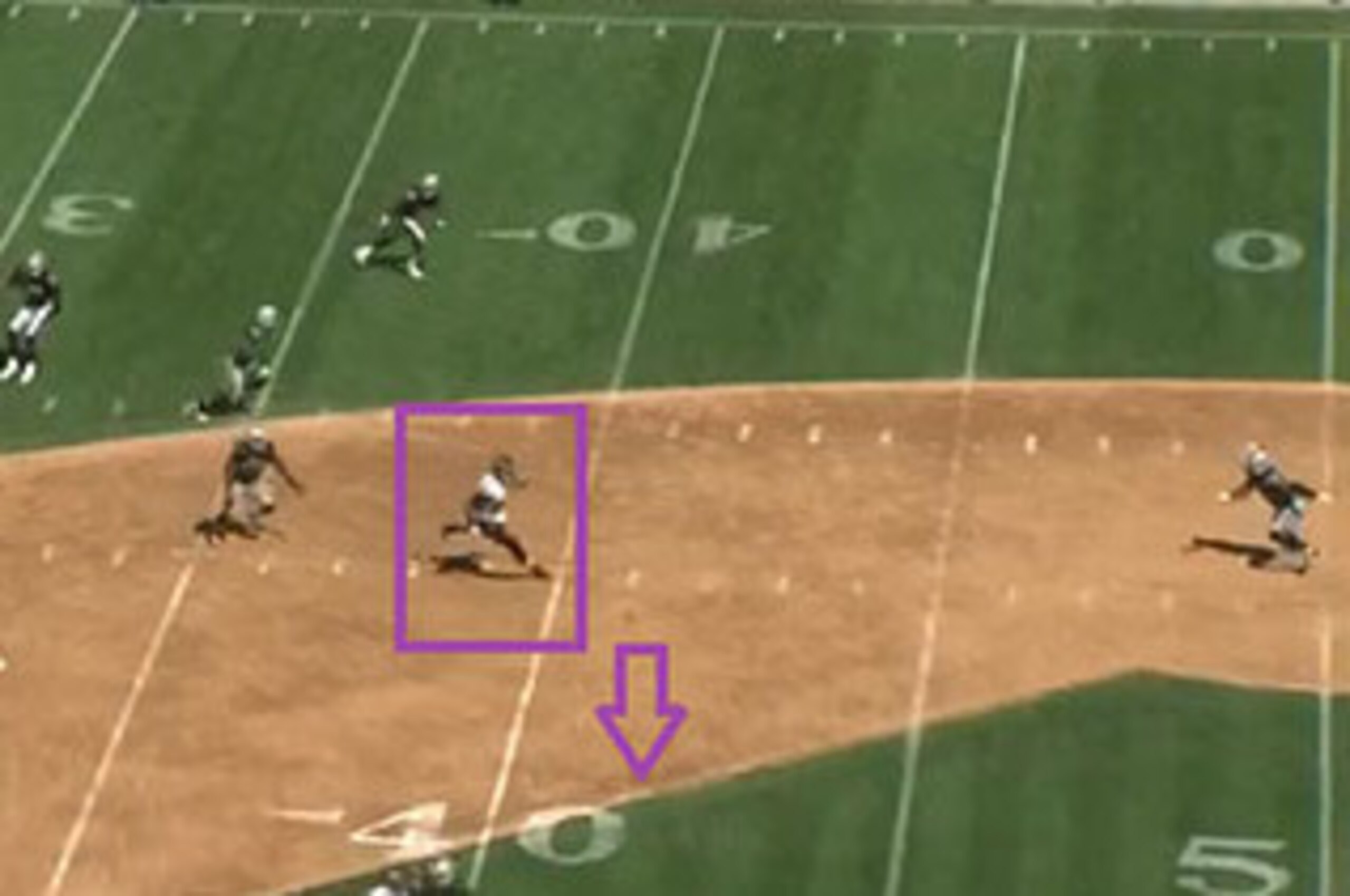
Gillmore finds the dead zone in the coverage between the linebacker and safety. He completes an easy pitch-and-catch reception on the far right side 10 yards away from the safety playing center field.
Lofton and Woodson failed to communicate to close the gap, or it’s possible the linebacker gave up too much ground to Gillmore in the middle of the field.
Communication Breakdown No. 3
The same players committed a similar mistake in the following week.
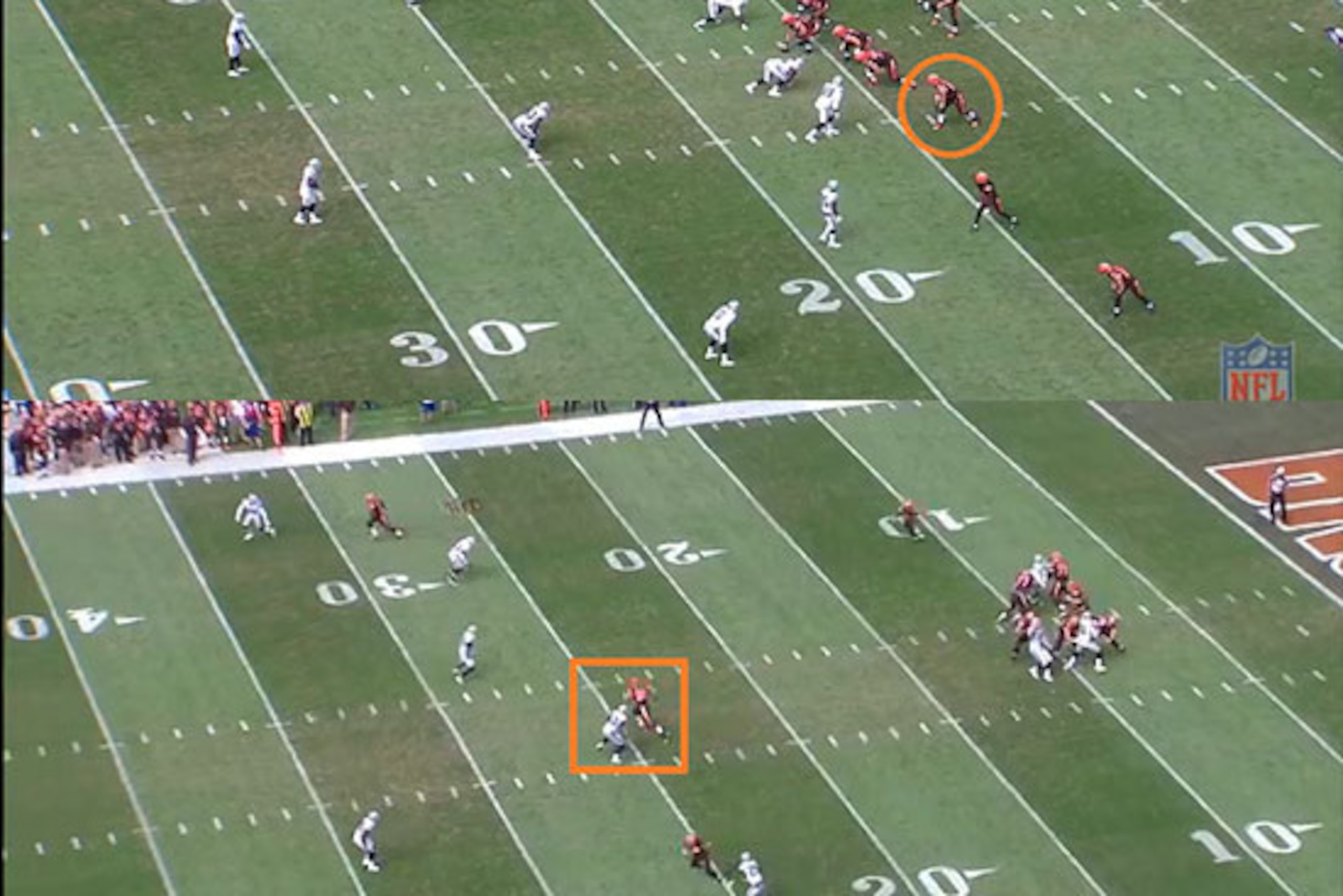
Cleveland Browns tight end Gary Barnidge takes off from the left side of the formation toward the middle of the field. Apparently, he knows a pot of gold awaits him in the Raiders coverage dead zone.
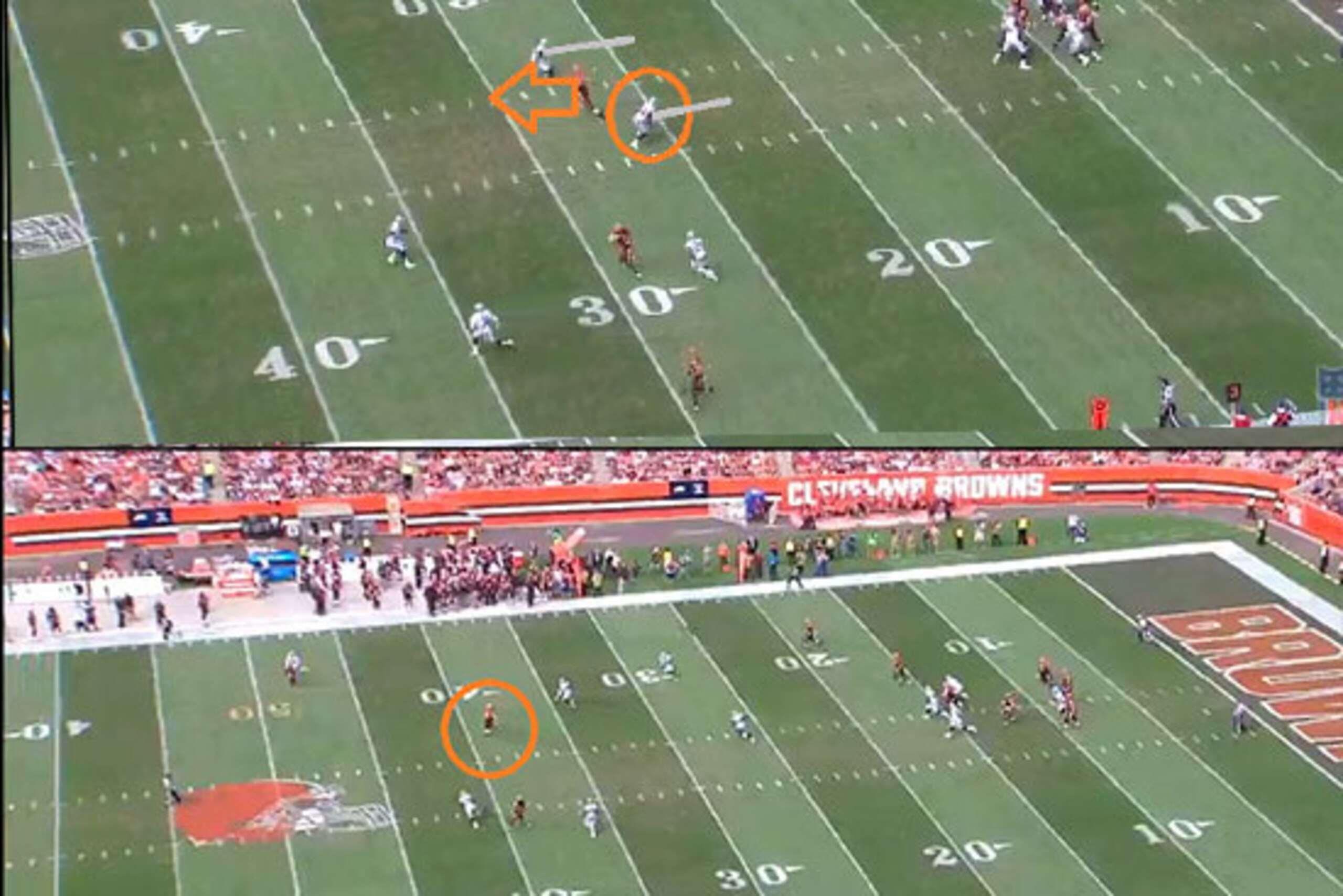
Barnidge runs a clear route in between Lofton and Woodson, who have their eyes locked on Browns quarterback Josh McCown and the backfield. They inexplicably allow Barnidge ample space to settle into the coverage dead zone for a simple 40-yard pickup.
Barnidge accumulated 156 receiving yards in 2014 and managed to notch 105 receiving yards against the Raiders in one game.
In response to Norton, it’s more than just professional talent making plays when the defense surrenders career-high numbers to below-average tight ends.
X-Factor Solution: Keith McGill
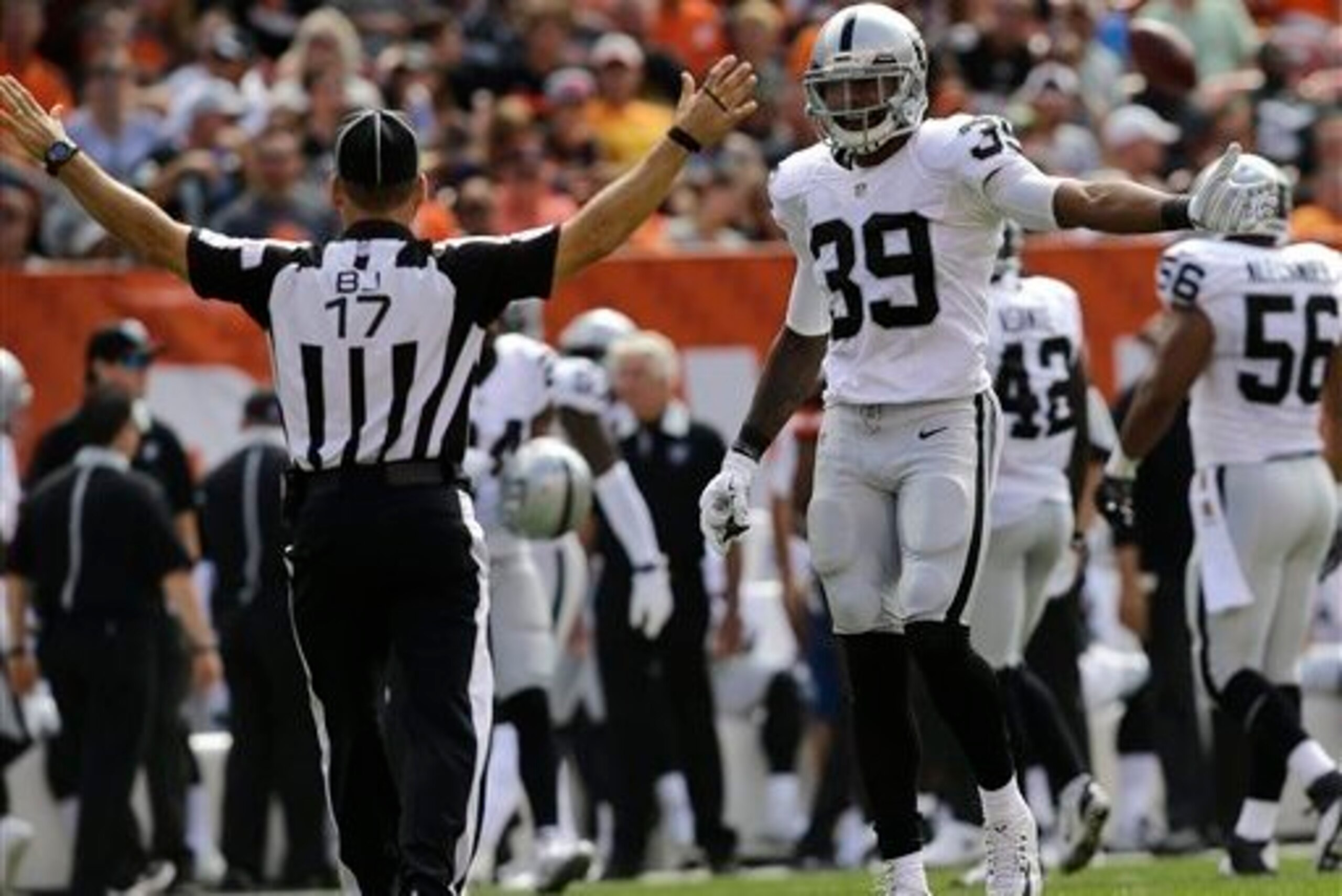
We’ve identified the problem, and it seems like an easy fix. However, Woodson’s dislocated shoulder doesn’t allow him to practice. His non-practicing routine will continue throughout much of the season, but the Raiders must practice communication to close the coverage gap for the tight ends.
Oakland can rectify the zone problem by playing man-to-man on the tight end for select plays with Keith McGill.
Yes, it sounds odd for a player who’s played 13 snaps on defense, per Pro Football Focus, but the zone play on the tight end continues to struggle tremendously.
The Raiders played T.J. Carrie at safety against the Browns, but Del Rio categorized the move as a game-situation call instead of a permanent fixture.
Norton should match McGill against a tight end to allow Woodson to play coverage in center field without having to worry about ambiguous zones in the middle of the field.
McGill, at 6’3”, 211 pounds, struggles against quick receivers and situations requiring a change of direction on double moves in pass routes. Tight ends aren’t as agile as wideouts. They run simplified pass routes compared to dynamic wide receivers on the outside.
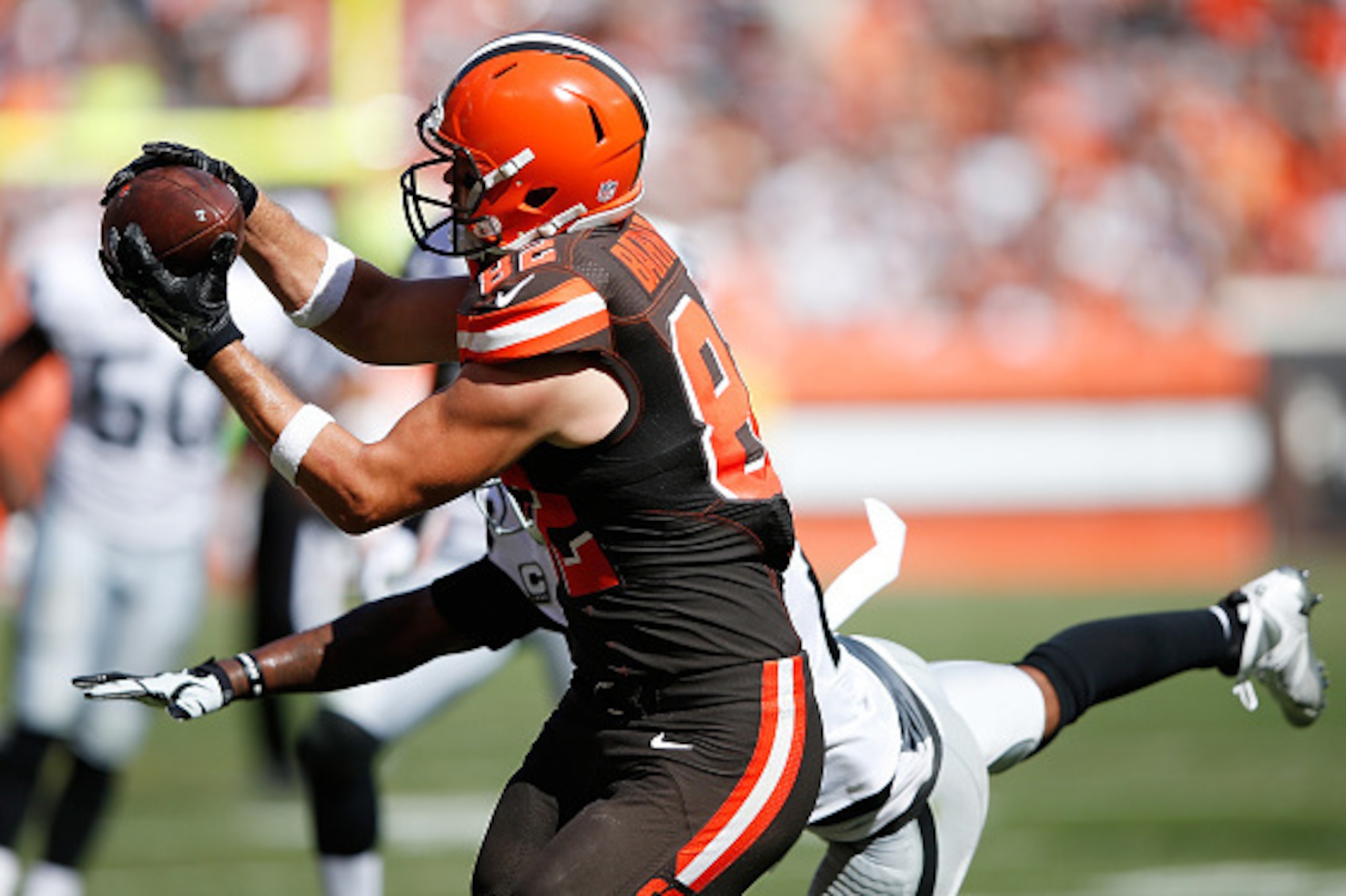
Furthermore, McGill serves as a better defender in midfield coverage compared to Lofton, who ranked third in receiving yards allowed among inside linebackers in 2014, per Pro Football Focus.
The Raiders' second-year defensive back sat dormant on the roster and played special teams for the majority of the first three games.
Norton could reinvent his purpose in the defense and address the tight end coverage issue without dismantling the starting lineup.
Eventually, Oakland will need Carrie to cover high-end wide receivers on the perimeter, which leaves a hole at safety. McGill could potentially fill the void and solve a major problem.
Follow Maurice Moton on Twitter for news, updates and intriguing discussion about the Oakland Raiders.
All statistics are provided by Pro-Football-Reference.com and Pro Football Focus unless otherwise noted.
Week 3 statistics and play-by-play analysis provided by NFL.com.
.jpg?w=2560)