

Why College Football Needs 'Pop Pass' Rule to Be Changed
The frustration could be heard on Steve Shaw’s voice.
While making one his regular appearances on the weekly coaches’ teleconference with media on Wednesday, the Southeastern Conference’s head of officiating was besieged with questions about two touchdown plays involving pop plays from last week’s games.
The first involving Auburn at LSU was largely overlooked due to the game being a 45-21 rout.
TOP NEWS
Top Overreactions after Week 5 of CFB Season 😧

Report Card for Top 20 CFB QBs 📝

Updated CFP Bracket Projections 🔮
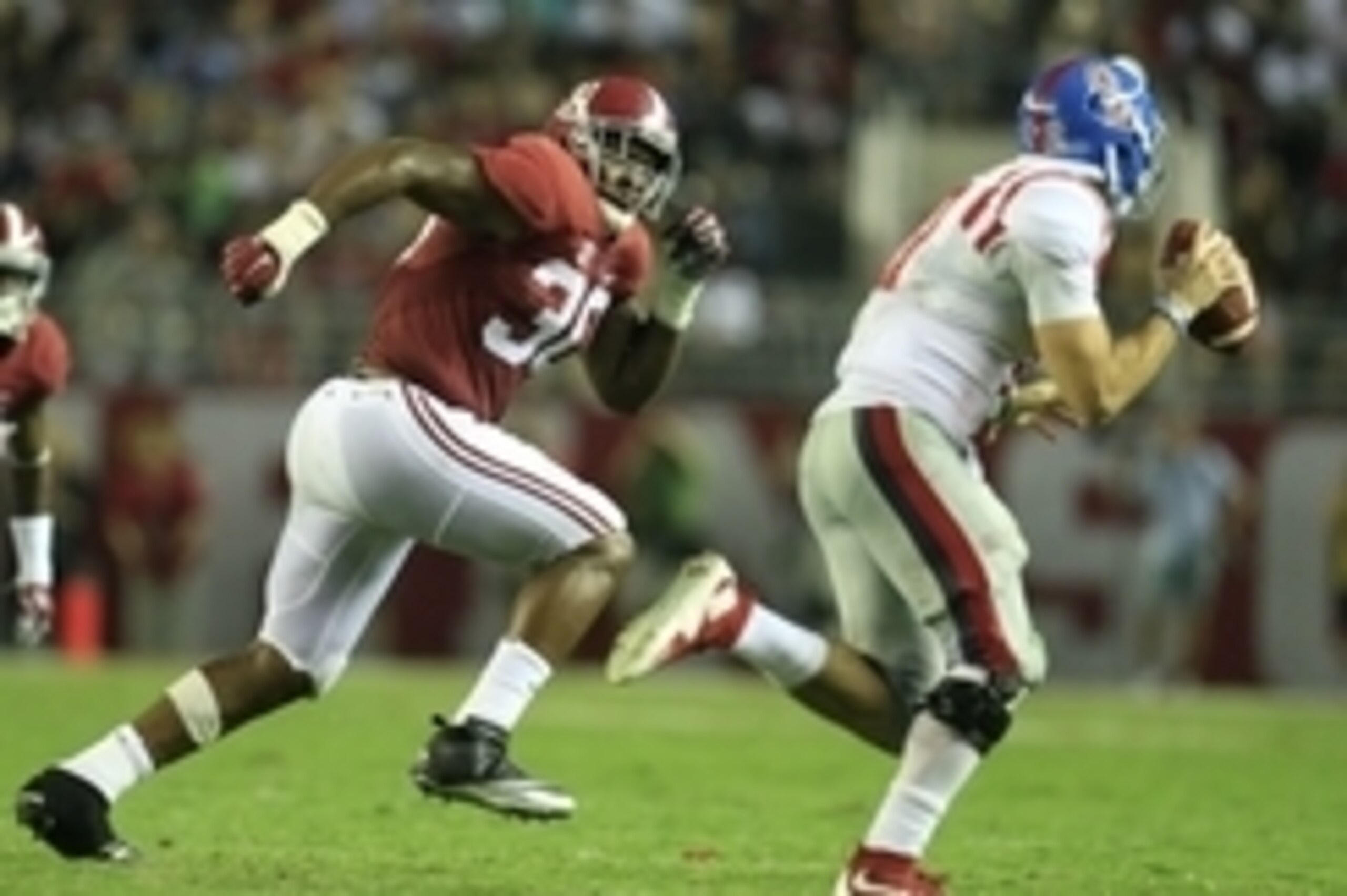
The second was during Ole Miss at Alabama, which ended up being a six-point game.
It occurred early in the fourth quarter after Alabama had closed to within 30-24, when Rebels quarterback Chad Kelly rolled to his right and while throwing at the line of scrimmage completed a 73-yard touchdown pass to a wide open receiver.
He was unprotected because the defensive back on the play came off his coverage thinking the play was a run, and the safety never moved over to help (possibly because he thought it was a run as well).
The initial call was an illegal forward pass, which was correctly overturned by replay. However, the lineman making an illegal block downfield wasn’t flagged, or reviewable.
The rule is a lineman can’t be more than three years beyond the line of scrimmage during a pass. Jordan Sims, who was filling in for injured Justin Bell at right guard, was at last five while reaching out to block linebacker Reuben Foster.
“We know what the rules are, and we have to execute and do it correctly, which we did not,” Nick Saban said somewhat diplomatically, but Alabama did send film of the play to the league office.
“Everybody wants to get it right. We want to get it right as coaches, they want to get it right as officials. I think everybody is working really hard to do that.”
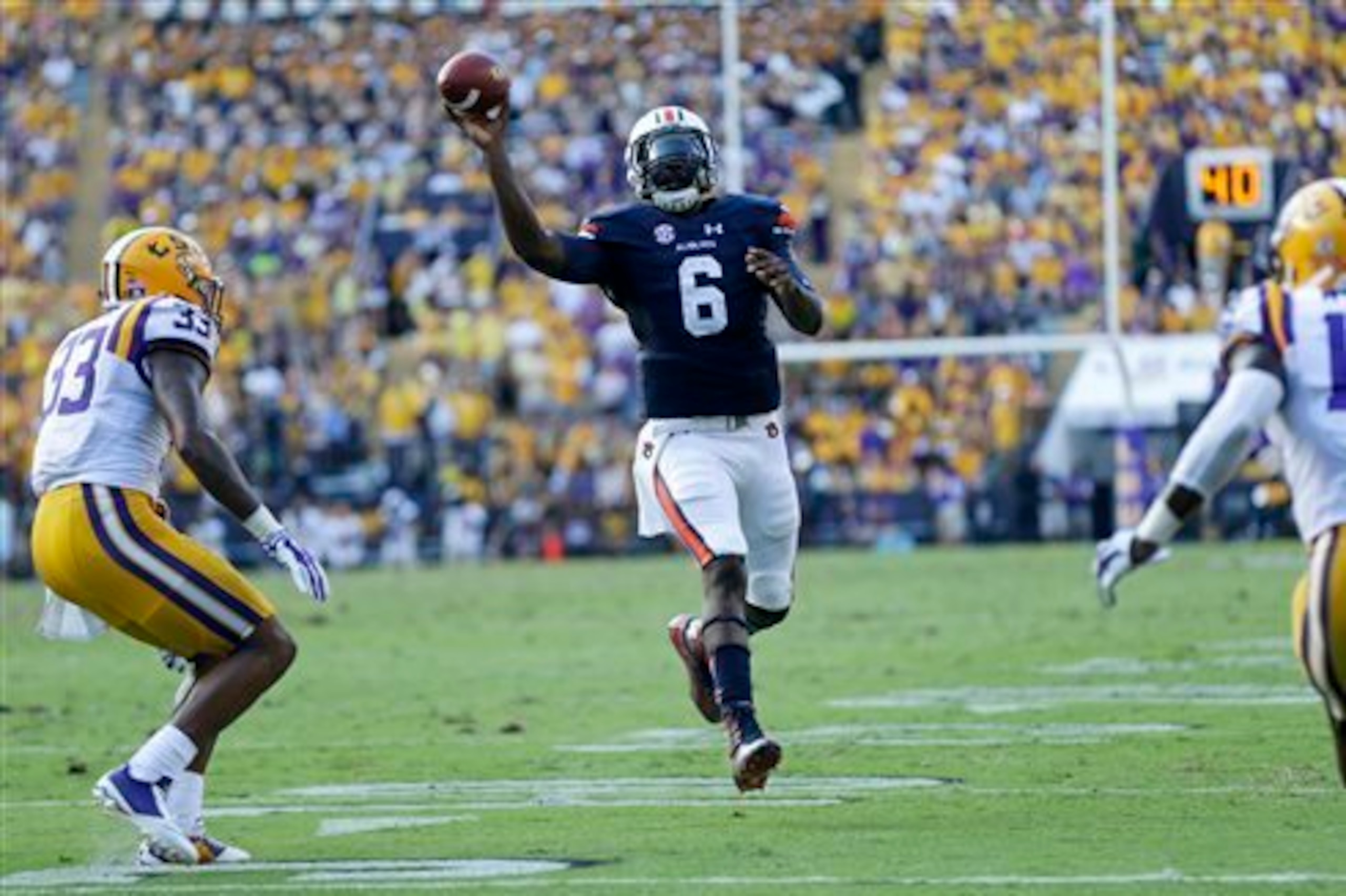
Of course, this is the second time this situation arguably might have cost Alabama a game. The first was during the Kick-Six game in 2013, when Auburn tied the score in the fourth quarter on a similar pass to receiver Sammie Coates.
To give an idea of how unorthodox that 39-yard touchdown was consider that while running forward Nick Marshall had the ball in his left hand, but when cornerback Cyrus Jones came off the receiver the quarterback switched hands and made the pass without using the laces.
Granted, Marshall sold it about as well as one could, but nowadays the quarterback only has to have part of his body in the neutral zone for it to be a legal pass, which only adds to the debate.
“I’m one of those guys whatever the rule is that’s how you coach it,” Auburn coach Gus Malzahn said. “I would say the majority of teams have a run-pass option, it’s just a matter of getting used to it.”
“It’s a rule the benefits spread offenses and scoring,” LSU coach Les Miles said.
While it’s easy to classify this as a dispute between offensive- and defensive-minded coaches, one that’s now been going on for years, the real blame for this specific fiasco lies with the rule makers.
During the offseason the NCAA's Football Rules Committee made a recommendation to change Rule 7, Article 10 and reduce the distance offensive linemen can be legally downfield on a pass play from 3 yards to 1 yard–the same distance that’s used in the NFL.
However, after the subsequent outcry from coaches who use spread offenses the NCAA's Playing Rules Oversight Panel tabled the proposal.
Which brings us back to Shaw and the other officials who have been sort of stuck in a no-win situation.
Each official on the field is responsible for various things on every play. The umpire, stationed in the middle about five yards off the line of scrimmage (the official everyone tries to make the defender run into) is tasked with focusing on the interior line and making this specific call.
He’s not supposed to be directly watching the ball being thrown, but should easily see it and the offensive linemen if the quarterback is in the pocket.
“You have to snapshot the play when the ball first leaves the quarterback’s hands and that snapshot is when you have to make the judgment on where the linemen are,” Shaw said.
However, if the quarterback is running toward the line of scrimmage on one side …
“It’s a difficult call for the umpire to make,” Shaw said.
Try almost impossible, and that’s the penalty can be easily missed in that situation.
“This is a national issue,” Shaw added. “We as coordinators have been talking about this play and we’re trying to solve it.”
That begins today, with the officiating heads of all the conferences gathering on a conference call to go over the mechanics of trying to get the umpires some help. Shaw believes one way they can do so is by taking advantage of the extra official on the field to free up the linesmen and line judges on those kinds of plays.
It’s a start, and will have to do for the rest of this season as a stopgap, but it’s not enough. Miles would like to see the line of scrimmage treated like the goal-line, once you reach it that's it, however first the NCAA needs make two changes for 2016:
1) Adopt the one-yard rule because if you’re going to claim you’re preparing players for the next level they should be playing by the same rules whenever possible.
But even if the NCAA doesn’t go for that …
2) Make illegal man downfield reviewable or at least challengeable by coaches.
Because what’s the point of having a rule that can be circumvented by some teams in certain situations?
Otherwise, college football ought to just allow only 10 defensive players on the field because that’s how big of an advantage it can be.
Quotes were obtained firsthand unless otherwise noted.
Christopher Walsh is a lead SEC college football writer. Follow Christopher on Twitter @WritingWalsh.


.jpg?w=2560 "Grading WWE Raw 🔠")

.jpg?w=2560 "Viral Rams Coach Vid 🖕")



