James Franklin Has Penn State Acting Like an Elite Program Again
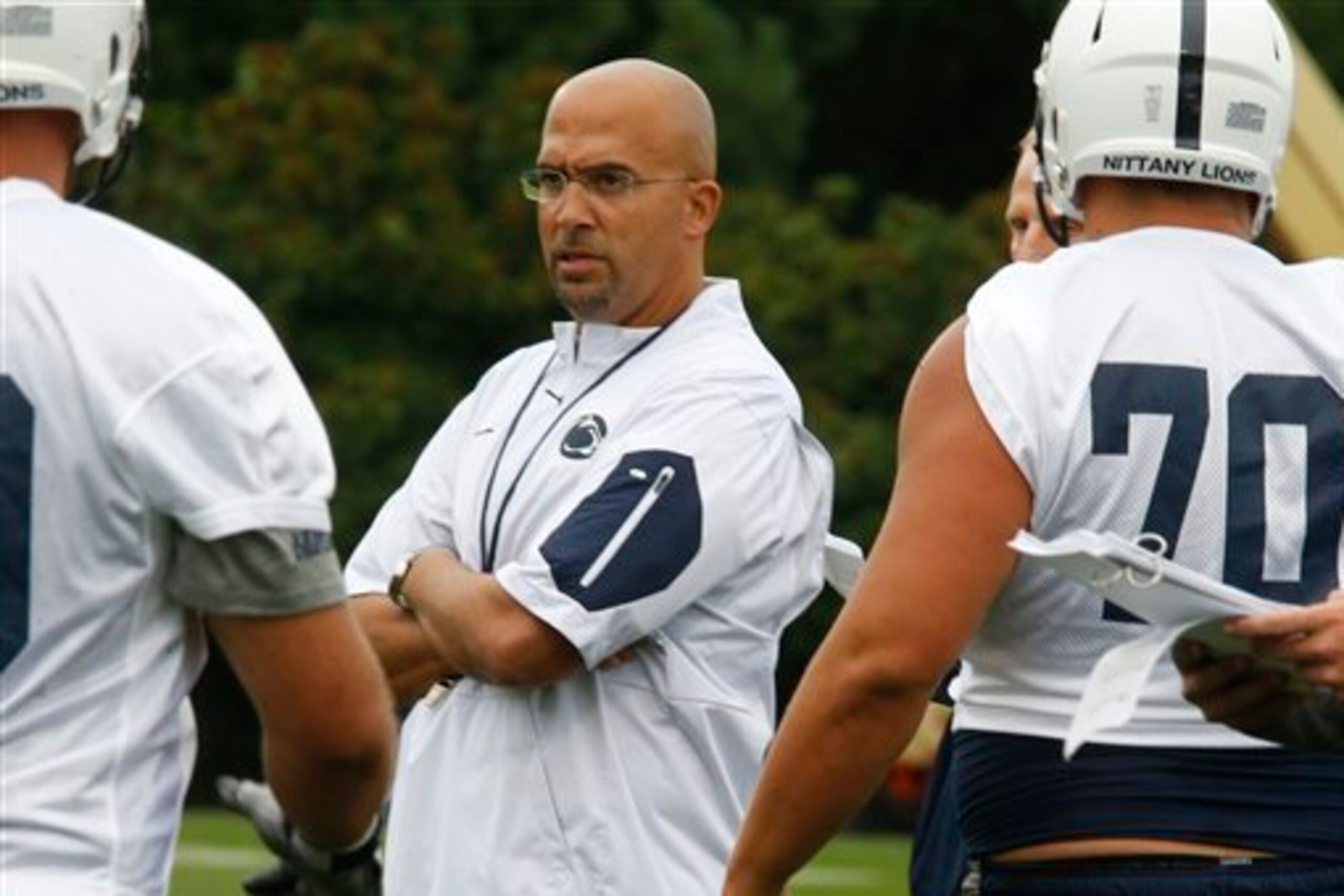
STATE COLLEGE, Pa. — If Penn State no longer deserves to be considered one of college football's premier programs, somebody forgot to tell James Franklin.
Observing the Nittany Lions' practice on Wednesday, you'd never know that this was a team just eight months removed from needing an overtime win over Boston College in the New Era Pinstripe Bowl to secure a winning season.
After three seasons marred by unprecedented sanctions and a combined 22-15 record, it's back to football—and only football—for Penn State, which will open its 2015 season next Saturday against Temple with a newfound optimism surrounding its program.
TOP NEWS

Updated CFP Bracket Projections 🔮

Week 5 AP Top 25 Poll 🔢
Top Overreactions after Week 5 of CFB Season 😧
"I think we've had a really good camp," Franklin said. "I feel completely different about our team at this point than we did last year."
From a numbers standpoint, it'd be tough for the second-year Nittany Lions head coach not to.
Back at 85 scholarship players for the first time since the NCAA trimmed Penn State's roster starting in 2012 following the Jerry Sandusky scandal, the Nittany Lions are finally fielding a full football team once again.
Last season, Penn State was allowed 75 scholarship players, and the addition of 10 roster spots has been noticeable for Franklin's squad this preseason—whether it's been at wide receiver, defensive back or, most importantly, on the offensive line.
But while the increased depth alone should aid Penn State in its attempt to return to prominence, the culture it's helped create—or recreate—could prove to be just as important.
"It's becoming a lot more competitive," Franklin said.
That competition is crucial and something the Nittany Lions have been without for the past three years. The sanction-stricken numbers simply wouldn't allow it, eliminating a key element football coaches are constantly searching for in order to create an atmosphere where iron sharpens iron.
Asked by Bleacher Report about the benefits that competition within a program brings, Penn State wide receivers coach Josh Gattis could hardly contain his smile.
"It's our No. 1 job to create the most competitive environment in all of college football," Gattis said. "That's how you build a roster, with depth that's not only going to be able to help you win games in Week 1 but help you win games in Week 12."
The absence of such in Franklin's first season with the Nittany Lions was evidenced by its highs and lows, which included a 4-0 start followed by a four-game losing streak and eventually back-to-back losses to Illinois and Michigan State to close out the Big Ten campaign.
Because of injuries, Penn State was fielding just 41 scholarship players by the end of the year.

But with more fresh bodies now readily available, Franklin believes his team is set up for the duration of a season.
Even if the makeup of his roster is still relatively young because of the timing of the sanctions—Franklin signed 26 players in 2014 and 25 last February—the newfound depth is apparent with just one look at the collection of players.
"We went in the [Beaver Stadium] last night because I wanted to make sure the first night game we played there wasn't that game. So we had a practice in that environment," Franklin said. "Just standing out there looking at our D-line, they look different. Looking at our safeties, they look different. You look at the wide receivers. The whole group has improved."
This depth has also allowed Franklin to be more flexible when it's come to roster management, as he's already given the green light to true freshmen Saquon Barkley, Brandon Polk, Juwan Johnson and cornerback John Reid to play this season rather than redshirt.
He also moved redshirt freshman Koa Farmer from linebacker to safety midway through camp based on the needs of his team, a move he may not have been able to make a year ago.
But while the Nittany Lions' influx of talent and a manageable schedule—not to mention star quarterback Christian Hackenberg—could make them a sleeper team in the top-heavy Big Ten East, it's not just the makeup of the roster that creates the appearance of an elite program in Happy Valley once again.
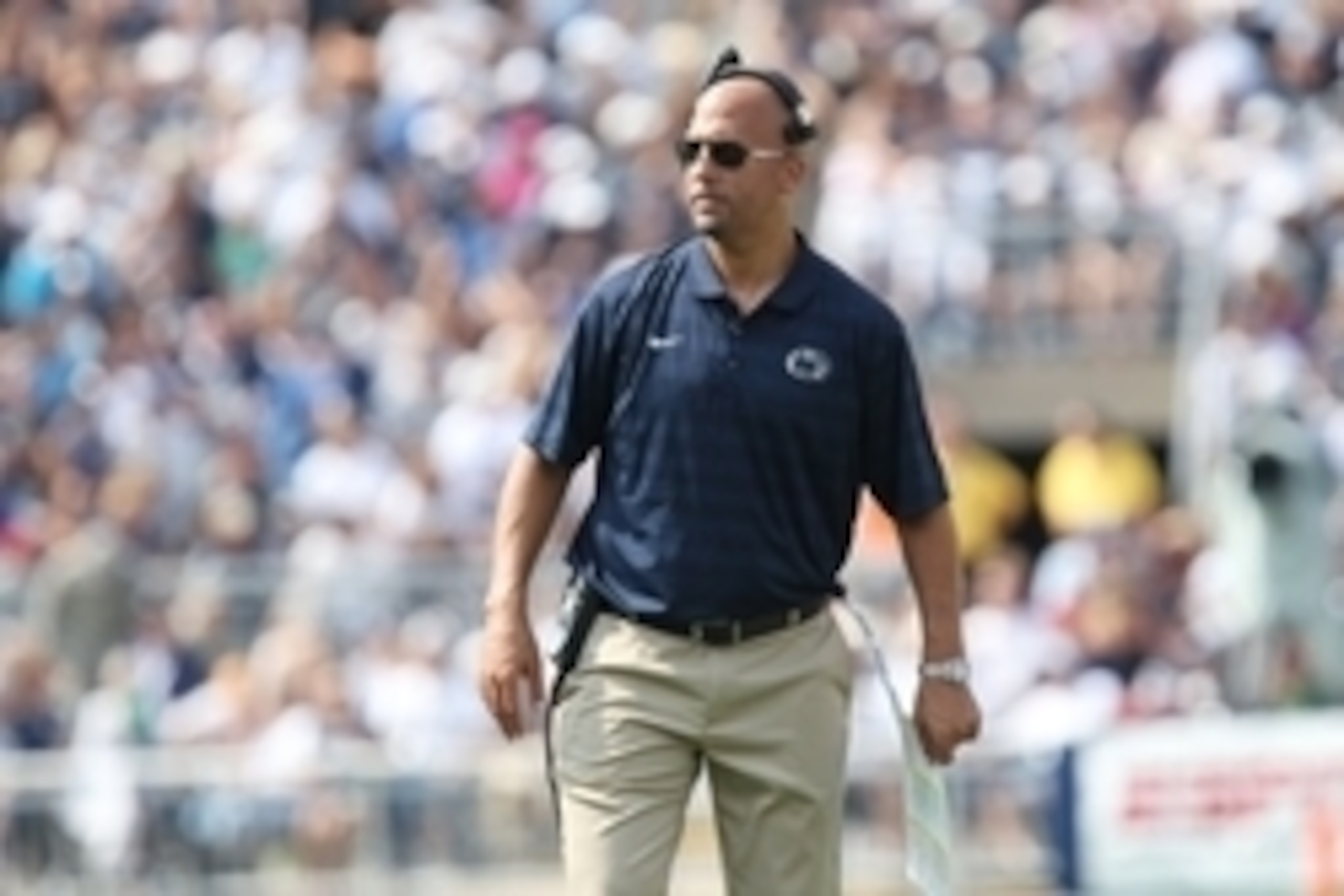
A lot of that has to do with the presence of Franklin, who is every bit as much the CEO of Penn State football as he is the head coach.
With a calm and collected demeanor while dealing with the press, it's not hard to see how the former Vanderbilt head coach has put together a 2016 recruiting class that currently ranks fifth in the country. Franklin picks his spots and focuses on what he wants to, typically only elaborating on the positives of his program.
Of course, it's helped that media access to the Nittany Lions has been limited in training camp, with only 10 minutes of practice and interview sessions with Franklin and a chosen assistant being available to reporters each week.
That makes Penn State more open than Michigan has been—the Wolverines have entered a fall camp "submarine" under Jim Harbaugh—but less so than Ohio State and Michigan State, who have each made players available for interviews on a weekly basis.
It may seem silly to read into media availability when judging a program, but for the Nittany Lions, it's somewhat telling. No longer is Penn State concerned about putting positive headlines in the press post-sanctions. Rather, it is insulating itself as much as possible to prepare for the upcoming season.
For the Nittany Lions, it's football—and only football—once again.
Just how long it will take Penn State to return to playing like an elite program remains to be seen.
But thanks to their finally full roster and the confident head coach in charge of it, the Nittany Lions are already acting like one.
Ben Axelrod is Bleacher Report's Big Ten lead writer. You can follow him on Twitter @BenAxelrod. Unless noted otherwise, all quotes and camp observations were obtained firsthand. All statistics courtesy of cfbstats.com. Recruiting rankings courtesy of 247Sports.
_0.png?w=2560)

.jpg?w=2560 "2 NFL Officials Suspended")



.jpg?w=2560 "Mahomes' Wife Trolls Kubiak 💀")

.jpg?w=2560 "Love's Body Already 'Tired'")

.jpg?w=2560 "Injury-stricken Seahawks signing veteran RB")