
5 Statistics That Must Change for Michigan Football in 2015
Following a disappointing 5-7 campaign last season, the Michigan football team must improve in five particular areas.
While the statistics that need to change don't tell the complete story of the program's struggles, upgraded performance in these areas should positively impact Michigan's final 2015 record.
They're not simple fixes—considering the improvements are spread throughout the offense, defense and special teams—but most are a matter of fundamentals, and Wolverines fans can be certain that's what Jim Harbaugh and Co. are preaching.
Passing Efficiency
1 of 5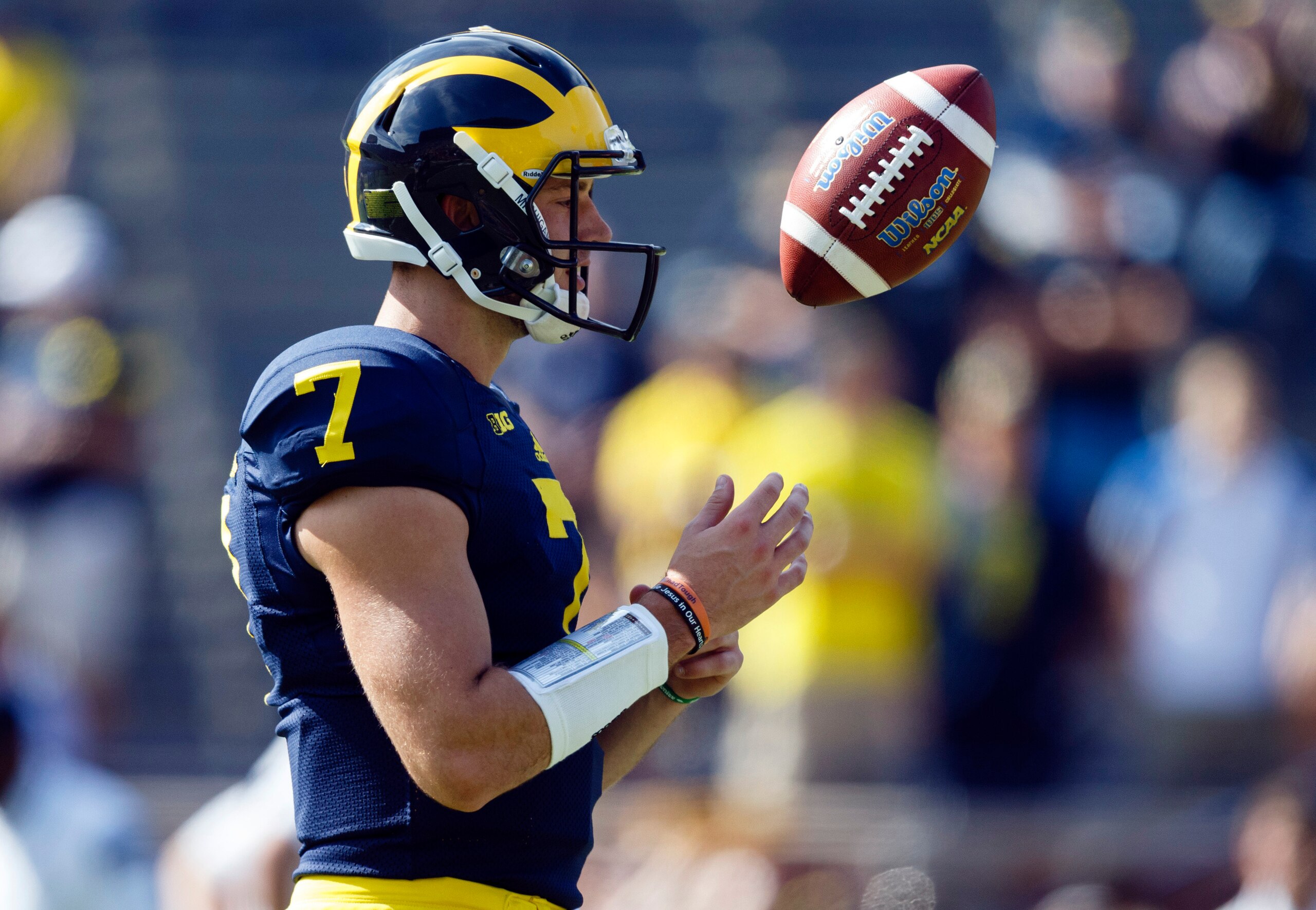
Wake Forest. Eastern Michigan. Texas-San Antonio. That's not exactly a collection of teams to which Michigan's offense should strive to be most comparable.
Nevertheless, the Devin Gardner- and Shane Morris-led aerial attack of paper planes resulted in a combined 109.7 passer rating, which ranked 110th in the nation. The duo combined for 18 interceptions.
The Wolverines don't need to suddenly become an elite passing squad, but average would be suitable.
While Jake Rudock efficiently distributed the ball at Iowa, Morris completed a meager 14 of 40 passing attempts. As long as Rudock grasps the playbook—and there's no reason to suggest he won't—the transfer will likely be Harbaugh's starter.
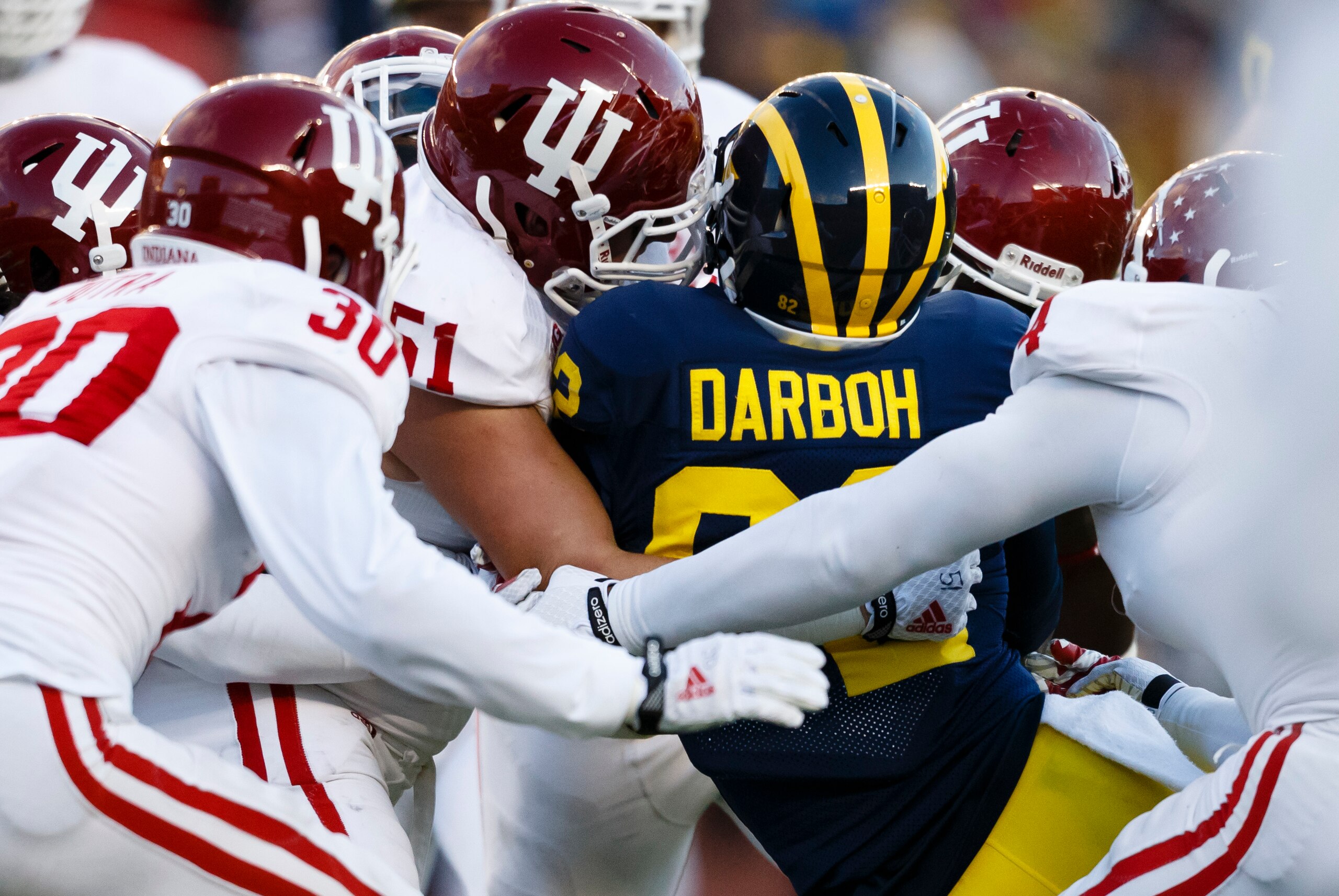
Amara Darboh, Jehu Chesson, Freddy Canteen and Brian Cole must create separation with their route running because Rudock typically doesn't force throws. If the receivers can do that, Michigan should display a respectable passing game, and that's a tremendous improvement.
Standard-Down Yardage
2 of 5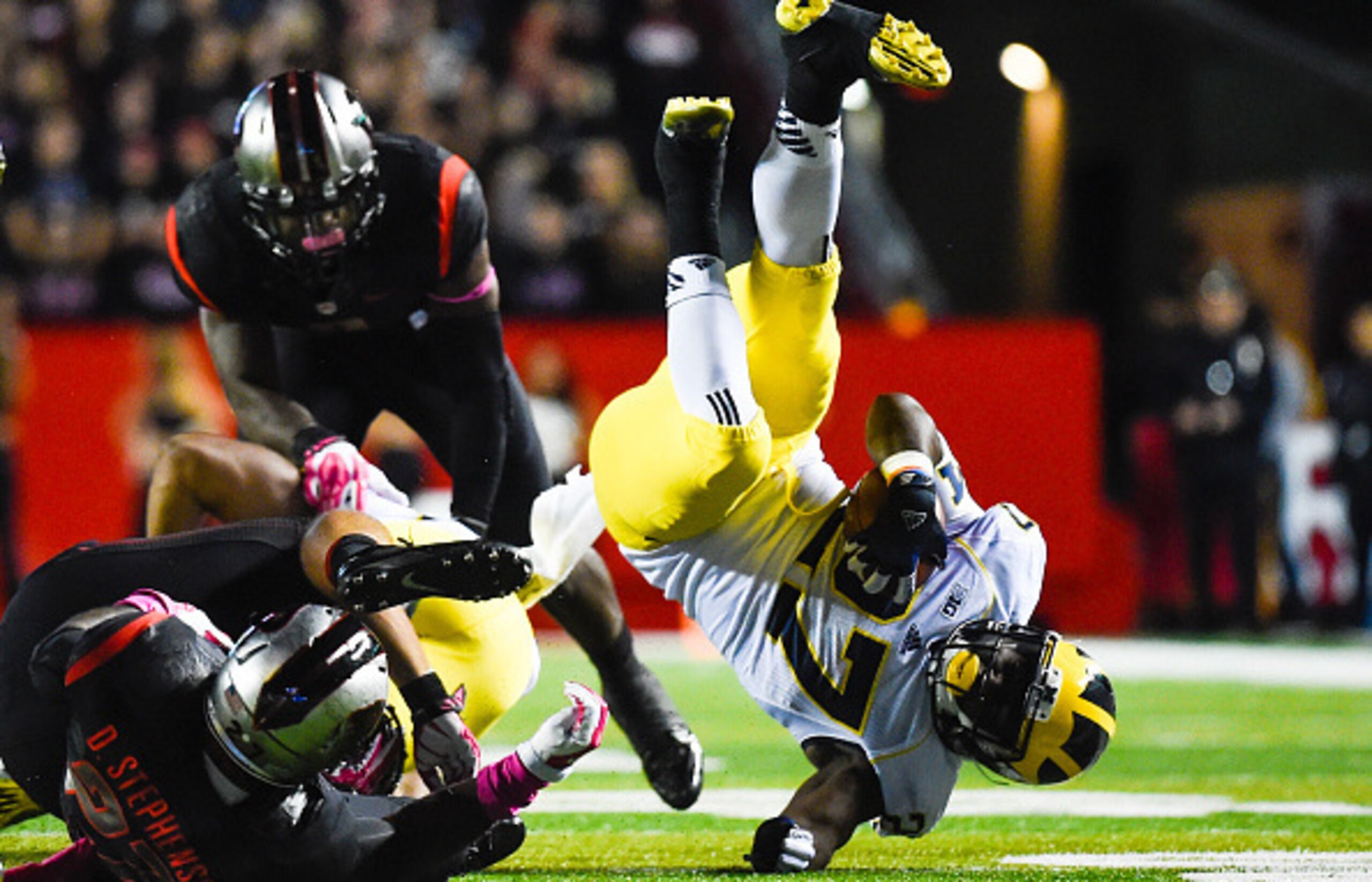
The true test of an offensive line is to block a certain way when everyone knows it's coming.
Under Jim Harbaugh and Tim Drevno, everyone knows Michigan will attempt to run the ball a majority of the time—especially on third down. But for the Wolverines, the trick is setting up manageable conversions by succeeding on standard downs.
Football Outsiders defines standard downs as 1st-and-10, 2nd-and-7 or fewer, 3rd-and-4 or fewer and 4th-and-4 or fewer. On those plays in 2014, Michigan averaged a dismal 2.7 yards.
The Wolverines tallied 4.6 yards per carry overall, but they struggled in ideal yards-to-go snaps—they even struggled with putting themselves into that situation.
Everyone knows Harbaugh and Co. will focus on controlling the tempo. Now, it's up to the offensive line to prove it can accomplish that by setting the tone on first down, clearing space on second and finishing the job on third.
Takeaways
3 of 5
In 2014, the defense was the team's strength. The unit stood firm in the red zone, allowing touchdowns on only 21 of 41 opportunities. It finished seventh in total defense. Per Football Outsiders, Michigan only allowed 2.5 rush yards per standard down.
But only two teams in the nation—Washington State and Georgia State—were worse at creating turnovers than the Wolverines, who managed five interceptions and five fumble recoveries.
They also failed to produce a takeaway during six outings.
Michigan was actually quite productive following takeaways, scoring a combined 42 points after the seven forced against Miami (Ohio), Utah, Penn State, Michigan State and Indiana. If the offense received an opportunity—excluding its 0-for-3 showing versus Northwestern—it capitalized.
The defense was terrific, but it can still be more productive. Finding those potentially game-changing plays is a must in 2015.


Opponent Punt Returns
4 of 5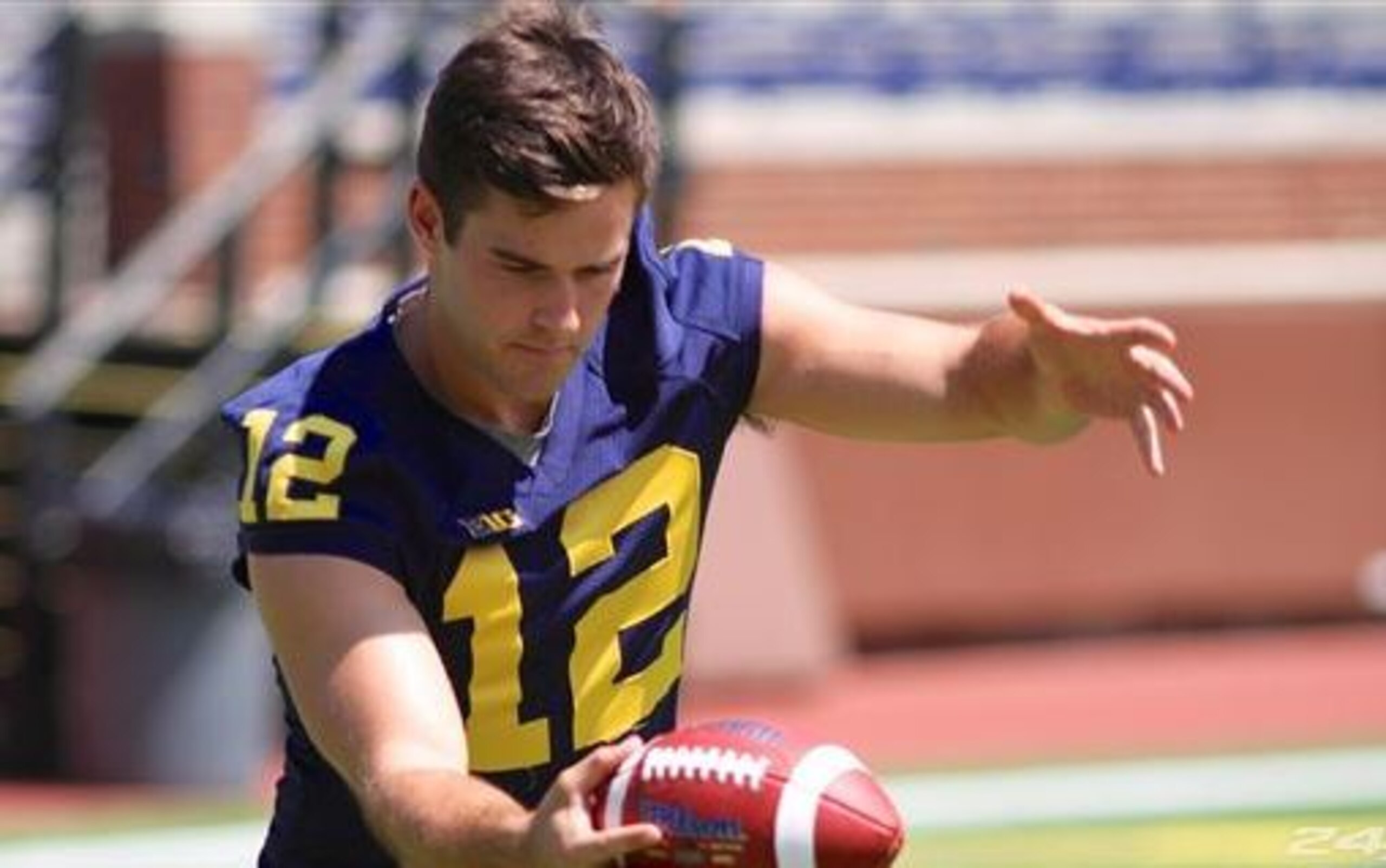
Every little thing matters. Field position is a significant factor for the success of a defense, most notably because it determines if it's likely the unit can recover after messing up.
On average last season, the punt coverage team cost Michigan's defense one first down, surrendering an ugly 12.7 yards per return. Utah's Kaelin Clay took one punt to the house, too.
Blake O'Neill, who blasted 18 punts of 50-plus yards last season, arrived from Weber State as a graduate transfer.
Although NCAA.com indicates the team's opponents also managed 12.7 yards per return, they were only able to return 11 of O'Neill's 62 kicks (17.8 percent). Conversely, Wolverines foes returned 21 of 54 punts (38.9 percent).
Forcing a fair catch may seem inconsequential, but for a defense as stout as Michigan's should be, providing 10 extra yards could help the unit take another step toward being elite.
Kick Returns
5 of 5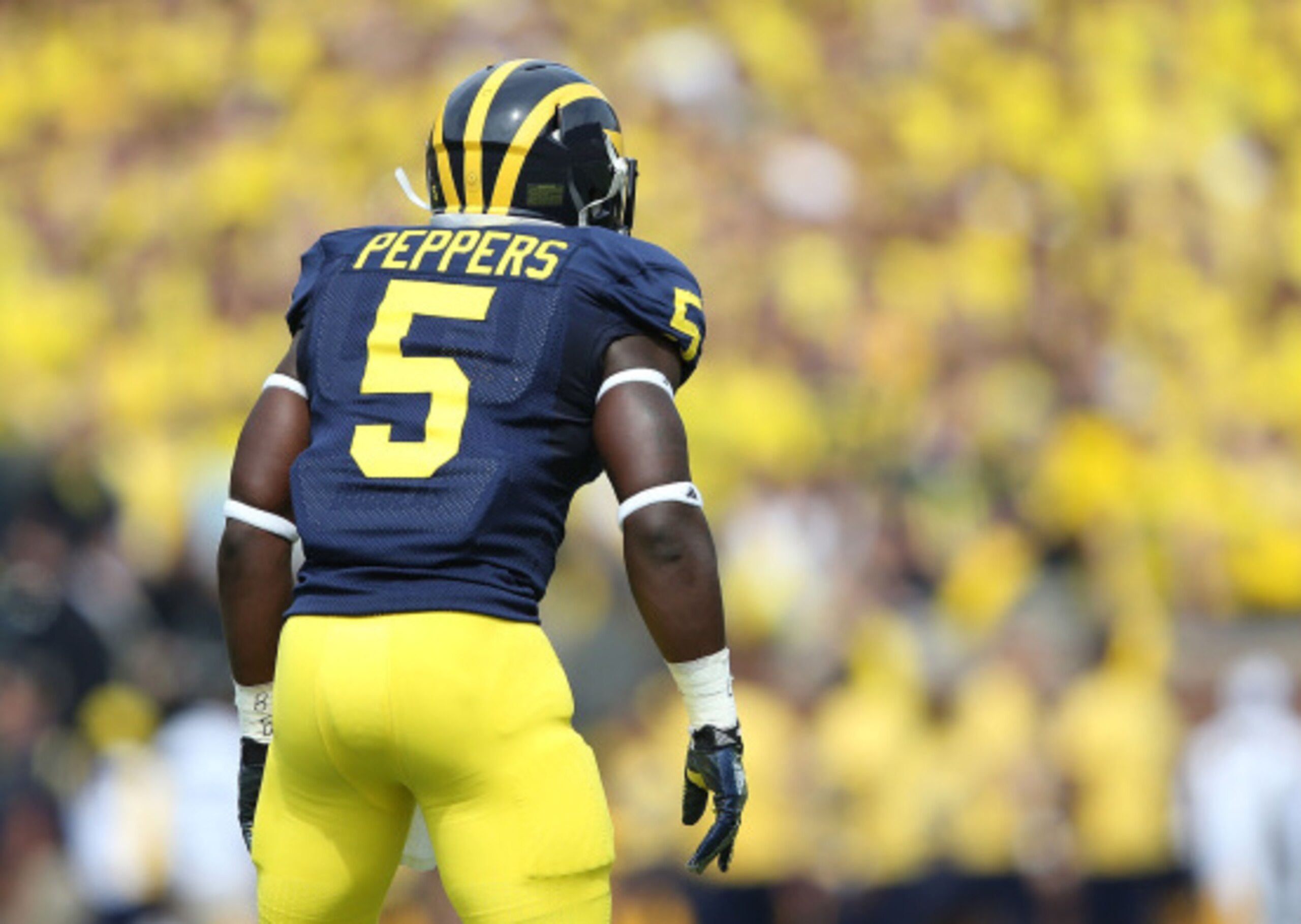
Another way to flip the field is to break off long kick returns. Well, that's not something Michigan achieved in 2014, either.
Dennis Norflett handled the job last season and averaged a modest 23.1 yards per return. Overall, the Wolverines ranked 87th in the nation. Norflett is no longer on the roster, opening the spot for someone to step in and...how about that Jabrill Peppers guy, huh?
The oft-hyped second-year talent would be a superb replacement, but should Harbaugh risk losing Peppers' expected impact on defense and possible contributions on offense by using him as a returner? Well, um, yes.
"It's exciting when someone's capable of [contributing in all three phases]," Harbaugh said, per MLive.com's Nick Baumgardner. "It means they have some real gifts athletically and they're really smart and sharp enough to understand three different systems."
Worries about injuries to kick returners are somewhat overblown. There's absolutely a real risk in running full speed into another player running full speed in the opposite direction. However, it's not more dangerous than the cumulative risk for a player who logs 50-plus snaps per game.
Freak injuries are discouraging, but they happen—randomly. Peppers has the potential to change the team's kick-returning struggles. It's worth giving him a shot to eliminate one of Michigan's weaknesses.
All recruiting information via 247Sports. Stats from cfbstats.com. Quotes obtained firsthand unless otherwise noted. Follow Bleacher Report CFB writer David Kenyon on Twitter @Kenyon19_BR.
_0.png?w=2560)


.jpg?w=2560 "Injury-stricken Seahawks signing veteran RB")
.jpg?w=2560 "2 NFL Officials Suspended")


.jpg?w=2560 "Mahomes' Wife Trolls Kubiak 💀")

.jpg?w=2560 "Viral Rams Coach Vid 🖕")