
Why the NBA's 'Small Ball' Revolution Isn't What You Think It Is
You hear it all the time. The NBA is playing smaller and smaller. But is that really true?
It's a fair question, one invoked by the league's three-point revolution. Emphasis is being placed on positionless basketball, a movement offhandedly referred to as "small ball."
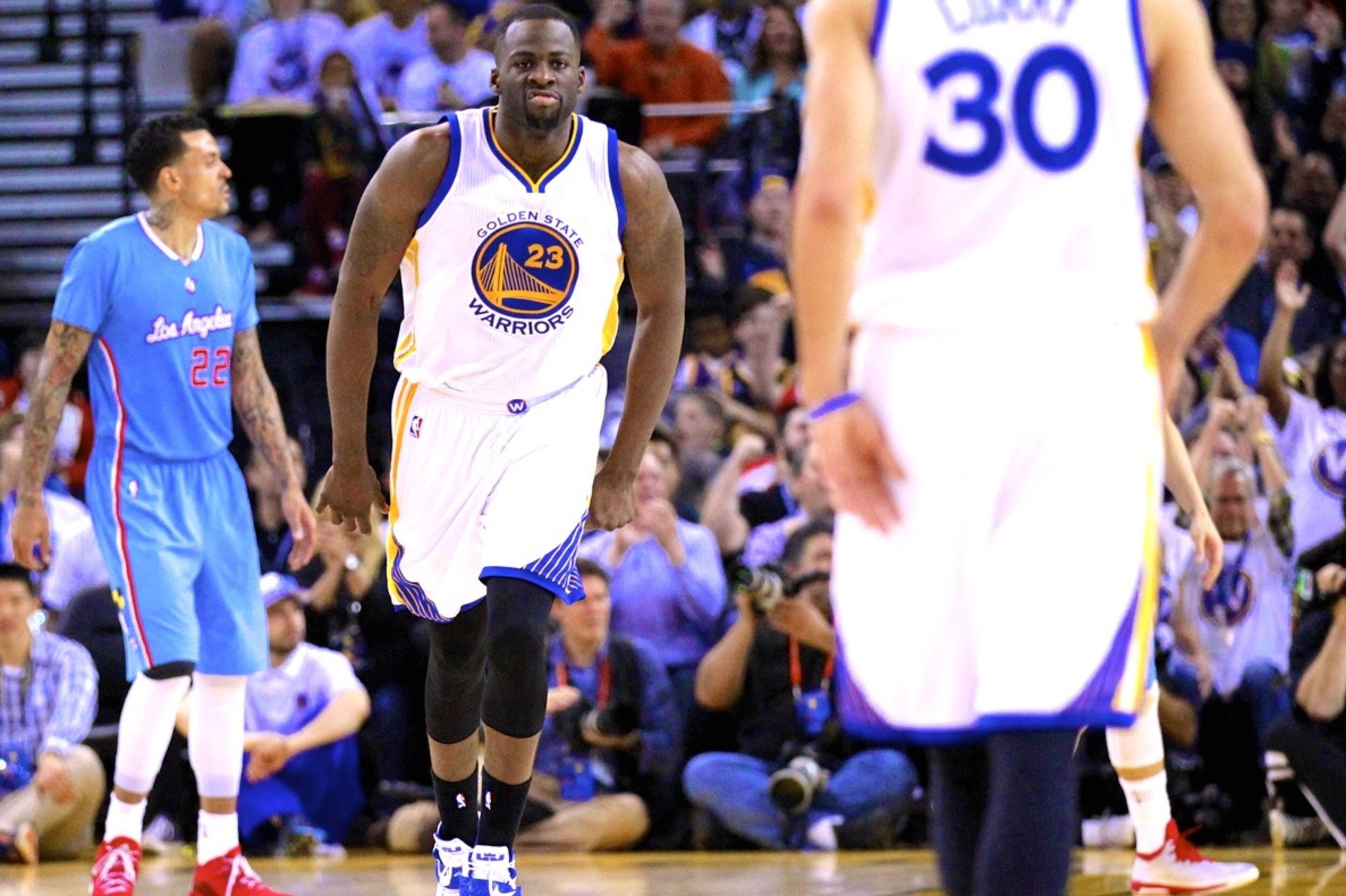
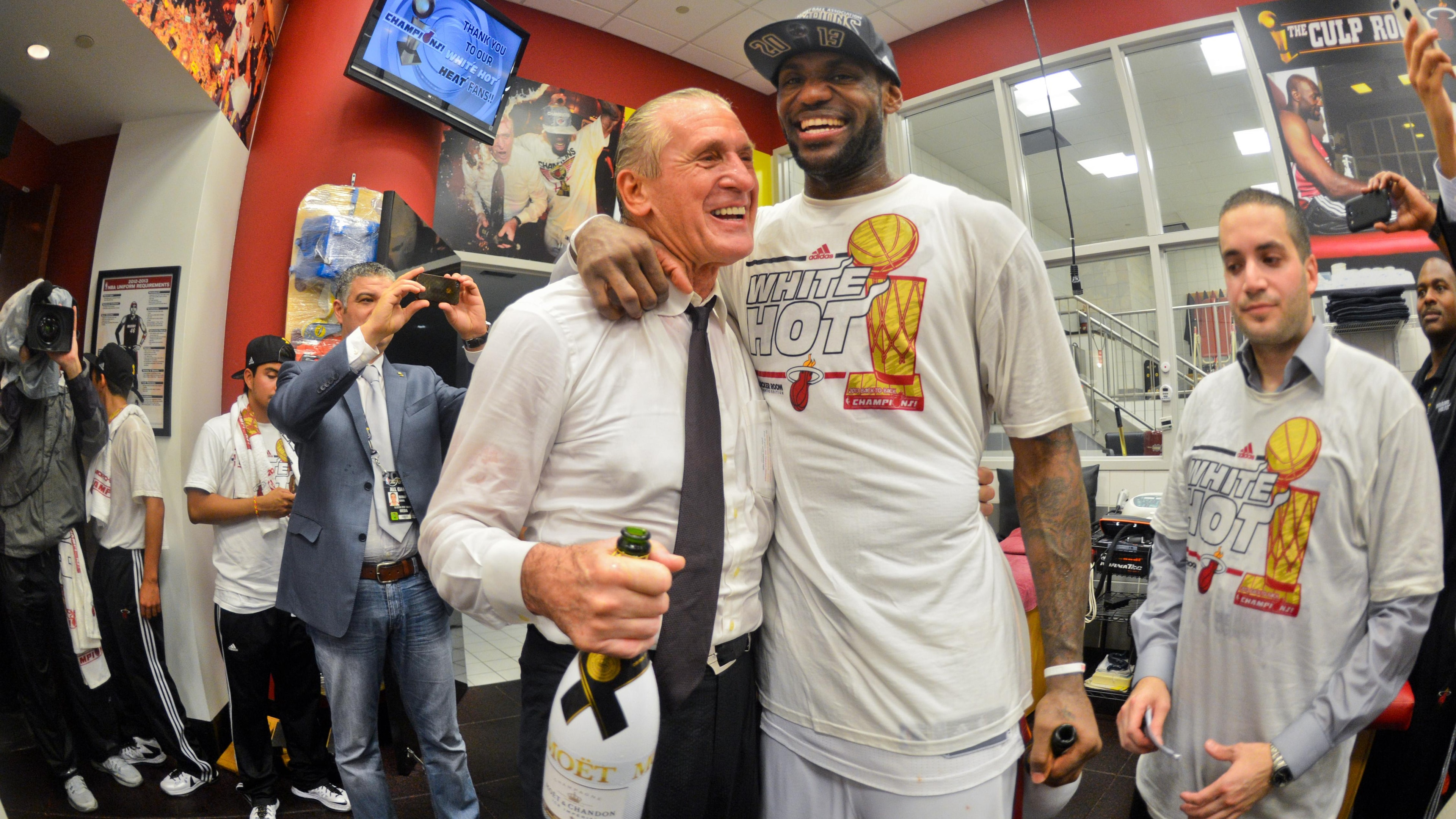
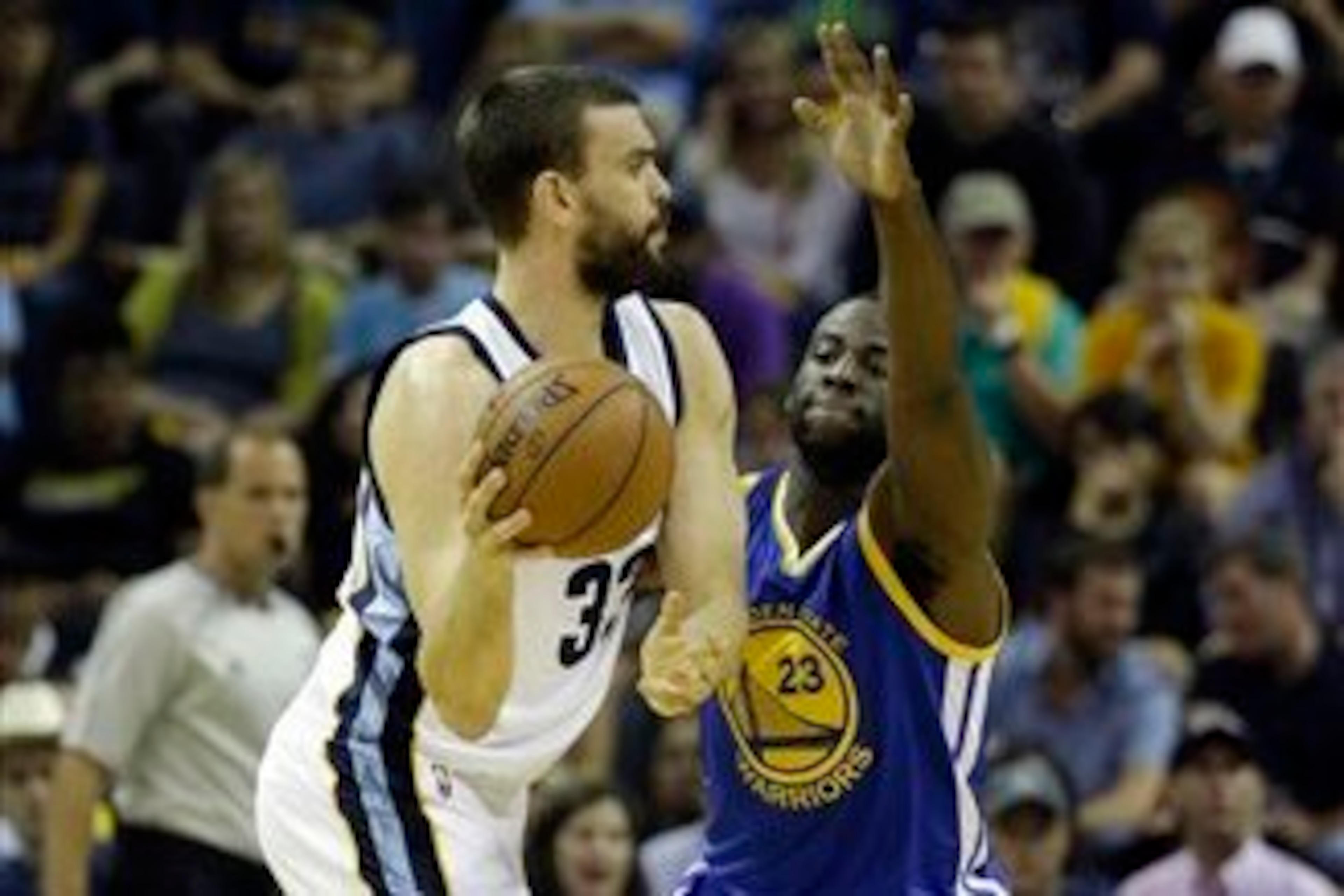
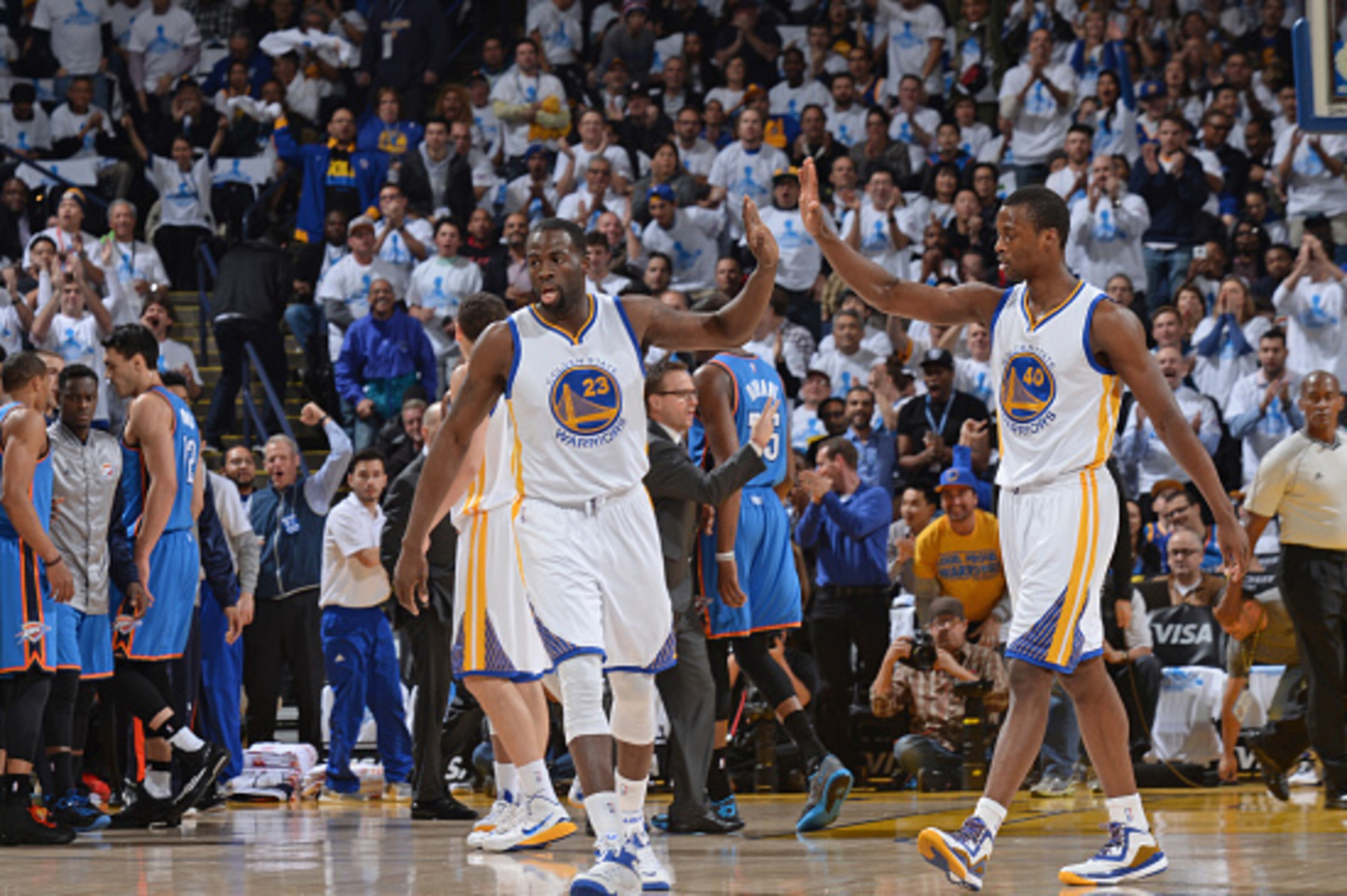
Draymond Green, who might be 6'7" when standing on his tiptoes, started three games at center for the reigning champion Golden State Warriors in the 2015 NBA Finals. P.J. Tucker, all of 6'5", spent 75 percent of his time at small forward for the Phoenix Suns last season while dipping his feet into the power forward waters every so often.
.png?w=3840)
Khris Middleton, listed at 6'7", played the bulk of his minutes at the 4 for the Milwaukee Bucks. Jae Crowder, also 6'7", logged nearly one-third of his minutes at power forward after being traded to the Boston Celtics.
Dual-point guard lineups have gone from unconventional experiments to workaday approaches. Phoenix's backcourt seldom, if ever, featured someone taller than 6'3". Jordan Clarkson and D'Angelo Russell, undersized shooting guards at their tallest, will headline the Los Angeles Lakers' backcourt next season.
Across the NBA, players are assuming roles once earmarked for those who, in the case of Green jumping center, sometimes stand five or six inches taller. That can mean only one thing: The league is indeed getting smaller.
Right?
The Perception
Viewed in the simplest form, the Association's player pool doesn't favor smaller talents. At least not any more than usual.
In each of the last 35 seasons, since 1980-81, the average height of an NBA player has been 6'7", according to Basketball-Reference.com. Prior to that, between 1962-63 and 1979-80, it was 6'6". And before that, between 1954-55 and 1961-62, it was 6'5".
If anything, it seems like the league is getting bigger. The average height for players who qualified for the minutes-per-game leaderboard last season was actually greater than 6'7" (79 inches), checking in at 79.3 inches. And over the last 10 years, while the typical height has fluctuated, the mean from last year is higher than that from 2005 (78.8):
All of those averages, when rounded to the nearest inch, would settle at 79 inches, thus explaining the appearance of uniformity since 1980—contrary to the game itself.
Skill sets have shifted. Play styles have evolved. The three-pointer went from an oft-neglected weapon to accounting for 26.8 percent of all shots that were attempted last season. The game is different. And therein lies the cause to dig deeper.
Small ball is most often associated with perimeter skill sets spilling into frontcourt ranks. Buzz phrases like "floor spacing" and "pace and space" dominate the conversation as well, and the terminology can apply to guards. But above all else, small ball implies the use of a shorter frontcourt that creates acute, unsolvable mismatches for opposing defenses.
As Grantland's Zach Lowe wrote while detailing Golden State's championship run:
"When everyone is a threat from 25 feet away, defenses stretch themselves thin across a huge chunk of territory. It’s hard for five guys to maintain integrity when they are so far from each other; the string eventually breaks, and when it does, Golden State can produce all kinds of looks — drive-and-kick 3s and jaunts to the rim ahead of scrambling defenders. The right combination of speed and shooting can beat size.
"
If the NBA is even partially falling out of love with size, there has to be some sort of change up front, at the forward and center spots...
The Reality

...And, well, there isn't.
The average height of a qualified forward has been 6'9" in each of the last 10 seasons. The average height of a center has jockeyed between 6'11" (five times) and 7'0" (five times).
Only when these numbers are broken down into inches does any sort of "real" change take place:
Centers are gradually getting shorter but at a rather insubstantial rate. We're dealing in tenths of an inch at this point, which, while a form of movement, isn't drastic enough to claim anything meaningful.
It takes a decade-by-decade look to really see any semi-significant variation at the 5 spot:
Bigs aren't accounting for a smaller portion of the NBA's player pool either. The implementation of the three-point line in 1979 paved way for today's offensive progression, and yet this systematic upheaval hasn't coincided with a shorter cast.
Just over 18 percent of qualified players stood at 6'10" or taller in 1979. That distribution, like most others, has fluttered as time wears on, but a whopping 27.7 percent of all players were at least 6'10" in 2014-15:
Last year's big-man benchmark isn't just the highest it's been since 2002. It's the seventh-largest chunk of the modern-day era and the second largest over the last 15 years.
Why So Steady?

The fairly constant presence of bigs can be both surprising and totally expected.
On the one hand, the influx of jump-shooters, specifically three-point marksmen, suggests a size depreciation. On the other, more important hand, it's not as if perimeter gamesmanship means shots aren't being taken from elsewhere.
Exactly 205,570 shots were attempted by the 30 teams combined last season, roughly 47 percent of which came from inside the paint and restricted area, according to NBA.com:
So long as offenses are trying to score around the basket, there will be a need for rim protectors. And taller players still make the best interior policemen.
Of the top 20 qualified rim protectors who contested at least three shots around the iron per game last season, only five were shorter than 6'10" and just one was shorter than 6'9", according to NBA.com.
Of the top 60, only four were shorter than 6'9".
Shorter players, then, are not in obscene demand. The NBA is not trying to purge itself of size. It's merely stressing the importance of playing a small-man's game on the offensive end, actual size of the man be damned.
Kentucky coach John Calipari, who had two bigs (Karl-Anthony Towns and Willie Cauley-Stein) go in the top six of June's draft, riffed on this ahead of the prospect pageant, per the Associated Press (via USA Today):
"I understand the small ball. Small ball is because a 6-7 guy can move his feet and hands like a guard, but now you've got a 7-footer that can do the same. In three years, if someone has two 7-footers that can move their feet, then we're going back to the twin towers.
"
Reverting back to the Twin Towers era, in the sense that offenses regress into plodding post-up vessels, would be an extreme. The league would really need to curb its three-point volume, which it won't ever do, if only because the math won't change.
Threes are worth 1.5 times more than twos. Shooting 33.3 percent from distance is the equivalent of shooting 50 percent inside the arc, the former of which is easier. The average two-point rate in 2014-15: 48.5 percent, the same as posting a 32.3 percent clip from deep. The average three-point rate last season: 35 percent.
Calipari's thoughts point more toward the small ball-ification of big men. Most of them are expected to do everything their shorter counterparts can—and that includes ripping threes efficiently and in volume, as our previous data dive found:
"The trend has been where you see taller guys working on their handle and trying to be more perimeter-type players," Cliff Robinson, the first big man to attempt 300 treys in a single season, told Bleacher Report. "When you see a Kevin Garnett do the kind of things that he can do at 6'11", it makes you want to do the same kind of things. That was the evolution: some of those [taller] guys being able to step out on the perimeter and make jumpers.
"Now, that's just the way it is."
A Familiar Future
Shot selection is most often cited as the kerosene fueling what, in theory, are exceedingly smaller lineups and, by extension, rosters. But while the increased reliance on outside shooting is indisputable, as is the diminished frequency of post-ups, the NBA isn't eschewing point-blank opportunities in demonstrative fashion.
Take the numbers from before. Around 47 percent of all field-goal attempts came near the basket last season, and that's not much different from 1996-97, which is as far as NBA.com's database goes back:
Less than a 2.5 percent drop in shots attempted inside the paint and restricted area over almost two decades is nothing. There is still a need for big bodies to score in the post, and elite-level rim protection is still best left to a tower.
There will always be teams that actually epitomize the meaning of small ball. Coaches will continue to run experiments that push the boundaries of size—such as Lakers head honcho Byron Scott planning to slot a 6'6" Kobe Bryant at power forward on occasion.
But the 2014-15 Warriors model isn't on the verge of becoming a trend, mostly because it's too darn hard to duplicate defensively, as Sports Illustrated's Chris Ballard previously explained:
"Sometimes, the 6’8” Barnes is the tallest player on the court, with 6’7” Draymond Green playing center. Sometimes all five players switch on pick-and-rolls. Sometimes they play [Andrew] Bogut alongside a bunch of skinny perimeter specialists. The Warriors will go small against small units but also against big ones, as they did in Game 2 against Houston, when Green guarded Dwight Howard straight up for stretches.
Of course, the Warriors are uniquely equipped to pull off these schemes, stocked with a bevy of long, smart defenders and a rim protector, Bogut, who cleans up a lot of mistakes when he’s in the game. Even so, the system only works if the wings can do a credible job of holding their own in the paint, both straight up and on switches.
"
Instead of imitating that which isn't meant to be routinely mimicked, the NBA is left to foster versatility. Smalls who can play big are great; bigs who can play small are equally important.
That's why six of the first 11 picks in this year's draft—Frank Kaminsky, Jahlil Okafor, Kristaps Porzingis, Cauley-Stein, Towns and Myles Turner—stand 6'11" or taller. And that's why at least four, though probably five, of those six will end up regularly incorporating jump shots into their offensive armory. It's also why a squad like the Bucks can trot out three to four guys standing 6'9" or taller and make a visible dent in the Eastern Conference.

As teams continue to stray from, though not abandon, the Marc Gasols and Al Jeffersons, there needs to be more of Porzingis and Towns, just as much as there needs to be more of Harrison Barnes and Green.
"I don't think you win a championship going solely small," Andrew Bogut said, per the Bay Area News Group's Diamond Leung. "I don't think you win a championship going solely big."
In the NBA, you win, you survive, by understanding that versatility knows no size.
Stats courtesy of Basketball-Reference.com unless otherwise cited.
Dan Favale covers the NBA for Bleacher Report. Follow him on Twitter, @danfavale.
.png?w=3840 "Cleveland Cavaliers v Los Angeles Lakers")
.jpg?w=3840 "Watch: Jerry Rice Chases After Heckler")
.jpg?w=3840 "Ranking NFL's True Franchise Players")