Why the New York Giants Must Wait to Extend Eli Manning
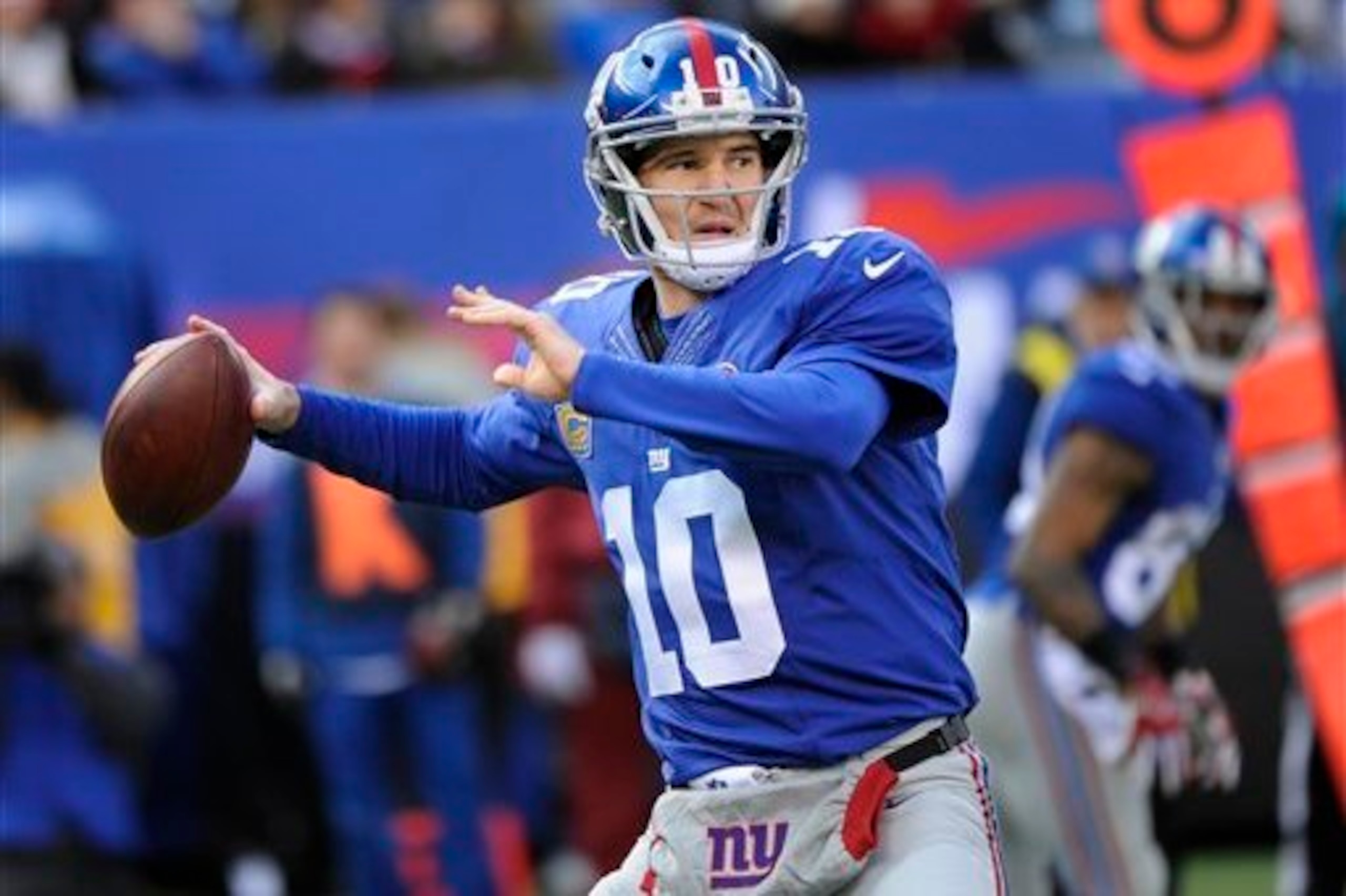
With training camp underway and the regular season quickly approaching, the New York Giants have one eye on 2015, but the other is toward the future. Whatever the future may hold for the franchise, the Giants want Eli Manning to be their signal-caller for the foreseeable future. The two-time Super Bowl MVP and winner has talked contract extension with the team, according to USA Today's Lorenzo Reyes.
The Giants' early negotiations help show that a new contract is likely about when, not if, a new deal will be made. But should the Giants invest another massive contract in Manning, especially before 2015? We believe the Giants must wait to extend Manning.


.jpg?w=2560 "Commanders Eagles Football")
There are a lot of layers to the decision to extend Manning early: take the wait-and-see approach or even allow him to leave in free agency. It’s not so much about whether the Giants can afford him; teams move mountains to afford quarterbacks. The big question for Manning is whether he can lead the Giants to the playoffs consistently.
Now, it’s not all about the quarterback. It takes a talented 53-man roster and strong coaching staff to win enough to make the playoffs. Having the right quarterback helps mask and overcome certain holes, though. Throughout Manning’s career, he hasn’t proven to be that guy like some of his competitors have.
Through Manning’s 10 full 16-game seasons thus far (that excludes his rookie season), he’s made the playoffs five times. Two of his playoff appearances were fantastic, as they ended in Super Bowl victories and Manning played the best football of his life. But the other three were bad, one-and-done performances for Manning.
It’s one thing to make the playoffs and lose. But Manning’s made the playoffs just once since 2008. Will his Super Bowl heroics in 2007 and 2011 be worth paying for in the next four or more years? Let’s see what it will cost if the Giants opt for that route.
The Money
CBS Sports writer Joel Corry tweeted that he believes Manning will be rewarded with the biggest contract for any quarterback on a per-year basis:
"Giants made Eli Manning the NFL's highest paid at $16.25M per year on 2009 extension. Don't be surprised if the same happens in new deal.
— Joel Corry (@corryjoel) July 24, 2015"
If Corry is correct, then the Giants will commit approximately $22 million a year to Manning. That number rivals Aaron Rodgers’ contract, per Spotrac, which has the highest annual average salary for any quarterback.
A deal like that would severely cut into the Giants’ available salary cap in the coming years. For 2016, this wouldn’t be too damaging, as the Giants are projected to have about $52 million in space before a Manning extension, according to Over the Cap. A big extension would still leave at least $30 million to sign free agents and draft picks, depending on the way Manning’s deal is structured.
That extension could affect Jason Pierre-Paul and Johnathan Hankins in the future, though. If Pierre-Paul is able to recover from his hand injury and continue his great play, then he must be re-signed. And Hankins is another building block on a defense that is lacking such pieces.
It would be irresponsible to say the Giants cannot afford to pay Manning handsomely. Their cap situation is very healthy, but it's not because of fiscal responsibility. The Giants’ roster lacks talent, and it’s reflected on their cap sheet.
With Manning hitting 35 years old at the tail end of the 2015 regular season, the Giants should feel pressured to surround him with quality veterans. That means smart free-agent additions and re-signing key talent. It’s just hard to inject a huge amount of talent in free agency, as recent free-agency splurges haven’t worked out for other franchises.
The bottom line financially is that Manning is aging and the team must supplement the roster to be more competitive in Manning’s handful of final playing years. If the Giants want to rebuild, then allowing Manning to walk is the best decision. Finding their next franchise quarterback wouldn’t be an easy task, though.
On-Field Play
More important than the financial breakdown is how well Manning is playing and how well he will be playing in the coming years. Below is a breakdown of Manning’s 2014 season compared to the rest of his career, courtesy of Pro-Football-Reference.com:
| 2014 | Career Average | |
| Completion Percentage | 63.1 | 58.4 |
| Yards | 4,410 | 3,534 |
| Touchdowns | 30 | 23 |
| Interceptions | 14 | 17 |
Just looking at the 2014 raw statistics, there would be hope that Manning has suddenly become more efficient than ever before, and he is taking care of the ball better. That wasn’t the case, though. The reality was the additions of Ben McAdoo as offensive coordinator and Odell Beckham Jr. at wide receiver made an enormous impact on Manning’s stats.
McAdoo was largely unheralded as an addition, but he was one of the NFL's best offensive coordinators last year. The Giants suffered numerous injuries to their offensive personnel group once again, but McAdoo was able to game-plan and overcome the limited talent available.

Instead of focusing on inefficient, downfield strikes, McAdoo worked horizontally more and had Manning get rid of the ball quickly. Manning had the fifth-fastest throwing time in 2014, per Pro Football Focus. Before McAdoo, Manning was closer to middle of the pack every year that Pro Football Focus has tracked that information.
The quick releases ensure more completions than vertical offenses. There is less risk on curl routes, slants and crossing routes than there are on comebacks and dig routes. This largely contributed to Manning’s interception total dropping by 13 in one season.
Looking deeper at Manning’s throws is critical. He had a career-high completion percentage of 63.1 in 2014. But that number was largely inflated by screens and dump-off passes behind the line of scrimmage.
According to Pro Football Focus, a whopping 78 passes went at or behind the line of scrimmage. Manning completed 86 percent of those attempts, which greatly altered his overall completion percentage. Removing these throws would drop Manning’s completion percentage to 59.6 percent.
That’s right in line with his career average of 59 percent.
Manning did play better in 2014, but he didn’t necessarily get better. He won’t transform who he is at 34, either. McAdoo and the presence of a true No. 1 receiver in Beckham were massive upgrades and helped Manning seem more efficient.
Conclusion
So, what does this really all mean? The Giants’ front office needs to get to work and continue adding talent around Manning. Eli has shown that he’s not going to be enough for this franchise to reach the playoffs every year. He needs a very good surrounding cast.
That’s not as much of a knock as it sounds. Manning fits in with all but a few very select NFL quarterbacks. Of those few elites, Drew Brees missed the playoffs last season. It’s a team game, and very few players have a transcendent effect on the outcome every single week.
His surrounding cast and their health are often excuses for Manning. But that really must go to the front office and coaching staff for failing to change how they evaluate players and train them. If different players at one position keep suffering injuries, then something must change.
While the Giants seem willing to extend Eli Manning’s contract right now, my advice would be to wait until after 2015 to reward him. His limitations as far as carrying an average team will force the Giants to build a roster that just doesn’t seem possible in the near future. The current state of the Giants’ roster is not deep or talented enough to compete for a Super Bowl.
Treading water as a mediocre team does very little for it. That is not a recommendation for the Giants to tank for a high draft pick, either. We know that is not a flawless strategy.
But starting the rebuild with a new quarterback sooner than later gives the Giants a lot of cap space and clear direction moving forward. By forcing Manning to produce in 2015 before giving him a new contract, the Giants may get one of those special seasons from Manning that leads to a Super Bowl victory.
And if Manning fails to improve his actual efficiency and misses the playoffs once again, it would be much easier to prepare for the future.
All stats used are from Sports-Reference.com.
Ian Wharton is an NFL Featured Columnist for Bleacher Report.
.jpg?w=2560 "Chiefs Dolphins Football")
.jpg?w=2560 "Cardinals Giants Football")