

Predicting Every Power 5 College Football Team's MVP for 2015 Season
College football is as much a team sport as any other, and schools are particularly dependent on the efforts of more than just a few individuals in order to be successful. But above all others, they all have that one guy whose contributions seem to matter more than the rest.
These would be the MVPs, the players who have the most impact on a team's overall performance for the season. They might not necessarily be the best or most talented players, but they are the ones whose absence would have the greatest effect on the team.
With the 2015 college football season fewer than six weeks away and teams about to head back to the field for preseason training camp, we've predicted the MVP for every team in the five power conferences as well as top independents BYU and Notre Dame. Check out our picks, and then add your own predictions in the comments section.
Alabama
1 of 66
Derrick Henry, Jr., RB
Alabama's uncertainty at quarterback heading into the 2014 season was tempered by the knowledge that whoever won the starting job was going to have a superstar in Amari Cooper to throw to. This year the Crimson Tide's new passer can take solace in knowing that he's got a beast of a running back to hand off to.
Henry was Alabama's leading rusher last year, at 990 yards, despite splitting carries with T.J. Yeldon (and actually getting fewer touches). But he averaged 5.76 yards per carry, and thanks to a by-committee approach to this point in his career, Henry hasn't had much wear on his body, though at 6'3" and 241 pounds, it's the potential tacklers who are taking the bulk of the abuse.
The Tide also have Kenyan Drake and some young ball-carriers to include in the run game, but it will be Henry leading the charge. And until Alabama's QB situation gets settled, he's the focal point of the offense and should remain as such throughout the season.
Arizona
2 of 66
Anu Solomon, So., QB
Scooby Wright is unquestionably Arizona's best individual player, having led the nation in several defensive categories and winning three major awards in 2014. But the linebacker's great play won't be as important to the Wildcats' success this year as what his team's quarterback does after a promising but frustrating first season.
Solomon was equal parts masterful and unnerving for Arizona as a redshirt freshman, throwing for 3,793 yards and 28 touchdowns with just nine interceptions on 540 attempts. But Solomon took far too many sacks and wasn't accurate, completing only 58 percent of his throws, showing his youth too often in critical moments.
Better decision-making from Solomon will enable Arizona to maintain what it did last season, when it won the Pac-12 South and reached 10 victories. If he doesn't progress, the Wildcats take a step back.
Arizona State
3 of 66
D.J. Foster, Sr., WR
Foster was a 1,000-yard rusher for Arizona State last season, but he was just as valuable as a pass-catcher as he was when carrying the ball. That made the decision to convert him into a slot receiver for his senior year a no-brainer and not just because it would help the Sun Devils shore up their thin receiving corps.
In three seasons Foster has proved a reliable target on routes, with 163 receptions, including 62 in 2014. That was second only to Jaelen Strong, who turned pro and left ASU without a go-to wideout for this season.
Foster didn't have a 100-yard receiving game last year, but he did have 50-plus yards on nine occasions while also rushing for 1,081 yards. If ASU needs him to run the ball again this season, he can switch back and forth between the positions and become even more essential to its plans.

Arkansas
4 of 66
Brandon Allen, Sr., QB
For the second year in a row, Arkansas will field an NFL-sized offensive line and give the ball to a pair of 1,000-yard rushers as often as possible. And its defense, though somewhat rebuilt, will again be a pain to deal with.
Yet in order for the Razorbacks to be more than just a good team that's mired in the bottom half of the SEC, they need their senior quarterback to continue his progression as a leader and performer. We saw Allen make steps in this direction in 2014, but the development must continue for Arkansas to win.
Allen threw for 2,285 yards and 20 touchdowns with just five interceptions in 339 attempts last year, but he only completed 56 percent of his throws. He doesn't have the best wide receiver corps to work with, but he does have stud tight ends. And if he can become more efficient in clutch situations—he completed only 43 percent of his throws in the fourth quarter in 2014, and three of his five picks came during that period—then the Hogs will contend for the West Division.
Auburn
5 of 66
Carl Lawson, So., DE
The difference between the Auburn team that reached the BCS title game after the 2013 season and the one that struggled to an 8-5 record last year wasn't on offense, as that unit was equally effective in each season. The same can't be said for the Tigers defense, which became a major liability in 2014.
The absence of Carl Lawson from the defensive line had a big role in that drop. Following a strong freshman season when he had four sacks and 7.5 tackles for loss, Lawson was expected to be the anchor of Auburn's defensive line before he injured his knee and needed surgery. Without him, Auburn's line failed to get much pressure on the quarterback, and that caused the rest of the defense to struggle.
"To have him back is a very good thing," Auburn coach Gus Malzahn said, per John Zenor of the Associated Press (via Yahoo Sports).
If Lawson is able to play (and stay) at 100 percent, he'll be the driving force behind Auburn's defense and a big part of a push for another title run.
Baylor
6 of 66
Shock Linwood, Jr., RB
Baylor has been—and will continue to be—an offense that revolves around an uptempo passing game, with new starting quarterback Seth Russell very likely to extend the Bears' run of prolific passers under Art Briles. But the run game remains a key to having proper offensive balance, and Linwood's development the last two years has him primed to be the focal point in 2015.
Linwood ran for 1,252 yards and 16 touchdowns last season, following up a freshman performance of 881 yards and eight TDs. That already puts him ninth on the school's all-time rushing list, and with 1,542 yards, he'll be No. 1 at the end of the season.
The single-season school record is 1,547, set in 2011 by Terrance Ganaway.
Boston College
7 of 66
Jon Hilliman, So., RB
Coach Steve Addazio has had to overhaul his offense each of the past two seasons, but one constant has been a push to maximize the run game based on the best personnel available. That was 2,000-yard rusher Andre Williams in 2013 and mobile quarterback Tyler Murphy a year ago, and this time it will be Hilliman.
As a freshman, Hilliman had a solid campaign with 860 yards and 13 touchdowns as the primary ball-carrier when Murphy didn't keep it himself. His per-carry average of 4.08 wasn't great, but he scored 11 times in the red zone and had three 100-yard games.
The 6'0", 215-pound Hilliman is one of just three offensive starters back this year, and he'll be running behind an all-new offensive line. His experience from a year ago is huge and should make him very valuable.
BYU
8 of 66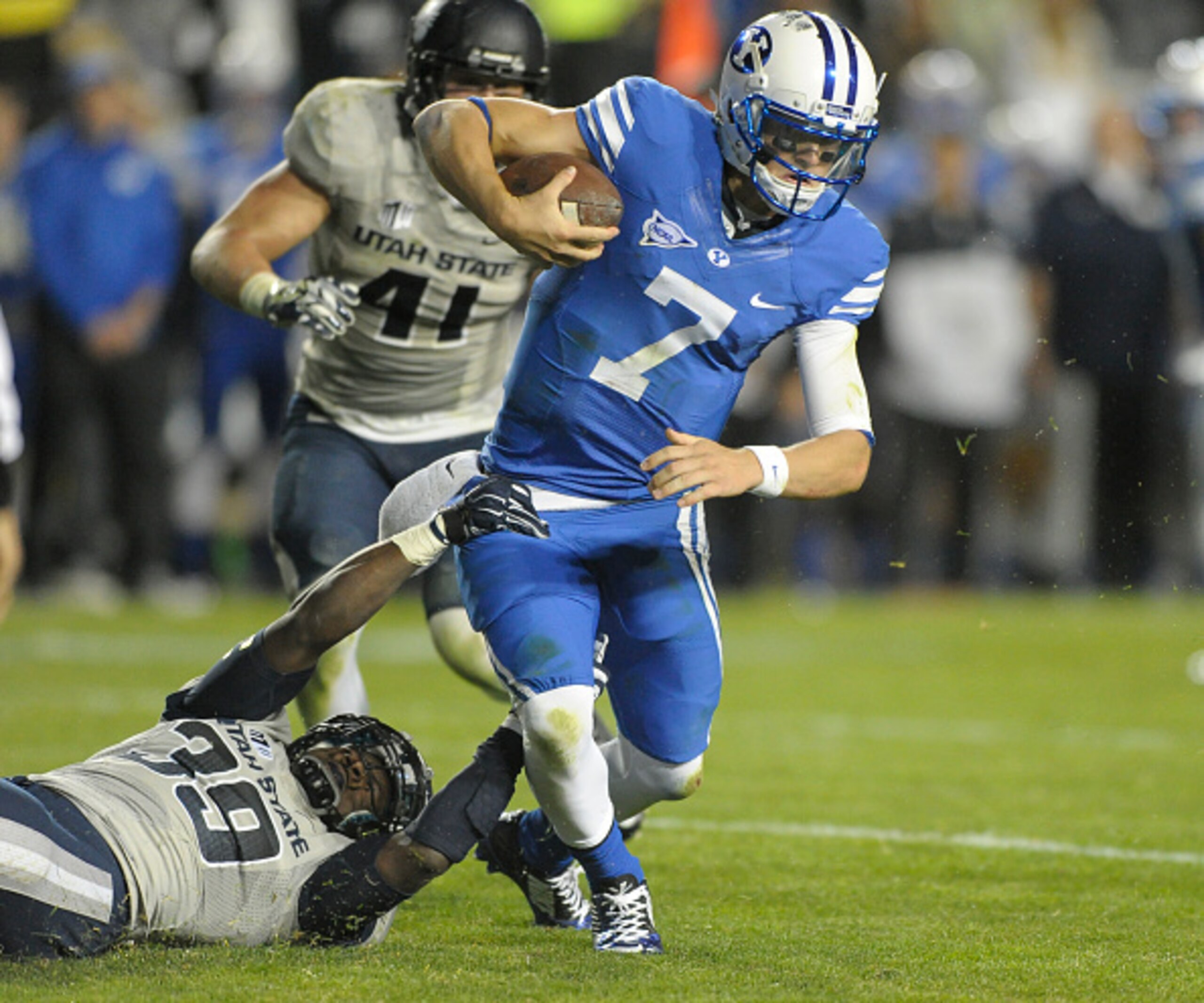
Taysom Hill, Sr., QB
BYU's 2015 schedule is loaded with power-conference opponents, opening at Nebraska and also facing Michigan, Missouri and UCLA along the way. The Cougars had big wins over power opponents last year by beating Texas and Virginia to pace a 4-0 start, with Hill dominating in a way that made him a dark-horse Heisman Trophy contender.
Then a broken leg suffered in BYU's fifth game ended his season and completely changed how the Cougars looked on offense. They went 8-5 but just weren't the same.
Now Hill is back, and assuming he's able to move as well as he did en route to more than 2,100 rushing yards in his career, he'll again be getting Heisman hype.
California
9 of 66
Jared Goff, Jr., QB
Without a great quarterback, an Air Raid offense is nothing more than one that throws the ball a lot and hopes for the best. Goff has been much more than just a frequent thrower; he's been one of the most productive passers in the country the past two seasons.
Goff has thrown for more than 7,400 yards with 53 touchdowns, including 35 strikes last season when California improved from 1-11 to 5-7. Goff was only picked off seven times on 509 pass attempts, completing at a 62 percent clip.
Cal's defense remains a major liability and thus makes it so the Golden Bears have to win high-scoring games on a weekly basis. Goff's continued development will make their offense even more potent than it's been, and he'll be the reason they make a bowl game in 2015.
Clemson
10 of 66
Deshaun Watson, So., QB
Only injuries kept Watson from having one of the best freshman seasons in ACC history last year, but after undergoing knee surgery and tirelessly rehabbing for several months, we're about to see what the explosive athlete can really accomplish.
In 2014 Watson was nearly unstoppable when he was able to stay on the field, amassing 1,666 yards of total offense and 19 touchdowns in eight games. Only six of them saw him get extended time on the field, as a broken hand knocked him out for a month and then a torn ACL shelved him for two games, including the Belk Bowl.
Watson's health is essential for a team that has an exciting crop of offensive weapons but will be very inexperienced on the offensive line and throughout its defense. The ACC media is convinced he'll be able to avoid further injury, having picked Watson to be the conference's Player of the Year.
Colorado
11 of 66
Nelson Spruce, Sr., QB
Spruce doesn't get a lot of credit for his work because he's not a 6'4" receiver and doesn't stretch the defense. Instead, he keeps drives alive by being the target whom quarterback Sefo Liufau can always turn to knowing that Spruce will do whatever it takes to make the catch.
We saw this plenty in 2014, when Spruce had 106 receptions for 1,198 yards and caught 12 touchdowns. All of those numbers are more than twice what any other Colorado player had last year.
Spruce had four games with at least 10 catches, including one in which he had 19 receptions for 179 yards and three TDs in an overtime loss to Colorado. His 11.3 yards-per-catch average is all that's keeping him from getting more notoriety, but he remains the Buffaloes' most important asset.
Duke
12 of 66
Jeremy Cash, Sr., S
Cash likely would have been drafted highly had he turned pro after the 2014 season, but instead he opted to give his all to Duke for another year. If he's able to contribute in the same way as last fall, the Blue Devils will be battling for their second trip to the ACC title game in the past three years.
The 6'2", 205-pound Cash was one of three Duke players with more than 100 tackles, taking down 111 players while registering four forced fumbles, 5.5 sacks and 10.5 tackles for loss. He shined at the line and in coverage, breaking up seven passes and recording two interceptions, earning All-American honors for the second year in a row.
Duke's entire secondary is back this season, making it one of the team's strengths. But Cash stands out from that impressive group for his all-around defensive contributions.
Florida
13 of 66
Vernon Hargreaves III, Jr., CB
With so few returning pieces to work with on offense, it's hard to say what we'll see from Florida in its first season under Jim McElwain. It could very well be a season that's similar to those when Will Muschamp was in charge, where defense carries the team.
And Vernon Hargreaves figures to be doing plenty of that carrying all himself, as the nation's top shutdown cornerback will make it so the Gators don't have to worry about one side of the field.
Hargreaves has intercepted four passes and broken up 24 in his first two seasons, numbers that would be higher if opponents tried to throw his way more often.
Florida State
14 of 66
Jalen Ramsey, Jr., DB
With so many key players from the two-year run that Florida State had in 2013-14 no longer around, so much emphasis is being placed on the newcomers and new stars for the Seminoles this year. But one of the top holdovers will end up being the one who makes the biggest impact, and it will be a huge one.
Ramsey, who could be the top defensive back taken in the 2016 draft, is likely to be one of FSU's starting cornerbacks this season after handling the safety position masterfully last year. The Seminoles had both of their top corners drafted in the spring, and Ramsey's presence is needed in the secondary more in coverage than as a hitter.
Despite 80 tackles, 9.5 tackles for loss, three sacks and two interceptions from the safety spot in 2014, Ramsey will go where he's needed and be FSU's most important individual player this season.
Georgia
15 of 66
Nick Chubb, So., RB
Georgia doesn't have the luxury of knowing it could lose its best player midway through the season and have someone just as good—if not better—step up and take over. That's because Chubb wouldn't be available to replace himself, much like he did in 2014 after Todd Gurley became unavailable after five games.
Chubb was a highly regarded freshman, but he wasn't getting much action last year behind Gurley. But when Gurley got suspended (and later lost for the year with a knee injury), there was no drop-off in Georgia's running production. He topped 100 rushing yards in every game, capped by a 266-yard, two-touchdown performance in the Belk Bowl against Louisville and its strong run defense.
With five games of 20 or more carries, Chubb showed he can handle a heavy load, and he probably will need to do so far more in 2015 with Georgia yet to identify a quarterback. It's not a bad problem to have, not with the 5'10", 228-pound Chubb in the backfield.
Georgia Tech
16 of 66
Justin Thomas, Jr., QB
Georgia Tech's nearly unstoppable triple-option run game had several people working together to produce more than 342 rushing yards per contest in 2014, but none was more integral than Thomas. He was the Yellow Jackets' top gainer, with 1,086 yards, and he's also the only one of their top five gainers who is back this season.
Thomas makes on-the-fly decisions for the triple-option, choosing whether to give it to one of his many backs or keep it himself. He was masterful in making those choices last year, and that helped Tech win the ACC Coastal Division and claim the Orange Bowl over Mississippi State.
With all-new players around him, Thomas again will be tasked with knowing what to do and when to do it. Expect him to excel yet again and have the Yellow Jackets in the hunt for another division title.
Illinois
17 of 66Jihad Ward, Sr., DL
After a solid first season in Illinois' program, the former junior college transfer is ready to dominate on a defense that returns seven starters but needs to be much stronger in order for the Fighting Illini to be competitive.
Illinois was 112th in total defense in 2014, allowing at least 24 points in 10 different games, but Ward wasn't at fault for that. He had 8.5 tackles for loss, three sacks and two forced fumbles as well as two fumble recoveries.
At 6'6" and 295 pounds, Ward is a force in the middle who will be key to Illinois making its mark on defense.
Indiana
18 of 66
Jordan Howard, Jr., RB
New uniform, same role for Howard. After being the top offensive weapon for an explosive UAB team in 2014, Howard is now hoping to be the same thing for Indiana this year following his transfer from a program that was dissolved (but is now slated to return to action in 2017).
Howard ran for 1,587 yards and 13 games last season, averaging 135.6 yards with six TDs in five contests against teams that went bowling that season.
Indiana is in dire need of a go-to player after 2,000-yard rusher Tevin Coleman left early for the NFL, and if Howard can come close to matching his production against a Big Ten slate, then the Hoosiers may return to a bowl for the first time since 2007.
Iowa
19 of 66
C.J. Beathard, Jr., QB
He only has one career start, but there was something that Iowa coach Kirk Ferentz saw in Beathard last year that prompted him to put the backup ahead of starter Jake Rudock on the depth chart after the 2014 season. This led to Rudock transferring from the program and means Beathard has the gig all to himself this year.
In order for Iowa to have an effective offense it needs efficient quarterback play, something that hasn't been the case the last few seasons. Beathard only completed 56.5 percent of his passes in 2014, with five touchdowns and two interceptions, but he's the key to success this year.
Iowa State
20 of 66
Sam B. Richardson, Sr., QB
Iowa State hasn't had a 3,000-yard passer since 2002, when Seneca Wallace threw for 3,245 yards and added another 437 rushing yards and eight touchdowns. The Cyclones won seven games that season and haven't topped that mark since.
Richardson threw for 2,669 yards last year, with 18 touchdowns, adding 421 rushing yards and three scores, and despite ISU's 2-10 record, he was one of the most consistent players on the field. Heading into his second year as the team's full-time starter, he's the veteran it needs to try to get back on track.
Kansas
21 of 66
Ke'aun Kinner, Jr., RB
There are so few players coming back for Kansas who contributed significantly in 2014 that it's almost a guarantee the team's MVP this season will be a newcomer. The edge goes to Kinner, a junior college transfer from Navarro College in Texas whom 247Sports rated as the fifth-best JUCO running back prospect of the 2015 class.
The 5'9", 180-pound Kinner is one of eight JUCO players Kansas signed in 2015 and the one who has the best chance to make an instant impact. That's because the Jayhawks dismissed leading rusher Corey Avery, and no other player returns with more than 399 yards from 2014.
Kansas State
22 of 66
Charles Jones, Jr., RB
Kansas State returns just six offensive starters from last year's team, but none of those were the big playmakers. Jones should have been in that category, but he struggled running the ball and only averaged 4.06 yards per carry.
The Wildcats can't have the same thing happen this year if they want to avoid a down season. Instead they'll need Jones to be the driving force on offense, tapping into the running ability he showed with 13 touchdowns on 48 red-zone carries.
Great near the goal line, Jones is capable of being good all over the field, and K-State will need that from him in this transitional year that features new starters at quarterback and receiver.
Kentucky
23 of 66
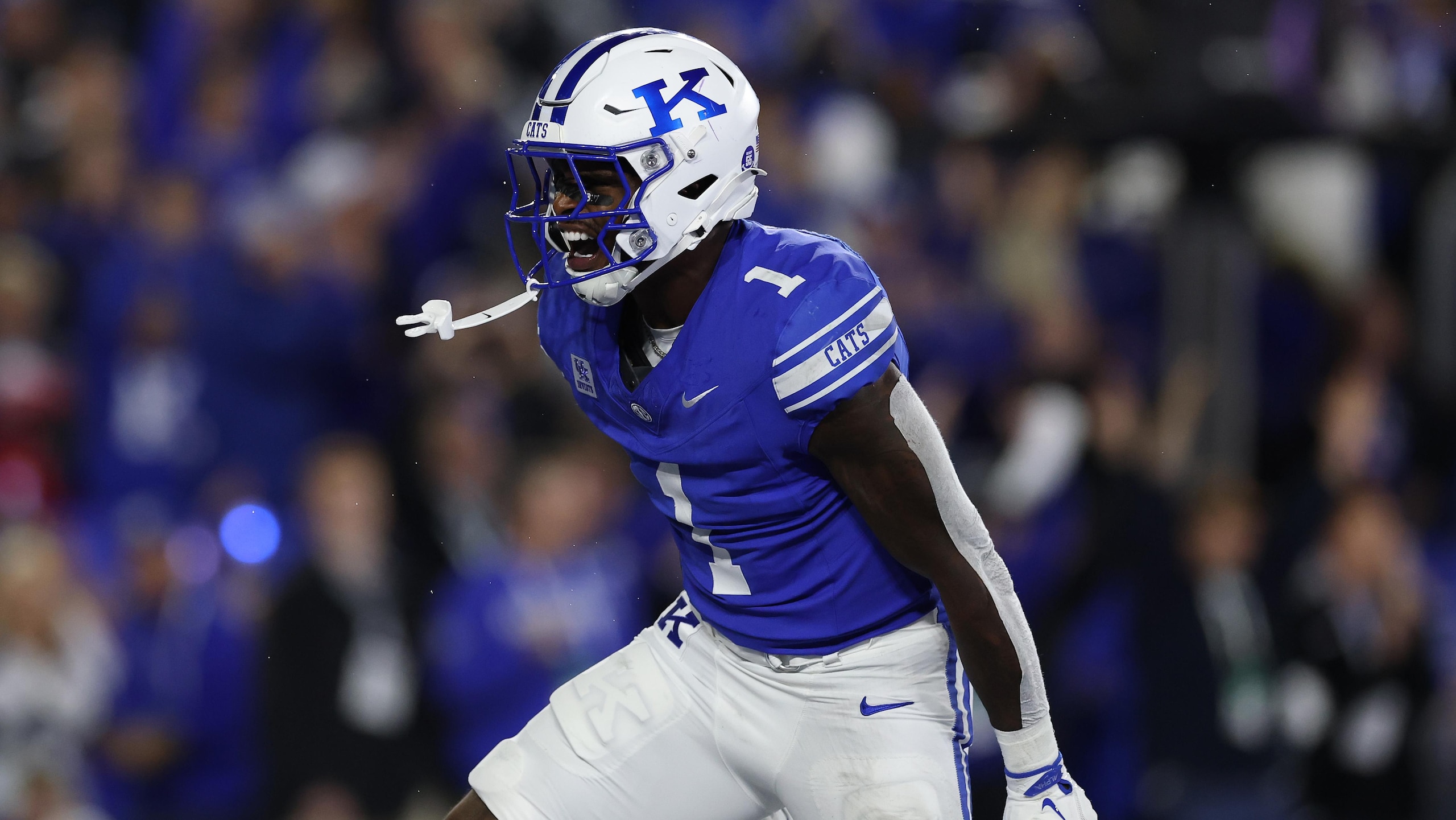
Josh Forrest, Sr., LB
Breakdowns on defense contributed significantly to Kentucky's second-half slide in 2014, when it dropped six in a row after a 5-1 start and failed to make a bowl game. The Wildcats allowed 471 yards and nearly 44 points per game during that skid, despite Josh Forrest performing so well in the middle.
Forrest is the top returner from that defense, as standout linemen Bud Dupree and Za'Darius Smith have moved on, which makes the 6'3", 255-pound senior the focal point of the unit. Improvements on that side of the ball are necessary for Kentucky to be able to get over the hump in the SEC, and Forrest is the player who will have the most impact on that.
Originally a wide receiver, Forrest converted to defense during a redshirt year in 2011 and has been constantly improving ever since. He had 110 tackles last season and shouldn't have any problem topping that this fall.
Louisville
24 of 66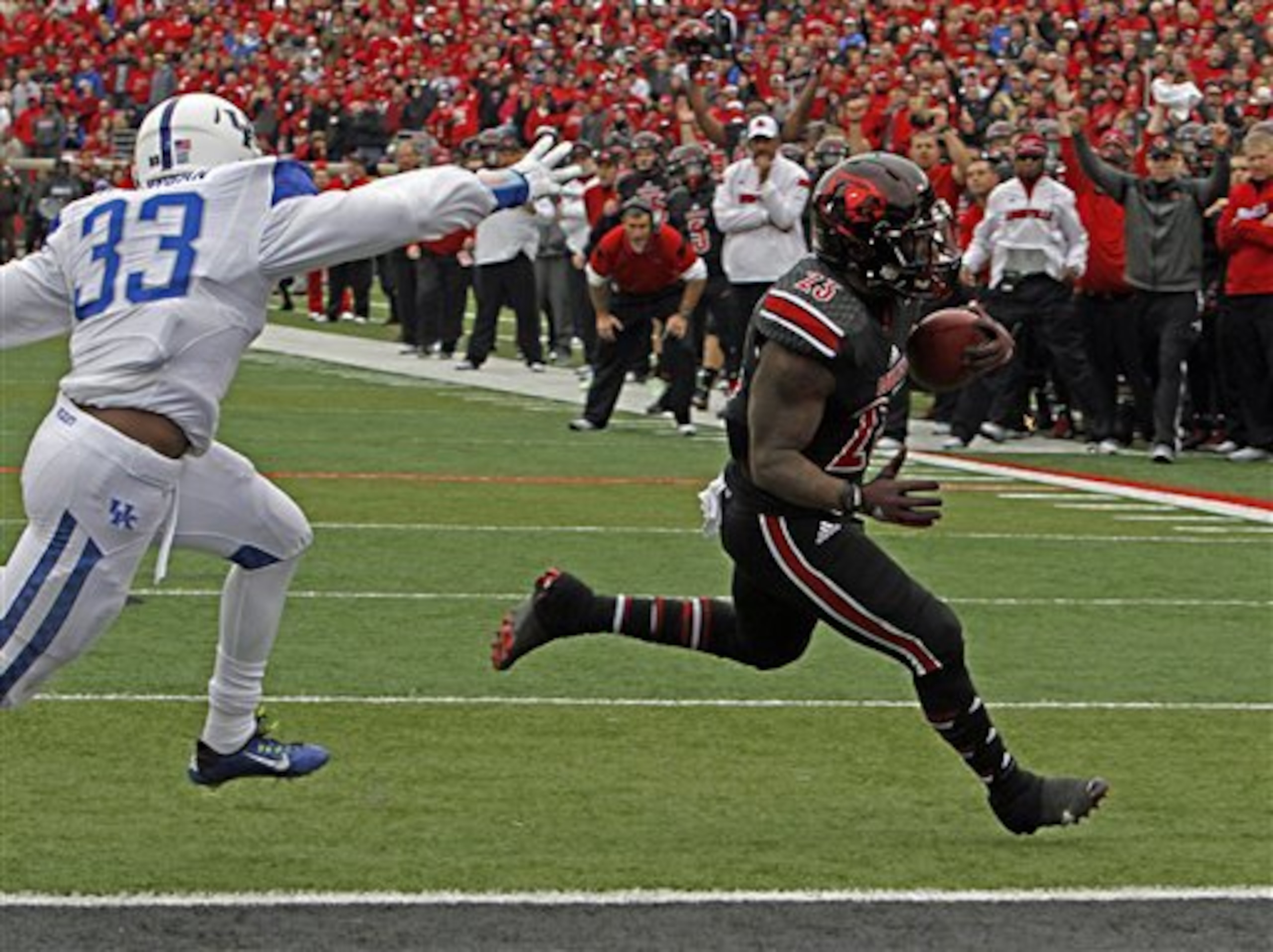
Brandon Radcliff, Jr., RB
He was in and out of the lineup for Louisville last season, but when Radcliff got the call as his team's primary running back, good things happened.
Radcliff's three 100-yard games in 2014 came during Cardinals wins, including the upset victory at Notre Dame when he ran for 136 yards and a touchdown on 17 carries. For the year he had 737 yards and 12 scores, with 11 of those coming in Louisville wins.
Bobby Petrino's teams tend to have great quarterbacks, but he's had some good running backs along the way as well. Radcliff has a shot at being one of the best.
LSU
25 of 66
Leonard Fournette, So., RB
LSU needs to find a quarterback who can consistently perform and not be a liability. It also must continue to get solid production on defense, a perennial strength but one that no longer has coordinator John Chavis calling the plays.
There's no uncertainty surrounding Fournette, though, instead even more hope and promise than when he arrived in Baton Rouge last summer as the top recruit in the nation. He set LSU's freshman rushing record almost on pure talent alone, having had little time to learn the playbook or build up strength and endurance.
Now he's had an entire offseason to spend in the weight room and the practice field, meaning he could be set for a massive season and one that will dictate the Tigers' year.
Maryland
26 of 66
William Likely, Jr., DB/KR
Maryland has plenty of uncertainty on offense heading into 2015, but there's not such a situation with the Terrapins defense or special teams thanks to Likely. He was a stalwart in both areas last year and should be again this season.
Likely averaged 31 yards on kickoff returns last year, bringing one back for a touchdown, and he also scored on a punt return. Likely added two interception return TDs among his six picks while also posting 83 tackles with nine pass breakups, four tackles for loss and a sack.
If the Terps are hurting for a receiving weapon this season, they might want to give the 5'7", 175-pound Likely a look in the slot based on how he handles the ball in the open field.
Miami (Florida)
27 of 66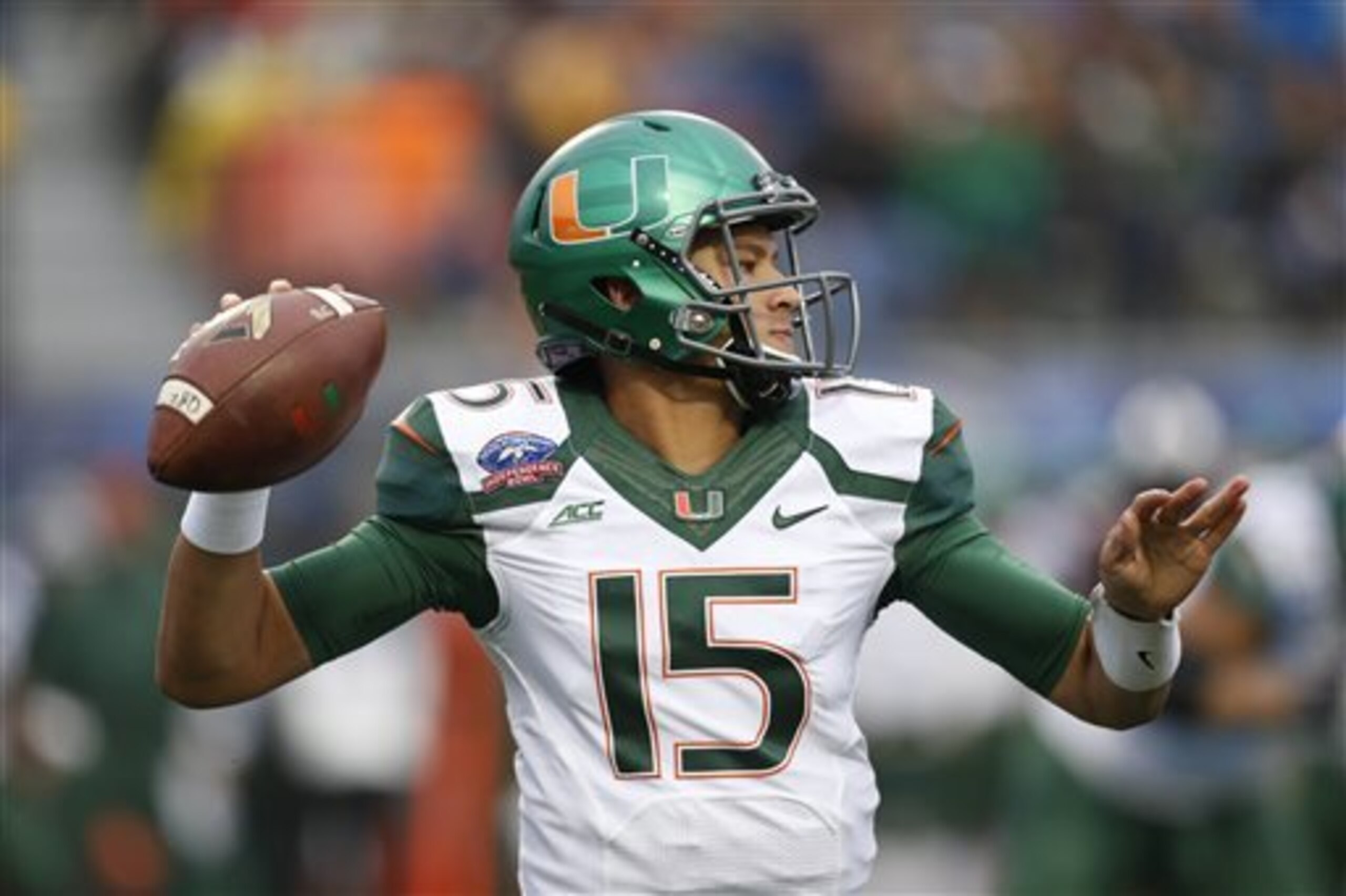
Brad Kaaya, So., QB
After winning the starting quarterback job as a true freshman, Kaaya started all 13 games for Miami last season and did far better than you'd expect from a player who had only preseason camp to learn the offense. Now he's had an entire offseason to get acclimated to the system, and building off his strong 2014 campaign Kaaya will be the Hurricanes' top player this fall.
Last year he threw for 3,198 yards and 26 touchdowns, though he failed to complete 60 percent of his passes in four of the final six games.
With improved accuracy, he can make the jump to being one of the elite quarterbacks in the country this year, and he'll be as much of a factor in whether embattled coach Al Golden saves his job as anyone else on the team.
Michigan
28 of 66
Jabrill Peppers, Fr., S
Lauded as a phenom coming out of high school in 2014 and potentially someone who could save Brady Hoke's job at Michigan, Peppers was getting hyped not just as a defensive star for the Wolverines, but also someone who could contribute on offense and special teams. Instead, leg injuries limited him to just three games and ultimately a medical redshirt.
Now Peppers' name is getting mentioned again as a potential offensive weapon in addition to his role as a safety in 2015, and if it actually happens this time, it's hard to imagine another Michigan player being the MVP this season.
"Whether Michigan decides to run Peppers out of the backfield or split him out wide, the offense will have a weapon that has loads of big-play potential," Bleacher Report's Justin Ferguson wrote. "He has the agility to make defenders miss and the speed to soar past everyone for touchdowns."
Michigan State
29 of 66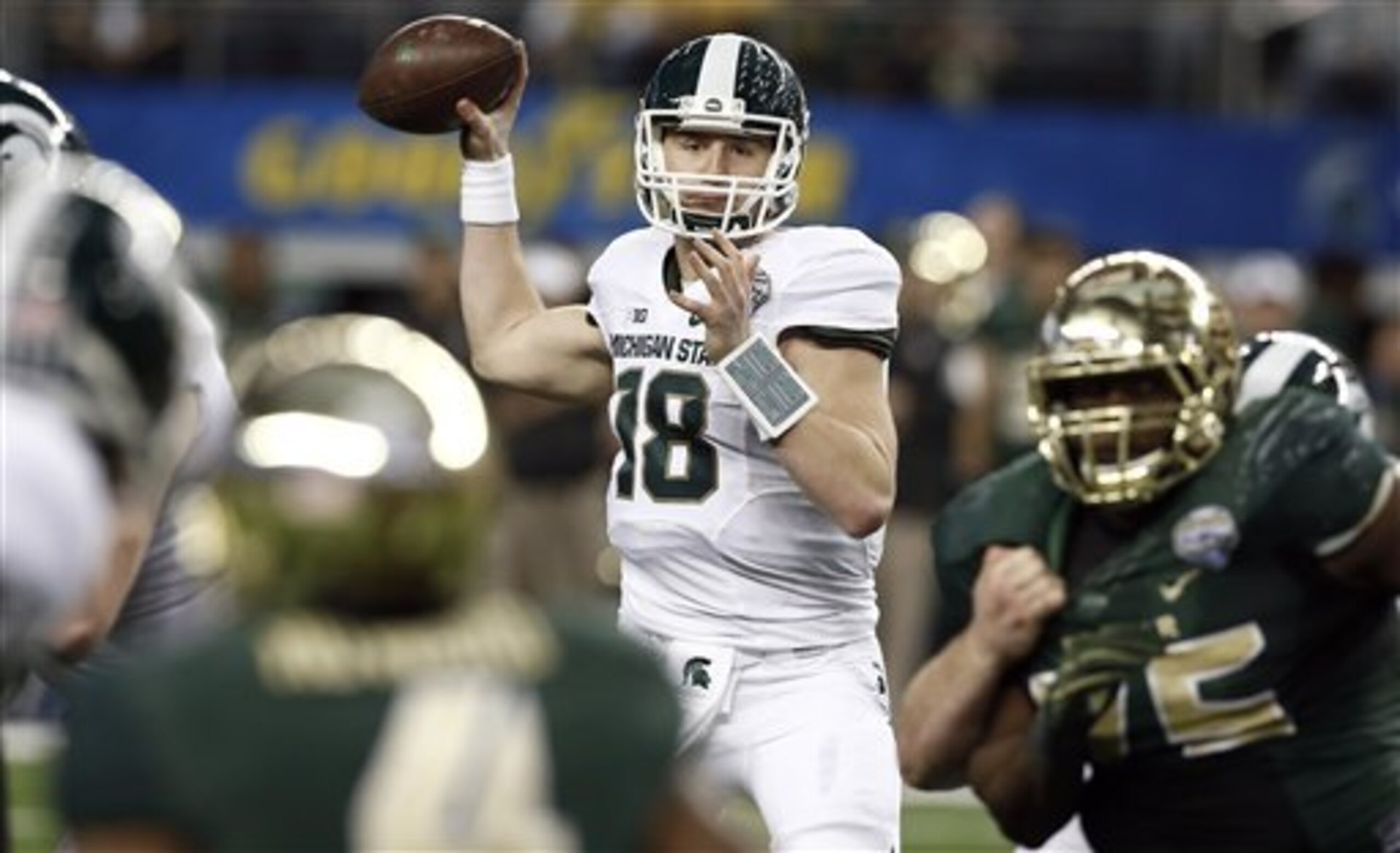
Connor Cook, Sr., QB
Cook is poised to become the all-time passing leader in Michigan State history—topping recent standouts who have been able to carve out decent NFL careers such as Kirk Cousins, Brian Hoyer and Drew Stanton—but his value extends far beyond numbers. He's also 22-3 as a starter, and with the rest of the Spartans' top offensive weapons from 2014 no longer around, he's who will determine how they fare this season.
Last year Cook threw for 3,214 yards and 24 touchdowns, though he only completed 58 percent of his throws. Down the stretch in the massive comeback against Baylor to win the Cotton Bowl, though, he was 9-of-15 for 179 yards and two TDs along with 23 rushing yards in the 21-point fourth quarter.
MSU is set to have 12 senior starters with experience in that role this season, according to researcher Phil Steele, but none will be as valuable as Cook.
Minnesota
30 of 66
Mitch Leidner, Jr., QB
Leidner had a great supporting cast to work with in 2014, with the nation's top tight end to throw to and a productive, dependable running back to hand off to. He has neither of those this season, so it's going to be on his shoulders to move the ball for Minnesota.
With only a 51.5 percent completion rate and just 11 touchdowns (against eight interceptions) last year, Leidner has a lot of room to grow. But he also has strong mobility to fall back on, as he has scored 17 rushing touchdowns in his two seasons, including 10 a year ago.
Leidner ended last year on a high note by completing 67.7 percent of his throws for 258 yards and a TD against Missouri in the Citrus Bowl. More of that this fall will mean great things for the Golden Gophers.
Mississippi State
31 of 66
Dak Prescott, Sr., QB
Mississippi State began 9-0 last season and spent several weeks atop the polls, but this year the Bulldogs aren't getting much love due to the loss of 13 starters. The SEC media picked them to finish last in the West Division.
Imagine what the predictions would be if Prescott hadn't decided to return for his final season. Last year he amassed 4,435 yards of total offense, sixth most in FBS, and was responsible for 42 touchdowns, and the Heisman Trophy contender could produce even more this season .
Prescott was a strong Heisman candidate in 2014 before MSU started to lose, and how the Bulldogs do this season might be all that keeps him from winning.
Missouri
32 of 66
Russell Hansbrough, Sr., RB
Part of a running back committee to this point in his career, Hansbrough has still put up strong numbers for his career, including a team-best 1,084 yards and 10 touchdowns last season. Now he doesn't have anyone to share carries with, and the shifty 5'9", 190-pound rusher can show his full value.
It'll be integral to Missouri's push for a third consecutive SEC East title, since quarterback Maty Mauk faces a lot of pressure after a lackluster 2014 season and the Tigers defense had to replace most of its best players.
Hansbrough had some of his best performances in Mizzou's biggest wins last year, scoring three TDs on 10 carries for all of his team's points in a 21-20 win at South Carolina and going for a career-high 199 yards and two scores in the 34-27 win at Texas A&M. He also had 114 yards and a TD on 15 carries in the Tigers' bowl win over Minnesota.
Nebraska
33 of 66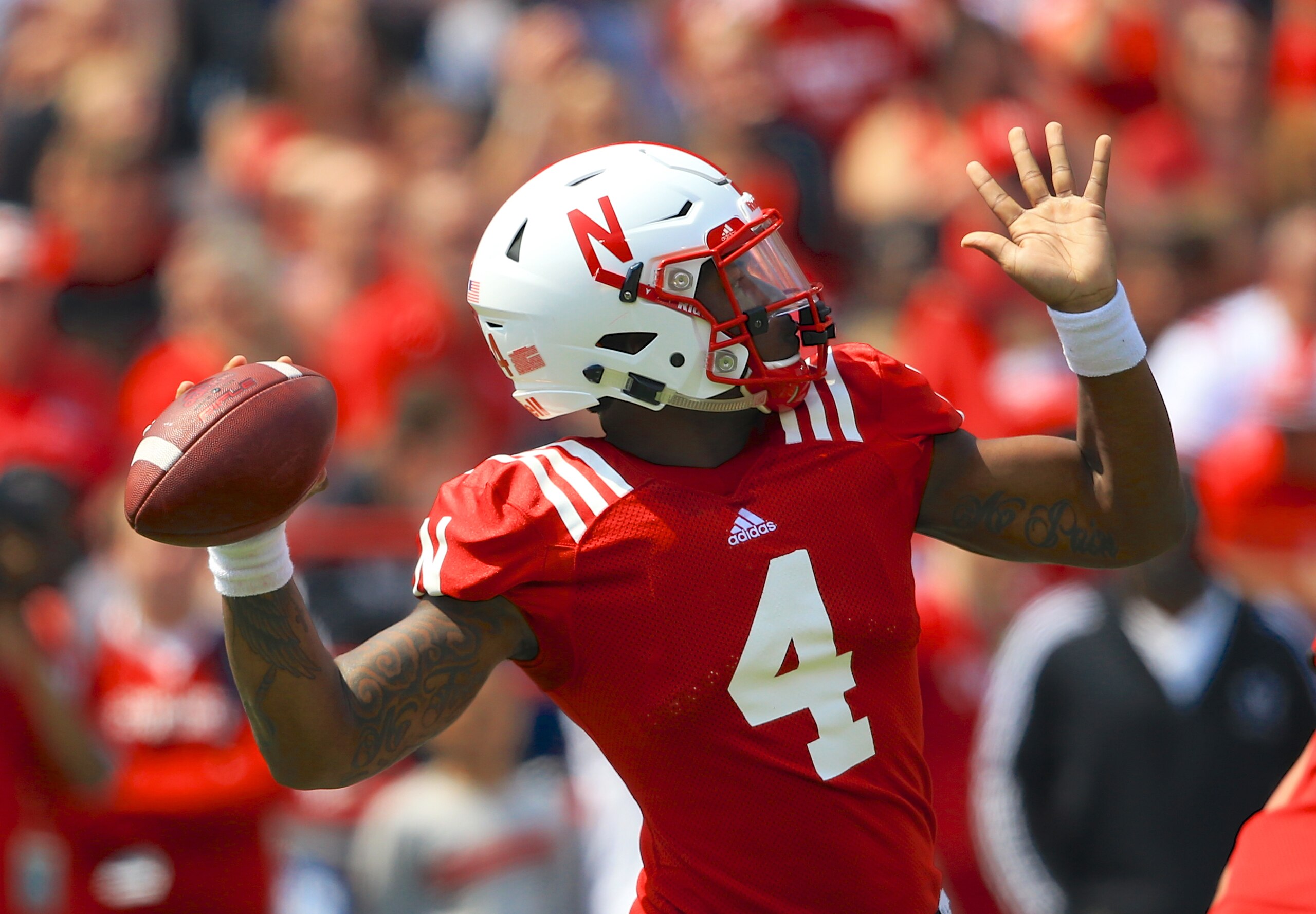
Tommy Armstrong, Jr., QB
Because of the scheme he was operating and the presence of a productive running back in Ameer Abdullah, Armstrong wasn't asked to make as much use of his arm as most college quarterbacks. But when he had to crank it up in 2014, such as in Nebraska's bowl game, he showed he could put up big numbers.
Now Armstrong will be passing it much more than ever before, as new coach Mike Riley's pro-style offense calls for the passer to be just that and far less of a runner. Riley's last four Oregon State teams threw it at least 470 times each season compared to the 345 attempts Armstrong had in 2014.
A 381-yard, three-touchdown effort against USC in the Holiday Bowl serves as a good springboard for Armstrong into his new role, and he'll have a good shot at breaking Joe Ganz's single-season passing mark of 3,568 set in 2008.
North Carolina
34 of 66
Marquise Williams, Sr., QB
North Carolina ultimately won't be able to make any improvement on last season if it cannot fix its defense, but we're not going to give a player MVP award to new coordinator Gene Chizik no matter how much he's able to accomplish. Instead, defensive improvement will just make it more evident how valuable Williams is to the Tar Heels offense.
Overshadowed by the porous defense in 2014, Williams quietly put together a phenomenal season in which he had to do much of it on his own. He had 3,856 yards of total offense and accounted for 36 touchdowns, and because of a lack of a dependable running back, he had to shoulder that load with 193 carries and a team-high 783 rushing yards. His 13 rushing TDs were as many as the rest of the team combined.
Williams wore down late in the season because of overuse, but he's primed for another big year in which he'll again be the focal point of UNC's attack.
North Carolina State
35 of 66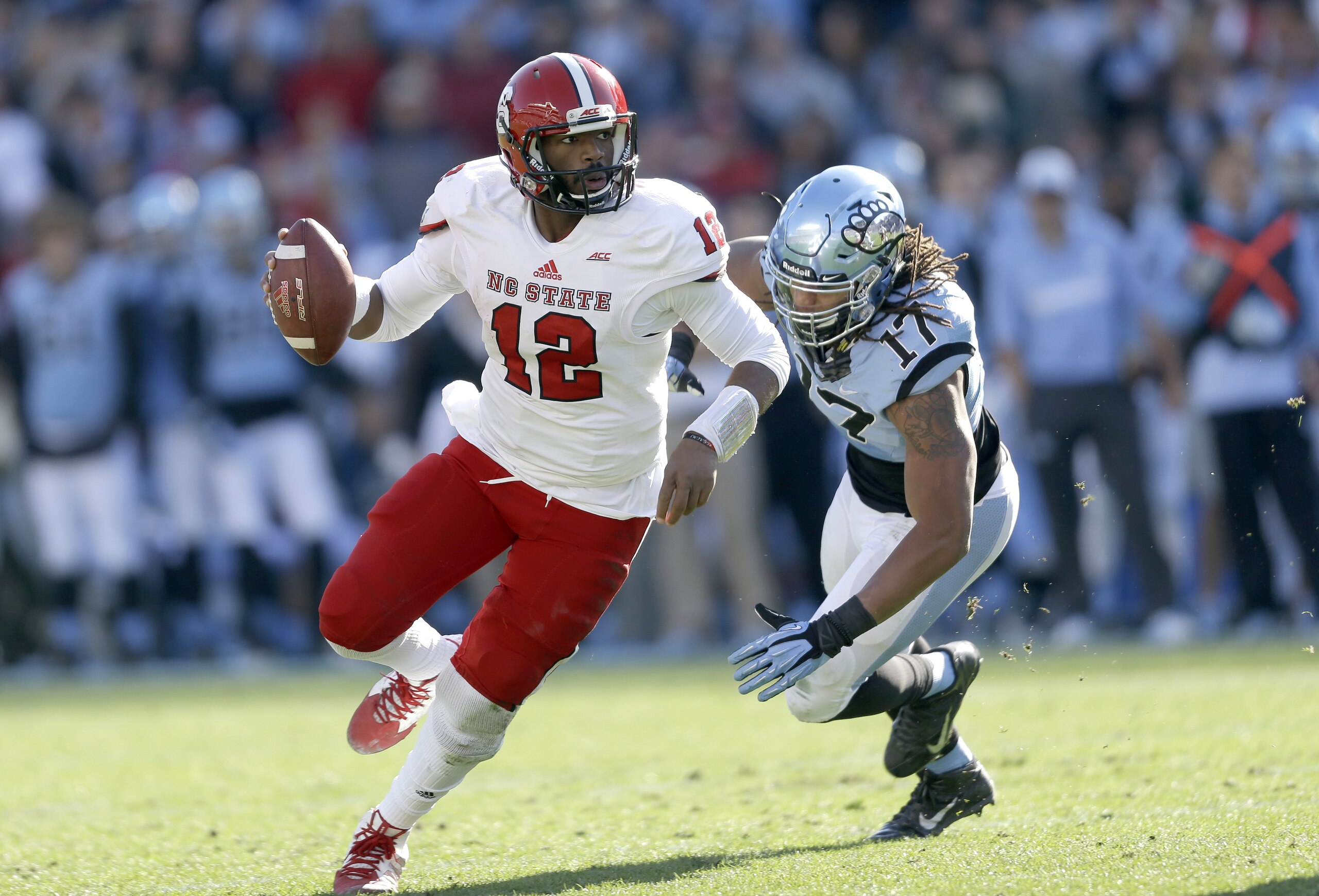
Jacoby Brissett, Sr., QB
Of all the quarterbacks who spent time at Florida or Florida State—only to transfer elsewhere in search of a better opportunity—none have done so recently with as much anonymity as Brissett.
Despite helping North Carolina go from three wins prior to his arrival to an 8-5 mark last season, Brissett didn't garner nearly as much attention as fellow Florida transfer Tyler Murphy at Boston College or ex-Florida State passers Jake Coker at Alabama or Clint Trickett at West Virginia.
That will change this season, as Brissett will play a huge role in the Wolfpack's push to contend in the deep ACC Atlantic Division that includes Clemson, Florida State and Louisville.
Last year Brissett nearly single-handedly ended FSU's win streak, tallying 397 yards and accounting for three touchdowns. He finished the season with more than 3,100 yards of total offense and 26 TDs against only five interceptions on 370 pass attempts.
If NC State is able to break through in the Atlantic, Brissett will be the one driving that charge.
Northwestern
36 of 66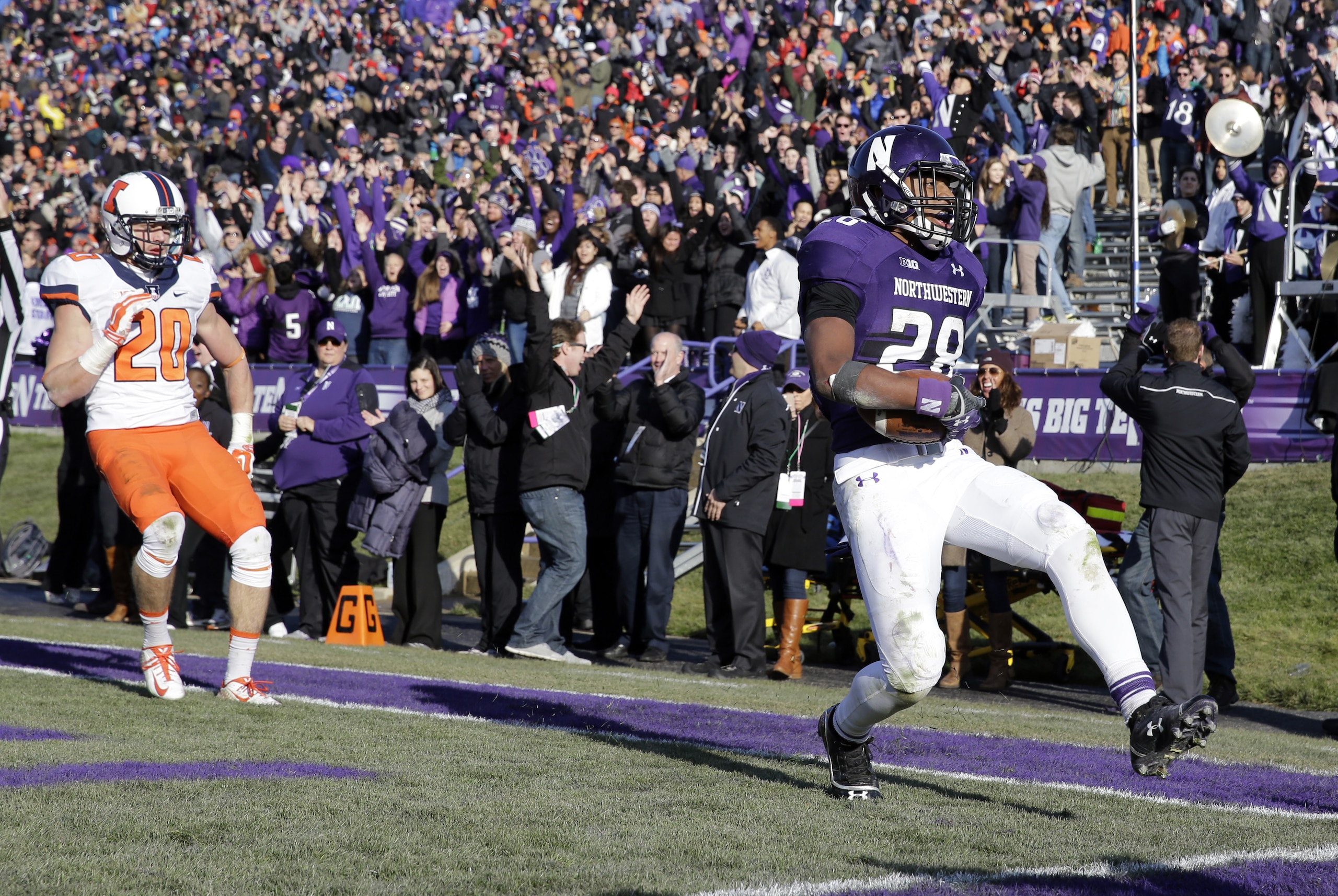
Justin Jackson, So., RB
Jackson wasn't listed on Northwestern's depth chart at the beginning of the 2014 season, but a few games in the true freshman was by far the Wildcats' most productive offensive player. With a year of experience under his belt, he should take the next step and be one of the top runners in the Big Ten and a key to his team ending a two-year bowl drought.
Jackson ran for 1,187 yards and 10 touchdowns last season, accounting for half of Northwestern's rushing scores and more than 72 percent of its yardage. He had six 100-yard games, including in the final three contests, averaging 142 yards per game with five TDs in that stretch.
Notre Dame
37 of 66
Jaylon Smith, Jr., LB
When Notre Dame made it to the BCS title game after the 2012 season, it did so via an unbeaten run that was triggered by a stout defense featuring a dominant linebacker. In order for the Fighting Irish to repeat history, they'll try to copy the formula but replace Manti Te'o with Smith.
Smith has more than proven himself in his first two seasons, with 178 tackles including 111 last year. He also had nine tackles for loss, 3.5 sacks, a forced fumble and seven quarterback hurries, per cfbstats.com, but should be even better in 2015 thanks to added responsibilities.
"This season should only help Smith show off his versatility and improve his pro stock, as he cross-trained at both the Will and the Sam linebacker spots for defensive coordinator Brian VanGorder in the spring," ESPN.com's Matt Fortuna wrote.
Not only will that cause Smith to rise up draft boards, but it will also be a big part of what Notre Dame does on defense this year.
Ohio State
38 of 66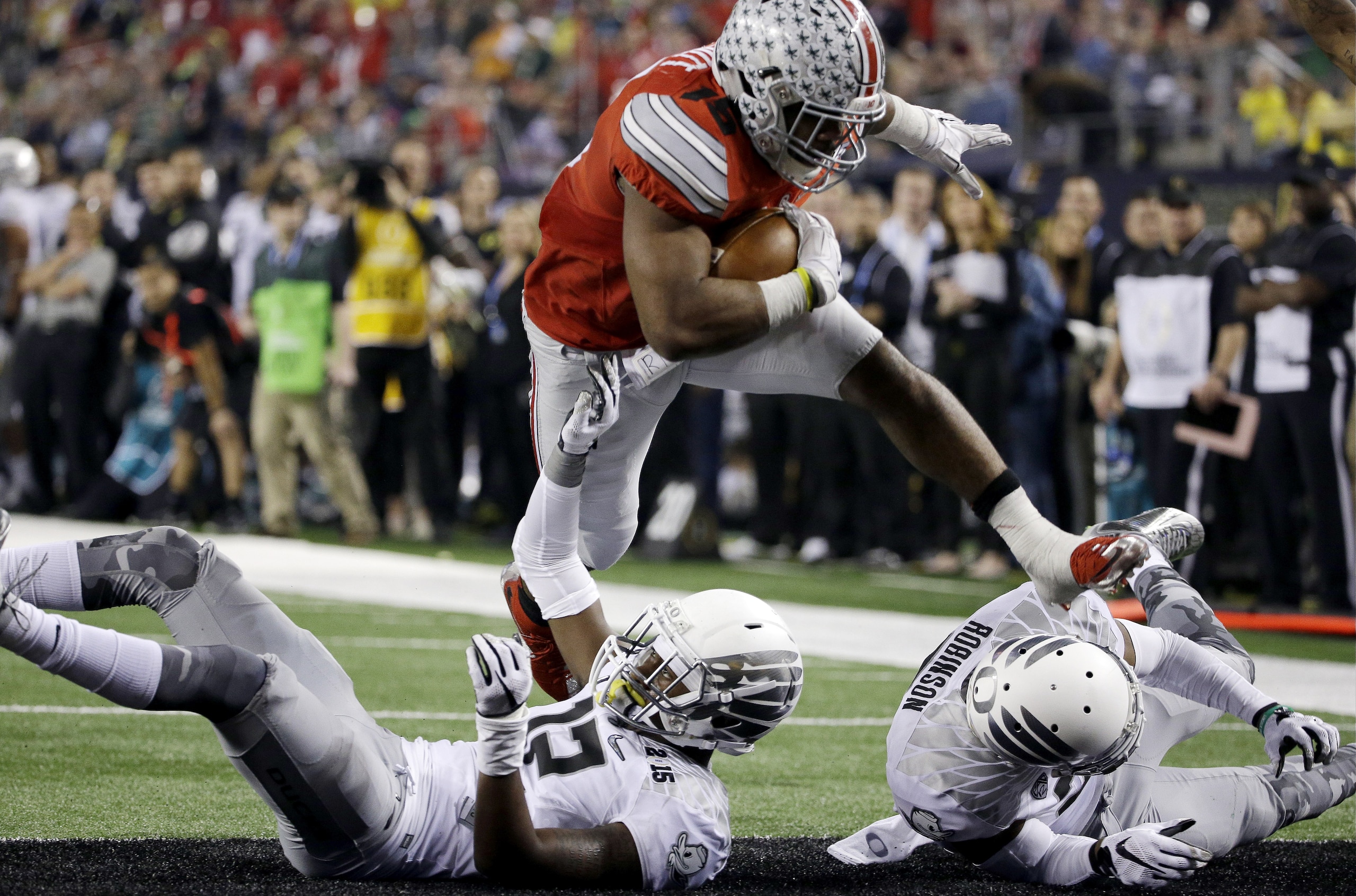
Ezekiel Elliott, Jr., RB
Even before Braxton Miller took a big chunk of the intrigue out of Ohio State's quarterback competition by making a switch to receiver, that position wasn't going to be where the Buckeyes' most important production was going to come from. That would be at running back, where Elliott carried his team during last year's postseason en route to the national title.
While the smooth transition from J.T. Barrett to Cardale Jones got plenty of attention and rightfully so, it was Elliott's play against Wisconsin in the Big Ten title game and against Alabama and Oregon in the playoffs that was the key to a championship. He ran for 696 yards and eight touchdowns in those three games, increasing his yardage each time out.
Elliott had just 27 carries in his first three games in 2014 then averaged more than 20 per contest for the rest of the season. He'll easily top that average this year regardless of who is handing off to him, and his yardage will ultimately be the deciding factor for whether OSU can repeat.
Oklahoma
39 of 66
Baker Mayfield, So., QB
Oklahoma returns a running back in Samaje Perine whose stellar freshman season included setting the FBS single-game rushing record, but thanks to a massive schematic change, his contributions could be minimized in 2014. If that proves to be the case, it will be because of how well Mayfield mastered an offense he's already shown he can thrive in.
As a freshman at Texas Tech in 2013, Mayfield started eight games and threw for more than 2,300 yards. Oklahoma's quarterbacks combined for only 2,646 yards in 13 games last year, prompting the Sooners to shift from a spread attack to the Air Raid approach that had been so successful in the past.
Mayfield has the Air Raid experience from Texas Tech, and after sitting out a season following his transfer, he's eager to prove his mettle. He still has to beat out incumbent Trevor Knight for the starting job. But not only will he do that; he'll challenge Oklahoma's single-season school passing records.
Oklahoma State
40 of 66
Mason Rudolph, So., QB
The 2014 season took a major turn in Oklahoma State's favor when coach Mike Gundy decided to pull the trigger and get Rudolph's career started earlier than expected. He was well into a redshirt year last November when he started against Baylor and threw for 281 yards and two touchdowns in a loss.
Rudolph then started both of the Cowboys' season-ending wins, against Oklahoma and in the Cactus Bowl victory over Washington, with two TD passes in each of those games, and the quarterback of the future was here now.
He was the third QB whom OK State used that season, and his emergence prompted Daxx Garman to transfer, since the job is all Rudolph's. He's still learning, but after an offseason full of getting first-team reps, Rudolph is ready to be the Cowboys' next great passer.
Ole Miss
41 of 66
LaQuon Treadwell, Jr., WR
To pinpoint when Ole Miss' 2014 season went downhill, one needs only to zero in on the moment when Treadwell was tackled awkwardly just short of the goal line and fumbled away what could have been the winning touchdown to beat Auburn. Not only did the Rebels lose that game; they lost their most valuable player for the rest of the year with a broken leg.
Not surprisingly, Ole Miss' offense suffered after Treadwell went down. In two of its final three games against FBS competition it failed to record a touchdown, getting shut out by Arkansas and managing only a field goal against TCU in the Peach Bowl.
Treadwell's fast return from his horrific injury has given renewed hope to the 2015 season, especially in light of the Rebels having to replace quarterback Bo Wallace and several key defensive stars.
"With Treadwell back, optimism has returned to Oxford, and he’s become one of those rare players who just about everyone in the SEC can’t help but root for," Bleacher Report's Christopher Walsh wrote.
Oregon
42 of 66
Royce Freeman, So., RB
Freeman's emergence last year made it possible for Oregon to take 1,000-yard rusher Byron Marshall and move him to receiver, and the move paid off across the board with Marshall going for 1,000 receiving yards and Freeman setting the Ducks' freshman rushing record with 1,365 yards and 18 touchdowns.
But Freeman wore down late in the season, struggling under the burden of 252 carries and averaging just three yards per carry in Oregon's two playoff games. He's spent this offseason working on his endurance and making better use of his 5'11", 230-pound frame.
That could include becoming more of a weapon out of the backfield in the passing game, providing Oregon's new quarterback with a safety valve in addition to a reliable player to hand off to.
Oregon State
43 of 66
Storm Woods, Sr., RB
The change from Mike Riley and his pro-style offense to what Gary Andersen plans to run at Oregon State could turn into just what Woods needs to reach the next level. He hasn't gotten many opportunities to run the ball at this point in his career, but Andersen's history of having a productive running back figures to change that.
Andersen has had a rusher go for 1,500 or more yards in each of his last four seasons, two at Wisconsin and two at Utah State. Woods was OSU's leading rusher last year, with 766 yards on just 121 carries, and in three seasons he's rushed it 480 times for 2,236 yards and 24 touchdowns.
Penn State
44 of 66
Christian Hackenberg, Jr., QB
Penn State somehow managed to put together a winning season in 2014 despite an offensive line that did its best collective impression of a bullfighter pulling back the red cape and a run game that on its best day was not very good. Another year of that won't fly for the Nittany Lions, nor will it bode well for Hackenberg's pro prospects, which remain high despite a very off sophomore campaign.
For someone who is widely projected as a first-round draft pick in 2016 and who sits second on Bleacher Report NFL draft expert Matt Miller's early big board, Hackenberg has to be Penn State's MVP in order for it to contend in the Big Ten and be more than just a middle-of-the-road team. He has to be what he was as a true freshman, when he threw for nearly 3,000 yards with 20 touchdowns.
Last year he had 22 more passing yards but eight fewer TDs in one extra game, and his interceptions jumped from eight in 2013 to 15. The line in front of him contributed to this, but so too did Hackenberg's poor decision-making, something he's surely spent his offseason working tirelessly to correct.
"If the Nittany Lions are to take the next step under second-year head coach James Franklin, Hackenberg will have to put the sophomore slump behind him," NFL.com's Bryan Fischer wrote.
Pittsburgh
45 of 66
James Conner, Jr., QB
It's a pick-your-poison scenario when game-planning for Pittsburgh's offense, as it brings back an underrated trio of junior skill players in Conner, quarterback Chad Voytik and receiver Tyler Boyd who all have the capability to burn an opponent. But Conner stands out because of his ability to also just steamroll right over defenders, as he did quite often in 2014.
The 6'2", 250-pound converted defensive end ran for 1,765 yards and 26 touchdowns last season, breaking a school TD record previously held by Heisman winner and NFL great Tony Dorsett. He was a workhorse with just short of 300 carries, running it more than 30 times on four occasions, and he scored a TD in all but two of the Panthers' 13 games.
Conner has surprising speed for a guy his size, but he's also not shy about barreling into defenders. He'll be used early and often in 2015 by new coach Pat Narduzzi, who saw the value of a hard-nosed runner watching Jeremy Langford the past two years at Michigan State.
Purdue
46 of 66
Danny Anthrop, Sr., WR
As Purdue continues to get its defense to a place where it isn't a liability, it must also develop offensive weapons who can consistently produce and allow for the Boilermakers to win high-scoring games if needed. They thought they had that last year in Anthrop, but a knee injury knocked him out of the final three contests (which all ended up being losses).
Before his injury, Anthrop was sizzling with 17 receptions for 280 yards in his previous three games. He still ended up being Purdue's top receiver, with 616 yards and four touchdowns, and after he went down, the only other receiving options were a tight end and a running back.
Anthrop has just 56 career receptions in three seasons, but if he can stay healthy, he'll be a great weapon for the Boilermakers to maximize.
Rutgers
47 of 66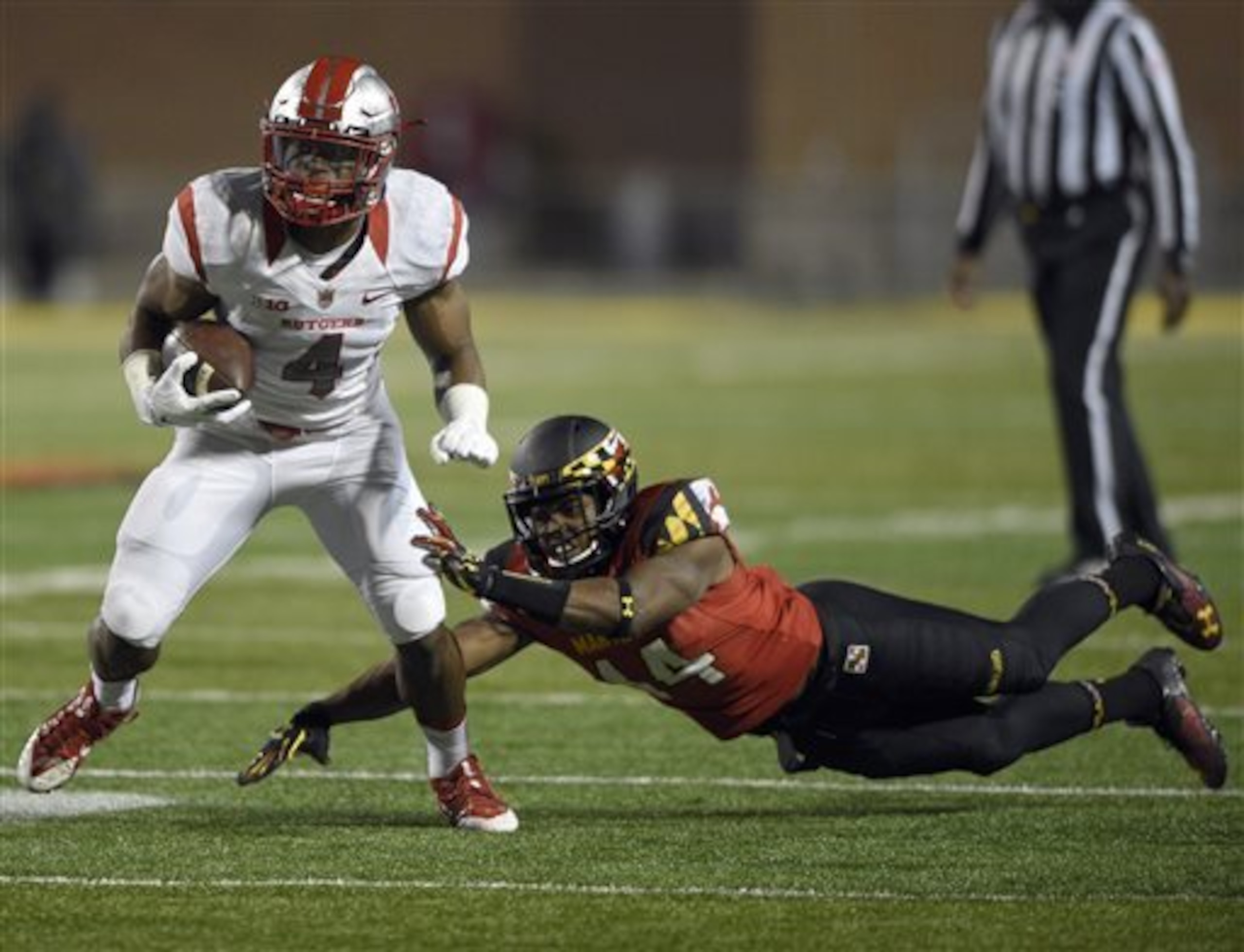
Leonte Carroo, Sr., WR
Rutgers' first season in the Big Ten was a mild success, though most of the people responsible for that push have moved on. But Carroo is one of the top holdovers from that initial run through the conference, and the experience he gained will make him the Scarlet Knights' go-to player this year.
Carroo averaged nearly 20 yards per reception in 2014, which ranked second in the conference behind Ohio State's Devin Smith. His 55 receptions were more than double any other Rutgers player, and his 1,086 yards represented more than three times what the next-best Knight wideout produced.
He also had nine of his 10 touchdown receptions in Rutgers' wins, a strong indicator that his play was essential when it mattered most. And with the Knights breaking in a new quarterback this season, Carroo's value becomes even greater by being a dependable target.
South Carolina
48 of 66
Pharoh Cooper, Jr., WR
If South Carolina gets desperate this season, don't be surprised if Cooper ends up working out on defense. He's already handling nearly every position he can on offense and special teams for the Gamecocks.
Last year Cooper was South Carolina's top receiver, with 69 catches for 1,136 yards and nine touchdowns, but he also contributed as a ball-carrier, quarterback and return man. He scored two rushing TDs and threw two TD passes, including a game when he had a TD via the run, pass and catch, and he also returned 15 punts.
Cooper again should be involved in as many offensive snaps as possible, and with his varied talents, he's difficult to plan against.
Stanford
49 of 66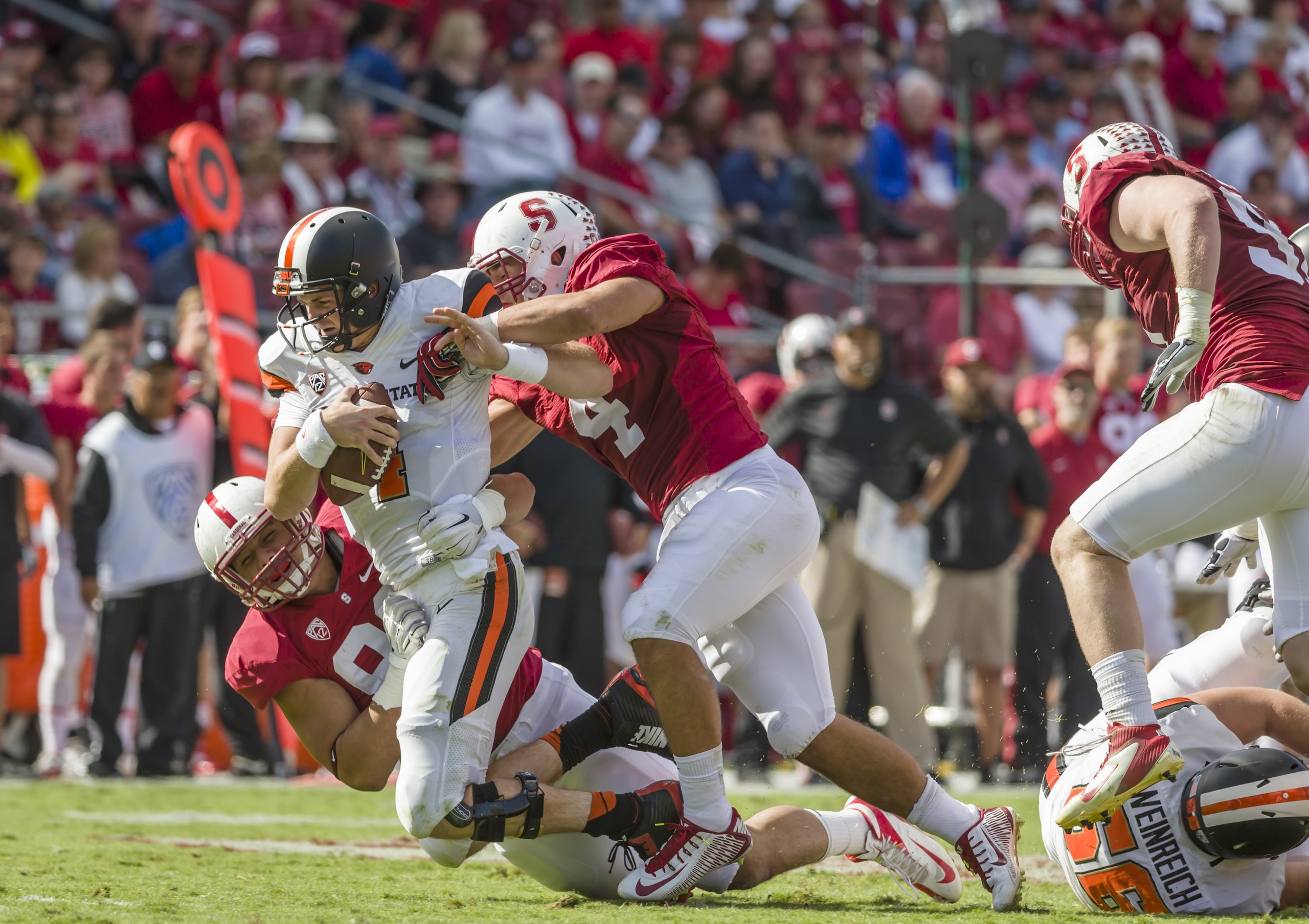
Blake Martinez, Sr., LB
Stanford's defense has overcome huge losses each of the past few years but managed to maintain its status as one of the top defensive teams in the country. The toughest challenge yet is in 2015 with only four starters back and none of them on the line.
But Martinez returns in the middle, and after leading the Cardinal in tackles last season, he'll be the overall defensive leader this time around.
A first-time starter in 2014, Martinez is now the heart and soul of Stanford's defense and the player who will continue the run of great play on that side of the ball.
Syracuse
50 of 66
Terrel Hunt, Sr., QB
A broken leg midway through last season ended Terrel Hunt's year and pretty much ruined any chance of Syracuse having a winning record. The Orange were already struggling prior to the injury, which happened in early October, but after losing their dynamic playmaker, there was little offense to speak of.
Hunt was a big part of Syracuse's push to bowl eligibility in 2013, when he came on strong down the stretch to take command of the quarterback job with a combination of efficient passing and great mobility. It's what his team needs again this year in order to bounce back from an abysmal 3-9 season, the program's worst since 2008.
Even though he only played in a little more than five games last year, Hunt still had more total offense (1,275 yards) than any other Syracuse player.
TCU
51 of 66
Trevone Boykin, Sr., QB
Considering he's the current Heisman front-runner, per Odds Shark, and is our pick to win the award, it shouldn't be a surprise that Boykin would be TCU's MVP for the 2015 season. He was the biggest reason the Horned Frogs came out of nowhere last year to share the Big 12 title and be in the playoff hunt, and his performance will determine if another postseason push will happen.
Boykin had 4,608 yards of total offense and accounted for 42 touchdowns last year, emerging as a new player with far more confidence after spending the 2013 season bouncing around several positions. The Frogs' new uptempo system had a lot to do with the rise as well, but without Boykin being able to run that system, it wouldn't have mattered.
Boykin is now a superstar, one who has extra expectations placed on him. He was one of the most popular interviews at last week's Big 12 media days in Dallas, but he said his family has helped him prepare for it all.
"I'm being mentioned with all the preseason hype and all that, but ultimately it's not where you start, it's where you finish," Boykin said, per Ryan Gerbosi of the Dallas Morning News.
Tennessee
52 of 66
Joshua Dobbs, Jr., QB
When, exactly, did Tennessee go from a team that seemed a year away from being competitive to one that was as dangerous as any in the country? The answer would be when Butch Jones decided to pull the redshirt on Dobbs in the middle of a home loss to Alabama, and after that the Volunteers became a completely different team, one that would win four of five down the stretch.
Dobbs used his mobility and headiness—he's majoring in aeronautical engineering—to tally 1,675 yards of total offense in those final five-plus games. Since then he's been working to make his game more complete, not just someone who relies on instinct and reaction, and that improvement will go a long way for Tennessee in its pursuit of the SEC East title and a return to national prominence.
"Dobbs must not only play the way he did down the stretch last year but also become the vocal leader that the team needs," Bleacher Report's Barrett Sallee wrote.
Texas
53 of 66
Malik Jefferson, Fr., LB
He's yet to play a game for Texas, but Jefferson is already looking like the kind of player who can establish the Longhorns as Charlie Strong's team. He was dominant in spring football as an early enrollee, recording five tackles, one for loss, and broke up a pass by demolishing teammate Daje Johnson on a short pass play.
And that's just the start. Texas has to replace six defensive starters, but Jefferson will be able to hold down his spot in the middle without needing any time to get his feet under him.
The 6'3", 232-pound prospect is fast, strong and probably could handle some assignments on offense if Strong wants to give him time in the backfield, much like how UCLA used Myles Jack the past two years or what Shaq Thompson did for Washington in 2014.
Texas A&M
54 of 66
Myles Garrett, So., DE
Texas A&M hasn't had any trouble establishing itself as a force to be reckoned with on offense under Kevin Sumlin. The defense, though, has been a different story, as the Aggies have ranked in the 100s nationally in yards allowed the last two seasons.
There was a slight rise from 2013 to 2014, and Garrett had a lot to do with that. Last year he set the SEC freshman sack record with 11.5, which accounted for nearly one-third of his team's quarterback takedowns.
The Aggies have other notable defensive players joining the program this season, including tackle Daylon Mack, but the one who will matter most to improving as a group will be Garrett.
Texas Tech
55 of 66
DeAndre Washington, Sr., RB
Lost in Texas Tech's poor 2014 season was the program's best rushing performance since 1998 and by far its best effort since the Red Raiders became known for uptempo attacks. Washington ran for 1,103 yards and averaged nearly 5.9 yards per carry, but because Tech was often trailing, he had only 188 carries in 12 games.
Tech will still be a pass-first team this year, but Washington's production has showed it can turn to the run when needed. With per-carry averages of 6.19 yards on first down and 6.07 on second down, he's just the kind of change-of-pace back who can make the Raiders offense even tougher to slow down.
UCLA
56 of 66
Paul Perkins, Jr., RB
With Brett Hundley no longer holding down the quarterback position, UCLA faces a critical season that's full of promise but also uncertainty because the Bruins are likely to go with a true freshman (Josh Rosen) as Hundley's replacement.
Perkins can be the calming force on that offense, though, coming off a 2014 season when he led the Pac-12 in rushing at 1,575 yards and was UCLA's most dependable player. The offensive line gave up too many sacks, the defense allowed a surprising number of big plays and Hundley even went hot and cold at times. But Perkins was rock-solid with six 100-yard games and at least 78 yards in every outing.
Assuming Rosen gets the nod at QB, Perkins will serve as the player who keeps the freshman from having to do too much early on as well as the one the Bruins can turn to in critical situations.
USC
57 of 66
Adoree' Jackson, So., WR/CB/KR
USC has depth overflowing from every position to the point that many of its starters could struggle or get hurt, and there's another big name ready to step in. It also makes it so no player should need to have to do too much in order for the Trojans to win the Pac-12 and be in the playoffs, yet they do have a guy in Jackson who has the capability to do so much than the norm.
As a freshman, Jackson was a key piece of USC's secondary as a starting cornerback, but he also became involved in the offense at receiver down the stretch. Throughout the year he was the Trojans' top return man too and finished the year with three receiving touchdowns and two kickoff return TDs.
Jackson is expected to be even more of a factor in the passing game in 2015 while still handling defensive and special teams duties. He's the kind of player who can take over a game with his varied abilities, and since USC would need to use multiple players to replace his output, that makes him its most valuable player.
Utah
58 of 66
Devontae Booker, Sr., RB
Booker wasn't the most used running back in the country last year, but he was pretty close to the top. Had Utah worked him into the offense from the start of 2014 he may very well have led the nation in carries, since he averaged 26.1 per game over the final 10.
He averaged more than 133 yards per game in those contests, becoming the Utes' go-to offensive player, and the same is expected in 2015. It's to the point that coach Kyle Whittingham is expecting Booker to be in the 2,000-yard range this season and thus get Heisman consideration.
"If he starts getting yardage in the 2,000 range—which is very reasonable if he stays healthy—that's got to be, in our opinion, Heisman numbers," Whittingham told Fox Sports' Stewart Mandel.
Booker could also become a bigger weapon by virtue of his pass-catching ability, as Utah graduated three of its top four receiving targets. Booker had 42 receptions last year and could double that.
Vanderbilt
59 of 66
Stephen Weatherly, Jr., LB
Derek Mason is returning to his defensive roots by being his own coordinator this season rather than having to go through a middle man to improve the Commodores. Expect a lot of those calls to involve getting Weatherly in position to make the big play.
Weatherly was one of the few bright spots from Vandy's woeful 3-9 season in 2014, leading the team in sacks (4.5) and tackles for loss (12.5). He had five TFLs in the season-ending loss to rival Tennessee, wrapping up a breakout season when he went from being a part-time player at defensive end to a massive force as a 6'5", 260-pound outside linebacker.
Virginia
60 of 66
Quin Blanding, So., S
Virginia didn't do itself any favors with a hellacious nonconference schedule, facing Boise State, Notre Dame and UCLA in the first month of the season. But the Cavaliers have the kind of defense that could lead to an upset, as it nearly did against UCLA last year and managed to accomplish against Louisville.
Young stars like Blanding are who will make such a result happen this year, and with the way Blanding performed as a true freshman, it's very possible. In 2014 he had a team-best 123 tackles as well as three interceptions, helping the Cavaliers rank 29th nationally in total defense and 18th against the run.
Virginia Tech
61 of 66
Bucky Hodges, So., TE
It's hard to believe after looking at the 6'6", 249-pound Hodges that he came to Virginia Tech in 2013 as a quarterback. But since getting converted to tight end, he's made the most of his size to become a valuable weapon for the Hokies, one who is set for a huge 2015 season.
Hodges was one of three freshmen with 40 or more catches for Virginia Tech last year, hauling in 45 passes for 526 yards and a team-high seven touchdowns. It was the best performance ever by a tight end in program history but is just the tip of the iceberg for a talented athlete.
"Short on wide receivers and recognizing the kind of mismatches Hodges can present when lined up on a defensive back (he's bigger) or linebacker (he's faster), the Hokies are looking to broaden his role," Andy Bitter of the Roanoke Times wrote.
Wake Forest
62 of 66
Brandon Chubb, Sr., LB
The rebuilding project that Dave Clawson is undertaking at Wake Forest is going to be a slow one if last year's offensive performance is any indication. It won't take as long to get the Demon Deacons where he wants them on defense, though, not with players like Chubb buying into the plan and shining.
The 6'1", 243-pound Chubb was involved in most big defensive plays last season, finishing with 109 tackles to go with an interception, two forced fumbles, three sacks and 6.5 tackles for loss.
Chubb will again be patrolling the middle of Wake's defense, and if the Deacons are going to make any noise this year, it will come from him.
Washington
63 of 66
Dwayne Washington, Jr., RB
A late bloomer in 2014 with 100-yard rushing games in the Huskies' final three regular-season games, Washington hopes the running back of the same name can carry that momentum in this year. With so much uncertainty at quarterback that would be a valuable asset, one that could prevent this from being a total rebuilding year.
The team's two most experienced quarterbacks have left the program, one via retirement and the other to a transfer, so there will be an unproven passer under center. That puts pressure on the run game to carry the load, and Washington showed he could put up big yards by going for 383 yards and five touchdowns on just 49 carries in a three-game span.
He might have to share carries with sophomore Lavon Coleman early on, but thanks to his explosiveness, he'll be the guy getting the bulk of the touches as the year goes on.
Washington State
64 of 66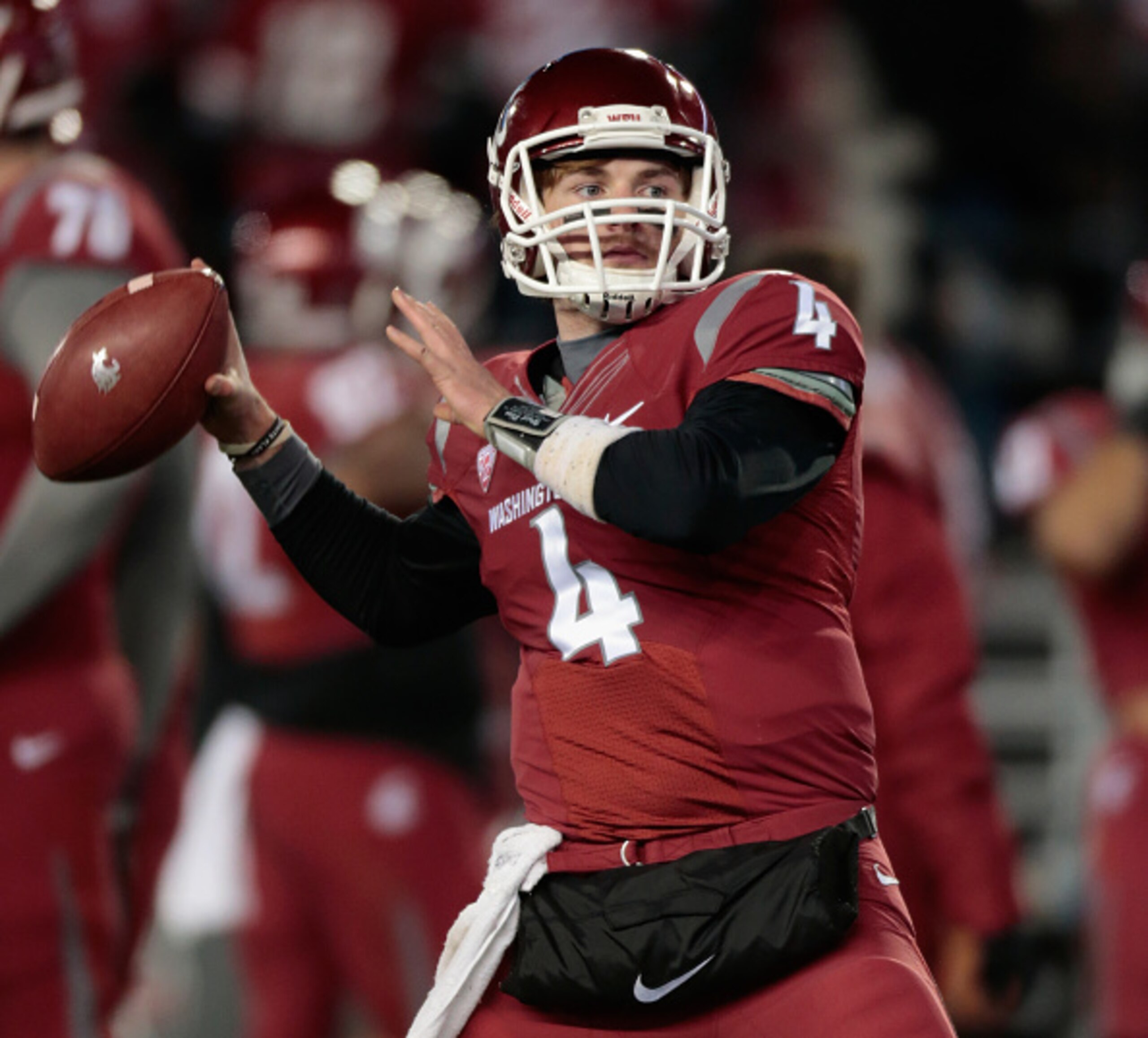
Luke Falk, So., QB
When Connor Halliday went down with a broken leg in early November, Washington State's already disappointing 2014 season fell completely apart. All that kept the Cougars from being worse was the play of Falk in his first collegiate action.
Falk came in cold in the middle of a blowout loss to USC and threw for 346 yards; then in his three starts he averaged 472 yards per game with 10 touchdowns. He also threw seven interceptions in those four games, something he has to improve on, but with the Cougars' propensity to pass on almost every down, those mistakes will happen.
With a bevy of receivers to work with, Falk has a chance to put up the kind of numbers Halliday was on pace to do before getting hurt last season.
West Virginia
65 of 66
Karl Joseph, Sr., S
It's been a while since defense has been the stronger side of West Virginia's team, and it hasn't happened before in Dana Holgorsen's tenure. But Joseph has turned into such an effective player that, combined with the Mountaineers skewing younger on offense, he stands to be the one player whose performance matters most in 2015.
"When people see me play, they see I play with a purpose," Joseph told ESPN.com's Brandon Chatmon. "It means something to me."
Joseph had 90 tackles, 4.5 tackles for loss and three forced fumbles last season. This year he'll be the leader and top producer on a defense that returns eight starters.
Wisconsin
66 of 66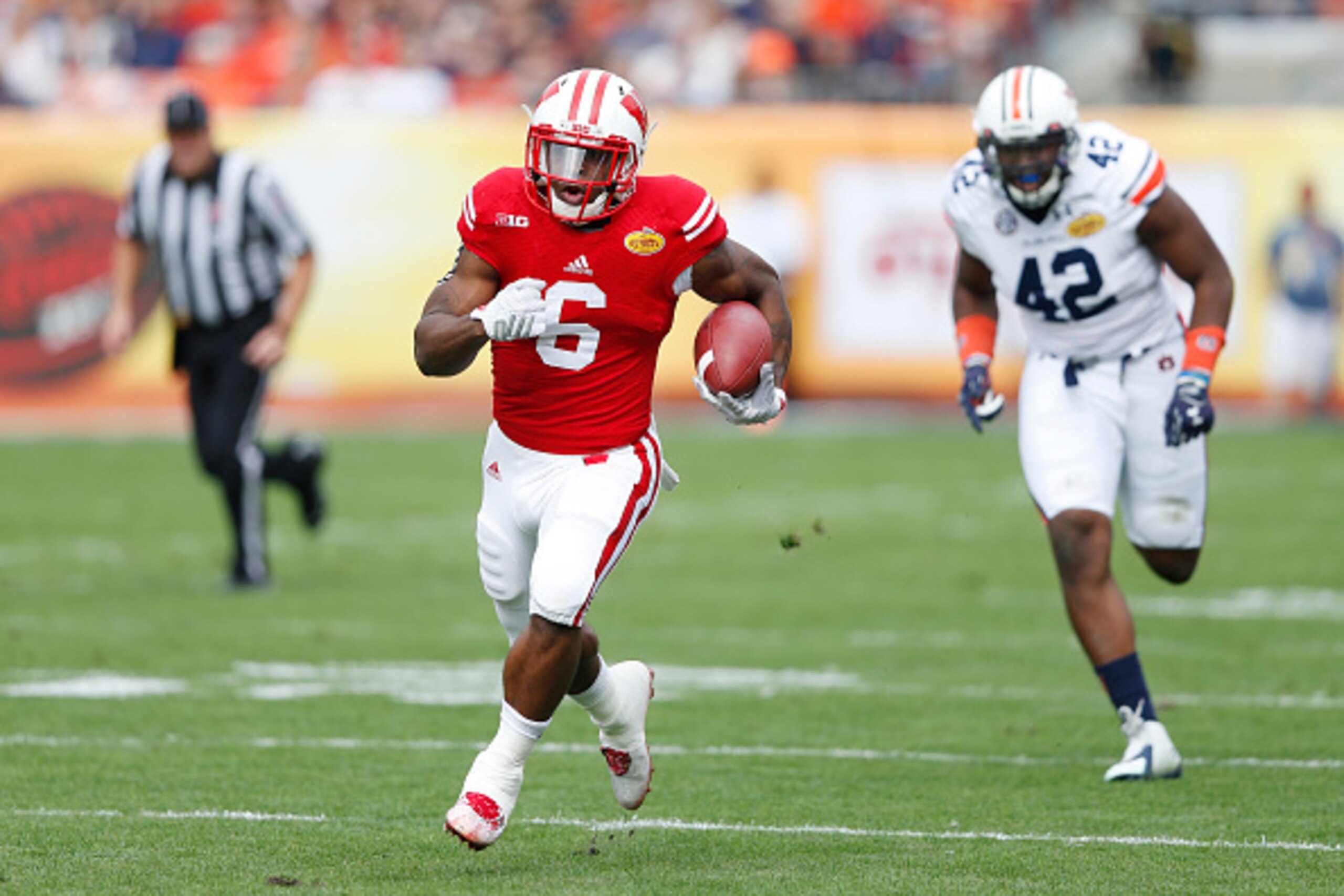
Corey Clement, Jr., RB
Most teams could only dream of being able to come close to replacing the production lost by having a 2,500-yard rusher turn pro. Wisconsin isn't needing to dream because the reality is that Clement has all the tools needed to follow what Melvin Gordon did, and he's already shown he can do so.
Clement ran for nearly 1,000 yards in 2014, going for more yards than several other Big Ten teams' leading rushers, and they weren't mop-up yards. He averaged 6.46 yards per carry and had four 100-yard games, including in the Badgers' Outback Bowl win over Auburn.
New coach Paul Chryst has more of a passing background than previous coach Gary Andersen, but Chryst also knew the value of having a strong running back in the form of James Conner at Pittsburgh. Expect Clement to be a focal point of the Badgers' attack, and while he might not top 2,500 yards, he'll still be a huge part of what happens.
Follow Brian J. Pedersen on Twitter at @realBJP.
.jpg?w=2560 "Cam Ward Says He's Not A Loser")
.jpg?w=2560 "Chargers Fall to 0-5 🤢")
.jpg?w=2560 "🚨 Texans Trade for MHJ")
.jpg?w=2560 "Grading MHJ Trade 📝")
.jpg?w=2560 "MHJ Bought Own Jugs Machine")