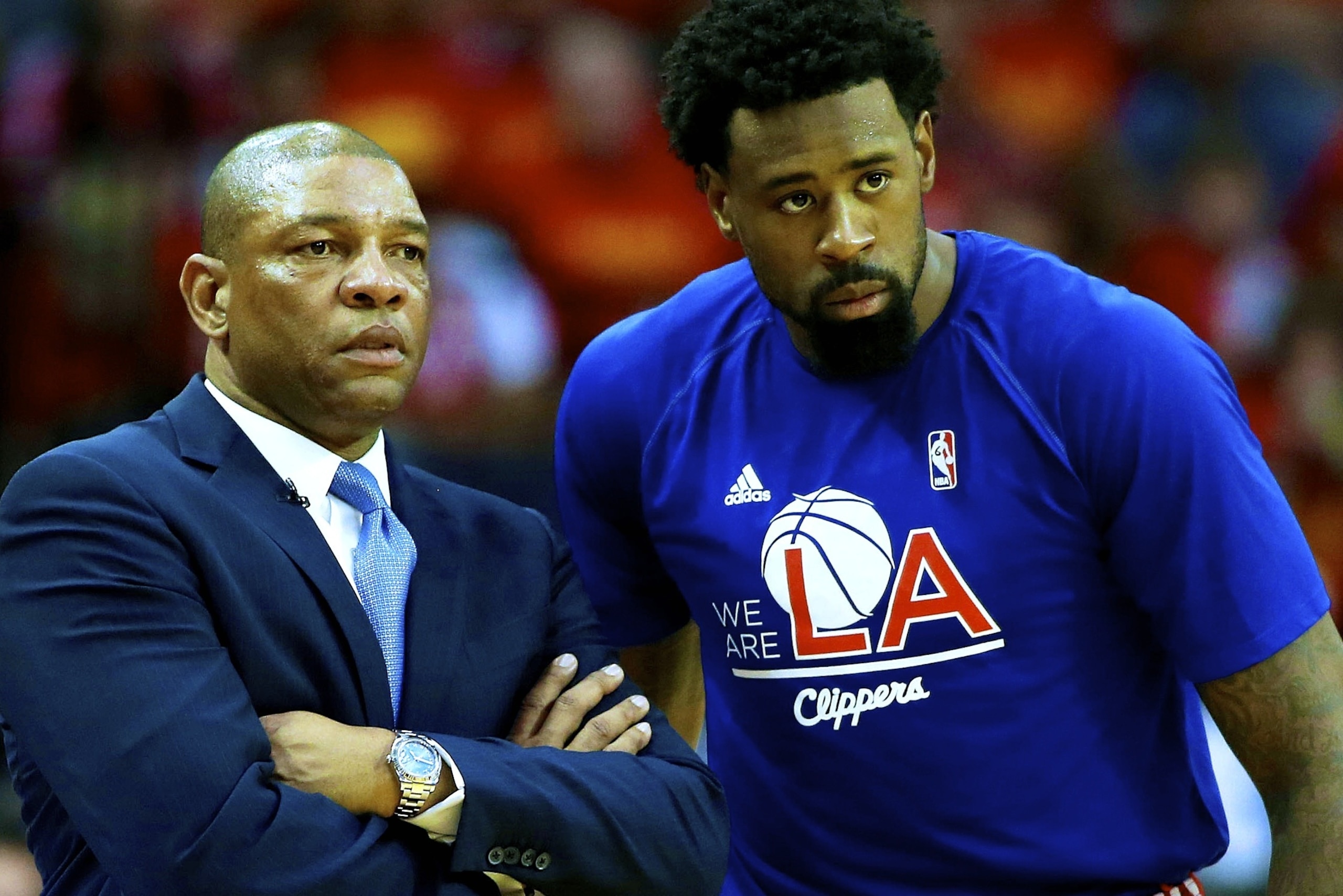

DeAndre Jordan Now Shares Burden of Winning for Los Angeles Clippers
Few could have predicted DeAndre Jordan's free-agent dalliance with the Dallas Mavericks—real as tales of almost come—would end with his shouldering more responsibility for the Los Angeles Clippers, the team he was supposed to, and virtually did, abandon.
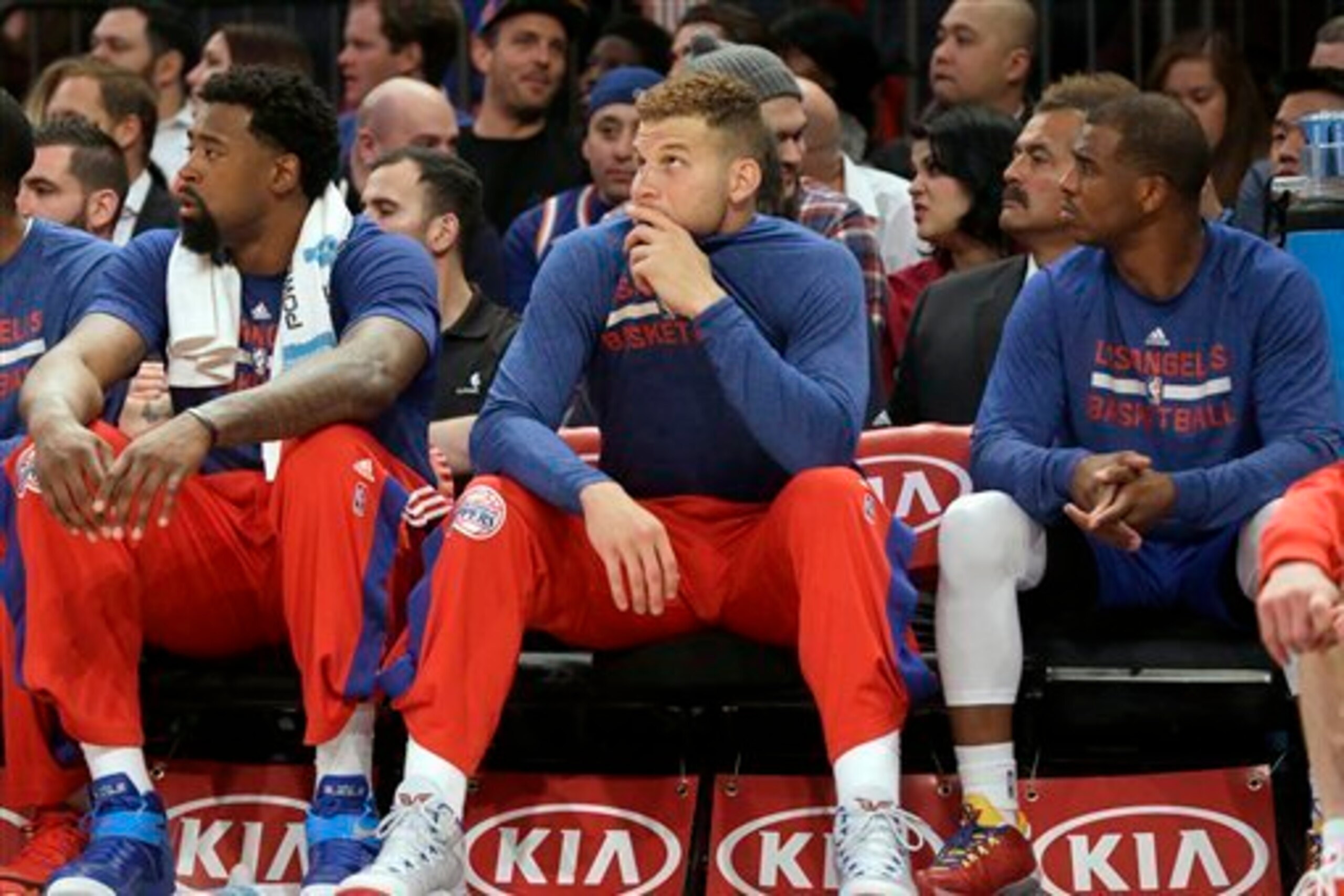
And yet, that's just how it ended: with him still a Clipper, bearing a burden to win immediately that, until now, was almost solely ferried by Chris Paul, Blake Griffin and head coach Doc Rivers.
Soaring expectations and additional pressure go hand in hand with signing a superstar-level contract. Jordan is now earning more money per year than Griffin. The oft-assumed product of Paul's passing is officially, if only by pay grade, a superstar, and he will share in the Clippers' championship incubus accordingly.

It's a responsibility Jordan clearly wants, even after eschewing the Mavericks, who were promising him a lion's share of their next-era blameworthiness.
Jordan went into free agency having never been held to the standards of a franchise cornerstone. Seven years into his NBA career, he seemingly peaked as Griffin and Paul's sidekick—the shot-swatting, rebound-wrangling, lob-loving specialist to their megastardom.
That role, even if inaccurate, nearly steered Jordan out of Los Angeles in search of something bigger.
"Originally, I said yes to the Mavericks because I thought I needed change," he said in a video for the Players' Tribune. "I thought I wanted change at that point in time. And they had a great presentation. They have a great owner, a great coach, a championship team. But, at the same time, I felt like I didn't give it all of my thought."
Part of Jordan's thought process was tied to status. Just ahead of free agency, ESPN.com's Chris Broussard reported that Jordan wanted to be a featured weapon on offense and had grown weary of playing "third wheel" to Griffin and Paul.
Bolting for Dallas made sense in that regard. Not just because the Mavericks are ripe for individual cachet-cushioning with Dirk Nowitzki nearing the end of his career and admirably accepting the stature of a glorified role player—but because the Mavericks were smart enough to prey on Jordan's self-awareness.
"It all came down to him being the best center in the NBA, an All-Star-caliber and MVP-caliber player in this league," Chandler Parsons, Dallas' unofficial chief recruiter, told ESPN.com's Tim MacMahon at the time. "No doubt in my mind that [opportunity] was here in Dallas."
Returning to the Clippers, as Jordan did, also made sense in the end. They finally accepted—and therefore partially confirmed—the rumors, promising Jordan at least a taste of what he was chasing on the open market.
As Basketball Insiders' Alex Kennedy said of the Clippers' re-pitch:
Hashing out whatever issues Jordan had with Chris Paul proved equally vital to guaranteeing his return. Though Paul maintained any closed-door beef was overblown, Paul Pierce, a newcomer, acknowledged its existence, per the Boston Globe's Gary Washburn:
All the good post-indecision vibes strongly suggest Jordan has received assurances that he isn't a third fiddle and is instead the Clippers' third superstar. And even if he hasn't, public perception of his value to the organization has reset by default.
The Clippers wouldn't risk, borderline manufacture, a public-relations nightmare by reconnecting with just any player who had verbally committed to play elsewhere. Jordan wouldn't open himself to the relentless scrutiny he's incurring now if he weren't absolutely certain the Clippers are the right team for him.
To the rest of the world, Jordan is finally being recognized as that third Clippers superstar. And that changes things.

It doesn't make the jobs of Paul and Griffin any easier. Paul is still the perennial MVP candidate who has yet to make a Western Conference Finals appearance; Griffin remains the tenured megastud who will be held to the standards of a top-10 talent.
What Jordan's return has done is add another, equally thick block to the Clippers' accountability pyramid.
Where he might have once skated in the aftermath of failure—say, a historically horrible second-round playoff collapse against the Houston Rockets—Jordan will wear the same badge of fault with which Griffin, Paul and even Rivers have become all too familiar.
This is an intangible accessory that comes with superstar distinction and, in this case, rattling the fandom cages. As Bleacher Report's Fred Katz underscored, Jordan has gone from the Clippers' goofy, easy-to-love cohort to a primal force behind any animosity they have generated:
"In the end, rationality isn't going to save D.J. from the masses, though. Fandom is usually just pure, reactionary emotion. The public has mostly turned on him. Such an overt change of mind—one that odorized similarly to [Dwight] Howard's will-he, won't-he in Orlando—rarely goes over well.
Fair or not, the days of But I do like DeAndre are probably done. L.A.'s most likable is still the same person, but he's turned into its most disliked. And with that, suffers the reputation of the Clippers.
"
Now, the reputations of Jordan and the Clippers will only suffer if they don't win. The NBA is simple in that way.
Villains are only villains until they deliver on the promise their nefarious acts or, in Paul's case, individual standing issues. If the newly retooled Clippers make it through to the 2016 Western Conference Finals and substantively flirt with a title, all is forgiven. If they don't, well, they're not.
Paul will still be (unfairly) viewed as good-maybe-great-but-not-truly-legendary if he's ousted in the second round.
Griffin will continue to live in the shadow cast by Paul. It doesn't matter that it's growing smaller, or that he kept the Clippers afloat without Paul for part of 2013-14, or that he joins Larry Bird as just the second player to amass 7,500 points, 3,500 rebounds, 1,400 assists and 350 steals through the first five seasons of his career.
The Clippers will remain perhaps the most disappointing of any "almost" in NBA history—especially now, after not only retaining Jordan but adding Pierce, Josh Smith and Lance Stephenson.
This is, on paper, the Clippers' best team in franchise history—better than the one that won a franchise-best 57 games in 2013-14. They have three superstars in their primes, one of whom, in Jordan, hasn't missed a game since 2010-11. There won't be a better time for them to win.
Finally, the same questions facing Jordan now will, with every postseason folly, take on more meaning.
Why can't he shoot even 45 percent from the free-throw line anymore? Will he ever be more than a lob-catching and putback pony on the offensive end?
How can he be considered an elite defender when the Clippers allow fewer points per 100 possessions when he's off the floor?
Is he actually a superstar?
Most of that criticism won't prove absolute. Jordan's defensive impact is, at the bare minimum, slightly mitigated by the disparity between on- and off-court samples. And while he's painfully limited in many facets of the game, he is now the only qualified player to maintain a rebounding percentage north of 24 and a block rate better than five for an entire season.
But any criticism, justified or not, will not be unsolicited. Jordan needs to win or else.
That's the price of superstardom, and it's a price Griffin and Paul have been footing for some time.
Next season, after all it took for Jordan to remain with the Clippers, it's one he'll pay too.
Stats courtesy of Basketball-Reference.com and NBA.com unless otherwise cited.
Dan Favale covers the NBA for Bleacher Report. Follow him on Twitter: @danfavale.

.jpg?w=2560 "Cam Ward Says He's Not A Loser")
.jpg?w=2560 "🚨 Texans Trade for MHJ")
.jpg?w=2560 "Chargers Fall to 0-5 🤢")
.jpg?w=2560 "Grading MHJ Trade 📝")

.jpg?w=2560 "MHJ Bought Own Jugs Machine")