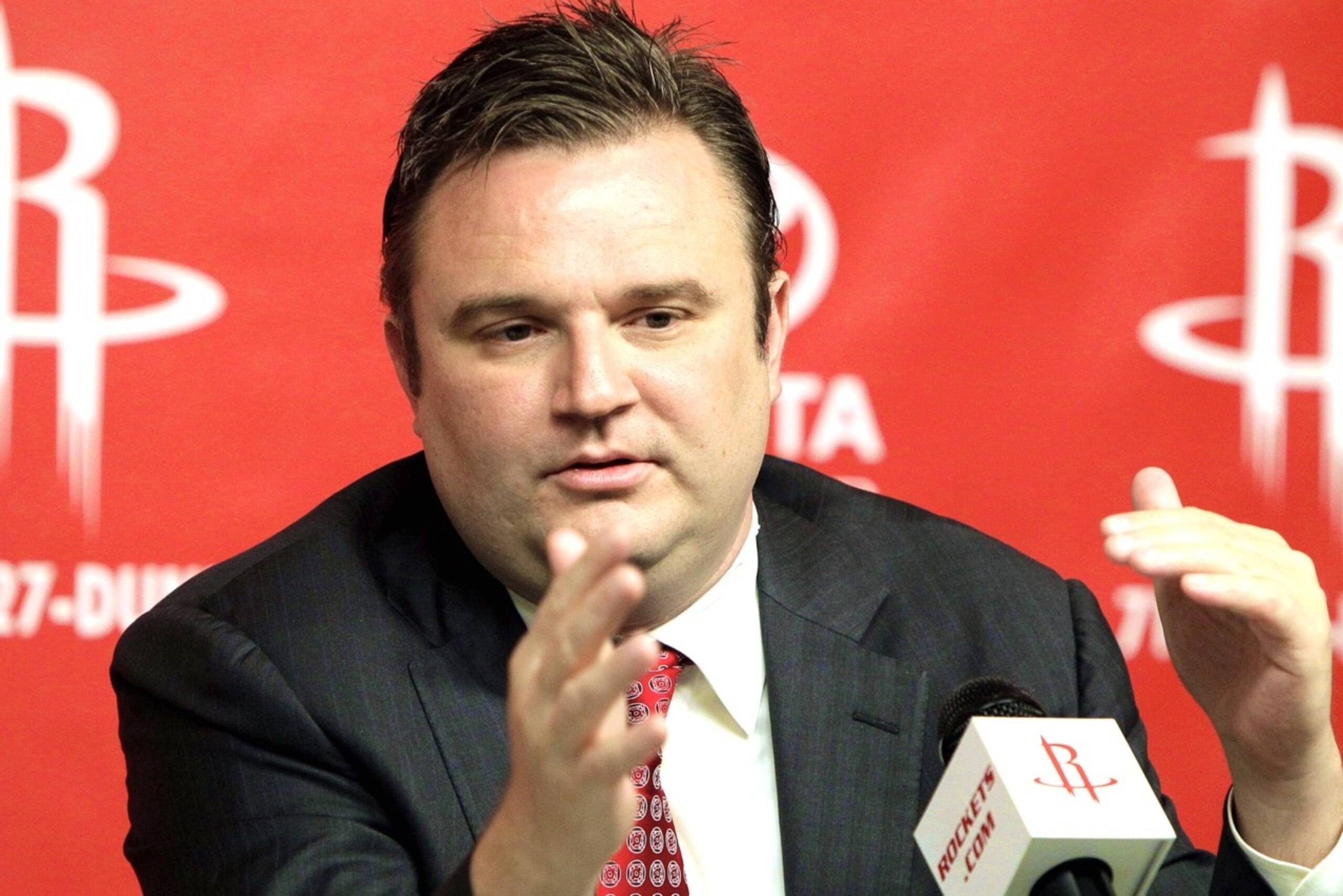

Will Another Quiet Offseason Pay off for Houston Rockets?
Did you hear the one about the Houston Rockets' offseason? What? The Rockets had an offseason?
General manager Daryl Morey has consistently made a big splash every summer. In 2012 it was the acquisition of James Harden, Jeremy Lin and Omer Asik. In 2013, Houston lured Dwight Howard in free agency. Last summer, the Rockets made major roster moves to try to land Chris Bosh.
This year, if a cricket makes a pun, you hear Rockets. That’s how quiet it is.

Jonathan Feigen of the Houston Chronicle discussed free-agency plans with Morey before the season opened up in full:
"The more likely course is the Rockets will stay over the cap to keep their own players. They won't worry if they miss with a home-run swing on a pitch in the dirt, having gone for top free agents unsuccessfully and taken the criticism that followed. That makes them willing again to try "possible opportunities" that are "probably likely" to send them back to their own roster.
"I think you always go into the offseason hoping to have a stronger team next year than the year before," Morey said. "We said that last year. Even though there were a lot of ups and downs and twists and turns along the way, we thought we'd have a stronger team going into the playoffs and we did.
"We had a stronger team going into the playoffs, and we'll try to have an even stronger team going into the next playoffs."
"
And the Rockets have held that course.
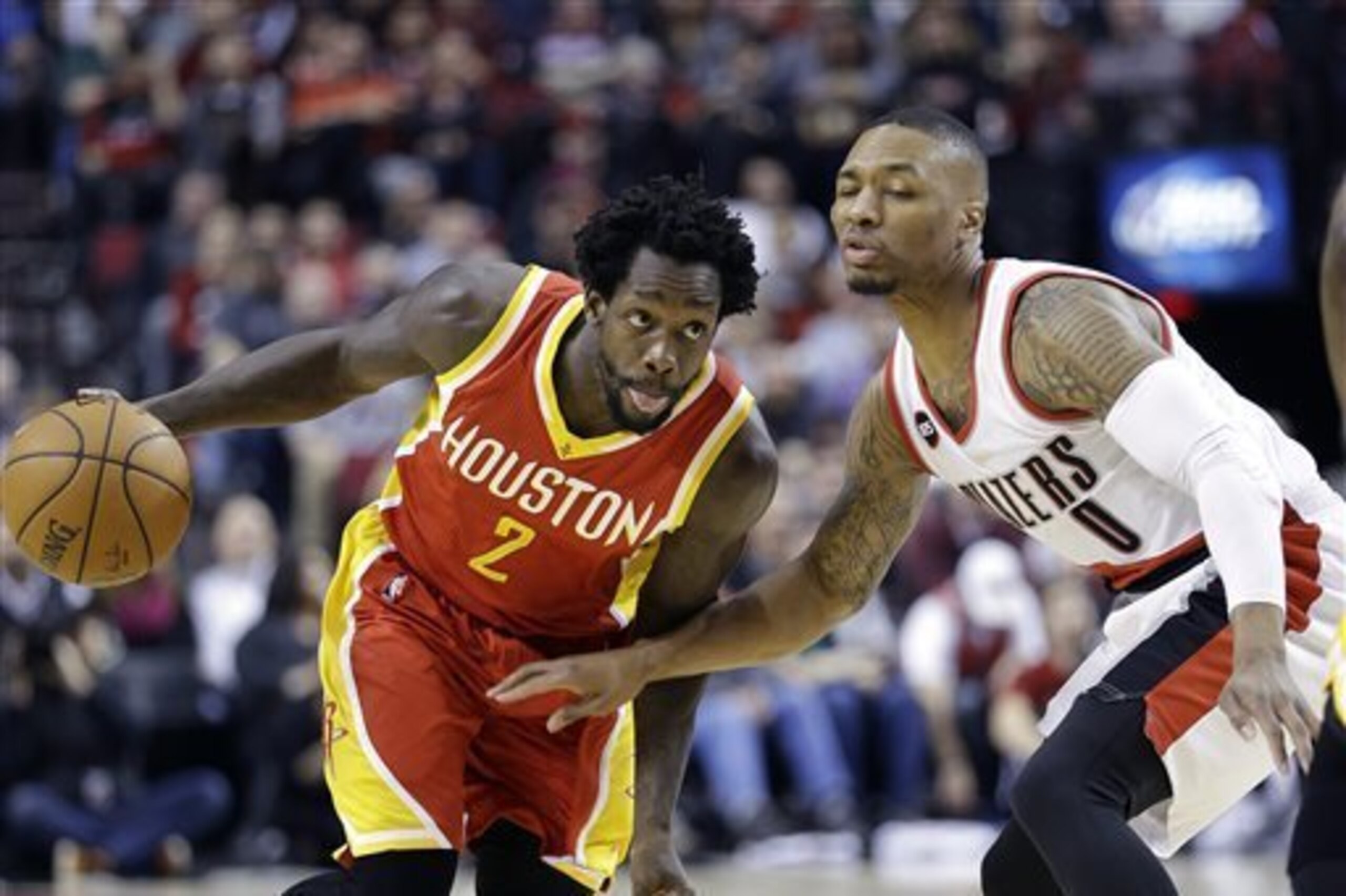
They kept Patrick Beverley and Corey Brewer, as reported by Marc Stein and Calvin Watkins of ESPN.com:
"Brewer agreed to a three-year deal worth $23.4 million, sources said.
Beverley's agreement, meanwhile, is for four years and $23 million, his agent said, according to The Associated Press. The first three years and $18 million are guaranteed, with the team holding a $5 million option for the fourth year.
"I think if we can keep our group together and stay healthy, we can win it all," Brewer told ESPN.com. "I'm just happy as can be. So glad to be back for three more years."
"
And according to Feigen, the plan is to keep both K.J. McDaniels and Josh Smith, though neither of those deals is finalized yet:
There were, however, reports that they could lose Jason Terry to the Dallas Mavericks, according to the Star-Telegram's Dwain Price, though it’s worth wondering whether DeAndre Jordan’s recent change of heart, per ESPN's Marc Stein and Ramona Shelburne, will affect Terry’s decision.
In a world where the San Antonio Spurs just landed LaMarcus Aldridge, per their official release, and David West, per USA Today's Sam Amick, Rockets fans can have understandable chagrin over the Rockets’ lack of movement. The logic goes: If you’re not getting better, you’re just getting worse.
Houston did take a stab at bringing over Sergio Llull, but it whiffed on that too, according to Yahoo Sports' Adrian Wojnarowski:
Basketball-Reference.com has a metric called roster continuity which “is calculated as the percentage of a team's regular-season minutes that were filled by players from the previous season's roster.” In other words, it’s essentially a measure of how much teams change from one season to the next.
Josh Planos from Fancy Stats at the Washington Post explained the benefits of staying together:
"By looking at the data, it’s evident that roster continuity is correlated to regular season success. Over the past three seasons, roster continuity has played a pivotal role in teams qualifying for the playoffs. Just three teams — 2014-15 Cleveland Cavaliers, 2014-15 Dallas Mavericks and the 2012-13 Houston Rockets — made the postseason with less than 40 percent roster continuity. Meanwhile, 44 percent of playoff teams had a roster continuity percentage higher than 70, including seven this season.
"
Ian Levy, writing for the Cauldron, illustrated how continuity has been a big part of the Spurs’ consistent success over the last two decades:
"Teams rise and fall season by season, but by and large the Spurs have been among the league’s most stable rosters, finishing in the top five in each of the last five seasons. If we average those numbers out for each team over the last decade, we see no one else is really in San Antonio’s league.
The difference between the Spurs and third-most stable team — the Denver Nuggets — is about as big as the difference between the Nuggets and the 23rd-most stable team, the Charlotte Hornets. That means, on average, about 3,300 minutes per season — or about 40 minutes per game — were played by Spurs who were new to the team that year.
"
Specifically, this is as strong an argument for the philosophy of “if it isn’t broke, don’t fix it” as you’ll find. And while the Rockets may not have won the title last year, they are most decidedly not “broke.”
The Rockets finished last season with the No. 2 seed in the West in spite of enduring one of most injury plagued season of any team in the NBA.
And then, without two of their key contributors, Donatas Motiejunas and Beverley, they made it all the way to the Western Conference Finals.
Furthermore, Smith and Brewer haven't even played a full season with the Rockets. This core has a lot of room to grow by staying together.

If there’s a chance to add a superstar, it makes sense to do it. You can always find a way to clear roster space for a guy like LaMarcus Aldridge. But short of that, it doesn’t make sense to fiddle with working parts just for the sake of fiddling.
The Rockets’ offseason might have fans feeling like a kid on his little brother’s birthday. Even though you don’t want what he’s getting, you still feel jealous because he has shiny, new things, and you don’t. That’s OK, though. After a couple of days, you go back to playing with your better toys and don’t care.
The Rockets' being together a second year will help. Not playing a morbid game of musical chairs where someone else gets injured every time the music stops will help. It may not seem like it, but the Rockets did get better by staying the same.
.jpg?w=2560 "Cam Ward Says He's Not A Loser")
.jpg?w=2560 "Chargers Fall to 0-5 🤢")
.jpg?w=2560 "🚨 Texans Trade for MHJ")
.jpg?w=2560 "Grading MHJ Trade 📝")

.jpg?w=2560 "MHJ Bought Own Jugs Machine")