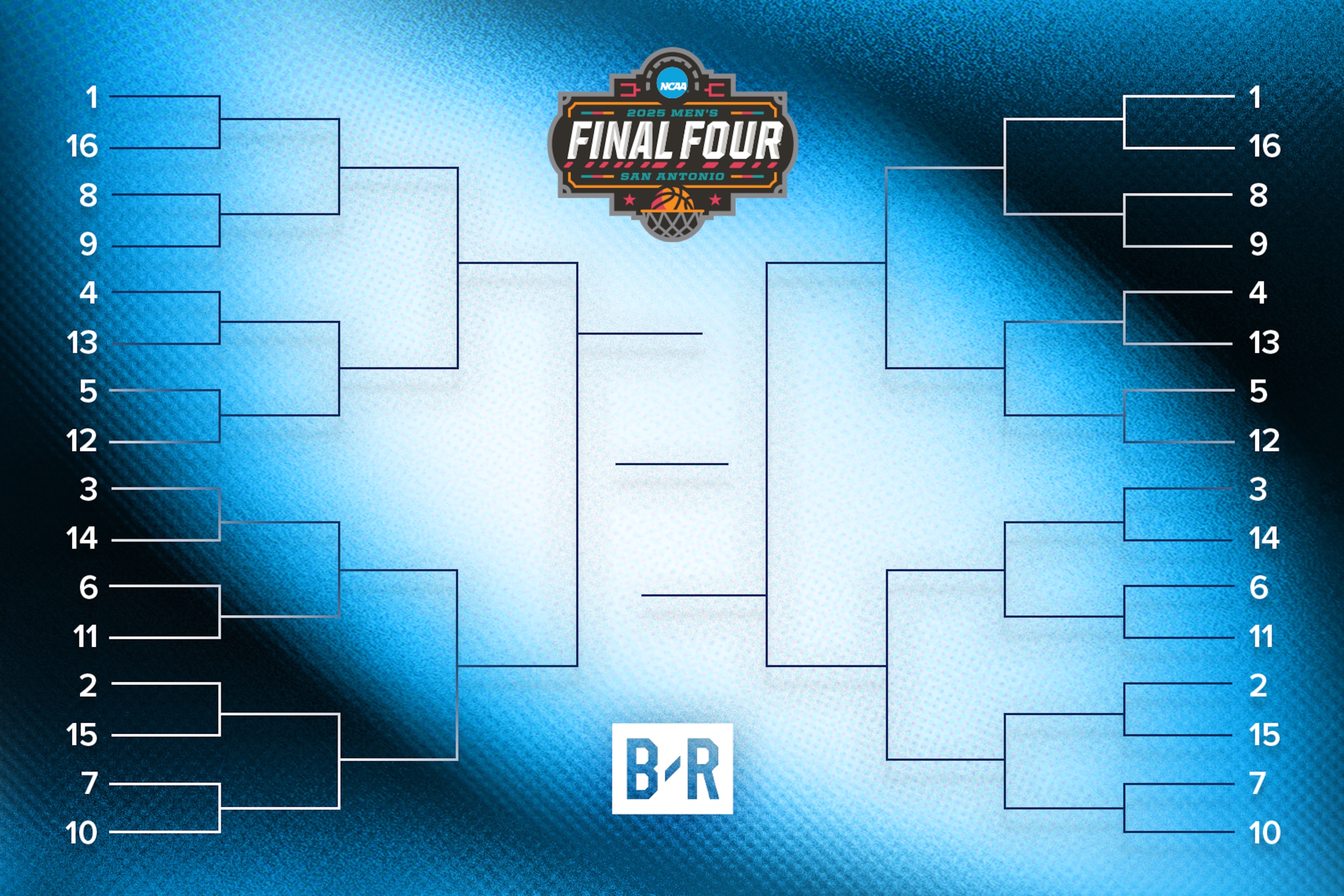

Printable NCAA Tournament Bracket 2025: Easy-to-Print Sheet with Men's Tournament Tips

March Madness is in full swing, and while conference tournaments provided a steady stream of appetizers, it's time for the main course.
The bracket for the 2025 men's NCAA basketball tournament was released on Sunday evening, and first-four games will kick off the tournament on Tuesday March, 18.
Everything will lead up to the NCAA Championship Game in San Antonio on April 7. Here, you'll find a look at what lies ahead and a few tips for filling out those brackets.
Click here to play the NCAA March Madness Men's Bracket Challenge.
Tournament Bracket, Overview and Odds
1 of 3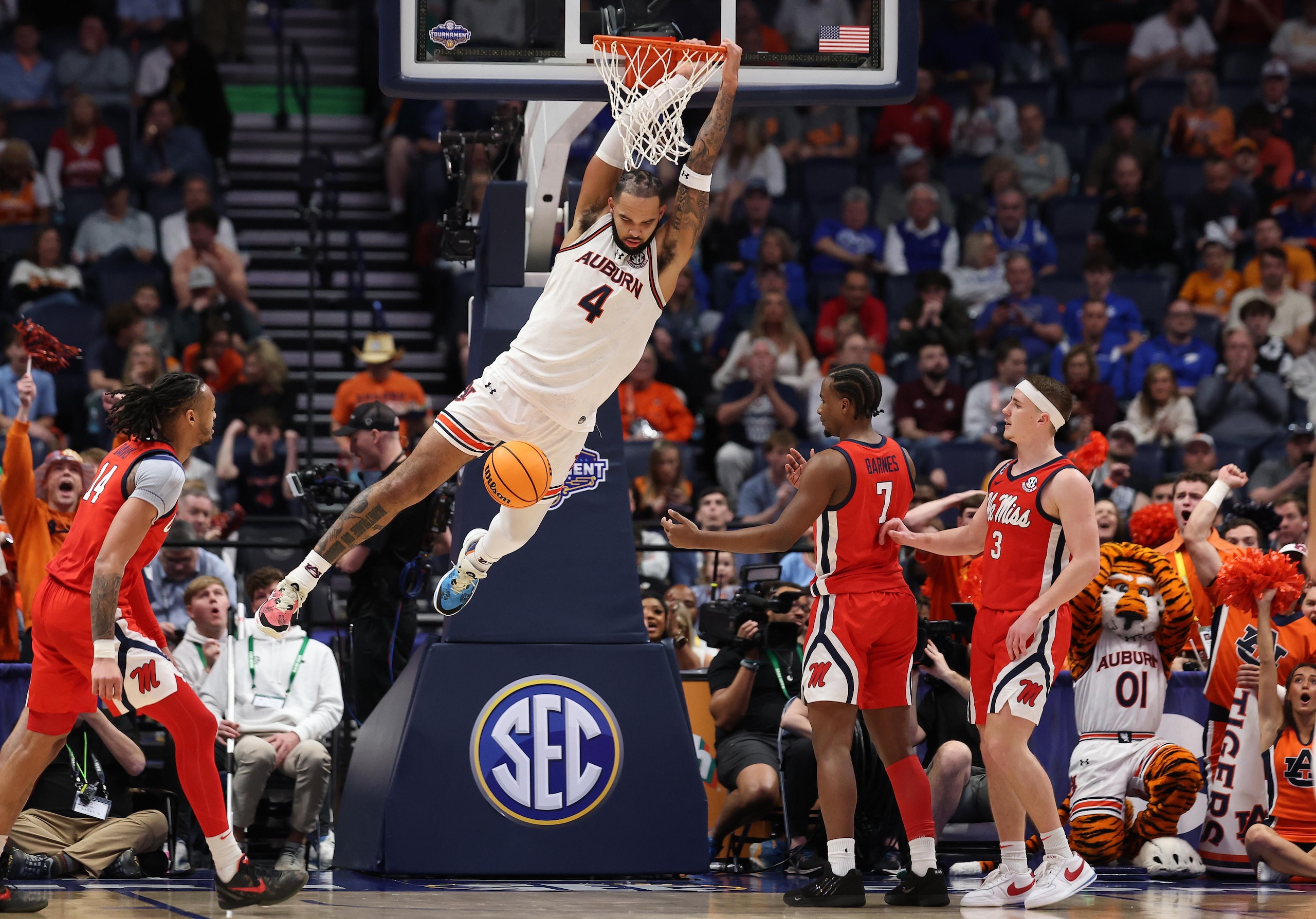
Sunday's selection show unveiled a few surprises, though not when it comes to the favorites. Auburn, which holds a 28-5 record, earned the No. 1 overall seed, while Florida, Houston and Duke also earned No. 1 seeds.
The final four teams to squeak into the tournament, according to the selection committee (h/t The Athletic) were Texas, Xavier, North Carolina and San Diego State. The four to just miss the tournament were Indiana, Ohio State, West Virginia and Boise State.
Eight teams will compete in the first four games, which will trim the field to 64 and set up the first round. St. Francis PA will take on Alabama State, Texas will face Xavier, North Carolina will face San Diego State and Mount St. Marys will battle American U. in those games.
Complete matchups, venue information and a printable bracket can be found at NCAA.com.
Tournament Favorites, per DraftKings Sportsbook
Duke 310 (bet $100 to win $310)
Auburn 380
Florida 400
Houston 650
Tennessee 15000
Alabama 1700
Michigan State 2200
St. Johns 2200
2025 NCAA Tournament Schedule
2 of 3
March 18-19
First Four
March 20-21
First Round
March 22-23
Second Round
March 27-28
Sweet 16
March 29-30
Elite Eight
April 5
Final Four
April 7
NCAA Championship Game
Men's Tournament Bracket Advice
3 of 3
Don't Pick Blindly
It might seem like common sense, but picking teams at random or going with your favorite mascots or team colors isn't a very efficient way to fabricate a successful bracket—even if tournament outcomes seem to make little sense at times.
While historical data won't guarantee a 100-percent success rate, it's a good place to start. Jim Sergent of USA Today has a wealth of useful information that can aid bracket-challenge participants with those difficult decisions.
For example, a 10th, 11th, or 12th seed that wins its first-round game has a 40-percent chance of making it to the Sweet 16, according to Sergent. 47 percent of teams seeded fourth or higher make it to the round of 16.
Andy Wiltry of NCAA.com also has some interesting information, especially when it comes to picking upsets.
Don't Go Overboard On Upsets
It rarely pays to get too cute with tournament brackets, but to win a pool or bracket challenge, taking a risk or too is practically required—plus, it's always nice to brag about that one sleeper that none of your friends saw coming.
It's worth picking at least a couple of upsets in the early rounds, but going overboard is usually a mistake. According to Wiltry, tournaments have averaged 8.5 upsets and 4.7 first-round upsets since the bracket expanded to 64 teams in 1985.
That date, per Wiltry, is based on an "upset" being defined by the winning team being seeded at least five seeds lower than the losing team. A No. 9 seed beating a No. 8 seed really isn't much of an upset, after all.
According to Wiltry, No. 11 versus No. 6 matchups are the most ripe for upsets in Round 1.
There are always outliers to averages, but avoiding upsets altogether or picking 12 or more is probably a bad idea.
As for picking the right upsets, well, that's more of a challenge.
Trust High Seeds to a Point, Stick With the Sleepers You Love
It's a good idea to avoid knocking a No. 1 seed out in the first round. While 16-1 upsets do occur, they're extremely rare. Top seeds are 154-2 all-time against No. 16 seeds.
Upsets are a little more common with 15-2 matchups but still infrequent. No. 15 and No. 16 seeds have won a combined 13 first-round games. First-round upsets are still the most common, though, with tournaments only averaging three in Round 2 and less than one in each of the latter rounds.
Which sleepers are worth banking on this year? That's up to you, but doing a little online research never hurts.
Bleacher Report's Joel Reuter identified BYU (6th seed in the East), Missouri (6th, West), New Mexico (10th, South), Oregon (5th, East), and St. Mary's (7th, East) as sleepers that could go on significant runs.
You can also check out Bleacher Report's tournament power rankings, assembled by Kerry Miller and Joel Reuter. It has a wealth of information regarding each team's top players, strengths weaknesses, and wins of the season.
So, before filling out those brackets, do a little research an take advice when you can get it. If you're still on the fence about a particular matchup, try trusting your gut over a coin flip.
If you or someone you know has a gambling problem, crisis counseling and referral services can be accessed by calling 1-800-GAMBLER (1-800-426-2537) (IL).Gambling problem? Call 1-800-GAMBLER (NJ/WV/PA), 1-800-9-WITH-IT (IN), 1-800-522-4700 (CO), 1-800-BETS OFF (IA), or call or text the TN REDLINE: 800-889-9789 (TN).21+. NJ/PA/WV/IN/IA/CO/IL/TN only. In partnership with Meadows Racetrack & Casino. Eligibility restrictions apply. See draftkings.com/sportsbook for details.

.jpg?w=2560 "Rams Raiders Football")


.jpg?w=2560 "Steelers Saints Football")

.jpg?w=2560 "🚨 Week 8 AP Top 25 Poll")
.jpg?w=2560 "Fantasy Waiver Wire Stars 🤩")
.jpg?w=2560 "Packers Safety Slams Refs 🤬")
