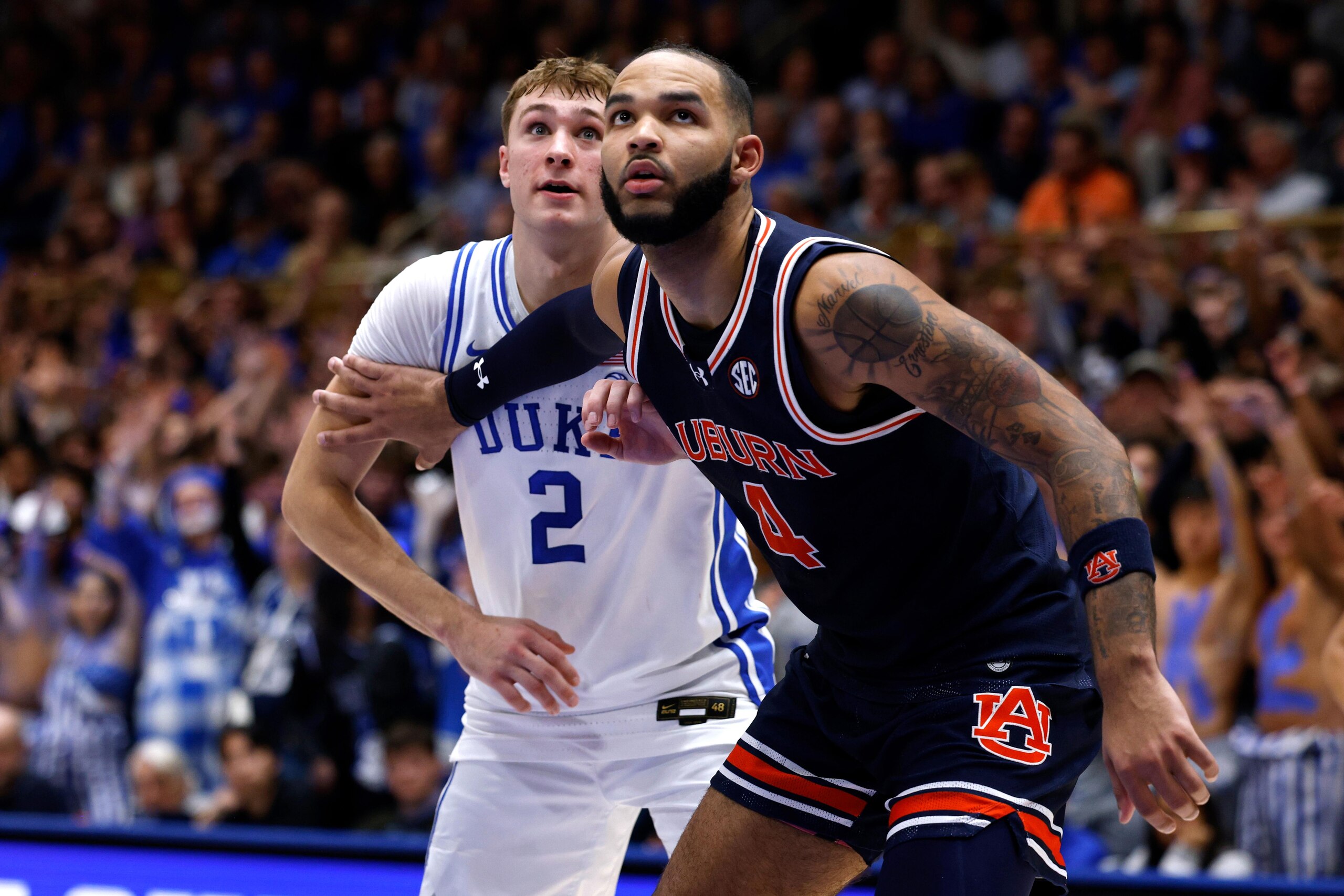

Men's NCAA Tournament 2025: Power Ranking All 68 Teams
Selection Sunday has finally arrived, and with it the 2025 NCAA men's basketball tournament field has been set.
(Click here to play the NCAA March Madness Men's Bracket Challenge.)
After months of arguing about NCAA Evaluation Tool (NET) rankings, KenPom ratings, wins above bubble (WAB) rankings, Quad records and more, none of that mumbo jumbo matters anymore.
We have our bracket.
Hallelujah.
Now, to fill it out.
We have been researching the heck out of these 68 teams throughout Championship Week in hopes of creating at least a little bit of a bracket-picking edge over someone who is just going to throw darts, flip coins or make selections based on mascots.
Based on a combination of player talent, current roster health, marquee wins, biggest weaknesses and a hefty dose of gut feeling/eye test, we have ranked all 68 NCAA tournament teams.
Generally speaking, if you're trying to decide which team to choose in a matchup, the higher-ranked team would be our suggestion. There are matchup-based exceptions to that rule of thumb, but the teams at the top of our list are the ones with the least troubling Achilles' heels. Thus, they are the ones most likely to reach the Final Four.
Before we dive in, a thank-you must be extended to Joel Reuter. B/R's MLB power rankings guru was a huge help and contributed to this piece amid spring training chaos. Joel took the Big East teams this year, as well as about two-thirds of the champions from the one-bid leagues. If you see him on Twitter touting Lipscomb or High Point as a sleeper, maybe take his word on it.
One final note: Seeding/draw had nothing to do with these rankings.
68. Saint Francis Red Flash
1 of 68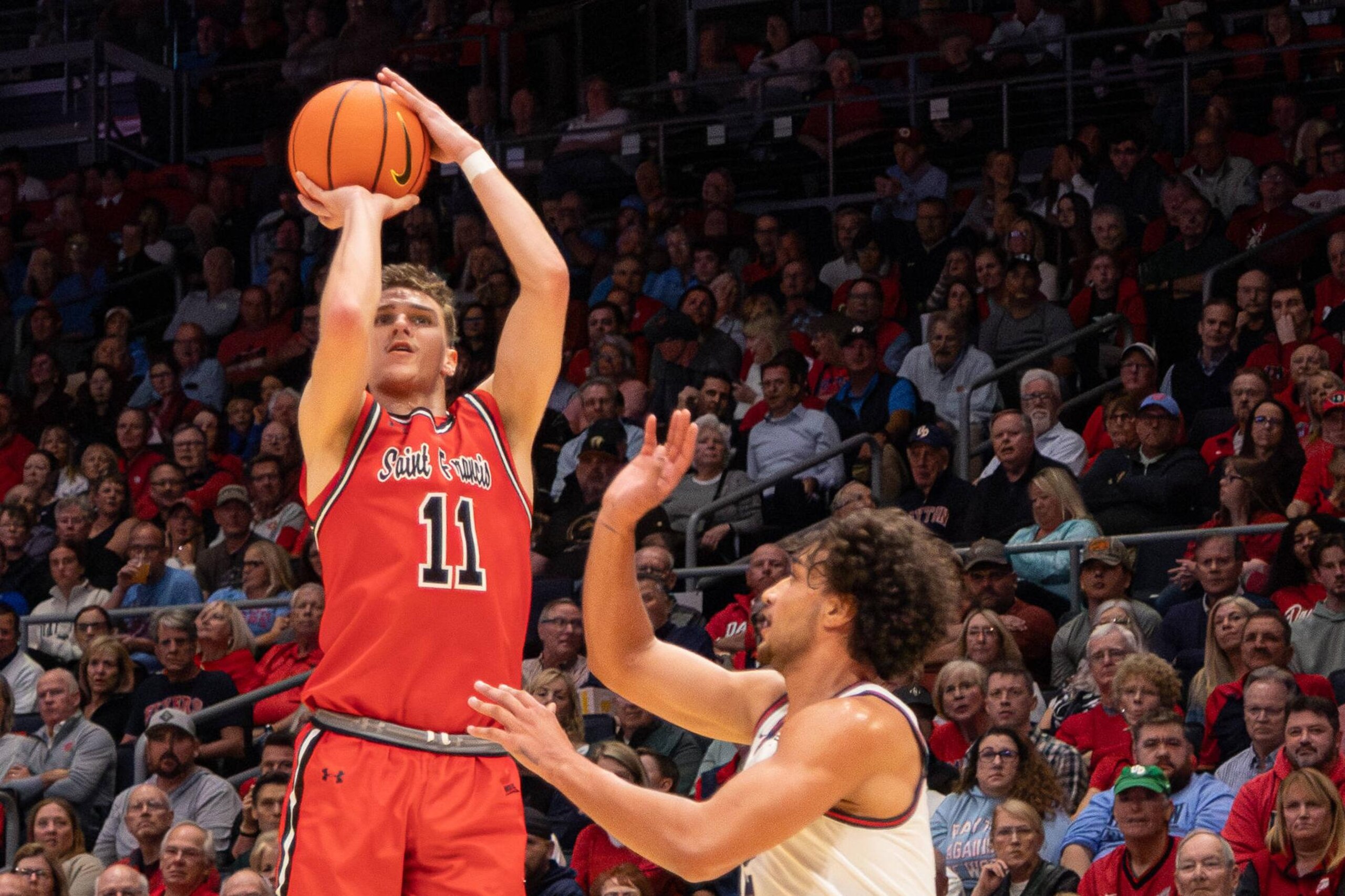
Record: 16-17 (8-8 in NEC)
Star Player: JUCO transfer Riley Parker leads the Red Flash with 13.4 points per game after spending the last two seasons at Cochise College in Arizona. After a slow start to the season, he has averaged 15.8 points and connected on 45 of 104 three-point attempts (43.3 percent) over his last 20 games to give the NEC champs a legitimate go-to scorer.
Biggest Wins: A lot has gone right for the Red Flash over the past month, with three straight overtime wins to close out the regular season and then a pair of dramatic victories where they took the lead in the final seconds in their first two NEC tournament games. That all culminated in a 46-43 win over heavily favored Central Connecticut in the NEC championship game, snapping what was the nation's longest active winning streak at 14 games.
Reason to Worry: The Red Flash have a staggering 10 Quad 4 losses and still have a losing record overall even with a six-game winning streak entering the NCAA tournament. Clemson, Dayton, Georgetown, Maryland and Penn State outscored them by a combined 157 points during non-conference play, providing enough of a sample size to show they are simply unable to keep up with a major conference opponent.
March Madness Ceiling: Fairleigh Dickinson put the NEC on the Cinderella map with their upset of No. 1 seed Purdue two years ago and Wagner won a First Four game last March, so the Red Flash should not be completely ignored. Still, anything but a lopsided first-round loss would be a major shocker.
67. Alabama State Hornets
2 of 68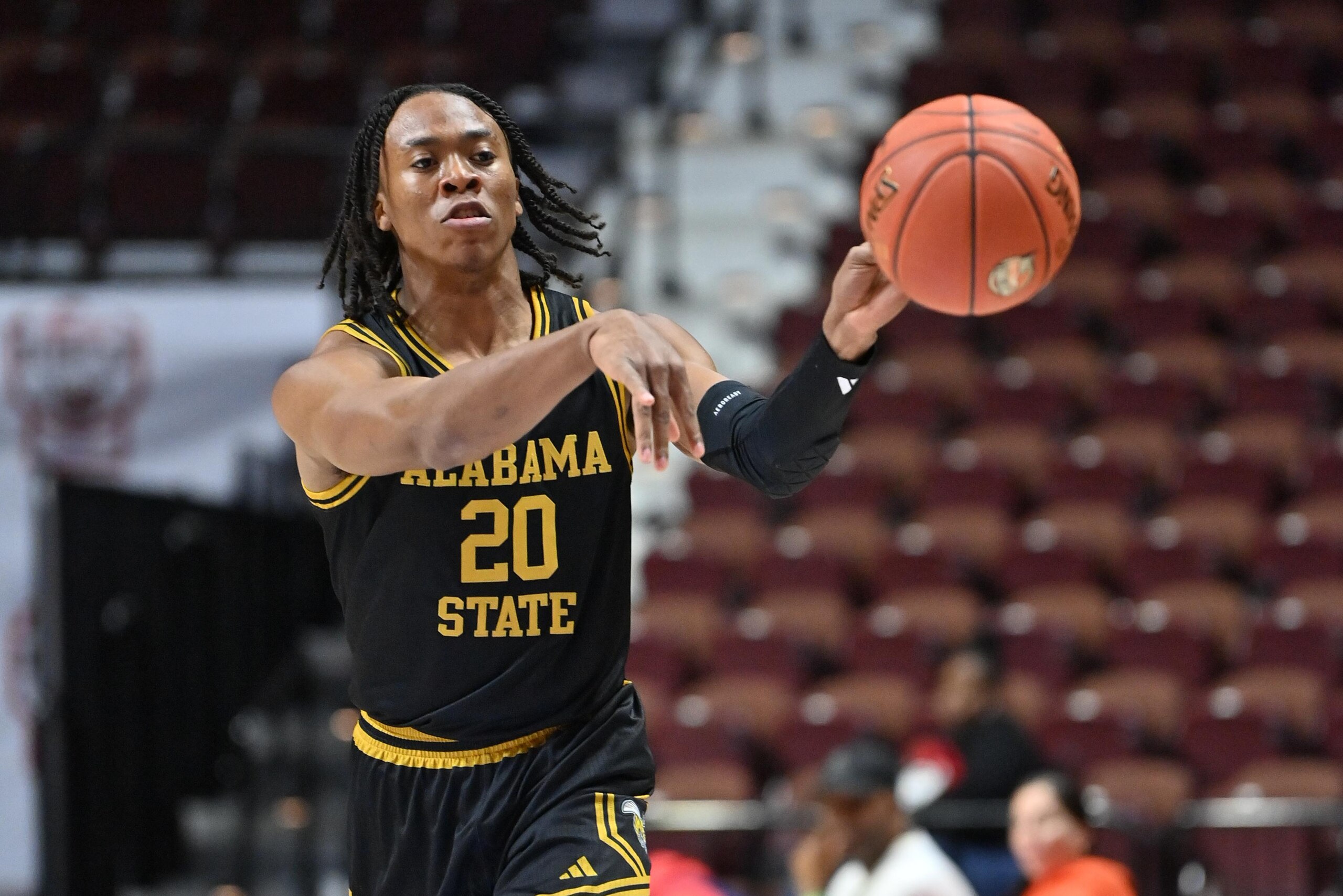
Record: 19-15 (12-6 in SWAC)
Star Player: The coach/father and star player/son dynamic from a small school is always a crowd-pleaser in March—never forget Ron Hunter falling off his stool when R.J. hit that game-winner for Georgia State in 2015—and Alabama State has a good one in head coach Tony Madlock and star player TJ. While the Hornets have won 10 of their last 11 games, TJ has averaged 15 points, 8.0 rebounds, 2.5 assists and 1.4 steals per game, averaging a double-double in the SWAC tournament.
Biggest Wins: Alabama State did beat a fellow tournament team, defeating the Omaha Mavericks by 18 in the Akron Basketball Classic. The Hornets also beat Lamar the following day. Aside from those wins over teams in the 160 range on KenPom, though, they had no other top-200 wins. Easily the biggest win was taking down Jackson State in the SWAC title game.
Reason to Worry: Does a team ranking outside the top 250 in both adjusted offensive efficiency and adjusted defensive efficiency concern you at all? If not, feel free to pick Alabama State for a few wins. But this is a dreadful shooting team whose only particularly strong suit is forcing four more turnovers per game than it commits.
March Madness Ceiling: In 23 of the past 24 tournaments, the SWAC champ has been a No. 16 seed. The exception (Texas Southern was a No. 15 seed in 2015) lost its opener by 21, and neither UMBC nor FDU came from this league. And ASU finished fourth in a league that never advances in the dance. You know what to do here.
66. Mount St. Mary's Mountaineers
3 of 68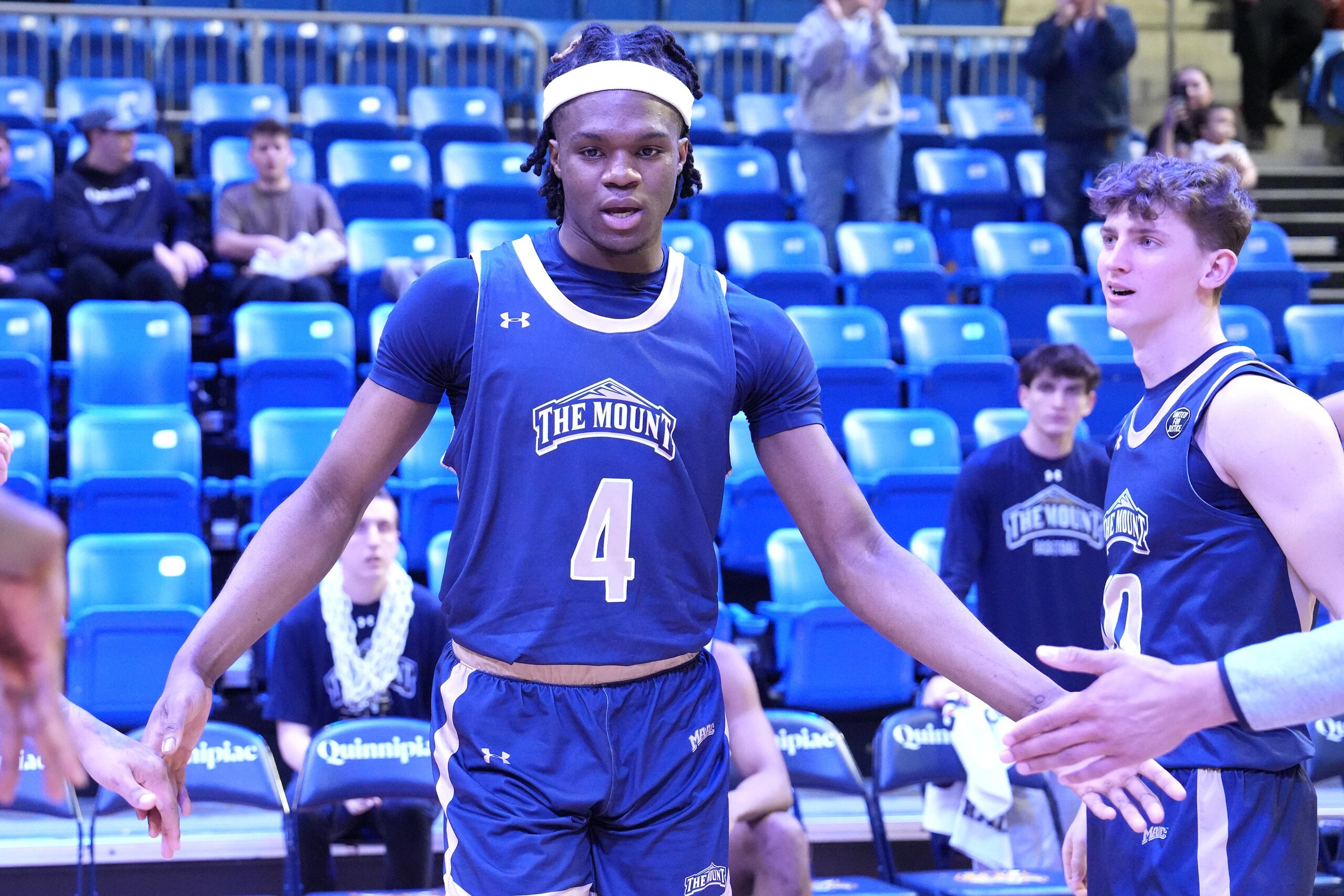
Record: 22-12 (12-8 in MAAC)
Star Player: Dola Adebayo was just a role player for Mount St. Mary's one year ago. But after losing all three of their leading scorers to the transfer portal, the Mountaineers decided to lean more heavily upon the big man this season. He led the team in points and blocks and only narrowly missed leading the way in both rebounds and steals, too.
Biggest Wins: It didn't end up looking like a quality win, but how about Mount St. Mary's winning a true road game against the Miami Hurricanes? The Mountaineers also won at Bucknell, which won the Patriot League regular-season title. They almost won at George Mason, too, in a little DelMarVa nonconference clash. The biggest wins, though, were taking down Merrimack and Iona in succession to win the MAAC championship.
Reason to Worry: Among the many reasons not to expect much from a team that ranks around 250th on KenPom, MSM enters the dance with a negative-134 turnover margin for the year. It doesn't shoot well when avoiding a turnover, either, resulting in 63 points or fewer in each of its last four games.
March Madness Ceiling: The MAAC champion usually doesn't accomplish much in the dance, though Saint Peter's sure was an exception to that rule a few years ago. These Mountaineers are a far cry from those Peacocks, though. It would be an unbelievable stunner if this team made it into the second round.
.jpg?w=2560 "Packers 49ers Football")
.jpg?w=2560 "Lions Cardinals Football")
.jpg?w=2560 "Steelers Browns Football")
65. American Eagles
4 of 68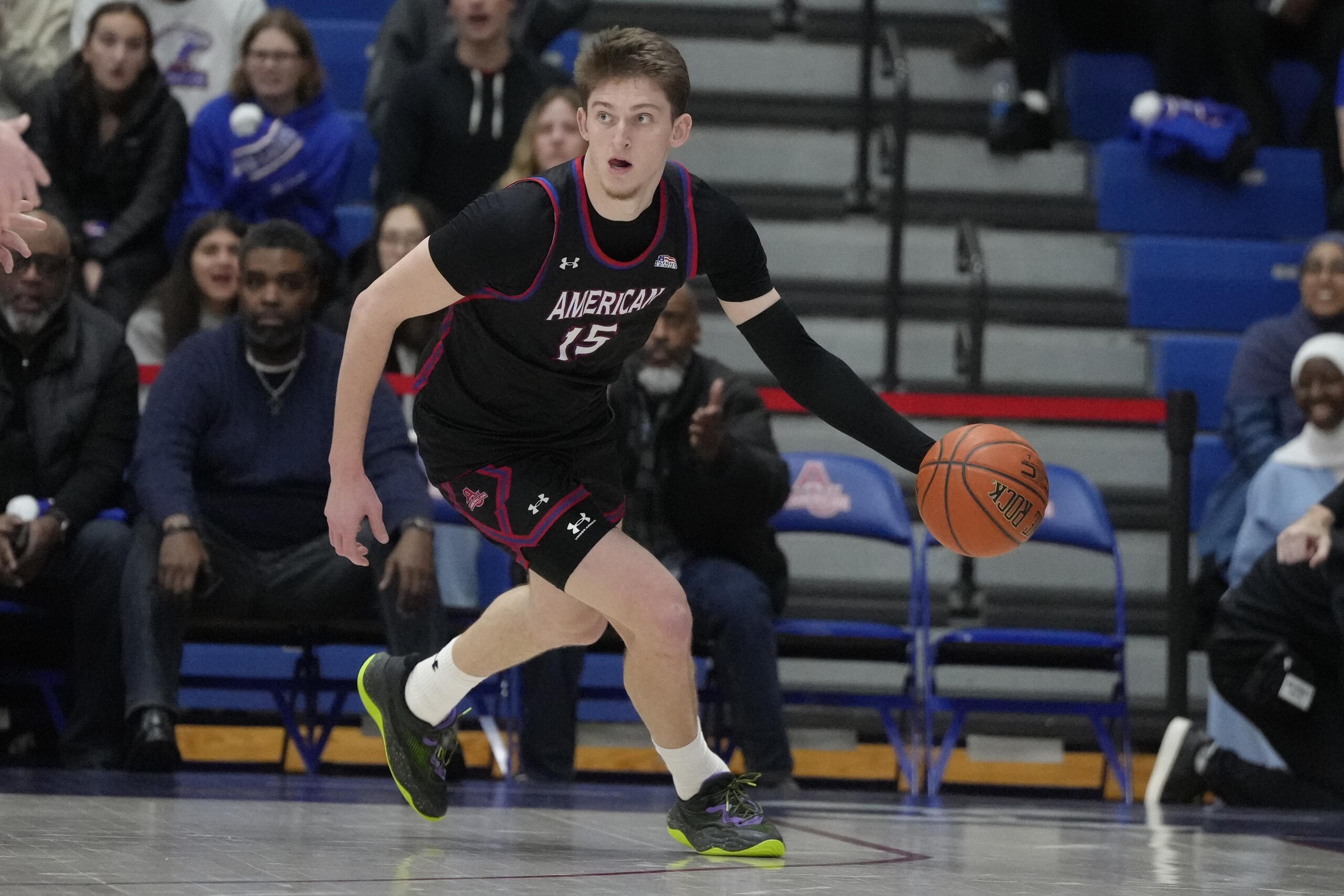
Record: 22-12 (13-5 in Patriot League)
Star Player: Forward Matt Rogers averages 17.0 points and 5.6 rebounds while shooting 39.9 percent from beyond the arc on 148 attempts. With a 6'9", 220-pound frame, he can create matchup problems with his size and perimeter skills. He ranks 10th all-time in Patriot League history with 1,849 points, with the No. 1 spot on that list belonging to Lehigh legend and Duke nemesis CJ McCollum. Rogers had 25 points and eight rebounds in the Patriot League title game.
Biggest Wins: The Patriot League was one of the weakest conferences in the nation, so the Eagles only have one win above the Quad 4 level in the form of an 81-71 overtime victory against A-10 opponent George Washington in early December. They actually lost both regular-season matchups against Navy before pulling out a lopsided 74-52 win in the Patriot League championship game to clinch the automatic bid.
Reason to Worry: They hung around with Virginia (63-58) and a good High Point team (80-73), but their blowout loss to North Carolina (107-55) is probably a better indication of what to expect in the NCAA tournament. They shoot 44.3 percent from the floor, 34.7 percent from three-point range and are one of the worst rebounding teams in this year's field. They also play at one of the slowest tempos of any team in the country, which will make things difficult if an athletically superior opponent wants to run.
March Madness Ceiling: The Eagles snapped a run of five straight NCAA tournament appearances for Colgate, and while the Raiders were a popular Cinderella pick at times during that stretch, the Patriot League has not won an NCAA tournament game since McCollum and Lehigh shocked the world in 2012. It will likely be one-and-done for American.
64. SIU-Edwardsville Cougars
5 of 68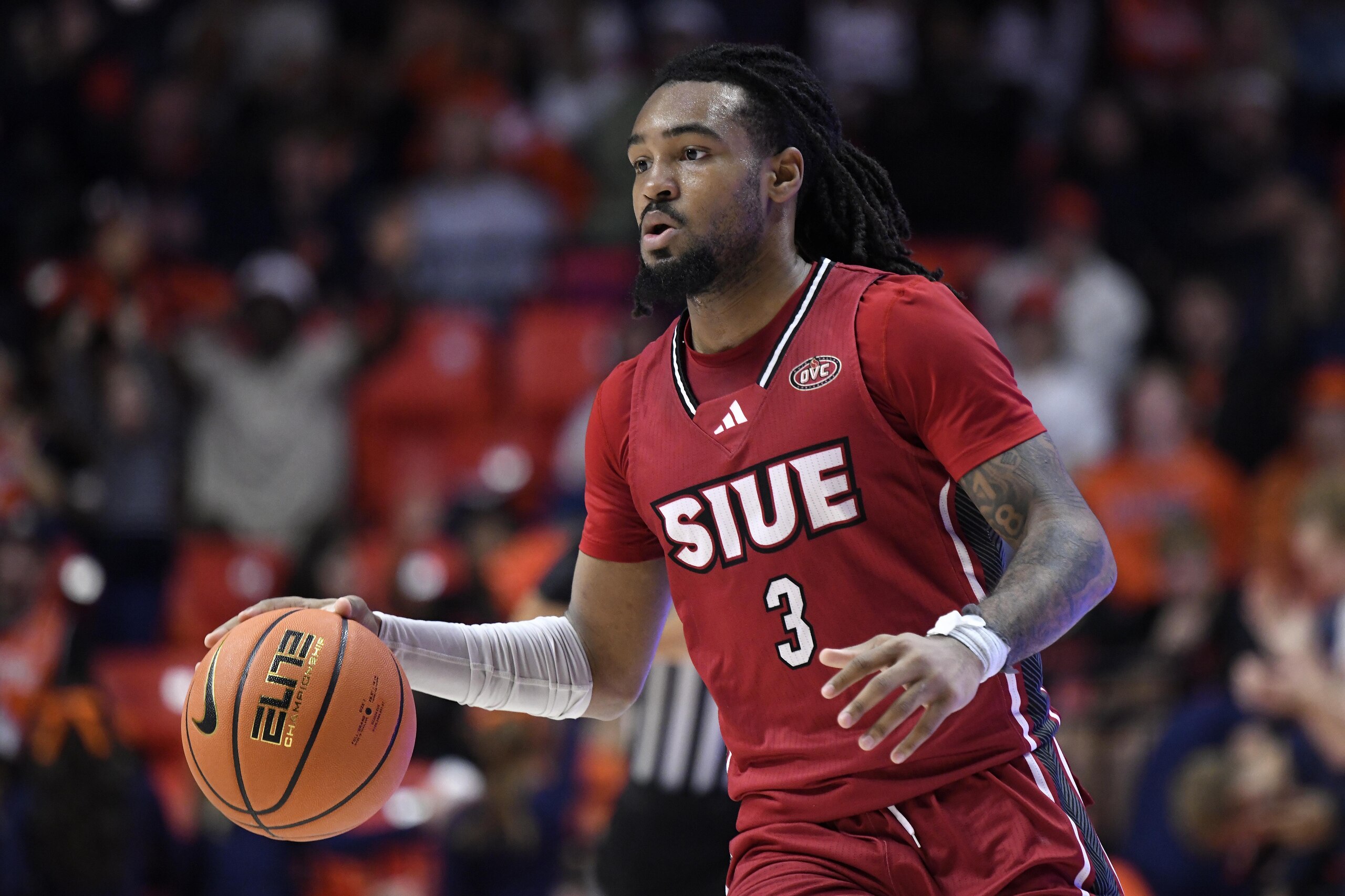
Record: 22-11 (13-7 in Ohio Valley)
Star Player: With 20 points in the OVC title game, Ray'Sean Taylor not only helped SIUE punch its ticket to the NCAA tournament, but he also became the all-time leading scorer in school history with 1,952 career points. The OVC Player of the Year led the conference with 19.3 points per game, and he also connected on 91 threes at a 34.6 percent clip. He logged three 30-point games this year, including two in February.
Biggest Wins: With only two wins above the Quad 4 level, there is not much to talk about when it comes to the Cougars' resume. One of their two Quad 3 victories was a 69-48 blowout of No. 1 seed SE Missouri State in the OVC title game, and that is arguably the biggest win in school history as it earned the Cougars their first NCAA tournament trip since they joined the D-I ranks for the 2008-09 season.
Reason to Worry: The Cougars only played two games against major conference opponents, losing to Illinois (90-58) and Indiana (80-61) by a combined 51 points, so there is no reason to suddenly believe they can hang around with a superior opponent. Digging deeper, they were 9-9 in games where Taylor failed to score 20 points, compared to 13-2 when he did reach that total, so game planning against them could be as easy as finding a way to slow him down.
March Madness Ceiling: Even if Taylor goes off for 40 points and the defense plays its best game of the season, it's still hard to see the Cougars surviving the first round of the NCAA tournament.
63. Norfolk State Spartans
6 of 68
Record: 23-10 (11-3 in MEAC)
Star Player: After averaging 9.2 points last season at Murray State, guard Brian Moore Jr. joined the Spartans in the transfer portal, earning first team All-MEAC honors while averaging 18.5 points, 3.7 rebounds, 3.0 assists and 1.3 steals. He has three 30-point games this year, with a season-high 33 against High Point in December.
Biggest Wins: A free throw from Christian Ings with eight seconds to play in the MEAC title game gave the Spartans a 66-65 lead over South Carolina State, and that held up as the final score in a thrilling battle for the automatic bid. From a resume standpoint, their 77-74 victory over Big South champion High Point in non-conference play stands as a Quad 2 win and their best result of the season.
Reason to Worry: Earlier this month, the Spartans lost back-to-back games on the road to South Carolina State and North Carolina Central, two teams that sit outside the top 175 in NET ranking. They were overmatched in almost every facet of the game against Baylor during non-conference play, surrendering 55.4 percent shooting and allowing 11 offensive rebounds while turning the ball over 20 times on their end of the floor.
March Madness Ceiling: The Spartans hung around in a 67-52 loss to Tennessee, trailing by just seven points at halftime. A similarly respectable showing might be the best-case scenario as they get set to play in their third NCAA tournament in the last five years.
62. Omaha Mavericks
7 of 68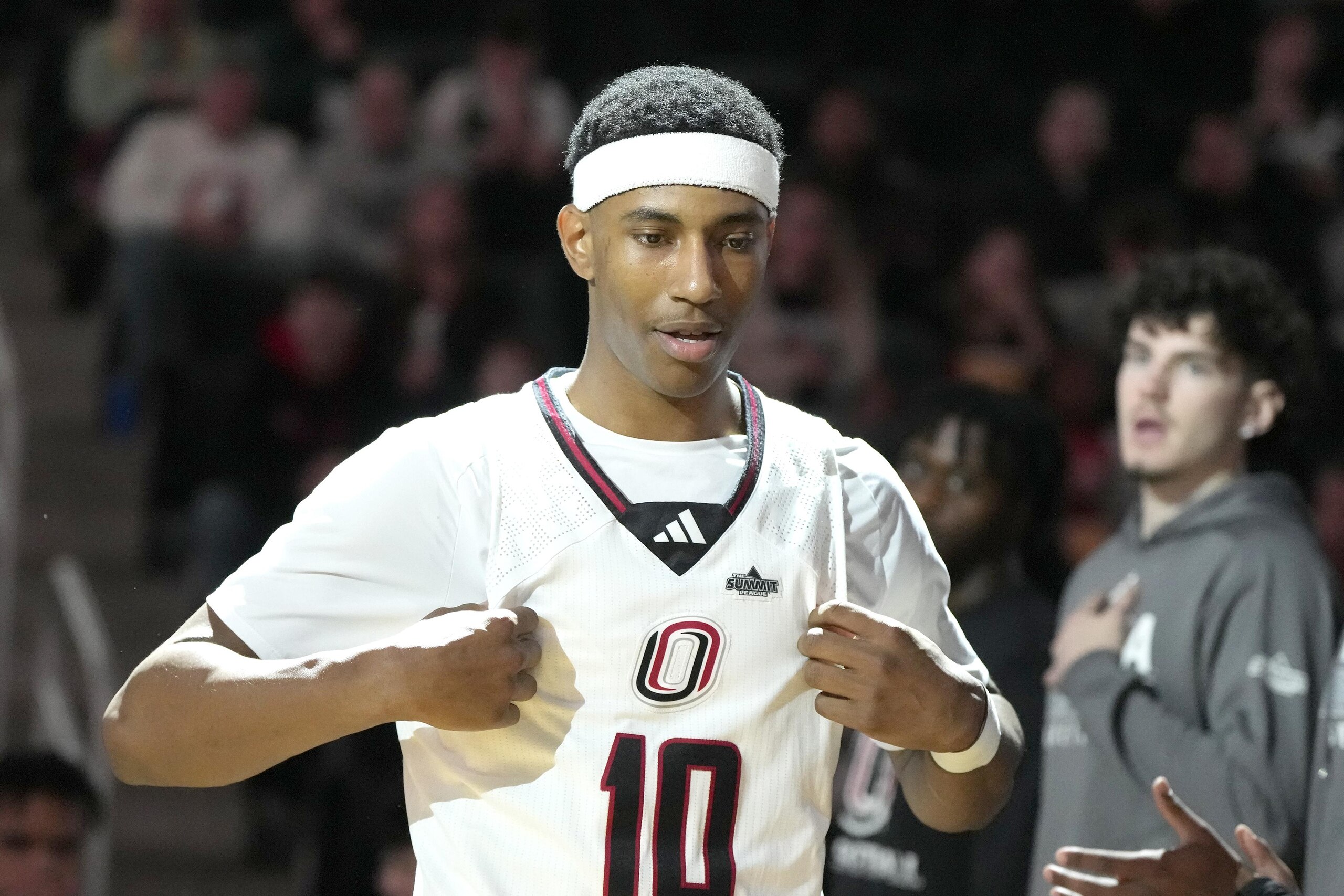
Record: 22-12 (13-3 in Summit)
Star Player: Forward Marquel Sutton averaged 19.1 points and 8.0 rebounds on his way to Summit League Player of the Year honors, and he leads an eight-man Mavericks rotation made up entirely of upperclassmen. That said, point guard JJ White is every bit as important to the team's success, averaging 13.7 points and 4.0 assists while shooting a blistering 43.9 percent from beyond the arc.
Biggest Wins: The Mavericks won three games in four days to secure the Summit League automatic bid, capping things off with an 85-75 victory over St. Thomas in the conference championship game behind big games from White (29 points, 5 assists) and Sutton (22 points, 18 rebounds). That stands as their best win, and they were 0-7 on the year at the Quad 1 and Quad 2 levels.
Reason to Worry: With zero wins against NET Top 100 teams and a 32-point loss to Iowa State in their only game against a tournament-caliber team, Omaha has provided little reason to believe they are in for a Cinderella run. They rank outside the top 250 in KenPom's adjusted defensive efficiency and are 3-6 in games where they allow more than 80 points. Even with a solid offense, they might not be able to keep things close.
March Madness Ceiling: Head coach Chris Crutchfield inherited a 5-25 team after the 2021-22 season, and in three short years the Mavericks are now in the NCAA tournament for the first time. One milestone at a time, as their first March Madness win will probably have to wait.
61. Robert Morris Colonials
8 of 68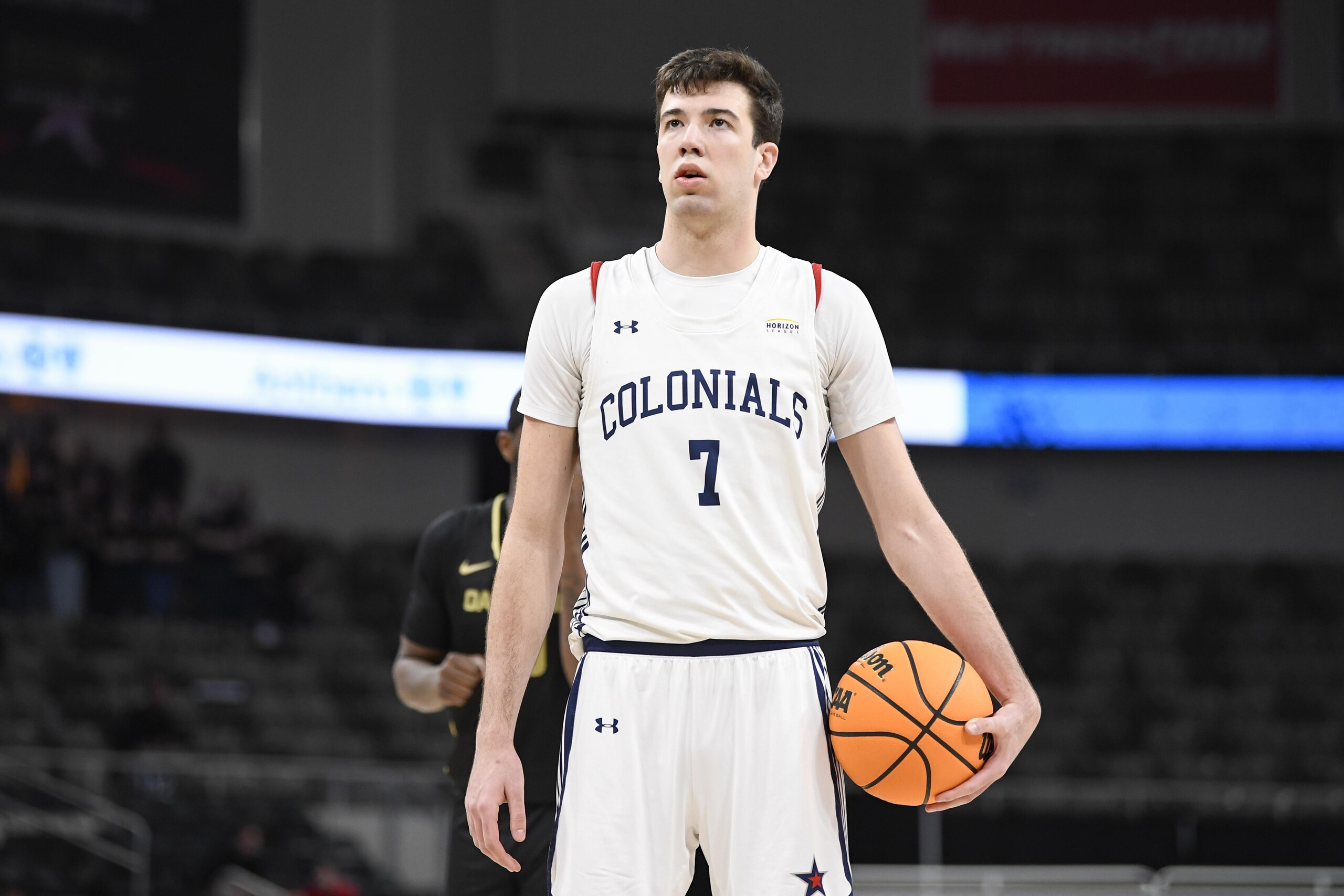
Record: 26-8 (15-5 in Horizon)
Star Player: After averaging 17.8 minutes and 5.3 points as a freshman, Alvaro Folgueiras led the Colonials with 14.1 points and 9.1 rebounds per game to take home Horizon League Player of the Year. Teammate Amarion Dickerson also secured some postseason hardware, winning the league's Defensive Player of the Year award while filling up the stat sheet with 12.9 points, 5.9 rebounds, 2.4 blocks, 1.4 assists and 1.0 steals per contest.
Biggest Wins: The Horizon League did not have a single team ranked inside the NET Top 125, so quality wins were hard to come by for the Colonials during a 15-5 run through conference play. A road victory over UW-Milwaukee in January and a non-conference road win over Cornell did give them a pair of Quad 2 wins. It took a 79-76 overtime win against Oakland to earn a spot in the conference title game where they bested Youngstown State by an 89-78 score.
Reason to Worry: An 87-59 loss to West Virginia in the season opener was the only game the Colonials played against a team inside the NET Top 125, so they could be in for a major culture shock against an athletically superior opponent in the opening round. They were 24-3 when they held the opposition under 80 points, but a low-scoring game may not be in the cards in the first round.
March Madness Ceiling: Last year's biggest Cinderella story came out of the Horizon League when No. 14 seed Oakland and sharp-shooter Jack Gohlke upset No. 3 seed Kentucky in the first round, so never say never.
60. Montana Grizzlies
9 of 68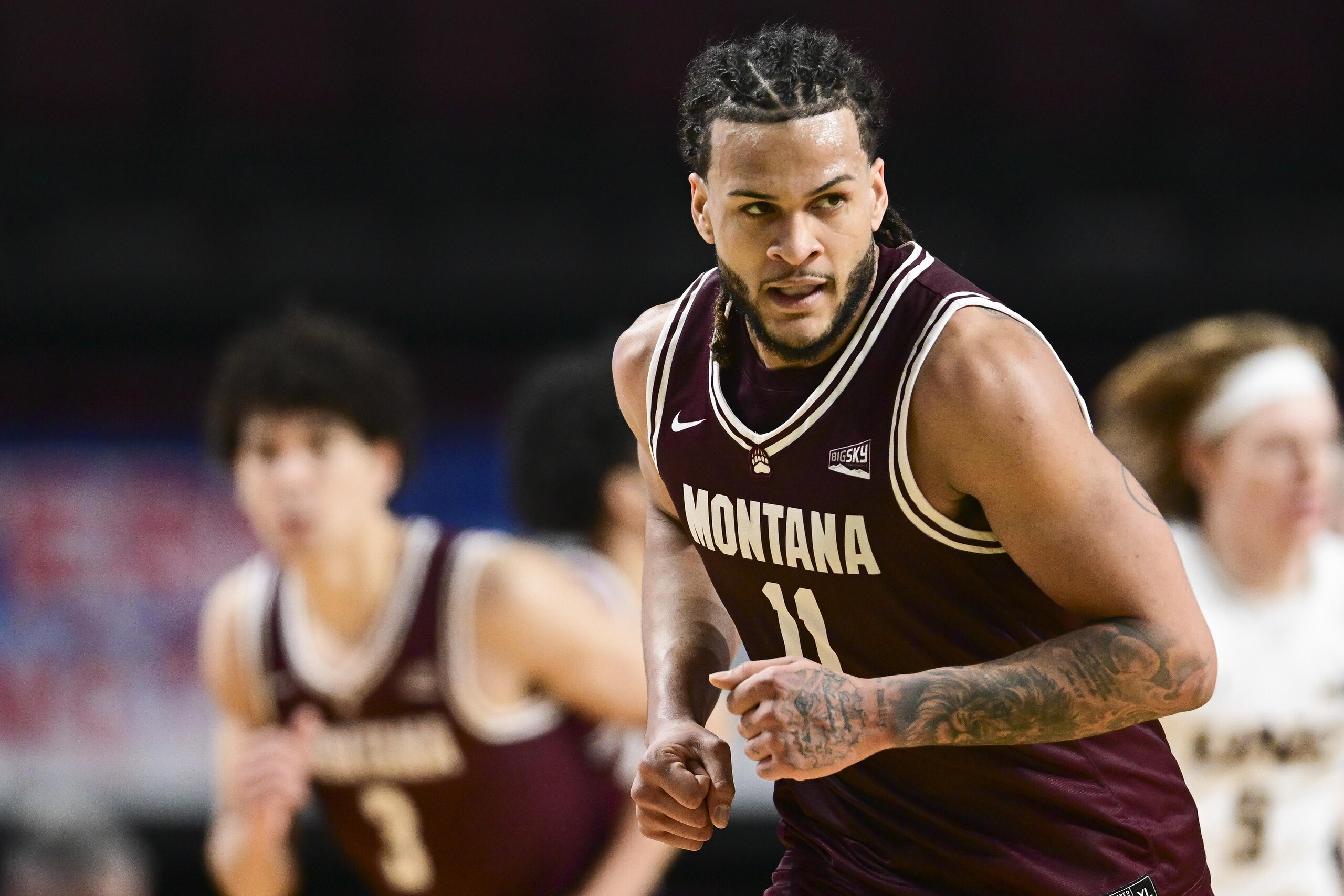
Record: 25-9 (15-3 in Big Sky)
Star Player: The Grizzlies have six players averaging between nine and 14 points per game, so while they do not necessarily have a go-to scorer, they have multiple capable options on the offensive end. In terms of all-around impact, Northeastern transfer Joe Pridgen was one of fewer than 50 players at the D-I level with at least 300 points, 200 rebounds, 45 assists, 25 steals and 25 blocks on the year.
Biggest Wins: The Grizzlies split the regular-season series with Big Sky co-champion Northern Colorado, with both teams winning on the road, and that ended up being the only victory above the Quad 3 level on the year for Montana. They then beat Northern Arizona (74-65) and Idaho (78-55) in the Big Sky tournament before coming out on top in the decisive third matchup with Northern Colorado (91-83) in the title game to earn the automatic bid.
Reason to Worry: Tennessee (92-57) and Oregon (79-48) absolutely demolished the Grizzlies during non-conference play, so the track record against tournament-caliber opponents does not inspire much confidence. They rank well outside the top 200 in KenPom's adjusted defensive efficiency, and lack the perimeter firepower offensively to offset their shortcomings on that end of the floor. They were 4-8 in games where they allowed more than 78 points, and that dipped to 0-5 when the opposition reached 85 points.
March Madness Ceiling: Back in 2006, a Larry Krystkowiak-led Montana team upset No. 5 Nevada in the first round, so there's some Cinderella history with the Grizzlies. However, their lack of a capable defense more than likely means a quick exit this time around.
59. Wofford Terriers
10 of 68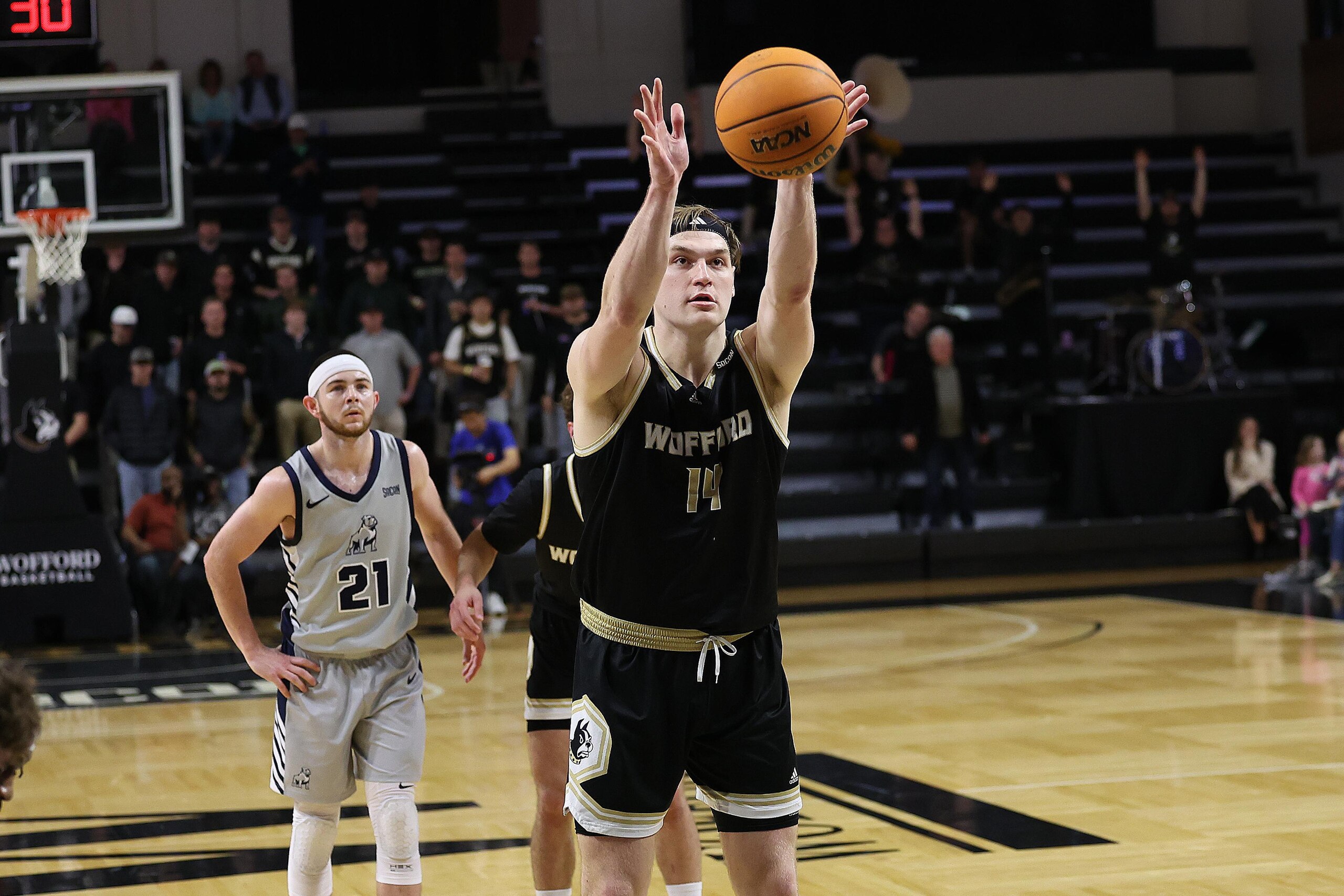
Record: 19-15 (10-8 in SoCon)
Star Player: Point guard Corey Tripp (14.3 PPG, 4.0 RPG, 3.2 APG) and center Kyler Filewich (11.9 PPG, 57.6 FG%, 9.4 RPG) are the stars of the Terriers roster, but they generally do a good job spreading things around with all five starters averaging at least nine points per contest. Filewich won SoCon tournament MVP honors, averaging 13.0 points, 8.0 rebounds and 2.7 assists in wins over ETSU, VMI and Furman to snag the automatic bid.
Biggest Wins: The aforementioned SoCon championship victory over Furman was the biggest win of the year without question, and it is also one of only two Quad 2 victories on the Terriers' resume. The other was a 74-71 road win over A-10 opponent Saint Louis in December, and if you want to play the transitive property game, the Billikens beat VCU.
Reason to Worry: The Terriers managed just 35 points on 24.6 percent shooting in a 51-point loss to Duke back in November, and that was their only exposure to a major conference opponent. They have the always risky offensive profile of a team that shoots a lot of threes (28.4 per game) but doesn't make them at a particularly high rate (34.1%), and they went just 6-10 in games where they made fewer than 10 threes.
March Madness Ceiling: The Terriers won an NCAA tournament game in 2019 when they were one of the best three-point shooting teams in the nation and a No. 7 seed in the bracket. This team doesn't have a Fletcher Magee or shoot 41.4 percent from beyond the arc, but a hot shooting day from long range could keep them in a first-round matchup.
58. Bryant Bulldogs
11 of 68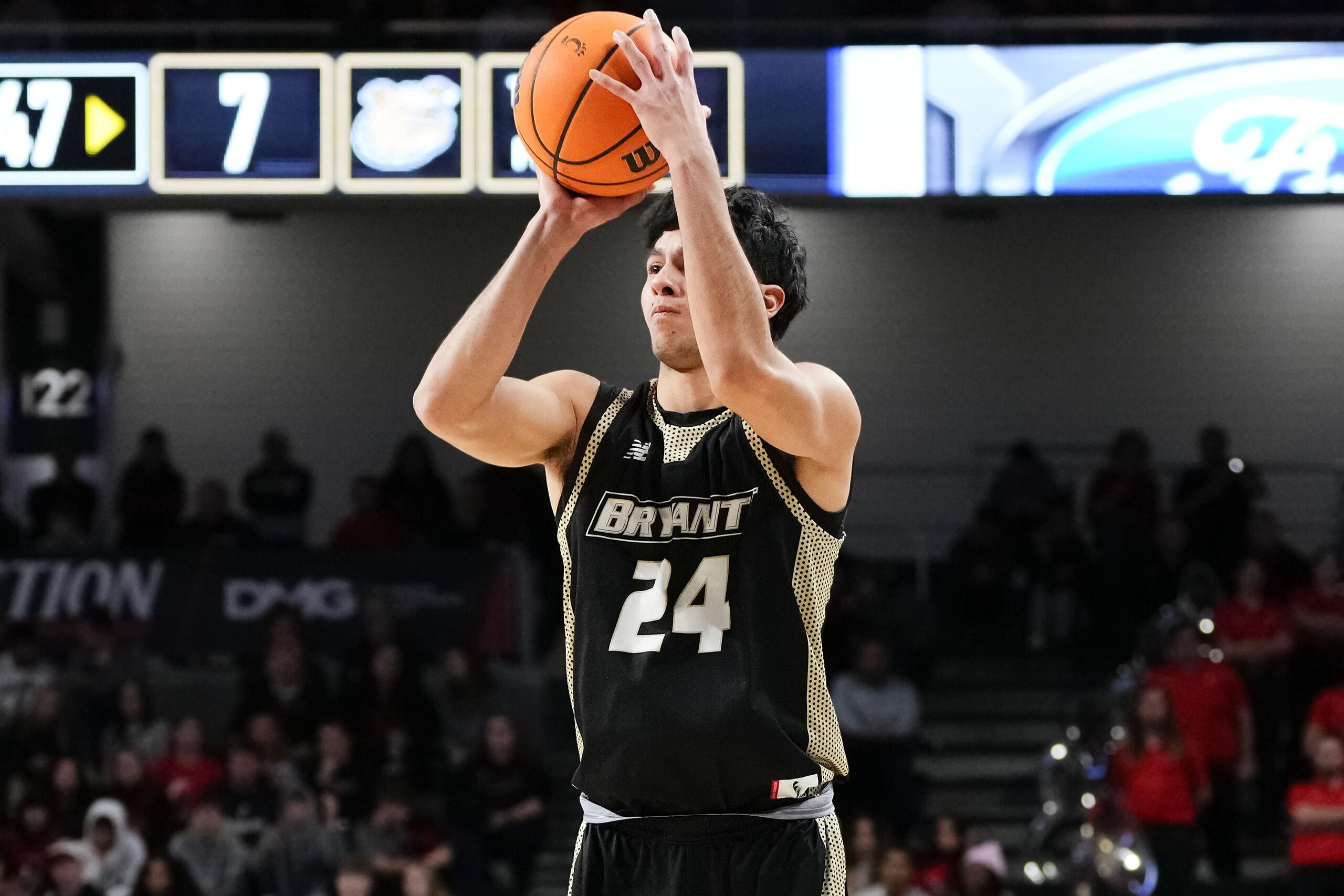
Record: 22-11 (14-2 in AEC)
Star Player: Rafael Pinzon (18.7 PPG, 39.1 3PT%) leads the Bulldogs in scoring, but it was Earl Timberlake who took home America East Player of the Year honors this season. A Miami recruit who also spent a year at Memphis before landing at Bryant, he averages 15.5 points, 8.4 rebounds, 4.7 assists and 1.8 blocks in his third season with the Bulldogs.
Biggest Wins: A Quad 3 road win over Drexel in non-conference play stands as the Bulldogs best victory from a metrics standpoint. However, there is little argument that Saturday's 77-59 win over Maine in the AEC title game was the team's biggest win of the year, punching their ticket to March Madness. The Bulldogs have made the tournament just once before, losing in a First Four game in 2022.
Reason to Worry: The Bulldogs played four games above the Quad 3 level this season and lost them by a combined 91 points, including a staggeringly lopsided 112-66 loss on the road against Grand Canyon in December. They don't shoot the three well (7.9 per game, 33.8 percent), and their up-and-down style of play might not be as effective against an athletically superior opponent.
March Madness Ceiling: With six of the seven players in their regular rotation standing 6'6" or taller, the Bulldogs can create some matchup issues. They do a good job chasing teams off the perimeter, limiting second chances and blocking shots. Will any of that translate against a major conference foe? Probably not.
57. UNC-Wilmington Seahawks
12 of 68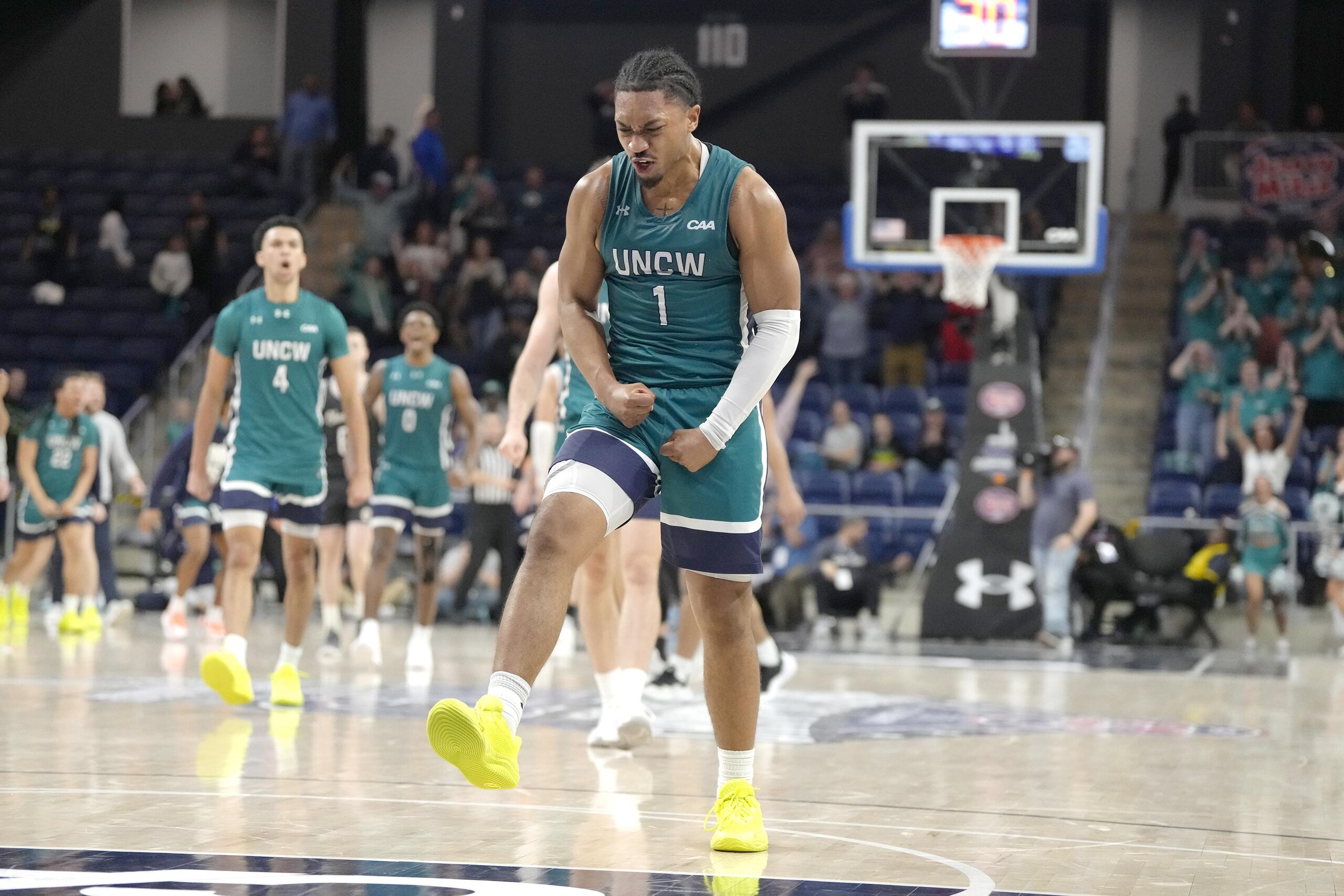
Record: 27-7 (14-4 in CAA)
Star Player: After two years at UW-Milwaukee and two seasons with UNC Wilmington, Donovan Newby has taken his game up a notch as a fifth-year senior. The 6'1" point guard leads the Seahawks in scoring (14.6 PPG), assists (3.5 APG) and made threes (75). He had a 24-point game against College of Charleston in the CAA semifinals and a 17-point, four-assist performance against Delaware in the title game.
Biggest Wins: Conference foe Charleston was the best team the Seahawks played this season outside of losing an early non-conference matchup with Kansas, and they won both regular-season matchups with Charleston before squeezing out a narrow 68-67 victory in Round 3 in the CAA tournament semifinals. A 76-72 win over Delaware in the championship game just 10 days after they beat them in the regular-season finale punched their ticket to the NCAA tournament.
Reason to Worry: Mid-major teams that play at a slow pace always raise some red flags since it's unlikely they will be able to manage the tempo against a more athletic opponent. They held opponents to 70 or fewer points 20 times this year and that's the style they prefer to play, but that might be out of their control. This is also a team that suffered back-to-back, double-digit losses to Elon and Hampton a month ago, so do with that information what you will.
March Madness Ceiling: The Seahawks almost pulled off first-round upsets in the 2016 and 2017 NCAA tournaments, but have not been back to March Madness since Kevin Keatts left for the NC State job following the 2016-17 season. They're back, but this team is not the same Cinderella candidate those teams were heading into the tournament.
56. Akron Zips
13 of 68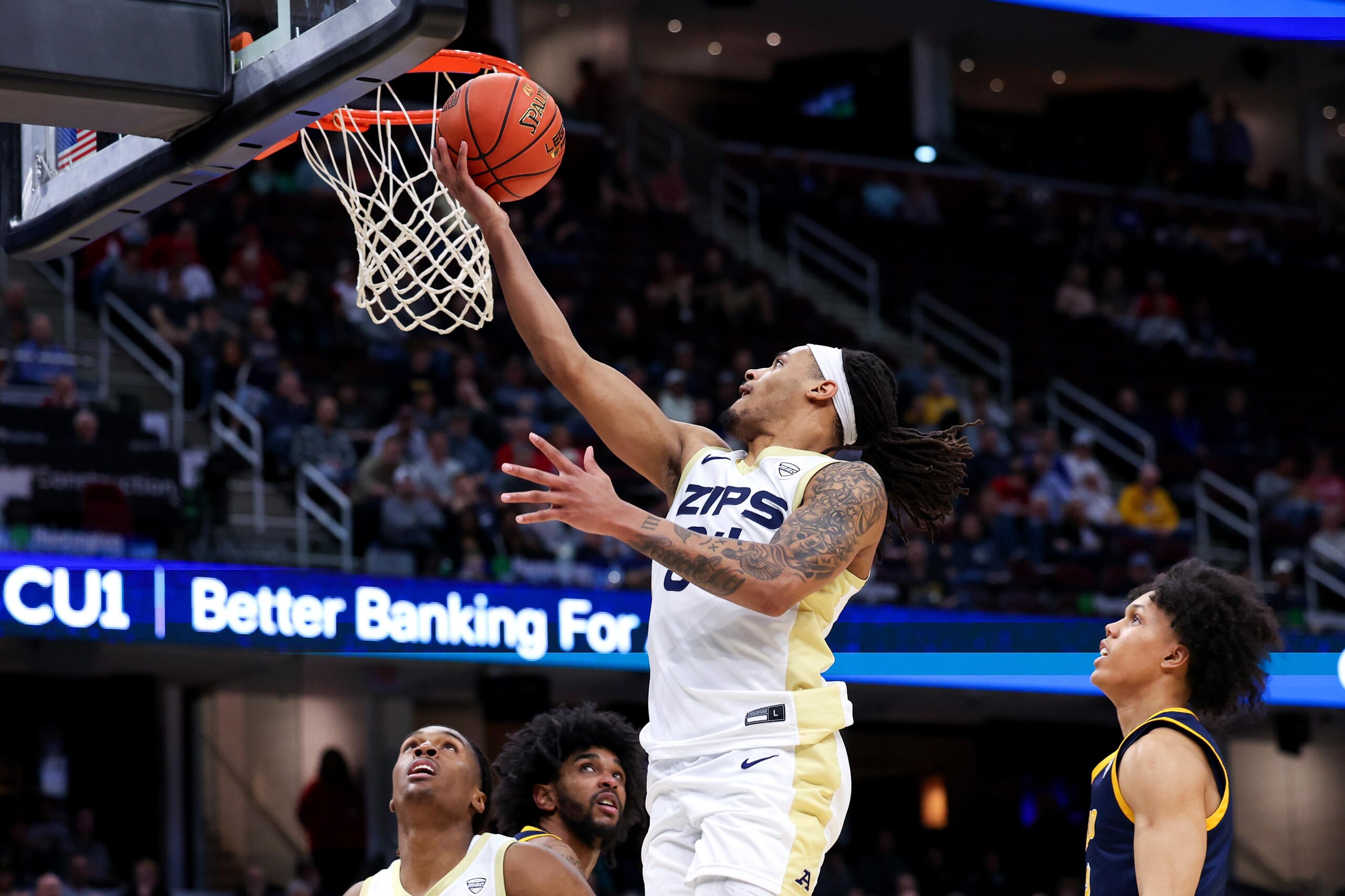
Record: 28-6 (17-1 in Mid-American)
Star Player: Of course it all came down to MAC Player of the Year Nate Johnson. He hit the game-winning bucket with two seconds remaining in the MAC championship victory over Miami-Ohio, polishing off a 22-point performance. He leads the Zips in points and steals, averaging roughly 14 and two, respectively, to go along with five rebounds and better than three assists. Fingerprints all over the box score.
Biggest Wins: Technically, the best resume building win was the road game against Kent State, which ended up being a Quad 2 result for Akron. But the only ones that particularly mattered as they won 21 of their final 22 games were the three in the MAC tournament. Rallying from an 18-point first-half deficit to win that finale against the RedHawks made it just a little bit sweeter.
Reason to Worry: Akron's defense is pretty darn lackluster, ranking around 170th in adjusted efficiency and just kind of mediocre across the board. Even as they were almost running the table in a weaker than usual MAC, it wasn't uncommon to have an opponent drop at least 80 points on the Zips. Also, they went 0-3 vs. top 100 competition.
March Madness Ceiling: John Groce is 0-2 in the tournament thus far in the Akron portion of his career, but he's a good coach with upset victories in his past, having a fun time with the best shooting team of his career. The MAC champ is always a threat to win a first-round game, and this year's no different.
55. Troy Trojans
14 of 68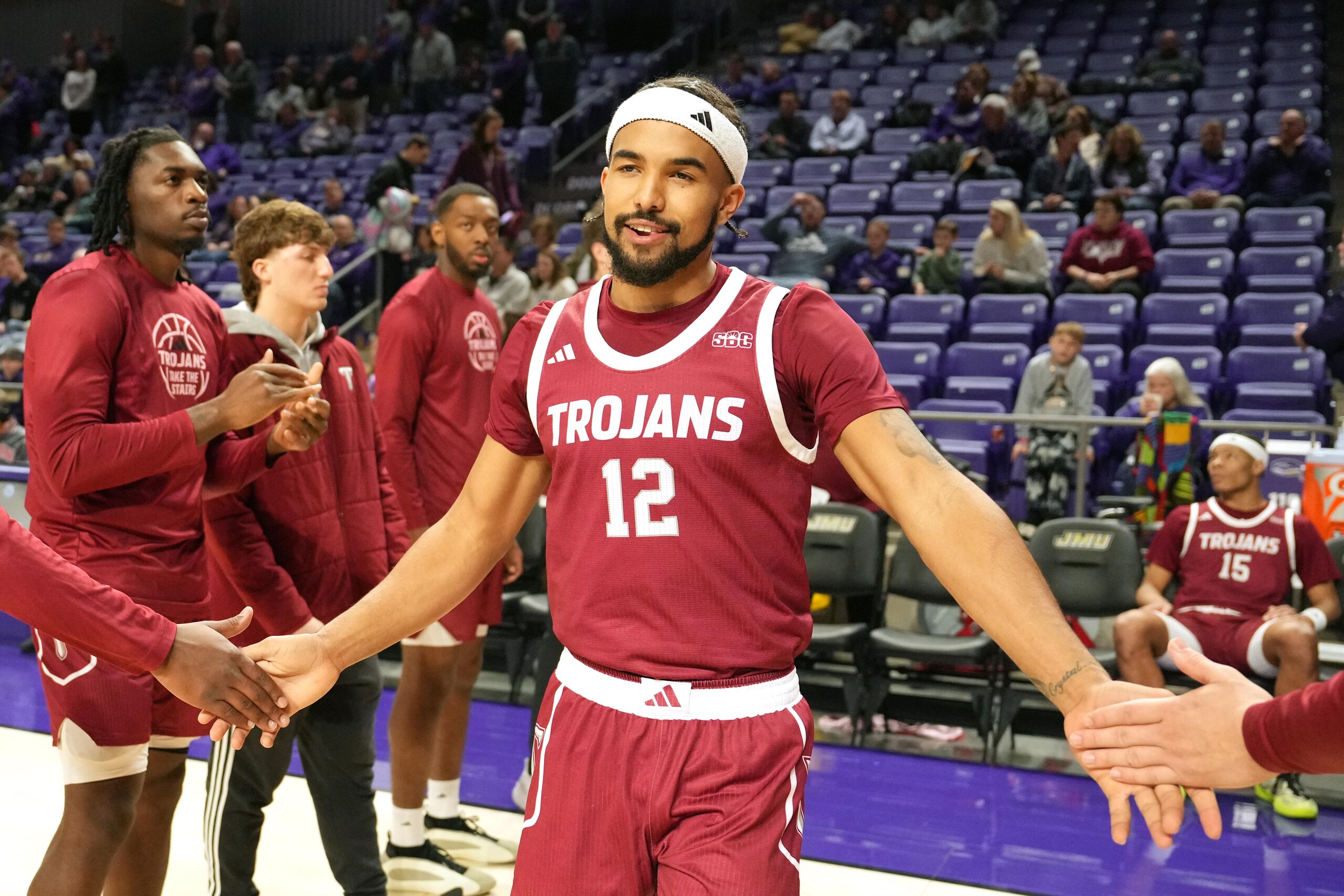
Record: 23-10 (13-5 in Sun Belt)
Star Player: After winning Sun Belt Sixth Man of the Year last season, Tayton Conerway moved into the starting lineup for the Trojans and led the team in scoring (14.3), assists (4.8) and steals (2.9) to take home Sun Belt Player of the Year this time around. His 97 steals rank top 10 in the nation, and his two-way ability is a big reason why the Trojans are in the NCAA tournament for the first time since 2017.
Biggest Wins: The Trojans two wins over Arkansas State are their only victories above the Quad 3 level, and the most recent came in the Sun Belt tournament championship game with a 94-81 win punching their ticket to March Madness. They did face Arkansas, Houston and Oregon during their non-conference slate, but they lost those three games by a combined 57 points.
Reason to Worry: In order for a team like Troy to pull off an upset, they will need to play mistake-free basketball, and that is a big ask for a squad that averages 13.5 turnovers per game. They do have a defense that ranks top 75 in KenPom's adjusted efficiency metric, but finding enough offensive firepower to hang around with a major conference opponent proved difficult during those lopsided early losses.
March Madness Ceiling: Scott Cross is a well respected mid-major head coach with four straight 20-win seasons under his belt at Troy, so don't overlook this team entirely. If they can protect the basketball on the offensive end and play their game defensively, they could at least hang around for a while and make things interesting in the first round.
54. Lipscomb Bisons
15 of 68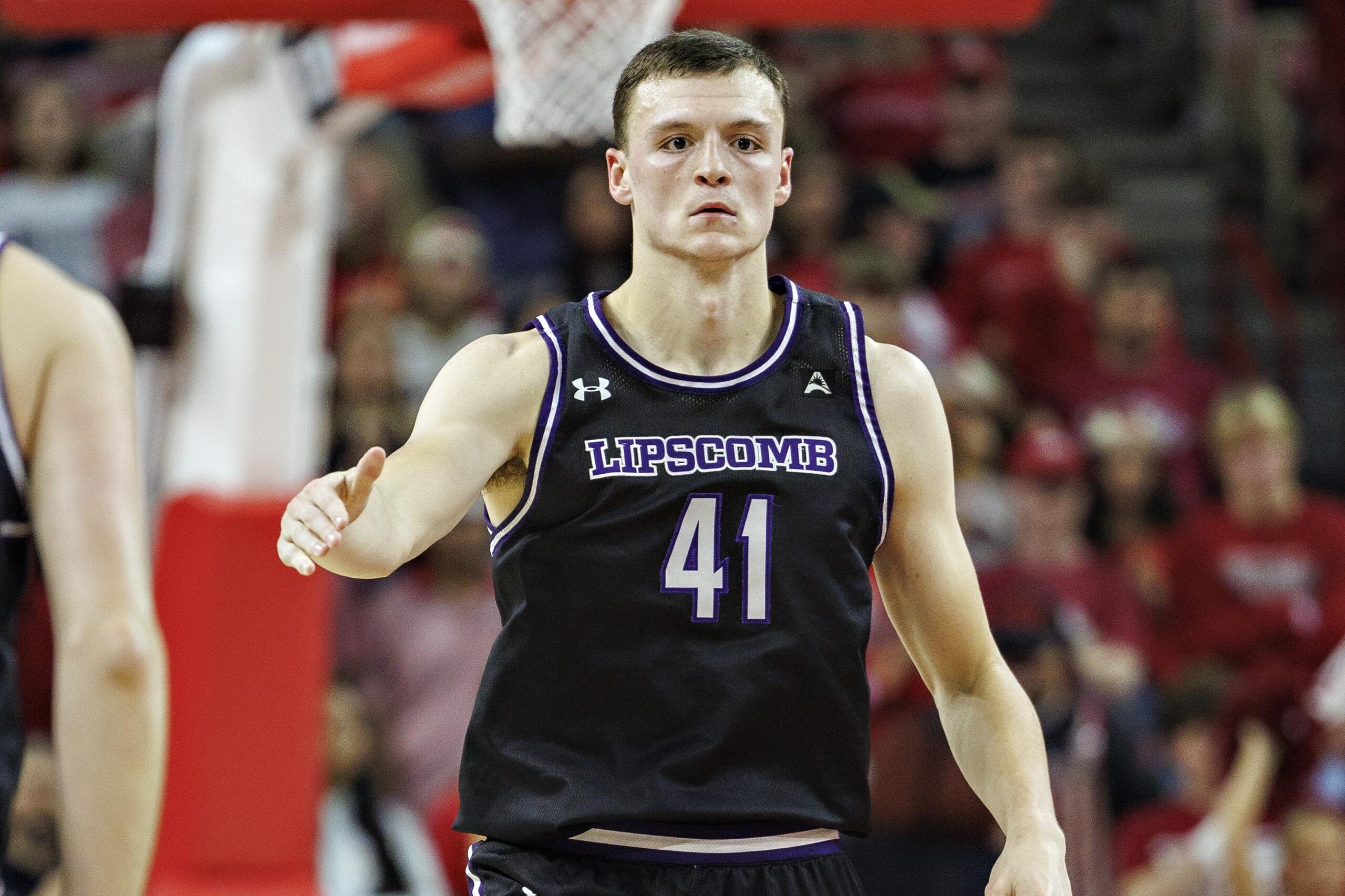
Record: 25-9 (14-4 in Atlantic Sun)
Star Player: After missing the entire 2023-24 season with a knee injury, Jacob Ognacevic returned to action and won Atlantic Sun Player of the Year honors. The 6'8" senior forward averages 20.1 points and 8.1 rebounds, and he has also knocked down 47 threes at a 40.2 percent clip. He has scored 30 points five different times and stands as one of the better mid-major players in this year's NCAA tournament field.
Biggest Wins: The Bisons needed overtime to pull out a win over Queens (NC) in the ASun semifinals, then clinched the automatic bid with a 76-65 victory over North Alabama on the strength of a 12-for-27 showing from three-point range. There is no question those were their most important wins of the season, though their best win was a Quad 2 victory on the road against SoCon regular season champ Chattanooga in early December.
Reason to Worry: Lopsided losses to Kentucky (97-68) and Arkansas (76-60) inspire little confidence in the Bisons' ability to hang around with a major conference foe. They also rank No. 282 in KenPom's adjusted defensive efficiency and play at an extremely slow tempo, so things could get out of hand quickly if they are sped up by a superior opponent.
March Madness Ceiling: As recently as 2019, the Liberty Flames won an NCAA tournament game as a No. 12 seed out of the ASun, so don't sleep on this team as a potential Cinderella story. If Ognacevic goes Wally Szczerbiak-mode, the Bisons could still be standing in the Sweet 16.
53. High Point Panthers
16 of 68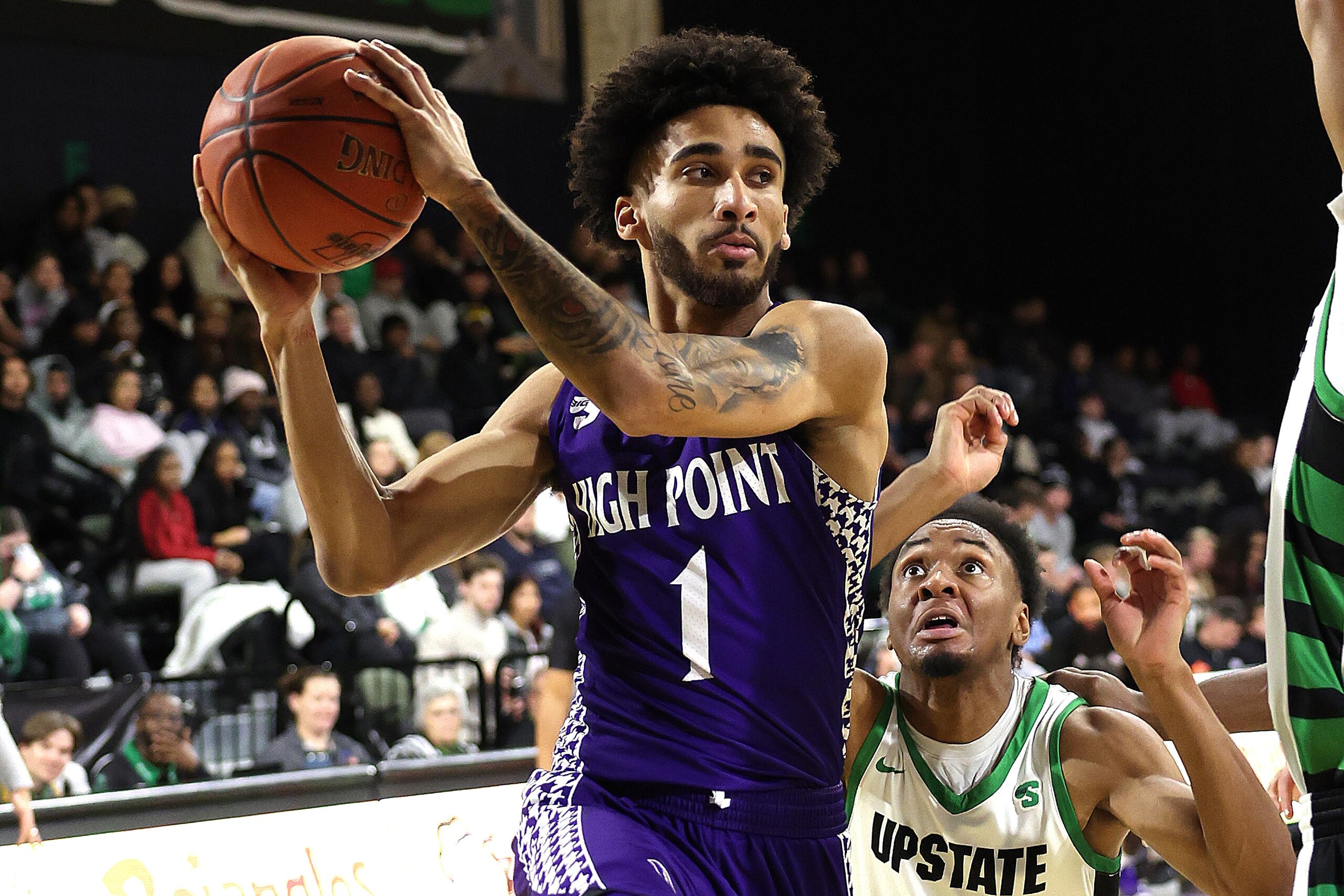
Record: 29-5 (14-2 in Big South)
Star Player: Kezza Giffa (14.8 PPG, 2.5 APG) and Kimani Hamilton (13.4 PPG, 4.7 RPG) both earned first team All-Big South honors, and both players are returning standouts from a 27-win team that claimed the regular season conference title but missed the NCAA tournament a year ago. However, it was former Kansas recruit Bobby Pettiford who won MVP in the Big South tournament, scoring a game-high 17 points off the bench against Winthrop in the title game.
Biggest Wins: A series sweep of Winthrop is the reason the Panthers are here, with the third and final win coming in the form of an 81-69 victory in the Big South tournament championship. As far as regular season resume, the Panthers only played one game above the Quad 3 level, and it was a 76-71 home win over a very good North Texas team.
Reason to Worry: The Panthers rank 19th in the nation in points per game (82.2) and 280th in KenPom's adjusted offensive efficiency, which speaks to the caliber of defense they have faced this year. Defensively, they are undersized and don't create many extra possessions, relying largely on their ability to simply outscore opponents by shooting nearly 50 percent from the field on the year.
March Madness Ceiling: The win over North Texas is reason enough to give them a second glance, and the Panthers have as much momentum as any team in the country with a 14-game winning streak heading into March Madness. There are worse upset candidates if you are looking for a dark horse to win an opening round game.
52. Grand Canyon Antelopes
17 of 68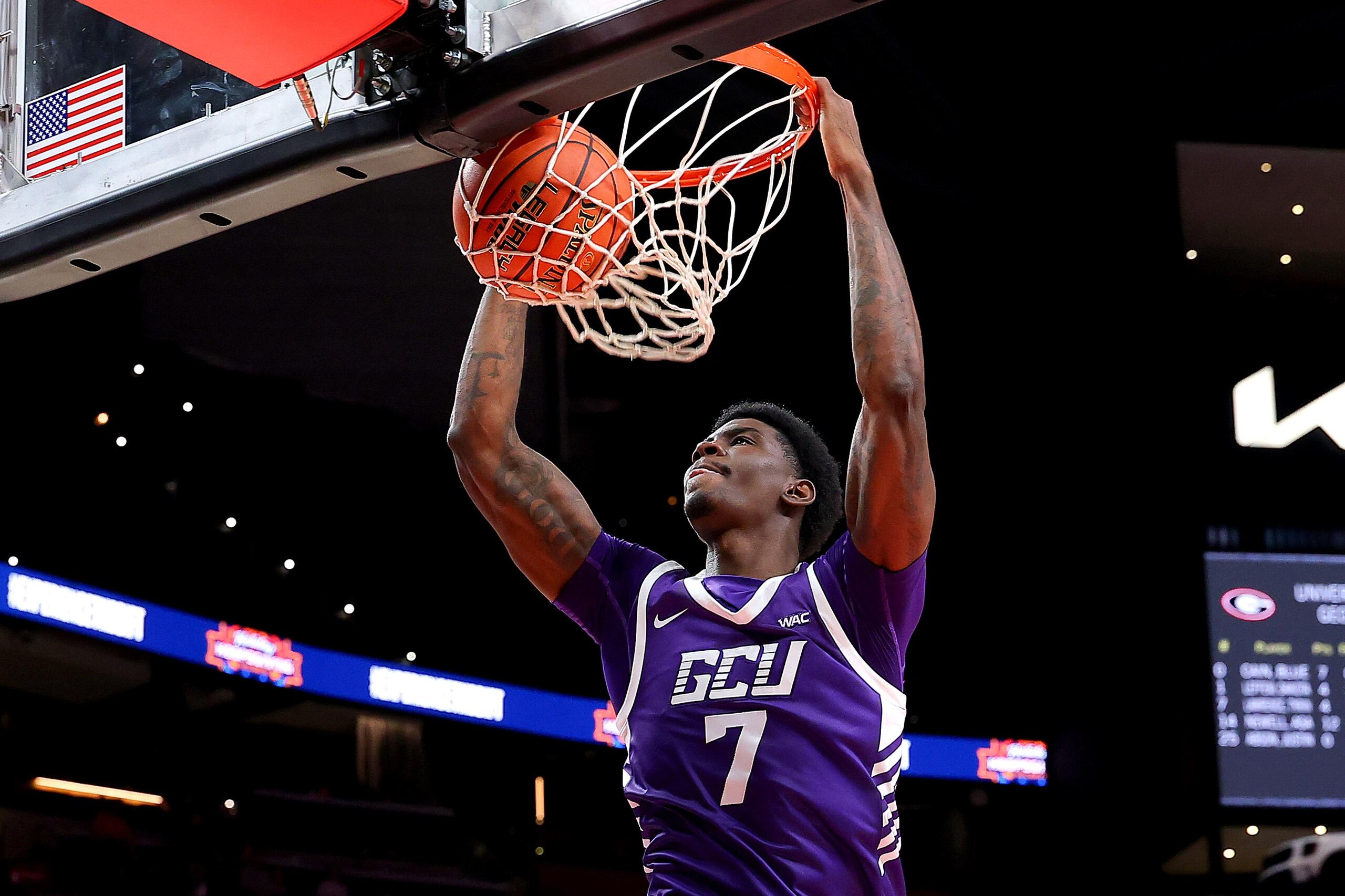
Record: 26-7 (13-3 in WAC)
Star Player: Tyon Grant-Foster missed chunks of the season with injuries, but the 2023-24 WAC POY was back out there for the conference tournament and looking an awful lot like his old self, including 12 points and multiple rebounds, assists, blocks and steals in the championship against Utah Valley. Instead of TGIF, it's TG-F, and thank goodness for GCU he's back.
Biggest Wins: The 'Lopes had a bunch of respectable Quad 3 wins, but just a neutral-site victory over Stanford that rose above that level. Their biggest win was definitely the WAC championship against Utah Valley, six players scoring at least a dozen points in that 89-82 affair.
Reason to Worry: Though Grand Canyon's chaotic style of play can be a matchup problem, this team simply isn't good on offense when the opposition keeps them from getting run outs and confidence-boosting dunks. They're a perfect 17-0 when shooting at least 46.3 percent from the field, but took some tough losses when falling below that mark.
March Madness Ceiling: This year's GCU is a far cry from the one that upset Saint Mary's in the first round last March. After ending last year at 74th in adjusted offensive efficiency and 32nd on defense, the 'Lopes are almost exactly twice as bad in both departments (149th and 67th) this year. That's still pretty good for a team from a one-bid league, but the ceiling is definitely lower. One win is possible, but reaching the second weekend is highly unlikely.
51. Liberty Flames
18 of 68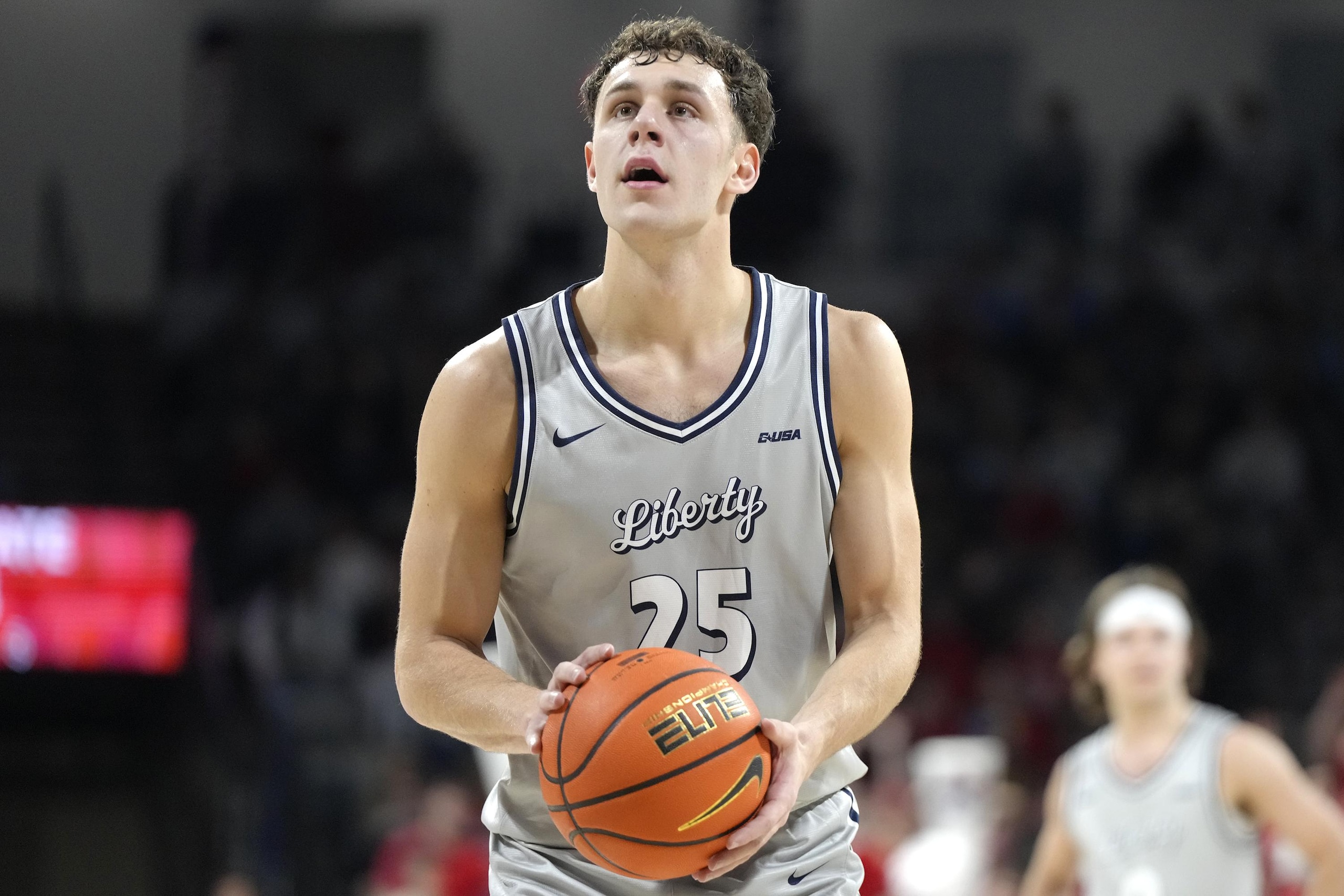
Record: 26-6 (13-5 in Conference USA)
Star Player: Kaden Metheny is the three-point specialist who shot 16-for-31 during Liberty's three wins in the C-USA tournament, but Zach Cleveland is the reason this offense works so well. He averages 11 points, six rebounds and five assists per game, and it's the dimes the big man dishes out from in the paint that give the Flames just elite floor spacing and the ability to lead the nation in effective field-goal percentage.
Biggest Wins: In one of the less high-profile MTEs, Liberty picked up a few nice wins over both Kansas State and McNeese at the Paradise Jam in the Virgin Islands. And after splitting with each of UTEP, Kennesaw State and Jacksonville State during the regular season, the Flames took the rubber match from each one in the C-USA tournament.
Reason to Worry: Though Liberty is one of the nation's best in terms of field-goal percentage, it is darn near the worst in both free-throw percentage and offensive rebound percentage. In other words, manufacturing points is a struggle, and they could run into a world of hurt against an aggressive defense that contests their first (and what will usually be only) shot of the possession. In particular, Cleveland shoots 53.5 percent from the free-throw line, so opponents might just start hacking him to limit his impact.
March Madness Ceiling: Liberty upset No. 5 seed Mississippi State in the 2019 tournament, almost beat No. 4 Virginia Tech in the following round and almost beat No. 4 Oklahoma State in the first round in 2021. The roster has completely turned over since then, but it's still Ritchie McKay's same general coaching philosophy leading the way. If Metheny's hitting shots from the parking lot and the offense gets into a groove, this easily could be our surprise Sweet 16 team for the year.
50. Yale Bulldogs
19 of 68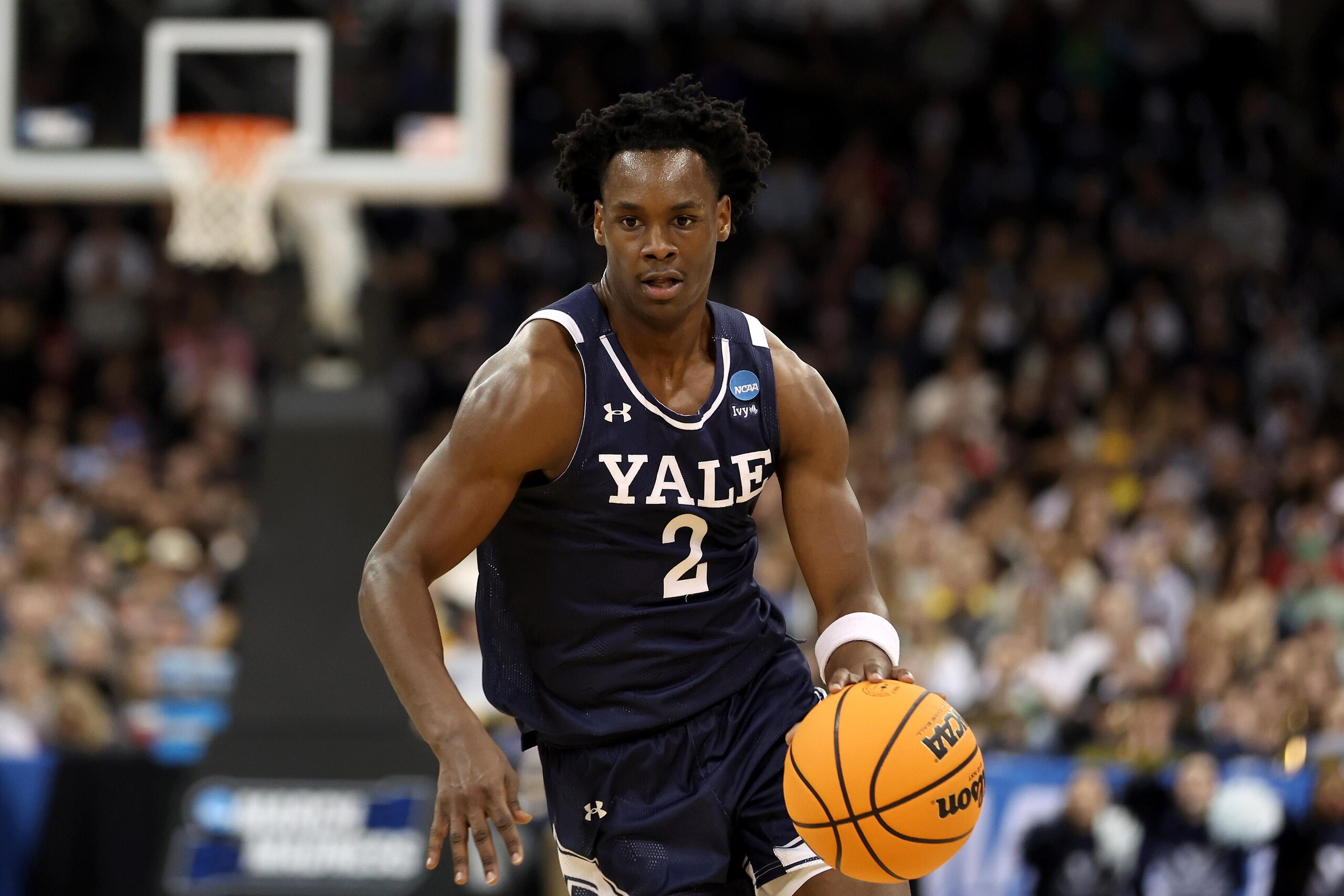
Record: 22-7 (13-1 in Ivy League)
Star Player: Bez Mbeng posted not one, not two, but three triple-doubles in the month of February alone, averaging 15.4 points, 6.2 rebounds, 6.0 assists and 2.1 steals in 14 conference games. And he's only the third-leading scorer on this Yale squad, behind both John Poulakidas and Nick Townsend, who combined for 44 in Sunday's Ivy League championship victory over Cornell.
Biggest Wins: Nothing too impressive here. Yale beat Akron on a neutral court in December and beat Cornell three times. Neither of those teams had even a tiny bit of hope for an at-large bid, though. Yale's biggest "win" was the 92-84 loss at Purdue early in the year. If you can hang with Purdue at Mackey Arena, you can probably put up a fight against anyone.
Reason to Worry: Yale's perimeter defense is kind of atrocious, opponents making 50 more three-pointers than the Bulldogs made. (And Yale's pretty good from distance, north of 38 percent for the year.) They don't force many turnovers either, resulting in a defense that ranks outside the top 100, and a game log in which eight opponents scored 84 or more points.
March Madness Ceiling: No one is going to expect Yale to win its opener, but good luck finding anyone foolish enough to believe the Bulldogs don't at least have a shot at reaching a Sweet 16. They've lost one game since Christmas, they shoot it well, they rebound well—though, not as dominantly as the Yale team that famously beat Baylor in 2016—and Mbeng could be a real difference-maker.
49. McNeese Cowboys
20 of 68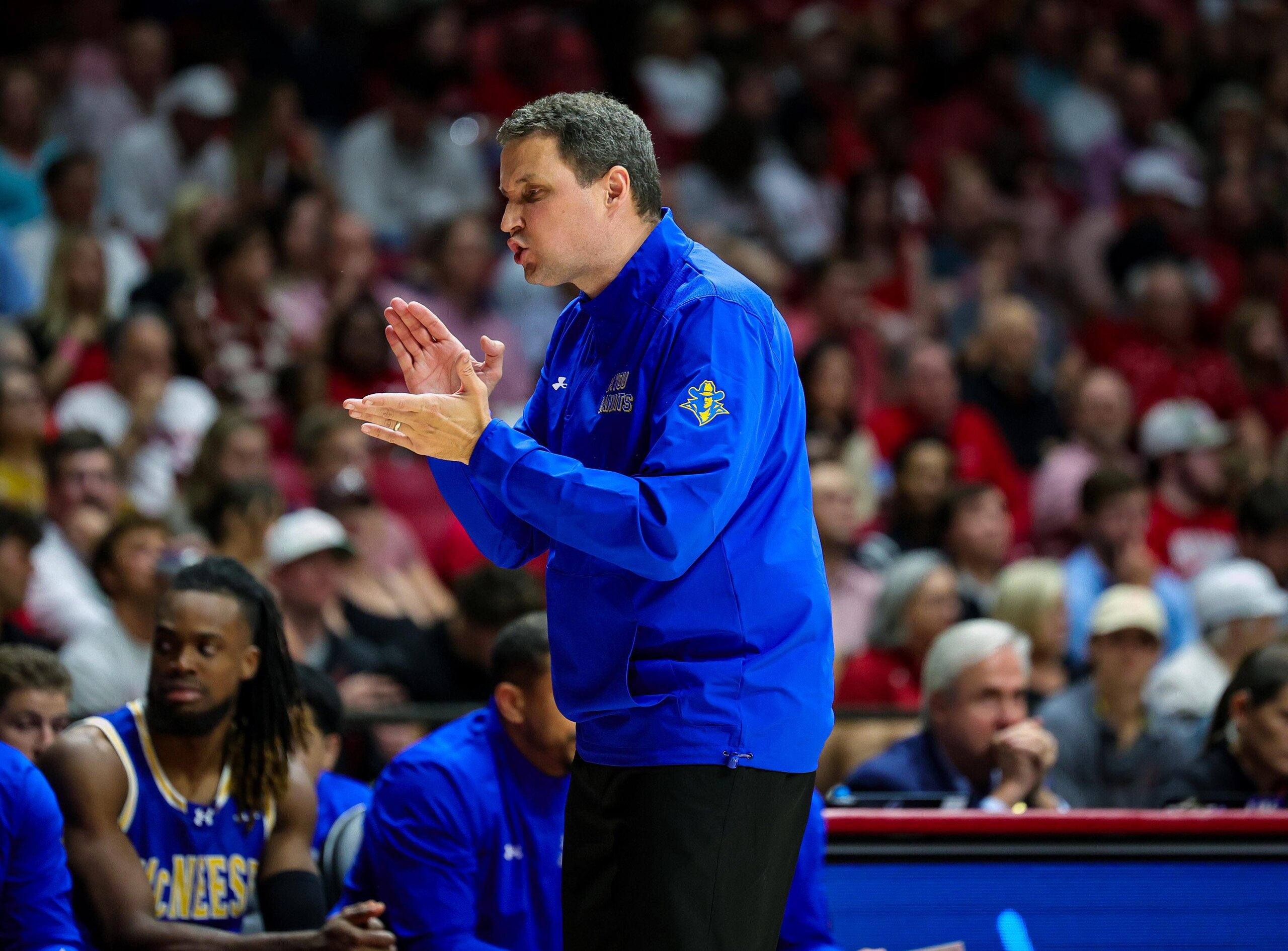
Record: 27-6 (19-1 in Southland)
Star Player: Former UMass transfer Javohn Garcia won Southland Player of the Year honors in his second season with the Cowboys, averaging 12.9 points, 3.5 rebounds, 1.9 assists and 1.6 steals. Meanwhile, Christian Shumate took home the conference's Defensive Player of the Year award for the second year in a row with 42 blocks and 22 steals to go along with 10.5 points per game on an extremely efficient 61.9 percent shooting.
Biggest Wins: The Cowboys had wins over Michigan, UAB and VCU last season on their way to a No. 12 seed in the NCAA tournament. This year, their best victory was a Quad 2 win over North Texas. But they made a statement in tight losses to Alabama (72-64) and Mississippi State (66-63) that they can hang around with a top-tier opponent. They beat Northwestern State (83-63) and Lamar (63-54) in the Southland tournament to claim the automatic bid.
Reason to Worry: The Cowboys were a trendy upset pick a year ago and ended up losing by 21 points to Gonzaga in the first round, so let's take a moment to temper expectations on what is one of the better mid-major teams in the country. Former LSU head coach Will Wade knows how to construct a defense, but they lack a go-to scorer on the offensive end and do most of their damage inside the arc, which could be trouble if they fall behind early.
March Madness Ceiling: This is a better all-around team than last year's group, and might be the best mid-major team in the country outside of the MWC and WCC contingent. They are capable of a Sweet Sixteen run, or they could be sent packing in the first round once again, but expect a much closer outcome than last year's rout at the hands of Gonzaga.
48. Vanderbilt Commodores
21 of 68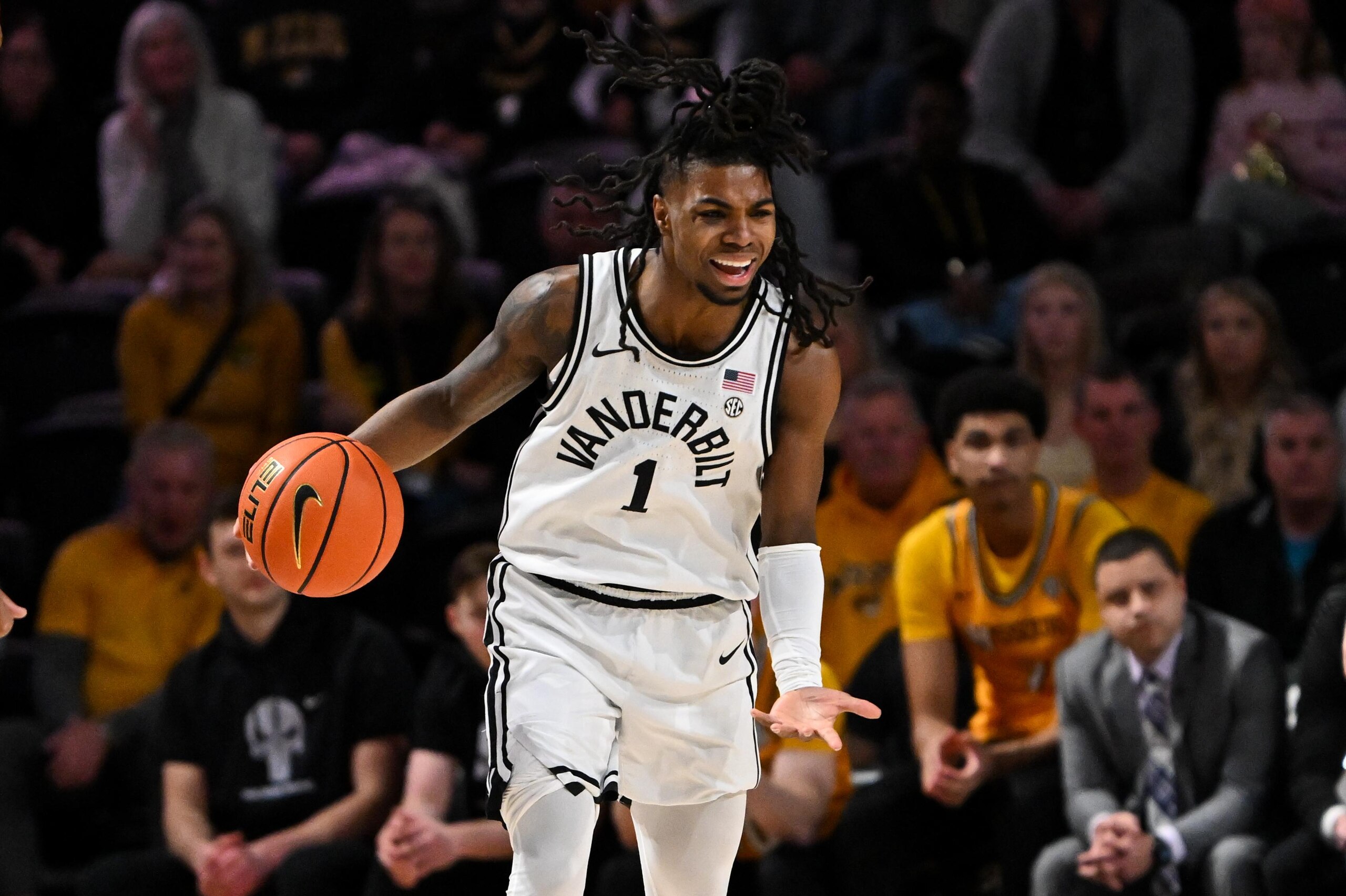
Record: 20-12 (8-10 in SEC)
Star Player: Jason Edwards is something of a Malik Monk Lite, who scores at a high level, but doesn't provide much of anything beyond that. At around 27 points per 40 minutes played, though, he is at least a prize-winning one-trick pony for Vanderbilt. From Jan. 11 onward, Edwards averaged 17.4 PPG, 1.4 RPG and 1.1 APG.
Biggest Wins: Vanderbilt did finally pick up a quality win outside of Nashville when it won at Texas A&M, in what was probably the ugliest, most foul-filled and review-delayed game of the entire season. But the 'Dores put in work on their raised court, beating Tennessee, Kentucky, Missouri, Ole Miss and Texas at home.
Reason to Worry: Vanderbilt typically wins the turnover battle. But defensive possessions that don't end in a turnover are a struggle. The Commodores foul a lot, they're mediocre on the glass and teams shoot 37 percent from three-point range against them. Moreover, without the steals, they don't get as many easy buckets. They win 84 to 70.6 on average in games with 10+ steals, but have a negative scoring margin when below that threshold. And they've yet to hold a foe below 75 in the 11 times they've tallied seven or fewer steals.
March Madness Ceiling: There are no tournament games played in Nashville, so we'll see what the 'Dores can muster away from home. It hasn't been pretty, though, even giving up 81 in that early loss to a Drake team that much prefers to play games in the 60s. Maybe they win one; two would be shocking.
47. San Diego State Aztecs
22 of 68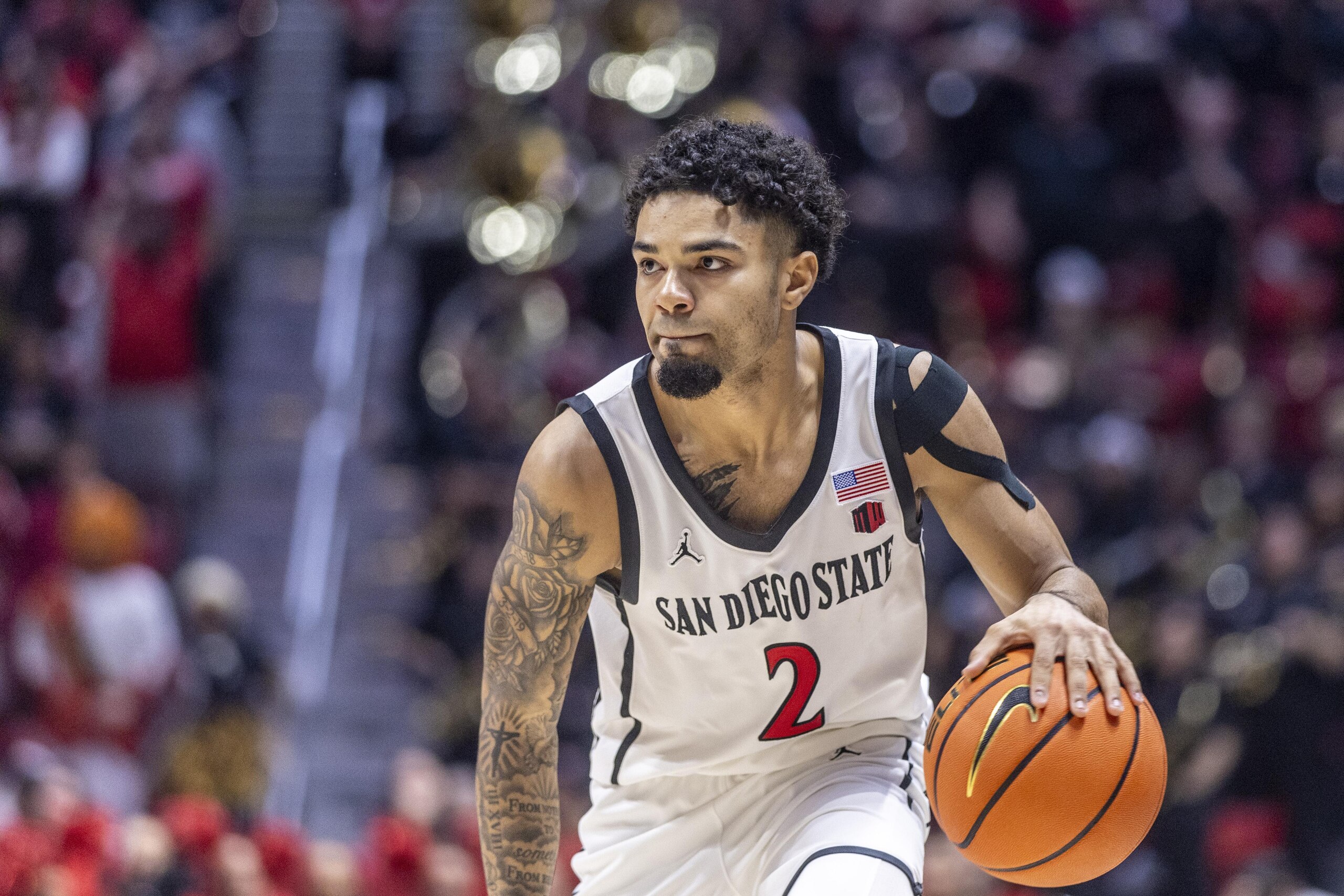
Record: 21-9 (14-6 in Mountain West)
Star Player: Nick Boyd transferred in from Florida Atlantic this past offseason and has thrived as San Diego State's primary ball-handler, averaging close to 13 points, four assists and four rebounds per game. And here's a fun fact: Boyd is the only player on SDSU's current roster who played in the Final Four game against FAU two years ago. He was just on the other side for that one.
Biggest Wins: Can't ask for much more than San Diego State's biggest win, which came in an overtime game against Houston in the Players Era Festival in Las Vegas. The Aztecs also defeated Creighton earlier in that for-profit event, and opened the season with a home win over UC San Diego that ended up looking way better in hindsight than anyone could have guessed at the time. SDSU also swept Boise State in league play.
Reason to Worry: 'Worst' is a relative term for what is annually one of the top mid-majors, but this is the worst San Diego State has been since 2019. Still a great defense and an elite shot-blocking unit anchored by freshman Magoon Gwath, but their offense and rebounding leave much to be desired. (And Gwath missed their final five games, his availability for the tournament unknown.)
March Madness Ceiling: The Aztecs shocked the world with their run to the title game two years ago, and they might've had another deep run in them last year if they hadn't drawn Connecticut in the Sweet 16. And, again, they beat Houston on a neutral floor. Thus, it feels weird to try to put a cap on what San Diego State could do. But the ceiling definitely doesn't feel as high, considering they were still on the bubble until the bitter end. Another Sweet 16 appearance would be a surprise.
46. Utah State Aggies
23 of 68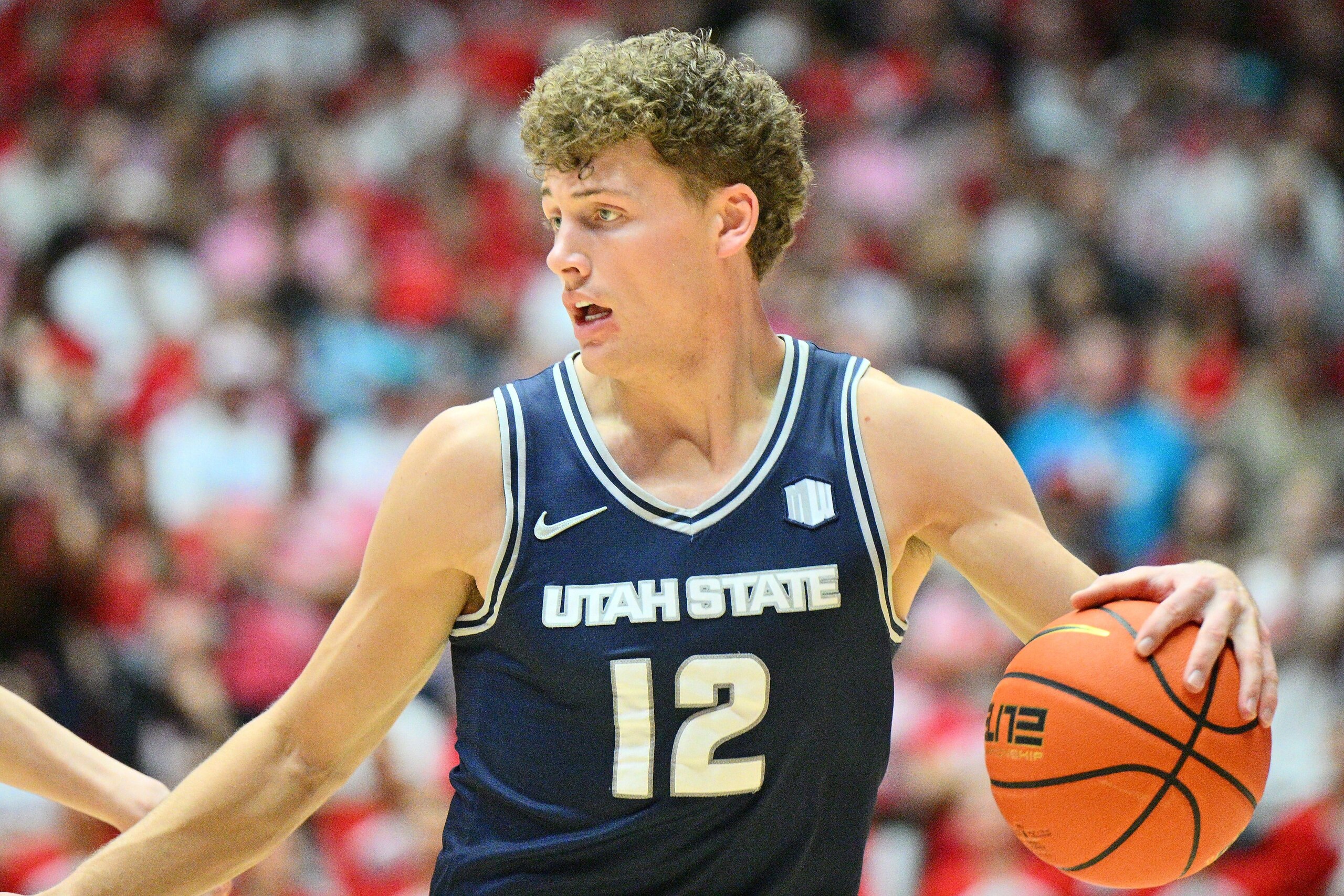
Record: 26-7 (15-5 in Mountain West)
Star Player: Ian Martinez was the Aggie named to the Mountain West all-conference first-team, but Mason Falslev is the answer here. The sophomore combo guard does everything, leading the team in rebounds at 6'3" and leading the Mountain West in steals while also averaging close to 15 points and four assists per game. Martinez does a little more scoring, but Falslev is their most important player.
Biggest Wins: Utah State had one heck of a run through what could have been a brutal three-game stretch at the end of December, winning consecutive road games against Saint Mary's, San Diego State and Nevada. The Aggies also own solid neutral-site victories over Iowa, North Texas and St. Bonaventure. (Falslev was the KenPom MVP in five of those six wins.)
Reason to Worry: Utah State did finally win another NCAA tournament game last season, improving to...2-19 dating back to 1971. Granted, that has very little to do with this iteration of the program, but it's hard to ignore that type of history. What is an issue with the current roster is a defense that ranks well outside the top 100 on KenPom.
March Madness Ceiling: If the Aggies get hot, at least one win is possible. This is one of the better shooting teams in the nation, and for all their shortcomings on defense, they do force a lot of turnovers and can put together some scoring bursts. Even one win feels iffy, though, and reaching the Sweet 16 is quite unlikely.
45. New Mexico Lobos
24 of 68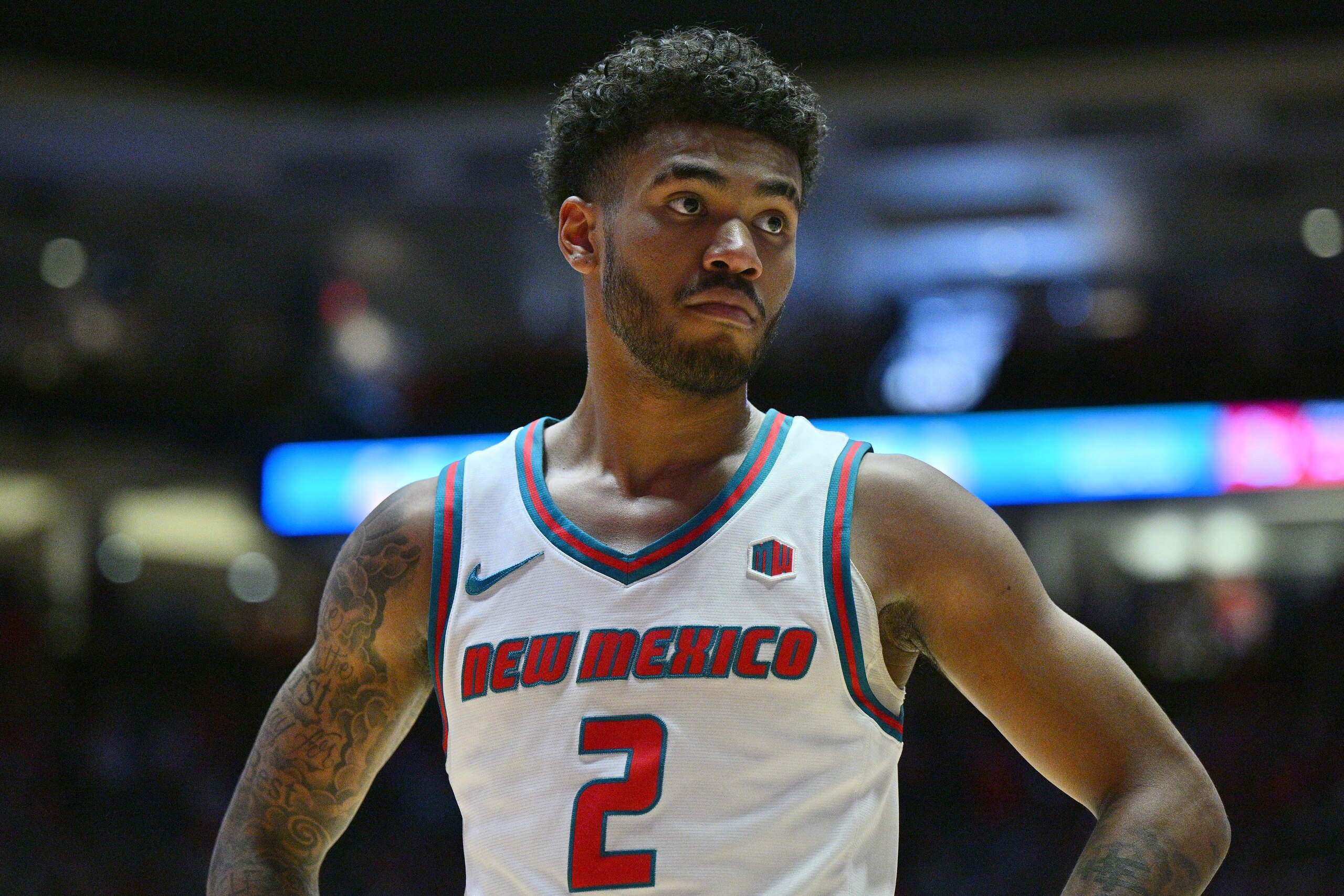
Record: 26-7 (17-3 in Mountain West)
Star Player: Had New Mexico been just a little more nationally relevant during the regular season, there probably would have been a spirited push for Donovan Dent as a first-team All-American. As is, the MWC POY was sensational for the Lobos, averaging 20 points and 6.5 assists per game and scoring in double figures in every contest. That included an outrageous 40-point performance against VCU in mid-December.
Biggest Wins: One of UNM's most pivotal wins came just five days into the season, knocking off UCLA on a neutral floor in Nevada. They also beat USC and VCU in nonconference play before mostly blazing through the Mountain West, sweeping both Utah State and Colorado State in the process.
Reason to Worry: If you're one to buy stock in a program's history in the dance, New Mexico's isn't great, last winning multiple games in a single tournament in 1974. More relevant is the fact that New Mexico's current offense isn't anything special. The Lobos do average north of 80 points per game, but that's a product of playing at one of the fastest tempos in the country as opposed to a product of, you know, above-average shooting or tenacious offensive rebounding.
March Madness Ceiling: Without knowing their draw at the time of writing, it's hard not to like the Lobos' chances of winning a first-round game. Dent is prolific, Nelly Junior Joseph averages a double-double and they do play solid defense. Once they run up against a top-10 caliber foe, though, it's likely they'll be in a world of hurt.
44. Georgia Bulldogs
25 of 68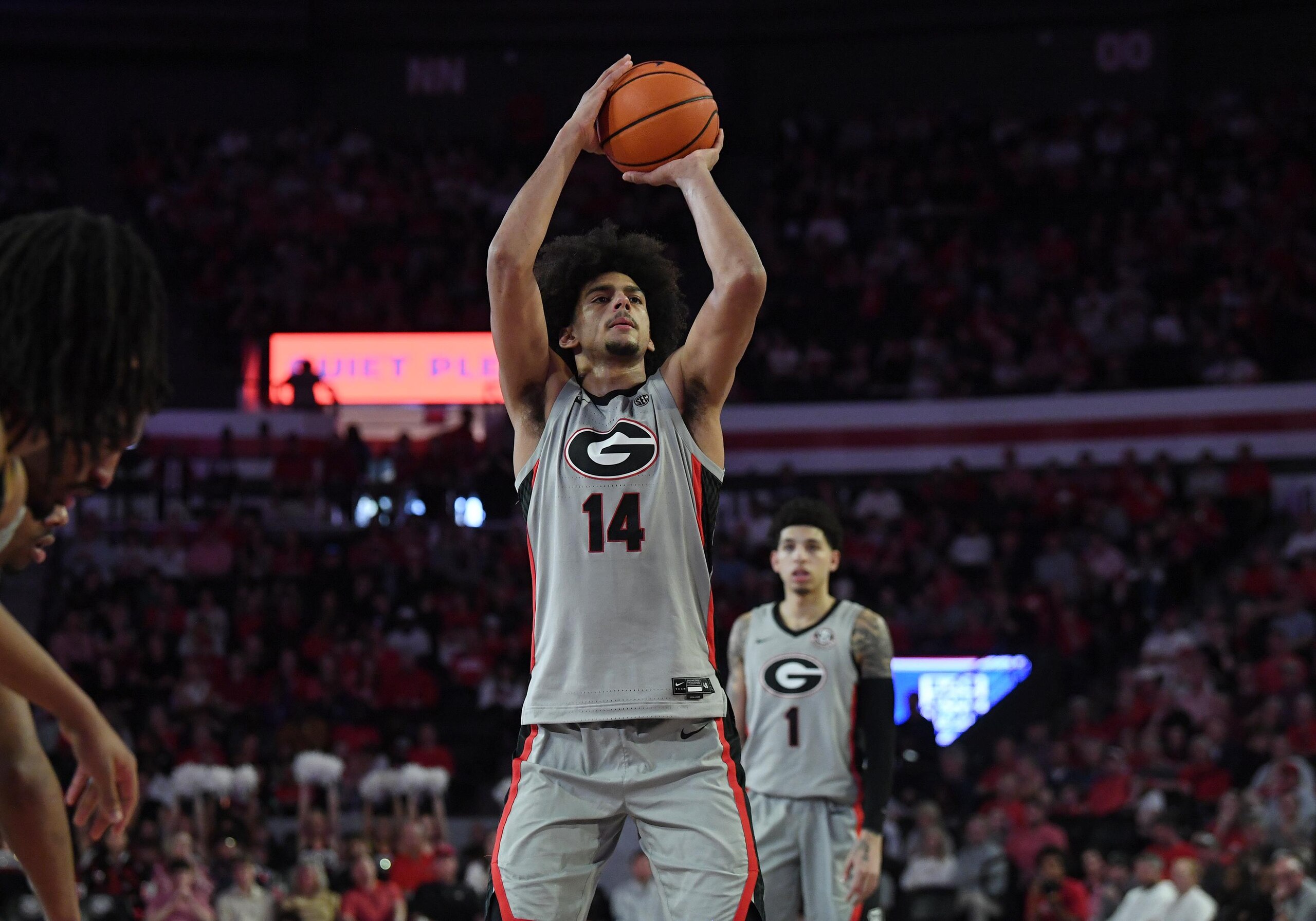
Record: 20-12 (8-10 in SEC)
Star Player: Death, taxes, and Asa Newell going for around 15 points and six rebounds. Most freshmen are prone to wild swings and slumps, but Georgia's future lottery pick has been Steady Eddie, almost always delivering a respectable performance. So when the more mercurial Silas Demary Jr. has a good game, now the Dawgs are in business.
Biggest Wins: Knocking off Florida to start a regular season-ending four-game winning streak was massive. Georgia looked to be toast for at-large purposes, but that was a huge surge to push them into the field. The Bulldogs also picked up a mighty fine win over St. John's in Bahamas and toppled Kentucky by 13 in their SEC home opener.
Reason to Worry: Turnovers have been a major bugaboo for this team, particularly those of the live-ball (steals) variety. It's an outright miracle Georgia won that game against St. John's while coughing the ball up 24 times. And the Bulldogs almost blew a 26-point lead in that game against Florida because they allowed the Gators to score 29 points off turnovers.
March Madness Ceiling: Newell is an incredible talent, and the Bulldogs do have a bunch of capable perimeter shooters around him. (He can step out there and drain them on occasion, too.) But when they have gotten big wins, they all seemed to stem from extenuating circumstances, like Kentucky having its second-worst shooting performance of the season. Maybe the Dawgs get lucky again in that regard, but a short stay in the dance is likely.
43. Oklahoma Sooners
26 of 68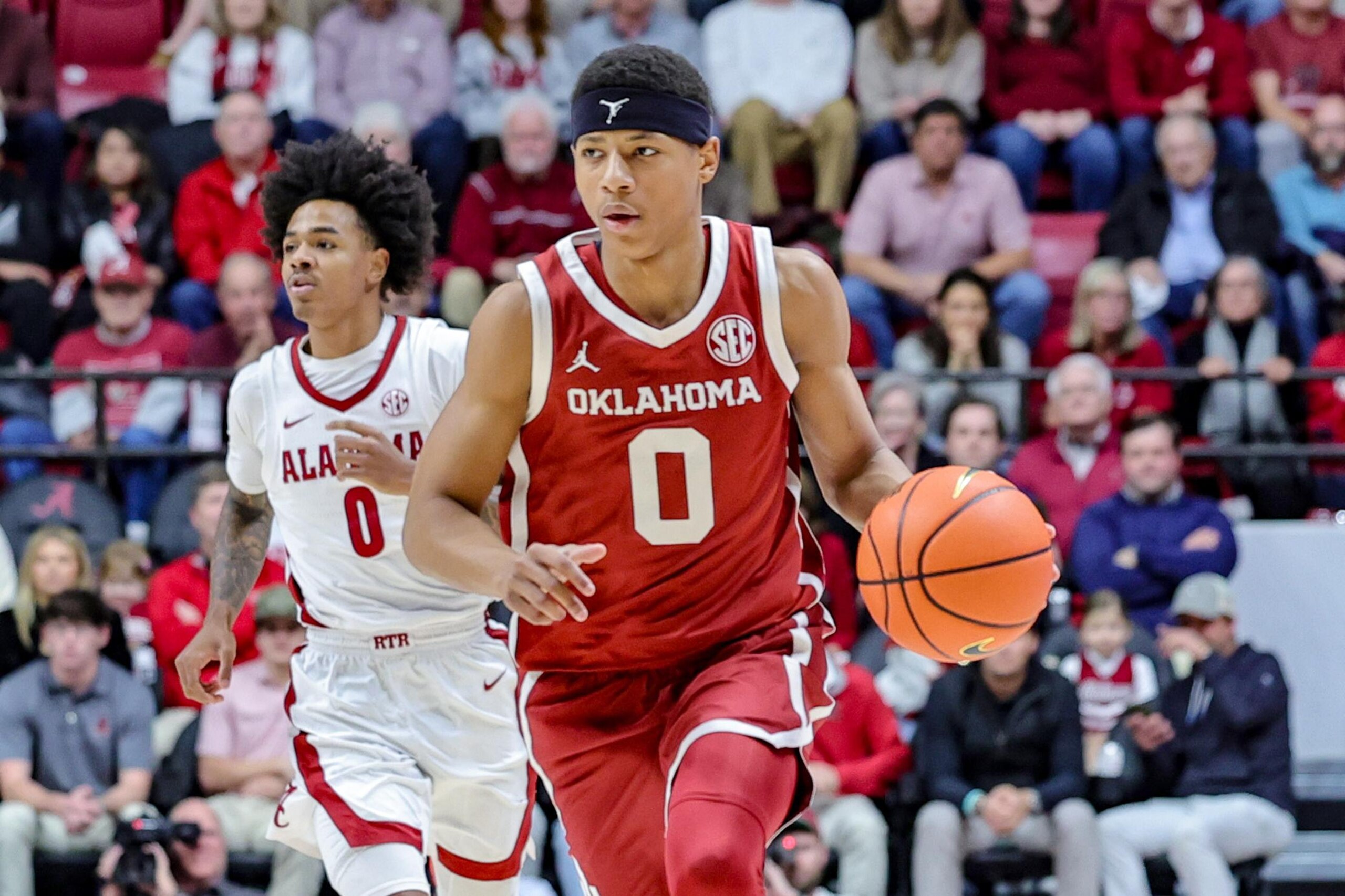
Record: 20-13 (6-12 in SEC)
Star Player: After averaging 18 points, 4.5 assists and 2.2 steals in nonconference play, freshman point guard Jeremiah Fears wasn't quite as consistently prolific against the gauntlet of conference play in the SEC. But he did still ball out on a somewhat regular basis, including 27 points and 10 assists in a late-February home win over Mississippi State, and 31 points with five dimes two weeks later in a crucial victory over Missouri.
Biggest Wins: Oklahoma was a neutral-court warrior early in the year, surprisingly running through Providence, Arizona and Louisville in winning the Battle 4 Atlantis. The Sooners also beat Michigan in Charlotte. And they scored true road wins over both Arkansas and Texas in SEC play.
Reason to Worry: It wasn't enough to keep them out of the tournament, as they did go undefeated in nonconference play with several quality wins. But 6-12 in SEC play? Yikes. Not even a great win in the bunch, either, going winless against all of Auburn, Alabama, Florida, Tennessee, Kentucky and Texas A&M. That mediocre play over the past two-plus months makes those great November and December wins feel like they happened in a different season.
March Madness Ceiling: That conference record ensures Oklahoma will be talked about as a controversial inclusion all week long, but that just might be bulletin-board material for a team that spent the entire season ranked in the top 50 on KenPom. Then again, the Sooners never once clawed their way into the top 30, suggesting that reaching the round of 32 before exiting is their logical fate.
42. Xavier Musketeers
27 of 68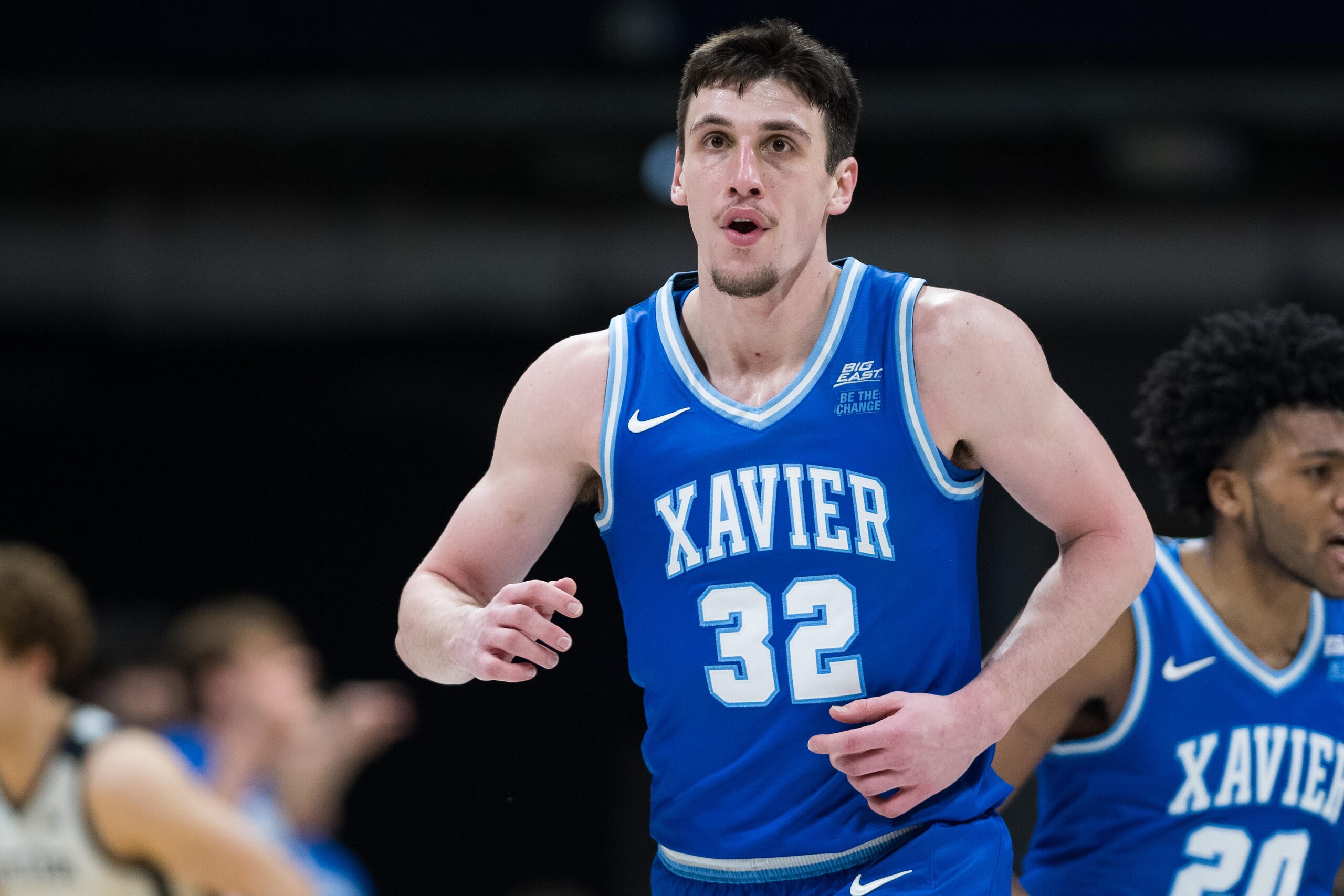
Record: 21-11, 13-7 in Big East
Star Player: After missing the second half of the 2022-23 season and all of the 2023-24 season with a foot injury and subsequent surgeries, Zach Freemantle returned to average 17.3 points, 7.1 rebounds and 2.1 assists while earning second team All-Big East. He has teamed with Indiana State transfer Ryan Conwell (16.8 PPG, 41.8 3PT%, 97 made threes) to give the Musketeers a dynamic one-two punch on the offensive end.
Biggest Wins: After losing to fellow bubble team Villanova on Feb. 9, the Musketeers won seven in a row to close out the regular season and shift to the right side of the tournament cut line. They beat Creighton, UConn and Villanova at home, which all ended up being Quad 2 wins, while their only Quad 1 victory came on the road against Marquette in a 59-57 battle.
Reason to Worry: While they had some quality victories in conference play, the Musketeers ended up going just 1-9 in Quad 1 games. They dropped a lot of close ones, with five of their 11 losses coming by five or fewer points. That can be looked at as how close they were to being 26-6, or a larger inability to close out wins. A 10-point halftime lead that devolved into an 89-87 loss to Marquette in the Big East tournament points to the latter. They can get careless with the ball at times, averaging 11.2 turnovers per contest, and they went 6-8 in games where they tallied more than 10 turnovers.
March Madness Ceiling: With two quality scorers and solid momentum down the stretch in the regular season, Xavier is more than capable of pulling off a first-round upset. Their lack of signature wins would make a Sweet 16 trip a major surprise, but this is a major conference team that hung around with almost everyone it faced this year.
41. North Carolina Tar Heels
28 of 68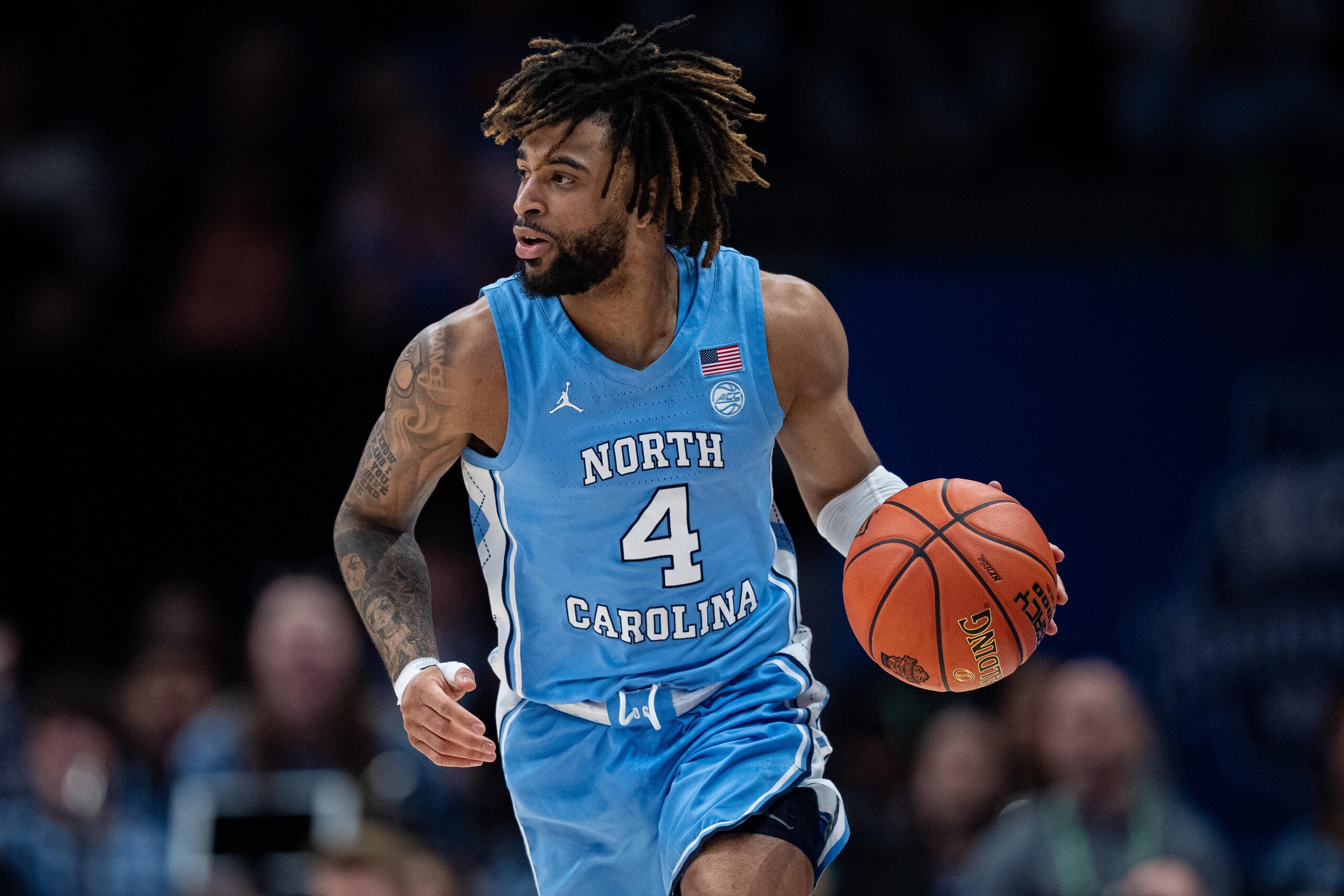
Record: 22-13 (13-7 in ACC)
Star Player: NBA teams are eager to get their hands on Drake Powell and Ian Jackson, but RJ Davis is the veteran leader who just about must show up in a big way in order for this team to accomplish much of anything in March. His scoring 20 points in the first 23 minutes of the regular-season finale against Duke is how the Tar Heels were able to take the lead, and his scoring zero points in the final 17 minutes is why it devolved into a comfortable Blue Devils victory.
Biggest Wins: North Carolina only had two wins worth much of anything, clipping UCLA by two at Madison Square Garden, and narrowly surviving against Dayton in the opening round of the Maui Invitational. UNC trailed by as many as 16 points in the second half of the former, and had to rally from a 21-point second-half deficit in the latter. In other words, even their best wins felt like miracles.
Reason to Worry: For starters, the Tar Heels blew basically every opportunity they had to prove themselves during the regular season. Sure, they were close against Florida, Michigan State and Kansas, but it was just about an entire season's worth of "almost doesn't count" reminders. That's no doubt a byproduct of this being the worst defense UNC has played in more than two decades.
March Madness Ceiling: In both 2000 and 2022, this program made it to the Final Four as a No. 8 seed. And goodness knows that over the past decade, we've seen more than our fair share of underachieving ACC teams suddenly hit their stride in March. But this isn't a "The ceiling is the roof" type of Tar Heels team. The ceiling is probably a second-round exit.
40. Texas Longhorns
29 of 68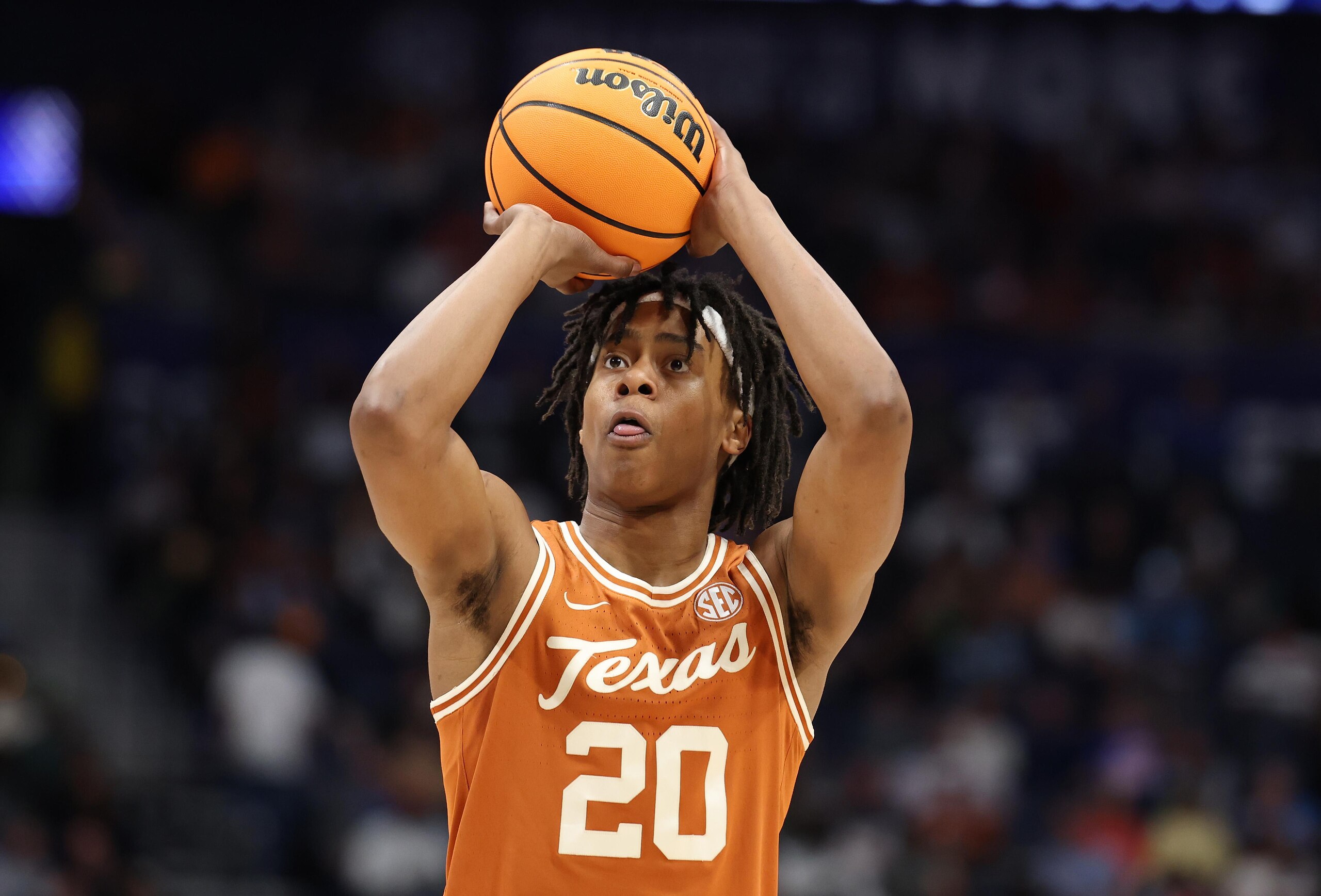
Record: 19-15 (6-12 in SEC)
Star Player: Texas maybe doesn't deserve to be in the tournament, but Tre Johnson sure does. Even with a disastrous regular season finale in which he shot 0-for-14 from the field, the freshman phenom averaged 20 points per game, shooting 40 percent from three-point range. From late January through the end of February, he went for 26.0 points, 3.7 rebounds and 3.7 assists per game, doing everything he possibly could to get the Longhorns into the dance.
Biggest Wins: Nothing to report in nonconference play, but Texas did get a few nice wins by virtue of not losing every game on its SEC schedule. The Longhorns picked up road wins over Mississippi State and Oklahoma, as well as home games against Kentucky, Texas A&M and Missouri. Most importantly, they beat both Vanderbilt and Texas A&M in the SEC tournament.
Reason to Worry: For much of the season, the non-Johnson portion of Texas' roster just looked...lifeless. The Longhorns' best wins were largely the product of the frosh doing something Herculean, and even then it was typically a photo finish. And as was the case with Indiana before "mutually agreeing to part ways with" Mike Woodson awoke some sort of sleeping dragon, when Texas decides not to show up for a game, it really doesn't show up.
March Madness Ceiling: There's enough talent on this roster to win a game or two, and you could've made the case for Texas as a Final Four sleeper about six weeks ago. But as the losses piled up, it began to feel inevitable that the Longhorns weren't going to accomplish anything in the NCAA tournament, if they made it at all.
39. Baylor Bears
30 of 68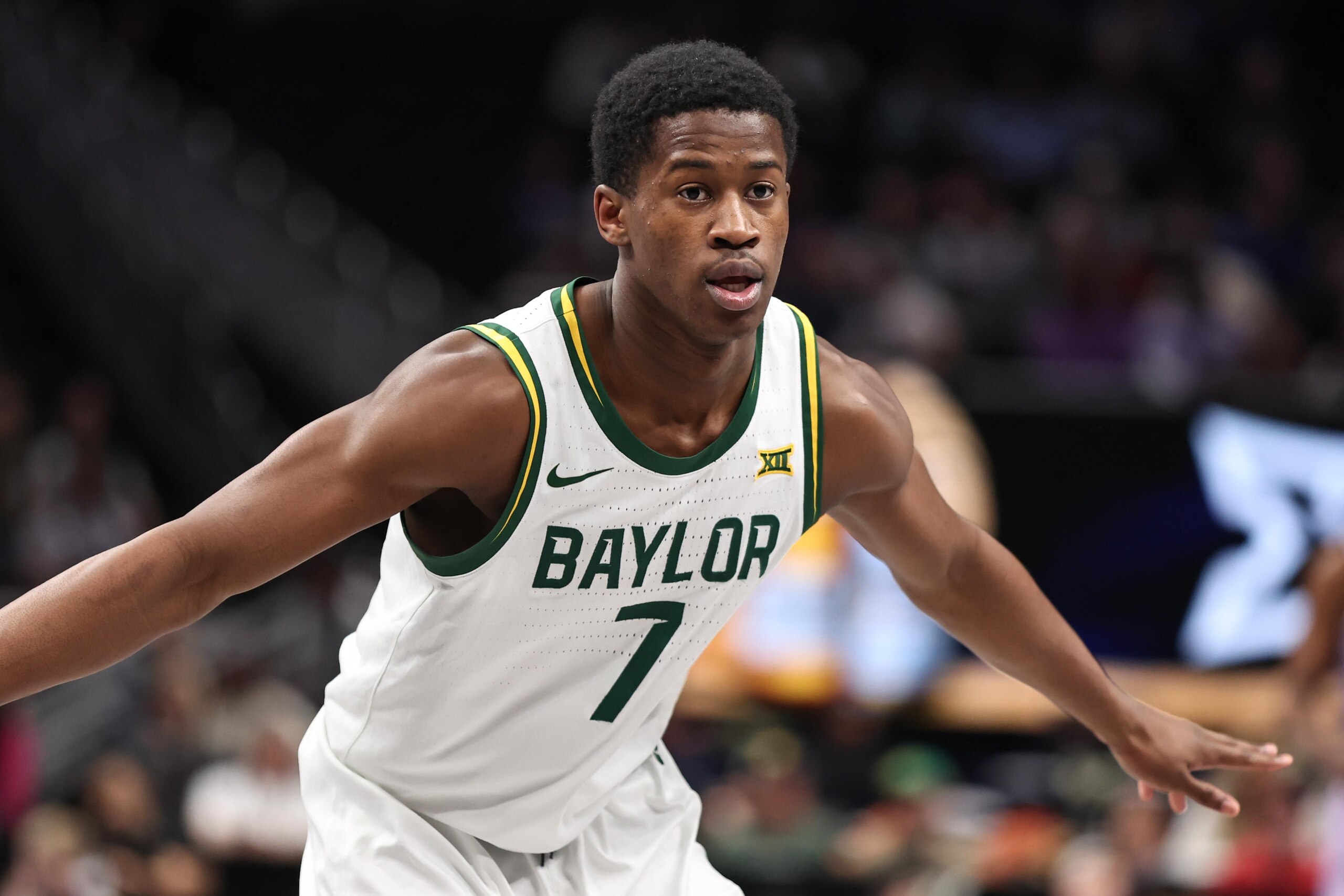
Record: 19-14 (10-10 in Big 12)
Star Player: Got to at least shout out Norchad Omier for his yeoman-like work in the post, averaging a double-double for the fifth consecutive year—which is surely an NCAA record, if he wasn't already 1-of-1 to do it for four straight seasons. But the star catalyst for Baylor is VJ Edgecombe, who has the talent to turn the court into his personal playground. We'll see if he can get back to regularly playing with the fire he showcased in January, though.
Biggest Wins: You'd think with 10 wins in Big 12 play this would be a more impressive list, but a home win over Kansas in early February was the only one Baylor got against the top six teams in the league. The Bears did clip both St. John's and Arkansas on neutral floors in nonconference play, though, which were absolutely crucial data points for what was a bubble team.
Reason to Worry: Baylor was already nothing special at full strength, occasionally having games early in the year where it never even bothered to show up. But since losing big man Josh Ojianwuna to a season-ending injury in early February, it is quite clear the Bears have been forced to play the game on a higher difficulty level. Add to that a perimeter defense that allows threes at the program's worst rate in two decades.
March Madness Ceiling: Baylor was supposed to be a top 10 team this season, but it was clear by the end of opening night that wasn't going to be the case. The Bears haven't had a three-game winning streak since December, and it's highly unlikely that trend ends now. Surely they could win a game, but multiple victories is probably a stretch.
38. VCU Rams
31 of 68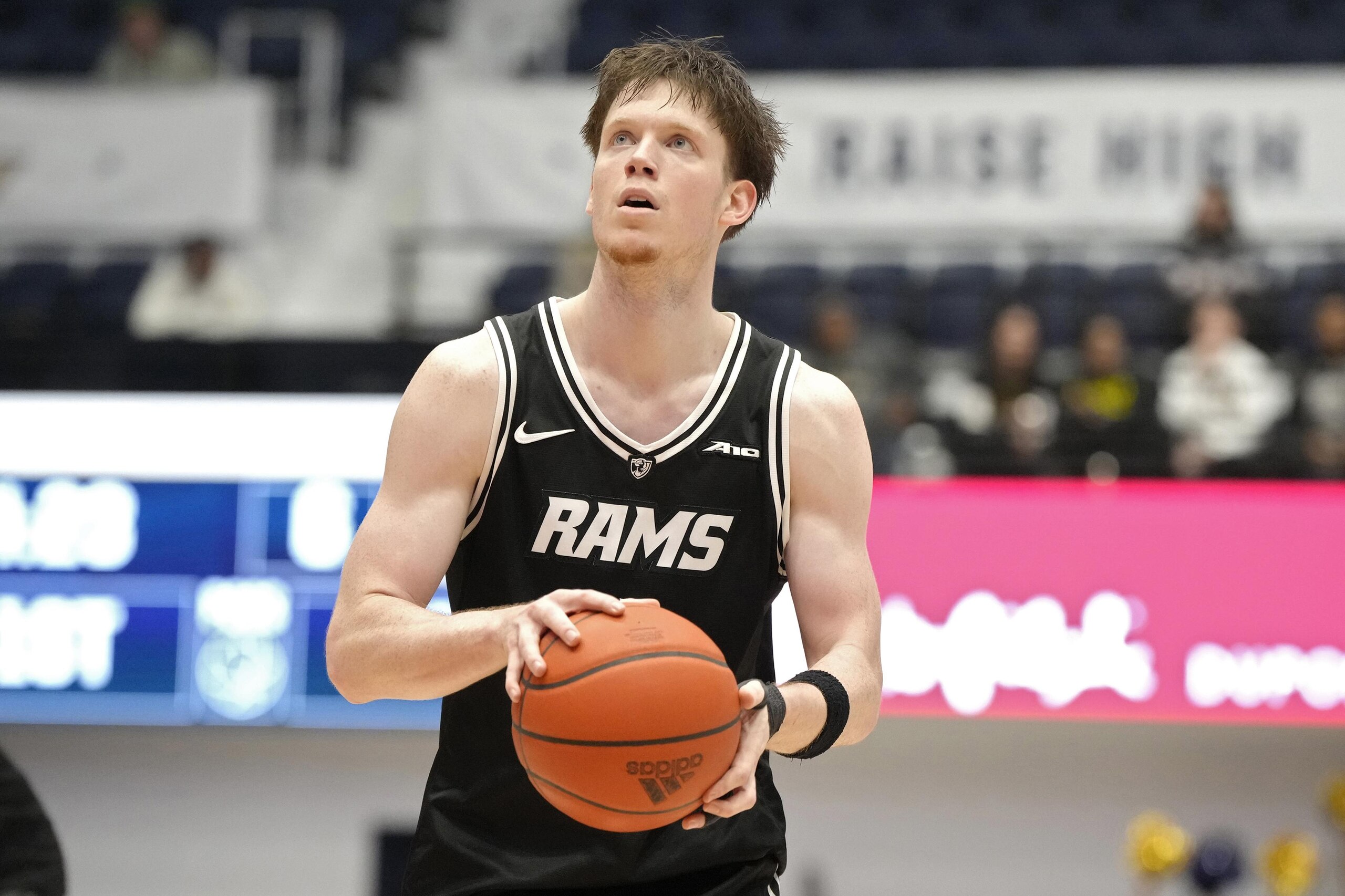
Record: 28-6 (15-3 in Atlantic 10)
Star Player: Each half of VCU's one-two punch of Joe Bamisile and Max Shulga averages better than 15 points and five rebounds per game. But it's Shulga who provides about twice as many steals, twice as many assists and much better three-point shooting. The Rams have only lost once when getting at least 14 points from both players.
Biggest Wins: While the metrics loved VCU all season long, this was the concerning part that kept them mostly out of the at-large conversation. The Rams' only nonconference win of any note was a neutral-site game against Colorado State. In A-10 play, they did win at Dayton and Saint Joseph's. But all three of those wins were right on the Q1/Q2 cutline.
Reason to Worry: VCU takes nearly half of its field-goal attempts from beyond the three-point arc and has five players making well north of one triple per game. But the Rams only shoot about 33 percent as a team and are quite vulnerable when falling below that mark. Combine that with nary a game played against a KenPom top 40 foe and we'll see what happens when facing a contender.
March Madness Ceiling: It's not exactly "HAVOC" VCU, but the Rams have a darn good defense, both forcing turnovers and blocking a lot of shots. This is also an excellent offensive rebounding team. So while they haven't shown it yet this season, they are definitely a threat for a big upset if they're hitting their threes even a little bit. A repeat of 2011 is highly unlikely, but reaching the Sweet 16 for the first time since then might not be out of the question.
37. Colorado State Rams
32 of 68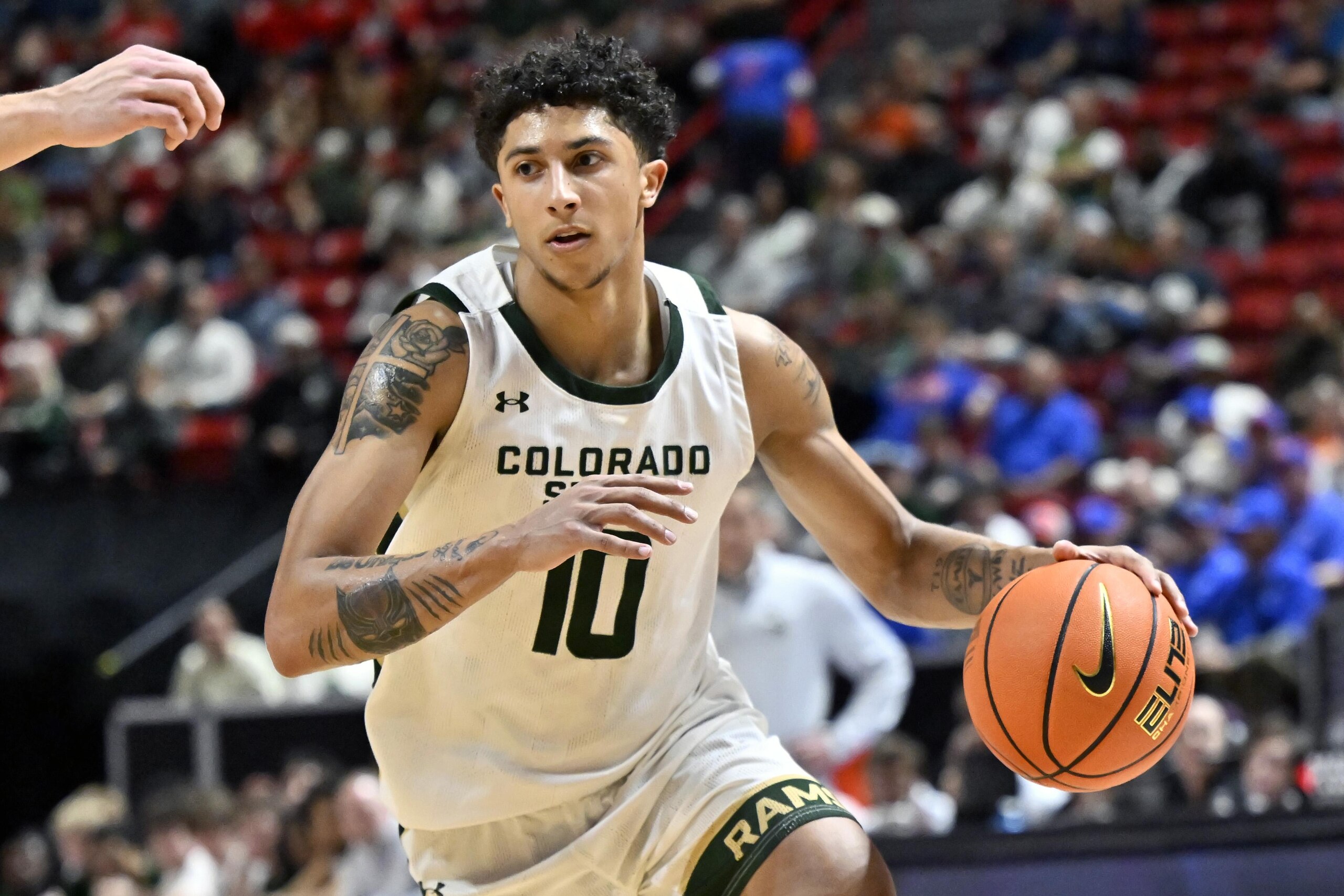
Record: 25-9 (16-4 in Mountain West)
Star Player: New Mexico's Donovan Dent deservedly won Mountain West Player of the Year, but fifth-year senior Nique Clifford was surely in the conversation, averaging a slightly absurd 18.4 points, 9.7 rebounds and 4.4 assists per game during the regular season. He had 13 double-doubles and went for 36 points in the season-ending win at Boise State. And then had 75 points, 31 rebounds and 13 assists in leading the Rams to the MWC championships.
Biggest Wins: After starting out 5-5 overall with a couple of bad losses and nothing better than an overtime win over TCU to their credit, the Rams flipped a switch and went 20-4 the rest of the way, sweeping Boise State and beating both San Diego State and Utah State in Fort Collins. They rolled through Nevada, Utah State and Boise State to secure an auto bid.
Reason to Worry: Prior to winning the regular season finale at Boise State, Colorado State had zero Quad 1 wins and two Quad 3 losses (UC Riverside and Washington). Not only that, but the Rams lost by at least eight points in each of their five Quad 1 opportunities prior to March 7. Not exactly a ringing endorsement of budding potential.
March Madness Ceiling: Only once in program history has Colorado State won multiple games in a single NCAA tournament, that run transpiring just a few months before we landed on the moon in 1969. But this team has been smoking hot for more than a month and just might have another Sweet 16 up its sleeve.
36. Mississippi State Bulldogs
33 of 68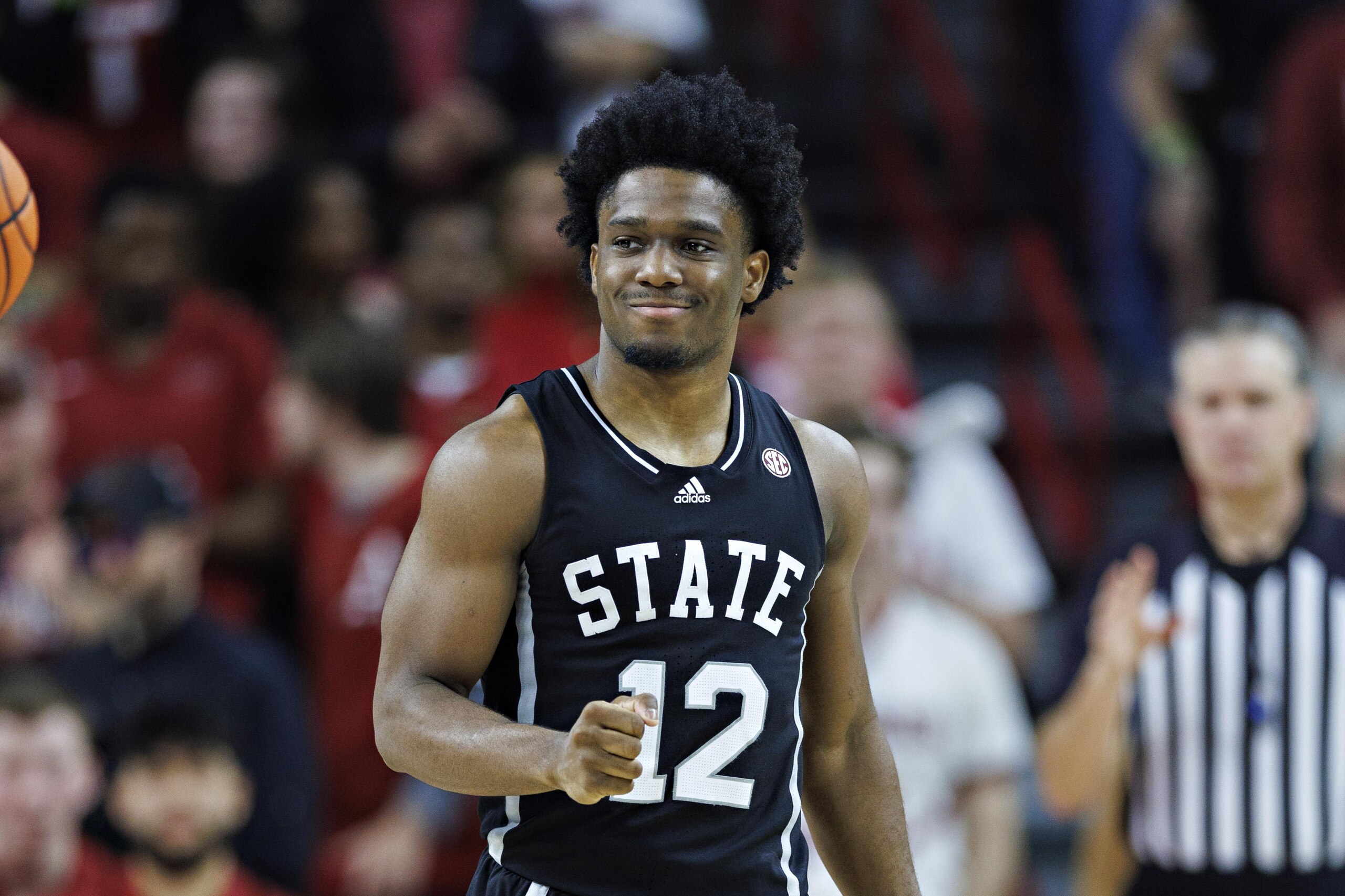
Record: 21-12 (8-10 in SEC)
Star Player: If you love players who do everything well aside from shooting, Cam Matthews is your hero for Miss State. He almost has more rebounds than points, leads the team in assists and leads the SEC in steals. But Josh Hubbard is the lifeblood of the Bulldogs, the success rate on his nine three-point attempts per game having a massive say in whether they'll score enough to compete that day.
Biggest Wins: For a team that ended up with solid metrics across the board, not a ton of meat on this bone. The Bulldogs did win at Memphis, swept Ole Miss and scored a home win over Texas A&M, but it felt like they did more, didn't it? Probably a byproduct of that 33-point home win over Pittsburgh from early December aging like milk while the Panthers crashed and burned.
Reason to Worry: After a 14-1 start to the year, Mississippi State went 7-11 the rest of the way, three of those wins coming against LSU and South Carolina. The Bulldogs went from looking like a possible No. 2 seed at the midpoint of the season to a team that got smoked just about every time it faced a top 20 team the rest of the way. A lot of that stems from the fact that they allowed 40 percent three-point shooting over the course of those 18 games.
March Madness Ceiling: Given how they've played since early January, kind of feels like the bracket is going to need to break in a massive way in order for the Bulldogs to be a Sweet 16 team. They have been hopelessly outclassed from the perimeter over the past two months. And though they do generate a good number of blocks and steals, it's usually not enough to overcome what has been a major discrepancy in threes. They've been immediately eliminated in their last four NCAA tournament appearances, and may well make it a fifth.
35. Drake Bulldogs
34 of 68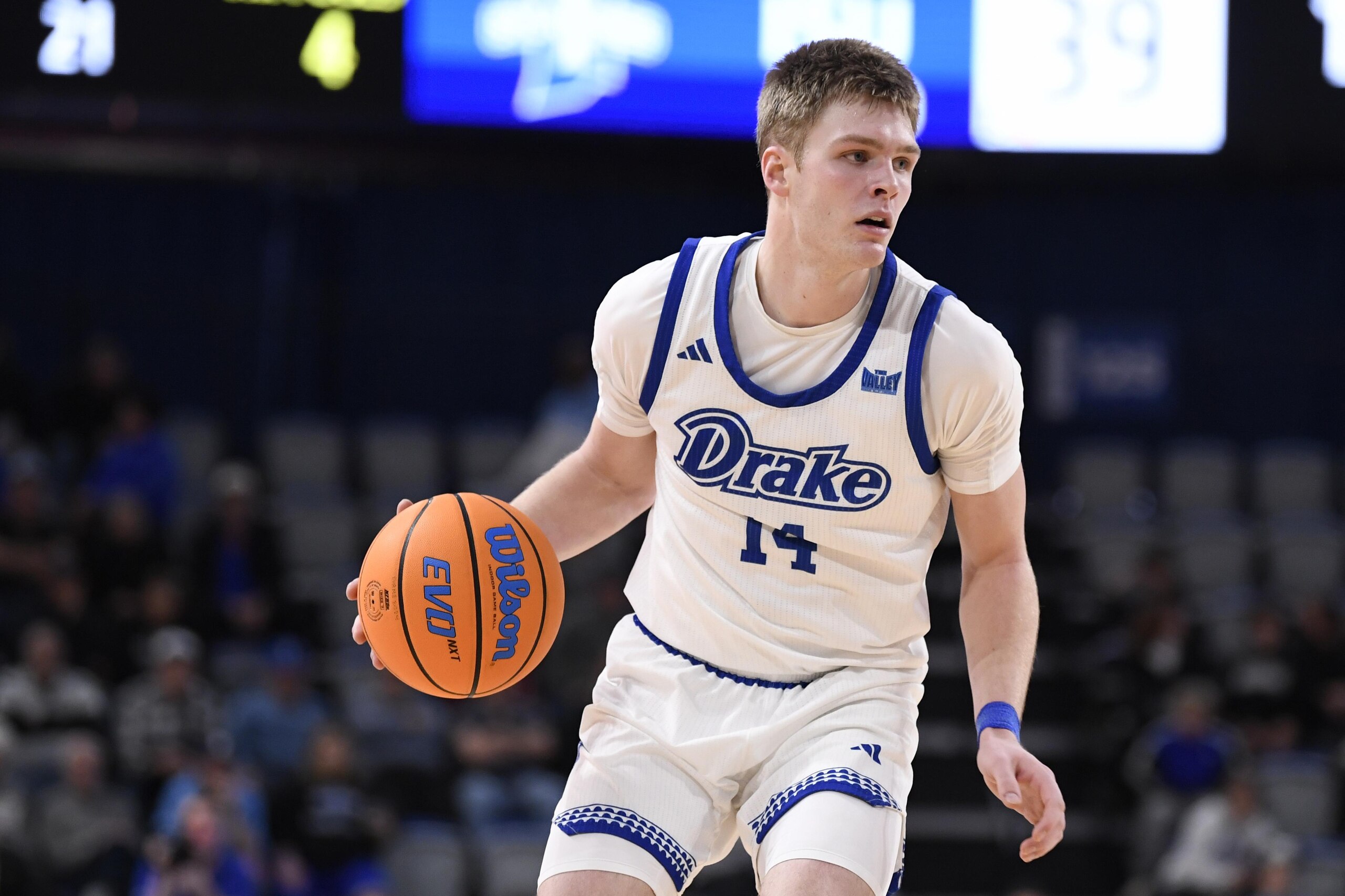
Record: 30-3 (17-3 in Missouri Valley)
Star Player: Bennett Stirtz has been Drake's Energizer Bunny who keeps going...and going...and going, averaging a seemingly impossible 40.3 minutes played in the Bulldogs' 31 games against D-I competition. He was the KenPom Game MVP 18 times, averaging close to 19 points, six assists, four rebounds and two steals per game. His fingerprints are all over everything this team does.
Biggest Wins: Drake beat Miami, Florida Atlantic and Vanderbilt to win the Charleston Classic, plus scored a road win over Kansas State. But the biggest win was the victory over Bradley in the Arch Madness title game, as it wasn't a sure thing they would make the NCAA tournament as an at-large team, even with what would have been a 29-4 record. The Bulldogs saved themselves a week's worth of sleepless nights, however, by securing that auto bid.
Reason to Worry: Though Drake generally excels on the glass, it doesn't have much of a post presence on defense, particularly for the 22-ish minutes per game that Cam Manyawu is on the bench. And while they don't commit too many live-ball turnovers, Drake may well 'lead' the nation in shot clock violations on offense, often a little too content with draining as much clock as possible before even trying to score.
March Madness Ceiling: If there's a 2018 Loyola-Chicago type of team out there this year, it's almost certainly Drake. That Ramblers team won the first three games of its Final Four run as a No. 11 seed by scores of 64-62, 63-62 and 69-68, which is all sorts of in Drake's wheelhouse. The Bulldogs' ability to generate a lot of steals and a lot of free-throw attempts while playing at the slowest tempo in the nation is liable to be a frustration-inducing, matchup nightmare.
34. Creighton Bluejays
35 of 68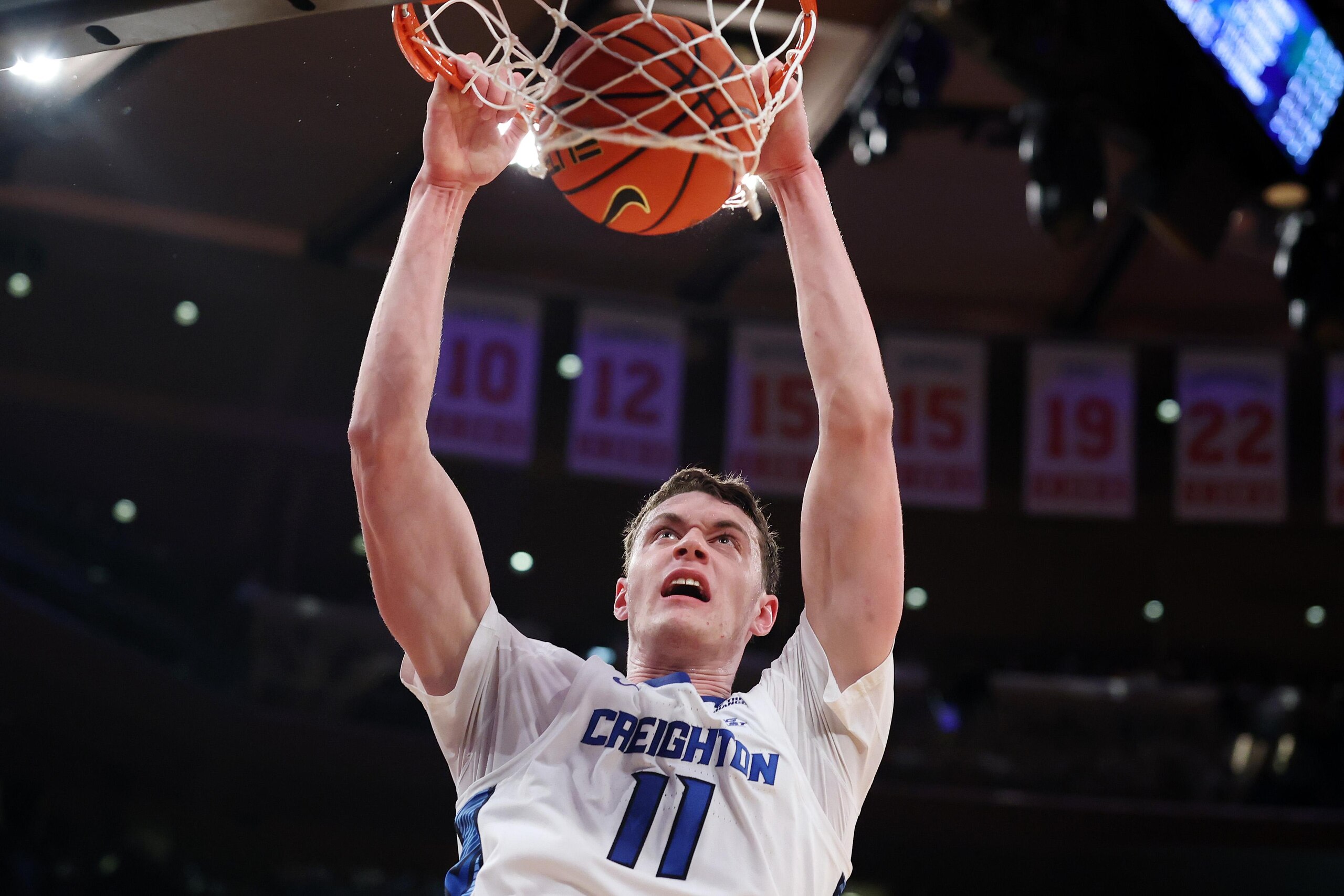
Record: 24-10 (15-5 in Big East)
Star Player: Despite losing Baylor Scheierman and Trey Alexander to the NBA, the Bluejays still returned plenty of firepower in the form of four-time Big East Defensive Player of the Year Ryan Kalkbrenner (19.4 PPG, 8.8 RPG, 2.7 BPG) and sharp-shooting guard Steven Ashworth (16.3 PPG, 6.8 APG, 101 made threes). Kalkbrenner averaged 18.7 points, 9.7 rebounds and 3.3 blocks in the Bluejays three NCAA tournament games a year ago.
Biggest Wins: The Bluejays knocked off Kansas when they were No. 1 in the AP poll on Dec. 4, and they beat St. John's, Marquette, UConn and Xavier once each during Big East play. After surviving double overtime against DePaul in their Big East tournament opener, they picked up a second win over UConn on Friday before falling in the title game to St. John's on Saturday evening. They have a 6-5 record in Quad 1 games and no losses below the Quad 2 level.
Reason to Worry: With a 13-1 record in games that Kalkbrenner scores at least 20 points and a 4-6 record when he is held below 15 points, few teams are as reliant on the performance of their star, and that is a precarious approach during March Madness. They had a tough time slowing down St. John's in transition in the Big East title game, allowing 14 fast-break points, and that could be a blueprint to success for other teams going forward.
March Madness Ceiling: It's hard not to feel like last year was Creighton's chance to make a legitimate title push, and that this year's team is just a less stacked version of that No. 3 seed that reached the Sweet 16. That said, Kalkbrenner is a true difference maker who can put a team on his back, and surviving the first weekend once again is definitely doable.
33. Marquette Golden Eagles
36 of 68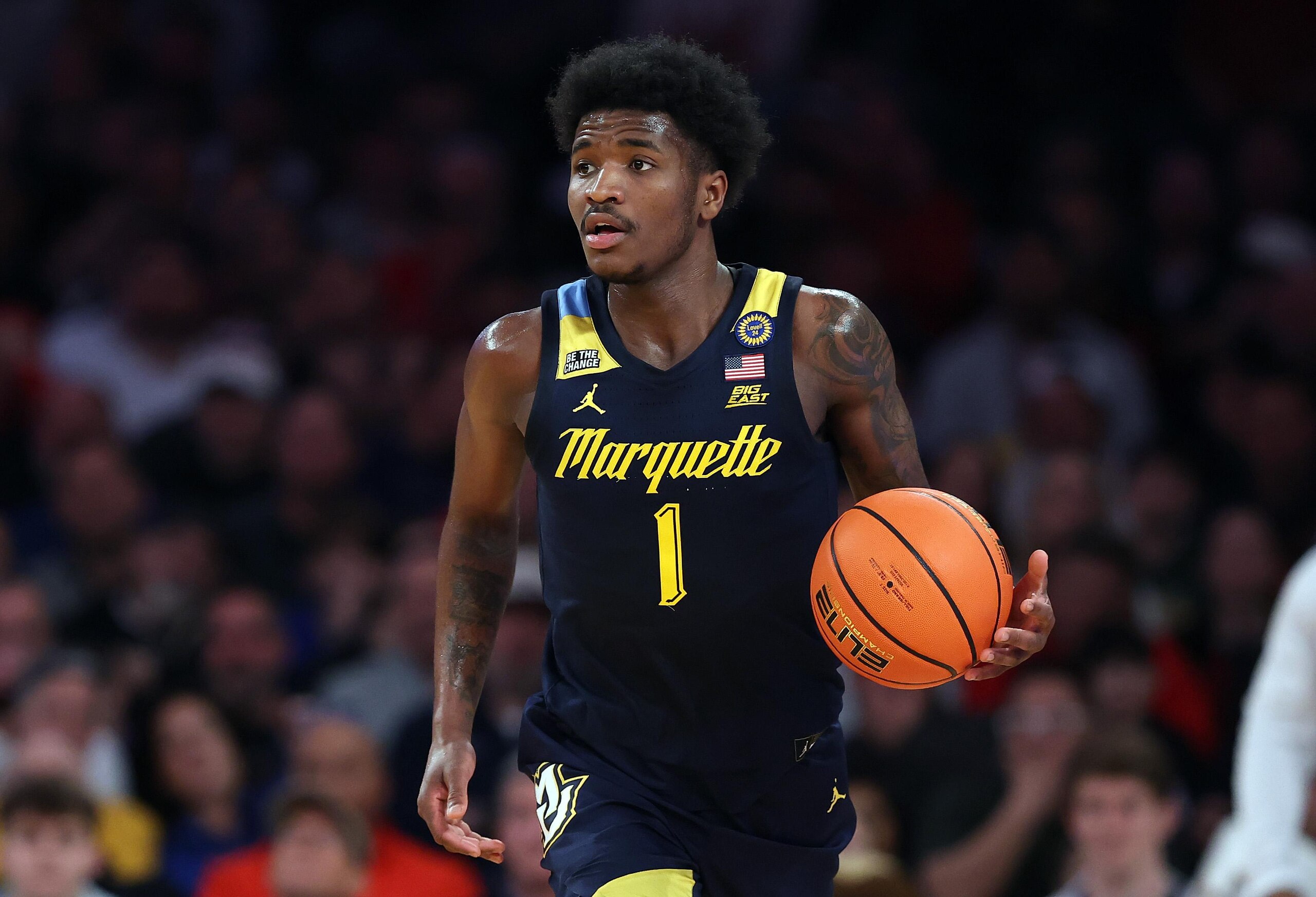
Record: 23-10 (13-7 in Big East)
Star Player: In the transfer portal era of constant player movement, Kam Jones has spent four years at Marquette and gone from sixth man to complementary piece alongside star point guard Tyler Kolek to the go-to guy here in his senior season. The 6'4" guard averages 19.3 points, 5.9 assist and 4.5 rebounds, and he has three 30-point games, including a 32-point, six-assist performance in a marquee win over Wisconsin.
Biggest Wins: The Golden Eagles logged just one Quad 1 win in conference play, but their non-conference resume includes victories over Maryland, Wisconsin, Purdue, Georgia and Xavier as part of a terrific start where they peaked at No. 5 in the AP poll. After losing back-to-back games to UConn and St. John's to close out the regular season, beating Xavier in their Big East tournament opener was bigger than it might have seemed at surface level.
Reason to Worry: Prior to their victory over Xavier on Thursday, the Golden Eagles had not won against a tournament-caliber team since their 79-71 win at home against Creighton on Jan. 3, and their stellar non-conference performance has propped up a largely mediocre second half of the season. They carry the bright red flag of being a team that ranks among the nation's leaders in three-point attempts per game (28.9) while residing outside the top 250 in three-point percentage (32.5%).
March Madness Ceiling: At the beginning of January, the answer would have been all the way to the Final Four with a very real chance to cut down the nets. Now? They might have trouble getting out of the first round, and a trip to the Sweet 16 would take a major upset based on how they have played over the past few months.
32. UCLA Bruins
37 of 68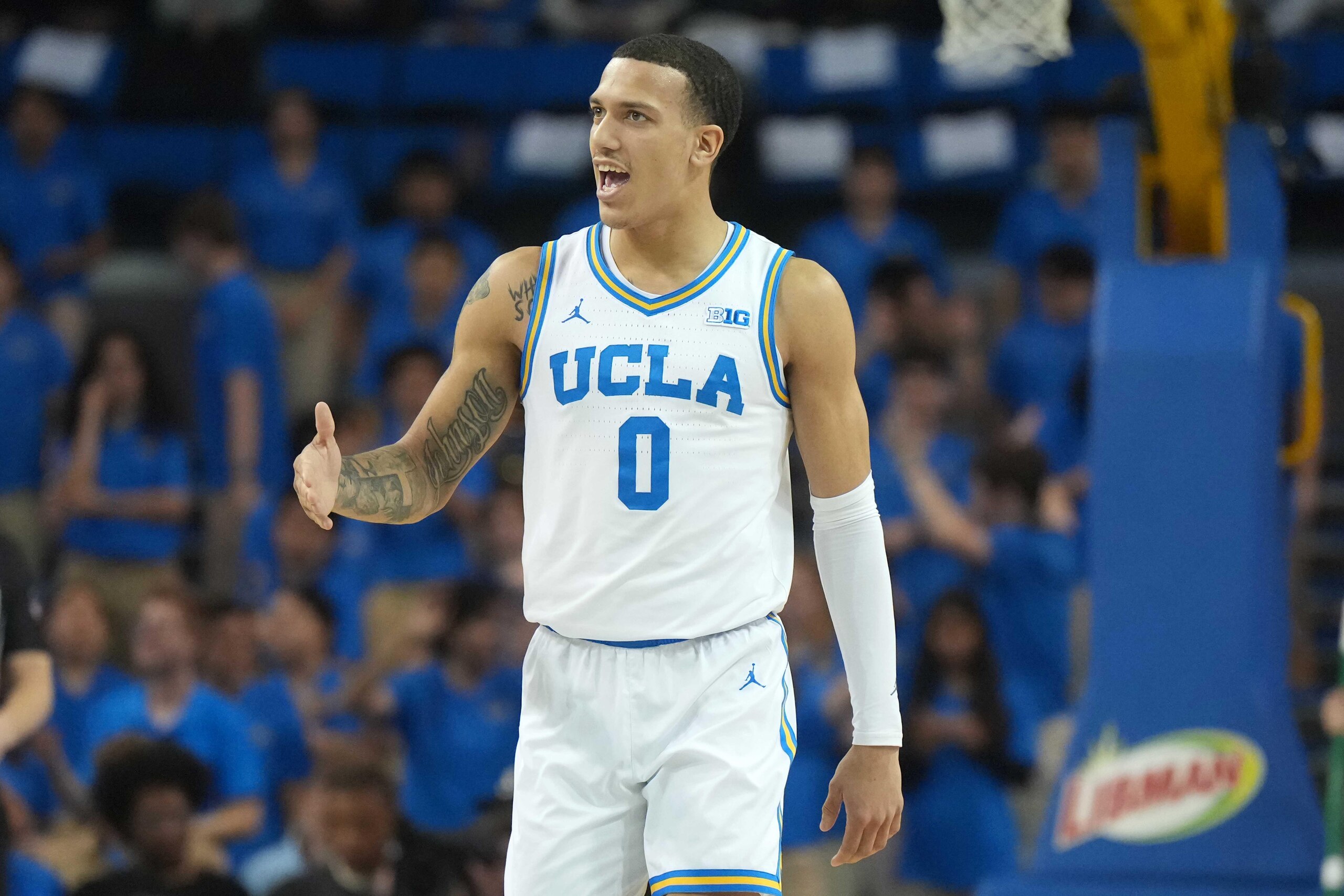
Record: 22-10 (13-7 in Big Ten)
Star Player: Tyler Bilodeau is the leading scorer of the Bruins, but Kobe Johnson is their sine qua non who does a little bit of everything. He leads the team in both rebounds and steals, almost leads the way in assists and is one of the best individual defenders in the Big Ten. He's almost reluctant to shoot, but he certainly can if opposing teams start focusing too much on everything else he does.
Biggest Wins: UCLA had quite the road trip against former Pac-12 rivals in December, winning at Oregon and beating Arizona in Phoenix in consecutive weekends. The Bruins knocked off Gonzaga a couple weeks after that, and scored home wins over Wisconsin and Michigan State during their seven-game winning streak in league play. (All five wins did come by three points or fewer, though.)
Reason to Worry: They finally won a few games outside the Pacific Time Zone late in the season, so at least we now know that's not impossible for them. But the Bruins have had frequent problems against talented opposing big men. Trey Kaufman-Renn went for 29 against them. Dawson Garcia had 32. Michigan's Wolf/Goldin tandem went for 48. Bound to be an issue at some point.
March Madness Ceiling: It has only been four years since we all watched UCLA go from First Four to Final Four, so who's to say the Bruins couldn't go on a major run again? This does feel like something of a prototypical second-round team, though, talented enough to hang with anyone, but lacking for go-to bucket getters.
31. Arkansas Razorbacks
38 of 68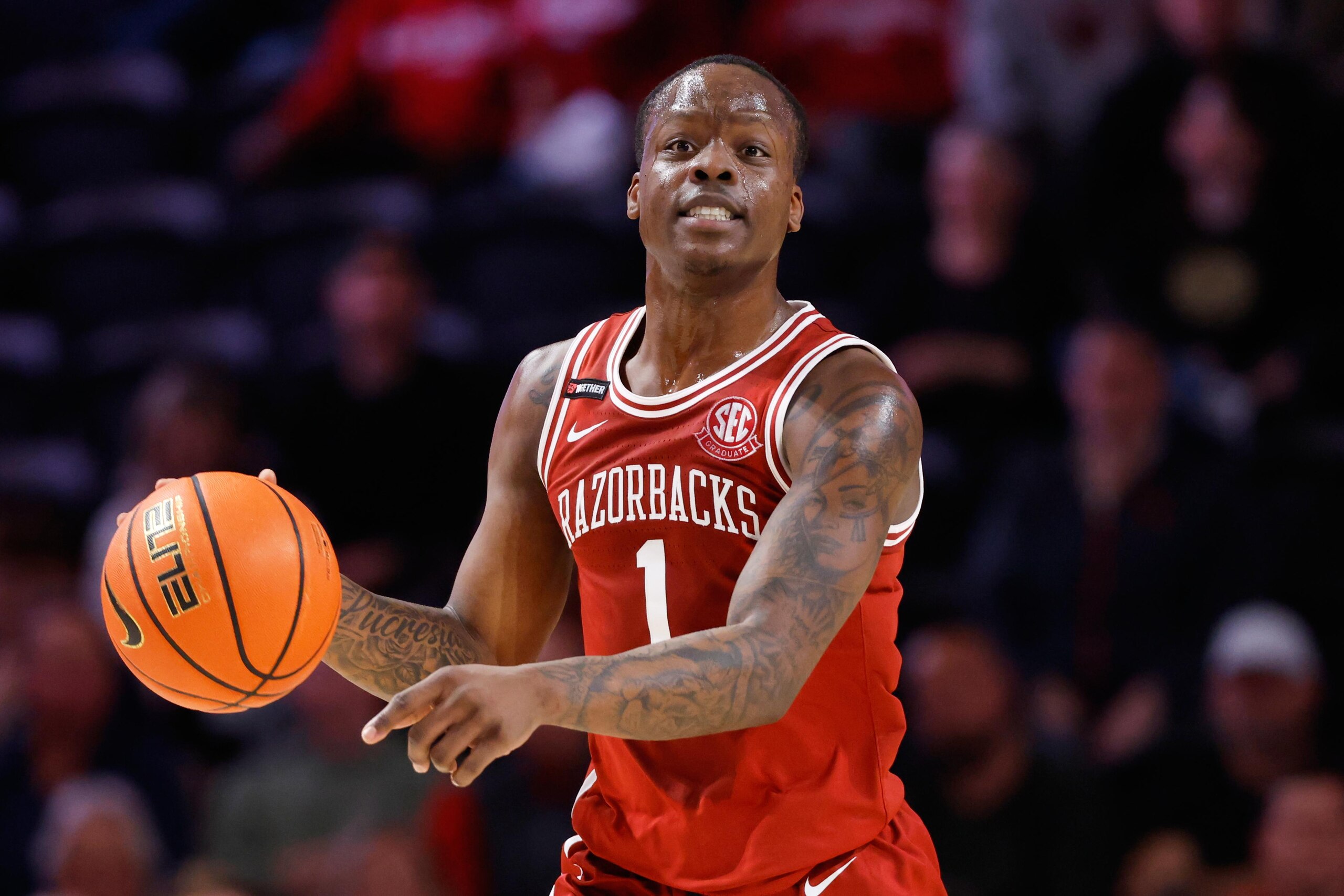
Record: 20-13 (8-10 in SEC)
Star Player: Well, it used to be Boogie Fland, but Arkansas' season didn't take a turn for the better until it lost Fland to a season-ending injury in mid-January. (Though, there have been reports Fland could be available for the tournament?) That's when Johnell Davis started playing like the star he was at Florida Atlantic, averaging 14.5 points and 2.3 steals over his final 13 regular season games. Even in that season-changing win over Kentucky that was all about the guys John Calipari brought with him, Nelly was massive with an 18-6-5-2 line.
Biggest Wins: Just mentioned the win at Rupp. Even if Arkansas hadn't clawed its way back into the tournament picture, that would've been one for Cal to savor all summer. But the Hogs also beat Michigan in Madison Square Garden in a wild back-and-forth affair, swept Texas, won at Vanderbilt and picked up home victories over Missouri, Mississippi State and Georgia.
Reason to Worry: Arkansas' offense is quite the scatter plot diagram. The Hogs went 61, 60, 92, 86, 53, 90 and 93 for point totals over their final seven games of the regular season. Obviously the scores in the 90s are encouraging, but the theoretical-from-that-data 43 percent chance of putting up 61 points or fewer is terrifying.
March Madness Ceiling: Don't look now, but Trevon Brazile is peaking at exactly the right time, his only three double-doubles of the year coming in Arkansas' final four games. DJ Wagner's been playing pretty darn well. Big Z is an X-factor when he's adding more than he's detracting. Maybe Adou Thiero will be close to full strength. It took longer than expected, but things are coming together for Arkansas. A deep run feels like a bit of a pipe dream, but they've been playing like a second-weekend team for a while now, save for that total dud against South Carolina.
30. Missouri Tigers
39 of 68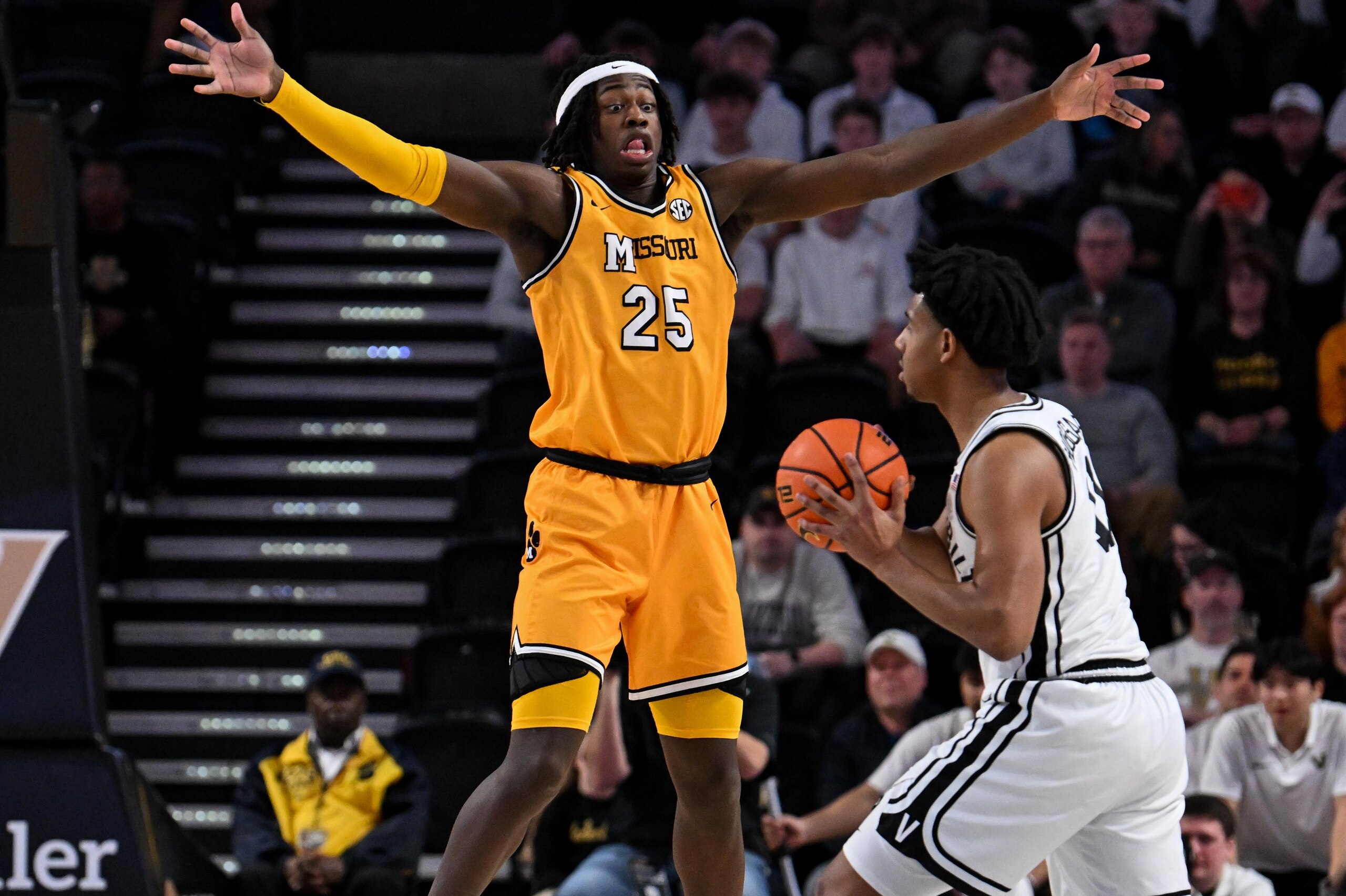
Record: 22-11 (10-8 in SEC)
Star Player: While Duke ran a freight train through the ACC, one of its former players has been a godsend at Missouri. Mark Mitchell was solid for most of the year, but kicked it up a notch over the final month of the regular season, averaging 20 points, 4.9 rebounds and 2.6 assists in his final eight games. If he brings the thunder while Caleb Grill brings the lightning from the perimeter, that can be a lethal combo. (Mitchell suffered a knee injury in the SEC tournament. His availability for the first round is unknown at this time.)
Biggest Wins: Missouri scored not one, not two, but three wins over AP Top 5 teams this season, beating then-No. 1 Kansas in early December, winning at Florida in mid-January and toppling Alabama in mid-February. They also won in convincing fashion on the road against both Mississippi State and Georgia.
Reason to Worry: Has the magic carriage already turned back into a pumpkin? Missouri went 2-5 in its final seven games, allowing at least 91 points in each of the losses. Even in the win over Alabama that immediately preceded that slump, the Tigers allowed 98 points. They just so happened to explode for 110 of their own in that one.
March Madness Ceiling: Missouri can score points in bunches. In fact, they scored at least 81 points in 15 of their final 17 games. The Tigers still went just 9-8 in those games, though, as their defense has devolved from better than average to kind of low-key terrible, despite still tallying at least eight steals in most contests. It's been a sensational turn-around for a team that ended last season on a 19-game losing streak, but the odds of a Sweet 16 appearance feel a lot worse than they did four weeks ago.
29. Louisville Cardinals
40 of 68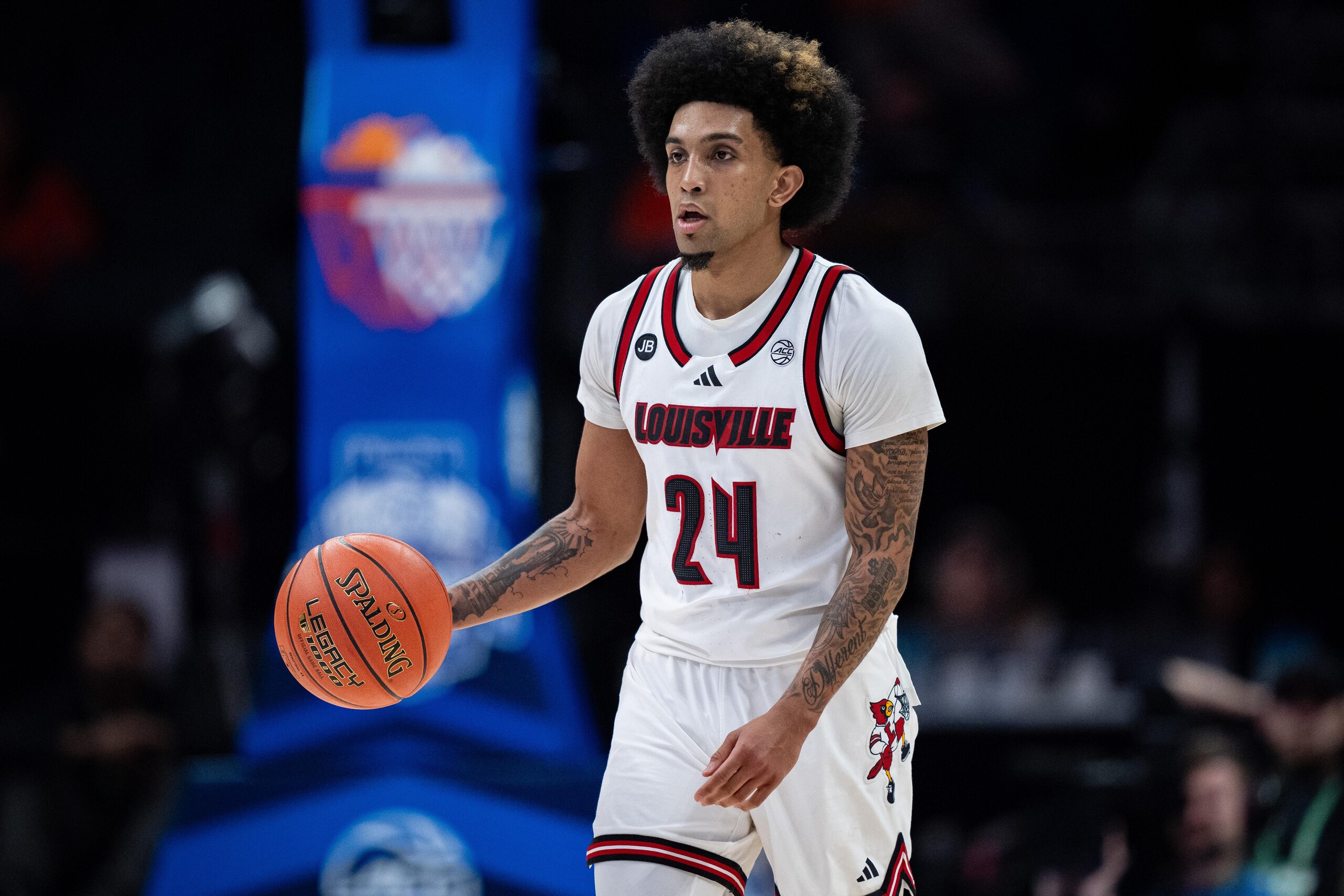
Record: 27-7 (18-2 in ACC)
Star Player: Easily one of the most important Portal acquisitions of last offseason, former Wisconsin Badger Chucky Hepburn has been the driving force of Louisville's "Extreme Makeover: Tournament Edition" from what was a 12-52 two-year slog under Kenny Payne. Hepburn spearheads the Cardinals' approach on both ends of the floor, leading the ACC in steals and ranking third in assists. He can do it himself, too, averaging better than 16 points per game.
Biggest Wins: Louisville had a strong showing in the Battle 4 Atlantis, destroying Indiana before an overtime win over West Virginia. Good thing, too, because there wasn't much to be found for the Cardinals in ACC play, save for home wins over Clemson and North Carolina. They did put up good fights against both Duke and Kentucky in mid-December. Those were the moral victories that helped springboard them into winning 19 of their final 20 regular season games.
Reason to Worry: They've definitely reeled in their three-point obsession a bit since the beginning of February, but 21 games into the season the Cardinals had attempted 41 more threes than twos, despite making just 31.6 percent of them. If the going gets tough, will they revert to just letting it fly seemingly every trip down the floor?
March Madness Ceiling: Well, are the threes falling or not? Though Louisville has only actually beaten one team this season with much Sweet 16 potential (Clemson), it has long felt like the Cards could knock off anyone if Reyne Smith and Co. are hitting their triples. This could be a second-weekend team, though reaching the Final Four would be a considerable surprise.
28. Saint Mary's Gaels
41 of 68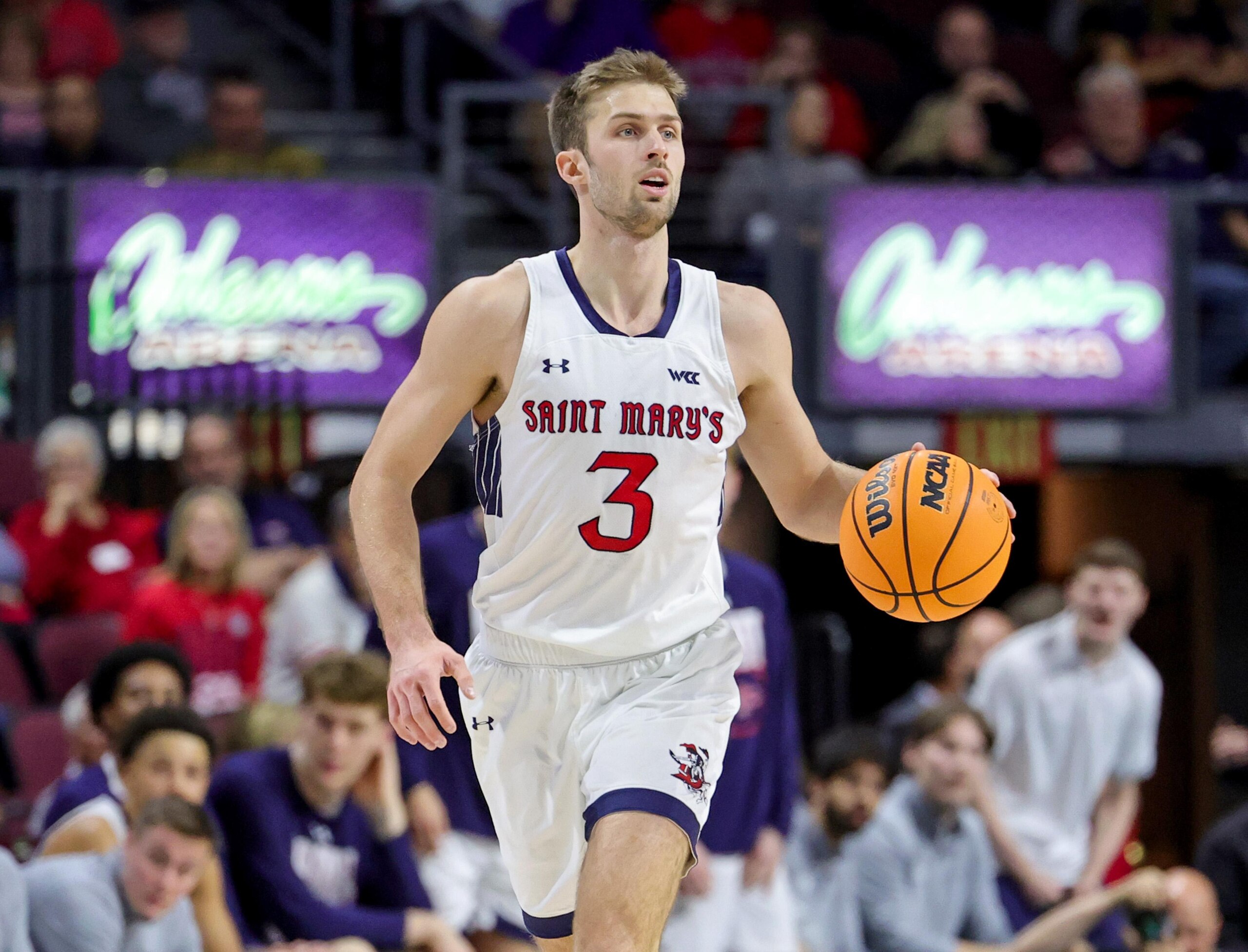
Record: 28-5 (17-1 in West Coast)
Star Player: Point guard Augustas Marciulionis was named WCC Player of the Year, and with good reason. The senior from Lithuania averaged 14 points, six assists and three rebounds per game while leading the Gaels to a near-undefeated conference campaign.
Biggest Wins: For just the second time in the past quarter century, Saint Mary's swept Gonzaga during the regular season. The Gaels did lose the WCC championship to the Zags, but those two wins were no small feat. Beyond that, though, it wasn't pretty. Their next-best victory was either the road game against Santa Clara or the neutral game against Nebraska, neither of which was exactly a noteworthy win for a team of this caliber.
Reason to Worry: Good shooting has generally been a hallmark of Saint Mary's teams over the past two decades, but that is simply not the case this year. The Gaels are around 150th in two-point percentage and well outside the top 200 in both three-point and free-throw percentage. Going 0-for-16 from distance in the WCC title game was excessive, but it hasn't been unusual for them to throw up a lot of bricks.
March Madness Ceiling: If it feels like Saint Mary's is always in the tournament and never in the Sweet 16, that's not far from the truth. The Gaels have not beaten a single-digit seed since 2010, and that trend is likely to continue. Maybe they dig in their heels on defense and scrape out a couple of low-scoring upsets, but reaching the second weekend is a bit unlikely.
27. UC San Diego Tritons
42 of 68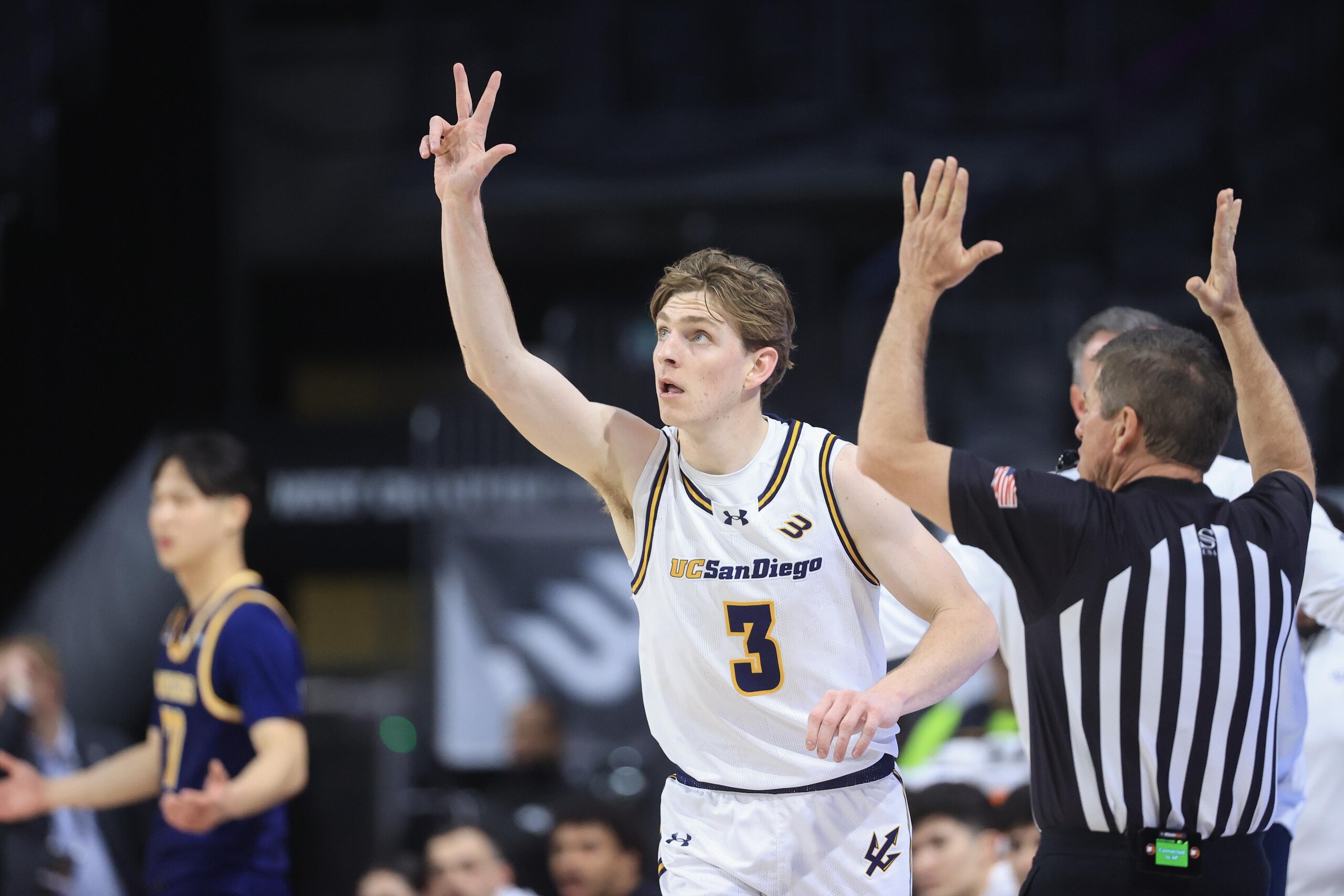
Record: 30-4 (18-2 in Big West)
Star Player: With shouts to former Saint Mary's star Matthew Dellavedova, UC San Diego's Aniwaniwa Tait-Jones might be the best combination of 'talented player' and 'fun name to say' that we've had in a long time. The star of the Tritons averages close to 20 points, five rebounds and four assists per game, and had two games this season with at least 20, eight and eight, respectively.
Biggest Wins: Big opportunities were lacking for UC San Diego, but they capitalized on a couple of them, winning at Utah State in mid-December and throttling UC Irvine 85-67 on the road in early February. They clinched their bid and a 30-win season with another win over the Anteaters in the Big West championship.
Reason to Worry: While UCSD generates a lot of steals, it also allows a lot of open three-point looks when it gambles and loses while trying to create a fast break situation. This isn't a good rebounding team, either, particularly on the offensive glass. Obviously, they can overcome it a lot. But in the Tritons' bad losses to Seattle and UC Riverside, combining those two flaws with rough nights from the perimeter proved fatal.
March Madness Ceiling: This team has all the markings of a Cinderella story. The Tritons dominate the turnover battle as well as anyone. They're old. They take and make a ton of threes, and have one of the best perimeter shooters in the nation in Tyler McGhie. And they won multiple games away from home against quality foes. It's exactly the stuff we look for, and it's not outlandish to suggest UCSD could be this year's Loyola-Chicago or Florida Atlantic that makes a run to the Final Four.
26. Memphis Tigers
43 of 68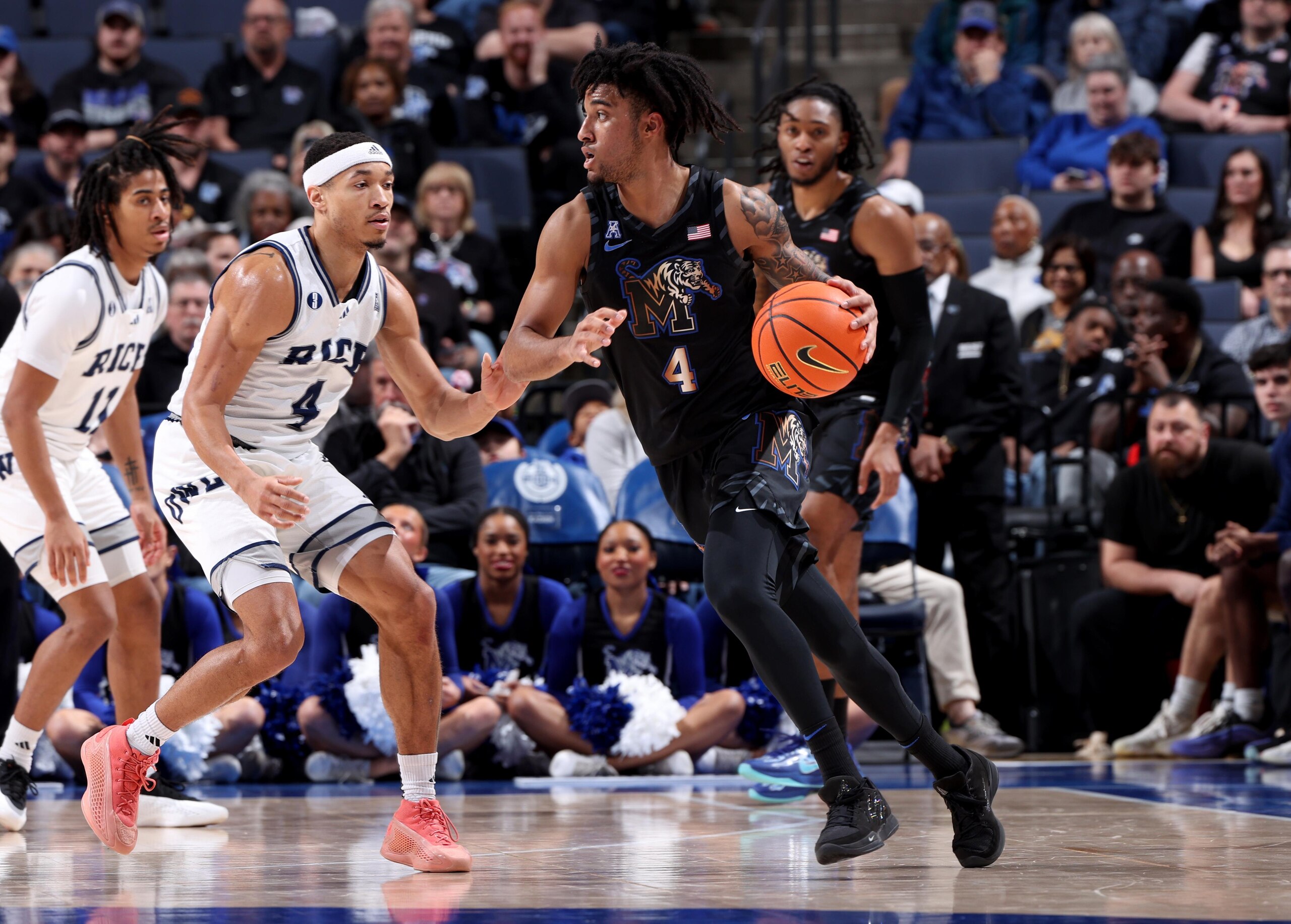
Record: 29-5 (16-2 in American)
Star Player: Playing for his third team in three years, PJ Haggerty has become a national star at Memphis while putting up numbers just about identical to what he did last season at Tulsa. He scored at least 15 points in 20 of his final 21 games of the regular season. Fun fact, though: No double-doubles. At a combined total of nearly 10 per game, you'd think he would've gotten 10 rebounds or assists in a game at some point. Maybe he's saving it for the dance.
Biggest Wins: Nothing much recently in a very underwhelming AAC, but Memphis loaded up in the nonconference, beating UConn and Michigan State in Maui, winning at Clemson and defeating both Missouri and Ole Miss at home. The Tigers also won at UNLV and San Francisco as part of their ridiculously loaded slate.
Reason to Worry: It has baffled Memphis fans all season long that a team with so many quality wins and so few losses can be a borderline top 50 team in all the predictive metrics. But it's because the Tigers so frequently play down to their level of competition, hurting their metrics a bit every time they eked out a close win against an opponent ranked around 150th. They also suffered three bad losses, occasionally getting caught playing with their food.
March Madness Ceiling: Memphis is a darn good team. And though we sometimes talk like they are, KenPom rankings aren't gospel. If the Tigers are engaged from the opening tip, if Dain Dainja and Tyrese Hunter are bringing the noise alongside Haggerty, they could crash the Final Four. Those are some big ifs, though.
25. Illinois Fighting Illini
44 of 68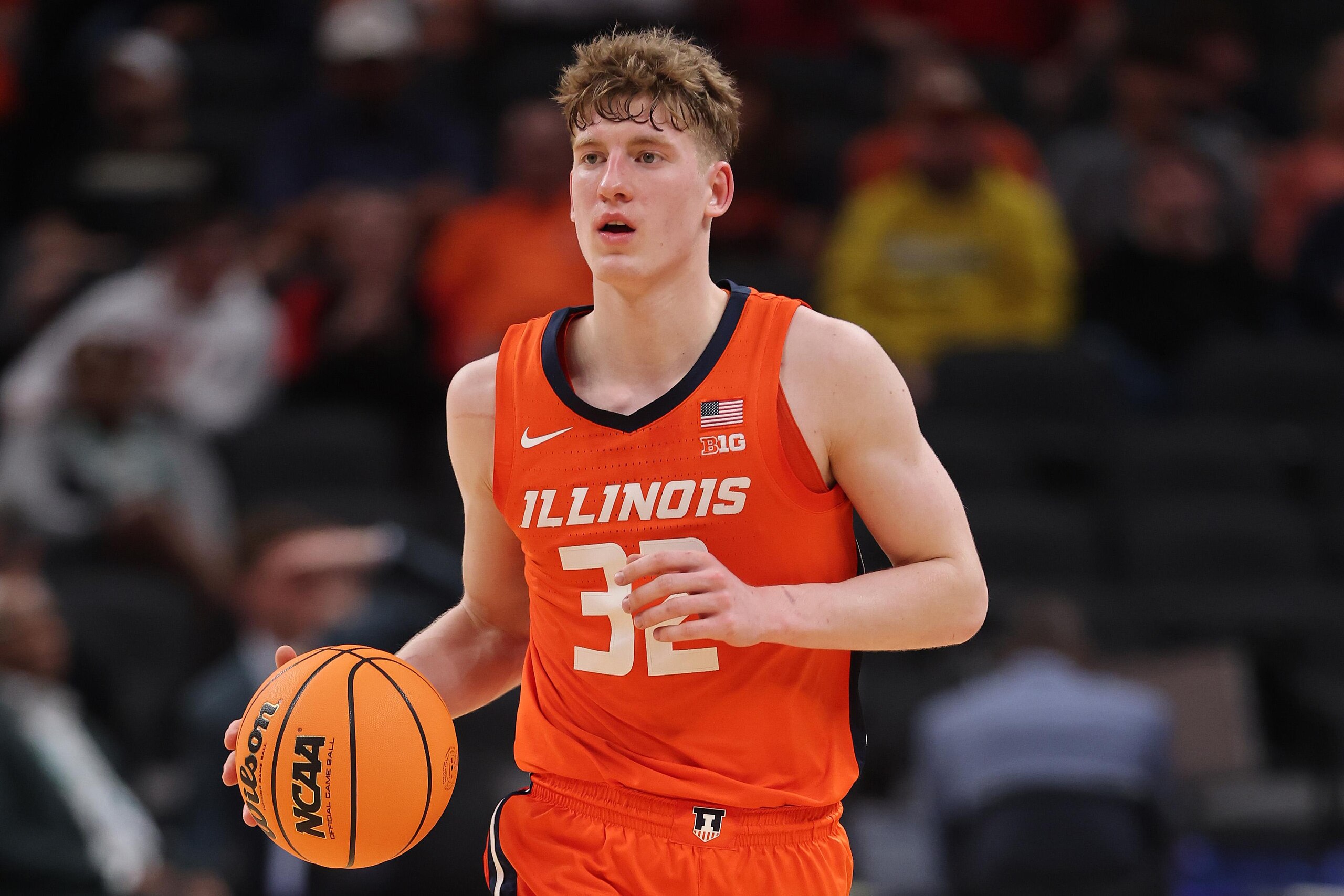
Record: 21-12 (12-8 in Big Ten)
Star Player: It's truly baffling that we made it through the entire season without a Kasparas Jakucionis triple-double. The soon-to-be high lottery pick entered the Big Ten tournament averaging 15.2 points, 5.6 rebounds and 4.8 assists per game, with season-best marks of 24, 13 and 13, respectively. And when he posts an O-rating of 112 or better, the Illini are a perfect 16-0.
Biggest Wins: The 109-77 victory at Oregon in early January was the major eye-opener, but Illinois had quality wins over Wisconsin, Missouri and Arkansas before that, as well as impressive wins over Michigan, Purdue, UCLA, Indiana and Ohio State after it. No denying the Illini can hang with and often defeat tournament-caliber competition.
Reason to Worry: Talent isn't the problem here. Consistency is. Illinois has been almost unbeatable when Jakucionis plays well, or when they shoot at least 27 percent from three-point range as a team. But stringing together consecutive games of that caliber has been a season-long struggle for a team that lost to all of Rutgers, USC, Nebraska and Northwestern.
March Madness Ceiling: At full strength with Jakucionis, Tomislav Ivisic and Will Riley doing their thing, Illinois can put a hurtin' on anyone in the country. We've also seen this team lose seven times by double digits, most notably the 110-67 shellacking at the hands of Duke just a few weeks ago. And rarely if ever do those Whac-a-Mole teams suddenly figure things out in March. Good Illinois can beat anyone, but Bad Illinois is just about bound to show up before they reach an Elite Eight.
24. Clemson Tigers
45 of 68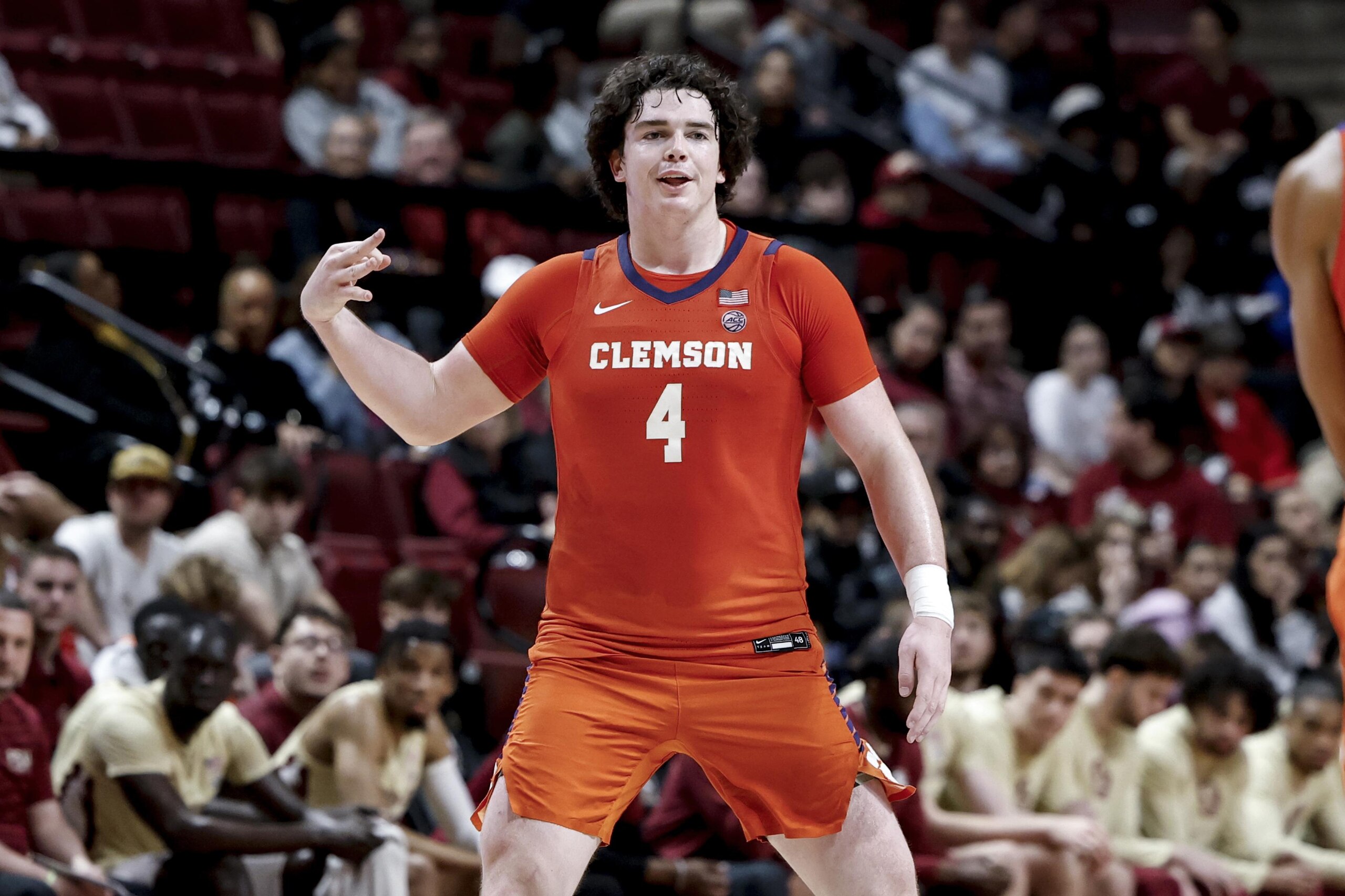
Record: 27-6 (18-2 in ACC)
Star Player: Chase Hunter is the leading scorer and Clemson's biggest perimeter threat by far, but Ian "The Chef" Schieffelin is the star of the Tigers with his Tyler Hansbrough-like motor and nose for rebounds. He racked up 20 rebounds in the marquee win over Kentucky, this after averaging 15 points and nine rebounds during Clemson's run to last year's Elite Eight.
Biggest Wins: Prior to the ACC tournament, Clemson had just three wins over teams who ended the regular season ranked top 50 on KenPom, all of those coming at Littlejohn Coliseum, no less. Nice big name-brand victories, though, over Duke, Kentucky and North Carolina. And the Tigers did go 9-3 in true road games, even though none of those was individually exceptional.
Reason to Worry: Just alluded to it, but Clemson's away-from-home resume is quite lacking. The Tigers lost at Boise State in November—though, credit to them for even making that 2,000+ mile trip—also lost at South Carolina and Louisville and didn't play at Duke or UNC. They got a bunch of kind of good wins over SMU, Pitt, Penn State and San Francisco, but nothing that says, "Oh yeah, they can beat a Final Four contender on a neutral floor."
March Madness Ceiling: A repeat run to the Elite Eight is a bit unlikely, but not beyond the realm of possibility. Big man Viktor Lakhin might be the biggest key to Clemson's journey. He was the game-changer in the win over Duke, scoring 22 points and making life miserable for the Blue Devils in the offensive paint. But his fouling out in 16 minutes in the loss to Georgia Tech four days prior was also a game-changer. We'll see what he brings to the dance floor.
23. Oregon Ducks
46 of 68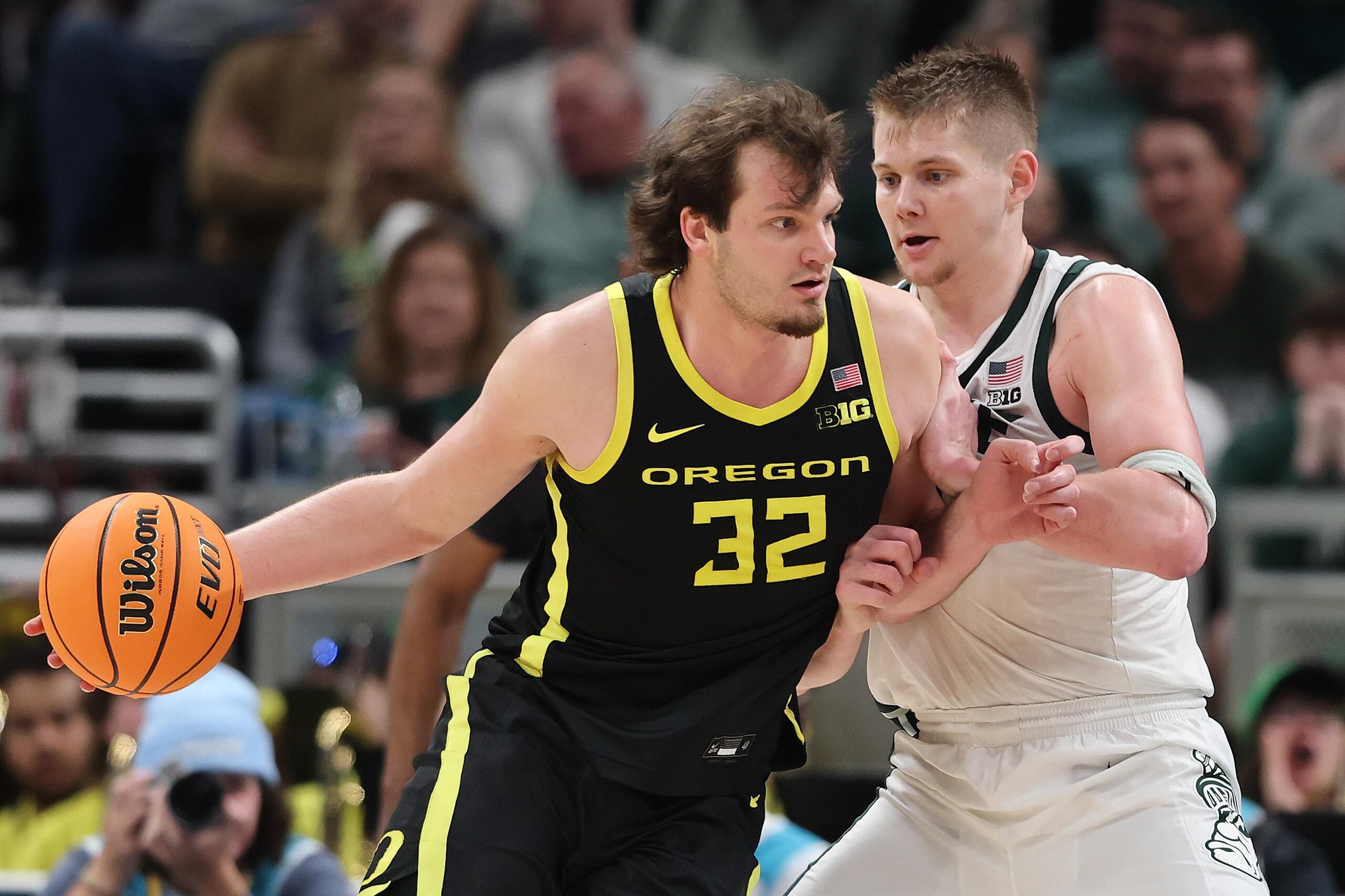
Record: 24-9 (12-8 in Big Ten)
Star Player: Five-star recruits often don't stay two seasons, let alone four years. Nate Bittle is both a figurative and literal huge exception to that rule, now an imposing force and a matchup nightmare in Eugene. During Oregon's season-ending seven-game winning streak, Bittle averaged 19.7 points, 8.4 rebounds and 3.4 blocks while shooting 40 percent from three-point range. He has become an even better version of Chris Boucher, who was a key piece of the puzzle for Oregon in 2016 and 2017.
Biggest Wins: The Ducks had quite the fell swoop of big wins in the Players Era Festival, beating Texas A&M, San Diego State and Alabama consecutively in Las Vegas. They also scored nice wins over Maryland (home) and Ohio State (road) in early January before crashing and burning for a few weeks. But a road win over Wisconsin was the big highlight of their aforementioned seven-game winning streak.
Reason to Worry: Though they bounced back, it's more than a little concerning that Oregon went through a stretch of six losses in seven games. No major injury to point to, either, as all seven of the Ducks' leading scorers have appeared in every game this season. They just couldn't win for the better part of a month. Beyond that, there's nothing in particular this team does at an elite level on either end of the floor. Sort of a jack-of-all-trades team that seemed to narrowly eke out every key win that it got.
March Madness Ceiling: Between the stockpile of quality wins and the improved play over the final month of the regular season, there's no denying Oregon has second weekend potential. And in eight previous tournament appearances under Dana Altman, they've made five Sweet 16s and never been eliminated in the first round. Making it all the way to a Final Four, however, is pretty unlikely.
22. Ole Miss Rebels
47 of 68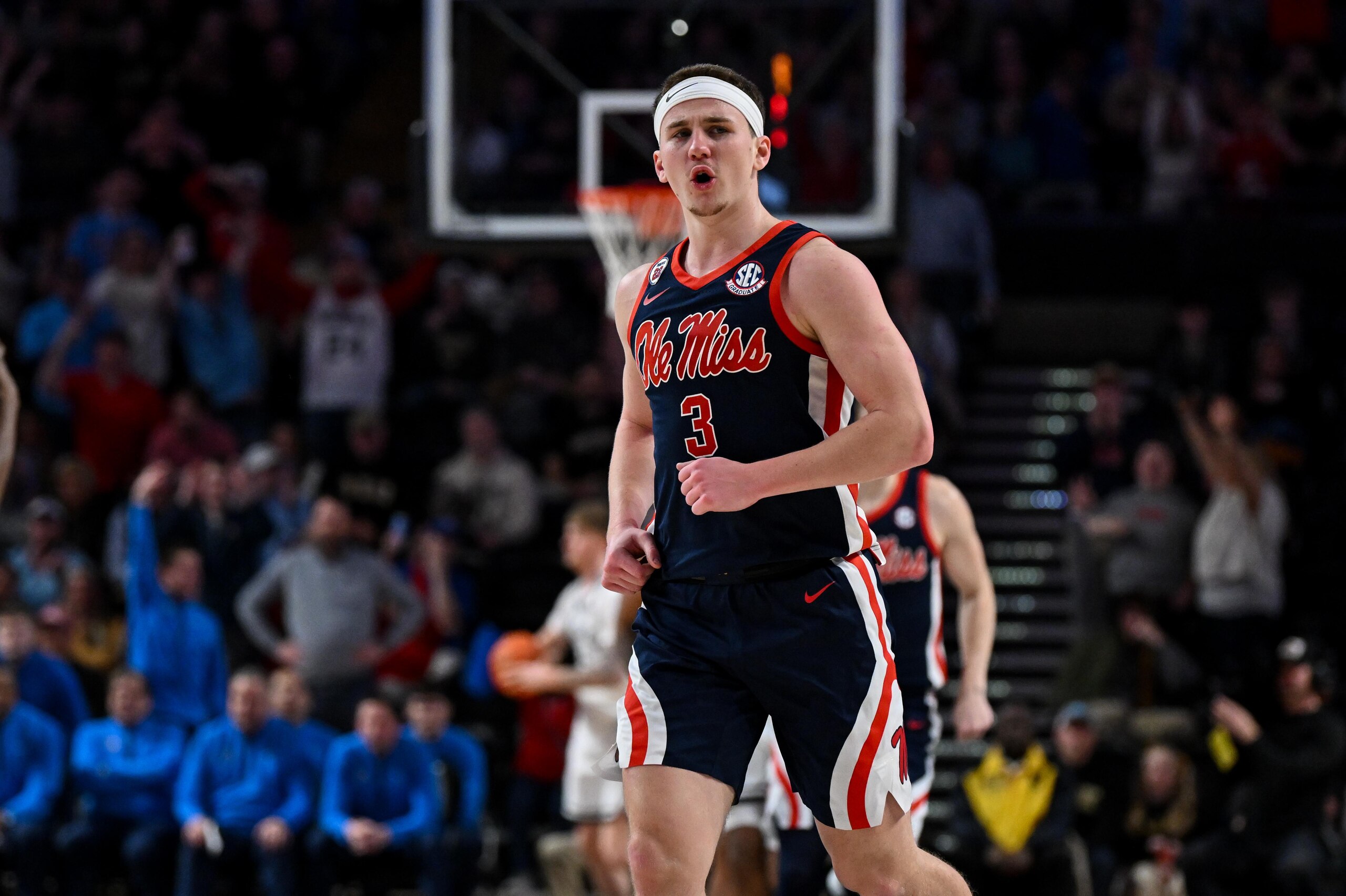
Record: 22-11 (10-8 in SEC)
Star Player: Six Rebels average at least 10 points per game, but only one of them is north of 12 while also leading the team in assists and steals. That would be Sean Pedulla, who was the perfect portal pick-up after three seasons at Virginia Tech, and who drained that last-second triple against Arkansas in the SEC tournament. Though, in Ole Miss' most noteworthy victories, it was usually one of Pedulla's teammates rising to the occasion in a gigantic way.
Biggest Wins: Malik Dia went for 23 points and 19 rebounds when Ole Miss stunned Alabama in Tuscaloosa. In the rout of Kentucky, Matthew Murrell had 24 while Jaylen Murray tallied a points-assists double-double. And in the two-point victory over Tennessee, Jaemyn Brakefield led all players with 19 points off the bench. All massive wins; different star(s) in each one.
Reason to Worry: Save for the Alabama game when Dia went off, this is kind of a bad rebounding team, as well as one that shoots only slightly better than it allows on defense. A lot of their success has been tied to owning one of the best turnover margins in the nation. Teams with good ball security who can avoid gifting the Rebels run-out opportunities will be a major hurdle.
March Madness Ceiling: Chris Beard has a 14-6 record in the NCAA tournament, including that run to the title game in 2019. But those late 2010s Texas Tech teams were sensational on defense while this Rebels squad is merely pretty good on that end of the floor—light years ahead of where they were last season, but with room for further improvement next year if Beard sticks around. The 6-8 record over the final 14 games of the regular season suggests a trip to the Sweet 16 probably isn't happening.
21. Connecticut Huskies
48 of 68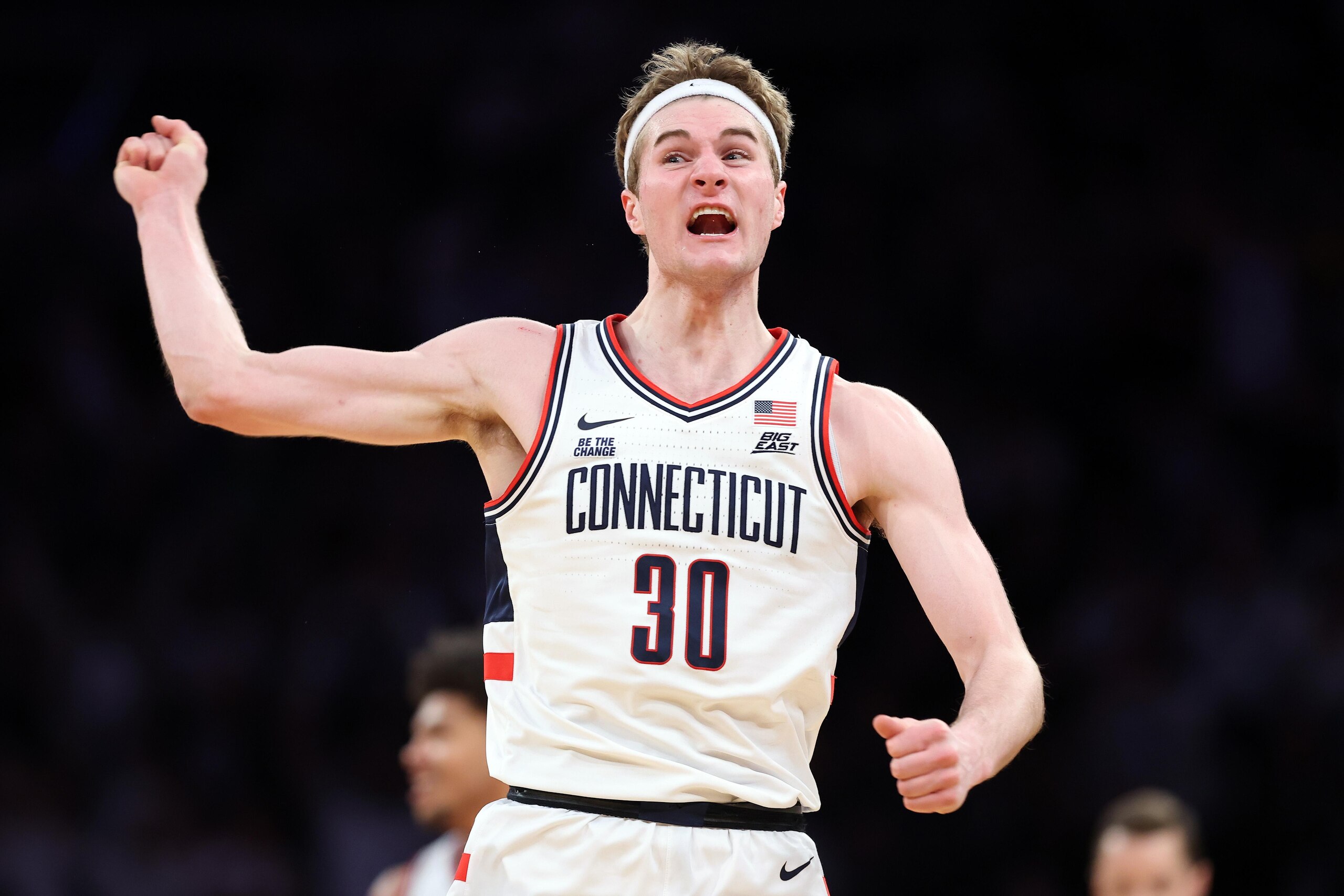
Record: 23-10 (14-6 in Big East)
Star Player: Alex Karaban (14.4 PPG, 5.2 RPG) was a starter on last year's 37-win team and Solomon Ball (14.6 PPG, 42.2 3PT%) has taken a massive step forward after playing 11.5 minutes per game as a freshman, but the best player on the UConn roster is freshman Liam McNeeley. The potential lottery pick is averaging 14.5 points, 6.1 rebounds and 2.3 assists, and the team is 9-2 when he scores at least 15 points.
Biggest Wins: The Huskies won both regular season games against Marquette while splitting with Creighton and Xavier, and they also beat Baylor, Texas and Gonzaga over a span of 11 days in non-conference play at the beginning of December. They went 13-9 overall in Quad 1 and Quad 2 games, and flashed the ability to get hot with an eight-game winning streak early in the year and a five-game win streak prior to Friday's loss to Creighton.
Reason to Worry: After finishing No. 4 in KenPom's adjusted defensive efficiency last season, the Huskies barely rank inside the top 100 in that metric this year. They are undefeated when the opposition scores fewer than 68 points, but just 9-10 when they eclipse that mark. They also can be extremely streaky from the perimeter with 14 games where they shot under 33.3 percent from three-point range, and six of their 10 losses came on those off shooting nights.
March Madness Ceiling: Even with Donovan Clingan, Stephon Castle, Tristen Newton and Cam Spencer gone from last year's repeat title winner, there was still enough talent on the roster for this team to rank No. 3 in the preseason AP poll. They could still make this a successful season with a run to the Sweet 16 or beyond to no one's great surprise.
20. Kansas Jayhawks
49 of 68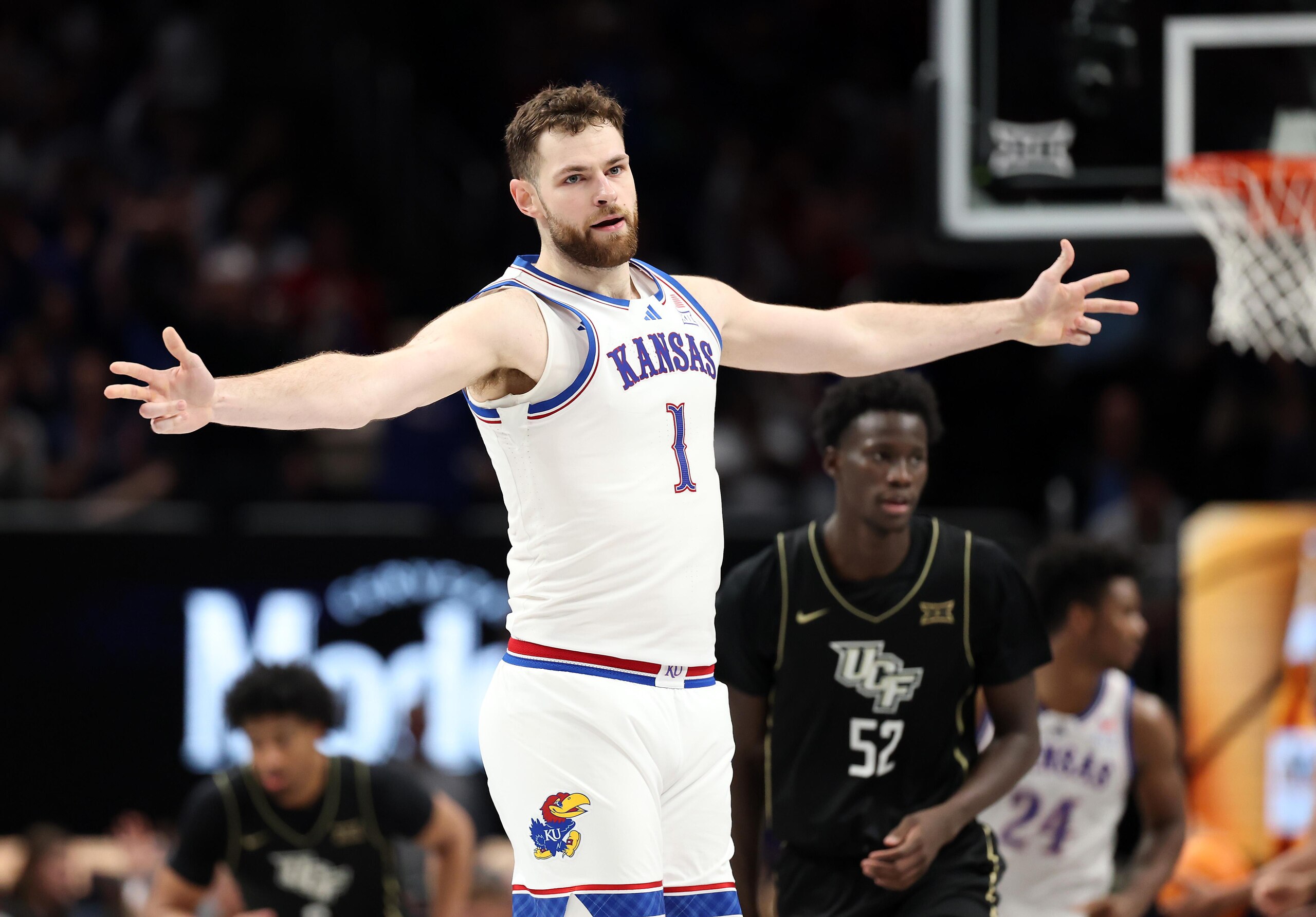
Record: 21-12 (11-9 in Big 12)
Star Player: Thanks to the bonus COVID year of eligibility, Hunter Dickinson is up into the top 25 all time in career points and might crack top 25 in career rebounds if Kansas makes at least somewhat of a run in the dance. He's not as much of a three-point threat as he had been over the previous three years, but he's otherwise the same double-double force that he was during his loud debut year at Michigan in 2020-21.
Biggest Wins: Most of the Jayhawks' impressive wins came a lifetime ago, back when they were undefeated, No. 1 in the country and beating the likes of Duke, Michigan State and North Carolina. But they did at least score a couple of solid home wins over Iowa State and Arizona in the Big 12—whilst putting together their worst winning percentage in conference play since 1988-89.
Reason to Worry: The general vibes around this team have been dreadful for a while now. Kansas barely has a .500 winning percentage since the beginning of December, but it's more than just the wins and losses. Several of the losses were ugly, both in terms of final margin and body language. The Jayhawks often look like a team that checked out weeks ago.
March Madness Ceiling: Kansas hasn't been eliminated in the first round of the NCAA tournament since the back-to-back losses to Bucknell and Bradley in 2005-06, but it has been eliminated in the second round in four of the past five tournaments. The ceiling is still quite high, provided Dajuan Harris and Dickinson play with some fire in what will be the final game(s) of their college careers. But another second-round exit is roughly the expectation here.
19. Michigan Wolverines
50 of 68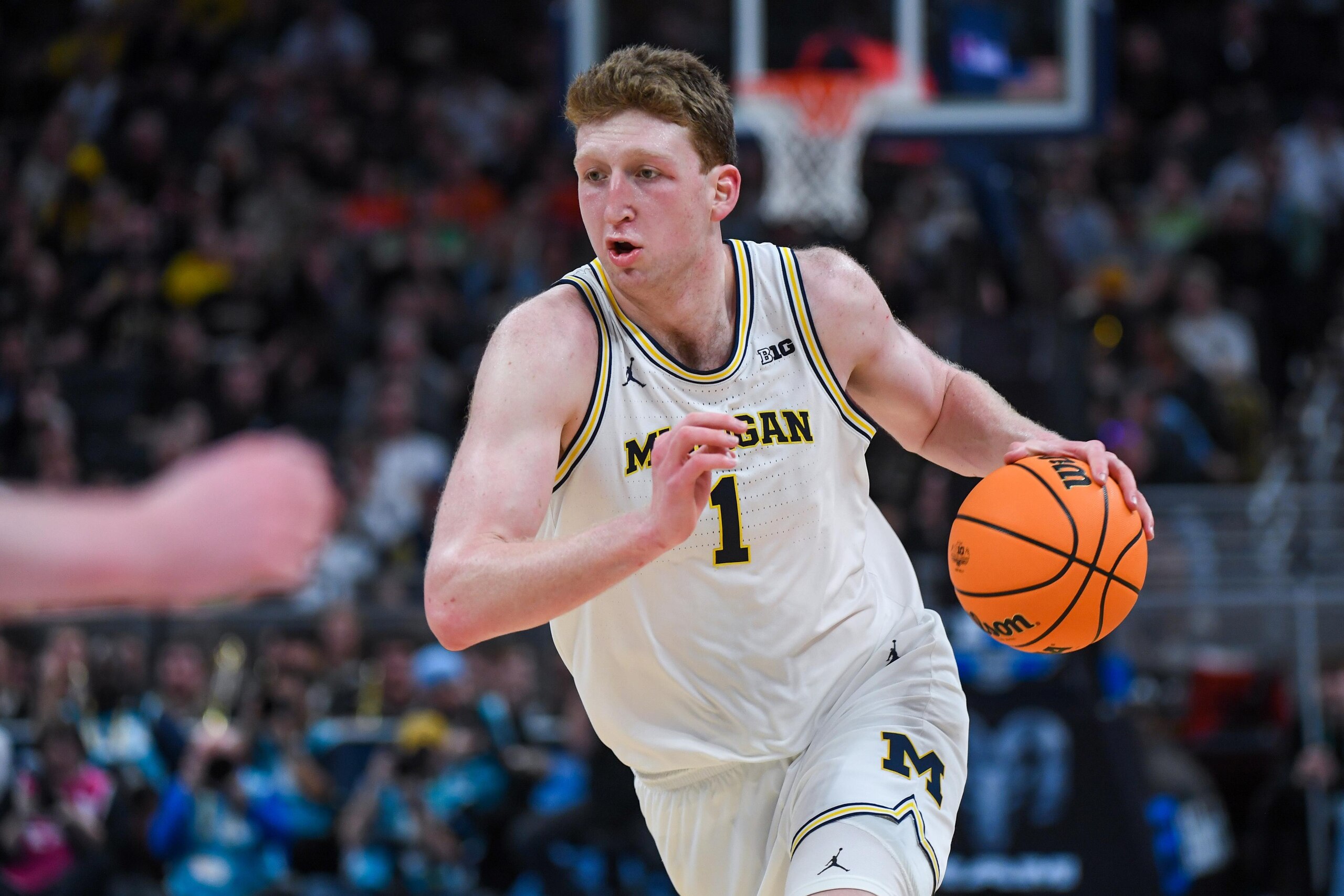
Record: 25-9 (14-6 in Big Ten)
Star Player: Danny Wolf is the closest thing to a Nikola Jokic that we have in college hoops. Michigan's seven-foot point-center averages just a shade under 13 points, 10 rebounds and four assists per game. He also has legitimate three-point range and some shot-blocking prowess alongside fellow big man Vladislav Goldin. No triple-doubles yet this season, but he did go for 21 points, 13 rebounds, seven assists and six blocks in an early January win over USC.
Biggest Wins: On the road, Michigan scored nice victories over Wisconsin, UCLA, Indiana, Ohio State and Nebraska. The Wolverines also won at home against Purdue and Oregon. A neutral-site victory over Xavier was about all they managed while going 8-3 in nonconference play, but they did plenty against the Big Ten, including topping Purdue and Michigan en route to the conference championship game.
Reason to Worry: Uniquely gifted as he may be, Wolf is the poster boy of Michigan's turnover woes. He has more than 100 giveaways on the year, and the Wolverines average about three more turnovers per game than they force. They also went 9-6 in their final 15 regular season games with none of those wins coming by more than four points.
March Madness Ceiling: The Wolf-Goldin tandem could be a matchup nightmare that spearheads a bit of a run, but it's hard to shake the growing feeling that this team is ripe for an early upset. Prior to its statement win over Purdue, it had been a while since the Wolverines played like a real contender, and there have been several games in the past two months in which they just looked plain bad. Michigan has reached the Sweet 16 in each of its last five trips to the dance, though. Maybe that continues.
18. Purdue Boilermakers
51 of 68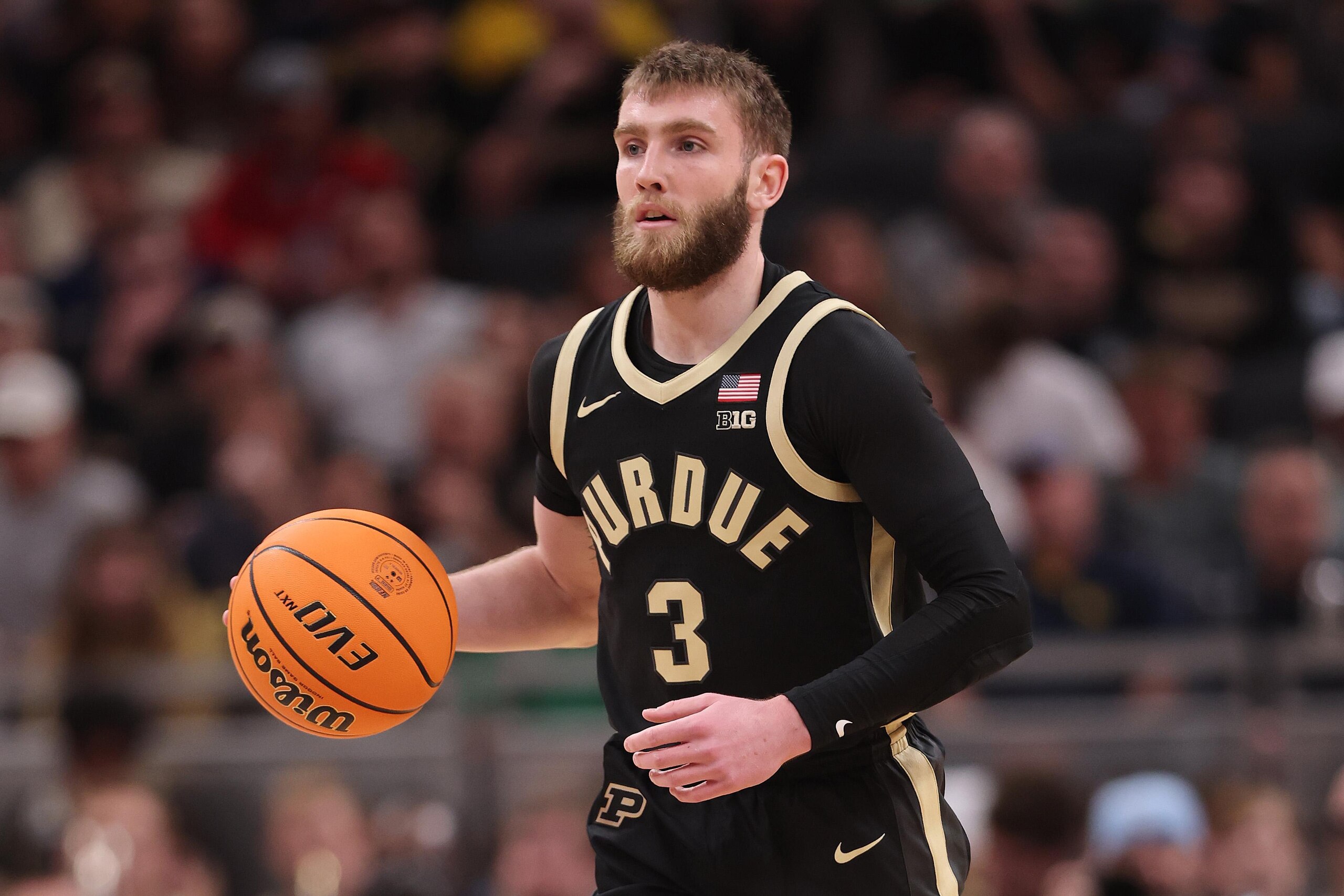
Record: 22-11 (13-7 in Big Ten)
Star Player: Forced to pick an individual player, give us Braden Smith, who's likely to be named a first-team All-American. But it's really a dynamic duo of Smith and Trey Kaufman-Renn combining for around 36 points, 11 rebounds and 11 assists per game. A lot of Smith's dimes go to TKR, but the point guard also does an excellent job of creating his own buckets.
Biggest Wins: Save for a road win over Oregon and a neutral victory over Ole Miss, just about all of Purdue's damage came at Mackey Arena, where it defeated Alabama, Maryland, Michigan, UCLA, Indiana and Nebraska. Getting the offense to show up away from home for a change will be crucial.
Reason to Worry: Leaning heavily upon the trio of Smith, Kaufman-Renn and Fletcher Loyer seems to have taken a fatigue toll on a team that lost five of its final seven regular-season games. Defense has been a season-long struggle without any sort of shot-blocking presence, but especially down the stretch, allowing at least 71 points in 11 of their final 12 games. (Purdue held its first five tournament opponents below 70 during last year's run.)
March Madness Ceiling: Even with Smith nearly posting a triple-double (18 points, 12 assists, nine rebounds) while TKR and Loyer combined for 43 points, Purdue lost its regular season finale against Illinois—a product of mediocre defense and a three-man show on offense. It's impressive that the Boilermakers looked like a contender for as long as they did, but the gig appears to be up. Last year's run was great, but a first-round exit for the third time in five years wouldn't shock us.
17. Gonzaga Bulldogs
52 of 68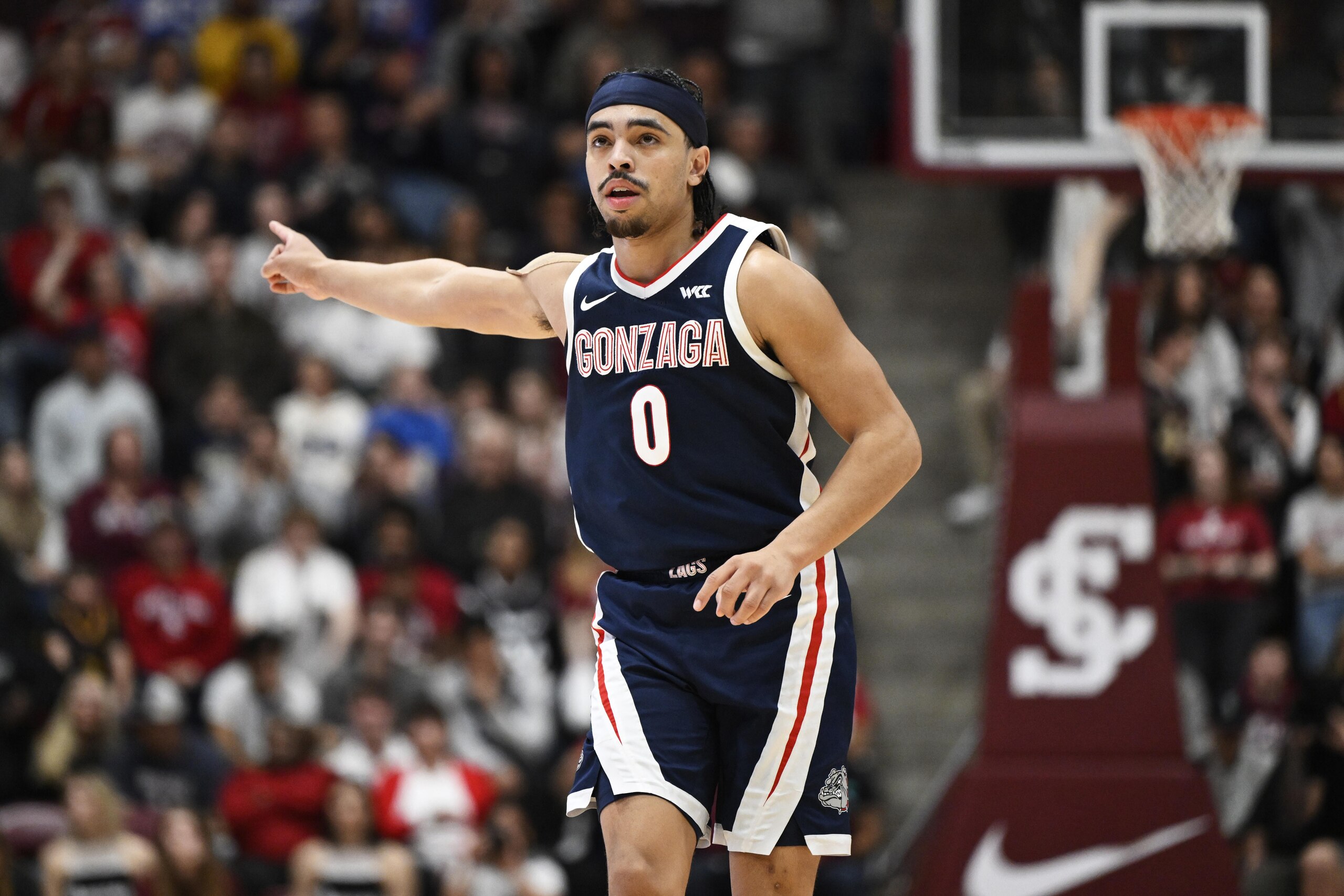
Record: 25-8 (14-4 in West Coast)
Star Player: Bit of a cop out pick here, but it's the tandem of point guard Ryan Nembhard and big man Graham Ike. The former averages just a shade under 10 assists per game, the latter slightly more than 30 points per 40 minutes. Maybe it's Nembhard making Ike look great or vice versa, but both are probably true.
Biggest Wins: The predictive metrics always believed in Gonzaga, which spent the entire season ranked top 15 on KenPom. But a short supply of quality wins had them somewhat on the bubble toward the end of the regular season. Certainly not a concern any more after beating Saint Mary's to win the WCC tournament, but wins over Baylor, Indiana and San Diego State—who were bubble teams in their own right—was the best they could boast before that.
Reason to Worry: Gonzaga won a pair of grinds against San Francisco and Saint Mary's in the WCC tournament, but they went 0-7 in games decided either in overtime or by six points or fewer. The Zags can blow you out when they are humming along doing their thing, but close games have been a major problem.
March Madness Ceiling: There was a while there in the 2017-22 timeframe where it felt like Gonzaga should reach the Final Four and that it could win a title. The ceiling isn't that high this year. More of a should reach the Sweet 16 (for what would be a 10th consecutive dance) and could make a Final Four situation. But the Zags do have the talent to do something special.
16. Arizona Wildcats
53 of 68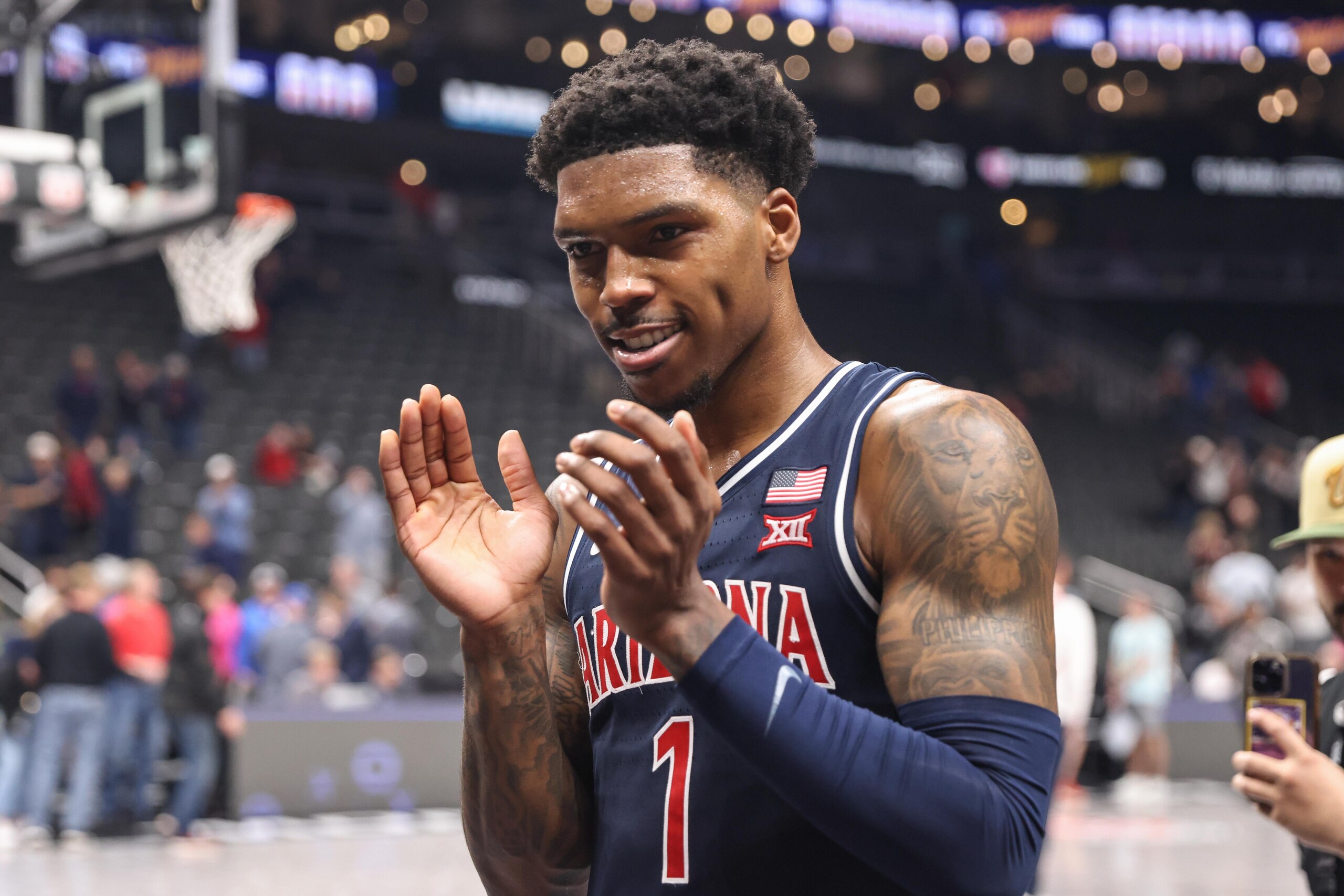
Record: 22-12 (14-6 in Big 12)
Star Player: Whether he'll score 20 points or shoot around 20 percent from the field in any given game is anyone's guess, but Caleb Love is the most important piece of Arizona's puzzle—largely because he's going to keep shooting regardless of which of those types of nights he's having. Love going 0-for-9 from distance in last year's Sweet 16 game against Clemson was the biggest reason Arizona was bounced early, but maybe he'll have a March more like he did with North Carolina in 2022.
Biggest Wins: It took a miracle, three-quarter-court heave from Love as regulation expired, but Arizona scored a big win over Iowa State in late January. The Wildcats also got a home win over Texas Tech, a road win over BYU, a regular season sweep of Baylor and great wins over Kansas and Texas Tech in the Big 12 tournament. (Their best nonconference win, however, was a neutral-site victory over Davidson, which isn't noteworthy in the slightest.)
Reason to Worry: Love has taken nearly 40 percent of Arizona's three-point attempts this season, which is what makes his Jekyll & Hyde act such a massive variable for the Wildcats. Beyond that, they lost five of their final eight regular-season games, and had one loss in each of November, December, January and February in which they failed to score 60 points. Is a March game of that ilk forthcoming?
March Madness Ceiling: Arizona started out 4-5 and limped to the regular season's finish line. For the seven weeks in between, though, they were 13-1 and one of the hottest teams in the nation. If the Wildcats can consistently find their way back to that level of play, perhaps they could get the Final Four appearance that has eluded their grasp since reaching the 2001 national championship.
15. BYU Cougars
54 of 68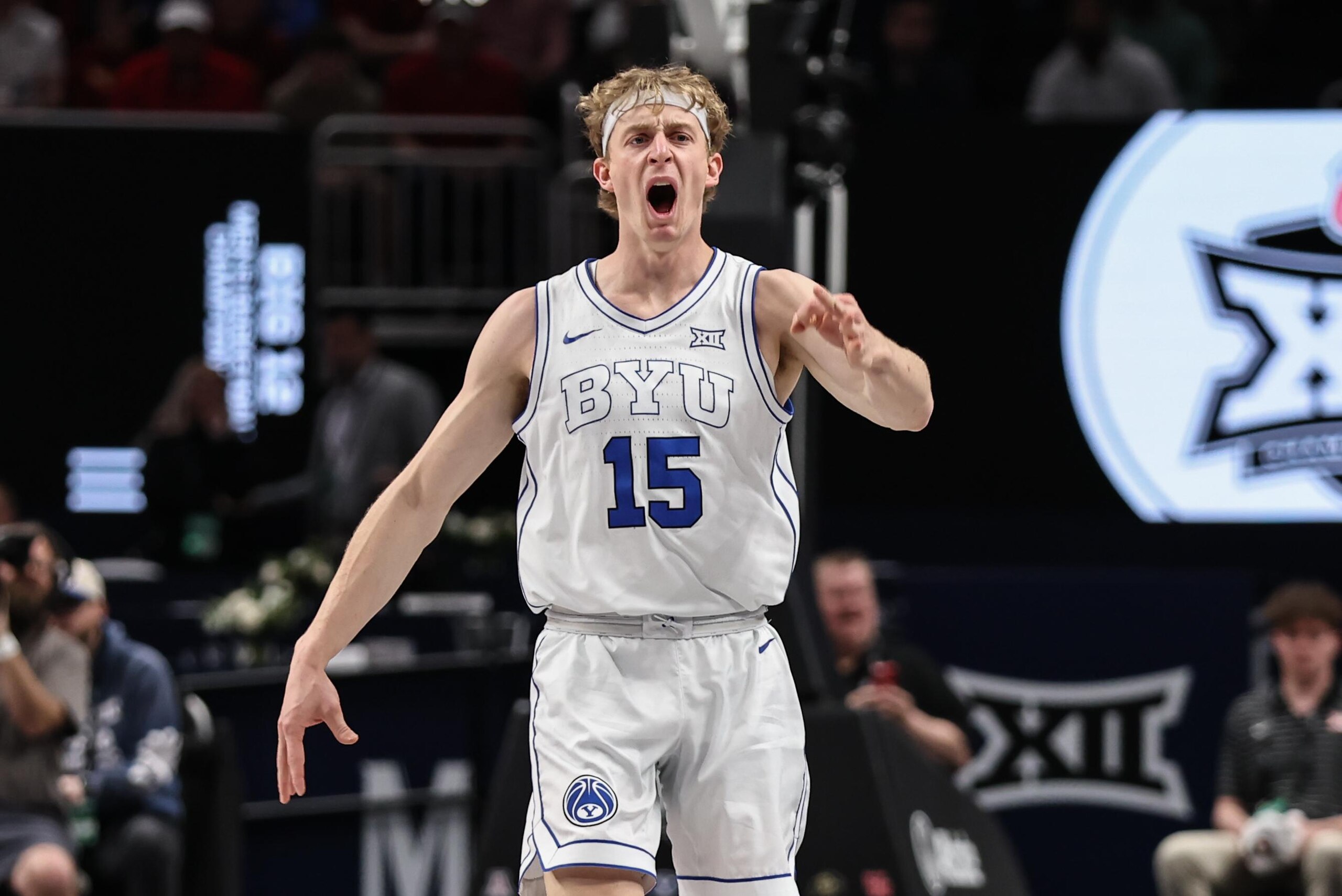
Record: 24-9 (14-6 in Big 12)
Star Player: 6'9" point guard Egor Demin is the Cougar the NBA folks are most "Egor" to get their hands on, but veteran wing Richie Saunders is their consistent force. He was hit or miss over the first two months of the year, but he averaged 18.4 points over his final 17 regular season games, scoring in double figures in all but one of them.
Biggest Wins: Prior to mid-February, this was a sad list, the best win in their first 23 games an overtime affair at home against Baylor. But the Cougars won at Iowa State, Arizona and West Virginia and won a home game over Kansas in the closing weeks of the regular season. They also beat Iowa State again in a high-scoring thriller in the Big 12 quarters. And, well, if you're going to have three mediocre months and one great one, it's nice to at least have the great one at the end of the year.
Reason to Worry: BYU is one of the best shooting teams in the nation, but it allows a ton of three-point looks at the other end of the floor and has a modest defense in general. They're almost unbeatable when scoring at least 75 points (21-1), but victories have been mighty tough to come by when falling short of that mark, which has happened roughly once every three games overall; nine times in 16 games played outside of Provo.
March Madness Ceiling: There's hot. There's red hot. And then there's BYU's play over the final month of the regular season. The Cougars shot 37.4 percent from three-point range and 61.8 percent inside the arc during that eight-game winning streak, so we know darn well they can get and stay hot for a while. If there's any of that left in the tank, maybe they reach the Final Four for the first time in their 32nd trip to the dance.
14. Texas A&M Aggies
55 of 68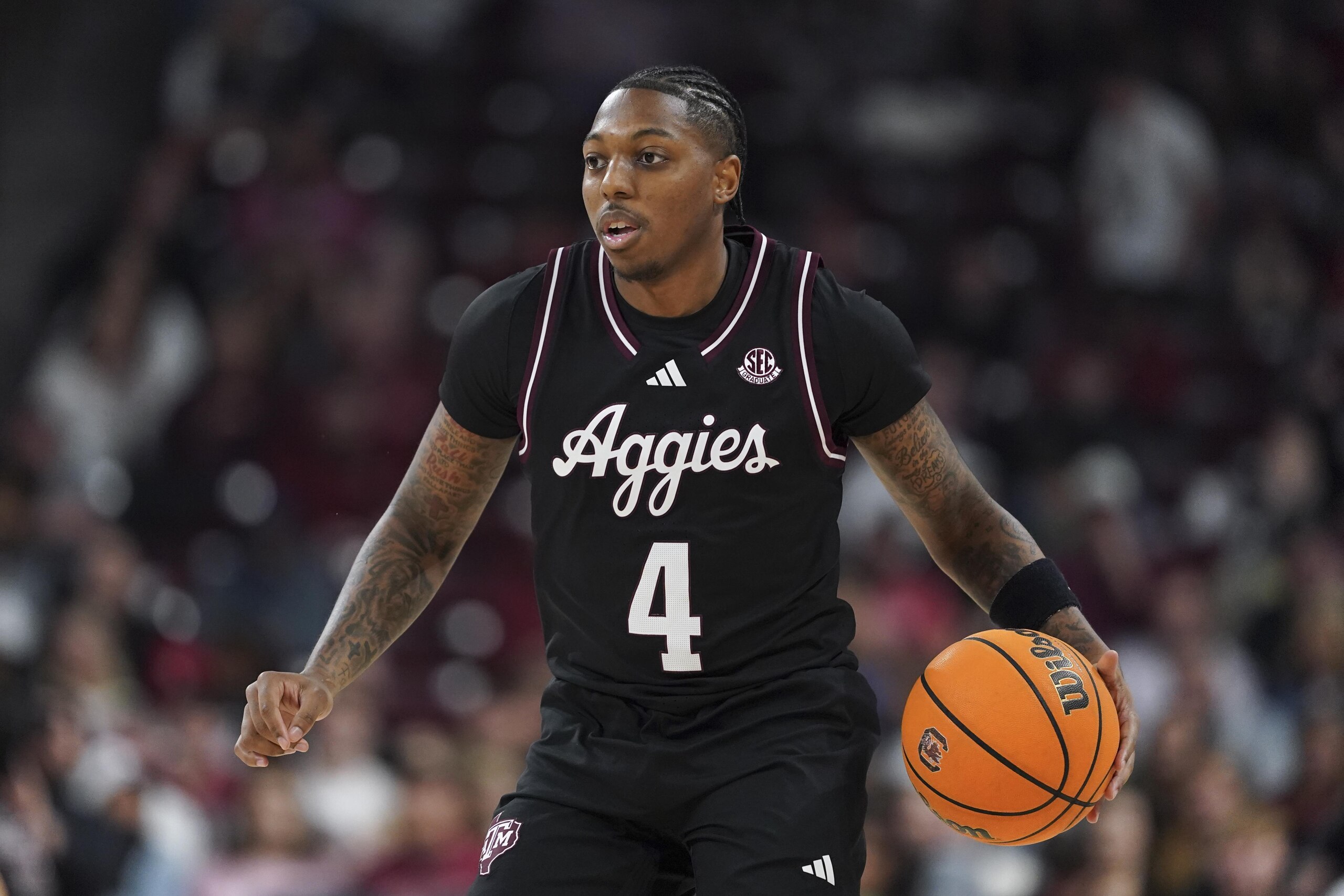
Record: 22-10 (11-7 in SEC)
Star Player: Wade Taylor IV is averaging nearly four points per game less than he did last season. But his shooting percentages haven't really changed; he just has more of a supporting cast and has cut back a bit on utilizing his permanent green light. Taylor still is Texas A&M's leading scorer, as well as its primary source of assists.
Biggest Wins: What a back-to-back run the Aggies had in mid-December, beating Texas Tech in Fort Worth and then Purdue in Indianapolis less than a week later. They proceeded to score narrow road wins over Oklahoma, Ole Miss and Missouri within their first 10 league games before the statement win over Auburn less than two weeks ago.
Reason to Worry: Texas A&M is extremely physical, excellent on defense and just plain elite on the offensive glass. However, this team is terrible at putting the ball through the hoop, which is all that really matters in the end. In three-point, two-point and free-throw percentage, the Aggies are bottom 100 in the nation. They'll occasionally get into somewhat of a groove and eclipse 80 points, but they've been held to 70 points or fewer in nearly 50 percent of games played.
March Madness Ceiling: Did you know Texas A&M has never been to an Elite Eight? This is probably the best team they've had in College Station since Acie Law IV was there nearly two decades ago, but "program history-making good" might be a stretch. The Aggies can maybe bully ball their way to the Sweet 16, but they'll eventually run into a team that can drain threes and/or withstand their physicality and then they'll be in trouble.
13. Iowa State Cyclones
56 of 68
Record: 24-9 (13-7 in Big 12)
Star Player: Not your average benchwarmer, Curtis Jones has been—save for being forced into starting duty while Milan Momcilovic was sidelined for a month—Iowa State's sixth-man extraordinaire, leading the Cyclones in scoring. For a while there in January, it looked like he might be a first-team All-American. He has been more hit or miss since the 33-point special at Arizona State on Jan. 25, but the hits almost always lead the victory, with ISU sitting at 16-1 when Jones scores at least 19 points.
Biggest Wins: The overtime road win over Texas Tech was the biggest feather in the cap, but Iowa State also scored home victories over Arizona, Kansas, Baylor and Marquette, as well as a neutral win over Dayton early in the season when the Flyers looked like a better squad. They really should have won at Arizona, too, but that was the night Caleb Love drained that 60-foot, overtime-forcing prayer.
Reason to Worry: Full strength Iowa State has been mighty impressive, almost beating Auburn on a neutral floor in Maui. But will this primary rotation be/stay at full strength during the tournament? The Cyclones lost eight of their final 17 games, playing without one (or more) of Momcilovic, Jones, Tamin Lipsey and Keshon Gilbert in seven of those losses.
March Madness Ceiling: It has been 25 years and 12 NCAA tournament appearances since Iowa State last advanced to an Elite Eight, but this squad could do it. They weren't firing on all cylinders over the final two months of the regular season, but it has taken an awful lot to beat this team, when healthy. National championship potential might be a slight stretch, but maybe not.
12. Wisconsin Badgers
57 of 68
Record: 26-9 (13-7 in Big Ten)
Star Player: After an injury limited him to just 78 minutes played last year at Missouri, sixth-year senior John Tonje wasn't high on anyone's offseason board of top transfers to watch. But he ended up becoming maybe the most important/impactful transfer in the entire country, putting up Johnny Davis-like numbers for the Badgers. His 41-point special in mid-November against Arizona came out of nowhere, but it was quite the sign of things to come.
Biggest Wins: In addition to winning that early foul-a-palooza against Arizona, Wisconsin picked up a rare road win over Purdue (Tonje had 32 points) and a home win over Illinois (31 for Tonje that day). They also beat Michigan State in the Big Ten semifinals (another 32 from Tonje). Beyond that, the Badgers had a ton of respectable back-end-of-Q1 / top-half-of-Q2 wins, building a quality resume in dribs and drabs as opposed to a series of haymakers.
Reason to Worry: The overall efficiency of Wisconsin's defense looks solid, but that's mostly a product of good defensive rebounding and limited fouling. The Badgers both block shots and force turnovers at some of the lowest rates in the nation, and they allowed at least 84 points in regulation eight times this season. Yes, they are more proficient on offense than they have been in at least a decade, but that defense is a major red flag.
March Madness Ceiling: Wisconsin is 6-6 in the NCAA tournament under Greg Gard, and prior to the Big Ten tournament, remaining at .500 seemed the likeliest outcome. Outside of the blip against Penn State at the end of the regular season, the Badgers have fared quite well against teams in the "No. 9 seed or below" range, but less so against anyone they're likely to draw in the second round or beyond. Sweet 16 is doable, maybe even Elite Eight if Tonje gets into a groove, though.
11. Kentucky Wildcats
58 of 68
Record: 22-11 (10-8 in SEC)
Star Player: Otega Oweh had a pair of brutal performances late in the season against Alabama and Auburn, but his combined six points in those games was the exception in a seven-game stretch in which he scored 20+ five times. In fact, they were the only two times all season that the Oklahoma transfer (who buried the Sooners twice) failed to score in double figures. He also leads the Wildcats in steals and has been one of their better rebounders.
Biggest Wins: It was early in the year with Cooper Flagg still finding his footing, but that win over Duke in the Champions Classic sure has held up wonderfully. Kentucky also beat Gonzaga in Seattle and got a home win over Louisville before getting into SEC play, where it swept Tennessee, beat Florida and Texas A&M at home and ended the regular season with a win at Missouri.
Reason to Worry: Among the six teams in the SEC's upper echelon, Kentucky's defense stands out in a very "one of these things is not like the other" sort of way. The Wildcats can score with the best of them, reaching the century mark as many times this season as they were held below 75 (five of each). But it's often clear from their effort on defense that they're planning on winning a race to 80 and content with the likelihood the opposition will also reach that mark. It's a dangerous way to live in a single-elimination tournament, though Miami made it work two years ago.
March Madness Ceiling: It's clear from the Biggest Wins that Kentucky can hang with anyone. But is this team consistent enough to actually go on a run? The Wildcats went 11-9 in their final 20 regular season games, neither piecing together a three-game winning streak nor three-game losing streak. Their 'points allowed' game log features stretches such as 90-69-102-74 and 64-82-61-96, making it difficult to trust in this very good team to make it any further than the Sweet 16.
10. Maryland Terrapins
59 of 68
Record: 25-8 (14-6 in Big Ten)
Star Player: Take your pick, really. All five Maryland starters average at least 12 points per game, three of whom are prolific from the perimeter, the other two relentless on the glass. Freshman phenom Derik Queen is probably the right choice, though, dominant in the post and seeming to only get stronger as the season goes on. After tallying five double-doubles in his first 21 games, Queen averaged 16.9 points and 11.4 rebounds with eight double-doubles in his final 10 games of the regular season.
Biggest Wins: There were questions early in the year about whether this team could win away from home, but the Terps won five of their six final road games, blowing out a short-handed Illinois before squeaking out wins over Indiana, Nebraska, Penn State and Wisconsin. They also beat both UCLA and Wisconsin at home.
Reason to Worry: Maryland has almost no depth whatsoever, its five starters—the "Crab Five"—scoring 92 percent of the team's points in conference play. Which is fine...until it's not. Almost every deep tournament run is at some point fueled by a key moment/performance by a team's sixth or seventh man. Hard to imagine that happening for Maryland, and we'll see if this team can avoid foul trouble or injury.
March Madness Ceiling: Michigan State is the Big Ten's most likely Final Four candidate. If you could gaze into a crystal ball and tell us there will be two teams from the league in the national semifinals, though, Maryland would be the second choice. Even when the Terrapins do lose, it's always close. And the lack of depth hasn't been a deal breaker for them yet. The Queen and Julian Reese tandem in the paint will be a major problem of old school dominance that most opponents aren't ready to handle.
9. St. John's Red Storm
60 of 68
Record: 30-4 (18-2 in Big East)
Star Player: A 3-star recruit who began his college career at UMass, RJ Luis has developed into one of the best guards in the country in his second season at St. John's, winning Big East Player of the Year while averaging 18.4 points and 7.2 rebounds. The 6'7" slasher had 29 points on 11-of-18 shooting against Creighton in the Big East title game, and St. John's remains undefeated in games where he scores at least 20 points.
Biggest Wins: The Red Storm beat Marquette three times, UConn twice, Creighton twice and Xavier twice, and all four of their losses came at the Quad 1 level. Outside of Big East play, their best win ended up being an 85-71 victory over Mountain West top dog New Mexico, while early wins over Kansas State and Virginia lost some luster as the season unfolded.
Reason to Worry: Depending on how you feel about Marquette, Creighton and UConn, it's fair to ask if this team has really been tested at an elite level this year. They lost to Baylor (99-98) and Georgia (66-63) in November, and those teams ended up being bubble teams by March. They have the No. 1 defense in KenPom's adjusted efficiency metric, but rank outside the top 50 on the offensive side of things, so it will be up to that defense to shoulder the load.
March Madness Ceiling: The Red Storm are on their fifth head coach since the last time they won the Big East tournament during the 1999-00 season, and now Rick Pitino is poised to be the guy that returns them to relevance in the NCAA tournament. Over the last four years, KenPom's No. 1 defense has reached the Sweet 16 and lost, but that might be the floor for this group. They are legitimate contenders to win it all if they play the way they did on Saturday and for most of the Big East schedule.
8. Texas Tech Red Raiders
61 of 68
Record: 25-8 (15-5 in Big 12)
Star Player: Early in the season, one could have made a compelling case for Chance McMillian or Darrion Williams here. But over the final nine games of the regular season, sophomore big man JT Toppin began to dominate on a regular basis, averaging 24.4 points and 11.0 rebounds. Great as Cooper Flagg and Johni Broome have been all season, Toppin might be the most unstoppable player in the country right now.
Biggest Wins: As is the case for several of the Big 12's other top contenders, Texas Tech did a whole lot of nothing in nonconference play, even losing to Saint Joseph's in November. But in finishing second in this league, the Red Raiders won at Houston (despite losing Toppin to an ejection within the first few minutes), at Kansas and at BYU. They also smoked Arizona in Lubbock.
Reason to Worry: Every contender is entitled to one mulligan of a bad loss or a rough patch of the season before we have to question their legitimacy as a possible champion. However, the Red Raiders lost to Saint Joseph's, UCF (at home) and TCU—each of those considerable missteps suffered at full strength and at least one month apart from each other. They were all close losses, but there's a mercurial nature to what is otherwise a well-rounded bunch.
March Madness Ceiling: This is a much different Texas Tech team from the defensive juggernaut that darn near won the national championship in 2019, but the end result could be the same. You don't win a true road game against a healthy version of one the three best teams in the country unless you're a title contender, and Texas Tech did exactly that.
7. Tennessee Volunteers
62 of 68
Record: 27-7 (12-6 in SEC)
Star Player: Didn't agonize too much over most of the star player picks, but this one's a tough call. Chaz Lanier is the three-point launcher who seems to be the biggest catalyst of Tennessee's success, 19-0 when he scores at least 18 points. But Zakai Zeigler is the veteran leader on both ends of the floor, leading the SEC in assists for a third consecutive year—and by a laughable margin this time. Lanier is the face, but Zeigler is the heart and soul.
Biggest Wins: Tennessee quickly emerged as a strong candidate for a No. 1 seed, blowing out Louisville on the road, smoking Baylor in Bahamas and clipping Illinois in Champaign, all within the first six weeks of the season. The Vols proceeded to win at Texas A&M, Oklahoma and Texas in SEC play, to go along with excellent home victories over Florida and Alabama. Beating Auburn in the SEC semis was quite the late addition to this list, too.
Reason to Worry: As talented as Lanier is, there are inevitably some games where the triples just aren't falling for him. And when Lanier isn't hitting shots, Tennessee doesn't have much of a Plan B, resulting in the occasional nightmare offensive showing like the 53-51 loss to Auburn and 73-43 loss to Florida. Zeigler, Jordan Gainey and Igor Milicic all do average better than one made three per game, but they each shoot below 33 percent.
March Madness Ceiling: With the most efficient defense in the nation, Tennessee can usually get away with an off shooting night. The Vols have held the opposition to 70 points or fewer 24 times, the aforementioned Auburn loss the only L in the bunch. And goodness knows you've heard it said: Defense wins championships. Tennessee almost made it to its first Final Four last year, but couldn't quite get over the 7'4" hump named Zach Edey in the Elite Eight. Perhaps this is the year they finally reach a national semifinal and bring that defense to San Antonio in a big way for a title.
6. Michigan State Spartans
63 of 68
Record: 27-6 (17-3 in Big Ten)
Star Player: It took a while for a star to emerge from what was quite the cluster of nine Spartans averaging around eight points per game, but it's hardly a coincidence that this team turned into a wrecking ball once Jase Richardson was handed a starting job and bigger role in early February. Over his final nine regular-season games, Richardson averaged 17 points and five rebounds while Michigan State went 8-1 with a bunch of quality wins.
Biggest Wins: In winning the Big Ten by a three-game margin, MSU swept Michigan and Illinois, won at Maryland and Ohio State and won home games against Purdue, Wisconsin and Oregon. The Spartans didn't do much in the nonconference, but did pick up an overtime win over North Carolina in the Maui Invitational.
Reason to Worry: Their three-point shooting is definitely better with Richardson playing a bigger role, but they still aren't great from the perimeter. They also ended the regular season with a slightly negative turnover margin, though, that's nothing new. In fact, they had a negative turnover margin in six of the last seven times they reached the Final Four. But it definitely can be an issue, posting a combined negative-14 turnover margin in their last two tournament exits.
March Madness Ceiling: It has been 25 years since the Big Ten produced a national champion, but it has become readily apparent over the past month that the Spartans are the likeliest candidate to end that drought. The three-point shooting is a concern, but this is both one of the best defensive teams and one of the best rebounding teams Tom Izzo has had in at least a decade. Pair that with a deep 10-man rotation and Sparty might have the freshest legs of any team for the stretch run.
5. Alabama Crimson Tide
64 of 68
Record: 25-8 (13-5 in SEC)
Star Player: Mark Sears entered the season as the betting favorite to win the Wooden Award, only to end up a distant afterthought in that race with shooting percentages a far cry from his elite marks of yesteryear. He's still arguably a top five player in the nation, though, as the conductor of this freight train of an offense that averages well over 90 points per game.
Biggest Wins: Alabama saved its best win for last, knocking off Auburn on the road to end the regular season. The Crimson Tide certainly weren't hurting for quality wins prior to that, though, thriving against the toughest schedule in the nation. They swept Kentucky and Mississippi State, won at Texas A&M and North Carolina, beat Houston in Las Vegas and somewhat comfortably defeated both Illinois and Creighton.
Reason to Worry: Though Alabama's defense is certainly better than it was a year ago, it's still not great, even with Rutgers transfer Cliff Omoruyi patrolling the paint. Pair that with playing at one of the fastest tempos in the country and Alabama has allowed 80 or more points in nearly 60 percent of its games played, most notably the 110-98 loss to Missouri and the 104-82 loss to Florida in the SEC tournament.
March Madness Ceiling: This year's list of legitimate contenders to win it all isn't a particularly long one, but Alabama is on it for sure. The Tide took some lumps late in the year with losses in four of their final seven regular season games, but averaged 93.3 points during that stretch, still cooking with gas on offense even at the end of what was a four-month gauntlet. They've proven they can beat anyone and everyone, and perhaps it's finally time for a basketball national championship to flaunt alongside all the football titles.
4. Florida Gators
65 of 68
Record: 30-4 (14-4 in SEC)
Star Player: For the most part, Walter Clayton Jr. put up numbers similar to last season; no substantial changes in points, rebounds, steals or shooting percentages. But increasing his assist rate by around 60 percent while making the shift from shooting guard to lead guard was so key in Florida making the leap from a solid offense to an elite one. The trio of Clayton, Alijah Martin and Will Richard could do a ton of damage over the next three weeks.
Biggest Wins: It doesn't get much better this year than true road wins over both Alabama and Auburn, which Florida has. The Gators also destroyed Tennessee by 30, though turned around and lost to the Vols by 20 a few weeks later in a fun little trade off of statement wins. And though North Carolina ended up as little more than a bubble team, beating the Tar Heels in Charlotte was no joke. They also stomped both Missouri and Alabama in the SEC tournament.
Reason to Worry: For a team ranked top 10 in adjusted defensive efficiency, Florida has more than its fair share of games in which it can't stop anything, allowing more than 80 points on nine occasions. In the home loss to Missouri, the Tigers had 42 points by the third media timeout. Similar story in the loss to Georgia, trailing 39-13 midway through the first half. And who can forget the 106-100 loss to Kentucky that opened SEC play?
March Madness Ceiling: Forgive the personal reflection, but I was reluctant to buy stock in the Gators for most of the season. They made mincemeat of a bad ACC during an otherwise nondescript nonconference schedule and just so happened to catch Tennessee on one of the worst shooting nights in Vols history. But I've realized the error of my ways and have become a big believer in Florida over the past six weeks. Occasional off nights on defense or not, the Gators scored two of the best road wins in the entire country and seem capable of hanging 90 on anyone. They absolutely could win it all.
3. Auburn Tigers
66 of 68
Record: 28-5 (15-3 in SEC)
Star Player: Auburn's primary seven-man rotation is stout from top to bottom, but there's no question Johni Broome is the star here. The only player who has been able to keep Cooper Flagg from running away with National Player of the Year, Broome stuffs the stat sheet on a nightly basis, the multiple assists and blocks per game buttressing his double-double average.
Biggest Wins: We won't give you the full list of Auburn's Quad 1 wins this season or we'd be here all day. The Tigers won at Houston in the opening week of the season, beat Tennessee and Purdue at home and won at both Alabama and Kentucky. The biggest of the bunch, however, was the win over Iowa State in the Maui Invitational, which then set Auburn up to also score neutral-site victories over North Carolina and Memphis.
Reason to Worry: Auburn fans already know what's coming here, because they are beyond sick of hearing about it and have decided it is them and CBM against the world. But Chad Baker-Mazara is too good and too important to their cause to be pulling the bush league stuff that he does. He got a Flagrant 2 for throwing a blatant elbow in the season finale against Alabama. He also got a Flagrant 2 early in last year's first-round loss to Yale. There were several other F1 fouls in between. If he keeps his composure, this is the team to beat. But we'll see if he can.
March Madness Ceiling: There is no ceiling here. Though Auburn limped to the finish line with losses to Texas A&M and Alabama after securing the regular-season SEC title, the Tigers are undeniably one of the best teams in the country, boasting one of the most efficient offenses in KenPom history. It's less a question of whether this team can win a title and more a question of whether they could possibly lose prior to the Elite Eight.
2. Houston Cougars
67 of 68
Record: 30-4 (19-1 in Big 12)
Star Player: Houston is unlikely to have a player named first-team or second-team All-American, but only because it never particularly established a star. Milos Uzan has been their Jamal Shead-like leader over the past two months and is likely to be the linchpin for however long the Cougars last, but three-point snipers LJ Cryer and Emanuel Sharp and defensive specialist JoJo Tugler are massively key in their own right.
Biggest Wins: If you're searching for anything on the nonconference front, you're going to be sorely disappointed. Houston's best win prior to Christmas was a win over Notre Dame in the Players Era Festival. But the Cougars sure did rack up some quality wins en route to winning the Big 12 regular-season crown by a four-game margin, sweeping Kansas and winning road games against Texas Tech, Arizona, Baylor and West Virginia. They cruised through Colorado, BYU and Arizona to win the conference tournament, too.
Reason to Worry: Houston is simply not a great two-point shooting team. Couple that with a methodical pace of play and the Cougars were held below 70 points in six of their final nine regular season games. Granted, they won all nine thanks to an elite defense that held each of those foes to 65 points or fewer. Still, the occasional night where they just can't buy a bucket has been the Cougars' Achilles' heel for most of Kelvin Sampson's 11 seasons there.
March Madness Ceiling: While they struggle as a team inside the arc, the trio of Cryer, Sharp and Uzan gives Houston one of the better three-point shooting units in the country. That should keep them from a repeat of last year's 50-44 Sweet 16 loss to Duke. Houston has lagged behind both Duke and Auburn in the title odds, but the Cougars absolutely could win it all. It'd be stunning if they don't at least extend their streak of five consecutive trips to the Sweet 16.
1. Duke Blue Devils
68 of 68
Record: 31-3 (19-1 in ACC)
Star Player: It says in my notes here that Duke has a young man by the name of Cooper Flagg, and he's supposed to be pretty good. Have you heard of him? Hopefully that sprained ankle doesn't hold back the phenom who is a lock to go No. 1 in the NBA draft in a few months and may well join Kevin Durant, Anthony Davis and Zion Williamson as the only freshmen to ever win the Wooden Award. Not too shabby.
Biggest Wins: Duke's loudest win was that 110-67 annihilation of Illinois at Madison Square Garden just a few weeks ago, and its three favorite wins were surely the ones that came against North Carolina. But the three biggest resume-building wins all happened during the 2024 portion of the schedule, knocking off Auburn at Cameron Indoor, that one coming between the road wins over Arizona and Louisville. Even in a terrible year for the ACC, Duke managed to put together a nice stockpile of top wins.
Reason to Worry: Did they ever learn how to grind out a win? They dominated most everything in their path, playing in just four games all season in which either side held a one-possession lead at any point in the final two minutes...and they lost three of those games. Maybe Duke can 2023/2024 UConn its way to a title without a single game decided by fewer than 13 points, but it's noteworthy that the Blue Devils choked regularly when a game came down to the wire.
March Madness Ceiling: If not the singular favorite, Duke is easily a top-three candidate to win it all. Flagg gets all of the love, but this is a loaded 10-man rotation in which every single player has delivered big moments this season. The Blue Devils could have won it all last year, but they really should at least reach the Final Four for the first time under Jon Scheyer and certainly have the talent to secure what would be the sixth Natty in program history.
.jpg?w=2560 "Seahawks Cardinals Football")
.jpg?w=2560 "Cam Ward Says He's Not A Loser")

.jpg?w=2560 "Chargers Fall to 0-5 🤢")
