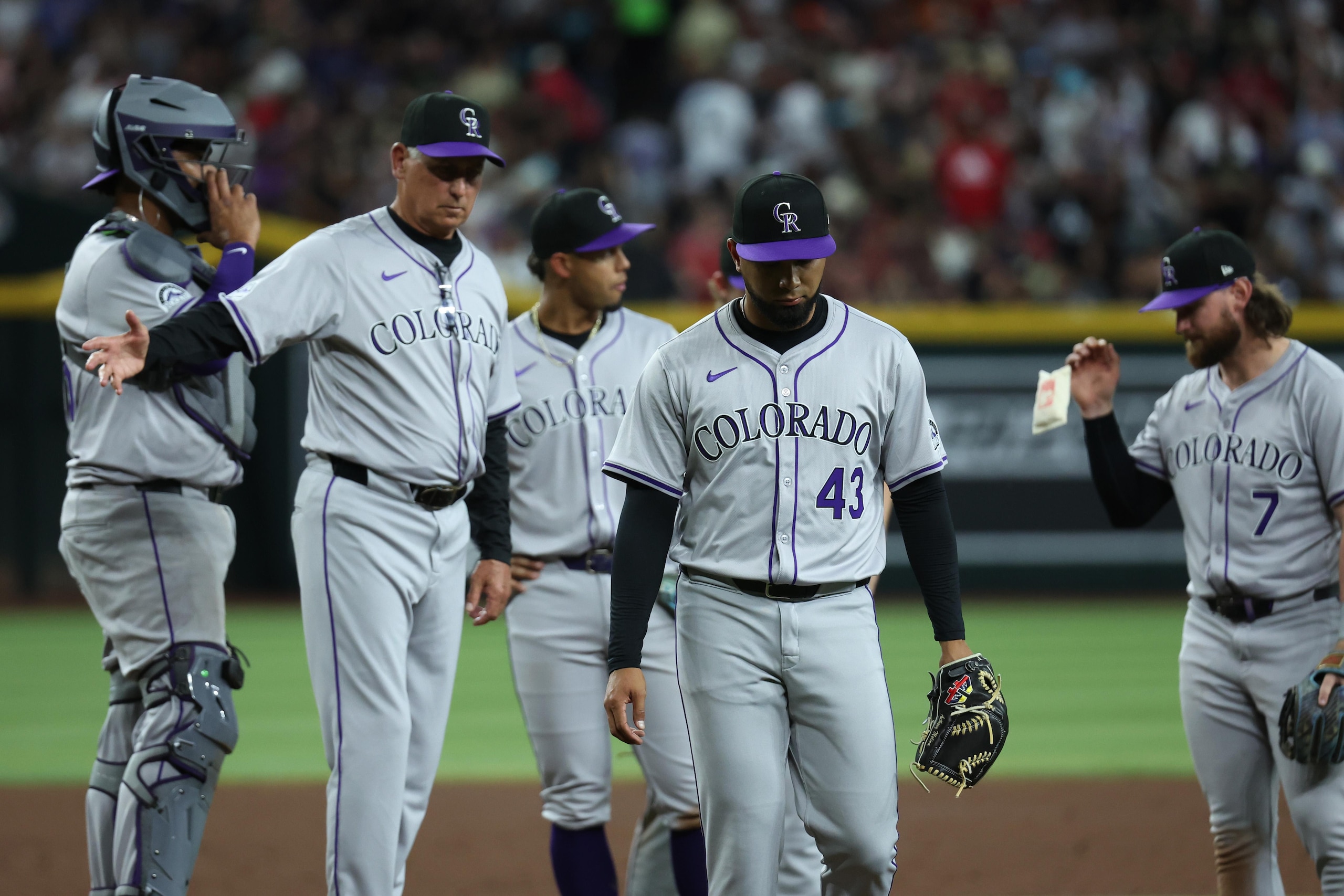

MLB's Rock Bottom: Will The Colorado Rockies Ever Be Good?
"You're a loser f--king organization. Every single one of you."—Bryce Harper.
The Rockies are in a hard place.
Thirty-two years since joining MLB as an expansion team in 1993, Colorado has remarkably little to show for it. The Rockies have never won a World Series. In their only World Series appearance, they were swept. They are one of two teams (Seattle Mariners) that have never won a game in the World Series. And their total of two playoff series wins is good for dead-last among MLB teams.
TOP NEWS
Brewers Beat Dodgers In Game 1
Ranking the Top 25 MLB Trade Chips For 2026-27 Offseason 🔢

Breaking down why Brewers can stop Dodgers 3-peat
The regular season has not been any kinder. The Rockies' best win total in a campaign is 92 games—the lowest in MLB. They are the only team that has never in its history put together a seven-year stretch with a combined winning record.
Thirty-two seasons is starting to get up there as sample sizes go. Why is this one team so consistently bad?
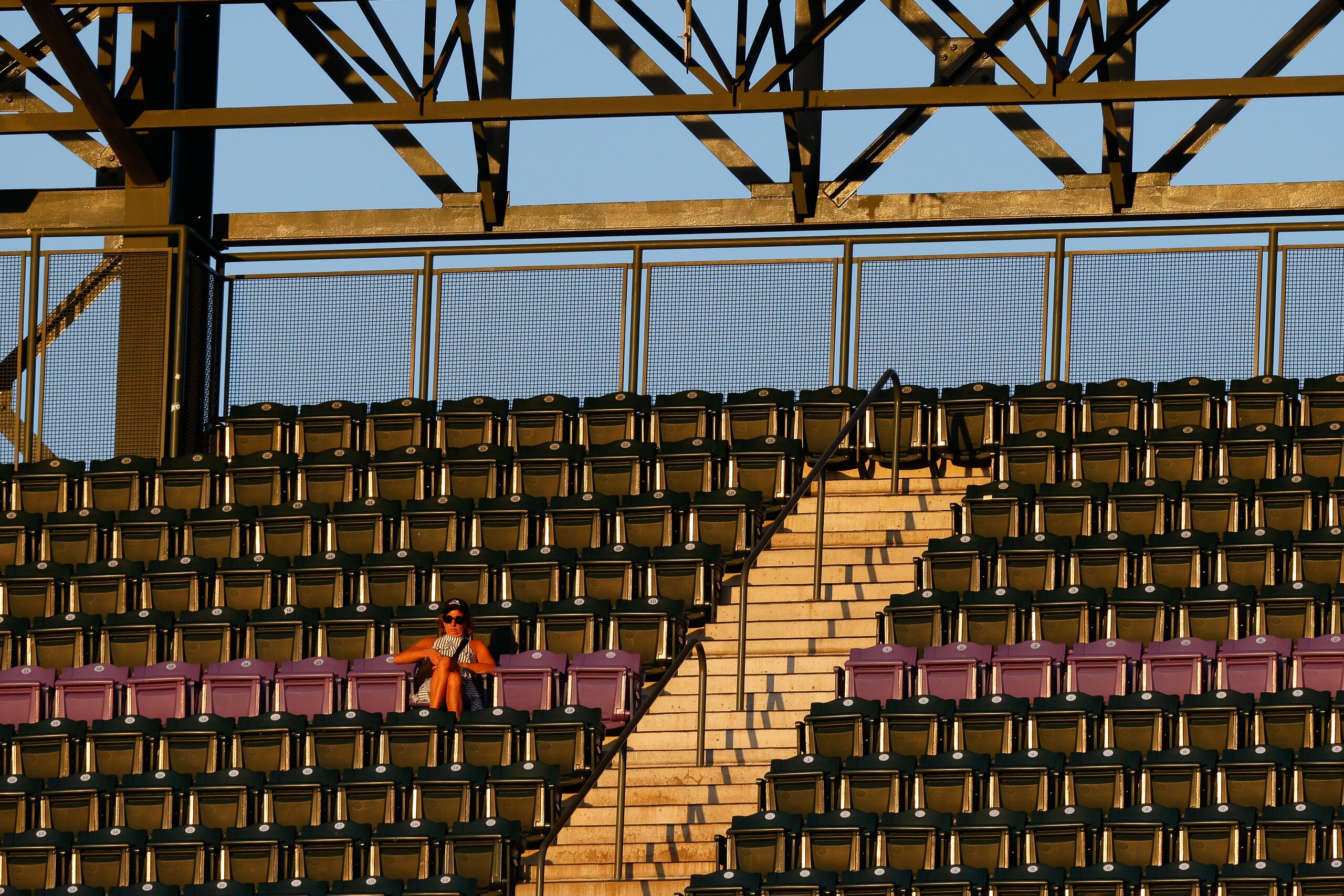
The Rockies are Different
Part of baseball's charm is that each stadium has its quirks. Every team's home ballpark plays a little differently, and at 5,280 feet above sea level, no park plays more differently from the others than Coors Field, home of the Colorado Rockies.
Without the added weight of 5,000 feet of air that other stadiums deal with, baseballs take flight at the Rockies' home like nowhere else. The result: Coors Field is a massive outlier for offensive production.
Per Baseball Savant, the "Coors Field effect" amounts to a thick thumb on the scale: About 25-30 percent more runs are scored in games there, with home runs around 11 percent above the MLB average.
The team makes efforts to mitigate this. The Rockies place balls in a humidor before their use in-game, helping to soften them and prevent them from flying as far in Colorado's thin, dry air. Coors has the fences farther out than any other MLB stadium, doing its part to limit home runs.
They can't push the fences out further, though, because the largest field in baseball already yields the most extra-base hits of any park in the majors and gives Coors the highest BABIP of any stadium. Per Fangraphs, it is the only park in baseball that inflates all four kinds of hits: singles, doubles, triples and home runs. When you add it up, the anti-offense measures net out nowhere close to offsetting the manic scoring that Coors Field produces.
This might not seem so bad. For fans, Coors Field is a fun novelty. Everyone likes scoring in baseball. The Rockies have never had poor attendance.
The problem is the scoring environment is suffocating this team. It is the reason the Rockies can't and will never be able to compete.
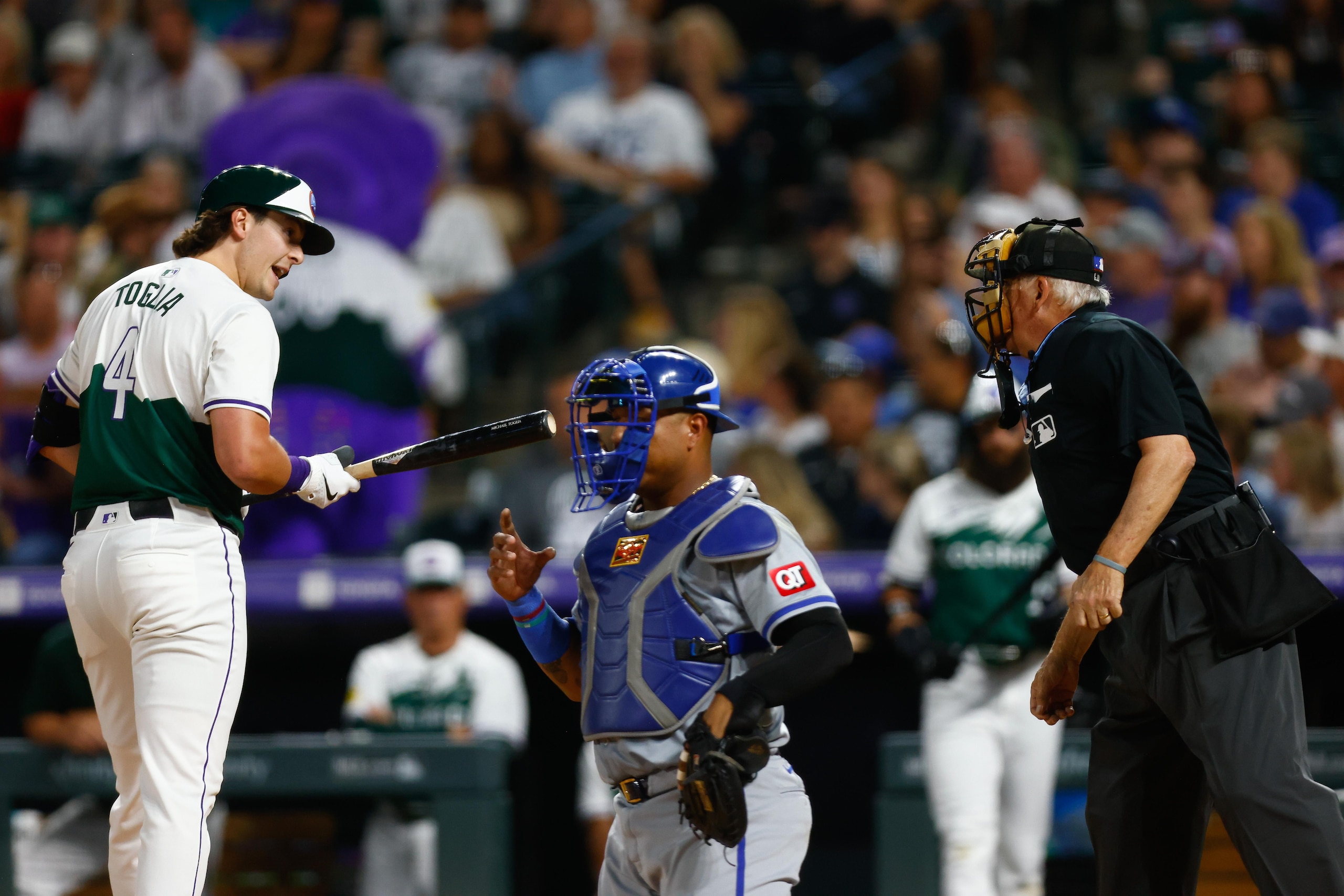
The Rockies are Just Worse
Baseball analysts noticed something odd about the Coors Field effect almost immediately.
You can split the total Coors Field effect up into two halves: half of it comes from Rockies players hitting better there than elsewhere, and the other half comes from players on other teams hitting better there than elsewhere.
The total Coors Field effect is the average of the Rockies part and non-Rockies part, and there is no reason to expect that these two numbers should be very different from one another. But there is a difference.
The Rockies present an analytical conundrum: their half of the Coors Field effect is consistently much worse. Bafflingly bad.
Analysts like to point to a menu of explanations here, each of them plausible but individually hand-wavey.
Maybe Rockies players are pitched to differently, but only at home. Maybe the frequent elevation changes make it hard for Colorado pitchers to calibrate their stuff. Maybe the Rockies are the only team stricken by "Coors Field hangover," the idea being they are particularly hard-hit by the altitude changes as they travel from elevation to sea level and back. Maybe it's the frequency itself of travel back and forth to and from altitude that takes a lot out of the team and explains why it's different.
The simpler explanation that nobody wants to believe at face value is that Rockies players, in aggregate, are just worse than the average MLB player.
It seems so facile that it's easily dismissed. They are a big league team like any other and have had hundreds of big league players over 32 years. How could they all just be worse as a group?
Here, too, it helps to split up the effect. Let's start with their pitching.
The Rockies have never come close to having good pitching. As a team, they are an ugly 5.02, are dead-last in ERA since their founding in 1993. This past season, at a 5.47 ERA, they were again last in MLB by a mile.
In the 2007 season, at the franchise's unquestioned apex of success, their 4.32 ERA was good enough for squarely average, punctuated by a miserable 7.68 ERA in the World Series sweep.
Try naming the three best pitchers in Rockies history. It is a supremely difficult challenge even if you are good at things like this, and it won't take you long before you get to guys with career ERAs around five.
Part of their bad pitching is obviously the physical effect of playing half your games at Coors Field. But this obscures the bigger problem.
Why would you sign with the Rockies if you were any good at pitching?
What type of next contract do you think you'll get once Coors is done with you?
If you do sign with the Rockies, your agent will understandably want to crack them pretty well with your contract.
Colorado, as a result, has had to hand out some of the worst deals in MLB history to attract any name-brand pitching, most famously signing Mike Hampton to a $121 million contract in 2000.
In practice, this is a brutal selection effect. The Rockies are asking pitchers to sign up for pitching hell, and they have no way around their need to waste money by overpaying pitching talent. The net effect is that the average pitcher on the Rockies is worse at pitching than the average pitcher on the average team.
It's not like you can expect to get much better as a pitcher in Colorado. The Rockies have employed nine pitching coaches in their 32 years, and none of them have ever gone on to hold another major league coaching job after getting let go, save for Jim Wright, who was rehired by Colorado for the same role.
Thanks to the altitude, Rockies pitching coach is a career dead-end, the worst assistant coaching job in baseball.
Like with the pitchers, part of this effect on pitching coaches is the unavoidable effect of the thin air. Part of it is the pitchers they have to work with are less talented per dollar than average. But part of it is they are just worse pitching coaches because good pitching coaches do not take that Rockies job.
Zoom out and it's a vicious cycle. They can't develop pitching talent. They can't coach pitching talent. They have to overpay to sign pitching talent. And when they do, at extra cost, acquire major league pitching talent, their guys still get rocked in half their games.
This problem is so ugly that it affects the entire organization. Look up any front-office position where the team's history of hires is public and you will find the same thing: It's impossible for ex-Rockies to get hired again in the majors once the team is done with them. Nobody who has other options is going to pick the Rockies, and for good reason. You are forced to hand out bad contracts, your pitching will still stink no matter what you do, and once it's over you will never have an MLB job again.
The Coors effect even chases away hitting talent. The venue can be a scary prospect for hitters and their agents. Unless you're sure you can beat the Coors Field effect, you're taking a significant risk for your post-Rockies earnings by signing there. Every MLB team is going to wonder why you were worse on the road while on the Rockies, and even if you do put up stats at Coors, they won't take those numbers seriously anyway.
The Rockies' only choice is to offer extra to reassure you about the Coors effect on your future earning potential. And if they don't sweeten the deal, you're better off on a real team.
Why not just pick one of the other 29 teams?
The Rockies' only answer to this question is to pay extra for everything. It is an unavoidably losing game long-term for them.
They are the only MLB team that has this problem, and it compounds everywhere they turn. Together, it snowballs into a massive set of selection effects that scare away talent from all directions and results in Rockies players and staff simply being worse.
In the majors and the minors, in the front office and the dugout, both pitching and hitting, the Rockies' organization repels talent, and the only way they can attract talent is by overpaying, often catastrophically such as Kris Bryant's seven-year, $182 million contract.
It doesn't help that any star you do manage to draft and develop to the majors gets there, looks around and loses patience fast. The systemic failure in Colorado disillusioned the team's last star player, Nolan Arenado, so badly that he forced his way out in a trade that netted the team a pitiful return.
You can spin this all charitably if you want. Obviously, the odds are not mathematically zero that the Rockies ever win a World Series while they play at Coors. Baseball has a lot of randomness built in, and many overlooked players would love a chance to play on an MLB team, even if it means the Rockies.
Coors' higher scoring also means higher variance and a higher chance a mediocre team can string together wins at the right time. Combine this with MLB's club-friendly contract system allowing 5-8 years of cheap control over young players, and even against a daunting array of pressures, once every generation or two a Rockies team flush with homegrown offensive talent can get hot enough at the right time and make a run.
This happened in 2007's 90-win season, the only episode in Rockies history anyone could interpret as a level of success when young stars Troy Tulowitzki and Matt Holliday emerged from their system, formed a squad around long-term star Todd Helton and put together a memorable red-hot October, winning both of the playoff series the Colorado Rockies have ever won before getting swept in the World Series by the Boston Red Sox.
But it gets less likely every year. In their 32 years, there is no indication that the Rockies will ever be able to develop a pitching pipeline that allows them to keep opposing teams from scoring, and there is less and less reason to believe they ever might. Right now, they are at square zero, coming off two straight franchise-worst 59-103 and 61-101 seasons with no path to contention in sight in the ultra-loaded NL West.
As pitchers get better around baseball, velocities get faster and sliders get crazier, placing even more importance on pitching depth and coaching talent, the Rockies just fall further behind.
For now, attendance is healthy enough that the bottom line can paper over the losing. Yet at some point, fans will lose patience for losing this comprehensively. This process appears to be already happening.
The Rockies' attendance advantage has steadily eroded as memories of 2007 fade and the team languishes somewhere short of watchable. Last year, it sunk to the MLB average, 15th, for the first time. It won't take much more decline in attendance for the business side to start failing.
Together it is an unenviable problem. It is unclear what will turn Colorado into a place people want to pitch, short of an entirely new stadium with a pressurized dome.
The Rockies have to try something big to tamp down this margin or it will continue to kill them. Time to start getting creative with scouting, pitcher evaluations and the approach taken with hitters.
Until then, it will be a steady slide to rock bottom.
.jpg?w=2560)
.jpg?w=2560 "Cam Ward Says He's Not A Loser")
.jpg?w=2560 "Chargers Fall to 0-5 🤢")

.jpg?w=2560 "Grading MHJ Trade 📝")