
Final Report Card on the Chicago Blackhawks' 2014-15 Season
The story of the Chicago Blackhawks' 2014-15 season was one of a team that was able to keep raising its game until it claimed hockey's ultimate prize.
When the Blackhawks won their first Stanley Cup of the expansion era in 2010, they were a gang of young upstarts who had the element of surprise on their side. In 2013, when they won again, they were simply the best team in the league—dominant from wire to wire.
This year, Chicago showed vulnerability in the regular season and was even in danger of missing the playoffs for a brief moment. The team held home-ice advantage just once in four rounds of the playoffs but emerged victorious after two months of challenges, hoisting their third Stanley Cup in six years in front of their rabid fans at the United Center.
Here's a more detailed look at what we saw from the NHL's best team this year.
Offense
1 of 6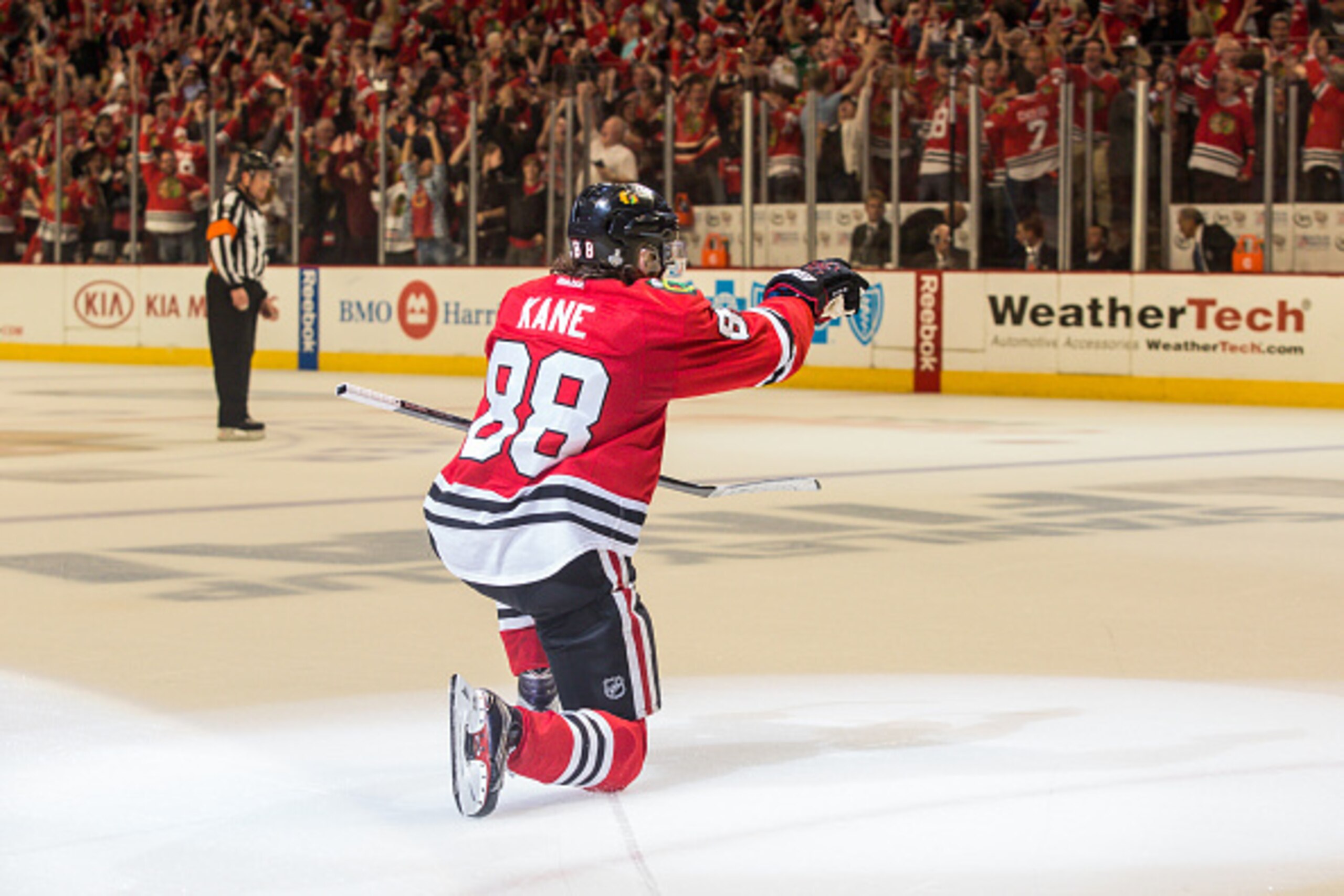
During the regular season, the Blackhawks were a so-so team offensively—ranked 17th overall with an average of 2.68 goals scored per game.
Though the team's numbers as a whole were middling, right wing Patrick Kane was on pace for a career year and was tied for the NHL scoring lead with 64 points in 61 games when he broke his clavicle in late February.
Despite a 12-week recovery timeframe, Kane was back in the Blackhawks' lineup for Game 1 of the playoffs—just seven weeks after his surgery. Amazingly, Kane finished the postseason tied for the lead in league scoring with 23 points in 23 games.
Kane scored two points in Chicago's Cup-clinching victory in Game 6—feeding Duncan Keith with the primary assist on the game-winning goal, then adding an insurance marker with his patented one-timer from the right circle late in the third period.
Other offensive highlights for the Blackhawks in 2014-15 included emerging star Brandon Saad's career highs of 23 regular-season and eight playoff goals, as well as Finnish rookie Teuvo Teravainen's four goals and 10 playoff points in 18 games.
No longer the group of young guns that blazed to their first Cup win by scoring 3.54 goals a game in 2010, the Blackhawks still raised their game this postseason. They finished the playoffs averaging an even three goals a game and outscored the NHL's highest-scoring regular-season team, the Tampa Bay Lightning, by a margin of 13-10 in the Stanley Cup Final.
Chicago's offense gets points for delivering when it matters most. The Blackhawks' scorers got the job done, but take a minor deduction here because they were not quite as explosive as they once were.
Grade: B+
Defense
2 of 6
The Blackhawks ranked second in the NHL in goals against during the regular season but dropped to ninth in the playoffs—yet their most outstanding player in this year's postseason was Conn Smythe Trophy winner Duncan Keith.
The 31-year-old is a veteran of all three Cup-winning teams in Chicago and seems to have gotten better—and stronger—with age.
Keith finished the playoffs tied for fourth overall in scoring with 21 points in 23 games He capped off his outstanding run with the Stanley Cup-winning goal—charging down the slot to deposit his own rebound over the shoulder of Tampa Bay's Ben Bishop.
Keith finished the playoffs with an average of 31:06 of ice time over 23 games. That's 715: 18 in total, which makes him just the fourth player to eclipse the 700-minute mark since the NHL started keeping track of ice time in 2001, according to ESPN.com.
ESPN.com also reported that Keith just became only the second defenseman in NHL history to be named playoff MVP and score the Cup-clinching goal. The other man? The legendary Bobby Orr, who did it in both 1970 and 1972.
Keith's legendary performance is even more impressive when one considers that he didn't always have the strongest supporting cast. His regular partner Brent Seabrook was steady, as were second-pairing regulars Johnny Oduya and Niklas Hjalmarsson. After that, things got sketchy, especially after Michal Rozsival was knocked out of the playoffs in the last game of Chicago's second-round series against the Minnesota Wild.
Coach Joel Quenneville used third-pairing options David Rundblad, Kimmo Timonen, Kyle Cumiskey and Trevor van Riemsdyk in limited roles through the last two rounds, while Keith played the tough minutes against the opponents' best players. Heck, Keith played virtually all of the minutes, and played them well.
The same Blackhawks team that opened the playoffs by giving up three goals in one period to the Nashville Predators finished the postseason by giving up just two goals in its last three games, including a shutout in the deciding Game 6.
Every scary defensive moment from both regular season and playoffs has now been erased from the collective memory bank.
Grade: A
Goaltending
3 of 6
When Corey Crawford wrapped up the playoffs with a shutout and held the NHL's best regular-season offensive team to just 10 goals in six games, it was hard to believe that he was pulled off his starting detail for a good part of Chicago's first-round series against the Nashville Predators.
Crawford got the hook just 20 minutes into Game 1 after giving up three goals on 12 shots to Nashville, then handed over his starting gig to backup Scott Darling after enduring a 6-2 loss to the Predators in Game 2.
Four games later, the tables turned. When Darling gave up three goals on 12 shots in the first 11:16 of Game 6, Crawford came back in—and shut the door to get Chicago past Nashville and into the second round.
In the next three series, Crawford lost just five more games—three to Anaheim and two to Tampa Bay—on his way to earning his second Stanley Cup ring in three seasons.
Crawford took plenty of heat in Chicago but ultimately finished the playoffs with a better playoff save percentage (.924) than all three of this year's Vezina Trophy nominees—Devan Dubnyk (.908), Carey Price (.920) and Pekka Rinne (.909).
Perhaps most importantly, Crawford stopped 14 shots from a surging Lightning in the third period of Game 6, preserving his shutout while the Blackhawks clung precariously to a 1-0 lead until Patrick Kane provided some breathing room with 5:14 left in regulation time.
Chicago's goaltending was a bit of an adventure this season, but like the rest of his team, Crawford got better as the playoffs progressed. He showed the heart of the champion as the Blackhawks won their last three games in a tight series and brought the Stanley Cup back home to Chicago.
Grade: B+

Special Teams
4 of 6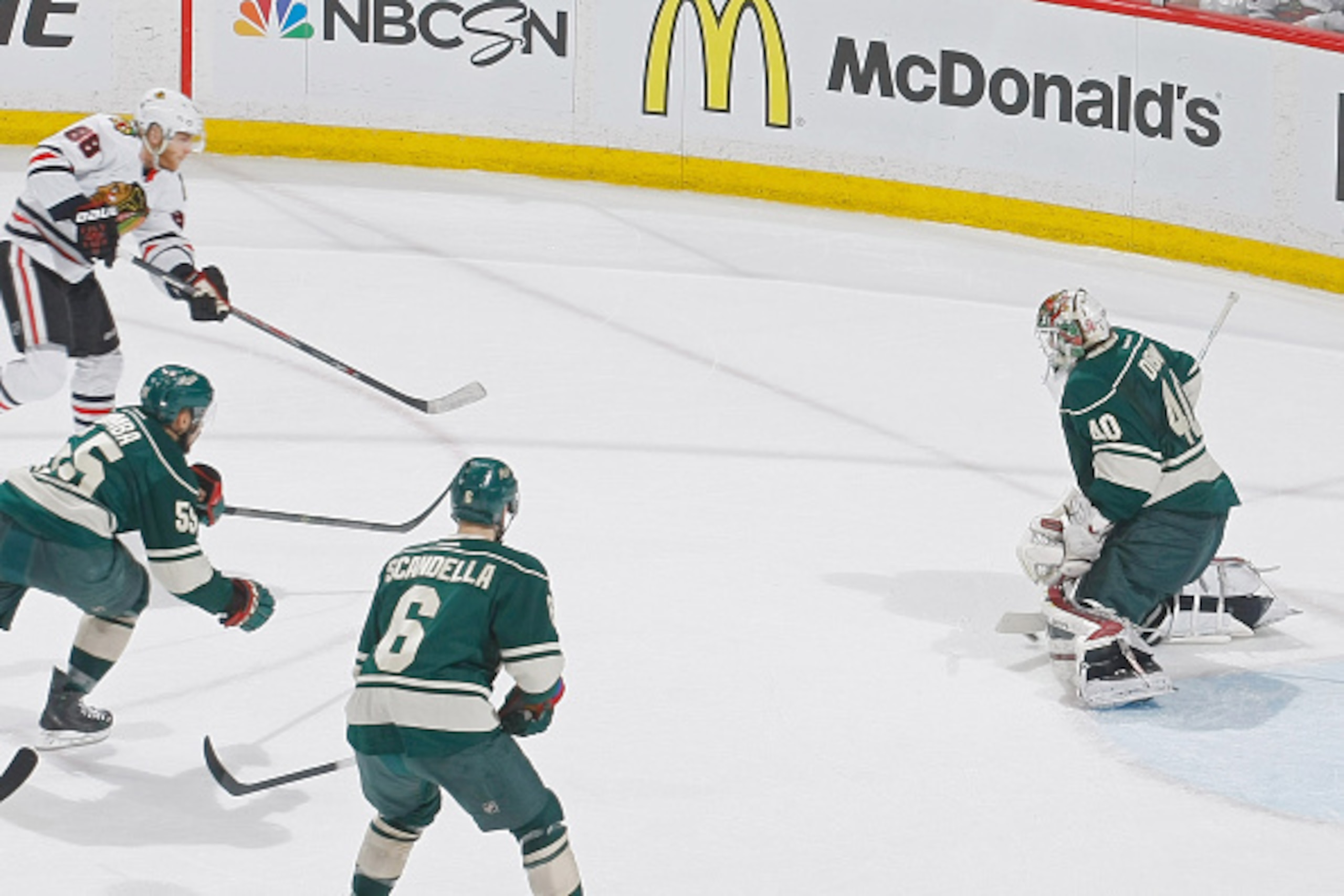
One thing's for sure: The Blackhawks' 2015 championship was not built on special teams play.
In both the regular season and the playoffs, Chicago's work on both the power play and the penalty kill was humble even for a team that finished fourth in the Western Conference and seventh overall in the regular season—never mind a Stanley Cup winner.
Considering all the close games they battled through, it's astounding that the Blackhawks were the last team standing with a power play and a penalty kill that both ranked 10th out of 16 teams in the playoffs.
What Chicago did well was to minimize the number of power-play opportunities that were being handed to its opponents.
The Blackhawks were shorthanded just 62 times in 23 playoff games—an average of 2.7 times per game—and gave up 13 power-play goals. By comparison, the Lightning took 85 penalties in 26 games—nearly 3.3 penalties a game—and ultimately allowed two more goals than Chicago despite boasting a better kill percentage.
The Blackhawks' playoff power-play numbers are very similar to those of their penalty kill—12 goals on 67 chances in 23 games. That pales next to the Lightning's 17 goals on 85 chances.
An argument can be made for the timeliness of Chicago's power-play prowess—scoring big goals that matter. A couple of examples are the Blackhawks' 2-for-4 performance against Anaheim in Game 7 of the Western Conference Final, as well as Patrick Kane's scoring the only goal of Game 3 with the man advantage on the road against Minnesota, a 1-0 win that essentially crushed the Wild on the way to a second-round sweep.
This group will be remembered for many outstanding qualities, but not particularly for its special teams prowess.
Grade: C+
Coaching
5 of 6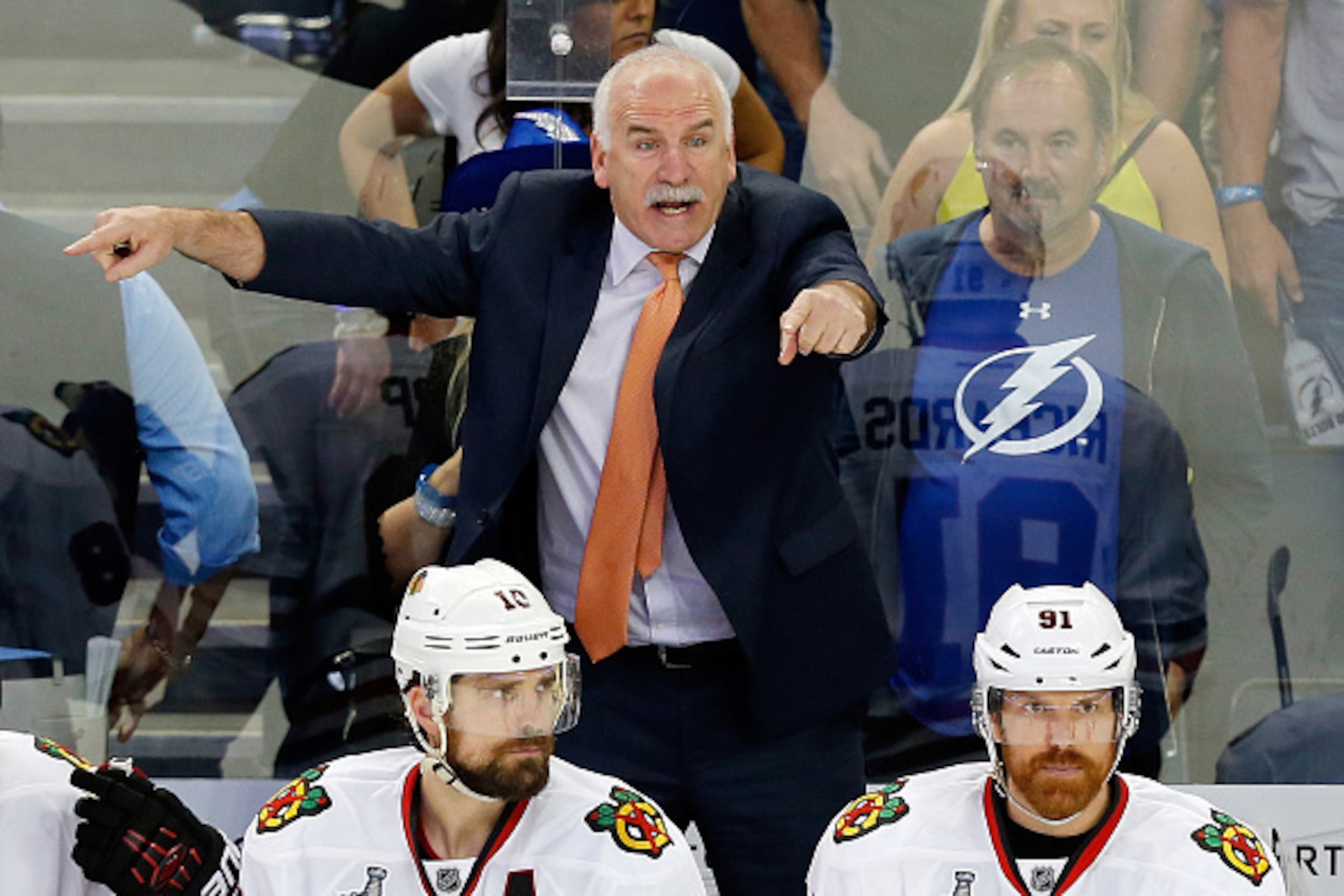
With his third Stanley Cup win in six years, Joel Quenneville is on his way to building a legacy as one of the best coaches of his generation.
A Jack Adams Award winner in 1999-2000 when he guided the St. Louis Blues to a Presidents' Trophy-winning 114-point season, Quenneville's contribution to the Blackhawks' success is often overshadowed by his arsenal of star players.
But this year's road to the Cup wasn't an easy one.
Along the way, Coach Q needed to sort out goaltending issues in the first round, organize ice time for his defense after Michal Rozsival was knocked out of the playoffs against Minnesota and successfully integrate veteran newcomers Antoine Vermette and Andrew Desjardins as well as rookies Teuvo Teravainen and Trevor van Riemsdyk, all of whom made significant contributions as the playoffs wore on.
Quenneville also made the key adjustment when his team was down 3-2 to Anaheim in the Western Conference Final—pulling Jonathan Toews away from the matchup against Ryan Kesler and allowing his captain to run roughshod over an injured Ryan Getzlaf for the last two games of the series.
In just his second full season as an NHL head coach, Jon Cooper proved to be a smart strategist who knows how to get the most out of his players as he guided his Tampa Bay Lightning to the Stanley Cup Final. Cooper's coaching skills got his team past the sharp hockey minds of Mike Babcock in Detroit, Michel Therrien in Montreal and Alain Vigneault in New York City, but not Joel Quenneville—not this year, at least.
Last year, Darryl Sutter and the Los Angeles Kings got the better of Quenneville and the Blackhawks in Game 7 of the Western Conference Final. This summer, it's Quenneville's turn to rest easy, knowing that he's the best of the best in big-game situations.
Grade: A+
Overall
6 of 6
Not only have the Chicago Blackhawks accomplished the incredibly difficult task of winning the 2015 Stanley Cup, but the team's third championship in six years has experts like NHL.com's Dan Rosen suggesting that this group now deserves to be recognized as a dynasty.
That's a tremendous accomplishment that speaks most loudly to the fine work of general manager Stan Bowman.
Ever since Jonathan Toews and Patrick Kane came off their entry-level contracts with a bushel of bonuses triggered from their 2010 Stanley Cup win, Bowman has been under the gun in terms of keeping his team salary-cap-compliant while remaining one of the best in the league.
The Blackhawks management has made smart choices in keeping together Toews, Kane, Marian Hossa, Keith, Seabrook, Hjalmarsson and Bryan Bickell—who played four games in the 2010 final as a rookie. But remember the importance of Dustin Byfuglien on that 2010 team? Or Brian Campbell? Or Andrew Ladd? Or Dave Bolland in 2013, when he scored the Stanley Cup-winning goal against Boston?
Plenty of important puzzle pieces were sacrificed to the salary-cap gods along the way, but the Blackhawks have found ways to plug those holes and stay as strong as ever.
This year, Bowman worked his magic by combining emerging young talents like Andrew Shaw, Brandon Saad and Teuvo Teravainen with newly acquired veterans like Brad Richards and Antoine Vermette.
He'll face another challenge next season when he'll need to shed more salary to keep Saad in the fold, but don't count him out—Stan hasn't lost yet.
Even as some faces change, the Blackhawks have become a band of brothers in six years at the top of the NHL. With plenty of gas left in the tank, expect to see them challenge for the championship against next season.
Grade: A
All stats courtesy of NHL.com.
.jpg?w=2560 "NHL Trade Grades Connor Hellebuyck")


.jpg?w=2560 "Chiefs, Steelers Eye WR Trades")



.jpg?w=2560 "Latest Peyton-Colts Rumors")