What LSU's Defense Must Do to Keep the Tigers in SEC West Contention
When the LSU quarterbacks look up, they're going to see the offseason spotlight beaming down on them brighter than it ever has before.
On the periphery of that spotlight, though, is an LSU defense that has to improve under first-year coordinator Kevin Steele if the Tigers are going to jump back into SEC West contention.
But wait...LSU finished with the best defense in the SEC at 316.8 yards per game last year. Is it really that much of a problem?

Yes.
LSU being at the top of the defensive heap in 2014 isn't indicative of a top-tier defense. Rather, it's proof that the old adage that "games aren't played on paper" is true.
What must the Tigers do to give their offense a chance and get back into contention for the division title?
Get After the Quarterback
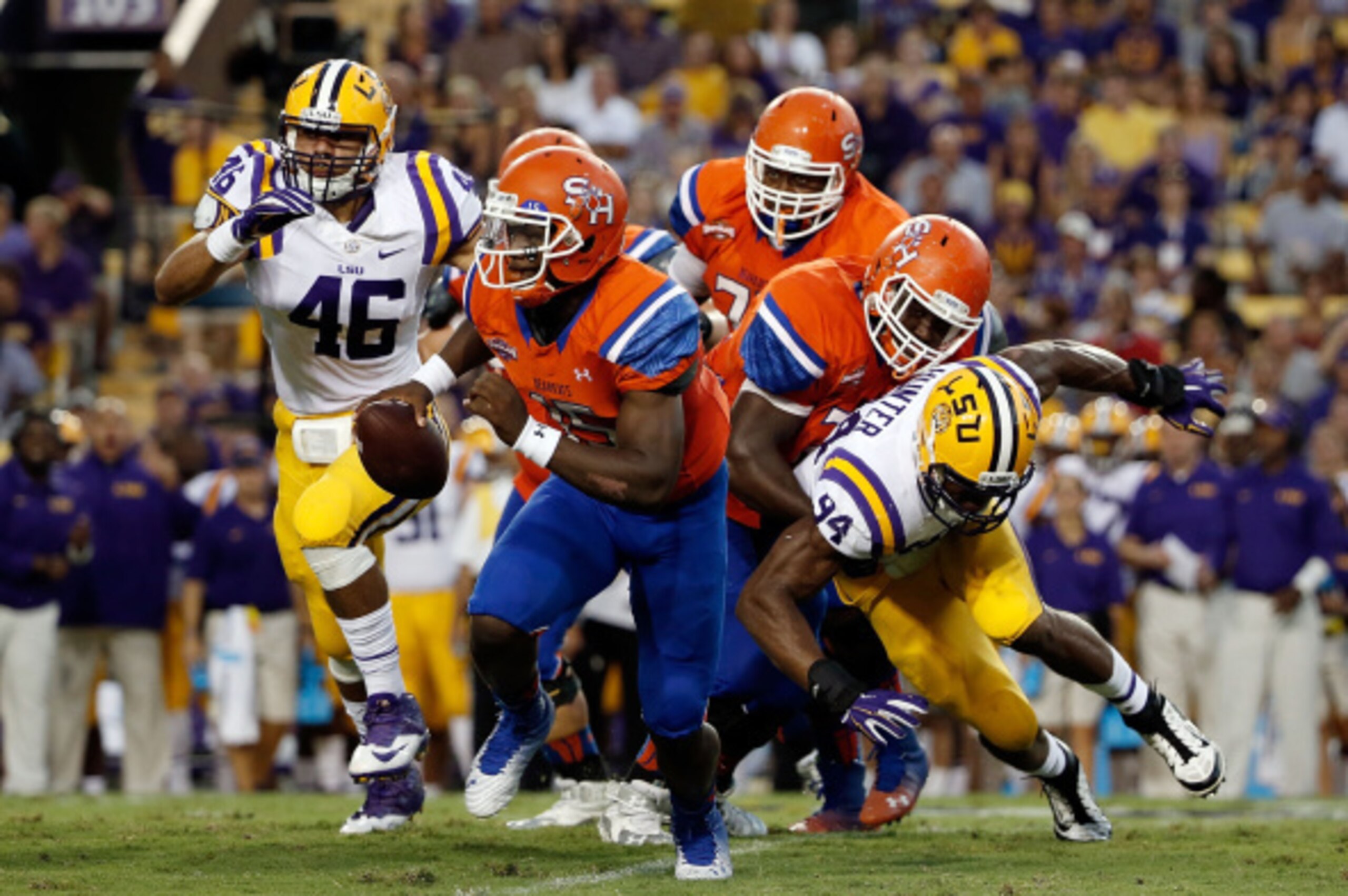
LSU has about as many monikers as any team can have, but one unit didn't live up to the hype in 2014.
The doors were locked on "Defensive End U" a year ago, as LSU managed just 19 sacks—second fewest in the SEC. That's remarkable—in a bad way—considering starting defensive end Danielle Hunter jumped to the NFL early and was selected in the third round and fellow starter Jermauria Rasco was an established threat.
Steele and new defensive line coach Ed Orgeron have to find a way to generate pressure on opposing quarterbacks this season; otherwise, the talented secondary is going to have its work cut out for it trying to stop high-octane SEC offenses.
"Pressure can come from a lot of ways," Steele told Jim Kleinpeter of NOLA.com in March. "You can get a four-man rush if you've got the right four guys and get a lot of pressure on guys. You've got to generate a pass rush with a four-man rush. That leaves a lot of options open."
LSU has players who can provide that rush.

Junior Tashawn Bower established himself as one of the team's top defensive ends this spring. The 6'5", 237-pounder has an incredible burst off the edge and is the prototypical fast-twitch end who can make a living in the opponent's backfield.
"Tashawn Bower on the one edge was very difficult for us to block," head coach Les Miles said during May's coaches teleconference.
Maquedius Bain, a former defensive tackle, is a perfect fit to slide in on the strong side. The 6'4", 299-pound sophomore spent the spring adjusting to his new role and is in a fight with fellow sophomore Deondre Clark to earn snaps this fall.
"We're going to have real strong ends and really young ends...guys who have really improved this spring and showed that they can get to the passer," Miles said.
Inside, 6'4", 298-pound Davon Godchaux and 6'5", 300-pound Christian LaCouture need to be more consistent up front at getting pressure on the quarterback. While pressure off the edge has become a focus, a pocket that collapses inside is a quarterback's worst nightmare.
The duo impressed Miles this spring.
"We really think the two guys inside will give us great push and should be great rushers themselves," Miles said.
He better be right, because LSU won't contend for the West unless it generates more pressure on opposing quarterbacks.
Stronger up the Middle

The LSU rush defense left a lot to be desired a year ago. The Tigers gave up 4.32 yards per carry a year ago—ninth in the SEC.
Godchaux and LaCouture learned on the job, as did middle linebacker Kendell Beckwith, who moved into a starting role in the middle of the season. Miles has been pleased with the way the middle of his defense has progressed this offseason.
"Davon Godchaux has had a great spring," Miles told Kleinpeter. "Centerpiece with him and LaCouture is really good. Kendell Beckwith is going to be a force inside. Right up the center of the defense includes Jamal Adams at safety. He's had as quality a spring as we've had around here at that position."

He better be right again, because the center of the LSU defense was soft in big games last year.
The Tigers gave up 20 rushing plays of 20 or more yards last season, ninth in the SEC. Of those, 12 came against ranked opponents (11th in the SEC), and 18 came against FBS opponents that had a winning record (11th in the SEC).
LSU lost the battle in the trenches against good teams last year, which is shocking considering the talent on the roster and former defensive coordinator John Chavis' track record of success.
Don't Force a System
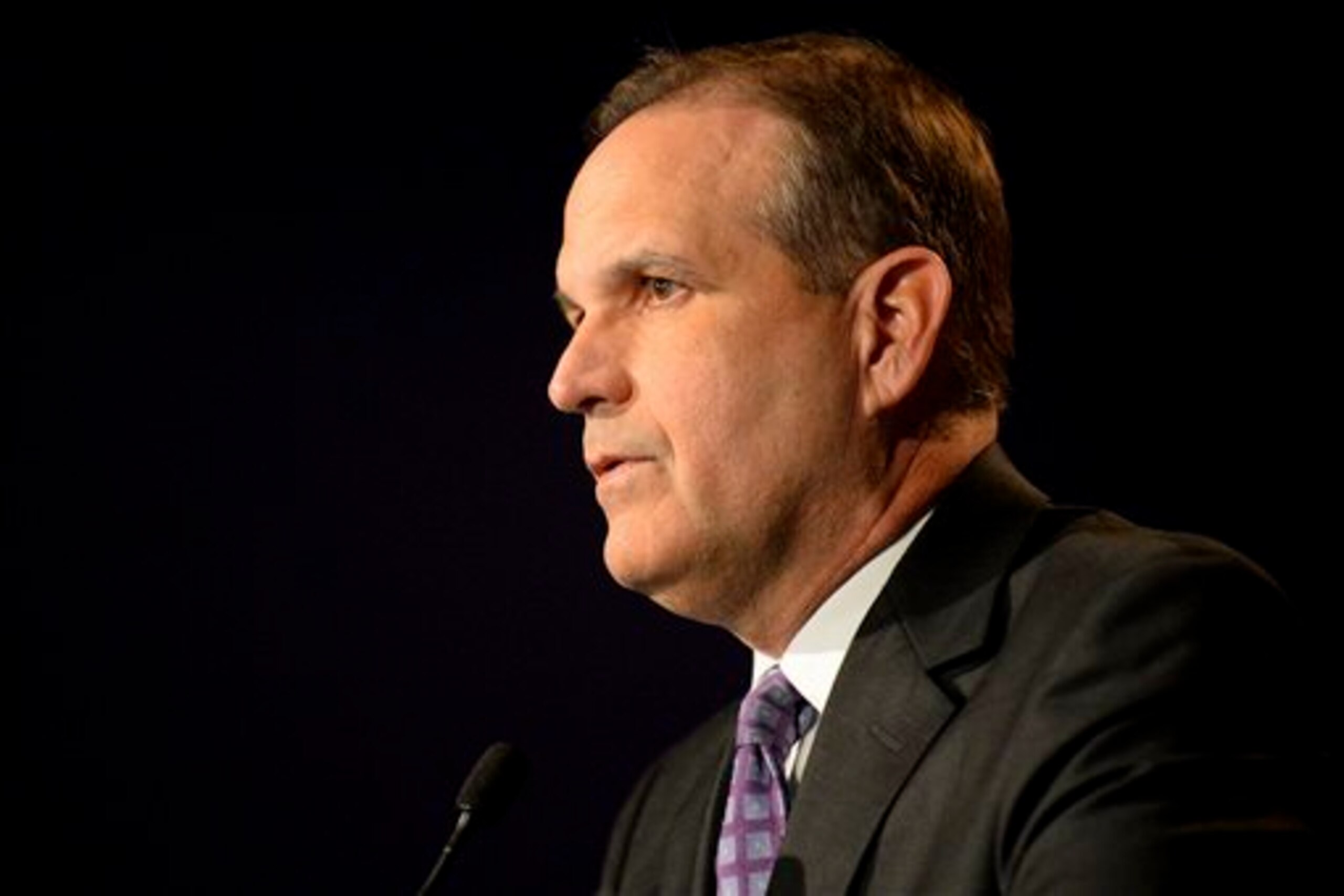
LSU was successful defensively under Chavis in a 4-3 defense that allowed the athleticism of players on the roster—particularly defensive ends and linebackers—to shine through. Steele trotted out a similar lineup for the majority of the spring game; however, he comes from Alabama, a program that operates almost exclusively out of the 3-4.
As James Smith of NOLA.com noted earlier this month, Steele appears focused on switching to the 3-4 on more of a full-time basis in the future based on the way LSU is recruiting.
What will the Tigers' identity be in 2015?
That's the $64,000 question, and Steele is keeping that under wraps.
"And it's going to stay that way," Steele told Kleinpeter in March. "I've got no reason or advantage—as long as the players know—it's really an advantage to us that opponents for next year in their spring, summer and early fall camp work, they've got no evidence of what we are. Keep guessing."
With Bain pushing 300 pounds and playing defensive end this spring, at least some 3-4 will be mixed in. But since Bower—who's much lighter and not a fit to play end in the 3-4—is the clear-cut best pass-rusher of the group, Steele is almost forced to stick with the 4-3 for now while planning for a more permanent transition in the future.
New coaches always want to put their signature on the program, and Steele will do so eventually. But LSU doesn't have the personnel to run what he is accustomed to this year. As long as he doesn't force the issue and give the defense too much too quickly, the Tigers should orchestrate a nice blend of the two styles.
Quotes were obtained firsthand unless otherwise noted. All stats are courtesy of CFBStats.com unless otherwise noted, and all recruiting information is courtesy of 247Sports' composite rankings.
Barrett Sallee is the lead SEC college football writer and college football video analyst for Bleacher Report, as well as a host on Bleacher Report Radio on Sirius 93, XM 208.
Follow Barrett on Twitter @BarrettSallee.
.png?w=2560)
.jpg?w=2560 "Colts Texans Football")

.jpg?w=2560 "Chiefs, Steelers Eye WR Trades")