Predicting the Biggest 1st-Round Steals of the 2015 NBA Draft
Every year, fans, media and front offices alike search for the biggest NBA draft steals.
The depth of the 2015 crop will yield some diamonds in the rough, and there are several mid-to-late first-round picks who will surprise the Association.
Many upperclassmen or older candidates often slide in the draft because they don't have as much time or room for growth. Once in a while, those "old" draftees make everyone look silly. Chicago Bulls wing Jimmy Butler, selected 30th in 2011 at 21 years old, is a prime example.
Other sleepers reach steal status because they brilliantly compensate for perceived rawness, athletic shortcomings or mediocre collegiate production.
Which 2015 first-round prospects will outperform their projected draft range and (eventually) make general managers regret passing on them?
Jerian Grant, Notre Dame PG (6'4", Senior)
1 of 6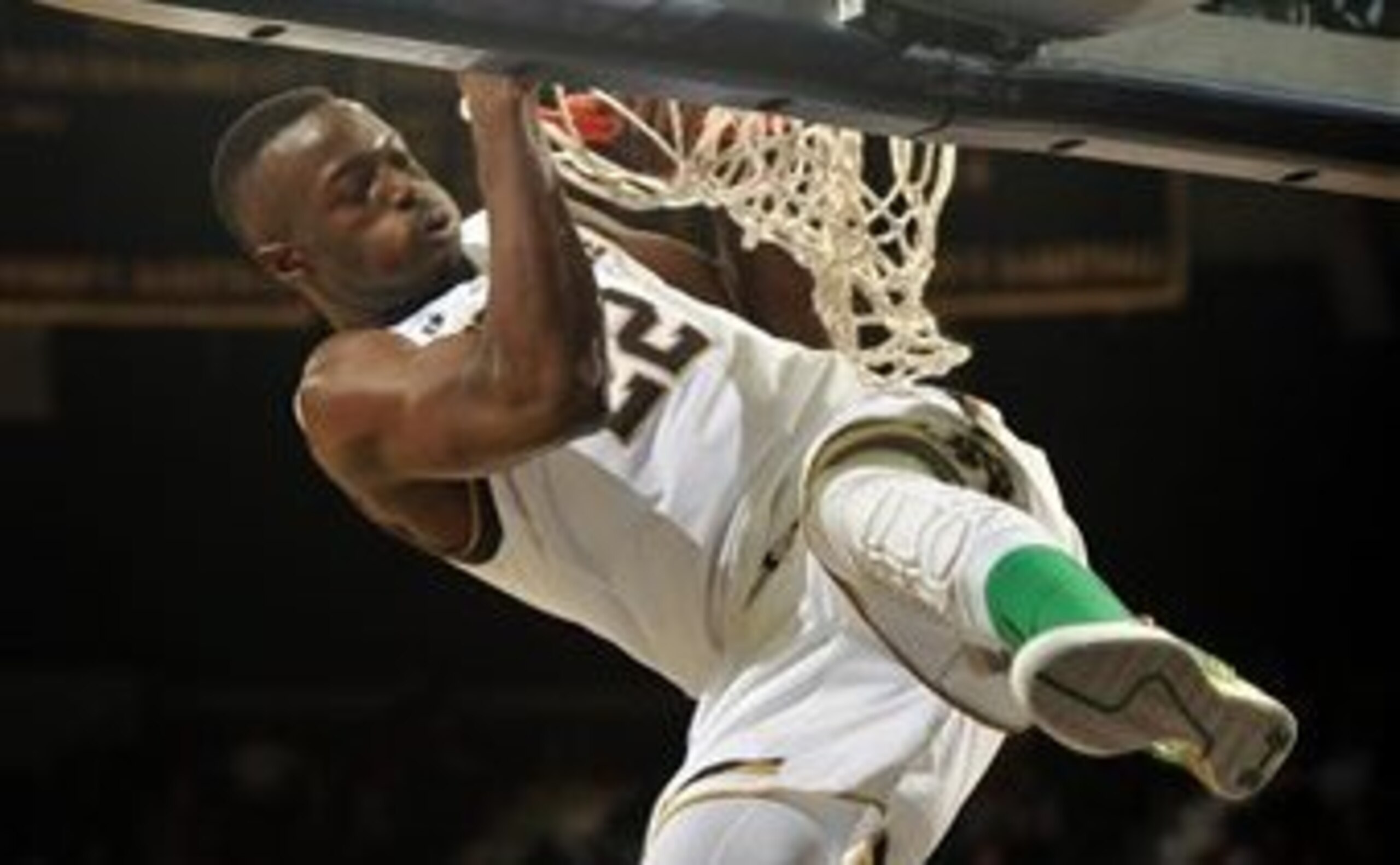
Projected Draft Range: 15-20
Although some prognosticators foresee Jerian Grant landing in the lottery, many predict he'll land in the 15-20 range on draft night.
His age (22 years old) and inconsistent three-point shooting (35 percent for his college career) are the two concerns surrounding his overall value, but he could have a better career than several youngsters drafted ahead of him.
Grant has three highly encouraging traits that will translate to the pros: slashing tools, court vision and mid-range shooting. The 6'4" speedster has a knack for penetrating the opposing defense and creating high-percentage chances for himself and teammates.
"Pick-and-roll, that's what I do best," Grant told Christopher Dempsey of the Denver Post. "And I think that's what the NBA has really evolved to. ... I think I'm one of the best playmakers in the draft. I think that translates to whatever team I'm on."
His shaky perimeter shooting is a notable deficiency but not a huge red flag. Grant's shot has looked fluid during predraft workouts, and he can at least keep defenses honest from 17 to 20 feet. He hit 40 percent of his two-point jumpers during 2014-15, according to Hoop-Math.com.
If Grant falls to 18th or lower on draft night, the team that snags him should consider him a colossal heist. He has a chance to be a high-level starting point guard, which is something that's usually hard to find in the latter half of the first round.
Trey Lyles, Kentucky PF (6'10", Freshman)
2 of 6
Projected Draft Range: 15-25
It seems like Trey Lyles is being penalized for not being insanely athletic or failing to post big numbers at Kentucky.
The reality is he's a teenager who's already quite gifted, and he'll only get better.
Lyles logged most of his collegiate minutes as an oversized small forward, but his NBA squad will likely employ him as a 4-man. His agile, 6'10" frame and 7-foot-plus wingspan will enable him to attack the basket as a slasher and post-up threat, and he'll shoot over foes on the perimeter.
Although he's not mentioned in the same tier as fellow Wildcats Karl-Anthony Towns and Willie Cauley-Stein, Lyles' skills and noticeable versatility suggest a bright future.
He already has the handles to create via face-up drives and over-the-shoulder hooks, and his off-ball instincts are solid as well. Frank Isola of the New York Daily News recently reported that the New York Knicks, picking at No. 4, have been enamored with Lyles for months. That's a strong statement about his untapped potential.
Marc D'Amico of Celtics.com agrees that Lyles could be dangerous in his prime. He explains that Lyle's shooting finesse will help gradually expand his range:
"This kid has serious potential. ... His offensive ceiling is very high. He’s skilled enough to shoot and handle the ball with both hands on the perimeter, and he also possesses a strong post repertoire. I think his jumper is going to extend to the NBA three-point line and he’ll be a very good midrange shooter. I’m not at all worried about his poor three-point shooting at the NCAA level. Additionally, he runs the floor very well. What stands out to me the most is his poise.
"
Defensively, he won't be as dominant as Towns or WCS. However, there shouldn't be any major concerns about his tools or capability. Lyles moves his feet exceptionally well for a 6'10" player, and he showed ample quickness and awareness as his freshman season wore on.
While Lyles isn't superstar material, he'll be a key cog and an absolute burglary if he lands near 20th overall.
Delon Wright, Utah PG (6'5", Senior)
3 of 6
Projected Draft Range: 25-35
Delon Wright's draft stock has fallen victim to a few NBA draft buzzwords. He doesn't have the highly coveted explosiveness, nor is he a youngster with plenty of developmental years ahead.
Those two knocks on him are valid, but his value still belongs in the middle of the first round, not in the high 20s or 30s.
The Utah point guard offers elite playmaking instincts and skills. Wright is a master at using change of direction and change of speed, and he consistently weaves his way to the bucket. Once he gets into the teeth of the defense, he's adept at dishing the ball to teammates or drawing fouls.
Wright's ability to diagnose defenses and make the right plays resulted in a blistering 129.8 offensive rating, per Sports-Reference.com, good for eighth in the NCAA. He could step right into an NBA team's rotation tomorrow, make all the right plays and provide solid spot-up shooting.
His defense often gets overlooked on the national level, and it's one of the factors that make him a top-tier point guard commodity. Wright's instincts and talent for disruption are noticeably better than that of most prospects, and he has a 6'5.5" frame with a 6'7.5" wingspan.
Forget about the middle-tier athleticism. Wright has plenty of shiftiness, length and smarts to challenge other guards for a starting spot.


Bobby Portis, Arkansas PF (6'11", Sophomore)
4 of 6
Projected Draft Range: 10-20
Again, we have a prospect who doesn't get much lottery love because he's not billed as an athlete.
Bobby Portis is poised to outplay his draft status because he has the size, footwork and mental makeup to maximize his potential on both ends of the floor. Arkansas' sophomore star is a strong interior player with a nice shooting touch and a relentless motor.
When Portis doesn't have the ball, he does all the dirty work to put his team in position to win. He battles for position underneath the hoop, giving himself optimal opportunities for rebounds, entry passes and post defense.
Once he gets the rock, Portis displays a rapidly expanding skill set that includes powerful duck-ins, up-and-unders and short bankers. He also went 14-of-30 from three-land as a sophomore.
Portis' positional versatility is not discussed enough. His length (6'10.5" with a 7'2" wingspan) and strength (246 lbs) will allow him to compete at the center position, while superb end-to-end mobility and three-point range will make him shine at power forward.
Depending on where he lands, he could earn a big enough role to become a double-double machine. Look for Portis to outperform most of his mid-first-round peers and emerge as a dark-horse contender for Rookie of the Year.
Kristaps Porzingis, Latvia PF/C (7'1", 1995)
5 of 6
Projected Draft Range: 5-10
Whether Kristaps Porzingis lands at No. 5 or falls to No. 10, he has a great chance to be one of the draft's biggest steals.
The Latvian 7-footer has a ceiling that's higher than those of most of the top-five prospects, and it could rival that of Karl-Anthony Towns. He has to become a stronger and more polished post player in order for that to happen, but the realistic potential is there.
Porzingis has such a favorable offensive outlook because he can move gracefully, shoot effortlessly from long range and finish forcefully around the rim. He also has the tools and agility to become a rangy rim protector.
One NBA general manager talked about Porzingis' star-studded future, per ESPN.com's Chad Ford: "[I] had flashbacks to when I saw Pau Gasol take the floor for the first time in Spain. Only this kid is much more athletic than Gasol, but plays with that same fluidity. I've been asking my team since then, 'Are you sure he's not the No. 1 guy? Are these guys in college really better than him?'"
Given Porzingis' youth and unpredictable development, there's also a chance he'll be one of the draft's biggest busts. There's no guarantee he'll handle the rigors of the NBA frontcourt.
But if Porzingis works to accentuate his strong suits and fortify his weaknesses, he'll reach stardom. His best-case scenario is better than those of guys such as Emmanuel Mudiay, D'Angelo Russell and Jahlil Okafor, all of whom are projected to land ahead of him on draft night.
Christian Wood, UNLV PF/C (6'11", Sophomore)
6 of 6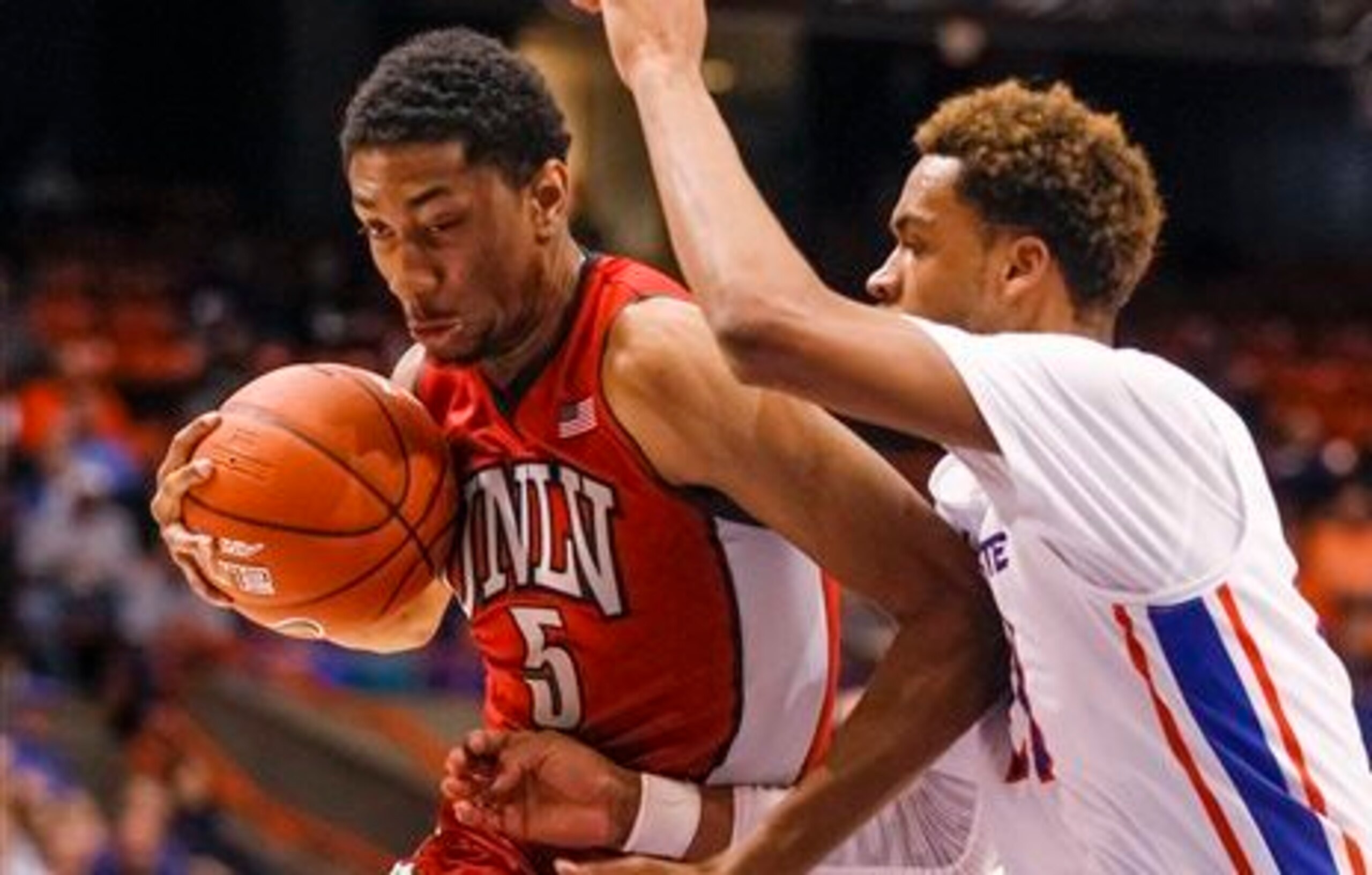
Projected Draft Range: 25-30
Here we have another tantalizing upside pick. UNLV's Christian Wood is still too raw to make a dent in the NBA next year, but he has the tools and coordination to become an ultra-versatile weapon.
After seeing scant playing time as a freshman, Wood exploded for a breakout sophomore campaign. He notched 15.7 points, 10.0 rebounds and 2.7 blocks during 2014-15. With long strides, surprising agility and a 7'3" wingspan, he offers NBA teams a multifaceted attack.
Wood can attack off the bounce much better than the average 6'11" prospect, and his mid-range shooting indicates he'll be a pick-and-pop option.
The 19-year-old explained why he's a matchup problem.
"If you put a big guy on me, I have the ball-handling skills to take him off the dribble and beat him and get a layup," Wood told Jesse Blancarte of Basketball Insiders. "If you put a smaller guy on me, I have the ability to post up and finish over him."
Wood has to bulk up his physique, but his decision-making and mental approach to the game must improve as well. If his NBA coaches are able to extract most of his potential, Wood will avoid being a flop and become a seismic steal instead.




.jpg?w=2560 "Latest Peyton-Colts Rumors")