

After Quiet Rookie Season, Aaron Gordon Can Be Huge Piece of Magic's Next Step
Aaron Gordon may not have put up big numbers during his first NBA season, but he's heading in the right direction.
The rookie didn't play much during 2014-15, ending the year with averages of 5.2 points and 3.6 rebounds in 17.0 minutes a night. Fortunately, there's still room for development inside a kid who's just 19 years old.
Gordon's restrictions are right in line with those of the Orlando Magic: He's not a shooter.
TOP NEWS
Melo's Quote on Confidence 😎

J-Dub Suffers Gruesome Injury
Mazzulla Weighs In on Brown-Tatum Drama
Orlando has compiled this backward roster. Some of the pieces are pretty, but they don't all look like they're from the same puzzle. Mostly, they don't hit shots from the outside—at least the players who should don't.
Weird. Ugly. Magic basketball.
So, Orlando got perimeter shooting from soon-to-be free agent Tobias Harris and Channing Frye. It set up pick-and-pops for Nikola Vucevic out to 21 feet or so from the basket (and it feels like the next step for him is to start shooting threes, whenever that may be).
The guards, especially Elfrid Payton, aren't shooters. With Harris preparing to hit free agency July 1, Gordon now has a legitimate chance to enter next season's starting lineup (and it doesn't hurt that he's a Scott Skiles-style, defensive-minded player). But Harris hit 36 percent of his 3.5 threes a night this past season, turning into a legitimate threat from behind the arc after that had always been a weakness for him.
And Gordon doesn't hit those shots—yet.
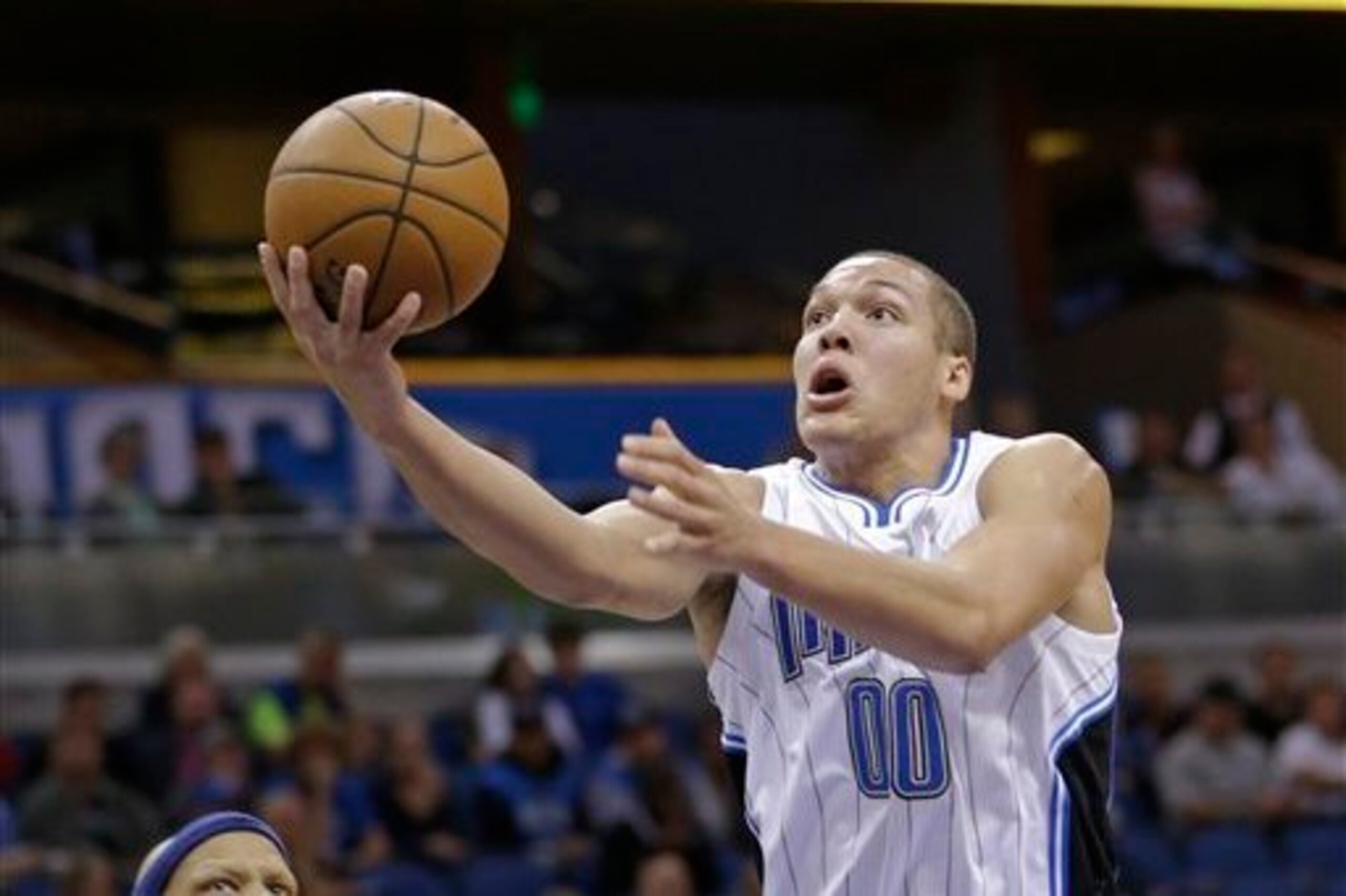
He sank just 27 percent of his threes as a rookie, but the problems weren't just with range. His whole jumper is out of whack.
He hit only 27 percent of his two-point jump shots, too, barely reaching 30 percent on mid-range attempts. He misses left, right, long and short. His shots feature more clanking than your 16-year-old next-door neighbor's incessantly obnoxious garage band. But he's still a skilled athlete athlete who can finish around the rim and is learning to cut off the ball, even if a hitch is hindering his scoring production from outside the paint.
When he was at Arizona, there was one way to stop Gordon around the iron (and it was particularly effective): fouling him. He made 42 percent of his attempts from the charity stripe during his sole season as a Wildcats star.
That's changed now, though.
Gordon still plays like he's afraid to get fouled at times. That mentality can be hard to overcome. But he did sink 72 percent of his free throws as a rookie. And the Magic's shooting consultant, Dave Love, someone they may want to consider keeping even under a new coaching regime with Skiles now in town, played a major role in that.
"Dave Love's a great dude," Gordon said, per Fox Sports' Ken Hornack. "He helped my shot significantly, just the mechanics of it, so now it's more fluid. ... He gave me a few tweaks that made it effortless. And it's easy to build on that."
The lack of shooting touch, though, can bring an offense down, especially from the small forward spot.
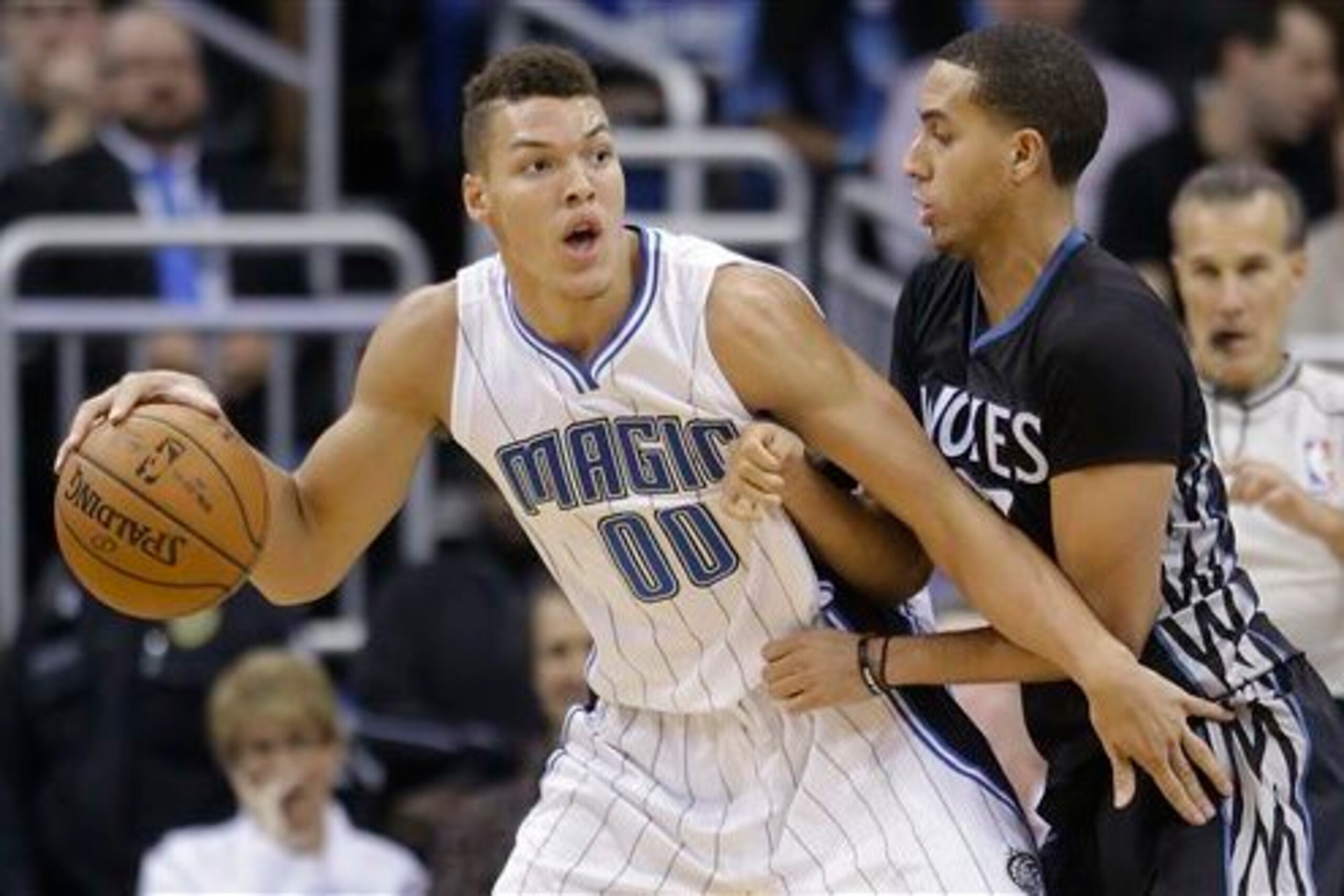
But Gordon doesn't have to play small forward as often next year, especially if Harris leaves and the Magic decide to open up a spot at the 4 by moving Frye to the bench.
The 6'9", 225-pound Gordon struggled when guarding NBA 4s at the beginning of the year, but he's an energetic, intelligent defender who—unlike many 19-year-olds—came into the league with an immediate grown-man body. Kids like that tend to improve throughout the year. So guess what Gordon did.
By the middle of the season, right before he missed a big chunk of the year with a stress fracture in his foot, he was capably defending shooting guards, small forwards and power forwards—exactly what the Magic envisioned upon selecting him fourth overall in last June's draft.
What separates Gordon from your average young defender (even the good ones) is that he's mostly reserved. You don't see him reaching for steals or jumping passing lanes too often. He's disciplined, a trait most of Arizona coach Sean Miller's products share (a reason Brandon Ashley might be a nice second-round sleeper as a defender in the upcoming draft).
That characteristic is part of what allows him to guard so many positions, and it can legitimately change the makeup of a defense. Such a style in someone of Gordon's size is how you end up with versatile wings like Kawhi Leonard and Draymond Green—the best of the NBA's multifaceted, defensive-minded, hybrid forwards.
Check out this late-March play from a Magic game against the Atlanta Hawks.
Gordon begins the possession guarding Thabo Sefolosha, a wing. He perfectly follows him around a screen and switches onto Pero Antic, a big man, after a lousy cross-court pass from Atlanta. After Antic gives up the ball, he sets a ball-screen, and Gordon switches onto Dennis Schröder, a point guard, who he almost perfectly mans up until forcing a strip.
Here's the play in reference:

So, Gordon switches twice, essentially defends every style of player possible and forces a steal—all on one possession. How many rookies are capable of making those plays so seamlessly without miscommunicating on a switch or proving incapable of guarding the lightning-quick Schröder? How many teenagers can do it?
It's a perfect match for Skiles, who's never had elite offenses but has always been known as one of the shrewdest defensive minds out there.
Gordon's young enough that he doesn't have to come into next season with a shot to be a contributor. For now, it's acceptable for him to be the power forward version of Michael Kidd-Gilchrist, especially since he's hardly unskilled as an offensive player. He still has admirable passing and ball-handling skills.
But in order to be that type of player, you have to be as dominant as MKG as a defender. Not good. Not very good. But one of the best.
Gordon is capable of getting there. And if Year 2 shows us a more comfortable Aaron Gordon, Orlando should be happy with his progression.
Follow Fred Katz on Twitter at @FredKatz.
Unless otherwise noted, all statistics are current as of June 7 and are courtesy of Basketball-Reference.com and NBA.com.



.jpg?w=2560 "Chiefs, Steelers Eye WR Trades")



.jpg?w=2560 "Latest Peyton-Colts Rumors")