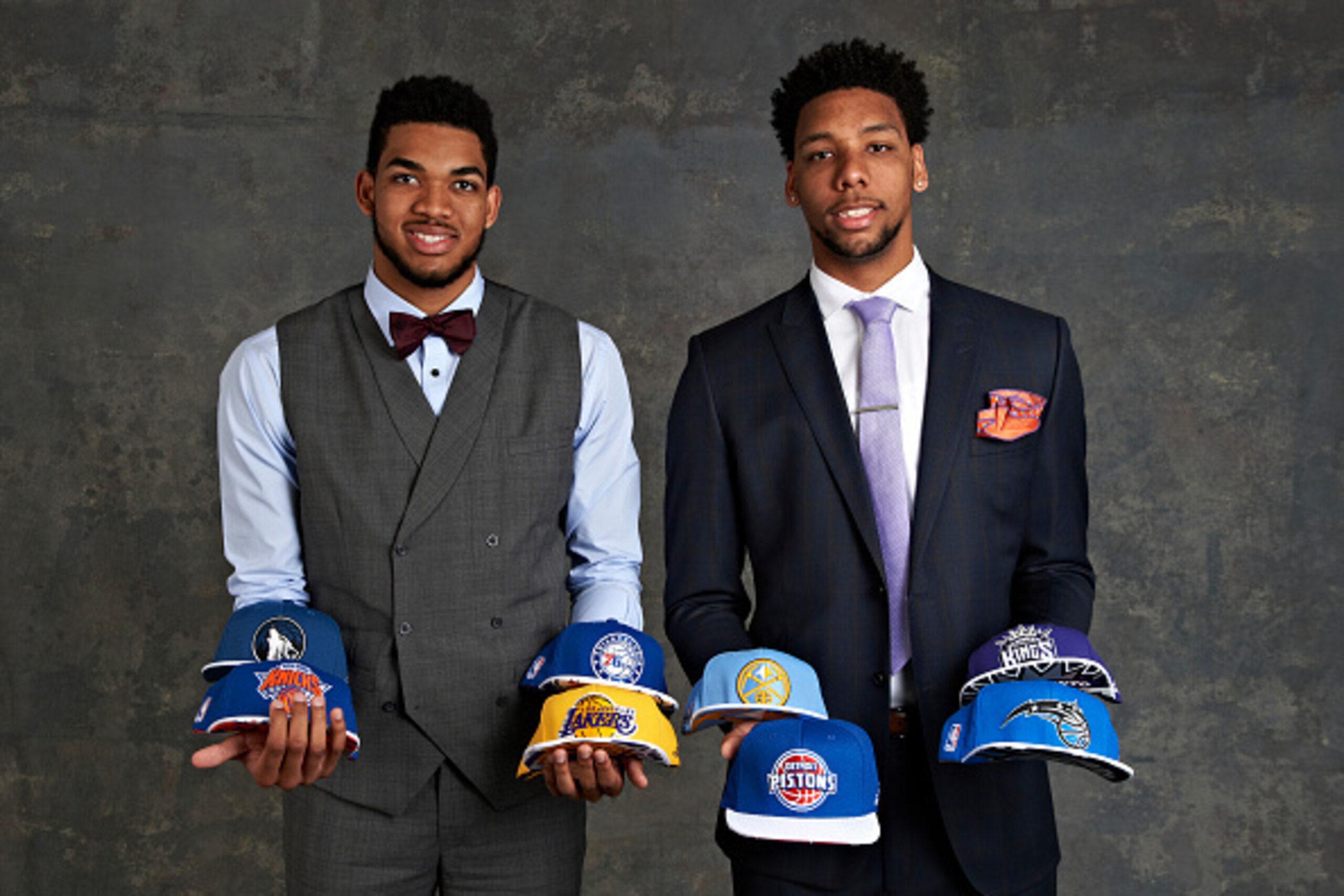

Floor and Ceiling Comparisons for Top 10 NBA Draft Prospects
A big part of the draft process for every NBA team is evaluating the risk/reward of every pick.
What's the potential of this player? If this, this and this happen, he could be (insert NBA star). If he doesn't develop and his game doesn't mature, he could be (insert NBA dud).
This is particularly important at the top of the draft, because a good way to get better in the league is hit on a couple of lottery picks (see Oklahoma City Thunder) and build around those guys. It can also set your team back if you swing and miss.
With an assist from an NBA scout, I went through the floor and ceiling for each of the top 10 players in Bleacher Report's current mock draft. This is the best- and worst-case scenarios for each prospect.
10. Frank Kaminsky
1 of 10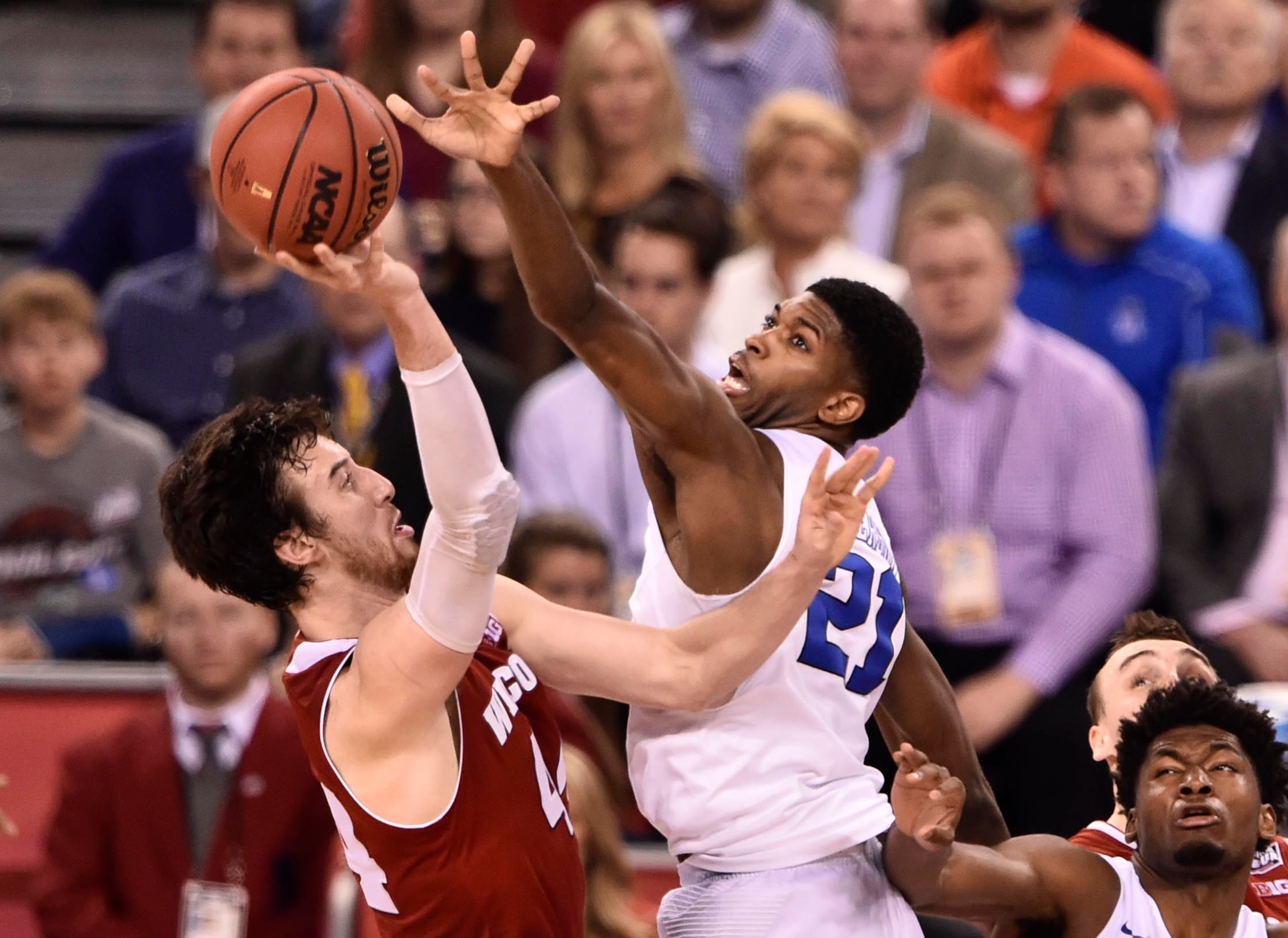
Floor: Three of the bigs near the top of this draft project to be good perimeter shooters at the very least, and so one name will come up again and again as a floor: Channing Frye.
Frye has made a nice living in the league as a stretch 4 or 5, so that's not a bad floor to have.
At Wisconsin, Frank Kaminsky showed off a lot more to his game than just shooting. He can put it on the floor and score from the blocks with a variety of post moves and counters. But will he be able to do all that in the NBA?
Ceiling: The scout believes Kaminsky can be more than just a shooter and called him "the most skilled guy" in the draft.
If that's the case, why isn't he considered a possibility for one of the first few picks? Age bias is probably in play some, as Kaminsky is 22 and spent four years in college. But he was a late bloomer and he was incredibly productive the past two years in leading Wisconsin to back-to-back Final Fours and almost winning a national title.
"His numbers are off the charts when you look at efficiency," the scout said. "His background is impeccable as far as what you want."
Kaminsky led the country in offensive rating (126.2) for players who used at least 28 percent of their team's possessions, according to kenpom.com. In fact, only two players since 2004 in that category in Ken Pomeroy's database have had a better offensive rating—Utah State's Spencer Nelson and Marquette's Travis Diener, both in 2005.
Advanced stats are used in the evaluation process more so than in the past, and that's helping Kaminsky's case.
"Dirk (Nowitzki) for ceiling," the scout said. "He's really good, man."
I love Kaminsky. And I believe he can be a really good pro, especially if he gets with the right team. I'm not quite ready to go Nowitzki for his ceiling, but what he did this past year at Wisconsin was Nowitzki-esque.
9. Stanley Johnson
2 of 10
Floor: Stanley Johnson has an NBA body already and the first name that came to my mind of a one-and-done wing who physically looked ready but struggled to adapt was Xavier Henry.
That scout agreed with that suggestion and also threw out Gerald Wilkins (brother of Dominique), who played in the league from 1985 to 1999.
Similar to those two, Johnson is a big wing (6'7" and 245 pounds) and a good athlete. His handle is solid for someone his size and his jump shot has always been questioned—"The way he shot the ball in his workouts really scared people," the scout said—but he shot a respectable 37.1 percent from distance as a freshman.
It's just questionable whether his scoring and shooting will carry over to the league.
Now if Wilkins is his floor, he wouldn't exactly be a lottery bust. Wilkins was a solid scoring wing despite being just a mediocre three-point shooter (31.6 percent for his career). He made 653 starts and averaged 13.0 points per game in 13 seasons in the league.
Ceiling: Wes Matthews came up for both Johnson and Justise Winslow.
The Matthews comparison makes sense because he's another big guard who really knows how to use his body. Matthews is able to post smaller guards, something that Johnson is also comfortable doing. But to become a Matthews type, Johnson would need to find some consistency with his jumper. Matthews is a 39.3 percent three-point shooter for his career.
Johnson is a guy who plays with a lot of confidence, so if he's able to figure out how to be a scorer in the league, he'll embrace being a primary scoring option.
Defense is made a priority at Arizona, and Johnson was not one of Arizona's best defenders but has the goods in his tool bag to be a lockdown defender and showed flashes of that in college. Best-case scenario, he's a solid two-way wing who is a starter on good teams for a long time in the league.
8. Mario Hezonja
3 of 10Floor: The video on Mario Hezonja looks a lot better than the numbers. He has great size (6'8") for a shooting guard and a beautiful stroke, but his numbers for FC Barcelona last season (5.9 points per game in 15.3 minutes) don't exactly scream star. He did shoot 38.4 percent and he is only 20.
Rudy Fernandez is the name that the scout threw out for Hezonja's floor. He has the jumper and the frame for the NBA, but worst-case scenario he never develops the feel for the game to be a big impact guy. The fact that he played only 15.3 minutes per game for FC Barcelona suggest his game isn't mature enough yet.
Ceiling: The first guy who came up with Hezonja was Klay Thompson.
"He doesn't have the grace and smoothness that Klay Thompson does, but he can shoot and he's a nasty, cocky b---h," the scout said. "He's strong, not super athletic but athletic."
That's quite the endorsement, but given more time, the scout suggested he could be similar to a slightly less athletic DeMarre Carroll and eventually settled on Caron Butler for Hezonja's upside.
Butler in his prime was an All-Star wing, so whoever lands Hezonja would take that.

7. Justise Winslow
4 of 10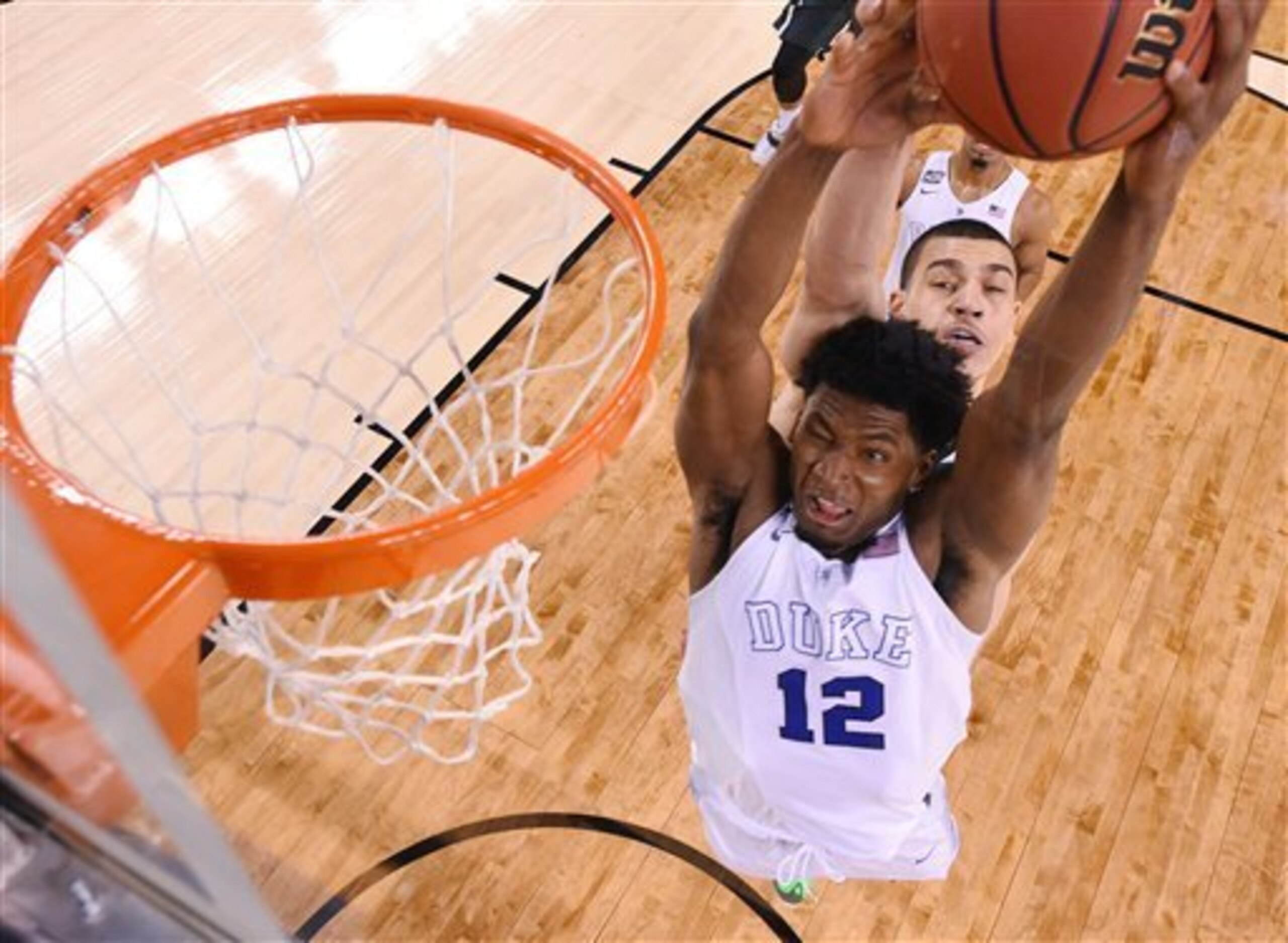
Floor: Justise Winslow is the type of player who will last a long time in the league even if he's not a star. His defense and how hard he plays should keep him around.
But the question mark coming into college was whether he could shoot the three, and despite the fact that he made 41.8 percent of his threes, that's still what scouts are questioning.
"There's like a lot of guys that are like 6'6", sort of athletic, guys who looked in college like they could become shooters but never really did," the scout said. "I'd say his floor is Quincy Pondexter."
Ceiling: The preposterous comp that has been thrown out is James Harden, and the scout nailed why that's not realistic.
"People keep saying Harden, but I just don't think he has that kind of handle," the scout said.
He also doesn't have that kind of imagination as a scorer or passer. But Winslow is a strong driver, an excellent defender who can guard multiple spots—he played the 3 and 4 at Duke—and there's hope he can be a solid shooter after shooting well at Duke.
"He's Ron Artest with a jump shot," the scout said.
Winslow even has some of the edge of Artest without giving off that crazy vibe.
"What I like about him is he's borderline dirty," the scout said. "He does some stuff that he should not do, but it's not out of frustration; it's because he wants to win."
6. Willie Cauley-Stein
5 of 10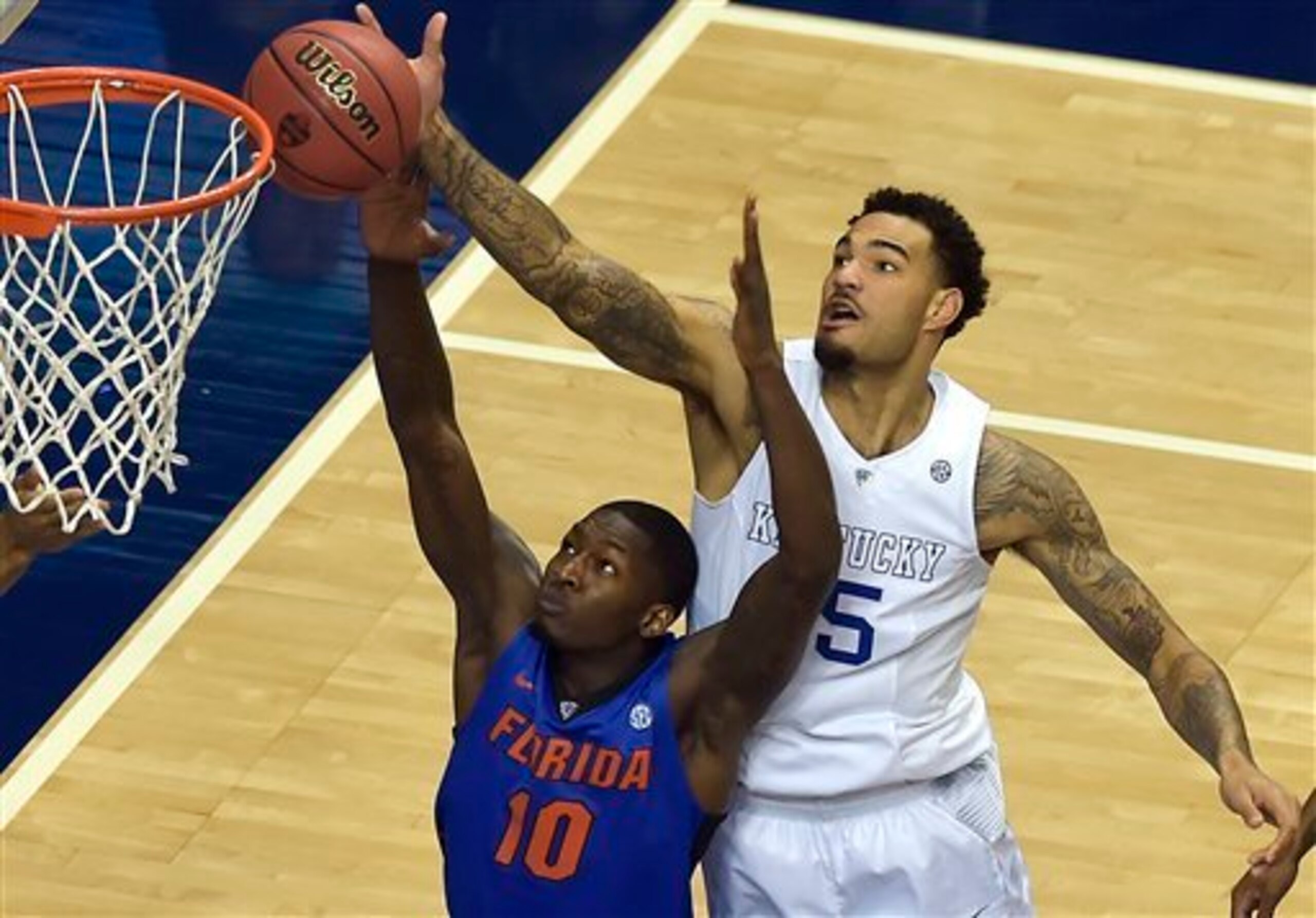
Floor: "Pretty intense downside," the scout said. "He doesn't really like basketball. Doesn't have any offensive skill."
There's no questioning Willie Cauley-Stein's athletic ability, but there have been other tall athletes without much skill on the offensive end who have failed. The scout mentioned Jan Vesely, Keon Clark and former NBA D-Leaguer Chris Johnson.
Vesely is the scariest comp. He was the sixth pick in the 2011 draft and lasted only three years in the league.
Ceiling: The guy who immediately comes to mind is Tyson Chandler. With some added weight, he'll have a similar frame. Like Chandler in his prime, Cauley-Stein can dominate a game with his defense and was a big reason why Kentucky had one of the most dominant defenses in the history of college basketball.
"He can blow up a pick-and-roll," the scout said.
That's because Cauley-Stein can guard all five positions, and Kentucky's coaches trusted him on the perimeter enough to allow him to switch onto guards against ball screens.
"I think his upside is Marcus Camby with better lateral quickness," the scout said.
Cauley-Stein was never much of a scorer at Kentucky, but he fits well as a roller in the pick-and-roll. The UK guards throw a lot of lobs and he was one of the best lob finishers in the country. His jumper is also improving and if he turns into a reliable shooter from the mid-range, he'll be more usable offensively than someone like DeAndre Jordan.
5. Kristaps Porzingis
6 of 10Floor: On looks alone, it's easy to imagine Kristaps Porzingis as the next Euro bust. If you were to go out in your neighborhood and find a 15-year-old on the cross-country team, imagine that kid but 7'1". That's his current frame.
Unlike some past busts, Porzingis has put up respectable numbers in the top Spanish league and the Eurocup, averaging 11.0 points in 50 games between the two last season for Baloncesto Sevilla. But he wasn't a great rebounder (4.6 per game in 21.4 minutes) and he has a hard time playing in the interior because of his frame.
So his downside, the scout said, is Channing Frye.
I also see some similarities with Andrea Bargnani, whose jumper and size has allowed him to put up good scoring numbers in the league (15.0 points per game for his career), but he's not a good defender and hasn't done enough to warrant going No. 1 in the 2006 NBA draft.
Ceiling: When you're 7'1", can shoot and move really well for your size, the ceiling tends to be pretty high.
"His upside is like Kevin Garnett," the scout said. "I know it sounds crazy, but that's his upside. He shoots threes, blocks shots, runs the floor, catches lobs. Who does that in the NBA?"
Obviously, Porzingis better get stronger to live up to a Garnett comp. He's only 19, but Garnett was already a freak at that age.
4. Emmanuel Mudiay
7 of 10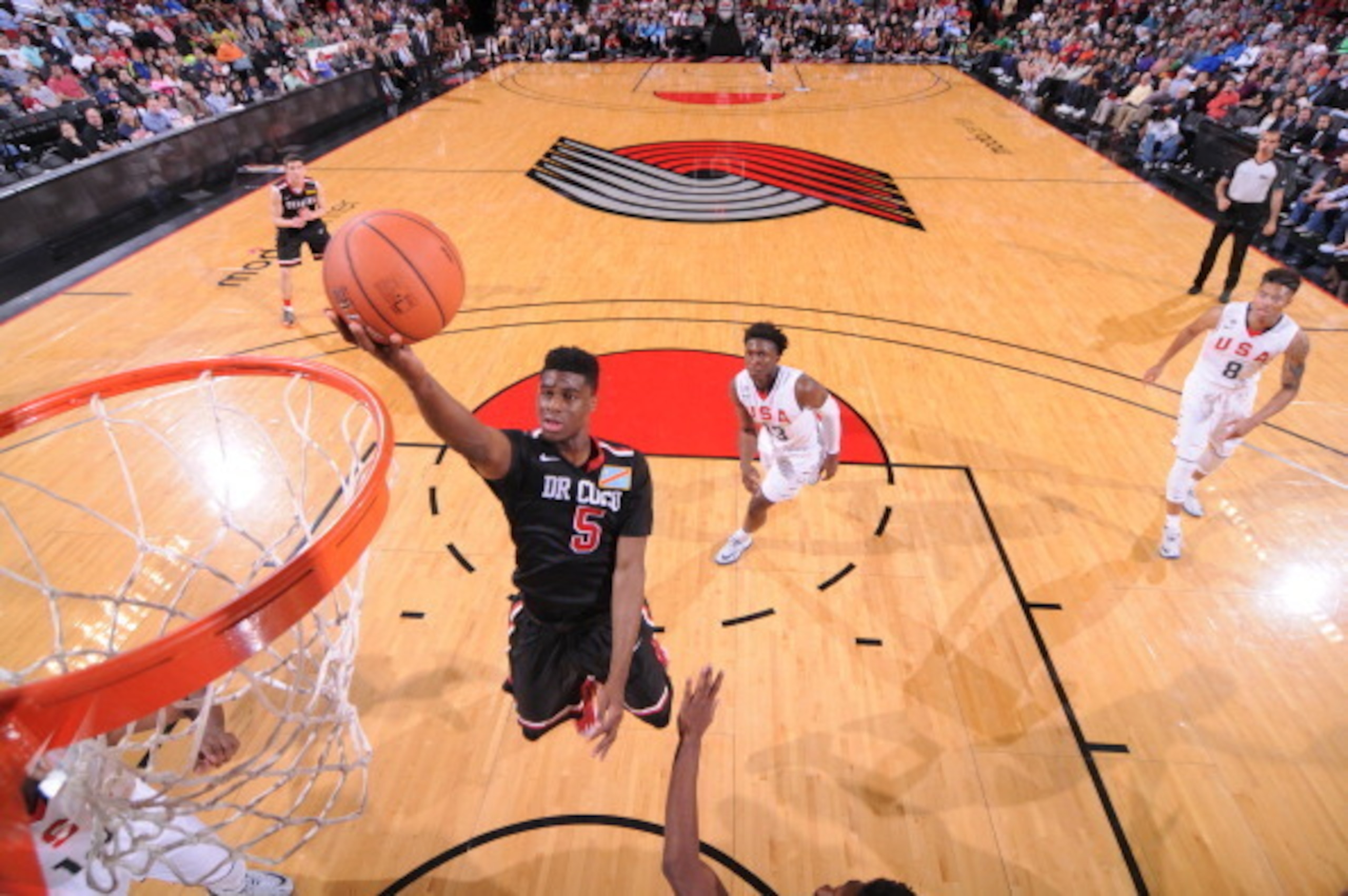
Floor: Mudiay choose the overseas route instead of going to SMU, and since he was only able to play 12 games in China because of injury, his draft stock is mostly built from what he did in high school.
The scout who talked to Bleacher Report for this piece was more weary of Mudiay than any player in this group of 10.
"This guy's floor is so f-----g low," the scout said. "What has this guy done, man? I'd say his floor—and this is generous—his floor is Tyreke Evans, a 6'5" guy who doesn't really play a position, doesn't shoot well and just sort of muscles his way to the basket against point guards but doesn't understand team concepts well."
Ceiling: Knicks fans, please step back from the ledge.
Mudiay is only 19 and he did put up some impressive numbers in China (18.0 PPG, 5.9 APG and 6.3 RPG), especially considering he was playing against pros and not college kids.
"I guess his upside you would have to say John Wall or Derrick Rose, but I just don't think he's that kind of athlete," the scout said.
This scout is obviously not part of the Mudiay fan club, but Mudiay wouldn't be considered one of the four best prospects in this draft if everyone felt that way.
He has a solid handle and is really good driving downhill. Whether he ends up more like an Evans or Rose/Wall will mostly depend on how he's able to handle the NBA game mentally. I've only seen Mudiay live for two days—at last year's Jordan Brand Classic—so it's hard to comment too much on his feel for the game. I did come away impressed with his physical attributes at that age, but I too am skeptical if he's as explosive as Wall and Rose.
3. D'Angelo Russell
8 of 10
Floor: The last point guard to come out of college basketball who, like Russell, dominated the game with his feel, his passing, his creativity and his scoring was former Michigan point guard Trey Burke.
The concerns with Burke were his athleticism and size. Russell is 6'5", so there aren't any size concerns, but his athleticism is the one thing in question coming into the league. Burke has put up solid numbers his first two years in the league, but it's questionable whether he's a starting-caliber point guard.
Russell's floor could see him as a blend between Burke and his teammate in Utah, Dante Exum. The jury is still out on both Jazz guards, but the early returns don't suggest either will be a star.
"The problem with Dante is he's long and smooth but not an elite athlete," the scout said.
Russell has a tendency to settle for jumpers, and that was the knock on Exum as a rookie. He rarely attacked the basket, attempting only 12.5 percent of his shots inside three feet, according to Basketball-Reference.com, and 63.5 percent of his attempts came beyond the arc.
Ceiling: Russell could not be coming into the league at a more perfect time. The value of a guard with the ability to create off the dribble, shoot and pass is incredibly high right now and has earned him some pretty lofty comparisons.
"He's like Kyrie Irving meets Steph Curry meets James Harden, really on the level of those guys," the scout said. "Not quite as good a shooter as Curry, not quite a good a scorer as Harden, not quite as good a ball-handler as Irving, but he can do all those things on an elite level to remind you of those guys and he's a better passer than any of those guys, who are all—except Irving—good passers."
The numbers back up those comps as well. For most of the season, some advanced stats put him in a club of freshman guards from the past 10 years that included only Harden and Curry. What you don't see from most college guards that Russell could do, similar to Harden and Curry, is free himself for jumpers off the dribble. He shot 41.1 percent from deep and 53.2 percent of those threes were unassisted, according to Hoop-Math.com.
Russell is a long shot to go No. 1, but the scout said that he would take him with the first pick. If he turns out to be Irving meets Curry meets Harden, then it's hard to imagine anyone in this draft will turn out to be a better pro.
2. Jahlil Okafor
9 of 10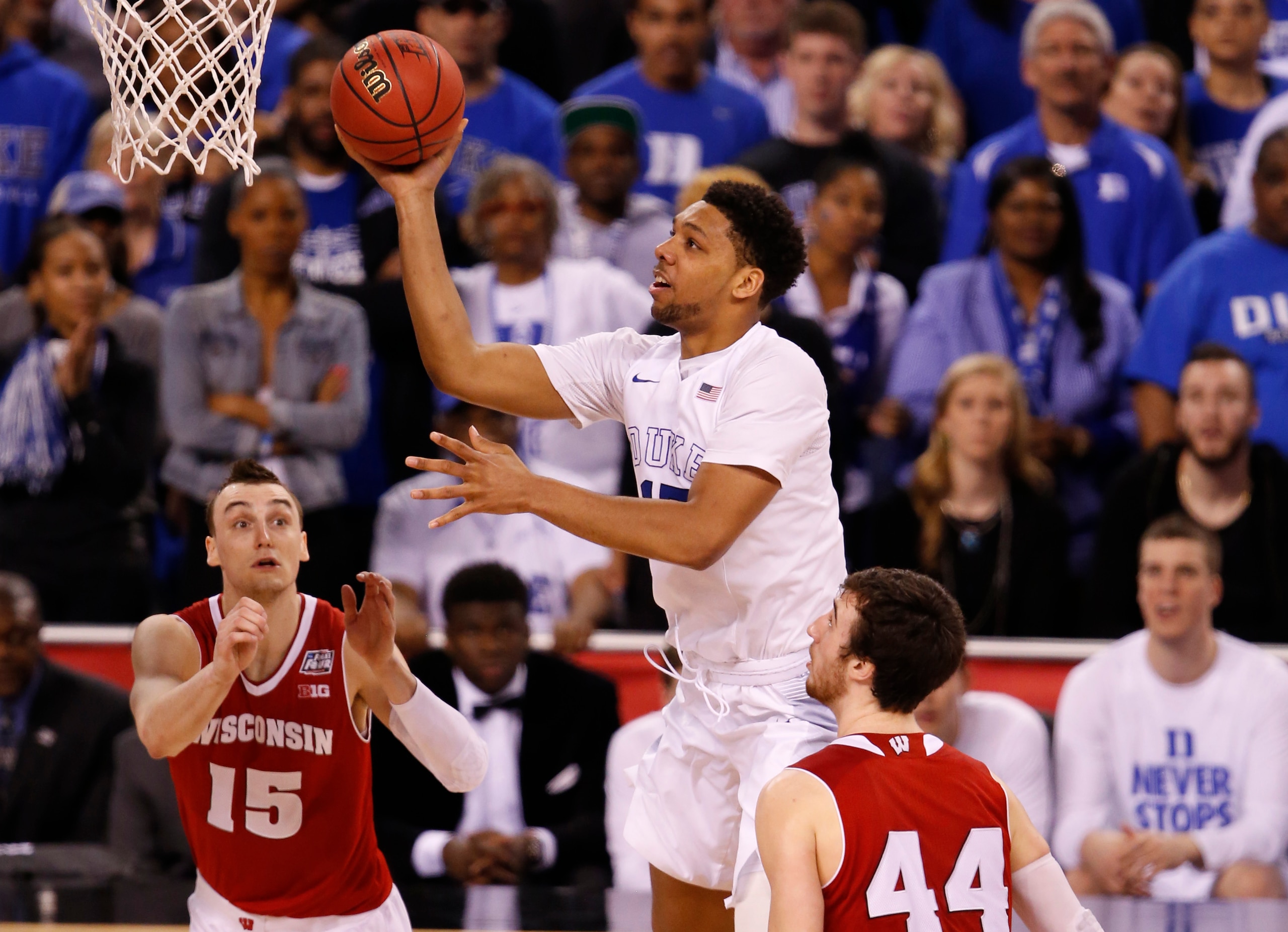
Floor: The flak Jahlil Okafor has caught for his defense is probably a little unfair. He's not a complete bum on the defensive end, and it's worth noting that Duke's defense was elite in the NCAA tournament. So he can be part of a solid defense. You just have to figure out schemes that hide his deficiencies, which Duke's coaches were able to do.
But the two big areas where Okafor is not at Karl Anthony-Towns' level are defense and shooting. Still, Okafor has an elite skill (low-post scoring), and his floor is probably the highest in this draft.
"His downside is an Al Jefferson type," the scout said.
That's not too big of a risk. Jefferson has been a solid scorer throughout his career (17.0 points per game), although he has never made it out of the first round of the playoffs.
Most believe that Okafor will be able to score in the NBA, but he did have some trouble scoring over length. He scored only six points in the tournament against Utah's Jakob Poeltl and went 4-of-10 from the field against Gonzaga's twin towers in the Elite Eight.
"He's a tad undersized for the center position," the scout said. "When he played against Mike Tobey at UVA or practice against (Marshall) Plumlee, you could see that elite length bothers him a little bit. He can figure it out. If you move him to the 4, it clogs the paint area."
Boston's Jared Sullinger had similar issues at Ohio State, and he's helped himself in the league by adding a perimeter jumper. That's something scouts are skeptical that Okafor can add. But even if he's just Al Jefferson, who does little else than score on the blocks and rebound, he'll still turn out to be a solid pro.
Ceiling: It's difficult to give player comparisons to Okafor because no one like him has come into the league in a long time. His post moves and feel for the game with his back to the basket are extremely advanced.
"His upside is an Alonzo Mourning type," the scout said.
That's a pretty high upside, considering Mourning made seven All-Star teams and is in the Hall of Fame. But there's no chance Okafor has the defensive upside of Mourning—he was the NBA Defensive Player of the Year twice—and Okafor's offensive game is advanced enough already that you could probably reach a bit higher for his offensive ceiling.
Like Hakeem Olajuwon.
Olajuwon is probably the last low-post scorer who had the kind of imagination in the post as Okafor. It was poetry to watch Olajuwon work on the blocks. The variety of spins and counters that Okafor already has in his arsenal suggest that he could be a once-in-a-generation kind of back-to-the-basket scorer.
The issue is that the NBA is going away from featuring those types of big men. But style changes are often cyclical, and if a team has someone with Olajuwon potential to score efficiently on the blocks, that team should be willing to be different.
So best-case scenario, Okafor turns into a serviceable defender and a Hall of Fame scorer who is a franchise player for a long time.
1. Karl Anthony-Towns
10 of 10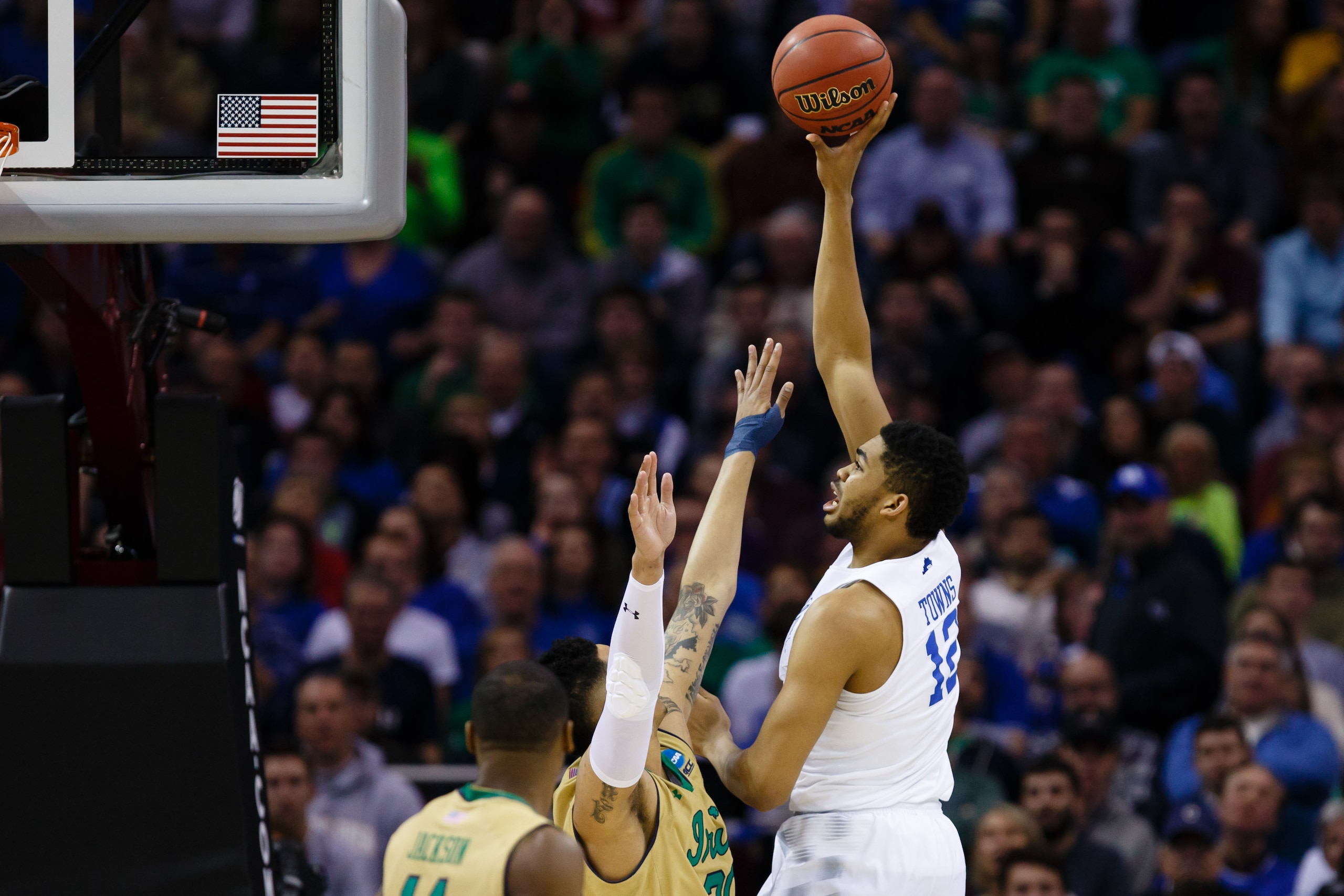
Floor: Karl Anthony-Towns is the favorite to be the No. 1 pick because of his versatility. He can shoot, he can score with his back to the basket, he can pass and he can defend. The rapid pace with which he improved during his freshman year at Kentucky has made failure seem very unlikely.
"He probably improved more than anybody in college basketball over the last year in terms of growing his body, his work ethic and he's an A-plus kid in terms of character," the scout said.
So whether he lives up to the hype or not, at the very least his floor is a solid pro, and a familiar name came up for the worst-case scenario: Channing Frye.
The ability Towns showed off on the blocks—go back and watch his 25 points against Notre Dame in the Elite Eight for proof—make it hard to believe he'd settle into a Frye type where he's more of a specialist.
But if that were to happen, it could be because of injuries, and that's one of the only (minor) concerns with him.
"The one thing you hear about him that might be an issue are his feet," the scout said. "I know Nike had to get him special shoes, but he played the whole year. He was healthy the whole year."
Ceiling: Towns wasn't consistent as a scorer at Kentucky, but part of that had to do with the talent around him and limited minutes compared to other elite big men. He did average 20.0 points per 40.0 minutes.
The flashes of scoring potential and how he's able to score bring to mind one of the NBA's current top low-post scorers.
"Best-case scenario he's a better version of LaMarcus Aldridge," the scout said. "I think he has a little more range on his shot. ... The thing about Towns is the three-point shooting. He didn't get to do it at Kentucky. He can score on the blocks some, but then he can really shoot."
His shot-blocking and defensive abilities suggest another comparison might be good for his ceiling as a defender, but a study from a few years ago actually showed Aldridge as one of the better low-post defenders in the league.
As Towns gets stronger—"He is still growing into his body," the scout said—he has the quickness and length to be a dominant defender in the league. Put it all together, and he could be one of the best two-way big men in the league. And that's why he passed Okafor as the projected No. 1 prospect in the draft.
C.J. Moore covers college basketball for Bleacher Report. You can follow him on Twitter @CJMooreBR.



.jpg?w=2560 "Chiefs, Steelers Eye WR Trades")



.jpg?w=2560 "Latest Peyton-Colts Rumors")