The 2014 NBA draft was one of the most heralded in recent memory. Phenoms Andrew Wiggins, Jabari Parker and Joel Embiid packed insane potential at the top, but the lottery was littered with depth.
From Oklahoma State standout Marcus Smart to proven collegiate commodities like Doug McDermott, intrigue lined the draft's first 14 picks.
However, as is generally the case, several high-profile lottery selections failed to live up to expectations during their rookie years.
TOP NEWS

J-Dub Suffers Gruesome Injury
Melo's Quote on Confidence 😎
Mazzulla Weighs In on Brown-Tatum Drama
Whether struggles were precipitated by injuries, schematic unfamiliarity or slow adjustments to the professional game, a handful of celebrated prospects faltered.
For the purposes of this examination, qualified players had to be selected in the 2014 lottery, fail to qualify for an All-Rookie team and appear in at least 30 games during the 2014-15 season. That means youngsters like Julius Randle and Noah Vonleh missed the cut.
Aaron Gordon, SF/PF, Orlando Magic
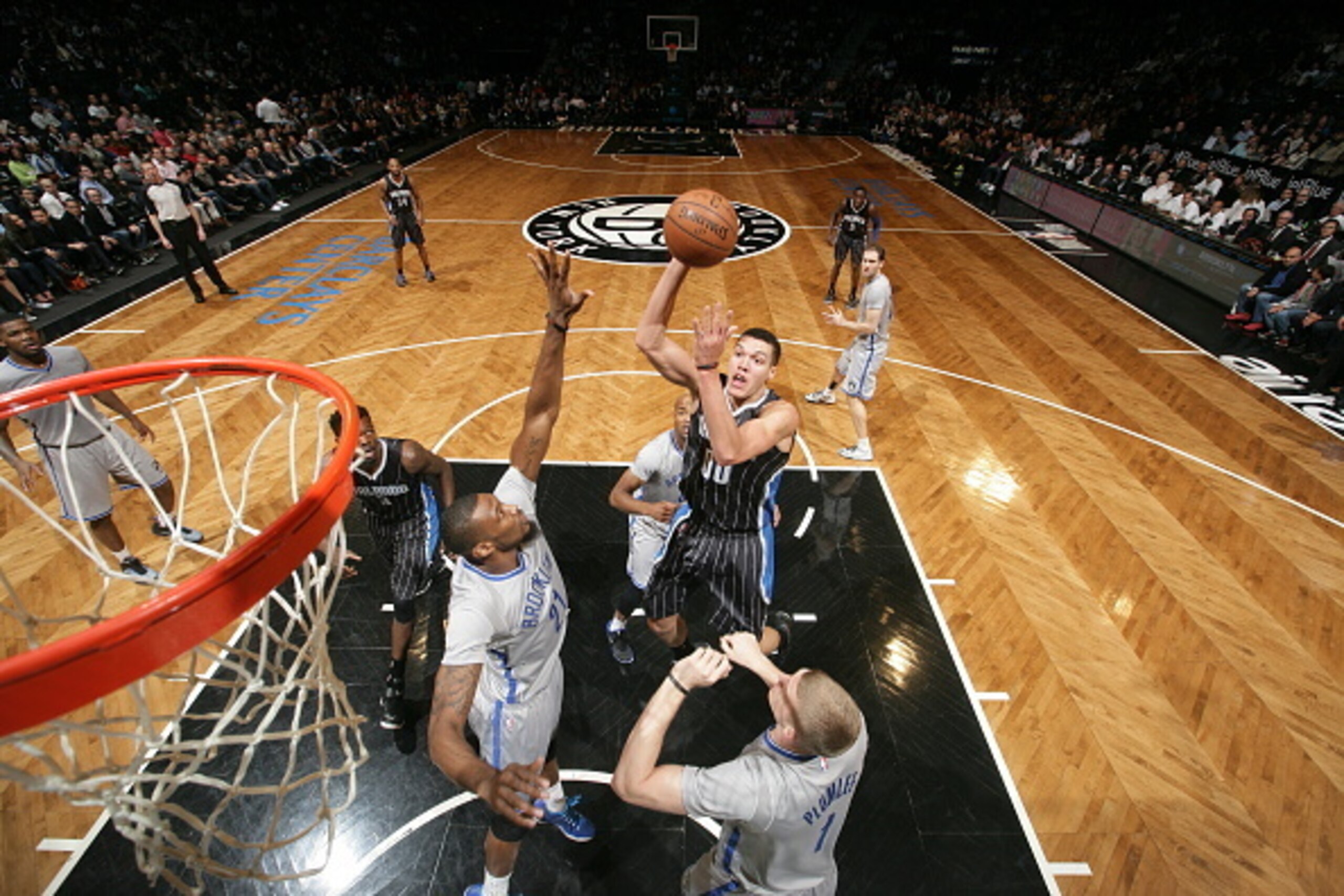
The 2014 draft's No. 4 overall pick was limited to 47 appearances (eight starts) due to a fractured bone on the outside of his left foot, but his late-season efforts provided a glimpse of what he can offer when the 2015-16 season gets underway.
Although Aaron Gordon finished the season averaging 5.2 points and 3.6 rebounds, he came on strong in April when interim head coach James Borrego allotted him 25.8 minutes per game. During that span, Gordon's athleticism shined through as he averaged 6.1 points and 5.9 rebounds.
"On the boards, he goes and gets rebounds that most guys in this league can't get," Borrego said, according to NBA.com's John Denton. "He has the athleticism and the physicality. And offensively we're just seeing a kid growing every single game. He's more comfortable, he knows his spots and where we want him. He's just a joy to watch with his development right before our eyes."
Gordon's acceleration, lateral agility and leaping ability will buoy his efforts on defense and the glass for years to come, but in order to shed his status as an offensive liability, the 6'9'' tweener needs to expand his range.
Last season, Gordon shot 27.1 percent from three, with 23.1 percent of his total shots coming from beyond the arc. That's a half-decent starting point, but Gordon needs to push that conversion rate toward 32-33 percent in order to really stretch defenses and expand his arsenal in threatening ways.

But if he retools his shot, the Arizona product should be in line for a bounce-back season.
"It was just about breaking it down and rebuilding it," Gordon said, per Denton. "It was just learning the nuances of it and learning the science behind the shot. Once I did that and figured out how I needed to shoot, I was about to get a good balance between mechanics and rhythm."
If Gordon can reform his stroke and eventually gain confidence in his ability to break defenders down off the dribble, he'll start living up to his billing as a top-five selection.
Dante Exum, PG, Utah Jazz

On defense, Dante Exum blew expectations out of the water. The Australian floor general could often be found disrupting sets by flinging his 6'9'' wingspan into passing lanes and using his burst to discourage penetration.
"When opposing guards try to make a move past Exum on the perimeter, they have to cover significantly more ground to get around his 6'9" wingspan," Bleacher Report's Andy Bailey wrote. "And again, his lateral quickness makes that even more daunting."
Just look at the impact Exum had on his team's defensive efficiency:
| Exum On Court | 102.3 | 99.0 | 3.3 |
| Exum Off Court | 102.7 | 104.6 | -1.8 |
That's a sizable gulf that shouldn't go unnoticed.
But as the chart also indicates, Exum regularly failed to make positive contributions on offense. One of three rookies to appear in all 82 games, Exum averaged 4.8 points, 2.4 assists and 1.4 turnovers while shooting 34.9 percent from the field and 31.8 percent from three.
So attention now shifts to the 19-year-old's scoring capabilities. While Exum was clear that he "tried hard not to force things last year," according to the Salt Lake Tribune's Tony Jones, he needs to find versatile avenues to put the ball in the basket.
In 2014-15, 63.5 percent of Exum's total shots came from three, which points to his relative passivity. However, length and speed are Exum's greatest natural attributes, ones he should focus on using more during his sophomore season.
Despite attempting just 12.5 percent of his shots inside of three feet last year, Exum finished those looks at a 73.1 percent clip. On top of that, he also finished 57.1 percent of his shots against "very tight" defense, according to NBA.com's SportVU data. With Exum's raw physical attributes allowing him to finish over and around defenders, he should be keen on attacking when Year 2 gets underway.
"He's definitely a big piece to the team, and for us, his progression is huge; and I think he knows that," Utah Jazz forward Trevor Booker said, via Jones. "We see him in the gym, putting work in, and we see that he's dedicated. If he can progress, we can do big things next year."
Doug McDermott, SF, Chicago Bulls

Doug McDermott entered the 2014 NBA draft as arguably one of the crop's safer prospects. A rare four-year collegiate stud who was selected as a First-Team All-American during his sophomore, junior and senior seasons, McBuckets figured to kick off his pro career by offering stable scoring off the pine.
But he never got a chance to showcase his sweet shooting ability. During a rookie season that was doomed by a small meniscus tear in his right knee and relegation to former head coach Tom Thibodeau's doghouse, McDermott couldn't get on the floor for extended stretches.
Over the course of 36 appearances, McDermott played an average of 8.6 minutes, which prevented him from ever establishing a rhythm from three. Only 31.7 percent of his treys found nylon, with 12 of his 13 total makes coming via catch-and-shoot opportunities, according to SportVU.
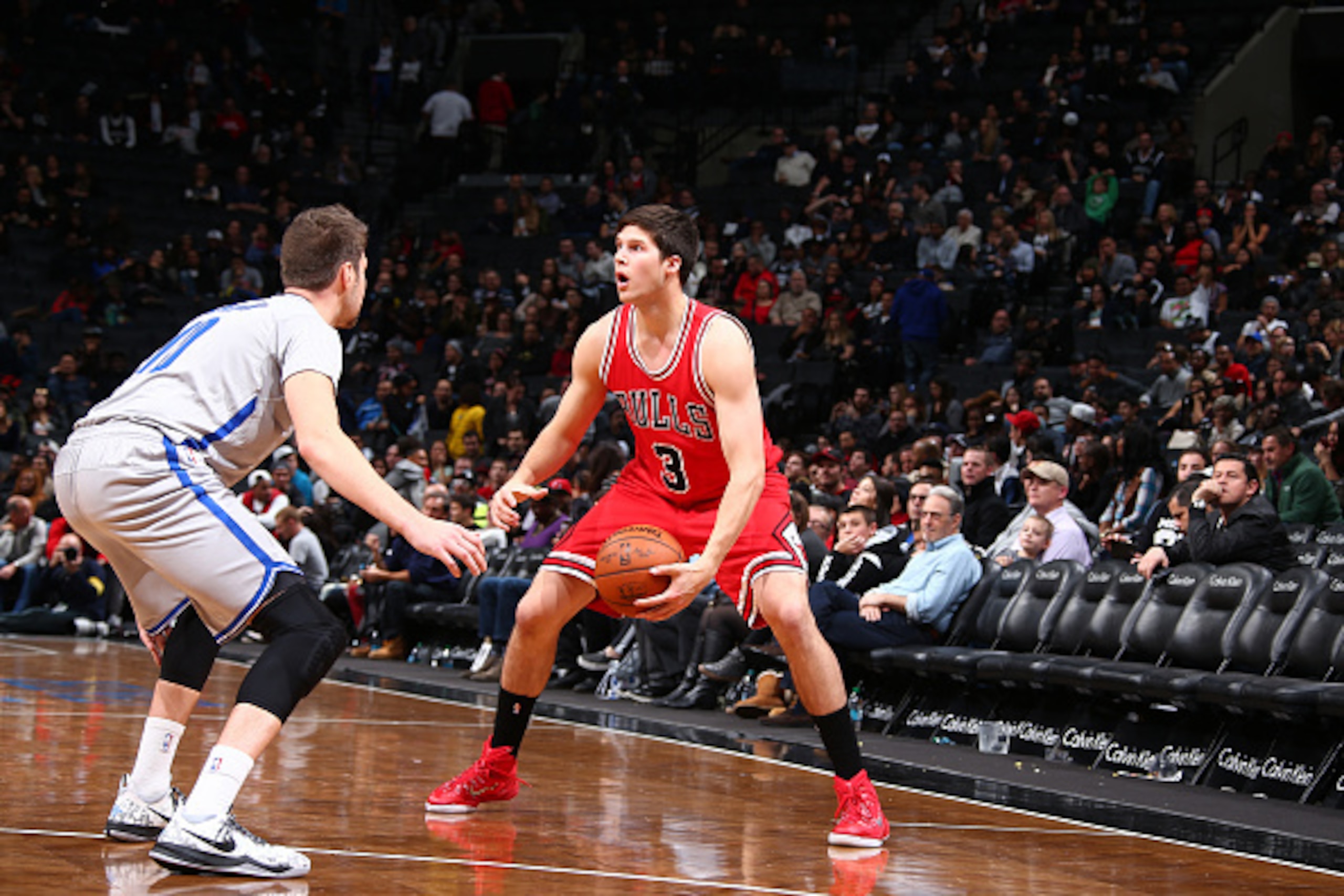
With a rough rookie campaign behind him, McDermott's stock should trend up now that former Iowa State head coach Fred Hoiberg has officially taken Thibodeau's place on the bench.
We know McDermott can light it up from deep, and a return to the rotation should highlight McDermott's ability to drop buckets on a consistent basis. Plus, with swingman Mike Dunleavy slated to hit the open market as an unrestricted free agent this summer, a big role may soon be up for grabs.
The other phase of McDermott's adjustment will come on defense.
"You have to guard on the NBA level; everyone is good," he said, according to the Chicago Tribune's Teddy Greenstein. "You're not able to sag off too many guys. They can all shoot, they can all dribble, they're all athletic. I am still learning."
Assuming Hoiberg is more receptive to playing the Ames High School graduate, McDermott should see a bump in his productivity.

The Sacramento Kings had pressing needs at point guard and power forward entering last summer's draft, but that didn't stop them from addressing deficiencies on the perimeter.
After ranking 27th in three-point percentage (33.3) and 28th in made threes (491) during the 2013-14 season, the Kings spent the eighth pick on Michigan sharpshooter Nik Stauskas.
And while Stauskas and his 44.1 percent collegiate knockdown rate from distance figured to be a natural fit for a team devoid of long-range shooting savants, his rookie year was consumed by transitional uncertainty.
First, head coach Mike Malone was fired. Then Tyrone Corbin stepped in as the interim shot-caller before the franchise hired George Karl right around the All-Star break.
And while Stauskas did rediscover his stroke late in the season, he wasn't able to display the wide range of scoring tools that made him a coveted option in the middle of the lottery.
| November | 2.7 | 34.9% | 24.1% |
| December | 4.5 | 35.9% | 28.1% |
| January | 3.8 | 38.5% | 33.3% |
| February | 1.6 | 11.1% | 12.5% |
| March | 7.4 | 45.5% | 47.1% |
| April | 5.3 | 36.6% | 34.8% |
"With having the change of coaches, my role and my minutes and what I'm asked to do is changed (sic) every single time we have a different coach, so it's been tough to adjust at times with staying ready and not knowing when I'm going to be out there or if I'm going to be out there at all," Stauskas told NBA.com's Scott Howard-Cooper in March.
While he's often pigeonholed as a strictly catch-and-shoot weapon, Sauce Castillo is adept at creating his own shot off a dribble or two. But as a rookie, the Canadian 2-guard couldn't hit catch-and-shoot (34.4 percent) or pull-up jumpers (33.7 percent) at rates consistent with the ones be boasted with the Maize and Blue.
Stauskas fits the mold of a rotational shooter in modern pace-and-space offenses, but it will take some improvement on his end and a bit of creativity on Sacramento's part to maximize his skill set and snap him out of a funk.
All stats are courtesy of Basketball-Reference.com and NBA.com unless noted otherwise.
Alec Nathan covers the NBA for Bleacher Report. Follow him on Twitter: @AlecBNathan.






.jpg?w=2560 "Latest Peyton-Colts Rumors")