San Francisco 49ers: Justin Smith Versus Patrick Willis in the Hall of Fame
For San Francisco 49ers fans, the upside of the greatest single-season talent loss since the 2003 season is the possibility of seeing two of their longtime favorites enshrined in Canton in five years as part of the Hall of Fame class of 2020.
With Justin Smith recently joining Patrick Willis in retirement, two major forces of the Vic Fangio era could find themselves simultaneously enshrined. It would be a fitting tribute to the two, who played together from 2008 through 2014 and anchored four of the best defenses in franchise history, and both are more than reasonable choices for the Hall.
Neither of them, however, are surefire first-ballot locks. Both of them have minor black marks, which might cause voters to look another way, for very different reasons.
.jpg?w=2560 "Seahawks Chiefs Football")



Willis’ career essentially lasted just seven-and-a-half seasons—fantastic seasons, which saw him at the top of his position, but a short career by Hall of Fame standards. That short career would put him in the bottom 20 percent of Hall of Famers when it comes to career length, and it looks worse when you only compare him to modern-era players.
For Hall of Famers who started their career after the formation of the AFL in 1960, only Kellen Winslow and Gale Sayers appeared in less than Willis’ 112 games. That will be held against him.
Smith doesn’t have the same longevity issues. He put together a 14-year career, appearing in 217 games for San Francisco and Cincinnati, playing well into his 30s. His issue is one of a relatively short peak, all things considered.
Smith was absolutely fantastic in 2011, earning All-Pro nods at both defensive tackle and defensive end in one of the single-most impressive defensive seasons in NFL history. His Hall of Fame highlight reel begins with that season and images of him chasing Jeremy Maclin 20 yards downfield to force a fumble.
He had other great seasons in that window from 2009 through 2013, when he was arguably the best in the NFL at his position—at least, at the 3-4 defensive end slot.
However, he didn’t have that level of success until he reached San Francisco. He was by no means a bad player in Cincinnati, finishing with five or more sacks in six of his seven seasons, but he was slightly miscast as a 4-3 defensive end.
He was known as a blue-collar, hard worker type who had started all but one game, but he was certainly not a superstar. Contemporary reports wondered if he’d be moved to outside linebacker; not something you’d contemplate if you knew you were getting the 2011 version of Smith.

In short, had Smith played his entire career like he did in San Francisco, he would have been a shoo-in for the Hall and arguing about where he falls in the top 10 defensive linemen of all time.
Had he played his entire career like he did in Cincinnati, he’d be a strong candidate for a Ring of Honor or other team-based recognition and a well-respected and fondly remembered player, but not really a candidate for legendary status. Some voters might wonder how much of his time in San Francisco was a product of being on loaded defenses and dock him for his relative lack of dominance in Cincinnati.
In the end, I think the arguments against Willis and Smith aren’t as strong as the arguments for them.
Yes, Willis’ career was short, but he’s not a Terrell Davis-esque flash; seven years is a long time to be dominant. Yes, it took Smith eight years or so before he developed into a great player as opposed to a very good one, but he’s not a Vinny Testaverde-esque compiler; seven great seasons and seven good ones should be enough to get you into the Hall, even if they’re arranged oddly chronologically.
They remain as minor black marks on their resumes, however, and they won’t present as clear-cut cases as the greatest in the NFL history. That’s fine; very few people should be waved into the Hall without serious consideration, and the 73 players who have been elected in their first year of eligibility should be a tough group to crack.
It does leave potential, however, for them to hurt each other’s chances to get in. Voters might be reluctant to vote in two players from the same defense in the same season, especially considering they never won a Super Bowl. This is similar to the wide receiver logjam which kept Cris Carter, Tim Brown and Andre Reed stealing votes from one another for years before any of them could break through.
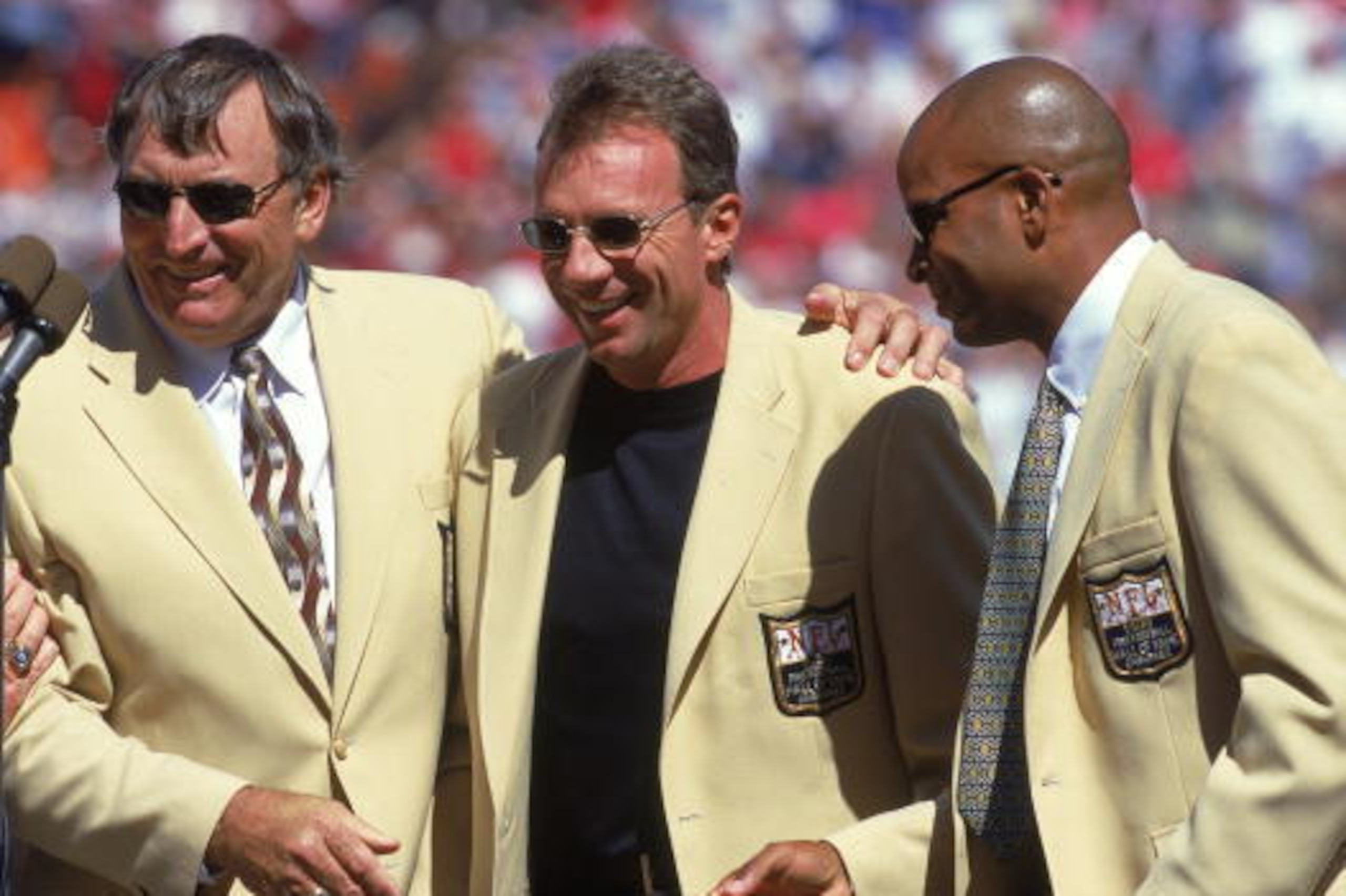
While certainly teammates can be elected—see Joe Montana and Ronnie Lott in 2000, for instance—voters might, consciously or not, try to space them out.
So, let’s say for argument’s sake that Willis and Smith are battling for one Hall of Fame slot. Who gets in first?
To answer that, I’m turning to baseball. Specifically, I enjoy using Bill James’ Keltner List, which he developed in the mid-1990s to evaluate players who merited consideration for the Hall of Fame.
It’s not a statistical analysis; rather, it’s a series of relatively simple questions. It’s not a raw metric where you’re trying to get "yes" votes on, say, eight questions to meet Hall of Fame standards. It’s a thought exercise more than anything else.
Let’s look at the 14 questions that fit the Pro Football Hall of Fame’s standards and see whether Willis or Smith comes out better.
1. Was he ever regarded as the best player in football? Did anybody, while he was active, ever suggest he was the best player in football?
Very few non-quarterbacks are ever considered the best player in football, and non-offensive players even more rarely. Neither ever received a vote for MVP. There were a couple of seasons when both players would have been in the discussion—Smith’s 2011 season and Willis’ 2009 campaign stand out—but neither was really ever seriously considered the end-all of end-all players in the league.
Advantage: Tie
2. Was he the best player on his team?

Depends on the year, and the team. It’s hard to say Smith was ever the best player on the Bengals—they had Corey Dillon at the start of his career, in his prime, and Willie Anderson was a great offensive tackle. Smith did get the franchise tag after the 2006 season, but it’s hard to say he was ever the absolute best Bengal in any given season.
I’d put Chad Johnson above him in those years as well, and you could make arguments for Carson Palmer, T.J. Houshmandzadeh and Rudi Johnson. He was the best defensive player for most of his time in Cincinnati, but only in Smith’s rookie season was that an above-average defense.
His time with the 49ers is a different story.
Willis came in and was, by leaps and bounds, the best player on Mike Nolan’s bad 2007 team and arguably kept that title through the pre-Fangio era, with Smith right on his heels as second fiddle. Then Smith had his best season in 2011 and took the crown for at least one year, with Willis still playing well but missing time. The picture becomes murkier post 2011, as the team got more and more talented.
Players such as NaVorro Bowman, Aldon Smith and Colin Kaepernick can be argued as being better than either Willis or Smith were in specific years. It was more of a leadership by committee rather than one single player shining out. Both Smith and Willis suffered through injuries over that period too, keeping them from being clearly dominant.
In the seven years that Willis and Smith were on the same team, they were one-two in terms of being the best 49ers, and no one else was in the running. You could make an argument for either player, but I’ll take Willis’ four-to-one All-Pro lead and six-to-five Pro Bowl lead to give him the nod. The answer for both players is yes, but it’s a bigger yes for Willis than Smith.
Advantage: Willis
3. Was he the best player in football at his position?
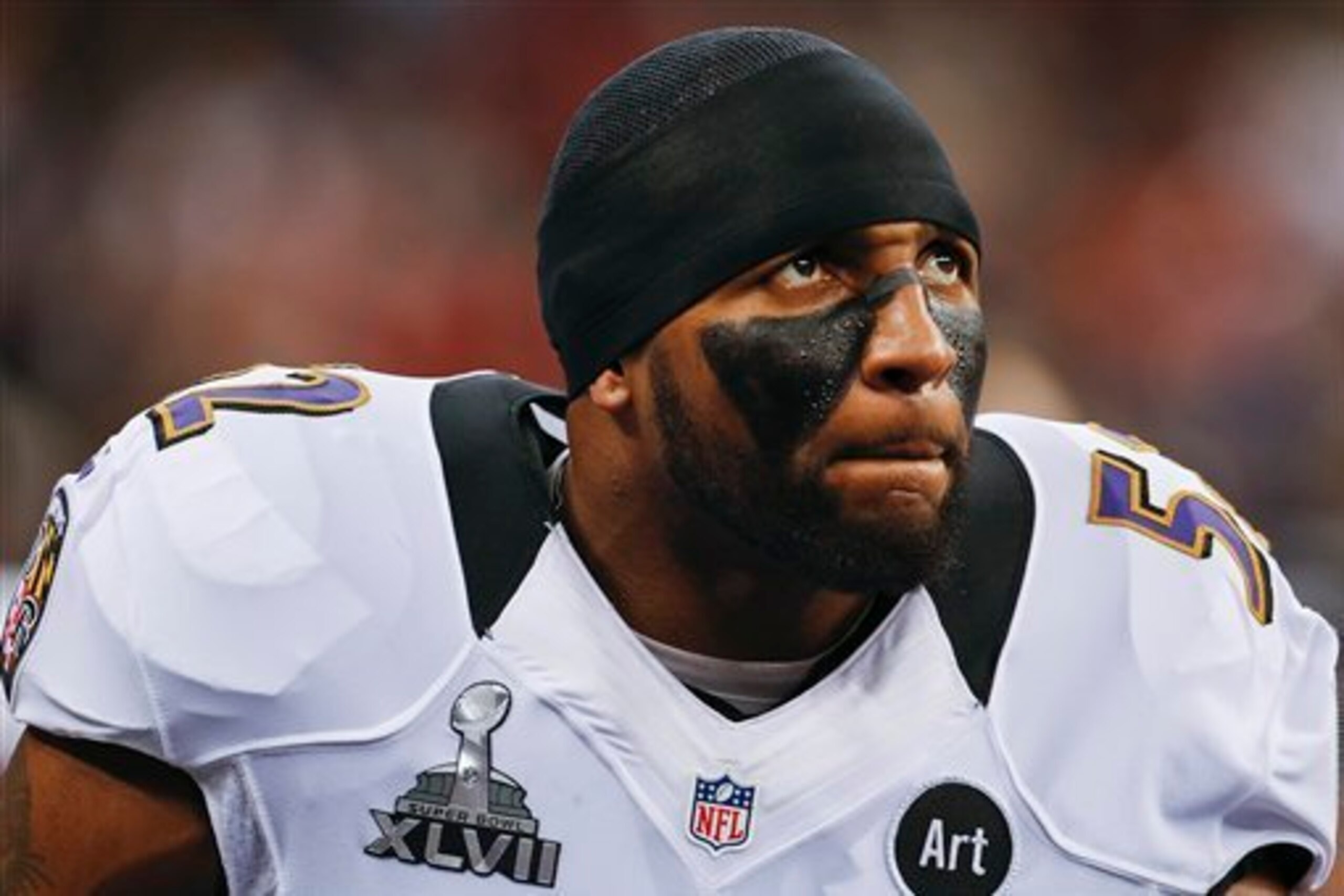
For Willis, the answer is an unqualified yes. Some players were able to meet or beat him in individual seasons, but for the period from 2007 through 2014, no one put up as consistently great performances as Willis did.
The closest linebackers to him would be either DeMarcus Ware or James Harrison, but both of them are outside linebackers. If you’re looking at inside linebackers in that time period, you’re looking at end-of-career Ray Lewis or David Harris, and Willis is head and shoulders above either.
For Smith, the answer’s more complicated. If you just look at his peak—from 2009 through 2013—the question is whether you compare him to all defensive ends or just 3-4 defensive ends. In that prime period, Julius Peppers was wreaking havoc for Carolina and Chicago, with Peppers and Smith making first-team All-Pro once.
Really, though, Peppers is an edge-rusher, and Smith’s an interior lineman. You can remove Peppers from the discussion and include Haloti Ngata, who is more of a defensive tackle. It’s a close competition, though Smith is definitely in the discussion.
When you get into longevity, however, and look at Smith’s entire career, it becomes simpler. Over his entire 14-year career, Smith started 217 games and was never a below-average player. No one can match that sort of production over that time period, with Kevin Williams or Jared Allen coming the closest. Smith’s an iron man, able to produce year in and year out. In those terms, he was the best player at his position.
So for Willis, it’s an unqualified yes, and for Smith it’s a highly qualified yes. That’s good for both players, but it's better for Willis.
Advantage: Willis
4. Did he have an impact on a number of playoff races?
Both Willis and Smith were valuable contributors on the 49ers' 2011 through 2013 playoff squads, so they tie there. Smith, however, gets a slight edge from his time in Cincinnati; he put up six sacks and 45 tackles for the ’05 Bengals squad that lost in the Wild Card Round. It’s the slightest of edges, but Smith’s longevity gives him a lead here.
Advantage: Smith
5. Was he a good enough player that he could continue to play regularly after his prime?
This is hard to answer, as neither player really dropped down too far from their prime years in San Francisco. However Smith put up two great and three very good seasons after turning 30 years old, while Willis never played a snap after his 30th birthday. Smith’s longevity wins out here.
Advantage: Smith
6. Is he the very best player in football history who is not in the Hall of Fame?
No, to both players. Players such as Marvin Harrison are still waiting to get in, not to mention the load of great players who are coming up in the next few seasons, such as Brett Favre or Ray Lewis, or the greats still playing such as Peyton Manning and Tom Brady.
Advantage: Tie
7. Are most players who have comparable career statistics in the Hall of Fame?
This is a tough question to answer, because 3-4 defensive ends do not, in general, rack up very many statistics, and tackle numbers are notoriously unreliable, not to mention the smaller sample size coming from being forced to compare individual positions in football; baseball has a much easier time comparing across positions.
Using Pro-Football-Reference.com’s Approximate Value calculator might be the best tool. Smith put up 135 AV points over his career, while Willis had 107. We have to adjust somewhat for the fact that Smith played 14 seasons and Willis played only eight, but the raw totals should tell us something.
Among eligible players within 10 percent of Smith’s 135 AV points, 57 are in the Hall of Fame, and 41 are not. Fourteen of those not in the Hall played more games than Smith did, though only four have more than 25 games more. So, I’d say somewhere between 60 and 65 percent of players with similar production to Smith made it to the Hall of Fame. That’s a positive.
Among eligible players within 10 percent of Willis’ 107 AV points, 28 are in the Hall of Fame, and 140 are not, so at first blush, that’s much worse than Smith’s total. However, Willis only played in 112 games, and the vast majority of players in the “not” category played significantly more—an average of 185 games, in fact.
Of the “nots,” only Daunte Culpepper and Lydell Mitchell played in fewer than 112 games, and Trent Green, Bobby Boyd and Kurt Warner were all under 125 games. Most players who put up numbers as quickly as Willis did are in the Hall of Fame.
That extends to other stats, as well.
Willis’ seven Pro Bowls put him in an elite category, as only 29 eligible players have had seven or more Pro Bowls and still are not in the Hall of Fame, with most of them playing in smaller leagues where more people made the Pro Bowl; 11 of those players started their careers before the AFL-NFL merger. Smith’s five Pro Bowls are nothing to laugh at, but it does add 133 more eligible players who are not yet in.
Advantage: Willis
8. Do the players’ numbers meet Hall of Fame standards?
Smith fits right in when you’re looking at 3-4 defensive ends. He sits in the top 50 players of all time when it comes to sacks, with 87, and games started, with 217. However, among the 25 defensive linemen inducted whose careers started post 1960, Smith’s one All-Pro nomination would be tied for second-worst, and his five Pro Bowls would be tied for fourth-worst.
His 14 seasons as a starter, however, match up very well—the average Hall of Fame lineman started only 12 seasons—and his approximate-value numbers fall right in the middle. He’d be an average Hall of Fame lineman in most statistical categories.
Willis suffers a little more, as he’s not in the top 100 in any traditional statistical-category compilation. His seven Pro Bowl nods would be the fourth-least in that group, and his seven seasons as a full-time starter would be the least, bar none—even Dick Butkus, the current bottom-marker, put up nine years.
None of them played as few games as Willis did, either. Willis’ career follows a very different shape than other Hall of Famers at his position.
Advantage: Smith
9. Is there any evidence to suggest that the player was significantly better or worse than is suggested by his statistics?
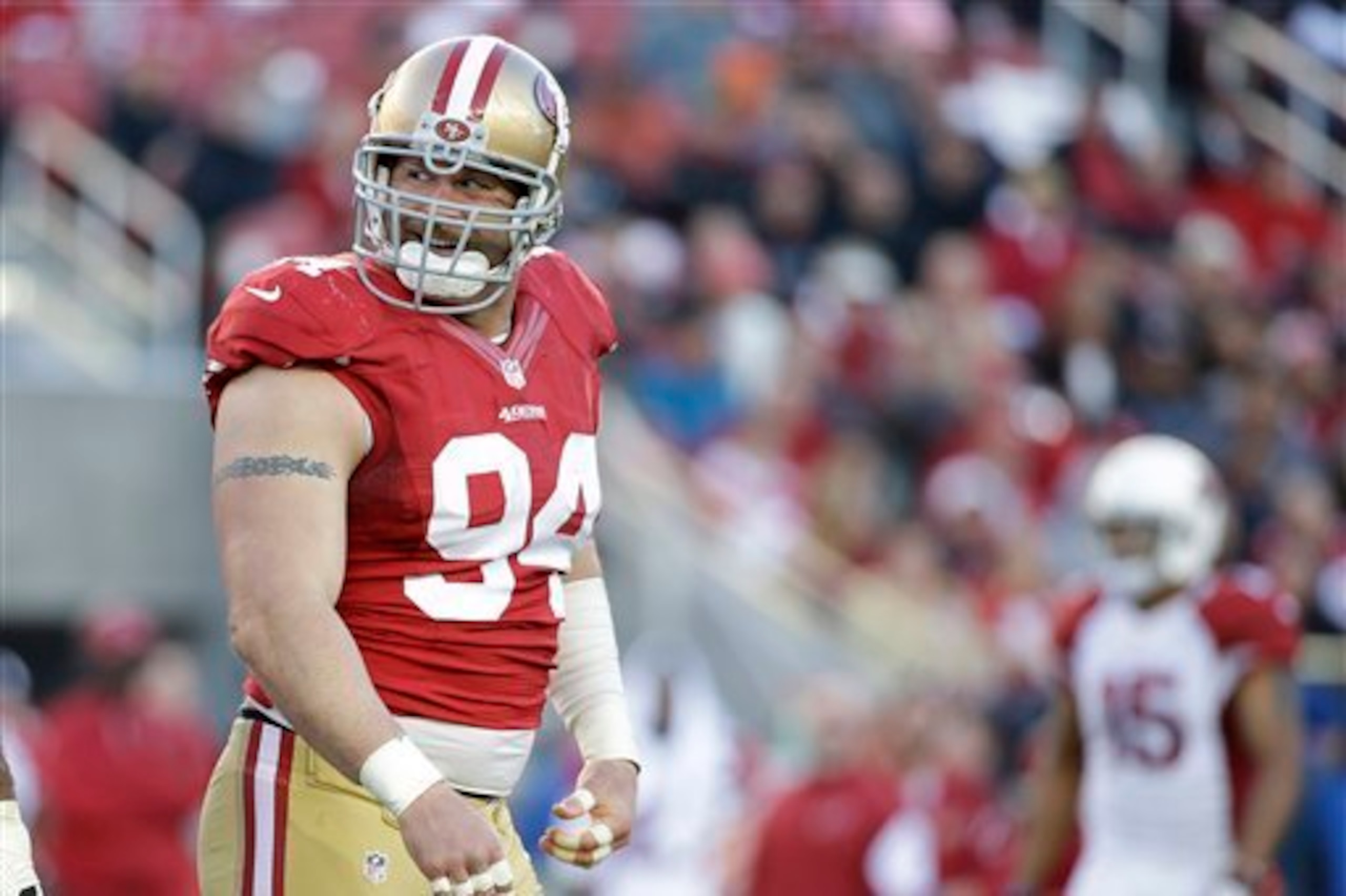
“Evidence” is hard to quantify, but you can point to Smith’s role as an interior lineman, which doesn’t generate as many tackle numbers as a middle linebacker. You can point out the fact that Willis played his entire career with great defensive teammates, while Smith toiled on middling-to-bad Cincinnati defenses for seven seasons.
You can point out Smith’s play being hampered by a bad triceps for the past few seasons. I don’t think either player is significantly better or worse, but the argument is easier to make for Smith.
Advantage: Smith
10. Is he the best player at his position who is eligible for the Hall of Fame but not in?
Willis is not; Ray Lewis redefined the middle linebacker position for a generation. He might be when it comes time to get inducted, but Willis was only as good as Lewis was in his prime, and Lewis played much longer at a very good level.
As for Smith, unless you’re ready to enshrine J.J Watt right now, I think there’s no 3-4 end you can point to and say, definitively, that he is better than Smith. There are plenty of linemen, 3-4 or otherwise, with an argument, but none are clearly better.
Advantage: Smith
11. How many All-Pro-type seasons did he have?
12. How many Pro-Bowl-type seasons did he have?
Because voting for these awards are often half-hazard and curious, I use AV to define “Pro-Bowl-type” seasons. Any season with a score of 10 or better is worth Pro Bowl consideration, and anything with 15 or better is worth All-Pro considerion.
Willis had five seasons with an AV of 15 or better, while Smith had three. Willis had seven seasons with an AV of 10 or better while Smith had eight. That’s the prime vs. longevity debate right there.
Advantage: Willis for All-Pro years, Smith for Pro Bowl years
13. If this man were the best player on his team, would it be likely that team could make the playoffs?
Willis was the best player on the 49ers, and they made the Super Bowl, so that’s clearly a yes. It seems to be a yes for Smith too, though 3-4 linemen are, in general, less valuable than inside linebackers. That’s an issue of positional scarcity rather than value, though, so I’ll just say that many teams would be thrilled to have either player's talent level.
Advantage: Tie
14. What impact did the player have on football history? Was he responsible for any rule changes or otherwise change the fabric of the game?
Willis and Smith were two of the best players to play their position, but they didn’t develop a new strategy or fundamentally alter anything. There is no “Patrick Willis rule,” and no Justin Smith pass-rush move became fundamental for developing linemen.
Advantage: Tie
Final Score
Counting up the questions, we have Justin Smith with the advantage on six of them, Patrick Willis with the advantage on four and four ties. That holds out with my general opinion—it’s close, but Smith’s longevity does count for something, even if Willis’ peaks were higher.
You can make an argument for either player, but there’s something to be said for being an above-average starter for over a decade, as long as you have an All-Pro-esque peak at some point.
In terms of their careers with the 49ers only, Patrick Willis was the better player. However, when you add in the seven years Smith spent in Cincinnati before coming to the Bay Area, he does slightly edge Willis. If there’s a line to get into the Hall, Smith should be ever-so-slightly in front.
Stats are courtesy of Pro-Football-Reference.com, unless noted otherwise.
Bryan Knowles is a Featured Columnist for Bleacher Report, covering the San Francisco 49ers. Follow him @BryKno on Twitter.