


After another disappointing postseason elimination at the hands of a team led by LeBron James, the Chicago Bulls’ season has officially come to a close. Despite the underwhelming collective finish, there were some notable individual performances along the way—as well as some forgettable ones.
In evaluating each player’s 2014-15 showing, we will consider both regular-season and playoff performance, with the former carrying the most weight. The logic here is that the 82-game body of work is where player effort counted the most. These athletes faced myriad opposition, and the results are truly indicative of their abilities.
Coaches have a lot more influence in playoff performances. In facing one team over the course of seven potential meetings, it is more about adjustments from game to game. Players have little control over the plan, but since they still have to execute, postseason showings will count to some extent. Think of this as a three-parts regular season and one-part postseason formula.
It is evident that some Bulls players delivered from October to May, while others were inconsistent even to the point of disappearing in the playoffs. Now that everything is over, we can offer a solid assessment of each roster member.
Aaron Brooks
1 of 12
| MP | PPG | FG% | 3P% | FT% | REB | BLK | STL | AST | |
| Regular Season | 23 | 11.6 | 42.1 | 38.7 | 83.3 | 2 | 0.2 | 0.7 | 3.2 |
| Postseason | 11 | 4.5 | 34.4 | 30.8 | 57.1 | 1.5 | 0.1 | 0.3 | 0.9 |
Aaron Brooks was the latest installment on the merry-go-round that has been the Bulls’ reserve point guard position. His was simple—be a source of scoring off the bench. It’s a task he fulfilled well during the regular season, as noted by the near-12-point average he maintained.
Brooks’ game was more than just hitting shots, though. Some of his performances were reminiscent of Nate Robinson. The former Oregon Duck hit long-range threes and circus shots in the paint almost as often as he knocked down normal attempts. He was also able to create for himself, bringing much relief for the offensive stagnation that would sometimes plague the second unit.
His main issue was his 6'0" size. Being yet another small backup meant that Brooks could be exploited whenever the Bulls were on defense if the opposition boasted a larger guard. This is what led to his near disappearance in the postseason.
For starters, his playing time was slashed by more than half. That kept him from developing any kind of rhythm to contribute consistently on offense. His numbers declined across the board. That deterioration with him and the entire second unit was a big contributor to the squad’s second-round exit.
Brooks did well in the regular campaign, but his vanishing act in the playoffs worked against him. A lot of that was due to coaching decisions since the Bulls were playing teams with much larger guards; however, the 6’0" baller couldn’t get anything going in the little time he did receive.
Final Grade: C-
Jimmy Butler
2 of 12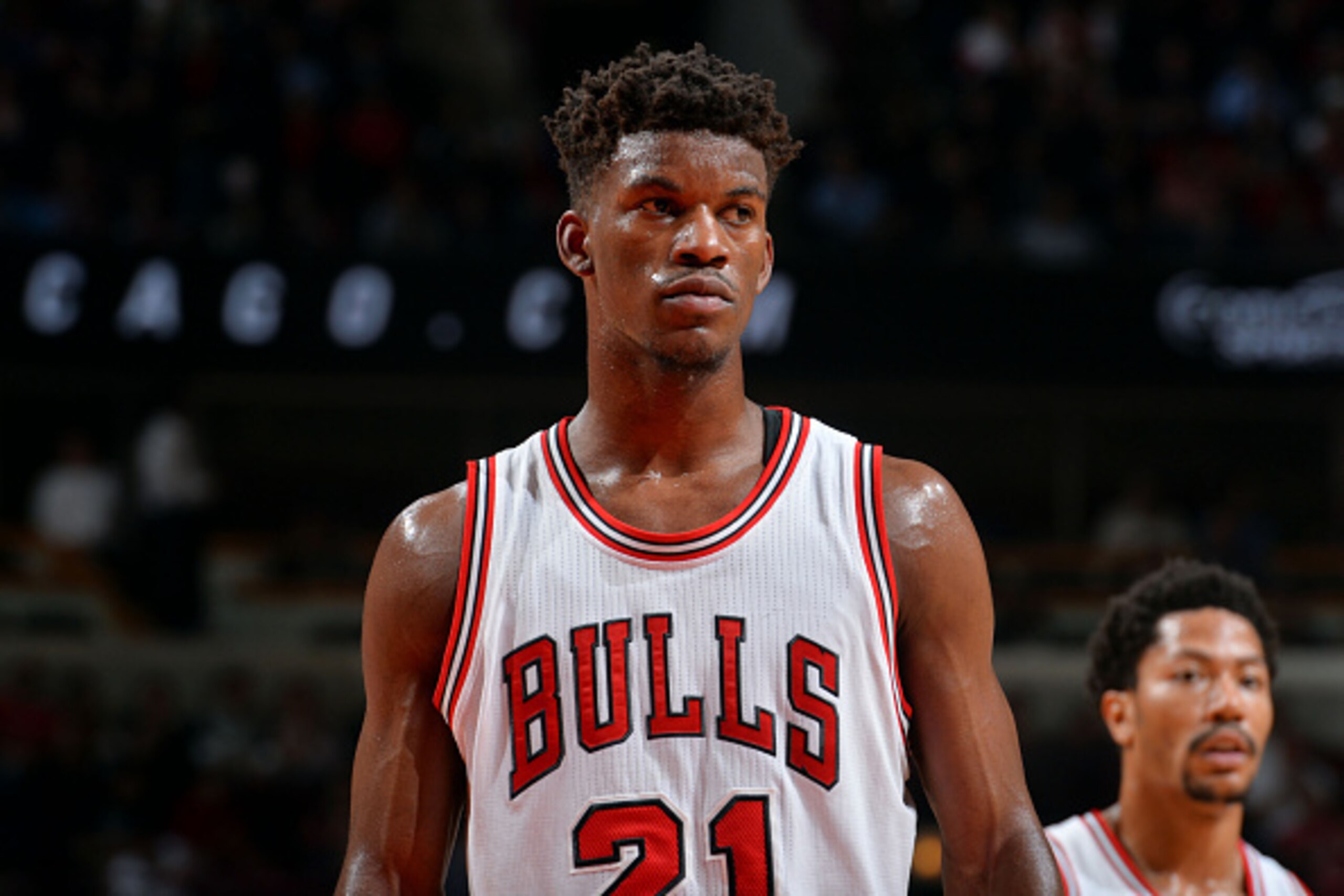
| MP | PPG | FG% | 3P% | FT% | REB | BLK | STL | AST | |
| Regular Season | 38.7 | 20 | 46.2 | 37.8 | 83.4 | 5.8 | 0.6 | 1.8 | 3.3 |
| Postseason | 42.2 | 22.9 | 44.1 | 38.9 | 81.9 | 5.6 | 0.4 | 2.4 | 3.2 |
Jimmy Butler was arguably the biggest surprise player in the league this past season. Before his 2014-15 run, he had the reputation of being a stalwart defender with a mediocre scoring repertoire. That reputation for guarding the perimeter remained unblemished as the fourth-year wing earned an All-Defensive Second Team nod, but he also blossomed as an offensive force.
Butler’s scoring average in the regular season and playoffs were both career highs. His free-throw attempts, 7.1 and 6.0 in both phases of play, yielded averages that exceeded 80 percent and were indicative of his attack mentality that the opposition found hard to stop.
His numbers for the playoffs were mostly comparable to his seasonal output and even increased in some areas. Despite the series loss to the Cleveland Cavaliers, his defense on James was as effective as anyone could have hoped. He was consistently good throughout the year.
Butler used 2014-15 to not only establish himself as a key piece of the franchise’s long-term vision but also as one the new leaders. As a restricted free agent in the summer, he is bound to get some enticing offers, but the Bulls will surely match if they want to secure the franchise’s future.
Final Grade: A
Mike Dunleavy
3 of 12
| MP | PPG | FG% | 3P% | FT% | REB | BLK | STL | AST | |
| Regular Season | 29.2 | 9.4 | 43.5 | 40.7 | 80.5 | 3.9 | 0.3 | 0.6 | 1.8 |
| Postseason | 32.4 | 10.9 | 48.9 | 48.2 | 94.7 | 4 | 0.4 | 0.8 | 2.6 |
If any player earned the title of being the team’s glue guy, it would definitely be Mike Dunleavy. The 13-year veteran was a solid all-around contributor.
Consider that he was one of only two Bulls players to miss more than 15 consecutive games—the other being Derrick Rose. One might be surprised as to how the team fared without those guys during their separate hiatuses.
| Player | Games Missed | Dates | W-L | Win% |
| Mike Dunleavy | 19 | 1/3 to 2/8 | 9-10 | 47.4 |
| Derrick Rose | 20 | 2/25 to 4/5 | 10-10 | 50 |
The team was built to weather games without their former MVP, but no other player on the roster provides the spacing, decision-making and shooting accuracy of Dunleavy. His absence takes away many intangibles that have far-reaching effects on the team as a whole.
While the former Duke forward’s numbers all increased during the playoffs, the most notable were his shooting percentages. Dunleavy cranked his efficiency way up and continued to be that dependable veteran who gave a solid effort game after game.
Final Grade: B



Pau Gasol
4 of 12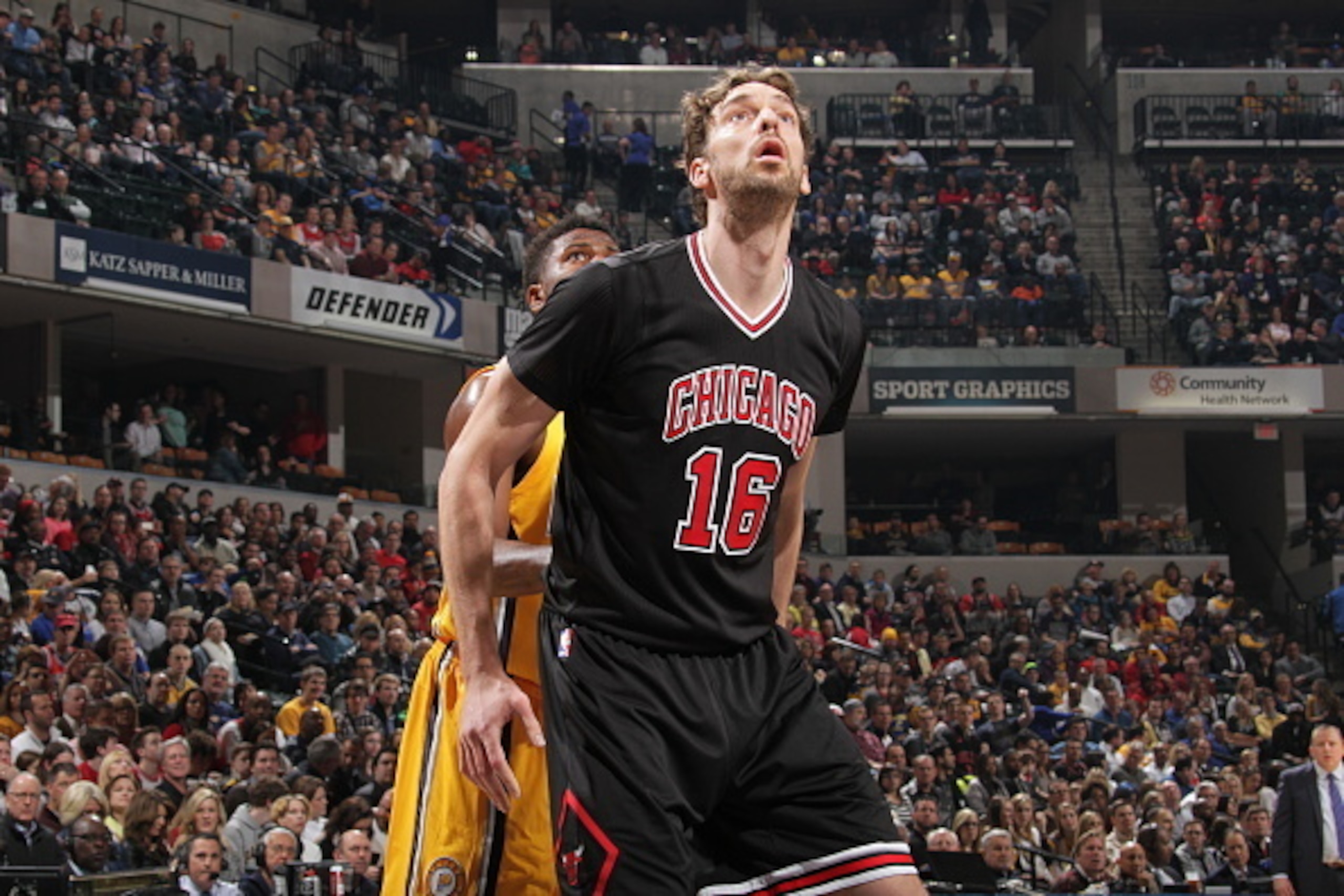
| MP | PPG | FG% | 3P% | FT% | REB | BLK | STL | AST | |
| Regular Season | 34.4 | 18.5 | 49.4 | 46.2 | 80.3 | 11.8 | 1.9 | 0.3 | 2.7 |
| Postseason | 31.7 | 14.4 | 48.7 | 0 | 76.2 | 9.4 | 2.1 | 0.5 | 3.1 |
Landing a big name in free agency has constantly eluded the Bulls during the Gar Forman era. The team was frozen out in the summer of 2010 by the players who later became the Heatles down in South Beach. The Bulls made an attempt in 2014 to woo Carmelo Anthony away from the New York Knicks, only for him to stay in the Big Apple.
The consolation prize for the former failure was Carlos Boozer; Pau Gasol was the next best thing to come out of the second wipeout.
Bringing on the two-time champion wasn’t without reservations, though. Gasol was well past 30 years old and missed a total of 72 games in the three seasons prior to 2014-15. Given the Bulls’ luck with health under Tom Thibodeau, trepidation was logical.
Gasol silenced those doubts as he played and started in 78 games, going on to lead the league with 54 double-doubles. His most valued skilled was his help defense, especially in the form of challenging shots.
His playoffs numbers took a slight dip, but mainly because playing time also decreased a little. It bears mentioning that he did register more blocks and assists per contest in the postseason, and this includes handling frequent double-teams in the first-round series against the Milwaukee Bucks.
If Gasol can continue to produce at this level over the next couple of seasons, he could be the best bargain signing this franchise has ever landed.
Final Grade: B+
Taj Gibson
5 of 12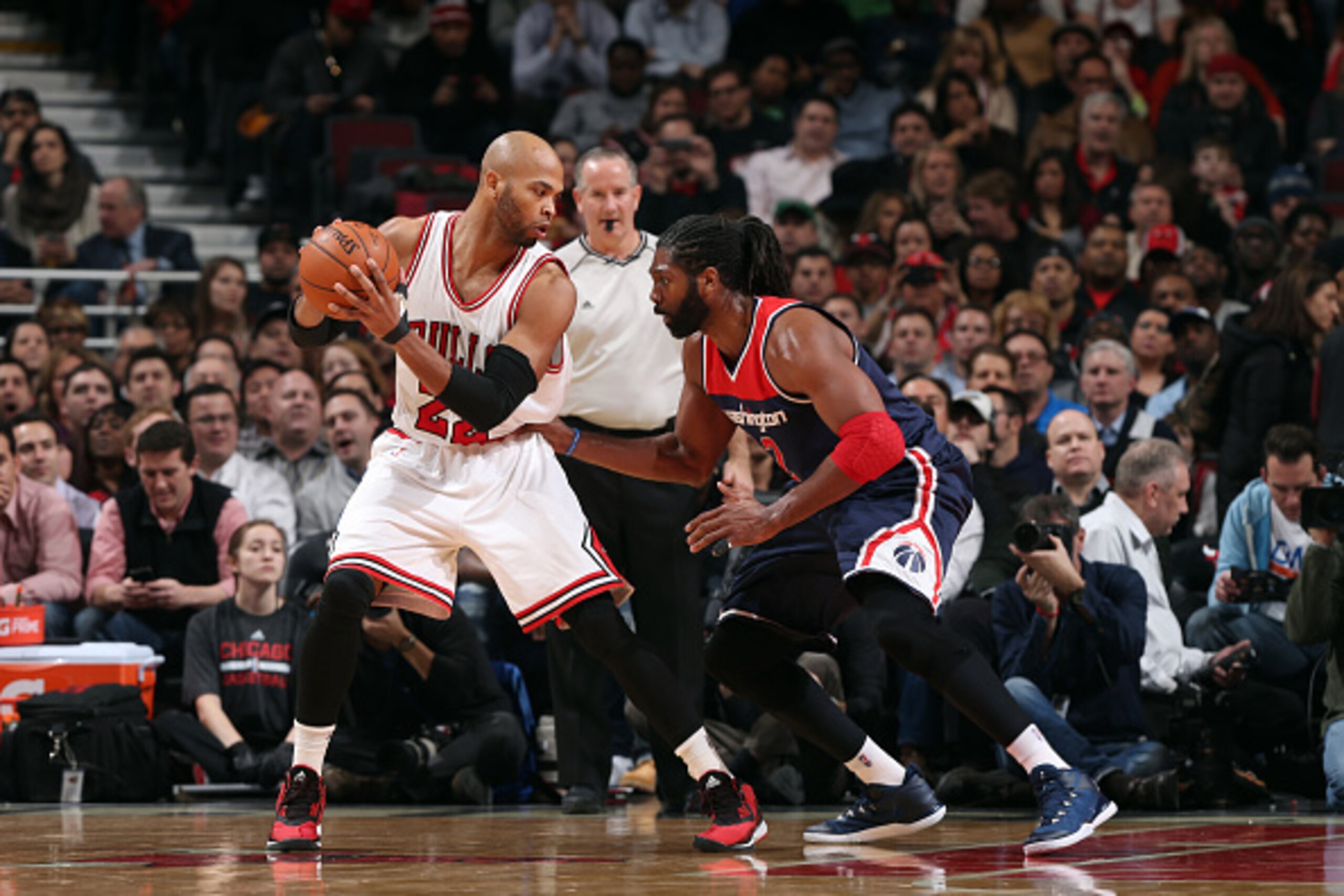
| MP | PPG | FG% | 3P% | FT% | REB | BLK | STL | AST | |
| Regular Season | 27.3 | 10.3 | 50.2 | 0 | 71.7 | 6.4 | 1.2 | 0.6 | 1.1 |
| Postseason | 23 | 7.4 | 47.2 | 0 | 70.0 | 5.5 | 1.0 | 0.3 | 1 |
It says something when a player can come off of the bench and be good for at least 10 points and six rebounds every game and still be considered a disappointment; such is the case with Taj Gibson.
After showing a lot of growth during the 2013-14 season, the former USC Trojan seemed to regress during 2014-15. Last year, Gibson showed that same defensive tenacity he was always known for and unveiled a budding scoring repertoire that included a dependable outside jumper.
That jump shot all but disappeared this season. Looking at his proficiency from 15-19 feet, he connected on 40.3 percent of those shots in 2013-14 as opposed to 37.7 in 2014-15, per NBA.com. While it doesn’t seem like that much of a decrease, consider that those attempts are 87-of-216 and 22-of-59 respectively. He hit more of those shots last season than he attempted over this most recent run.
Gibson’s one-dimensional approach to scoring carried over into the playoffs, and it yielded underwhelming results. Luckily, he continued to play decent one-on-one defense, thus contributing positively in that respect.
Final Grade: C-
Kirk Hinrich
6 of 12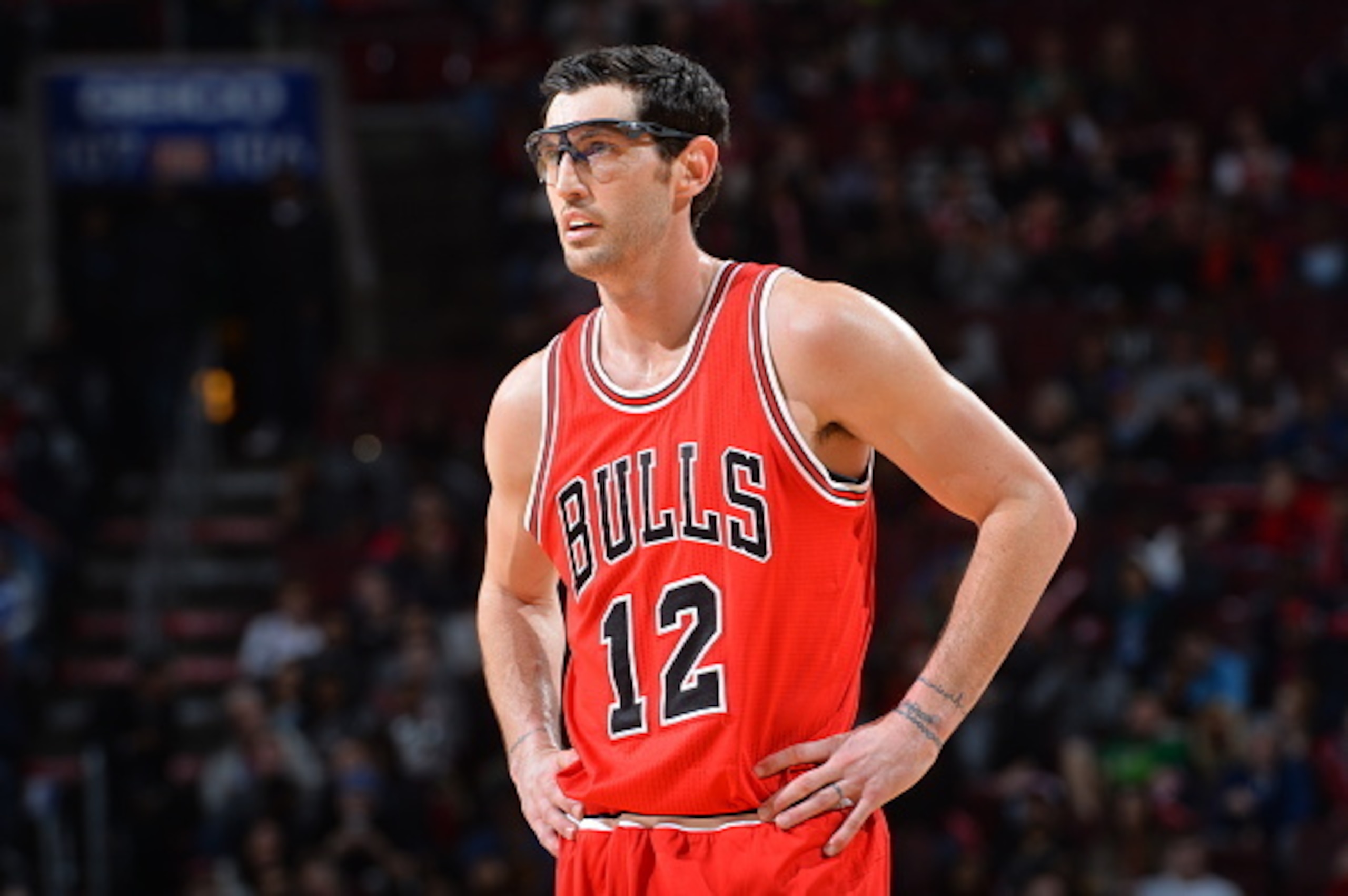
| MP | PPG | FG% | 3P% | FT% | REB | BLK | STL | AST | |
| Regular Season | 24.4 | 5.7 | 37.3 | 34.5 | 70 | 1.8 | 0.2 | 0.7 | 2.2 |
| Postseason | 12.6 | 2.6 | 47.4 | 60 | 66.7 | 0.5 | 0.1 | 0.3 | 1.1 |
The charm of hustle and grit wore off this past season for Kirk Hinrich. He posted his worst overall statistical performance in his 12-year career, and he was more of a liability than an asset most of the time.
His niche used to be the ability to defend both guard positions, but even that was lacking, as his defensive rating of 108 is one of the worst he’s ever posted. It was so difficult to get anything of value from him on the floor.
Hinrich was always a favorite of Thibodeau, but while that affinity translated into minutes, it didn’t turn into much else. The former Kansas Jayhawk seemed to suddenly lose all of his effectiveness. The little he was able to give in the regular season turned into even less in the postseason.
All indicators say that Captain Kirk should retire, but the last year on his deal is a player option. Effective or not, it seems unlikely that he will forgo making nearly $3 million. Hopefully, the next head coach will just use him for maintaining team culture.
Final Grade: F
Nikola Mirotic
7 of 12
| MP | PPG | FG% | 3P% | FT% | REB | BLK | STL | AST | |
| Regular Season | 20.2 | 10.2 | 40.5 | 31.6 | 80.3 | 4.6 | 0.7 | 0.7 | 1.2 |
| Postseason | 14.9 | 5.7 | 30.3 | 23.3 | 80 | 2.7 | 0.5 | 0.5 | 0.8 |
Nikola Mirotic made his long-awaited NBA debut and did not disappoint for the most part. Fans vaguely knew they were getting an athletic big man who had a litany of perimeter abilities that would present mismatch nightmares for frontcourts across the league.
He showed flashes of exceptional play during the regular season. His per-36 projections had him averaging 18.1 points, 8.8 rebounds and 2.1 assist per game. That estimation proved to be plausible when Mirotic got to play extended minutes due to an injury to Gibson.
During the month of March, the former Euroleague standout actually played 30.8 minutes per night and produced to the tune of 20.8 points, 7.6 rebounds and 1.7 assists per game. That surge was good enough to get him a second-place finish in the Rookie of the Year voting.
Mirotic showed his inexperience when the playoffs started. Sure, his production dropped because his minutes were cut, but the decrease was not proportional. The 6’10” forward found it difficult to adjust when opposing coaches were able to plan for him from game to game.
The youngster has the aptitude to learn from this experience and the skill to develop accordingly next year. The future is bright with Mirotic around.
Final Grade: C+
Joakim Noah
8 of 12
| MP | PPG | FG% | 3P% | FT% | REB | BLK | STL | AST | |
| Regular Season | 30.6 | 7.2 | 44.5 | 0 | 60.3 | 9.6 | 1.1 | 0.7 | 4.7 |
| Postseason | 32.9 | 5.8 | 40.8 | 0 | 35 | 11 | 1.2 | 0.8 | 3.2 |
Joakim Noah emerged as a bona fide leader and unconventional star when the Bulls had to endure two seasons without Rose. The former Florida Gator anchored the defense and facilitated the offense while helping the team maintain winning records and a streak of playoff berths.
It seemed like his will was enough to carry the team to victory, and the potential of that resolve coupled with the roster that was assembled for 2014-15 made many think that a championship breakthrough was on the horizon.
If Noah was Chicago’s title barometer, then it should have been evident early on that a seventh Larry O’Brien trophy was not in the cards. His heart and yearning seemed to still be present, but his ability just wasn’t enough.
While he did finish a third consecutive season averaging at least four assists per game, his numbers dropped in every other vital category.
The addition of Gasol was supposed to bolster the team’s front line; instead, it had Noah chasing smaller power forwards around the court on questionable legs. That new and daunting expectation made it harder for the emotive big man to do much of anything else.
Noah’s minutes increased during the playoffs, but all of his numbers were lower than in the regular season. He played like a worn-out boxing champion who had too much pride to just fall down. His effort was appreciated, but his execution was severely lacking.
Final Grade: D
Derrick Rose
9 of 12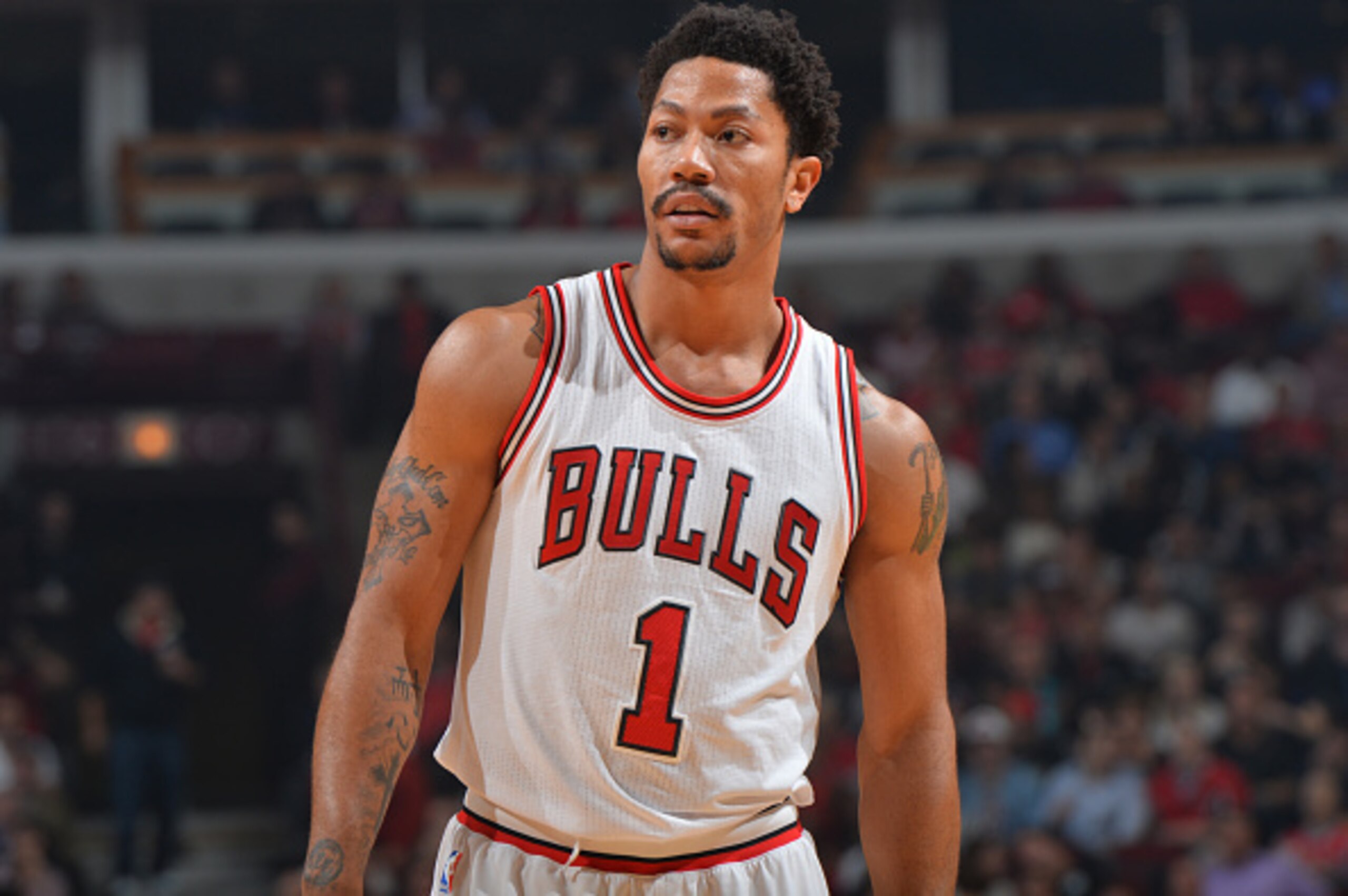
| MP | PPG | FG% | 3P% | FT% | REB | BLK | STL | AST | |
| Regular Season | 30 | 17.7 | 40.5 | 28 | 81.3 | 3.2 | 0.3 | 0.7 | 4.9 |
| Postseason | 37.8 | 20.3 | 39.6 | 34.8 | 89.7 | 4.8 | 0.5 | 1.2 | 6.5 |
Rose finally cleared a huge hurdle and completed an entire NBA season along with some playoff games without a catastrophic incident. He missed what ended up essentially being two entire campaigns due to a torn ACL that kept him from playing in 2012-13 and a torn meniscus that kept him out of 72 games plus the playoffs in 2013-14.
His 2014-15 run was pedestrian by his standards, but he still showed the ability to streak down the court, get into the paint and body up bigger guards on the defensive end. His overall production was also impressive considering the minutes restriction that was in place for a good chunk of the season.
A setback with his previously repaired meniscus caused him to miss 20 of the last 23 regular-season games, but he quelled any doubts about his durability with his playoff performance. Over his 12-game showing, Rose was back to playing minutes similar to his MVP season and put up comparable numbers.
Overall, he did not supply the jaw-dropping highlight-reel performances that most were used to seeing just a few seasons ago, but he flashed enough to make 2015-16 even more intriguing.
Final Grade: B+
Tony Snell
10 of 12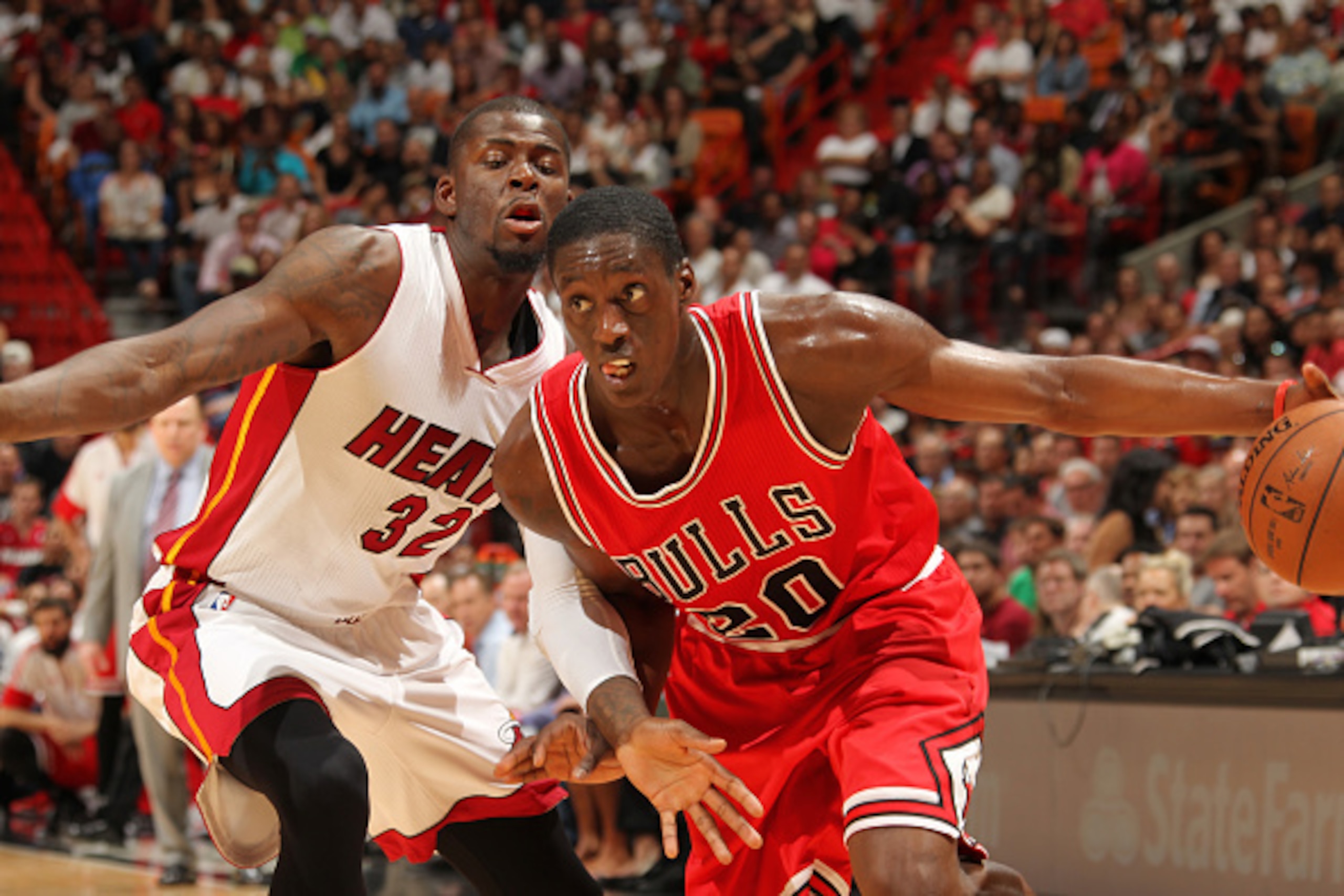
| MP | PPG | FG% | 3P% | FT% | REB | BLK | STL | AST | |
| Regular Season | 19.6 | 6 | 42.9 | 37.1 | 80 | 2.4 | 0.2 | 0.4 | 0.9 |
| Postseason | 12.7 | 3.9 | 34.1 | 33.3 | 100 | 1.5 | 0.3 | 0 | 0.5 |
Tony Snell continued to ride the end of the bench thanks to his greenhorn status. The strange thing about that was when injuries in early 2015 forced Thibodeau to play the second-year wing, the youngster delivered.
While playing regularly from January to March, Snell put up 9.3 points, 3.4 rebounds, and 1.3 assists per game. He shot 45 percent from the field, including 38.7 percent from three-point land. That prolonged stretch shows that if he gets a chance, Snell will likely produce.
Once the normal rotational players healed, the former New Mexico star had trouble meshing and returned to the end of the bench. His playoff numbers didn't match his regular-season stats, and while his minutes and points decreased proportionally, the rest of his output suggests that there is still a lot of room for growth.
Hopefully, Snell will get more opportunities to demonstrate what he can bring to the franchise. Though he had a solid stretch, it was too short-lived to qualify for a high final grade.
Final Grade: D
Incomplete, Part 1: Cameron Bairstow, E'Twaun Moore
11 of 12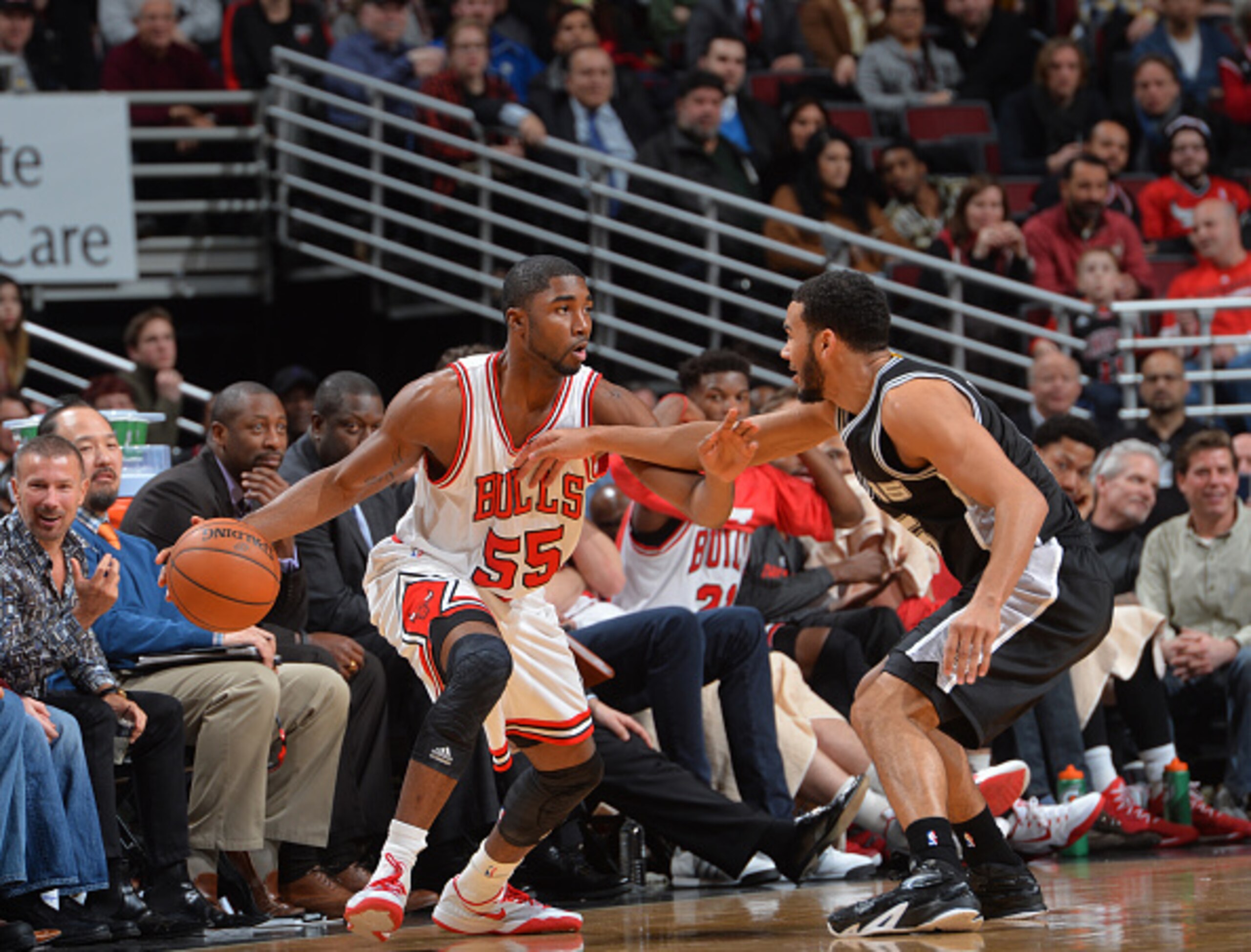
Cameron Bairstow
Cameron Bairstow saw the court in 18 games; his November 25 start against the Miami Heat was the zenith of his rookie season. The second-round draft pick wasn’t even the human victory cigar for this club.
It was never in the cards for this kid to get much playing time anyway. His cohort consisted of a Defensive Player of the Year winner, a two-time NBA champion, a former Sixth Man of the Year contender and a European sensation who was making his long-awaited first appearance.
E’Twaun Moore
E’Twaun Moore was the most intriguing player at the end of the bench. He played in a number of games, and while he didn’t outright impress, he had a handful of titillating showings. The fact that Chicago signed him right before training camp and after procuring Aaron Brooks made it evident that Moore was this year’s John Lucas III, only without the inexplicable green light to shoot from anywhere on the floor.
Incomplete, Part 2: Doug McDermott, Nazr Mohammed
12 of 12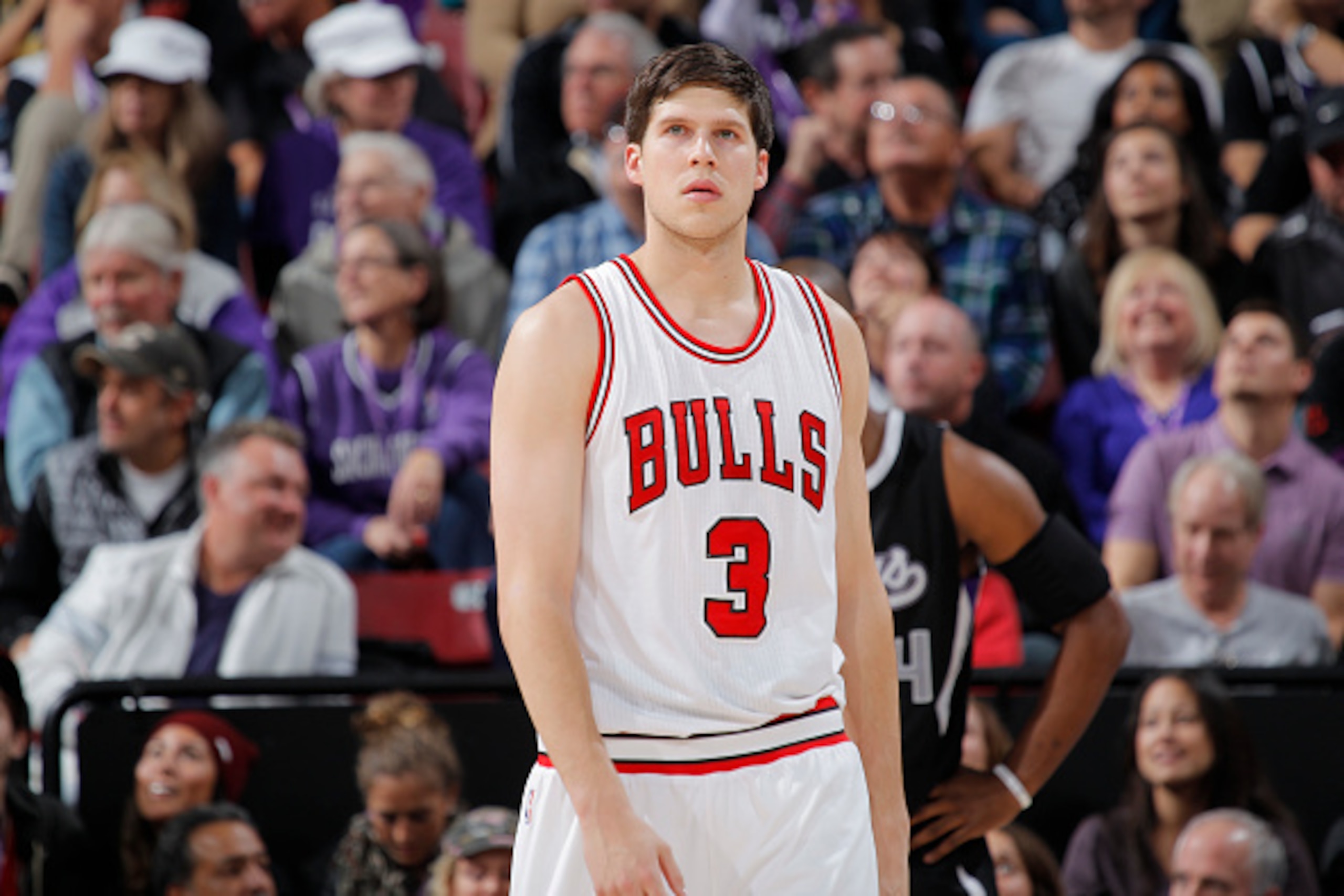
Doug McDermott
Doug McDermott was supposed to be the first rookie who broke Thibodeau’s rotation based on talent instead of the need to fill in for an injured player, but that never came to fruition.
He definitely struggled in his rookie season. The speed of the game and ability of the opposition was something that he was not ready for. He had moments that foretold what might happen down the line, but his adjustment period may need another season or two.
Nazr Mohammed
Nazr Mohammed continued to be the veteran sage of the roster. His retention was not so much as to steal a few minutes here and there for Noah or Gasol but to offer some perspective for the young guys and help the other core players maintain a harmonious locker room.
At 38 years old, it’s hard to say if the team will have him back. With the ouster of Thibodeau, a few other changes may be in the works. Mohammed has had a long career, and that is a rare feat for any professional athlete.
All statistics via Basketball-Reference.com unless cited otherwise.

.jpg?w=2560 "Raiders Could Start Mendoza")

.jpg?w=2560 "Rodgers Iced Out on Plane 💎")
.jpg?w=2560 "Packers Safety Slams Refs 🤬")
.jpg?w=2560 "🚨 Week 8 AP Top 25 Poll")
