
Power Ranking NFL RB Depth Charts
For as much as the media likes to discuss the running back position like dinosaurs, those who consistently run the ball well usually end up going deep into the playoffs. The top two rushing teams last regular season, by yards per carry, were the Seattle Seahawks and the Dallas Cowboys, who used their running games to vault into the playoffs. The Bengals, Panthers and Ravens also ranked in the top eight in the statistic.
After two seasons of no first-round running backs being drafted, two of them went early in this past class. Todd Gurley, who is battling an ACL injury, was selected in the top 10. The San Diego Chargers also traded up to the 15th pick to take Melvin Gordon out of Wisconsin.
Looking up and down all 32 teams' depth charts, we'll take a look at who the starters, backups, rookies, reserves and camp bodies are. Ranking them is a more difficult task, but focusing on the starters in a one-back system or the top two running backs in a committee is the best way to go.
Those who say the position is devalued are correct in some ways but wrong in others. At the end of the day, if you can pound the rock with efficiency, your offense is still virtually unstoppable. The problem is that not every team has the talent to go down that road offensively. To find out which teams are set to do so in 2015, follow through our rankings.
32: Dallas Cowboys
1 of 32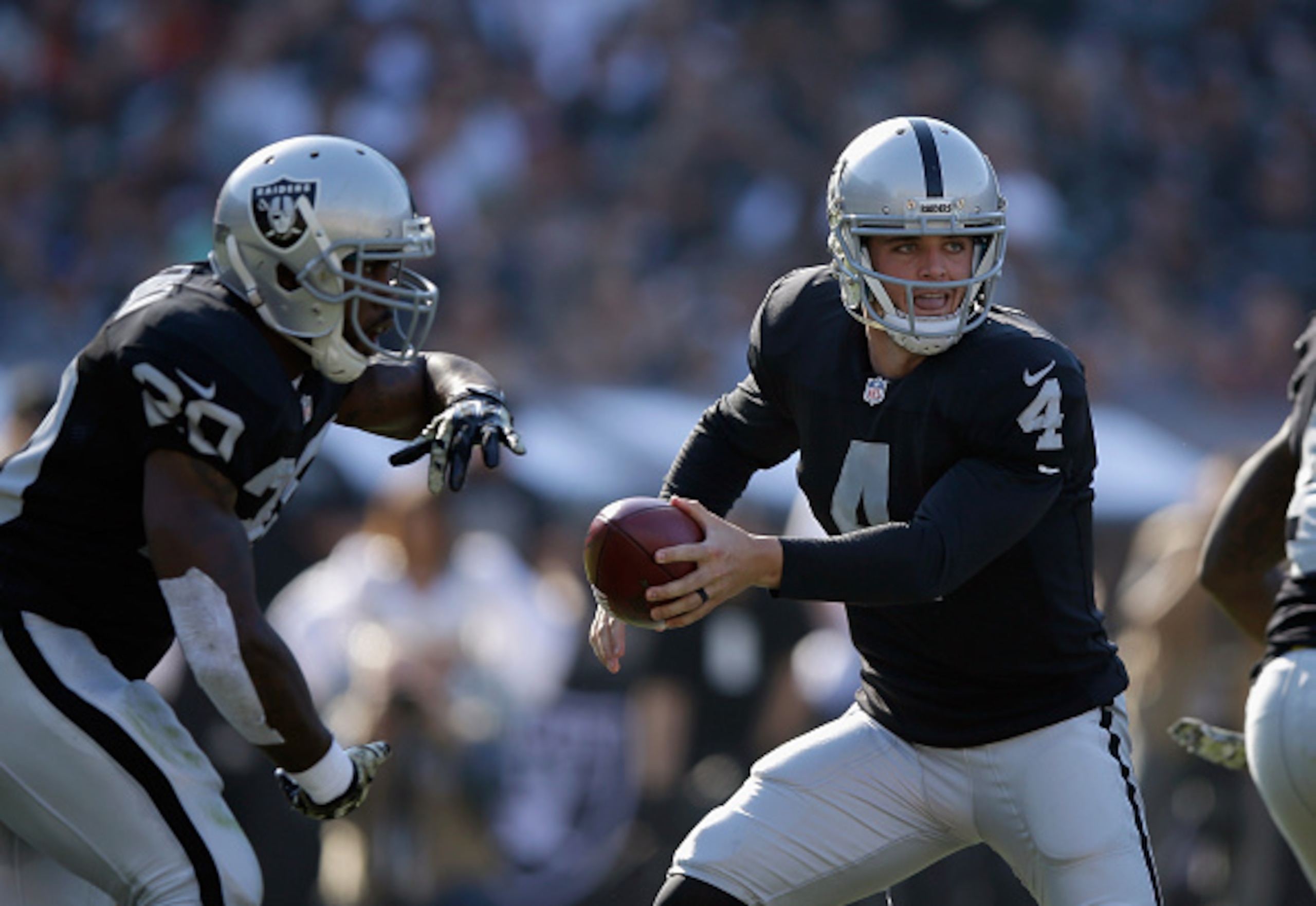
Starter: Darren McFadden
Last season, DeMarco Murray led the NFL in rushing yards behind one of the top offensive lines in the league. With the addition of La'el Collins, who was considered to be a first-round type of player before he fell out of the draft due to a then-ongoing murder investigation, the Dallas line should only be better in 2015. While the running back unit isn't good, this might be a situation where a team can just plug and play a back into this offense.
The current top back on the roster is Darren McFadden, the former Heisman candidate from the University of Arkansas, where Cowboys owner Jerry Jones when to college. McFadden was a first-round pick for the Oakland Raiders but never really lived up to his draft hype. He's a high-variance, high-cut runner, though, and playing in Dallas is the best situation for him.
Of the remaining backs on the roster, none of them has ever posted more than 60 carries in a single season. Joseph Randle, Lance Dunbar and Ryan Williams are all quality players in a rotation, but none of them should be the top back on the depth chart, which is a bit of an issue if McFadden feels uncomfortable in his role. Synjyn Days is also on the roster but doesn't figure to contribute anytime soon, as he's more of the type of talent to push for a role on the practice squad.
31: New York Jets
2 of 32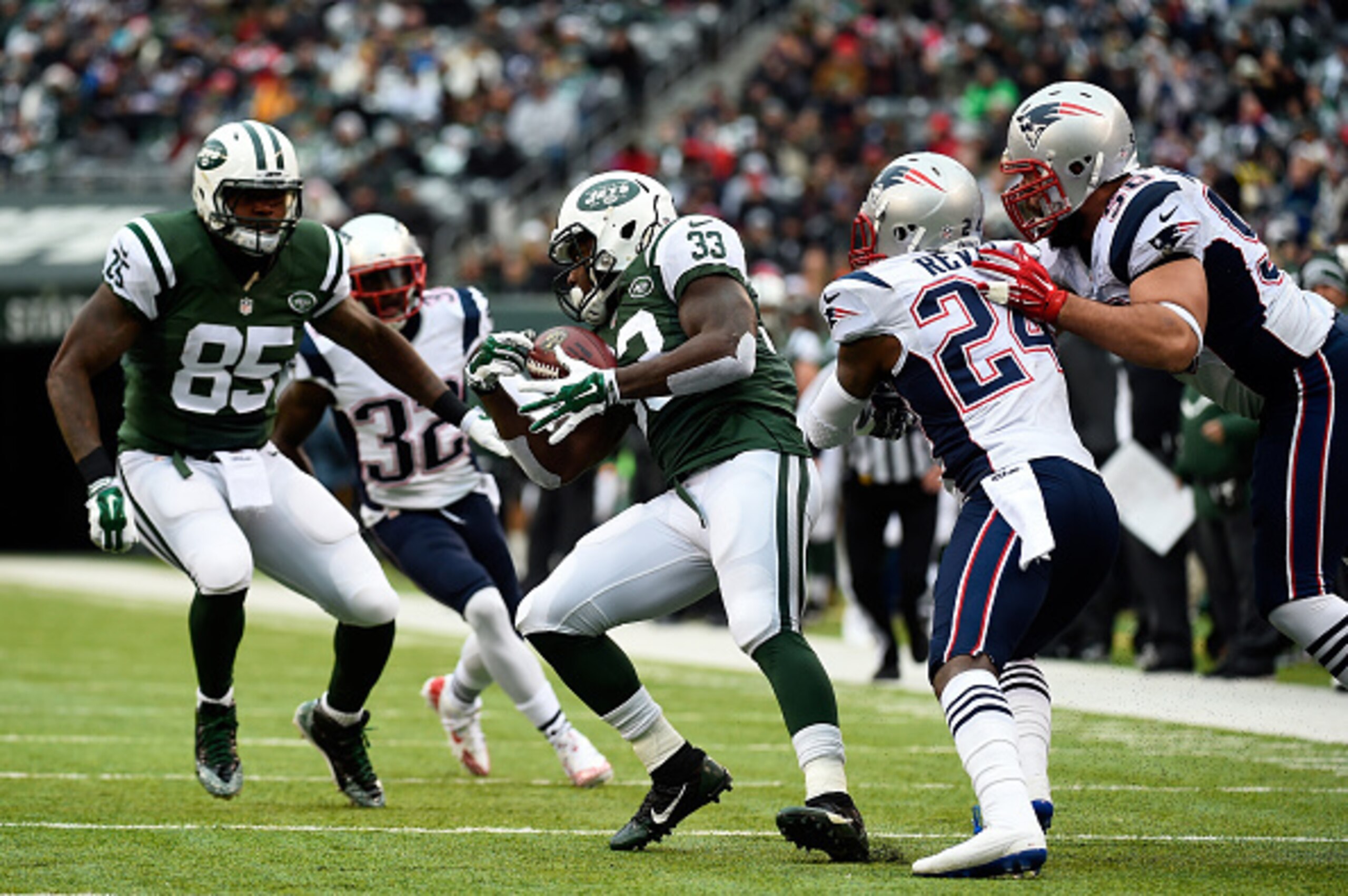
Starter: Chris Ivory
Last season, Chris Ivory was the top back for the New York Jets, but he posted less than 900 yards for the season. In 2015, the Jets are slated to start him again. The difference between this year and last year, though, is that there are more threats behind Ivory to press him for the starting role.
The first is Stevan Ridley, who New York added fairly early on in the free agency process. He was a former New England Patriot, an in-division rival for the Jets, but is now an asset to be used against his former team twice per year. He only played in six games last season, but he started in five, posting a 3.6 yards-per-carry mark.
The other impact addition to the unit is Zac Stacy, who is a third-year player by way of the St. Louis Rams. He was traded after the Rams selected Todd Gurley early in the first round. Stacy's yards-per-carry average has hovered around four yards for his career, right at the breaking point of what you want from a contributor.
Both Bilal Powell and Daryl Richardson have a decent amount of experience in the league too. Powell has been a Jets backup for a long time, while Richardson, like Stacy, is a third-year former Ram. They will provide quality competition at the bottom of the roster and are both threats to make the team, but neither of them should see a start this year.
30: Oakland Raiders
3 of 32
Starter: Latavius Murray
With former first-round pick Darren McFadden now gone, the Oakland Raiders had a hole to fill in the 2015 offseason. With Derek Carr and Amari Cooper in the passing game, they're set in that aspect, but their running game is still very much a question mark.
The listed starter is currently Latavius Murray, who was selected by the team in the sixth round in 2013. After missing his rookie year due to an injury, he ran for more than 400 yards in his sophomore year. He averaged five yards per carry in limited time, and he's an amazing athlete, but he's no sure thing to be a quality 16-game starter just yet.
The team added Trent Richardson this past offseason too. He was a former top-five pick who is now on his third team of his young NFL career. Richardson's vision has been a huge issue recently, but if he's coached up, he still has the talent to be a brutal runner.
Roy Helu, George Atkinson and Michael Dyer round out the bottom of the depth chart. None of them are great talents, but they are serviceable reserve options. They shouldn't see many carries but are good emergency players. Whoever proves themselves on special teams will receive a nod to make the team.

.jpg?w=2560 "Steelers Saints Football")
.jpg?w=2560 "Rams Raiders Football")
29: Jacksonville Jaguars
4 of 32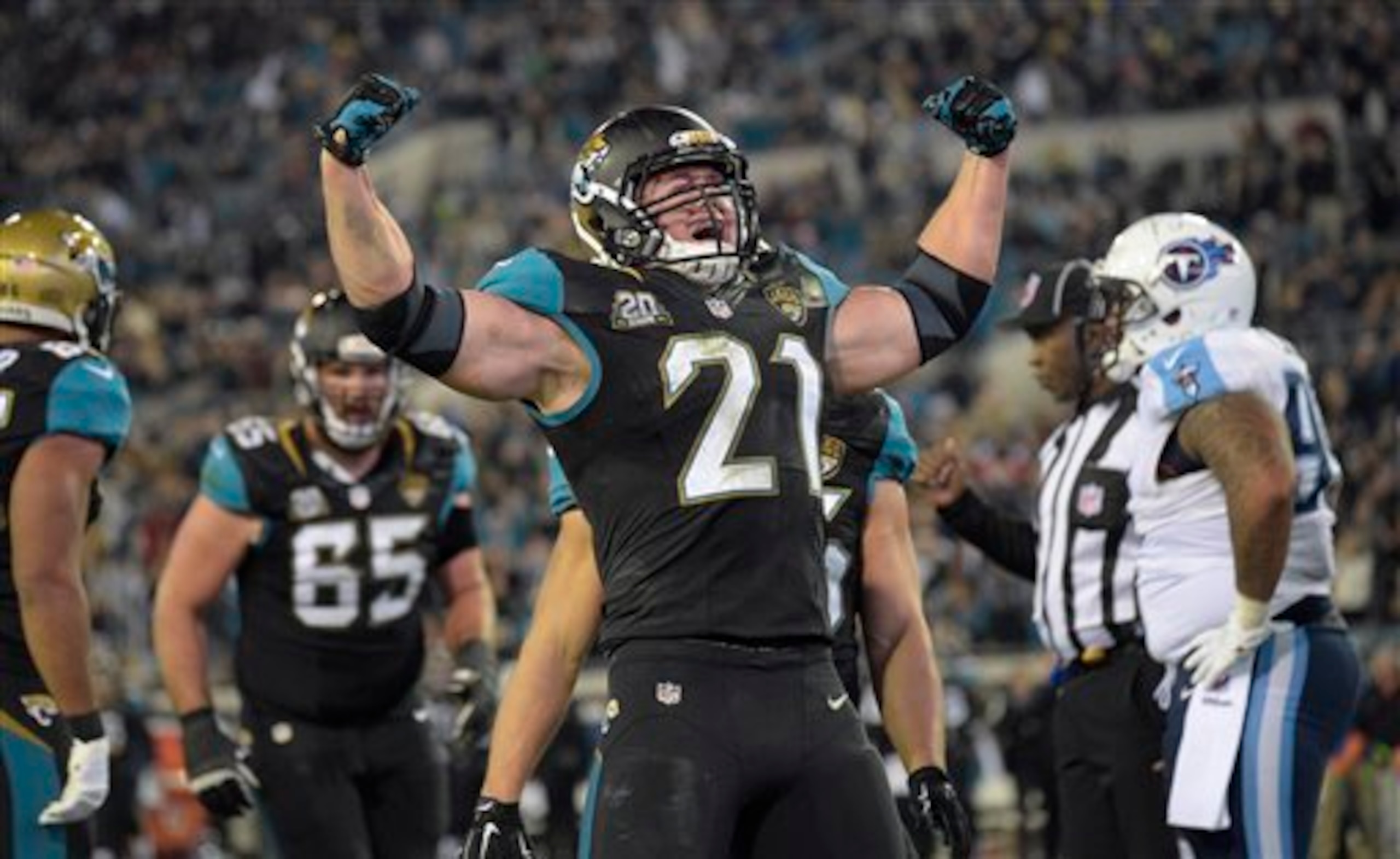
Starter: Toby Gerhart
Toby Gerhart had one of the most productive high school football careers in the history of the sport. From there, he went to Stanford, where he was a Heisman candidate. Unfortunately for him, though, he was hidden behind Adrian Peterson during his rookie contract. After his time with the Vikings, the Jacksonville Jaguars picked him up in free agency.
In his one year with the team, though, he carried the ball just 101 times and averaged just over three yards per carry in seven starts. To say the least, the squad needed to improve on the ground.
As a result Jacksonville, selected T.J. Yeldon in the third round of this past draft. An ace inside zone player, he should be able to contribute early on and might even press Gerhart for the starting job.
Denard Robinson is a converted quarterback who moved to running back late in his senior year with the Michigan Wolverines. He has a shot to be a quality back between the 20-yard lines, but he's never going to be the type of runner to grind it out in the red zone.
Storm Johnson is a second-year player who compares to James Starks, and it shouldn't surprise anyone if he ends up being the No. 2 back in the unit; however, there are questions regarding if he's ever going to be talented enough to carry the load.
Bernard Pierce is also talented enough for the end of the roster, but his off-field issues were just too much for the Baltimore Ravens to keep him, considering they had just put the Ray Rice saga behind them.
28: Tampa Bay Buccaneers
5 of 32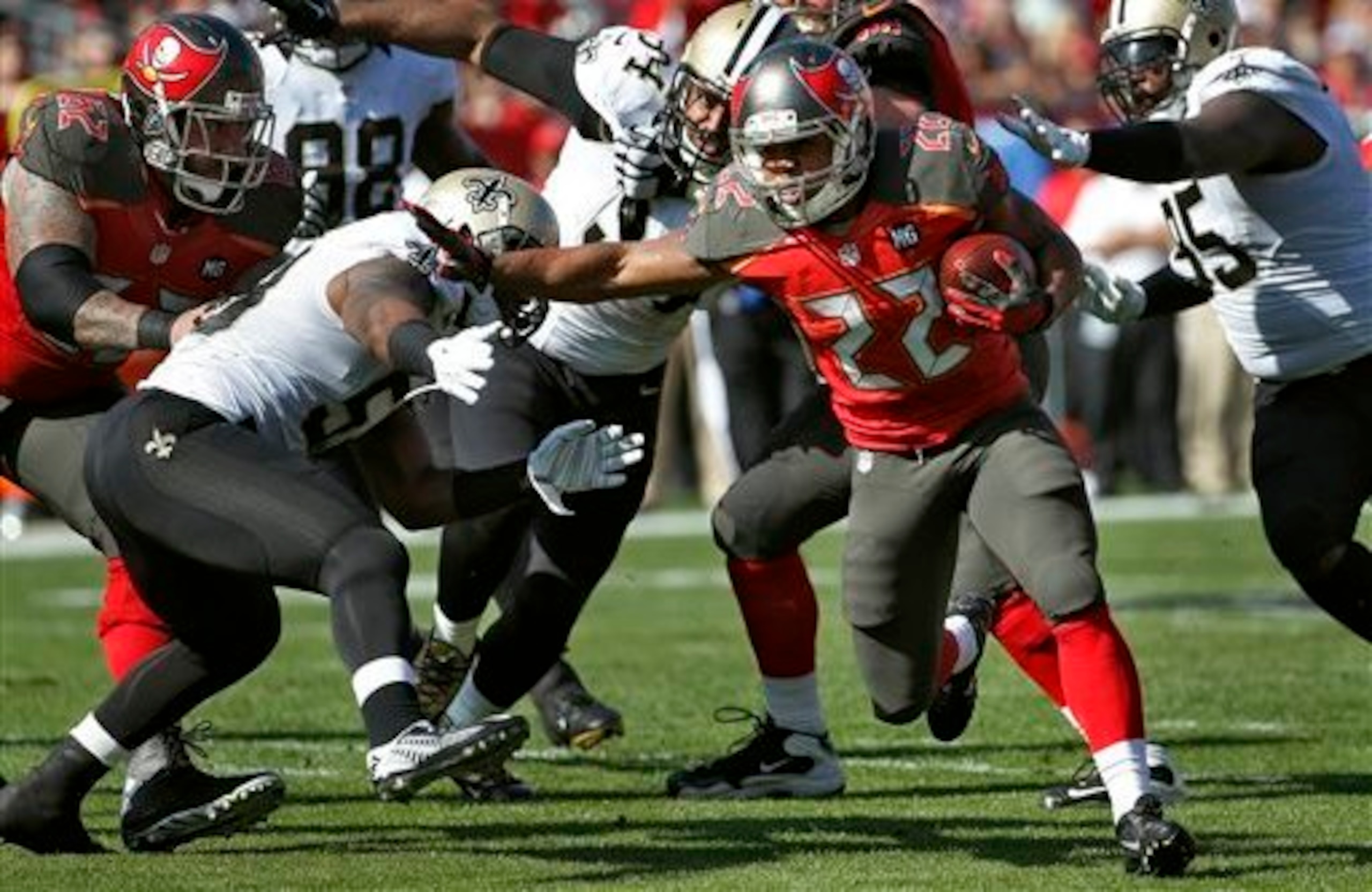
Starter: Doug Martin
If someone would have told me the team with Doug Martin would have been so low on this list just two years after he made the Pro Bowl as a rookie, I would have thought they were crazy. The Buccaneers have felt this pain too often, though. The most recent first-round breakout rookie running back who fell through the same fate with the squad was Carnell "Cadillac" Williams, but his issues stemmed from injuries too.
Martin has missed 15 games over the last two years, and in that time he's dropped a full yard on his average from his rookie mark of 4.6. His job isn't safe, as his rookie contract is near its end. Maybe Martin will bounce back with a healthy season, but we can't assume that at this point.
Bobby Rainey, who has had stretches of quality play, is the favorite for the second running back role, but Charles Sims might have the best shot to be an every-down option for the team in the future. He played at the University of Houston before transferring his senior year as a graduate transfer to West Virginia. After that season, he was taken 69th in the 2014 draft, but he put up fewer than 200 yards in his rookie campaign.
If he develops correctly, he can be a Matt Forte-type of player, a threat out of the backfield on any down. Other than those three options, the team has Mike James and Dominique Brown, two fairly young players who should battle to earn a spot on the squad.
27: Tennessee Titans
6 of 32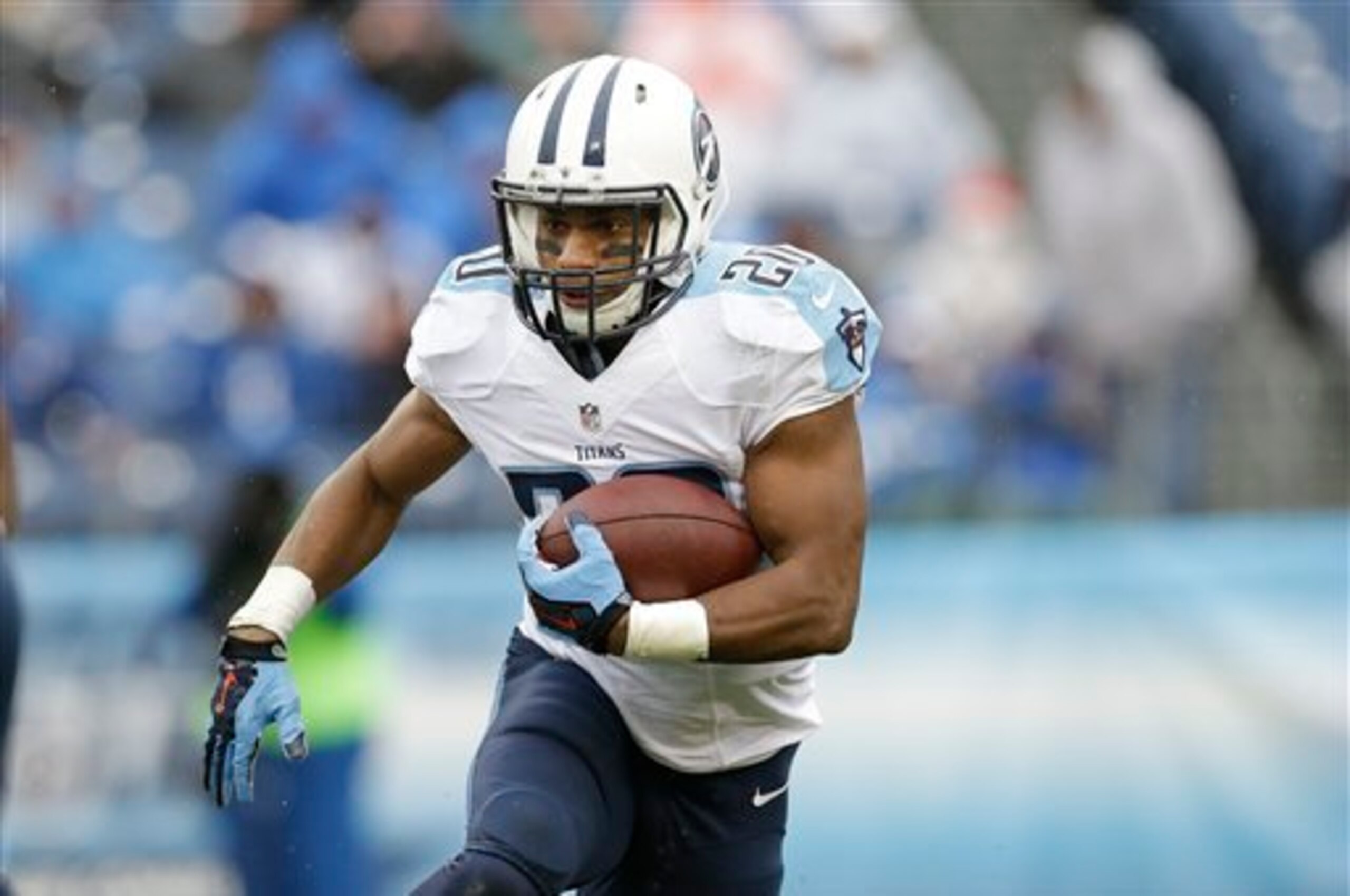
Starter: Bishop Sankey
Last season, the Tennessee Titans had one of the worst running back units heading into the draft. With the 54th pick of the draft, they brought in Bishop Sankey from Washington as their potential future in the backfield. Averaging just less than four yards per carry and two touchdowns during his first season, though, he hasn't exactly lived up to the hype just yet.
While Sankey is the long-term option up at the top of the depth chart, Shonn Green might be the better consistency option in the short term. While he will be 30 years old when the season starts, he's averaged about four yards per carry during his two years in Tennessee, with only five starts under his belt.
The team added David Cobb of the University of Minnesota in the fifth round of the most recent draft. Some like him more than Sankey as the long-term option, but any projection featuring any of the Titans' running backs as more than committee members at this point is done so without any factual evidence.
Dexter McCluster is still hanging around as a flex option as a runner and receiver, while Antonio Andrews is a quality player at the end of the camp roster. If the competition at the bottom of the depth chart was as strong as the top, this team wouldn't be ranked so low on this list.
26: Indianapolis Colts
7 of 32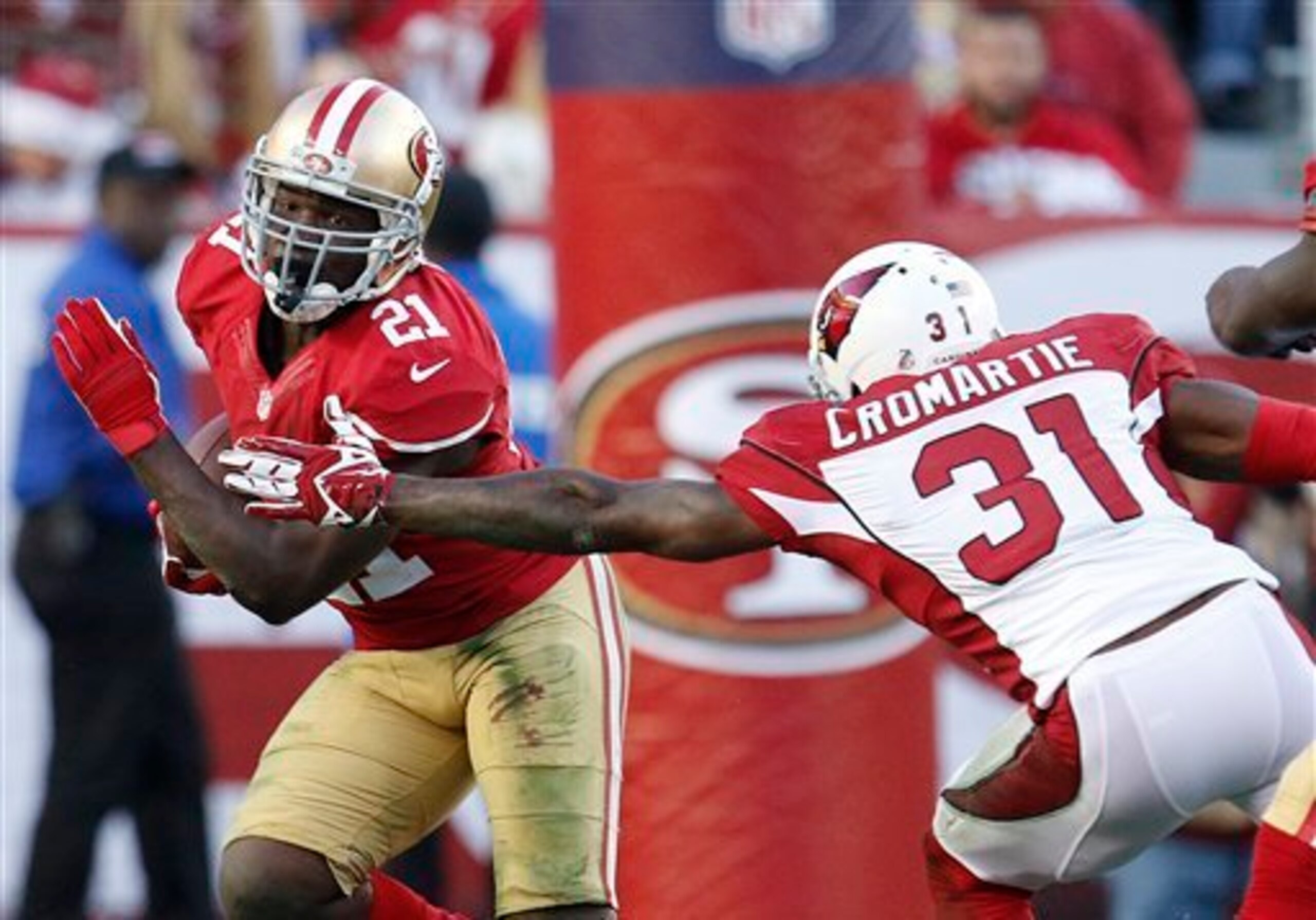
Starter: Frank Gore
For the most part, outside of T.Y. Hilton, the Indianapolis Colts haven't done a good job at building a roster around Andrew Luck. They've been fairly poor at drafting, developing and signing players in the post-Manning era. Furthermore, no one should give the team credit for drafting Luck, a generation talent, first overall because everyone else in the world would have, too.
Frank Gore is 32 years old, playing a position where turning 30 is a death sentence for one's career. His numbers haven't dropped yet, but San Francisco knew the other shoe was going to fall. Still, the Colts welcomed Gore with open arms to replace the mistake they made at the position after trading a first-round pick for Trent Richardson.
Luckily for the team, there are four young options behind Gore. I would doubt that any of them will start for a full season in their careers, but they can contribute to a committee. Dan "Boom" Herron, Vick Ballard, Zurlon Tipton and Josh Robinson are the potential two to three backs who will make the team behind Gore. Tipton, who looked great in college before an injury, and Robinson, a rookie from Mississippi State, would be my two favorite options there.
25: Detroit Lions
8 of 32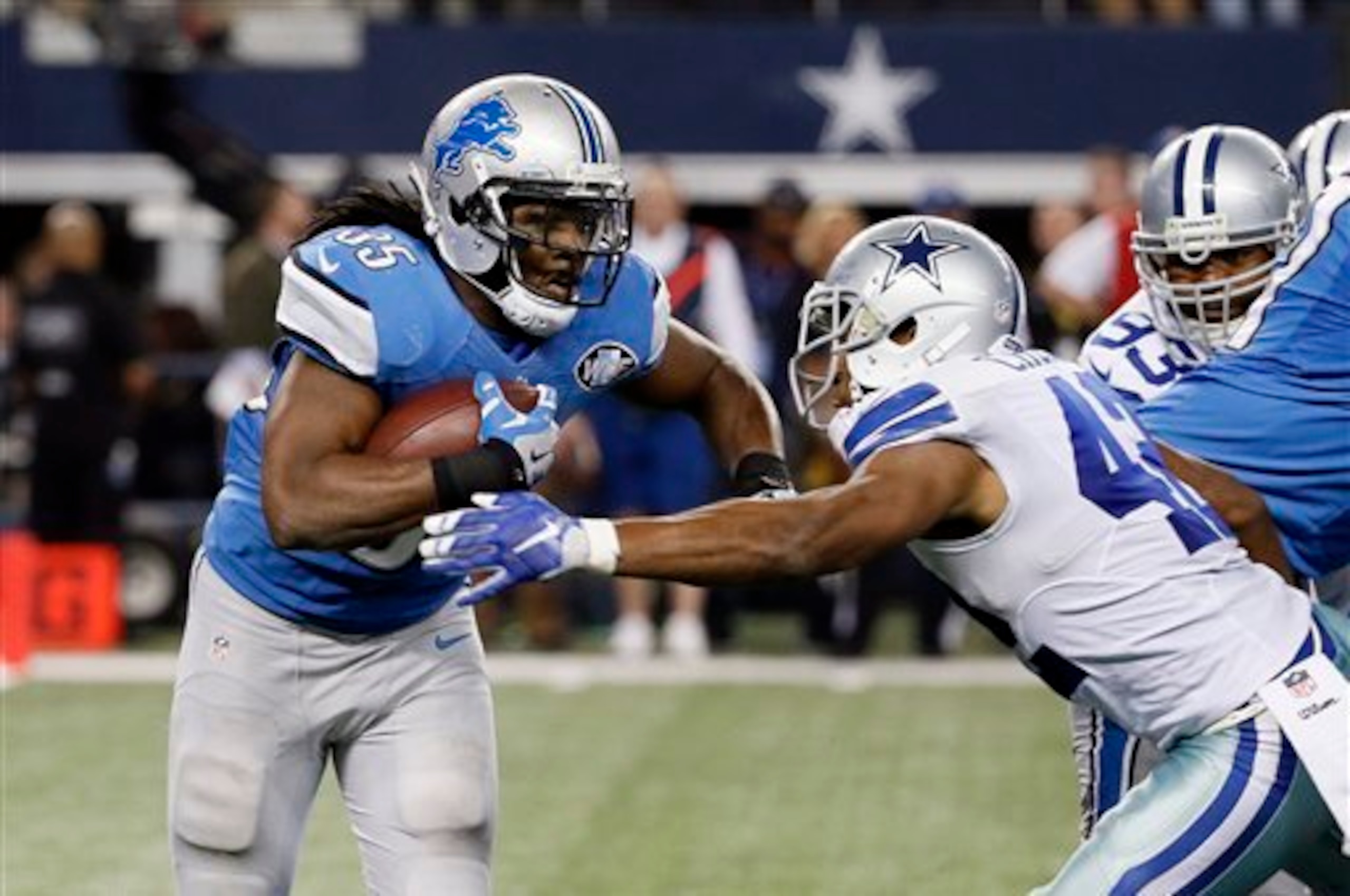
Starter: Joique Bell
One of the more interesting routes a starting running back has taken over the past of couple years has been Joique Bell's. Coming out of small school Wayne State, Bell was undrafted. He bounced around several teams his first two years but eventually landed in Detroit, where he didn't see many reps until 2013.
Over the past two years, he's started 10 games and averaged nearly four yards per carry. This season should be his first year as a full-time starter, but he will turn 29 years old before the regular season kicks off. Bell might be the top dog in the short term, but he could very well be gone in a year too.
The top developmental running back on the roster is Ameer Abdullah, who probably would have been ranked near Melvin Gordon, a mid-first-round pick, if not for his fumbling issues. If he can fix that flaw, his second-round value will look much better retroactively.
Imagine a young Warrick Dunn; that's what you can get out of Abdullah out of the gate.
George Winn and Theo Riddick are on the roster but look to be reserve players. Winn has bounced around the league in his two years in the NFL, while Riddick has sat on Detroit's bench for his tenure. Zach Zenner of South Dakota State, an undrafted free agent, might make the roster over those two, as he has the athleticism and production you'd like to see from a small-school player. Maybe Zenner even ends up having a better story to tell than Bell.
24: Arizona Cardinals
9 of 32
Starter: Andre Ellington
Andre Ellington was a player whom many in the draft community ranked higher than where he fell on draft day, which was largely due to the fact that he ran a 4.61 40-yard dash. In some ways, he's like the running back version of Anquan Boldin. With that being said, Boldin as a top option on a team never really worked out.
Ellington was on the fringe of being viewed as an every-down back this past offseason, but after his yards per carry dropped by more than two yards, it became clear that he wasn't supposed to be a featured back, even if he could catch out of the backfield. The team already had Stepfan Taylor, Kerwynn Williams and Marion Grice on the roster, but they were all lower-end committee runners.
The one player who could push Ellington for his starting spot, and do it sooner than later, is David Johnson, who was selected out of the third round via Northern Iowa this last draft. He is a clone of Matt Forte, who has been the most consistent player in all areas of the game for a long while now. If Johnson can develop at the fast rate Forte did, Ellington won't see nearly as many touches in 2015.
23: Cleveland Browns
10 of 32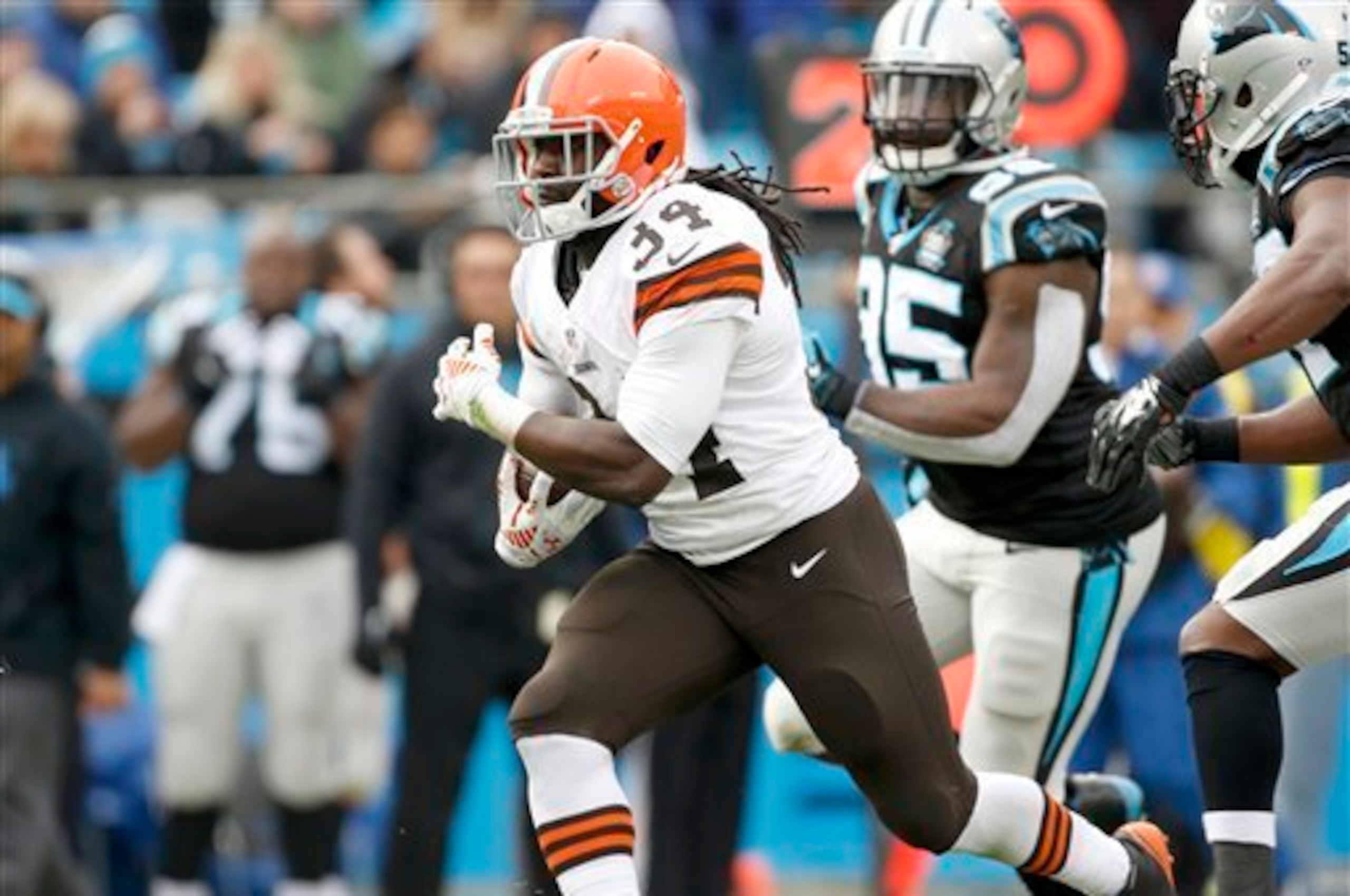
Starter: Isaiah Crowell
Isaiah Crowell was an undrafted rookie from Alabama State last season. When you think of undrafted players from small schools, rarely do you imagine them as early-career starters. Crowell was a former blue-chip recruit, though, and he made in impact for the University of Georgia until he was forced out of the program for a weapons charge.
Crowell slowly moved up the depth chart after signing his rookie deal, and by the time his first season was over, he had started four games and scored eight touchdowns to go along with collecting more than 600 yards on the ground. He has amazing talent, and if he can stay out of trouble, the Browns may have found their guy.
That would be a big break for a franchise that needs as much luck as possible.
Terrance West and Duke Johnson could also be in the running for the top job in Cleveland. West was a third-round pick out of Towson, another small school, last season. He posted similar numbers to Crowell, but in more starts. Johnson, on the other hand, is a rookie from the University of Miami, a football factory. The third-round pick might be the best option for the team between the 20-yard lines.
With three strong candidates ahead of the rest of the running backs, there's virtually no reason to keep a fourth, unless he can return kicks or punts at a more efficient rate than anyone else on the roster. Glenn Winston and Shaun Draughn fit in that "prove yourself or lose your nameplate" category.
22: Atlanta Falcons
11 of 32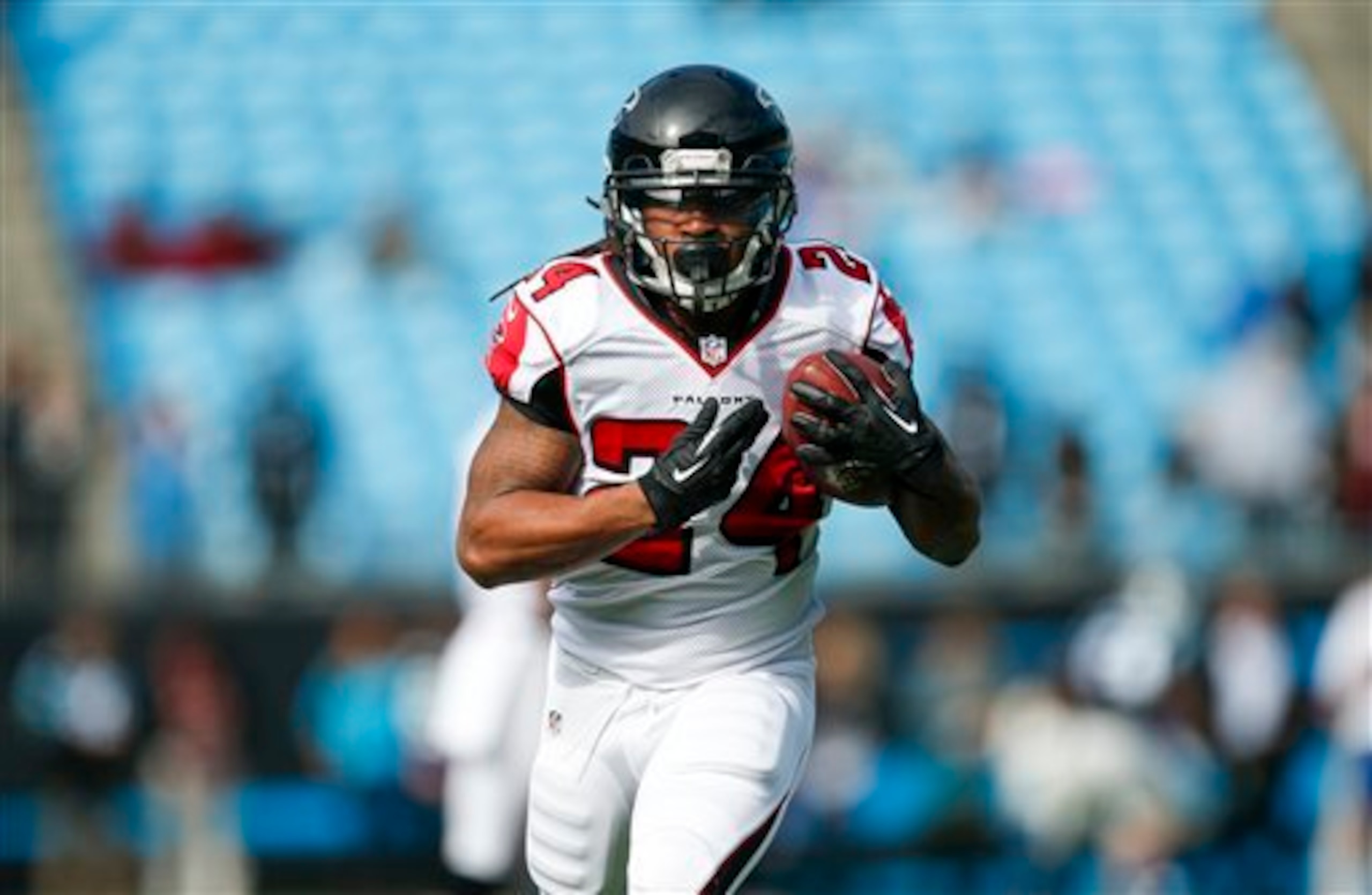
Starter: Devonta Freeman
At only 5'8", Devonta Freeman is one of the smallest running backs in the league, but, at least for now, he's Atlanta's starting running back. The Falcons drafted him last season in the fourth round out of Florida State. During his rookie year, he started no games but carried the ball 65 times for a 3.8 yards-per-carry mark.
He's not going to be the only back in contention for touches, though. Atlanta just drafted Tevin Coleman out of the University of Indiana. He is a one-cut speedster who should do well in Atlanta's transitioning zone-blocking offense. For a lot of reasons, Coleman can be like Ryan Grant, who posted 1,000-yard milestones in single seasons for the Green Bay Packers a half-decade ago.
Antone Smith was a hot fantasy football name for about a minute last season. He has enough talent to stick on the roster, but his bread and butter is now focused on special teams. The other running backs on the team at this point are Jerome Smith, a second-year undrafted player via Syracuse, and Collin Mooney, who is a fullback with an Army background. Both have shots to make the roster, but like Antone Smith, they will need to prove their value elsewhere other than as potential feature backs.
21: New York Giants
12 of 32
Starter: Shane Vereen
New England Patriots head coach Bill Belichick is known for being hard on running backs, but for the most part, Shane Vereen wasn't in his doghouse. Vereen was a second-round pick by the team, but when his rookie contract was finished, he joined the New York Giants.
Vereen is equally a run threat and a pass-catching threat out of the backfield. Over the last two years, as a rotational player, he had more receiving yards and touchdowns than in the rushing category. He's never been a full-time starter in the NFL, but in New York, as the head of the committee, he will be.
Rashad Jennings is behind Vereen if the former Patriot can't put together a starting-caliber effort. Jennings isn't anything special, but he's consistent and a veteran presence. Andre Williams is also on the roster. Once a Heisman contender, he was drafted in the fourth round by the Giants last season, and he still has a shot to become a starter during his NFL career.
Orleans Darkwa, Akeem Hunt and Kenneth Harper are a clear tier behind Williams on the depth chart, which is going to make it hard for any of them to make the 53-man team. Still, Darkwa, a second-year Giant who was undrafted out of Tulane, has the best shot of the three.
20: New England Patriots
13 of 32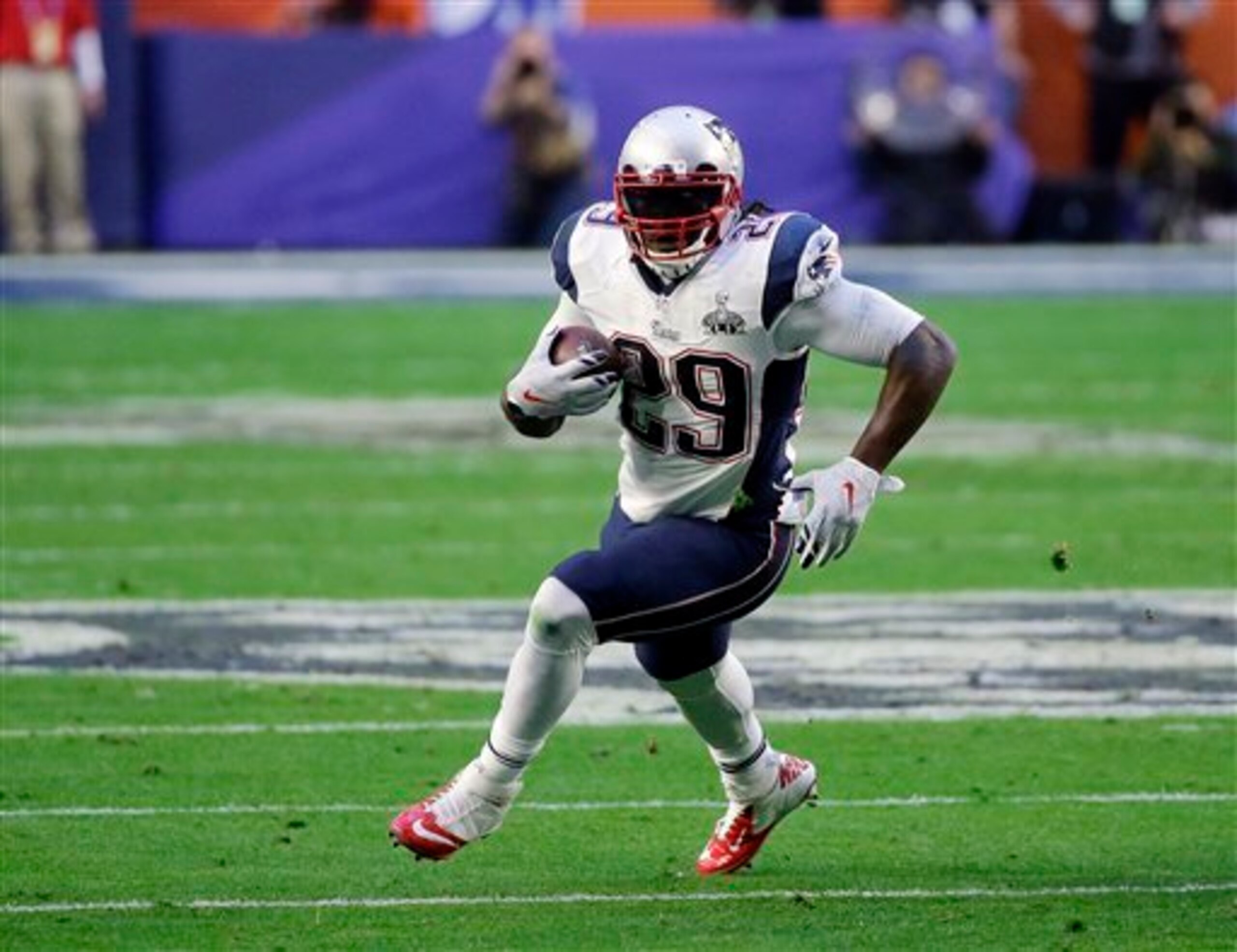
Starter: LeGarrette Blount
Last season must have been a roller-coaster ride for LeGarrette Blount. After coming into the league as an undrafted prospect after his senior year at Oregon (which featured him punching out a Boise State player in the season opener), he was pulled over for marijuana on the way to a flight for an away game, and he also had an episode that featured him leaving a game before it was finished.
The Steelers cut him, but the New England Patriots picked Blount up, and with his help, the squad won a Super Bowl ring for the 2014 season. He's going to miss the first game of 2015 due to the marijuana issue he ran into in 2014, but he should start the other 15 games for the team this coming year.
By mere volume, the Patriots have one of the deepest running back units in the NFL. At times, Brandon Bolden, James White, Tyler Gaffney and Jonas Gray were all talked about as potential high-end contributors in a committee. New England has them, Blount and three others to throw into the mix with James Develin, Dion Lewis and Travaris Cadet.
19: Baltimore Ravens
14 of 32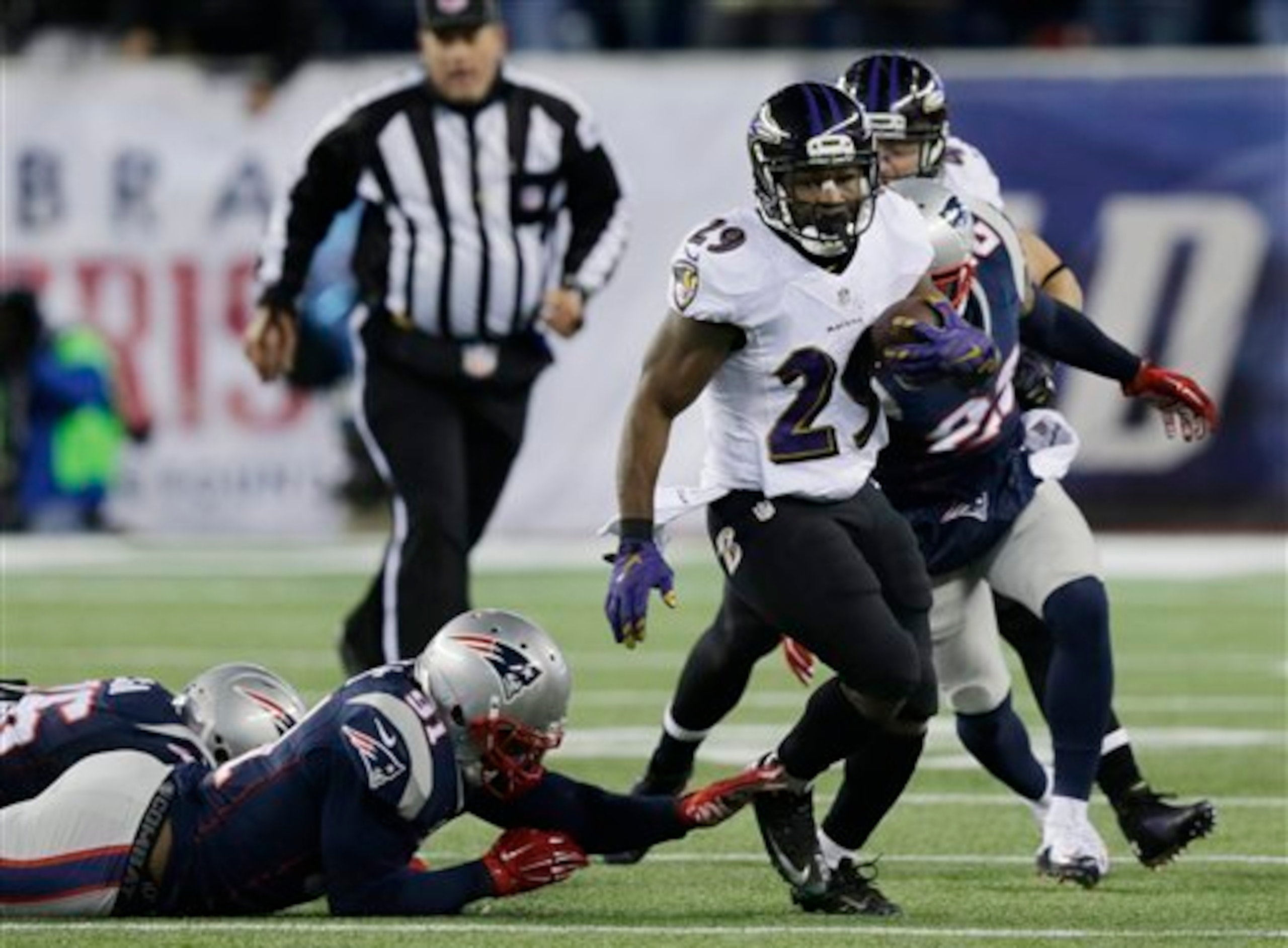
Starter: Justin Forsett
The Ravens are in an interesting predicament. Last season, the cloud of the Ray Rice scandal hung over the franchise, but the squad quietly was able to replace the production at running back. Justin Forsett, who was on his fourth team in four years, started in 14 of the Ravens' 16 games last season and made his first Pro Bowl appearance at 29 years old.
Baltimore has since re-signed the former California Golden Bear to a three-year deal, but just how much of his success has to do with him instead of his surroundings? Joe Flacco is a quarterback who vertically stretches the field, plus the Ravens are known for having one of the best offensive lines in the NFL.
Even if Forsett isn't "the guy," the team has plenty of options behind him. Lorenzo Taliaferro is a talented second-year player who may just be an every-down back in the future. Javorius "Buck" Allen was drafted this season out of USC, too. He has the potential to be a low-end starter in the league or a high-end player deeper in a committee.
Fitzgerald Toussaint and Terrence Magee are also taking up roster spots at this point, but don't expect them to see their way onto the roster in the fall. With three locks on the roster ahead of them, they'll need to show a lot of value on special teams to make the final roster.
18: San Francisco 49ers
15 of 32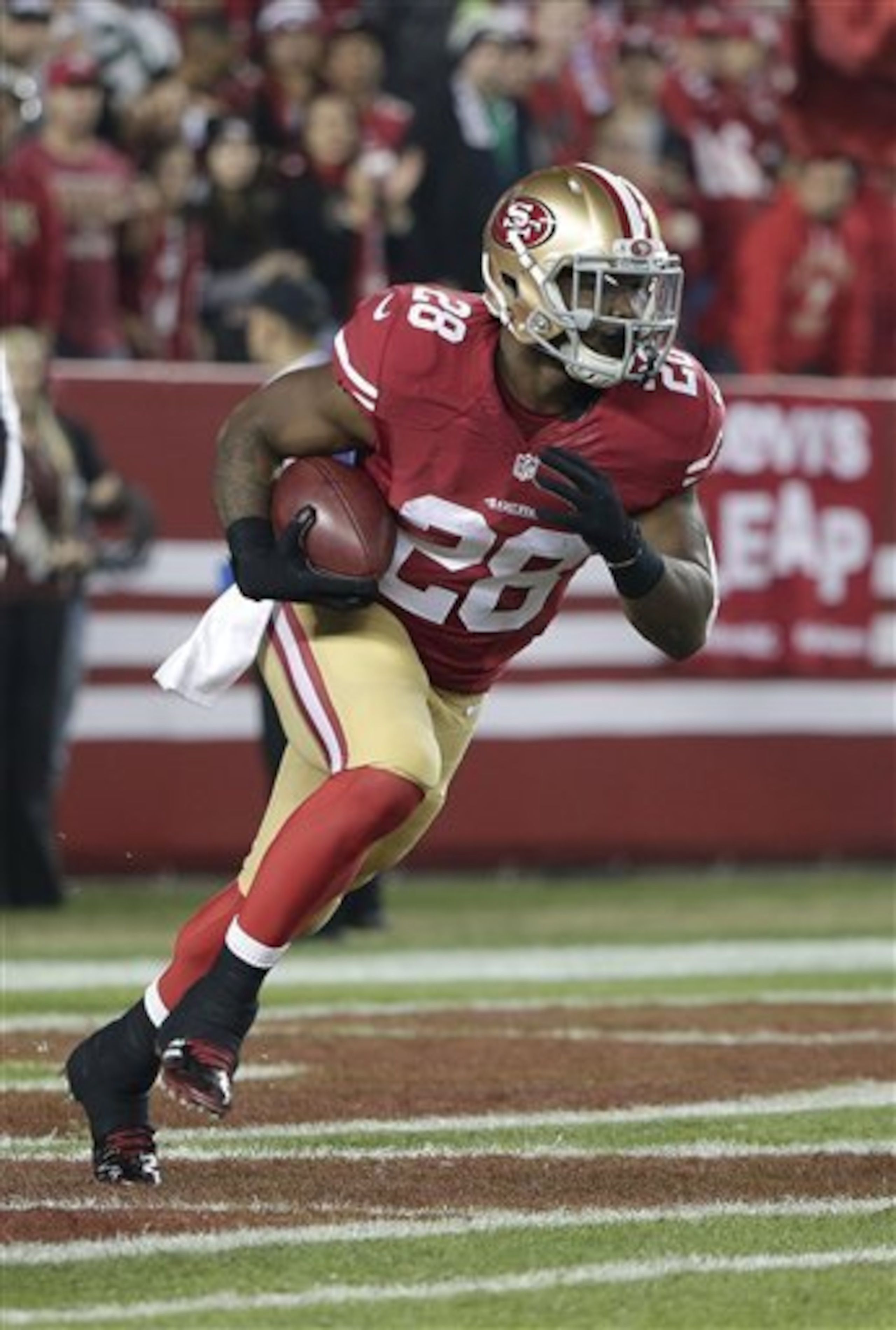
Starter: Carlos Hyde
A lot of draft writers and former scouts made the case that Carlos Hyde was the best running back prospect out of last season's draft class. He was suspended to start his senior season at Ohio State but made huge strides, bumping his stock up from a fringe draftable athlete to one who flirted with the first round.
With Frank Gore, the 49ers' longtime starter, now gone, it's Hyde's role to lose, and it will be difficult to rip it out of his hands. Interestingly enough, the team still added Reggie Bush to the roster. He is a California legend, winning the Heisman for USC, but he might just be a return threat for San Francisco rather than a player set in place to push Hyde.
Kendall Hunter has been a backup for the team for four years now. Going into his fifth, it looks like his role is solidified as a change-of-pace back. Mike Davis of South Carolina was just drafted in the most recent class. He's a talented player but not one who could go toe-to-toe with Hyde. If an injury happened up top, Davis could enter the lineup as a starter; otherwise, he's a high-quality backup or committee member at this point in his career.
At the bottom of the depth chart are Kendall Gaskins and Phillip Tanner, two camp bodies who shouldn't worry those higher up in the unit. They might press for a spot on the practice squad, but it's highly unlikely that either sees regular-season time with the 49ers in 2015.
17: San Diego Chargers
16 of 32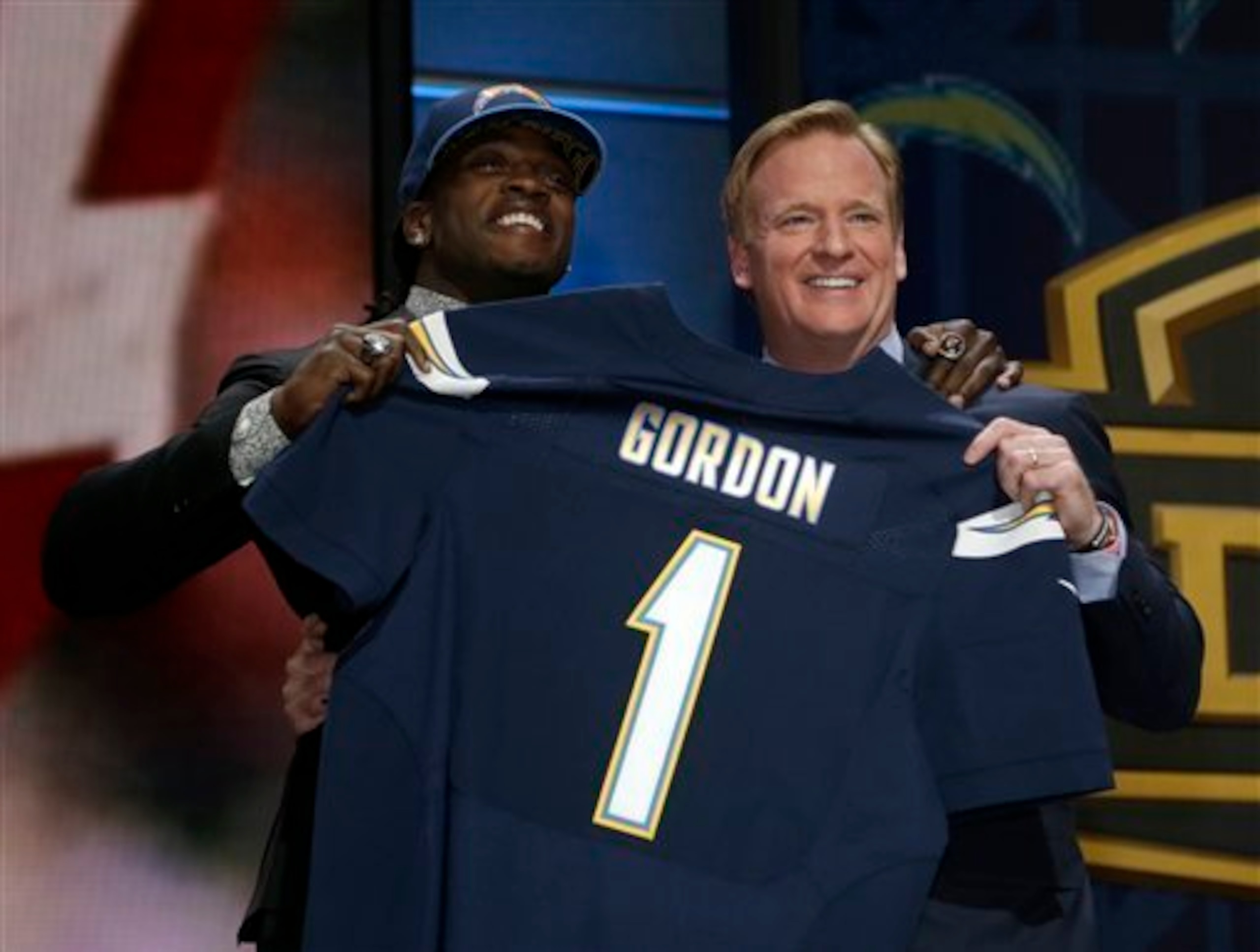
Starter: Melvin Gordon
Before Todd Gurley suffered an ACL injury, there wasn't really a question to who would be the top running back off the board. During the draft cycle, though, there was some debate.
Would you rather have Melvin Gordon, who is Jamaal Charles as a runner but needs work in the passing game, or Todd Gurley, who is a Steven Jackson or Eddie George type but is going to miss part of his rookie season?
In the end, the St. Louis Rams took Gurley first off the board in the top 10. The San Diego Chargers did make a move for Gordon, trading up in the first round to nab the Wisconsin Badger. He should make an immediate impact with the team, as the running back position might be the easiest transition from college to the modern NFL.
The Chargers didn't necessarily need a running back that early on in the draft, though. While players like Branden Oliver, Danny Woodhead and Donald Brown aren't superstars, they could have been decent stopgaps after Ryan Mathews left in free agency.
Woodhead should still see time as a third-down change-of-pace back, but the others are true backups, with Oliver being the more developmental option over Brown. Jahwan Edwards is also on the roster, but there might not even be enough room on the squad for all four running backs on the team to make it through final cuts.
16: St. Louis Rams
17 of 32
Starter: Todd Gurley
The St. Louis Rams are one of the harder teams to rank because their star may not play for them early on. Todd Gurley was a top-10 selection in the most recent draft, but the former Georgia Bulldog is recovering from an ACL injury that ended his season after he had already been suspended for a portion of it.
Still, everyone sees the writing on the wall here. On draft day, Zac Stacy, at the time a St. Louis Rams running back, tweeted out "Yikes" when Gurley was selected that high. The Rams have since traded Stacy to the New York Jets.
The team has been clear with its actions. Gurley is the running back of the future in St. Louis; the issue is just how fast the future will begin.
In the meantime, Tre Mason, last season's third-round pick, or Benny Cunningham, who started twice in 2014, will be Gurley's short-term replacement. Cunningham averaged 3.7 yards per carry last year, nearly two full yards behind his 2013 rookie total, and Mason notched a 4.3 mark during his rookie season. Still, they did all of this behind one of the worst lines in the NFL, and with added talent up front, everyone's numbers should improve.
The reserve players on the roster are Chase Reynolds, a fifth-year runner with no carries to his NFL resume, and Isaiah Pead, a 2012 second-round pick with fewer than 100 yards to his respective career. One of them might make the squad due to Gurley's injury, but I wouldn't expect the Rams to be overly excited to have either see the field.
15: Miami Dolphins
18 of 32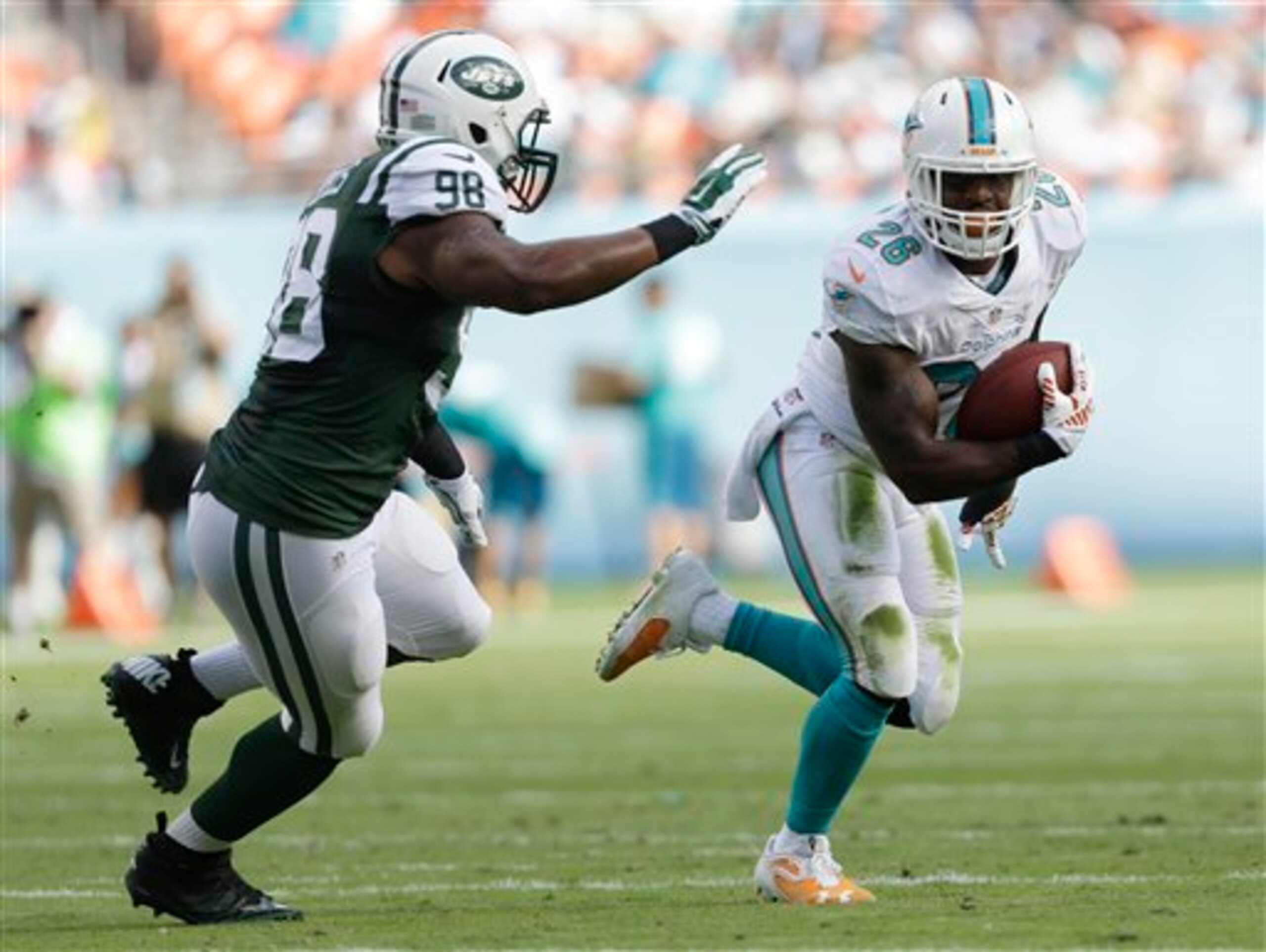
Starter: Lamar Miller
In 2012, Lamar Miller was drafted in the fourth round, but with a 4.34 40-yard dash time coming out of the University of Miami, he quickly became a favorite during the draft cycle. In his rookie year, he rarely saw the field, even though running back might be the position where it's easiest to make the transition from college to the pros.
Still, he won the full-time job as a sophomore, and in 2014, his third year in the league, he averaged more than five yards per carry and broke the 1,000-yard mark. According to Pro Football Focus, he was the 96th-best player in the league overall and the sixth best running back in the NFL.
Miller's skill set might finally be developing to the point where he can become a star in the league, especially behind that slowly improving offensive line that Miami is building around its spread offense.
After Miller, though, the depth chart becomes a bit scattered. The Dolphins have Damien Williams, a second-year runner from Oklahoma; Mike Gillislee, a third-year player from Florida who has rarely seen the field in the NFL; and LaMichael James, who was cut by the 49ers last season after being selected by the team in the second round in 2012. Those are all of the backs with veteran experience on the roster.
The final player is Jay Ajayi, who compares favorably to Le'Veon Bell coming out of Michigan State. While Ajayi is talented, he didn't show the ability to convert north-south as much as he did east-west at Boise State. Should he flip that switch mentally and stay healthy, which is another issue, the fifth-round rookie might be more than just a reserve player down the line.
14: Washington Redskins
19 of 32
Starter: Alfred Morris
Early on in his career, many questioned if Alfred Morris' production was due to his talent rather than the scheme he played in. Going from a sixth-round rookie to a second-team All-Pro player in a single season is impressive, almost to the point where you can't believe the result is natural. Since then, though, he's made back-to-back Pro Bowls, and it's safe to say that Morris is talented.
His numbers have dropped down each year he's been in the league, though, but it's been gradual to the extent that one doesn't realize it until they look at the data.
He's in an interesting spot in his career: Is he going to perform well enough to warrant a second contract from the roster? If not, he could quickly find himself as a 27-year-old free agent looking for his first "big" deal in the league while playing a position for younger athletes.
Matt Jones, a third-round rookie, is either going to be the second or third back on the depth chart in the regular season, but by the way some of the staff are talking about him, you'd assume he's already an All-Pro candidate. According to CSN Washington, the Redskins' general manager told ESPN 980 that Jones is similar to Seahawks running back Marshawn Lynch, who is a top-five player at the position.
If Jones wins the second slot, though, he'll have to beat out Silas Redd, who probably is the veteran backup on the roster, despite the fact that he's very green himself. Chris Thompson and Jordan Campbell may fight for low-end roster spots or practice-squad gigs.
13: Cincinnati Bengals
20 of 32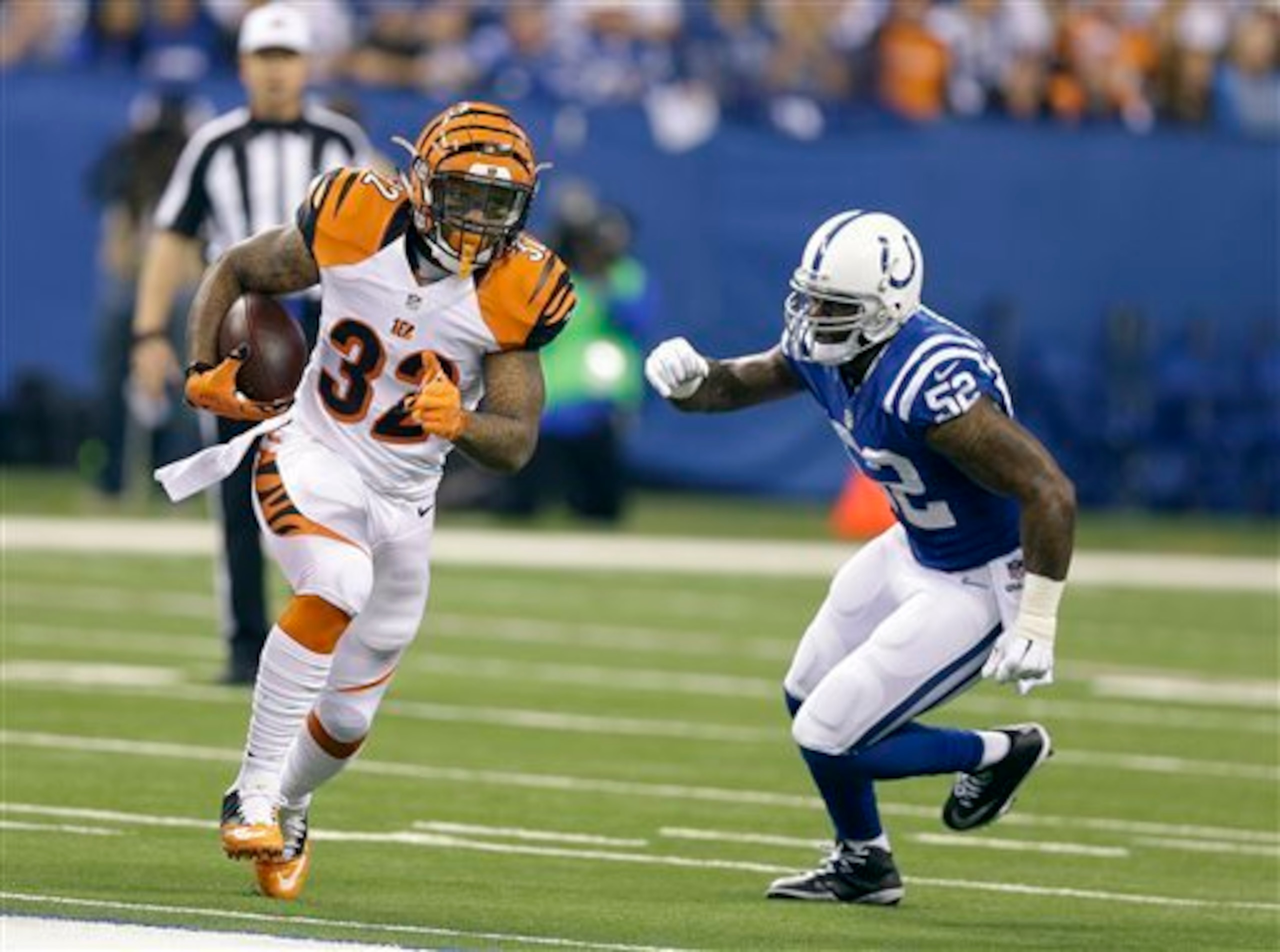
Starter: Jeremy Hill
Last year, the Bengals drafted Jeremy Hill late in the second round out of LSU. He was more than talented enough for the slot, which he proved with his five yards-per-carry mark on the season, but two run-ins with the law had dropped his draft status. If Hill has his head on straight, he should be one of the top backs in the NFL this season.
Giovani Bernard is Cincinnati's second runner on the roster, but no one would have guessed that was a possibility in 2013; he was the top running back selected in that class. Coming out of North Carolina, he was viewed as a better version of C.J. Spiller, who originally was a top-10 pick. When Cincinnati added Hill to the roster, though, it pushed Bernard down a peg.
The other three running backs on are fairly talented too. Rex Burkhead and Cedric Peerman are veterans who have spent time bouncing around the league. James Wilder Jr., on the other hand, is a second-year undrafted player out of Florida State. Only a 23-year-old, he is the best option for the future of the squad, but with Hill and Bernard still on their own rookie deals, why would the Bengals ever worry about the future of the position?
12: Denver Broncos
21 of 32
Starter: C.J. Anderson
In 2013, the Denver Broncos spent a second-round pick on Montee Ball, a running back from Wisconsin. The year before, the team used a third-round pick on Ronnie Hillman, who came to Denver via San Diego State. Still, somehow, an undrafted second-year player was able to beat out both of those tailbacks by the end of the season.
C.J. Anderson wasn't drafted coming out of the University of California. He's on the shorter side of the measuring stick at 5'8", but he has a compact body and enough speed to get the job done. His career yards per carry two seasons into his career is 4.8, which is a good mark considering the sample size.
While Ball and Hillman won't likely be the starters this year, they are still talented. Ball, if he can improve his vision, can still develop into an every-down back in the future. Hillman, a home run threat, is a solid change-of-pace option for any team in the league.
With three locks to make the roster in the unit, there might not be any openings for the remaining backs. Juwan Thompson, Jeremy Stewart and Kapri Bibbs are names that everyone in the draft community is familiar with, but, at most, only one of them will survive to opening day.
11: New Orleans Saints
22 of 32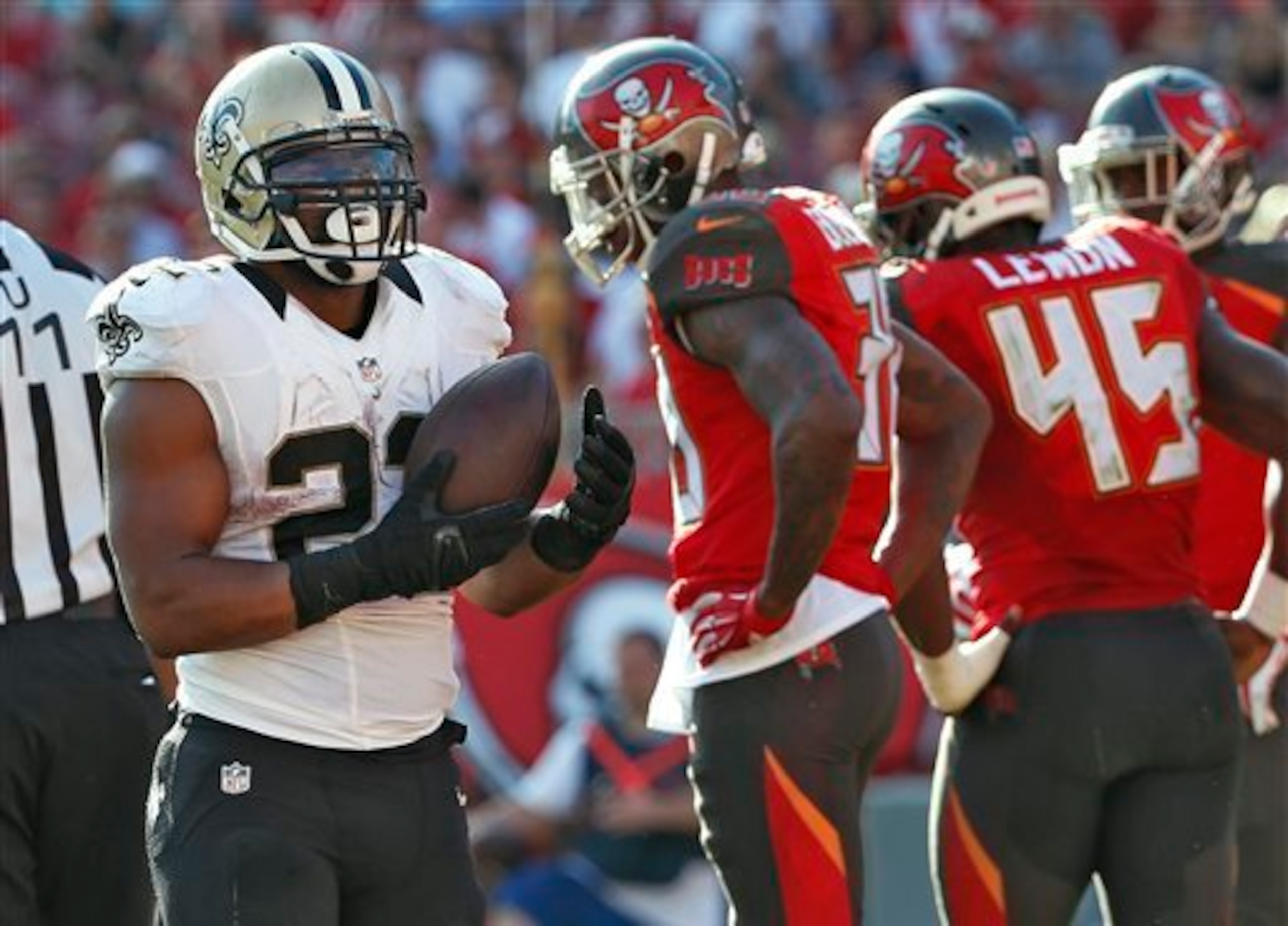
Starter: Mark Ingram
A first-round pick in 2011, Mark Ingram was supposed to do more than he had done in his first couple of years in the league. The University of Alabama's first-ever Heisman winner, he never started more than five games until 2014. Last year, he made nine starts, which was good enough for his first Pro Bowl bid.
He's averaging around four yards per carry for just about his entire career, so while he's not great, he's solid and consistent. As a 25-year-old with fewer than 600 carries, he's still fresh for an incoming fifth-year back.
Surprisingly, the New Orleans Saints added another running back into the mix: C.J. Spiller. He was a former top-10 pick with the Buffalo Bills, as his skill set of being a runner and receiver is a premium in today's NFL. After he made the Pro Bowl in 2012, his yards per carry dropped drastically, and he only started 15 games over the following two years combined.
Behind the top two runners, four backs are on the roster, but only two, Khiry Robinson and Tim Hightower, pose any threat to make the team. Edwin Baker and Marcus Murphy should contend for the practice squad.
10: Carolina Panthers
23 of 32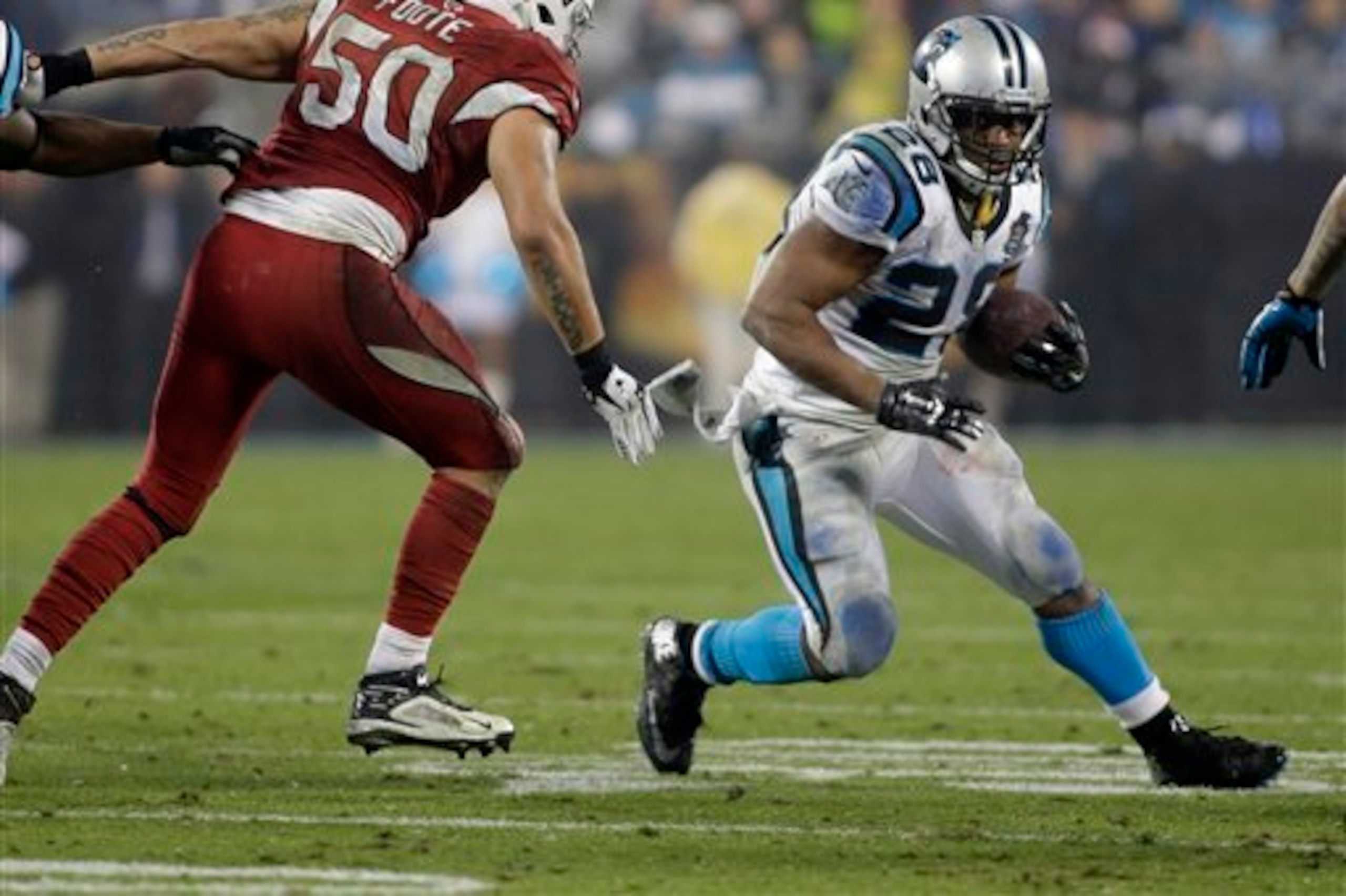
Starter: Jonathan Stewart
It's hard to label Jonathan Stewart as a "bust," at least on Carolina's end. Coming out of the University of Oregon, he was drafted with the 13th overall pick of the 2008 class. Since then, though, he's never started more than eight games in a season, a mark he set in 2014.
Stewart has battled through injury and was behind DeAngelo Williams on the depth chart for the majority of his career, but with Williams now gone, the starting role is there for the former Duck to take. At 28 years old, is he going to be able to mount a comeback? Only time will tell, but he has plenty of talent, and relatively fresh legs, to pull it off.
The second back on the roster is Mike Tolbert, a red-zone specialist who pounds the ball with his 245-pound frame. He's a fullback hybrid who scored 26 touchdowns during his prime of 2010 to 2012, while mostly coming off the bench. Tolbert isn't who he used to be, but he's still more than enough for his specific role at this point in his career.
The Panthers have one of the deepest running back units in the league—if not for talent, then bodies. Seven players are fighting for roster spots behind Stewart and Tolbert. Some have veteran experience like Jordan Todman and Fozzy Whittaker, while others, like Darrin Reaves and Cameron Artis-Payne, are more of the young, developmental types. Lee Ward, Richie Brockel and Brandon Wegher are long shots to make the roster, though, making it only a six-man race to beat the 53-man mark.
9: Houston Texans
24 of 32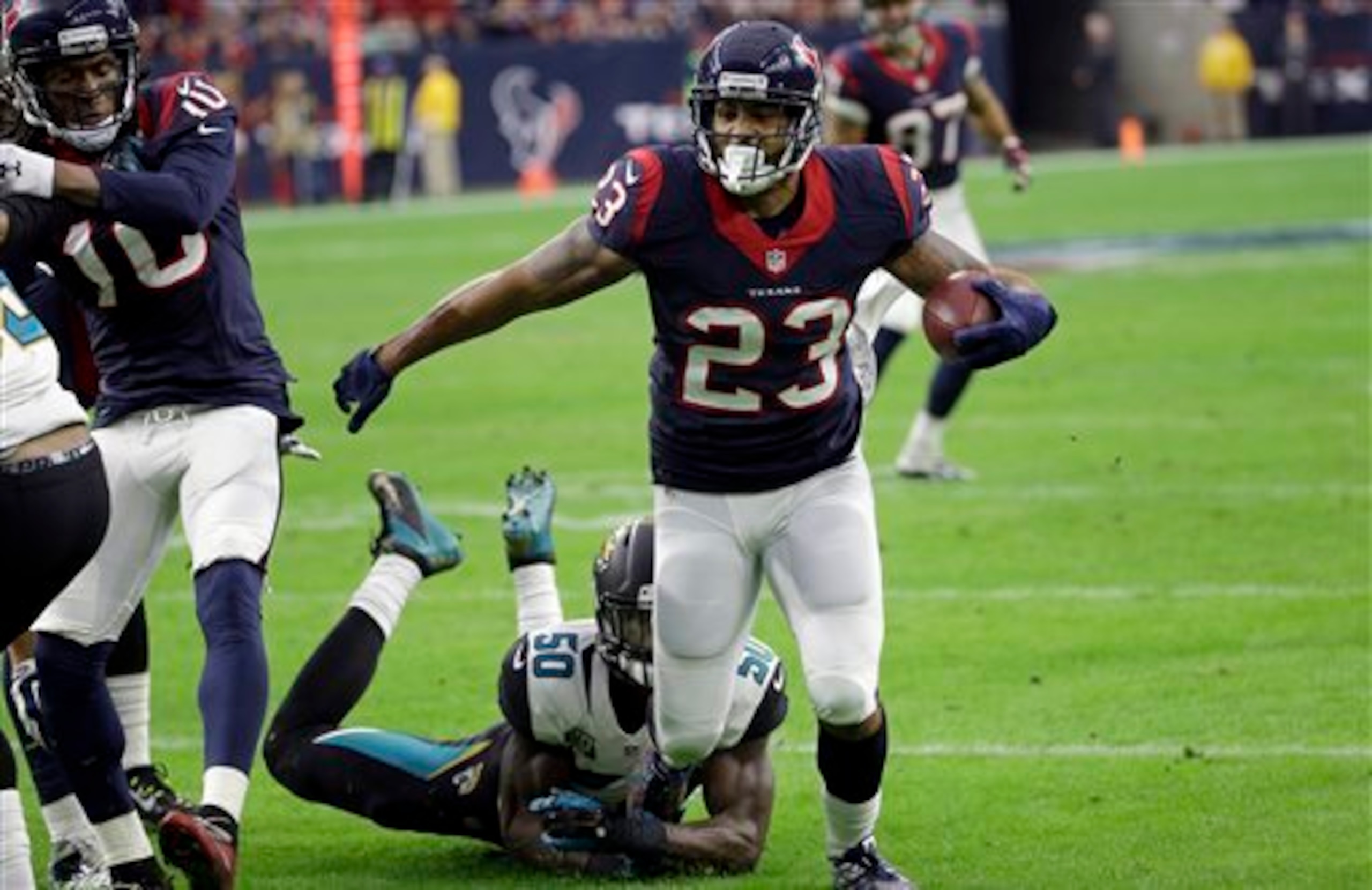
Starter: Arian Foster
The Texans backfield is led by one of the more inspiring stories in the NFL. As an undrafted player coming out of the University of Tennessee, Arian Foster has put together a four-time Pro Bowl career. Bouncing back from a 2013 effort that only featured him on the field for eight games, Foster once more cracked 1,200 yards, as he did in the three years prior to 2013, despite missing three of his 16 games in 2014.
He's already 28 years old and will turn 29 by the time the regular season kicks off, but his one-cut style of play isn't going away anytime soon. With only about four-and-a-half years of collisions under his belt at the NFL level, he will be worth the final two years of his current contract with Houston.
His potential replacement may already be on the roster in Alfred Blue. He was a sixth-round pick out of LSU last season and saw 169 carries when spelling Foster or replacing him due to injury. Averaging just over three yards per carry, Blue is nothing special, but he's still young at 24 years old.
The other backs on the roster are names, but none really stick out. All three of them have a shot to make a roster, but few people believe they can develop into every-down starters.
The team selected Kenny Hilliard in the seventh round out of LSU this season and signed Chris Polk just before the draft. Jonathan Grimes bounced around the league for a while before finding a home in Houston in 2013, but he only has 62 rushing attempts in his five-year career.
8: Chicago Bears
25 of 32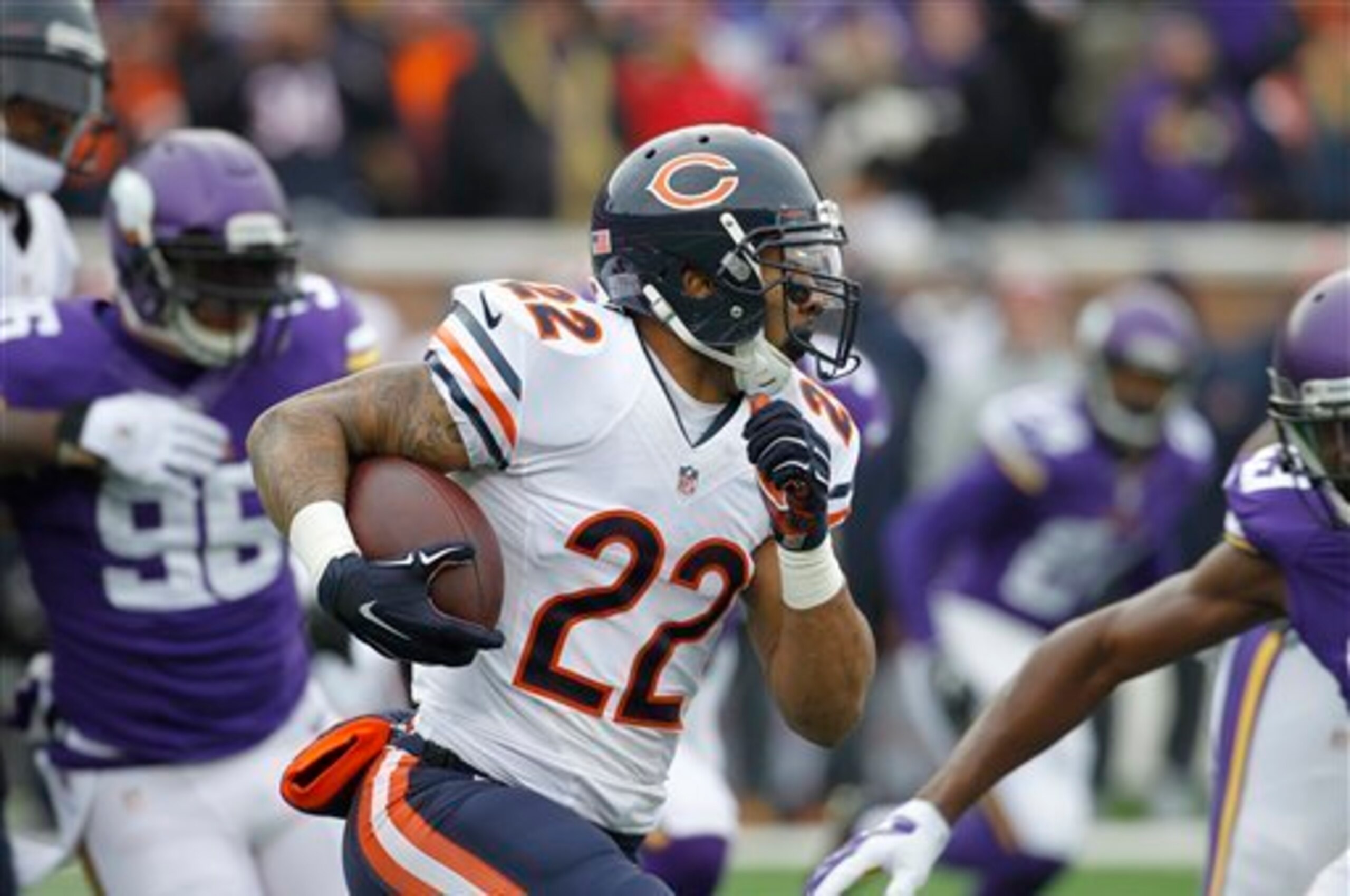
Starter: Matt Forte
Over the years, Matt Forte has been the one consistent staple of the Chicago Bears offense. While Jay Cutler has up-and-down seasons, Forte can be counted on as both a runner and receiver out of the backfield. The one hang-up on Forte is his age. At 29 years old, the 30-year-old cliff is looming over his head.
His lowest single-season total in his career was 929 yards in 2009, the only time he hasn't cracked 1,000 yards while playing a full 16-game season. He also broke his personal single-season receiving yardage mark last year with 808 and tied his touchdown reception total with four. All-around backs tend to hold up better down the stretch, so Forte might be able to finish another decently sized deal in the future, as he'll be a free agent next offseason.
After finishing up his rookie contract with the Atlanta Falcons, Jacquizz Rodgers was added to Chicago via free agency. An 85 percent version of Darren Sproles, Rodgers tends to match his rushing total with his receiving total and is an undersized back at 5'6", 196 pounds. Think of him as a change-of-pace player and long-distance specialist.
There are also two running backs on their rookie contracts who should make a push for playing time in 2016. The first is Ka'Deem Carey, who was selected last season out of the University of Arizona in the fourth round, and the second is Jeremy Langford, who was selected out of Michigan State in the fourth round in the most recent draft.
Neither has elite traits, but they should be able to plug some of the bleeding if Forte leaves the squad in the future. Senorise Perry is also on the roster, but the only time he touched the ball in his rookie season as an undrafted player was for a loss of yardage on a single reception.
7: Buffalo Bills
26 of 32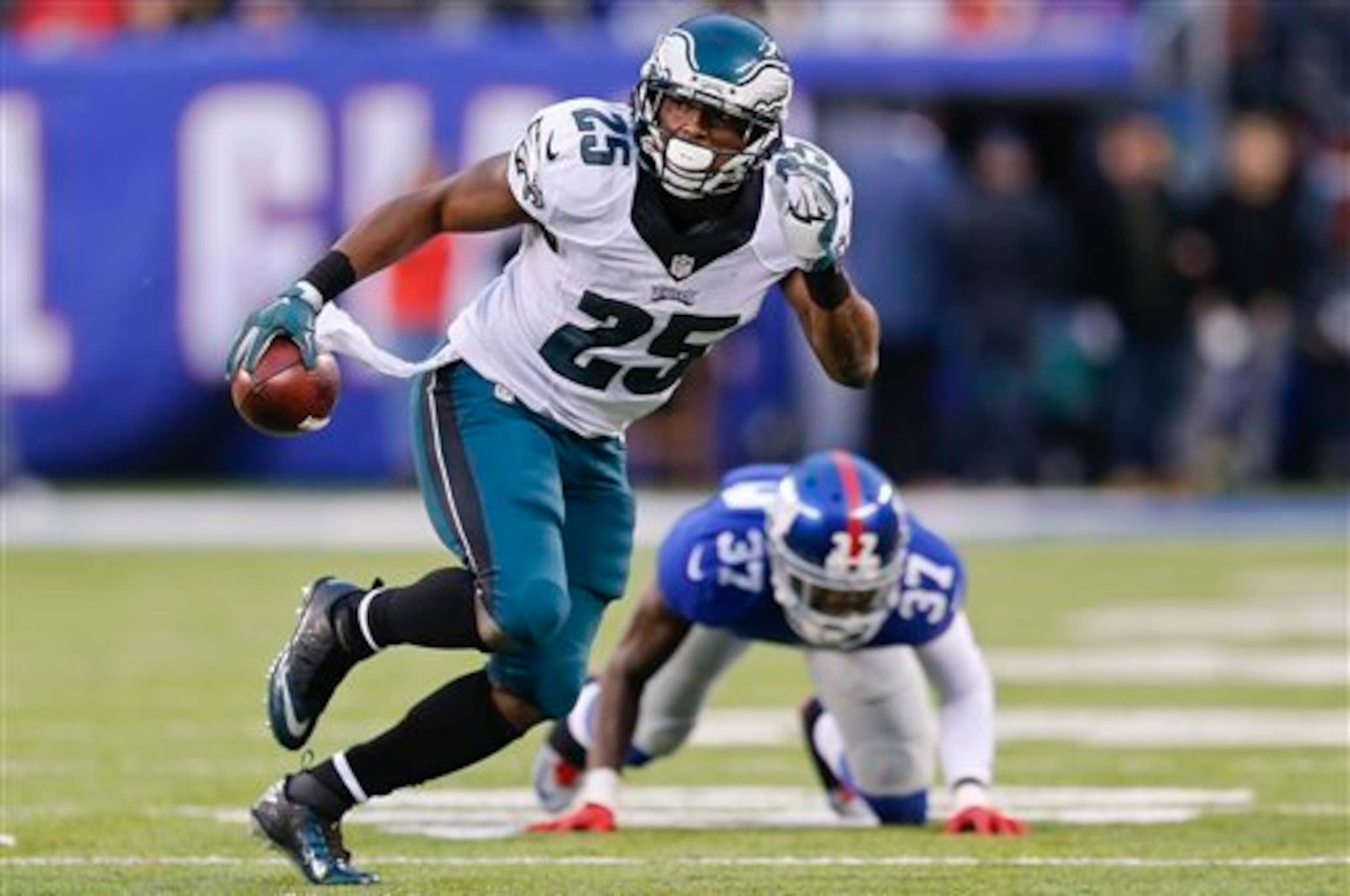
Starter: LeSean McCoy
With EJ Manuel and Matt Cassel at quarterback, the Buffalo Bills will need a strong run game offensively if they hope to put up points in 2015. After trading one of their young defensive stars, Kiko Alonso, for LeSean McCoy from Philadelphia, the Bills found their replacement for C.J. Spiller, their former first-round pick who recently signed with the New Orleans Saints.
In 2011, McCoy had 17 rushing touchdowns. In the previous three years, he hadn't been able to score that many times on the ground combined. He also has dropped a full yard per carry from 2013 to 2014, and the transition from the Eagles' strong offensive line to the Bills', which ranks near the bottom of the league, should be stark. Still, at 26 years old, he has plenty of time to bounce back.
On the flip side, Fred Jackson, the team's second runner and recent part-time starter, is a 34-year-old. He's dipped below four yards per carry twice over the past three years, and his time is probably coming to an end in the NFL. He's still an above-average second option for the squad in the short term, though.
What's most impressive about Buffalo's running back unit is the depth. After the two locks to make the roster, three others look to be top-90 running backs in the league and should make a team elsewhere in the NFL if there isn't enough room to keep them all in northern New York.
Anthony Dixon is a big back in his sixth year in the league, his second year with the Bills. He's more of a goal-line specialist than anything else. Bryce Brown is an amazing athlete who was once thought of as a future NFL star when coming out of high school as a blue-chip recruit. He, like McCoy, also ended up in Buffalo via a trade with Philadelphia.
The last back on the roster is Karlos Williams, a fifth-round rookie from Florida State who looks to compete with Dixon in the big-body red-zone role.
6: Kansas City Chiefs
27 of 32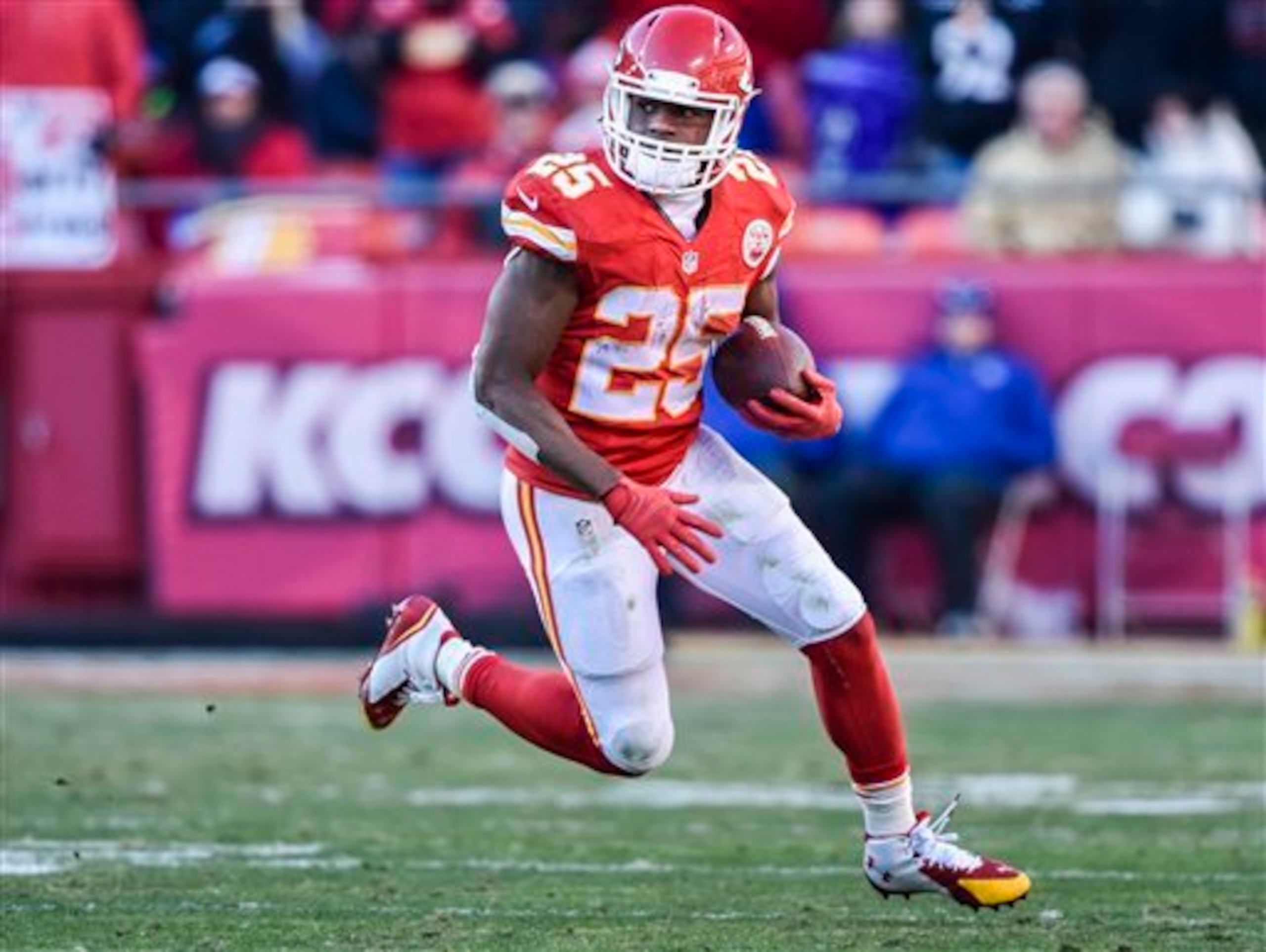
Starter: Jamaal Charles
Jamaal Charles is one of the prototypical running backs of today's NFL. If you watched any of the predraft coverage of Melvin Gordon's offseason, the now San Diego Charger was often compared to Charles throughout the process.
Charles has been able to consistently average five yards per carry for his career and is also a threat to catch the football out of the backfield. He's on the smaller side (5'11", 199 lbs) and is getting up there in age (28), but he has plenty in the tank for another season or two of great play.
Like Charles, Knile Davis, the player immediately following Charles on the depth chart, is also a former third-round pick. Davis has been buried behind Charles, but his combine measurables and draft status keep him in the conversation for being a potential breakout player down the line. At 227 pounds, which is well above-average for a running back, he was able to post a 4.37 40-yard dash, which according to Mock Draftable puts him in the top 4 percent at the position since 1999.
Two other players who should fight to see playing time are Cyrus Gray and De'Anthony Thomas. Gray is your typical "just a guy." He's put together fewer than 100 yards during his three years in the league since being drafted in the sixth round, but he's been active for 35 games. Thomas, on the other hand, was a back in college but is more of a flex speedy receiver at the professional level.
Charcandrick West is also on the roster, but with those four players ahead of him, it's hard to imagine a scenario where he makes the team without at least two injuries occurring ahead of him. He might hang around the franchise as a practice-squad player, though.
5: Green Bay Packers
28 of 32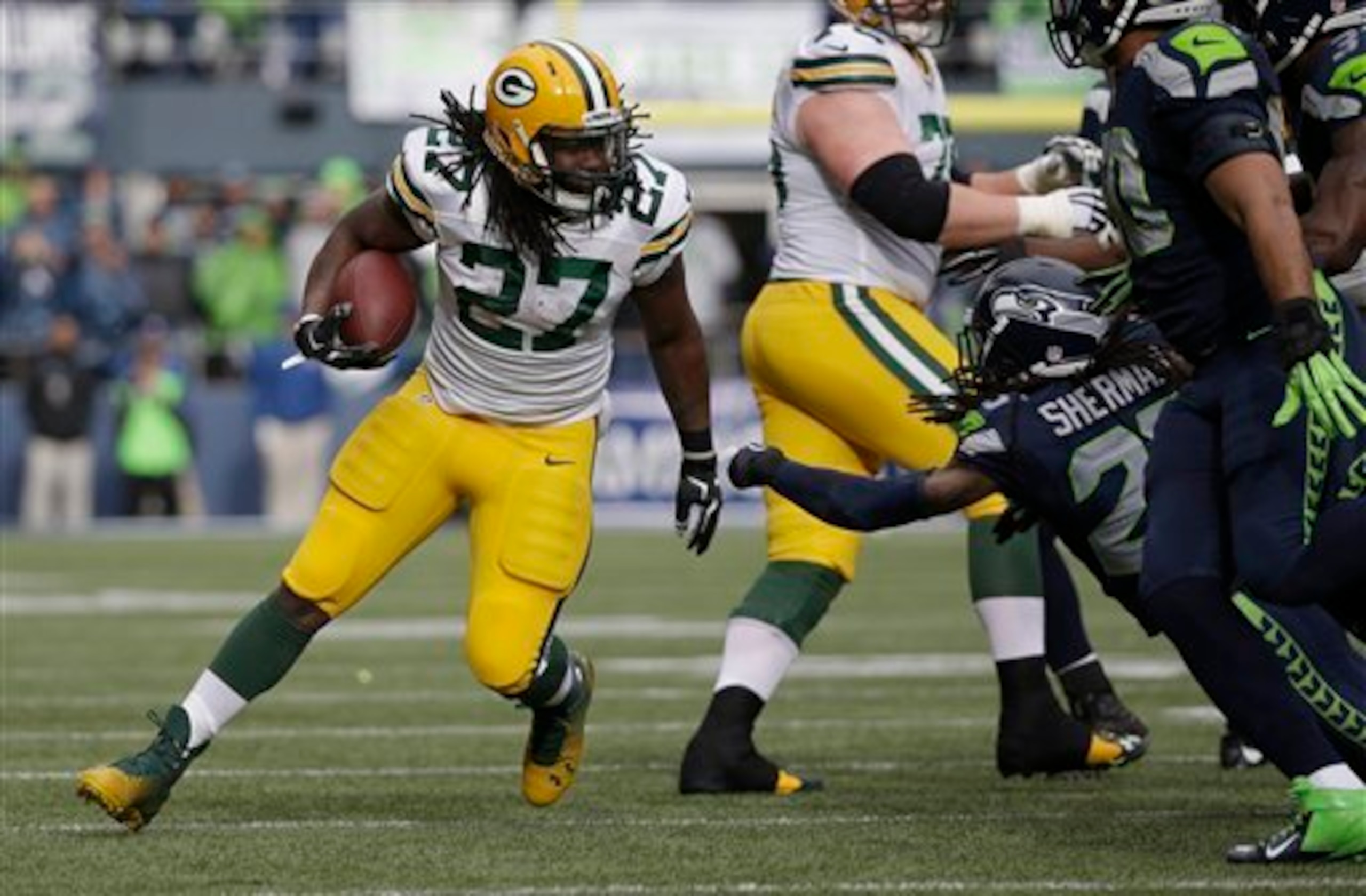
Starter: Eddie Lacy
Le'Veon Bell might have been the best sophomore running back last season, but Eddie Lacy ranked second with plenty of distance between him and the third back. Lacy is a big-body runner who is tough to bring down. He's not quite Marshawn Lynch, who delivers punishment, but Lacy can sustain balance through contact well, especially considering his 230-pound frame.
He's posted back-to-back 1,000-yard seasons, and he improved his yards per carry by a half a yard last year to go along with nearly 200 extra yards through the air and a touchdown reception jump from zero in 2013 to four in 2014. At only 24 years old, Lacy should be in the stable in the NFL for the next half decade.
James Starks is the clear second back behind Lacy on the roster. A tall, one-cut runner, Starks is built more for a zone-blocking system, and the Packers have swung more toward a power/gap scheme since the addition of Lacy in 2013. Still, Starks is a high-end second option in a committee, and if he were a bit younger, he probably could compete to be the top back on a few teams.
Green Bay is going to have to keep a third running back on the roster, par for the course in the NFL, but who that back is going to be is a toss-up at this point. Rajion Neal was an undrafted back from Tennessee last season; John Crockett was undrafted out of FCS North Dakota State this draft class; and Alonzo Harris of Louisiana-Lafayette is also an undrafted rookie.
4: Pittsburgh Steelers
29 of 32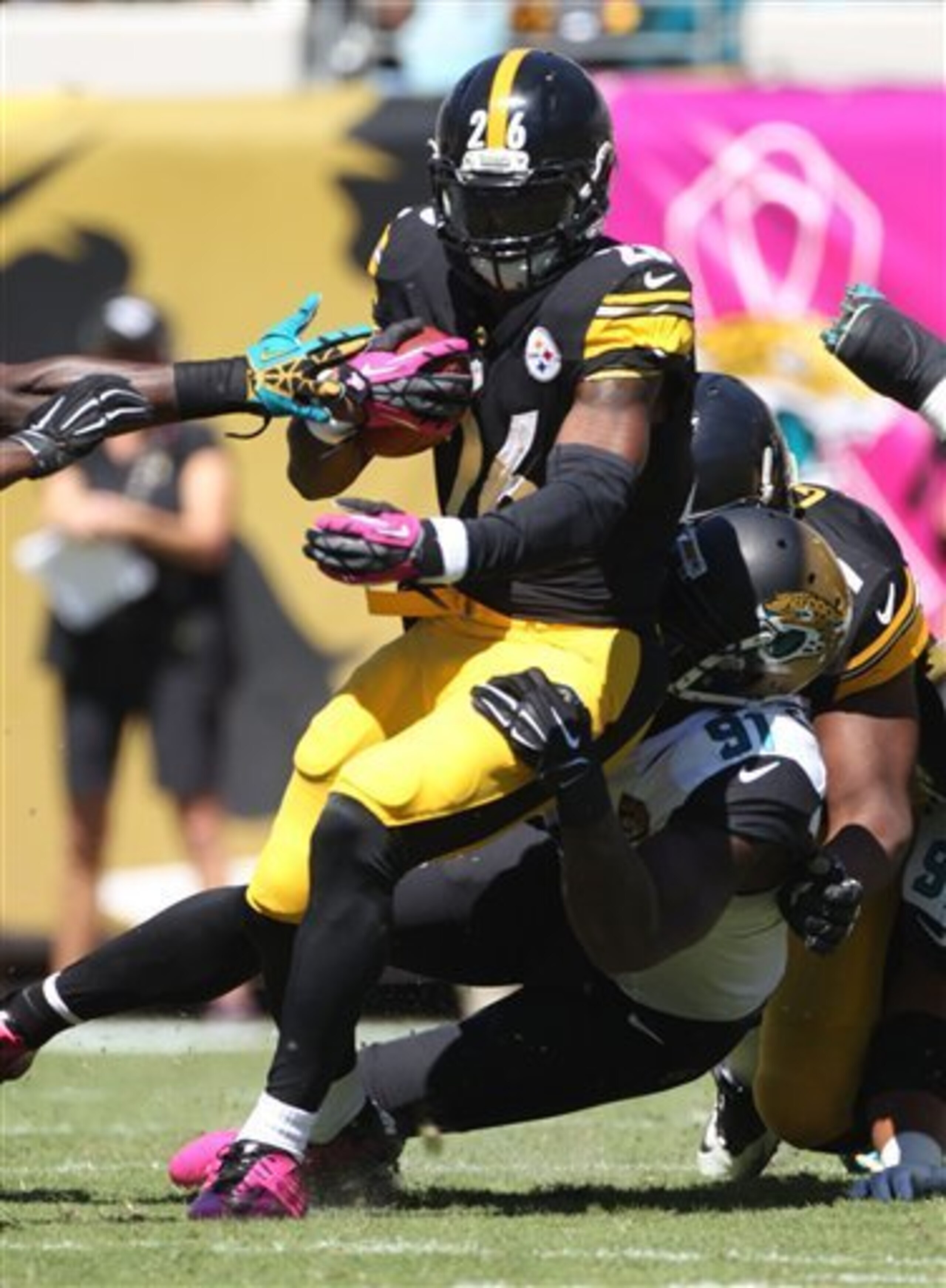
Starter: Le'Veon Bell
In 2013, the Pittsburgh Steelers drafted Le'Veon Bell in the middle of the second round. Other backs taken in that round were Giovani Bernard, Montee Ball, Eddie Lacy and Christine Michael. Bell is better than all of those runners by a decent margin.
After a lukewarm rookie season, Bell spent a large portion of the offseason getting leaner, which has since translated onto the football field. In his sophomore season, he averaged 4.7 yards per carry, more than a full yard better than his previous mark. He also didn't fumble in his 290 carries, was targeted over 100 times as a pass-catcher and converted 114 first downs.
Bell is going to face a short-term suspension early on, though, so DeAngelo Williams, the longtime Carolina Panther, will most likely open the season as the starter. Since his 2008 season, when he ran in 18 scores, Williams hasn't played a full 16 games, but the 32-year-old should be able to handle the rock while Bell is waiting to get back on to the field.
After those two, though, the depth chart starts to take a bit of a drop. The next notable name is Dri Archer, who is a blazing hybrid running back and receiver option. Josh Harris and Ross Scheuerman are virtual unknowns behind Archer.
3: Minnesota Vikings
30 of 32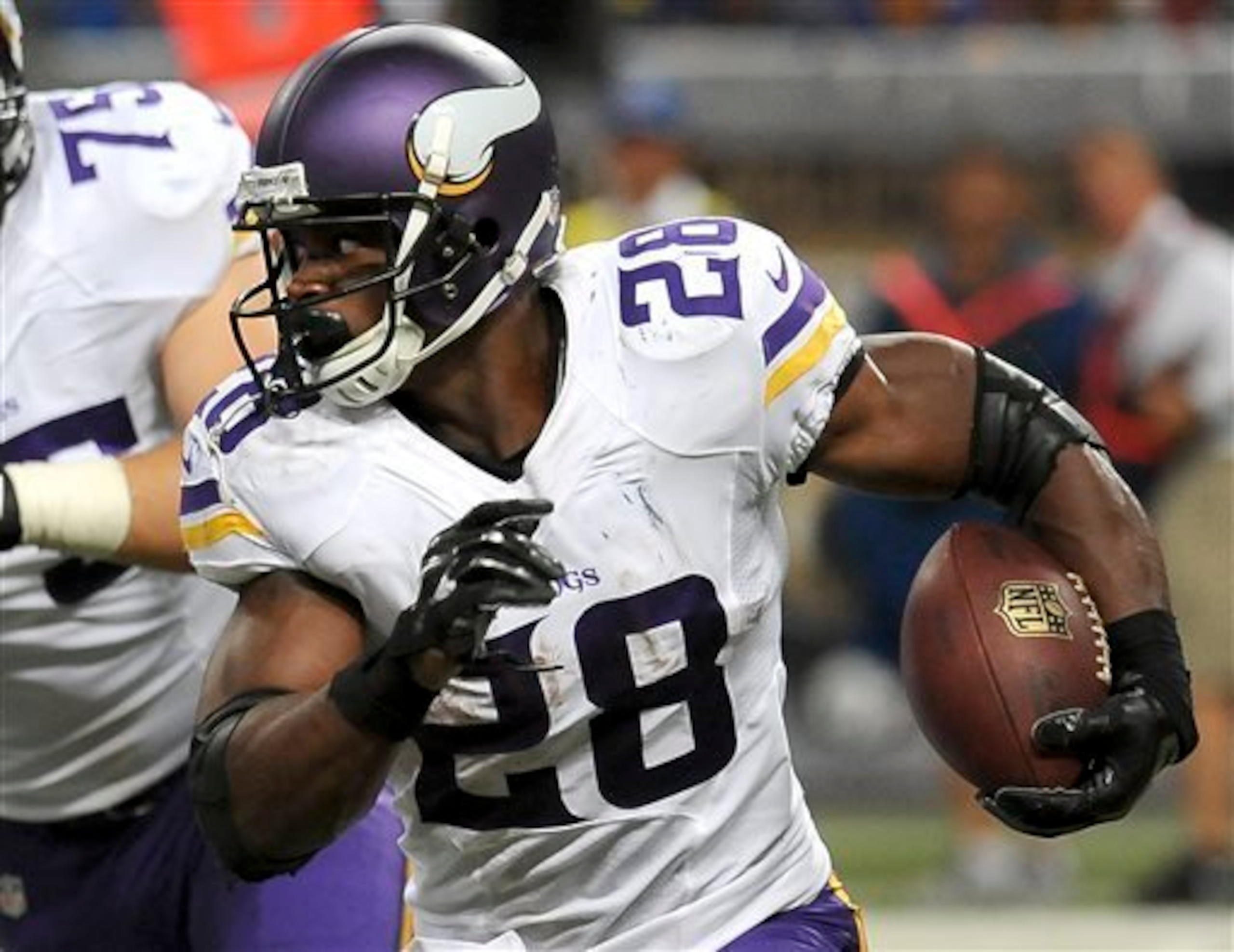
Starter: Adrian Peterson
Adrian Peterson has been to six Pro Bowls with the Minnesota Vikings and has won an NFL MVP award during his time in Minneapolis. Still, what happened between him and the team during the 2014 season has his status with the squad up in the air.
He was indicted on child abuse charges early on last season and was suspended for only a single game by the team, but the league then put him on the "Commissioner's Permission" list for the rest of the season, ending his year. It's still a question if Peterson will show up to camp in 2015, possibly due to the fact that the franchise did not publicly fight to remove him from the list last season.
If Peterson doesn't suit up for the Vikings, Matt Asiata and Jerick McKinnon would fight for the top spot on the team. Asiata is an incoming fifth-year undrafted back with fewer than 750 yards to his name, and McKinnon is a second-year third-round selection out of Georgia Southern, where he was a triple-option quarterback. Neither is a great alternative in the short term, but McKinnon has the potential to develop into a blazing one-cut runner.
DuJuan Harris, the former Packer, should fight for a low-end roster spot, so long as he proves himself on special teams. Joe Banyard is more than likely just a camp athlete.
2: Seattle Seahawks
31 of 32
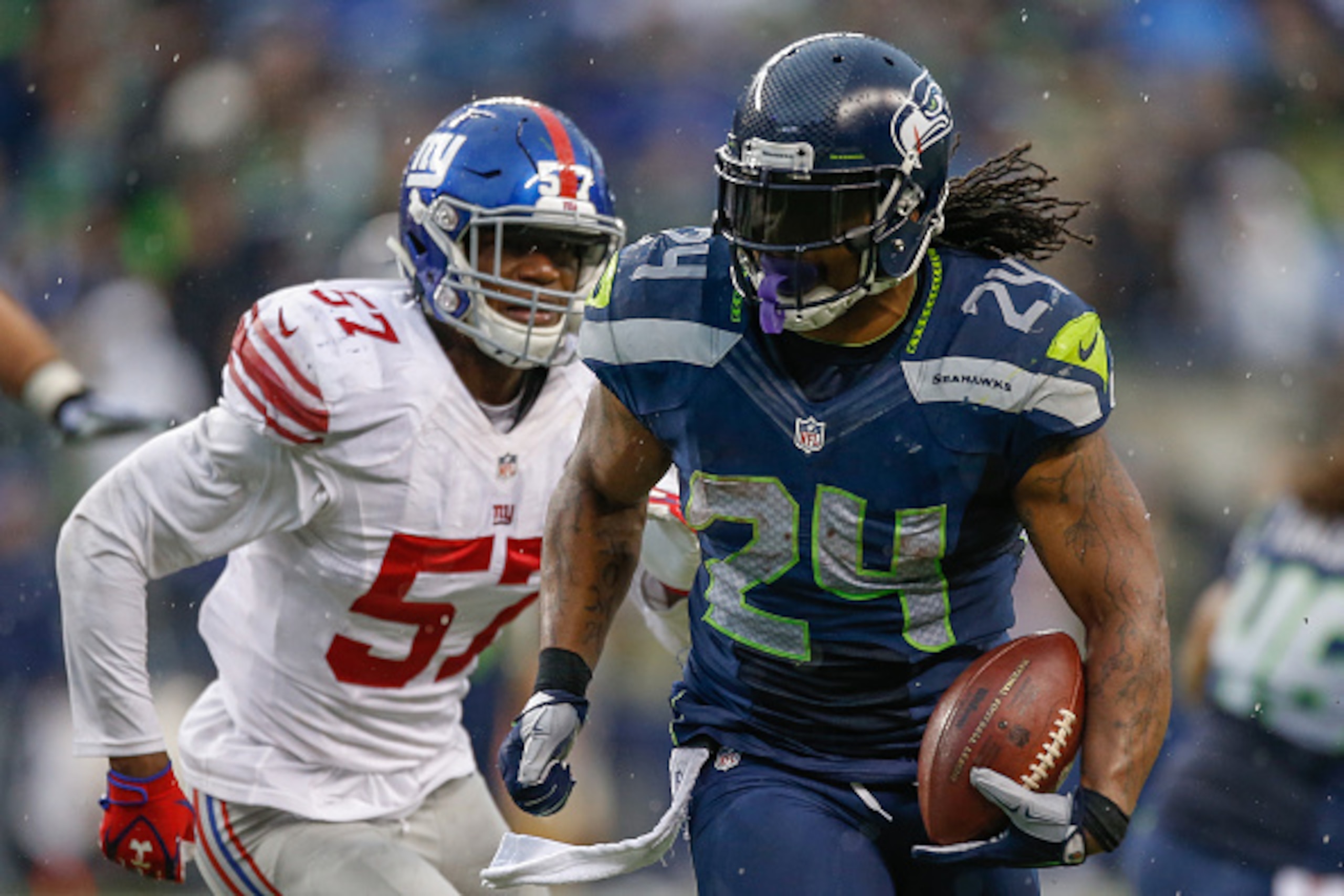
Starter: Marshawn Lynch
In 2007, Marshawn Lynch was selected 12th overall in that season's draft by the Buffalo Bills. By 2010, though, his stock had dropped so low that the Bills shipped him out of town for a set of fourth- and fifth-round picks. Landing in Seattle is the best thing to have happened to him, as he's now one of the most electric players in the league.
Now one year away from the 30-year mark, the question surrounding Lynch isn't if he can play but for how long. With his aggressive running style, one that still allowed him to average 4.7 yards per carry last season, he absorbs a lot of brutal shots.
With fewer than 1,000 rushing yards in his career, no one is saying that Robert Turbin is the NFL's next star, but at only 25 years old, he's physical and athletic and has NFL experience without the wear on his tires. If Lynch should break down over the next season, Turbin could easily earn a second contract from the Seahawks and stick around as a starter.
Christine Michael is currently third on the Seattle depth chart and has just over 250 rushing yards to his name, but he has a massive amount of talent. Michael was the best running back prospect in the 2013 class, but a falling out with a new coaching staff led to only 96 touches during his senior season at Texas A&M, his fewest in his four-year career.
Michael has the best shot at becoming a Pro Bowl talent, but Turbin is more consistent at this point in his career. Rod Smith and Thomas Rawls are also on the offseason roster, but unless one can contribute as a special teams ace, the Seahawks don't need a fourth option.
1: Philadelphia Eagles
32 of 32
Starter: DeMarco Murray
In the Chip Kelly era, the Eagles' top runner has been LeSean McCoy. After his yards per carry dropped nearly a full yard between 2013 and 2014, though, the team traded him for Kiko Alonso, a linebacker from Buffalo who missed his sophomore season after winning the Defensive Rookie of the Year award.
In an attempt to find a new starter, Philadelphia swooped up DeMarco Murray, the former starting running back of the Dallas Cowboys. He ran for 1,845 yards last season behind a strong offensive line, but according to Football Outsiders, the Eagles ranked in the top 10 in power success, second-level efficiency and open-field efficiency.
Murray's $40 million contact overshadows the other running backs on the roster, but two others have the talent to make a legitimate impact. One is Ryan Mathews, the former San Diego Chargers first-round pick, who like Murray, has dealt with some injury issues in his past. When healthy, he's a starting-caliber back, which is what warrants his three-year, $11 million deal.
The second is Darren Sproles, who also started his career in San Diego. Last season, he made the Pro Bowl, and in 2011, he led the NFL in all-purpose yardage. He's been a flexible player who catches out of the backfield and has return kicks during his time with the Eagles, Chargers and Saints.
Kenjon Barner, a former Oregon Duck, and Matthew Tucker are also on the roster, but neither figures to make a large impact.
.jpg?w=2560 "Chiefs Giants Football")
.jpg?w=2560 "Titans Ravens Football")
.jpg?w=2560 "🚨 Week 8 AP Top 25 Poll")

.jpg?w=2560 "Packers Safety Slams Refs 🤬")