
B/R NFL 1000: Ranking the Top 90 Running Backs from 2014
Who is the best player in the NFL? Not based on the last 10 years or one game, but over the last year, who was the best? Good luck answering that one without starting a fight, right?
Well, that's what the NFL 1000 aims to do by scouting, grading and then ranking the best players at each position before putting them in order and breaking ties to come up with the top 1,000 players. No narratives, no fantasy football points, no "QBR"—this is cold-hard scouting.
The B/R 1000 metric is based heavily on scouting each player and grading the key criteria for each position. The criteria are weighted according to importance for a possible best score of 100.
Potential is not taken into consideration. Nor are career accomplishments.
Running backs are judged on speed (25 points), power (25), vision (35), catching ability (10) and their value as a starter or backup (5). How do we value starter points? If a player is capable of carrying the load entirely at running back, they get the full five points. Spot-starters or third-down backs got four points. Players scoring in the three, two or one point range are not considered starting caliber.
In the case of ties, our team asked, "Which player would I rather have on my team?" and set the rankings accordingly.
Subjective? Yes. But ties are no fun.
Each player was scouted by me and a team of experienced evaluators (Dan Bazal, Cian Fahey, Dan Hope, Marshal Miller, Justis Mosqueda) with these key criteria in mind. The following scouting reports and grades are the work of months of film study from our team.
Oh, and in case you're wondering where Adrian Peterson is, by only playing in one game in 2014, he failed to qualify for the minimum snaps needed for inclusion on this list.
All statistics from Pro Football Focus. Players' heights, weights and seasons played from NFL.com.
90-86. Cadet, Richardson, Thompson, Brown, Todman
1 of 58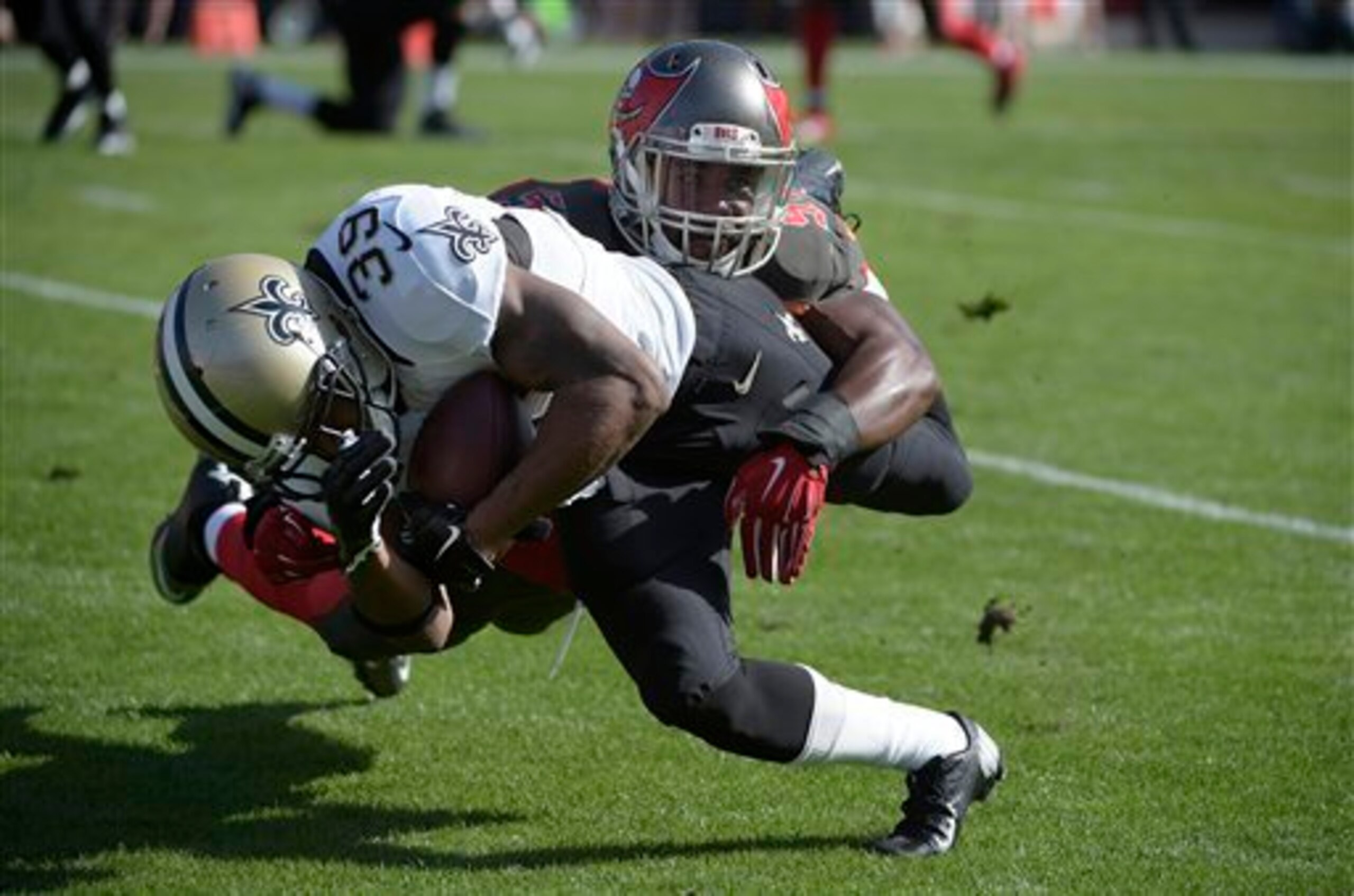
90. Travaris Cadet, New England Patriots
Speed: 18/25; Power: 10/25; Vision: 24/35; Receiving: 7/10; Starter: 2/5
Travaris Cadet was a regular sign that the New Orleans Saints were going to pass the ball. He compiled 38 receptions in 2014 as a reliable receiver with limited versatility and big-play ability. Cadet lacks the power, vision and explosiveness to be a consistent between-the-tackles runner.
89. Trent Richardson, Oakland Raiders
Speed: 19/25; Power: 16/25; Vision: 20/35; Receiving: 5/10; Starter: 2/5
The only reason Trent Richardson was still seeing the field for the Colts during the regular season was because the Colts invested a first-round pick in him. By the end of the season, Richardson had clearly been demoted and didn’t have much of a case to argue. His poor vision and lack of quickness continues to destroy his career.
88. Juwan Thompson, Denver Broncos
Speed: 18/25; Power: 19/25; Vision: 19/35; Receiving: 4/10; Starter: 2/5
Juwan Thompson was a productive running back in Peyton Manning’s Denver Broncos offense, but most of his production was a result of his excellent supporting cast stretching the field for him. Thompson was too often given space rather than having to create it himself.
87. Donald Brown, San Diego Chargers
Speed: 22/25; Power: 12/25; Vision: 24/35; Receiving: 2/10; Starter: 3/5
To be a productive runner, Donald Brown needs to play behind an impressive offensive line. He didn’t do that in 2014, so his warts became more evident when he wasn’t put in space by the passing game. Brown struggles to consistently create space and make good decisions behind the line of scrimmage.
86. Jordan Todman, Carolina Panthers
Speed: 23/25; Power: 12/25; Vision: 21/35; Receiving: 4/10; Starter: 3/5
Jordan Todman had a weird season for the Jacksonville Jaguars. He was seemingly never in contention to start, but he always saw the field in some way. Todman would regularly be used in low-value situations, such as on 3rd-and-long draw plays that regularly went nowhere. He had bursts of impressive plays, but made little impact for the most part.
85-81. Gerhart, Pierce, Sankey, Oliver, Powell
2 of 58
85. Toby Gerhart, Jacksonville Jaguars
Speed: 17/25; Power: 19/25; Vision: 21/35; Receiving: 4/10; Starter: 3/5
Toby Gerhart is a talented back who should create a good combination with Denard Robinson for the Jaguars in 2015 if both players can stay healthy. In 2014, he wasn’t healthy until later in the season, so his explosiveness and effectiveness were limited.
84. Bernard Pierce, Baltimore Ravens
Speed: 20/25; Power: 19/25; Vision: 19/35; Receiving: 3/10; Starter: 3/5
It appears that Bernard Pierce is going to be competing for a roster spot in 2015 rather than a starting spot. His vision and decisiveness on the field are problems, while his physical attributes are good but not spectacular. Pierce needs to add to his skill set to be a starter.
83. Bishop Sankey, Tennessee Titans
Speed: 22/25; Power: 10/25; Vision: 27/35; Receiving: 4/10; Starter: 4/5
Bishop Sankey is clearly a talented running back, but his rookie season wasn’t as impressive as the Titans would have hoped. He has the potential to be a three-down back at some point moving forward, but he filled a very limited role as a rookie. Sankey’s biggest problem is his inability to break tackles.
82. Branden Oliver, San Diego Chargers
Speed: 21/25; Power: 10/25; Vision: 28/35; Receiving: 5/10; Starter: 3/5
Even though the comparisons to Darren Sproles were easy to find from analysts during the season, there was little evidence on the field that suggested Sproles and Branden Oliver shared a skill set. Oliver is thicker and a better runner than receiver, but a limited back on the whole.
81. Bilal Powell, New York Jets
Speed: 19/25; Power: 15/25; Vision: 25/35; Receiving: 5/10; Starter: 3/5
Bilal Powell is a reliable, consistent and well-rounded football player. However, he lacks the physical traits to be anything more than an average role player in the NFL. Powell isn’t explosive enough to take advantage of space or break through tackles.
80-76. Johnson, McKinnon, Dunbar, Dixon, Helu
3 of 58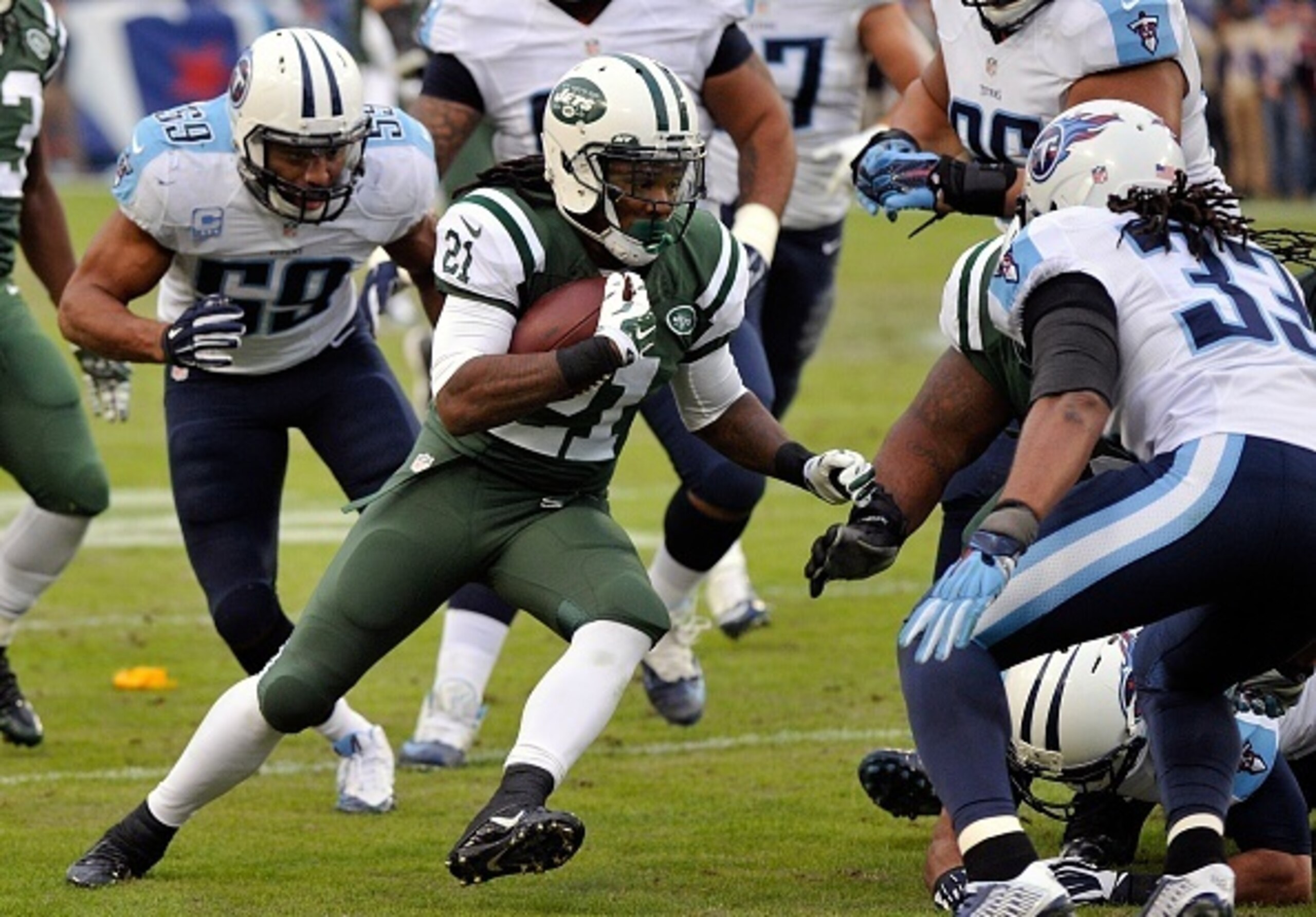
80. Chris Johnson, Free Agent
Speed: 25/25; Power: 9/25; Vision: 22/35; Receiving: 7/10; Starter: 4/5
Chris Johnson is still worthy of playing in the NFL, but he's clearly just a backup at this point. His acceleration and sustained speed haven't faded, but his willingness to be aggressive and run hard on every play has. Johnson leaves too many yards on the field to justify the rare big play that he can create.
79. Jerick McKinnon, Minnesota Vikings
Speed: 24/25; Power: 10/25; Vision: 27/35; Receiving: 3/10; Starter: 3/5
It was a relatively impressive first season in the NFL for Jerick McKinnon. He is clearly still a developing back but showed off flashes of natural running ability between the tackles and wasn’t hesitant when making decisions. To reach his true potential, he needs to become a more effective player in space on the second level. He clearly has the physical ability to do that.
78. Lance Dunbar, Dallas Cowboys
Speed: 23/25; Power: 10/25; Vision: 25/35; Receiving: 6/10; Starter: 3/5
The Dallas Cowboys had two primary backups to DeMarco Murray in 2014. Lance Dunbar was the less explosive but more reliable and well-rounded of the pair. Dunbar shows off good balance and agility while running hard between the tackles. He is a reliable receiver with some versatility also.
77. Anthony Dixon, Buffalo Bills
Speed: 15/25; Power: 22/25; Vision: 25/35; Receiving: 2/10; Starter: 3/5
Anthony Dixon is a physically limited but reliable running back. He was an ideal backup for the Bills in 2014 because he could be trusted in his role when Fred Jackson and C.J. Spiller were injured. Furthermore, he has the versatility to line up as a fullback and still be effective with different assignments.
76. Roy Helu, Oakland Raiders
Speed: 23/25; Power: 10/25; Vision: 24/35; Receiving: 7/10; Starter: 4/5
Roy Helu continued to show off the skill set of a valuable role player behind Alfred Morris in Washington. He is versatile but lacks the consistency as a runner to earn more touches. Significantly, he had two fumbles in 2014 despite not touching the ball all that often.
.jpg?w=2560 "Seahawks Chiefs Football")

75-71. Rainey, Jones-Drew, Hillis, Banyard, Asiata
4 of 58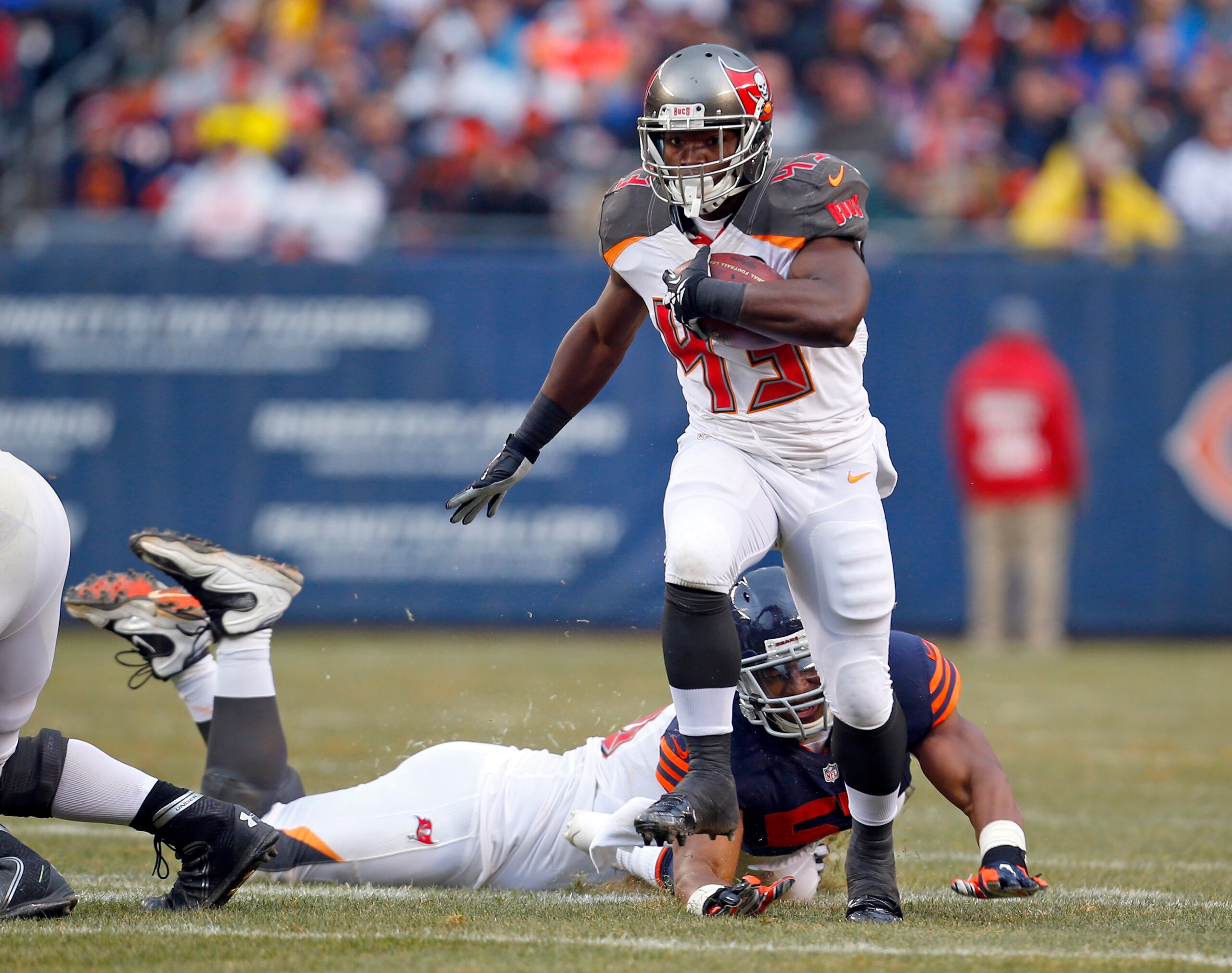
75. Bobby Rainey, Tampa Bay Buccaneers
Speed: 21/25; Power: 10/25; Vision: 28/35; Receiving: 6/10; Starter: 3/5
Bobby Rainey had relatively good production in a difficult situation in 2014. However, he was too inconsistent with his displays on the field. Fumbles were an issue, and he too often showed unnecessary hesitation behind the line of scrimmage.
74. Maurice Jones-Drew, Retired
Speed: 20/25; Power: 11/25; Vision: 27/35; Receiving: 7/10; Starter: 3/5
One of the best running backs in the NFL over the past six or seven years called it quits in March. Maurice Jones-Drew declined physically in 2014, which took away his ability to show off his previously impressive vision and creativity as a runner. The once dominant pass protector also faded in that area.
73. Peyton Hillis, Free Agent
Speed: 15/25; Power: 20/25; Vision: 27/35; Receiving: 3/10; Starter: 3/5
It’s somewhat of an indictment of the New York Giants roster that Peyton Hillis is still seeing the field even in a very limited capacity. Hillis has a versatile skill set and some strength, but he lacks the overall athleticism to excel at this level and had a couple of drops despite not being targeted often in 2014.
72. Joe Banyard, Minnesota Vikings
Speed: 23/25; Power: 12/25; Vision: 26/35; Receiving: 5/10; Starter: 2/5
Despite Adrian Peterson’s absence, Joe Banyard barely saw the field for the Minnesota Vikings in 2014. When he did get touches, he proved to be impressive as he showed off good quickness between the tackles and a burst to find space. He simply didn’t get enough opportunities to show off his whole skill set.
71. Matt Asiata, Minnesota Vikings
Speed: 14/25; Power: 22/25; Vision: 23/35; Receiving: 6/10; Starter: 3/5
At this point, Matt Asiata will need to earn his roster spot entering next season. However, he could improve to become a reliable rostered running back even if he is not a starting option. In 2014, his versatility and consistency created value once Adrian Peterson departed the field.
70-66. Tate, Greene, McFadden, D. Williams, Randle
5 of 58
70. Ben Tate, Free Agent
Speed: 18/25; Power: 20/25; Vision: 26/35; Receiving: 2/10; Starter: 2/5
Ben Tate’s job was taken in Cleveland by two rookies, and he can’t have many complaints. Tate’s durability hurt him, but the more significant issue was his inconsistent vision. After being released by the Browns, Tate played sparingly for the Minnesota Vikings before carrying out a similarly limited role for the Pittsburgh Steelers in the playoffs.
69. Shonn Greene, Tennessee Titans
Speed: 16/25; Power: 21/25; Vision: 28/35; Receiving: 1/10; Starter: 3/5
Although he held off Bishop Sankey for the feature role early in the year, Shonn Greene never really impressed as a primary ball-carrier. He is best suited to be a short-yardage back and role player in the NFL. That is a role he carried out with great success in 2014. Greene simply lacks the explosiveness to exploit the space that he can find/create as a runner.
68. Darren McFadden, Dallas Cowboys
Speed: 23/25; Power: 19/25; Vision: 19/35; Receiving: 4/10; Starter: 4/5
It seems that Darren McFadden's career is fading out with a whimper. He entered the league with great physical tools, but injuries and carries have sapped him of those. His vision as a runner isn’t enough to carry him either. McFadden may benefit from a change of scenery and role to keep him on a roster in 2015.
67. Damien Williams, Miami Dolphins
Speed: 23/25; Power: 15/25; Vision: 21/35; Receiving: 7/10; Starter: 3/5
During the 2014 season, Damien Williams was an impressive role player who was underused in the Miami Dolphins backfield. He may never develop into a primary ball-carrier, but he should be able to fill a backup role effectively for a team even if it’s not Miami. Williams has the talent to be one of the better receiving backs in the NFL.
66. Joseph Randle, Dallas Cowboys
Speed: 15/25; Power: 22/25; Vision: 23/35; Receiving: 6/10; Starter: 3/5
He may not be ready to replace DeMarco Murray right now, but Joseph Randle is showing off a lot of potential as a runner. Randle’s biggest issue is that he hasn’t been tested enough to this point in his career. If he is forced to take hits more consistently, will his body begin to break down?
65-61. Taliaferro, Martin, A. Williams, Herron, Blue
6 of 58
65. Lorenzo Taliaferro, Baltimore Ravens
Speed: 20/25; Power: 21/25; Vision: 22/35; Receiving: 3/10; Starter: 3/5
Lorenzo Taliaferro landed in a good spot for a rookie running back. Taliaferro played very well at times, with his athleticism being highlighted as a major positive. However, he needs to show more consistency with his decision-making while running between the tackles.
64. Doug Martin, Tampa Bay Buccaneers
Speed: 22/25; Power: 13/25; Vision: 29/35; Receiving: 2/10; Starter: 4/5
Doug Martin’s career has careened off course since his rookie season. Injury took away most of his second season, while his third was spent running behind an often overwhelmed offensive line. In spite of all that, Martin’s consistency simply hasn’t been where it needs to be. He has all the physical talent and technical prowess to be a quality starter, but he needs to perform better.
63. Andre Williams, New York Giants
Speed: 19/25; Power: 21/25; Vision: 25/35; Receiving: 1/10; Starter: 4/5
Andre Williams was a very productive running back in college, but he didn’t carry that effectiveness over into the professional game. He offered the Giants no value as a receiver and was very much a linear runner. Williams needs to get more consistent with his vision to be a viable starter.
62. Dan Herron, Indianapolis Colts
Speed: 20/25; Power: 18/25; Vision: 25/35; Receiving: 4/10; Starter: 3/5
Although Dan Herron offered the Colts an improvement over Trent Richardson, he still doesn’t have a skill set that makes him worthy of being an NFL starter. Herron has an impressive burst and good strength, but he doesn't have much creativity as a runner. Ball security was also a concern in 2014.
61. Alfred Blue, Houston Texans
Speed: 19/25; Power: 17/25; Vision: 25/35; Receiving: 6/10; Starter: 3/5
It’s always going to be tough to make a lasting impression when you’re a rookie running back behind Arian Foster. Foster’s lack of durability gave Alfred Blue opportunities though. He showed off a well-rounded physical skill set with inconsistent vision. Blue can set up runs well and make good decisions—he just needs to show it with a greater sample of touches.
60-56. Rodgers, Taylor, Cunningham, D. Robinson, Riddick
7 of 58
60. Jacquizz Rodgers, Chicago Bears
Speed: 19/25; Power: 18/25; Vision: 22/35; Receiving: 8/10; Starter: 3/5
Jacquizz Rodgers showed plenty of promise in 2013 while filling a limited role for the Atlanta Falcons. However, his vision didn't improve as a runner in 2014, so he wasn’t able to expand his role or improve his value to the offense.
59. Stepfan Taylor, Arizona Cardinals
Speed: 15/25; Power: 20/25; Vision: 24/35; Receiving: 7/10; Starter: 4/5
Although he will probably never be a full-time starter, Stepfan Taylor showed some value to the Arizona Cardinals as a fill-in back during the 2014 season. Moving forward, Taylor has the talent to become a valuable role player and primary backup. His rounded skill set and physical ability give him that potential.
58. Benny Cunningham, St. Louis Rams
Speed: 19/25; Power: 17/25; Vision: 28/35; Receiving: 4/10; Starter: 3/5
Health seemingly played a big role in Benny Cunningham’s improvement during the 2014 season. Cunningham showed off more explosiveness and strength this year while being a valuable backup for the Rams. He needs to develop more consistency and versatility as a receiver to carve out a bigger role in St. Louis.
57. Denard Robinson, Jacksonville Jaguars
Speed: 20/25; Power: 18/25; Vision: 25/35; Receiving: 5/10; Starter: 3/5
Denard Robinson reignited a rushing attack that had been hampered by its offensive line for over 12 months. His quickness, decisiveness and vision allowed him to be consistently effective in different ways.
56. Theo Riddick, Detroit Lions
Speed: 20/25; Power: 12/25; Vision: 27/35; Receiving: 9/10; Starter: 3/5
In the pass-heavy offense of the Detroit Lions, it’s no surprise that Theo Riddick was able to make an impact. Riddick showed off natural receiving ability out of the backfield and impressive speed to take advantage of space. He isn’t a strong player, so he will likely be limited to this kind of role for his career.
55-51. Ball, West, Carey, Sims, K. Robinson
8 of 58
55. Montee Ball, Denver Broncos
Speed: 19/25; Power: 20/25; Vision: 27/35; Receiving: 2/10; Starter: 3/5
Montee Ball could blame injury for his poor play in 2014, but it would seem like a poor excuse. Both C.J. Anderson and Ronnie Hillman proved to be more valuable to the offense than him. It’s still clear that Ball has the talent to be an NFL starter, but his second season was definitely a step backward.
54. Terrance West, Cleveland Browns
Speed: 20/25; Power: 16/25; Vision: 27/35; Receiving: 5/10; Starter: 3/5
It was an impressive rookie season for Terrance West. He proved to have more than enough physical ability to be a long-term back for the Browns, even though his decision-making and vision were inconsistent. West has the talent to be a starter in the NFL, but he could easily find himself as a backup to Isaiah Crowell in 2015.
53. Ka'Deem Carey, Chicago Bears
Speed: 16/25; Power: 18/25; Vision: 28/35; Receiving: 6/10; Starter: 3/5
Ka’Deem Carey is quicker than fast but showed off good vision and body control when he saw snaps for the Chicago Bears during the 2014 season. Carey will likely need to wait for a while to get significant snaps because of Matt Forte’s presence, but he is definitely an enticing prospect.
52. Charles Sims, Tampa Bay Buccaneers
Speed: 22/25; Power: 12/25; Vision: 26/35; Receiving: 8/10; Starter: 4/5
The rookie running back didn’t get a huge number of touches and was put in a tough situation behind a poor offensive line. However, Charles Sims showed off plenty of potential. His greatest strength is his fluidity and quickness that will allow him to be effective in different ways moving forward.
51. Khiry Robinson, New Orleans Saints
Speed: 18/25; Power: 21/25; Vision: 29/35; Receiving: 2/10; Starter: 3/5
Khiry Robinson is a physically gifted running back who has shown off the potential to one day develop into a bell-cow back. At this point, his consistency needs to improve while his overall grade is hurt by the Saints not using him much as a receiving option. Robinson may need to leave New Orleans to fully reach his potential.
50. Zac Stacy, New York Jets
9 of 58
Speed
Zac Stacy isn’t a slow back by any measure. He simply lacks the long speed to be an explosive back. Stacy has the quickness and burst to be effective between the tackles and advancing to the second level; he just can’t create big plays by relying solely on his speed.
Power
Stacy is a stocky back who aggressively works through contact. He doesn’t have great size (5'9", 224 lbs) or great power, but he can use his lower center of gravity against bigger defenders to finish plays moving forward.
Vision
Stacy understands how to create yardage between the tackles with his vision. He stops and starts well while adjusting to cutback lanes when they are available. Stacy isn’t the kind of back who can bounce runs outside and he knows it. He doesn’t attempt to overextend his skill set very often.
Receiving
Stacy is a reliable receiver, but he has no versatility and lacks explosiveness in space.
Starter
Although he fell behind Tre Mason and was eventually traded this offseason, Stacy should be a valuable player for the New York Jets as a primary backup moving forward.
Overall
49. Latavius Murray, Oakland Raiders
10 of 58
Speed
As evidenced by his 90-yard run against the Kansas City Chiefs in Week 12, Latavius Murray has very easy breakaway speed. His long stride and overall athleticism make him a big-play threat every time he touches the football. For a taller back (6'3"), he shows off impressive quickness in tighter areas also.
Power
Murray is a long, lean athlete with impressive strength. He runs hard and attacks the point of contact but struggles to consistently get low because of his frame. In spite of that inconsistency, he can still be effective against bigger defenders in tight spaces.
Vision
Murray is still a developing runner, but he showed off an ability to set up running lanes and make good decisions in 2014. He needs to develop more consistency on a greater sample size for a better rating.
Receiving
A couple of drops and an inability to make defenders miss in space hurt Murray's receiving rating.
Starter
Murray appears to be the first-in-line back to start for the Raiders in 2015. He has plus athleticism and flashed enough to suggest he can be a quality starter. He is still more of an unknown than a known commodity, though.
Overall
48. Daniel Thomas, Free Agent
11 of 58
Speed
Veteran running back Daniel Thomas has been a well-rounded but limited athlete ever since he entered the NFL. Thomas is quick enough to be effective between the tackles, but his burst isn’t exceptional and his long speed makes it difficult for him to outrun any angle.
Power
Thomas is better in tight areas than he is in space. He lowers his pads well at the point of contact and fights forward for extra yardage. When he can accelerate into defenders, he is able to consistently finish plays moving forward even if he can’t consistently break tackles. Thomas is thickly built with a frame that prevents defenders from punishing him.
Vision
In Bill Lazor’s Miami Dolphins offense, the running back rarely has to create yardage like a typical back. Instead he needs to make quick decisions behind a zone-blocking unit. Thomas doesn’t necessarily have the physical skill set to exploit the space this scheme provides, but he consistently finds the right running lane by anticipating blockers in front of him.
Receiving
Thomas is a reliable receiver who had the skill set to work with the assignments the Dolphins gave him. However, he lacked the explosiveness or versatility in a vacuum.
Starter
Thomas was fortunate to even see the field in 2014. He needed Knowshon Moreno to get hurt so he could become a factor for the Dolphins. He will likely be playing for a roster spot somewhere during the 2015 preseason.
Overall
47. Ronnie Hillman, Denver Broncos
12 of 58
Speed
Speed is what makes Ronnie Hillman a viable NFL back. His feet aren't exceptionally quick, but he can turn comfortably in tight areas. His acceleration is impressive, and he has a second gear to quickly eat up space after his initial cut. He is somewhat of a linear athlete, but he possesses just enough fluidity to be effective in different ways.
Power
Although not a big back (5'10", 195 lbs), Hillman is a physically talented player who isn't susceptible to punishment from bigger defenders. When he runs low with built-up speed, he can be an effective power runner. For the most part he is a speed back who primarily hopes to break arm tackles.
Vision
Hillman isn’t a creative back, and that hurt him at times behind the Broncos offensive line. He does have the ability to recognize cutback lanes, and he shows off the comfort between the tackles to effectively mix patience with aggression. His consistency is good, but to take that next step as a runner he needs to show more anticipation at the line of scrimmage.
Receiving
His speed allows him to be a threat as a receiver, but he lacks versatility and had too many drops in 2014.
Starter
To this point in his career, Hillman has been a disappointment. Even with Montee Ball's struggles this season, he couldn't seize the opportunity to become the Broncos feature back. That’s unlikely to change moving forward.
Overall
46. DeAngelo Williams, Pittsburgh Steelers
13 of 58
Speed
Even at this latter stage of his career, DeAngelo Williams still shows off impressive quickness and enough of a burst to be effective between the tackles. His long speed isn’t as evident as it once was as the toll from seasons of punishment takes effect.
Power
Williams used to be a very resilient runner who could punish defenders with his aggressive running style. However, injuries and workload have blunted his physicality at the point of contact. He can no longer dole out punishment on a regular basis.
Vision
Williams still understands how to set up his blocking, and he can anticipate movement on the second level while working behind the line of scrimmage. His decision-making is still consistent, but his production was constrained playing behind a limited offensive line in 2014.
Receiving
Williams was barely used as a receiver in 2014, but he was reliable when he did see the football.
Starter
Williams is 32 years of age, but he still has a couple of years left in the tank. Williams will be the primary backup to Le'Veon Bell and the go-to back while Bell serves his three-game suspension.
Overall
45. Dexter McCluster, Tennessee Titans
14 of 58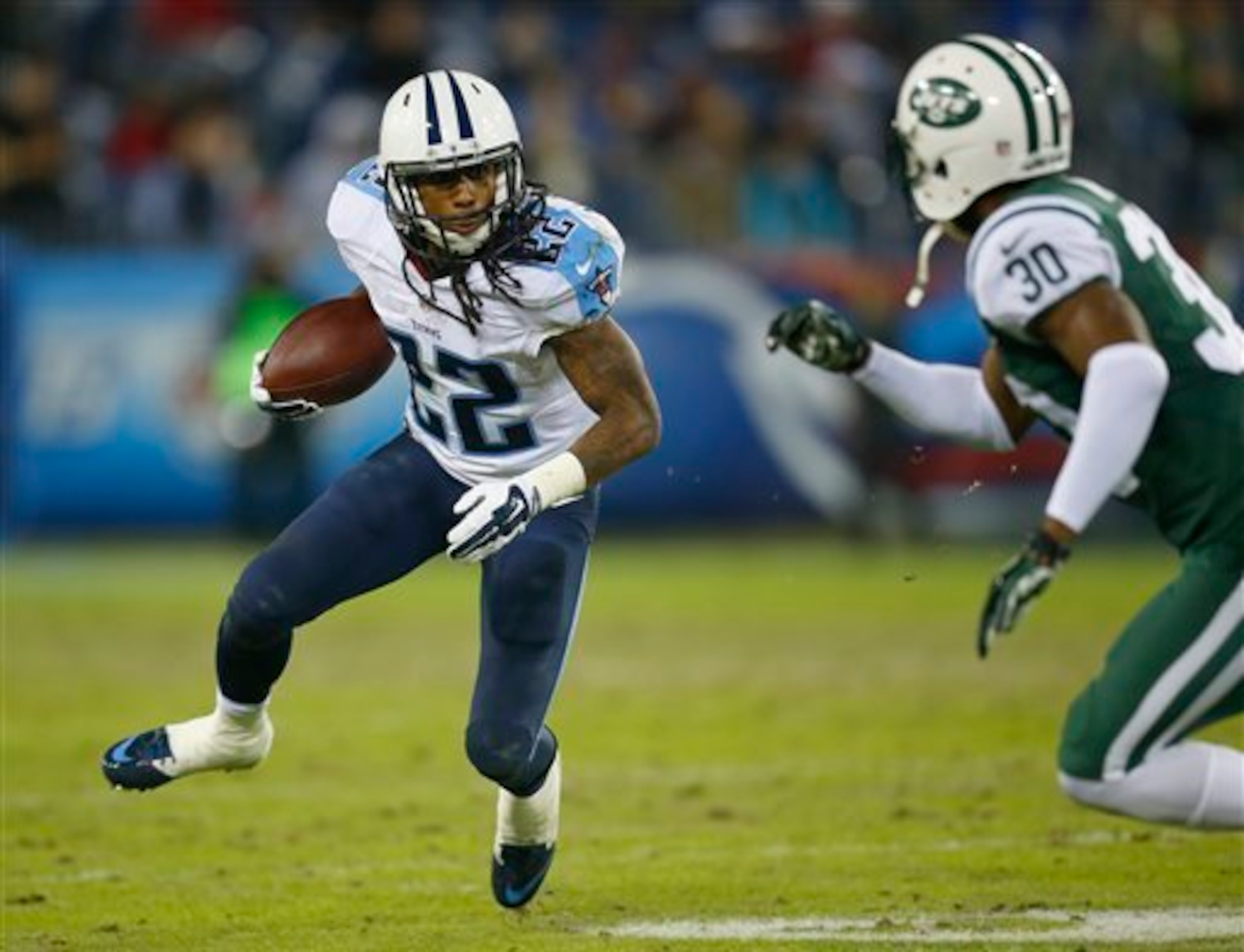
Speed
Not once in Dexter McCluster’s career has physical talent been a concern. He is a quick player with the acceleration to run away from defenders in space and the long speed to create big plays down the field. The reason he doesn’t show off that athleticism often enough is more about his football ability than his physical ability.
Power
McCluster carries a short, slender frame (5'8", 170 lbs). He lacks the bulk or lower body strength to be a powerful runner.
Vision
Although he struggles to make defenders miss in space, McCluster’s vision as a runner wasn’t necessarily bad in 2014. He was largely hampered by poor offensive line play rather than his ability to make good decisions or set up his blocks. Significantly, McCluster was used more as a receiving back than a runner in 2014.
Receiving
McCluster didn’t drop a single pass in 2014 while acting as a versatile receiver. He caught screen passes from the backfield, ran routes from out wide and was a constant part of a passing attack that was limited on the whole.
Starter
He is unlikely to ever be a starter, but McCluster’s role should allow him to stay on the field a lot unless Bishop Sankey develops significantly as a receiving back.
Overall
44. Marion Grice, Arizona Cardinals
15 of 58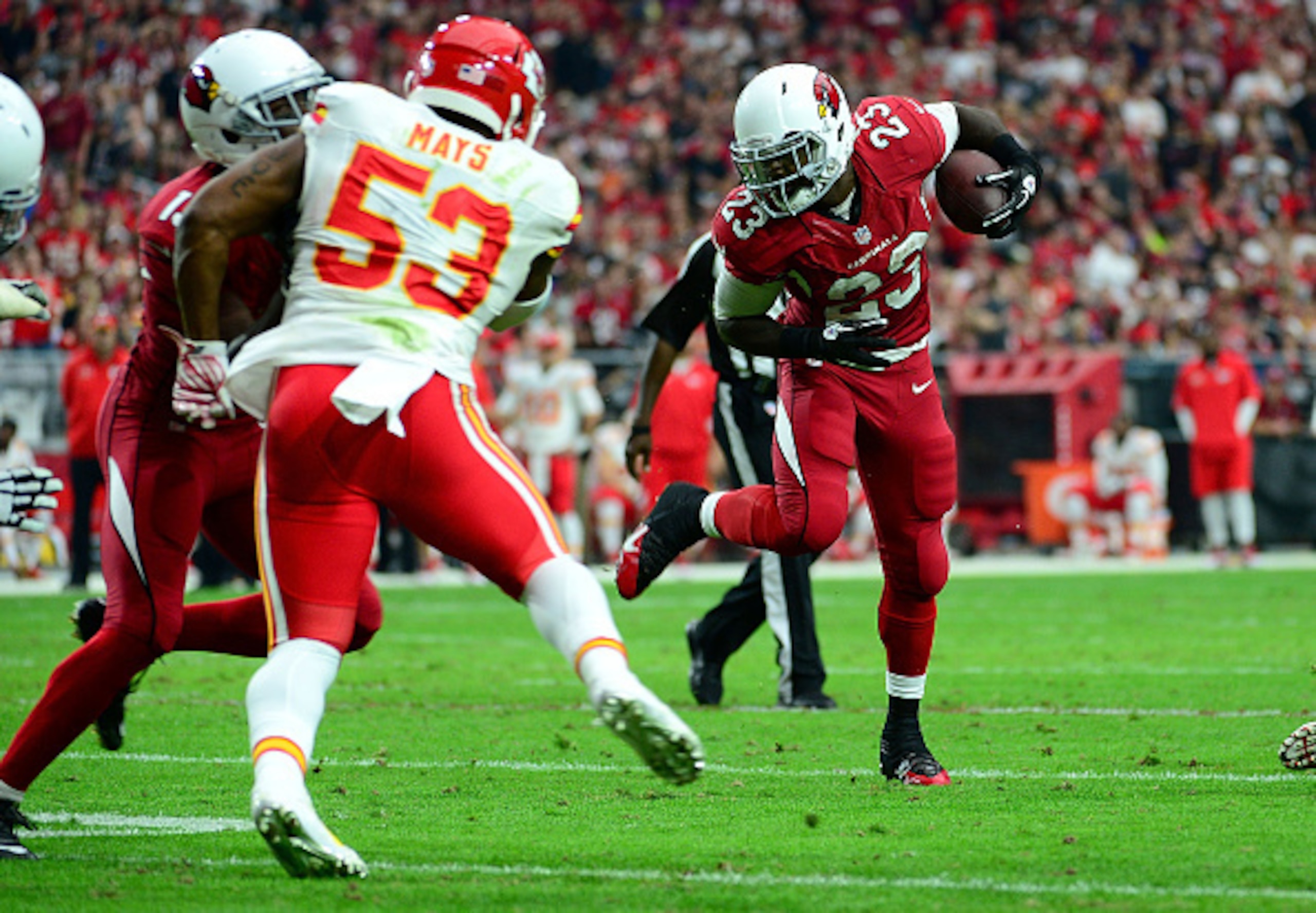
Speed
Marion Grice didn’t receive a huge amount of exposure during his first season in the NFL. When he did get touches, he looked comfortable due in large part to his athleticism. Grice is a long athlete with quick feet who can accelerate and change direction easily in tight areas.
Power
Grice’s frame (6'0", 207 lbs) doesn’t lend itself to easily generate power. He is skinnier than stocky, and his longer legs work against him when he is attempting to drive through contact. Grice needs to add weight, but he will likely never be a bruising back.
Vision
Despite being a raw rookie who wasn’t used too often, Grice had enough touches to show off an awareness and understanding of how to react to his blocking. He didn’t rush to the corner or panic when he had to adjust in tight areas.
Receiving
Grice showed good vision in space and comfortably caught the football when given the opportunity.
Starter
Grice clearly has the talent to be a contributor for the Cardinals, but he doesn’t yet promise the talent of an NFL starter.
Overall
43. Antone Smith, Atlanta Falcons
16 of 58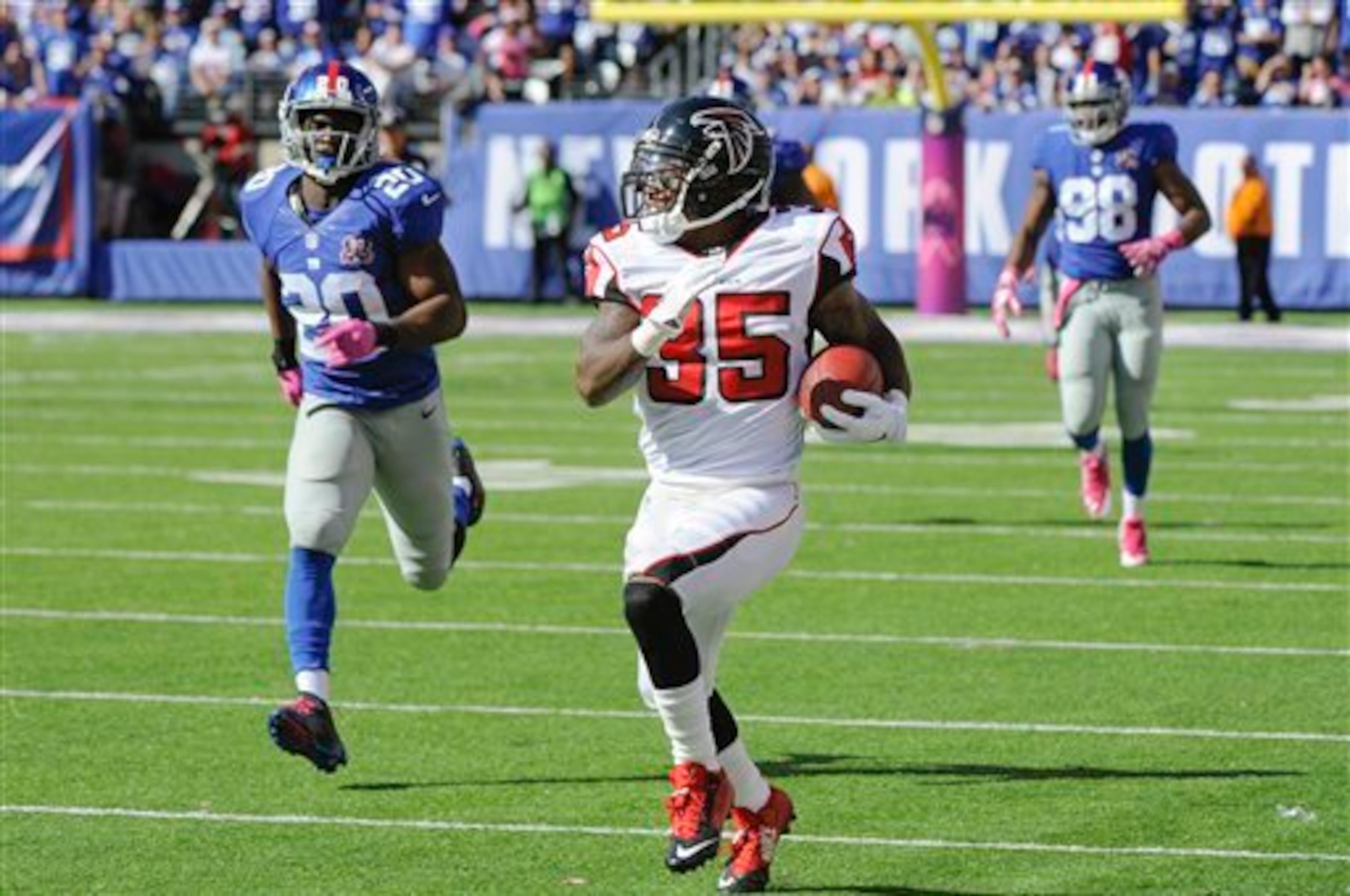
Speed
Antone Smith’s speed made him somewhat of a cult hero for the Atlanta Falcons. When put in the open field, he consistently broke off big plays because of his initial acceleration and his ability to sustain straight-line speed. He’s not exceptionally agile, but he doesn’t need to be to break off big gains.
Power
Although he shows off somewhat of a stocky build and runs hard, Smith isn’t a powerful back. He struggles to move bigger defenders inside and can’t consistently break tackles unless he has built up speed or is already working in space.
Vision
Smith was largely just a big-play threat in Atlanta. He didn’t show the subtlety or intelligence to consistently carry the ball between the tackles. If he had even been average with his anticipation or awareness, he could have become the Falcons starter.
Receiving
With his speed, Smith was a constant big-play threat in space. He was also a comfortable receiver, but he lacked the versatility of his peers.
Starter
Smith will probably never start in the NFL. He can be a valuable role player, and he was establishing himself as one with the Falcons before suffering an injury in 2014.
Overall
42. Devonta Freeman, Atlanta Falcons
17 of 58
Speed
Devonta Freeman has well-rounded speed without any spectacular traits. The rookie running back showed off above-average quickness, acceleration and long speed when he got opportunities to touch the ball during 2014.
Power
Freeman isn’t ever going to be a power back. He doesn’t have the frame (5'8", 206 lbs) to carry that kind of weight or the lower body power to drive through contact the way others in the league do. However, he has good power for his size, and he runs with somewhat inconsistent but mostly impressive aggression toward the point of contact.
Vision
Inconsistency is common among most rookies in the NFL, and Freeman was no exception. He didn’t see the field enough to receive constant carries, but when he was touching the football he was showing off flashes of intelligence as a runner.
Receiving
Freeman has a versatile skill set as a receiving back. He is reliable at the catch point and shows decent elusiveness in space even if he is not as explosive as Antone Smith.
Starter
It’s unlikely that Freeman takes over as a bell-cow back for the Falcons over the coming seasons, but he should always have a prominent role in the offense because of his skill set.
Overall
41. Steven Jackson, Free Agent
18 of 58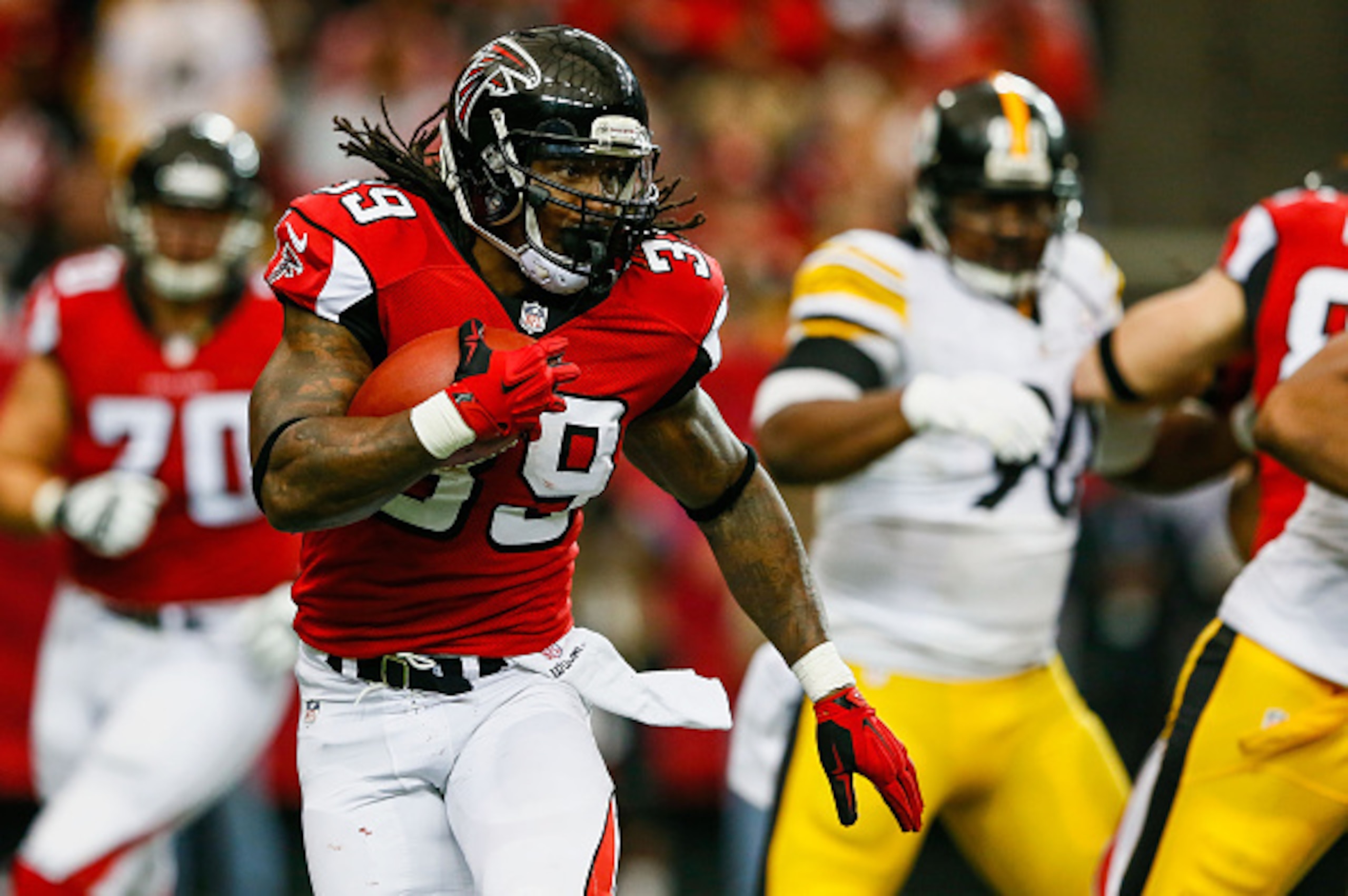
Speed
During his prime, Steven Jackson was never a spectacularly agile or fluid athlete. He had a decent burst and impressive straight-line speed for his size, but that has all but dwindled away now. Jackson is still fast enough to play in the NFL and his burst showed some life during the second half of the season, but he is arguably best suited to be a short-yardage runner now.
Power
At this stage of his career, it's no surprise that Jackson's physical ability is fading. With that said, his power in 2014 proved to still be effective against tacklers, even if it became more about finishing plays with forward momentum as opposed to breaking tackles.
Vision
The free-agent running back may still understand how to set up runs and create yardage with his movement behind the line of scrimmage, but his lack of athleticism hampers how effective he can be doing it. Jackson's vision is still above average as you'd expect it to be, but it's not what it once was.
Receiving
Jackson has always been a reliable receiver with limited effectiveness. At this stage of his career, that effectiveness is lower than ever before.
Starter
It's hard to argue that Jackson is still a valuable starter or even a quality role player. The beating he has taken throughout his career has simply robbed him of the requisite physical ability to be an NFL starter.
Overall
40. Andre Ellington, Arizona Cardinals
19 of 58
Speed
Injuries struck toward the beginning of Andre Ellington’s second season in the NFL, but he still showed off the same explosiveness as he did during his rookie season. His acceleration and sustained long speed stand out more than his quickness in tight areas.
Power
Power isn't what you expect to get from Ellington. The running back is a willing and aggressive runner between the tackles, but he only impacts defenders when he has a running start, and even then it's a limited impact.
Vision
Vision is the one area where Ellington still needs to improve. He is a bit too inconsistent with his decision-making and doesn't show off an ability to create room between the tackles by anticipating defenders on the second level. He definitely improved in this area after his rookie season, and his vision should still be considered a positive.
Receiving
For as dangerous and versatile as Ellington is in the passing game, he dropped too many passes in 2014.
Starter
Carrying a big role in an offense may not perfectly suit Ellington's ability, but his explosiveness and versatility as a receiver still make him a valuable option for the Cardinals.
Overall
39. Tre Mason, St. Louis Rams
20 of 58
Speed
Explosiveness is what defines Tre Mason. He has the straight-line speed to eat up space on the second level with the fluidity to swerve through gaps in the front seven. He changes direction easily and has a short-area burst of acceleration that plays a large role in making him an effective between-the-tackles runner.
Power
There are times when Mason is reminiscent of Frank Gore on the field. He can show off exceptional power and aggressiveness as a runner while relying on his low center of gravity (5'8", 207 lbs) to break through tackles or gain forward momentum. He is able to be impactful through contact even when he doesn’t have time or space to accelerate. He needs to prove that he can sustain that power on a greater workload while running with the same violence.
Vision
Mason is a gifted runner. He knows when to be aggressive and when to be patient, while having the natural movement skills that allow him to manipulate defenders to create yardage. He isn't your typical power back who is directed toward one area of the field and told to run as hard as possible.
Receiving
Although not a special receiving option, Mason can be effective when given the ball in space. His main concern in the passing game is his inability to protect the passer, and that is what kept him on the sideline to start the season.
Starter
Once Mason got on the field, it became clear that he was the Rams’ best option at the running back position. He will see a challenge for carries from first-rounder Todd Gurley, but he still figures to be a big part of the St. Louis offense.
Overall
38. Chris Ivory, New York Jets
21 of 58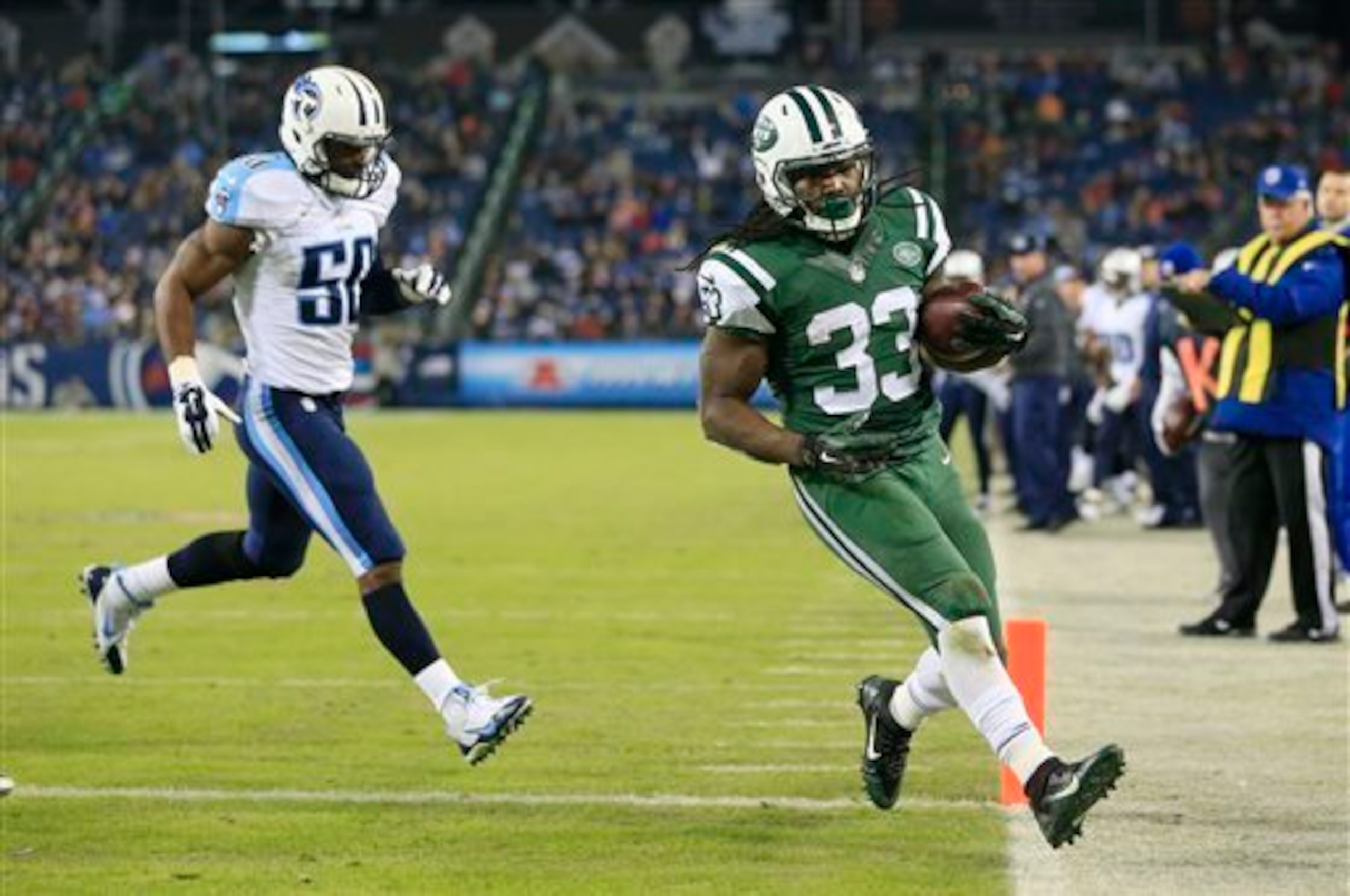
Speed
Chris Ivory has the perfect frame (6'0", 222 lbs) to carry the bulk he needs to sustain his power without hampering his quickness. Ivory is capable of eating space up on long runs, but his most attractive quality in terms of speed is his quickness between the tackles. The fluid athlete can change direction and accelerate in tight areas to maximize his rushing ability.
Power
There aren't many backs in the NFL who attack contact with the same level of ferocity and power as Ivory. The Jets back stayed healthy in 2014 and showed off his ability to sustain that power as a lead back on a snap-to-snap basis.
Vision
It's rare that natural runners such as Ivory spend so much time on the sideline. He understands how to set up runs, and he doesn't miss obvious running lanes on a regular basis. Ivory is primarily thought of as a power back, but he can find cutback lanes and escape outside as well as most backs in the NFL.
Receiving
Ivory has always had a limited skill set as a receiver. Not much changed in 2014 as the Jets didn't make an effort to feature him in the passing game more.
Starter
It was a strong first season for Ivory in New York. He gave the Jets a back who could beat the defense up between the tackles while also threatening to escape outside. His limitations as a receiver are always going to lower his ceiling.
Overall
37. Shane Vereen, New York Giants
22 of 58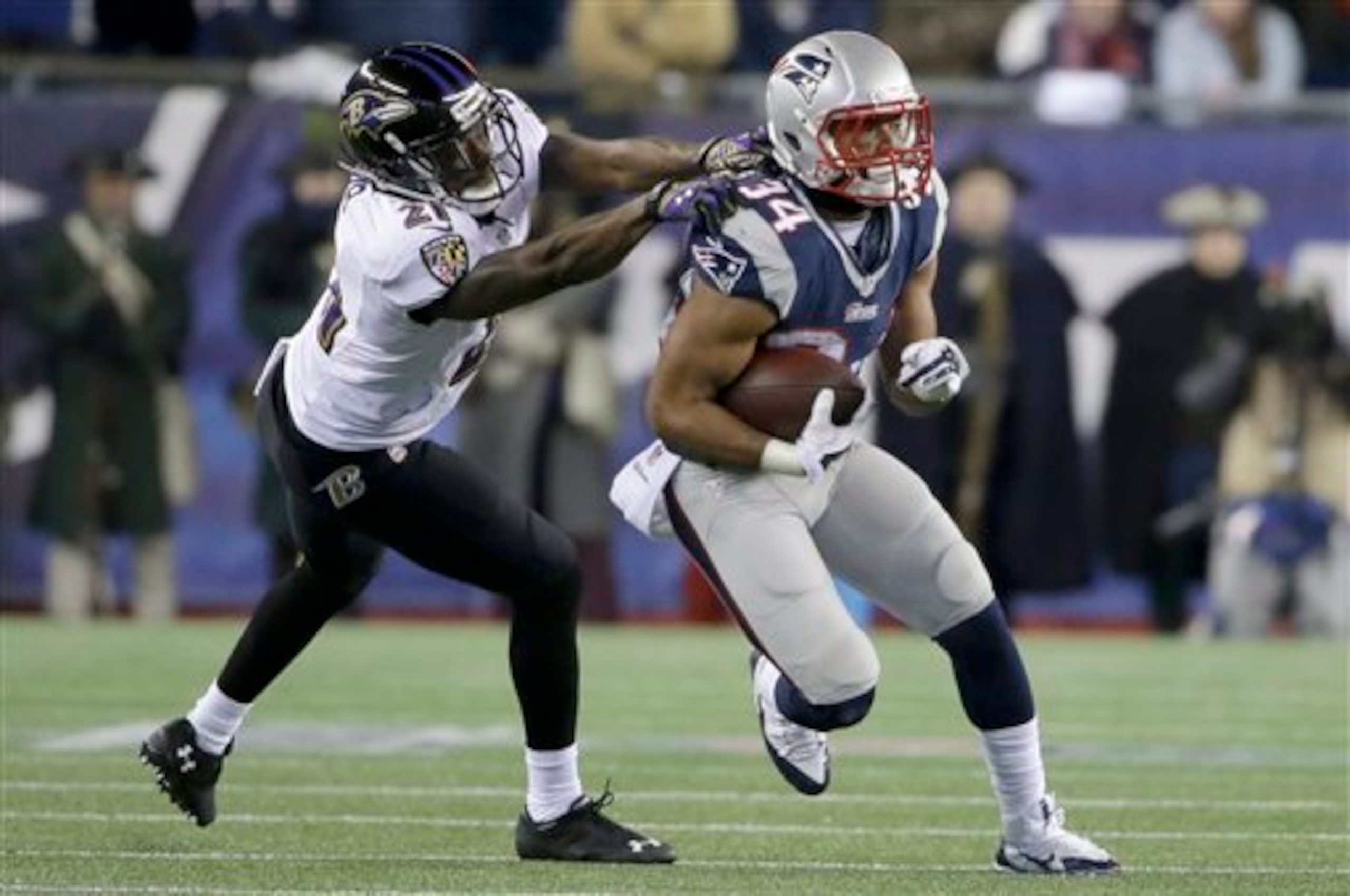
Speed
Shane Vereen is a shifty back who works best in space. He has the quickness and balance to sidestep or turn away from defenders quickly as well as the acceleration to turn the corner and run down the sideline.
Power
Vereen has obvious limitations as a between-the-tackles runner in the NFL. He doesn’t carry a large frame (5'10", 205 lbs) and lacks the strength to consistently punish defenders at any level. Despite that, he is still an aggressive player who works his way through contact at times with sustained effort.
Vision
Although he was rarely given repeated opportunities to show off his rushing ability, Vereen is a natural runner and receiver who understands how to set up and take advantage of his blocking.
Receiving
One of the scarier propositions for linebackers in the NFL is covering Vereen in space. He particularly excels when he extends his routes from the backfield to the sideline. In 2013, he struggled catching the ball because of an injury—that was less of an issue in 2014.
Starter
Vereen was always used sporadically by the Patriots because of how they run their offense. In New York he will be a very valuable member of the running back group because of his receiving ability.
Overall
36. Pierre Thomas, Free Agent
23 of 58
Speed
Even though he is now 30 years of age, Pierre Thomas hasn’t slowed too much. He was never one of the faster backs in the league, but Thomas excels by being quick in tight areas and with his burst to exploit running lanes between the tackles. He has enough long speed to threaten big plays still.
Power
Thomas is one of a handful of backs in the NFL who carries a relatively slender frame (5'11", 215 lbs) but impressive physical power. It allows him to combine quickness and burst to attack defenders violently from different angles in tight spaces.
Vision
At one point, Thomas showed off better creativity and anticipation as a runner. He is less effective in that area at this stage of his career, but he still consistently makes good decisions in different situations. Thomas is largely reliant on good blocking to be productive, but he will highlight that good blocking with his decisiveness.
Receiving
In Darren Sproles’ absence, Thomas’ production didn’t spike. That was largely a result of his health and usage within the Saints offense. When Thomas got opportunities, he typically made the most of them by being reliable at the catch point and elusive in the open field.
Starter
He has never been a full-time starter and likely never will be, but Thomas is still one of the best receiving backs in the NFL.
Overall
35. Bryce Brown, Buffalo Bills
24 of 58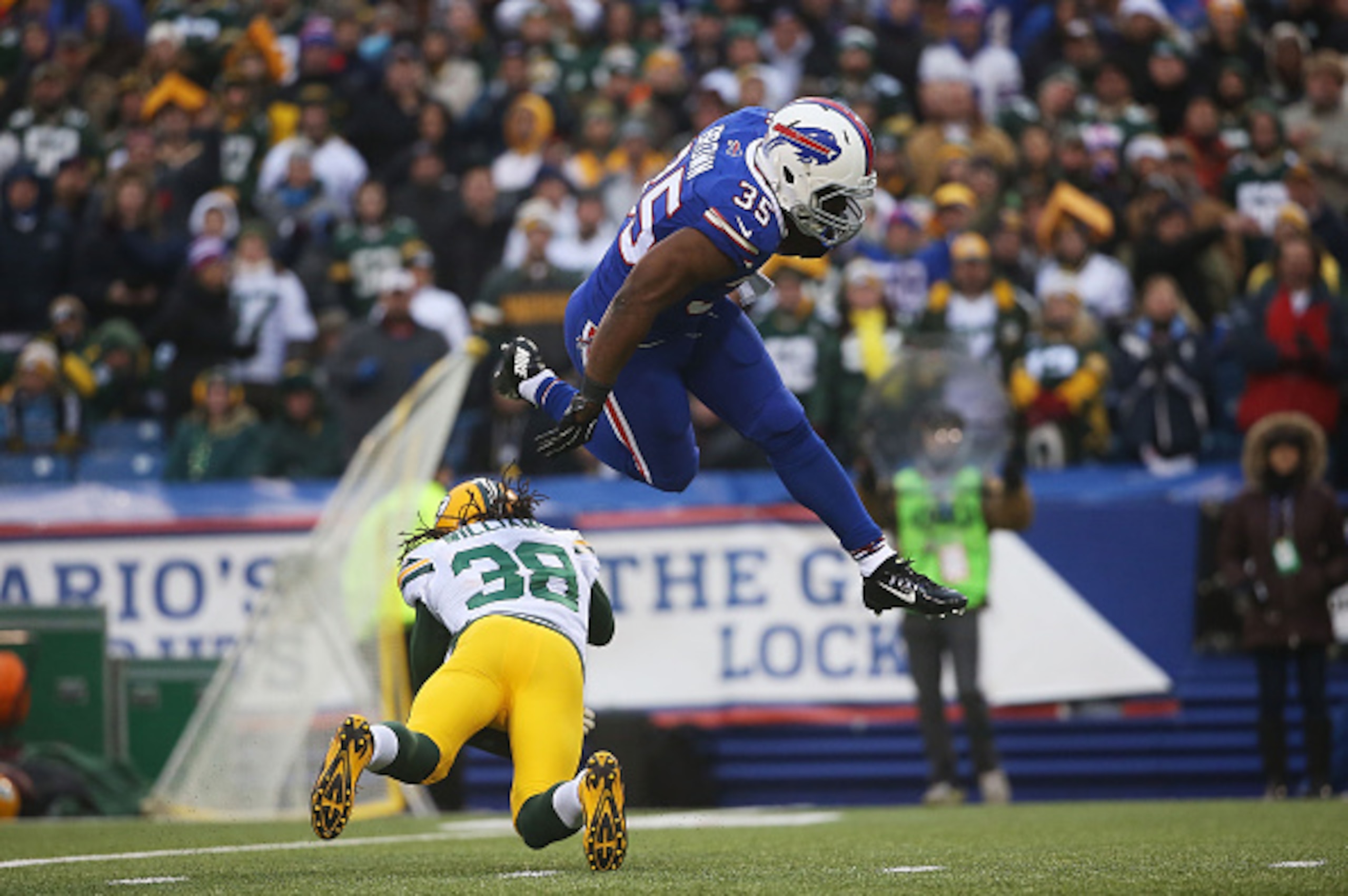
Speed
Bryce Brown’s acceleration has always stood out during his time in the NFL. His foot frequency isn’t exceptional, but he is quick enough to make defenders miss and change direction comfortably in tight areas. Brown has the kind of speed that allows him to threaten every level of the defense.
Power
Although he carries a very well-built, strong frame (6'0", 220 lbs) that doesn’t hinder his movement, Brown doesn’t get the most out of his physical power. He still gets a high grade because of the sheer power he possesses, but he needs to show it off with greater consistency and use it to explode through tacklers more often.
Vision
Brown can be a good decision-maker, but he’s not overly impressive as a creative runner between the tackles. He doesn’t consistently anticipate the movement of defenders ahead of him or make his blocking look better.
Receiving
Because of his sheer physical talent, Brown is a problem in space. He’s not a natural receiver, but he is good enough to be dangerous if not overly versatile.
Starter
Injuries helped to get Brown on the field during the 2014 season, but the addition of LeSean McCoy will make getting on the field tougher for Brown this season. As much as Rex Ryan likes to run the ball, Brown could still be a valuable piece of the offense.
Overall
34. Robert Turbin, Seattle Seahawks
25 of 58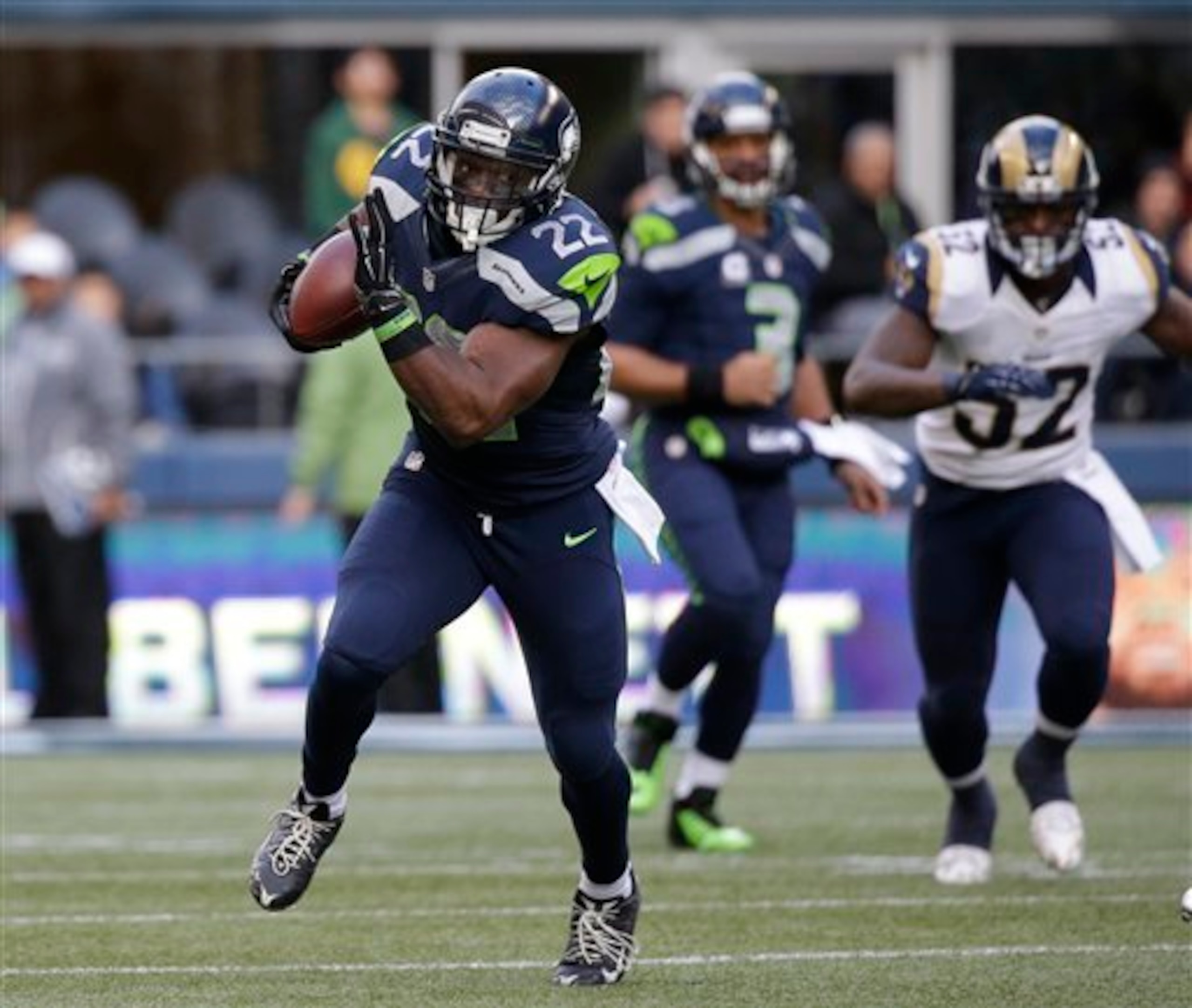
Speed
Without having one exceptional trait, Robert Turbin shows off impressive all-around speed on the field. He accelerates to the edge with ease, has the quickness to pick his way between bodies in tight spots and the capability to comfortably take advantage of space on the second level.
Power
The veteran isn't an exceptionally powerful back. Instead, he carries a compact frame and runs abrasively. He gets low and works through contact but lacks the physical explosiveness to consistently break tackles. Turbin’s value as a power runner comes in his ability to create forward momentum at the end of plays.
Vision
On the limited touches that Turbin received in 2014, he showed off quality decision-making and an ability to adjust at the line of scrimmage. Because he can't break tackles consistently, Turbin has to rely on his ability to find and create space to be productive.
Receiving
Turbin is a reliable receiving back with enough explosiveness to be dangerous in space.
Starter
Turbin may find himself in the peculiar position of being overtaken by Christine Michael before next season. He is still a valuable role player who the Seahawks will likely want to hold onto for the long term.
Overall
33. Chris Polk, Houston Texans
26 of 58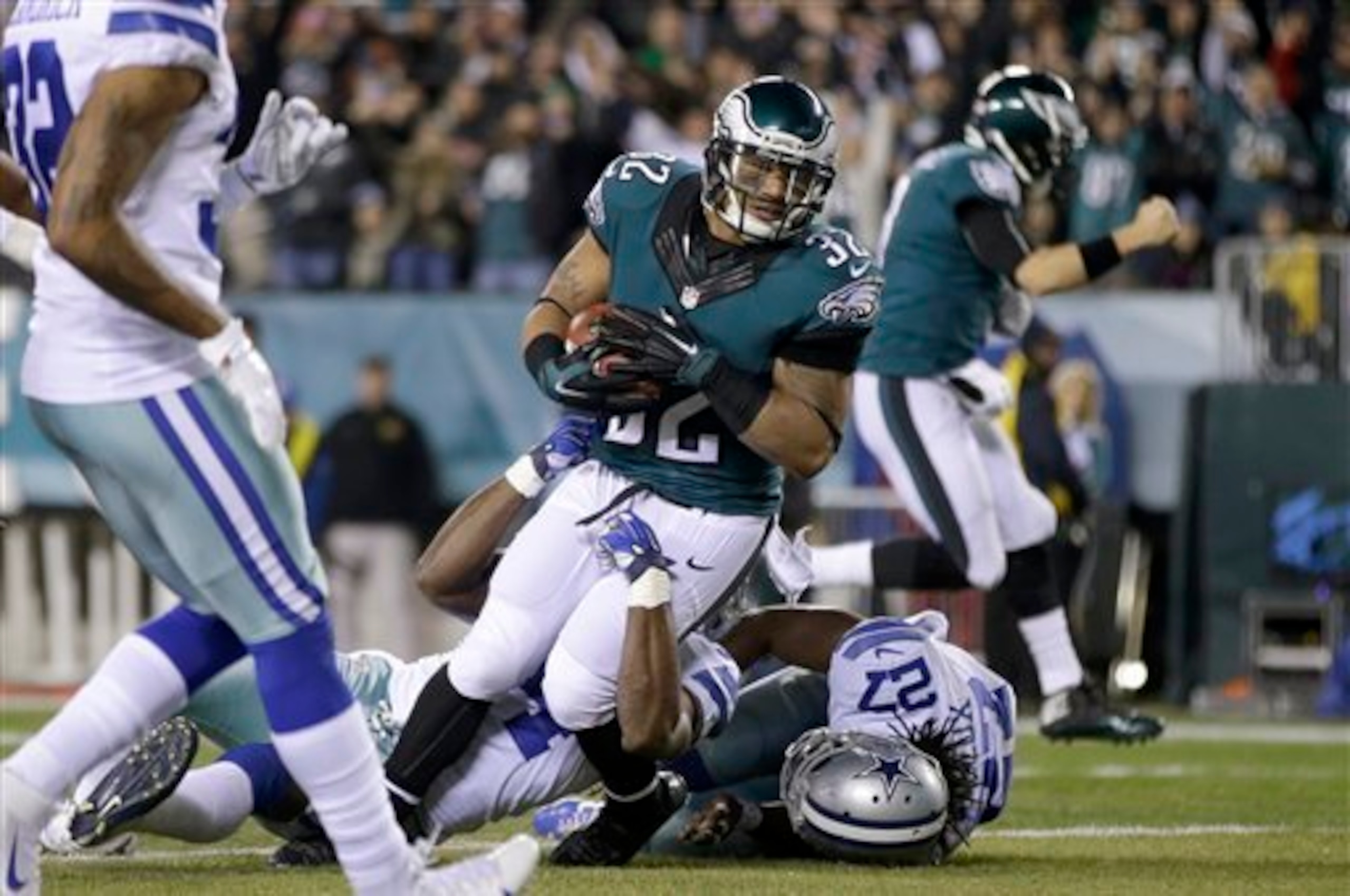
Speed
Chris Polk is best suited to be a one-cut runner, but he’s not limited to that role. He is an athletic back with the explosiveness to quickly advance to the second level before using his acceleration to exploit space downfield.
Power
Polk doesn’t carry much excess weight on his frame (222 lbs). In spite of that, he proved to be a very effective goal-line runner for the Eagles in 2014. Polk accelerates quickly and violently attacks contact, which allows him to generate more power than his frame should allow him to. It also makes it very difficult for defenders to drag him down.
Vision
Although he needs to be tested more consistently to earn a higher grade, Polk appears to be an intelligent runner. He is capable of creating yards but better suited to make good decisions behind the line of scrimmage while locating cutback lanes or pressing initial holes.
Receiving
Polk has shown his comfort working in space on special teams as well as his comfort catching the football. However, while playing in Philadelphia opportunities on offense were always going to be limited behind Darren Sproles and LeSean McCoy.
Starter
Polk has the quality to be a starter in the NFL, but he’s locked behind good backs in Houston. He is still working his way up from special teams and role player roles.
Overall
32. Jonas Gray, New England Patriots
27 of 58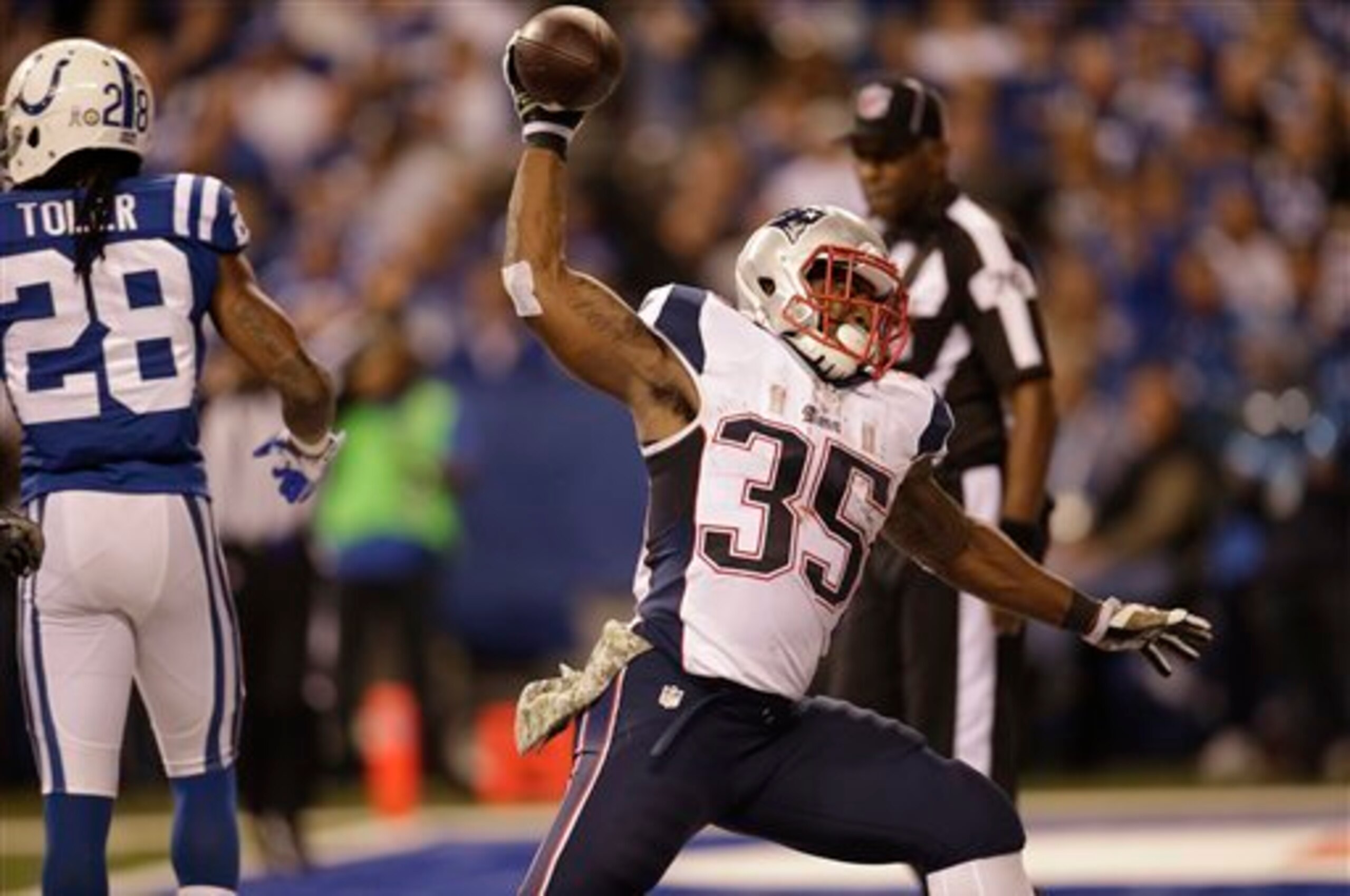
Speed
Jonas Gray showed off wonderful fluidity when working between the tackles. This was a key aspect of his huge performance against the Indianapolis Colts during the regular season. Gray’s quickness and acceleration as well as his body control allowed him to aggressively attack or quickly adjust to running lanes.
Power
With a well-built, compact frame (5'10", 225 lbs), Gray has the bulk to hit bigger defensive backs while taking advantage of his relatively low center of gravity. Although Gray isn’t a violent runner, he shows impressive effort through contact to drag defenders with him and finish plays with forward momentum.
Vision
Having the quick feet to adjust at the line of scrimmage in a hurry is one thing, but having the speed of thought to recognize when to adjust is another. Gray showed off outstanding awareness and anticipation as a runner during his rookie season.
Receiving
Gray wasn’t given enough opportunities to show off his receiving ability during the 2014 season.
Starter
After breaking out against the Colts in Week 11, Gray was late for a meeting and cost himself a chance to earn the full-time starting spot in New England. Gray will likely need to earn his role in 2015.
Overall
31. Reggie Bush, San Francisco 49ers
28 of 58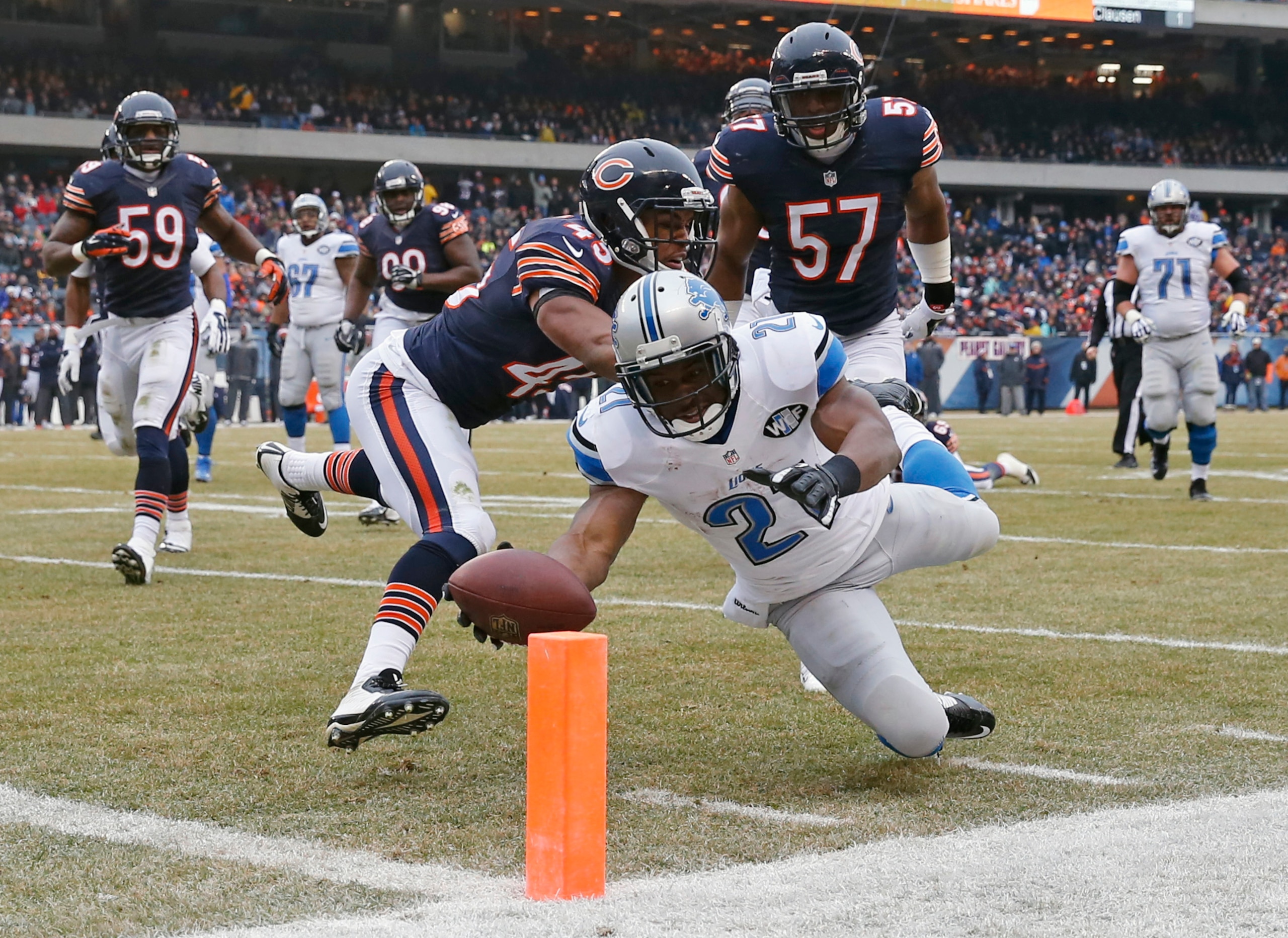
Speed
Reggie Bush is still fast by any measure. His explosiveness isn’t where it was during his prime, but it hasn’t fallen off that far. Bush struggles somewhat with his long speed, but he is still one of the shiftiest backs in the NFL with the acceleration to exploit running lanes to advance to the second level.
Power
Even during his prime, Bush didn't have much power. Now that his body appears to be declining because of age and injury, it’s become a more significant weakness. Bush’s lack of power on the field is easy to see.
Vision
Throughout his career, Bush has been a decent but unspectacular runner. He typically makes good decisions but could be more consistent. Bush is still able to create yardage with his movement behind the line of scrimmage. That was tougher in 2014 because he played behind a struggling offensive line.
Receiving
Bush can still be a high-volume receiving back while creating big plays from the backfield or out wide.
Starter
His lack of physical strength and bulk could become more significant as his physical talents decline. Bush isn’t young, and he has struggled with different injuries through his career. He still has the talent to be a starter, but his durability continues to be a concern.
Overall
30. Isaiah Crowell, Cleveland Browns
29 of 58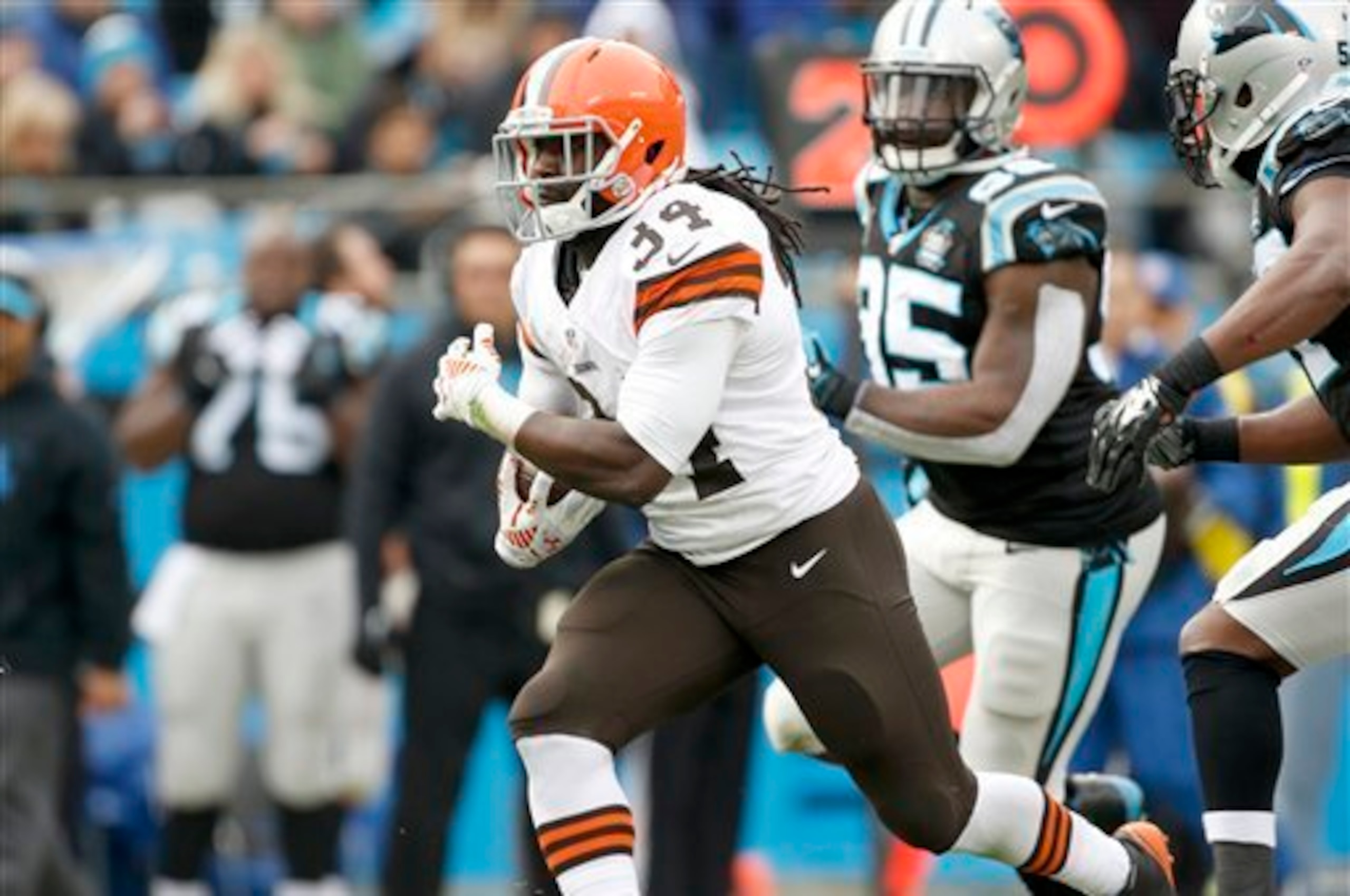
Speed
Isaiah Crowell shows off an outstanding ability to change direction quickly. He has the acceleration and shiftiness to slip through holes in the offensive line and excels cutting back across the formation. His long speed isn't spectacular, but it is enough to break off big gains regularly.
Power
Although Crowell is short, he is not thin. With his thick body (5'11", 225 lbs), powerful legs and low center of gravity, Crowell shows off more explosion through contact than one would initially expect. It helps that he is also an aggressive runner.
Vision
What separates Crowell from the other backs who played for the Browns in 2014 is the consistency of his vision. The Browns may not have asked him to run every type of run in their playbook, but he excelled on the ones they did ask him to attempt.
Receiving
Although his skill set suggests he would excel as a receiver in space, the Browns didn't look to incorporate him in the offense as a receiver during his rookie season.
Starter
Character concerns caused Crowell to fall out of the 2014 draft completely. Character concerns seem to be the only issue with him being a full-time starter for the Browns moving forward.
Overall
29. Ryan Mathews, Philadelphia Eagles
30 of 58
Speed
One of the first things that stands out with Ryan Mathews on the field is his quick feet. He is able to change direction quicker than most backs in the league and shows off excellent balance in the open field and tight areas. Mathews' acceleration allows him to get to the second level when given the opportunity, and he has enough speed to score from distance.
Power
Despite his slender frame (6'0", 220 lbs) and durability question marks, Mathews shows off impressive power on the field. He is an aggressive runner who gets low and explodes through the point of contact to finish plays moving forward.
Vision
There are a handful of natural runners in the NFL and Mathews is one of them. He understands how to manipulate defenders with his movement behind the line of scrimmage and knows when to be aggressive and when to be patient.
Receiving
Mathews wasn't used much as a receiver during the 2014 season, but he has proved in previous seasons that he can be an effective receiving option out of the backfield. He was reliable for the most part when he was targeted in 2014.
Starter
The Chargers were unable to replace Mathews when he missed games through injury. His skill set is such that he can be a three-down back in the NFL, something that is rare these days. He just needs to prove his durability and consistency.
Overall
28. Mark Ingram, New Orleans Saints
31 of 58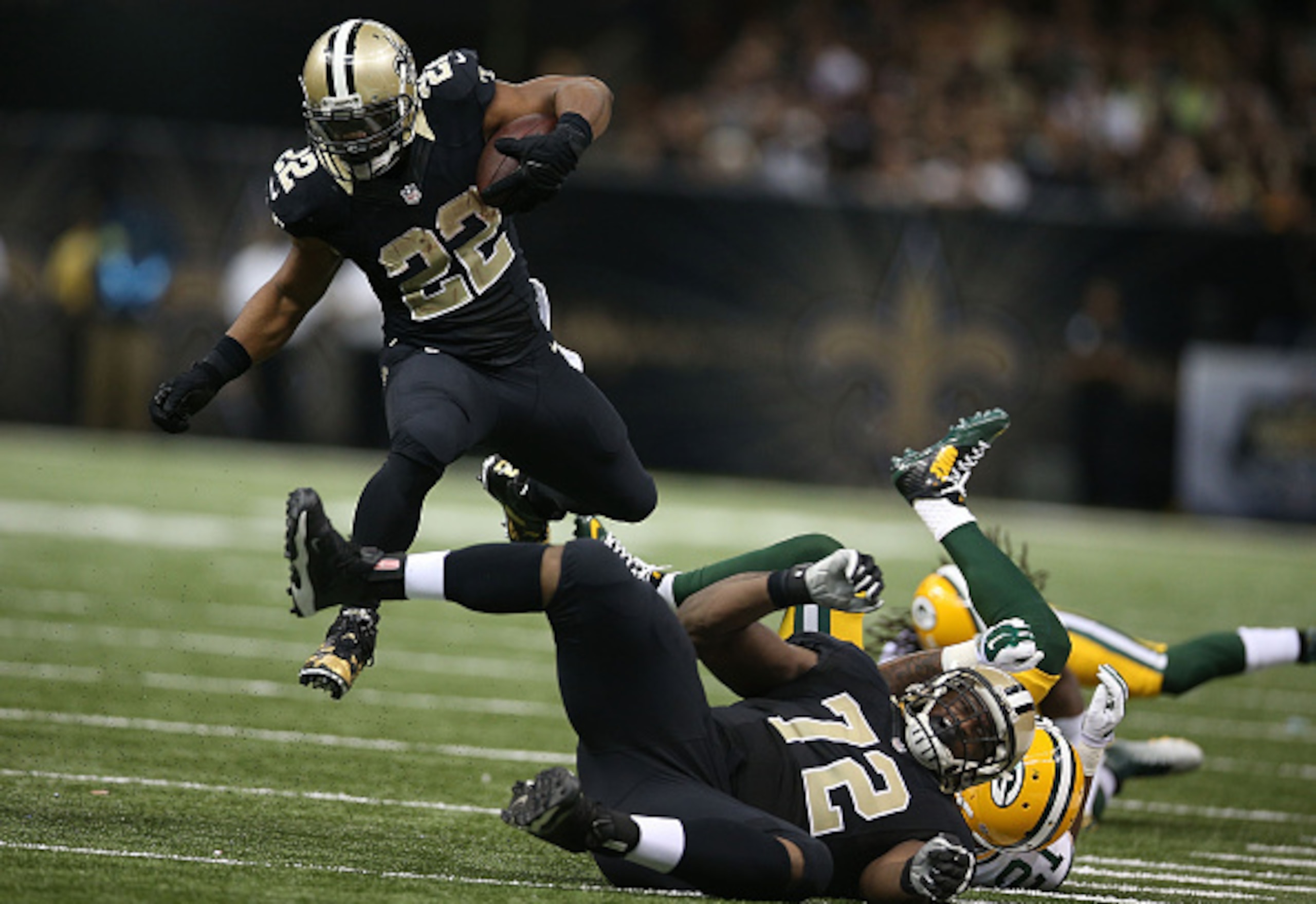
Speed
Mark Ingram appears to have lost weight over his career. He always showed off breakaway speed, but now he is more agile in his movements behind the line of scrimmage and has a better burst of acceleration. Ingram is a well-rounded physical specimen (5'9", 215 lbs).
Power
It took a while, but Ingram is finally showing off the power as a runner that made him a Heisman winner in college and a first-round draft pick. Ingram can break arm tackles with ease and push his way through multiple bodies for forward momentum.
Vision
The level of comfort that Ingram showed with the ball in his hands during the 2014 season may have come from his better physical condition, but it highlighted his natural talent as a runner. Ingram knows when to be patient and when to be aggressive and understands what running lanes he can expose.
Receiving
Predictably, Ingram wasn't used much as a receiver by the Saints. He had limited opportunities, and he proved to be inconsistent on those.
Starter
For Ingram, his development came just in time to cash in on a four-year deal. For the Saints, it probably took a year or two too long. Ingram may be limited by his receiving ability, but he can be a bell-cow back in the NFL.
Overall
27. LeGarrette Blount, New England Patriots
32 of 58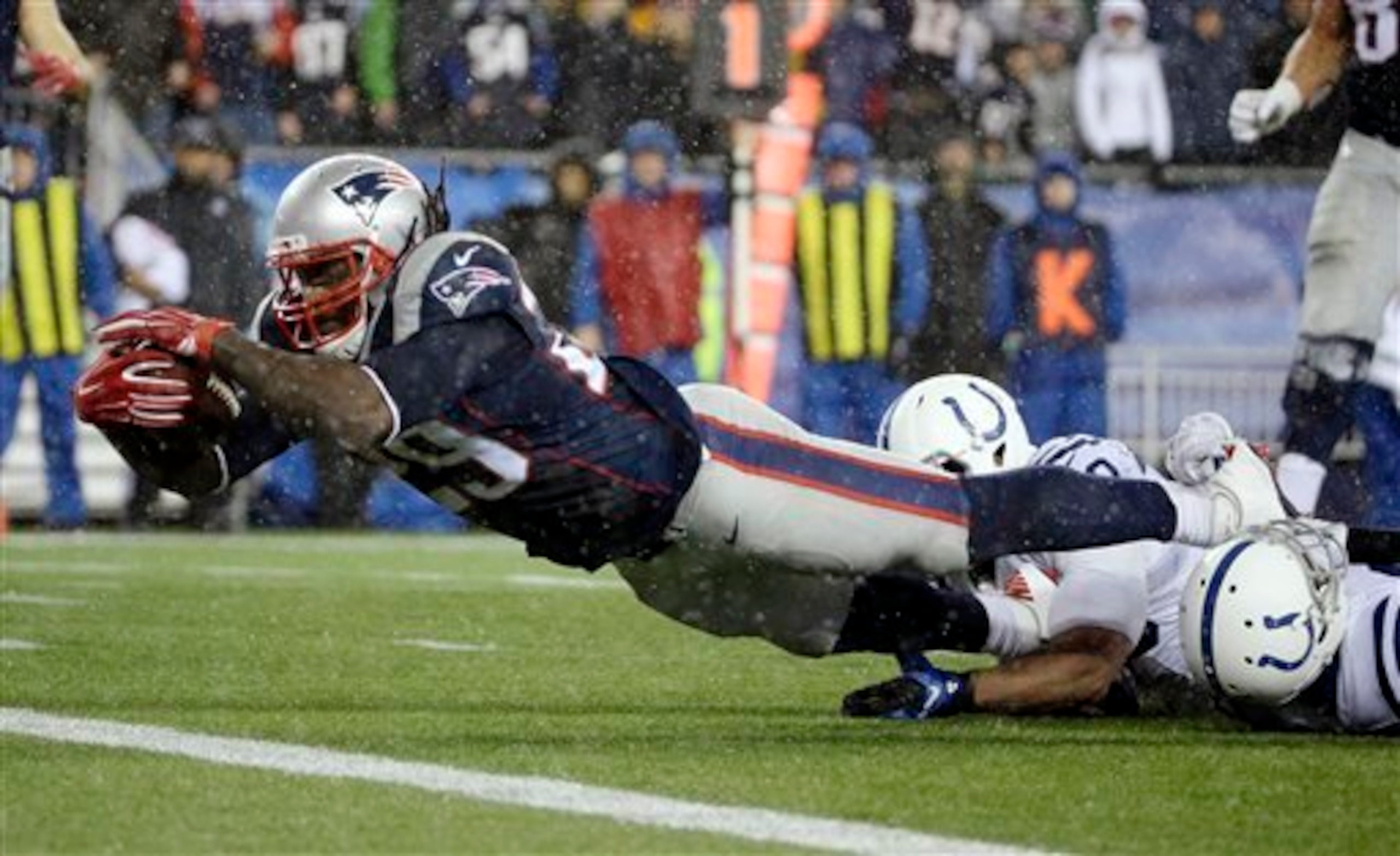
Speed
Despite his size, LeGarrette Blount has breakaway speed to take advantage of space in the secondary. He is not exceptionally agile but can change direction comfortably before accelerating through tight holes.
Power
Blount is a big back (6'0", 250 lbs) who can punish bigger linebackers, but he needs to run lower and be more aggressive through contact to get the most out of his physical attributes. Blount proved to be a better runner in New England than he had been in Pittsburgh.
Vision
Like with his power, Blount was more consistent with his vision in New England as opposed to Pittsburgh. He showed off an ability to anticipate running lanes and set them up with his movement behind the line of scrimmage.
Receiving
Blount has never been a versatile or consistent receiver. He was reliable in 2014 but not used often.
Starter
At this stage of his career, Blount is just a role player, but he found a good fit with the Patriots for a second season in a row. He's capable of occasionally playing starter snaps.
Overall
26. Stevan Ridley, New York Jets
33 of 58
Speed
Stevan Ridley's greatest physical strength is his quickness and burst. The two work in tandem to allow him to be an effective between-the-tackles runner. In 2014, we saw little of Ridley's long speed in part because he was often working behind an overwhelmed offensive line.
Power
Ridley is a powerful back who aggressively works through contact. He doesn't consistently break tackles against linebackers and defensive linemen, but he also isn't an easy player to bring to the ground alone.
Vision
Throughout his career, Ridley has always been a smart runner. He can create yards, but his vision is primarily used to show off effective blocking with quick decisions and cuts behind the line of scrimmage.
Receiving
Ridley wasn't used much as a receiving option in 2014.
Starter
It was a very unfortunate season for the veteran running back. He didn't have fumble problems like he had a season previous, but he did play behind the Patriots offensive line during its worst stretch of the year. By the time the offensive line had improved, Ridley had been lost for the season with a torn ACL.
Overall
25. James Starks, Green Bay Packers
34 of 58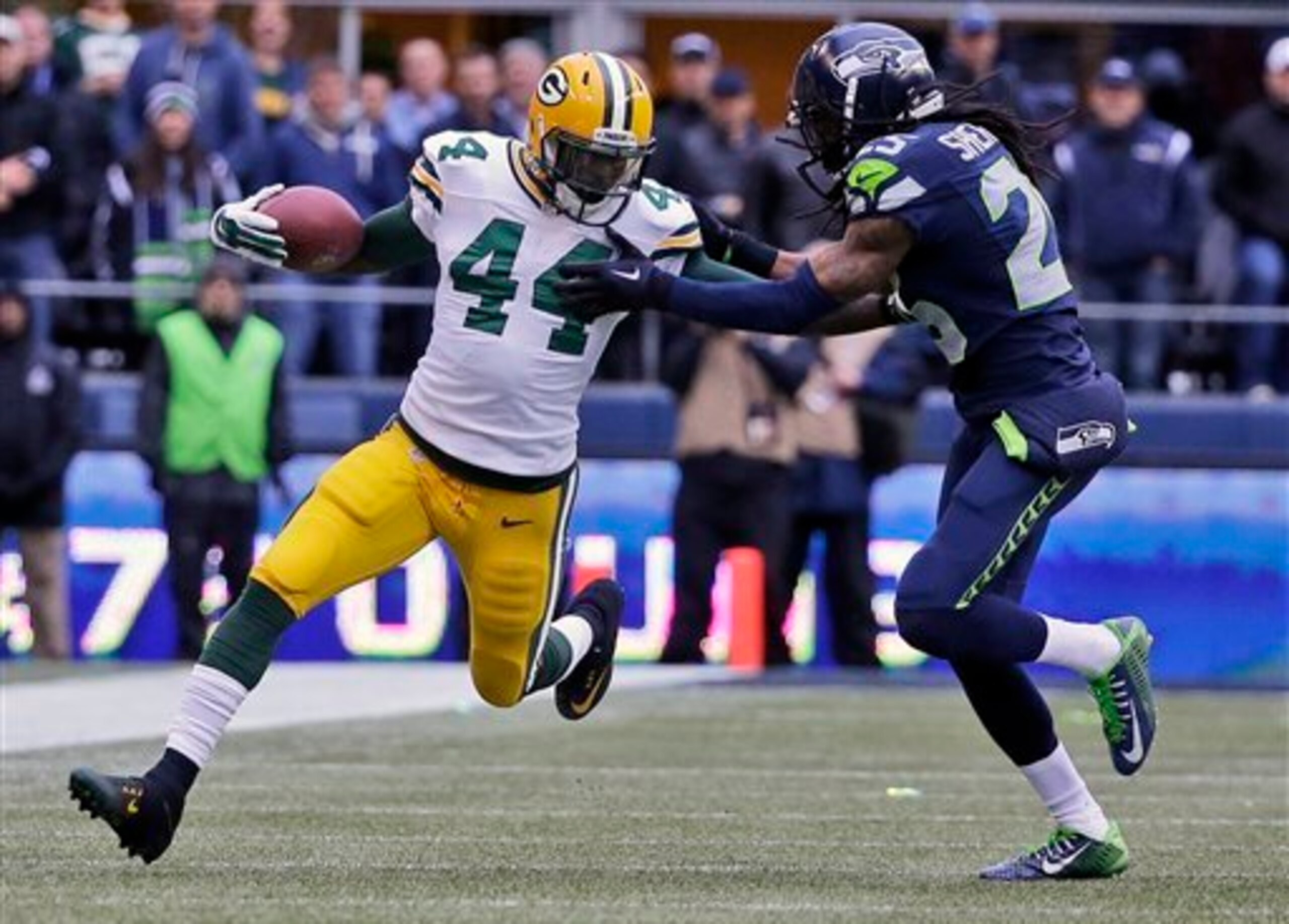
Speed
The acceleration that James Starks showed off during the 2014 season allowed him to be effective in space. Starks isn’t exceptionally agile, but he is an effective one-cut runner whose acceleration and long speed make him a constant big-play threat.
Power
Starks is a tall runner (6'2", 218 lbs) with good power and aggressiveness. He has the physical ability to break tackles and finish plays moving forward but needs to be more consistent with his pad level.
Vision
Although he is not a creative runner who helps his blockers gain leverage with his movement behind the line of scrimmage, Starks consistently made good decisions in 2014. He shows off an ability to find cutback lanes and is aggressive when he finds space.
Receiving
Starks isn't a natural catcher of the ball and lacks positional versatility in the passing game.
Starter
Starks was a productive player in 2014, but he is still a reliable backup rather than a potential upgrade at starter for the Packers.
Overall
24. Giovani Benard, Cincinnati Bengals
35 of 58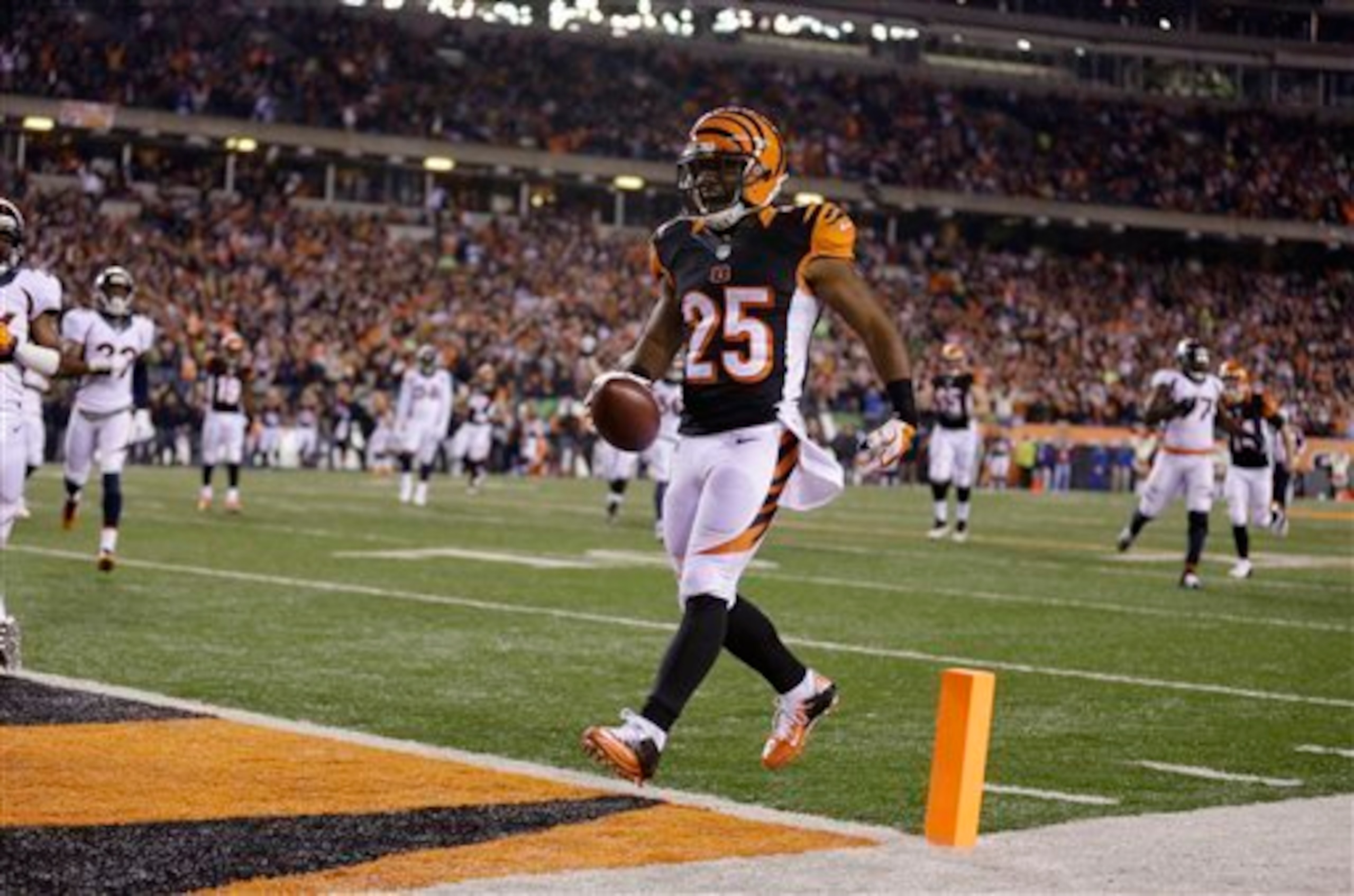
Speed
One of the first things that stands out with Giovani Bernard is his ability to plant one foot and burst off it with haste. His balance and acceleration allow him to change direction as quickly as any other back in the league. His sustained speed was somewhat muted during the 2014 season, but when given space he was able to take advantage of it sporadically.
Power
Bernard benefits from his low center of gravity (5'9", 208 lbs) and active feet to get the most out of his bulk. Despite being a relatively short back, he carries a well-built frame and a willingness to be aggressive through contact. His size hampers his ability to generate power, though.
Vision
Bernard’s physical talents work in concert with his technical abilities. The Bengals backs were put under more pressure to create yardage in 2014 than they were in 2013. Bernard was able to do that with his movement before the line of scrimmage as well as his decision-making.
Receiving
Bernard's versatility and athleticism make him dangerous in space, while his natural receiving ability makes him a versatile option in the passing game.
Starter
It wasn't necessarily a bad season for Bernard in 2014, but he likely expected more after a promising rookie season. Jeremy Hill’s presence hurts his status as a starter moving forward.
Overall
23. Jonathan Stewart, Carolina Panthers
36 of 58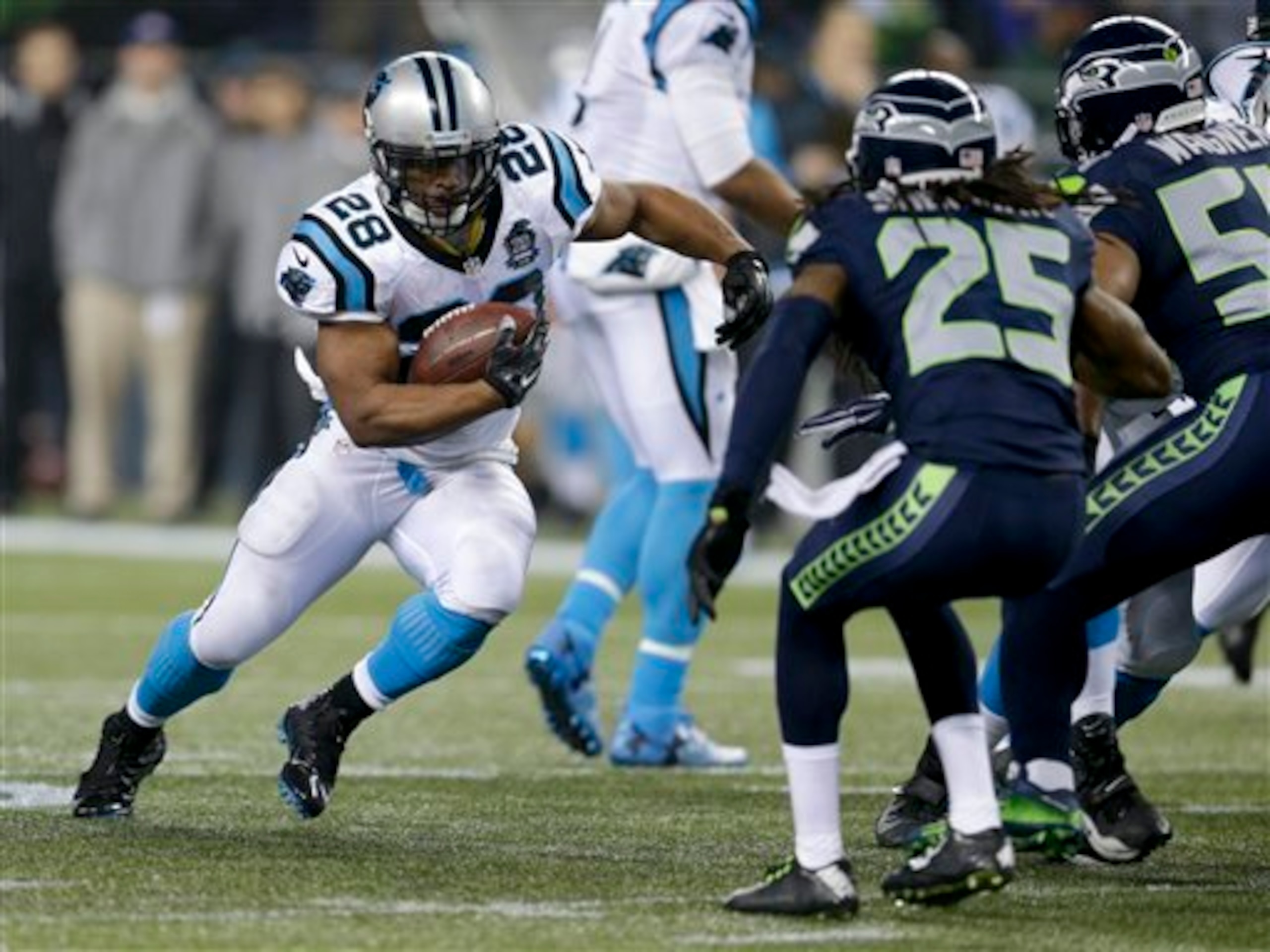
Speed
With his health intact, Jonathan Stewart showed off very impressive quickness in tight areas during 2014. His long speed may not be what it once was, but his acceleration and quickness are more important for his ability as a runner either way.
Power
Although not the physical specimen of his prime, Stewart still has the lower body power to fight through bigger defensive linemen at the line of scrimmage. His strength plays an important role in his success running the ball between the tackles.
Vision
In a difficult situation, playing behind a bad offensive line, Stewart showed off an intelligence and awareness both between the tackles and on outside runs. He has always been a naturally gifted runner, and this season was no exception.
Receiving
Stewart is a versatile receiving option who is also effective when given space. He struggled to create big plays as a receiver in 2014 though.
Starter
At 28 years of age, Stewart's career hasn't turned out the way his talent suggested it should have. With that said, he is still proving to be an effective player at this stage of his career and a more-than-viable starting option.
Overall
22. Fred Jackson, Buffalo Bills
37 of 58
Speed
Fred Jackson clearly isn't one of the faster backs in the NFL, but he's not slow either. Most significantly, he has well-rounded speed, as he can accelerate through holes, adjust with his quickness in tight areas and take advantage of space on the second level.
Power
As he has done throughout his career, Jackson showed off explosiveness through contact in 2014. His aggressive running style and compact frame (6'1", 216 lbs) allow him to accelerate through defenders rather than be punished by big hits.
Vision
While playing behind an inconsistent offensive line, Jackson showed off the subtlety and awareness to create space as well as consistently make good decisions. Jackson has been able to extend his career for so long because of his technical ability.
Receiving
Jackson is a natural receiver who is effective on screen plays and has the ability to line up out wide as a receiver.
Starter
Even at 34 years of age, Jackson is still one of the better backs in the NFL. How long he can keep that going for is unclear, though.
Overall
21. Lamar Miller, Miami Dolphins
38 of 58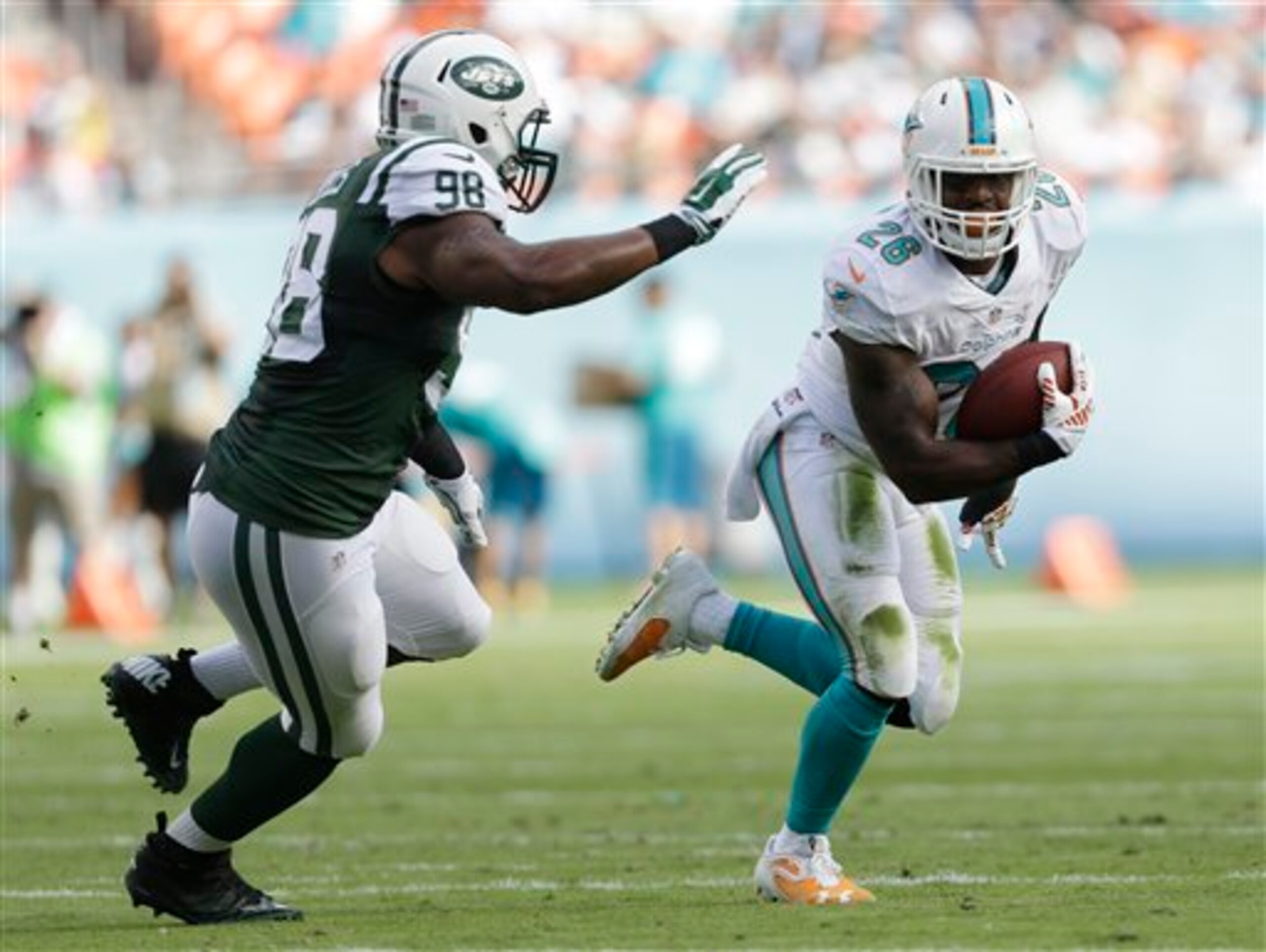
Speed
Speed is largely what makes Lamar Miller valuable in the NFL. In Bill Lazor’s offense, that speed was highlighted. He is comfortable changing direction to attack cutback lanes and shows off the burst to exploit small gaps at the line of scrimmage. His long speed makes him a constant big-play threat, and he is tough to track down from behind.
Power
Miller is an aggressive runner but doesn't carry much weight (224 lbs) and isn't a powerful athlete by any measure. He does show a willingness to get low and fight his way forward when running between the tackles or at the goal line. The Dolphins didn’t trust him to carry the ball repeatedly through games, and that was likely because of his physical strength.
Vision
Although he wasn’t necessarily stressed within the construct of Lazor’s offense in Miami, Miller still had to consistently make good decisions to be productive. He showed off an ability to quickly diagnose cutback lanes while still being aggressive enough to press running lanes that appeared in front of him. Miller isn’t a spectacularly creative back, but he does what he is asked to do well.
Receiving
With his athleticism in space, the Dolphins clearly wanted Miller to be a part of the passing game. However, his consistency catching the football was an issue.
Starter
Because of his athleticism and awareness, Miller is a good fit in the Dolphins offense. However, the coaching staff seems intent on not asking him to do too much. He will likely feature as part of a duo with more of a bruising back, a role he was expected to fill alongside Knowshon Moreno in 2014.
Overall
20. Carlos Hyde, San Francisco 49ers
39 of 58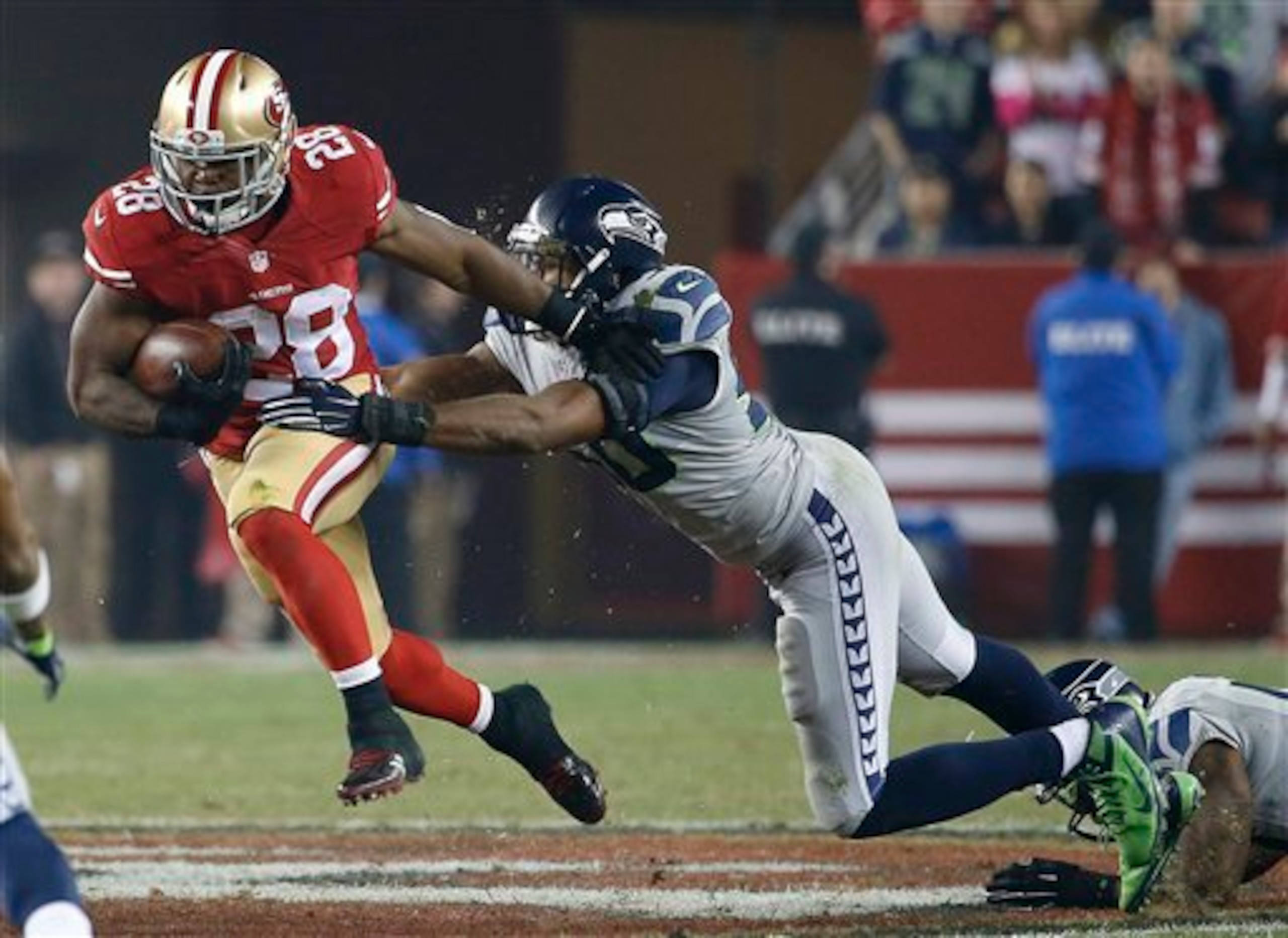
Speed
One of the first things that stands out from Carlos Hyde’s tape is his sheer speed. He accelerates with ease and has the long speed to take advantage of space on the second level. Hyde’s quickness isn’t as good as that of former teammate Frank Gore, but his overall speed is very impressive.
Power
Hyde is a violent running back. He gets the most out of his athletic but relatively slender frame (6'0", 235 lbs) by consistently attacking contact and working through tackles. His power becomes particularly valuable as a complement to his speed because he can get into positions where he can punish defensive backs.
Vision
For a rookie, Hyde showed an impressive comfort running between the tackles. His understanding of how to set up his blocks and when to be aggressive attacking space can be more consistent, but it certainly isn’t a problem at this point. Hyde is also an aware runner in space on the second level.
Receiving
Hyde wasn’t used much as a receiver during his rookie season. He didn’t show enough versatility or explosiveness to earn a better grade.
Starter
The second-round pick from the 2014 draft is the presumed heir to Frank Gore’s throne in San Francisco. He only solidified his status as that with his performances as a rookie.
Overall
19. Rashad Jennings, New York Giants
40 of 58
Speed
Rashad Jennings has very well-rounded speed. He accelerates comfortably through tight holes between the tackles and has the quickness to sidestep and turn in tight areas. His long speed isn’t incredible, but it is effective enough to make him more than just a short or intermediate threat.
Power
Although he didn’t have a highlight play in 2014 like he did when he ran over D.J. Swearinger of the Houston Texans in 2013, Jennings still showed off impressive power. Jennings’ frame allows him to be a fluid athlete while still being able to punish defenders. It makes him more dangerous than a linear athlete who can only run through defenders in specific situations.
Vision
Jennings shows off his quickness and acceleration in tight areas by using his patience. He understands when to slow down and when to accelerate to best set up his blocking around him. Jennings could benefit more from showing more consistency in his decision-making when choosing what running lane to attack.
Receiving
Jennings’ versatile skill set extends into the passing game. He can make defenders miss in space and take advantage of space while running different routes. He drops the ball too much but made up for it by creating yards after the catch consistently.
Starter
Jennings is 30, and he lost much of this past season because of poor health. Without a proven track record of sustainable performance, Jennings’ future is uncertain.
Overall
18. Alfred Morris, Washington
41 of 58
Speed
Alfred Morris' straight-line speed is somewhat underappreciated. He has the speed to turn the corner and take advantage of space down the field. He may not be the shiftiest of backs in the league, but he is quick enough to be effective as a one-cut runner and not be easily caught when changing direction.
Power
The bowling ball of Washington continues to run over and through people. Morris was no longer paired with a Shanahan (former head coach Mike and his son Kyle, who was offensive coordinator) in 2014, but his effectiveness as a back remained high. With quick feet, good balance and short-area explosiveness, Morris was rarely in position to be punished by defenders.
Vision
Playing in a new scheme behind an underwhelming offensive line forced Morris to create yardage more often in 2014. His vision allowed him to still be effective as he continually found cutback lanes and made good decisions at the line of scrimmage.
Receiving
As a runner, Morris could be considered an old-school back. As a receiver, that statement is even more apt. Morris isn't versatile or reliable in the passing game.
Starter
It shouldn’t come as a surprise that Morris could succeed without a Shanahan on his sideline. Despite his inability to be effective in the passing game, Morris' rushing ability makes him a quality starter.
Overall
17. Justin Forsett, Baltimore Ravens
42 of 58
Speed
Justin Forsett’s speed perfectly fit into Gary Kubiak’s offense for the Baltimore Ravens. He was able to show off his impressive quickness as well as his acceleration to find and run through the holes that were created for him. Forsett lacks top-end breakaway speed, but he has enough to consistently take advantage of space for long runs.
Power
The veteran running back has never been a physically gifted player. He runs tough and doesn't allow defenders to punish him, but he isn't the type of back who will consistently break through the shoulders of linebackers. Forsett has enough strength to get by in the NFL, but not to excel because of it.
Vision
Behind an impressive Ravens offensive line, Forsett was able to consistently pick the right spots to attack and create space with his movement at or behind the line of scrimmage. He is a smart back who brought consistency in this area to the Ravens backfield.
Receiving
Forsett has hung around the league for so long because of his receiving ability. He is a versatile and reliable piece of the passing game without being exceptionally explosive.
Starter
Forsett proved to be a perfect fit for the Ravens because he rarely ever left yards on the field in 2014. With a new contract and the Ravens not drafting competition early, Forsett should once again be the man for the Ravens offense.
Overall
16. Frank Gore, Indianapolis Colts
43 of 58
Speed
If age is hurting Frank Gore in any area, it’s his speed. He’s not as explosive down the field as he once was. With that said, Gore isn’t a slouch, and he’s still exceptionally agile with a burst to exploit space between the tackles. Gore is much quicker and faster than any back of his age with his past should be.
Power
The 49ers drafted Carlos Hyde before the start of the 2014 season, which led some to question whether Gore was breaking down physically. It didn't look like he slowed down much at all. His aggressive running style, low center of gravity and short-area explosiveness continue to highlight how powerful a runner he can be. Even at this stage, he is still relatively consistent running through contact.
Vision
Gore remains the smartest running back in the NFL. He played behind a lesser offensive line in 2014 with an offensive coordinator who was sporadically getting him the football at times. Regardless, Gore continued to create yardage and be consistent with his decision-making. Gore’s value as a technical runner is huge.
Receiving
The veteran back is a serviceable but underused pass-catcher.
Starter
Gore continues to defy the belief that running backs can't produce after turning 30 years old. In Indianapolis he'll be supported by an all-star passing game and an offense similar to what he saw in San Francisco the past four years.
Overall
15. Joique Bell, Detroit Lions
44 of 58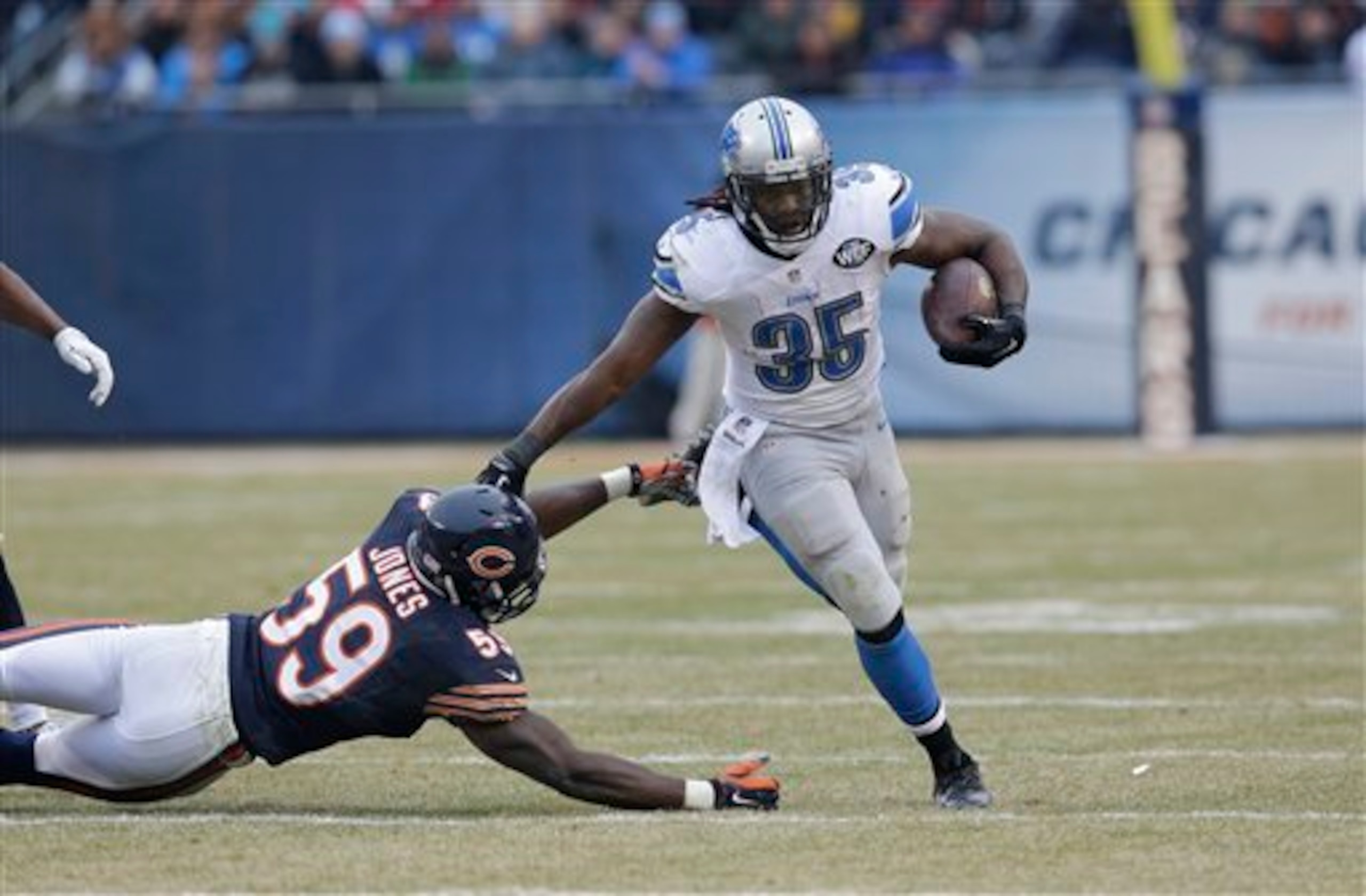
Speed
Joique Bell doesn't have any elite traits, but he is a well-rounded athlete with above-average speed. The running back possesses an ability to slide and jump from gap to gap between the tackles with relative ease. He can explode through smaller gaps with his acceleration and has the straight-line speed to take advantage of space down the field.
Power
Bell perfectly fit the role of power back in 2013 and 2014. He has a relatively compact frame but is well-built and attacks tacklers aggressively. The veteran needs to keep his legs moving through contact more, but he does get low at the point of contact.
Vision
Just like in 2013, Bell's biggest concern is his inability to create yardage with his movement before the line of scrimmage. Bell showed off more consistency with his decision-making in 2014, though. He recognized running lanes and understood when to be aggressive as opposed to when to be elusive. At this stage of his career, this is likely Bell’s peak in this area.
Receiving
Bell doesn’t look like your typical receiving back, but he offers the Lions impressive versatility and explosiveness in the open field. His ability to create big plays negates his inconsistency catching the football.
Starter
The production may not have been what it could have for Bell in 2014, but the positives of his skill set were still evident throughout his tape.
Overall
14. C.J. Spiller, New Orleans Saints
45 of 58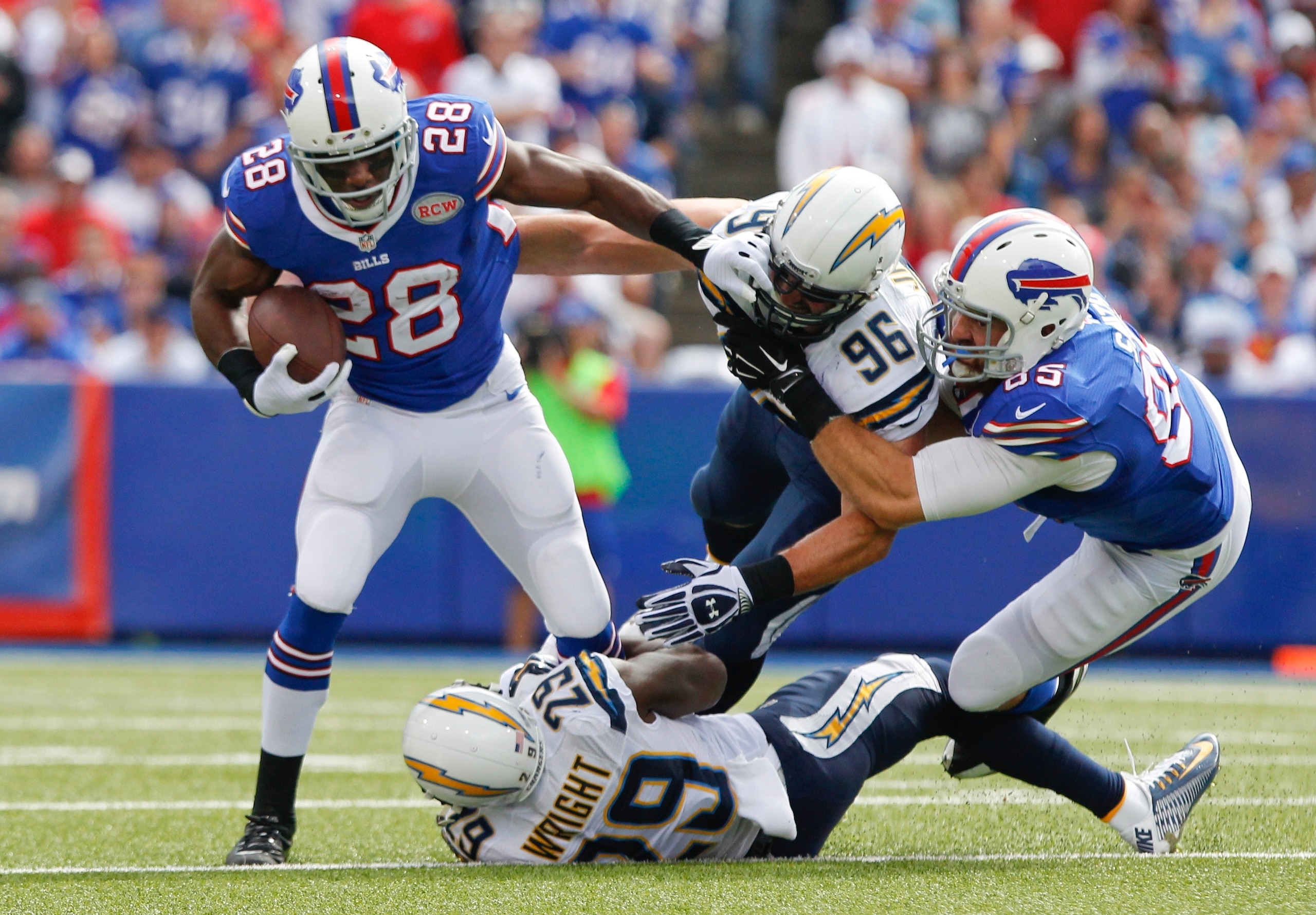
Speed
Physically, C.J. Spiller's speed is as impressive as anyone's in the NFL. He is very quick, can accelerate in a hurry and is almost impossible to catch from behind. Spiller's speed is what allows him to be an effective kick returner and home run hitter in the running game even when not playing well.
Power
Spiller isn’t weak, and he doesn’t take much punishment. But he’s also not a punishing runner. Importantly, he can work through contact even though he is largely reliant on his elusiveness over his strength to be effective.
Vision
If Spiller had played behind a better offensive line in 2014, he would likely have put up huge numbers. Instead he was too regularly swallowed up with nowhere to go at or behind the line of scrimmage. Spiller shows off an ability to set up runs and make good decisions even though he still has a tendency to be too hesitant at times.
Receiving
Although injuries limited his opportunities in 2014, Spiller once again showed off his electrifying ability in space as a receiver. Spiller has the talent of a Darren Sproles when it comes to being a receiver.
Starter
Spiller will be an exciting weapon for the offense in New Orleans if he's able to stay healthy. His combination of speed, power, hands and explosive ability in the open field make him a huge threat with the ball in his hands.
Overall
13. Ahmad Bradshaw, Free Agent
46 of 58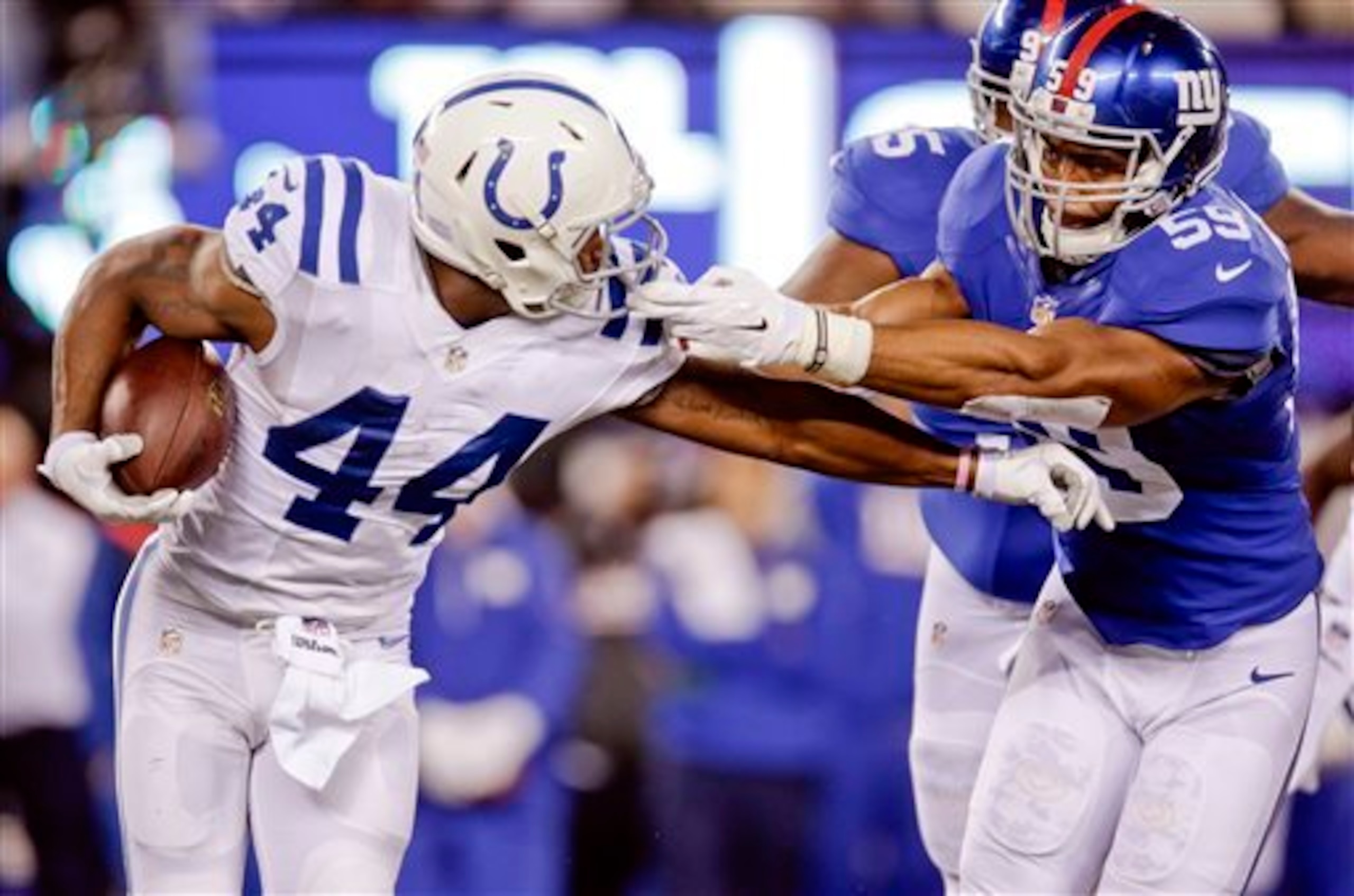
Speed
As has been the case throughout Ahmad Bradshaw’s career, his speed was a major positive for his play in 2014. Bradshaw has above-average acceleration, quickness and long speed to be one of the more versatile athletes at running back in the NFL. He easily takes advantage of space outside or on the second level while highlighting his teammates’ blocking in tight areas.
Power
Bradshaw isn’t a big or thick back (5'10", 217 lbs), but he is a violent running back who attacks contact and works his way through it. The veteran is able to multiply his power with his approach, but it likely plays a role in creating his durability issues.
Vision
There is no comparison between Bradshaw and the other backs the Colts used in 2014. He understands how to consistently make his blocking look better with his creativity at and before the line of scrimmage. Furthermore, he consistently makes good decisions when attacking running lanes or working in space.
Receiving
Drops were an issue for Bradshaw in 2014, but he also showed off versatility and explosiveness by being a consistent big-play threat out of the backfield.
Starter
Bradshaw could have been one of the best running backs in the NFL over the past few years, but he just can’t stay healthy. At this point, it appears that his best role to sustain success is as a complementary piece.
Overall
12. Darren Sproles, Philadelphia Eagles
47 of 58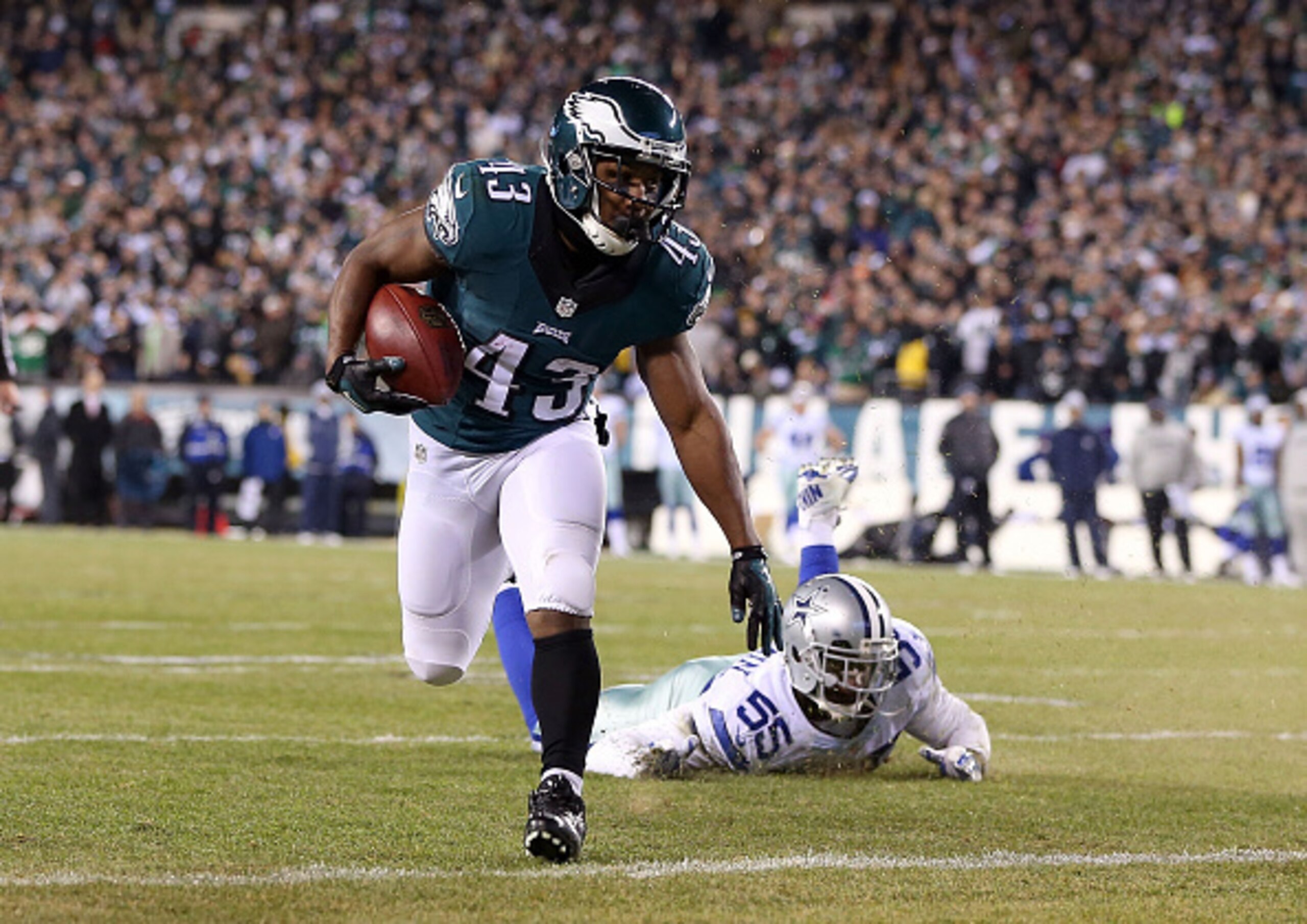
Speed
Despite being on the wrong side of 30, Darren Sproles still showed off enough explosiveness in space to be very effective for Chip Kelly’s offense in 2014. His athleticism appeared to be declining during his final season with the Saints in 2013, but he found a new lease of life in Philadelphia.
Power
Sproles (5'6", 190 lbs) has always been a shorter back rather than a small back. Once again in 2014 he showed off resilience at the point of contact by punishing defensive backs and maintaining forward momentum against linebackers. Sproles' low center of gravity makes him more difficult to stop, although it must be acknowledged that his explosiveness is less consistent at this stage of his career.
Vision
In Kelly’s offense, Sproles was regularly put in space without having to create it for himself. However, when he did work between the tackles he showed off the ability to recognize cutback lanes quickly before aggressively attacking them. Despite this aggressiveness, he rarely, if ever, turned away from a running lane that was directly in front of him.
Receiving
The same consistency at the catch point that was there in 2013 wasn’t evident in 2014, but Sproles remains the premier receiving back in the NFL.
Starter
The New Orleans Saints likely regretted trading Sproles in the offseason, as he was able to fend off father time's effect on his play. The Eagles will be hoping for at least one more season of quality from him.
Overall
11. Jeremy Hill, Cincinnati Bengals
48 of 58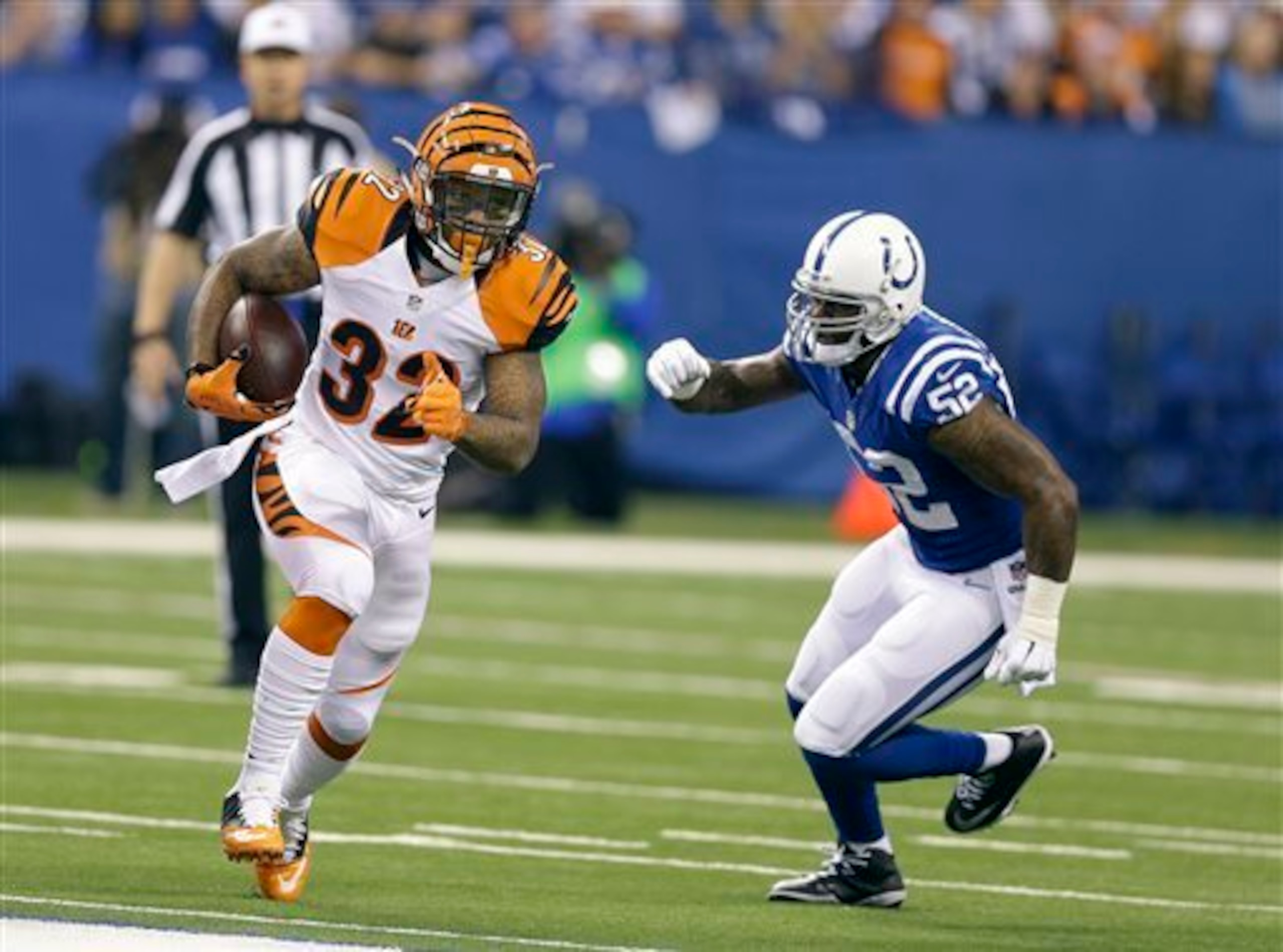
Speed
Although he is at his best when running in a straight line, with an ability to sustain his initial burst for 20 yards or so, Jeremy Hill isn't just a linear athlete. He's not exceptionally quick or fluid, but rigidness isn't a word you would use to describe his running style.
Power
Hill proved during his rookie season that he has the power to be a very effective between-the-tackles runner. He has the ability to break arm tackles with relative ease and blow his way through tight holes in the defensive front.
Vision
It didn't take Hill long to adapt to the speed of the professional game. While he is primarily a big back who doesn't excel at creating space with his vision or movement behind the line of scrimmage, Hill can find running lanes quickly and cut back when opportunities arise. The consistency of his decision-making was impressive for such a young player.
Receiving
Largely because of his athleticism, Hill can be effective in space. He is a relatively reliable receiver without much versatility.
Starter
Hill seemed like a reach during the draft because the Bengals didn't really need a running back, but he proved to be a valuable fill-in for Giovani Bernard. Hill is a significant improvement over the back he replaced, BenJarvus Green-Ellis.
Overall
10. C.J. Anderson, Denver Broncos
49 of 58
Speed
C.J. Anderson came out of nowhere to lead the Broncos in rushing in 2014. Anderson isn’t a speed back but has very good quickness and agility to make up for a lack of great sprinter speed. He ran a 4.53-second 40-yard dash at his pro day coming out of California and backs that speed up on film.
Power
At 5’8” and 224 pounds, Anderson isn't a big back, but he packs a punch in that frame. His low center of gravity makes him very tough to tackle in the open field and tough to find when behind the line of scrimmage. He’ll get low and churn his legs to pick up tough yards but can get pulled down easily if contacted. His 2.5 yards-per-attempt average after contact is good, but he was inconsistent in that area.
Vision
Anderson made waves immediately when given chances in Denver thanks to his vision. He’s able to find creases on the move and is a master of finding cutback lanes and then cutting off of blockers when needed. Anderson is also very good at the second level, keeping linebackers and defensive backs guessing with his quick hips and feet.
Receiving
With 34 catches on 44 targets, Anderson made a big impact as a receiver coming out of the backfield. The Broncos offense loves play action, and Anderson was often releasing into the flats or over the middle to become a weapon for Peyton Manning.
Starter
Anderson has to prove he’s not a one-year wonder, but the early look on him is that he’s a quality starter with big upside at just 24 years old.
Overall
9. Knile Davis, Kansas City Chiefs
50 of 58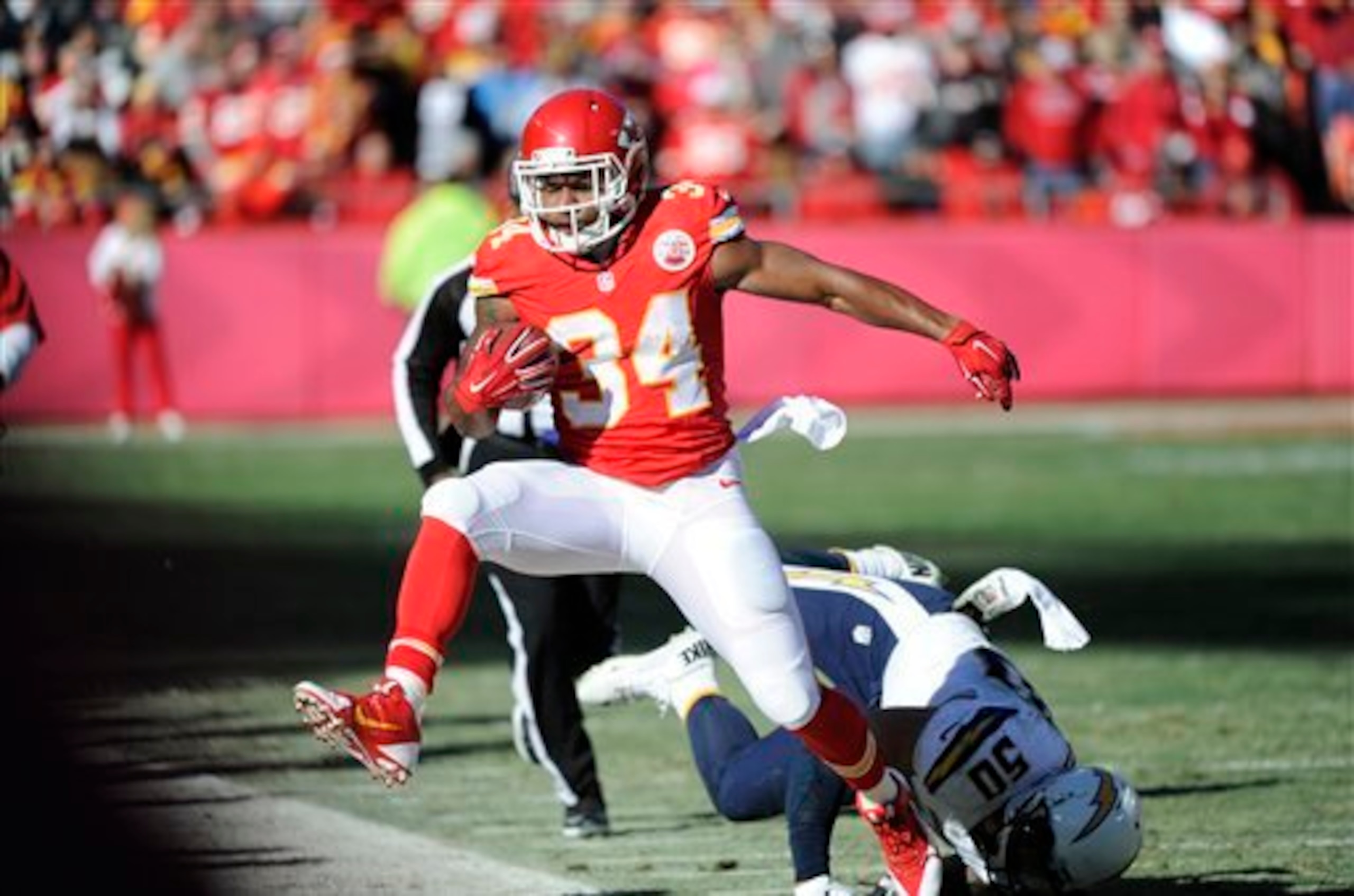
Speed
Knile Davis is a very fast man. His 4.37-second 40-yard-dash at the 2013 combine showed that, and on the field his burst is noteworthy. Davis can quickly get to top speed and does an impressive job running past defenders who don’t seem to know how to take an angle to catch up with him.
Power
With a 227-pound frame, Davis is able to run over tacklers and can make defenders pay when they square him up in space. Davis isn’t great with between-the-tackles power and can improve his balance after contact, but physically the tools are all there for him to become a more powerful runner. Fumbles (four in 2014) are an issue as Davis tries for secondary yards.
Vision
Davis has natural instincts and a good feel for where to start and stop, but he’s still developing his cutback vision and will at times run himself into his blockers. Once he masters cutting off his blocker’s backs and not simply trying to outrun or run over defenders, he could be great.
Receiving
Limited targets (22) led to just 16 catches, but Davis has shown solid hands and good ability as a route-runner. He’s still raw in this area and must do a better job sitting down in space, but when thrown to he’s reliable.
Starter
The presence of Jamaal Charles keeps Davis from being a starter in Kansas City, but expect him to get that chance soon in free agency. He’s too physically talented and too productive to hide for long.
Overall
8. Arian Foster, Houston Texans
51 of 58
Speed
Arian Foster may not be the player he was in 2010 or 2012, but in 2014 he returned to the 1,000-yard mark with an impressive 1,246-yard posting. Foster has never been a speedster (just 4.69 in the 40-yard dash out of college at his pro day), but he has good short-area burst and the acceleration to pick up yards in bunches if he breaks loose.
Power
At 6’0” and 232 pounds, Foster can bring the pain to tacklers in the hole. In the open field he’ll run through arm tacklers and has the leg drive to push the pile for tough yards. Foster has lost a little push and pop as he ages, but he’s still a powerful runner.
Vision
Foster’s best asset has always been his vision. As a one-cut runner who is asked to quickly find the hole and get upfield, the 28-year-old does a great job locating the lane and then exploding through it in a north-south manner. His second-level vision isn’t as good, but he’s in the top tier there as well.
Receiving
A qualified receiver, Foster added 38 catches and five touchdowns on 59 targets in 2014. He’s long been a dependable receiver and does a great job picking up yards as a receiver off play-action and dump-off routes.
Starter
Foster is nearing the dreaded 30-year mark for running backs, but his patience, vision and receiving ability still combine to make him a top-10 NFL runner.
Overall
7. LeSean McCoy, Buffalo Bills
52 of 58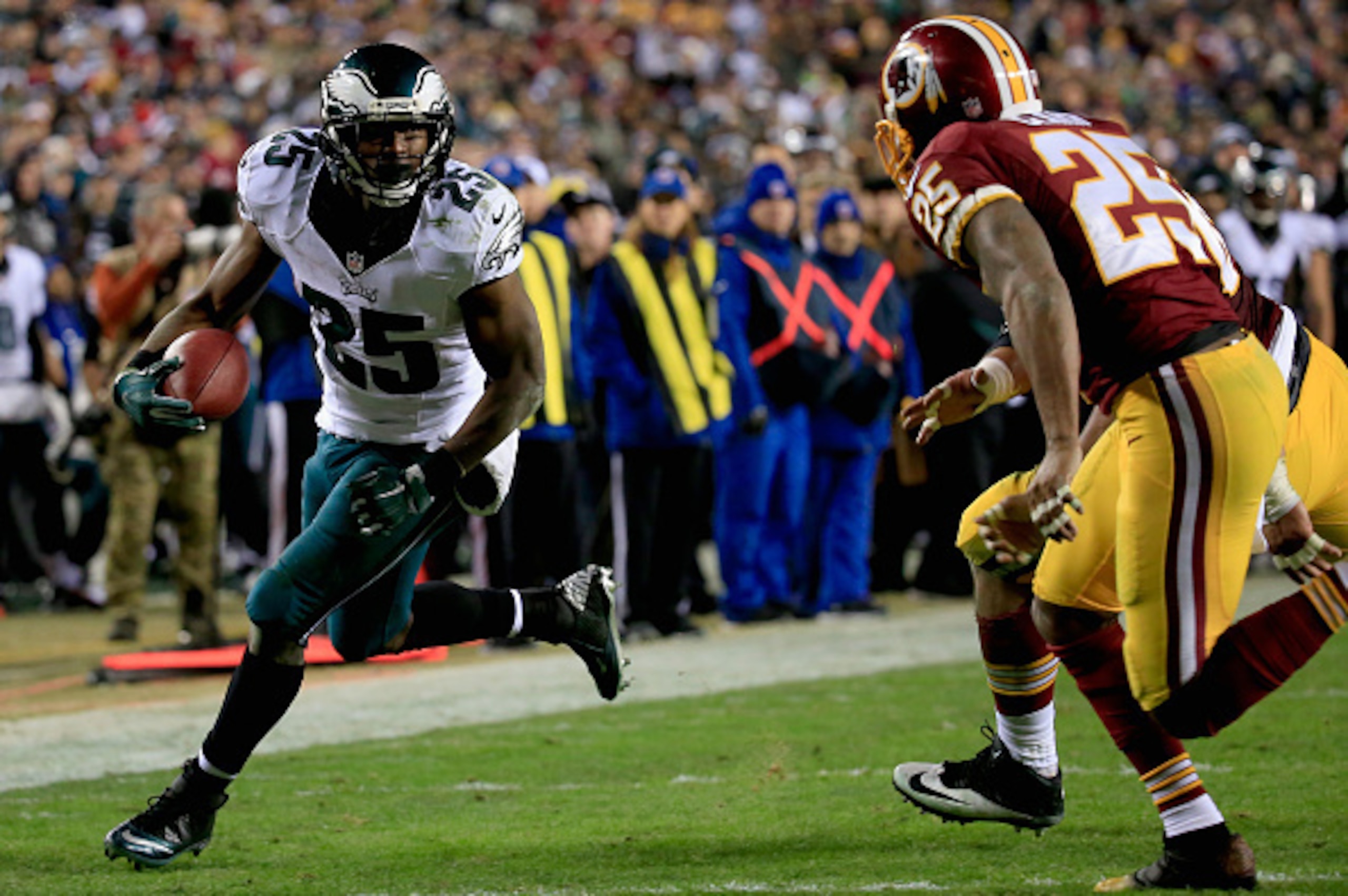
Speed
Coming off a career-best 1,607-yard season in 2013, LeSean McCoy doubled back with an impressive 1,319 yards in an offense that didn’t scare defenses in the passing game. McCoy’s speed and world-class agility are the reason. He’s able to make defenders miss in space and has the burst to kick it into second gear and outrun defenders on the corner.
Power
Pure rushing power isn’t McCoy's strength, but he does create many missed and broken tackles with his leg drive. He had 648 yards after contact in 2014, but they came on only 2.1 yards per pop. His ability to pick up hard yards between the tackles isn’t what he’s known for.
Vision
In the open field and behind the line of scrimmage, McCoy damages defenses with his vision. He’s able to see openings while on the move but also has the agility and quickness to stop his feet behind the line, redirect to a new hole and then explode through it.
Receiving
With 28 catches in 2014, McCoy posted his lowest career output as a receiver, but that’s more scheme-based than talent-based. He was only targeted 37 times (a career low). He still shows the hands to be a massive threat when thrown to out of the backfield. The addition of Darren Sproles simply made him less of an option in Philadelphia.
Starter
At 26 years old during the 2014 season, McCoy was still one of the NFL’s best young backs. He’s a true three-down talent with the explosiveness to crush defenses.
Overall
6. Eddie Lacy, Green Bay Packers
53 of 58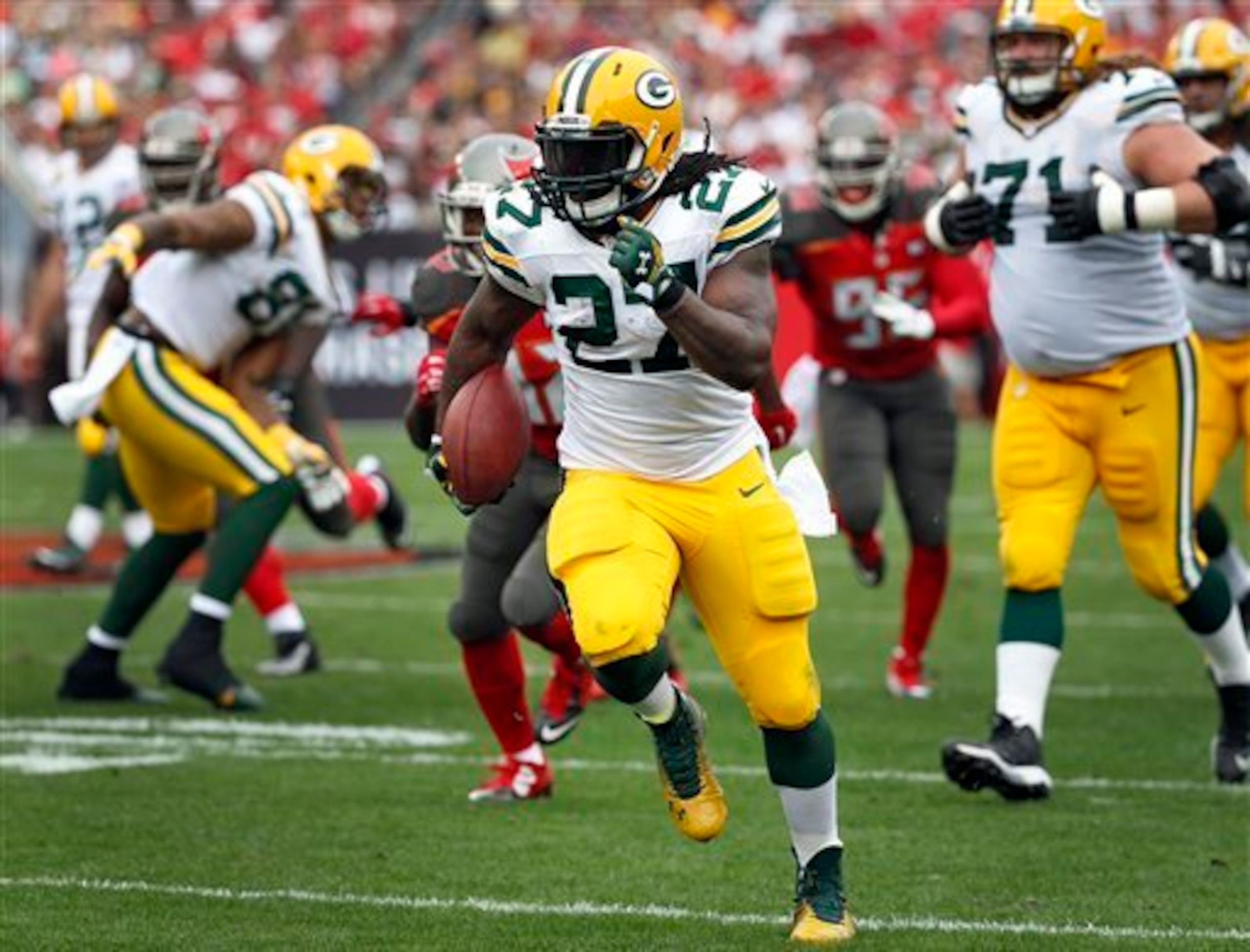
Speed
With 1,139 rushing yards in 2014, Eddie Lacy once again proved his worth as a top-tier NFL running back. Lacy doesn’t have the top-end speed to run away from linebackers and safeties, but he’s quick and has the burst to pick up yards in chunks. He’s like a stone rolling downhill more than a sprinter on the edge.
Power
Lacy’s game is all about power, and he has a lot of it. At 5’11” and 231 pounds, Lacy can run over tacklers and has the push to get hard yards between the tackles. He gained 690 yards after contact and has the secondary power to be a threat after the first defender bounces off him.
Vision
Lacy’s cutback vision is very good, and when asked to find a rushing lane between the tackles, he’s among the best in the pros. Lacy excels at making a rushing lane out of a small opening. His second-level vision could be better, but he’s a high-ranking player in this category.
Receiving
The receiving game is becoming a bigger part of Lacy’s game, and in 2014, he added 42 catches and four touchdowns as a pass-catcher. Lacy doesn’t have great route-running skills, but he’s a sure-handed catcher when thrown to.
Starter
If you’re building an NFL team and want a young running back, Lacy would be one of the top choices.
Overall
5. Marshawn Lynch, Seattle Seahawks
54 of 58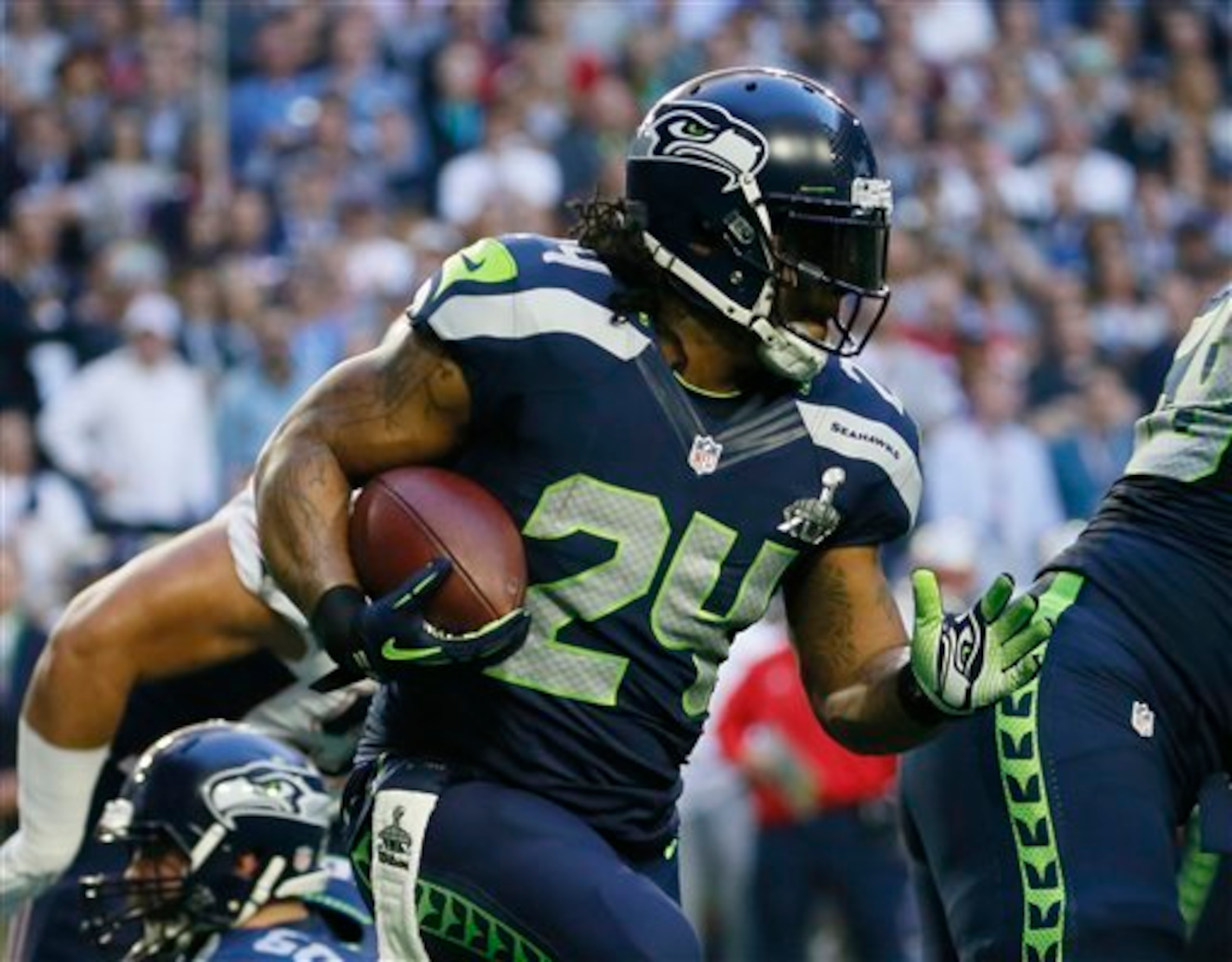
Speed
Marshawn Lynch is known for his bowling ball style of running, but he has the speed to pull away from defenders and pick up big chunks of yards. Lynch ran the 40-yard dash in 4.46 seconds when he was coming out of California into the NFL draft, and he still runs with that pace when he hits the open field.
Power
Lynch has amazing power at the point of impact and down the field. He finishes runs with a force and lives up to the Beast Mode nickname. Lynch uses every bit of his 215 pounds to attack defenders, and he doesn’t let up as tacklers bounce off his thighs and stiff arms. Of Lynch’s 1,628 rushing yards (playoffs included, he amassed an amazing 1,058 after contact.
Vision
It’s nice to be able to run over defenders, but Lynch also makes people miss with his vision. He’s able to find cutback lanes and small holes to run through, and when that small opening is there, he’s powerful enough to pop through it. Lynch’s open-field vision is also noteworthy, and he can make a cut in space to extend runs.
Receiving
The Seattle offense asks a lot of Lynch, and he added 42 catches to his resume in 2014. He’s a solid receiver but will drop passes (two on 50 targets) and isn’t a threat to make plays away from his body.
Starter
Good luck finding a better year-to-year starter than Lynch, who has become one of the NFL’s most valuable players and best runners.
Overall
4. Matt Forte, Chicago Bears
55 of 58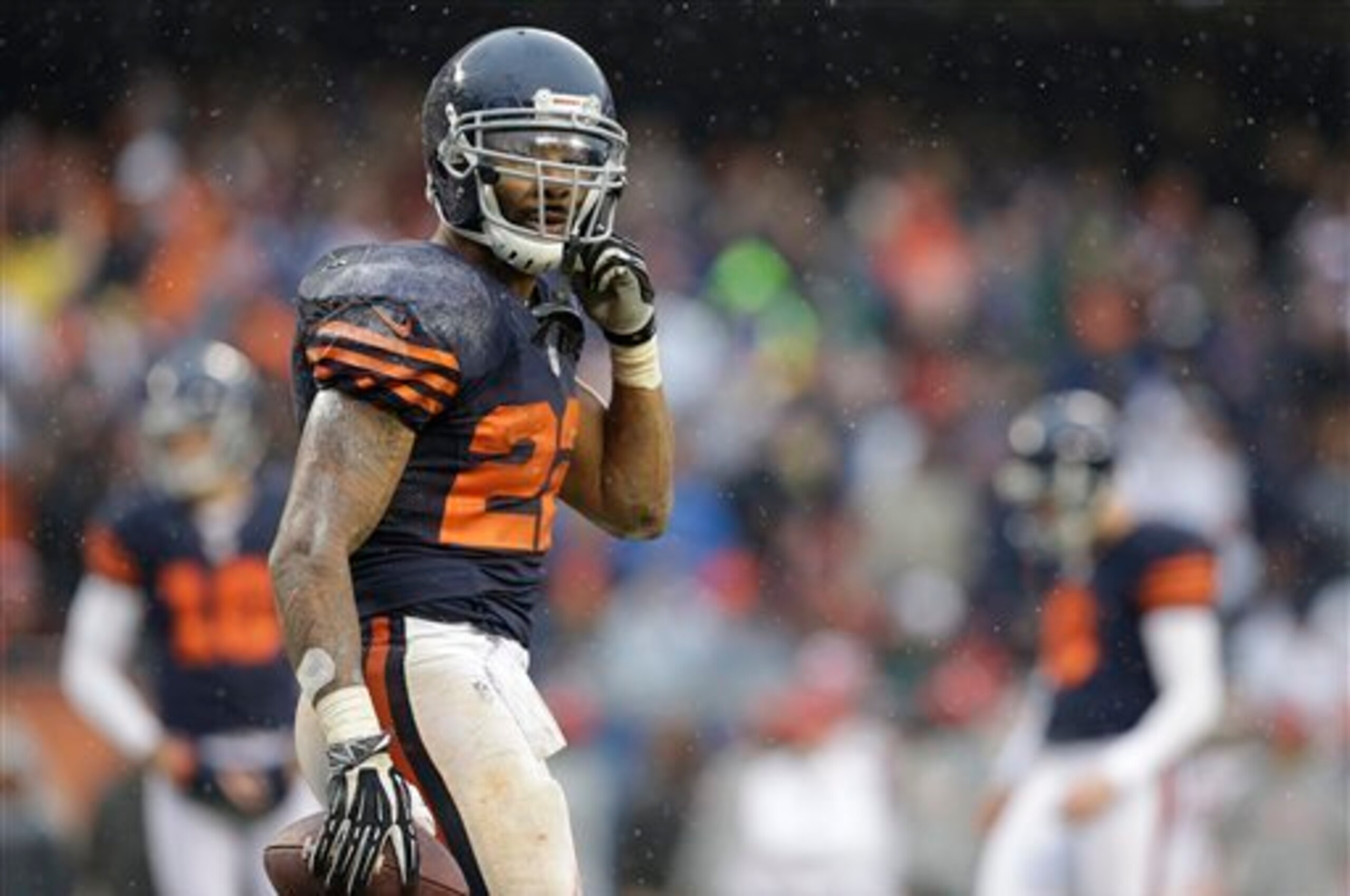
Speed
Matt Forte didn’t have the same massive production in 2014, but his impact was still huge as a three-down threat. Forte’s speed is still a big part of his appeal as a blue-chip running back. He’s able to get in space and run away from linebackers and has enough juice to shake defenders and make them miss tackles.
Power
At 6’2” and 222 pounds, Forte has enough power to break tackles and run over defenders at the second level. He’s a solid, powerful runner between the hashes and performs well without a top-tier offensive line, picking up many of his yards on his own.
Vision
The aforementioned ability to produce without an elite offensive line is big for Forte, who picked up yards in short chunks and in big plays (eight runs over 15 yards). He’s able to find cutback lanes and can be an effective one-cut runner, getting his shoulders squared quickly to find the hole.
Receiving
Forte’s 808 receiving yards on 118 targets show his talent as a receiver. He was the most dependable of the Chicago targets in 2014 and was often the bailout Jay Cutler needed as the bigger outside targets struggled to get open with safety help over the top. Linebackers cannot stop Forte as a receiver.
Starter
The modern Roger Craig, Forte does an excellent job attacking the defense as a runner and receiver.
Overall
3. Le'Veon Bell, Pittsburgh Steelers
56 of 58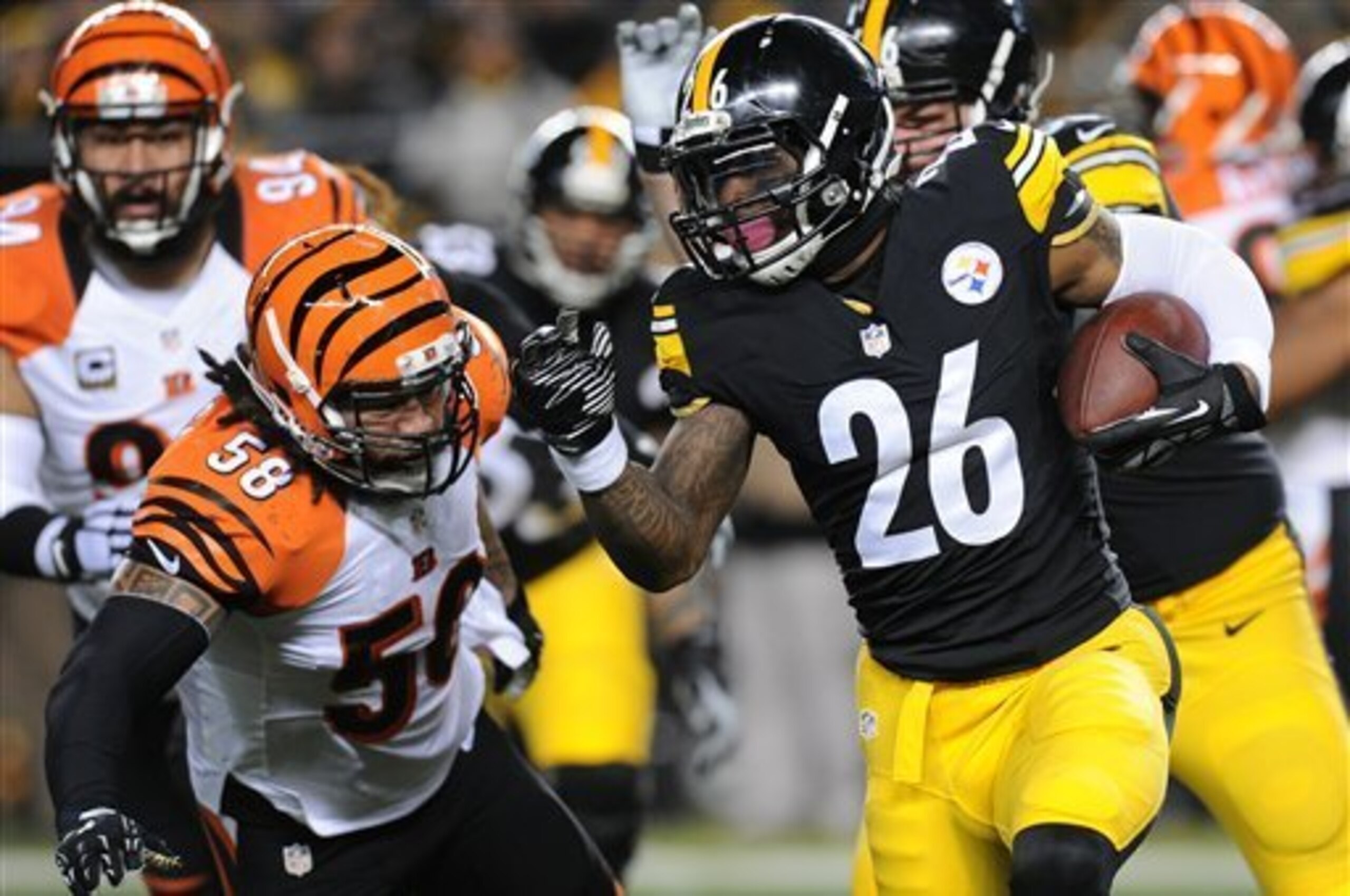
Speed
Le’Veon Bell may not be a track star, but he has more than enough speed to make defenses pay. Bell has top-end speed with great acceleration and the burst to pull away from defenders. He’ll run away once he hits daylight and can hit on long runs—see his 81-yarder against the Carolina Panthers—when the opportunity is there. With less weight on his frame in 2014, Bell was a much smoother, quicker runner.
Power
Bell picked up 705 yards after contact in 2014 and did so while causing 55 missed tackles. And in all that, he never fumbled on 289 carries. The power in his 6’1”, 225-pound frame is impressive, and Bell can break tackles or push the pile through tight spaces in the offensive line. He still runs with the power of the bigger back he was in his rookie season.
Vision
Bell is a big back with power. But he has to see the hole first, and he does that very well. Bell is able to average almost five yards per carry because he’s rarely caught behind the line of scrimmage. His vision allows him to find secondary rushing lanes if the first option is closed down.
Receiving
A sure-handed receiver, Bell caught 83 passes in 2014 in an offense loaded with wide receiver talent. Bell’s ability as a safety valve out of the backfield is huge for the Pittsburgh offense.
Starter
The 23-year-old Bell is the NFL’s best young running back. He’s a sure-thing starter and foundation piece for the Steelers.
Overall
2. Jamaal Charles, Kansas City Chiefs
57 of 58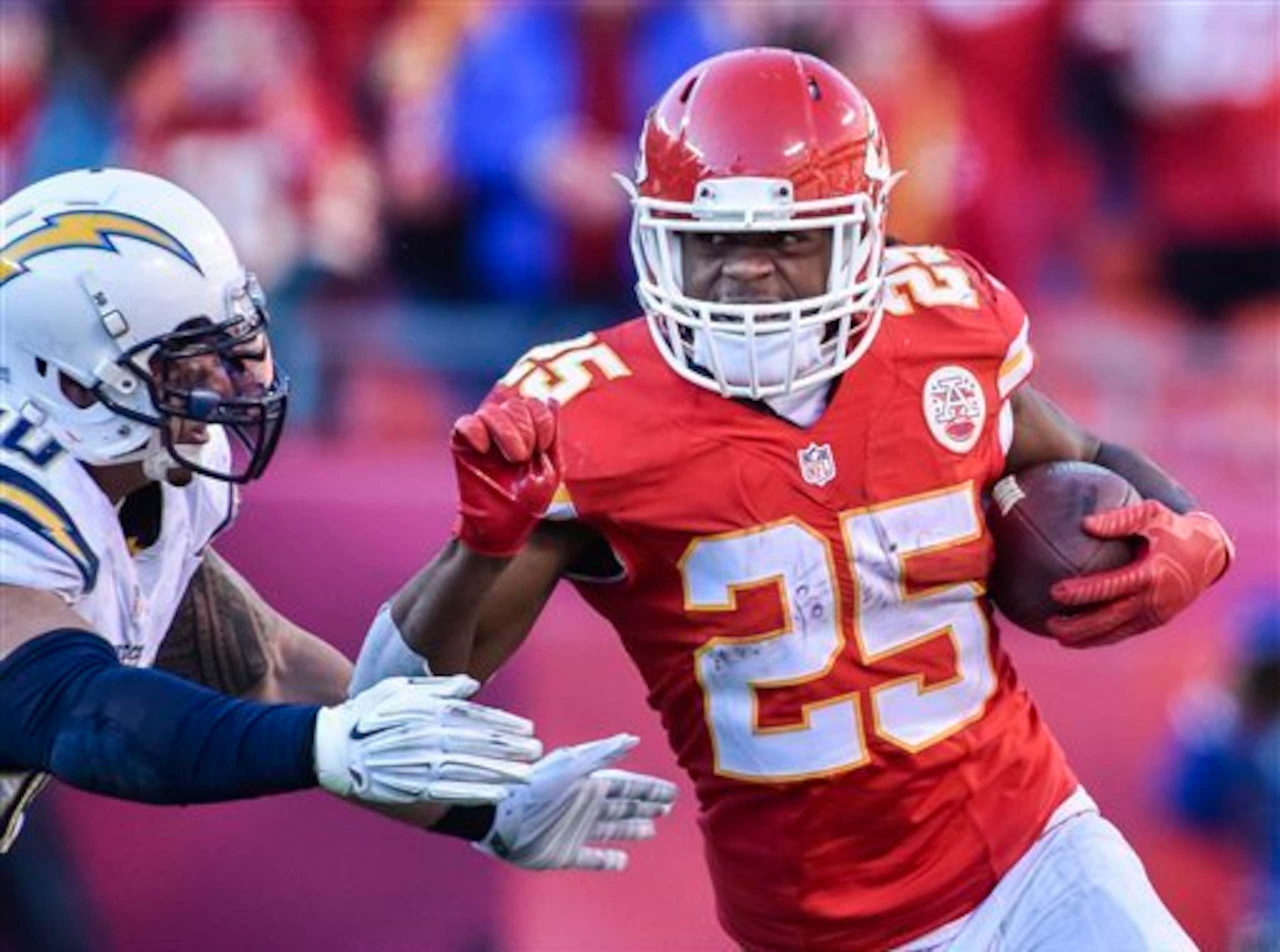
Speed
Jamaal Charles has speed for days. The former star sprinter still has the get-up-and-go of a track star and runs with the burst to blow past defenders in space. Charles isn’t just blazing fast, though; he has the loose hips to make defenders miss and then accelerate past them down the field.
Power
Power isn’t a major part of Charles’ game, but he’s able to get low and run through arm tackles. He also does a great job falling forward after contact and continuing downfield through smaller tacklers.
Vision
Charles shows top-tier vision on the field. On a pitch or inside run between the tackles, Charles does a great job finding creases and getting small to run through them. And in the open field, he’s a beast at finding openings. Charles dominates on cutback lanes and is able to squeeze through the smallest of holes.
Receiving
Charles has the hands of a receiver and is a huge part of the Kansas City offense with his ability as a pass-catcher. He shows soft hands and the confidence to make plays away from his frame. Charles can be a threat out of the backfield and when motioned out to the slot.
Starter
At 28 years old, Charles still has several great years of football ahead of him. Right now, he’s without a doubt one of the best running backs in the game.
Overall
1. DeMarco Murray, Philadelphia Eagles
58 of 58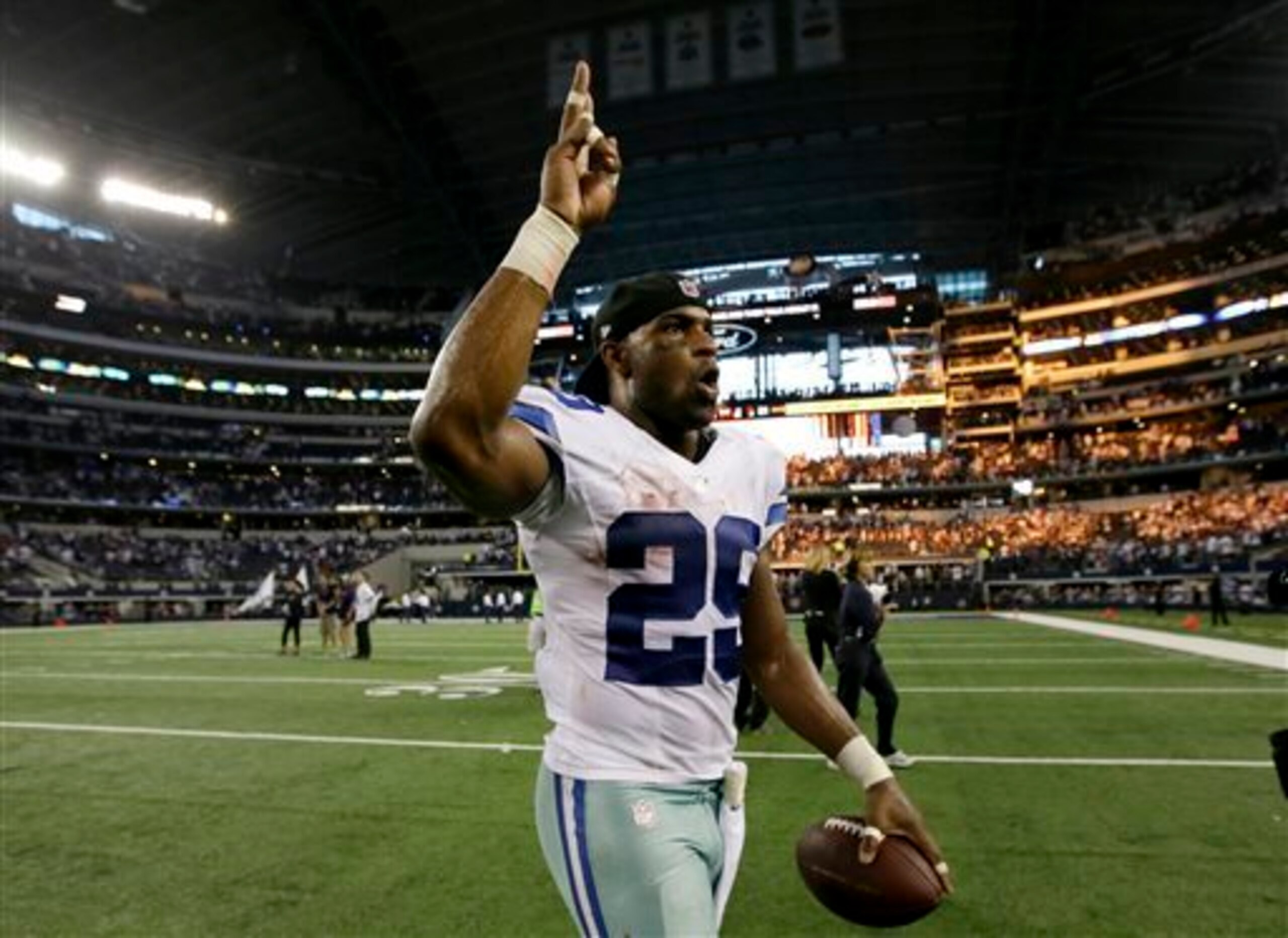
Speed
Finally healthy in 2014, DeMarco Murray showed the speed to pull away from defenses. His initial burst out of the gate is impressive, but what fueled his NFL-best 1,845 yards was his second-gear speed to accelerate away from linebackers and defensive backs down the field. Once in daylight, Murray was off to the races.
Power
Breaking tackles and picking up yards after contact were a huge part of Murray’s success. According to Pro Football Focus, Murray led the NFL with 998 yards after contact, showing how powerful and balanced he is once taking on defenders. Murray is an upright runner but uses his core strength and powerful legs to break tackles and pick up positive yards after contact.
Vision
The Dallas offensive line is arguably the best in football, but Murray still had to find creases and seams to run through. And he did as well as anyone in the NFL. Murray’s ability to read and react to the hole on the run was top-tier, but he also found secondary running lanes once at the second level. His vision in the open field and behind the line of scrimmage warranted a big score.
Receiving
With 57 catches on 62 targets, Murray ranked as one of the best receivers in the NFL at running back. He showed soft, dependable hands on dump-off routes and when becoming a weapon out of the backfield after play action.
Starter
Murray has just one huge year under his belt, but heading into 2015 he’s the best running back in the NFL.