

Sammy Watkins Shouldn't Be Forgotten as Young NFL Star
Sammy Watkins.
Remember him?
It was just 12 months ago that Watkins was the main attraction of the 2014 wide receiver class. Not only was he the No. 4 overall selection, but the Buffalo Bills traded away a future first-round pick to move up to get him.
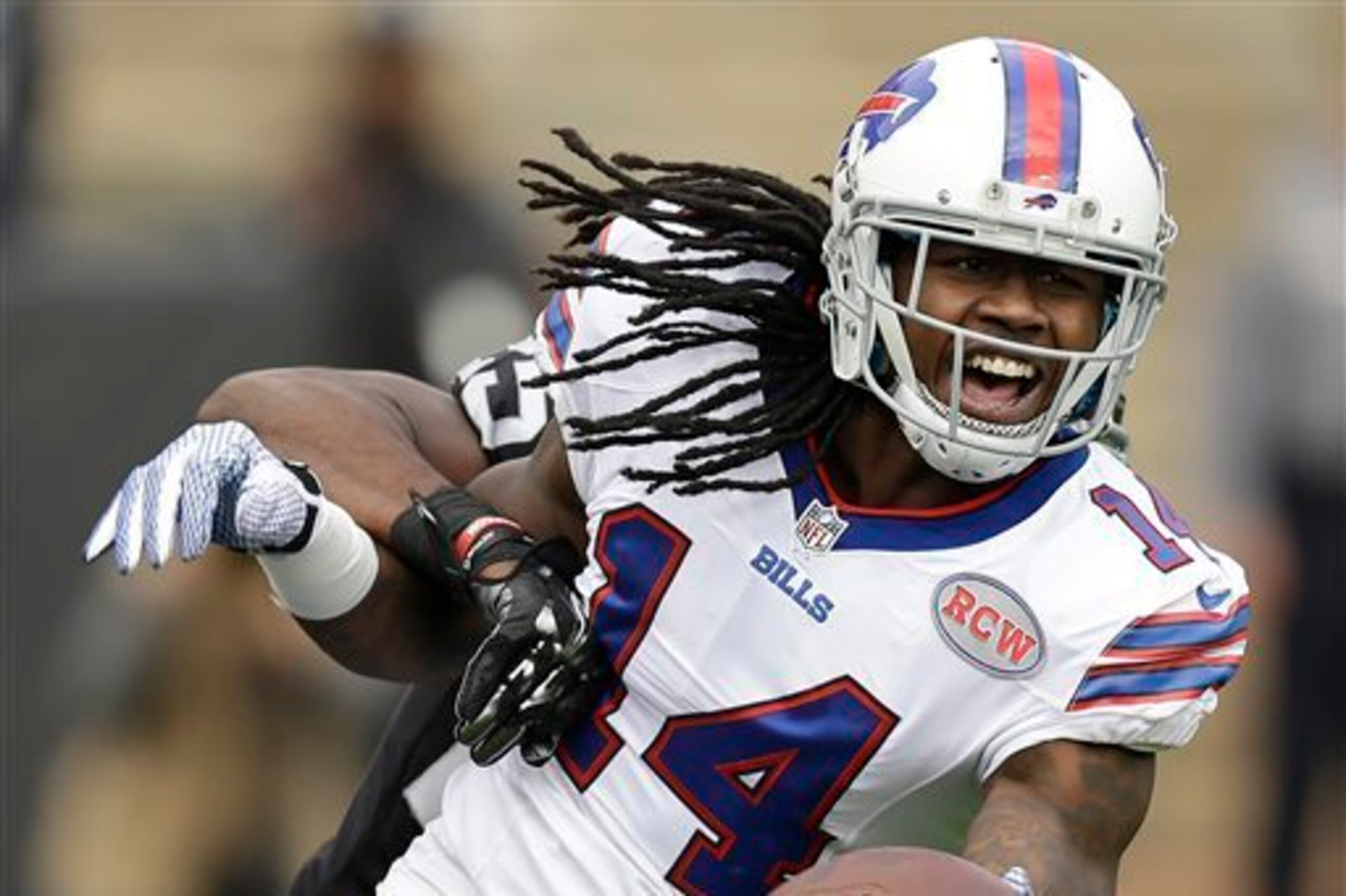
.jpg?w=2560 "Rams Raiders Football")

.jpg?w=2560 "Steelers Saints Football")
Watkins was the focus of the class; he's not anymore. That's for certain.
It took him a few weeks to get going after a hamstring injury cost him his preseason, but Odell Beckham Jr. of the New York Giants is now the star the 2014 class. Beckham will be the cover athlete on EA's next Madden game after compiling 1,305 yards and 12 touchdowns on 91 receptions during his rookie season.
Beckham exceeded expectations—but not as dramatically as you might think. Analysts always expected him to have an easier transition to the professional level than his peers because of his refined skill set.

Watkins wasn't the first receiver taken in the draft because of a refined set of skills. The Bills selected him so high because of his physical talent and potential. Even though he conceded the spotlight to Beckham and many other receivers from the 2014 class last year, that potential was still clearly evident.
The 21-year-old didn't have a bad rookie campaign. His production may lead you to believe he disappointed, but the nature of the wide receiver position is that it is more dependent on situation than any other. And Watkins' was significantly worse than any other rookie receiver's.
Compounding his lack of help, he also played much of the season with a hip injury.
His raw statistical output eventually settled at 65 receptions for 982 yards and six touchdowns. That meant he ranked sixth overall in receptions for rookies, fourth in yards and tied for sixth in touchdowns. Watkins wasn't the only first-year receiver playing through a tough situation, but it's unlikely anyone else's was as bad.
| 129 | 65 | 14 | 49 | 1 |
Between EJ Manuel, Kyle Orton and one trick-play pass from Fred Jackson, Watkins saw 129 targets last season. An abnormally large 49 of those targets were so inaccurate that they were either completely uncatchable or were reliant on spectacular plays from the receiver.
The Bills' quarterback issues were evident to every level of the defense, but they particularly limited what Watkins could do downfield.
He showed off his ability to create big plays deep on a number of occasions. While averaging 15.1 yards per reception for the season, the rookie had 14 receptions that gained more than 20 yards, four that gained more than 40 and 47 of his 65 receptions went for a first down.
While we can't say for certain that Watkins should have had at least six more 20-plus-yard receptions, there were six obvious examples of the receiver creating significant separation downfield but being missed by his quarterback, as evidenced below:

It's easy to measure the minimum lost yardage in these instances. If Watkins catches the ball where he is when it lands on each play, he adds six receptions and 164 yards with one touchdown to his season totals. That is not accounting for any potential yards after the catch, something there likely would have been a lot of on a couple of occasions.
Those lost yards hurt Watkins, but the general lack of effective ball placement on catchable passes was also a major problem.
One of the main selling points for Watkins' skill set coming out of Clemson was his explosiveness. He could get downfield in a hurry and had an outstanding burst of speed to create separation underneath. This explosiveness made him a dangerous receiver with the ball in his hands.
During his rookie season, Watkins had just 349 yards after the catch. According to Sporting Charts, that was good enough for the 46th-most in the NFL.
Watkins should rank higher in that category. The Bills didn't use him often enough as a screen receiver, as just four of his targets qualified as screens last year. Instead, Buffalo attempted to find him with shallow crossing routes and sharper in-routes that put him in space over the middle.
Unfortunately for Watkins, even those plays proved to be problematic for the Bills' starting quarterbacks.
This play comes from early in the season against the Miami Dolphins, but it was typical of the whole campaign. Watkins releases effectively against press coverage from the line of scrimmage. Impressive speed and precision allow him to cut inside the cornerback so he has positioning on the ball and can create separation underneath.
Because the Dolphins defense is in man coverage in its own red zone, Watkins has a huge amount of space over the middle of the field—15 yards from the end zone with just a safety ahead of him.
If the ball is delivered accurately and on time, Watkins should be able to run through it without breaking stride. He will be accelerating through the ball, so he is immediately in position to fake out the incoming safety or aggressively attack him.
As was so often the case, the pass forced Watkins to awkwardly adjust. He had to reach down to get to the ball, and doing so at such speed meant he fell to the ground. Not only could he not create yards after the catch, but he also couldn't get past the first-down marker.
These lost yards aren't measured anywhere.
It's unrealistic to expect Watkins to catch a ball at his ankles without breaking stride, but that is what the Bills needed him to do all through last season. This appeared to weigh on him as the campaign wore on. Watkins' effort wasn't always consistent, and his body language suggested frustration that was understandable.
Despite the poor service he received, his immense talent could still be seen if you went to look for it.
While not as refined as Beckham, Watkins proved to be a more advanced receiver than his tape at Clemson suggested he would be. This is reflected in his ability to create separation against press-man coverage.
Six of Watkins' 14 failed receptions on the season came against press-man coverage, but so did his lone defensive pass interference call and 22 of his catches. Those 22 receptions went for 373 yards and four of his six touchdowns. Nineteen of his 29 targets went for first downs also.
Beating press-man coverage is the toughest test of any young receiver, and it all begins at the line of scrimmage.
Releasing from the line against aggressive, physical cornerbacks isn't something receivers get to do regularly in college, if at all. Watkins was at a particular disadvantage in this area because of the offense he played in at Clemson.
On this play, Watkins lines up against one of the more physical, aggressive cornerbacks in the NFL, Aqib Talib. The Denver Broncos defensive back is in press coverage, but Watkins creates a clean, late break for his route by using hesitation.
Hesitation can be a dangerous move for young receivers because they will often linger too long and expose themselves to a hit from the defender.
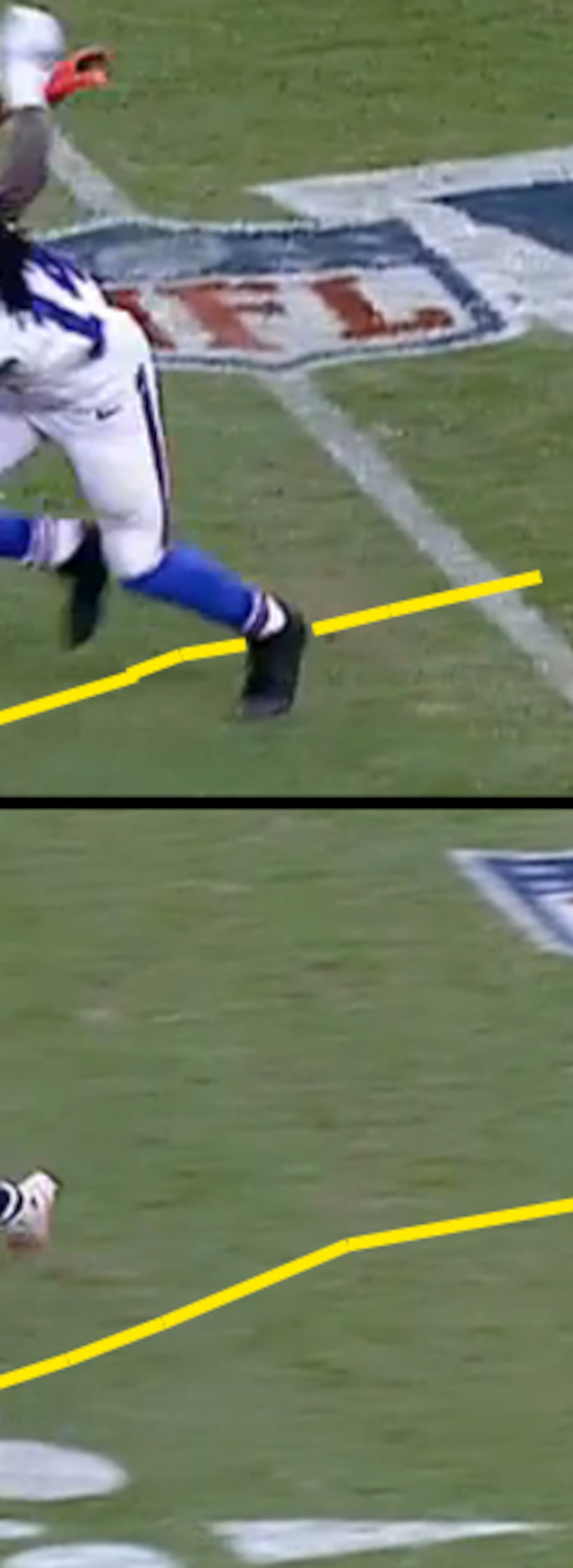
Watkins perfectly executes his move. He isn't so quick that the hesitation doesn't affect Talib, but he also doesn't linger long enough for the corner to gain an advantage. He uses his quick, decisive feet to stay balanced and advance forward, while Talib shifts his weight uncertainly away from his center.
Releasing from the line is largely about how you use your hands and feet. Watkins used his feet to set up his opponent, before taking advantage of that with his hand usage.
As Talib's momentum drags him away from the receiver, he attempts to use his hands to knock Watkins off balance. Watkins absorbs the hit but is aggressive with his own hands to negate its power. He knocks Talib off balance almost instantly, clearing the way for him to release down the seam.
Because of his size (6'1", 211 lbs), power, balance and quickness, Watkins is difficult to press at the line when he plays with intensity. The same can be said about his route running.

Watkins gave a number of talented cornerbacks major problems in coverage with his ability to cut sharply and accelerate out of his breaks. Although his consistency and intelligence isn't where it needs to be, he still got the better of Xavier Rhodes, Darrelle Revis and Brent Grimes, among others.
There were no major concerns about Watkins' ability during his first season in the NFL. He could have been more consistent at the catch point, but he generally showed good ball skills.
One issue was the consistency of his intensity with the ball in his hands. There were too many plays when Watkins was hesitant and indecisive in space. It isn't a major concern because it's likely something that comes from being a rookie.
First-year players regularly struggle to adjust to the pace of the professional game, and Watkins didn't show hesitation in college; instead he was an aggressive, attacking ball-carrier on a regular basis.

This play from the first meeting with the Miami Dolphins highlighted Watkins' issues. He caught the ball five yards away from the deep safety in space. After turning to face his opponent, he didn't accelerate toward the sideline or past his inside shoulder; he instead spun into the defender.
By spinning into his opponent, he was falling down as he engaged, submitting to the tackle instead of attempting to break through it.
With renewed health and greater experience in 2015, Watkins should establish himself as a star. Matt Cassel isn't a major upgrade over Manuel or Orton, but he should at least provide adequate service, especially as the offense focuses on shorter passes to alleviate the pressure on the quarterback position.
Even with the additions of Percy Harvin, Charles Clay and LeSean McCoy, offensive coordinator Greg Roman should use Watkins on more screens and underneath routes to generate more YAC.
The Bills may always regret giving up two first-round picks to select a receiver when their roster wasn't set to make the playoffs. That regret won't come from Watkins' play over the long term, though. He may never pass Beckham as the best receiver from the class, but he should still be an All-Pro-caliber player.
.jpg?w=2560 "Cowboys Packers Football")




.jpg?w=2560 "🚨 Week 8 AP Top 25 Poll")