College Football Teams with Longest National Championship Droughts
There are plenty of ways to judge success in college football, but one tops all the others: being a national champion.
Through the years, only a select number of schools can lay claim to this honor, and some have been waiting a long time since their last titles. While only 46 of the 128 schools currently playing at the FBS level have ever been considered a national champion in some fashion, a dozen of them have been going through a title-less drought that dates back 65 or more years.
This makes Ohio State ending a 12-year championship void far less noteworthy, doesn't it?
Since the first games were played in the 1860s, some form of champion has been determined via polls or ratings systems, as well as through bowl alliances like the BCS and the four-team playoff system that went into use following the 2014 season. As a result, there have been many years where two or more schools have been able to lay claim to a title.
There are more than 40 championship selectors the NCAA lists in its record books as entities whose title declarations over the years hold merit. Some of those date back to 1869...and even then there was controversy over who won the title, as Princeton was the choice of two selectors while it and Rutgers were considered co-champions by a third.
The most frequent selectors have been The Associated Press media poll, which has been around since 1936, and the coaches' poll (currently called the USA Today/Amway poll) that has been in use since 1950, as well as certain computer rankings and ratings based on historical data. These are the ones the NCAA recognizes as the most representative and are what we used to determine which FBS programs have gone the longest since their last national titles.
Kentucky
1 of 12
Last title: 1950
Near misses since: 1977
Kentucky has six players or coaches that are in the College Football Hall of Fame, and it's not surprising that three of them were a part of the only Wildcats team ever considered worthy of being called a national champion.
Quarterback Babe Parilli, offensive lineman Bob Gain and a 37-year-old up-and-coming coach named Paul 'Bear' Bryant led Kentucky to an 11-1 record and an SEC co-championship in 1950. It was the first of two SEC titles for the program, the other a shared title in 1976, and came despite getting shut out by Tennessee in the regular-season finale.
Kentucky ended up knocking off No. 1 Oklahoma in the Sugar Bowl, though Oklahoma still finished first in the final AP and UPI coaches polls.
The Wildcats didn't get their national championship honor until decades later, when computer ratings guru Jeff Sagarin retroactively handed out titles to teams from 1919-1977. Sagarin didn't think as highly of the 1977 Kentucky team, though, even though it went 11-1 and was unbeaten in SEC play but didn't win the conference title because it played one fewer league game than Alabama.
Army
2 of 12
Last title: 1946
Near misses since: 1948-50, 1958
Army has three times as many Heisman winners as it does national titles, but there is a connection between the two honors. The 1945 and 1946 title teams (part of a three-peat that began in 1944 thanks to a combined 27-0-1 record) were both led by Heisman winners, fullback Doc Blanchard and halfback Glenn Davis, respectively.
That was one of four times a school has claimed consecutive Heismans, the most recent being USC's Matt Leinart and Reggie Bush in 2004-05, though only the Army duo did it while also winning national titles.
The Black Knights spent time at No. 1 in the country in four other seasons, all of which ended with them losing one or fewer games. But from 1959 through this past season, Army had only 17 seasons with at least six wins and just one between 1997 and 2014.
Wisconsin
3 of 12
Last title: 1942
Near misses since: 1962
Wisconsin doesn't count the national title it was awarded in 1942 by philanthropist Paul Helms, who tabbed his foundation's executive board to pick a champion each year from 1941-82. The Badgers went 8-1-1 that season, finishing second to Ohio State (which was named champ by the AP) in the Big Ten.
The first chance at a full-fledged title after that came 20 years later, when Wisconsin lost to USC in a No. 1-vs.-No. 2 battle in the Rose Bowl. After that it wasn't until the 1990s, when Barry Alvarez lifted the program off the scrap heap and Bret Bielema continued that trend, did the Badgers return to the national championship discussion.
But after 1962 Wisconsin never finished higher than sixth in the final AP poll.
.jpg?w=2560 "AP Poll Top Five Week 9")
.jpg?w=2560)

Stanford
4 of 12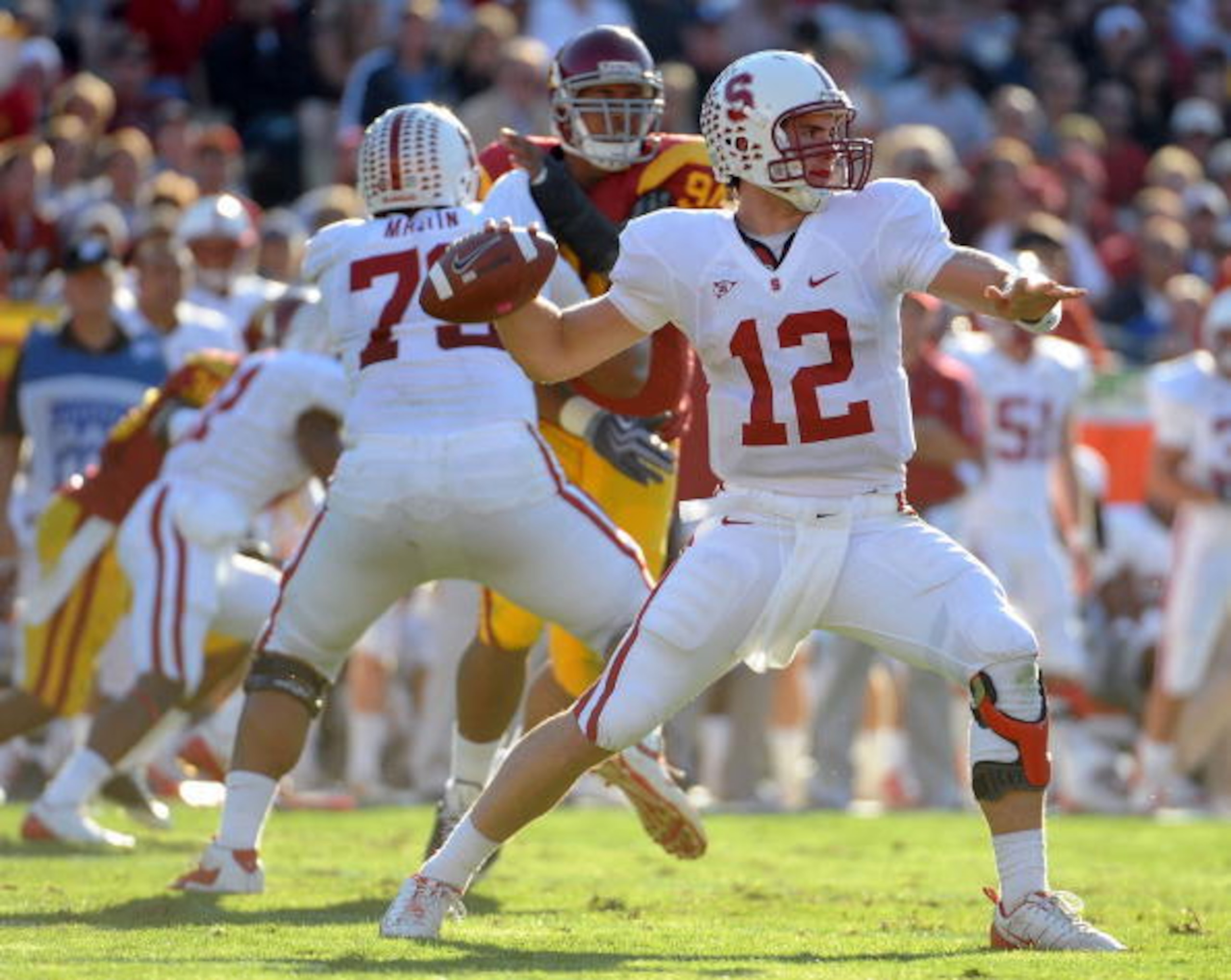
Last title: 1940
Near misses since: 1951
Stanford made four consecutive BCS bowl games from 2010-13, including back-to-back Rose Bowls in the final two years of that system. The Cardinal went 46-8 during that span, but it was never in serious contention for the national title by virtue of regular-season losses to Oregon in both the 2010 and 2011 seasons.
But that run was still far more successful than anything the program had achieved in decades, as prior to the Jim Harbaugh and David Shaw eras Stanford had only registered one 10-win season since its last national title in 1940.
That team, in 1992, was co-champion in the Pac-12 but lost three games along the way. The 1951 Cardinal squad only won nine games before falling to rival California and then in the Rose Bowl to an Illinois team that would get a national title nod from a single championship selector after that season.
Texas A&M
5 of 12
Last title: 1939
Near misses since: 1956, 1992, 1994
Texas A&M's move from the Big 12 to the SEC in 2012 has paid off immensely when it comes to in-state and national exposure, recruiting strength and television revenue. It's yet to get the Aggies very close to ending a long title drought, however, as their No. 5 ranking to end the 2012 season and their No. 6 rankings early in the past two seasons have been the high-water marks.
The 1939 team left no doubt, going unbeaten and edging Tulane in the Sugar Bowl and getting declared champion by 13 of 16 selectors for that season.
In 1992 the Aggies lost to Notre Dame in the Cotton Bowl for their only loss, while the 1994 squad went 10-0-1 but were banned from a bowl because of NCAA sanctions.
TCU
6 of 12
Last title: 1938
Near misses since: 2010, 2014
Three teams were named national champion by various selectors in 1938, but TCU had the honor that mattered most at the time, as it finished No. 1 in the final AP poll after going 11-0 and beating Carnegie Mellon in the Sugar Bowl.
Three years earlier, a 3-2 win over LSU in the Sugar Bowl made the Horned Frogs 12-1. Only Sugar Bowl committee member Paul Williamson's system had the Frogs at No. 1—but in a tie with the team it had just beat.
That was the first of several co-championships TCU would be a part of in its football history, though the others were at the conference level. The last is the most notorious, as being declared co-Big 12 champions with Baylor in 2014 (despite losing to the Bears) kept both teams from landing in the inaugural College Football Playoffs.
The 2010 TCU team that beat Wisconsin in the Rose Bowl was ranked third in the BCS standings, another close call for a program that, since the Southwest Conference disbanded in the 1990s, had to bounce around several leagues before eventually finding a home with the Big 12.
California
7 of 12
Last title: 1937
Near misses since: 1948-50, 2004
Of the FBS teams who have gone the longest since their last national titles, none has as many titles to its name as California. Its final championship in 1937, as declared by the Dunkel Index and the Los Angeles-based Helms Athletic Foundation, was the last of five crowns but the first since a run of four straight from 1920-23.
The Golden Bears finished in the top five of the final AP poll three other times, all under Pappy Waldorf, then went through more than 50 years of mostly mediocrity or losing before Jeff Tedford came along in 2002 and had them among the top programs in the nation for several years.
That included a 2004 team—led by current Green Bay Packers quarterback Aaron Rodgers—that lost only once in the regular season. However, active lobbying by then-Texas coach Mack Brown got his team instead of Cal into the Rose Bowl after several AP voters shuffled their final regular-season ballots. That would have been Cal's first Rose Bowl visit since 1959, but instead it played (and lost to Texas Tech) in the Holiday Bowl.
Duke
8 of 12
Last title: 1936
Near misses since: 1938, 1941
There's no denying that Duke is one of the top basketball schools in the country, if not the best. The Blue Devils' fifth national title since 1992 last month pretty much cinches that notion.
But while Duke's football team has made strides the last few years under David Cutcliffe—a school-record three straight bowl bids and a spot in the 2013 ACC title game—to balance out the basketball/football equilibrium, this recent run can't be considered the program's only candidate for being known as its "heyday."
There are also the 1930s and '40s, when Duke won nine Southern Conference titles in a 13-year span, or the years 1952-62, when the Devils had at least a share of seven conference championships including two separate three-year streaks with a piece of the ACC crown.
Duke's 1936 title—awarded via a math rating that isn't around anymore—came the same year it finished 11th in the final AP poll. The 1938 and 1941 teams ended higher, at third and second, respectively.
Purdue
9 of 12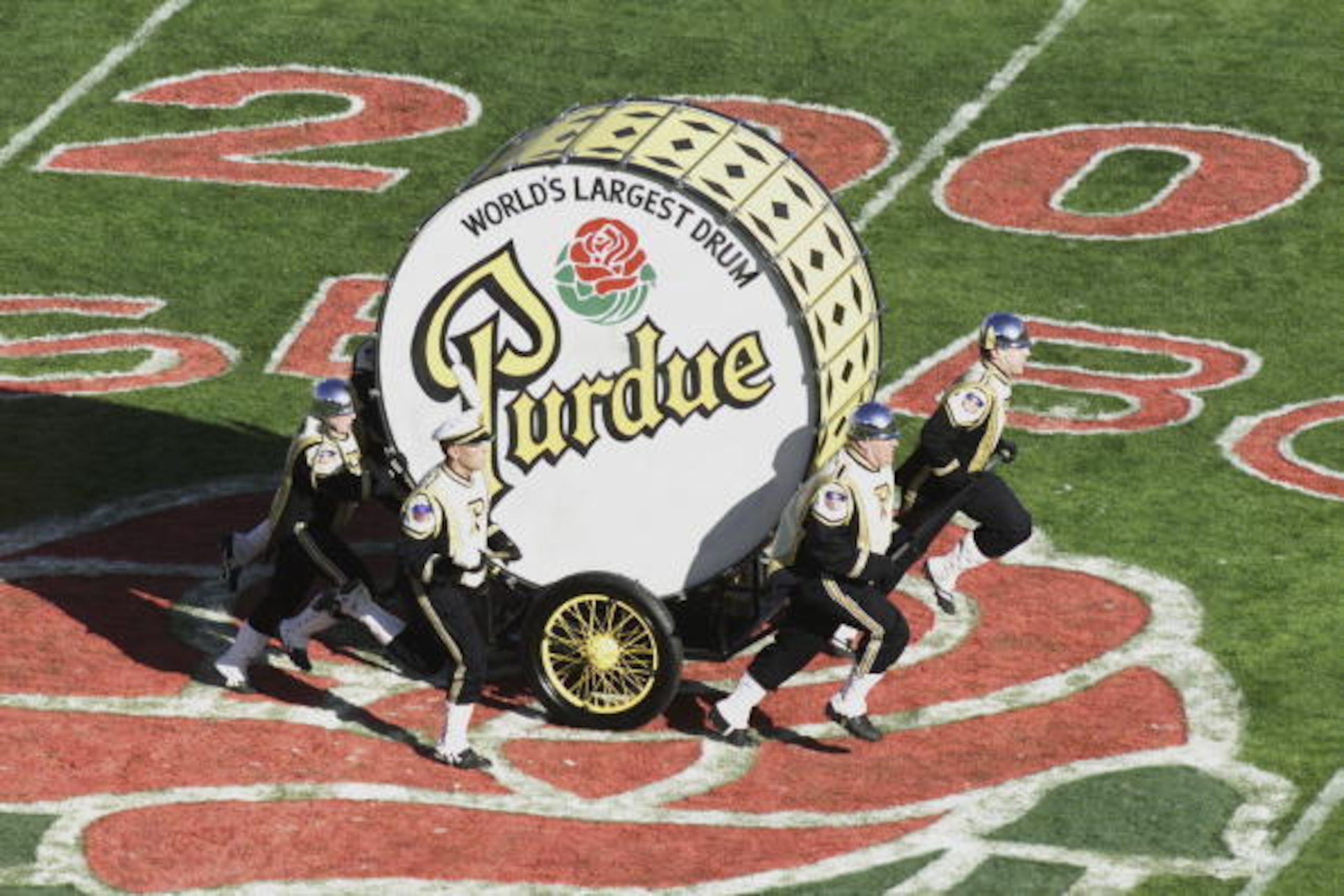
Last title: 1931
Near misses since: 1943, 1968
While Purdue has been in the bottom tier of the Big Ten Conference for most of the past decade, the Boilermakers have won at least a share of eight league titles since the 1890s. They've also had five unbeaten seasons, though the 1931 team that researcher Parke Davis declared champion went 9-1.
Purdue had its best final AP ranking in 1943, at No. 5, after going 9-0, and after a pair top-10 finishes in both 1966 and 1967 the Boilermakers opened the 1968 campaign at No. 1. They stayed there for a few weeks before losing to eventual consensus national champion Ohio State and ended up 10th overall.
Since then, Purdue has had six years with at least nine wins and one Rose Bowl appearance (losing to Washington in 2001) but has never flirted with any serious national title talk.
Navy
10 of 12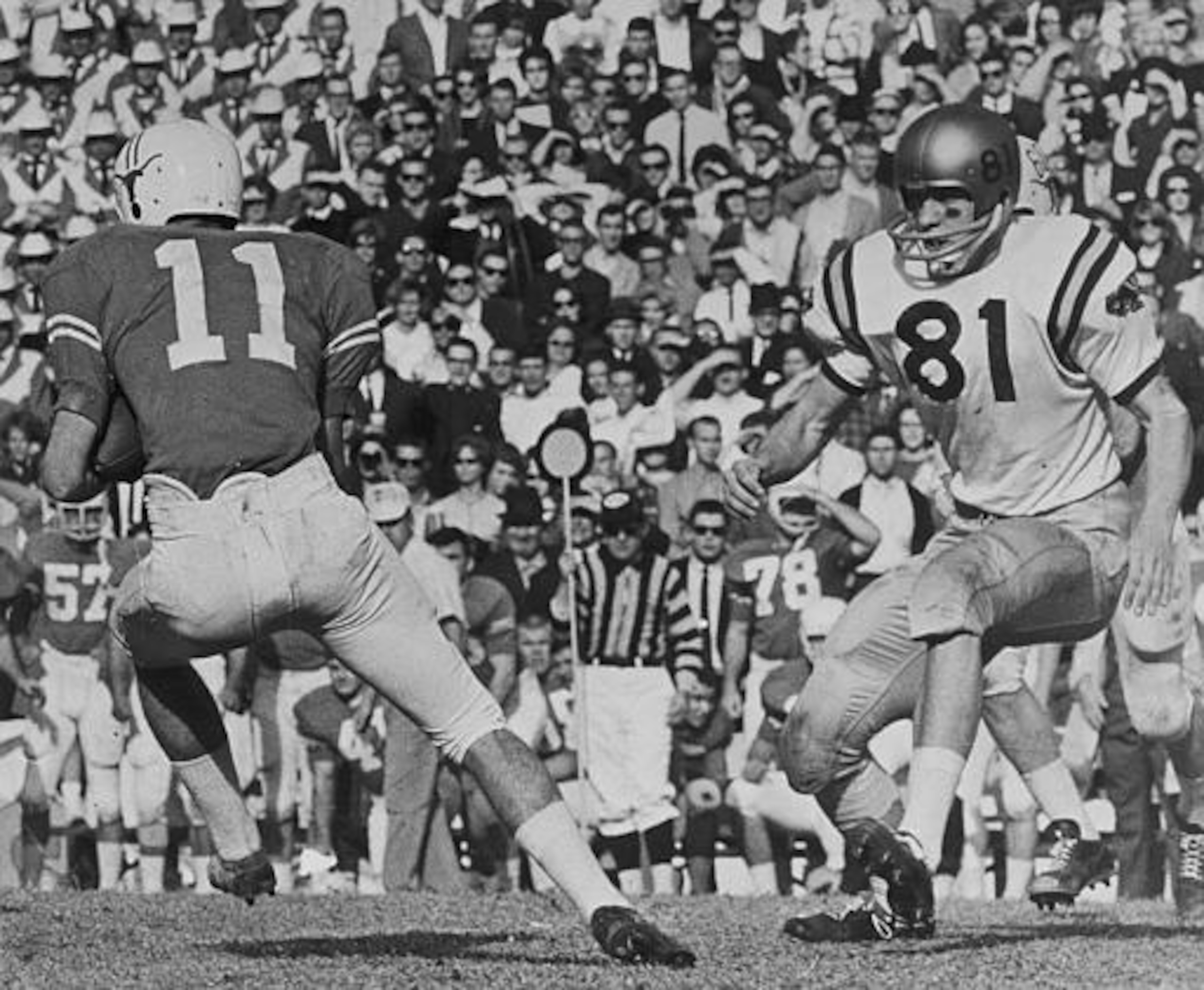
Last title: 1926
Near misses since: 1944, 1945, 1963
When Navy begins play this season, it will mark the first time since it began playing football in 1879 that it wasn't an independent. The Midshipmen are now part of the American Athletic Conference.
Being unattached for all those years kept Navy from being in the national championship discussion during most of their best seasons. Since being declared No. 1 in 1926 by a pair of now-defunct math-based rankings, the closest Navy came to being involved in that conversation was this offseason. The College Football Playoff selection committee was asked to weigh in on how the annual Army-Navy game (played after the final playoff rankings are released) could impact whether Navy could get the non-power conference invite to a major bowl game.
"There's a tremendous commitment in the room to figure it out," CFP executive director Bill Hancock told George Schroeder of USA Today.
Navy played in a pair of No. 1-vs.-No. 2 games in the 1940s against Army, and it likely would have won the 1963 title had it beat Texas in the Cotton Bowl. Instead, the Midshipmen were beaten 28-6.
Vanderbilt
11 of 12
Last title: 1922
Near misses since: None
When James Franklin piloted Vanderbilt to three consecutive bowl appearances and back-to-back nine-win seasons from 2011-13, he was treading in uncharted territory for the Commodores in terms of sustained success. But not when it comes to specific achievements, as Vandy was declared national champion in consecutive seasons in the early 1920s.
Granted, that was only by one person, mathematician Clyde Berryman, whose ratings for 1920-1989 weren't conducted until 1990, but it still counts. Right?
Vandy went a combined 15-0-2 in 1921 and 1922 under all-time school wins leader Dan McGuin, though similarly successful schools like California, Cornell, Iowa and Princeton were declared champions by various other historians. The Commodores don't officially claim either national title.
The program remained strong throughout the '20s and '30s, including during its early days in the SEC, but from 1983-2007 it went without a bowl invite and has had just seven winning seasons since 1960.
Rutgers
12 of 12
Last title: 1869
Near misses since: 1961, 1976, 2006
Rutgers can lay claim to the dubious distinction of being one of the first colleges to ever win a football national title, and as a result they can also be the FBS program with the longest possible title drought.
Historian Parke Davis declared the Scarlet Knights as co-champions (along with Princeton) of the inaugural season of play in 1869, based on research he conducted in the 1930s. It wasn't a very scientific determination, since they were the only two schools playing that year and they split a pair of games.
Two other researchers gave Princeton the championship, but Rutgers still lays claim to the title in its media guide, since it's the only one in program history.
Since then Rutgers has had two unbeaten seasons, most recently in 1976, but didn't attend its first bowl game until 1978. The closest it ever came to being in contention for a national title game was in 2006, when the Knights began 9-0 and were as high as sixth in the BCS standings before losing two of their next three.
Follow Brian J. Pedersen on Twitter at @realBJP.


.jpg?w=2560 "Raiders Could Start Mendoza")



.jpg?w=2560 "Rodgers Iced Out on Plane 💎")