Great Draft Class? Doesn't Matter: Rookies Rarely Have an Immediate Impact
The average NFL rookie doesn't do anything significant to help his team.
A total of 256 rookies were drafted last weekend. Dozens more have earned invitations to training camps. A handful will make headlines and highlight reels. But rookie stars like Odell Beckham Jr. and Teddy Bridgewater obscure the reality of the NFL rookie season. Roughly two-thirds of all drafted players will be buried on benches, relegated to practice squads or outright released.
It makes all of our draft grading sound a little bit silly, doesn't it?
.jpg?w=2560 "Rams Raiders Football")

.jpg?w=2560 "Steelers Saints Football")
On the other hand, that means one-third of all rookies do something significant, if not spectacular. And that rate is increasing. The 2014 season was a banner year for rookies, and not just because Beckham and Sammy Watkins led a historic receiver class. The 2013 season was almost as great for rookies as 2014. Rookie impact has been on the rise for decades and made a huge jump in 2011, when the new collective bargaining agreement and other factors began reshaping the structures of rosters and depth charts.
In other words, 2015's rookies are more likely to play, and to make substantial contributions, than any other rookies in NFL history.
But they still won't have the kind of impact the folks on the fan blogs are expecting. (Could our sixth-round pick be the next Dick Butkus? If not, the general manager will have some 'splainin to do.)
With the help of Pro Football Reference's many search tools, I processed thousands of rookie seasons from the last 20 years. To clarify at the outset, the study was about rookie impact, not long-term potential: Mike Williams had a great rookie season, so he had a "Star" rookie year, while Jordy Nelson's 33 catches made him a rookie "Contributor" despite what he later became.
The results were fascinating and emphatic: Rookies are more important than ever, but most are still confined to the bench or practice squad. The immediate success of a few rookies can alter the playoff race, but Super Bowl teams are still developed, not immediately drafted.
The Method
Using the Pro Football Reference Player Season Finder tool, I sorted through thousands of rookie seasons, sifting rookies since 2001 into four categories: Contributors, Starters, Stars and Others. The "Others," who barely or never played, were sent away to their own island. The rest of the categories are self-explanatory, and we will get to the precise definitions when we talk about position groups.
The table below shows the total number of Contributors, Starters and Stars in each season. The typical draft brings an average of 84.2 rookie Contributors, 35.9 Starters and 5.1 Stars into the NFL. That's fewer than three role players per team, plus about one starter per team and fewer than one headline- and highlight-generating new face per division.
| 2014 | 91 | 46 | 11 |
| 2013 | 93 | 46 | 7 |
| 2012 | 63 | 32 | 7 |
| 2011 | 97 | 44 | 5 |
| 2010 | 80 | 33 | 4 |
| 2009 | 89 | 27 | 1 |
| 2008 | 80 | 30 | 9 |
| 2007 | 76 | 27 | 5 |
| 2006 | 80 | 42 | 5 |
| 2005 | 87 | 33 | 1 |
| 2004 | 92 | 37 | 5 |
| 2003 | 76 | 34 | 3 |
| 2002 | 89 | 34 | 5 |
| 2001 | 86 | 37 | 4 |
Rookie impact is on the upswing. Since 1994, the number of rookie Contributors has increased at a rate of about one per year. (Yes, I adjusted for the change in the number of NFL teams during that span.) The number of rookie Stars is increasing at a rate of about one new Star every four years.
The rates of increase are statistically significant (stat heads: the R-squared analysis hovers around 0.24), but it's a slow historical creep fueled by obvious forces. The 2011 rookie salary cap changed NFL pay structures, and you can see a visible jump in the values on the table at 2011. Throw in the increases in passing across the NFL, and you get more opportunities for receptions, sacks, passes defensed and interceptions, trends that make it easier for role-playing rookies to rack up some statistics and look more productive in 2014 than they might have looked in 2001.
It's hard to wrap our brains around this data when it is all lumped together. Let's go position by position and see what's really happening, and look at just what rookies can be expected to do in 2015.
Quarterbacks
We don't usually expect much out of rookie quarterbacks. If Jameis Winston and Marcus Mariota lead the Buccaneers and Titans to a half-dozen wins and throw roughly as many touchdowns as interceptions, their rookie years will be deemed successful.
Setting the Contributor threshold at just four starts for a quarterback, there have been 58 rookie Contributors since 2001, an average of 4.1 per season. (Note: All categories are inclusive, so every Star was also a Starter and Contributor.) Some of their contributions have been less than memorable. Remember Josh Johnson for the 2009 Bucs or Kurt Kittner for the 2003 Falcons? Zach Mettenberger made a similar contribution for the 2014 Titans.
If we set the Star threshold at an Approximate Value of 10 or greater (here is the Pro Football Reference Approximate Value page), there have been nine Star rookie quarterbacks since 2001: Cam Newton, Robert Griffin III, Russell Wilson, Matt Ryan, Andrew Luck, Andy Dalton, Joe Flacco, Ben Roethlisberger and Ryan Tannehill. If you want to fiddle with the definitions, you could classify Vince Young and Mark Sanchez as rookie Stars because they reached the Pro Bowl or took a team to the playoffs, but you are already getting a sense of how low the "Star bar" is when you are reaching for Vince Young.
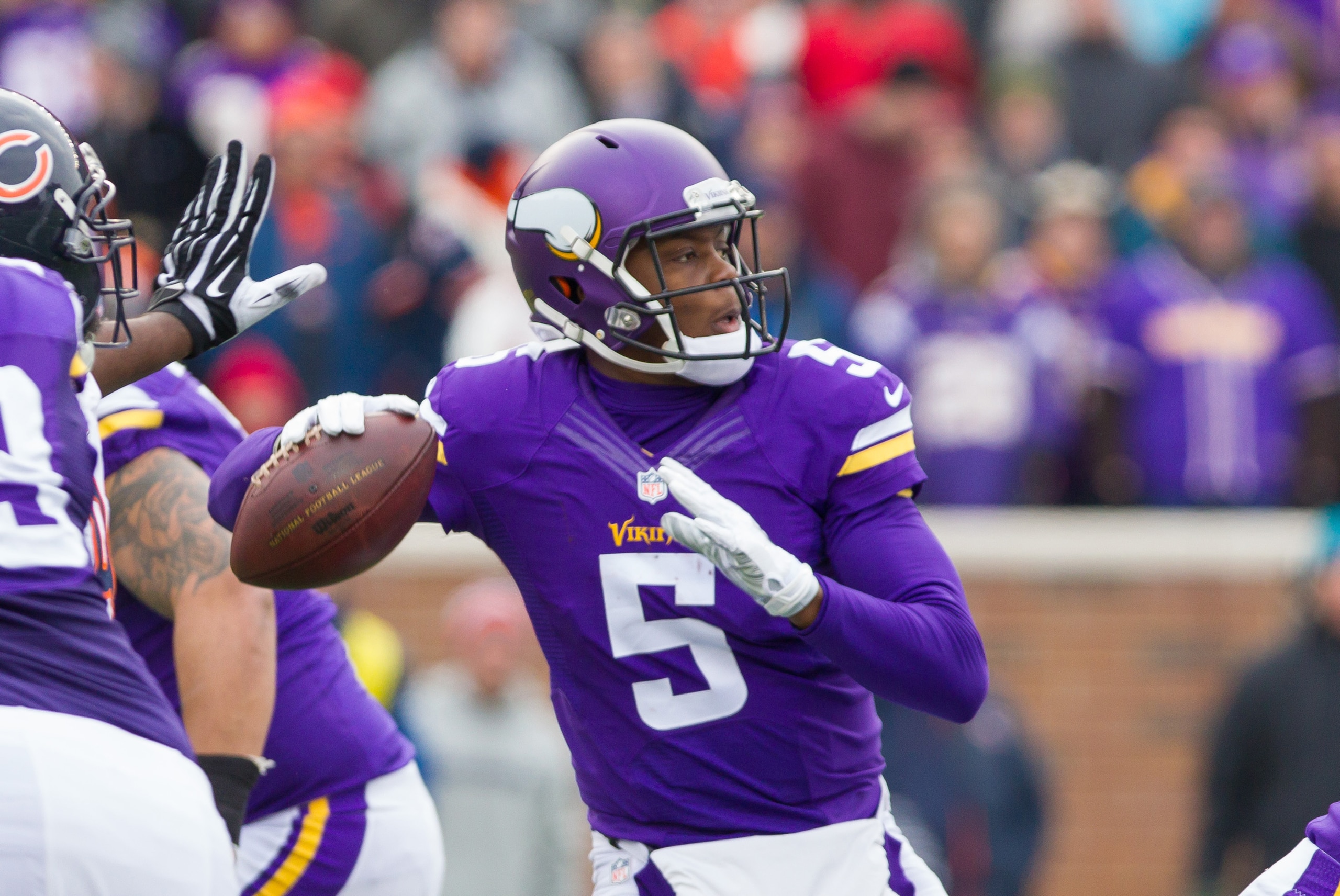
Four of our rookie Star quarterbacks come from the 2012 draft, which already looks like the best quarterback class since 1983. This year's class is much more likely to be like last year's, which produced one Starter on the borderline of Star status (Bridgewater), two more Starters (Blake Bortles and Derek Carr) and Mettenberger. With so few quarterbacks even drafted this year, it is very likely that Winston and Mariota will be the only rookie quarterbacks of note, with Bryce Petty possibly chiming in.
Nearly all of the top rookie quarterback seasons in NFL history have occurred since Roethlisberger's 2004 season; even if you extend history back to the start of the Super Bowl era, the list of superlative rookie seasons really consists of Dan Marino in 1983, Greg Cook in 1969, some non-rookie rookies from other leagues like Jim Kelly and Warren Moon, and a bunch of guys still playing in the NFL.
Numerous factors have made modern rookie success possible, and we don't have all day to discuss the strategic, statistical and economic trends at work. The fact remains that most rookie classes are still lucky to produce one or two guys like Bridgewater who win some games and show some promise but don't immediately upset the balance of NFL power.
Running Backs
Todd Gurley and Melvin Gordon headline an impressive rookie running back class. Tevin Coleman, Ameer Abdullah and T.J. Yeldon are also expected to play major roles in their new teams' offenses. Conventional wisdom states that running back is the one position where the road to rookie superstardom is relatively smooth; even fantasy football guides usually advise that running backs, and only running backs, should be counted on to produce numbers right away.
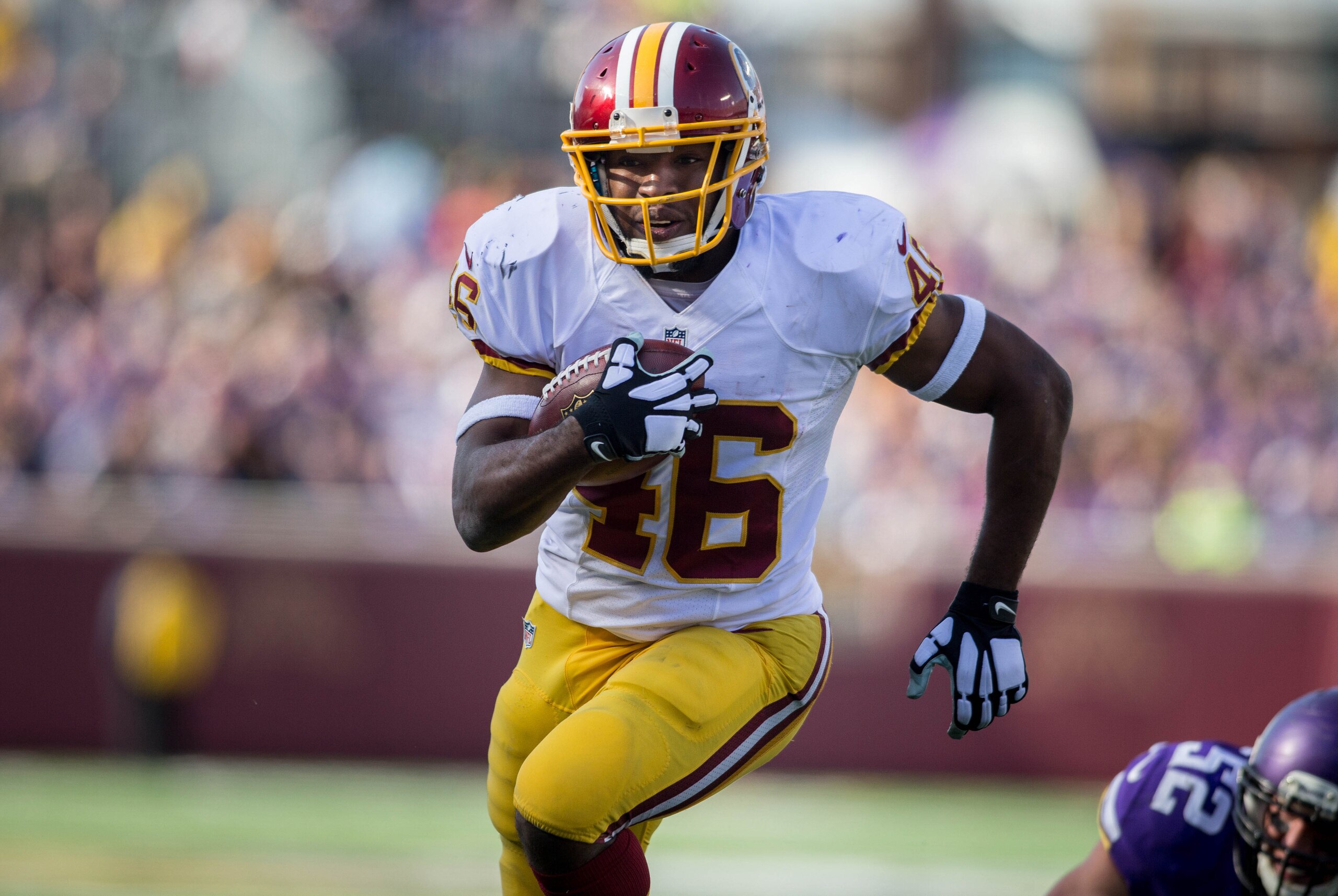
The research, though, shows that rookie running backs don't have nearly the impact you might expect when you start rattling off top-of-the-head examples like Alfred Morris and Eddie Lacy. Our thresholds for Contributor, Starter and Star are set at 400, 800 and 1,200 rushing yards for running backs—reasonable benchmarks to achieve. The average draft class contains 8.0 Contributors, 3.4 Starters and 1.5 Stars. Not bad, but not a cornucopia, either.
Putting it another way: There have been 19 rookie 1,000-yard rushers since 2001. The typical draft produces an exciting rookie running back or two, but he may be a sixth-rounder like Morris or even an undrafted player like LeGarrette Blount (1,007 yards, 2010) or Dominic Rhodes (1,104 yards, 2001). Finding which rookies will become immediate superstars is a needle-in-haystack search.
Lower your expectations to Contributor or Starter, and the news is better at running back. Longtime starters like LeSean McCoy, Frank Gore, Ray Rice and DeAngelo Williams started as committee backs rushing for 400 to 800 yards. It's easy to imagine Gurley needing half a season to return to full speed, Abdullah contributing more as a receiver-returner than on handoffs and the others spending a year as committee backs, then some or all of them (or others) blossoming into Pro Bowlers in 2016.
Wide Receivers
Back in the heyday of the West Coast offense, experts used to say that it took three years for a receiver to develop. Receiver assignments had grown so sophisticated, with extremely precise route requirements and loads of options and adjustments, that your basic tall and speedy rookie kid couldn't master them.
A three-year development cycle is fine if you are Bill Walsh or Mike Holmgren and have plenty of job security. But many West Coast offense coaching disciples discovered that they were grooming receivers to blossom one year after the regime that drafted them was fired. That's not a particularly wise strategy, and it was made even less cost-effective by pre-2011 rookie salaries, which increased every year for top draft picks.
Modern rookie wide receivers arrive far more field-ready than receivers did 10 or 20 years ago, for a variety of reasons. Today's offenses are more rookie-friendly, with screens and spread concepts that give a youngster plenty to do while he masters the subtleties of option routes. And high school and college offenses have caught up to the pros a bit, so today's 6'3" burner has done more than run fly routes since puberty.
The 2014 receiver draft may have been the best in NFL history, Amari Cooper and Kevin White lead an excellent 2015 crop, and as Beckham and others taught us last year, no one is waiting through 75 percent of a presidential administration to get results from drafting a receiver anymore.
Our Contributor, Starter and Star thresholds are set at deliberately low values of 32, 48 and 64 catches. We may not think of a "starting" wide receiver catching just 48 passes anymore, but a good slot receiver still might, and a slot receiver is practically a starter these days.
| 2014 | 15 | 10 | 6 |
| 2013 | 12 | 5 | 1 |
| 2012 | 7 | 4 | 2 |
| 2011 | 7 | 6 | 1 |
| 2010 | 7 | 2 | 1 |
| 2009 | 14 | 5 | 0 |
| 2008 | 6 | 4 | 1 |
| 2007 | 6 | 2 | 1 |
| 2006 | 4 | 3 | 1 |
| 2005 | 4 | 0 | 0 |
| 2004 | 5 | 4 | 1 |
| 2003 | 4 | 2 | 2 |
| 2002 | 9 | 1 | 1 |
| 2001 | 5 | 1 | 0 |
| 1996 | 7 | 4 | 2 |
As this table shows, six receivers reached the Star plateau last year, an exceptionally high total: Beckham, Jarvis Landry, Kelvin Benjamin, Mike Evans, Jordan Matthews and Watkins. Brandin Cooks, Allen Hurns, John Brown and Allen Robinson round out the Starters.
The 2014 season is probably an outlier—we knew going into the draft that the receiver class was special—but the table shows overall rookie receiving totals are trending steadily upward. There have now been four straight seasons in which four rookie receivers achieved Starter status; before 2007, it was rare for more than two receivers per year to reach that threshold.
Numbers for the outstanding wide receiver class of 1996, which still ranks as the best ever until 2014 has a chance to shake out, are included in the table to show just how drastic the increase in rookie receiver productivity has been.
Only Terry Glenn, Marvin Harrison, Keyshawn Johnson and Eddie Kennison topped 48 receptions as rookies; only Harrison and Glenn reached Star status, Harrison with exactly 64 catches. The 1996 draft class included Terrell Owens, Amani Toomer, Muhsin Muhammad, Eric Moulds, Joe Horn, Bobby Engram and several other receivers who were starters or role players for many years. But in an era with lower overall passing totals and fewer rookie-friendly systems, only four first-year receivers among a class of eventual superstars could put up interesting numbers.
Both local fans and fantasy gamers can feel confident that Cooper, White and a few other top receivers will make significant dents in the stat sheet this season. Rookie receiver production is a big part of what has driven the increase in overall rookie production in recent years. The position where we used to wait three years has become the position that offers the most instant gratification.
Tight Ends
Star rookie tight ends are rare. Our three thresholds for tight ends are set at 16, 32 and 48 receptions—some really low benchmarks. The results are still unimpressive. The only rookie tight ends to clear the 48-catch hurdle in this century were Jeremy Shockey, Dustin Keller, John Carlson, Jermaine Gresham and Tim Wright.
Rob Gronkowski caught 42 passes and 10 touchdowns as a rookie, Jimmy Graham 31 passes and five touchdowns. There are other moderate-catch, high-touchdown tight end years categorized as Starter seasons in the study, and it can be argued that a high touchdown-to-reception ratio is a signal of impending stardom (Chris Cooley had 37 catches and six touchdowns in 2004, for instance).
But tight ends often enjoy an extra goal-line play-action wide-open touchdown or three per year, so we don't want to get carried away with rewarding tight ends for touchdowns. Even if Gronk, Cooley and Graham get reclassified as rookie Stars, it's still pretty rare for someone like Maxx Williams or Clive Walford to do more in his first season than learn on the job.
Offensive Line
Two images spring to mind when we think of rookie offensive linemen. The more common image is of a newcomer struggling through a year full of sacks, penalties and mistakes for a team that had no choice but to thrust him into the lineup (think of Atlanta's Jake Matthews last season as an example). The other image is of the rookie who performs so well that he almost gains too much praise: Zack Martin last year, Matt Kalil in 2012, Maurkice Pouncey in 2010, Ryan Clady and Jake Long in 2008, and Joe Thomas in 2007 made it look easy for a rookie lineman to ascend to All-Pro status.
| 2014 | 26 | 18 | 2 |
| 2013 | 16 | 12 | 2 |
| 2012 | 13 | 10 | 1 |
| 2011 | 17 | 12 | 2 |
| 2010 | 12 | 11 | 1 |
| 2009 | 13 | 8 | 0 |
| 2008 | 11 | 7 | 2 |
| 2007 | 8 | 1 | 1 |
| 2006 | 15 | 11 | 1 |
| 2005 | 17 | 11 | 0 |
| 2004 | 15 | 8 | 1 |
| 2003 | 16 | 11 | 0 |
| 2002 | 14 | 12 | 1 |
| 2001 | 15 | 11 | 0 |
As the table shows, one or two rookie offensive linemen do indeed achieve Star status in a typical year. An Approximate Value of 10 is the minimum Star threshold for our purposes (Approximate Value mixes an offensive lineman's starts and Pro Bowl notices with various indicators of offensive line quality, so it's weighted in favor of rookies who started on solid overall lines). Martin and Packers center Corey Linsley made the cut in 2014, D.J. Fluker and Kyle Long in 2013, Kalil in 2012.
The Contributor and Starter minimums are set at five games and 10 games started. We're just looking for guys who held down jobs. There's a random element to just how many rookies per season end up starting a bunch of games on the offensive line, with injuries playing at least as large a role as the quality of the prospects themselves or coaching strategy. There is a gentle upswing in the number of offensive linemen contributing or starting, but the increase disappears if we take out 2014, which saw record numbers of starters and stars.

It's hard to tell if 2014 was a statistical fluke or a sign of things to come. A surprising number of playoff-bound teams stuck rookie centers in the lineup: the Packers used Linsley, the Patriots Bryan Stork, the Lions Travis Swanson, the Colts Jonotthan Harrison. That seems more like an aberration than a trend. It wasn't a banner year for rookie linemen the way it was a banner year for receivers: Martin, Linsley and Cleveland's Joel Bitonio were great, Stark and a few others were OK, but most of the rest—Matthews, Greg Robinson, Ja'Wuan James, Justin Britt, Harrison—played like typically unready rookies.
What's certain is that rookie offensive linemen rarely have really good years. There have been 209 offensive linemen drafted in the first three rounds since 2001. Our system identified 14 Star rookies in that time, not all of whom were early picks. Brandon Scherff, Andrus Peat, Cameron Erving and others have great long-range potential but should not be thought of as significant immediate upgrades.
Defense, Part I
The biggest obstacle to accurately comparing large groups of rookie defenders is the sorry state of defensive statistics. Interceptions are too rare to be useful: If some dime defender steps in front of three passes in 16 games, does that make him a Star? Sacks have a similar problem. Tackles…ugh. Start a dozen games with a team that finishes 4-12, and you are going to notch about 60 tackles as opponents march up and down the field—does that make you a Star?
Meanwhile, a rookie defensive tackle on a great team only makes 20 tackles and two sacks but spends the year eating up double-teams. Maybe he's not a Star, but you have to really fiddle with the sliders just to make him a Contributor.
The Approximate Value metric at Pro Football Reference rides to our statistical rescue, but we still have to set the bars low just to get enough data to really sink our teeth into. A Contributor has an Average Value of two or greater. The threshold for a Starter is five, and for a Star it's 10. The table shows the results:
| 2014 | 32 | 11 | 2 |
| 2013 | 49 | 18 | 0 |
| 2012 | 33 | 13 | 1 |
| 2011 | 62 | 23 | 5 |
| 2010 | 48 | 13 | 1 |
| 2009 | 54 | 11 | 1 |
| 2008 | 44 | 12 | 0 |
| 2007 | 50 | 18 | 1 |
| 2006 | 49 | 22 | 0 |
| 2005 | 54 | 18 | 1 |
| 2004 | 63 | 19 | 1 |
| 2003 | 47 | 19 | 0 |
| 2002 | 52 | 19 | 1 |
| 2001 | 50 | 17 | 1 |
There is a gentle downtick in the number of rookie Contributors and Starters over the years, though you have to do a little regression analysis to find out. Rookie Contributors are decreasing at about a player per year, Starters at four-tenths of a player per year.
The statistical validity of these downtrends is not worth investing the 401K in: The data is very foamy, but it hovers around 50 defensive Contributors and 17 defensive starters among rookies in a typical year across the NFL. The occasional Von Miller, J.J. Watt or C.J. Mosley climbs to star status; Aaron Donald joined Mosley as last year's rookie Stars.

Fifty Contributors seems like a lot until you realize how low the standard is set and how many players we are talking about: three full position groups. The typical team has fewer than two rookie Contributors, with roughly one Starter for every two teams.
To give an idea of just how modest a contribution a Contributor might make, Pierre Warren, Jason Verrett, Ed Stinson and Mohammed Seisay were Contributors last year. These are rookies who got hurt, got released and re-signed, joined the team during an injury crunch and did not stink or just rotated and played special teams much of the year. The Starters included a bunch of guys that most non-homer fans have never heard of or thought much about: Oakland's Justin Ellis, Tennessee's Avery Williamson and Jacksonville's Telvin Smith. There were not many rookie Starters running around on playoff teams; Mosely and Anthony Hitchens were notable exceptions.
The 2014 season saw the lowest totals of rookie Contributors and Starters of the last 14 years, but those totals are likely to be just as random as the uptick in rookie linemen. Your team probably drafted a couple of useful 2015 role players last weekend, maybe even an immediate starter. If it drafted two or three starters, it may be a sign of a banner draft—or just that your team was so desperate that it had to throw guys straight onto the field.
Defense, Part II
Those Pro Football Reference Approximate Values are great for lumping large numbers of seasons together, but they can also be a little abstract. You might think that we are losing some really good seasons in the statistical shuffle. If some rookie records half a dozen sacks, who cares what his "approximate value" is? He produced, the local fans took notice, and unless he was one of the top five players drafted, his rookie year will probably be classified as a success.
The next table shows how many rookies each year met each of three not-too-high thresholds: five or more sacks, 10 or more passes defensed or 48 or more tackles (an average of four or more per game; cornerbacks were excluded from the tackle data because high tackle totals are bad for cornerbacks).
We didn't use interceptions, because you wind up with a few standouts like Jairus Byrd followed by more than 100 guys who had two or three interceptions that might well have been winning lottery tickets. Passes defensed are a terrible stat for a variety of reasons, starting with some massive city-by-city differences in reporting, but at least there are more of them to tabulate.
| 2014 | 3 | 4 | 9 |
| 2013 | 2 | 9 | 10 |
| 2012 | 4 | 5 | 3 |
| 2011 | 12 | 3 | 8 |
| 2010 | 1 | 8 | 4 |
| 2009 | 2 | 7 | 4 |
| 2008 | 4 | 3 | 4 |
| 2007 | 3 | 6 | 6 |
| 2006 | 3 | 4 | 12 |
| 2005 | 3 | 6 | 11 |
| 2004 | 3 | 6 | 10 |
| 2003 | 2 | 5 | 9 |
| 2002 | 6 | 2 | 5 |
| 2001 | 6 | 7 | 6 |
This year's draft was loaded with pass-rushers, so we may see another year like 2011, when 12 players notched five or more sacks. Just as 2014 was the Year of the Receiver and 1983 the Year of the Quarterback, 2011 may be remembered as the Year of the Pass-Rusher: J.J. Watt, Von Miller, Aldon Smith, Robert Quinn, Justin Houston, Ryan Kerrigan, Marcell Dareus and others entered the league that season.
Even in that amazing season for rookie sackmeisters, the actual numbers weren't all that amazing. Smith produced 14 sacks and Miller 11.5, but Watt and Houston had just 5.5, and Quinn 5.0. In a more typical season, only three or four rookies generate even a half-dozen sacks.
The pass defensed totals show about half a dozen rookies making an impact. Generally, these are rookie cornerbacks who were labeled as Starters by Approximate Value. Think of them as the rookies "in the crosshairs," breaking up a lot of passes because they are targeted so frequently. Some safeties and a handful of linebackers (Lofa Tatupu in 2005) also made the list.
The tackle threshold doesn't reveal any major secrets. You might expect rookie linebackers and safeties to easily rack up five or more tackles per game for weak teams, but it doesn't happen all that much. Only 17 rookies have cracked the 80-tackle mark since 2001. Many of our defensive Starters according to Approximate Value were linebackers who mixed 60-70 tackles with a sack or interception or two as rookies.
If you are looking for impact rookies, inside linebacker and safety are fine places to look, though "impact" is a relative thing. Avery Williamson had a darn good year for the Titans last season: 51 tackles, three sacks and a pair of fumble recoveries. He's a heck of a prospect. But do you think of his 2014 season as an "impact" season? If you are not a Tennessee native, have you even heard of Avery Williamson?
To Sum It All Up
This is the time of year when local fans pencil in 80 catches for the first-round receiver, 16 sack-free starts for the second-round tackle, nine sacks for that defensive end/outside rusher in the third round, all the way down to the kid from Prairie Dog State in the seventh round, who will lead the league in kickoff returns. Everyone wants to add three wins to the home team's total based on the draft. But of course, one team's win is another's loss, and the entire NFL cannot finish over .500. Even an outstanding draft might add no more than half a game to a team's expected record.
There are exceptions. Certainly, when a team solves a quarterback problem, it makes a difference. Other sudden-emergence superstars at key positions can single-handedly buoy a team by a game or two. But it's extremely rare for a draft class to make an immediate difference, all by itself, because it is rare for rookies to make an immediate difference, all by themselves. When the average draft only produces about five immediate "stars" across the entire NFL, using the most generous definition of the term, counting on rookies to move a team up the standings is unrealistic.

That's bad news for people who read power rankings (like mine) and wonder why I can be so positive about a draft yet still rank a team in the bottom quarter of the league.
I thought the Redskins, Falcons and Titans had excellent drafts. The players they selected will help in 2016 and beyond. Their immediate impact is unlikely to be very significant, though the Titans will see more immediate dividends from their new quarterback and skill-position players than the other teams will see from linemen and and edge defenders. The same thing can be said at the top of the standings: The Seahawks may have reached all over the board, but they were seeking long-range improvements, which are exactly the type of improvements that the NFL draft really offers.
The good news of this study is that NFL players still develop into stars over the course of a season or two, and championships are won by stringing together several productive draft classes, not by getting an A-plus grade from a weary sportswriter eight hours after the end of the final round. We get paid to grade this year's draft class, but 2015 success will be determined by last year's draft class, and by the 2013 and 2012 classes.
Rookies matter a lot. It's rookie seasons that don't matter much.
As we put draft coverage to bed, you may want to turn the page on this year's third- to seventh-round picks and instead reacquaint yourself with last year's third- to seventh-round picks. The Vikings have had impressive drafts since 2012; maybe this is the year they see playoff results. If the Titans flirt with .500, players like Williamson, Taylor Lewan and Justin Hunter will likely be at least as much a part of the resurgence as Mariota or Dorial Green-Beckham.
With the draft in the books, rookie obsession season is over. Put the newcomers in their place on the depth charts, keep your expectations for them low and remember that "building through the draft" means that nothing gets built overnight.
Mike Tanier covers the NFL for Bleacher Report.
.jpg?w=2560 "Cowboys Packers Football")




.jpg?w=2560 "🚨 Week 8 AP Top 25 Poll")