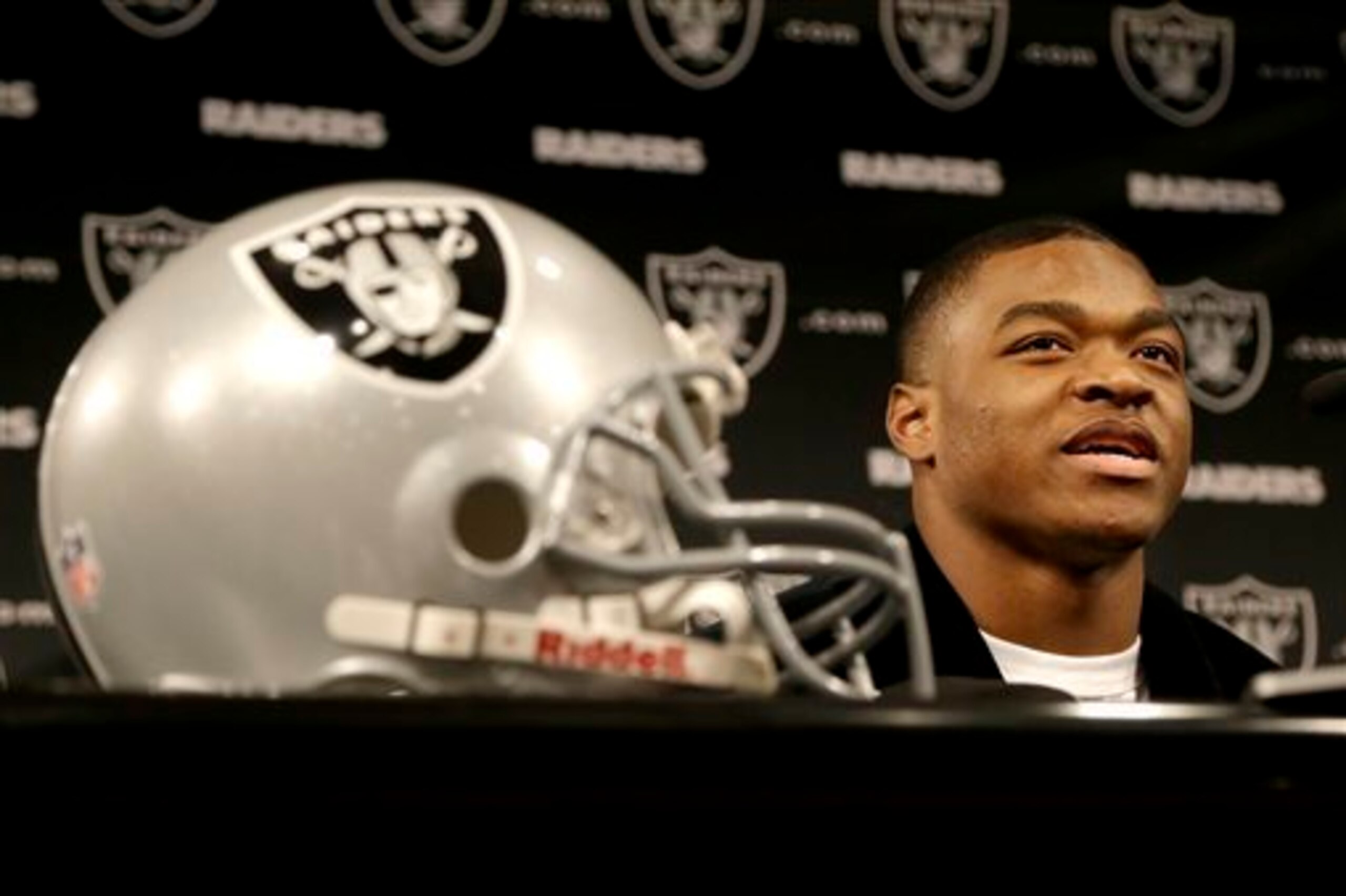


Now that the free-agency rush and the draft have come and gone, the Oakland Raiders roster has largely taken shape. There's always the possibility that a significant free-agent addition will be made between now and the start of training camp or that a big name might be cut. But for the most part, the roster as it's currently constructed is what the team will go with in 2016.
The Oakland roster is much improved from last season. Both through free agency and the draft, the team has made great strides in the right direction. How much the team has improved remains to be seen. But there's no question that this team is better now than it was a year ago.
This is a post-draft review of the roster, but it is not draft-exclusive. Over the past few months, the team has had the opportunity to address various team needs both through the draft and through free agency. After taking into consideration all of the additions that have been made, here's a look at the team's weaknesses and strengths as we head toward the summer.
Weakness: Uncertainty at Running Back
1 of 8
While the Raiders offense is set up pretty well at quarterback, wide receiver and tight end, the running back position remains unsettled.
Oakland added no running back through the draft, which means that the team will head into the 2015 season with Latavius Murray, Trent Richardson and Roy Helu as the core running backs. There's a ton of potential there. There's also very little production.
Murray is a very intriguing prospect, but he's so far produced only a couple of impressive performances. Granted, he's also had limited opportunities, but he's still unproven. Helu has made a name for himself mostly as a pass-catcher, and Richardson has been one of the biggest busts of the last five years.
While this group looks good on paper, the on-field production is underwhelming. Until someone steps up to become at least an efficient contributor, this will remain the offense's weakest unit.
Strength: Increased Depth at Linebacker
2 of 8Last season, the Raiders began the season paper-thin at linebacker. And as the season progressed, the situation only got worse. The unit was ravaged by injuries, and there were times when the team had to bring up players from the practice squad or add free agents midweek just to be able to have enough bodies at the position.
Oakland made it a point to make sure this doesn't happen again.
The Raiders had three picks in the fifth and sixth round, and all of them were used on linebackers: middle linebacker Ben Heeney and outside linebackers Neiron Ball and Max Valles.
Even with Valles expected to play defensive end in the NFL, that's still two additional linebackers on the team with a good chance of making the final roster. Ball's injury history make him more of a gamble, but he has the potential to be an effective situational linebacker and a reliable special teamer.
Heeney is a bit undersized, but he gives Oakland something it desperately needed: a true backup middle linebacker. The Raiders didn't have one last season due to injuries, and it forced Miles Burris to look very bad while playing out of position.
The Raiders needed depth, and they found it in the draft.
Weakness: Still No Clear Answer at Right Guard
3 of 8After putting together a solid offensive line over the past two years, the Raiders are missing one final piece: right guard. The fourth round of the draft could've provided an immediate solution in the form of someone like Tre' Jackson, Daryl Williams or Arie Kouandjio. Instead, Oakland traded back twice and ended up selecting Jon Feliciano.
That's not to say that Feliciano doesn't have the potential to eventually take over at right guard. But he has much more work to do to get to that point than some of the players Oakland passed on. Feliciano might become the starting right guard in the future. But what is the team going to do in the meantime?
This leaves a big hole in Oakland's offensive line for the upcoming season. As of now, the leading candidate is Khalif Barnes. He can get the job done, but he's more of a reserve at this point in his career.
Feliciano could improve enough over the summer to work his way into the starting lineup. But if he doesn't, if it turns out that he's not ready, it'll leave a gap in the line that could've—and should've—been more effectively addressed.
.jpg?w=2560 "Rams Raiders Football")

.jpg?w=2560 "Steelers Saints Football")
Strength: Defensive Line Against the Run
4 of 8On paper, the Raiders look more and more like an elite run defense. Of course, paper doesn't mean anything. What matters is the actual play on the field. But at the very least, the team has to be given credit for putting together what looks like a truly impressive run-stopping front four.
Justin Tuck, best known for his ability to get to the quarterback, is an underrated run defender. Up the middle, the Raiders have paired 2014 fourth-round pick Justin Ellis with Dan Williams, who at 327 pounds is actually the lighter of the two. And in the second round of the draft, the team added defensive end Mario Edwards Jr., who's as comfortable on the inside as he is on the outside and is strongest against the run.
The Raiders were actually surprisingly effective against the run at times last season. The real problem was that when it rained, it poured. The team gave up too many big plays on the ground at inopportune times, and these backbreaking plays frequently proved to be the difference in games.
In these four linemen, the Raiders have a truly formidable run-stopping defensive front. Williams and Edwards are new additions, so it could take some time for the group to learn how to play as a cohesive unit. But once that happens, Oakland has the potential to turn opposing offenses into one-dimensional, pass-heavy units.
Weakness: Defensive Line Against the Pass
5 of 8For as much improvement as Oakland has made in run defense, the pass rush remains as suspect as it was last season.
Justin Ellis' forte is stopping the run. Dan Williams has some potential as an inside pass-rusher, but he too has primarily been a run-stuffer in the NFL. What Oakland needed to find in the draft was find a proven pass-rushing defensive end to line up opposite Justin Tuck to give the defensive line more balance.
Instead, the Raiders selected Mario Edwards Jr., a player who had a grand total of eight sacks in three years of college. While he's a stout run defender, he's clearly not a proven pass-rusher off the edge.
The Raiders drafted Edwards either assuming or hoping that he can turn his immense talent into actual production. That's a big "if." It also remains to be seen whether he'll be able to stay around the 275-280 pounds he needs to be to play defensive end or if he'll balloon back up to 300-plus pounds like he did in college.
The draft pick that could end being a true hidden gem and a saving grace at defensive end is Max Valles. He was an outside linebacker in college, but he'll be playing defensive end in the Silver and Black. He'll have to add some size and work his way into the role, but he's shown to be effective on the edge.
Edwards and Valles certainly have the potential. If either or both can turn into an effective defensive end, this could become a strength. But until that actually happens, the pass rush remains suspect.
Strength: Options at Tight End
6 of 8As was the case with the linebackers in 2014, the tight ends went through an almost comical rash of injuries. Of the tight ends expected to contribute, only Mychal Rivera was around the whole season. After him, it was a revolving door of placeholders. For much of the season, it seemed like the one requirement to play tight end for Oakland was to be able to stand up without help.
Now, this position is one of the offense's strengths. Rivera remains a dangerous pass-catcher, and the addition of Lee Smith adds a nastiness in the blocking game that was absent from the tight ends.
But what really puts this position group over the top is the addition of Clive Walford, one of the smartest picks in the draft by any team. He's a good blocker and an even better receiver. He's capable of doing both at a very high level, providing Oakland with a true every-down tight end that it hasn't had since the days of Zach Miller.
Oakland is now both efficient and dangerous at the position. Whether a play calls for strong blocking or for a big catch, Walford, Rivera and Smith are capable of making it happen on every play. What was a major weakness for the offense is now one of its strengths.
Weakness: Lack of Reliable Options at Cornerback
7 of 8Does Oakland have enough at cornerback? This has been a hot topic all offseason, and it's going to remain one at least until the Raiders start playing some preseason games in August.
At some point, it just has to be accepted that the team must see something it likes in the cornerbacks already on the roster. This is primarily true for presumed starters D.J. Hayden and T.J. Carrie, along with 2014 fourth-round draft pick Keith McGill.
These three are projected to make up the top of the cornerback depth chart, and there's plenty of potential there. However, not one of those three players has shown—either because of injury, inexperience or lack of opportunity—that he is a true 16-week NFL starter.
No one in the draft was going to fix this problem. But the Raiders did nothing to even reinforce the position during the initial free-agency rush, and it was more of the same in the draft. Aside from the addition of seventh-round project Dexter McDonald, the cornerback depth chart looks the same after the draft as it did before.
This isn't a knock against McDonald, who has impressive measurables (6'1", 200 pounds). But there's a reason he was still available in the seventh round. He's a work in progress despite his potential, and he can't be expected to handle too much responsibility as a rookie.
As of now, Oakland's plan seems to be to take on guys like Demaryius Thomas, Larry Fitzgerald and Jeremy Maclin this upcoming season by throwing Hayden, Carrie and McGill at them. That doesn't inspire a lot of confidence.
Strength: New and Improved Wide Receiving Corps
8 of 8For all the criticism that Oakland's wide receivers took in 2014, the unit actually wasn't as bad as it was made out to be. The problem wasn't talent or desire. The real issue was that every receiver was playing out of position.
The lack of a true No. 1 receiver forced every other receiver up the depth chart. Andre Holmes isn't a true No. 1 receiver. James Jones was the second receiver, but he was better suited as a third option. And behind them, promising prospects like Brice Butler and Kenbrell Thompkins were unable to find a comfortable role given the ineffectiveness at the top of the depth chart.
That's all changed. The return of Rod Streater, the signing of Michael Crabtree and the drafting of Amari Cooper have suddenly turned this into a very exciting group. These three will make up a very solid top of the depth chart. It will also allow players like Holmes, Butler and Thompkins to be used situationally in places where they can be most effective.
The truth is that the wide receivers Oakland used for most of last season were the result of the team scrambling to make the best of the situation. Injuries (Streater) and underperformance (Denarius Moore) left the Raiders to try to make the best out of a bad situation.
That's been drastically changed. The combination of Streater, Crabtree and Cooper has a legitimate shot at being truly dangerous.
What was one of Oakland's weakest groups last season has potentially been turned into one of its strongest.
Unless otherwise noted, all stats taken from ESPN.com.
What are your thoughts on the Raiders' roster following the draft? What do you like? What still needs to be fixed? Let me know what you think in the comments section below and on at Twitter @BrianJ_Flores.
.jpg?w=2560 "Cowboys Packers Football")




.jpg?w=2560 "🚨 Week 8 AP Top 25 Poll")