

Can Garrett Grayson Be Saints' Heir to Drew Brees?
With the 75th overall pick in the 2015 NFL draft, the New Orleans Saints selected a quarterback.
Per NFL Network, this is the highest they've drafted a signal-caller since Archie Manning in 1971. Reflecting on a November report by NFL Network's Ian Rapoport that the Saints would be looking for Drew Brees' successor in this draft, it looks as though they've found him.
Garrett Grayson, a Colorado State signal-caller who improved his stock with great performances at the Senior Bowl and his personal workout, is now the man behind The Man.
.jpg?w=2560 "Rams Raiders Football")

.jpg?w=2560 "Steelers Saints Football")
Combined with a trade of All-Pro tight end Jimmy Graham for All-Pro center Max Unger and the Saints' first-round selection of offensive tackle Andrus Peat, it looks like general manager Mickey Loomis is rebuilding his offense from the quarterback out.
There's no question Brees will start in 2015, giving Grayson the luxury of sitting for a year and learning head coach Sean Payton's offense. Once he takes over, whenever that is, Grayson will have enormous (figurative) shoes to fill.
Does he have what it takes?
The college production is certainly there; per NFL.com Grayson set school records in yards, touchdowns, completions and completion percentage across 35 starts in four years. The Mountain West isn't the highest level of competition NCAA football has to offer, but he regularly faced off against future NFL talent—like Utah's Nate Orchard and Eric Rowe, also taken in the draft's second evening.
The first sign Grayson might be the best of the rest of the quarterbacks came at the Senior Bowl, from where Bleacher Report's Matt Miller tweeted very positive first impressions:
Not only was Grayson named the Senior Bowl's most outstanding quarterback, Tony Pauline of DraftInsider.net told B/R Radio that Grayson could be this year's Tom Savage, a late-round guy who rises late and gets significant buzz as a possible starter.
It's telling that NFL Media's Mike Mayock, quoted at NFL.com, compared the slightly built 6'2", 213-pound Grayson's game to Brees'.
Injury kept Grayson from performing at the combine or Colorado State's pro day, but he held his own private workout and did very, very well:
Grayson made an impression on his receiver that day, Charles Lovett. Lovett told the Loveland Reporter-Herald's Mike Brohard that Grayson's draft preparation had clearly paid off.
"I knew it when we was warming up on his first throw," Lovett said, "his mechanics were a little different and that he had a little more zip on the ball and more confident," Lovett said. "And he was looking a little better, a little lean, a little muscle."
Grayson told Brohard he was more than satisfied with his performance:
"I wanted to prove to everybody that I can take the five-step and seven-step drops from under center and throw with accuracy. The QB coaches came out and had me rolling to my right, throwing the comeback back to the far side of the field, that was something I wanted to prove that I had the arm strength to make those throws.
I think I did, and like I said, I was very happy with my performance.
"
Apparently, Loomis and the Saints were, too.
The traits that make Drew Brees Drew Brees, of course, are not imposing size or a cannon arm, so it's not much of an issue that Grayson lacks both traits.
Like Brees, Grayson's solid footwork and mechanics allow him to get big-boy drive and zip on passes despite his lack of elite size. Like Brees, he can throw a really nice-looking deep ball down the seam or to the sideline. Like Brees, he's willing and able to gently place short- and intermediate-depth passes to get maximum after-catch yards—perfect for Payton's system.
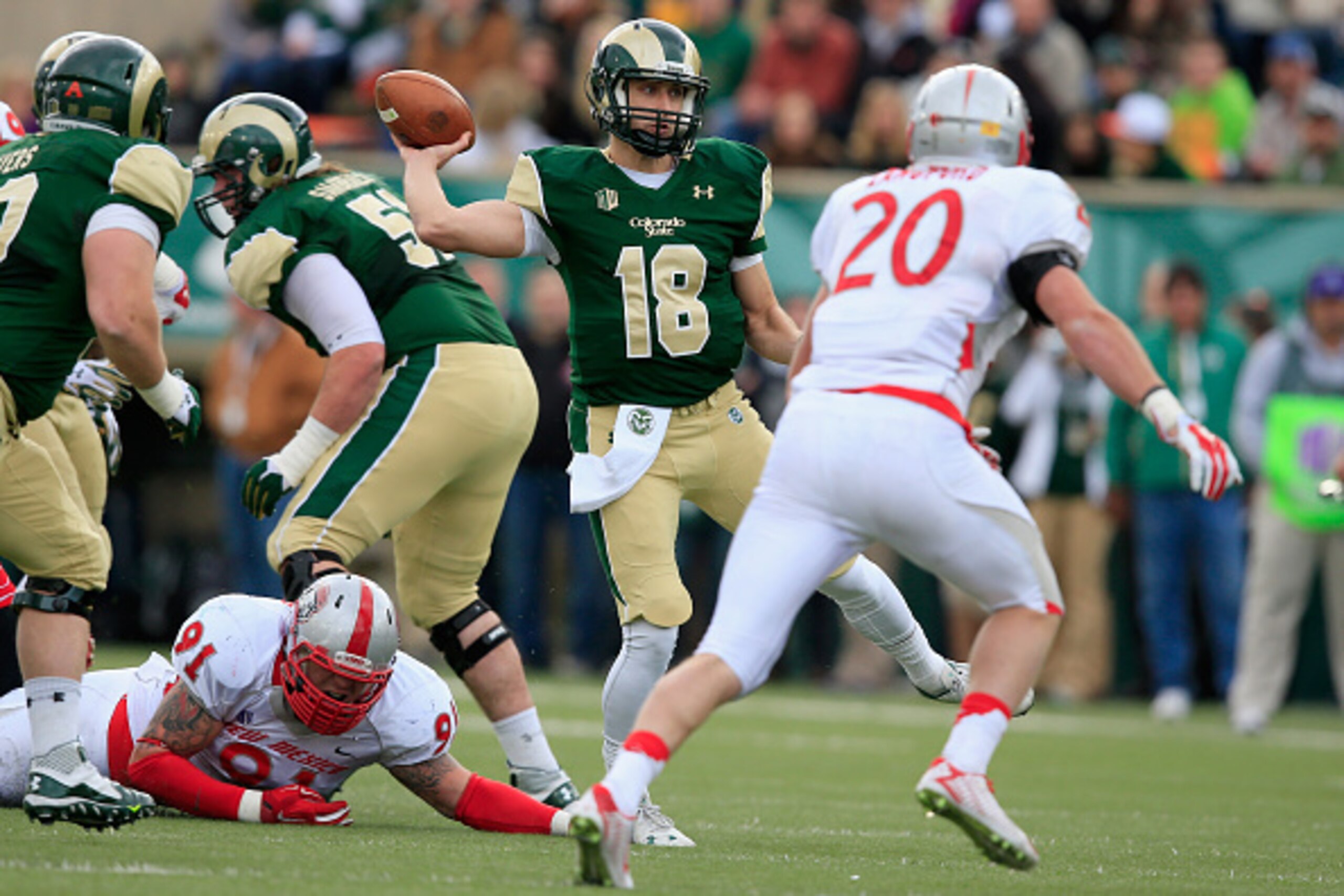
What Brees has, and Grayson has only shown inconsistently, is the processing speed to find the open man and get rid of the football. Like the Seattle Seahawks' Russell Wilson, Grayson sometimes ignores quick-developing routes and waits for the play to break down, giving him a chance to throw to someone open, roll out or otherwise cut the field down to one or two reads.
This is something he can work on as he matures in the NFL, but don't forget: Grayson's already got 35 starts under his belt. Payton's one of the best offensive architects on Earth, and he can teach Grayson plenty—but decision-making and processing speed are hugely important for the Saints' triggerman, and Grayson's had 35 starts to develop these traits.
This is a serious issue for Grayson's future in New Orleans. It's not that Grayson can't get better, but that A) he must, and B) he might not.
The Saints were already clear contenders in the weakest division in football. After a free-agency period during which they added explosive tailback C.J. Spiller and two starting defensive backs, they made five selections in the first three rounds of this draft. If Brees has one last Brees-like year of greatness, the Saints will want him on the field at every opportunity, trying to wring out maximum wins.
As the Denver Broncos very nearly discovered while Peyton Manning was weighing whether to play in 2015, not letting your quarterback of the future take any meaningful reps is a massive gamble. The only way for Grayson to grow and develop in the offense is to get as much live action as he possibly can—even if that means letting him come in while a game's still in doubt.
In the end, Grayson clearly has the arm talent, football instincts and drive to win to become Brees' heir. It's up to the Saints' coaching staff, and Grayson's work ethic, to determine whether or not he ever approaches Brees' level.
.jpg?w=2560 "Cowboys Packers Football")




.jpg?w=2560 "🚨 Week 8 AP Top 25 Poll")