
Ranking Detroit Pistons' Biggest Priorities for 2015 NBA Offseason
As the Detroit Pistons sit at home for the sixth consecutive postseason, the front office is preparing for an offseason full of pivotal decisions.
One starter—and the Pistons' leading scorer—is an unrestricted free agent, one is a restricted free agent and another has a non-guaranteed contract. Six bench players are unrestricted free agents or have team options for next season. Plus, their former starting point guard is coming back from a season-ending injury.
The Pistons do have two young starters to build around: center Andre Drummond, 21, and shooting guard Kentavious Caldwell-Pope, 22. Rookie point guard Spencer Dinwiddie, 22, should also be part of the young core, and shooting guard Jodie Meeks, 27, adds a veteran scoring option off the bench.
Although there is plenty of potential for turnover with those four, the Pistons do have assets to bring in quality pieces: a top-10 draft pick and as much as $30 million in cap space, depending on what happens with their own free agents.
This is the second offseason for coach and team president Stan Van Gundy, who has the opportunity to better mold the roster to his liking. Those potential changes just need to turn the Pistons into a playoff team—and quickly.
5. Make Decision on Brandon Jennings
1 of 5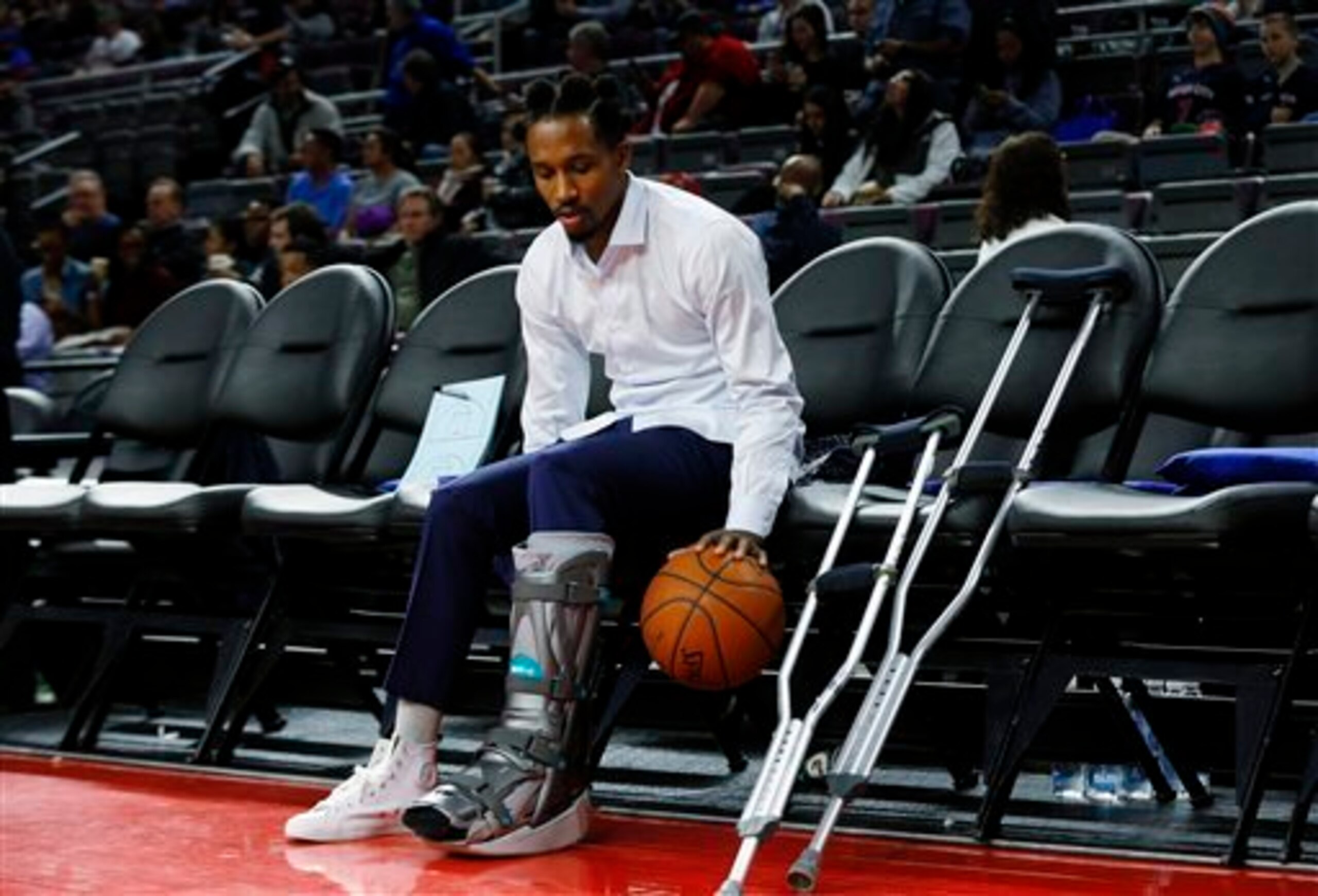
Brandon Jennings' Achilles injury and the trade for Reggie Jackson has left the Pistons' point guard situation in limbo. Addressing this in the offseason can give the organization clear direction.
Jennings was playing the best basketball of his career in January and looked like he was the long-term answer to run the Pistons offense. Then suddenly, he was writhing on the ground against the Milwaukee Bucks, and his career with Detroit was in jeopardy.
Jackson played well in his short stint as the starting point guard. He will be a restricted free agent, meaning the Pistons can match any offer sheet he signs this offseason and have a good amount of control over his future. The safest move for Van Gundy is to bring him back.
On the other hand, there is no certainty to the quality of player Jennings will be when he comes back from the injury. And to further cloud his future, he will be an unrestricted free agent after the 2015-16 season—the Pistons will be completely at risk of losing him for nothing. Choosing Jennings over Jackson would be quite the risky proposition.
Van Gundy could ride into the season with two point guards on the roster and let them battle for minutes. But this is a team in need of clear leadership and stability, and uncertainty at point guard would muddy that—much like a two-quarterback system in football.
If Jennings can come off the bench as an offensive spark plug and possibly play alongside Jackson, that's fine. If they think he is the best long-term option to lead the team, that can also work. But if Van Gundy keeps Jennings around with Jackson, the role must be clearly be defined so that it does not hang over this team. Otherwise, Van Gundy must find another home for Jennings via trade.
Either way, he can leave no doubt to what, if any, Jennings' role with the Pistons will be.
4. Sign a Starting Forward
2 of 5
Regardless of what the Pistons decide to do with starting power forward Greg Monroe, they will have at least one starting forward spot to be filled this offseason.
Caron Butler and Tayshaun Prince, both 35, are the two small forwards currently on the roster and are too old and have too little talent at this point in their respective careers to be the starting 3 for the Pistons. Also, Prince's contract is expiring, and Butler's is non-guaranteed. Monroe is also an unrestricted free agent, which would open up a second hole in the lineup.
With their potential cap space, Van Gundy needs to explore bringing in a young, athletic forward to add to his core, as long as it is for the right price. There are top restricted free agents like Draymond Green and Tobias Harris as well as unrestricted free agents like Paul Millsap and DeMarre Carroll. Several veterans could also be stopgap options.
Van Gundy needs to ensure that any free-agent contract the Pistons sign isn't debilitating to their cap situation for the next few years, but that shouldn't be a huge issue with the large cap increases coming in the near future.
As long as the player he targets fits Van Gundy's roster blueprint and the price is right, he should use some cap space to upgrade the roster.
3. Draft the Best Available Forward
3 of 5
More important than adding a player in free agency will be selecting the right player in the draft.
The Pistons are guaranteed to pick in the top 10, with a 10 percent chance of moving into the top three, and picking the correct player will be important to their long-term success.
While a free agent will almost certainly be a bigger talent upgrade than a draftee in the immediate future, signing a free agent will be more expensive and likely require overpaying. A first-round pick who becomes a quality starter can be seriously valuable, giving them big minutes for just a few million per year.
The current core of Pistons—Caldwell-Pope, Dinwiddie and Drummond—are all 22 or younger and won't even enter their primes for a couple of years. A rookie will fit better age-wise than most free agents, and ideally that player would become a valuable contributor as the team emerges as a contender in the Eastern Conference.
Assuming the Pistons pick No. 8 or No. 9—almost a 90 percent chance—there will be numerous options at either forward spot. Mario Hezonja, Kelly Oubre and Stanley Johnson are all realistic options at small forward. Myles Turner and Kevon Looney could fit in at power forward.
Ideally, the guy they select will be able to start from day one, but the Pistons don't necessarily need that. What they do need is a guy who can potentially be one of their starting forwards for the next decade.



2. Part Ways with Greg Monroe
4 of 5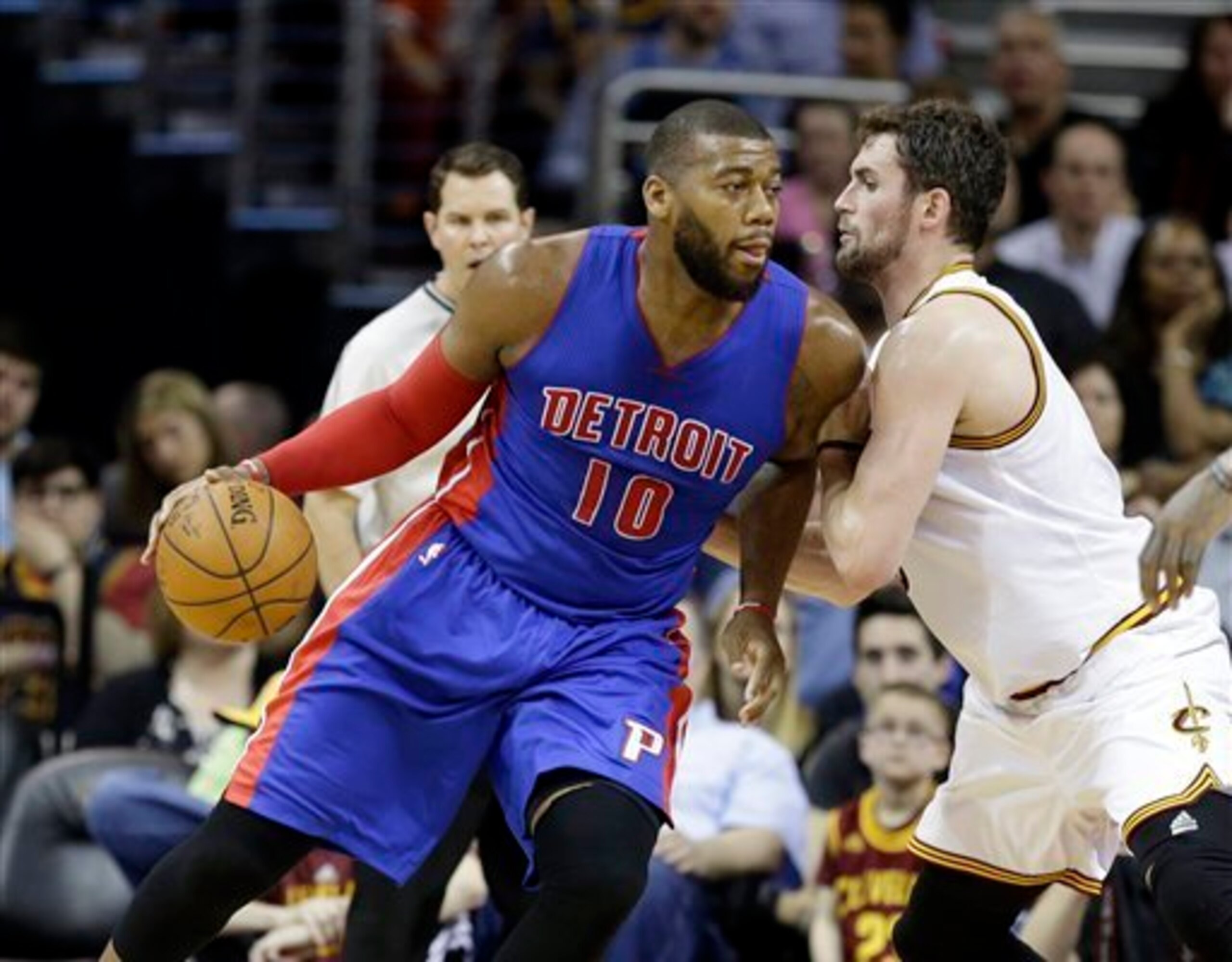
It won't be an easy decision, but moving on from Greg Monroe is necessary for Van Gundy to build a successful team.
Monroe is a 24-year-old low-post scorer and an excellent rebounder, and players like that are rare. His best years are ahead of him, and the right team could build a successful offense around his scoring and passing talents.
But with Drummond locking down the center position, keeping Monroe around simply won't work.
Monroe is built like a center at 6'10" and 250 pounds but is forced to play power forward because of Drummond. Defensively, he doesn't protect the rim like a center and lacks the quickness to stay in front of modern 4s.
Drummond needs to defend the rim to be successful, so his perfect partner has to be able to defend athletic power forwards on the perimeter. Monroe is not that guy.
Offensively, Monroe is most successful on the block, but Drummond is only dangerous in the paint. According to NBA.com, just 29.3 percent of Monroe's shots came from beyond four feet, and he made just 37.2 percent of them; 23.4 percent of Drummond's attempts were from the same distance, and he made only 32.9 percent.
There is simply no room to operate in the paint when they share the court, which won't allow for a successful offense.
Monroe and Drummond were two of the most talented players on the roster last season but weren't exactly successful on the court together. Overall, the Pistons scored 102.3 points and allowed 104.2 points per 100 possessions, according to NBA.com. In 1,055 minutes with Monroe and Drummond on the court together, the Pistons scored 0.4 points more and gave up 0.2 points more per 100 possessions.
That's too small of an improvement from the average for two top players. To justify paying max or near-max money to both Monroe and Drummond, the two need to beat up opponents down low. And they simply don't do that.
Since Drummond is the franchise cornerstone, it is time for Monroe to go.
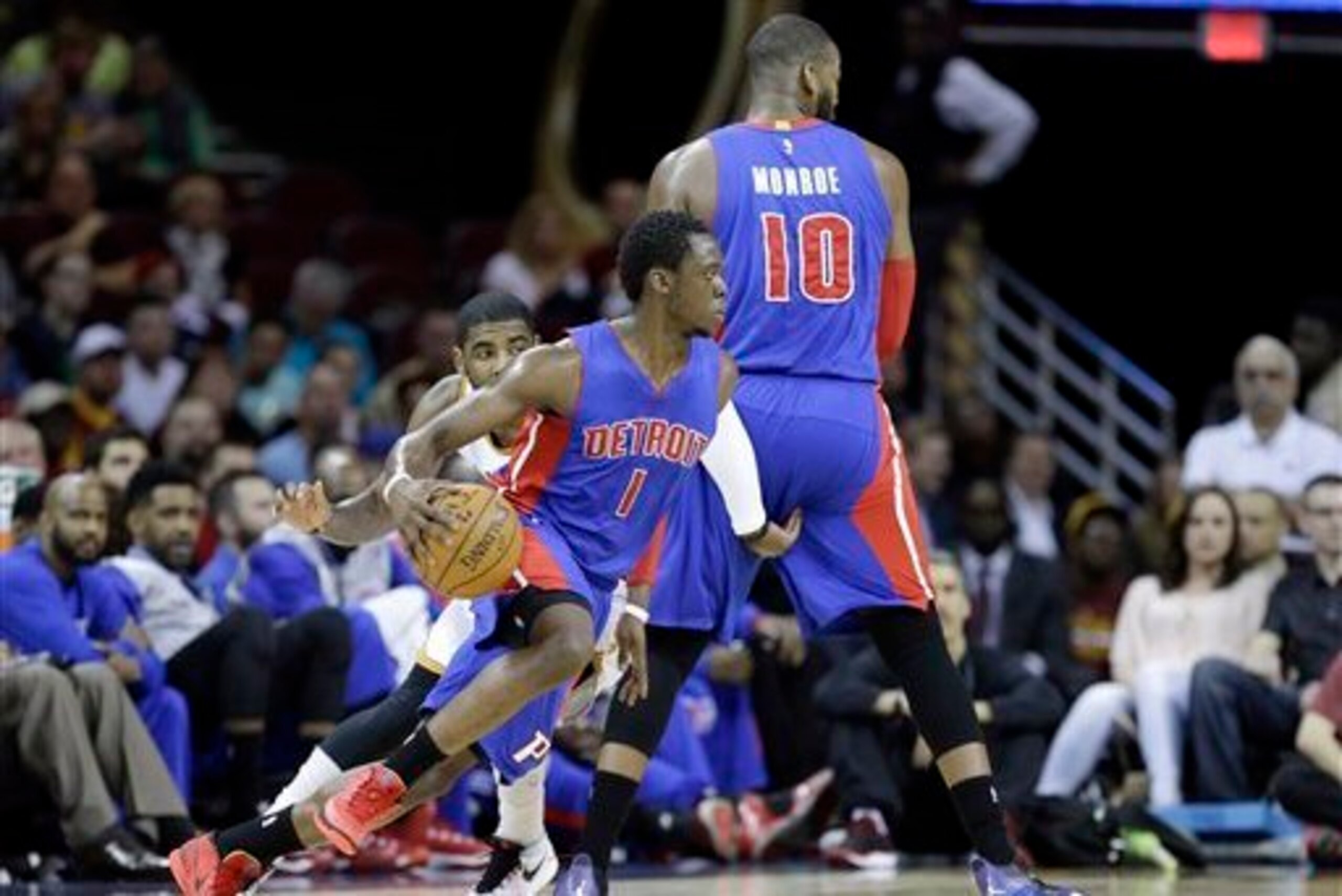
1. Re-Signing Reggie Jackson
5 of 5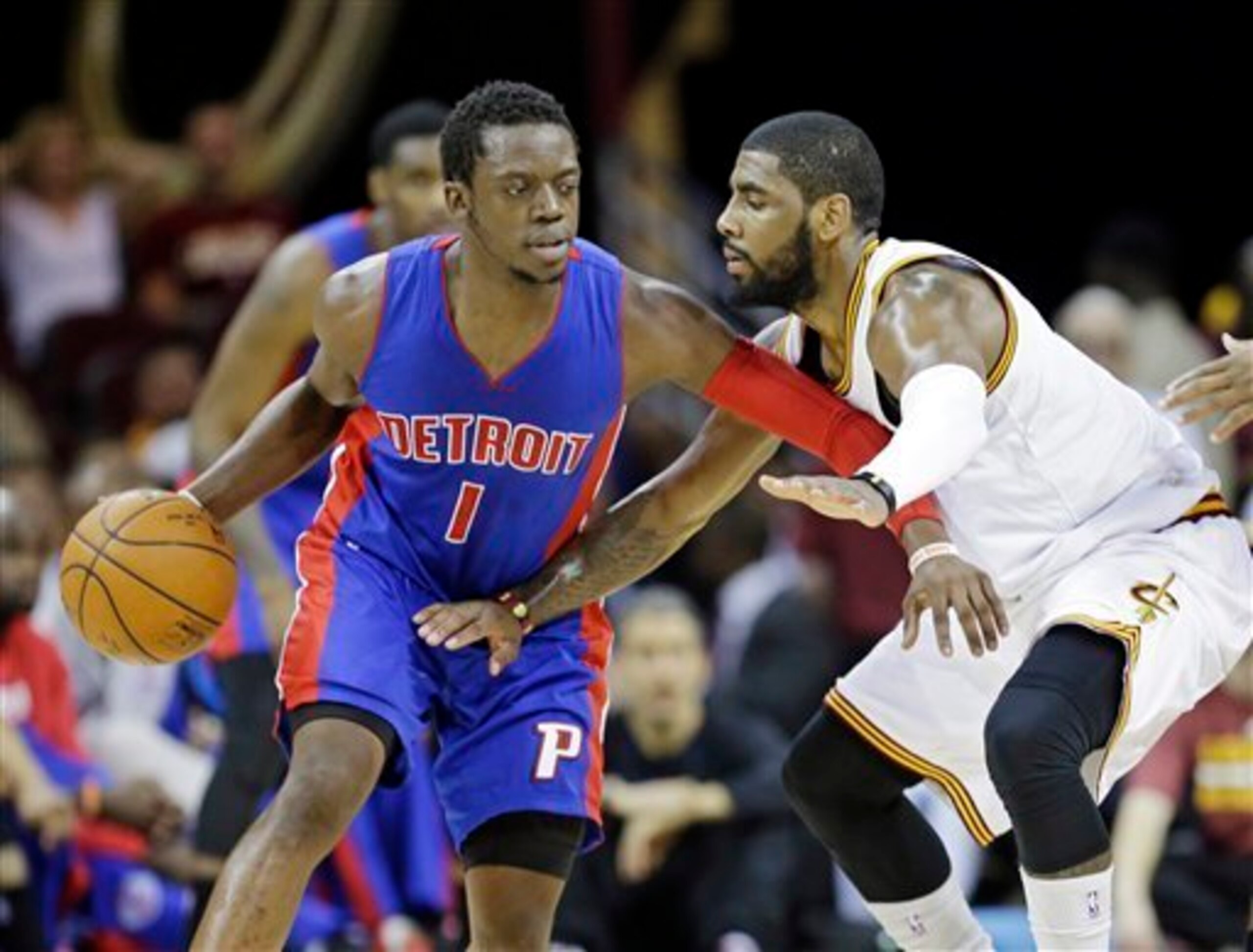
More than anything else this offseason, Van Gundy must prioritize locking up Reggie Jackson to a long-term deal.
Jackson's start with the Pistons wasn't great, as they lost 10 of the first 11 games he played. And he isn't a perfect player: His shot selection can be questionable, he is a streaky three-point shooter and doesn't get to the line as much as you'd like for a scoring guard.
But he has the size and skills to potentially be an All-Star and fits in age-wise with the current core.
Despite often being labeled as a shoot-first guard, Jackson averaged over nine assists per game with the Pistons, which would have been fourth in the NBA if it continued for a full season. He also provided his own scoring at 17.6 points per game and shot well enough—43.6 percent from the field and 33.7 percent from the arc.
Defensively, Jackson has the tools to be a very good player. At 6'3" and 208 pounds, he can bully most point guards and even hold his own with many 2s. He has above-average strength and quickness, and with the right coaching—and Van Gundy can provide that—Jackson could become a force on that end.
And on the perimeter with Caldwell-Pope and a potential free agent or draftee, the Pistons have the makings of a strong defensive team.
Jackson turned down a four-year, $48 million extension with the Oklahoma City Thunder last offseason in part because he coveted a starting role. He has that in Detroit, and that alone was enough to make him ecstatic immediately following the trade.
Jackson will still require a sizable contract, but a deal in the $12-14 million range is no longer as daunting as it once was. The deal he turned down would have been roughly 19 percent of a $63 million cap—roughly the cap for 2014-15.
The cap is expected to jump to between $88 million and $93 million for the 2016 offseason. A $16 million-per-season deal would be a smaller chunk of the cap—18.2 percent of $88 million—than a $12 million deal is in the current climate.
Van Gundy needs to find an agreement that works for both sides and avoid a cap-killing deal with Jackson, but it should be easier with the drastic cap jump. With his skill set and potential, and at just 25 years old, Jackson is worth the money. And the Pistons need him if they are going to contend anytime soon.
Jakub Rudnik covers the Detroit Pistons as a Featured Columnist for Bleacher Report. All salary information from ShamSports.com. Stats courtesy of NBA.com unless otherwise noted.

.jpg?w=2560 "Raiders Could Start Mendoza")

.jpg?w=2560 "Rodgers Iced Out on Plane 💎")
.jpg?w=2560 "Packers Safety Slams Refs 🤬")
.jpg?w=2560 "🚨 Week 8 AP Top 25 Poll")