

NBA Draft 2015: Projecting the Top-30 Big Board in Early May
With the early-entry deadline in the rearview mirror, it's time to unleash a fresh 2015 big board for the new-look NBA draft crop.
The top couple of prospects haven't budged, but there's room for water-cooler debate over the rest of the field's placement. Although it's not loaded with future All-Stars, a slew of invaluable role players are scattered across the first round.
These rankings are based on each prospect's overall draft value, which accounts for long-term potential, noticeable skill development and statistical production. It lends an approximate illustration of the class hierarchy.
This isn't a mock draft, but it will give you an idea of how every top prospect stacks up next to the rest of the group.
Unless otherwise noted, all statistics are gathered from Sports-Reference.com.
30. Cliff Alexander, Kansas PF (6'9", Freshman)
1 of 30
Projected Draft Range: Late first to second round
Possible Landing Spots: Boston Celtics, Los Angeles Lakers, Philadelphia 76ers
You can point to the scant playing time or NCAA investigation as reasons Cliff Alexander's stock dropped all the way to the bottom of the first round.
I'd suggest his skill-set shortcomings did more damage than anything else.
The Kansas freshman proved to be a one-dimensional player, failing to show signs of progress or advanced knowledge of the game. His on-court impact was limited to powerful plays around the tin. In other words, he hasn't showcased enough versatility to warrant an early-first-round selection.
Right now, he's almost exclusively a rebounder and dunker, albeit a good one. Alexander used his 7'2" wingspan and sturdy body to notch a 13.3 offensive rebounding percentage. If he can develop a couple of efficient post moves, he'll validate the first-round projections.
29. Chris McCullough, Syracuse PF (6'10", Freshman)
2 of 30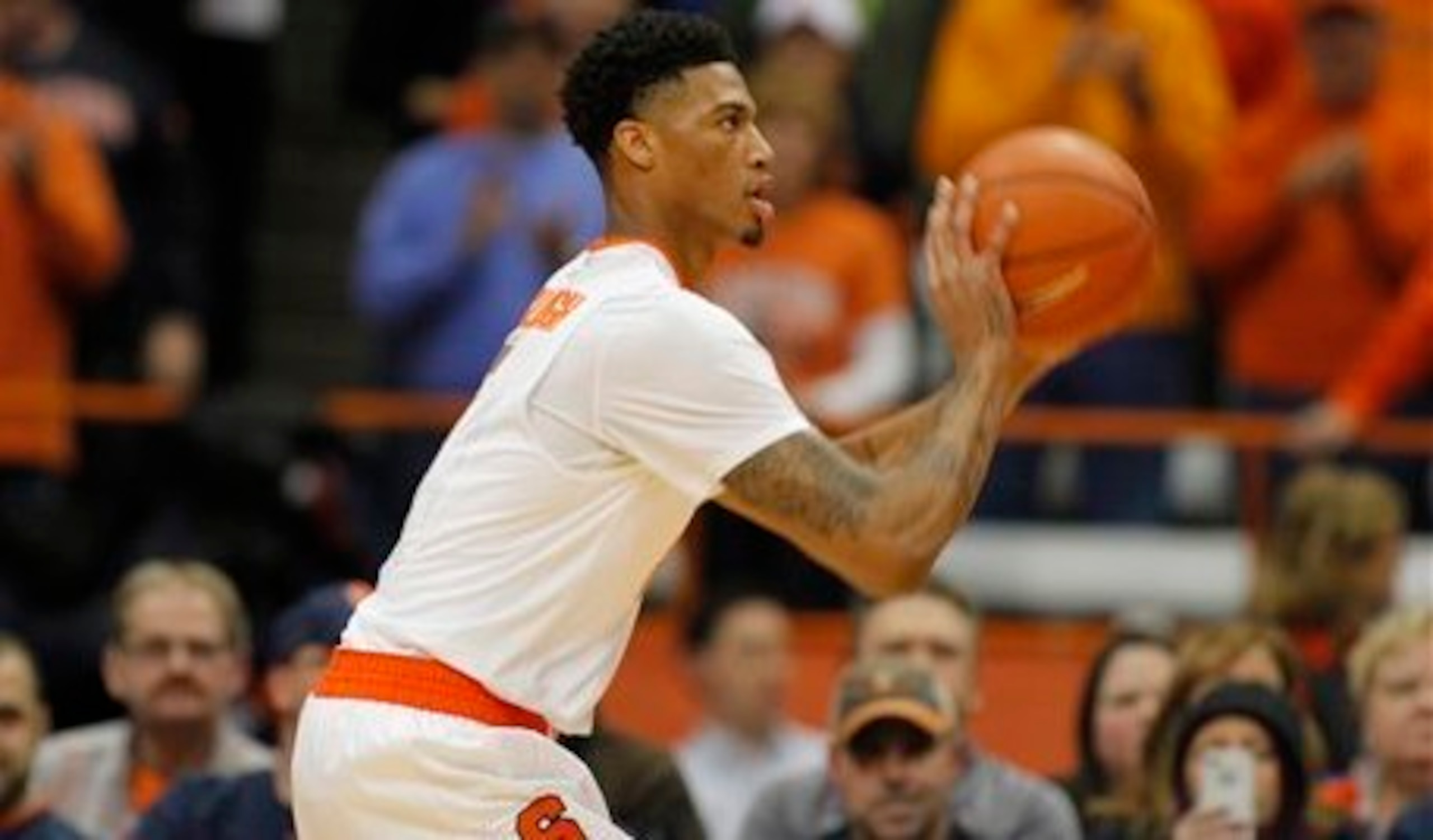
Projected Draft Range: Late first to second round
Possible Landing Spots: Golden State Warriors, Minnesota Timberwolves, Philadelphia 76ers
Prior to his ACL injury, Syracuse forward Chris McCullough didn't deliver a convincing audition for the NBA. His role in the Orange offense fluctuated, and he was too raw to offer advanced post moves or mid-range creativity.
The slender freshman drew a mixed reaction from scouts when he announced his decision to enter the draft. Many of them are thrilled about his size, agility and long-term potential. However, several believe he should have stayed in college for another year.
"He has all the tools," one scout told Syracuse.com's Brent Axe. "All of them."
"The decision hasn't been thought through,'' another scout told Syracuse.com's Mike Waters. "... He should be staying in school, getting healthy and coming back next year and having a big year.''
Will a team roll the dice on his length and upside in the first round?
28. Robert Upshaw, Washington C (Dismissed), (7'0", 1994)
3 of 30
Projected Draft Range: Late first to early second round
Possible Landing Spots: Golden State Warriors, Los Angeles Lakers
After Robert Upshaw was dismissed from both Fresno State and Washington, his draft value was significantly affected. He's a mid-first-round prospect who turned into a late-first- or early-second-rounder.
The off-court baggage presents risk for potential suitors, but his talent isn't in question.
Upshaw possesses great size and footwork to protect the paint, gobble up rebounds and score some buckets of his own. His 2014-15 per-40-minute stats are staggering: 13.1 rebounds and 7.2 blocks to go along with 17.6 points and just 3.3 fouls.
Even without upper-crust leaping tools, Upshaw will serve as a successful fortress with his strength, 7'4" wingspan and natural defensive awareness. Provided he stays out of trouble, he could be a high-level backup center who eventually challenges for starting jobs.



27. Justin Anderson, Virginia SF (6'6", Junior)
4 of 30
Projected Draft Range: Late first to second round
Possible Landing Spots: Memphis Grizzlies, San Antonio Spurs
When healthy, Justin Anderson was one of the best all-around players in the NCAA. He heavily influenced Virginia's games with his defense, strength and high-energy offense.
His stardom and versatile impact won't automatically transfer to the NBA. Anderson's athleticism won't stand out quite as much, and he'll have more trouble slashing to the rim than he did at Virginia.
Fran Fraschilla of ESPN.com noted that Anderson is an unproven handler in traffic: "Offensively, he played in a system at Virginia that, while extremely effective, didn't show whether he could play in isolation situations very often. So, it will be up to NBA teams to determine how well he can create offense off the dribble."
If he displays crisper moves during pre-draft workouts and scrimmages, it could bump his value closer to No. 20.
26. Delon Wright, Utah PG (6'5", Senior)
5 of 30
Projected Draft Range: Late first to early second round
Possible Landing Spots: Cleveland Cavaliers, Portland Trail Blazers, Memphis Grizzlies
Teams looking to enhance their playmaking depth chart should take a long look at Utah point guard Delon Wright.
Using long, agile strides and a tremendous feel for the game, he consistently weaves his way through defenses and excels in the pick-and-roll. Trevor Magnotti of Fear The Sword explains how Utah prepared him for the screen-heavy NBA:
"Larry Krystkowiak, Utah's head coach, is a former NBA head man, and Utah ran a very sophisticated NBA-style offense that focused on Utah's most dangerous offensive threat, the Wright/Jakob Poeltl pick-and-roll. Wright's great at driving to the rim off the PNR, and can either attack in a straight line or use a solid crossover game to attack the rim off high screens.
"
Shaky outside shooting at 23 years old will keep his draft stock in the late-first or early-second round. However, Wright offers his NBA suitors defensive quickness and elite instincts. He'll effectively hamper shifty guards as well as tall ones.
25. Tyus Jones, Duke PG (6'1", Freshman)
6 of 30
Projected Draft Range: Late first round
Possible Landing Spots: Houston Rockets, Chicago Bulls, Dallas Mavericks
Duke floor general Tyus Jones faces several obstacles as he enters the Association.
He's an undersized playmaker (6'1") who's not an elite athlete or talented defender. He'll undoubtedly have trouble staying in front of slashing guards, and he'll struggle to drive past bigger ones.
So why is he a first-round prospect?
Jones' appeal stems from his facilitating finesse, court sense and NBA-caliber shot-making ability. He could be a high-level backup quarterback who keeps the offense flowing and knocks down open triples.
That type of player is probably not worth a top-20 pick, but he should get plenty of looks if he falls toward the end of the first round.
24. Rondae Hollis-Jefferson, Arizona SF (6'7", Sophomore)
7 of 30
Projected Draft Range: Late first to early second round
Possible Landing Spots: Memphis Grizzlies, Los Angeles Lakers
Rondae Hollis-Jefferson edges out prospects like Tyus Jones because his defensive tools project to yield an important role in the NBA.
Forget about this draft class—few players in the entire NBA have his mix of lateral agility and condor-like wingspan. As he becomes more disciplined and fundamentally sound, his value and versatility will skyrocket.
Hollis-Jefferson's offensive outlook is much different. An unreliable jump shot and so-so handles will limit his initial impact. I'd be surprised if he surpasses 10 points per game within his first couple of seasons.
The bottom line is that he's on course to excel as a multi-position stopper. Offensive growth would be a terrific bonus.
23. R.J. Hunter, Georgia State SG (6'6", Junior)
8 of 30
Projected Draft Range: Mid-to-late first round
Possible Landing Spots: San Antonio Spurs, Atlanta Hawks, Cleveland Cavaliers
R.J. Hunter's mock draft placements vary from No. 15 all the way up to No. 30. We'll slot him at No. 23 on the big board, which is a good reflection of his draft value compared to the rest of the field.
His in-the-gym shooting range will immediately make a dent in the NBA. There's no questioning his value as a floor-spacer and supplementary scorer, but the rest of his game is tougher to judge for the next level.
While his acute court sense will serve him well, it's not clear whether he can consistently create separation off the bounce.
At the very worst, he'll be a three-point assassin with great size and instincts for the 2-guard position. If he falls past the early 20s, he could be a steal.
22. Montrezl Harrell, Louisville PF (6'8", Junior)
9 of 30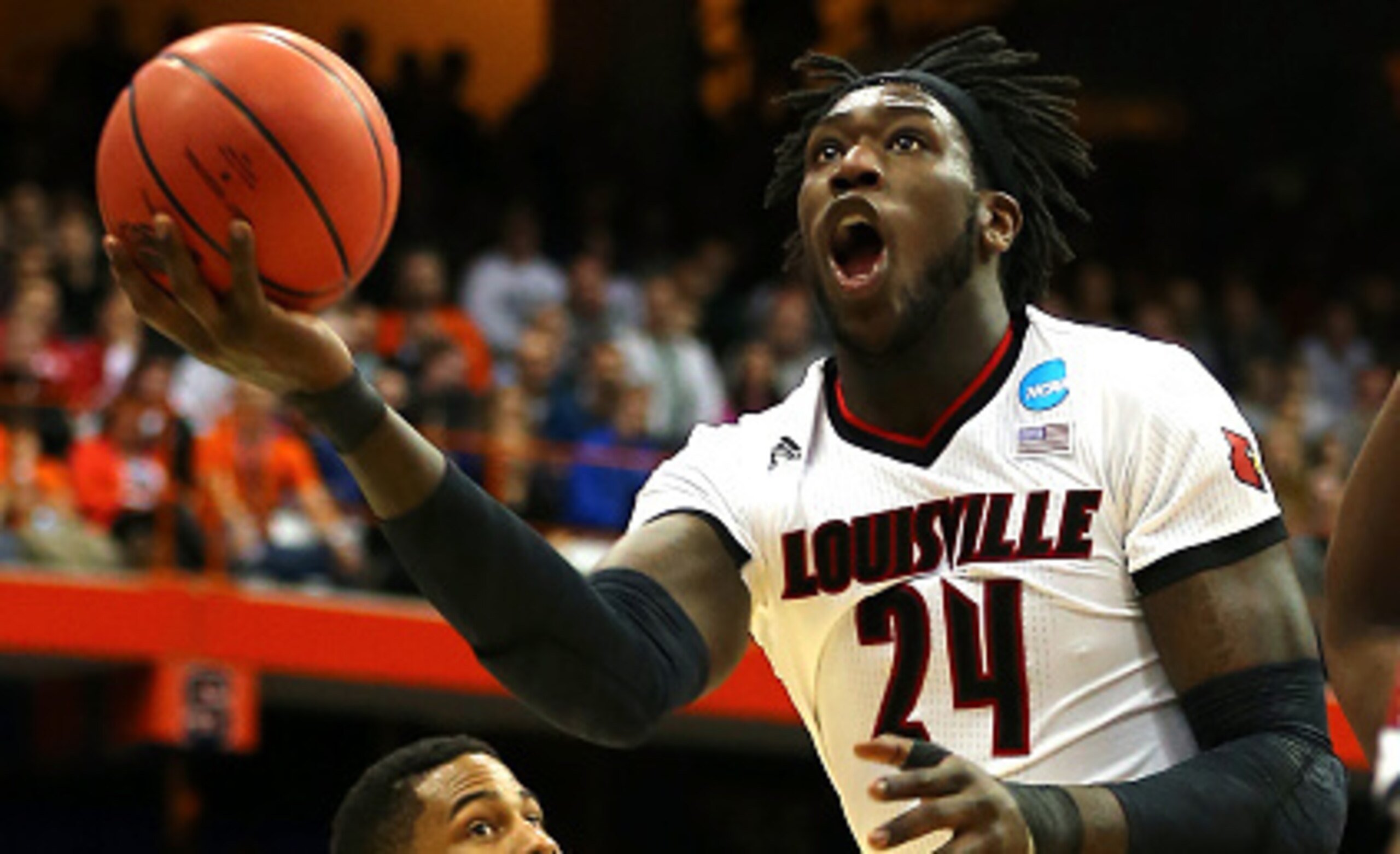
Projected Draft Range: Late first round
Possible Landing Spots: Toronto Raptors, Portland Trail Blazers, Dallas Mavericks
Rim-rocking Louisville star Montrezl Harrell didn't expand his game enough as a junior to improve his draft stock. He's slipped to the late-first-round range because he doesn't supply much versatility.
He will always be a power forward because he can't match up with centers or play with finesse on the wing. The 6'8" leaper's primary contribution will be rebounding and open-floor scoring.
In the half-court setting, he can convert simple baby hooks or the occasional drop step. He also shows confidence as a mid-range shooter but ultimately won't be a high-volume target.
Nevertheless, there's a spot for him in the league, thanks to his rangy defense, strength and explosiveness around the rim. His energy can't be contained on the bench.
21. Jarell Martin, LSU PF (6'9", Sophomore)
10 of 30
Projected Draft Range: Late first round
Possible Landing Spots: Brooklyn Nets, Memphis Grizzlies
Jarell Martin doesn't have the ideal height or length of an NBA power forward, but his sturdy frame and above-average athleticism will produce potently against most 3s and 4s.
Martin can break down opponents off the bounce, score among the trees and also hit stop-and-pop jumpers. Those inside-out skills should translate to a combo-forward impact.
Unfortunately, he hasn't mastered his back-to-the-basket skills, as he doesn't exhibit a great instinct to punish opponents on post-ups. He's still a bit of a project moving forward.
As Martin's shooting range extends and gets refined, he will grow into a role where he's a 4-man in small-ball lineups and a wing player in other scenarios. An upgraded low-post arsenal would be a bonus.
20. Christian Wood, UNLV PF/C (6'11", Freshman)
11 of 30
Projected Draft Range: Mid-to-late first round
Possible Landing Spots: Toronto Raptors, Portland Trail Blazers
After spending much of his freshman year on the bench, UNLV's Christian Wood gave scouts a bigger dose of his raw talent in 2014-15.
He's still trying to hone the three-point shot, but his perimeter skills are promising. He connected on nearly 45 percent of all two-point jumpers this season, according to Hoop-Math.com.
Wood doesn't have a keen command of where and when to execute scoring moves around the bucket. He doesn't naturally jell with his teammates and sometimes forces shots in traffic. But like the outside shooting department, there's hope for his interior game.
Wood can drive from the wing, convert the occasional post-up and score off the glass. If he adds 20-plus pounds of muscle, he'll be worth the late-first-round gamble.
19. Bobby Portis, Arkansas PF (6'11", Sophomore)
12 of 30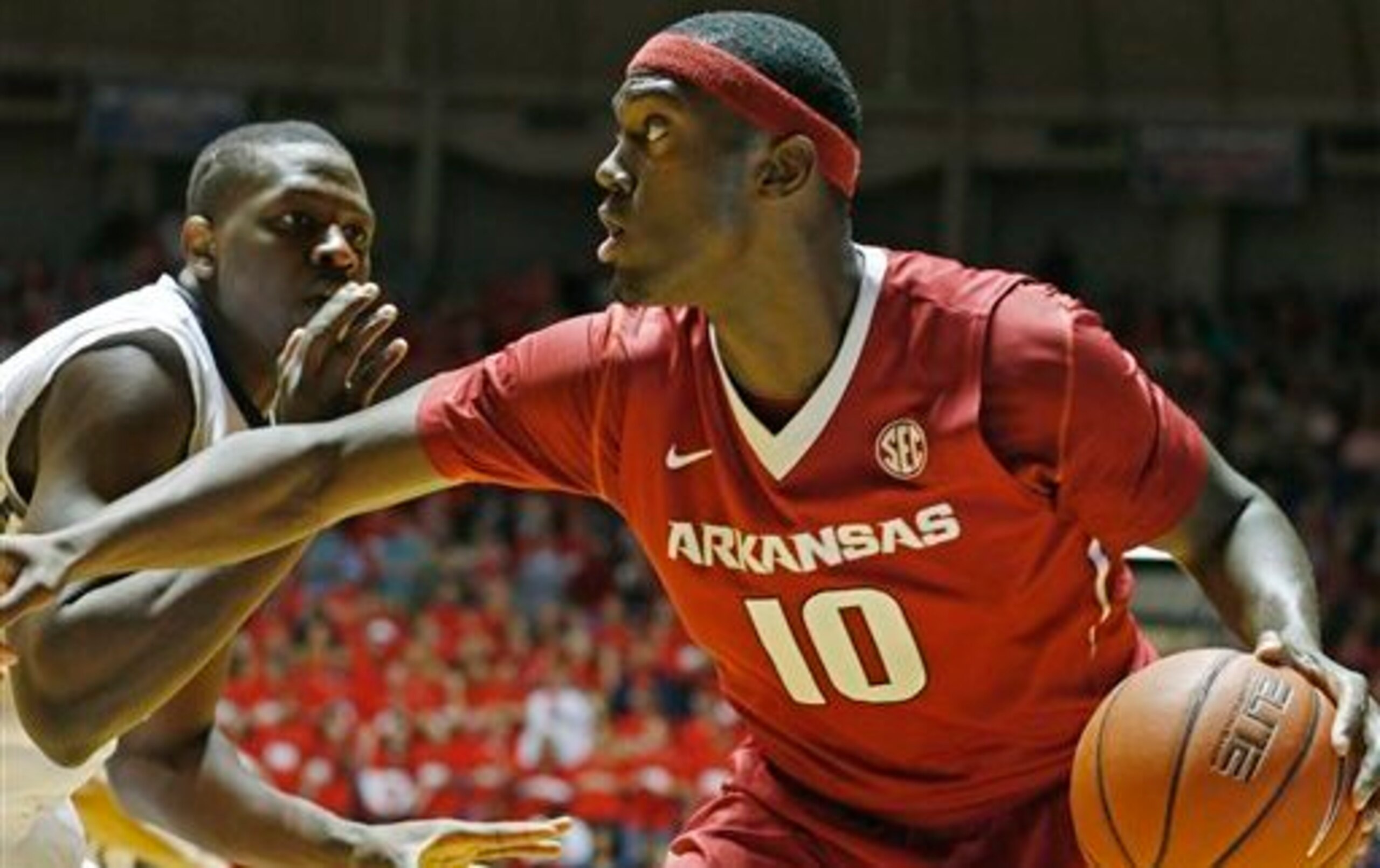
Projected Draft Range: Mid-to-late first round
Possible Landing Spots: Boston Celtics, Washington Wizards, Toronto Raptors
Bobby Portis doesn't have a ridiculously lofty NBA ceiling, because he's an underwhelming athlete with an unconventional jump shot. He won't wow us or take over games like a star.
Fortunately, his size, footwork and end-to-end mobility gives him a rock-solid mid-first-round draft stock. Portis' 6'11" frame and sharp court sense will fuel production on the glass, rim protection and a healthy chunk of half-court offense.
ESPN.com's Chad Ford said scouts view him as an unspectacular yet high-quality prospect: "Every single scout and general manager I spoke with likes him. Every single one. But no one loves him. That's a really rare thing and why he's stuck right in the middle of the Big Board... No one sees him as a star, (and) no one thinks he'll be a bust."
Teams looking to add depth and two-way value to the frontcourt will keep tabs on him in the teens.
18. Cameron Payne, Murray State PG (6'2", Sophomore)
13 of 30
Projected Draft Range: Mid-to-late first round
Possible Landing Spots: Oklahoma City Thunder, Chicago Bulls
If you're looking for the next mid-major playmaker to wreak havoc in the NBA, check out Murray State point guard Cameron Payne.
Don't expect a Damian Lillard type of splash, but Payne's silky-smooth handles and aggression will adapt well to the Association. He does a great job of quickly feeding the rock to teammates in position to score.
Payne isn't a standout athlete, so he needs to keep polishing his shot. If it's a legitimate weapon, defenders won't sag off him and he'll have seams to drive. He made encouraging progress from his freshman to sophomore campaigns, improving from 34 to 38 percent on triples.
After he adjusts from the Ohio Valley competition to the NBA, Payne should be a dynamic rotational quarterback and potentially a starter.
17. Sam Dekker, Wisconsin SF (6'9", Junior)
14 of 30
Projected Draft Range: Late lottery to late first round
Possible Landing Spots: Atlanta Hawks, Houston Rockets
Sam Dekker highlighted his versatility and boosted his draft value with a robust NCAA tourney showing, particularly in the Elite Eight and Final Four. He carved out a comfortable spot in our top 20 and might even flirt with the lottery on draft night.
I'm not 100 percent sold on his jump-shooting form, because he seems to fling the ball rather than shoot it. However, he gets good elevation and can to catch fire during critical sequences.
Meanwhile, I'm completely sold on his defensive range, off-ball offense and ability to attack the bucket in space. Dekker is the type of role player who will be in the right place on every possession and strike sharply when opportunities arise.
At 6'9", he offers awesome size for the 3, along with quick feet and aerial agility. Dekker's above-average physical tools and elite awareness will manifest themselves in a long career.
16. Devin Booker, Kentucky SG (6'6", Freshman)
15 of 30
Projected Draft Range: Late lottery to mid-first round
Possible Landing Spots: Oklahoma City Thunder, Milwaukee Bucks, Boston Celtics
Long-distance sharpshooting is Devin Booker's calling card as he enters the NBA. His natural, swift delivery is readily apparent, and he drilled 41 percent of his triples as a freshman.
What's less apparent, yet valuable in its own right, is his possible long-term versatility. Booker showed flashes of driving and passing, and he'll be multidimensional if he can cultivate those skills.
Ed Isaacson of Hoops Habit explained that Booker has a good chance to expand beyond a specialist role:
"There may be a lot more to Booker’s offensive repertoire that he wasn’t able to show with his limited attempts this past season. He’s still just 18 years old, and his role in the Kentucky offense wasn’t very conducive to him showing more than being a long-range shooter, so there is still potential for a lot of growth as a player. Booker may not be able to crack a rotation right away, but he could become a very good role player in two or three seasons.
"
If those flashes of versatility turn into sustained stretches, he'll be a double-digit scorer and a lethal offensive chess piece.
15. Kevon Looney, UCLA PF (6'9", Freshman)
16 of 30
Projected Draft Range: Mid-to-late first round
Possible Landing Spots: Utah Jazz, Milwaukee Bucks
"Rawness" and "upside" are the two words most commonly used to describe Kevon Looney's NBA outlook.
He's nowhere close to contributing in a substantial role. UCLA's one-and-done prodigy simply doesn't have the ball-handling dexterity or the post-up strength to serve as a power forward. The rail-thin Bruin needs to develop both physically and mentally.
On the plus side, Looney's shooting talent, slashing potential and rebounding range keep him in the top-20 conversation. He sank 42 percent of a small sample of threes (53 attempts) and also pulled down 11.9 rebounds per 40 minutes.
Given his budding three-point skills and nose for the ball around the rim, he could become a dangerous combo forward. He probably won't be more than the third or fourth scoring option on his squad but will give his coach a bunch of lineup flexibility.
14. Jerian Grant, Notre Dame PG (6'5", Senior)
17 of 30
Projected Draft Range: Late lottery to mid-first round
Possible Landing Spots: Oklahoma City Thunder, Miami Heat, Houston Rockets
Blistering speed, rangy physical features and a high basketball IQ drove Jerian Grant's stock toward the lottery range. He blew the doors off most college opponents with his slashing mastery and will have similar success in the NBA.
His ranginess and scoring talent are striking, but his most impressive trait is his mental makeup.
One NBA scout lauded Grant's floor general skills during this past season. "He makes players around him better. That’s what you look for when evaluating a guy. He does all the right things," the scout told Tom Loy of 247 Sports. "When you talk to people inside the Notre Dame program...they say even better things about him as a teammate and a leader."
Grant wasn't efficient from the three-point line at Notre Dame but hit 40 percent of his two-point jumpers according to Hoop-Math.com. As he continues to polish his shot, he could eventually graduate from a bench weapon into a starting NBA point guard.
13. Frank Kaminsky, Wisconsin PF/C (7'0", Senior)
18 of 30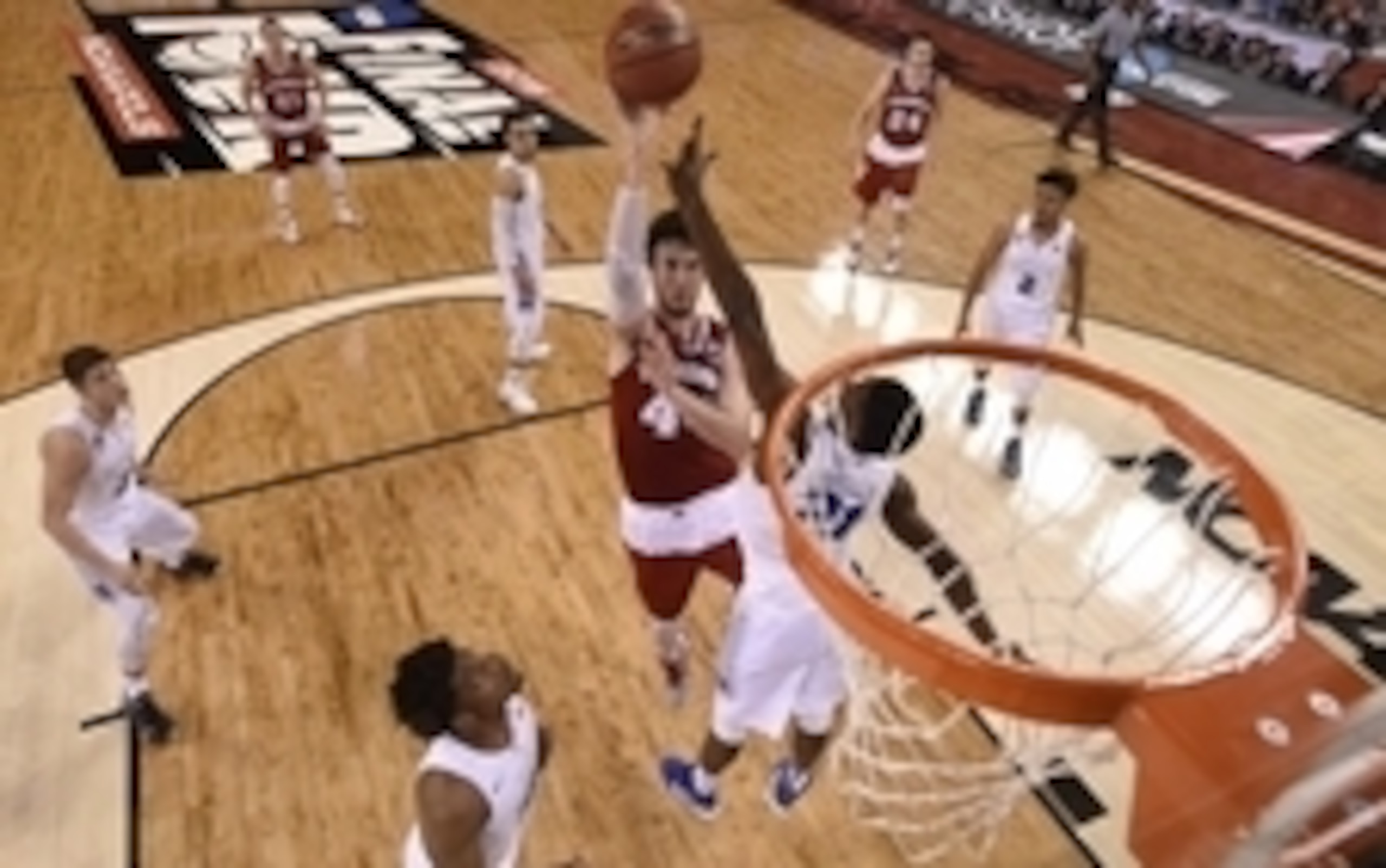
Projected Draft Range: Late lottery to mid-first round
Possible Landing Spots: Phoenix Suns, Boston Celtics
It's not often you see an upperclassman this high on a big board.
Frank "The Tank" Kaminsky is just that good. His growth and productivity as a stretch big in 2013-14 and 2014-15 make him a surefire first-round pick and potential lottery prize.
Underwhelming foot speed and vertical burst will keep his NBA productivity in check and likely prevent full-fledged stardom. But he'll fulfill a myriad of tasks to help his club.
In the post, he can back down foes or square them up to score. He possesses exquisite footwork and a soft scoring touch compared to most 7-footers. He'll also help his coach by spacing the floor and drilling triples to keep defenses honest. His outside stroke is no fluke, as he hit 79 of 199 (40 percent) from three-land over his final two years in Madison.
Although his age and lack of explosiveness will keep teams from reaching on him early, I'd be surprised if he fell past No. 15. When you factor in his size and proven skill, he's one of the safest picks of the bunch.
12. Myles Turner, Texas PF/C (7'0", Freshman)
19 of 30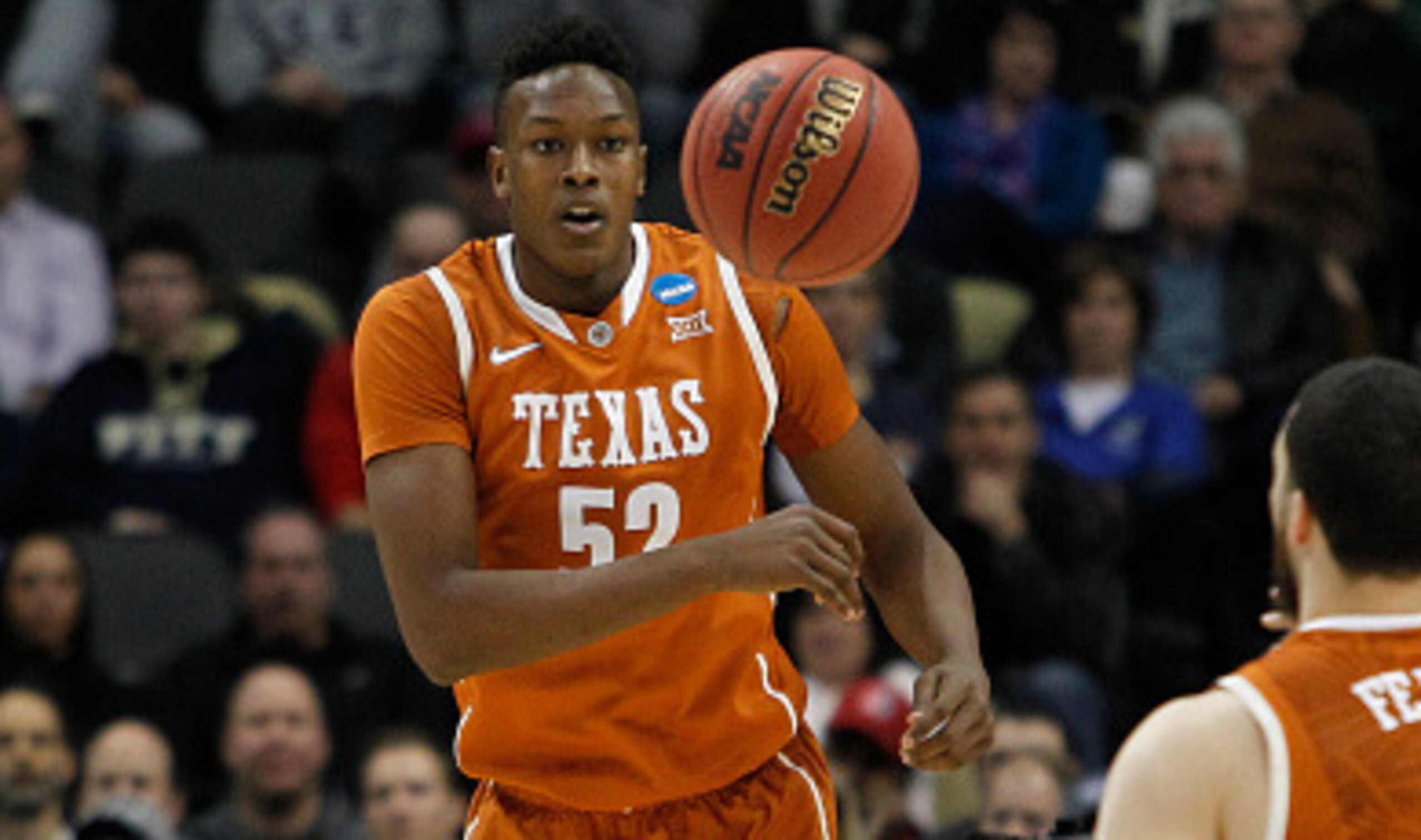
Projected Draft Range: Late lottery
Possible Landing Spots: Indiana Pacers, Phoenix Suns
Myles Turner has the size and shooting touch to stick in the NBA. His perimeter accuracy could make him a lethal pick-and-pop option, while his length and talent on defense will stymie most centers.
Texas' towering freshman wasn't used at a high volume last season, but his per-minute numbers are impressive. He averaged 18.3 points, 11.8 rebounds and 4.7 blocks per 40 minutes, plus a 25.5 PER.
Along with this attractive production, there is some risk surrounding his NBA candidacy. Less than a quarter of his 2014-15 field goals came at the rim, according to Hoop-Math.com, which reflects his inability to establish position and score in the post. Turner is also a below-average athlete, drawing concerns over how his game will translate to the pro ranks.
These question marks will likely keep him out of the lottery's front end, but his size and shooting is a worthwhile investment anywhere between Nos. 10 and 20.
11. Trey Lyles, Kentucky PF (6'10", Freshman)
20 of 30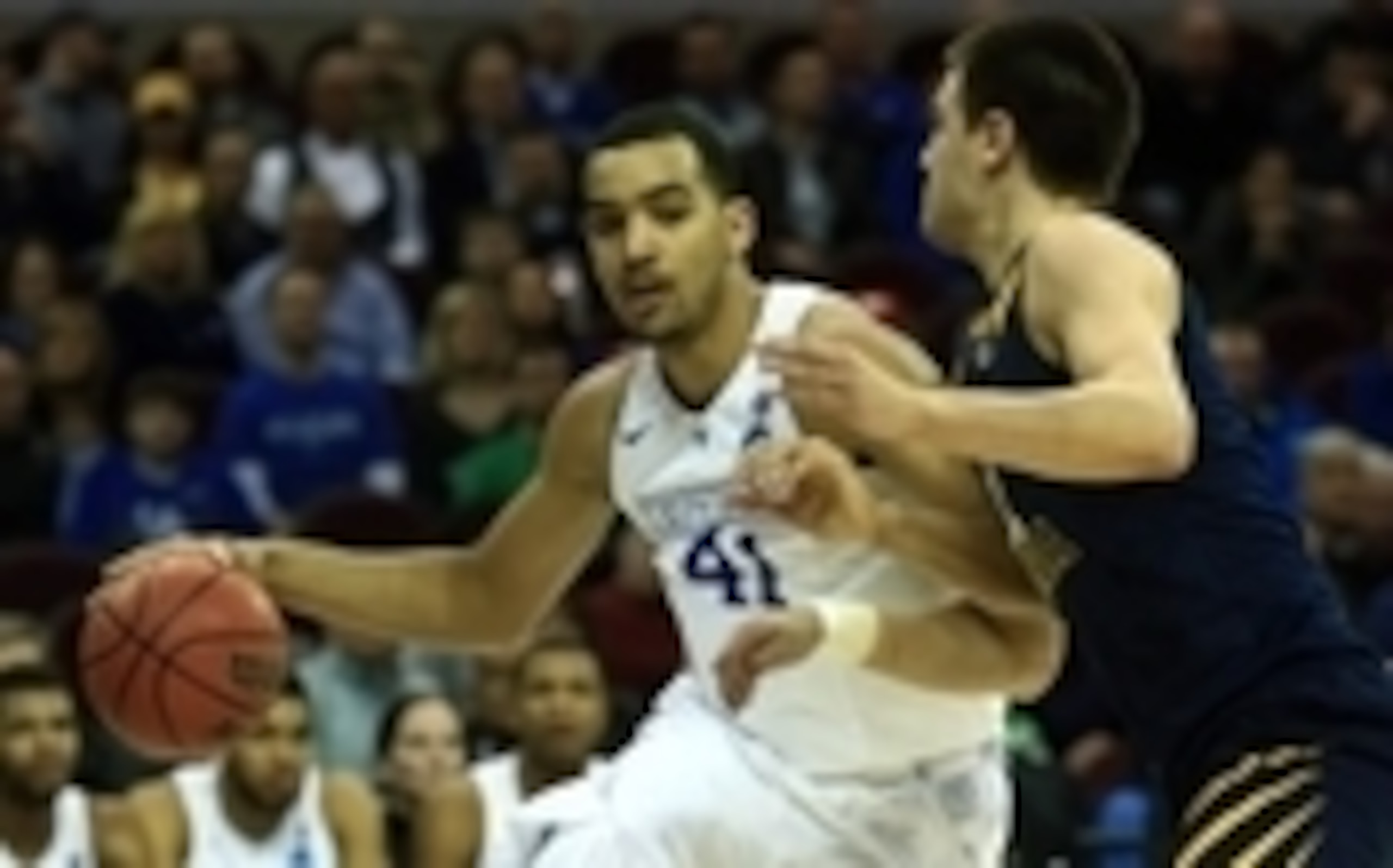
Projected Draft Range: Late lottery to mid-first round
Possible Landing Spots: Indiana Pacers, Boston Celtics, Milwaukee Bucks
Gifted with a rare mix of size, fluidity and deft ball skills, Kentucky's Trey Lyles projects to be a versatile power forward down the road.
He had a modest role for the 2014-15 Wildcats yet showcased a variety of strengths. He can face up and drive from the wing, post up for turnarounds or attack nimbly in transition.
His shooting range didn't consistently extend to three-point range last year, but he demonstrated a streamlined motion and hit nearly 40 percent of his two-point jumpers, according to Hoop-Math.com.
"Lyles has awesome skill and basketball IQ levels that separate him from most prospects, particularly on the offensive end," said Sam Vecenie of CBS Sports. "He's a smart player who knows how to play within an offense."
Whether he's operating with or without the ball, he executes the types of moves and cuts that fuel successful units. His defense won't likely be anything special, but his wingspan and agility will help compensate for so-so technique.
Don't be surprised if he's a double-digit scorer on a playoff squad in the future.
10. Kelly Oubre, Kansas SF (6'7", Freshman)
21 of 30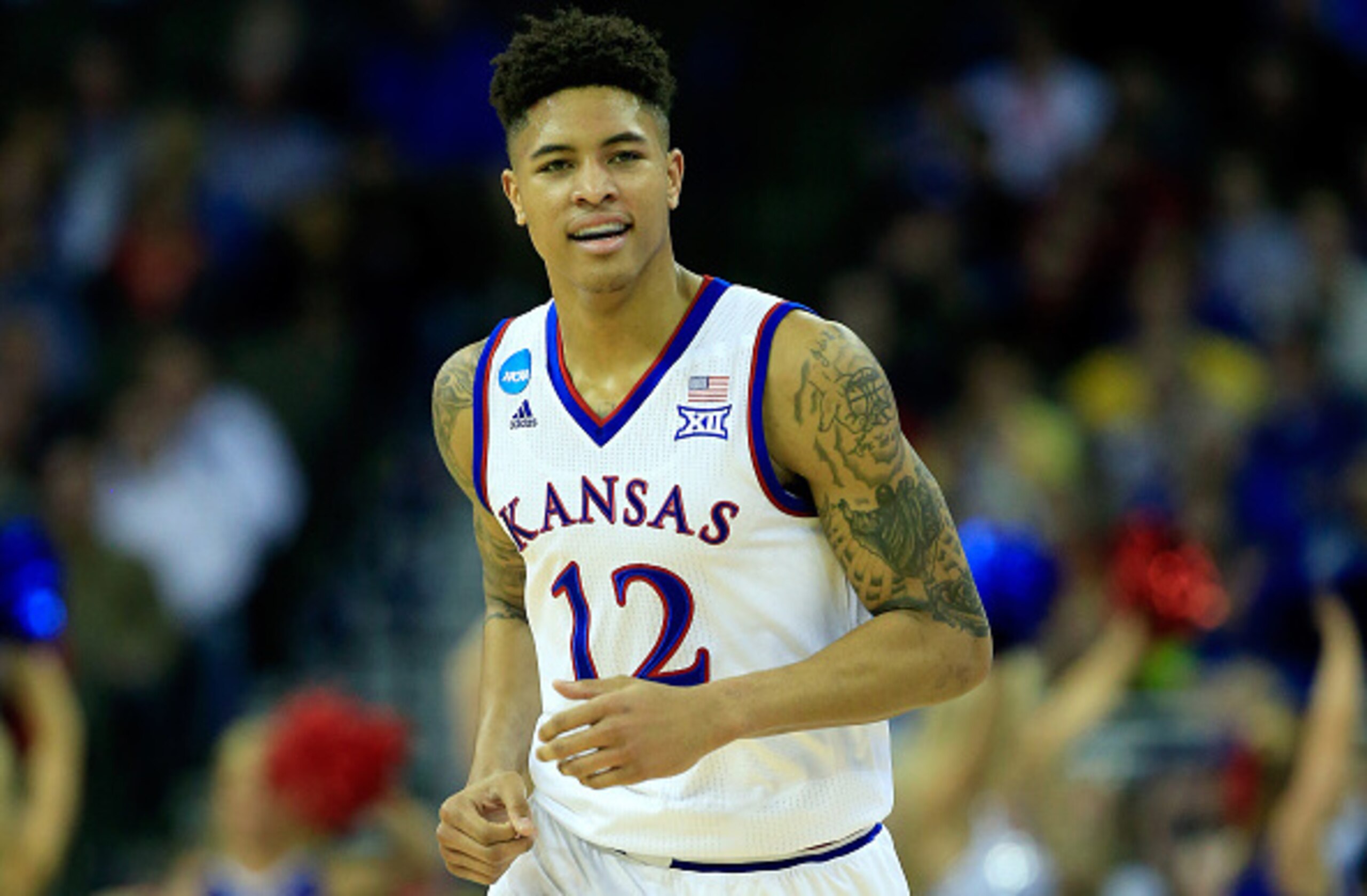
Projected Draft Range: Late lottery to mid-first round
Possible Landing Spots: Miami Heat, Detroit Pistons
Kelly Oubre had an up-and-down season at Kansas, and it took him a little while to find his attack mode. He has enough upside, however, to earn consideration from most late-lottery teams.
A look at his per-40-minutes stats suggests he'll compete and grow on both ends of the court. In addition to scoring 17.6 points per 40, he also hauled in 9.5 rebounds and swiped 2.2 steals.
He's still learning the sport's nuances and polishing his fundamentals, but the natural awareness and tools are there. During this past season, he became more comfortable weaving his way to the rim while making ball-hawking plays on defense. Oubre exhibits nice anticipation as an off-ball defender, which helps him snare bushels of rebounds with his long arms and agility.
Don't sleep on him just because he's the fourth-ranked swingman on our board. He has lofty potential if he continues to hone his craft.
9. Stanley Johnson, Arizona SF (6'7", Freshman)
22 of 30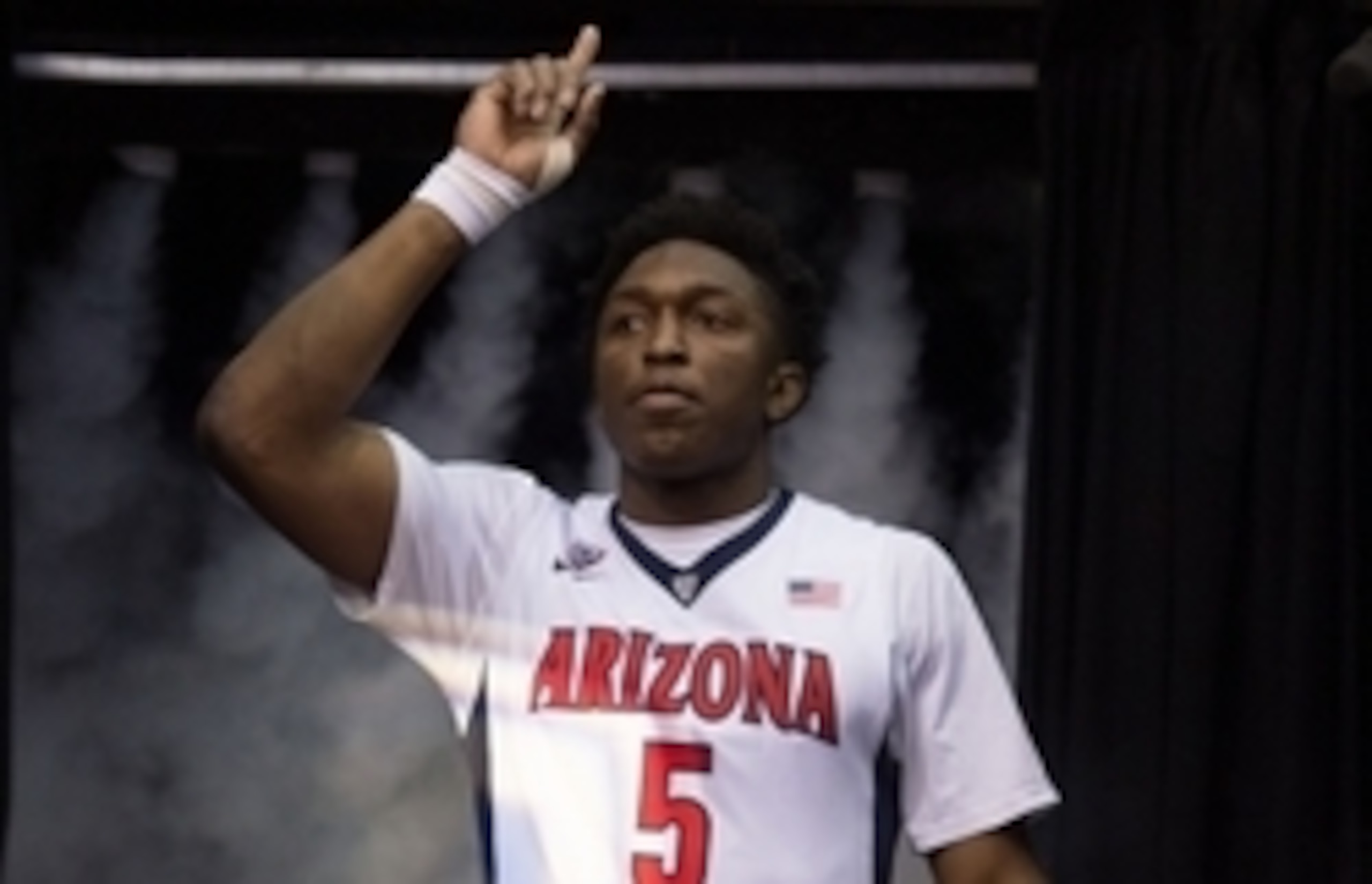
Projected Draft Range: Mid-to-late lottery
Possible Landing Spots: Detroit Pistons, Charlotte Hornets, Orlando Magic
With a laser focus, budding versatility and a physique sculpted from granite, Stanley Johnson is one of the finest two-way players you'll find this year.
He entered college with a reputation for slashing and disruptive defense. By the end of his freshman campaign at Arizona, he also established himself as a respectable three-point shooter and facilitator.
He's not a flashy or advanced dribbler but deployed a wide assortment of moves throughout the season. Jonathan Givony of DraftExpress.com broke down the freshman's growth:
"Johnson can create his own shot effectively...even showing some ability to operate at different speeds with developing ball-handling ability, particularly in transition or attacking closeouts, or even on the pick-and-roll. As the year moved on, Johnson did a nice job adding a floater to his arsenal to account for his struggles finishing directly around the basket, showing nice touch in that area.
"
8. Kristaps Porzingis, Latvia PF/C (7'0", 1995)
23 of 30Projected Draft Range: Mid-to-late-lottery
Possible Landing Spots: Charlotte Hornets, Detroit Pistons, Denver Nuggets
There's no assurance that Latvian forward Kristaps Porzingis will be anything more than a perimeter gunner who struggles in the paint. He's a young, slender prodigy who doesn't yet have command of the interior.
Nevertheless, he's widely regarded as a top-10 lock.
His shooting talent is tempting, and he shows glimpses of post skills. Porzingis is averaging 10.6 points in just 21.4 minutes during 2014-15.
Patrick Laney of Peachtree Hoops discussed the European enigma's value as a young riser: "His shooting range vaulted his stock last season, and his skills have grown rapidly for a player relatively new to major basketball. It is not easy to find players who score in double figures in the Spanish ACB League prior to age 20."
If he improves on pick-and-rolls and delivers a stronger playing style on both ends, he could eventually reach the star plateau.
7. Willie Cauley-Stein, Kentucky C (7'0", Junior)
24 of 30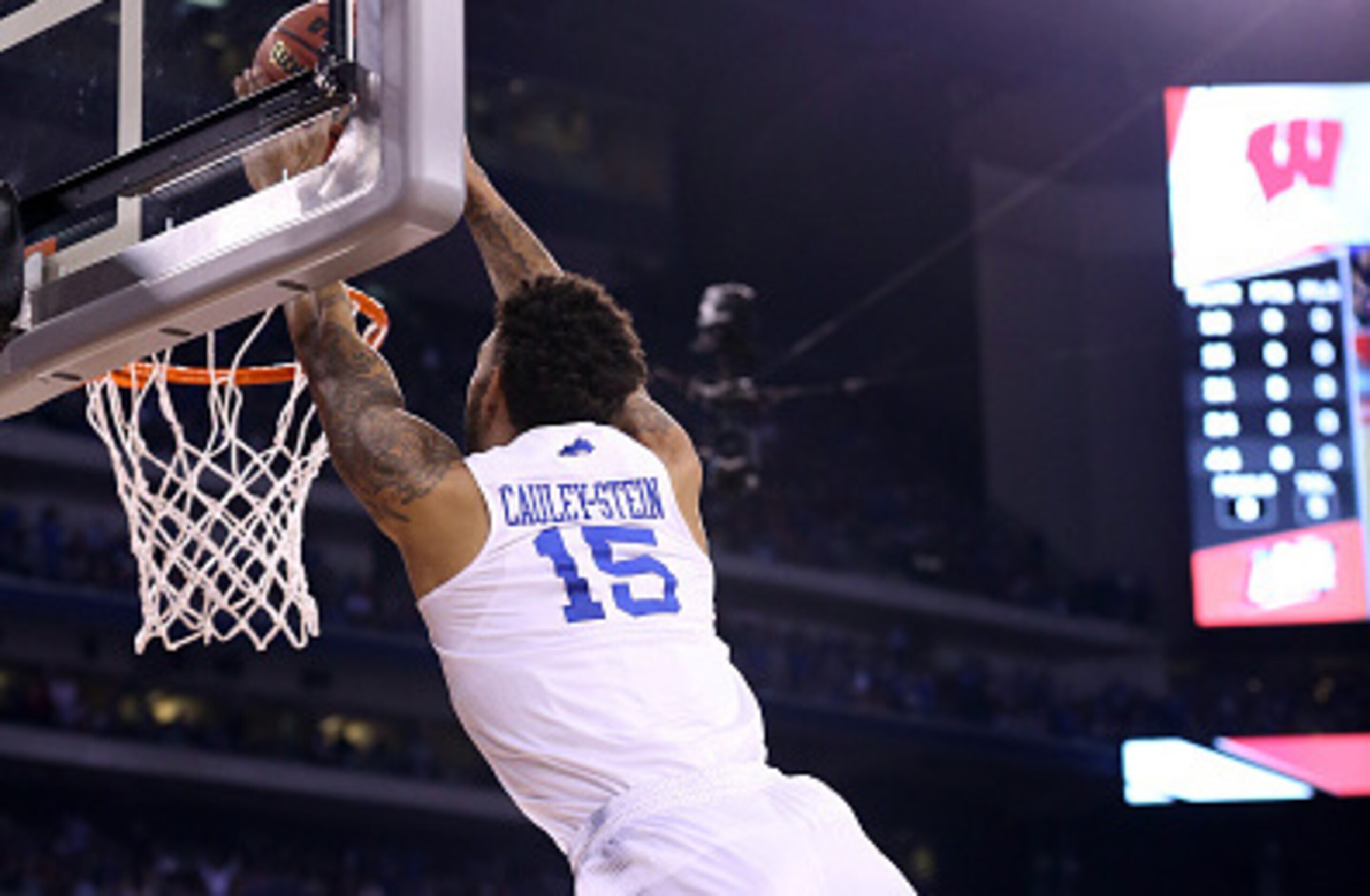
Projected Draft Range: Mid-to-late lottery
Possible Landing Spots: Sacramento Kings, Los Angeles Lakers
Willie Cauley-Stein didn't make substantial progress on offense during his three seasons at Lexington. But his draft stock didn't tumble over the years because he's arguably the most versatile and stifling defender this draft has to offer.
His top-10 draft stock is solid as steel because he fills an important need in the NBA. The Kentucky star safeguards the rim against the most lengthy and athletic assailants and also corrals slashers on the perimeter with his lateral burst.
One NBA scout explained Cauley-Stein's extraordinary defensive value, via ESPN.com's Jeff Goodman: "His ability to guard is unparalleled. He moves his feet like no big. In a league that lives in screen-and-roll, he is the best big screen/roll defender in the college game because of his feet."
His ceiling is in the neighborhood of Tyson Chandler, and WCS has a decent chance to be better than Chandler on offense. That's well worth a top-10 selection.
6. Mario Hezonja, Croatia SG (6'8", 1995)
25 of 30Projected Draft Range: Top 10
Possible Landing Spots: Detroit Pistons, Charlotte Hornets, Miami Heat
For the past couple of seasons, Croatian up-and-comer Mario Hezonja has seen scant playing time off Barcelona's bench in the ACB league.
But in short spurts, he's unleashed some scintillating talent.
The 6'8" youngster is blessed with a lethal perimeter scoring touch and top-shelf leaping ability. As a bonus, his improving dexterity off the bounce allows him to initiate offense and create some plays for himself and others.
Can he make the right decisions and operate efficiently in an NBA system? There's no guarantee, but his pick-and-roll development and off-ball movement suggests he'll eventually acclimate.
While Hezonja's one of the riskiest lottery picks in the 2015 crop, his inside-out explosiveness and bonfire scoring potential should land him in the mid-lottery range.
5. Justise Winslow, Duke SF (6'6", Freshman)
26 of 30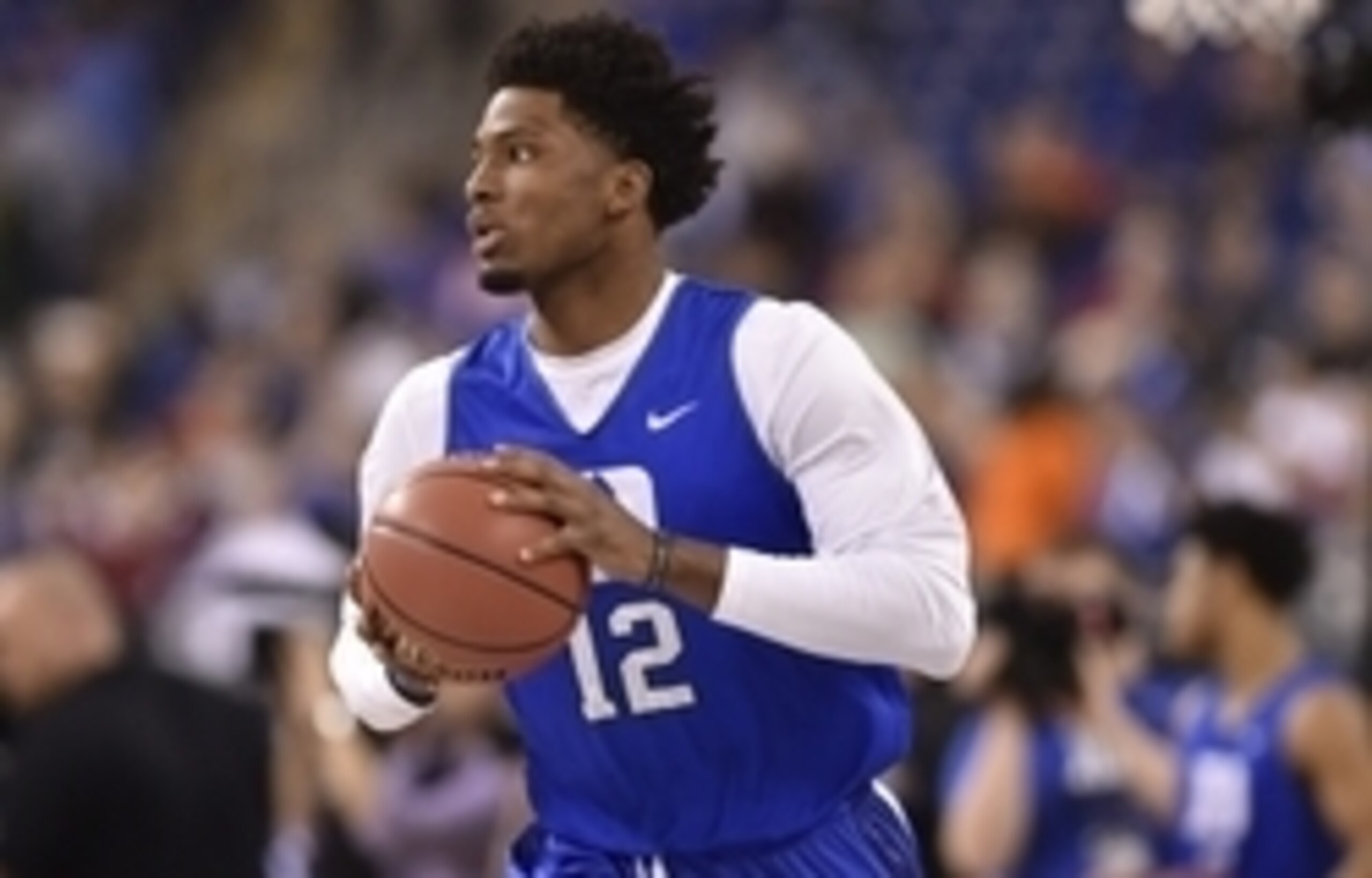
Projected Draft Range: Top 10
Possible Landing Spots: Orlando Magic, Detroit Pistons, Denver Nuggets
Prior to the NCAA tournament, Justise Winslow was a mid-to-late-lottery prospect who didn't really stand out next to the other top wings and top-10 challengers.
Ever since his Big Dance brilliance, he's been widely regarded as a top-five commodity and the premier small forward in the field.
He displayed a convincing smorgasbord of shooting, attacking, rebounding and defensive versatility. Even though his ball skills are mostly unrefined, he confidently attacks with agile movements and a nose for the rim.
As a shooter, Winslow offers a mixed bag. His three-point delivery and accuracy passed the eye test and stat test (42 percent) in 2014-15, but his mid-range confidence and effectiveness was shaky. It may take some time for him to iron out a serviceable in-between game.
While Winslow's NBA coaching staff waits for his offensive repertoire to mature, it will revel in his interchangeable defensive range. He'll guard 1s-3s immediately, with a chance to eventually master the 4.
4. Emmanuel Mudiay, China PG (6'5", 1996)
27 of 30
Projected Draft Range: Top five
Possible Landing Spots: Los Angeles Lakers, Philadelphia 76ers, New York Knicks
No backcourt specimen in this draft can match Emmanuel Mudiay's mix of physical tools and playmaking upside. He's not the most polished shooter by any stretch, but when it comes to athleticism and creative potential, he stands out.
Like many non-traditional prospects before him, Mudiay is somewhat of a mystery. Aside from his high school career and a few All-Star showcases, his only sampling is 12 games in the Chinese Basketball Association.
It's tricky to pinpoint how his skills and production from the inferior CBA will translate to the NBA. For now, a suitor will have to take a gamble based on his speed, ball-handling, natural vision and instincts, then pray he develops into a more dependable shooter.
If Mudiay accesses his ceiling, he'll be a top-10 point guard who serves as his squad's featured weapon. He probably won't reach the stratosphere of John Wall or Russell Westbrook, but his playing style will be in that mold.
3. D'Angelo Russell, Ohio State PG (6'5", Freshman)
28 of 30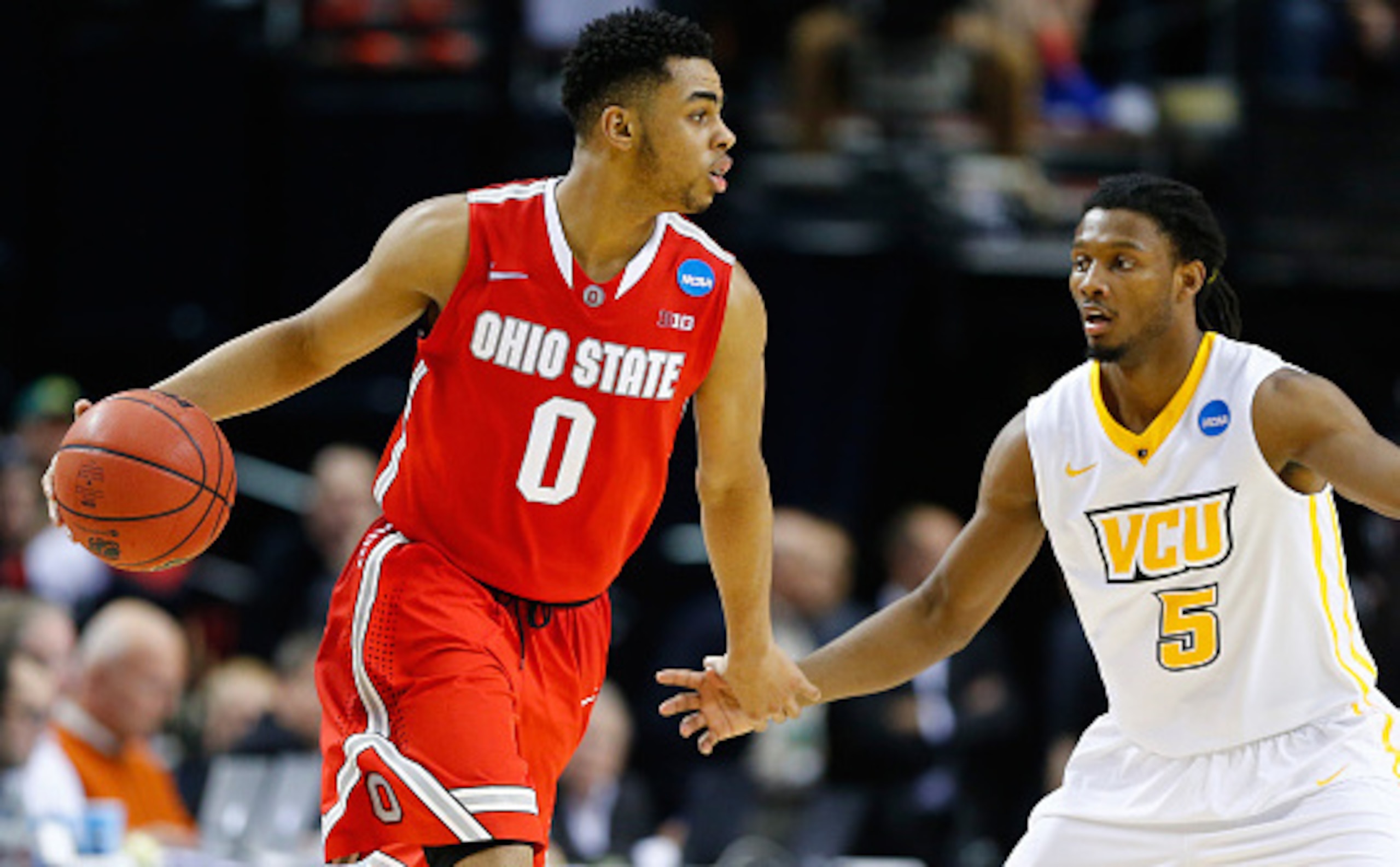
Projected Draft Range: Top five
Possible Landing Spots: Philadelphia 76ers, New York Knicks, Los Angeles Lakers
With apologies to Emmanuel Mudiay and his dynamic playmaking, the No. 1 guard and No. 3 overall prospect is Ohio State's D'Angelo Russell.
Throughout his stellar freshman campaign, he crippled challengers in so many ways. His penchant for creating and making jumpers and innovative passes makes him an irresistible combo guard.
Russell's athleticism is not elite. He's not an above-the-rim finisher, so he'll need to rely on shiftiness, skill and angles to make plays in traffic. The good news is that he's blessed with next-level court vision and instincts, which helps him routinely make the right play for his team.
There might be some growing pains as he works to take better care of the ball, but Russell will quickly emerge as one of the league's slickest young guards.
2. Jahlil Okafor, Duke C (6'11", Freshman)
29 of 30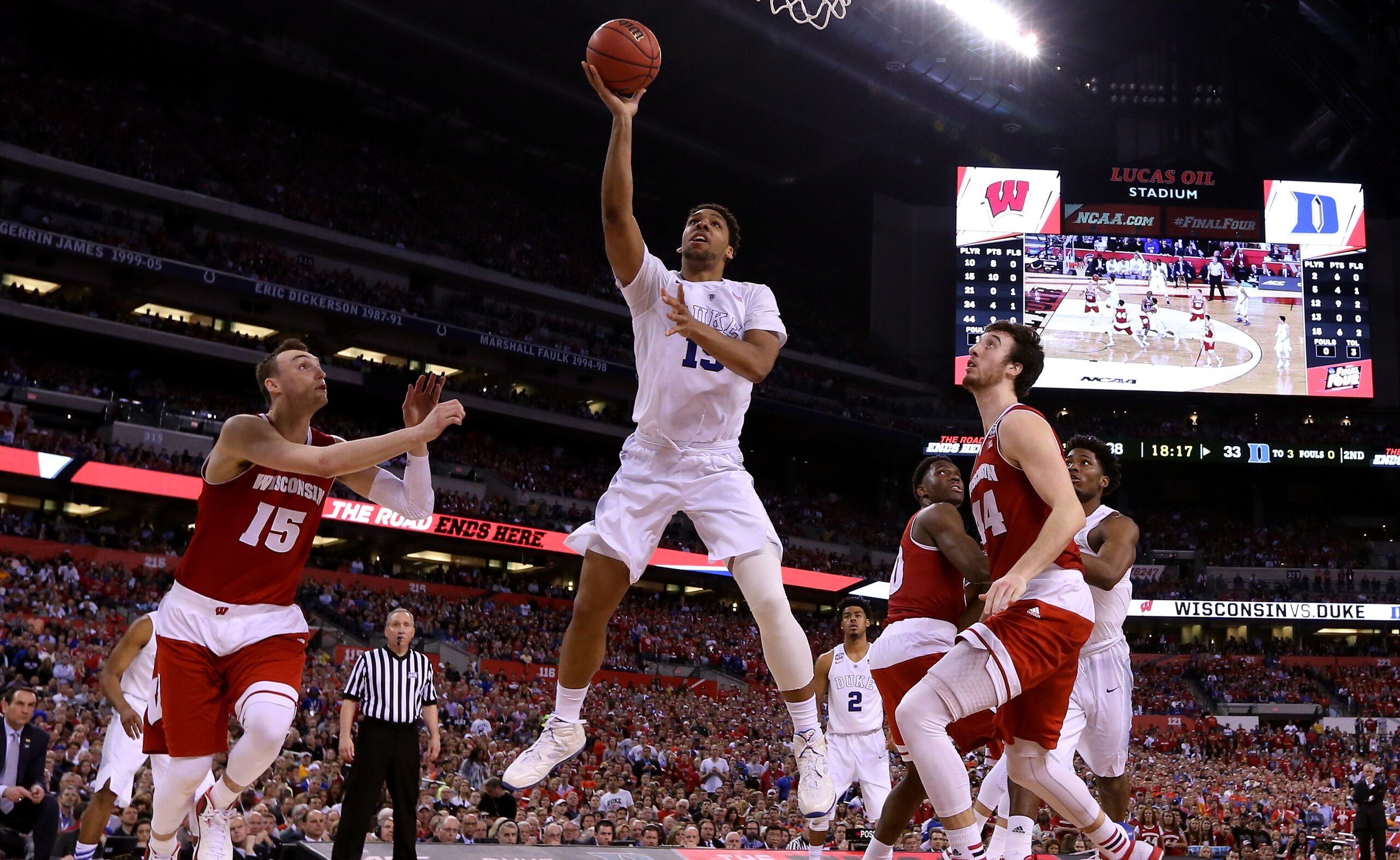
Projected Draft Range: Top three
Possible Landing Spots: New York Knicks, Los Angeles Lakers, Minnesota Timberwolves
Jahlil Okafor isn't the consensus No. 1 prospect anymore, but that doesn't mean he's less beastly than his was in the fall.
Although he was leapfrogged by Kentucky's Karl-Anthony Towns over the winter, he remains a dominant low-post juggernaut. Okafor's blend of power and fluidity enable him to carve up almost any opponent on the block.
His defense is noticeably slower and sloppier in comparison to Towns, which is a huge reason why the Kentucky frosh surpassed him. However, Okafor improved down the stretch and into the postseason. He moves well for a 270-pound behemoth, and his 7'5" wingspan will help him survive in the Association.
If a team like the Philadelphia 76ers or Orlando Magic land the second overall pick, there's a good chance they'd pass on Okafor and go in a different direction. But when it comes to overall value and appeal for most teams, he's the No. 2 prospect on the board.
1. Karl-Anthony Towns, Kentucky PF/C (7'0", Freshman)
30 of 30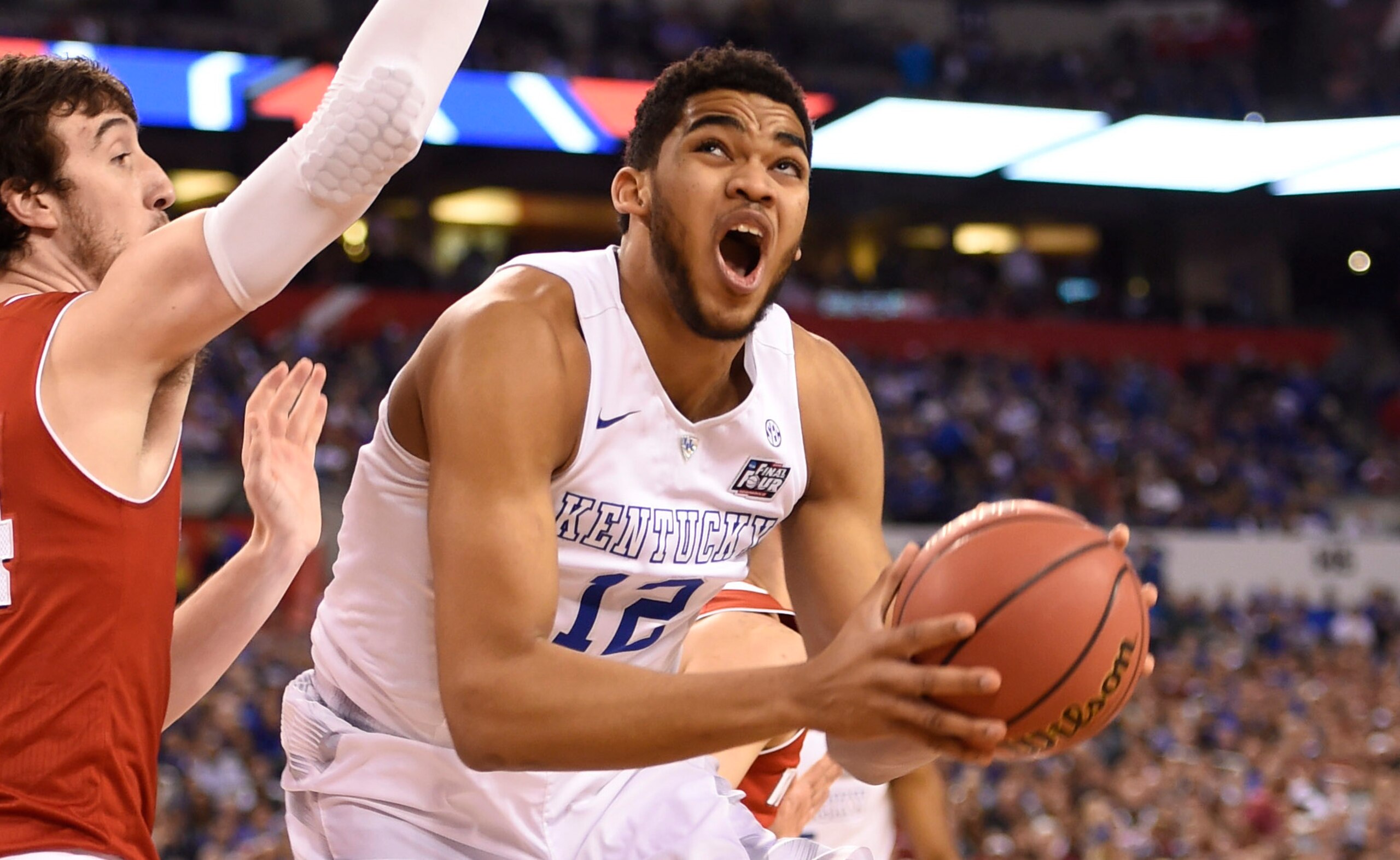
Projected Draft Range: Top three
Possible Landing Spots: Minnesota Timberwolves, New York Knicks, Philadelphia 76ers
Sitting atop the 2015 draft food chain is Kentucky's alluring star, Karl-Anthony Towns.
His combination of proven skills and sky-high two-way potential separates him from the rest of the class, including studs like Russell and Okafor. With a soft scoring touch, vacuum-like rebounding talent and rangy rim protection, he could be the total package in a couple of years.
His coach will use him as a back-to-the-basket threat, pick-and-pop shooter and high-post facilitator. On the other side of the court, he'll be able to blanket the paint with his length and also chase playmakers away from the bucket.
There are some fundamentals he needs to clean up, including his defensive footwork and discipline. But despite his youth and rawness, there isn't a ton of risk attached to him. His physical gifts, instincts and thirst for learning will ensure that he's a versatile NBA weapon.
Dan O'Brien covers the NBA draft for Bleacher Report.
Follow him on Twitter: @DanielO_BR

.jpg?w=2560 "Raiders Could Start Mendoza")

.jpg?w=2560 "Rodgers Iced Out on Plane 💎")
.jpg?w=2560 "Packers Safety Slams Refs 🤬")

.jpg?w=2560 "🚨 Week 8 AP Top 25 Poll")
