Surprisingly Tight Matchup Raises Questions as to Who Hawks, Nets Truly Are
NEW YORK — The NBA playoffs are the ultimate clarifier, amplifying greatness, exposing the frauds and separating the real from the ephemeral.
Oh, who the heck are we kidding? Sometimes the playoffs just make your head hurt. I mean, have you seen the Atlanta-Brooklyn series?
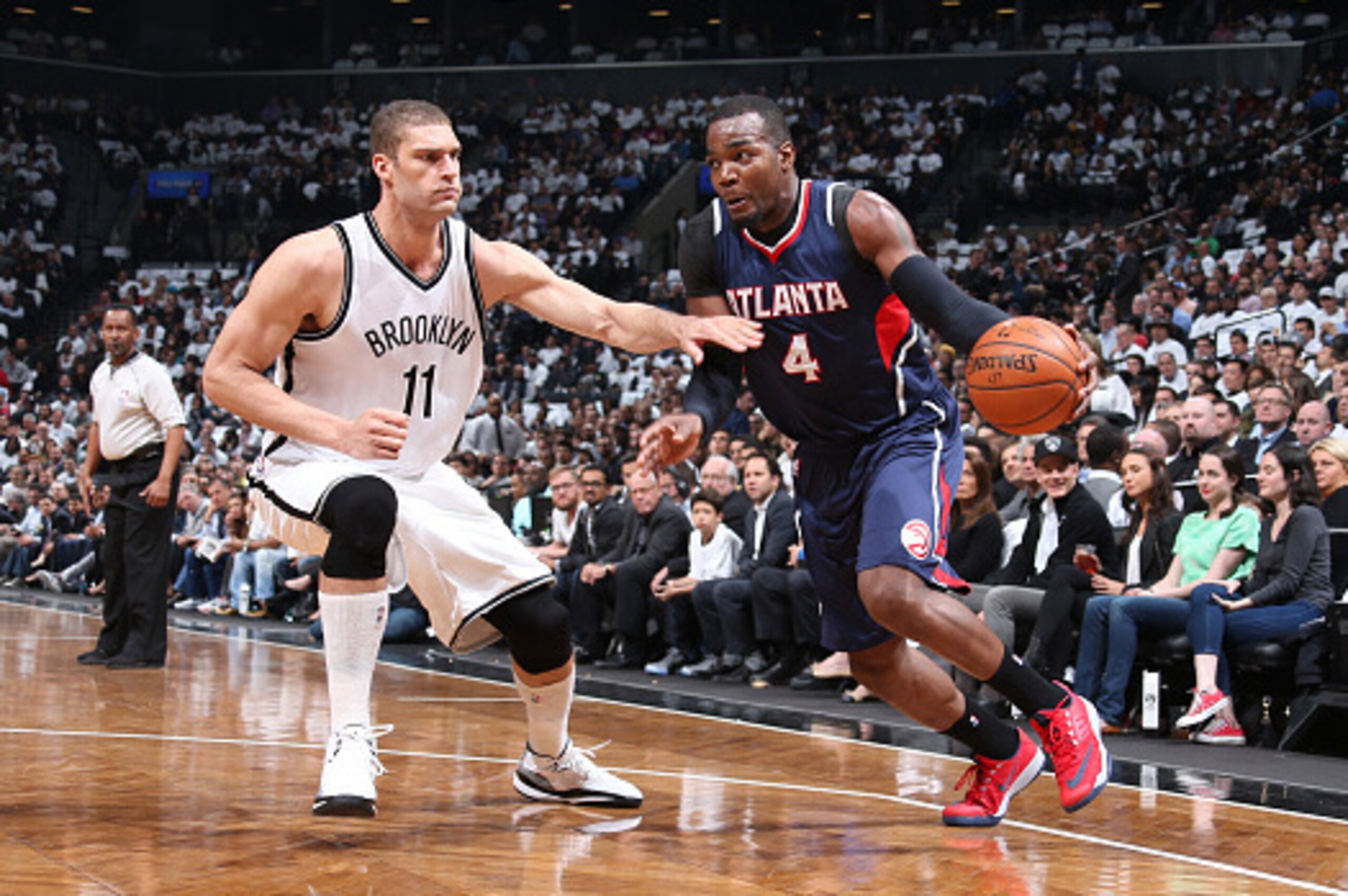
The Hawks and Nets are tied at 2-2, and there is nothing about that ledger that makes much sense.
TOP NEWS

Brown with an all-time summary of relationship with Tatum

Jokic says booing fans not welcome in Denver
Worst NBA Predictions 🫣
The Hawks this season were a portrait of selflessness and synergy, a 60-win team built on crisp passing, tenacious defense and humility—the Spurs of the East.
The Nets this season were a Jackson Pollock painting—all random splotches and chaos, overpriced and self-indulgent. They also lost much more than a team with three All-Stars and the NBA's highest payroll should, going 38-44.
Atlanta posted the best record in the East, clinching a playoff spot on March 3—March 3!—with 22 games left to play.
The Nets drifted in and out of relevance, finally securing a playoff spot just before midnight on the last night of the season—an honor gifted to them by the Indiana Pacers, who surrendered eighth place when they lost their final game.
The Nets—a team of underwhelming, overpaid stars—were as uninspiring as the Hawks—a team of modest overachievers—were inspirational.
And yet, here we are: 2-2, with the series resuming Wednesday night at Atlanta's Philips Arena and no clear indication where this is headed. It's hard to say which team is more stunned to be here. And it's hard to know just how to interpret the results.
To borrow a phrase from former NFL coach Dennis Green, maybe the Nets are who we thought they were—well, who we originally thought they were last fall, and not who we thought they were two weeks ago, when they lost two games by a combined 50 points and backed into the playoffs.
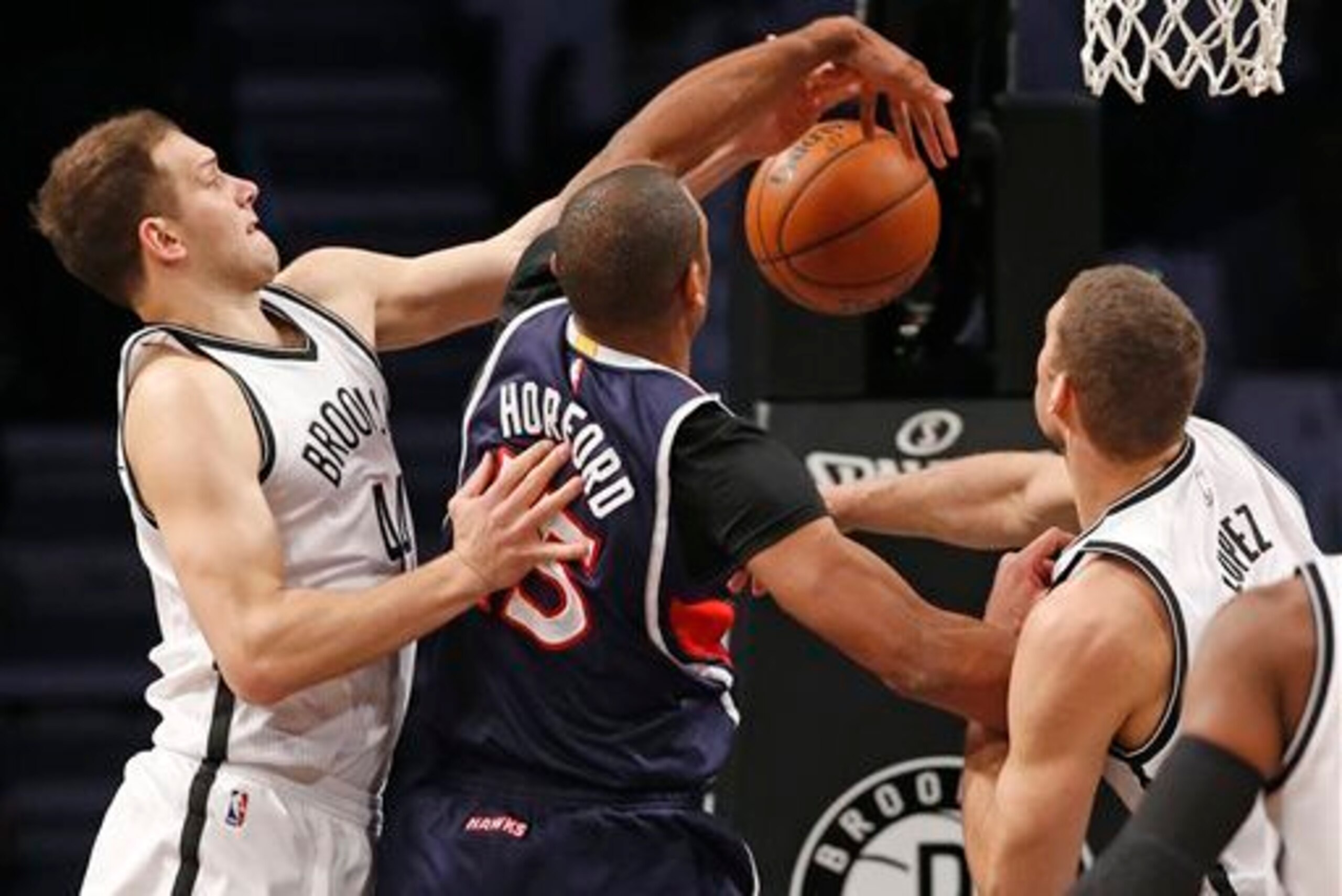
Or perhaps the Hawks are not who we thought they were.
There were always doubts, through the 21-7 start, through the 19-game winning streak that stretched from Dec. 27 to Jan. 31, and through All-Star weekend, when four Hawks made the Eastern Conference team.
Was it real? Was it sustainable? Could the Hawks, a team of understated, second-tier stars, conquer a league ruled by superstars? Yes, they insisted, time and again, and we all wanted to believe, too.
And yet, here we are, in the final week of April, with the Hawks fighting for their playoff lives against the nondescript Nets, while the world eyes the looming Chicago-Cleveland clash as the series that will determine the East's best team. Everyone wants to see LeBron James and Kyrie Irving tussle with Derrick Rose, Jimmy Butler and Pau Gasol. Everyone wants to see the superstars collide.
The Hawks are an afterthought again. And they largely have themselves to blame.
The fact is, the Hawks haven't played like an elite team for nearly two months. They went 11-10 over the final six weeks of the season, as if they slipped into cruise control after clinching the East's top seed.
Atlanta's defensive rating—a stout 99.9 through March 6, the sixth-best mark in the league—slipped to a mediocre 103.0 for the last 21 games, ranking 14th in that span. Atlanta's net rating over those final 21 games was 2.8 points (ninth in the league), down from 6.5 in the first 61 games (second in the league).
Point guard Jeff Teague hasn't played as confidently, nor shot as accurately, since the All-Star break. Paul Millsap has been dealing with a serious shoulder sprain since April 4. Al Horford dislocated the pinkie on his right (shooting) hand in Game 1 of this series.
And, of course, the Hawks lost one of their best perimeter defenders, Thabo Sefolosha, whose right leg was broken in an altercation with New York police earlier this month. His absence has forced the Hawks to play journeyman Kent Bazemore far more minutes than they would prefer.
Mike Budenholzer, the NBA's Coach of the Year, also rested his starters down the stretch of the regular season, raising questions over whether the Hawks might have simply lost their sharpness.
"We lost a little rhythm," Millsap said late Monday, referring to the final month of the season. "We lost a little bit of what got us where we were at. And due to a lot of things that happened toward the end of the season. We're a rhythm team. When we're in rhythm, we're one of the best teams in the league. When we're out of rhythm, we struggle."
Though the Hawks benefit from the presence of an elite defender (DeMarre Carroll) and an elite shooter (Kyle Korver), their greatness was never defined by a single transcendent star. They were the ultimate greater-than-the-sum-of-its-parts team, with Teague, Millsap, Horford, Korver and Carroll each playing his role to the hilt, and with the scoring burden passed around from night to night.
During the regular season, the Hawks produced 61.1 points per game via assist, a mark second only to the Golden State Warriors (65.1). That number has dipped slightly in the playoffs, to 58.2, along with a decline in total passes per game (from 322.9 per game to 312.5).
Without a dominant individual scorer, the Hawks rely on a true team approach to create opportunities; when a single thread comes loose, it all unravels quickly.
"We're still trying to get back to the way we played, I guess, in January," Millsap said. "I think through the course of that month, we played really good basketball. And if we can get back to that level, in these playoffs, we really give ourselves a good chance."
Unlike most 60-win teams, this is not a particularly seasoned group. The Hawks made the playoffs last year as an eighth seed (without the injured Horford) and pushed the top-seeded Pacers to seven games before bowing out. But that was their first run together. Dennis Schroder, the Hawks' dazzling reserve guard, who was a key to their success this season, hardly played in last year's playoffs. His inexperience has showed in this series, and he's shooting just 39.5 percent from the field.
Horford is shooting a ghastly 42.3 percent from the field, Millsap 42.6 and Teague 40.4. Even Korver, one of the NBA's best shooters, is struggling, making just 33.3 percent of his three-pointers in the series—down from 49.2 in the regular season.
Yet if not for Deron Williams' throwback, 35-point performance Monday night—including a ridiculous 27-foot three-pointer with one minute, 53 seconds to play in regulation—the Hawks might have avoided an overtime loss and taken a 3-1 lead in the series. (Then again, if not for Williams' brutal play in Game 2—including a missed 16-footer down the stretch—the Nets could have a 3-1 lead in this series.)
So what does it all mean? Were the Nets really better than their 38-win record all along? Are they proving the NBA adage that stars—even uninspiring stars like Williams and Brook Lopez—ultimately win? Are the Hawks showing the limits of the all-for-one, one-for-all formula?
Or maybe this is just what happens in a battle of overachievers and underachievers. They meet in the middle. And Game 7 ends in a tie.
Statistics courtesy of NBA.com.
Howard Beck covers the NBA for Bleacher Report and is a co-host of NBA Sunday Tip, 9-11 a.m. ET on SiriusXM Bleacher Report Radio. Follow him on Twitter, @HowardBeck.

.jpg?w=2560 "Mahomes Told Teammate to Leave Meeting")
.jpg?w=2560 "5 Teams Eyeing Jonathan Taylor")
.jpg?w=2560 "NFL investigating Eagles")
.jpg?w=2560 "Jonathan Taylor Landing Spots 📍")