
Carolina Panthers NFL Draft Big Board: Position-by-Position Rankings
The 2015 NFL draft is rapidly approaching, and the Carolina Panthers are set to make dramatic improvements on the offensive side of the ball as they seek to defend their NFC South crown. The Panthers have become quite fortunate this year, as their three biggest needs likely line up quite nicely with the players available at their first three picks.
It seems almost a foregone conclusion that the Panthers will use their first pick, 25th overall, on an offensive tackle. Considering the often-awful performances of Byron Bell and Nate Chandler last season, that doesn’t come as much of a surprise. While the team has already picked up its projected new left tackle in Michael Oher, it still needs another elite player to try to keep Cam Newton upright, hence the massive consensus toward an offensive tackle.
That’s certainly not the only direction they could go in, however. There’s a deep class at wide receiver this year, and the Panthers could find a running mate for Kelvin Benjamin on the first day of the draft. Once Day 2 begins, a replacement running back for DeAngelo Williams, a safety to supplement Roman Harper, a replacement for the departed Greg Hardy and depth elsewhere on the defensive front seven all enter play.
There’s no way to guarantee what position the Panthers will take, however, because they will not reach. In his predraft press conference, general manager Dave Gettleman made it clear that they never feel like they are only “one player away" and that they’re not going to stretch to take a player at a position of need if they’re not the best player available on the board.
With two extra picks this season, and fewer needs than in years past, there isn’t even any guarantee that the Panthers will pick in the slots they’ve been assigned. While they’ve been cautious about making trades the last couple seasons, they have more capital than they’ve had in years past, so you can’t simply look at players only available in specific slots. You have to go around the entire draft board, because the Panthers could jump into the first half of the first round if they really wanted to.
Here, then, are position-by-position rankings for the Panthers, focusing on the positions they’re likely to address somewhere in the draft. You can use it as a checklist on draft day itself, crossing out players as they’ve been taken, so you can see who is still available every time the Panthers get on the clock.
Because my rankings may not necessarily match up with the NFL’s rankings, I’ve included the projected draft position for each player according to the Advanced Football Analytics Draft Analysis Tool, one of my favorite widgets at this time of year. This will let you see what the Panthers would have to do to get the player, be it trade up, trade down or stay put.
Wide Receivers
1 of 6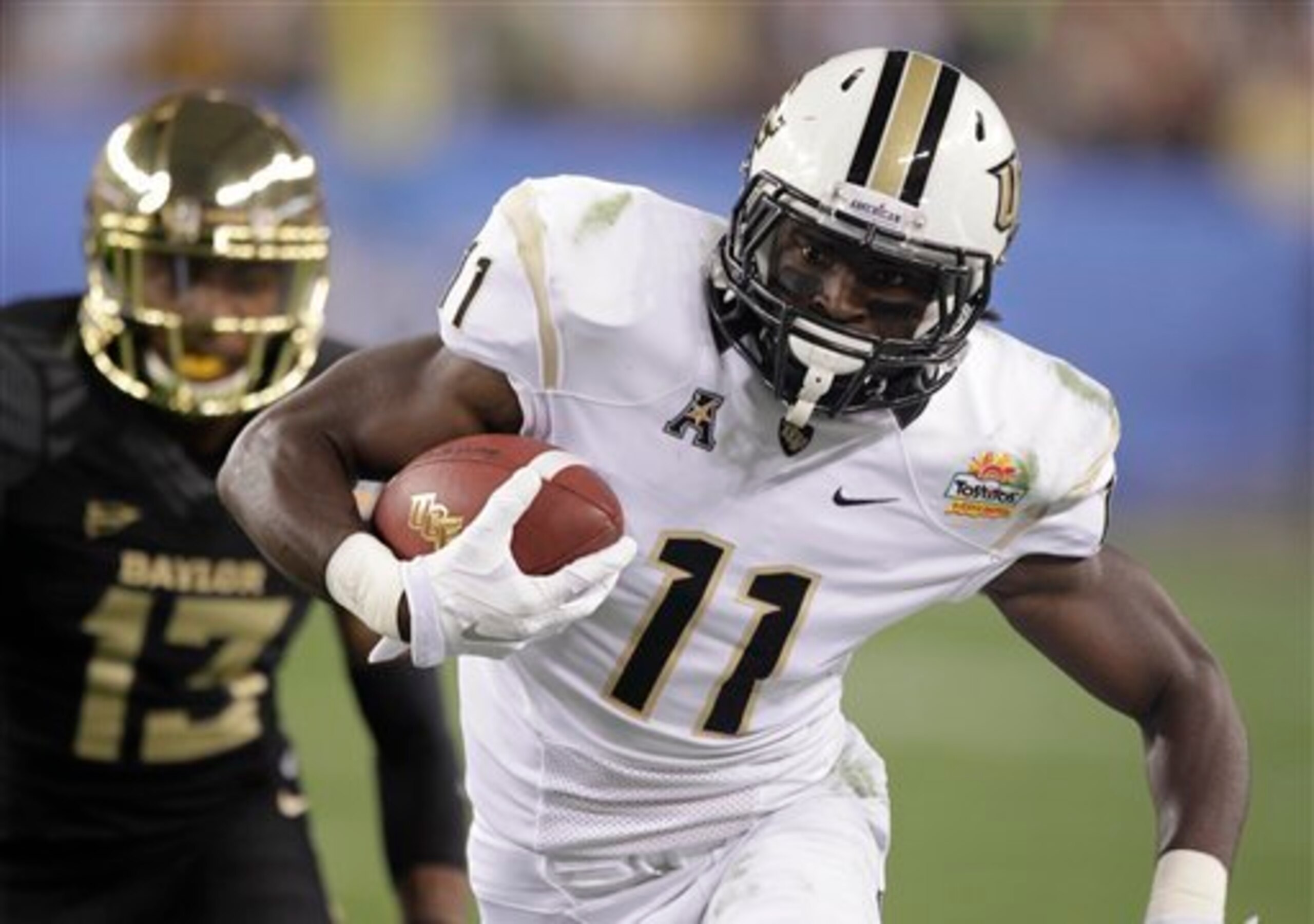
Last year’s first-round pick, Kelvin Benjamin, showed enough promise in his rookie season to be penciled in as the starting receiver for the next couple years, at least, but the cupboard is somewhat bare behind him. The team added Ted Ginn and Jarrett Boykin to the roster this offseason and still has Jerricho Cotchery as well, but an improvement is definitely needed here. Other than offensive tackle, this is the most likely first-round pick for the team.
1. Amari Cooper, Alabama
The best receiver in the draft, Cooper will be long gone before the Panthers even approach their first pick. He’s not the fastest receiver (4.42-second 40-yard dash) in the class or the largest (6'1", 211 lbs), but he has essentially no weaknesses in his game. He catches everything thrown at him, dominating in the short, intermediate and deep passing games throughout college. He may not have the same ceiling as Kevin White, but he’s the closest thing to a surefire success you’re ever going to find at a position as volatile as receiver
Projected selection: Picks 3-12
2. Kevin White, West Virginia
While Cooper is the best receiver in the draft, it’s White who has the highest possible ceiling. When you couple a 4.35-second 40-yard dash to a 6’3” frame, and add in the strength to put up 23 reps on the bench press, you have all the measurables you could ever want. He’s not just a workout warrior, either—he produced on the field. He set the school record for receptions in a game, as well as most consecutive 100-yard receiving games. He may have less of a track record than Cooper thanks to starting in junior college, but White has the potential to become the best player in the draft.
Projected selection: Picks 6-13
3. DeVante Parker, Louisville
I group Parker right alongside Cooper and White as the best trio of receivers in the draft—and unlike Cooper or White, the Panthers could conceivably trade up to a spot where Parker might be available. Parker catches everything that comes his way in the deep game and excels at making the contested catch. Once the ball is in his hands, he can turn on the jets; he’s not the fastest in the world (4.45-second 40-yard dash), but his 17.8 yards per reception over his college career dwarfs Cooper and White. He probably excels best in a West Coast, catch-and-run style offense, but I think his floor is higher than White’s.
Projected selection: Picks 10-16
4. Breshad Perriman, UCF
Once you get past the Cooper/White/Parker trilogy at the top of the draft, there’s a group of about six receivers I’d put in the second tier, starting with Perriman.
Perriman just looks like your prototypical receiver, standing at 6’2” and 212 pounds and running a blazing, sub 4.3-second 40-yard dash. That makes him the fastest top receiver in this year’s draft, and you can’t teach speed. That speed shows up on game day as well; he accelerates quickly and gains separation. Add in his explosive leaping ability, and you have a big-play threat waiting to happen.
Unfortunately, at this point, Perriman’s almost all raw athleticism. He needs work on the mechanics of playing the position, in terms of running crisper routes and working back to the ball. His hands also aren’t up to snuff, with “by far” the worst drop percentage of any of the top receivers, according to Lance Zierlein of NFL.com.
Still, that combination of size, speed and athleticism are just too good to pass up. He’s probably the kind of player who will drive everyone crazy—opponents with his ability to change the game on any play and his teammates with his tendency to drop the easy reception.
Projected selection: Picks 9-42
5. Nelson Agholor, USC
Agholor ranks a bit higher on my draft board than on most others, but I love his performance out of the slot. College Football Focus charted him as catching 76.3 percent of his passes, tops among all the top receivers. He has experience working with a mobile quarterback with Cody Kessler, so he could be useful when Cam Newton is forced to improvise. He has a great sense of coverage, and knows where the holes in the zone are, working his way back to the ball and making plays.
I’m worried about his size, at only 6’0” and 198 pounds, and he’s not fast enough (4.42-second 40-yard dash) to simply blow by opposing cornerbacks, hence why he’s in the second tier rather than the top group. I question whether he’ll be able to naturally find openings against more talented NFL teams, or if he’s the kind of player you’ll have to work open with motion and screens and things of that nature.
He’s a slot receiver, through-and-through, which lowers his ceiling some. However, Wes Welker was a slot receiver. Randall Cobb is a slot receiver. Marques Colston is a slot receiver. Slot receivers are good things to have. There is plenty of room in the NFL for a stud slot receiver. Agholor fills a much-needed position. He’s visited the Panthers, according to NFL.com's Ian Rapoport, so he’s a name to keep an eye on.
Projected selection: Picks 14-46
6. Jaelen Strong, Arizona State
Strong dominated for Arizona State on all of the short stuff—the shallow crossing routes, the bubble screens and the hitches, getting the ball in his hands and letting him run through opposing defenses. He’ll excel doing the dirty work over the middle, catching the contested passes and using his physicality to make tough yards with the ball in his hands.
Unfortunately, he’s has to make a lot of those contested catches because he’s not really able to get separation with his speed (4.44-second 40-yard dash) or athleticism; he’s plodding rather than fast. His routes could also use a little bit more polish, as a result of him only playing two seasons at the top college level.
Nothing about Strong knocks you out when you look at him, but he doesn’t have the same kind of flaws that Perriman (hands) or Agholor (size) has. He’s going to become a possession receiver at the NFL, with a ceiling perhaps of an Anquan Boldin-type.
Projected selection: Picks 11-54
7. Devin Smith, Ohio State
If you’re looking for a vertical threat, Smith is your man. He averaged 28.2 yards per reception in 2014, with more than half of his catches going for more than 25 yards. He’s a big-play machine waiting to happen, in other words. If opposing defenses don’t put their fastest corner on him, he’s just going to destroy them, and good luck catching him once he’s free in the secondary.
Of course, that’s really all he brings to the table at the moment. His hands aren’t the smoothest, he’s lean at under 200 pounds and he can be thrown off his game by physical press play. He’s not a very good blocker, and he’s not going to fight for tough yards over the middle. He’s a Ferrari—you’re going to get great splash out of him on big plays, but he’s not very practical for everyday use.
Perhaps he can develop into more than just a deep threat, with time and polish on his actual position skills. Even if he doesn’t, there are worse things to spend a second-round pick on then a super-car big-play specialist. He’s visited with the Panthers, according to the National Football Post, so keep an eye on him as a Round 2 selection.
Projected selection: Picks 25-71
8. Phillip Dorsett, Miami (FL)
Dorsett’s another speed merchant, putting up a 4.33-second 40-yard dash at the combine and topping that at his pro day. His job is to take the top off the opponents and make the big, splashy play. He’s not just a vertical threat, either—unlike Smith, he has the ability to work on those stop-start type of patterns, coming in for a stop-and-go and leaving cornerbacks sprawling in his wake.
He’s tiny, however. He stands at 5’10” and 185 pounds, and that’s pretty darn small for an NFL-caliber receiver. There are some who succeed at those sorts of numbers, with Antonio Brown, T.Y. Hilton, DeSean Jackson and Steve Smith coming to mind, but those are the exceptions rather than the rule. I worry about his ability to stay healthy—and, indeed, he suffered and MCL tear in 2013. His durability is a significant concern.
However, I do get stars in my eyes when I see the 24.2 yards per reception he put up last season. He’ll have to live in the slot at the NFL level, but he’ll be a mismatch against nickelbacks right off the bat, as long as he can stay on the field.
Projected selection: Picks 27-71
Best of the rest:
9. Devin Funchess, Michigan
Projected selection: Picks 31-80
10. Dorial Green-Beckham, Missouri
Projected selection: Picks 11-66
11. Tyler Lockett, Kansas State
Projected selection: Picks 32-211
12. Sammie Coates, Auburn
Projected selection: Picks 18-120
13. Rashad Greene, Florida State
Projected selection: Picks 45-223
14. Justin Hardy, East Carolina
Projected selection: Picks 62-241
Offensive Tackle
2 of 6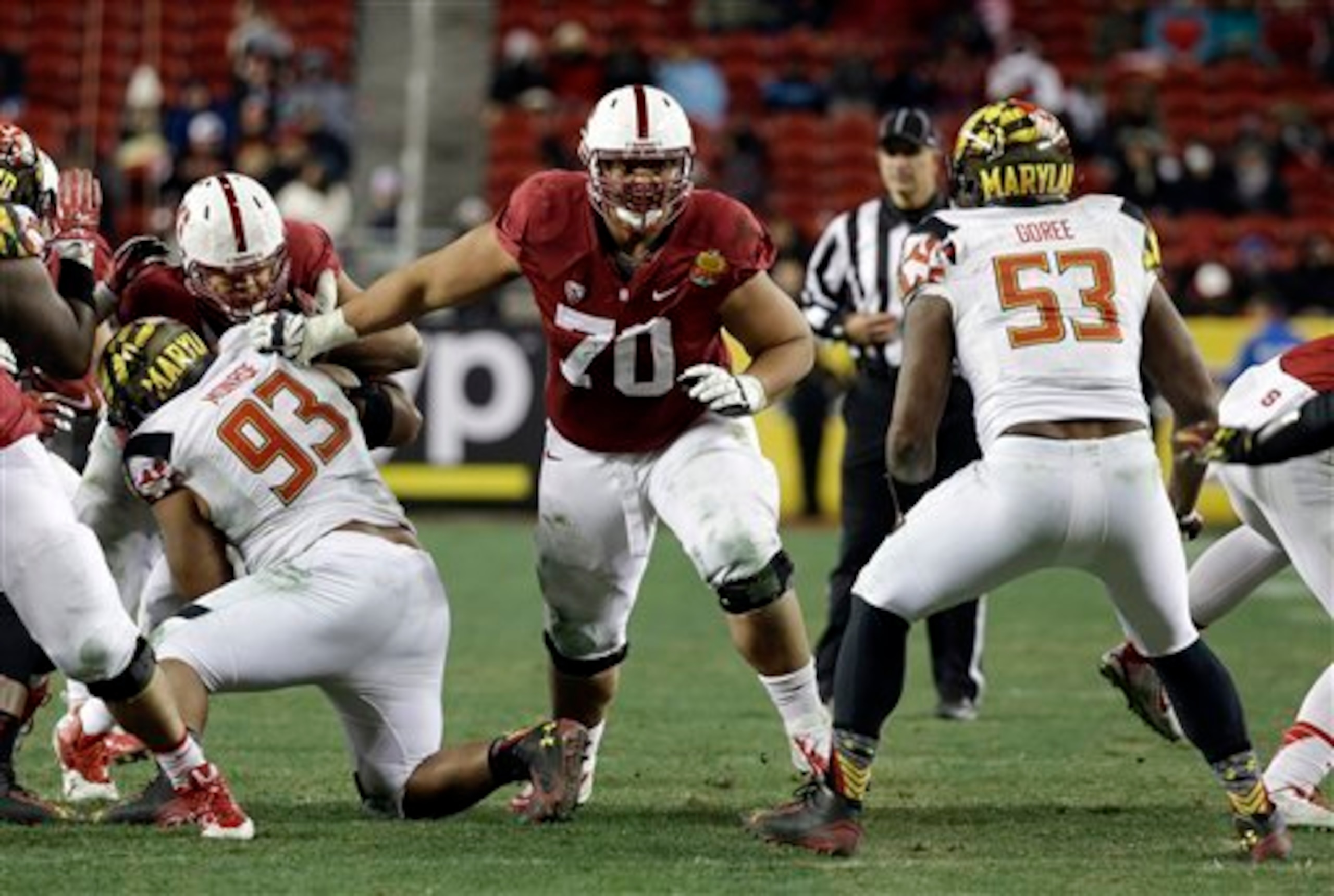
As mentioned before, the Panthers need to keep Cam Newton upright. The addition of Michael Oher gives them at least some hope at the left tackle position, but he hasn’t exactly been lighting up the field the past couple of seasons. If he can’t have a career renaissance in Carolina, the Panthers are right where they were before the 2014 season began—looking for two starting tackles. No addition of skill players will mean anything if plays can’t develop because Newton is running for his life.
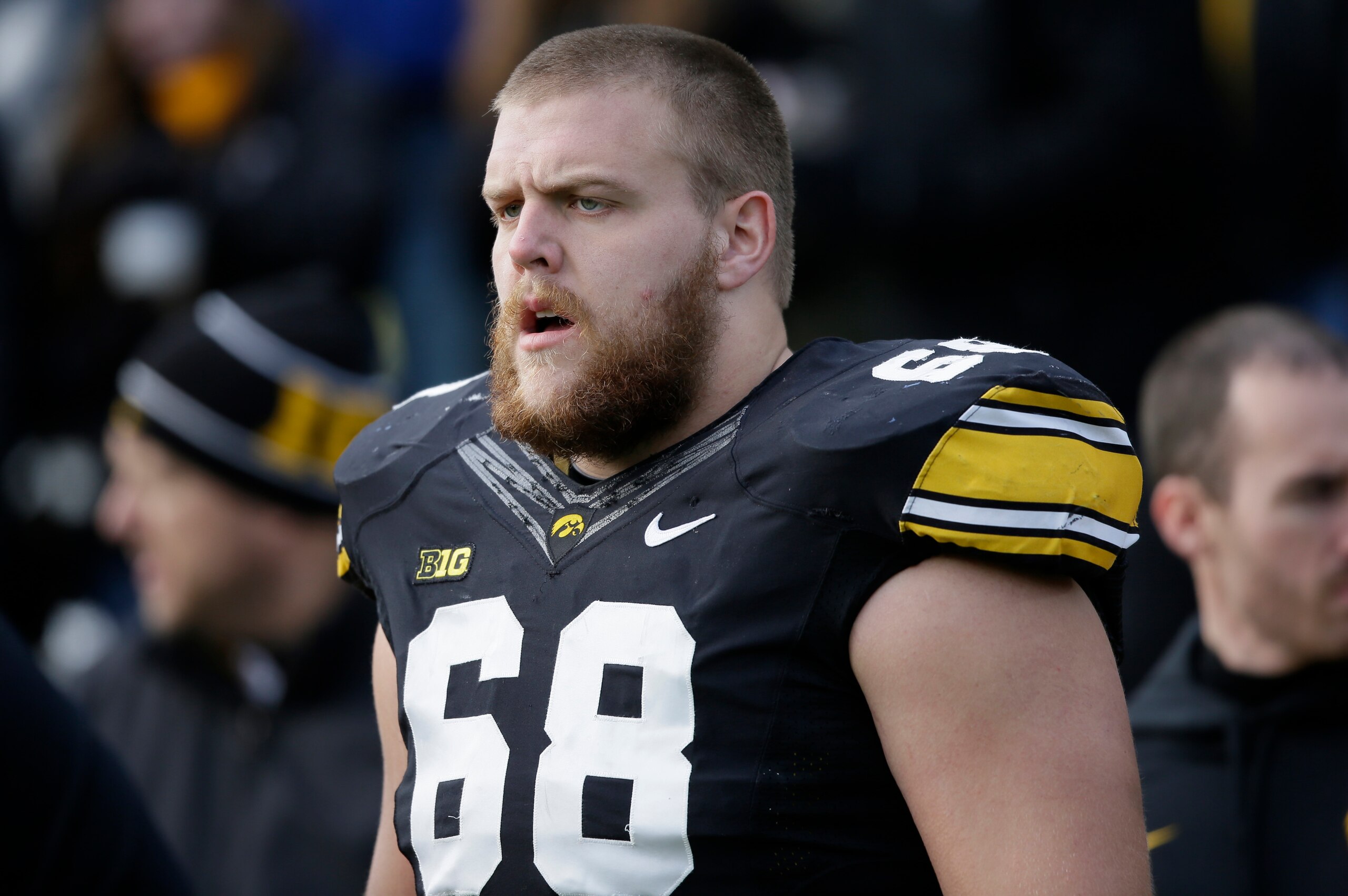
1. Brandon Scherff, Iowa
I still believe in Scherff’s ability to play tackle in the NFL, as opposed to guard. That puts me in something of a minority; Bleacher Report’s rankings don’t even have Scherff listed as a possibility there. He’s certainly the consensus best offensive lineman in the draft, only with questions where his position will be. If the Panthers could take any player in the draft, I’d give them Scherff. He won’t last to their first pick.
Projected selection: Picks 6-14
2. Andrus Peat, Stanford
After Scherff, the next six offensive tackles all end up in something of a clump. The player you pick out of that tier really depends on what sort of player you’re looking for.
I like tall offensive linemen, and Peat fits the bill at 6’7” and 313 pounds. He’s a power tackle first and foremost, driving opposing ends backward and using leverage and his legs to push people out of the way. Considering that, then, his movement is above average, and he isn’t easily fooled by twists and stunts. Combine that with good technique, and you have a very solid player.
He’s only athletic when compared to other power guards, however. Pure speed-rushers are still going to give him serious trouble off the edge and force him to lunge out to try to get a finger on them. I also don’t think he has the mobility to really get to the second level effectively—he’s going to eat up his initial blocking assignment, but if asked to block downfield, his liabilities start to show.
He’s ready to start from Day 1 as a right tackle, moving into the left side as his technique grows. I don’t like using first-round picks on people whose ceiling is a right tackle, so his ability to protect the blindside is a serious plus. He’ll be a solid contributor immediately.
Projected selection: Picks 15-29
3. Ereck Flowers, Miami (FL)
I’m higher on Flowers than most consensus boards at this point. His big and athletic, standing at 6’6” and 329 pounds with the possibility of adding more weight. In the run game, he is a monster, smashing through his targets with ease. He has the footwork to work well in the zone-stretch schemes the Panthers like to use, and when you have a man of Flowers’ size barreling down at you, that’s a plus.
Of course, one of the reasons the Panthers need a tackle is for pass protection, and there, Flowers has some work to do. His technique is sloppy, and that causes him to have poor balance and stiffness, which NFL-caliber pass-rushers will exploit. That poor balance can get him knocked out of position. All that adds up to a player who probably is not your ideal left tackle of the future.
But oh, his power and strength as a run-blocker make him a great right tackle candidate, and considering the Panthers could stand to upgrade both positions, that would work out just fine. He also has the potential to move inside to guard if he doesn’t succeed at tackle, providing a safety net if he doesn’t immediately contribute on the outside. I’ll take him and hope his pass-protection issues can be coached up.
Projected selection: Picks 16-36
4. La’El Collins, LSU
Collins isn’t as large as the previous two prospects, at only 6’4” and 305 pounds, but he’s thick and solid. According to College Football Focus, he allowed only four hurries last season, with no sacks or hits. That’s really quite good. He has perhaps the best technique among all the top group of tackles.
That is, if you group Collins with the tackles. I’m not so sure he’s not actually a guard in a tackle's clothing. He’s slow in space, and I’m afraid he’s just going to get eaten up by speed-rushers. This isn’t a problem when he’s on the interior of a line, but I’m not sure I’d trust him on an island to protect my quarterback against NFL-caliber players. His hand placement is bad, as well—he’s not able to get them into position to really redirect opposing rushers.
I still like Collins quite a bit, but honestly, I think he’s a guard first and foremost, or at best a right tackle. I also don’t know how well he’ll fit in the Panthers’ specific blocking scheme; I like him better for a team that just plows forward. His talent is undeniable, but I’m not convinced he’s the best fit for Carolina
Projected selection: Picks 16-36
5. D.J. Humphries, Florida
I probably have Humphries a little low for most people, but that’s mostly because I’m concerned about his size. He’s certainly the best athlete among the offensive tackles. His feet are quick and he’s good in space, making him a very solid fit for Carolina’s system. He can move with stretches and other outside runs better than anyone else in the class and uses great angles to cut off edge-rushers. He’s mobile, in other words.
Part of that, however, is the fact that he played last season at 280 pounds. That’s way, way too small for a tackle. He’s bulked up during the predraft process, up to 307 pounds at the combine which is good, but we haven’t seen him actually play at that weight yet. I just worry if he’ll be physically able to move some of the larger ends out of the way.
All that means that while some prognosticators would have Humphries as a steal at pick 25, I just have him as a solid value there. I think if he can keep the weight up without losing his athleticism, he could eventually be Carolina’s starting blindside protector.
Projected selection: Picks 14-47
6. T.J. Clemmings, Pittsburgh
Clemmings’ stock was sky-high at the end of the college season. He’s extraordinarily powerful and aggressive, with a fiery demeanor and explosiveness. He’s right behind Humphries as the most athletic tackle in the draft and moves very well in space—that’s his high school basketball prowess shining through. He can redirect players to create lanes, and he has all the physical tools you’re looking for.
What he doesn’t have is experience, having played tackle for only two years. That directly plays into a lack of technique and finesse at the position, and he was exposed at the Senior Bowl and other predraft work. According to Lance Zierlein of NFL.com, Clemmings was beaten over and over again, and he’s just too raw at this point. He’d best be served sitting for a while to polish his technique before being plugged into a lineup.
I still like his chances to develop that technique, but his lack of plug-and-play potential drops him on my board a bit. I think his ceiling is an All-Pro right tackle, and his floor is being washed out of the league in three years. A bit of a high-risk, high-reward prospect, in other words.
Projected selection: Picks 10-54
Best of the rest:
7. Cedric Ogbuehi, Texas A&M
Projected selection: Picks 29-89
8. Jake Fisher, Oregon
Projected selection: Picks 24-78
9. Donovan Smith, Penn State
Projected selection: Picks 40-156
10. Ty Sambrailo, Colorado State
Projected selection: Picks 37-217
11. Daryl Williams, Oklahoma
Projected selection: Picks 57-239
12. Robert Havenstein, Wisconsin
Projected selection: Picks 56-236
Running Back
3 of 6Jonathan Stewart had a fantastic finish to the 2014 season, averaging 5.34 yards per attempt over the last five games of the regular season. That’s a bit out of character for him, and he’s often injured as it is, so the Panthers should add a complementary player for him to share the workload. In the past, that’s been DeAngelo Williams, but he’s off to Pittsburgh, leaving Fozzy Whittaker and Darrin Reaves as the next running backs up. That’s something that can be improved upon with a second-day selection
1. Todd Gurley, Georgia
If you believe that Gurley will fully recover from his torn ACL, he’s the best running back in the class. He’s strong, fast, powerful and experienced. He explodes through holes, fights through contact and blows through would-be tacklers. He’s going to be the first first-round running back taken since 2012. The Panthers have bigger needs elsewhere, but if he falls to them at their first-round selection, they should stop and think about it for a long time.
Projected selection: Picks 10-26
2. Melvin Gordon, Wisconsin
Gordon rushed for the second-most yards in a single season in FBS history in 2014, trailing only some guy named Barry Sanders. That’s a pretty good name to be compared to. Some of that is due to the level of competition, and his eventual NFL team shouldn’t expect him to run for 2,600 yards a year, but he has a crazy burst and shifty moves in the open field. The Panthers would prefer a power rusher to complement Stewart, and they have more pressing needs here than a running back, but if Gordon falls, he should at least be considered.
Projected selection: Picks 15-29
3. Ameer Abdullah, Nebraska
In a world where speed didn’t matter, Abdullah would be the best running back in the class. Abdullah produced the top, or among the top, results in the vertical jump (42.5"), broad jump (130.0"), shuttle drills (3.95 seconds in 20-yard shuffle; 11.18 in 60-yard shuttle) and three-cone drill (6.79 seconds) at the combine. He has elite agility and the ability to anticipate where the holes will open up before they appear. He’s patient, but not overly so, finishes his runs and can even be a weapon in the passing and return games. Abdullah can do a lot of different things for you.
Speed does matter, however, so his 4.6-second 40-yard dash at the combine is concerning. He improved it slightly at his pro day, but not dramatically so. He plays faster than he runs the 40-yard dash, but you’d love to see him be a bit faster on the track. He’s also small, at only 5’9” and 205 pounds, and that’s a concern as well.
Despite that lack of size and speed, however, Abdullah is still my draft crush, as it were. He’s a natural fit in Carolina’s scheme and has all the explosive potential in the world. Sadly, he doesn’t complement Stewart very well, so it might be better to go in another direction rather than taking Abdullah, but I just believe Abdullah will be successful for years to come.
Projected selection: Picks 18-121
4. T.J. Yeldon, Alabama
The next few rounds see three roughly interchangeable running backs available. The pick here is based as much on fit in a system as anything else.
Yeldon is the largest of this tier of running backs, standing at 6’1” and 226 pounds. He good at reading his blocks and finding holes, making him a good fit in Carolina’s system. He has that instinctive feel for where lanes are going to open up, which is something you just can’t teach. He’s also a threat at the goal line, where he scored seven times in both 2014 and 2013, according to ESPN. Couple that with top-end speed (4.61-second 40-yard dash), and you have an all-around prospect.
He’s not as strong as you’d hope someone of his size would be, partially because he’s a very upright runner, exposing more of his body to big hits and cutting down on his leverage. He’s also not the pass protector you’d expect someone of his size to be. It’s probably best to mentally knock him down an inch or two and 15 or so pounds when thinking about him, because that’s how he plays.
He’s not a full-time starter, but that’s not what the Panthers need. He has the quickness to make people miss and the toughness to squeeze through blockers and tight holes. Assuming the Panthers can get him late on Day 2 or early on Day 3, he’d be a great selection.
Projected selection: Picks 37-154
5. Tevin Coleman, Indiana
Coleman isn’t going to dance through holes or stretch things to the outside—he’s a north-and-south runner who is going to run straight at you, as fast as he can, and take it to the house. He hits his top speed incredibly fast, and then uses that speed to bowl over opposing defenders with extreme prejudice. He’s a home run threat; half of his career touchdown runs were from 40 or more yards out. He doesn’t stop until he hits paydirt.
If anything, that’s his biggest issue—he goes so hard on every snap that sometimes he runs himself out of the play; a little bit of patience might allow holes to open up a bit quicker. He’s also just got the one move—bowling over people. He’s not going to make a great cut back on a defensive back, so it’s running him over or nothing. He’s a bit stiff, in other words, and won’t make anyone miss.
If he develops a bit more patience and finds the ability to go around players rather than through them, his explosive style will be tremendous in the NFL. Those are a couple major ifs, however, so he’s a bit of a developmental prospect.
Projected selection: Picks 19-122
Best of the rest:
6. Duke Johnson, Miami (FL)
Projected selection: Picks 25-128
7. Jay Ajayi, Boise State
Projected selection: Picks 25-80
8. Javorius “Buck” Allen, USC
Projected selection: Picks 65-246
.jpg?w=2560 "Chiefs Giants Football")
.jpg?w=2560 "Titans Colts Football")
.jpg?w=2560 "Eagles Jaguars Football")
Safety
4 of 6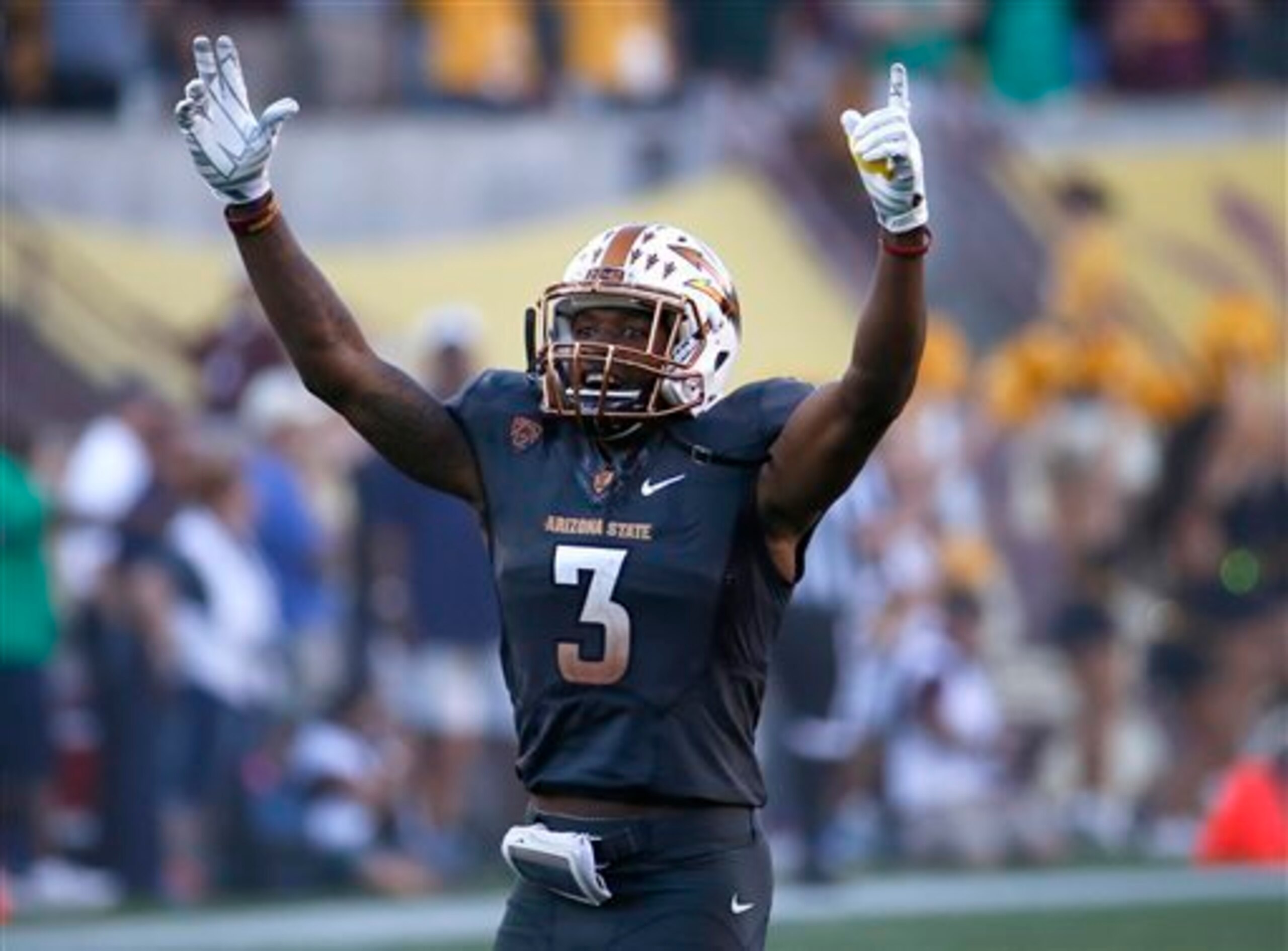
This year’s safety class is rather thin, with only a fistful of players really being worth picks as a strong safety on the first two days of the draft. It’s thin enough that Shaq Thompson, a linebacker who would be converting to strong safety in the pros, is often listed among the top prospects available. That’s not exactly the draft to find your in-the-box safety of your dreams.
Still, an upgrade for Roman Harper is needed. Perhaps that’s not a player who can replace Harper this season but one who could sub in for Harper after a year or two on the bench. That’s likely the best the Panthers can hope for in this draft class.
1. Landon Collins, Alabama
The one player the Panthers could really grab to fill in as a starting safety right away would be Collins, and you can see how his projected pick range just squeaks him out of range for the Panthers at pick 25. His combination of instincts, play recognition and tackling ability make him clearly the best safety prospect in this year’s draft. The Panthers could trade up and try to grab him, but they would be wiser to use early picks on other positions and let Collins go.
Projected selection: Picks 12-24
2. Damarious Randall, Arizona State
If the Panthers played a pair of interchangeable safeties, Randall would be an intriguing choice. He’s probably the most athletic of the safety class, running a 4.46 40-yard dash and excelling in the shuttle (4.07 seconds) and cone drills (6.83 seconds) at the combine. He’s a big tackler, too, with 177 tackles in two years at Arizona State. If he was a little larger, he’d make a great in-the-box safety and replacement for Harper.
Sadly, Randall’s only big in terms of volume of tackles, as opposed to size. He’s 5’11” and 196 pounds, and that’s not going to work in the box. He’s a cover safety, then, and the Panthers already have one with Tre Boston, plus free-agent pickup Kurt Coleman. Randall might well be better than Boston, but he’s a bit of a luxury pick at the position.
He definitely has the mentality to play in the box, so if the Panthers can figure out some way to keep him healthy despite his small stature, he’d be a great pickup. I’m just not convinced that’s possible.
Projected selection: Picks 24-106
3. Anthony Harris, Virginia
Outside of Collins, Harris has the best ball skills of any safety in this year’s class. Over the past two years, Harris has 10 interceptions and plenty more passes defended. He’s not just a coverage guy either—he racked up 80 or more tackles in each of the last three seasons, dedicating himself to the run game and showing the ability to weave through traffic to get to the ball-carrier. In terms of production, you couldn’t ask for anything more.
What you could ask for more of, however, is weight. Harris is 6’1”, so he’s bigger than Randall, but he only weighed in at 183 pounds at the combine. He needs to pack some more muscle onto his frame to survive in the NFL, and I don’t know if he can get the physicality to make a living at the line of scrimmage in the NFL.
His lack of athleticism, when compared to Randall, causes him to rank lower in my book, despite being a better positional fit for the Panthers. It’s a comparison of talent versus need, and you don’t want to overdraft simply based on need.
Projected selection: Picks 37-217
4. James Sample, Louisville
With the previous three safeties having black marks against them for one reason or another, be it cost to draft or size, my fourth-best safety might be the best safety for Carolina. Sample’s larger than either Randall or Harris, meaning he can survive in the box at the NFL level. He had 74 solo tackles in 2014, so he has a nose for the ball. He’s more than serviceable in coverage, as well, allowing a reception only once every 31.1 snaps in coverage, according to College Football Focus. He has the makings of a player who can do it all.
So why is he ranked lower than the previous three safeties? Experience, or lack thereof. Sample’s college experience consists of 13 games at Louisville last season and five games at Washington back in 2011 and 2012 as he fought through shoulder injuries. He has a serious lack of reps at the position, meaning he doesn’t have the instincts or technique that some of the players ahead of him have. He’s not ready for prime time quite yet.
The Panthers could take him late on Day 2 or early on Day 3 and sit him on the bench behind Harper for a year or two as he develops those necessary skills. I think he has the potential to become a long-term starter at the position for a team that’s patient enough to develop him.
Projected selection: Picks 112-Undrafted
Defensive Linemen
5 of 6I’m splitting the defense here into linemen designed for working the interior as a run-stopper and edge players who are more answers to the departure of Greg Hardy.
The Panthers re-signed Colin Cole and Dwan Edwards, so they don’t need depth at the interior line, but that doesn’t mean that the position is out of question. With Kony Ealy still developing, and being more of a pure pass-rusher than anything else, a rotation with him and a solid run-stopper could pay serious dividends.
1. Leonard Williams, USC
There is roughly zero chance the Panthers will be able to draft Williams, generally considered to be the best player in the draft. He can play anywhere on the line, with tremendous power. He can hold the point of attack or penetrate into opposing backfields. The scary thing is, he may have not recognized his full potential yet. Not quite a J.J. Watt-esque talent, but with every potential to be incredibly good.
Projected selection: Picks 1-8
2. Dante Fowler, Florida
Fowler’s slightly more of an edge-rusher than Williams, who probably would work best in a defensive tackle role for a 4-3 defense. I think Fowler works best as a 3-4 outside linebacker, meaning he’s not a scheme fit for the Panthers, anyway. Still, they’d find a way to use a potential double-digit sack maven—if he wasn’t likely to be long gone before they were on the clock.
Projected selection: Picks 2-8
3. Arik Armstead, Oregon
At this point, Armstead is almost all projection rather than performance. A 6’7”, 292-pound monster in the center of the line, coupled with explosiveness and a great initial punch makes an enticing prospect. He didn’t have the kind of college production you’d like to see out of someone with those measurables, but if his talent can be harnessed, he’ll be a monster inside. He's not someone the Panthers should bother themselves with, but an intriguing prospect, notwithstanding.
Projected selection: Picks 7-21
4. Preston Smith, Mississippi State
If the Panthers ran a 3-4 front, Smith would be a great pick in Round 2. He’s got great strength at the point of attack and dominates against the run. His 34-inch arms allow him to get great leverage and push off of blockers, reaching in and grabbing back as they pass. He lacks the explosiveness to be a major contributor in a 4-3 front, however, so the Panthers should pass for the cost he's likely to demand.
Projected selection: Picks 16-70
5. Mario Edwards, Florida State
There are some who project Edwards as only a defensive tackle in a 4-3 front, but I’m not one of them. He’s not an edge-rusher like Greg Hardy was, but he can play the edge on rushing downs, perhaps moving inside in obvious passing situations. For a mid-round pick, he has a very good combination of power and closing burst. He’s strong the point of attack and can gain leverage to cut through opposing linemen.
He’s not a pass-rusher by any stretch of the imagination, however. He’s not explosive off the snap, and he doesn’t get his arms extended. He’s best suited as part of a rotation, then, where he can plug and play on rushing downs and let the pass-rushers replace him when the ball’s in the air.
So, he’s not a replacement for Greg Hardy, then. What he can be is part of a unit with Kony Ealy, with them being rotated in and out based on situation. It would help both of them significantly, allowing them to concentrate on the strengths in their respective games. There’s potential there.
Projected selection: Picks 18-135
6. Owamagbe Odighizuwa, UCLA
Odighizuwa is more of an edge player than Edwards is, perhaps leaving him as a bit of a better fit in Carolina’s front. He’s chiseled at 6’3” and 267 pounds and has blazing, 4.62-second 40-yard dash speed, which is massively impressive for a defensive end. That speed converts well into power, albeit not as often as you’d like, giving him edge-rushing credentials.
I’m mostly concerned about his injury history, which has me drop him to sixth. He missed all of 2013 with a hip injury and has had multiple surgeries. Those are some pretty significant injury red flags there. He’s passed all his medical checks at the combine, but you have to wonder if the long-term effects of the injury will limit his potential.
All in all, that means I think he’s likely to be drafted higher than I would be comfortable with as the general manager. If he falls, the Panthers could get a very promising game disruptor, but I wouldn’t pull the trigger too early on him.
Projected selection: Picks 18-74
7. Trey Flowers, Arkansas
Flowers’ motor never quits. Some pass-rushers take plays off, or need to be subbed out to recover. Not Flowers—he goes full-out on every snap. His “full-out” may not be as good as some other players, thanks to lower overall athleticism, but you’re not going to find anyone who is going to out-effort Flowers.
His burst is below average, and he doesn’t have a pass-rushing move to blow past people. He doesn’t have the same production as the top ends, and no one is going to breathlessly describe him as “dynamic” or “explosive."
What he is going to give you is aggressiveness, effort and passion on every snap. That’s not enough to have him up at the top of the draft board, but those are traits you covet in the middle to later rounds. He has enough athletic ability to contribute and the will and desire to get the most out of what he has.
Projected selection: Picks 34-214
Best of the rest:
8. Markus Golden, Missouri
Projected selection: Picks 69-247
9. Danielle Hunter, LSU
Projected selection: Picks 25-128
10. Henry Anderson, Stanford
Projected selection: Picks 66-245
Edge-Rushers
6 of 6
These players are more logical replacements for Greg Hardy. Most of them, especially at the top, will either be a defensive end or an outside linebacker depending on the scheme they get drafted into and how creative their defensive coordinators are with them.
Others might still fit as a 4-3 outside linebacker, but a more pass-rushing heavy player than A.J. Klein is. The Panthers could use an upgrade on Klein, who is pretty much the definition of a league-average player, but that’s not exactly the highest priority.
1. Randy Gregory, Nebraska
There is no better pure pass-rusher in the draft then Gregory, but he shouldn’t end up in Carolina. He has a red flag after testing positive for marijuana at the NFL combine. It’s not even so much the drug use, as it is the intelligence to keep using when you know you’re going to be tested at what is, effectively, the biggest job interview you will ever have. He’s a boom-or-bust prospect that the Panthers can’t afford to gamble on.
Projected selection: Picks 10-29
2. Shane Ray, Missouri
Gregory’s not the only edge-rusher with trouble with drug use leading up to the draft. Ray was cited for possession of marijuana on Monday, as reported by Brandon Kiley of KTGR. There’s no telling how that will impact his draft stock. On the field, he’s explosive, powerful and sudden—and likely to be long gone by the time Carolina gets on the clock.
Projected selection: Picks 4-11
3. Alvin “Bud” Dupree, Kentucky
My favorite player at the combine was Bud Dupree, who blew everyone else away with his performance in the 40-yard dash (4.56 seconds) and jumping events (42." vert; 138.8" broad). Unlike Gregory and Ray, he also has no character red flags that we know about, which further bumps him up in my book. He’s the kind of player the Panthers could look at as a replacement for Greg Hardy if he falls to the end of the first round, though I think he’ll be gone before then.
Projected selection: Picks 9-26
4. Eli Harold, Virginia
Harold’s fit is poor in Carolina’s defense, as he stands only at 6’3” and 247 pounds. His talent as a pass-rusher, however, is undeniable. He has great upfield burst and pass-rushing prowess and rounds opposing tackles with ease, operating fantastically in open space. He could have a Bruce Irvin-like role on the team, coming in on obvious passing downs as another blitzer, but he’s not a true replacement for either Hardy or Klein.
Projected selection: Picks 15-58
5. Vic Beasley, Clemson
I’m much lower on Beasley than most people. I see his raw athleticism, and I know that Football Outsider’s SackSEER system called him the top pass-rushing prospect in the draft. If he fell down to the end of the first round, he’d be worth looking at. However, when I see him, I think he’s too small for Carolina, at only 246 pounds. I think he mostly succeeds on raw athleticism, rather than skill or pass-rushing moves. I think he’s a liability against the run. These are all relatively minor points when compared to his raw potential, but I just don’t see a top-10 player when I look at him.
Projected selection: Picks 6-16
6. Hau’Oli Kikaha, Washington
Now we’re getting into players that fit Carolina’s situation a bit better. Both of the linebackers from Washington would fit well in Carolina, albeit for two very different reasons.
Kikaha represents good value on the second day, if you’re looking for a pass-rusher. He’s not the fastest player available, but he’s relentless and productive. He has great hand placement and technique, rather than winning just with raw athleticism or talent. He also shows a great ability to bounce back into play after being blocked out—his motor keeps running.
He’s larger than Harold or Beasley, so I think he fits a little better than either of them in a 4-3 system. However, he is only 6’2” and 253 pounds, so that’s not exactly prototypical 4-3 defensive end size. He also has had two tears to his ACL, and those are major red flags.
Still, with everything coming up clean at the combine, Kikaha is my favorite pass-rusher in terms of production compared to projected draft spot—he’s a value pick, in other words. He’s a pass-rushing specialist who can also set the edge against the run. He’d be best as part of a rotation in Carolina, but it has the talent along the defensive line to work him in.
Projected selection: Picks 34-136
7. Shaq Thompson, Washington
Really, Thompson might be best put on the safety slide, but he’s rated as the top linebacker on Bleacher Report’s big board, so I’m sticking him here. He played outside linebacker, inside linebacker, safety and running back at Washington—simultaneously, rather than making a bunch of position changes throughout his career. That’s incredible versatility and means he has athleticism for days. While he’s obviously a defender in the NFL, I could see the Panthers bringing him in on goal-line packages on offense as another option in a jumbo set.
Of course, all that versatility means that no one really knows where he’ll fit on an NFL defense. Is he an in-the-box safety to replace Roman Harper, or is that all projection? Is he big enough to be a 4-3 "Will" linebacker, or would he get lost at only 228 pounds? Can he bulk up at all to try to survive in the box?
These are all valid concerns, but Thompson’s just a great football player. Whichever team drafts him is going to have to try to find the best place for him, but Thompson’s versatile enough that I think he’ll succeed wherever he goes.
Projected selection: Picks 13-113
Best of the rest:
8. Nate Orchard, Utah
Projected selection: Picks 21-124
9. Paul Dawson, TCU
Projected selection: Picks 39-94
10. Kwon Alexander, LSU
Projected selection: Picks 42-223
Bryan Knowles is a featured columnist for Bleacher Report, covering the Carolina Panthers during the NFL Draft. Follow him @BryKno on twitter.
.jpg?w=2560 "Colts Football")
.jpg?w=2560)