

With the April 26 deadline approaching for underclassmen to declare, the 2015 NBA draft field is just about set.
And quite frankly, it's looking somewhat weaker than it did a week ago, with a handful of potential first-rounders opting to return to school.
Still, this should be a promising year to have a lottery pick.
The following big board, which is based on personal rankings assessing NBA potential, skill set and past production—not necessarily where we project each player to be taken—only consists of players who have yet to announce whether they are returning to school or remaining overseas.
50. Rakeem Christmas, Syracuse, 6'9", PF/C, Senior
1 of 50
Projected draft range: Second round/undrafted
Had Rakeem Chrstmas been turning 22 years old in December instead of 24, odds are he'd be ranked a little higher on the board.
Still, Christmas' dramatically improved low-post game put him in the second-round conversation. After averaging 5.8 points as a junior, Christmas bounced back and blew up for 17.5 points per game in 2014-15.
His footwork and touch with his back to the rim reached a whole new level. Christmas ultimately became a go-to option.
No jumper, old age and average rebounding numbers (14.9 percent rebounding percentage, via Sports-Reference.com) are working against Christmas. But he's physical enough, and now skilled enough down low, to at least have a chance at cracking a roster.
49. Joseph Young, Oregon, 6'2", PG/SG, Senior
2 of 50
Projected draft range: Second round/undrafted
Joseph Young doesn't project as a starter, so the debate over his NBA position shouldn't matter too much.
Young is an excellent athlete and a microwave scorer who can create shots from any spot on the floor. And that's ultimately what coaches would ask him to do: Enter a game and put points on the board.
He was on fire to close out the year, having gone for 30 points against Colorado, 25 against Utah, 19 against Arizona, 27 against Oklahoma State and 30 against Wisconsin over Oregon's final five games.
I'd take my chances in the mid-to-late second round on Young, who'll have an opportunity to carve out a role as an offensive spark plug off the bench.
48. Andrew Harrison, Kentucky, 6'6", PG, Sophomore
3 of 50
Projected draft range: Second round/undrafted
After watching him for two years, there is no doubt that Andrew Harrison has his limitations. He isn't particularly athletic or explosive, which led to an ugly 53 percent conversion rate at the rim, according to Hoop-Math.com.
But at 6'6", Harrison still offers mismatch size for a ball-handler. He can make plays over the defense as a scorer or passer, and though his jumper has been erratic, he's capable of pulling up or spotting up.
For what it's worth, he won a ton of games as Kentucky's lead guard over the past two seasons. I wouldn't reach in the first round, but without any can't-miss options in the middle of the second, Harrison should be worth a look.


47. Buddy Hield, Oklahoma, 6'4", SG, Junior
4 of 50
Projected draft range: Late first to second round
Buddy Hield's jumper was off in the postseason, but he still made at least 90 threes for the second straight year.
A smooth athlete and dangerous perimeter scorer, Hield can connect from anywhere. However, he takes 14.2 shots and 7.4 threes to just 3.7 free-throw attempts per night.
At 6'4" without the ability to create high-percentage looks, Hield's margin for error offensively will be small, given how reliant he'll likely be on his jumper.
His chances of sticking in the pros will come down to just how consistent he can be as a shooter.
46. Anthony Brown, Stanford, 6'6", SF, Senior
5 of 50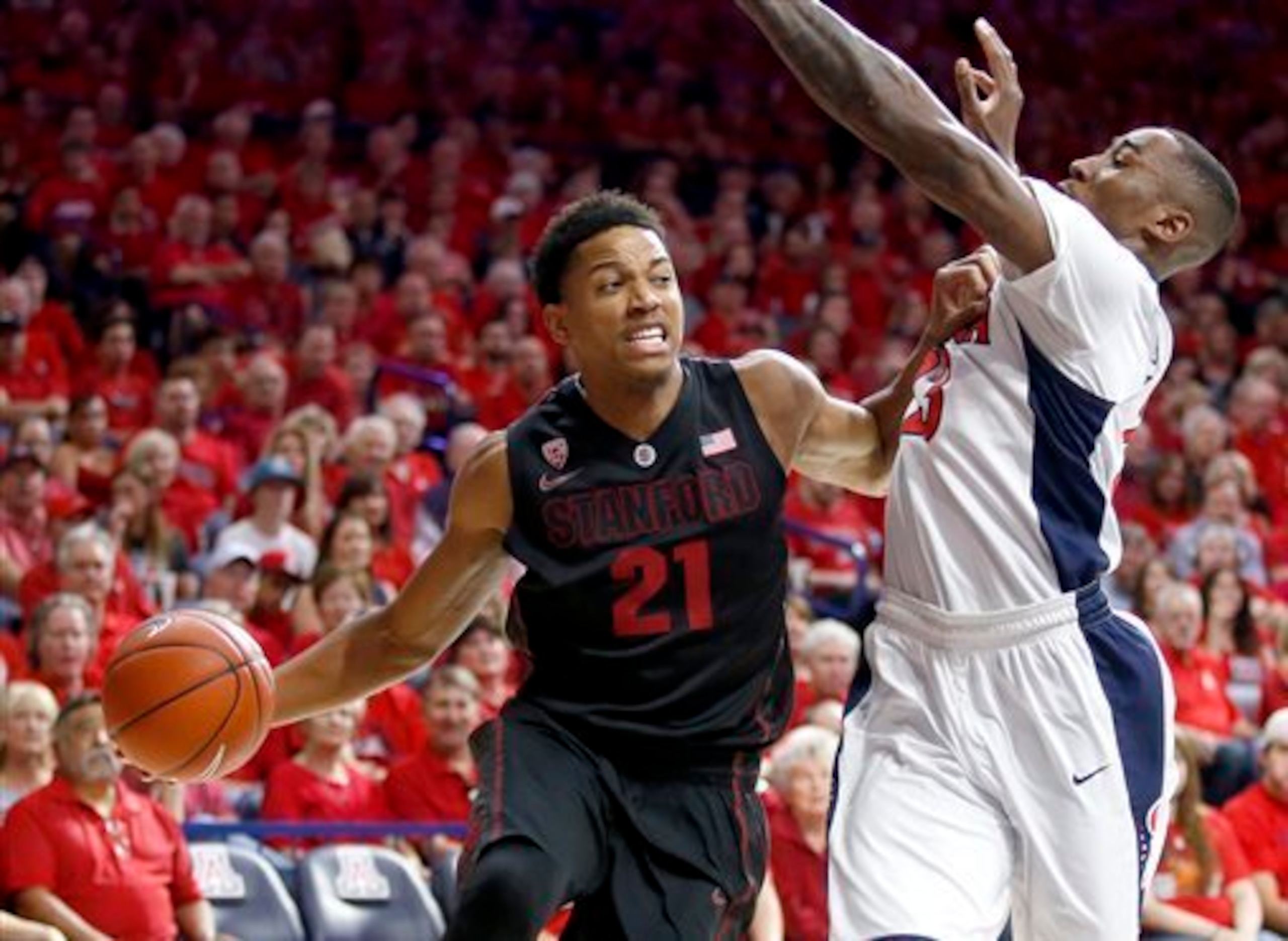
Projected draft range: Second round/undrafted
Anthony Brown's three-ball could ultimately allow him to crack an NBA roster. He's hit at least 44 percent of his threes in back-to-back seasons, having made 132-of-296 between the two.
And at 6'6", he has the size to get his shot off in the NBA.
Brown is also skilled enough to attack closeouts or beat his man to the rack off a line drive.
He still projects as just a shooting specialist, but his numbers have been awfully convincing since 2013.
45. Tyler Harvey, Eastern Washington, 6'4", SG, Junior
6 of 50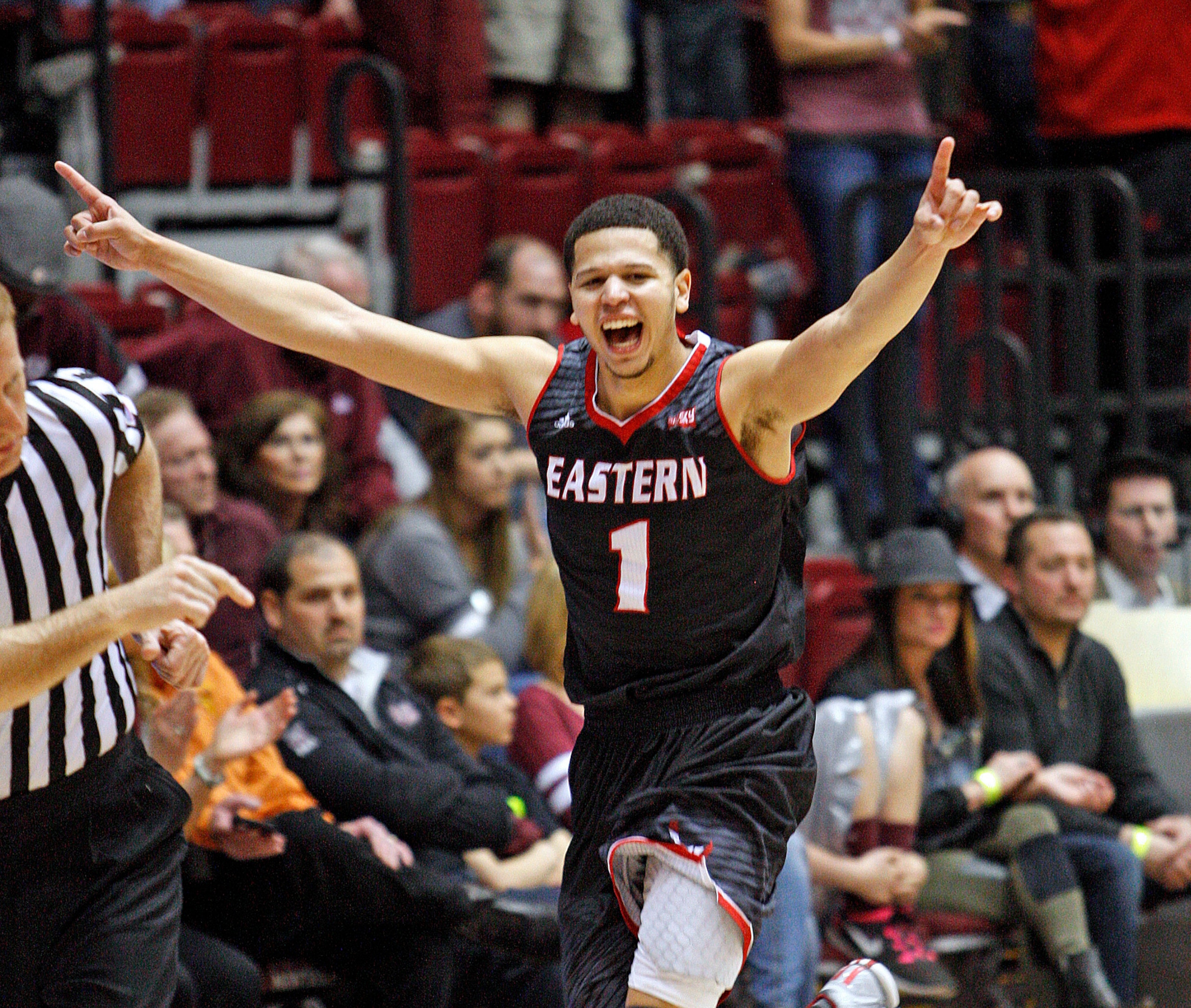
Projected draft range: Late first to second round/undrafted
Tyler Harvey led the country in scoring with 23.1 points per game. And he did it fairly efficiently, given his terrific 64.3 percent true shooting percentage, via Sports-Reference.com.
Nobody in the country made more threes than Harvey, who hit 128 in 32 games. Harvey has the ability to make and ultimately create shots from anywhere.
And despite playing in the Big Sky, he actually put up numbers against quality opponents during non-conference play, having gone for 24 points against SMU, 25 against Indiana, 21 against Washington (when it had Robert Upshaw) and 27 against Georgetown in the NCAA tournament.
As a 6'4", 185-pound 2-guard who lacks explosiveness, there is reason to be skeptical. But Harvey is certainly worth a look in this draft.
44. Mouhammadou Jaiteh, France, 6'11", C, 1994
7 of 50Projected draft range: Second round
At 6'11", 249 pounds with a 7'4" wingspan, the attraction to Mouhammadou Jaiteh stems mostly from his physical tools.
He's had a good year for Nanterre in French Pro A, averaging 10.5 points and 6.0 rebounds on 59.7 percent shooting in 20.8 minutes.
Though not the most polished offensive player, Jaiteh's interior presence alone could potentially hold NBA value.
43. Nedim Buza, Bosnia, 6'8", SF, 1995
8 of 50Projected draft range: Second round/undrafted
Nedim Buza has appealing 6'8" size for a wing, along with a dangerous outside shooting stroke. He knocked down both of his three-point attempts in the 2015 Nike Hoop Summit game.
Buza averaged 12.0 points and 5.1 rebounds on 35.3 percent shooting from deep in Bosnia this season.
He's isn't particularly strong or explosive, but with excellent size for a wing and promising perimeter-scoring ability, there is an NBA role for him to potentially fill down the road.
42. Aaron White, Iowa, 6'9", SF/PF, Senior
9 of 50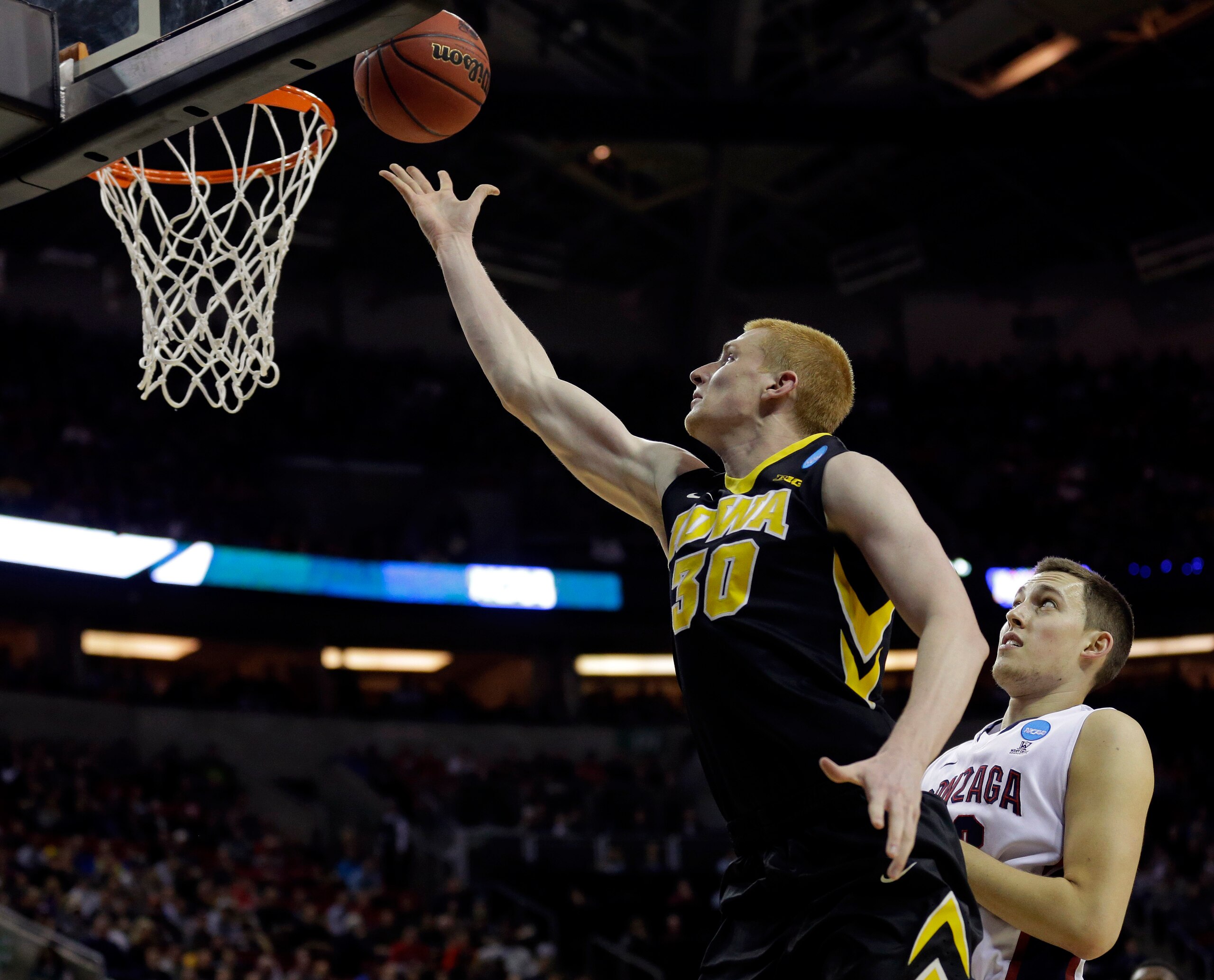
Projected draft range: Second round/undrafted
Mobile and athletic with good 6'9" size, Aaron White can be a tough cover for slower-footed bigs.
White is at his best facing the rim, where he can finish on the move and attack off the dribble. He averaged 16.4 points game, and he got to the line an impressive 8.9 times per 40 minutes.
White even hit 21-of-59 threes and 81.9 percent of his free throws.
There isn't much upside attached to White, but he's slipped under the radar as an NBA prospect. He'll be a solid second-round option.
41. Norman Powell, UCLA, 6'4", SG, Senior
10 of 50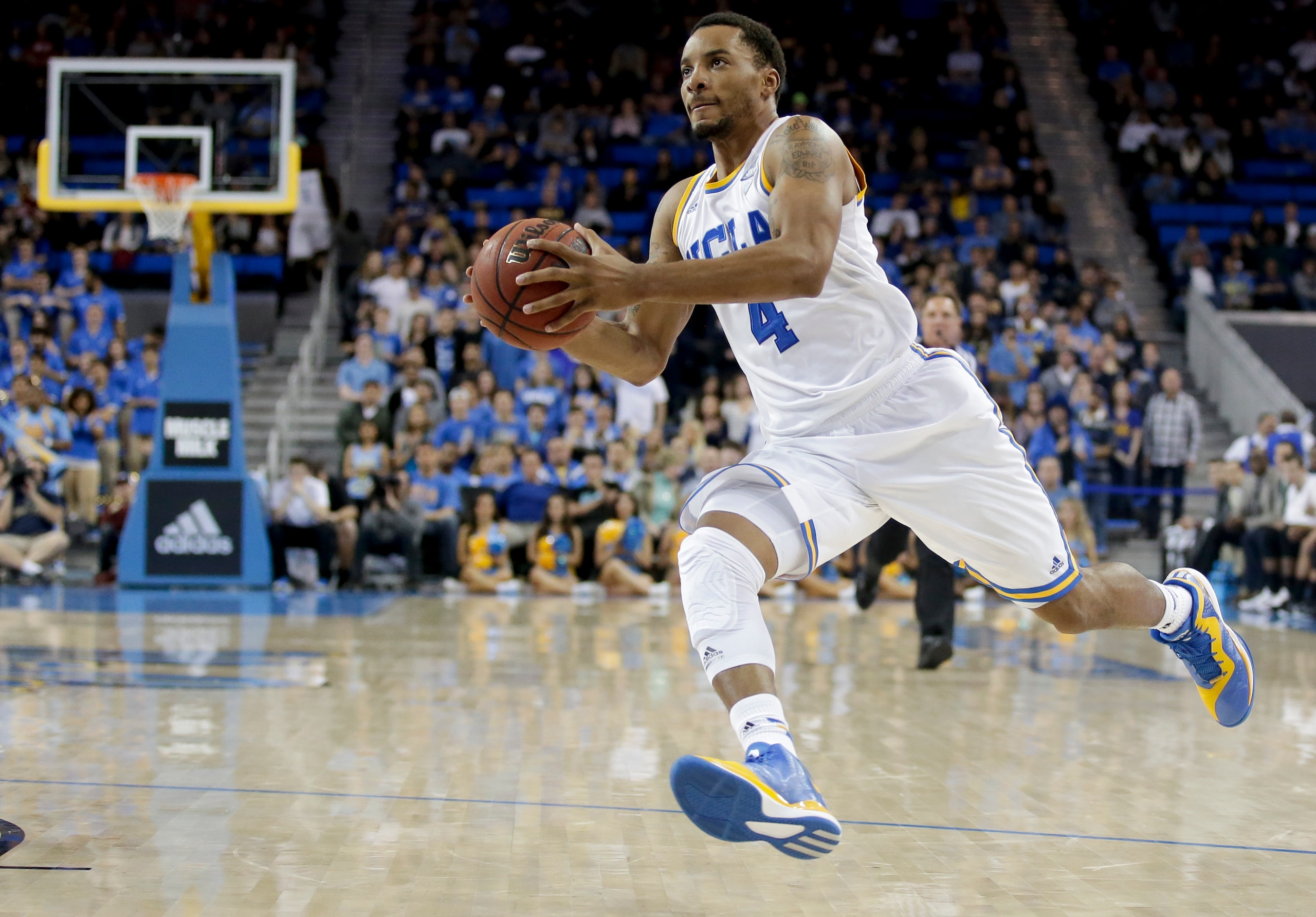
Projected draft range: Second round
Undersized for a 2-guard who also lacks shooting touch, Norman Powell's jump-out-of-the-gym athleticism and lockdown defense are still worth targeting.
He guards both ball-handlers and 2s, thanks to his giant 6'11" wingspan and speedy lateral quickness. And though not the sharpest perimeter scorer, Powell can handle the ball, explode to the rack and finish everything in transition.
Best-case scenario, we're likely talking about a defensive specialist and third man off the bench. Powell should ultimately start attracting interest fairly early in the second round.
40. Jordan Mickey, LSU, 6'8", PF, Sophomore
11 of 50
Projected draft range: Second round
Jordan Mickey was a double-double machine for LSU, having averaged 15.4 points and 9.9 rebounds. And at 6'8", he managed to lead the country in shot-blocking, a reflection of his athleticism and instincts around the rim.
He's undersized for a power forward, which is why he's ranked outside the top 30. Mickey will also enter the pros without much of a proven jumper. But he can score with his back to the basket. And his timing off cuts and misses (49 putbacks, via Hoop-Math.com) is sharp.
Mickey might not ultimately offer much offensively, but his incredible nose for the ball could potentially translate into an energizer role.
39. Michael Qualls, Arkansas, 6'6", SG, Junior
12 of 50
Projected draft range: Second round
With the NBA combine and workouts approaching, Michael Qualls has the chance to earn a reputation as arguably the top athlete in this year's field.
His ability to hang in the air has translated to dozens of highlights over the years—plays that very few players on the planet are capable of making.
The big question with Qualls revolves around his skill set, particularly whether he's sharp enough with the ball offensively.
This year, he averaged 15.9 points and improved his one-on-one game. He even hit 55 threes.
With elite athleticism, it's worth seeing whether Qualls can become a consistent enough shooter.
38. Dakari Johnson, Kentucky, 7'0", C, Sophomore
13 of 50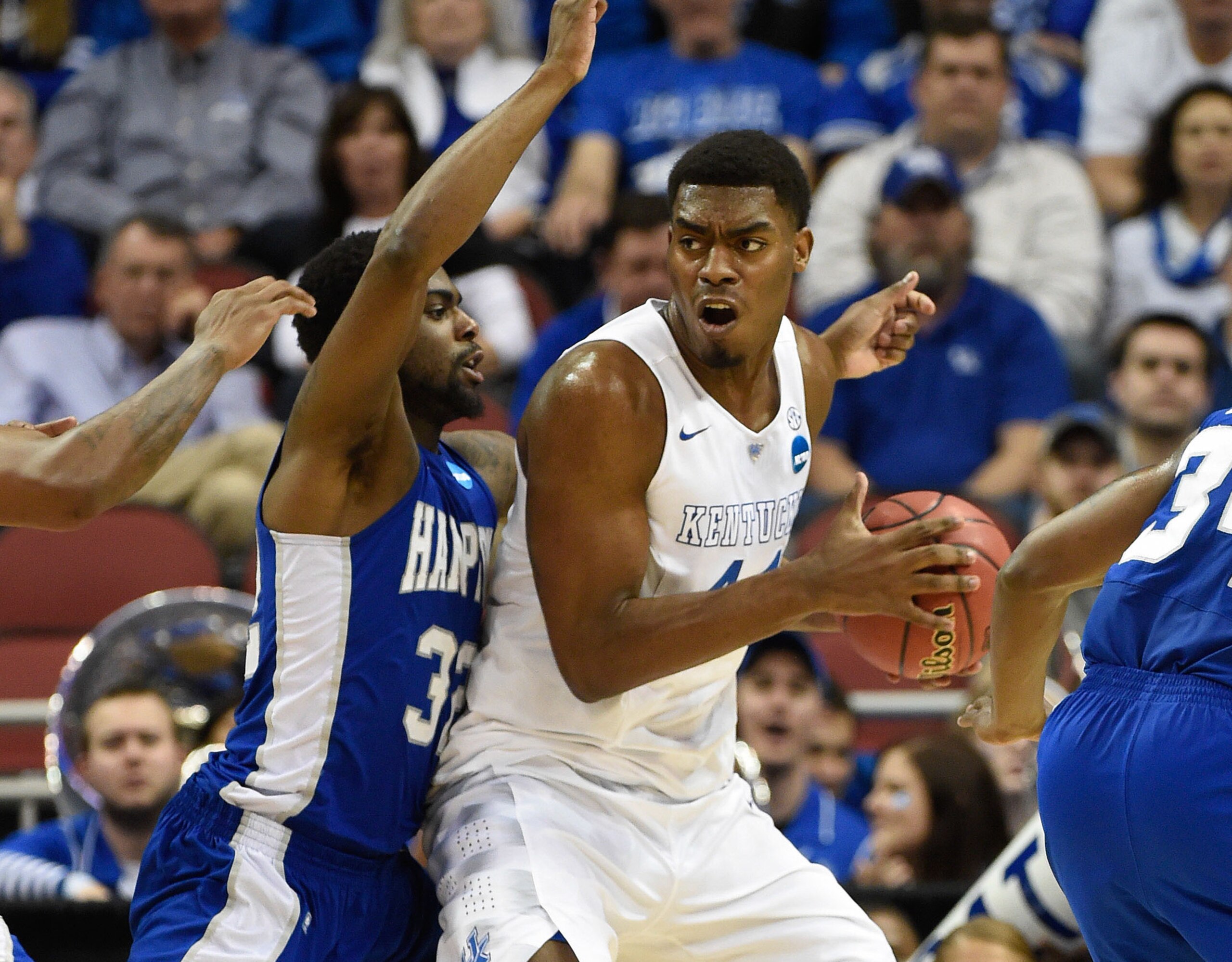
Projected draft range: Late first to second round
Dakari Johnson didn't show much improvement from one year to the next. Although, he didn't exactly get the opportunity, having played just 16.3 minutes a game as a sophomore.
Johnson's appeal still stems from his physical tools. At 7'0", 255 pounds, he's a monster presence on the low block, where he can score over the shoulder, put back misses and change shots defensively.
The lack of counter moves and a jumper limits his offensive upside, but his size and mass on the interior could potentially hold value in a backup center role.
37. Olivier Hanlan, Boston College, 6'4", PG/SG, Junior
14 of 50
Projected draft range: Second round
Olivier Hanlan flew under the radar for most of the year, with questions over his natural position having clouded his NBA outlook.
At 6'4", he's undersized for a 2-guard, which is what his skill set suggests he'd play.
However, he ended up dishing out an impressive 4.2 assists while maintaining a 19.5-point-per-game scoring average as a junior. Hanlan can create off the dribble, both for himself and teammates. And he knocked down two threes per game and at least 50 total in each of his three seasons.
If he were two inches taller, chances are, we'd be talking about Hanlan in the first-round conversation. He's worth a look in the 35-to-50 range as a playmaker to bring off the bench.
36. George de Paula, Brazil, 6'6", PG, 1996
15 of 50Projected draft range: Late first to second round
George de Paula received an invite to this year's Nike Hoop Summit, and though he didn't make much noise during the game or practices, it's pretty clear as to what makes him appealing.
At 6'6" with a 7'0" wingspan, De Paula, or George Lucas, another name he goes by, has incredible physical tools for a point guard, as well as some promising shot-making ability.
He generated some buzz last summer at the Under-18 FIBA Americas, where he averaged 13.4 points and 4.2 assists for Brazil.
Clearly a project, De Paula would seem to fall under the boom-or-bust category, making him a second-round flier with upside.
35. Justin Anderson, Virginia, 6'6", SF, Junior
16 of 50
Projected draft range: Mid-to-late first to second round
After shooting below 31 percent from three in each of his first two years at Virginia, Justin Anderson finished his third at 45.2 percent. And it landed him in the draft conversation, given the value tied to three-and-D wings.
However, Anderson went through a period from January to February where he shot just 7-of-25 from downtown. And then he broke a finger and missed eight games. After returning, he only made one triple over Virginia's final four contests.
Anderson doesn't score or create, so unless that jumper is legitimate, he could have trouble sticking in the pros. He's an ideal second-round option, but I'm not sure I'd take my chances in the first.
34. Rashad Vaughn, UNLV, 6'6", SG, Freshman
17 of 50
Projected draft range: Late first to second round
A pure scorer, Rashad Vaughn lived up to that reputation as a freshman, having averaged 17.8 points—the third most among freshmen.
With step-backs, pull-ups and floaters in the arsenal, Vaughn showed he can create his own shot against a set defense. He also ended up making 54 threes in 23 games before missing the final stretch of the year with a torn meniscus.
Vaughn ultimately has good size at 6'6", but a lack of quickness, explosiveness and athleticism limits his ability to get to and finish at the rim (53.8 percent at rim, via Hoop-Math.com).
Still, his physical tools, production and offensive polish are worth looking into—especially considering he's only 18 years old.
33. Timothe Luwawu, France, 6'7", SG, 1995
18 of 50Projected draft range: Late first to second round
Timothe Luwawu has been hiding out in France's second division, but he's still tough to miss under the NBA lens. Luwawu generated some nice hype for himself at Eurocamp last summer.
At 6'7", he has textbook physical tools and athleticism for a 2-guard or wing.
Though clearly a project, he can seemingly do a little bit of everything, with the ability to attack off the dribble, pass and make open shots.
You really get the sense Luwawu just has a natural feel for the game. We could be talking about a major steal down the road depending on how much he sharpens his skills over the next few years.
32. Terry Rozier, Louisville, 6'1", PG/SG, Sophomore
19 of 50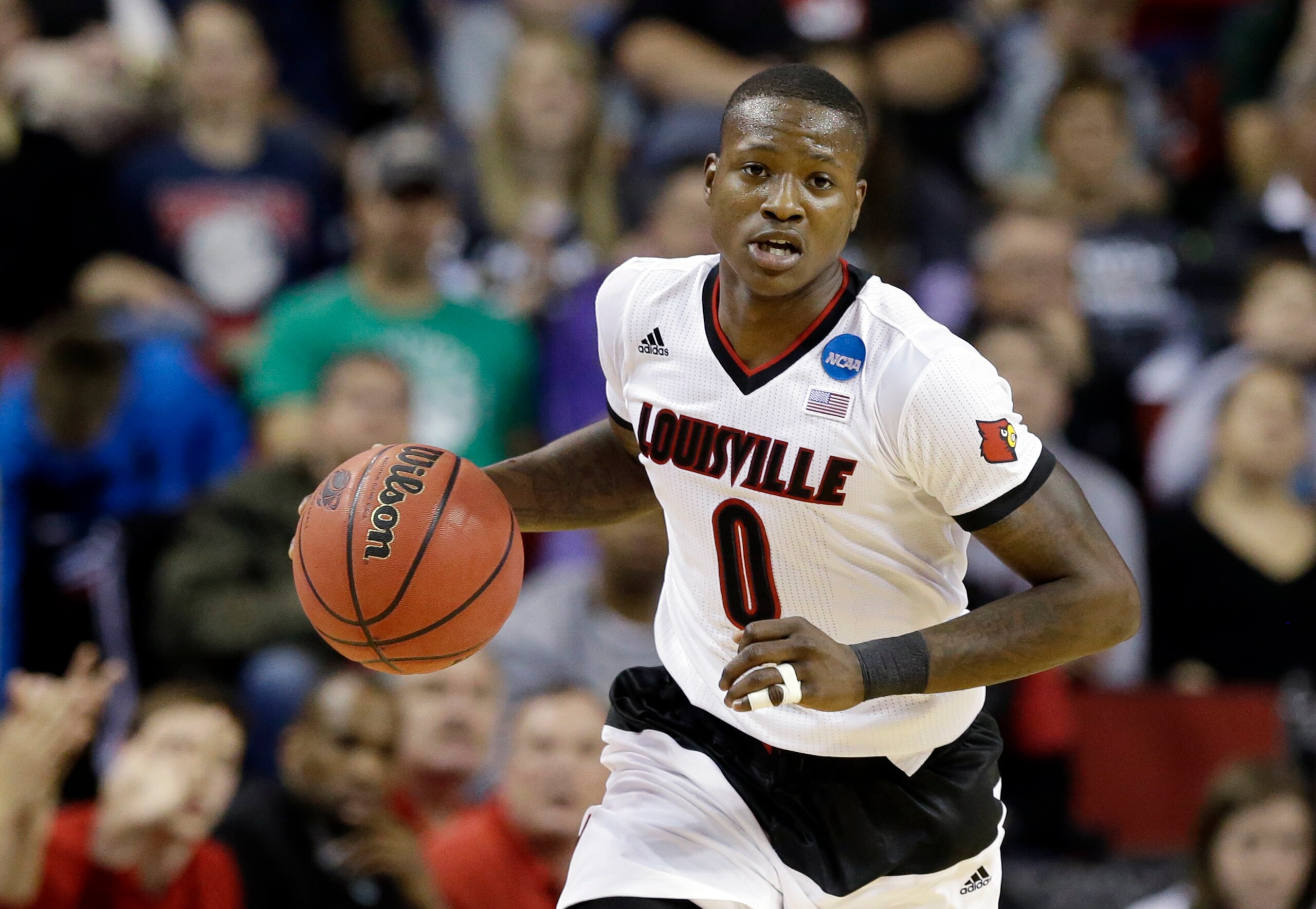
Projected draft range: Late first to second round
I'm not buying Terry Rozier as a point guard, having seen his shot selection and 3-2 assist-to-turnover ratio. But I am buying his athleticism, defense and scoring ability in a spark-plug role off the bench.
He's quick and explosive, with the repertoire to slice to the rack, finish off one foot and pull up off the dribble.
Rozier will ultimately need to become more consistent from outside, as he finished the year shooting just 30.6 percent from three.
But he's dangerous enough with the ball and tough enough defending it to find his way into the league. Improving his floor game needs to become the priority moving forward.
31. Delon Wright, Utah, 6'5", PG, Senior
20 of 50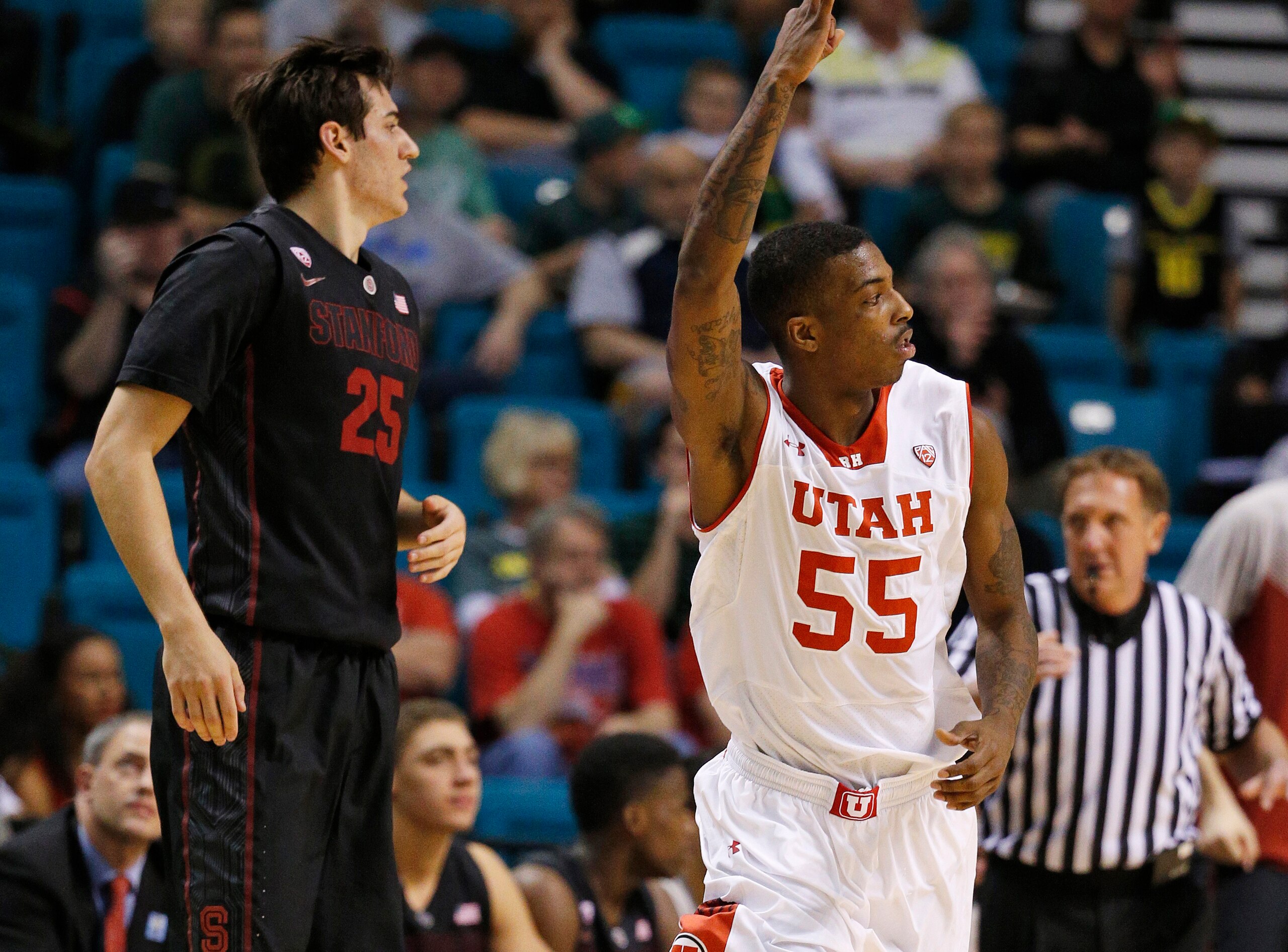
Projected draft range: Mid-to-late first to early second round
Delon Wright could have trouble scoring in the pros without much of a perimeter-scoring attack. But as a secondary ball-handler, Wright's ability to manage an offense and defend could work in a backup role.
In two years at Utah, he racked up 155 steals and 77 blocks. Wright has terrific defensive instincts, as well as the size to guard either backcourt position. And he registered a solid 4.5 pure point rating as a senior, via RealGM.com, having averaged 5.1 assists to just 1.9 turnovers per game.
He'll be 23 years old in April, so the fact that he's still a non-shooter (26 threes as a senior, no real pull-up game) suggests he'll remain one. But Wright should be good enough with the ball and sharp enough defensively to carve out a career as a reserve.
30. Cedi Osman, Macedonia, 6'8", SG/SF, 1995
21 of 50Projected draft range: Late first round to second round
Cedi Osman, 20 years old, has played a significant role for Anadolu Efes in Euroleague. And he's performed particularly well in April and through three playoff games against Real Madrid.
Last summer's Under-20 European Championship MVP, Osman is a mature, versatile wing who can handle the ball, pass and shoot.
You don't get the impression there is much upside here, but Osman clearly has a game worth paying attention to. He seems like an ideal draft-and-stash candidate either late in the first or anywhere in the second round.
29. Chris McCullough, Syracuse, 6'10", PF, Freshman
22 of 50
Projected draft range: Late first to second round
A torn ACL suffered in January makes Chris McCullough one of the bigger risk-reward options in the draft.
He sure looked like a first-round talent before going down. At 6'10" with a 7'3" wingspan and above-the-rim bounce, McCullough's athleticism and length translated to easy buckets, 2.4 steals and 2.9 blocks per 40 minutes.
In terms of his skill set, McCullough was excellent around the hoop, where he showcased the body control and instincts to finish at awkward angles. He also looked comfortable shooting in the mid-range.
Given the traditional recovery timetable for his particular injury, as well as an overall lack of polish, McCullough is a few years away from offering anything. But so are most late first-round picks. He's a project worth taking on for a team that can afford to wait on his development.
28. Aleksandar Vezenkov, Bulgaria, 6'8", SF/PF, 1995
23 of 50Projected draft range: Late first to second round
Aleksandar Vezenkov hasn't stopped scoring after leading the Under-20 European Championship last summer.
This year, he led Greece's top division with 19.2 points per game while shooting a red-hot 43.9 percent from downtown.
Vezenkov isn't much of an athlete, but like Nikola Mirotic, he can shoot, put the ball on the floor, attack in line drives and rebound (7.9 per game).
He'll be one of the higher-quality draft-and-stash options in this year's late first or second round.
27. Cliff Alexander, Kansas, 6'8", PF, Freshman
24 of 50
Projected draft range: Late first to second round
At 6'8" without a post game, jumper or face-up skills, Cliff Alexander's offensive ceiling isn't particularly high.
Having said that, he's a monster athlete with a live motor. Alexander averaged 12 rebounds and three blocks per 40 minutes, numbers that highlight his above-the-rim presence and activity level on the interior.
He's almost a year older than most freshmen (he'll be 20 in November), and he brings little to the table as a scorer. But Alexander has the tools to carve out a hustle role for himself. He's the type of player who can make things happen around the basket without needing touches.
Alexander's stock has ultimately plummeted to the point where he could even become a value pick late in the first round or early in the second.
26. Robert Upshaw, Washington (Dismissed), 7'0", C, 1994
25 of 50
Projected draft range: Late first to second round
Robert Upshaw was leading the country in shot-blocking before being dismissed from Washington back in January.
He looked like a first-round prospect, thanks to 7'0" size, a 250-pound frame and incredibly dominant numbers protecting the rim. He also pulled down 13.1 rebounds per 40 minutes and shot 59.3 percent from the floor.
Upshaw has been kicked out of two programs over the past two years, so there is obvious concern over his character. But centers who can shrink the size of the rim they're defending are always in demand. Team interviews will likely be Upshaw's biggest hurdle during the predraft process.
25. Rondae Hollis-Jefferson, Arizona, 6'7", SF, Sophomore
26 of 50
Projected draft range: Late first round
Rondae Hollis-Jefferson didn't make the offensive strides he needed to, but his lockdown ability and defensively versatility could still hold first-round value.
At 6'7" with quick feet and long arms, he can blanket ball-handlers and match up with 2-guards and wings.
And though not much of a shot-creator or shot-maker, his explosive athleticism can translate to finishes off cuts, slashes and transition opportunities.
Adding a three-ball would ultimately go a long way toward determining Hollis-Jefferson's outlook. However, I wouldn't bet on it. He made just eight threes combined in two years.
24. Tyus Jones, Duke, 6'1", PG, Freshman
27 of 50
Projected draft range: Mid-to-late first round
Tyus Jones' ball skills and feel for the position are top-notch, but a lack of strength and athleticism limits his upside. Jones could struggle defending bigger, more explosive ball-handlers. And he may have trouble finishing around the rim.
Still, he's quick and sharp enough off the dribble, and his passing instincts are terrific. Jones' ability to knock down pull-up jumpers and connect from behind the arc also bodes projects well.
He'll have the opportunity to give a team a solid, reliable backup point guard and playmaker off the bench. I could see him following a similar career path to D.J. Augustin's.
23. Kevon Looney, UCLA, 6'9", PF, Freshman
28 of 50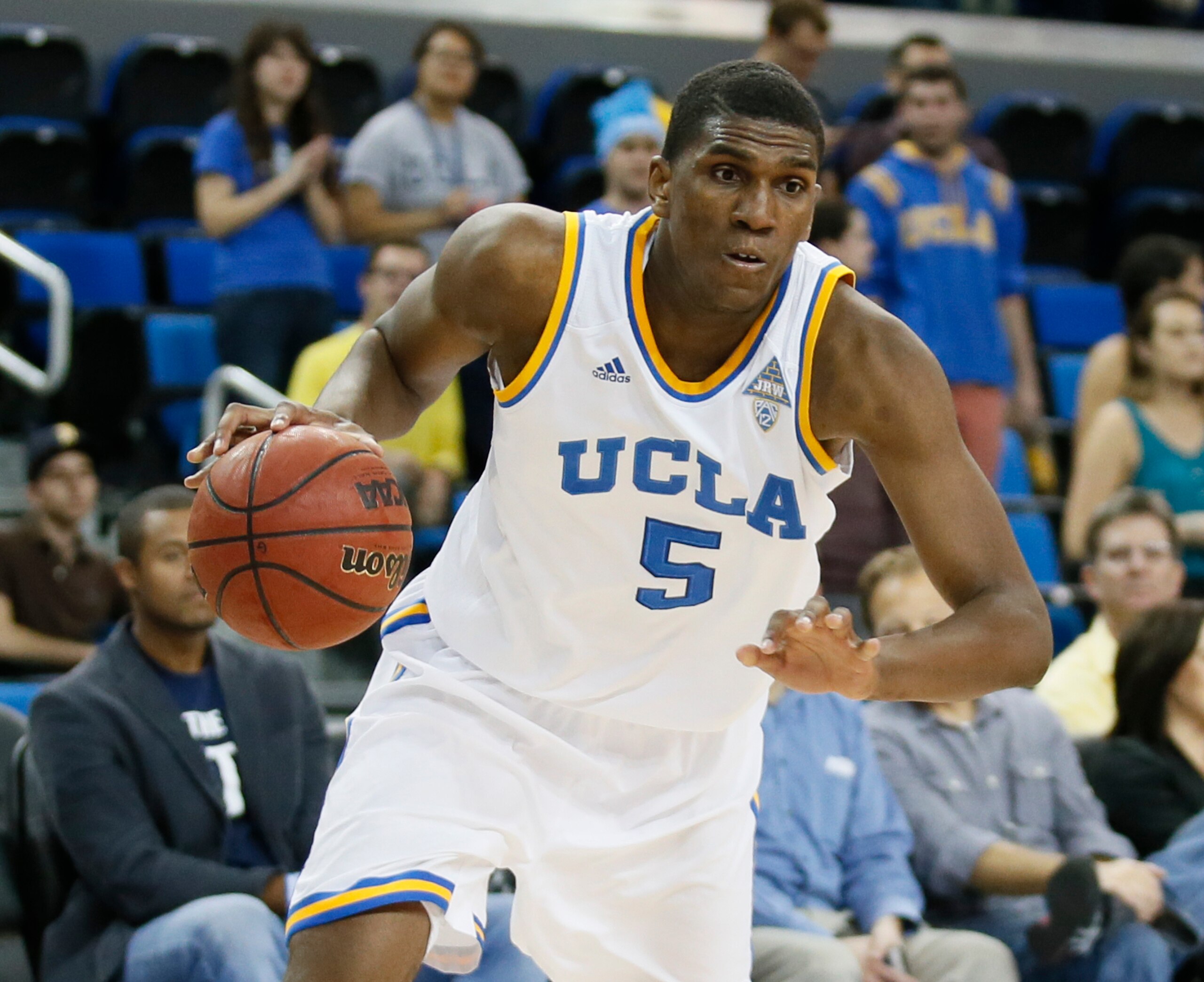
Projected draft range: Late lottery to late first round
At 6'9" with a face-up game, Kevon Looney flashed some intriguing inside-out versatility. Looney made 22-of-53 threes and looked comfortable shooting in different situations.
He also showcased a good nose for the ball on the glass, where he put back 54 misses, via Hoop-Math.com, and averaged 9.2 rebounds per game.
However, at 220 pounds, Looney is on the skinny side for a power forward. And he hasn't shown much of a post game, either. But Looney also lacks the traditional athleticism and quickness of a wing, which raises questions concerning his position.
If he can avoid the tweener label, he'll have the potential to develop into a mismatch. Looney is a risk-reward option worth gambling on in the mid-to-late first round.
22. Montrezl Harrell, Louisville, 6'8", PF, Junior
29 of 50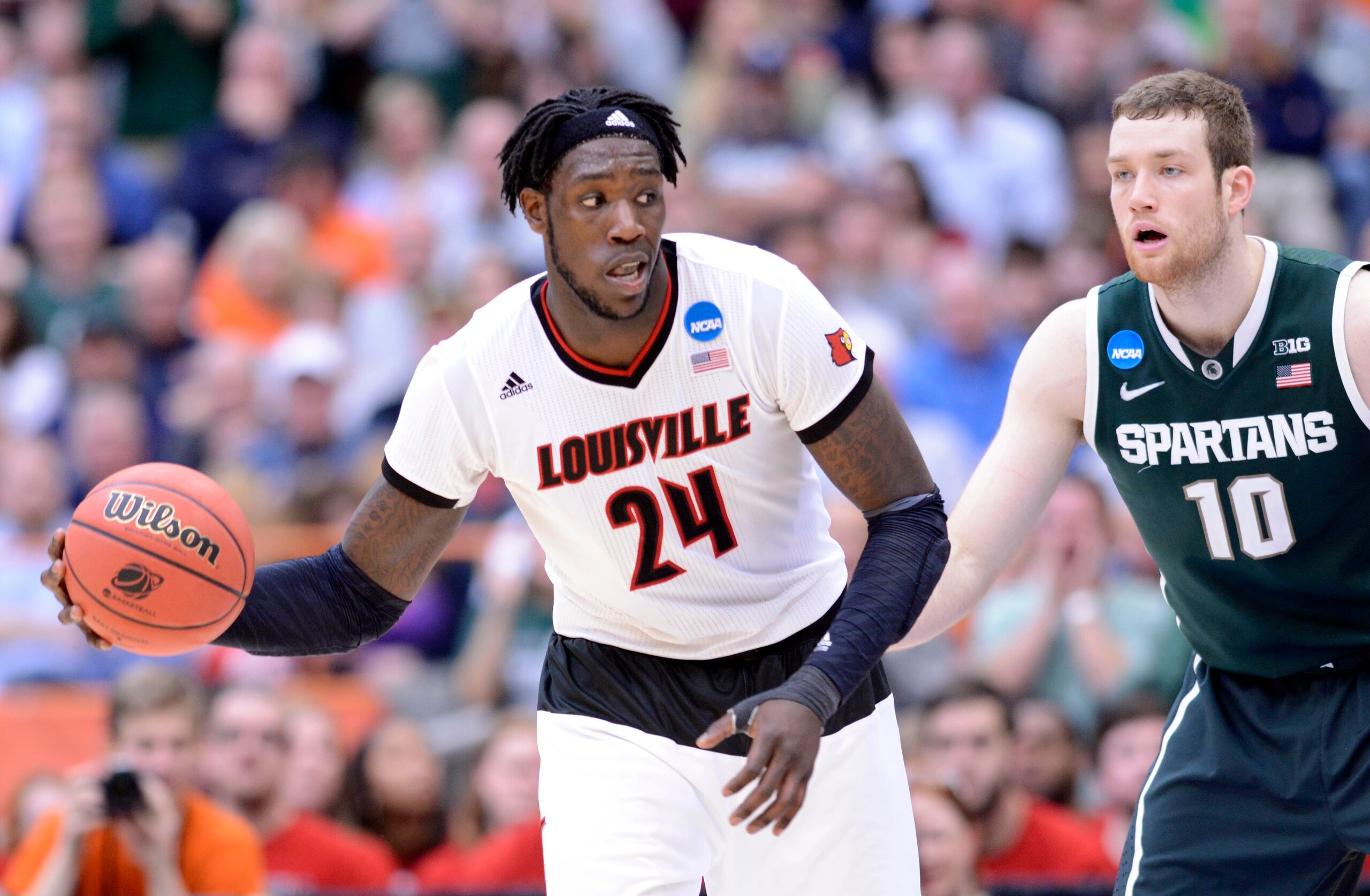
Projected draft range: Mid-first to late first round
Having shot below 60 percent from the free-throw line and made just 9-of-37 threes, Montrezl Harrell failed to make the necessary improvements a draft-stock boost would have required.
Per 40 minutes, his scoring, rebounding and block averages each took a hit.
Harrell's game is ultimately predicated on athleticism and activity around the rim, where he's a powerful finisher and a live body under the boards. However, he's 6'8" and lacks post skills, a troublesome combination for an interior-oriented player.
Still, Harrell projects as an energy guy and physical frontcourt presence—something half the league could use. Just don't expect his offensive numbers to translate.
21. Jarell Martin, LSU, 6'10", PF, Sophomore
30 of 50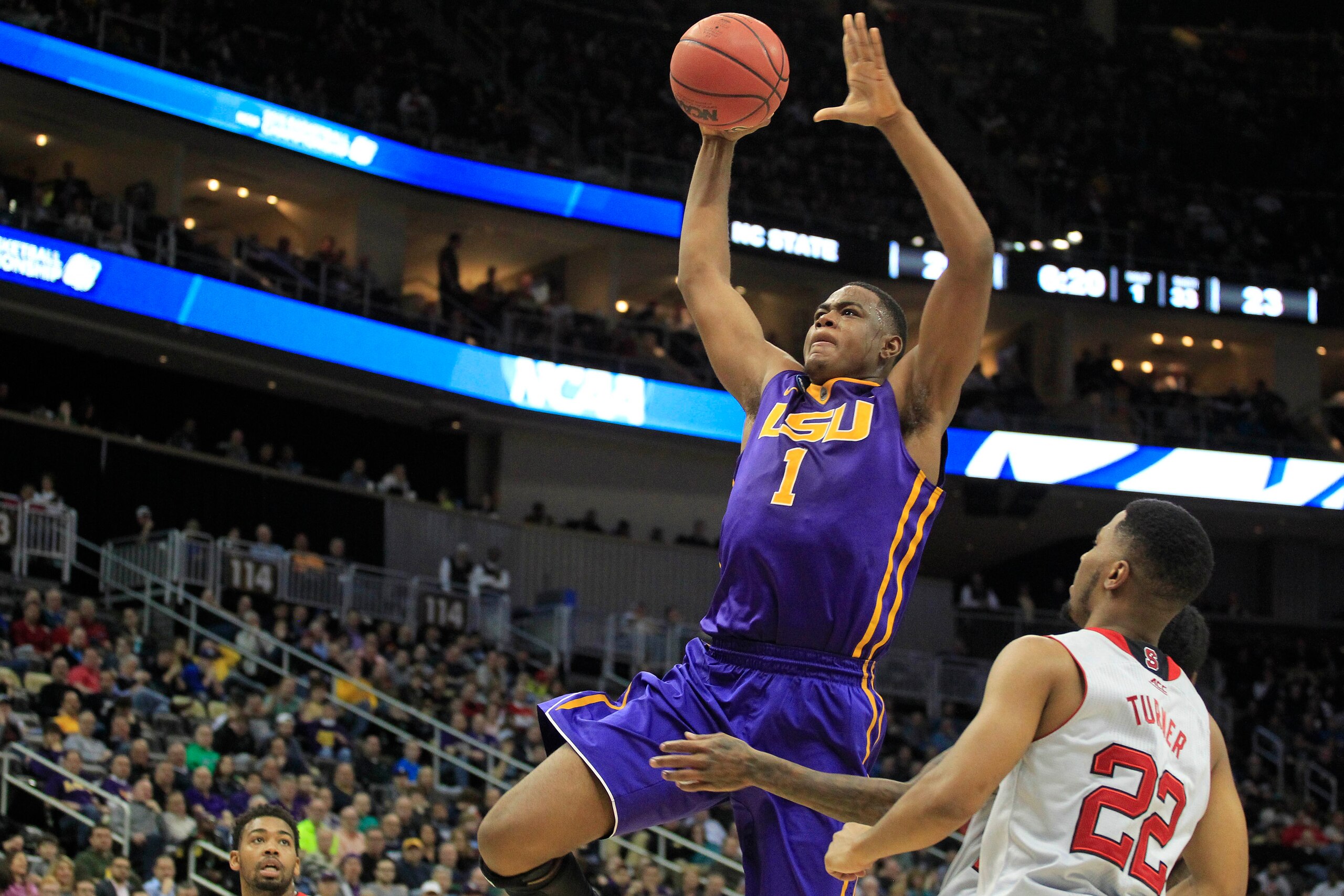
Projected draft range: Mid-first to early second round
With above-the-rim bounce and a good-looking face-up scoring attack, Jarell Martin could be a tough cover for NBA power forwards.
At 235 pounds, Martin can put the ball on the floor and finish on the move. And though he needs to improve as a shooter, he's capable in the mid-range.
Down low, Martin has the strength to bully opposing big men for rebounds, buckets and position.
His measurements at the combine could ultimately move the needle one way or the other. Martin came in smaller than 6'8" this past summer at the Nike Skills Academy, via DraftExpress.com. Meanwhile, LSU lists him at 6'10".
If it turns out he's closer to 6'8", it will become even more imperative that Martin expand his range and improve that jumper. At 6'10", we could be talking mismatch.
20. R.J. Hunter, Georgia State, 6'6", SG, Junior
31 of 50
Projected draft range: Late lottery to late first round
As a 190-pound 2-guard, don't bank on R.J. Hunter's one-on-one game seamlessly translating. However, his ability to knock down jumpers off spot-ups and movement should work.
Teams are always looking for shot-makers to spread the floor and complement the playmakers and post men. And that has Hunter's name written all over it. He made 253 threes in three years at Georgia State.
Hunter also doubled his assist rate as a junior, having showcased impressive passing instincts and basketball IQ.
I wouldn't peg him as a top gun in an NBA offense the way he was in school. But Hunter could thrive as a No. 3-to-No. 5 option if the fit is right.
19. Christian Wood, UNLV, 6'11", PF, Sophomore
32 of 50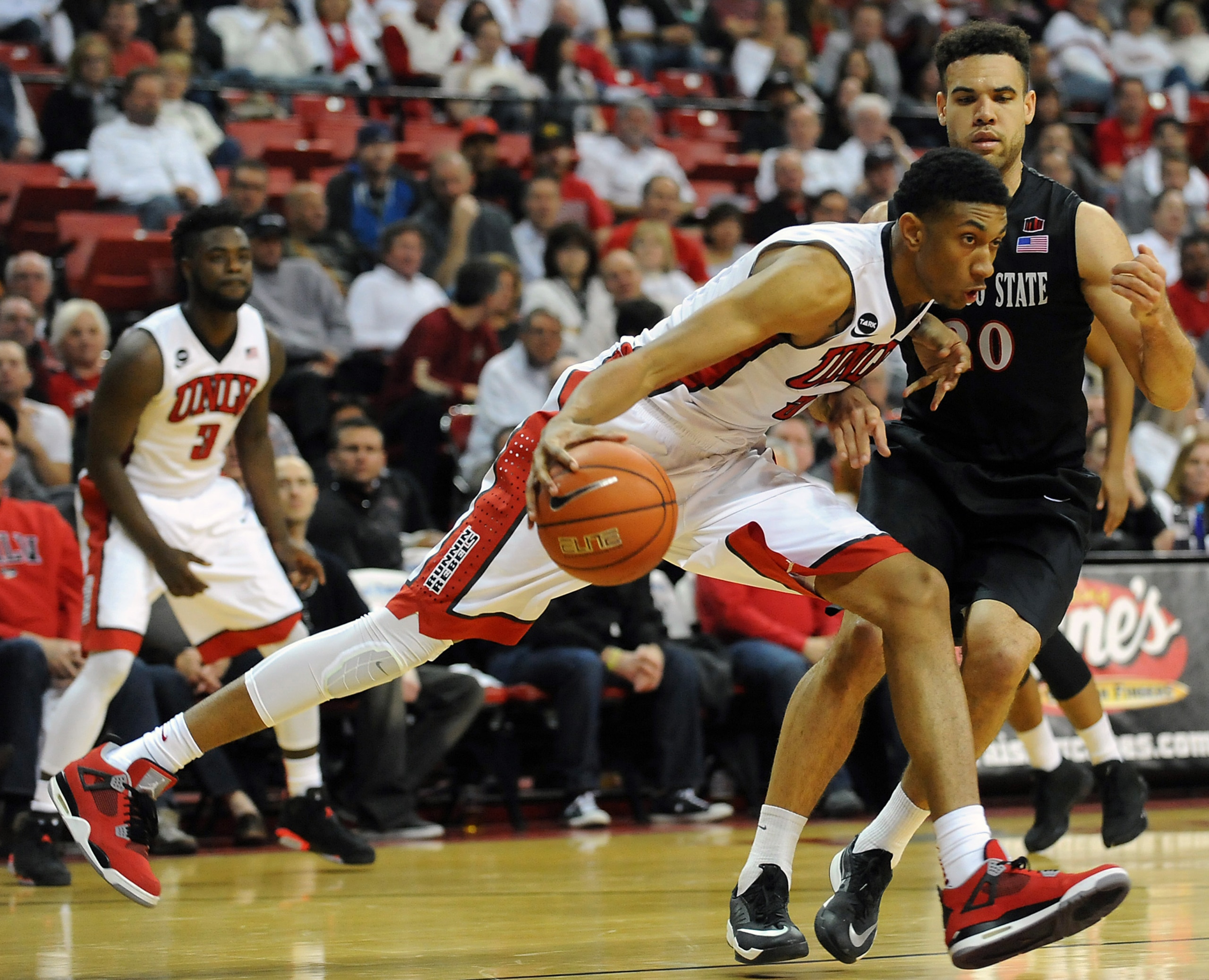
Projected draft range: Late lottery to late first round
Christian Wood might need to spend a good portion of his rookie year in the D-League and weight room, but for a 6'11" big man, there isn't much he can't do.
As a scorer, he averaged 15.7 points, having flashed some intriguing shooting potential in the stretch (25 threes) and pick-and-pop game. And he poses a difficult cover for bigs on the perimeter, where he likes to face up, attack and spin off line drives.
Wood's athleticism and above-the-rim hops also translated to 10.0 rebounds and 2.7 blocks per game.
He'll need to get stronger to play through contact on the low block. And continuing to improve that jumper (28.4 percent from three) would be huge. But Wood's versatility gives him one of the higher ceilings of those projected to be selected outside the top 10.
18. Bobby Portis, Arkansas, 6'11", PF, Sophomore
33 of 50
Projected draft range: Mid-first round
Bobby Portis looks like as safe of a pick as there is in the mid-first-round range, thanks to his 6'11" size and polished inside-out game.
A lack of explosiveness, both off the dribble and around the rim, may limit his ability to pick up easy buckets. And for a big man, that lowers his ceiling.
However, he has a shooting stroke that could carry him to a long career. And Portis is a sharp one-on-one scorer in the post, where he can drop-step into a jump hook or fall away into a jumper.
He isn't likely to offer much rim protection or heavy activity under the boards, but Portis should be able to last as a pick-and-pop, inside-out 4.
17. Sam Dekker, Wisconsin, 6'9", SF, Junior
34 of 50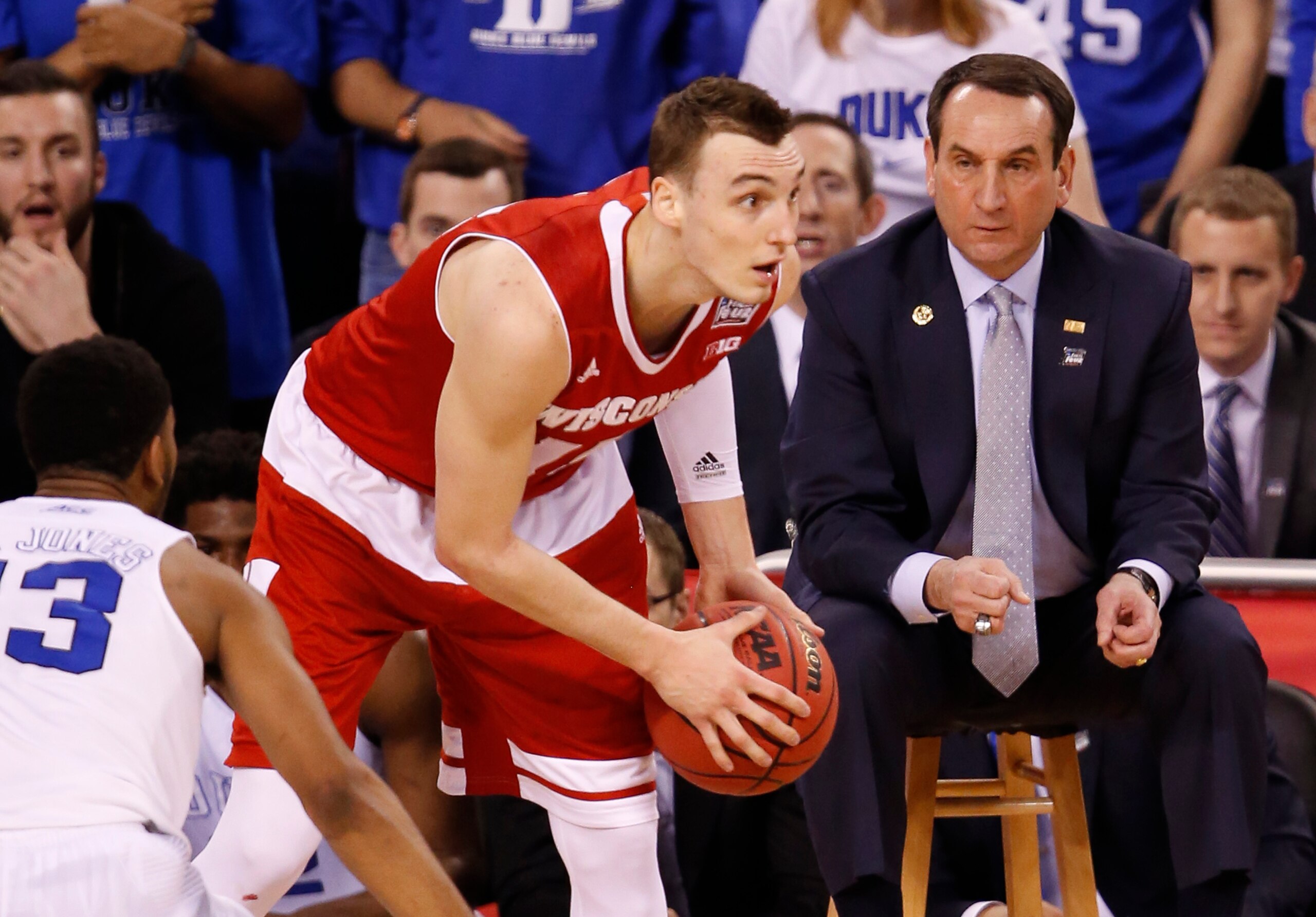
Projected draft range: Late lottery to mid-to-late first round
Sam Dekker may have made some money with a strong NCAA tournament, but it shouldn't have altered his projection as a pro.
Despite going off as a scorer in the final five games for Wisconsin, he still projects as a do-it-all role player with the ability to knock down open shots, handle the ball, pass, finish and defend.
Dekker isn't proficient in any one area of the game. In fact, he's shot below 34 percent from three and averaged fewer than 1.5 assists in each of his last two seasons. His three-year career high heading into March Madness was just 22 points.
However, Dekker's versatility could work well in a glue-guy role that doesn't require him to create. And with above-average athleticism and great 6'9" size for a wing, he should have a natural physical advantage most nights.
Still, becoming a consistent shooter will ultimately be the key for Dekker to succeed—at least if he's looking to eventually justify lottery value.
16. Kelly Oubre, Kansas, 6'7", SF, Freshman
35 of 50
Projected draft range: Late lottery to mid-first round
Kelly Oubre flashed a mixed bag of promising attributes and questionable inconsistency.
There is obvious upside tied to his blend of size, athleticism and shot-making ability. Oubre made 1.8 threes per 40 minutes and showcased the body control to finish on the move.
His quickness and length also led to a handful of standout defensive plays, whether it was containing dribble penetration or making a highlight block.
But he racked up just 28 total assists in 756 minutes this past season. Oubre showed little ability to create or pass the ball, which forces him to rely on effective shooting and perimeter scoring that much more. And he only shot 35.8 percent from three and 71.8 percent from the line.
His motor also doesn't elicit words like "workhorse" to describe it.
Oubre has plenty of talent, but also lots to improve upon at both ends of the floor.
15. Devin Booker, Kentucky, 6'6", SG, Freshman
36 of 50
Projected draft range: Late lottery to mid-to-late first round
Devin Booker projects as your textbook shot-maker—a wing who can knock down jumpers and finish off the catch, but one who struggles to create his own offense.
Rarely did we see Booker score after putting the ball on the floor and separating. He's not someone you want to isolate one-on-one and ask to get your team a bucket. Booker is at his best spotting up off the ball and running off screens and shooting.
He made 41.1 percent of his threes, and based on his 6'6" size and picturesque mechanics, you get the impression it's a number that can translate to the pros.
Best-case outcome, we could be looking at another version of J.J. Redick.
14. Jerian Grant, Notre Dame, 6'5", PG/SG, Senior
37 of 50
Projected draft range: Late lottery to mid-to-late first round
Jerian Grant should be one of the safer options for late-lottery-to-mid-first-round teams.
His combo-guard label speaks more to his versatility—not a lack of a natural position. Grant showcased the vision and passing instincts of a true facilitator, given his terrific 6.2 pure point rating, via RealGM.com, and 6.7-2.2 assist-to-turnover ratio.
And at 6'5", he has the size and scoring repertoire to slide off the ball at the 2, where he can attack or create space to sink mid-range jumpers.
Grant will be 23 years old next season, and he isn't the most explosive athlete—two things that limit his perceived upside. But between Grant's physical tools, handle, playmaking and shot-making ability, there isn't much risk attached to him.
13. Cameron Payne, Murray State, 6'2", PG, Sophomore
38 of 50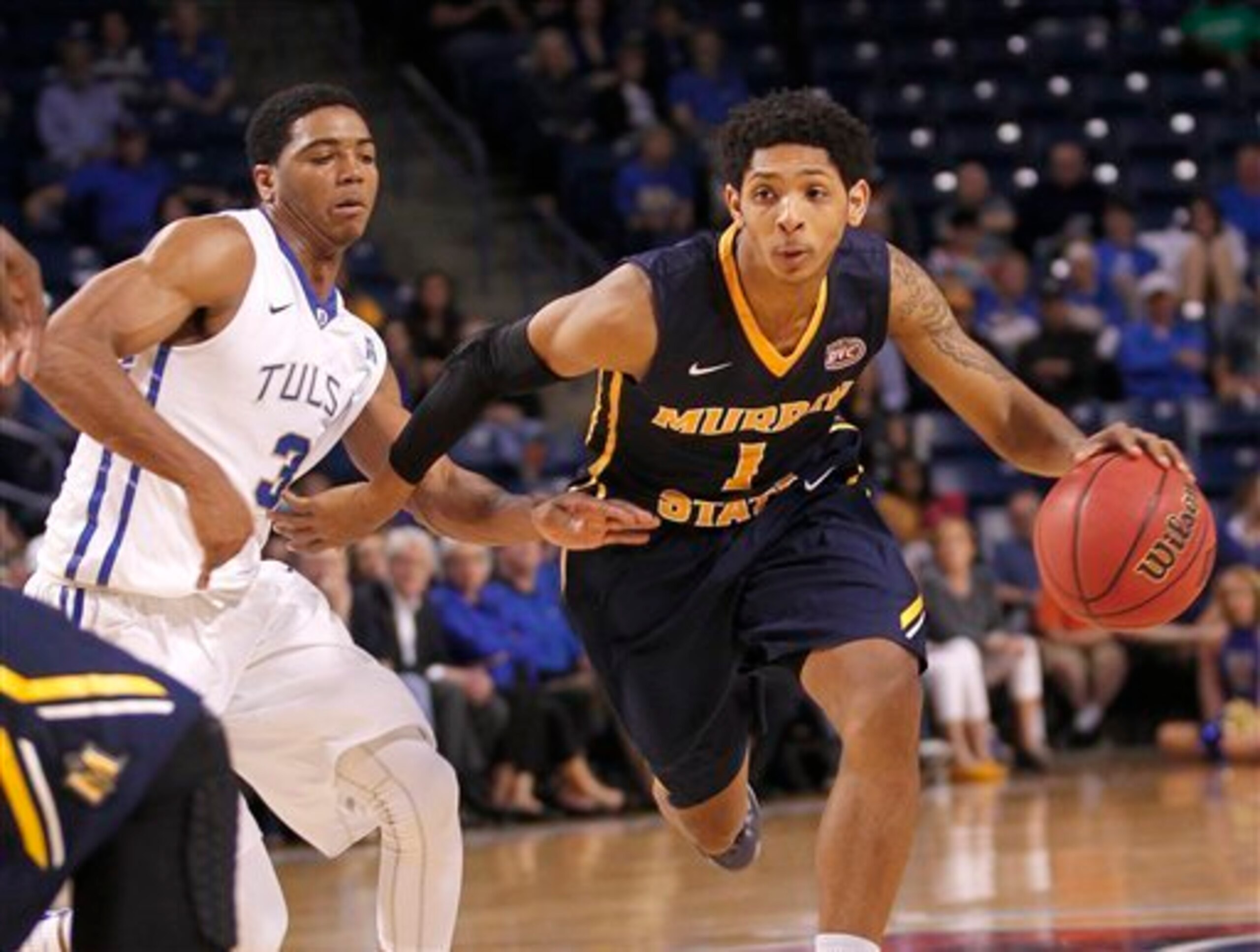
Projected draft range: Late lottery to late first round
Strength of schedule would be the only reason not to buy into Cameron Payne. He averaged 20.2 points and finished sixth in the country in assist percentage, via Sports-Reference.com—stats that reflect his polished, savvy playmaking ability.
He didn't face much quality competition, but he still managed to dominate night after night as the focus of every opposing defense.
And though he's on the skinny side at 180 pounds, Payne has adequate size and quickness for an NBA point guard.
He's a threat to score or pass out of every situation. As a sophomore, Payne hit 84 threes and 99 two-point jumpers (at a 45.6 percent clip, per Hoop-Math.com) consisting of pull-ups, runners and floaters. And he's terrific dishing or scoring out of pick-and-rolls and creating shots for teammates in transition, where he picked up 45 percent of his assists.
Workouts will ultimately be key for Payne, during which he'll have the opportunity to prove himself against power-conference guards.
12. Frank Kaminsky, Wisconsin, 7'0", PF/C, Senior
39 of 50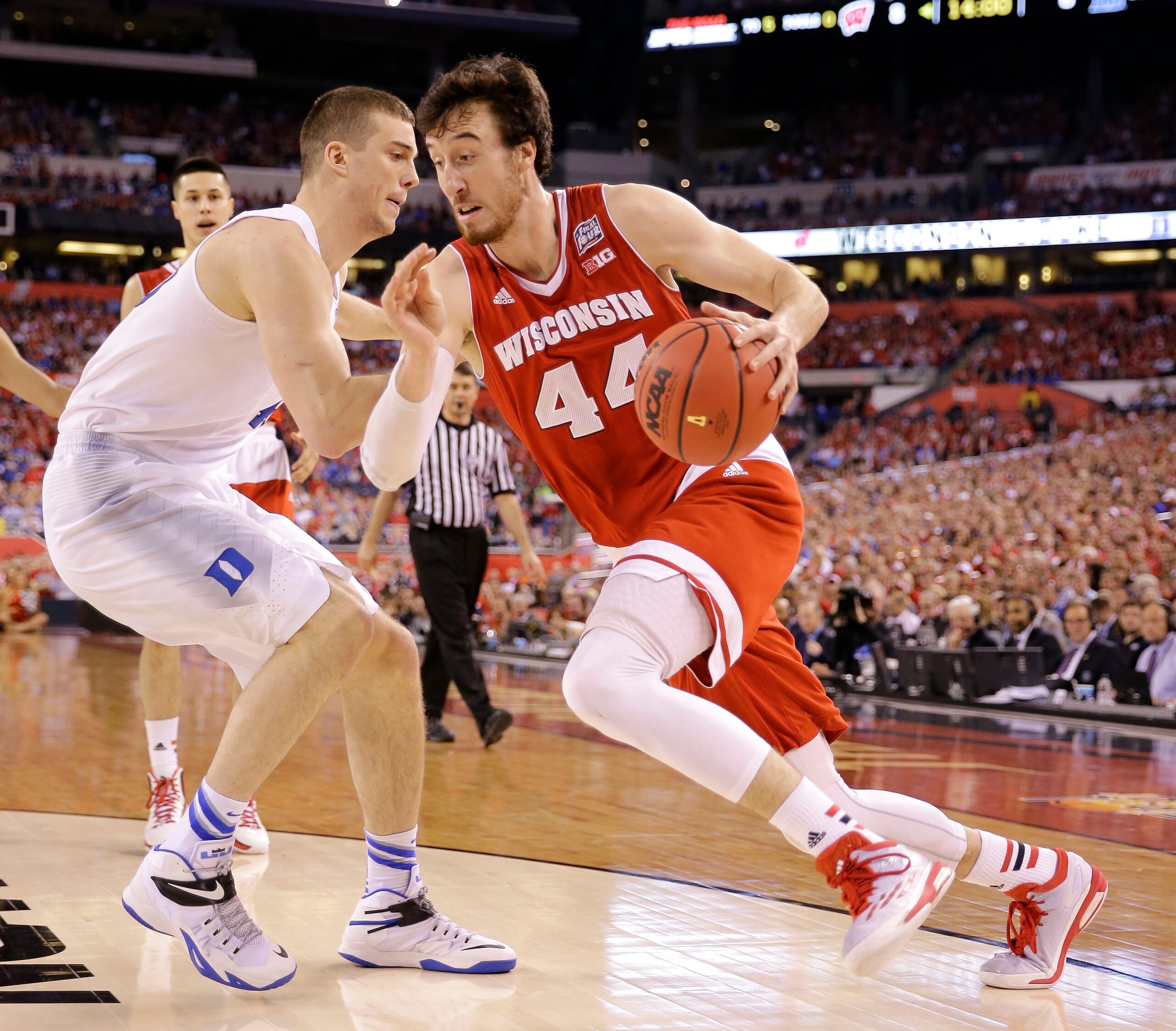
Projected draft range: Late lottery to mid-first round
Without much athleticism, strength or quickness, I'm not fully convinced Frank Kaminsky's post-scoring attack will translate. However, his shooting stroke is easy to buy. And 7-footers who can stretch the floor are highly valued in today's NBA.
Kaminsky made 42 threes and shot 41.6 percent from downtown. His ability to put the ball on the floor, spin off line drives and finish on the move should also work against slower bigs.
The Naismith Award winner is not exactly an overwhelming rebounder or defender (4.5 percent block percentage is extremely low), but between his shot-making skills, footwork and basketball IQ, we'll give him low-end-starter-to-high-end-backup potential.
11. Myles Turner, Texas, 6'11", PF/C, Freshman
40 of 50
Projected draft range: Late lottery to mid-first round
Myles Turner might be one of the bigger risk-reward values in the draft—depending on how far up one has to reach to get him.
Scouts have questioned his mobility, strength and athleticism. But he did average 4.7 blocks and grab 11.8 rebounds per 40 minutes.
And very rarely do you see rim-protectors who can also stretch the floor offensively. Turner flashed some potential as a shooter, having made 17 threes and shot 83.9 percent from the line.
However, he showed little ability to create high-percentage shots for himself, with most of his post-up opportunities resulting in fallaways or turnaround jumpers away from the hoop.
And though he's certainly capable from outside, his 27.4 percent three-point stroke wasn't very convincing.
10. Trey Lyles, Kentucky, 6'10", PF, Freshman
41 of 50
Projected draft range: Late lottery to mid-to-late first round
Trey Lyles has a game built for the NBA 4, where he can work the pick-and-pop game, face up and attack or score around the low block.
He isn't overly explosive, but his footwork and touch are both excellent.
We probably won't ever be talking about a plus defender or walking double-double. There are questions as to whether he can guard the perimeter, while his 13.3 percent rebounding percentage is somewhat of a letdown.
However, Lyles offers an NBA-friendly blend of mid-range shooting, polished offense and a high basketball IQ. He looks like a safe pick anywhere outside the top nine.
9. Kristaps Porzingis, Latvia, 7'0", PF, 1995
42 of 50Projected draft range: Lottery
Like most international teenagers, Kristaps Porzingis' appeal stems from his long-term potential. He's more of a project than an immediate solution.
But his offensive versatility fuels some intriguing mismatch potential. At 7'0", Porzingis is an excellent above-the-rim athlete who can stretch the floor as a shooter (39-of-106 from three) and separate into jumpers in the mid-range or post.
Off the ball, he's a threat to finish a play off cuts, lobs, putbacks or transition opportunities.
Weighing in at around 220 pounds, he'll need a few years to build up his body for the interior. But as a mobile power forward who can score on the perimeter, face up and attack, Porzingis has a game suited for today's NBA.
8. Mario Hezonja, Croatia, 6'8", SG/SF, 1995
43 of 50Projected draft range: Lottery
Between Euroleague and Spanish ACB, Mario Hezonja has played fewer than 16 minutes per game in each of his last two years with Barcelona. It's been tough for him to establish any rhythm, which also makes him one of the more difficult prospects to evaluate.
But every so often, Hezonja catches fire and flashes the upside that's put him on the map since 2011. He's lethal from behind the arc, where he's shooting 40.3 percent. And with world-class athleticism, 6'8" size, the ability to handle the ball and create, Hezonja projects as a mismatch for opposing 2-guards and wings.
There is some risk associated with Hezonja, given the limited game film he's provided us (and scouts) to break down. But if Hezonja pans out, the payoff should justify top-10 value.
7. Stanley Johnson, Arizona, 6'7", SF, Freshman
44 of 50
Projected draft range: Lottery
Standing 6'7", 245 pounds with above-average athleticism, Stanley Johnson was built for the NBA wing. And it turns out he's more polished offensively than we anticipated he'd be out of high school.
As a freshman, Johnson finished as the leading scorer for an NCAA tournament No. 2 seed. He flashed a promising offensive attack consisting of perimeter scoring and a sound in-between game. He hit 43 threes at a respectable 37.1 percent clip. And he's shot an impressive 44.4 percent on two-point jumpers consisting of pull-ups, floaters and runners, according to Hoop-Math.com.
Johnson also has encouraging defensive potential when you take into account his size, strength, length, quickness and intensity.
He shot just 52.7 percent at the rim, which is the only area where he really struggled. Johnson must improve his one-on-one game as well, but he has the time and skill set to make it happen.
6. Willie Cauley-Stein, Kentucky, 7'0", C, Junior
45 of 50
Projected draft range: Top 10
There won't be any mystery as to what Willie Cauley-Stein will be offering. The only question is how to value it.
Though not a threat to create one-on-one against a set half-court defense, Cauley-Stein has the potential to become one of the most unique and versatile defenders in the league.
His ability to protect the rim, switch onto guards in pick-and-roll coverage and pressure full court could be enough to justify top-10 interest. Cauley-Stein is a one-of-a-kind athlete for a 7-footer, and though limited as a scorer, his size and leaping ability translate to easy above-the-rim buckets that wouldn't be so easy for everyone else.
I like to compare him to Nerlens Noel on defense and Tyson Chandler on offense. Hopefully, he lands in a place that allows him to play to his strengths.
5. Justise Winslow, Duke, 6'6", SF, Freshman
46 of 50
Projected draft range: Top 10
We found out early about the high-flying athleticism, motor and defense. That's what ultimately gives Justise Winslow a high basement floor. If worst comes to worst, he can be a wing who guards multiple positions, finishes in the open floor and plays with positive energy.
But it's the offensive upside Winslow flashed that's put him in the top-five conversation. Though still a major work in progress as a scorer, Winslow's one-on-one game seemed to improve down the stretch of the season. And he ended up making 41.8 percent of his threes on 110 attempts.
Winslow will have to continue making strides as a shot-creator and scorer in the mid-range. He converted just 26.9 percent of his 93 two-point jump-shot attempts, via Hoop-Math.com.
Still, he'll be a safe yet potentially high-reward draft option for teams selecting anywhere outside the top four.
4. Emmanuel Mudiay, China, 6'5", PG, 1996
47 of 50
Projected draft range: Top five
At 6'5", 200 pounds with a 6'9" wingspan and above-the-rim burst, Emmanuel Mudiay already looks the part of an NBA point guard. And regardless of how poor the defense is over in China, he still took it to opposing pros and draft picks for 18.0 points and 5.9 assists per game.
Mudiay is incredibly dangerous off the dribble, where he can change speed and direction and make plays over the defense, both as a scorer and passer.
The big questions with Mudiay concern his jumper, shot selection and turnovers, all documented weaknesses out of high school. And nothing has changed following his stint overseas, where he coughed it up 3.3 times per game and shot 13-of-38 from three and 27-of-47 from the line.
Mudiay's ceiling is high due to the mismatch he presents as a ball-handler. Whether he reaches that All-Star upside will come down to how much he improves as a shooter and decision-maker.
Either way, Mudiay's talent alone should allow him to start from Day 1 as a rookie.
3. D'Angelo Russell, Ohio State, 6'5", PG/SG, Freshman
48 of 50
Projected draft range: Top six
Razor-sharp offensively, from his ball-handling and passing to his scoring and shooting (41.1 percent from three, 2.7 made threes per game), D'Angelo Russell finished the season as the only freshman in the last 18 years to average at least 19 points and five assists, via Sports-Reference.com.
You can argue all you want about whether he's a point guard or shooting guard. Quite frankly, it may not even matter in today's NBA. He's versatile and big enough to play on or off the ball.
Without standout explosiveness or burst, the only question is if he'll be able to execute against NBA defenders. But I'd take my chances on Russell's ridiculously high skill level—the way the Warriors did when they drafted the 181-pound Stephen Curry.
2. Jahlil Okafor, Duke, 6'11", C, Freshman
49 of 50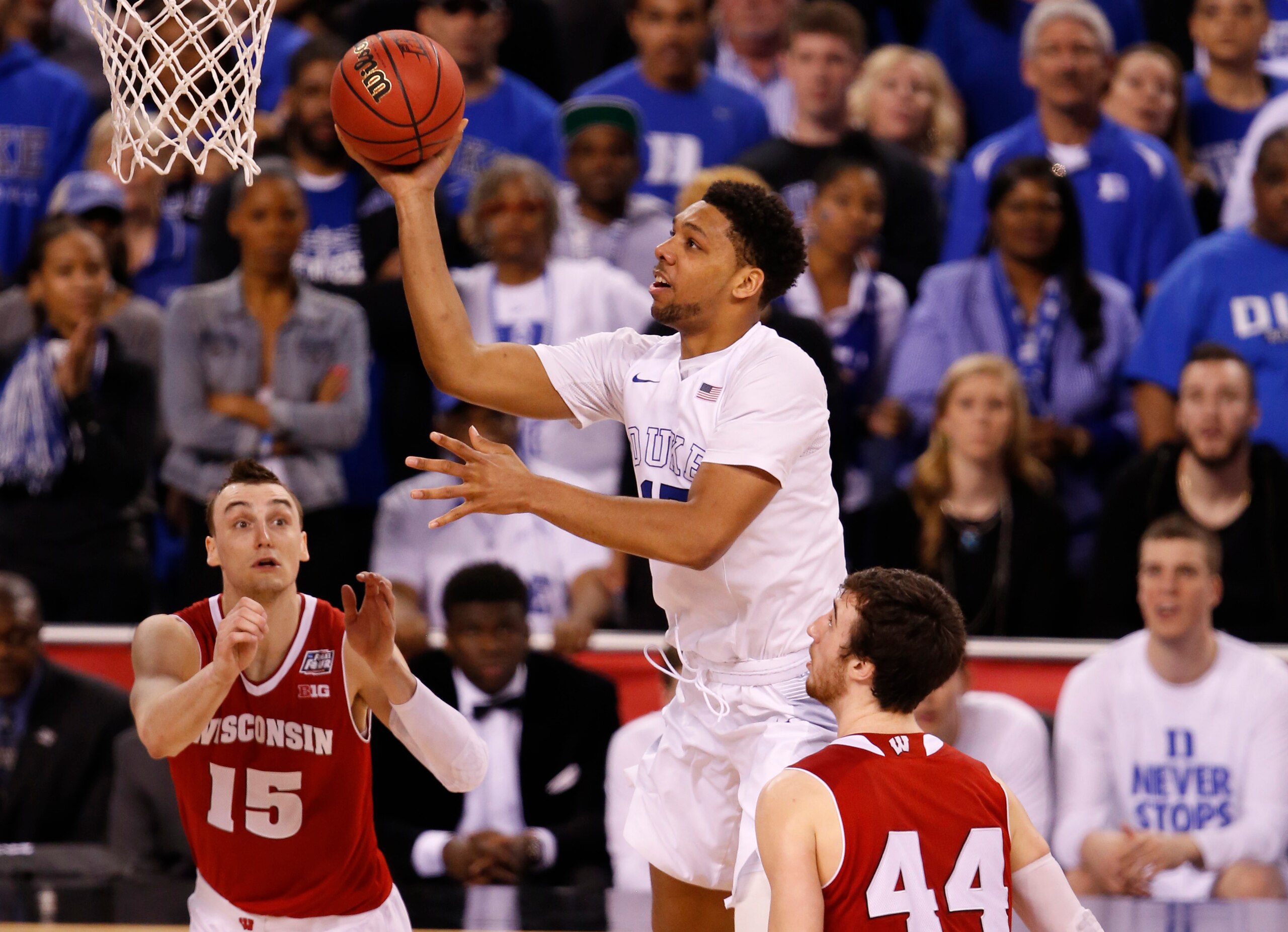
Projected draft range: Top three
At 6'11", 270 pounds with nifty feet and giant, soft hands, Jahlil Okafor shouldn't have too much trouble unleashing his dominant low-post attack.
With a handful of go-to moves and others he can counter with, Okafor has the ability to consistently create high-percentage shots. And it's led to routine double-teams (as well as a 66.4 percent field-goal clip) which ultimately help open up the offense.
Okafor projects as an option teams can feature against a set half-court defense, which is where his true value lies.
However, that value would take a hit if his struggles as a rim-protector carry over. His 4.5 percent block percentage remains historically low for a big man projected to be selected in the top five. Okafor's motor on defense was on and off as well.
Without a jumper (51 percent from the line) or strong defensive instincts, Okafor has fallen from the No. 1 spot. But his offensive polish and "sure thing" vibes will keep him top-two.
1. Karl-Anthony Towns, Kentucky, 6'11", PF/C, Freshman
50 of 50
Projected draft range: Top two
Nobody has shown the ability to cover more two-way ground than Karl-Anthony Towns, who's flashed everything from low-post scoring and shooting touch to passing, rim protection and rebounding.
Towns hasn't yet put it all together, but the gradual improvement he has shown is reason to be optimistic.
His over-the-shoulder game was practically unstoppable down the stretch. And though he didn't get the chance to take many jumpers in Kentucky's offense, he shot 81.3 percent from the line and looked comfortable on the perimeter.
At the other end, Towns finished with a monster 22.3 percent defensive rebounding percentage and 4.3 blocks per 40 minutes.
Compared to Okafor, Towns isn't as polished, but his superior athleticism, inside-out versatility and defensive presence drive his ceiling higher. He'll end up as the top player from the class if he reaches his potential.
Advanced stats courtesy of Sports-Reference.com, Hoop-Math.com. International stats courtesy of RealGM.com




.jpg?w=2560 "Mahomes Asked OT to Leave Meeting")
.jpg?w=2560 "Jonathan Taylor Landing Spots 📍")

.jpg?w=2560 "Five Teams Eyeing Taylor")
