5 Available Free Agents Still Within Minnesota Vikings' Reach
Free agency is never really over for any team, much less the Minnesota Vikings, who last year signed (and cut) a player the day of training camp, adding five more players to the roster over the course of camp.
With that in mind, while the free-agency buzz has finished, the Vikings still have an opportunity to bring in players who could help the program. Last year, Minnesota signed recognizable (though not world-beating) players like Terrell Manning, Kurt Coleman and Lestar Jean in April, as well as Minnesota fan favorite Allen Reisner (again).
The names available in April this year are a little more exciting, so with that in mind, the Vikings have a few free agents who could come in and help the team.
The list isn’t much different than the one published almost exactly a month ago, but we’ll keep the biggest “regrets” of free agency in mind as we figure out the predraft FA list.
Justin Blalock, Guard
1 of 5
The Vikings may very well think they’re set at guard, and there’s a lot of reasons to think that this is their internal evaluation.
Minnesota not only gave a raise to Joe Berger and promised him a post in the guard competition; they also opened the doors to competition not just for fifth-round pick David Yankey, but undrafted free agent Austin Wentworth and former UDFA for the Chargers, Mike Harris.
A four-way competition is no guarantee of producing results, but if it produces, at worst, a guard half as good as Joe Berger played last year, then it will certainly be functional.
Berger’s high (or even average) level of play is no guarantee; not only has he been a career backup, he will turn 33 next month. His small sample of snaps with the Vikings is difficult to draw upon for serious projection from outside experts, and that would require eliminating his (excellent) snaps at center when he needed to play there.
The Vikings followed a similar path of development for David Yankey as they did sixth-round pick Brandon Fusco, who coming out of Slippery Rock had limited strength at the point of attack and needed to spend time in an NFL weight room, resulting in a projection as a center-only player.
Yankey’s strength problems could mirror Fusco and the fact that Fusco saw only extremely limited snaps despite injuries and poor play ahead of him on the depth chart.
But it’s easy to forget that though Fusco plays well now, his first year as a starter was relatively abysmal.
The chances are not great that a fifth-round pick replicates that kind of success anyway, and to that end the Vikings should at least add an experienced starter to the competition at guard in Justin Blalock, a cap casualty for the Atlanta Falcons, but with a history of good play.
One of Pro Football Focus’ top guards in the NFL until an odd game against Carolina, Blalock is the definition of consistent, doing better than just “good enough” week in and week out, with only two bad games in PFF’s grading in 2014. He was even better in 2013, and he was the best offensive lineman on a bad offensive line.
This comes from solid fundamentals as a pass protector with good feet and solid anchor. A good punch and excellent handfighting complement his game, though he needs to be more of an angle blocker in the run game than a power blocker. His high level of awareness should help the Vikings in blitz pickup, or pressure attacking on Matt Kalil’s inside shoulder.
Blalock should come cheaply, and he provides a good floor in terms of guard play. Though older (he will play the NFL season at age 31), he can provide a short-term solution so the Vikings don’t have to gamble on quarterback Teddy Bridgewater’s protection.
He has visited the Detroit Lions and the Tennessee Titans and has been linked to the Rams.
Stevie Brown, Safety
2 of 5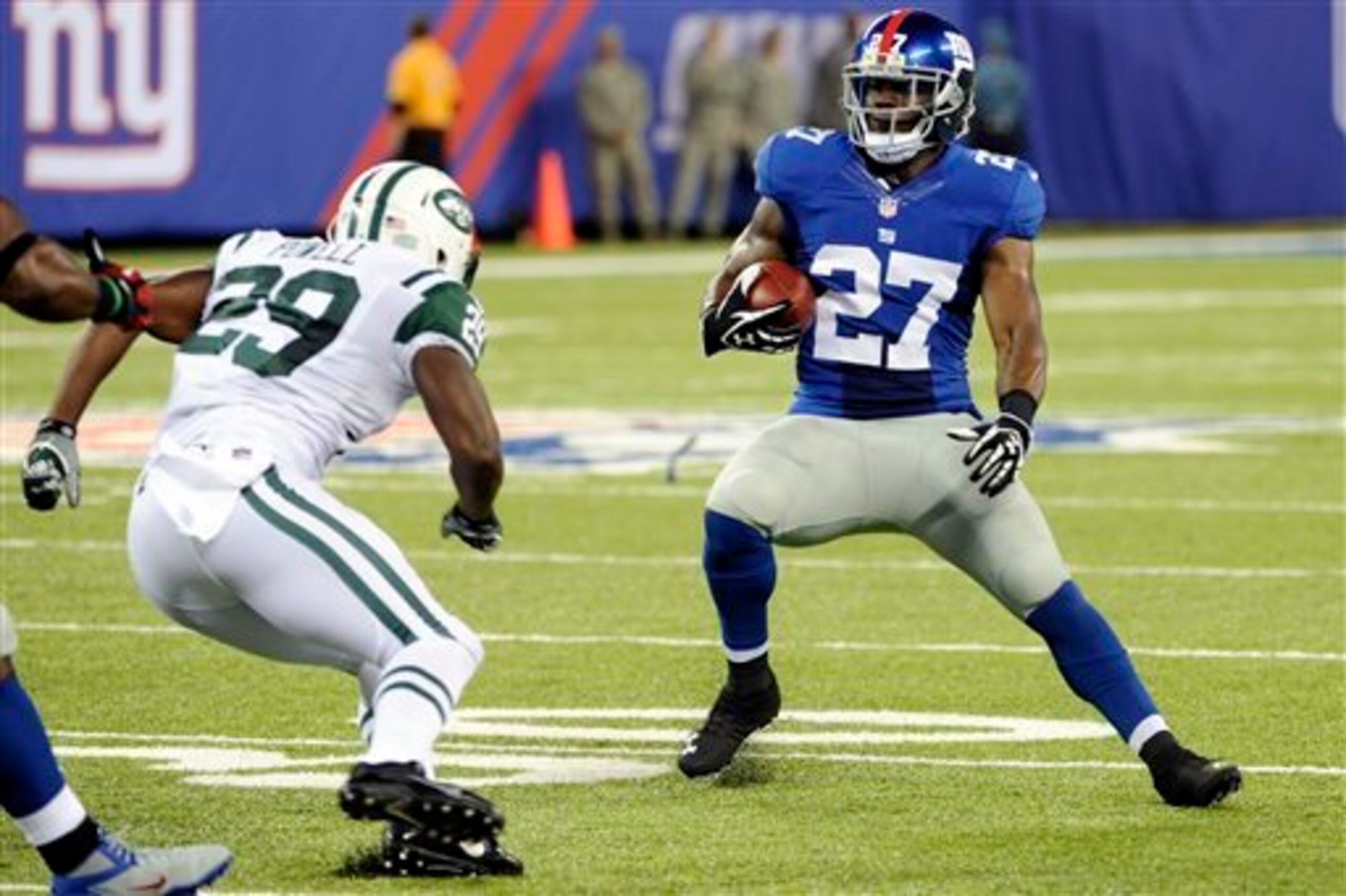
Perhaps the better option for safety isn’t Brown, but the person who replaced him as a starter in 2014, Quintin Demps. Still, the point remains that there is a Giants safety on the market worth considering.
An overrated but nevertheless fantastic showing in 2012 was followed by a missing season in 2013 due to an ACL tear and in 2014 saw his spot taken by Demps (before wrestling it back late in the season).
Those final performances may hold the clue to unlocking a safety whose eight interceptions put him in the Pro Bowl conversation in 2012.
His final five games of 2014 were far better than the games that saw him get benched, and whether or not the change in performance was due to complete recovery from injury or a renewed competitive fire, it’s worth investigating.
Brown still isn’t a perfect safety by any means. Even in 2012, he abandoned responsibilities in the secondary in order to freelance, creating big issues with cornerbacks passing players off into his zone, and his ability to close down on seams was questionable.
But he has speed, playmaking ability and instinct, all worth investigating. Given his willingness to stick his nose into the run game, he could be an ideal safety worth kicking the tires on at age 27.
If not, the Vikings may need to rely on an equally old but much more inexperienced Andrew Sendejo, who finished out the season as the starter at safety last year or Robert Blanton, who was disciplined but not particularly good.
It is possible that late-round cornerback convert Antone Exum, always known as a big hitter and a very good player in Virginia Tech’s defense, could be the starting safety. Given the potential he showed before his college injuries, that would be extremely exciting.
Bobby Cowan, Punter
3 of 5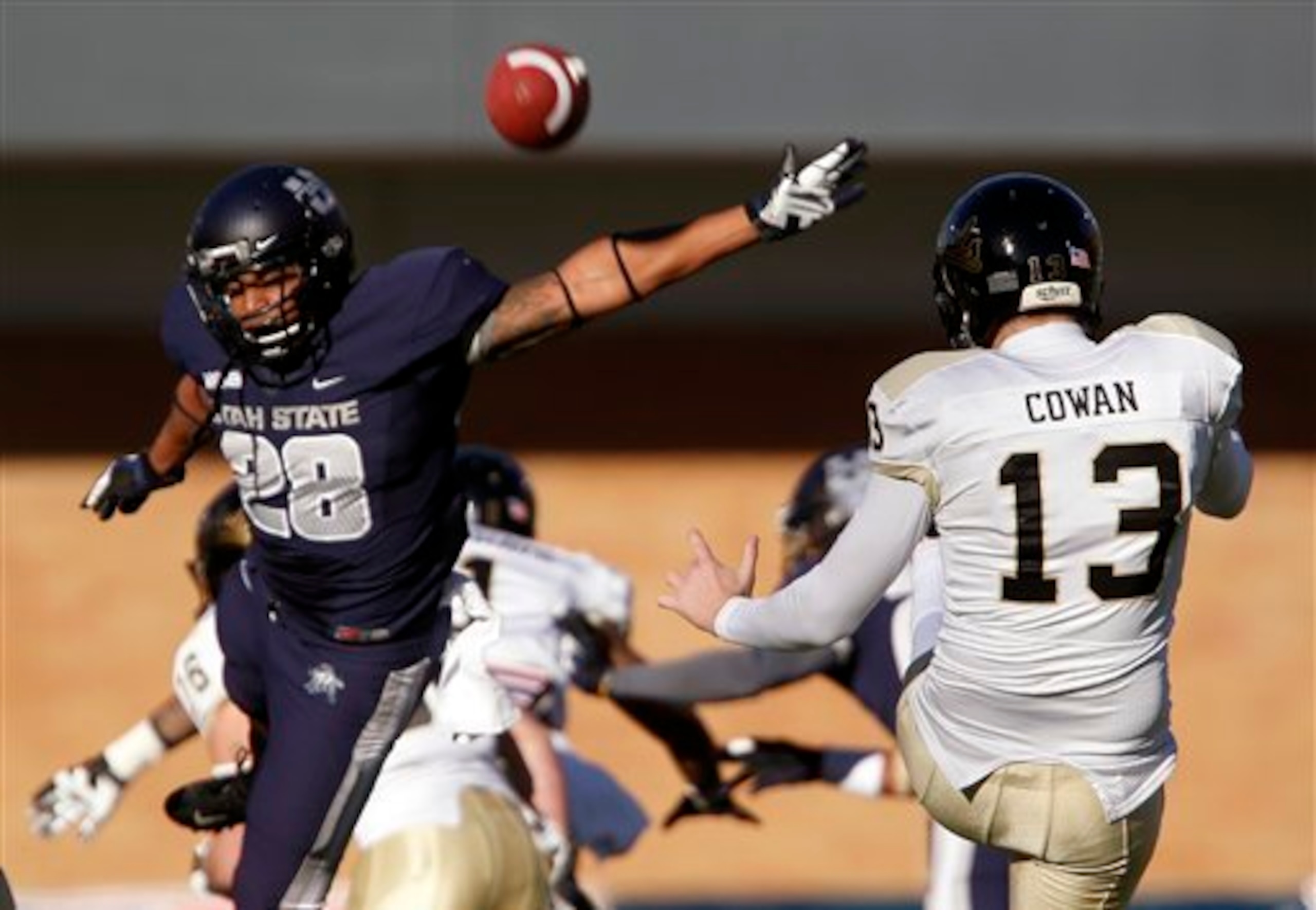
At any other position, it would be unusual to bring in a player who didn’t take a snap from an NFL team last year without injury playing a role, but in the case of punters it’s largely due to a limited market.
Surprisingly, the best punters who qualify from that group have already been signed by teams. Kasey Redfern will be competing against third-round pick Bryan Anger in Jacksonville again, Colton Schmidt has a job in Buffalo and Tom Hornsey is competing against restricted free agent Chris Jones in Dallas.
Instead, the Vikings will have to turn to Bobby Cowan, who competed with the talented Johnny Hekker in St. Louis last year and lost the competition.
Cowan likely wouldn’t beat out current punter Jeff Locke, but the punter position is so important that standing pat on underperformance from that position could mean big things in terms of the field-position battle and the ultimate performance of what should be an improving defense.
Jeff Locke has been poor enough this last season, but also simply hasn’t put together a good performance since he’s been drafted. His inability to create consistency, with the occasional shank hanging the defense out to dry, and his mediocre hang times with poor distance are all reasons the Vikings should move on, or at the very least provide real competition.
Though there’s a good chance that competition at the long snapper competition could create the kind of stable foundation Locke needs in order to improve, it doesn’t hurt to use another roster spot to potentially upgrade the position.
The former Idaho punter, Bobby Cowan, has a lot of similar issues to Locke. Blessed with a big leg and not a lot of control, Cowan needed to do work coming out of college quickening the process.
In addition to accuracy and a faster get-off, Cowan needed to showcase reliability. A difficult player to scout because of the poorness of the special teams units around him at Idaho, he did an excellent job adapting to the platforms he was given and punted his team out of holes.
In the 2014 preseason, Cowan had four of his seven punts downed inside the 20-yard line with no touchbacks and a total of six return yards. Being forced to punt on a shorter field hurt his average and his hang time, but he still needed to showcase the hang time that got him a camp invite in the first place.
Cowan has a lot of potential, and the Vikings could do well to roll the dice on him in free agency.
.jpg?w=2560 "Chiefs Giants Football")
.jpg?w=2560 "Titans Colts Football")
.jpg?w=2560 "Eagles Jaguars Football")
Brandon Spikes, Linebacker
4 of 5
At the risk of sounding like a broken record, the Vikings would do themselves well, if even only for a few years, by grabbing Brandon Spikes. His price on the market is depressed because of his perceived role as a two-down player, and he could provide more than excellent play as a stopgap player while the Vikings assess and develop other options at the position.
Likely only a middle linebacker with the Vikings, Spikes would resolve the biggest weakness right away: run defense. Known as one of the best run-defending linebackers in the NFL, Spikes’ liabilities in coverage can be schemed around, just like they were with Jasper Brinkley—but with a better payoff in the end.
Spikes is exactly the kind of player that should come in mind when looking at the roster and realizing that not every need can be immediately fulfilled come draft time.
Of course, if the Vikings truly are happy with Audie Cole at the position, that’s a different beast. As unlikely as it seems that a seventh-round pick who was cut and re-signed in his rookie year could end up being the starting middle linebacker, Cole did an excellent job closing out the season, albeit as the “Will” linebacker in the defense.
Cole is a superior option in coverage to Spikes, who despite being better than his reputation suggests against the pass, still doesn’t have the range Audie does, or the ability to carry a zone deeper into the secondary.
Even if they love Cole, his ability to play all three positions means that signing Brandon Spikes could be wise. Cole as a “Will” linebacker is not in the Vikings’ plans, and Mike Zimmer himself acknowledged that Cole was playing out of position there at the end of the season, but ignoring his excellent play at that spot would be just as foolhardy as trusting that player development is a given.
The chance that Audie Cole and Gerald Hodges could start next to Anthony Barr (assuming Chad Greenway doesn’t win the position) may be worth considering, but the corps would look better with Brandon Spikes in the middle, regardless of how good the Vikings think both of the linebackers are—it is unlikely that both can fill roles nearly as well as Spikes does, even if at least one of them has starting-quality talent.
Joe Barksdale, Tackle
5 of 5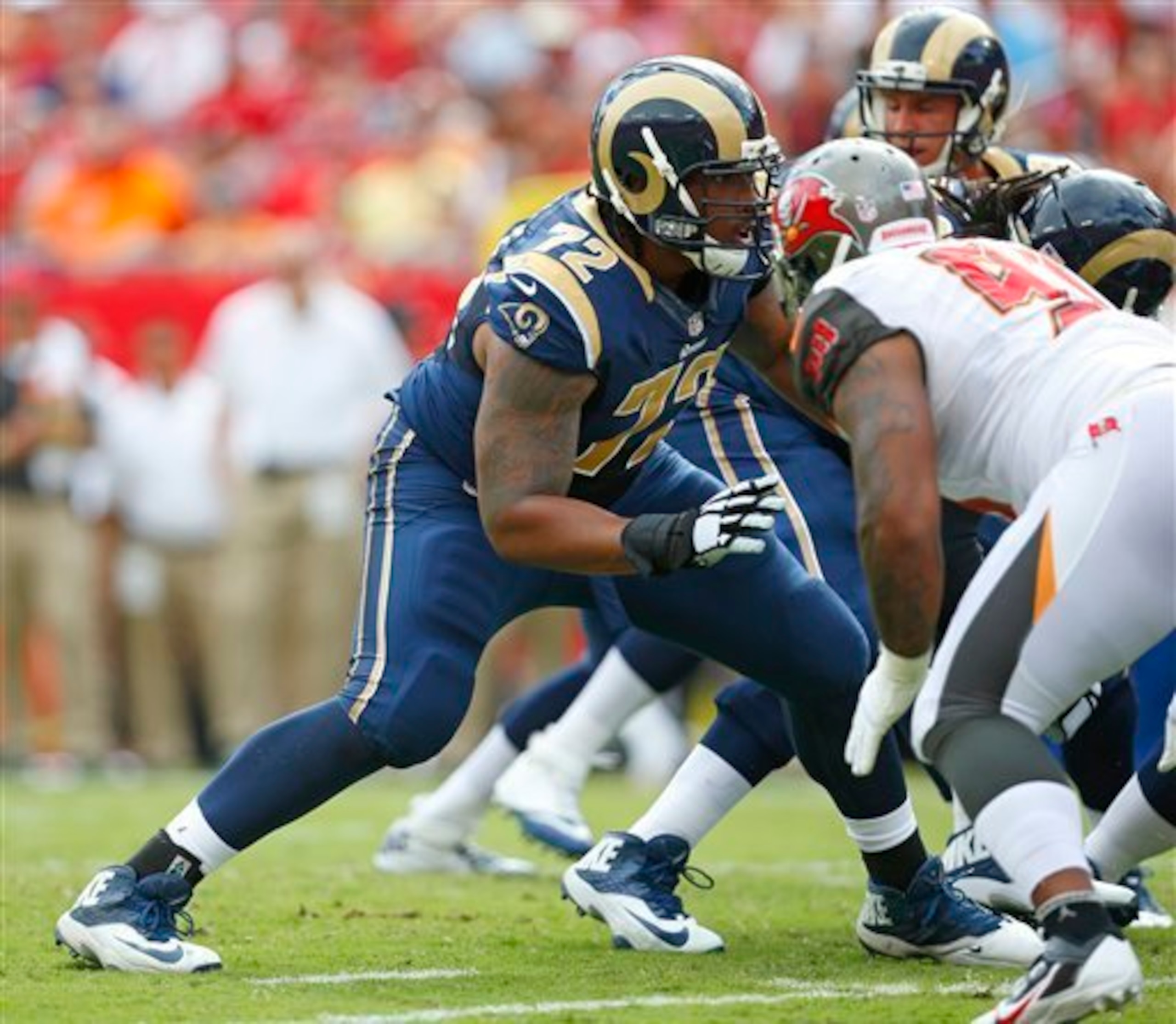
Being pursued by two teams, Tennessee and St. Louis, Barksdale is one of the most underrated tackles in the NFL right now, and it is fairly surprising he’s still on the market. Though a starting-quality player, Barksdale may end up signing somewhere to be a backup offensive tackle, at least for one year.
The Vikings should pounce on that opportunity; it is rare enough that one can sign a player as good as him to simply back up players at his position, but given the need the Vikings have at backup tackle, it’s a priority.
With both Austin Wentworth and Mike Harris competing for a guard spot, the Vikings have developmental tackle Babatunde Aiyegbusi competing with a local undrafted free agent in Carter Bykowski for the primary backup OT role.
Antonio Richardson would also compete for the role, but despite his great talent, the same injuries that forced him to go undrafted also kept him on injured reserve, and they may mean the end of his career.
With Richardson not likely to remain an option and Aiyegbusi set to practice with Americans for the first time in his life, it doesn’t seem wise to entrust the backup role to one player acquired off of another team’s practice squad.
Barksdale plays like an old-school right tackle, but he can play either tackle position. Though left tackles are known to win with the kind of quickness and speed that Barksdale seemingly just doesn’t have, he can do more than enough winning with properly timed punches and pure power.
He drives off the ball with incredible power and leverage and would be a fantastic run-blocker to replace Phil Loadholt should he go down again or an interesting bookend to Loadholt in the case Kalil needs to be replaced for either performance or health reasons.
His length is an asset, and his ability to kick inside to play as guard despite his height should add value, even if backup guard is suddenly the one position the Vikings don’t need.
.jpg?w=2560 "Colts Football")
.jpg?w=2560)