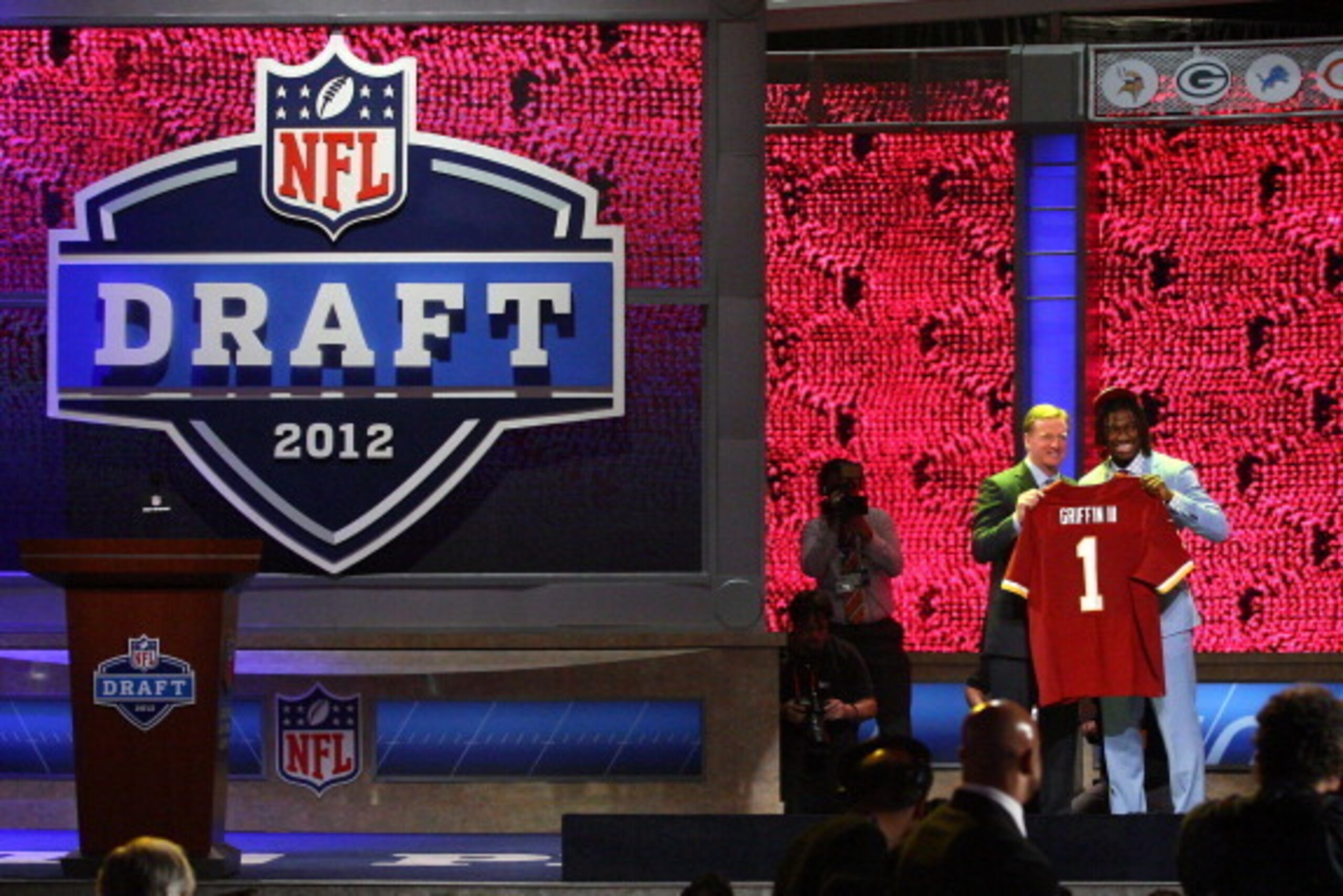

Safest, Riskiest Choices Washington Redskins Might Consider in 2015 NFL Draft
The Washington Redskins haven't been big players in the NFL draft the past two seasons. But you can trust and believe, through their ongoing saga with Robert Griffin III, that they've come to realize the risks and rewards associated with the event.
Saddled with the fifth overall pick in the upcoming draft, new general manager Scot McCloughan will be the man tasked with weighing the pros and cons of each prospective draft pick.
While nothing in the draft is guaranteed, as we've all come to learn, some prospects are safer than others. And at the other end of the spectrum are the classic boom-or-bust prospects.
With that in mind, let's now take a look at the safest and riskiest prospects whom the Redskins might consider selecting early in the 2015 NFL draft.
Safest: DL Leonard Williams
1 of 6
Can you get any safer than the No. 1 overall defensive prospect?
Because according to Scouts Inc., that's exactly what Leonard Williams is. During draft season, teams have to weigh the pros and cons of drafting on potential and drafting for immediate impact.
A rare specimen, Williams brings both to the table. Regardless of scheme or the offensive play call, Williams makes an impact. Speaking on NFL Network's Path to the Draft (h/t NFL.com's Bryan Fischer), NFL analyst Daniel Jeremiah couldn't help but sing his praises:
"You talk about a game-changer against the run and against the pass -- it doesn't matter what scheme you run, whatever you want to do, Leonard Williams can do.
He can line up inside, and he can line up outside. You can do whatever you want with him. That is the definition of a game-changer, and that's Leonard Williams.
"
It doesn't stop there, though. He's also drawn comparisons to one Richard Seymour:
".@USC_Athletics Leonard Williams vs. Richard Seymour. #NFLCombine pic.twitter.com/JOOOstbEoc
— NFL Network (@nflnetwork) February 22, 2015"
So while Washington has made vast changes to its defensive line this offseason, the team would jump at the chance to select Williams if he were to somehow fall to the No. 5 spot.
Riskiest: S Landon Collins
2 of 6
With the decorated career he had at Alabama, Landon Collins is rightfully ranked as Scout Inc.'s top safety prospect. During his final season in Tuscaloosa, Alabama, he earned All-American honors by leading his team with three interceptions and 104 tackles.
At the combine, he was one of the top performers at his position, posting a 4.53-second 40-yard dash time.
The production is there. The raw talent is there. And yet, he's labeled a risk? Well, you can chalk this up to two things: Washington's place in the first round and the position that Collins plays.
Simply put, safeties don't go in the top five. Dating back to 1991, only three safeties—Eric Turner, Eric Berry and the late Sean Taylor—have gone that high. And to be kind, Collins doesn't match up to these players, specifically Berry and Taylor, as a prospect.
Berry was rated as the No. 4 prospect in the 2007 NFL draft by Scouts Inc., while ESPN's John Clayton, at the time, considered Taylor to be perhaps the best player in the 2004 NFL draft.
Collins is Scouts Inc.'s 17th overall prospect. For all his physical ability, he isn't much of a playmaker.
In the opinion of NFL.com's Lance Zierlein, Collins is prone to overestimate his speed and is thus susceptible to giving up the big play. Additionally, he's made a habit of dropping interceptions.
These shortcomings aren't a deal breaker. But when you consider the expectations attached to the fifth overall pick, the chances of Collins being a disappointment are inherently higher than most potential selections.
Safest: OL Brandon Scherff
3 of 6
Now eight years running, an offensive lineman has been selected with a top-10 pick in each draft. In 2005, Jammal Brown was the first lineman off the board, going 13th overall to the New Orleans Saints.
This year's top offensive tackle prospect in the eyes of many talent evaluators, Brandon Scherff, could very well join Brown in this distinction.
The question isn't whether or not he'll make it on the NFL level—it's what position he'll play.
While he's rated as Scout Inc.'s No. 8 overall prospect as a tackle, ESPN's Mel Kiper Jr., for one, feels Scherff's best NFL position is guard. And, well, guards don't go in the top 10. Only two have gone that high since 2000.
With that said, the Skins would have to feel comfortable with Scherff playing tackle if they were to select him fifth overall.
But let's say that he outright fails or simply struggles opposite Trent Williams. Knowing that NFL.com's Mike Mayock likens him to Zack Martin, an All-Pro guard in his rookie season, Scherff's bust potential is minimal because he can simply shift to the inside and be a staple in the starting lineup for years to come.

.jpg?w=2560 "Rams Eagles Football")
.jpg?w=2560 "Texans-Mixon Released Football")
Riskiest: LB Randy Gregory
4 of 6
Much like the quarterbacks he hunted on Saturdays, the draft stock of Randy Gregory has taken a big hit.
First there was the issue surrounding his weight.
Scouts were in unison in saying that Gregory needed to add weight to his 6'5" frame. And yet, he showed up at the combine weighing 235 pounds, 25 pounds short of Mike Mayock's ideal playing weight for him (h/t Mike Huguenin of NFL.com).
Then there was his failed drug test. Mind you, this is all on top of injury concerns that scouts already had. Gregory missed all of 2012 with a broken leg and two games last season.
His 17.5 sacks the past two seasons at Nebraska could warrant a team overlooking these transgressions on their own. But together, it's too much to gloss over. With an assortment of pass-rushers to pick from in Vic Beasley, Shane Ray and Dante Fowler Jr., the Redskins would be wise to pass on Gregory altogether.
Safest: OL Cameron Erving
5 of 6
Similar to Scherff, versatility is Cameron Erving's calling card. Formerly a defensive tackle at Florida State, Erving quickly excelled after making the transition to other side of the ball.
He was an All-ACC performer at both center and tackle. In regard to his NFL future, some, like New York Giants' reporter John Schmeelk, are of the mindset that Erving can also stick as a guard:
"Some believe Florida State OL Cameron Erving can play tackle, center out guard in the NFL. pic.twitter.com/21Wmvi1ame
— John Schmeelk (@Schmeelk) February 20, 2015"
Coming off a 2014 campaign in which it allowed an NFC-high 58 sacks, Erving is the type of prospect whom Washington needs to bring into the fold. Consider this: Among Redskins offensive linemen, only Trent Williams and Kory Lichtensteiger graded out as above-average starters in Pro Football Focus' ratings for last season.
With Erving in play, the team could mix and match its current group of linemen and truly field the best offensive line possible.
Riskiest: CB Marcus Peters
6 of 6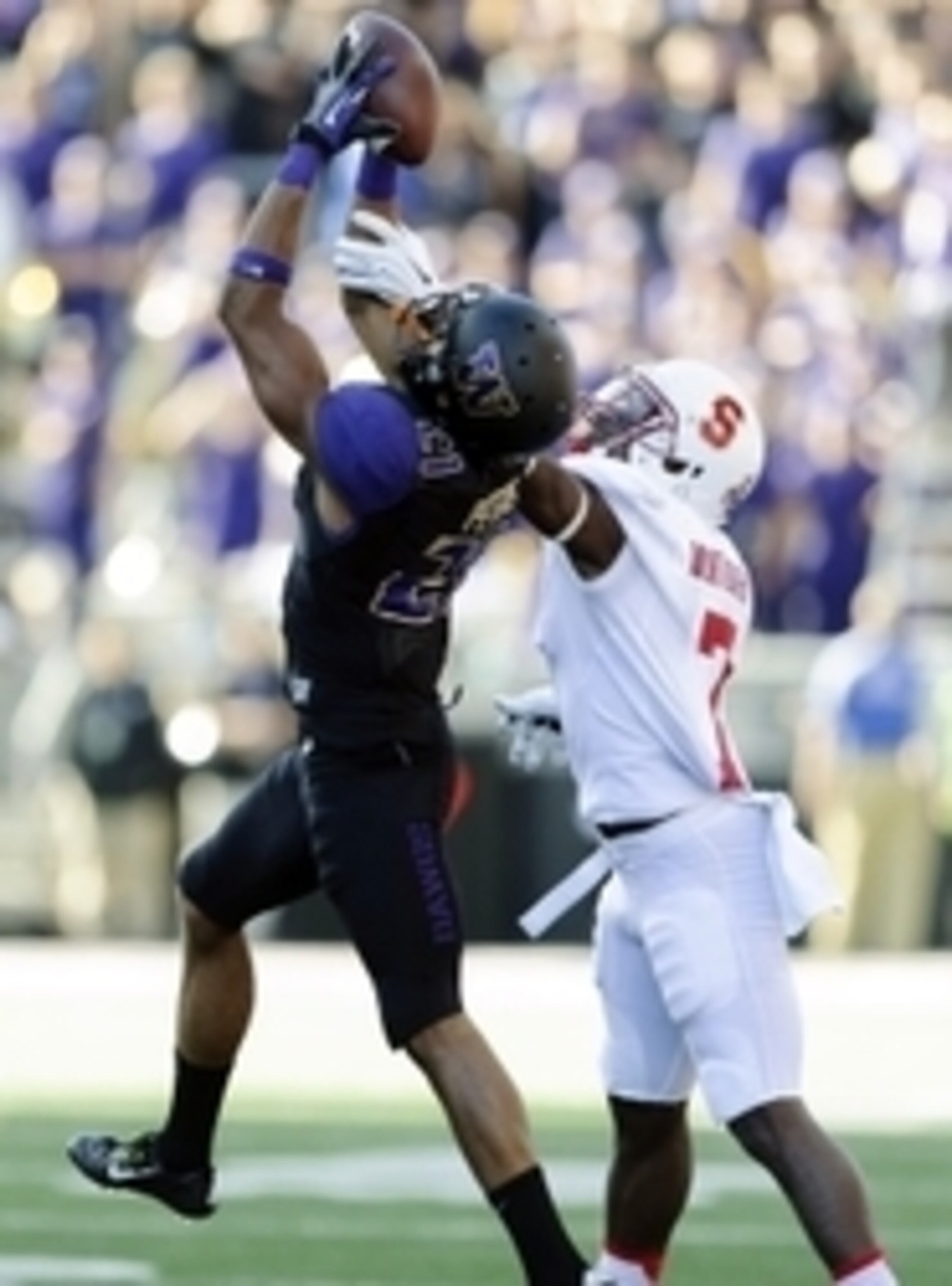
Owners of Football Outsiders' worst pass defense in 2014, the Redskins have made it a priority this offseason to upgrade their secondary. The team acquired three potential starters in Jeron Johnson, Chris Culliver and Dashon Goldson.
The team also returns holdovers Bashaud Breeland, David Amerson, DeAngelo Hall and Tracy Porter. Is this enough of an upgrade, though?
After all, the NFC East features two top-10 aerial attacks, and that's not including Tony Romo and the Dallas Cowboys.
With that said, the answer is no.
In his sophomore campaign, Amerson struggled mightily. Of the players currently on the roster, Amerson was rated by Pro Football Focus as the worst defender in the secondary.
Graded as a below-average corner for his play as a rookie, Breeland isn't far behind his batterymate. While he flashed starting potential on occasion—such as Week 8 against Dez Bryant—he was ultimately undone by penalties. Only two players were penalized more than Breeland in 2014.
As for Hall, the 2015 campaign will mark his 13th NFL season. Recovering from not one, but two operations on his torn Achilles, Hall is no shoe-in to return to form.
And let's not even get started on Porter. His misgivings on the gridiron aside, Porter can't stay healthy. In seven NFL seasons, he's missed at least three games in all but one.
Now, is there any doubt that the team needs Marcus Peters?
A player whom Zierlein has compared to Aqib Talib, the 6'0'', 197-pound Peters boasts the size that teams covet at the cornerback position in today's NFL. He's not a burner, but as his 4.53 40-yard dash time indicates, he can hold his own on an island.
During his final two collegiate seasons at Washington, per Zierlein, opposing quarterbacks only completed 38.1 percent of their passes against Peters. Additionally, he racked up eight interceptions and 24 passes defensed.
So what gives, right?
As much as he is a problem for opposing receivers, Peters can be an even bigger one for his coaches. After repeated run-ins with head coach Chris Petersen and his staff at Washington, Peters was dismissed from the team in November.
Opening up to USA Today's Tom Pelissero about his past transgressions, Peters tied his downfall to bouts of immaturity.
Even if he fell to the second round, with a failed drug test and a penchant for arriving late to team meetings also on his rap sheet, Peters carries considerable risk.
.jpg?w=2560 "Commanders Eagles Football")
.jpg?w=2560 "Chiefs Dolphins Football")


.jpg?w=2560 "Grading WWE Raw 🔠")

