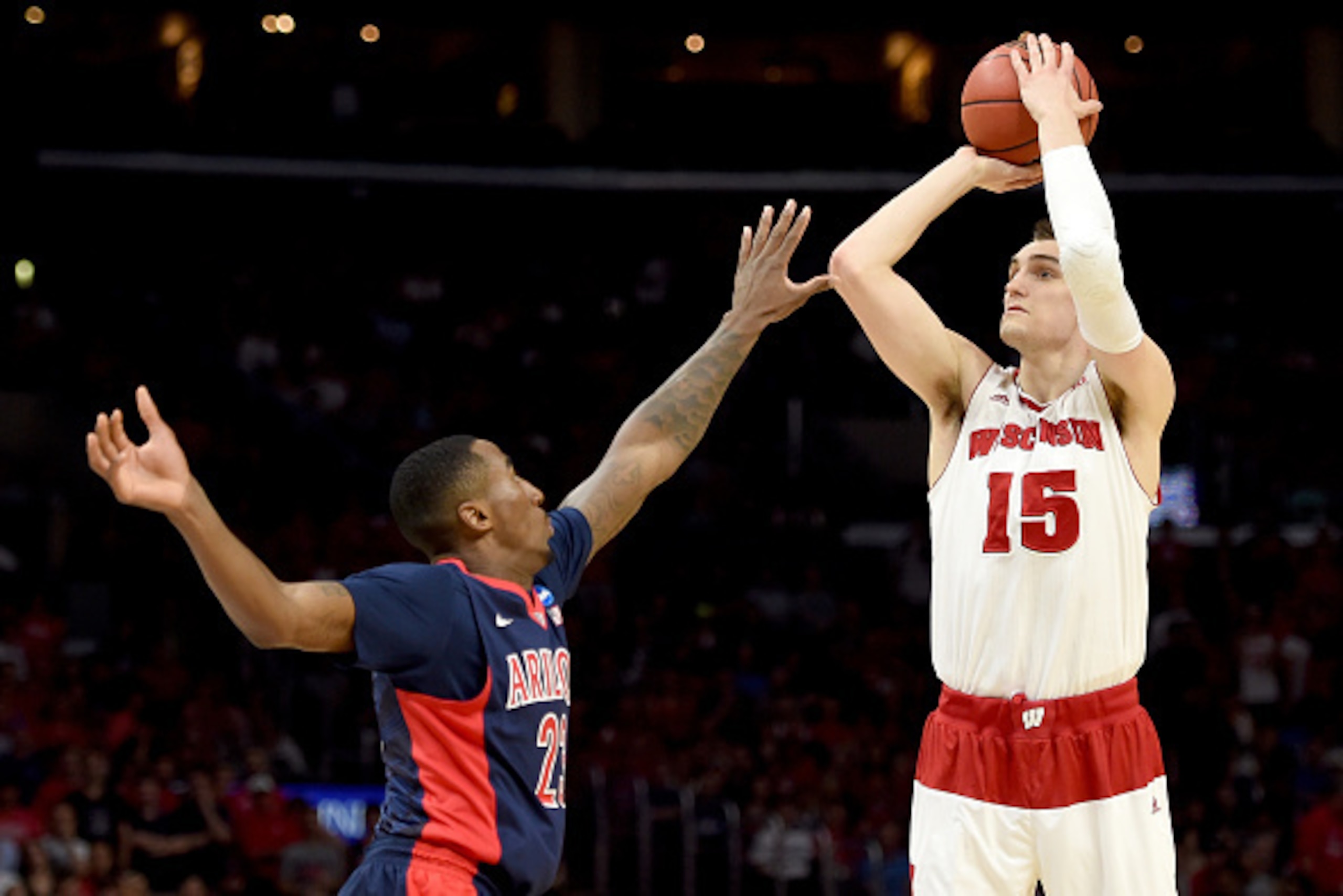

2015 NBA Mock Draft: Updated 1st-Round Projections Going into NCAA Final Four

With the Final Four upon us, there are still a number of quality NBA draft prospects alive in the NCAA tournament.
In fact, five of our projected top-10 picks will be participating in Indianapolis.
Over the last few weeks, we've seen a number of eye-opening performances that may have helped move the needle for a couple of prospects. Duke's Justise Winslow, Utah's Jakob Poeltl and Wisconsin's Sam Dekker might fall under that category.
But with so many potentially high-profile matchups left for NBA scouts to see, the draft board will remain fluid until after the tournament.
1. New York Knicks: Karl-Anthony Towns, Kentucky, 6'11", PF/C, Freshman
1 of 30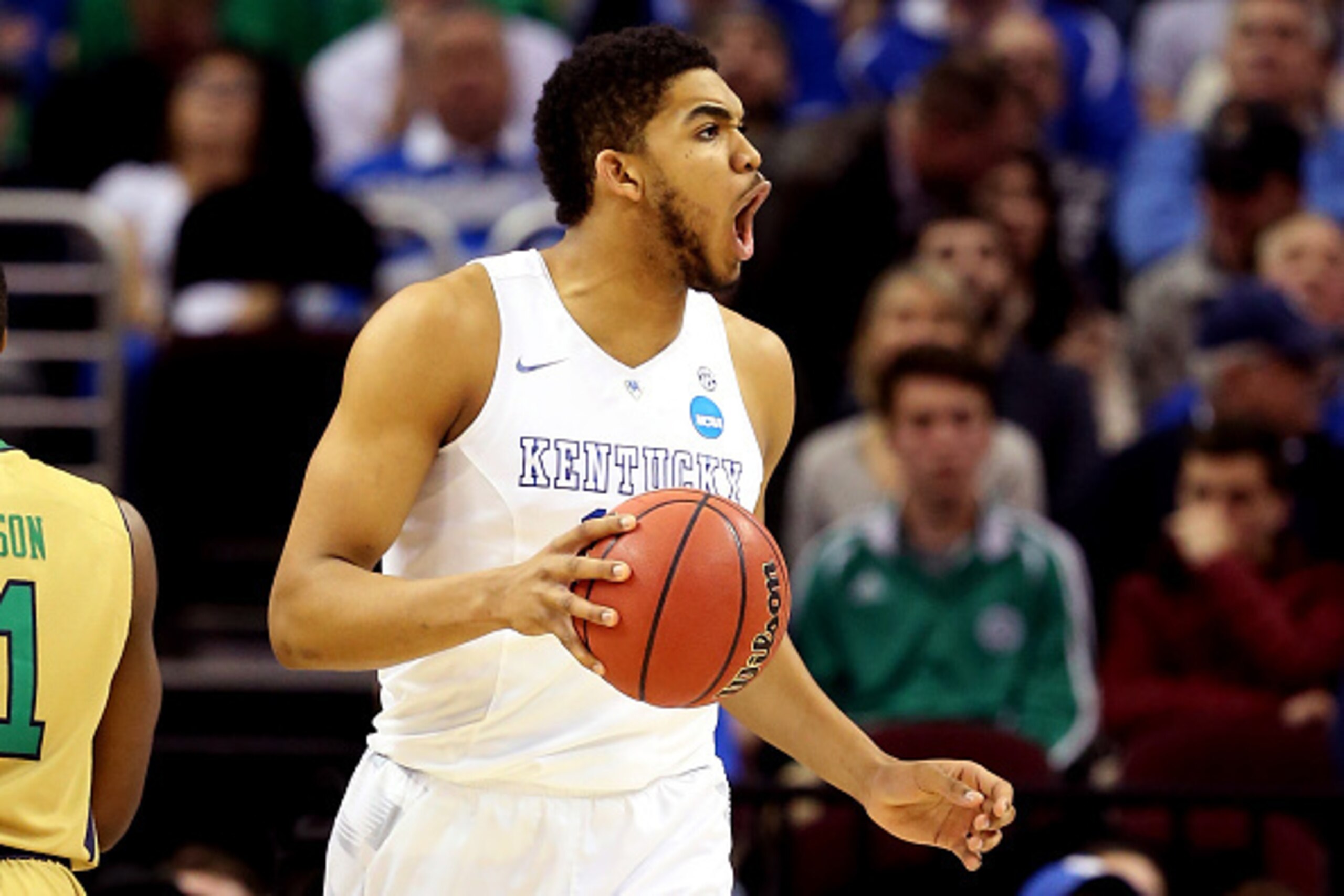
Coming off a 25-point performance against Notre Dame in the Elite Eight, Karl-Anthony Towns' No. 1 overall case has never looked stronger.
He always had the upside edge over Duke's Jahlil Okafor, given Towns' superior athleticism, defensive instincts and versatility. But over the past few months, we've seen his offensive skills get sharper and sharper.
The jump hook that wasn't falling early now looks unstoppable. And he continues to light it up from the foul line, where he's making a sensational 81.7 percent of his free throws.
With promising touch, a developing post game and big-time defensive potential, Towns' ceiling towers above the rest of the field.
In a triangle offense that values big men who can face up, shoot and pass, he couldn't make more sense for the Knicks. Okafor gives them a better scorer in 2014-15, but pairing him with Carmelo Anthony up front could lead to all sorts of defensive issues.
2. Minnesota Timberwolves: Jahlil Okafor, Duke, 6'11", C, Freshman
2 of 30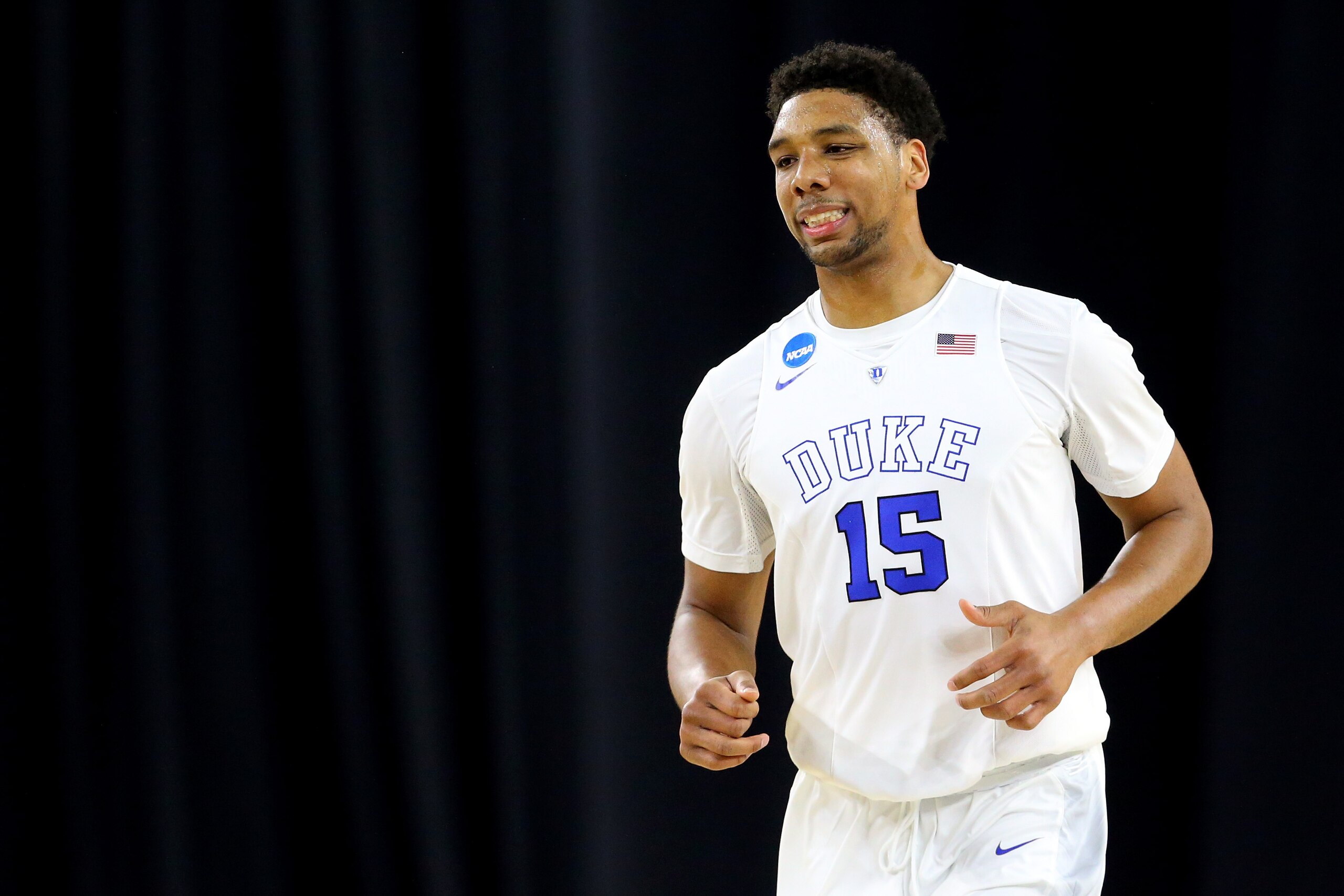
Jahlil Okafor faced a couple of diesel front lines over Duke's last two games. And for the most part, they've held him in check.
Okafor scored just six points against Utah's Jakob Poeltl and nine against Gonzaga's Domantas Sabonis and Przemek Karnowski. However, Okafor also saw a ton of double-teams.
And that's because there isn't a more polished, dominant post scorer in the country. He has go-to moves and others to counter with, as well as hands that allow him to grip the ball like an orange.
There are some questions regarding his energy and defensive instincts, but not his offensive outlook. Okafor projects as a featured option. And given Nikola Pekovic's injury concerns and limited upside, the Wolves could use another big man to lean on in the half court.
3. Philadelphia 76ers: Emmanuel Mudiay, China, 6'5", PG, 1996
3 of 30
With Towns and Okafor off the board, you'd like to think the Sixers will be choosing between the top two guards available: Emmanuel Mudiay and D'Angelo Russell. And predicting which one general manager Sam Hinkie likes more is pretty much a guessing game at this stage.
But we're going to lean toward Mudiay, given his superior athletic ability, which is bound to stand out in team workouts. At 6'5", he's quicker and bouncier around the rim—not to mention he has an extra 20 pounds of muscle on Russell's light 180-pound frame.
While Russell might look like the safer option, given all the damage we saw him do in college, Mudiay's ceiling remains a story or two higher.
And based on previous draft-night decisions, Hinkie seems to focus strictly on upside and ignore questions surrounding background (drafted Dario Saric from overseas), injury history (drafted Nerlens Noel with a torn ACL, Joel Embiid with broken foot) and fit (took a center in Embiid after already drafting a big man in Noel).


4. Los Angeles Lakers: D'Angelo Russell, Ohio State, 6'5", PG/SG, Freshman
4 of 30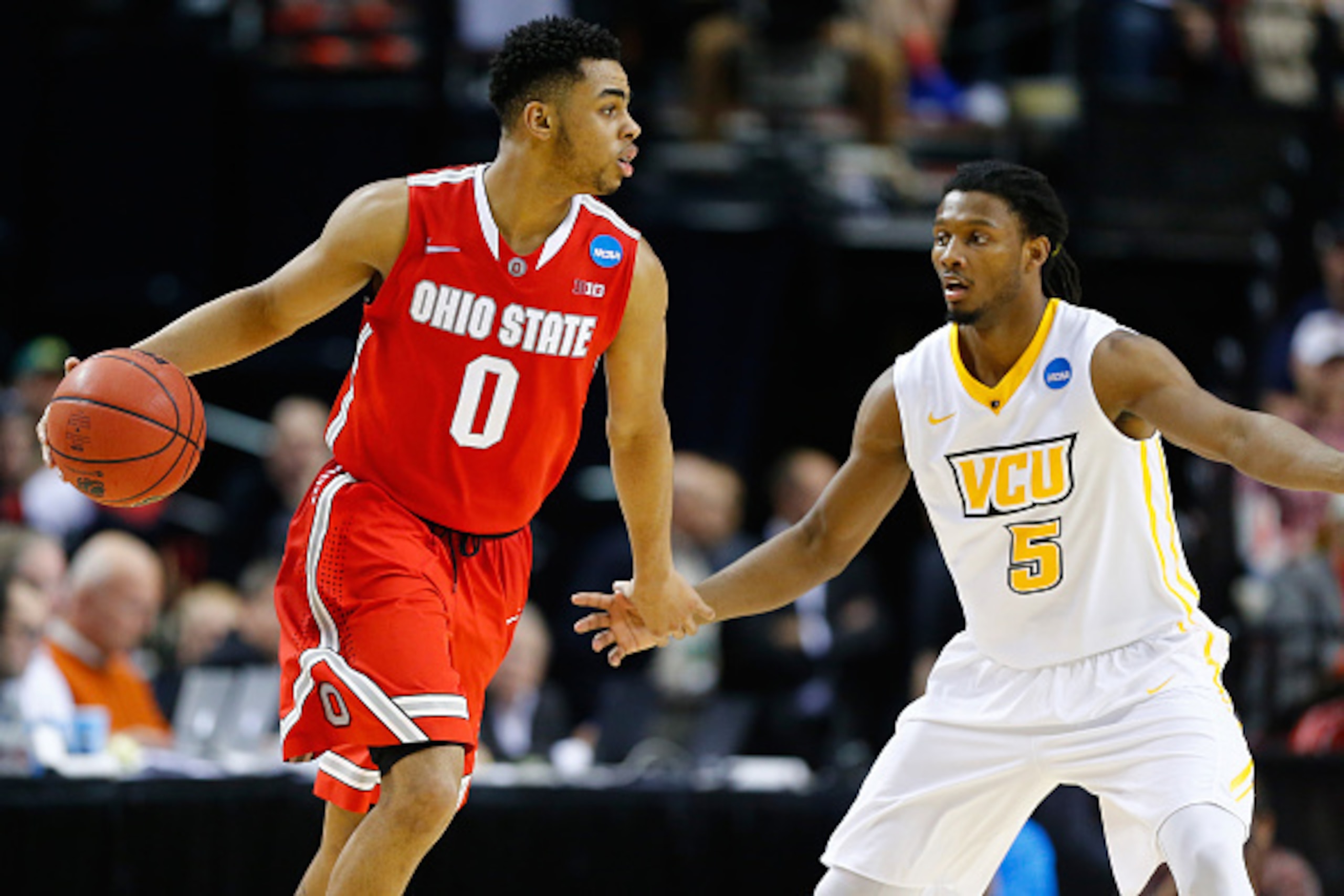
The Lakers could give Duke's Justise Winslow and Kentucky's Willie Cauley-Stein a look here, but it's tough to imagine them passing on the chance to land their floor general of the future.
Russell averaged 19.3 points and 5.7 assists while making 95 threes on 41.1 percent shooting from deep. He can create and make shots from anywhere, find teammates as a passer and spread the floor as a shooter.
Russell flashed it all at Ohio State, from point guard vision and takeover scoring ability to leadership and killer instinct.
And at 6'5", you can stick him at either backcourt position, which should give the Lakers a little more flexibility when it comes to building the rest of their roster.
5. Orlando Magic: Justise Winslow, Duke, 6'6", SF, Freshman
5 of 30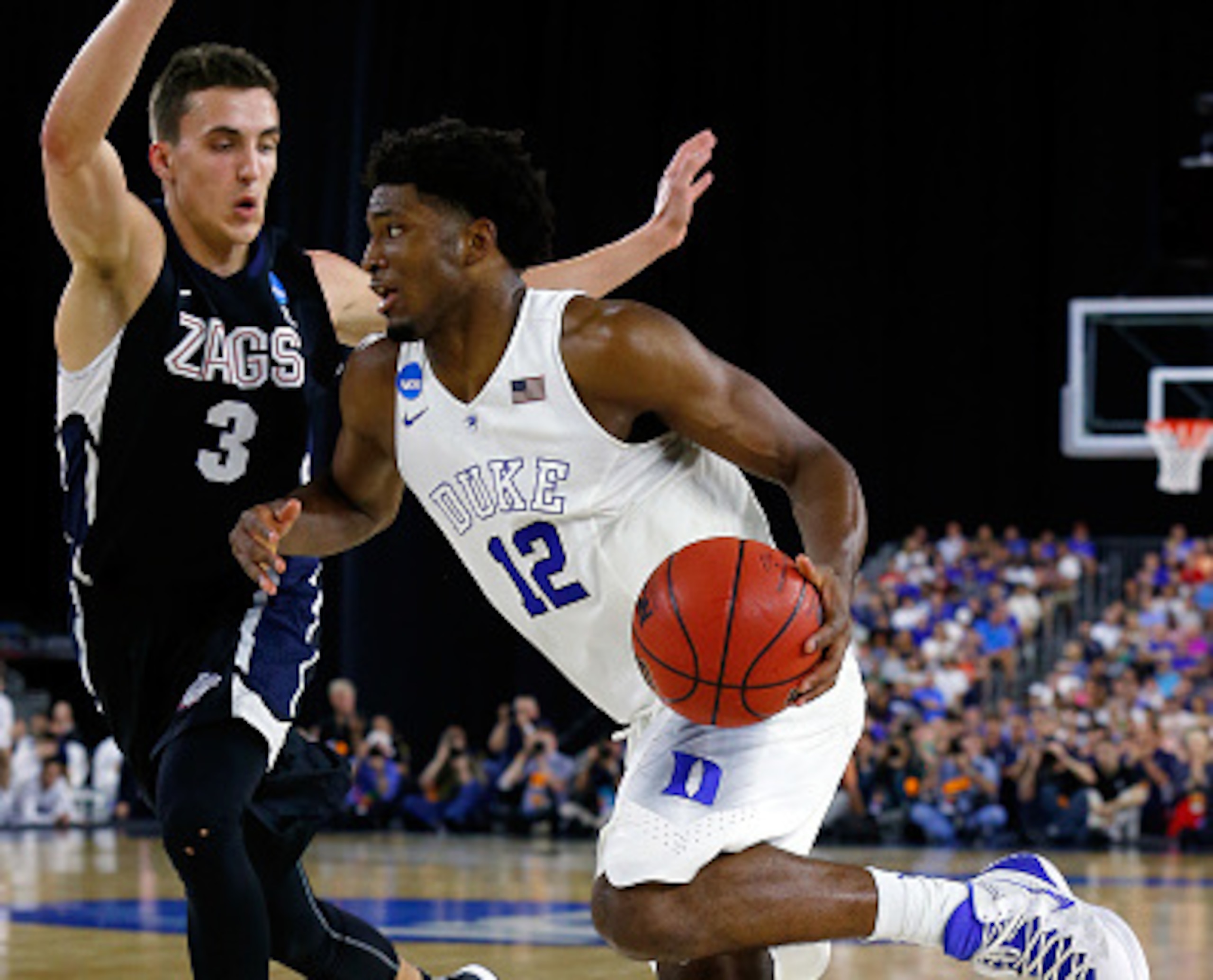
I'm not sure any prospect has improved their draft standing more during the NCAA tournament. While we've known about Justise Winslow's motor and defense from Day 1, his offensive game appears to be blossoming at just the right time.
He went for 21 points and 10 rebounds against Utah in the Sweet 16, and 16 points against Gonzaga in the Elite Eight. Winslow has looked more comfortable and effective with the ball against a set half-court defense. He's knocked down jumpers and a couple runners in the mid-range—shots that haven't necessarily been in the arsenal for most of the year.
“Coach had a lot of confidence in me,” Winslow told Sports Illustrated's Thayer Evans after the Gonzaga game. “He ran a good amount of plays going to me. My teammates just the whole year they’ve been giving me confidence. I’ve had times where I couldn’t buy a bucket.”
Based on the Magic's current identity, Winslow would seem like an obvious target for general manager Rob Hennigan, who's recently drafted athletic, defensive-minded players like Aaron Gordon, Elfrid Payton and Victor Oladipo.
Orlando could ultimately let Tobias Harris walk in free agency and draft his replacement in Winslow, whose two-way upside is higher anyway.
6. Sacramento Kings: Willie Cauley-Stein, Kentucky, 7'0", C, Junior
6 of 30
The Kings and their No. 27-ranked defense, per ESPN, should be salivating at the opportunity to land Willie Cauley-Stein, who has as good of a chance at making an immediate impact as anyone left on the board.
A raw offensive game won't diminish the effectiveness of his world-class athleticism and foot speed for a 7-footer. We're talking about a big man who can protect the rim, switch onto guards and pressure full court.
With Kentucky up one in the closing seconds against Notre Dame (Elite Eight), Cauley-Stein chased point guard Jerian Grant baseline to baseline and forced him into to a wild, off-balance (and unsuccessful) heave. A few plays earlier, he switched onto Grant and blocked a step-back three-point attempt.
The value tied to this type of defensive versatility could be enormous, regardless of how weak his post skills and jumper look.
7. Denver Nuggets: Kristaps Porzingis, Latvia, 7'0", PF, 1995
7 of 30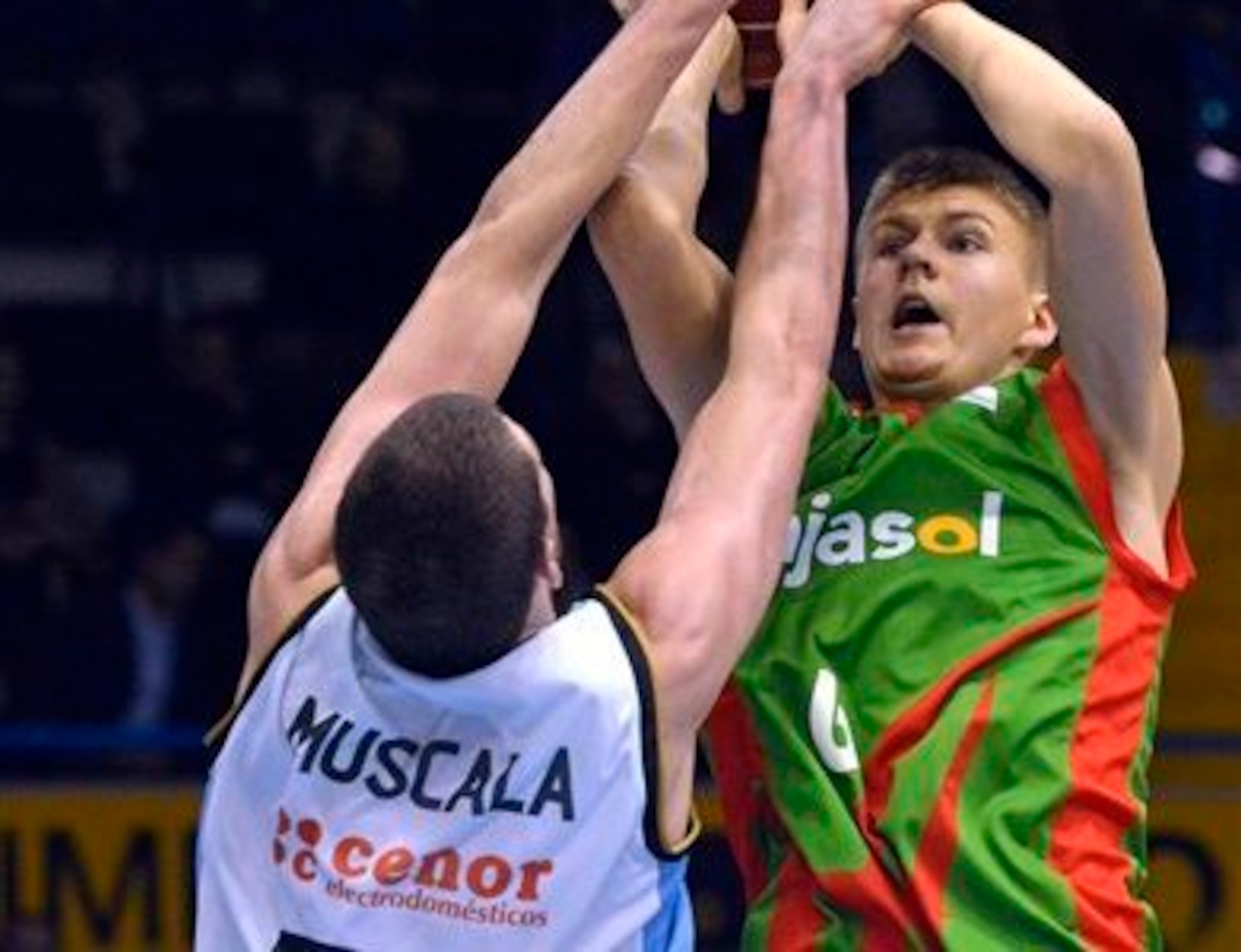
Kristaps Porzingis went for 18 points and eight rebounds against Real Madrid over the weekend. He nailed a pair of threes, had a couple of nice drives and a few big-time finishes above the rim. And according to ESPN's Chad Ford, there were a number of general managers and scouts in attendance.
At 7'0", Porzingis' ability to stretch the floor as a shooter, face up and attack or separate in the mid-range fuels some wild offensive potential.
A skinny 220-pound frame may make him more of a risk-reward pick, but if Porzingis can add some muscle (he's only 19 years old), his offensive versatility could take him to All-Star heights down the road.
The Nuggets showed us last year they aren't afraid to draft overseas. Once again, they just need to grab the best available talent, regardless of position. And nobody left on the board offers a higher ceiling than Porzingis.
8. Detroit Pistons: Stanley Johnson, Arizona, 6'7", SF, Freshman
8 of 30
Stanley Johnson had a rough NCAA tournament, having shot 7-of-26 combined against Wisconsin, Xavier and Ohio State.
However, as Arizona's leading scorer, he'd been consistent enough throughout the year to keep the alarms from sounding in March. He'll have to work on his shot selection and creativity, but Johnson has a promising shooting stroke and a refined in-between game in the mid-range (44.4 percent on two-point jumpers, per Hoop-Math.com).
At 6'7", 245 pounds, he has some terrific physical tools for the NBA wing, where he projects as a two-way small forward.
The Pistons desperately need some athleticism and offense between Reggie Jackson and their bigs. Johnson would likely have the chance to compete for a starting position right away.
9. Charlotte Hornets: Mario Hezonja, Croatia, 6'8", SG/SF, 1995
9 of 30Mario Hezonja is stuck in the doghouse. He played just six minutes in a matchup this weekend against Kristaps Porzingis and Sevilla, marking the 10th consecutive game he's logged fewer than 20 minutes.
It might make him tough to reach on, given the small sample size scouts can evaluate, but Hezonja's monster upside has displayed itself in spurts since 2011.
At 6'8" with elite-level athleticism, he has mismatch size for a wing, as well as a sharpshooting stroke (39.6 percent from three), an above-average handle and strong passing ability.
He could give the Hornets a much-needed offensive jolt at either the 2 or the 3.
10. Indiana Pacers: Trey Lyles, Kentucky, 6'10", PF, Freshman
10 of 30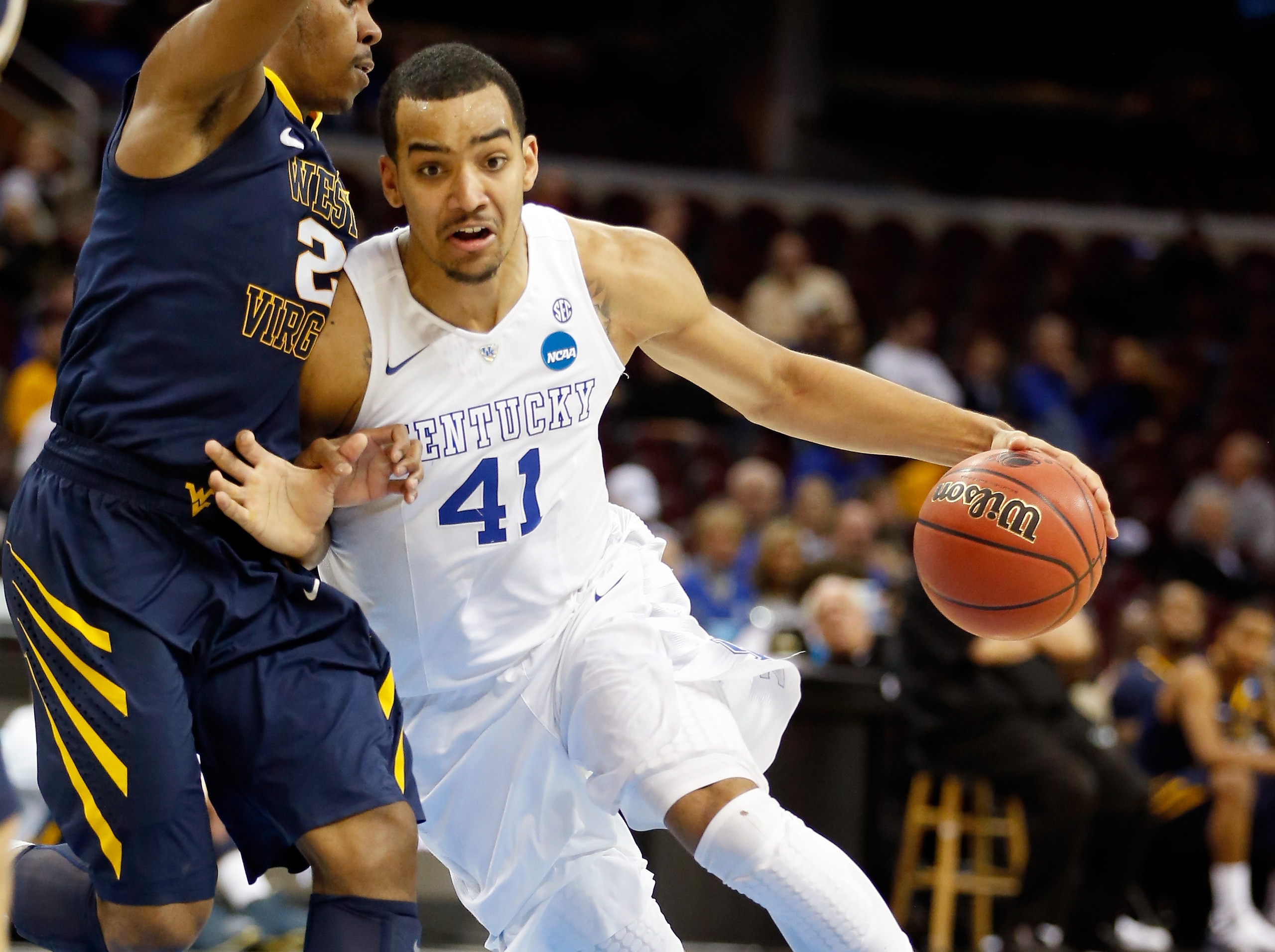
Trey Lyles has been a rock for Kentucky all year, and he continues to flash a skill set built for the NBA power forward position. At 6'10", he's shown he can play inside or out, thanks to a natural mid-range shooting stroke and a sharp ability in the post.
Add the fact that Lyles is also a high-IQ passer who plays within the offense, and we're probably looking at one of the safer bets outside the top seven or eight.
With David West's contract up at the end of the 2015-16 season, the Pacers can start grooming Lyles as a long-term replacement.
11. Utah Jazz: Myles Turner, Texas, 6'11", PF/C, Freshman
11 of 30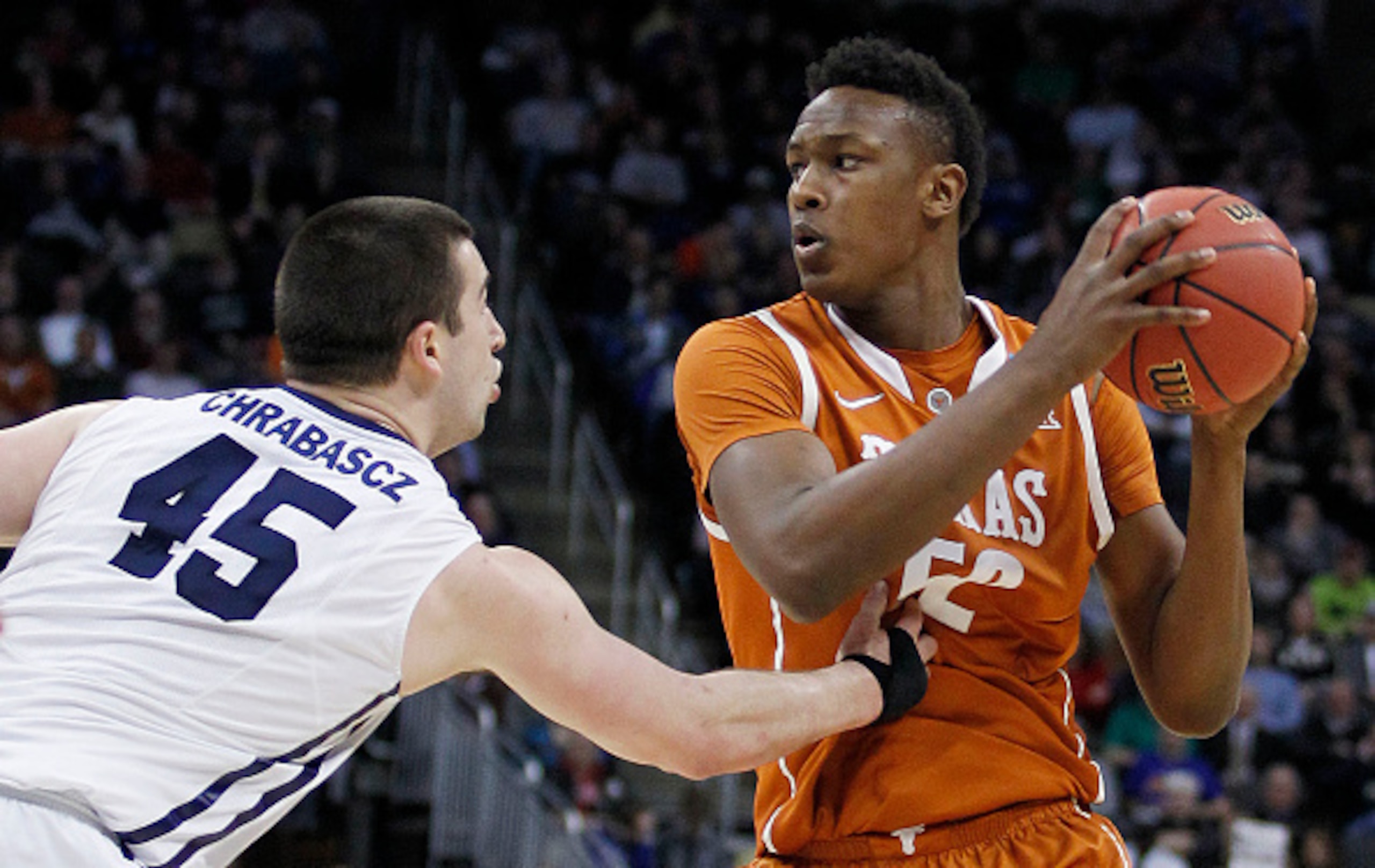
It didn't take very long for Myles Turner to decide he'd be heading straight to the pros.
Turner ended the season averaging just 5.6 points over Texas' final eight games. He was fairly inconsistent throughout, though some blame can be placed on his role in the offense.
However, the combination of Turner's potential to stretch the floor (17 made threes, 83.9 percent from the line) and protect the rim (2.6 blocks in 22.2 minutes per game) could go a long way in the pros.
There are questions as to how strong of a post player he'll be, but if Turner can improve his shooting consistency (27.4 percent from three) and hold his own physically on defense (4.3 fouls per 40), that should be enough to justify lottery value.
He'd ultimately be a nice complement to Derrick Favors and Rudy Gobert up front—two big men who do most of their damage in the paint.
12. Boston Celtics: Kevon Looney, UCLA, 6'9", PF, Freshman
12 of 30
Kevon Looney was quiet down the stretch of the season. It's clear he's more of a project than an immediate solution for an NBA team.
But the upside tied to Looney hitting his stride is lottery-worthy. At 6'9", he's shown the ability to face up on the perimeter and knock down jumpers or use the dribble. And you just can't teach Looney's nose for the ball, which translated to 9.2 rebounds a game and 54 putbacks on the offensive glass.
He'll need to get stronger and sharper in the post, where he struggles to create his own shot, but Looney's offensive versatility fuels some enticing mismatch potential.
With Jared Sullinger out again, the Celtics might want to grab a more athletic big man to develop up front.
13. Phoenix Suns: Jakob Poeltl, Utah, 7'0", C, Freshman
13 of 30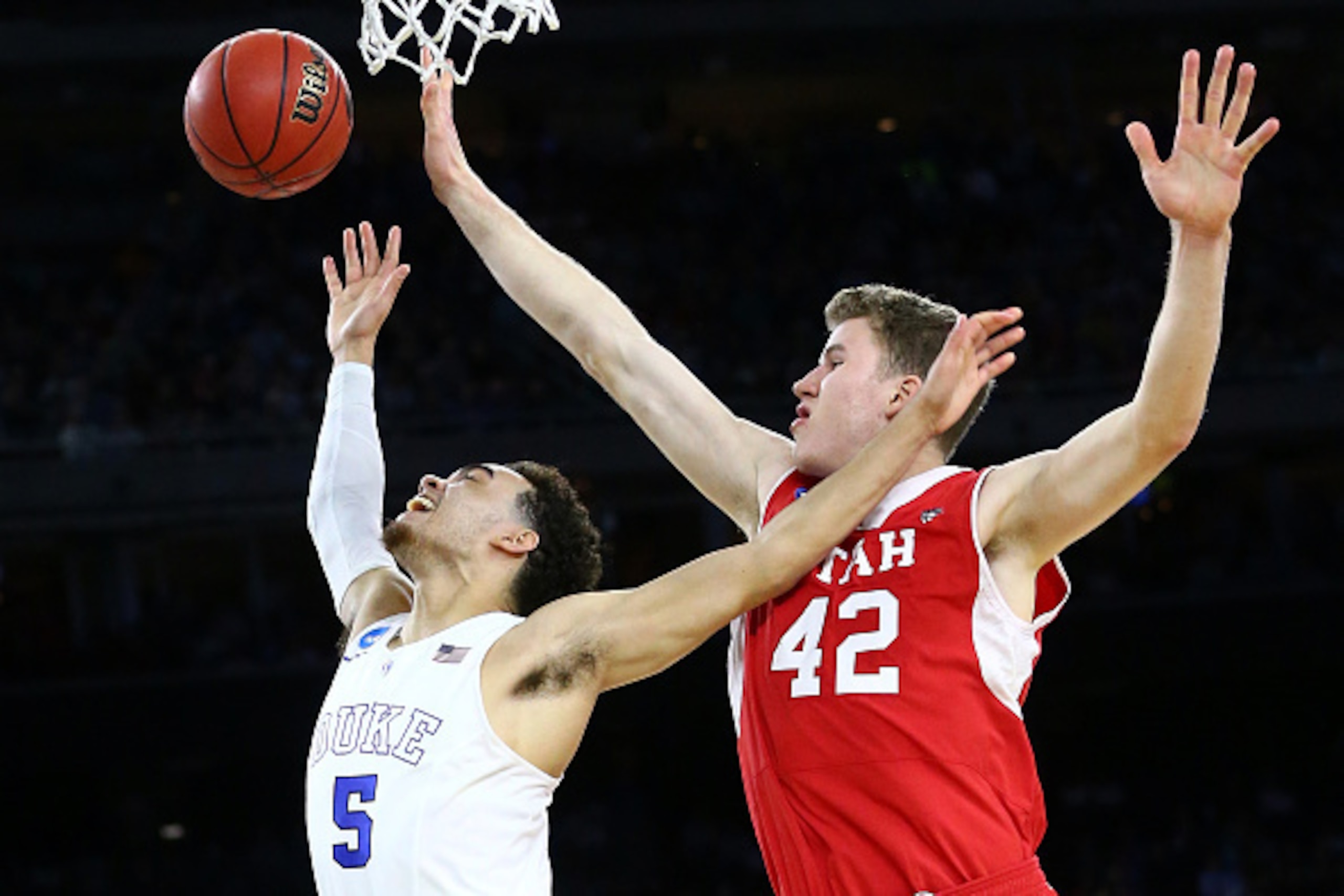
Despite the loss in the Sweet 16, Jakob Poeltl played Jahlil Okafor as well as anyone has all year, having held the potential No. 1 pick to just six points and eight rebounds.
Though he'll need to add strength, Poeltl doesn't back down, and at 7'0" with quick feet and sharp instincts, he projects as a strong post defender, rebounder (18.2 percent rebounding percentage) and rim protector (3.2 blocks per 40 minutes).
Poeltl even turned it on offensively down the stretch, having averaged 13.5 points over Utah's final six games. Though not a particularly threatening one-on-one player, he has a good feel for positioning himself for finishes, whether it's off dump-downs, pick-and-rolls or scoring chances on the low block.
Poeltl's potential to anchor the paint should ultimately be enough to draw lottery consideration. And the Suns could use a big man capable of doing the dirty work inside.
14. Houston Rockets (via Pelicans): Kris Dunn, Providence, 6'3", PG, Sophomore
14 of 30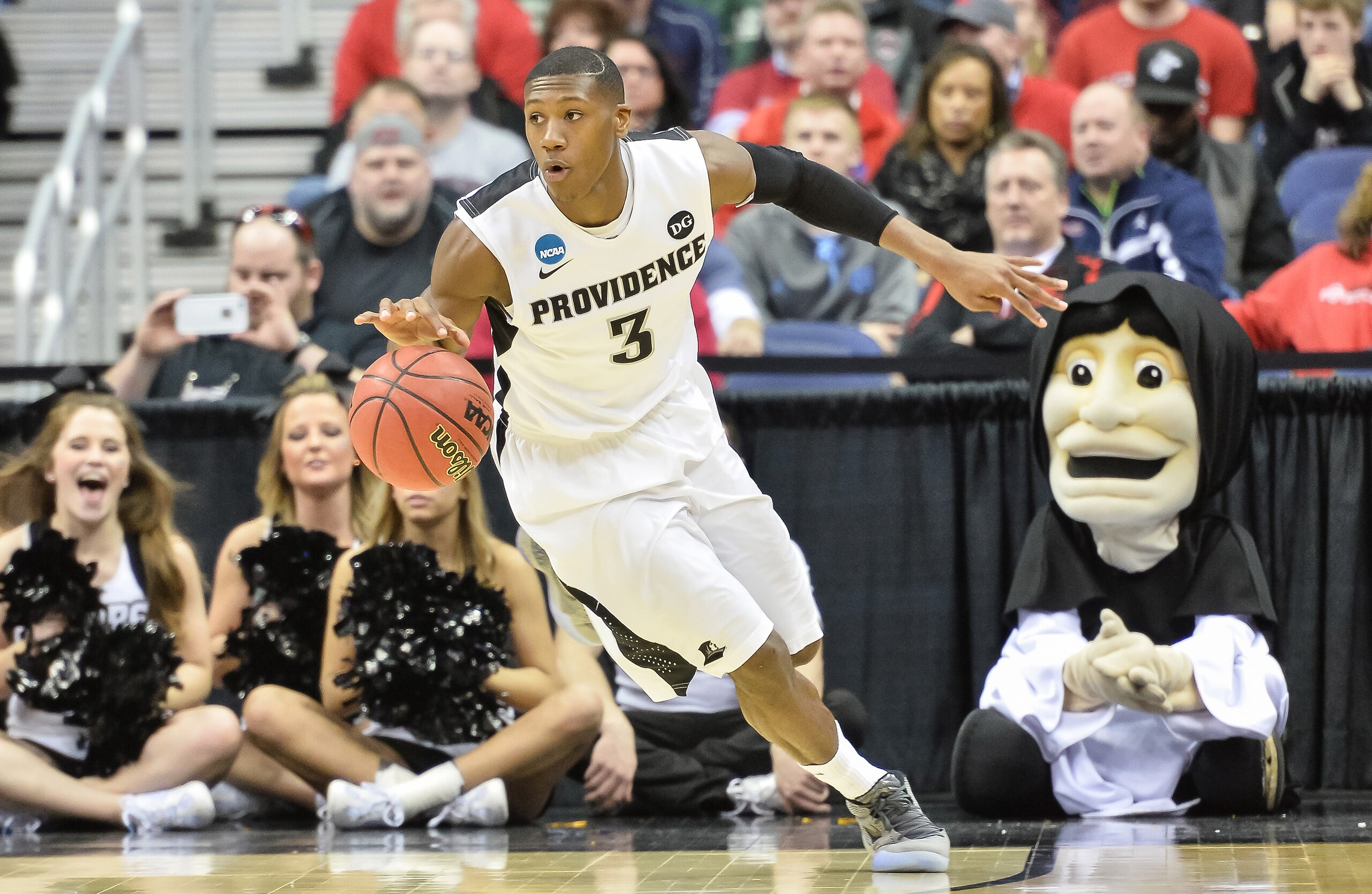
Now that the Rockets have traded Isaiah Canaan and Patrick Beverley needs major surgery, Houston might want to consider adding a point guard to develop.
And outside of D'Angelo Russell and Emmanuel Mudiay, no point guard offers more upside than Kris Dunn, who possesses NBA size, athleticism and playmaking ability. He led the country in assist percentage this year, per Sports-Reference.com, while averaging 15.6 points, 5.5 boards and 2.7 steals per game.
The big knock on Dunn is decision-making. Nobody finished the season with more turnovers than him. However, in an offense with James Harden, Dwight Howard and Trevor Ariza, Dunn won't be asked to do nearly as much as he was at Providence.
15. Atlanta Hawks (via Nets): Kelly Oubre, Kansas, 6'7", SF, Freshman
15 of 30
Kelly Oubre wasn't particularly convincing this year at Kansas, where he averaged just 9.3 points per game. But he can bring potential to the table, which is enticing for general managers.
At 6'7", he's an electric above-the-rim athlete who can handle the ball, connect from outside and score in the mid-range. He also has some promising defensive tools if he can ever figure out how to use them.
However, inconsistency and a questionable motor could cause Oubre to slip a bit.
Still, with DeMarre Carroll entering free agency, Oubre would make sense as a target for Atlanta in the mid-first round.
16. Philadelphia 76ers (via Heat): Devin Booker, Kentucky, 6'6", SG, Freshman
16 of 30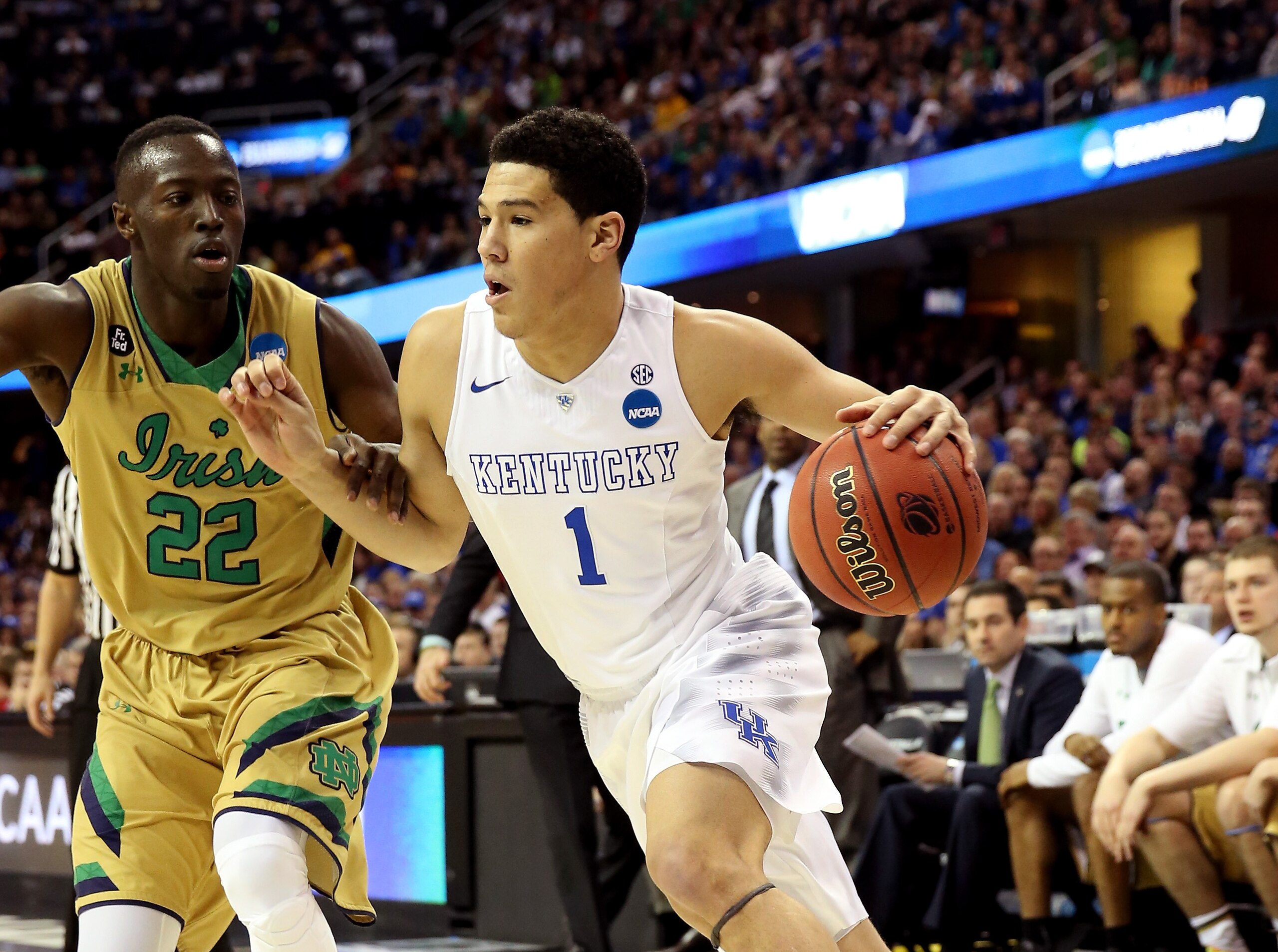
The Philadelphia 76ers could use another shot-maker, which is exactly what Devin Booker projects as in the pros.
Though not a player you'd feature or isolate, Booker's ability to knock down jumpers and finish off movement is where his NBA value lies.
Booker found his shooting rhythm over the past couple of NCAA tournament rounds, having hit two threes against West Virginia and two more against Notre Dame.
I like the J.J. Redick comparison for Booker in terms his style of play and skill set.
17. Milwaukee Bucks: Frank Kaminsky, Wisconsin, 7'0", C, Senior
17 of 30
The Milwaukee Bucks should be all over Frank Kaminsky if he's still available here. A lack of athleticism and strength limit his upside, which explains a potential slide. But you won't find many big men as skilled as Kaminsky, who's developed incredible footwork and moves in the post along with a deadly jumper, connecting at a 41.5 percent clip from three.
He put on a show against Arizona in the Elite Eight, having flashed the entire inside-out repertoire in a 29-point performance.
There are questions as to how high his NBA ceiling reaches, but not his role in the NBA game. He's going to stick for a long time as a stretch 4 or 5.
The Bucks could use another big man, particularly one who can score.
18. Washington Wizards: Jerian Grant, Notre Dame, 6'5", PG, Senior
18 of 30
The Elite Eight loss to Kentucky won't cloud Jerian Grant's season or NBA outlook.
At 6'5", Grant has the size and skill set to play on or off the ball. He's flashed the vision and passing instincts of a point guard, particularly out of drive-and-kick and pick-and-roll situations. Grant dished out 11 assists in the Sweet 16 against Wichita State, and finished the year with a strong 6.7-2.2 assist-to-turnover ratio.
But he's also threatening enough as a scorer to play that 2-guard position, where he can separate one-on-one into jumpers and generate offense (finishes, free throws) off drives.
Grant would ultimately give the Wizards, who rank No. 18 in offensive efficiency (per ESPN), some backcourt versatility and a high-IQ passer.
19. Philadelphia 76ers (via Thunder): Sam Dekker, Wisconsin, 6'9", SF, Junior
19 of 30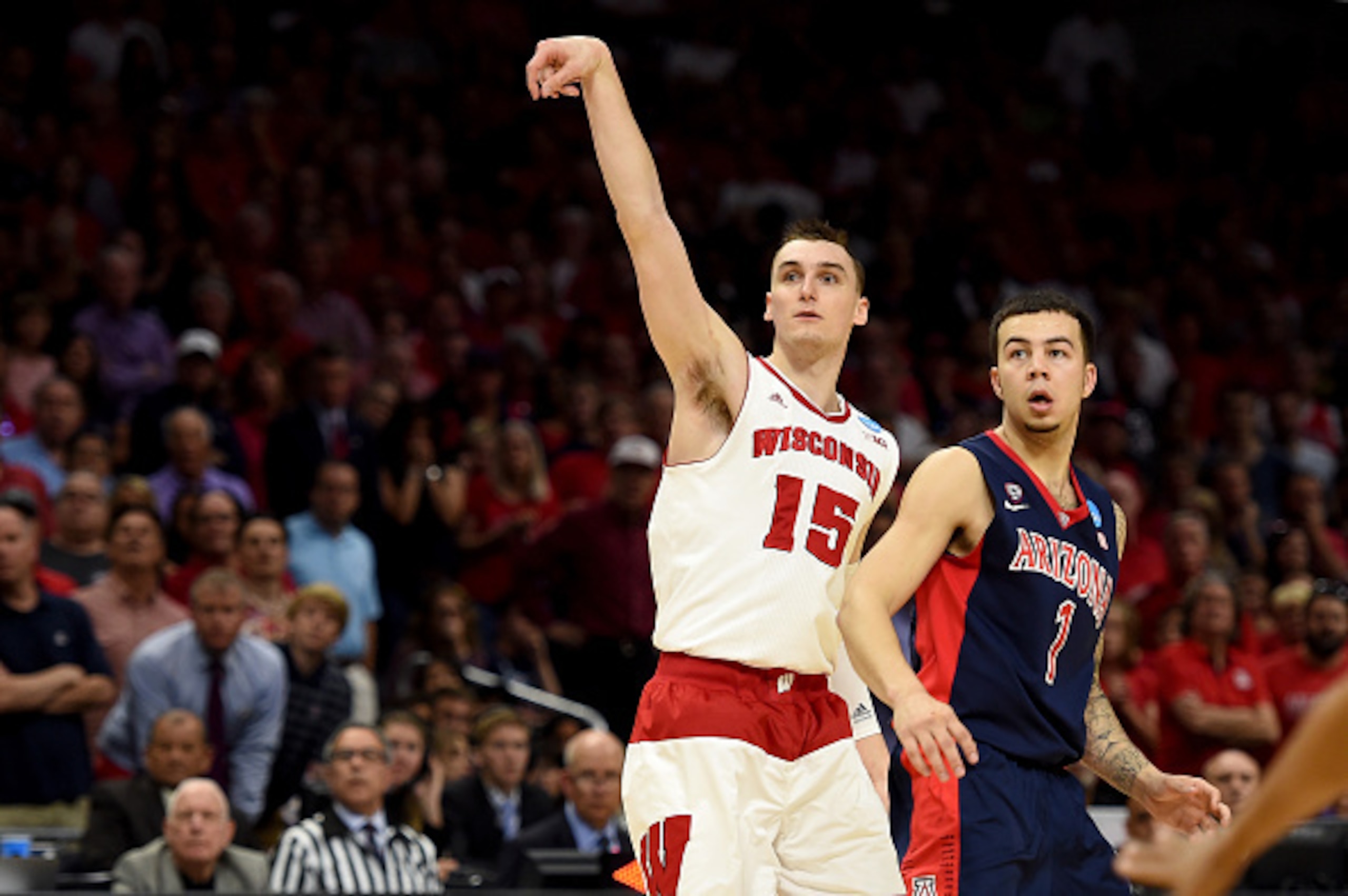
Sam Dekker's career high entering the NCAA tournament was 22 points. In four games since it started, he's averaging 21.7 points.
Dekker picked a good time to break out. He always looked the part of an NBA wing, with 6'9" size and fluid athleticism. But this is really the first time we've seen his versatility come together and produce big numbers with consistency.
He's a terrific driver off the dribble, given his impressive handle and burst, both turning the corner and exploding up toward the rim.
And though he's been inconsistent as a shooter through three years at Wisconsin, he clearly has threatening shot-making ability, having hit 13 threes through four NCAA tournament games.
Dekker isn't much of a playmaker or creator, but if you're an NBA team like the Sixers, you value his basketball IQ, discipline and ability to score within an offense.
20. Toronto Raptors: Christian Wood, UNLV, 6'11", PF, Sophomore
20 of 30
We've seen general manager Masai Ujiri reach on upside before. He did it last year with Bruno Caboclo. Ujiri will have the chance to land another high-ceiling prospect in Christian Wood, who's coming off a breakout year for UNLV.
At 6'11", he's bouncy around the rim and skilled out on the perimeter, where he can knock down jumpers (25 made threes), separate in the mid-range and put the ball on the floor. He averaged 15.7 points, 10 rebounds and 2.7 blocks per game.
Wood finished the season strong by scoring 21 points against San Diego State on March 12 and 28 points against Nevada the day before.
At 220 pounds, he'll need to add bulk. But if worst comes to worst, Wood gives the Raptors a little jolt of athleticism and versatility to their frontcourt. He's a risk-reward play at No. 20.
21. Dallas Mavericks: Bobby Portis, Arkansas, 6'11", PF, Sophomore
21 of 30
A lack of explosiveness and strength around the basket may keep teams from reaching on Bobby Portis, but his shooting touch and physical tools are both NBA-friendly.
At 6'11", Portis has excellent mechanics and fluidity in the mid-range, where he's consistently knocked down pick-and-pop and drive-and-kick jumpers. And he's a tough cover at the high post, where he can face up and attack, drop-step into a hook or fall away over the shoulder.
At No. 21, you can argue that Portis is the best prospect available and will be an asset for the Mavericks frontcourt. He's not an upside pick, but assuming he can hold his own physically, he should be able to put the ball in the hole when it finds him in scoring position.
22. Chicago Bulls: Cameron Payne, Murray State, 6'2", PG, Sophomore
22 of 30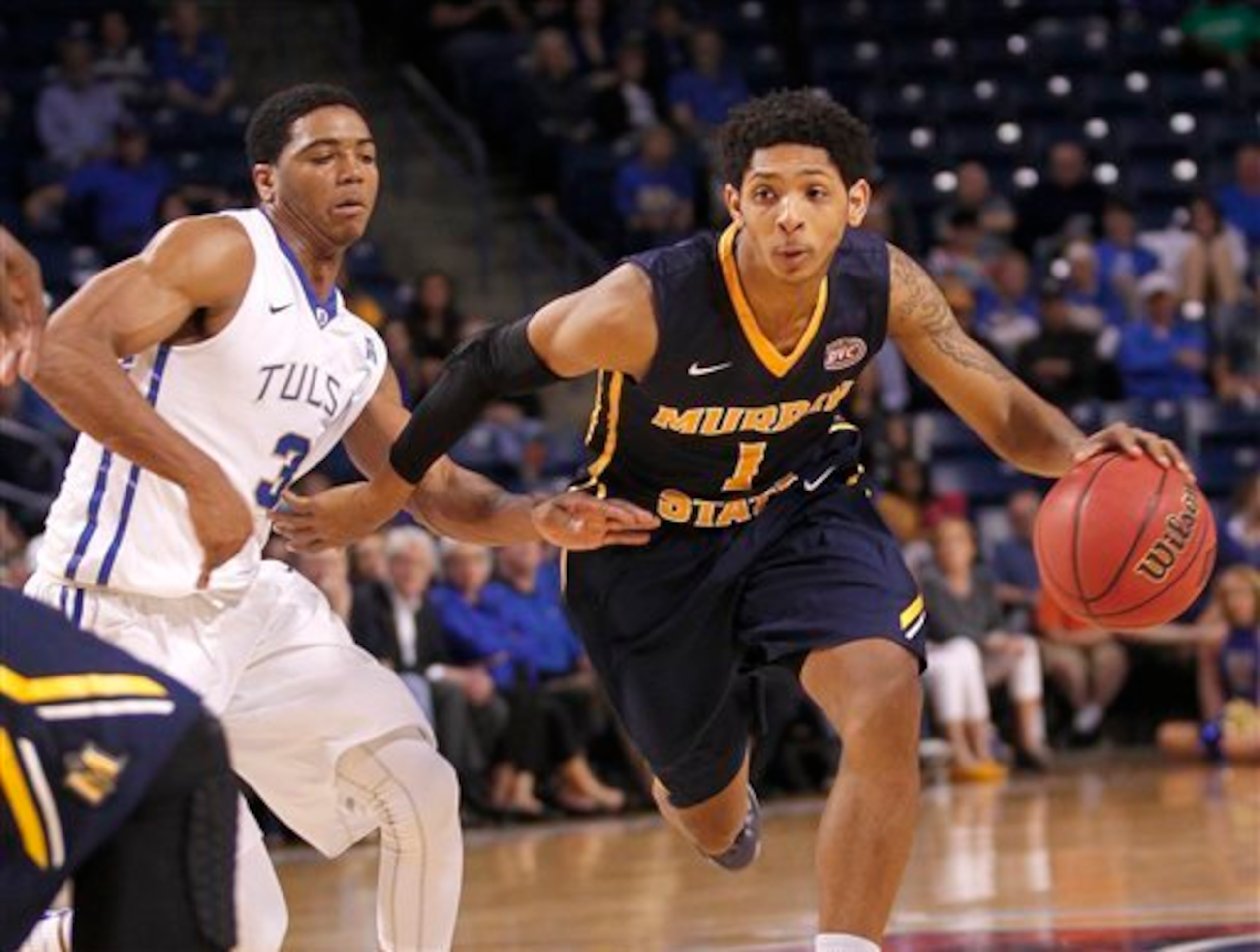
Cameron Payne slid under the national radar, but scouts caught on to what he was doing at Murray State. He finished the year averaging 20.2 points after scoring at least 20 points in 10 of his final 11 games.
He can create and knock down shots from anywhere, having also hit 84 threes on the year. Payne even flashed some impressive playmaking and passing instincts running the point. He finished No. 6 in the country in assist percentage.
With Yahoo Sports' Adrian Wojnarowski reporting Payne is leaning toward declaring, look to see his name in the NBA draft conversation more often.
23. Cleveland Cavaliers: Montrezl Harrell, Louisville, 6'8", PF, Junior
23 of 30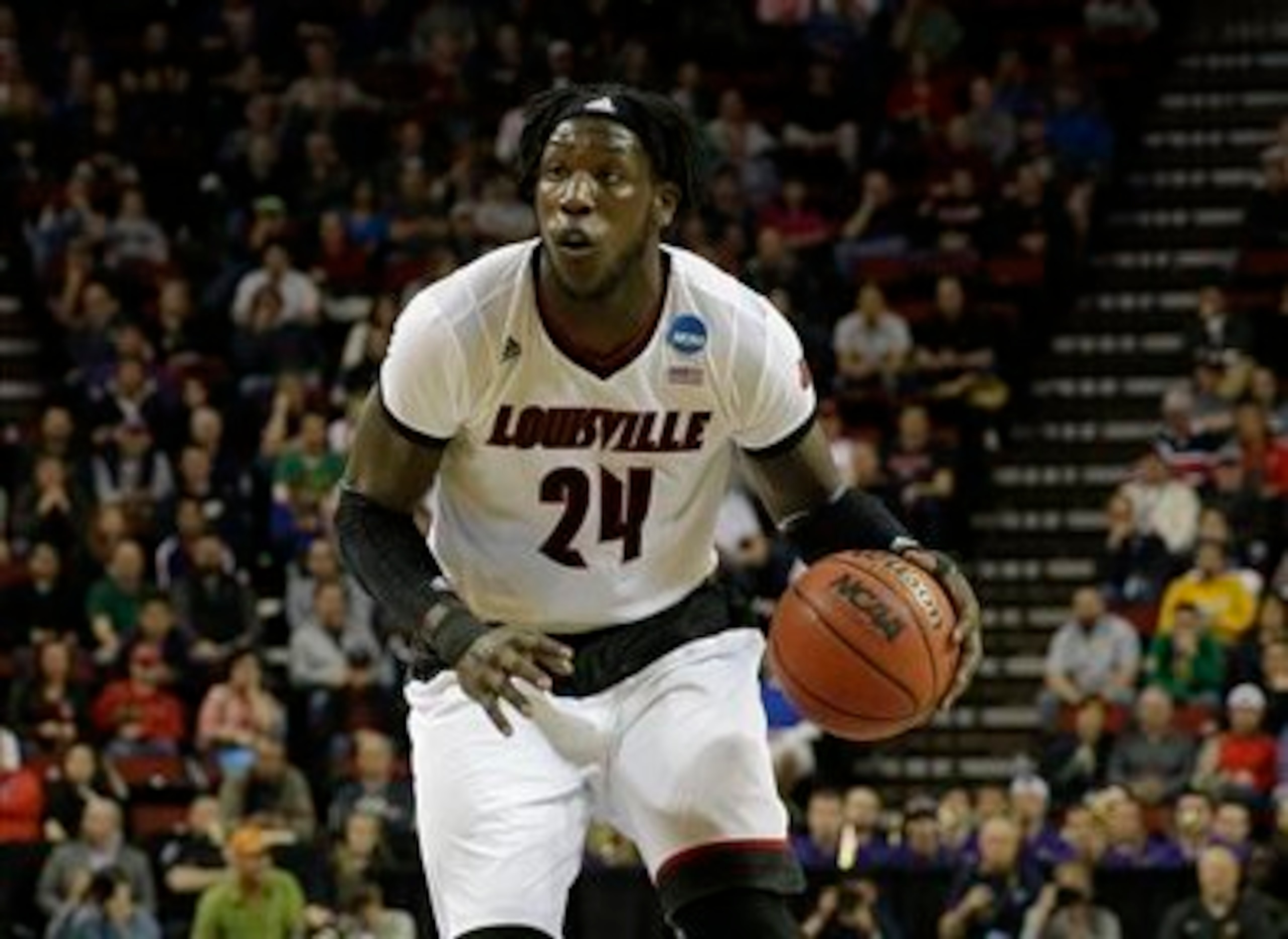
Montrezl Harrell had an up-and-down NCAA tournament, which is pretty much what we saw from him throughout the year.
He's super strong and explosive around the basket, where he can overwhelm inferior athletes as a finisher, rebounder and post defender.
But Harrell's shooting touch hasn't come around through three years, and at 6'8", he's slightly undersized for a player who's expected to live in the paint.
Still, you draft Harrell for his motor and ability to provide activity on the interior. On a team with talent, like the Cavaliers, he would be able to play to his strengths in an energizer role up front.
24. San Antonio Spurs: R.J. Hunter, Georgia State, 6'6", SG, Junior
24 of 30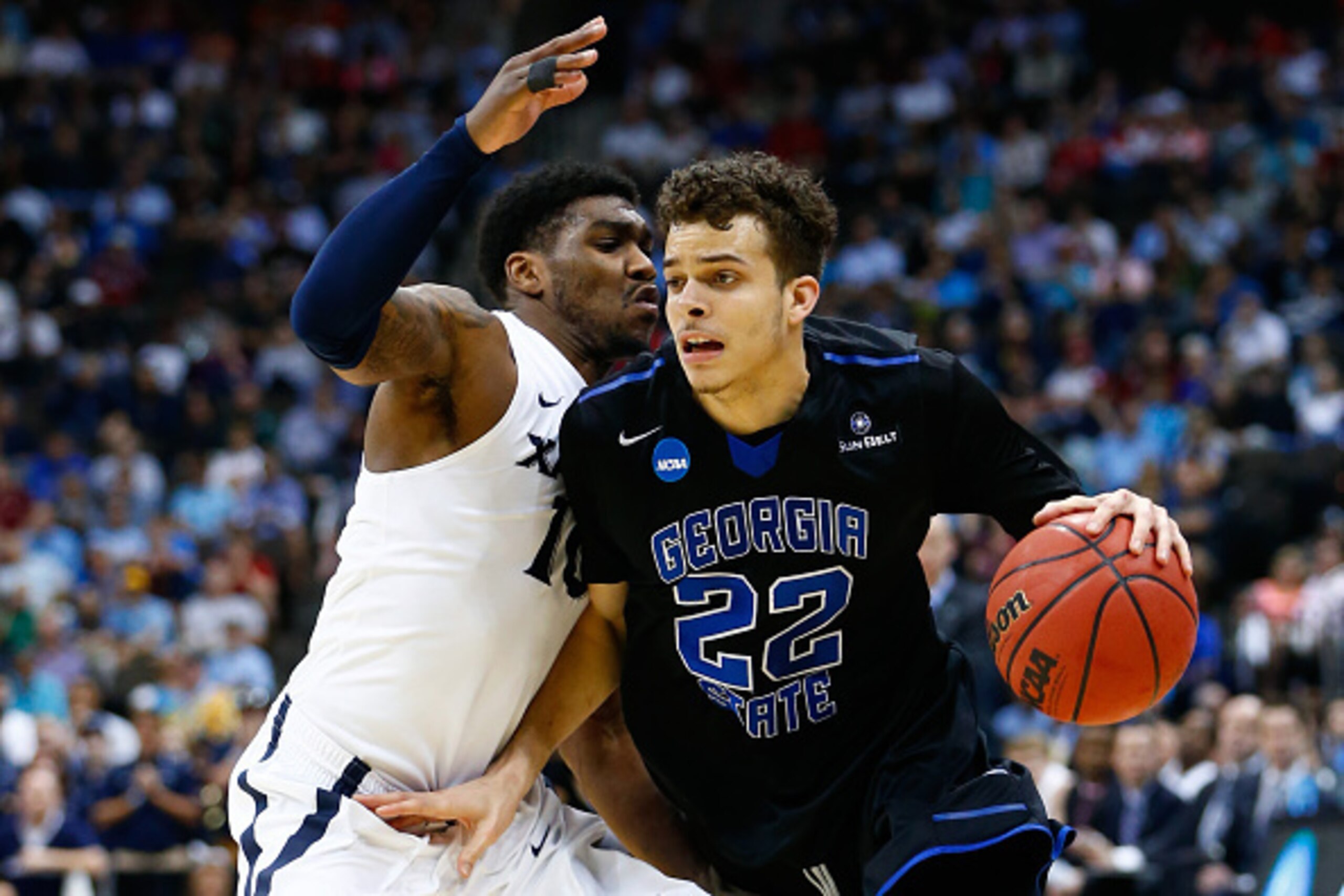
With Manu Ginobili, Danny Green and Marco Belinelli each entering free agency, you'd like to imagine the Spurs will take a hard look at R.J. Hunter.
Though most know him for his three-minute, 12-point explosion that helped knock off Baylor in the NCAA tournament, Hunter has been a volume scorer since his freshman season.
He's averaged at least 17 points a game in each of his three years at Georgia State while making 253 threes in 99 total games. Hunter's shooting percentage cooled off this past year, but given his mechanics and track record, there aren't many questions concerning his jumper.
To make up for the decline in accuracy, Hunter doubled his assist rate and took 69 more free throws than he did in 2013-14.
Hunter's high IQ and shot-making ability would ultimately fit right into San Antonio's offense. He wouldn't be the first mid-major prospect the Spurs draft.
25. Boston Celtics (via Clippers): Rashad Vaughn, UNLV, 6'6", SG, Freshman
25 of 30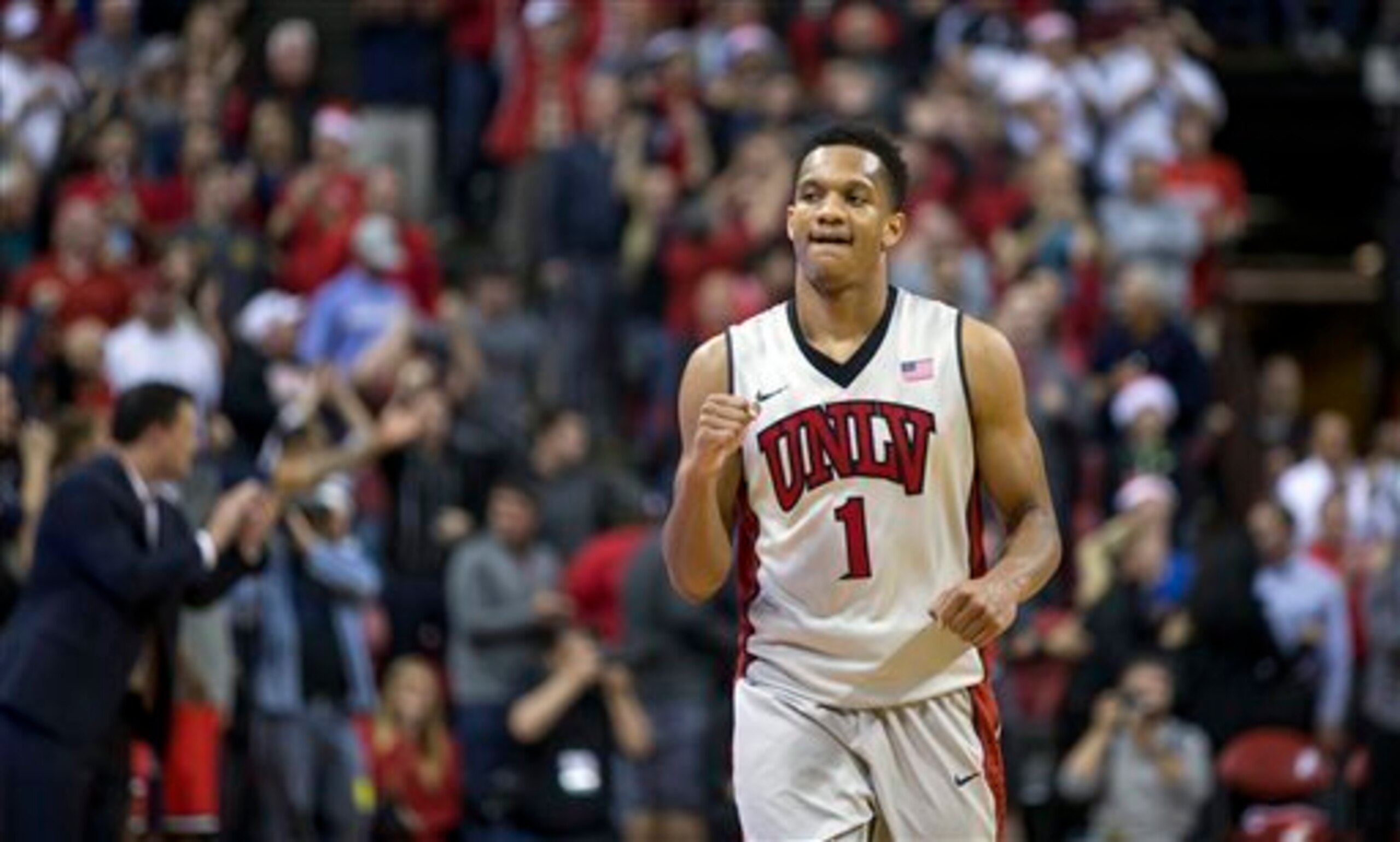
Rashad Vaughn missed UNLV's final nine games after tearing his meniscus, though according to Scout.com's Evan Daniels, Vaughn's knee is now 100 percent.
Behind D'Angelo Russell and Jahlil Okafor, Vaughn was the nation's third-leading freshman scorer before going down. He can create and make shots with high levels of difficulty, mostly out on the perimeter.
The knock on Vaughn revolves around his shot selection. He takes a lot of jumpers, a result of questionable strength and explosiveness when it comes to attacking and getting to the basket.
However, for an 18-year-old with 6'6" shooting guard size, Vaughn's one-on-one skills and shot-making ability are worth gambling on this late.
26. Portland Trail Blazers: Delon Wright, Utah, 6'5", PG, Senior
26 of 30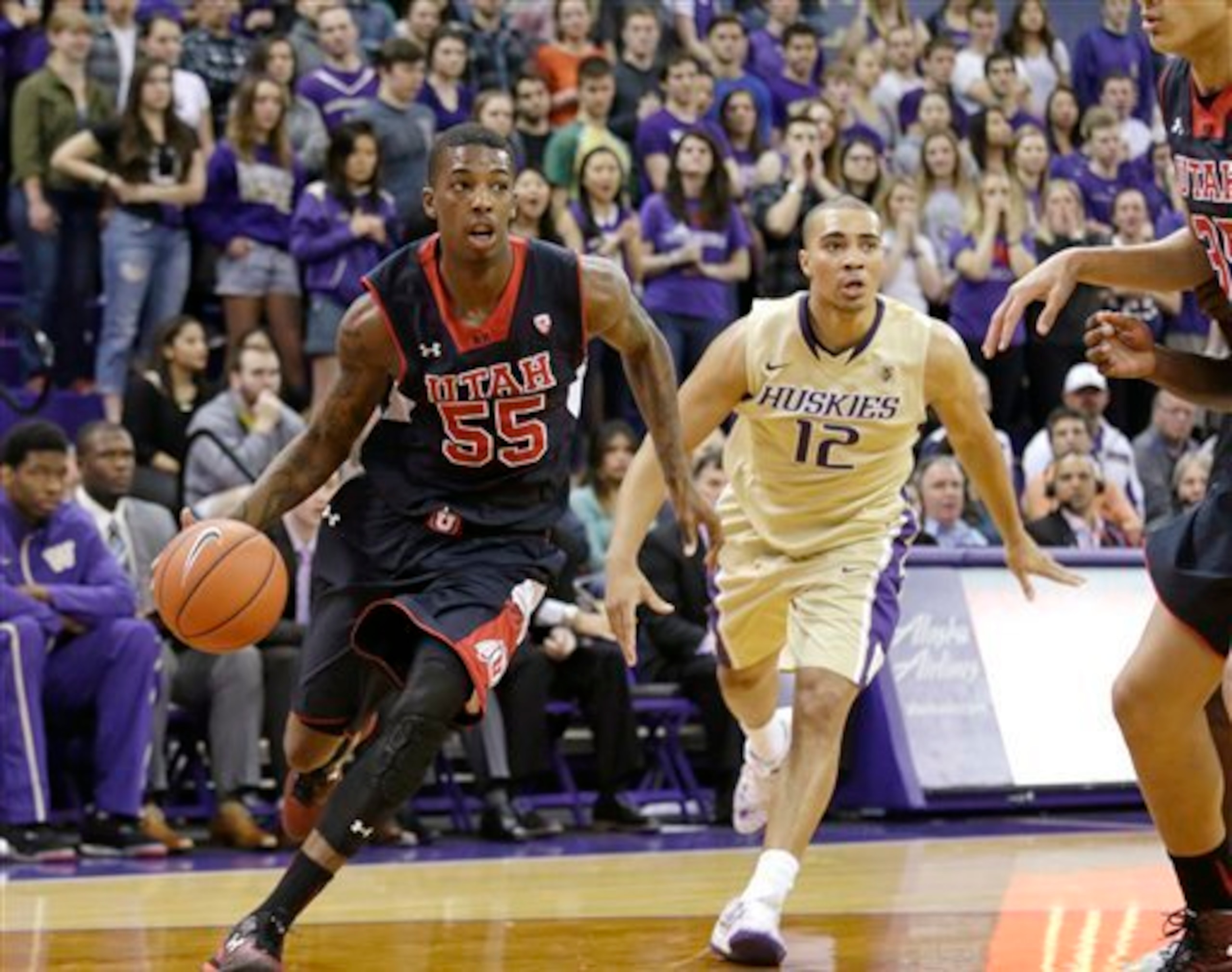
A poor NCAA tournament might have hurt Delon Wright's chances of rising up draft boards. He shot 29.6 percent and averaged three assists to 3.6 turnovers through three games.
But teams have likely seen enough of Wright through two years to understand his strengths and limitations. He's ultimately a strong enough player to hold late-first-round value.
At 6'5", he can handle the ball, run an offense and set the table for teammates. And he's also a terrific on-ball defender who has the versatility to guard both backcourt positions.
With Wesley Matthews out for a while and Steve Blake having just turned 35 years old, the Blazers could target a defensive-minded playmaker and one of the more NBA-ready options in the field.
27. Los Angeles Lakers (via Rockets): Robert Upshaw, Washington, 7'0", C, 1991
27 of 30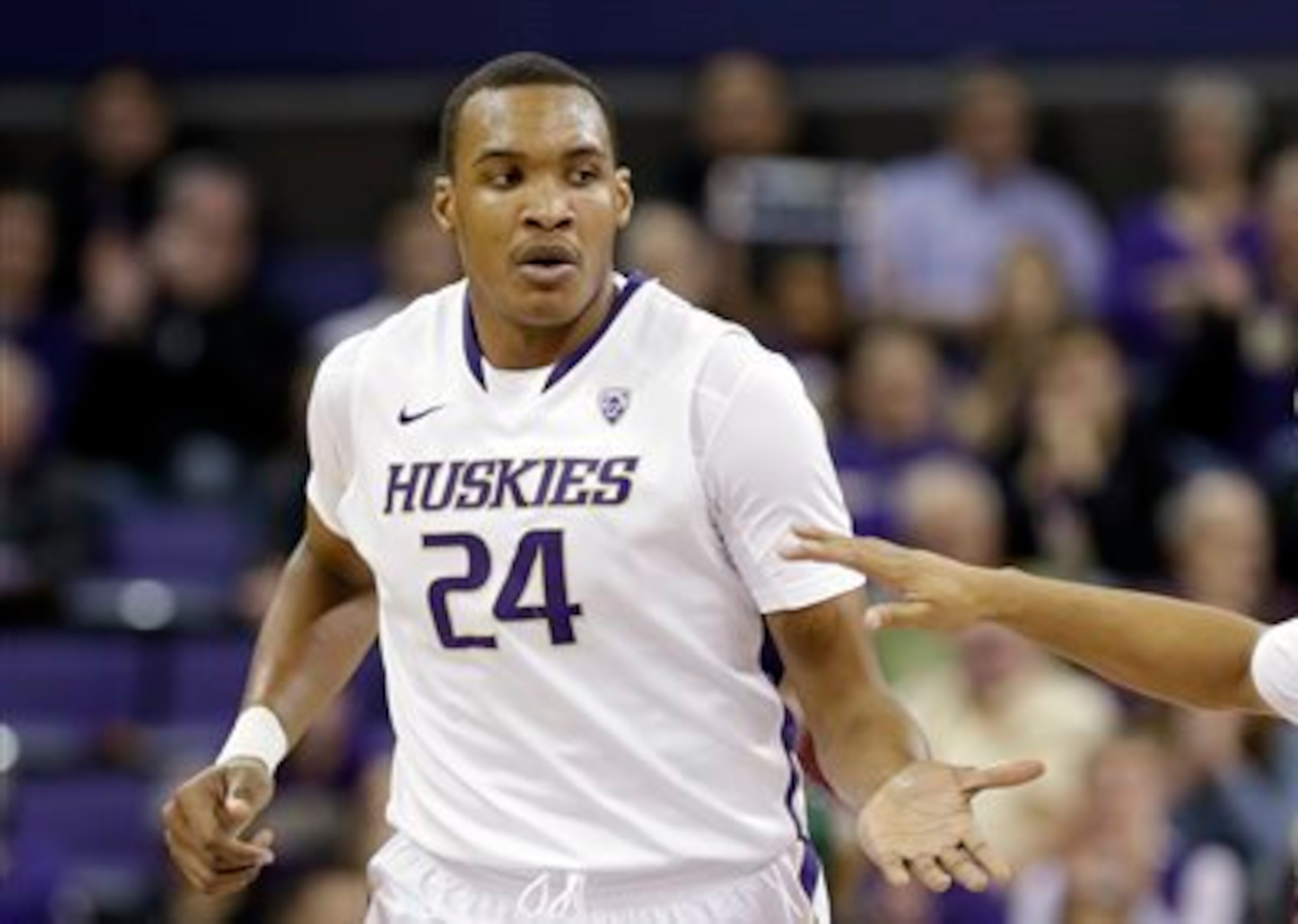
It's been a while since we've heard from Robert Upshaw's camp after he was kicked off Washington's team back in January. However, with talent running thin this late, a desperate general manager looking for value could be enticed by Upshaw's upside.
At 7'0", he was leading the country in shot blocking before being dismissed. The Huskies would go on to lose 11 of the team's final 13 games once he left. They were 11-4 with him.
If Upshaw keeps his head on straight, he could certainly bring something to the table as a finisher, rebounder and rim protector.
The Lakers really need size and defense, and with a second first-round pick, Upshaw may be a gamble worth taking at No. 27.
28. Memphis Grizzlies: Terry Rozier, Louisville, 6'1", PG/SG, Sophomore
28 of 30
We saw both the best and worst of Terry Rozier during the NCAA tournament. He was at his best against Northern Iowa in the third round, when he finished with 25 points and seven assists in his most balanced effort of the year.
Rozier is quick and explosive off the bounce. He's a constant threat to get to the basket in the open floor or slice through a gap in the half court. And when he's on, he can score in bunches as a pull-up shooter and driver.
But Rozier shot Louisville out of the Elite Eight with a 6-of-23 performance (three assists, three turnovers) in a loss to Michigan State.
Poor shot selection, shooting inconsistency and questionable playmaking instincts could cause Rozier to slip late into the first round.
But Memphis needs another ball-handler and backcourt weapon. At this stage of the draft, the Grizzlies could take a chance on Rozier's athleticism, scoring ability and defensive toughness. Avery Bradley isn't a bad comparison.
29. Brooklyn Nets (via Hawks): Jarell Martin, LSU, 6'10", PF, Sophomore
29 of 30
Jarell Martin could be a nice hit-or-miss late-round value pick. He's coming off a strong sophomore year, having averaged 16.9 points and 9.2 rebounds.
Listed at 6'10", Martin has flashed face-up mobility and plenty of athleticism. He can separate and knock down shots in the mid-range, as well as finish off cuts, slashes and drives on the move.
Improving his jumper, which only connected at a 26.9 percent three-point clip, would go a long way toward his NBA outlook.
I like Tobias Harris as a solid ceiling comparison.
30. Golden State Warriors: Rondae Hollis-Jefferson, Arizona, 6'7", SF, Sophomore
30 of 30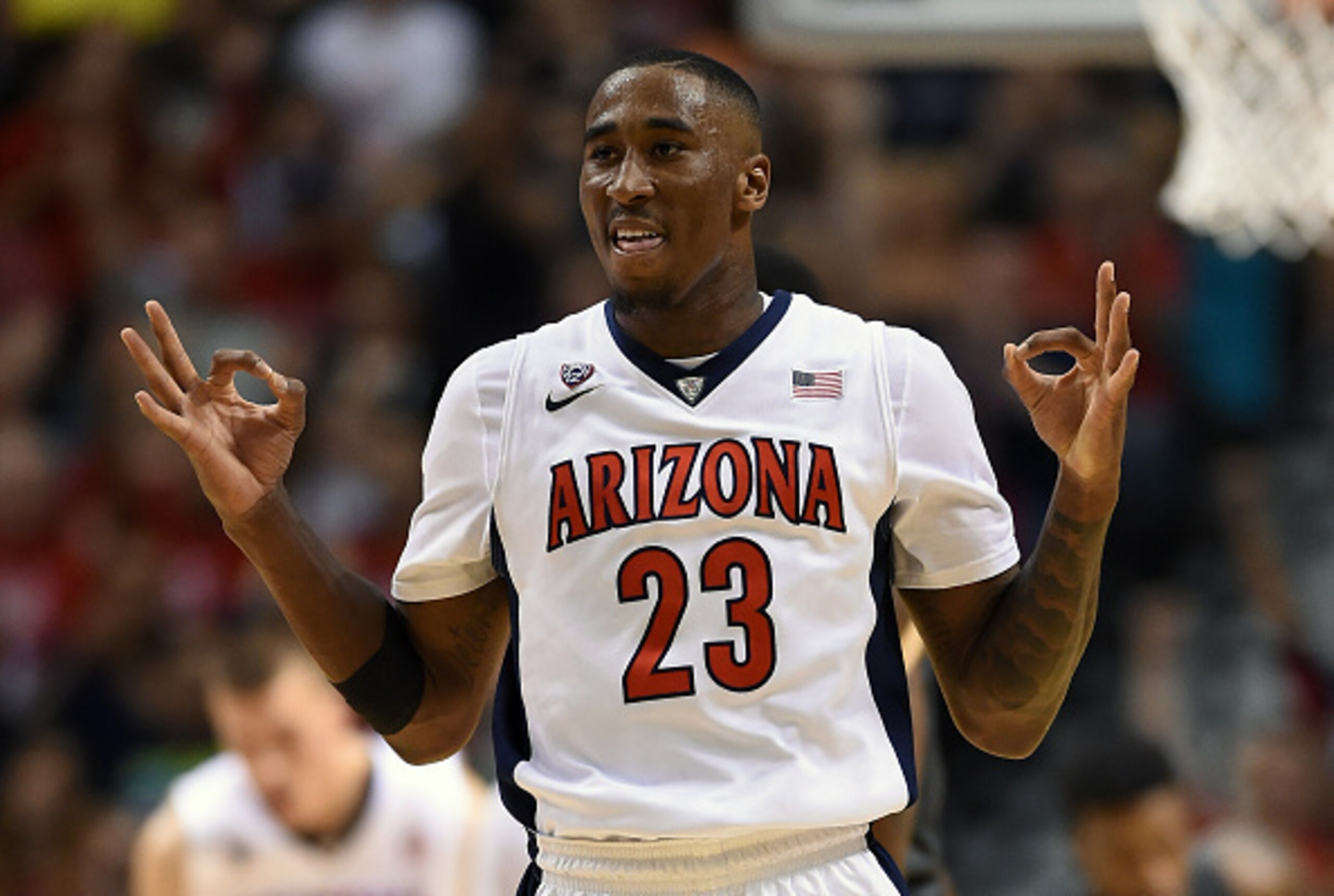
Though not a particularly threatening scorer, Rondae Hollis-Jefferson's athleticism and defensive versatility could hold enough value this late in Round 1.
And quite frankly, he's actually had a few impressive offensive games this postseason. Hollis-Jefferson went for 17 points against Wisconsin in the Elite Eight and 23 points against Texas Southern in a second-round win.
Still, the Warriors should covet his ability to lock down three positions on the floor. If he ever learns how to shoot, Hollis-Jefferson could become a major steal.

.jpg?w=2560 "Mahomes Told Teammate to Leave Meeting")
.jpg?w=2560 "5 Teams Eyeing Jonathan Taylor")



.jpg?w=2560 "NFL investigating Eagles")
.jpg?w=2560 "Jonathan Taylor Landing Spots 📍")